
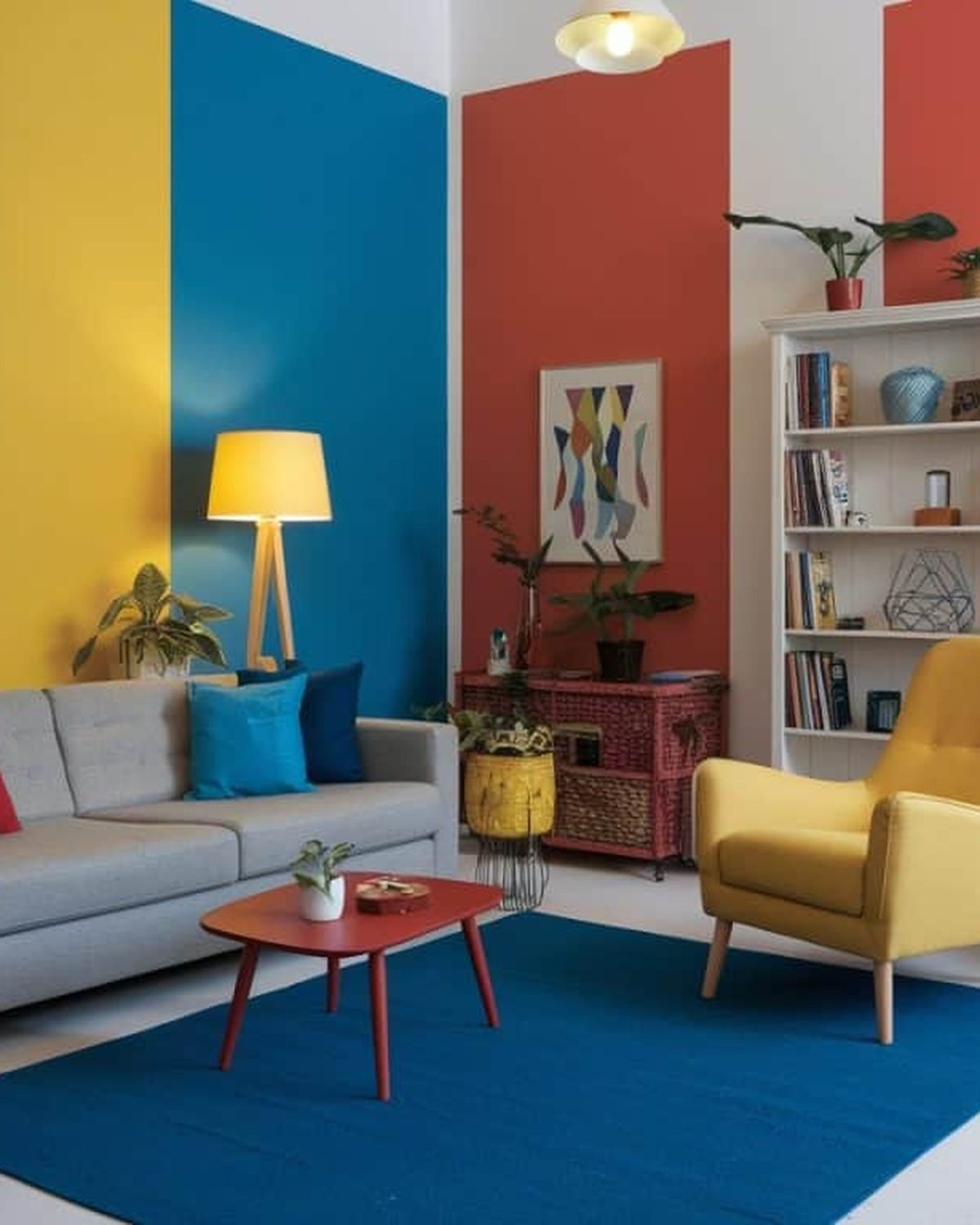
If your home has been feeling a little too beige, a little too careful, and a little too quiet lately, you are not alone. After years of gray minimalism ruling every feed, a joyful rebellion is taking over real homes: dopamine decor. The idea is simple and honestly liberating — decorate with the colors, patterns, and objects that make you feel happy, instead of the ones a rulebook says you should choose.
This is not about being trendy for the sake of it. It is about walking into your living room after a long day and actually smiling. Below are 30 vibrant dopamine decor ideas, each one practical, each one tested in real homes, and each one designed to bring more joy into your space — whether you rent a studio or own a five-bedroom house.
What Is Dopamine Decor, Exactly?
Dopamine decor is an interior style built around one question: does this make me happy? It favors saturated color over safe neutrals, playful pattern over matchy-matchy sets, and personal meaning over showroom perfection. Think jewel-toned velvet sofas, gallery walls full of art you actually love, checkered rugs, wavy mirrors, and bookshelves arranged in a rainbow. There is real science behind the feeling, too: research on color and behavior has found that a color like red can trigger both approach and avoidance responses depending on context — which is why the same bold color can feel energizing in one room and overwhelming in another.
A few principles make dopamine decor work instead of tipping into chaos. First, color with intention: pick one or two “happy colors” and let them lead, then support them with smaller pops. Second, mix, don’t match: dopamine rooms feel collected over time, not bought in one afternoon — a vintage lamp next to a modern chair is the whole point. Third, leave breathing room: even the most joyful room needs a calm corner where the eye can rest. And finally, make it personal: the travel souvenir, the thrifted vase, the art your kid made — these are not clutter, they are the dopamine.
You do not need a full renovation or a big budget. Most of the ideas below cost less than a dinner out, and several are completely free. Let’s dive in.
Walls That Spark Joy
1. Paint One Wall Your Happy Color
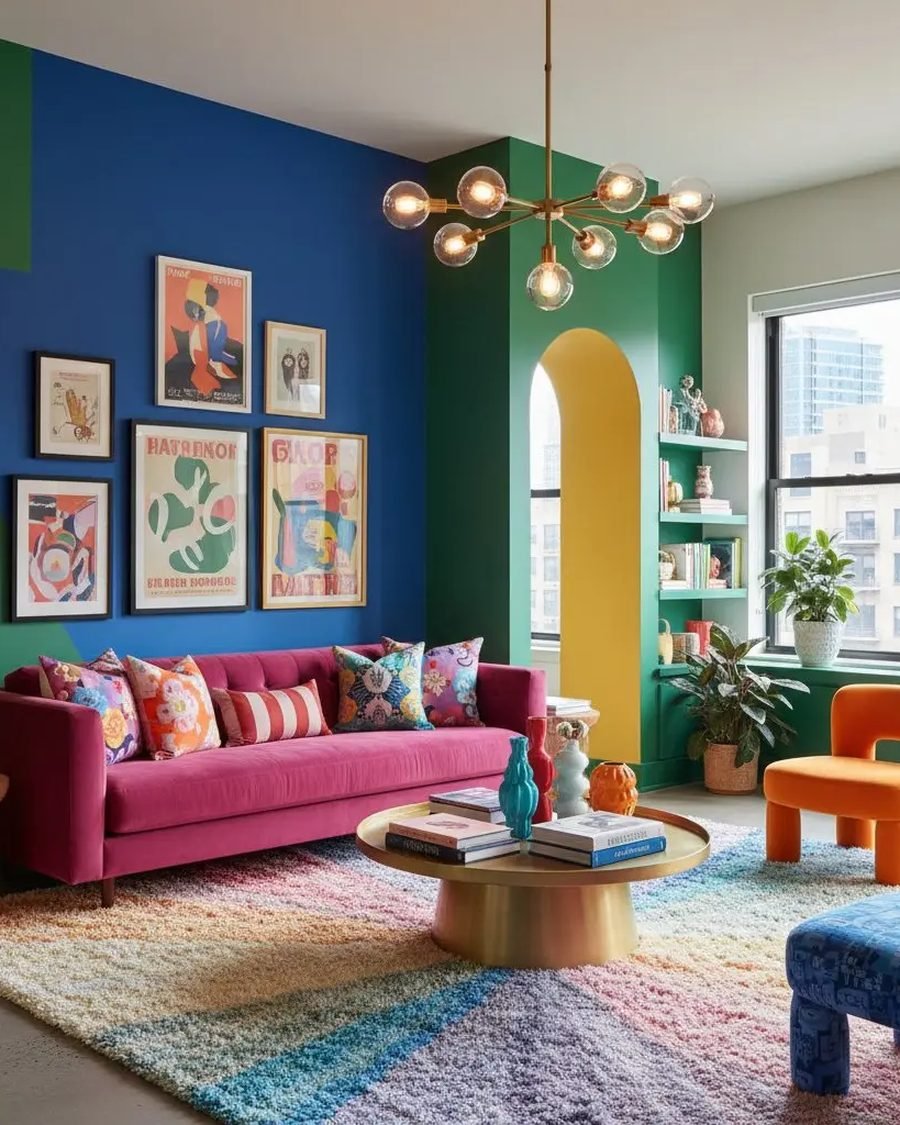
The single fastest dopamine decor upgrade is an accent wall in the color that makes your heart beat faster. Not the color a designer would pick — yours. Maybe it is sunflower yellow, maybe it is electric teal, maybe it is a pink so bright it makes you laugh. Paint one wall, live with it for a week, and notice how differently the whole room feels.
Choose the wall you face most often — behind the sofa in the living room, or the wall your desk faces. Use a satin or eggshell finish so the color glows without glaring. If you are nervous, start with a wall in a hallway or laundry room where the stakes feel lower; renters can get the same effect with peel-and-stick wallpaper or large-scale removable murals.
Try this: Buy three sample pots in neighboring shades, paint big swatches, and look at them morning, noon, and night before committing. The right happy color looks good in all three lights.
2. Go Bold With Patterned Wallpaper
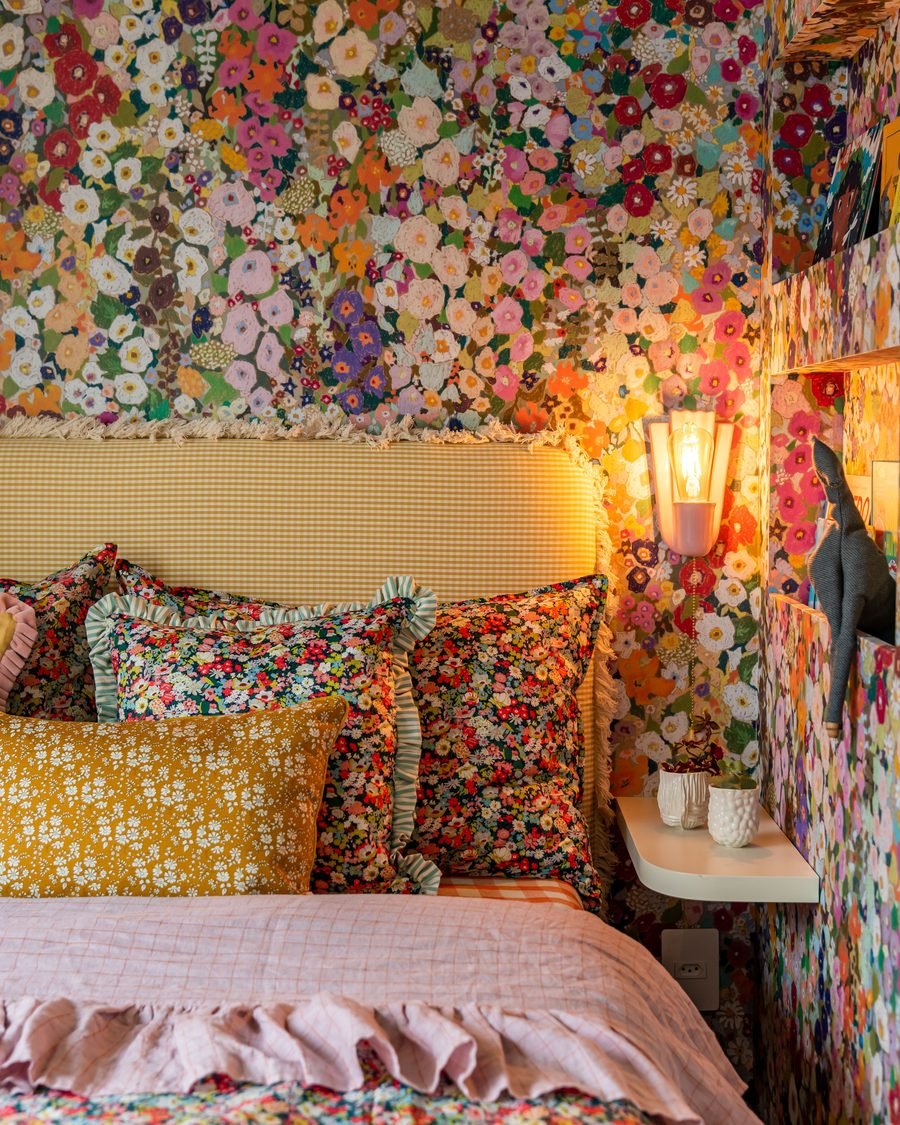
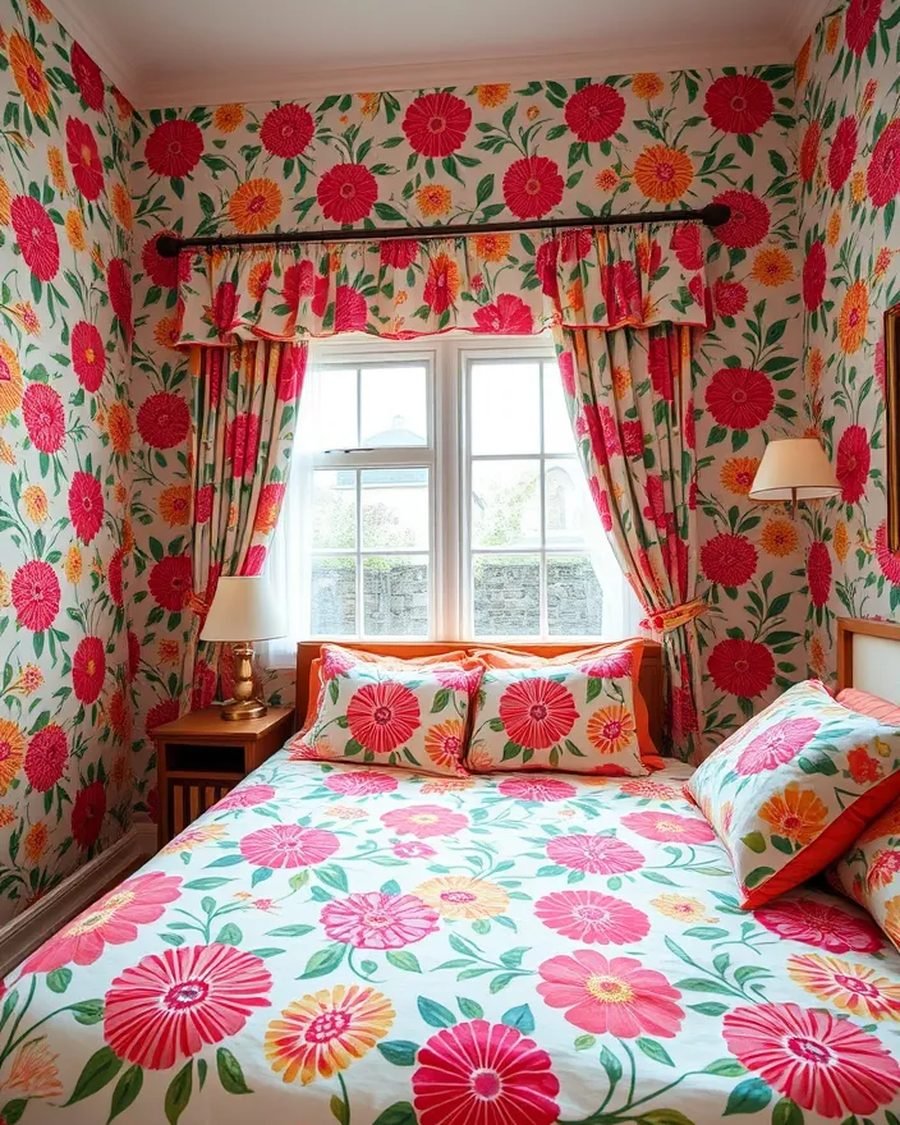
Nothing transforms a room faster than wallpaper with personality. Dopamine decor loves large-scale florals, retro geometrics, checkerboards, and chinoiserie-style murals — the louder, the better, as long as you love looking at it. A bold wallpaper turns even the plainest box of a room into somewhere with a point of view.
You do not have to paper a whole room. Papering the wall behind the bed, the back of a bookshelf, or a powder room gives you the full hit for a fraction of the cost and effort. Peel-and-stick options have become genuinely good — thick, repositionable, and renter-friendly — so there is no excuse left for boring walls.
Try this: In a small room, match your curtain or bedding to one color pulled from the wallpaper. That single echo makes a loud pattern feel intentional instead of random.
3. Color-Drench a Small Bathroom

Color drenching — painting walls, ceiling, trim, and sometimes even the vanity all in one saturated shade — is dopamine decor’s power move, and small bathrooms are the perfect place to try it. A tiny pink or deep teal bathroom feels like a jewel box instead of a forgotten corner, and because the space is small, you can finish it in a weekend.
Pick a color with enough depth to feel enveloping rather than flat: terracotta, peacock blue, plum, or sunny marigold. Keep the fixtures simple and let the color do the talking. Add one contrasting moment — a patterned shower curtain, a vintage mirror, brass hardware — so the eye has somewhere to land. For palettes that work in small wet rooms, see these bathroom color ideas.
Try this: Paint the ceiling the same color as the walls. It erases the visual “lid” of the room and makes even a windowless bath feel intentional and cozy.
4. Make a Statement With Bold Tile

If paint feels too temporary and wallpaper too fussy, tile is dopamine decor’s permanent answer. A patchwork of colorful cement-look tiles, glossy zellige in a saturated hue, or a checkerboard floor brings joy underfoot every single day — and tile survives splashes, steam, and real life far better than paint.
You do not need to retile a whole bathroom. A tiled backsplash behind the sink, a tiled shower niche, or even peel-and-stick tile decals over existing plain tile delivers the hit. Mix patterns within one color family for a collected look, or go full rainbow patchwork if your heart wants it.
Try this: Grout color matters as much as tile color. A contrasting grout (charcoal with bright tile, or white with deep color) makes every tile pop like a piece of art.
5. Build a Gallery Wall of Art You Love
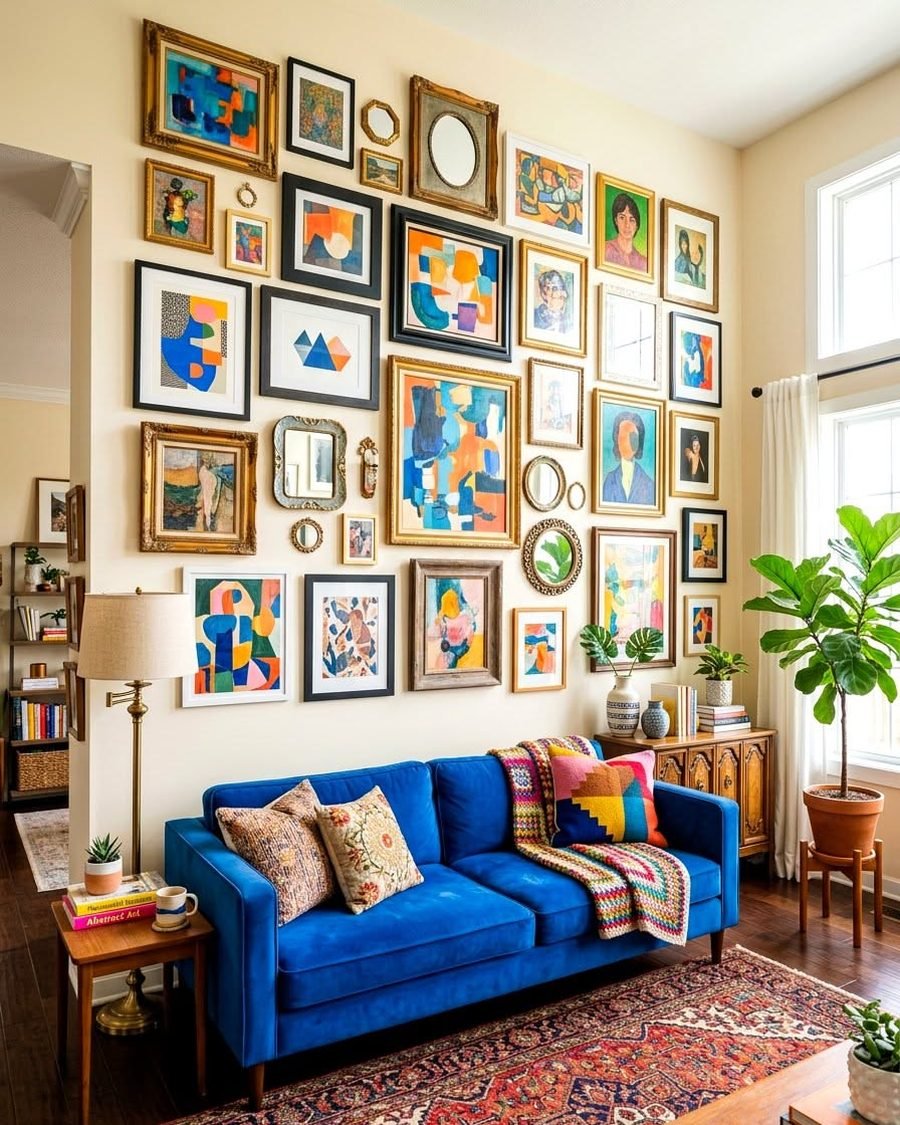
A gallery wall is dopamine decor in its purest form: a collection of things that make you happy, hung where you see them daily. The secret is that it should look collected, not curated — mix frame styles, mix sizes, and include the weird stuff: concert tickets, your kid’s drawing, that flea-market painting you could not leave behind.
Start by laying the arrangement on the floor and photographing it before a single nail goes in. Keep two to three inches between frames, and anchor the whole thing around one larger piece at eye level. Salon-style walls (edge to edge, floor to near-ceiling) suit maximalists; a tight grid of matching frames suits those who want joy with a little more order. The same collected approach works beautifully in a bathroom — these bathroom wall art ideas show moisture-safe ways to do it.
Try this: Add one non-art object to every gallery wall — a small mirror, a wall-mounted plant holder, a vintage plate. It breaks the “frame grid” monotony and adds dimension.
6. Paint the Ceiling a Surprise Color
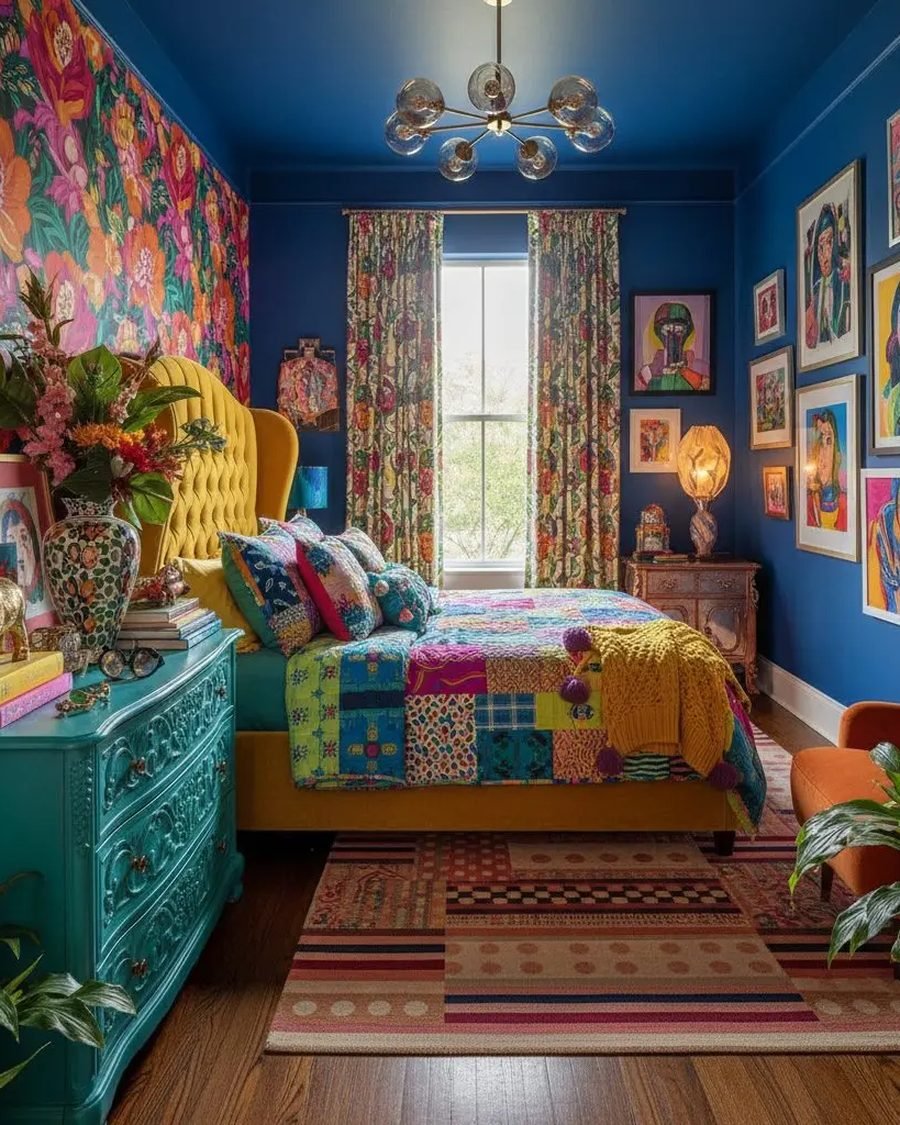
The ceiling is the most underused surface in the home, which makes it dopamine decor’s best-kept secret. A sky-blue bedroom ceiling, a butter-yellow kitchen ceiling, or a deep plum dining room ceiling delivers a hit of joy every time you look up — and guests always notice it, because nobody expects it.
This works best in rooms with white or neutral walls, where the ceiling becomes the room’s jewelry. In bedrooms, a soft color overhead feels like sleeping under a tinted sky; in dining rooms, a saturated ceiling makes evening meals feel like an event. Use flat paint to avoid glare from overhead lights.
Try this: Carry the ceiling color onto the top six inches of the walls. It blurs the hard line where wall meets ceiling and makes the color feel like it is hugging the room.
Furniture With Feel-Good Energy
7. Invest in a Jewel-Toned Velvet Sofa

If dopamine decor has a mascot, it is the velvet sofa in a color with no apologies — emerald, sapphire, ruby, or mustard. Velvet catches light beautifully, so the color shifts and glows through the day, and the texture practically begs to be touched. One great sofa can carry an entire living room.
You do not need to buy new. Velvet sofas are thrift-store and marketplace staples because people buy bold and then get scared — their loss is your gain. Check the frame for sturdiness, steam-clean the upholstery, and you have a designer look for a fraction of retail. If a full sofa feels like too much, a velvet loveseat or a pair of velvet armchairs gives the same hit on a smaller scale.
Try this: Pair a jewel-toned sofa with a rug that contains a whisper of the same color. That tiny echo ties the room together without matching too perfectly.
8. Add a Sculptural Accent Chair
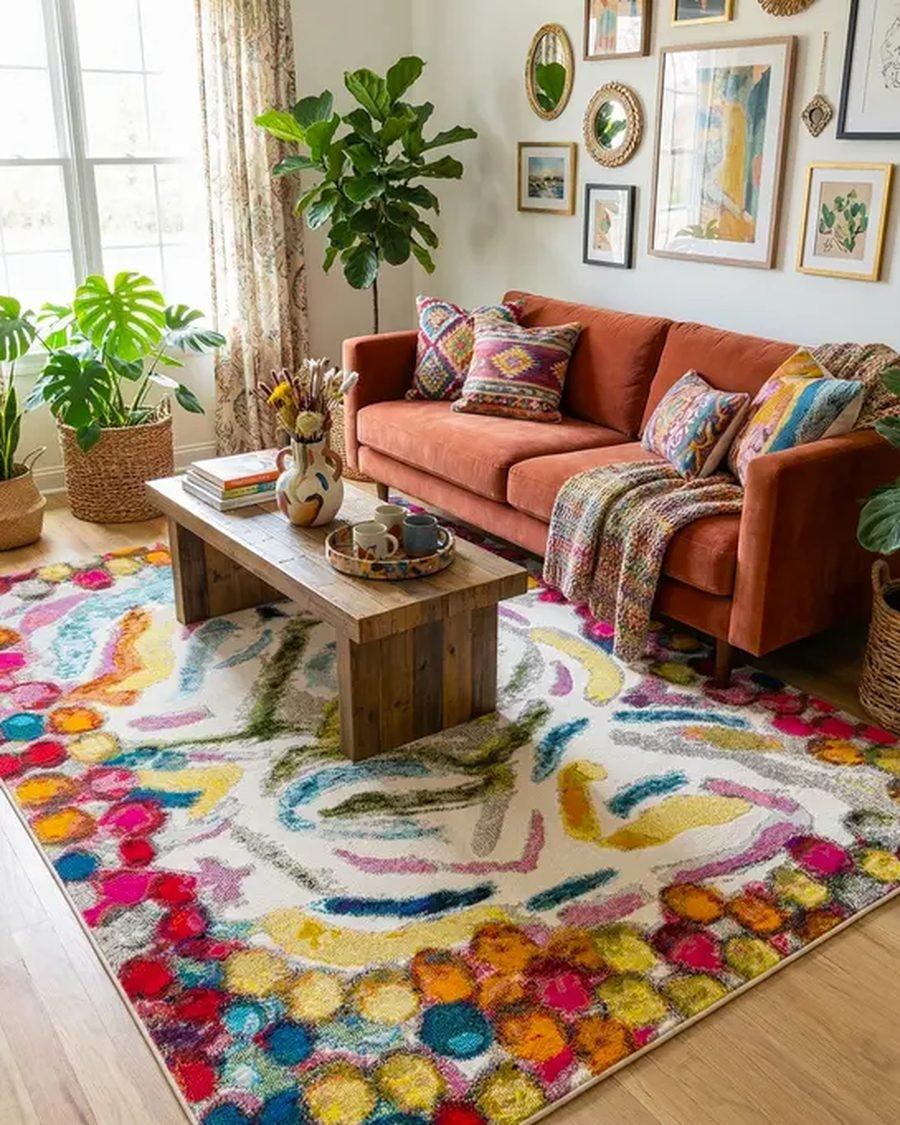
Every joyful room needs at least one piece of furniture with a personality — a chair with a curved back, an unexpected silhouette, or a color that refuses to blend in. A sculptural accent chair works like exclamation punctuation in a sentence: it gives the room energy and gives guests somewhere memorable to sit.
Look for curved boucle chairs, mid-century silhouettes in bright upholstery, or rattan peacock chairs for a boho-dopamine crossover. Place it at an angle rather than squared up with everything else; the slight rebellion in placement makes the whole arrangement feel more relaxed and alive.
Try this: Drape a contrasting throw over one arm of the chair. It softens the “new furniture” stiffness and makes the piece look like it has lived a happy life already.
9. Mix and Mismatch Dining Chairs

Matching dining sets are the enemy of dopamine decor. A table surrounded by chairs in different colors, eras, and silhouettes feels like the best dinner party you have ever been to — lively, welcoming, and a little bit mischievous. This is also one of the cheapest ideas on this list, because single orphan chairs cost almost nothing secondhand.
Unify the chaos with one common thread: paint them all different shades of one color family, or keep the wood tones similar while varying the shapes. If painting, use durable furniture paint and finish with a clear topcoat — dining chairs take real abuse.
Try this: Give the two end chairs a bolder color than the side chairs. It creates a natural “host” feeling at each end of the table and looks intentional in photos.
10. Paint a Thrifted Dresser a Bright Hue

That sad brown dresser on the curb? It is a dopamine project waiting to happen. A coat of paint in coral, cobalt, or chartreuse turns the most boring storage piece into the happiest thing in the room — and painted furniture is forgiving, because brush marks just add character.
Prep matters more than the paint: clean with degreaser, scuff-sand, prime, then two thin coats of furniture-grade paint. Swap the hardware for brass, ceramic, or colorful knobs, and suddenly a $20 find looks like a boutique piece. This works for nightstands, credenzas, bookshelves, and filing cabinets too.
Try this: Paint only the drawer fronts a bright color and leave the frame neutral (or vice versa). Two-tone pieces look custom and let you be bold without overwhelming the room.
11. Go Full Maximalist in the Living Room

Sometimes dopamine decor means stopping the editing and letting the room be gloriously, unapologetically a lot. A maximalist living room layers color on pattern on texture — the velvet sofa, the gallery wall, the patterned rug, the plants, the books — until the room hums with energy. Done right, it feels like the visual equivalent of your favorite song.
The trick that separates joyful maximalism from clutter is repetition: repeat each color at least three times around the room so the eye reads intention. Vary the scale of patterns (big floral + tiny stripe + medium check), and give every surface a job — styled, not stuffed. Edit by removing one thing per surface, then stop.
Try this: Take a photo of the room in black and white. If the tonal values still create a pleasing composition, your maximalism has structure; if it is all one gray blur, you need more contrast somewhere.
Textiles and Pattern Play
12. Anchor the Room With a Bold Patterned Rug
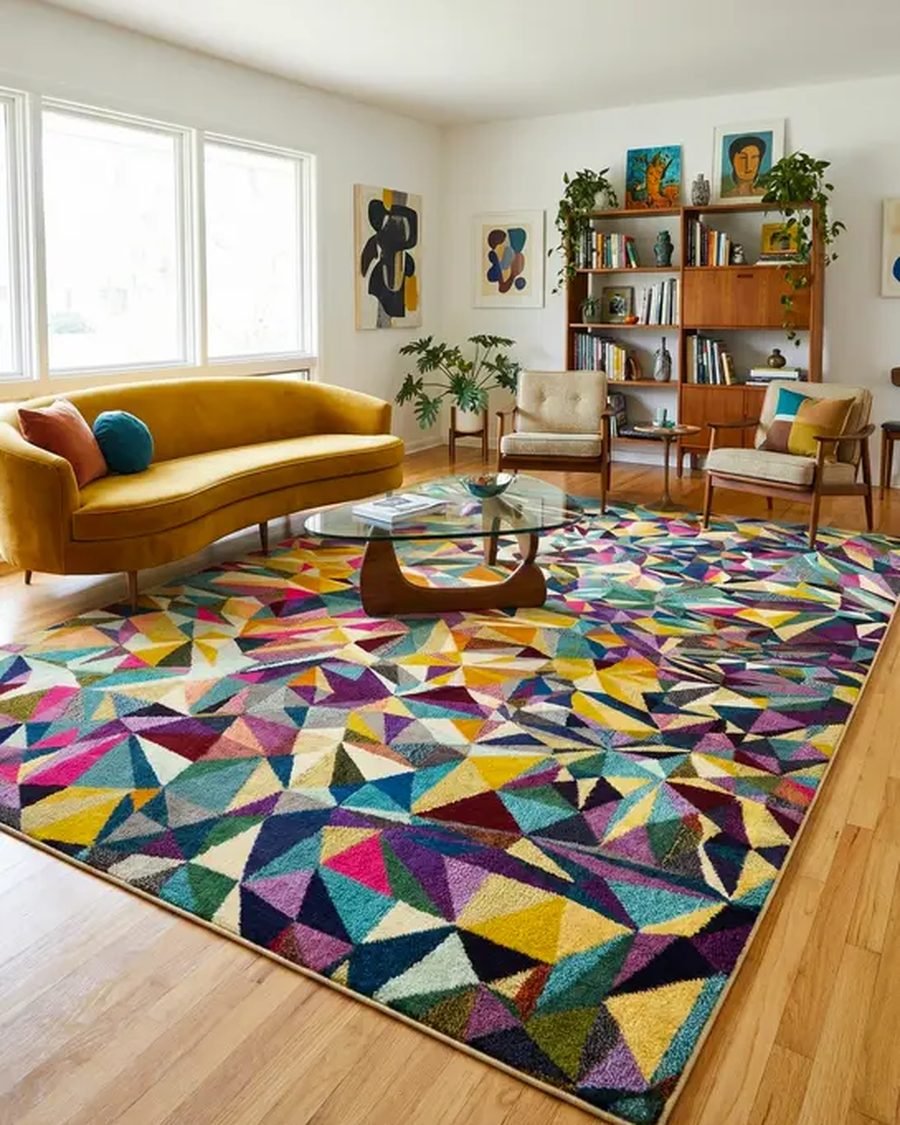
A rug covers more visual real estate than almost anything else you own, which makes it the highest-impact textile in the room. Dopamine decor loves rugs with energy: vintage-style overdyed rugs in hot pink, geometric kilims, checkerboard patterns, or abstract painterly designs that look like art for the floor.
Size it generously — the front legs of all seating should sit on the rug, minimum. A too-small rug chops the room up and kills the cozy factor no matter how pretty the pattern. Layer a smaller bold rug over a larger neutral jute or sisal rug if you love the pattern but the price of a big one makes you wince.
Try this: Pull your throw-pillow colors from the rug, not the other way around. The rug is the hardest thing to change, so let it lead the palette.
13. Mix Throw Pillows Like You Mean It
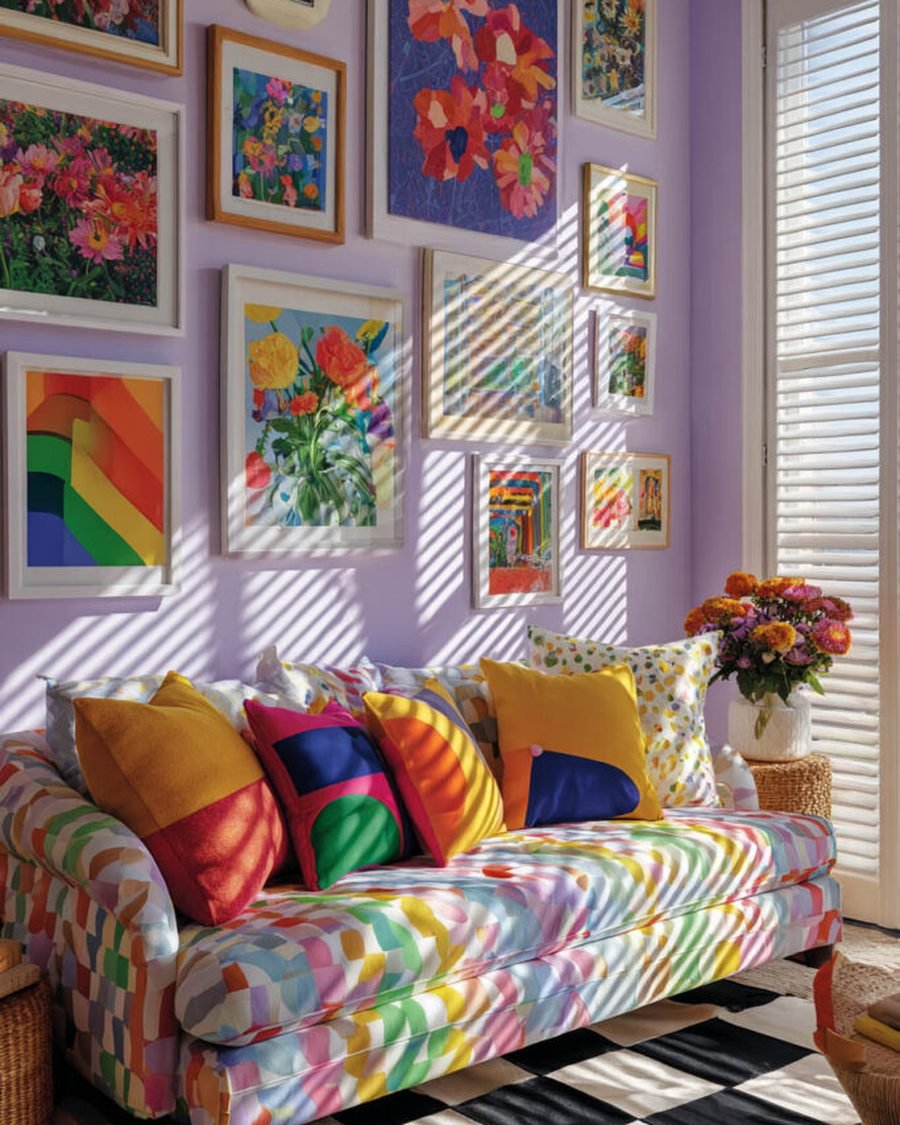
Throw pillows are dopamine decor’s playground: cheap, changeable, and impossible to get wrong if you follow one rule — vary everything. Vary the scale (one large pattern, one small), vary the texture (velvet, linen, boucle), and vary the motif (floral with stripe with solid). The only real mistake is buying a matching set of four identical pillows.
Odd numbers look best: three or five on a sofa, depending on its size. Include one pillow in an unexpected shape — a round cushion, a bolster, a lumbar pillow — because the shape contrast adds as much interest as the color. And do not be afraid of “clashing”: pink with red, orange with purple — dopamine decor was made for these combinations.
Try this: Use pillow covers instead of whole pillows. You can swap the entire mood of a room seasonally for the price of a pizza.
14. Dress the Bed in Happy Bedding
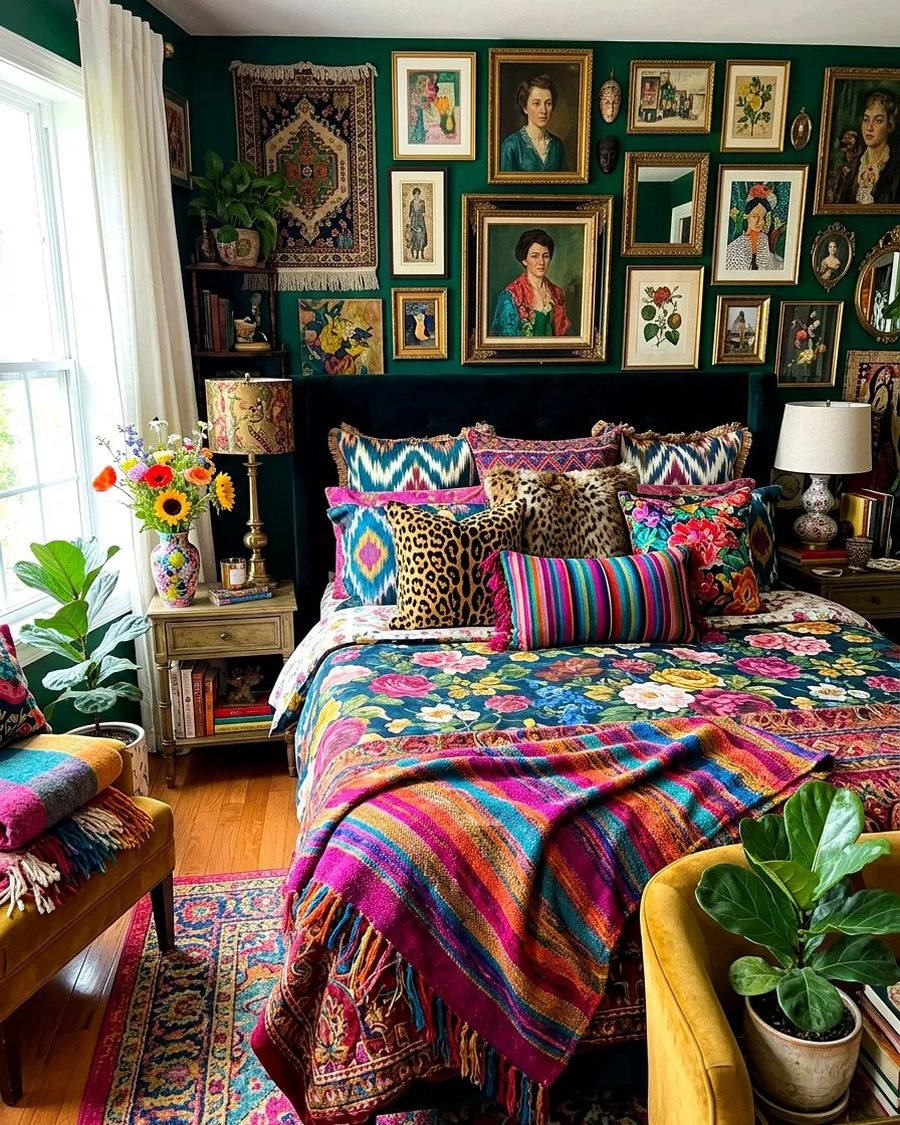
You spend a third of your life in bed, so the bedroom deserves dopamine too — and bedding is the easiest lever. Striped duvets in sorbet colors, floral quilts, gingham sheets, or a duvet in one unapologetic saturated hue can make the whole room feel like a happy place before you even add anything else.
Layer for the look: a patterned duvet, solid sheets in a pulled color, a textured throw folded across the foot, and sleeping pillows plus two shams plus one lumbar. The layers make even inexpensive bedding look lush. In small bedrooms, keep the wall color calm and let the bedding be the star — it is easier to change than paint when your happy color evolves.
Try this: Flip the duvet seasonally — bright side out in spring and summer, a deeper jewel tone for fall and winter. Two moods, one duvet cover set.
15. Roll Out a Colorful Runner in the Hallway

Hallways are the forgotten highways of the home, and a colorful runner turns a pass-through into a destination — a small dopamine decor win for the most-walked strip of the house. A vintage-style runner in saturated reds and blues, a striped cotton runner, or a bold geometric pattern makes every trip to the kitchen feel slightly more festive.
Measure before you buy: leave a few inches of floor visible on each side and choose a runner that spans most of the hallway’s length — a too-short runner looks like an afterthought. Low-pile weaves survive foot traffic best, and washable rugs have become genuinely beautiful, which matters in the highest-traffic strip of the house.
Try this: If your hallway is dark, choose a runner with a light background. It bounces what little light there is and makes the corridor feel twice as wide.
16. Layer a Maximalist Bedroom
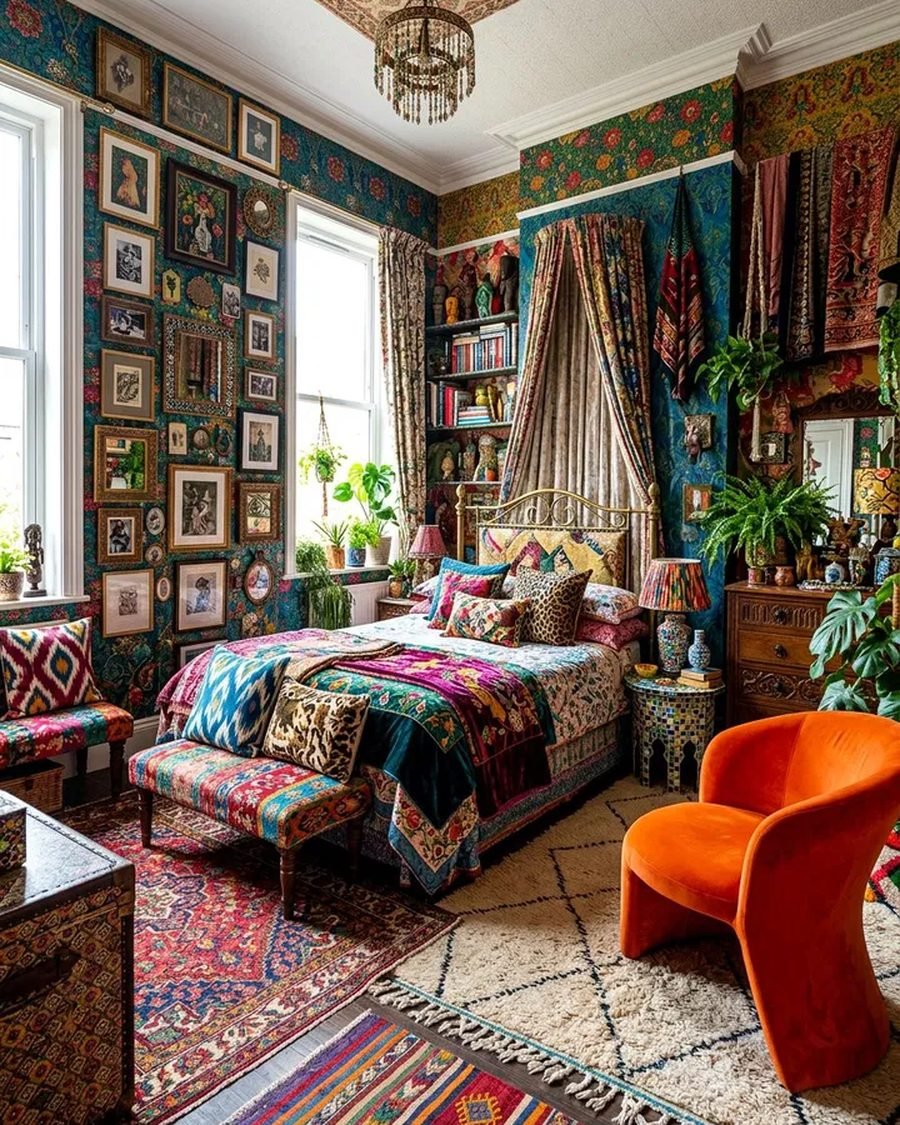
The bedroom is where dopamine decor gets to be soft as well as bold. Layer the bed with a patterned quilt, add a throw in a contrasting texture, pile on the pillows, hang art above the headboard, and let the nightstands hold a colorful lamp and a stack of books you actually read. A maximalist bedroom should feel like being tucked into a story.
Keep one element calm so the layers read as cozy rather than chaotic — often that is the wall color or the largest furniture piece. Warm lighting is non-negotiable here: a pair of mismatched table lamps with warm bulbs does more for the mood than any amount of pattern.
Try this: Make the bed the color story’s center and repeat its two main colors in the curtains and one piece of art. Three echoes are enough to make maximalism feel designed.
Kitchens and Bathrooms, Brightened
17. Paint the Kitchen Cabinets a Joyful Color

White kitchens had a long reign, and in dopamine decor, it is over. Cabinets in sage green, dusty blue, terracotta, or even sunny yellow make the hardest-working room in the house feel like somewhere you actually want to hang out — which, given how much time we spend there, matters enormously.
Cabinet painting is a real project, so do it right: remove doors and hardware, degrease thoroughly (kitchens are greasy in ways you cannot see), sand, prime with a bonding primer, and apply two to three thin coats of cabinet-grade enamel with a foam roller for a factory-smooth finish. If a full paint job feels daunting, paint just the island a bold color and leave the perimeter cabinets neutral — you get eighty percent of the joy for twenty percent of the work. If you want to take the color further, these kitchen wall color ideas pair beautifully with painted cabinets.
Try this: Swap the hardware when you paint. Brushed brass against green, matte black against yellow — new knobs and pulls are jewelry for cabinets.
18. Choose a Bright, Happy Backsplash
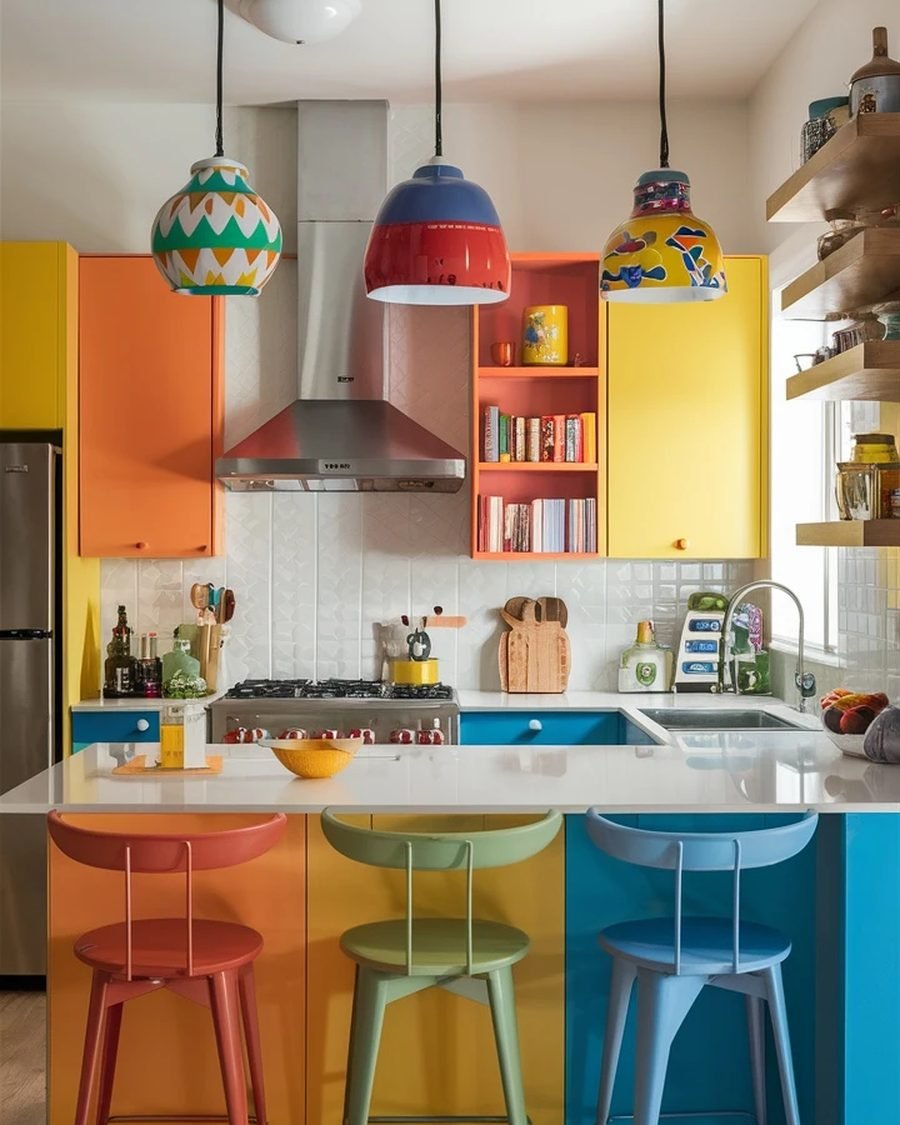
The backsplash is the kitchen’s gallery wall in dopamine decor — a relatively small area with outsized visual impact. Glossy zellige tiles in emerald or cobalt, hand-painted-look ceramic, or even a bold peel-and-stick mural behind the stove can turn a plain kitchen into a dopamine kitchen in a weekend.
Because the area is small, this is the place to indulge the color you were scared to use elsewhere. That tangerine tile? The pink grout? Go for it. If you rent, peel-and-stick tiles and even washable wallpaper rated for kitchens give you the look with zero landlord drama.
Try this: Run the backsplash all the way to the ceiling behind the range. The vertical drama makes even a modest kitchen feel custom and grand.
19. Tile the Bathroom With Pure Joy
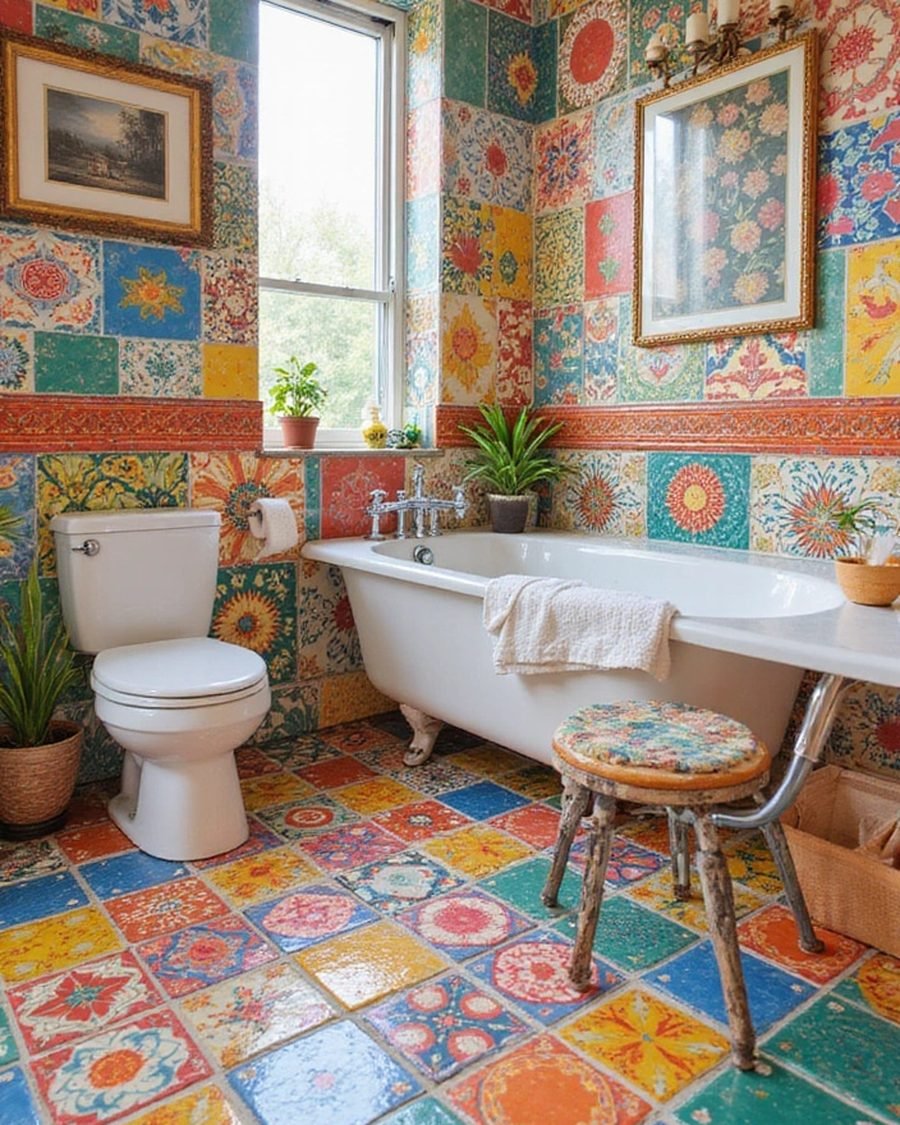
Bathrooms are small, private, and used daily — the holy trinity for dopamine decor experiments. Colorful floor tile, a patterned shower surround, or a single wall of fish-scale tile in a saturated color turns a purely functional room into a little daily celebration.
If a full retile is out of reach, focus on one surface: the floor is the highest-impact choice because you see it from the doorway. For a full-room take, these small maximalist bathroom ideas show how far bold tile can go. Stenciled tile paint over existing plain tile is a legitimate weekend project that holds up surprisingly well with proper sealing — just keep it out of the direct shower spray zone.
Try this: Pair bold tile with the simplest possible everything else — plain white sanitaryware, one mirror, one light. The tile gets to be the undisputed star.
20. Turn the Sink Wall Into Art
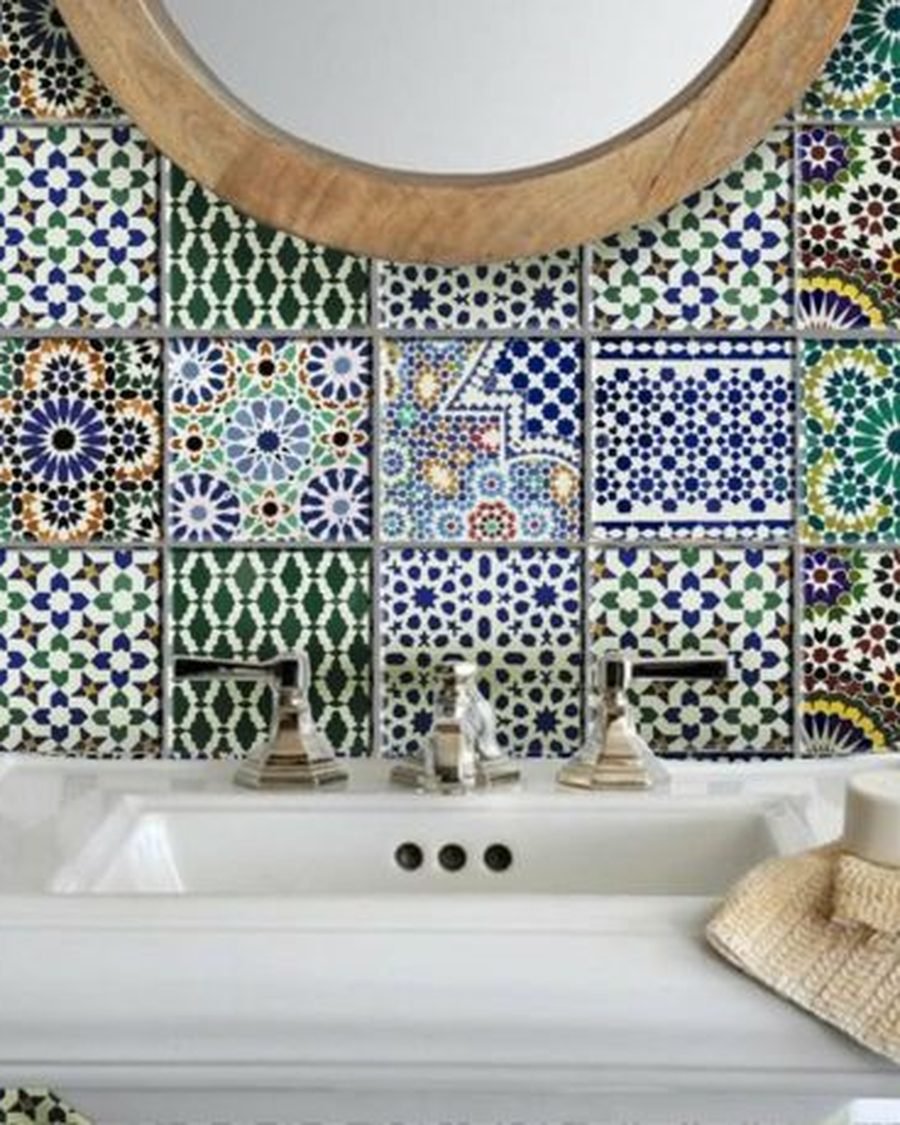
In a dopamine decor bathroom, the wall behind the sink is prime real estate: it is what you face every morning. Make it earn that attention with colorful tile, a bold wallpaper (properly sealed or in a low-splash zone), or a dramatic paint color paired with an interesting mirror.
This is also the perfect spot for the dopamine mirror — an arch, a blob, a sunburst, or a vintage shape in an unexpected finish. A mirror with personality doubles the visual interest of whatever is behind it, because it reflects the color back at you from a second angle.
Try this: Flank the mirror with a pair of small sconces or plug-in wall lights instead of a single overhead bar. Face-level light is kinder, and two fixtures frame the moment beautifully.
Small Spaces, Big Happiness
21. Make the Entryway Say Hello in Color
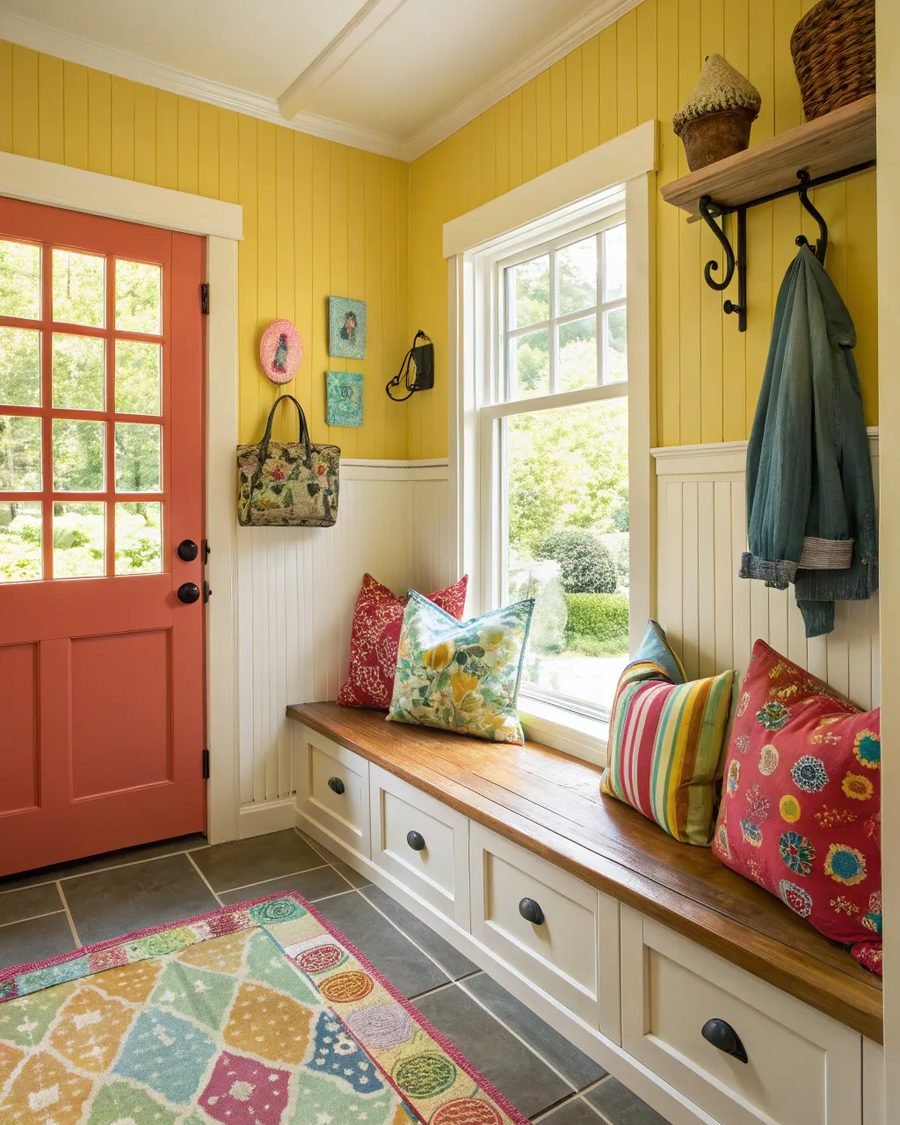
The entryway sets the emotional tone for the whole house — it is the first thing you see coming home and the last thing you see leaving. A yellow bench, a coral console, a bold rug, or walls in a welcoming saturated hue tells everyone (including you) that this is a happy house.
Function matters as much as color here: a place for keys, a spot for shoes, a mirror for last looks. Choose cheerful versions of each — a bright tray for keys, a patterned runner, hooks in fun colors. Even the smallest entry can hold a narrow console and one great piece of art. For bigger, bolder entry inspiration, browse these maximalist entryway ideas.
Try this: Paint the inside of the front door a bold color. You see it every time you leave, and it is a secret joy no one expects.
22. Style a Console Table With Warm Brights

A console table is a dopamine decor vignette waiting to happen. Start with something tall (a lamp or a leaning mirror), add something living (a plant or fresh flowers), stack a few colorful books, and finish with one personal object — the formula works every time, and the colors make it sing.
Odd groupings in threes read best, and varying heights keeps the eye moving. In an entryway, keep one side of the console clear for the daily drop zone (keys, mail, sunglasses) so the styling survives real life instead of lasting until Tuesday.
Try this: Lean art against the wall instead of hanging it. The casual angle feels collected and lets you swap pieces whenever the mood strikes.
23. Turn a Hallway Into a Mini Gallery

Long hallways beg for attention, and a run of colorful art turns dead space into a dopamine decor destination. Hang pieces salon-style along one wall, or create a rhythmic alternating pattern of art and small mirrors to bounce light down a dark corridor.
Thrift stores are gallery-wall goldmines: interesting frames cost almost nothing, and you can paint mismatched frames one unifying color for instant cohesion. Print your own photos large — a hallway of family travel shots in colorful frames is dopamine decor with a personal archive built in.
Try this: Hang the center of the arrangement at 57 inches from the floor (gallery standard). It feels right even when you cannot explain why.
24. Create a Conversation Corner
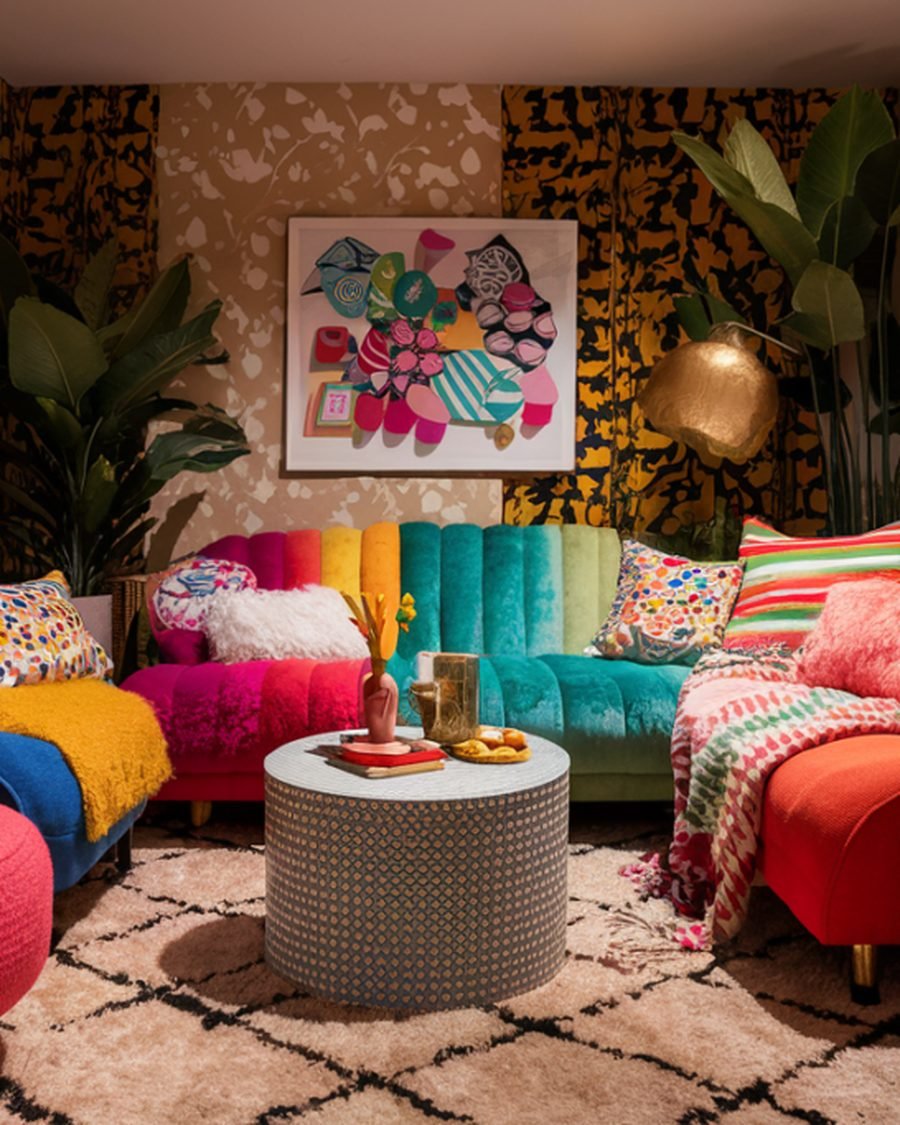
You do not need a big living room to have a joyful sitting spot — dopamine decor works at any scale. Two colorful chairs (or one chair plus a pouf), a small side table, a great lamp, and a rug to define the zone — that is a conversation corner, and it might become the most-used seat in the house.
Tuck it into an underused spot: a bay window, the end of a hallway, a bedroom corner, a landing. The key is making it feel intentional rather than leftover — the rug does most of that work, signaling “this is a place” to anyone who walks by.
Try this: Add a small side table at exactly armrest height. Corners fail when there is nowhere to put the coffee.
25. Design a Living Room With Zero Beige

Here is a challenge that will change how you see your home: imagine your living room with absolutely no beige, gray, or greige anywhere. What would you choose instead? That mental exercise is the fastest route to discovering your true happy palette.
In practice, going zero-beige means committing: the colorful sofa, the patterned rug, art with real pigment, curtains with a point of view. It does not mean every surface screams — wood tones, plants, and warm whites still count as neutrals in dopamine land. If you want a proven palette to start with, these blue and green living room ideas are a great zero-beige launchpad. It means nothing is beige by default; everything earns its place.
Try this: Remove one beige thing per week — the gray throw, the greige curtains — and replace it with something colorful only when you find something you genuinely love. No rush, no filler.
Finishing Touches That Sing
26. Use Purple as Your Secret Weapon

Purple is dopamine decor’s wildcard: unexpected, a little bit magical, and endlessly versatile. Lavender reads soft and dreamy, plum reads dramatic and enveloping, and vivid violet reads pure fun. Few colors change a room’s personality as completely with a single application.
Try it as an accent wall behind a bed, on a ceiling, or in small doses — velvet cushions, a painted side table, art with violet depths. Purple pairs beautifully with mustard yellow, emerald green, and warm brass, so it plays well with the other dopamine staples.
Try this: In a room that already has warm colors, add one cool purple note (or vice versa). Temperature contrast is what makes color combinations feel electric rather than flat.
27. Hang Art Salon-Style, Floor to Nearly Ceiling
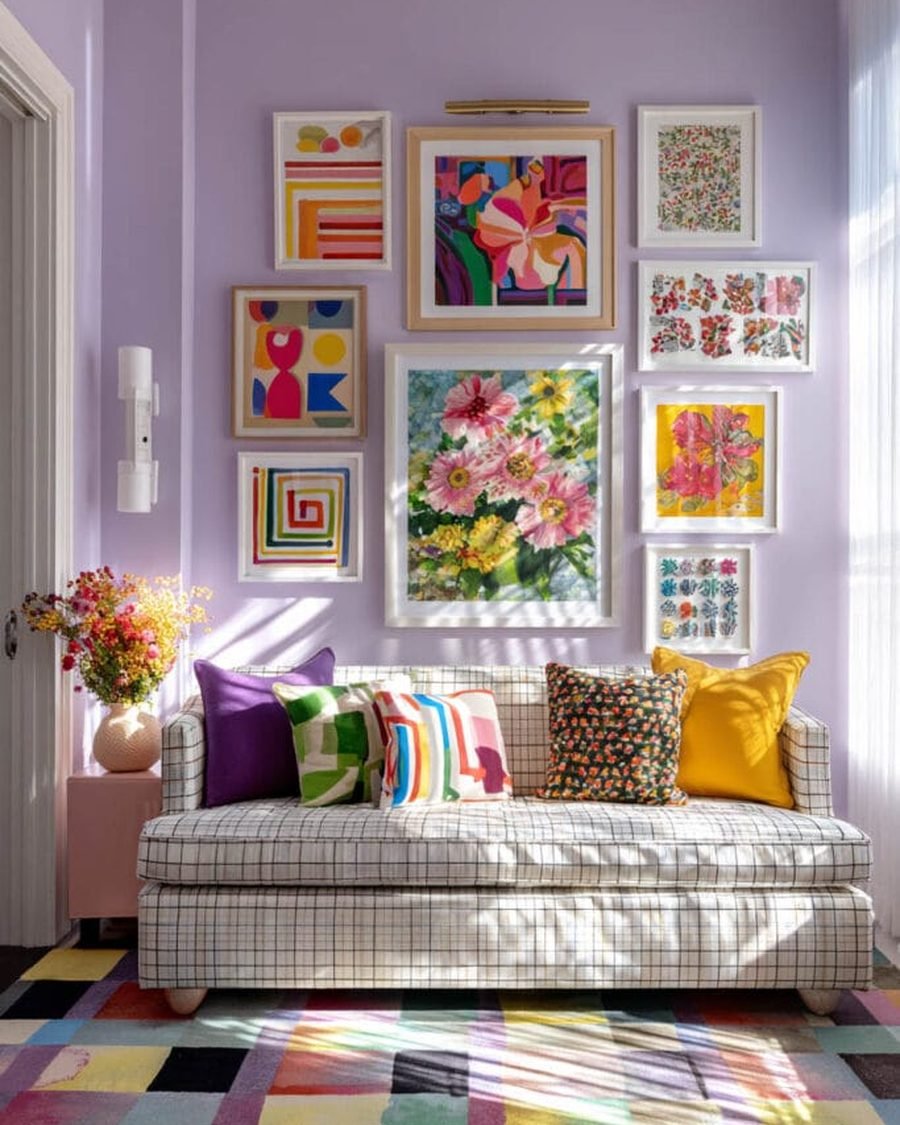
If a standard gallery wall is dopamine, a salon-style wall — art hung edge to edge from near the floor to near the ceiling — is dopamine turned all the way up. It is maximalist, it is dramatic, and it turns one wall into the most interesting thing in the house.
The density is the point, so embrace it: mix oils and prints, photographs and textiles, mirrors and small objects. Keep frames within a loose color story (all warm woods, or all black, or all gold) so the wall reads as one composition instead of visual noise. Start hanging from the center outward.
Try this: Include one oversized piece that breaks the grid — it gives the eye a resting place inside the beautiful chaos.
28. Make the Bedroom Dramatic

Bedrooms do not have to whisper. A dramatic dopamine decor bedroom might have a canopy bed draped in fabric, a headboard in a saturated color, walls in a moody floral, layered lighting — it feels like a boutique hotel designed entirely around your taste, and you get to sleep there every night.
Drama in the bedroom works because the room is private: this is where you can indulge the aesthetic no one else has to agree with. Keep the lighting warm and layered (overhead off, lamps on) so the drama reads as cozy rather than theatrical.
Try this: Hang the curtains as high and wide as possible — ceiling to just above the floor, extending well past the window frame. It is the cheapest way to make any bedroom feel grand.
29. Pair Cool Teal With Warm Accents

Teal is the hardest-working color in dopamine decor: deep enough to feel sophisticated, bright enough to feel joyful, and friendly with almost every other color. A teal sofa or teal walls paired with warm wood, cognac leather, and brass creates the temperature contrast that makes rooms feel alive.
This combination is also one of the most livable ways into bold color — teal reads as a “real” color even to color-shy partners and guests, while still delivering the dopamine hit. Add the warmth through wood tones, woven textures, and metallics rather than more paint.
Try this: If teal walls feel like a lot, try teal on the lower half of the wall with warm white above (a modern take on wainscoting). All of the depth, half of the commitment.
30. Scatter Small Rainbow Touches Last
Here is the finishing secret of dopamine decor: once the big pieces are in place, scatter small rainbow touches everywhere — a red tray on the coffee table, yellow candlesticks on the mantel, a blue vase on the shelf, a pink planter by the window. These tiny color notes are what make a room feel finished rather than merely furnished.
Shop your own home first: most of us own more colorful small objects than we realize, currently exiled to closets and drawers. Bookshelves are perfect for this too — these bookshelf styling ideas show how to layer color on shelves. Group them by color for impact — three yellow things together read as a decision; one yellow thing alone reads as an accident.
Try this: The “rule of three” works for color too. Any accent color should appear at least three times in a room to feel intentional.
How to Start Your Dopamine Decor Makeover
Feeling inspired but not sure where to begin? Start small and start where you spend the most time. Pick one room, pick one happy color, and make one change this weekend — paint the wall, swap the bedding, hang the gallery. Designers suggest the same approach: start with two or three anchor colors that energize you, then build the room around them. Live with it for two weeks before deciding what is next. Design experts give the same advice — start with small, affordable tweaks and let the room grow from there.
Set a budget that feels like fun, not stress. Some of the highest-impact ideas here cost under $50: a gallon of paint, thrifted frames, pillow covers, a can of spray paint for that sad side table. The $127 bedroom makeover is real — dopamine decor rewards creativity far more than spending.
And remember the only rule that matters: if it makes you happy when you walk into the room, it is right. Trends will move on, but a home that makes you smile is timeless.
Frequently Asked Questions
What is dopamine decor in simple terms?
Dopamine decor is a home decorating style focused on joy: bold colors, playful patterns, and personal objects chosen because they make you happy, not because they follow design rules. Think colorful sofas, gallery walls, patterned rugs, and quirky accessories mixed together in a way that feels personal and uplifting.
Is dopamine decor expensive to try?
Not at all. Most dopamine decor ideas are budget-friendly: paint, thrifted furniture, pillow covers, and DIY art cost very little. Start with one room and one change — a $50 gallon of paint or a set of colorful pillow covers can completely shift a room’s mood.
Can renters do dopamine decor?
Absolutely. Peel-and-stick wallpaper, removable wall murals, colorful textiles, art leaned on shelves, and painted thrifted furniture (which you own) all deliver the dopamine hit with zero landlord issues. Focus on things you can take with you: rugs, pillows, lamps, and art.
How do I keep dopamine decor from looking messy?
Three tricks: repeat each color at least three times so it looks intentional, vary pattern scales (big with small, never all the same size), and leave some breathing room — a calm wall or clear surface between the joyful moments. Photograph the room; the camera reveals clutter your eyes have learned to ignore.
What colors work best for dopamine decor?
Whatever makes you happy — but the classics are sunny yellow, coral, teal, emerald, fuchsia, and cobalt blue. Jewel tones feel sophisticated, brights feel playful, and pastels feel dreamy. Pick one lead color, support it with two companions, and add tiny pops of a fourth.
Does dopamine decor work in small spaces?
It works brilliantly in small spaces. A tiny powder room in tangerine, a studio with one bold accent wall, a galley kitchen with colorful open shelving — small rooms take bold choices beautifully because you experience them all at once. Just keep the scale of patterns proportional to the room.
The Joyful Home Is Worth It
Your home should be the place that recharges you, not another source of quiet stress. Dopamine decor is really just permission — permission to choose the pink sofa, to hang the weird art, to paint the wall the color you have loved since childhood. Start with one idea from this list this weekend, and pay attention to how the room makes you feel on Monday morning. That little lift? That is the whole point. Here is to homes that make us happy.

5 thoughts on “30 Vibrant Dopamine Decor Ideas for a Happy Home (2026)”
Comments are closed.