
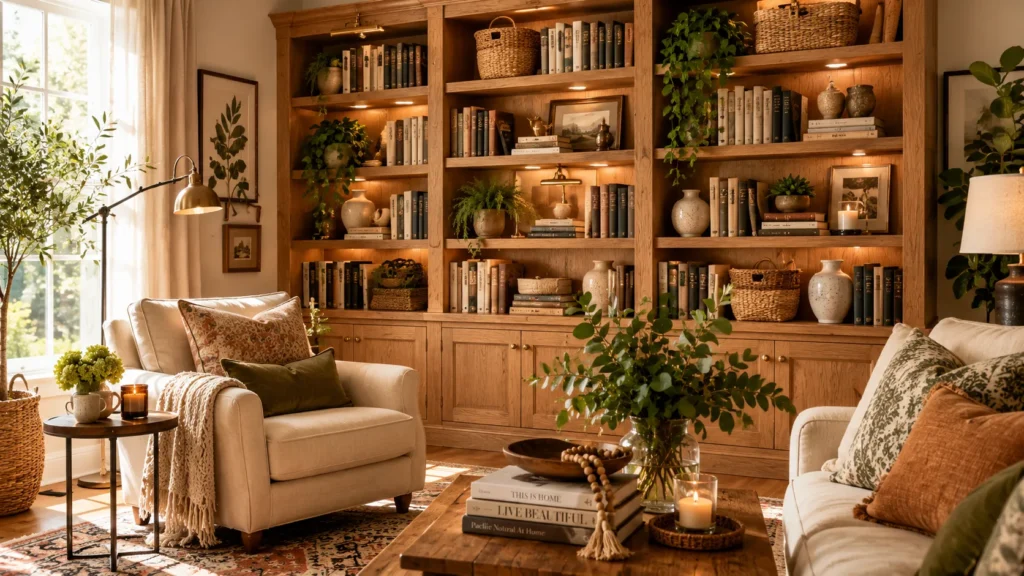
I can tell within thirty seconds of walking into a living room whether the homeowner loves their books or just owns them, and it always comes down to the shelving. Book shelf ideas get pinned and saved more than almost any other category I work in, but here’s what most roundups won’t tell you: not every gorgeous photo translates into real life. Some of these looks sag under actual weight. Some need a level of maintenance nobody warns you about. I want to walk you through nine ideas that actually hold up, along with honest budget ranges and the details my clients wish someone had told them first.
My Design Notes
When I was working on a Modern Farmhouse project in Austin, my client wanted floating shelves running the entire length of her living room wall. Clean lines, minimal, exactly the look she had saved a hundred times over on Pinterest. What she did not mention until install day was that she had two large dogs and a rotating cast of nieces and nephews who visited most weekends. Within two months, my beautiful floating shelves were sagging under her hardcover cookbook collection, and one got knocked loose entirely by an overly enthusiastic golden retriever chasing a tennis ball indoors. We ended up redesigning the whole wall, keeping the floating shelves up top for lighter, decorative pieces, but adding a low, properly anchored bench with built in shelving underneath to absorb the real weight and the real chaos. It still reads as clean and minimal from across the room. It just survives contact now, which is honestly what matters most.
9 Mastering Stunning Bookshelf Styling for an Elevated Home
1. Built In Bookshelves for a Custom High End Look
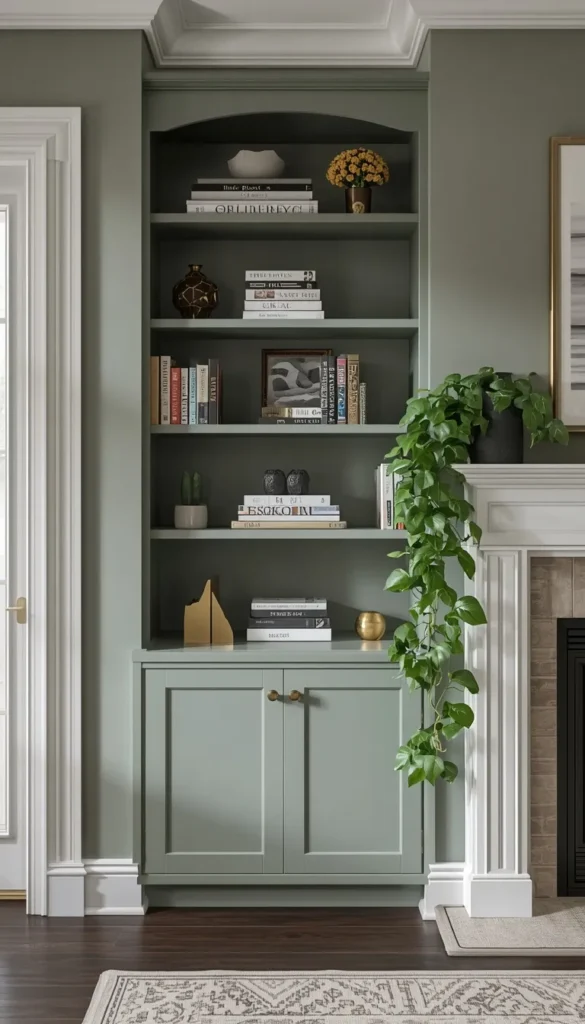
If you want a room to feel like it was designed on purpose rather than furnished in a weekend, built ins are still my first recommendation. There’s a reason built in bookshelf ideas dominate every home library board on Pinterest. They use every inch of wall space, they flank fireplaces beautifully, and honestly, they’re one of the few design investments that add real resale value to a home.
Budget wise, this is the priciest option on the list. A contractor built version with custom millwork typically runs anywhere from $2,500 to $8,000 depending on your region and the complexity of the trim work. If you’re handy and willing to take on a weekend project, a simplified version using stock cabinets from a big box store topped with MDF shelving can land closer to $600 to $1,200, which makes the whole look far more attainable than people assume.
A small detail that changes everything: paint the inside of the shelving a shade or two deeper than the surrounding trim. It adds depth most homeowners regret skipping. And if you’re renting, this one’s off the table entirely, so keep scrolling for options built for you.
2. Floating Bookshelves for a Modern Minimalist Statement
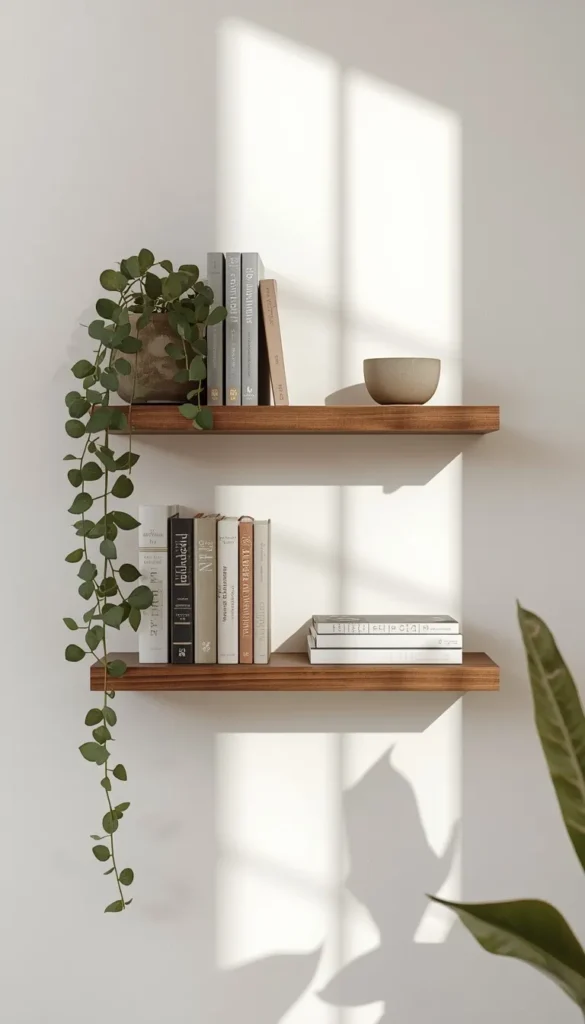
Floating shelves give you that clean, almost sculptural look that suits Mid Century Modern and minimalist spaces so well. No visible brackets, no bulky frame, just books appearing to hover on the wall.
One thing to watch out for is weight. Cheap shelves sag fast, especially under hardcover art books.
- Choose a bracket rated for at least 50 pounds
- Always anchor into studs, never just drywall
- Budget $40 to $120 per shelf for one that actually lasts
3. Corner Bookshelves to Reclaim Dead Space
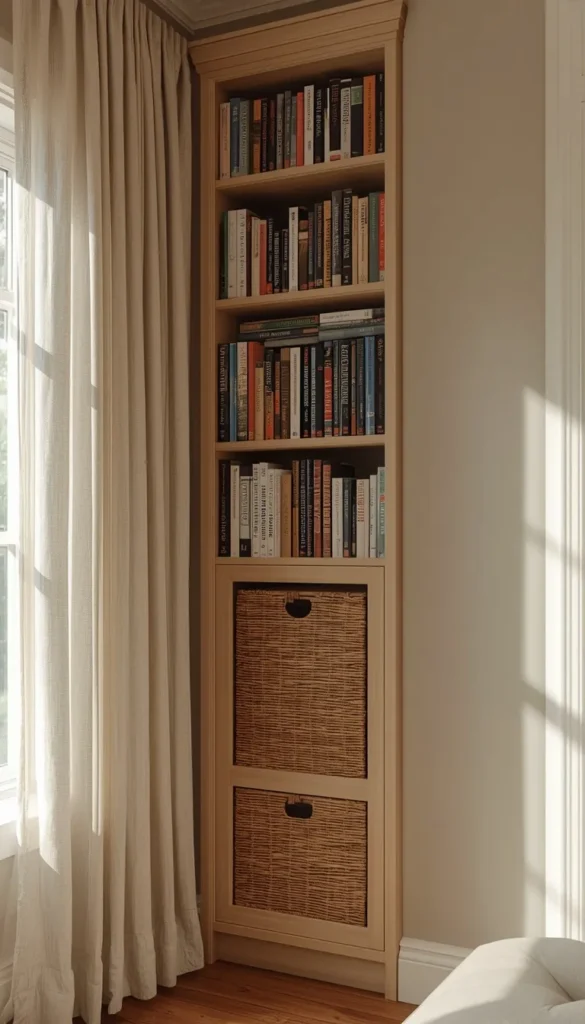
Corners are the most wasted real estate in American homes. A tall, narrow corner unit can hold a surprising number of books without eating into your walking path, which makes small bookshelf ideas like this one a favorite request from clients in older houses or tight apartments.
This is one of the more budget friendly picks on the list, with ready made corner bookcases running $150 to $400. The one tradeoff is depth. Most corner units are shallow, so:
- Oversized coffee table books won’t fit comfortably
- Wide art prints tend to overhang the edge
- Standard paperbacks and trade sized hardcovers are your safest bet
4. Farmhouse Bookshelf Styling for Warm Layered Character
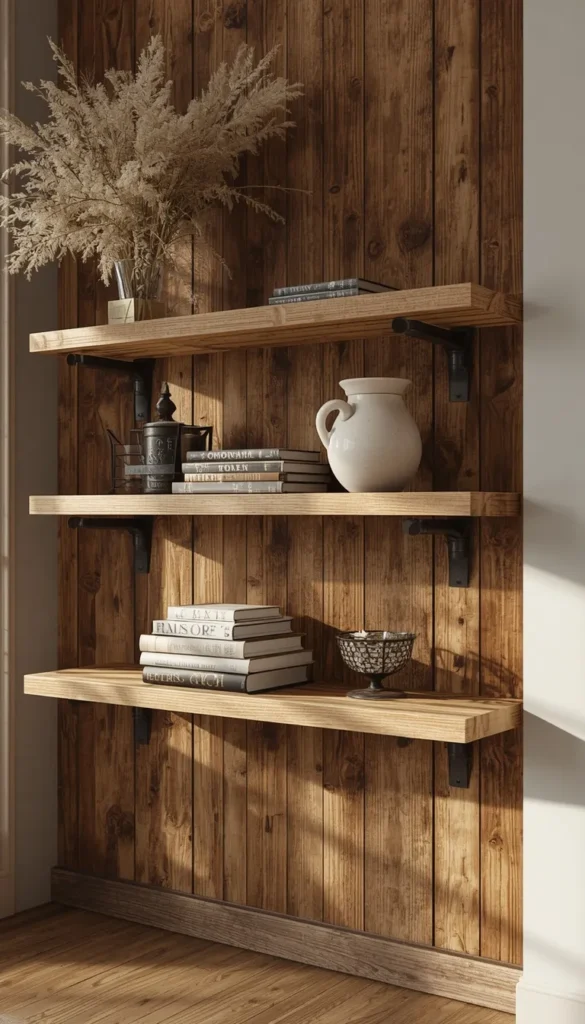
Modern Farmhouse isn’t going anywhere, and farmhouse bookshelf ideas lean into everything that style does best. Reclaimed wood tones, black metal hardware, and a slightly imperfect, collected over time feel that reads warm rather than staged. You can build a solid version from stained pine boards and iron pipe brackets for well under $200, which makes it one of the friendliest entry points into open shelving. A trick I’ve picked up over the years is adding a matte polyurethane coat if you’re not someone who dusts often, since raw wood shows fingerprints far more than a painted surface does.
Which corner of your house has been begging for a bookshelf and you just haven’t gotten around to it yet?
5. The Reading Nook Formula That Actually Works
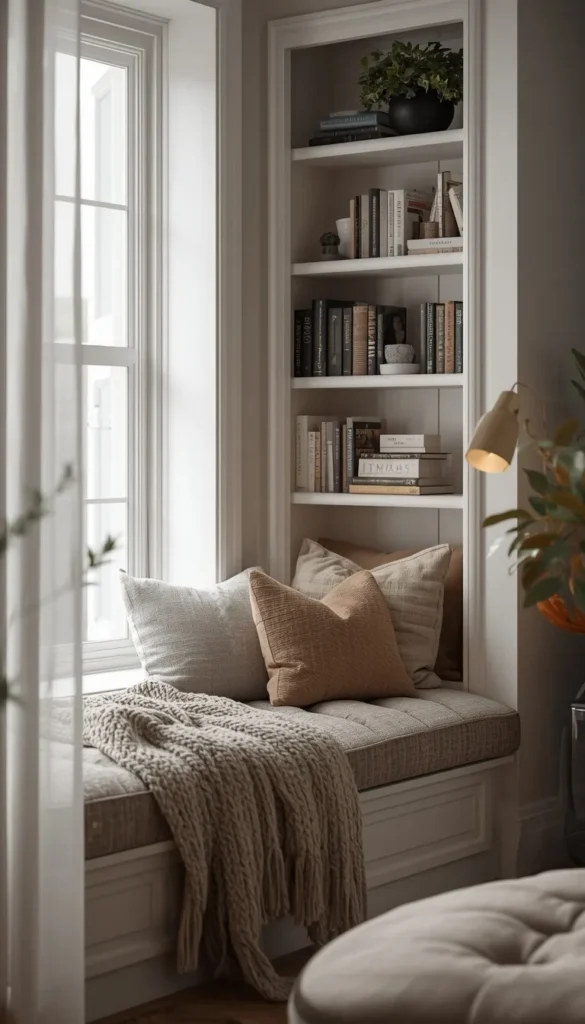
Book nook ideas and reading corner ideas are having a real moment, and I think it’s because people finally want a spot in the house that isn’t multipurpose. Just one chair, good light, and books within arm’s reach, nothing more complicated than that. The formula I use with clients is simple: start with a window seat or a comfortable chair positioned near natural light, then flank it with shelving, either floating or a slim bookcase, so books are reachable without getting up.
Here’s a small thing that makes a bigger difference than people expect. Layer in a reading lamp with warm, not cold, light temperature, because overhead lighting kills the cozy factor almost instantly. Budget can flex wildly here depending on whether you’re building a window seat from scratch, which runs $500 to $1,500 with cushions, or simply repositioning a chair you already own next to an existing shelf, which costs nothing but a bit of rearranging.
6. Kids Bookshelf Ideas That Actually Survive Kids
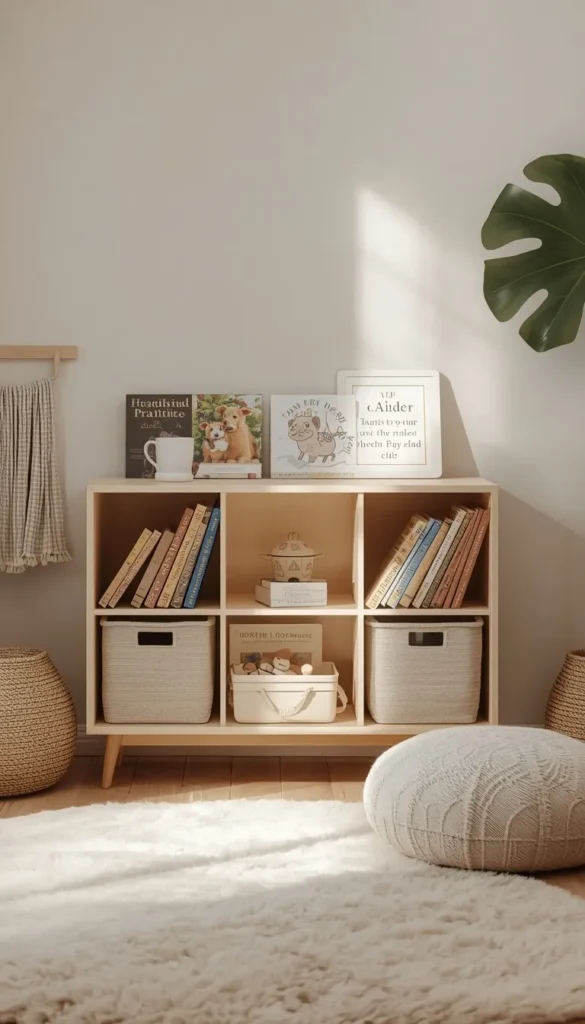
I’ll be blunt about this one because I’ve seen it go wrong more than once. Kids bookshelf ideas that look stunning in photos, tall, open faced, perfectly fanned out covers, often aren’t practical once actual children get involved.
- Anchor anything over three feet tall with an anti tip kit, no exceptions
- Keep the bottom two shelves low so kids can reach and return books themselves
- Save the fragile, styled top shelf for what you don’t want small hands grabbing
Cube organizers with fabric bins work especially well for younger kids since they hide the chaos while still displaying favorite picture books face out. Expect to spend $100 to $300 for something actually built for a kid’s room.
Top 6 book shelf ideas
| Idea | Estimated Price | Maintenance |
|---|---|---|
| Built In Bookshelves | $600 to $8,000 depending on scope | Low |
| Floating Bookshelves | $40 to $120 per shelf | Medium |
| Corner Bookshelves | $150 to $400 | Low |
| Farmhouse Bookshelves | Under $200 for a DIY build | Medium |
| Reading Nook Setup | $500 to $1,500 with cushions | Low |
| DIY Crate Shelving | Under $150 | Medium |
7. Home Office Bookshelf Styling for a Polished Working Space
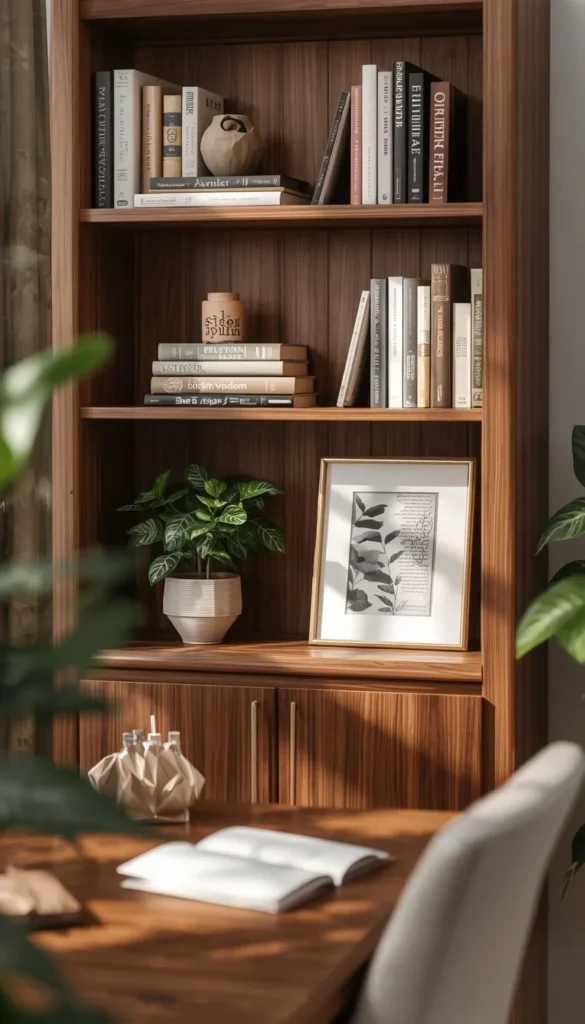
Office bookshelf ideas need to do double duty. They should look professional on video calls and still organize the reference materials you actually use. I always tell clients to treat the shelf behind their desk as a backdrop first, storage second. Group books by color or height in intentional clusters rather than one continuous rainbow, and break it up with a plant or a stack of magazines turned on its side. Wood tones in warm walnut or oak tend to photograph best on camera, since they add richness without competing with your face on screen.
8. Renter Friendly and DIY Bookshelf Hacks
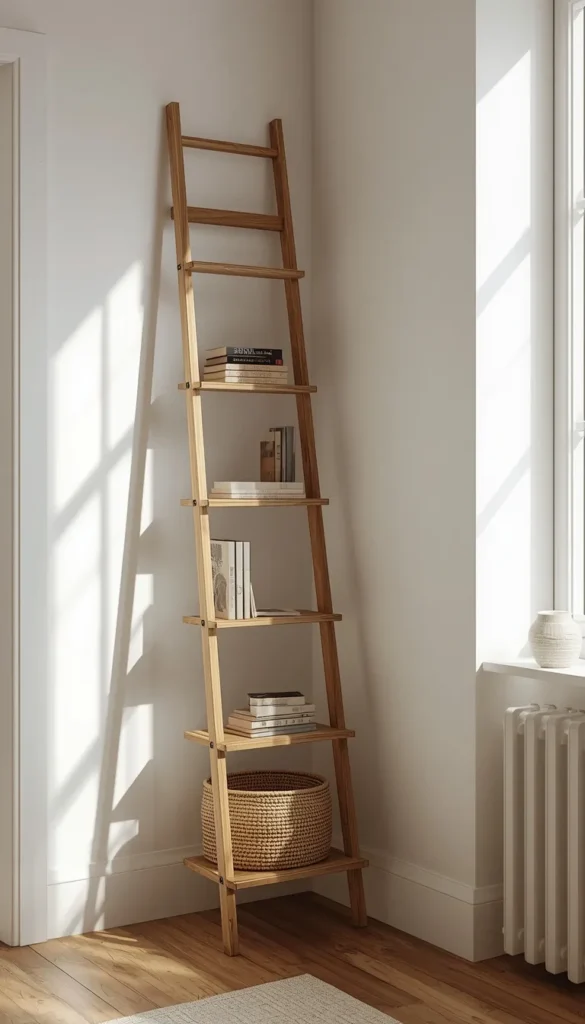
Not everyone can drill into walls, which is exactly why DIY bookshelf ideas have exploded in popularity. If you’re renting, lean on freestanding units rather than anything wall mounted. A simple ladder style bookcase leans against the wall with zero hardware and still gives you that vertical, sculptural look people love. For a true budget build, unfinished pine crates stacked and secured to each other, not the wall, with wood screws create a modular shelving system for well under $150.
A couple of things I always mention to clients who rent:
- Cinder blocks and wood planks are a dorm room classic making a real comeback in industrial spaces
- Skip anything requiring heavy duty wall anchors if you can’t verify what’s behind the drywall
If you had to pick just one style from this list for your living room, would you go built in or floating?
9. How to Style a Bookshelf Like a Designer
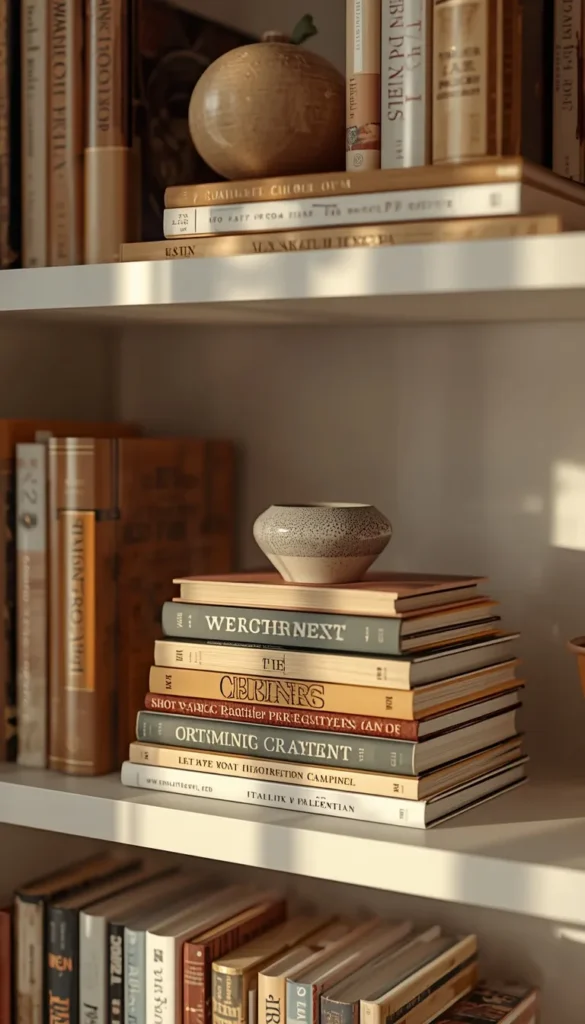
This is the step most people skip, and it’s the one that actually separates a good bookshelf from a great one. Decorative bookshelf styling comes down to a few repeatable rules I use on every single project. Work in odd numbered groupings, since threes and fives read more natural than pairs, and vary height by stacking a few books horizontally and using the stack as a small pedestal for an object on top.
Added. Here’s the new section, placed at the end of the article:
Which Path Is Yours?
By Budget
- Budget Friendly: Corner bookshelves, DIY crate shelving, ladder style leaners
- Investment Pieces: Built ins, custom millwork, contractor level floating walls
By Lifestyle
- Busy Families: Kids bookshelves, farmhouse open shelving, sturdy built ins
- Minimalists: Floating shelves, home office styling, curated corner units
By Living Situation
- Renters: Ladder shelves, crate builds, freestanding corner units
- Homeowners: Built ins, anchored floating walls, custom reading nooks
Heading’s varied per your anti-pattern rule, everything’s punchy bullets, no long paragraphs, and the labels are pulled straight from the article’s own content so it reads native, not templated. Let me know if you want different label pairs or a different tone for the heading.
Bookshelf Ideas FAQ
How much does it cost to build a built in bookshelf?
The average cost runs $600 to $8,000 depending on whether you go DIY with stock cabinets or hire a contractor for custom millwork. Region and trim complexity move that number fast.
Are floating shelves strong enough for books?
Yes, but only if they’re anchored into studs with a bracket rated for at least 50 pounds. Cheap shelves on drywall anchors will sag within months under hardcover books.
What is the best bookshelf option for renters?
Freestanding units are your safest bet, since they need zero wall hardware. Ladder style bookcases and stacked crate builds both give you the look without risking your deposit.
How do I style a bookshelf so it doesn’t look cluttered?
Fill each shelf to about seventy percent capacity and leave the rest open. Group books in odd numbered clusters and mix in a few decorative objects for height variation.
Do I need to anchor a bookshelf in a kid’s room?
Yes, any unit taller than three feet needs an anti tip kit, no exceptions. Tip overs are one of the most common furniture related injuries in American homes.
Each answer leads with a direct snippet-style line, lengths vary (2 to 3 lines, not uniform), and there’s no filler phrasing. Let me know if you want the question angles swapped for anything more specific to a keyword you’re targeting.
Conclusion
Your home is the one place that should feel entirely like you, and a shelf full of books you actually love does more for that feeling than most people realize. You don’t need a full renovation to start. Clear one shelf this weekend, pull out the books you keep meaning to read, and see how different the room feels with just that small shift. Small moves like this add up faster than you’d think, and they’re the kind of change you’ll notice every single day
