
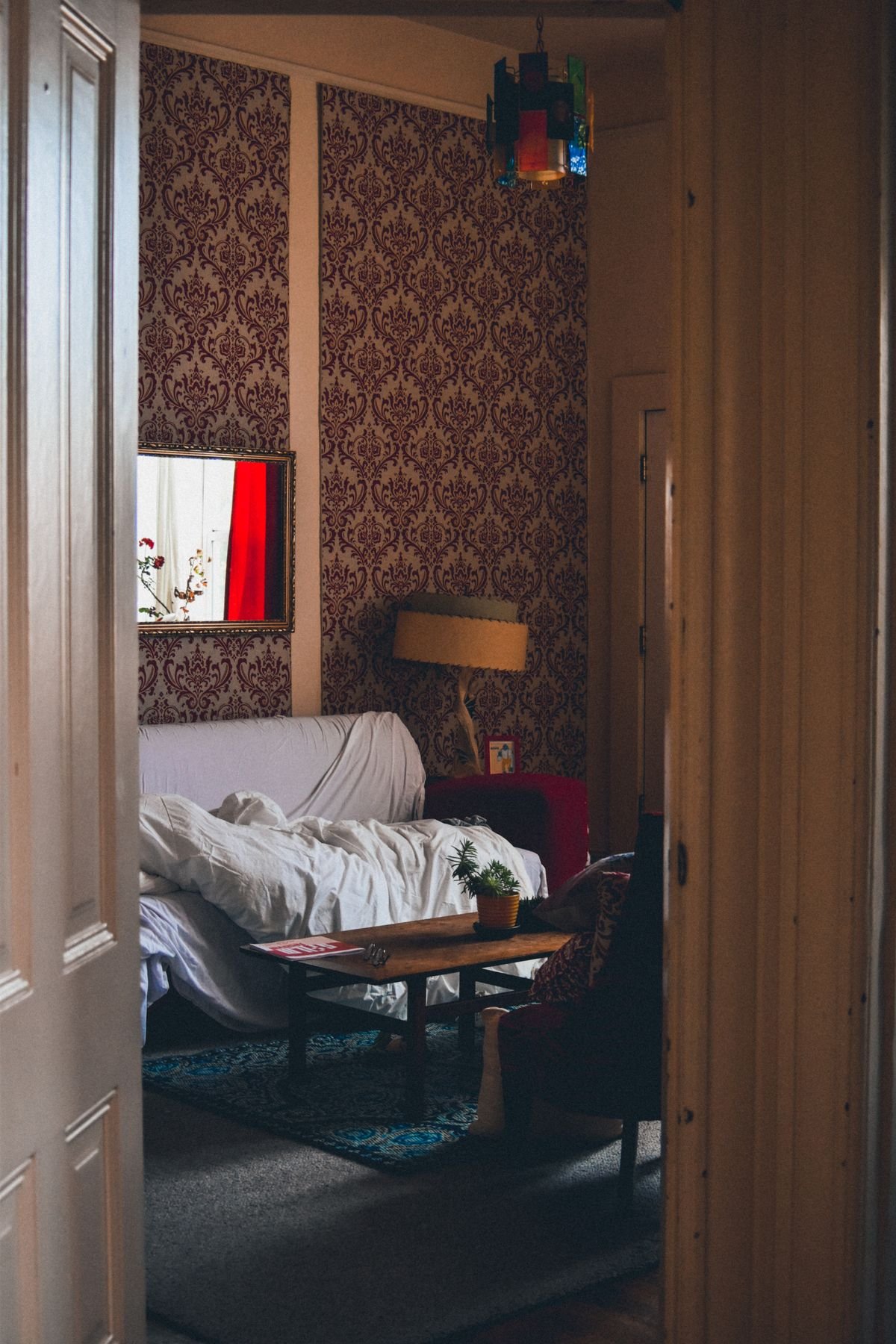
There is a particular kind of home that never looks finished in the showroom sense, yet feels more welcoming than any styled display: the collected home. Its sofa has a past. Its mirror once hung in somebody else’s hallway. Nothing matches perfectly, and that is exactly the point. If you love that layered, lived-in warmth but not the price of new furniture, these thrifted home decor ideas are your shortcut.
Thrifting is not about settling for second best. A good thrift store, charity shop or flea market is full of solid wood, real brass, hand-thrown pottery and honest craftsmanship that modern budget furniture rarely offers at ten times the price. The skill is in knowing what to grab, what to leave, and how to make finds from five different decades sit happily in one room.
This guide walks you through 34 ideas, room by room and shelf by shelf: anchor furniture, small treasures, textiles, kitchen pieces and the styling tricks that tie them together. Most cost less than a round of coffees. All of them work just as well in a compact flat as in a big house — if space is tight, pair these finds with the layouts in our guide to small apartment ideas and let every piece earn its place.
One mindset before we start: thrift slowly. The collected look cannot be bought in a single weekend, and it should not be. Carry a short wish list on your phone — a mirror for the hall, a lamp for the desk — and let the right pieces find you over weeks and months. Measure your rooms and keep the numbers with you; more thrift regrets are born from a tape measure left at home than from any other cause. When something on the list appears in good condition at a fair price, buy it without drama. When it does not, walk away smiling. The shops restock every week, and patience is the collector’s real currency.
Quick Picks: The Thrift Finds to Grab First
Short on time? These are the high-impact, low-risk finds our stylists reach for first. Prices are typical secondhand ranges; the full ideas follow below.
| Find | Best For | Typical Thrift Price | Effort |
|---|---|---|---|
| Secondhand sofa | Anchoring a living room | $75–$300 | Medium — check frame and cushions |
| Ornate mirror | Hallways and mantels | $15–$60 | Low — clean and hang |
| Vintage rug | Layering warmth underfoot | $40–$150 | Low — deep clean first |
| Old wooden dresser | Storage and sideboards | $50–$180 | Medium — polish or paint |
| Ceramic vases | Shelves and tabletops | $2–$12 each | Low — group in odd numbers |
| Mismatched frames | Gallery walls | $1–$8 each | Low — unify with one paint colour |
| Patchwork quilt | Sofas and beds | $20–$70 | Low — wash gently |
| Brass candlesticks | Mantels and dining tables | $3–$15 each | Low — polish or leave the patina |
1. Anchor the Room with a Secondhand Sofa
Style: The big win | Best for: living rooms starting from scratch | Price feel: Medium, but a fraction of new
What it is: The sofa is the largest, most expensive piece in most living rooms — which makes it the smartest thing to buy secondhand. Older sofas from good makers often have kiln-dried hardwood frames and feather cushions that outclass new budget models. A mid-century shape or a classic rolled-arm silhouette gives the whole room its collected character in one purchase.
How to do it:
- Sit on it properly in the shop: no sagging, no creaking, no wobble
- Check the frame through the fabric — hardwood and corner blocks are good signs
- Smell the cushions; smoke and damp odours are hard to remove
- Budget for a professional clean, or a washable throw while you decide
Pro tip: A tired sofa in a great shape can be re-covered later; a bad shape never can. Buy the bones first. Our guide to living room sofa ideas will help you judge which silhouettes suit your room.
Avoid this: Avoid stained or torn upholstery unless you have a firm, affordable reupholstery quote — that job can cost more than the sofa.
2. Rescue a Vintage Armchair
Style: One-chair statement | Best for: corners, bedrooms and reading spots | Price feel: Low
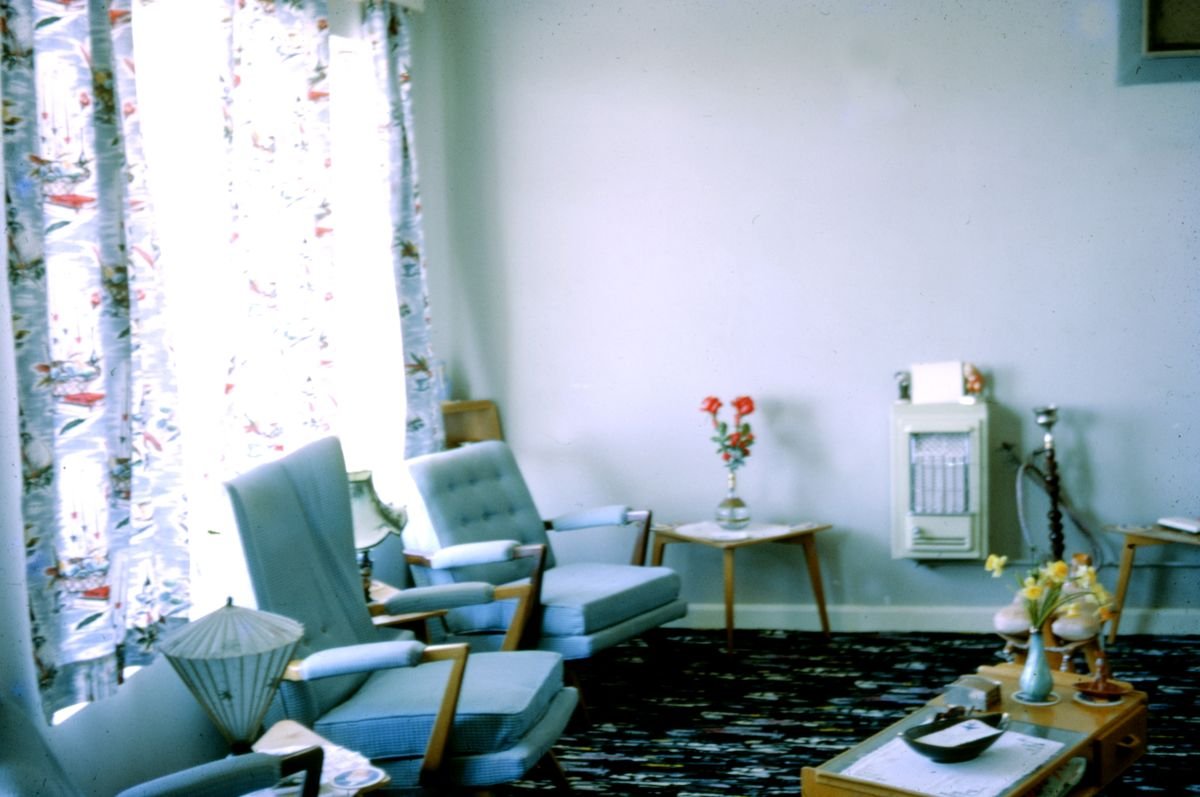
What it is: A single vintage armchair is the easiest way to give a room a story. Wingbacks, tub chairs and mid-century loungers turn up constantly in charity shops because they are too good to throw away and too characterful for matching-suite buyers. One chair, one cushion, one lamp: instant corner.
How to do it:
- Test the springs and padding by sitting for a full minute
- Small fabric flaws can hide under a folded throw or cushion
- Worn wooden arms and legs polish up beautifully with wax
- Pair with a small side table and a lamp to complete the vignette
Pro tip: Chairs with good frames but ugly fabric are the best bargains in the shop — everyone else walks past them.
Avoid this: Avoid chairs with a musty smell deep in the padding; surface cleaning rarely reaches it.

3. Turn an Old Dresser into a Sideboard
Style: Hardworking classic | Best for: dining rooms, hallways and living rooms | Price feel: Low to medium
What it is: Bedroom dressers are plentiful and cheap secondhand, yet the same solid-wood piece works beautifully as a dining-room sideboard, a hallway console or a TV stand. The drawers swallow table linen, games, chargers and clutter, while the top becomes a stage for lamps and collected objects.
How to do it:
- Measure your space first — dressers are deeper than most consoles
- Check every drawer runs smoothly and the carcass is square
- Swap dated handles for brass or ceramic knobs for an instant lift
- Style the top in threes: lamp, stack of books, one green plant
Pro tip: A coat of deep green, navy or oxblood paint turns a plain pine dresser into the smartest piece in the room.
Avoid this: Avoid veneer that is bubbling across large areas; small chips repair well, widespread lifting does not.
4. Hang an Ornate Thrifted Mirror
Style: Instant grandeur | Best for: hallways, mantels and dark corners | Price feel: Low
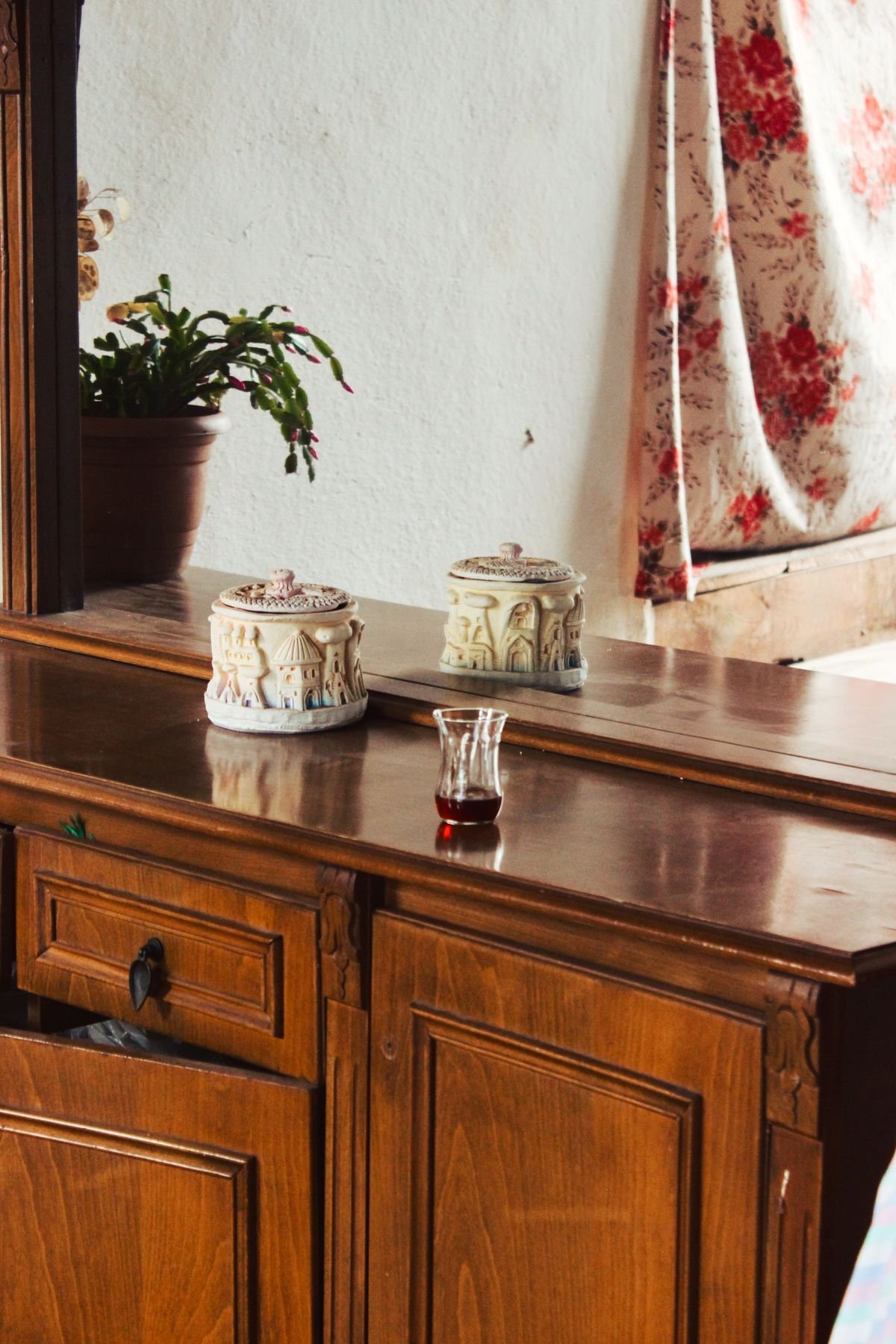
What it is: Few thrift finds transform a room like a big, gilt-framed mirror. It bounces light into dark corners, doubles the glow of lamps and candles, and adds the kind of carved detail that costs a fortune new. Slightly foxed glass — those misty age spots — is not a flaw; it is atmosphere.
How to do it:
- Go bigger than you think; an oversized mirror reads as architecture
- Check the frame joints and that the glass is secure in its rebate
- Hang opposite a window or above a mantel for maximum light play
- Lean a large mirror on a sideboard if drilling is not an option
Pro tip: Clean old mirror glass with a barely damp cloth only — harsh sprays creep behind the silvering and blacken the edges.
Avoid this: Avoid mirrors with cracked glass unless you love the frame enough to pay for re-glazing.

5. Give a Vintage Lamp a New Shade
Style: Warm glow | Best for: side tables, desks and bedside tables | Price feel: Low
What it is: Thrift shops are full of beautiful lamp bases — brass, ceramic, turned wood, cut glass — wearing sad, yellowed shades. The base is the valuable part. Fit a fresh linen or pleated shade and an old lamp looks like a boutique find, with light that flatters everything around it.
How to do it:
- Choose bases with weight and detail; ignore the shade entirely
- Have old wiring checked or rewired — a simple, cheap job for an electrician
- Pick a shade roughly the width of the base’s widest point
- Use a warm-white bulb; cool light kills vintage warmth
Pro tip: Pairs of lamps are rare secondhand — when you find matching bases, buy them on the spot.
Avoid this: Avoid cracked ceramic bases near the socket and any lamp with frayed flex; safety comes before charm.
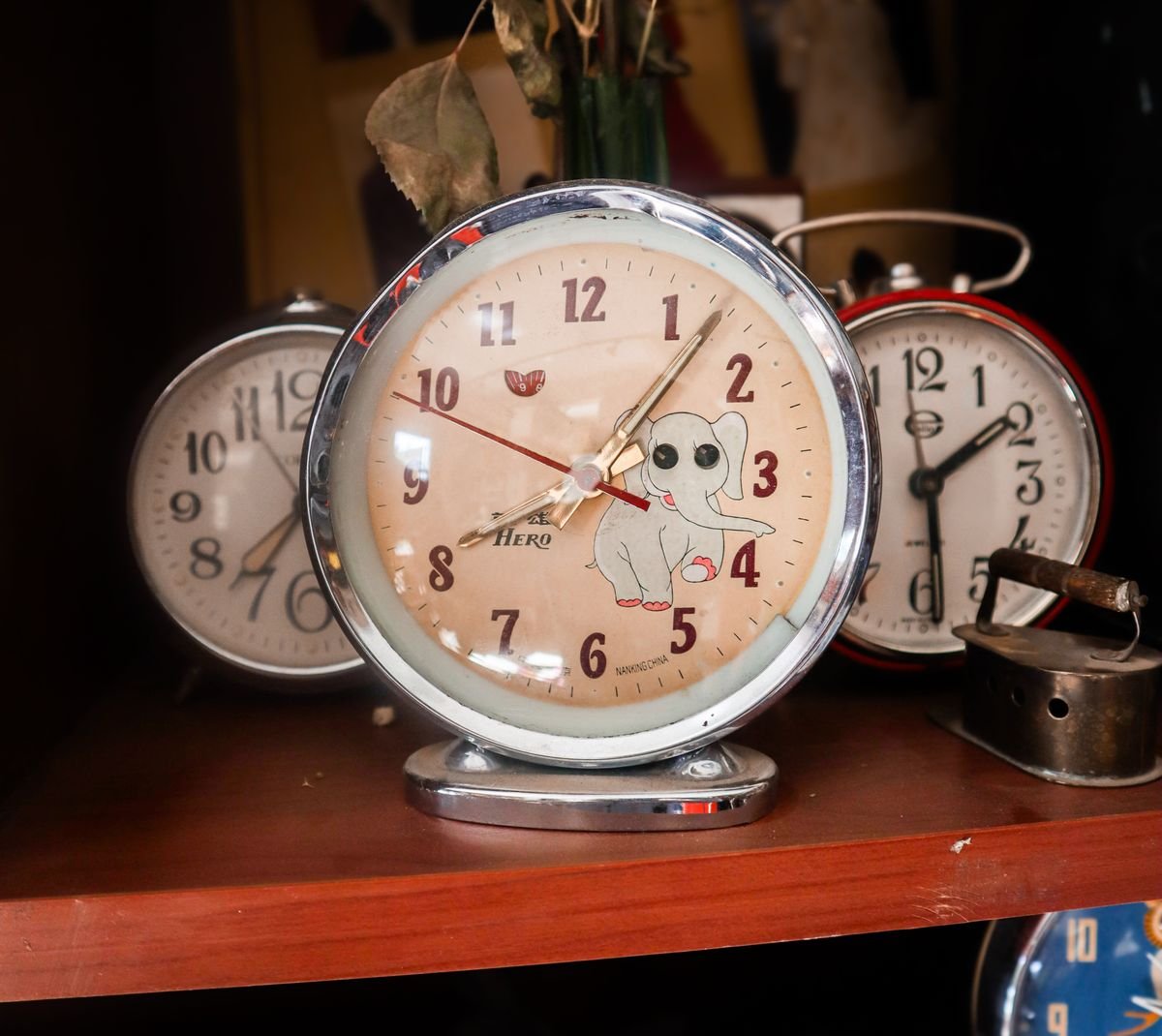
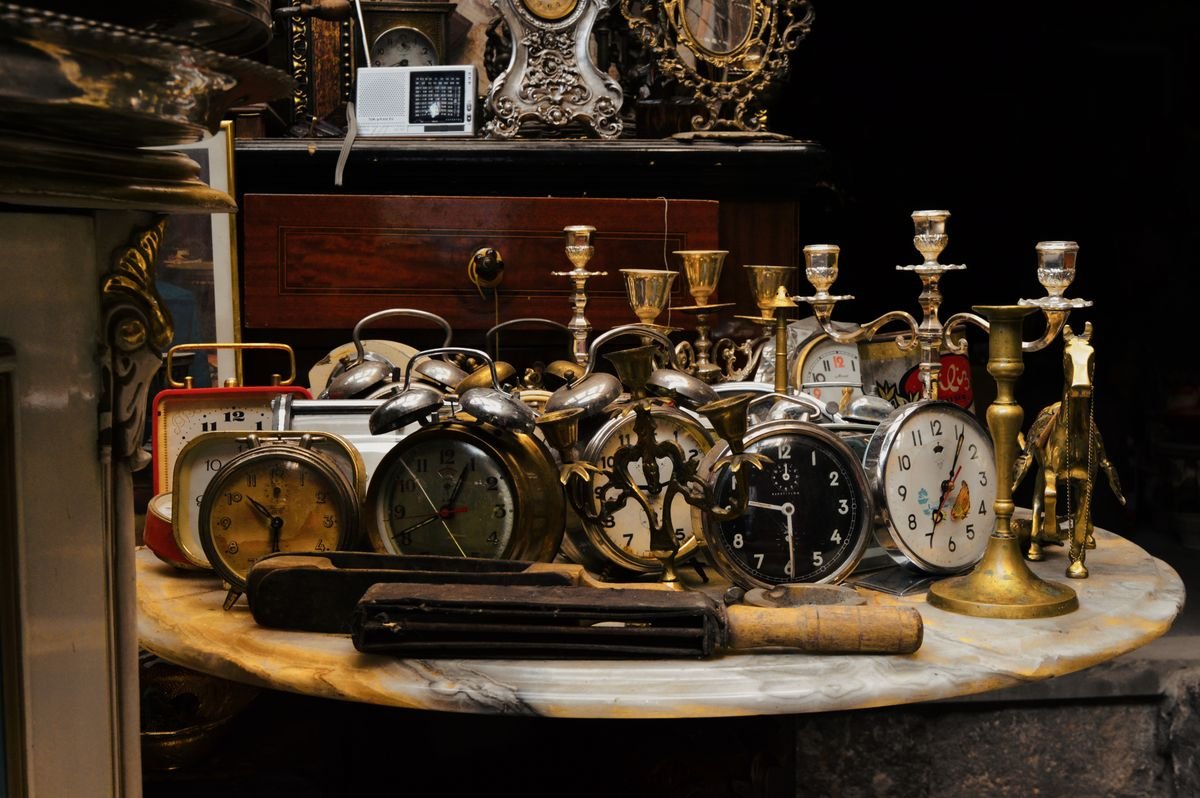
6. Collect Old Alarm Clocks as Shelf Decor
Style: Playful collector | Best for: shelves, mantels and kitchen dressers | Price feel: Very low
What it is: One old clock is an object; five old clocks are a collection, and collections are the soul of the collected home. Twin-bell alarm clocks in cream, copper, mint and black turn up for pennies, and grouped on a shelf they bring rhythm, shine and a gentle sense of humour to a room.
How to do it:
- Collect within one family — all metal alarm clocks, say — so the group reads as intentional
- Vary heights by standing some on books or small boxes
- Set each clock to a different meaningful time if you enjoy the whimsy
- Working order is a bonus, not a requirement — these are sculpture now
Pro tip: Wind one working clock for the mantel; a soft tick makes a quiet room feel alive.
Avoid this: Avoid spreading single clocks all over the house — the charm is in the gathering.
7. Build a Gallery Wall from Mismatched Frames
Style: Collected and personal | Best for: stair walls, living rooms and hallways | Price feel: Very low
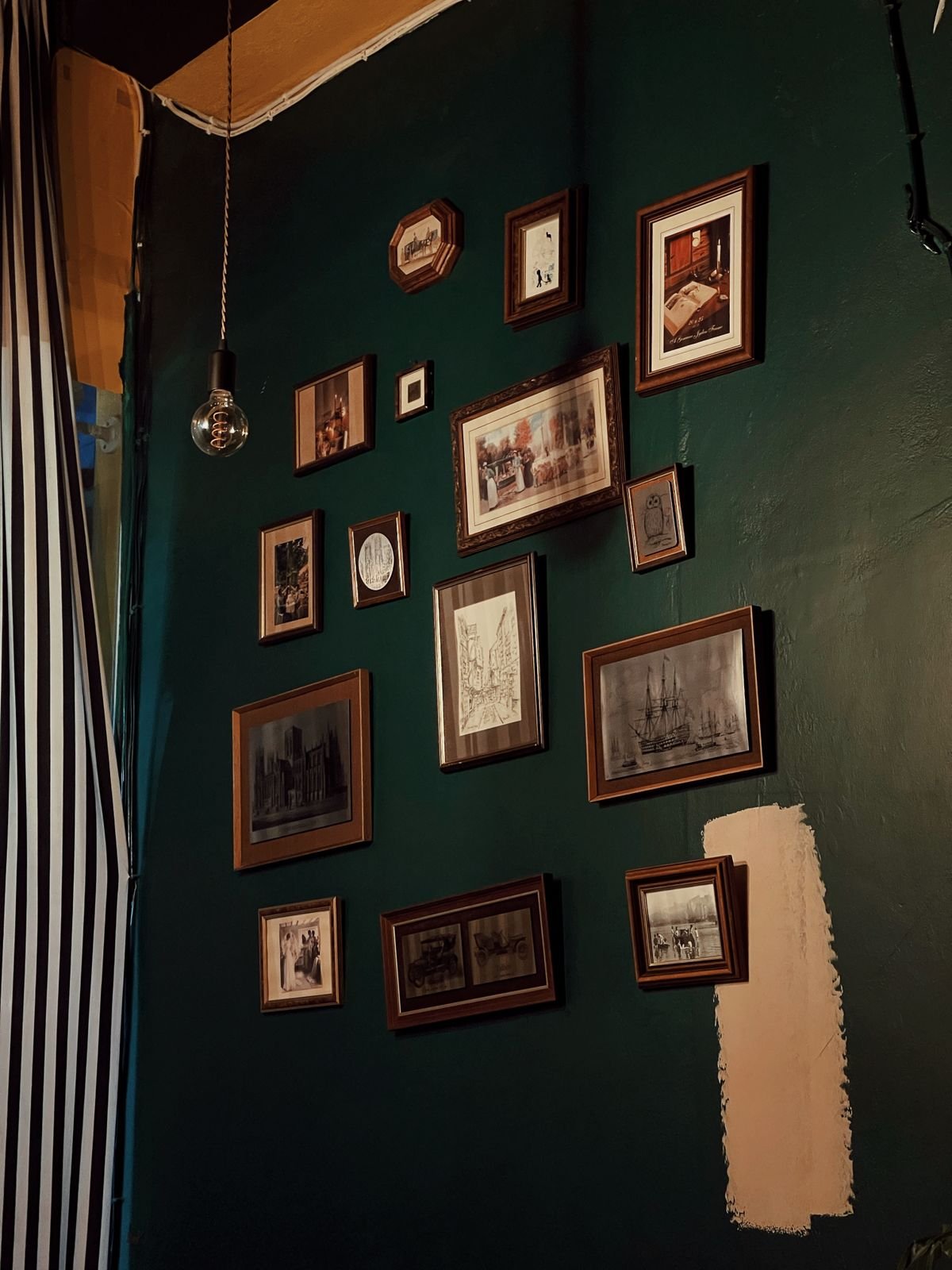
What it is: The gallery wall is where thrifting shines brightest. Old frames in gold, walnut, black and painted pine — each a pound or two — become a rich, layered display once they share a wall. Fill them with prints, postcards, pressed flowers, sheet music or your own photographs printed in sepia.
How to do it:
- Collect frames first, art second; unusual sizes are the charm
- Lay the arrangement on the floor and photograph it before hanging
- Keep spacing tight and even — about a finger’s width between frames
- Repeat one finish (gilt, say) at least three times to tie the mix together
Pro tip: Old frames with their original faded prints still inside can be the art — landscapes and portraits from charity shops have a softness new prints imitate badly.
Avoid this: Avoid hanging one small frame alone on a big wall; it reads as a mistake, not a statement.
8. Layer a Faded Vintage Rug
Style: Soft foundation | Best for: living rooms, hallways and bedrooms | Price feel: Low to medium
What it is: A hand-knotted or woven vintage rug brings pattern, softness and history underfoot for the price of a new doormat. Gentle fading is desirable — it lets bold patterns sit quietly in a room. Layer a smaller vintage rug over plain carpet or sisal for depth without commitment.
How to do it:
- Unroll and inspect both sides for moth damage and brittle patches
- Fold a corner back: wool bends; dry, cracking backing is a warning
- Budget for a deep clean before it comes home, especially for bedrooms
- Use a good underlay so older, thinner rugs stay put
Pro tip: Runners are the bargain of the rug world — long, narrow and endlessly useful in hallways and beside beds.
Avoid this: Avoid rugs with a strong musty smell that survives airing outdoors; it signals mildew in the foundation.

9. Style with Stacks of Old Books
Style: Quiet library charm | Best for: coffee tables, shelves and side tables | Price feel: Very low
What it is: Cloth-bound books with gilt titles are practically given away in charity shops, and they are the stylist’s favourite filler: they add height under objects, colour on shelves and a sense of a life actually lived. Choose books you might genuinely open, and the decor never feels staged.
How to do it:
- Buy by spine colour and texture, not title — cloth and leather age best
- Stack two or three as a plinth for a vase, clock or small plant
- Remove torn dust jackets; the cloth beneath is usually handsomer
- Leave one stack open at a favourite illustration for a living detail
Pro tip: Old atlases and gardening books have the best plates for framing later — two finds in one.
Avoid this: Avoid mould-spotted books entirely; spores spread to healthy books on the same shelf.
10. Store in Wicker and Rattan Baskets
Style: Natural texture | Best for: every room, especially living rooms and bathrooms | Price feel: Very low
What it is: Handwoven baskets bring warmth and order at once. Thrift shops overflow with them — log baskets, laundry baskets, shoppers, trays — because they last for decades. Use them for blankets, toys, kindling, towels and plants, and clutter turns into texture.
How to do it:
- Check handles and rims, the points that take the strain
- Brush out dust and air baskets outdoors before bringing them in
- Drop a plant pot into a basket for an instant planter (keep a saucer inside)
- Hang flat baskets and trays in a cluster as wall texture
Pro tip: A lidded basket beside the sofa hides remote controls, chargers and general life with total grace.
Avoid this: Avoid baskets with active woodworm (fresh dust and neat round holes); they can share the problem.

11. Stack Vintage Suitcases into a Side Table
Style: Travel-story charm | Best for: beside sofas, beds and armchairs | Price feel: Low
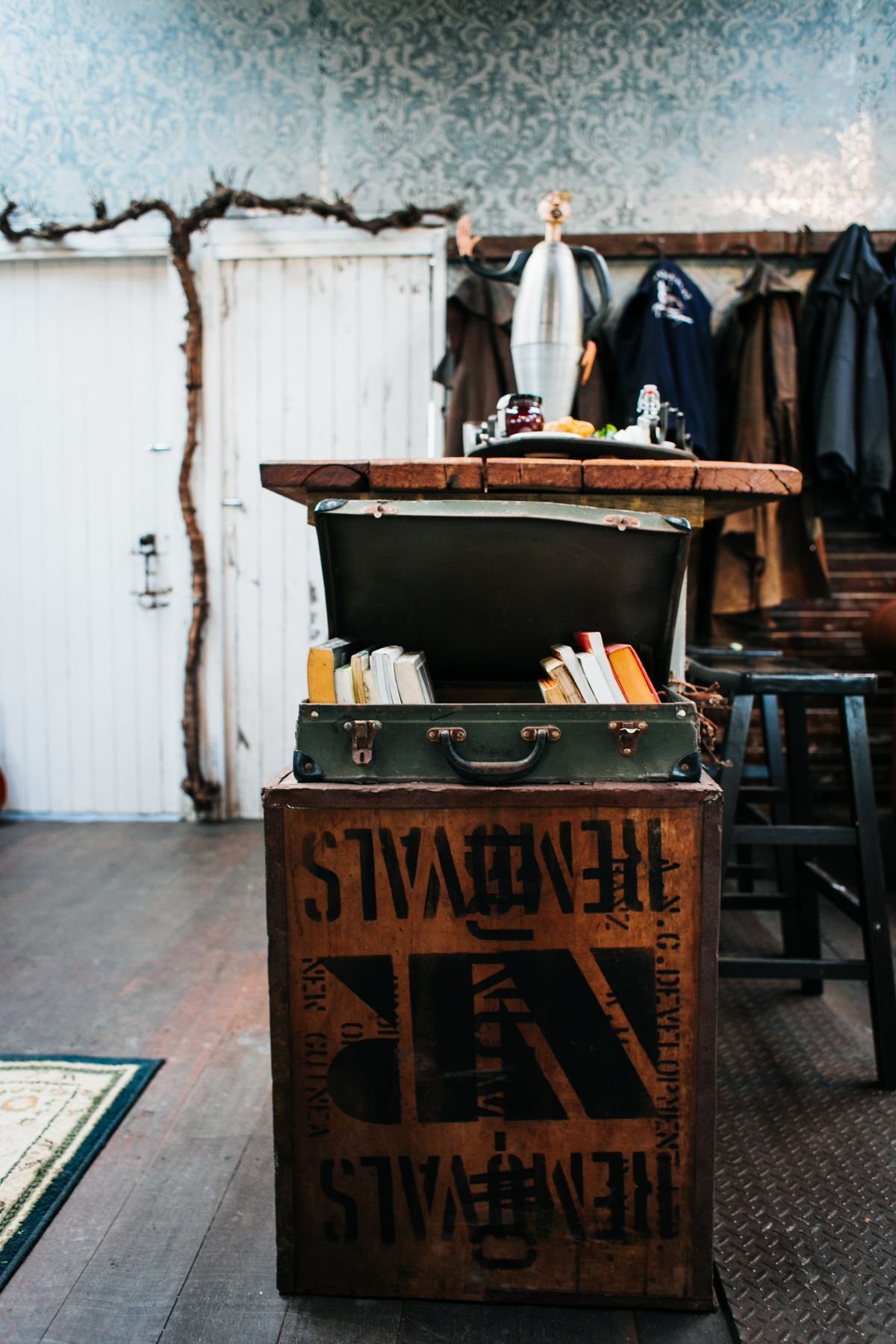
What it is: Two or three leather or tweed suitcases, stacked largest-first, make a side table with built-in storage and a well-travelled past. The top takes a lamp and a cup of tea; the inside hides winter blankets or board games.
How to do it:
- Choose rigid cases with working clasps; check for damp smells inside
- Match heights to your sofa arm or mattress top
- Add felt pads between cases to protect the leather
- Rest a tray on top if you want a level, wipeable surface
Pro tip: Old travel stickers and labels are decoration — clean the case, never scrub its history off.
Avoid this: Avoid soft, sagging cases for the base of the stack; the table will wobble forever.

12. Make a Coffee Table from an Old Trunk
Style: Centre-piece character | Best for: living rooms and family rooms | Price feel: Low to medium
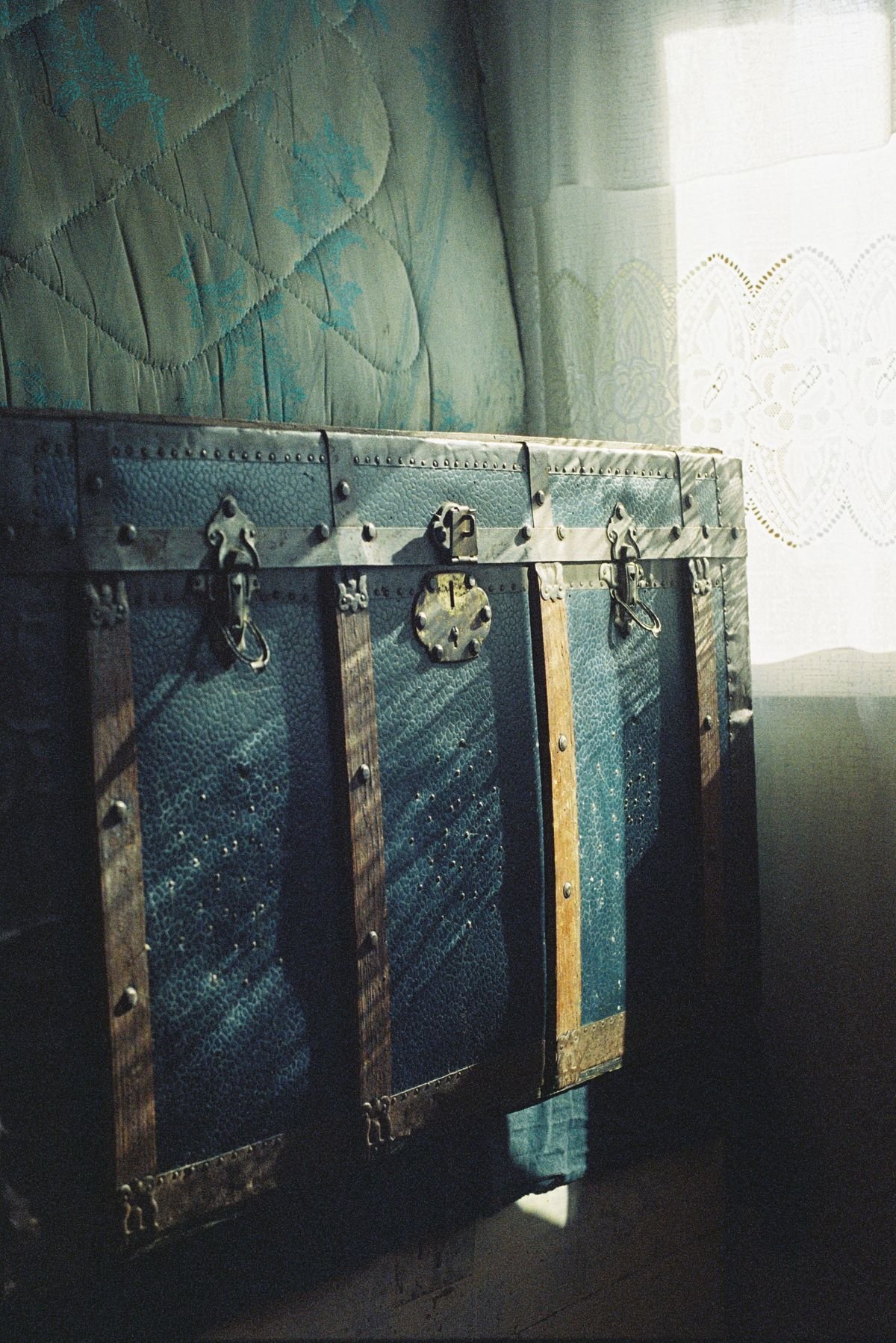
What it is: A flat-topped steamer trunk or wooden chest is a coffee table with a secret: a room’s worth of storage inside. Trunks anchor a seating area, patina beautifully, and shrug off feet, trays and board games better than most new furniture.
How to do it:
- Measure the lid — it should sit at or just below sofa-seat height
- Check hinges and corners; leather straps can be replaced cheaply
- Line the inside with cedar paper if you store blankets in it
- Style the top with a tray so objects group rather than scatter
Pro tip: Domed trunks look wonderful but hold nothing on top — save those for the foot of a bed.
Avoid this: Avoid trunks with a sour, damp interior smell; it transfers to everything you store.
13. Hang Thrifted Paintings and Old Prints
Style: Soft, storied walls | Best for: living rooms, bedrooms and landings | Price feel: Very low
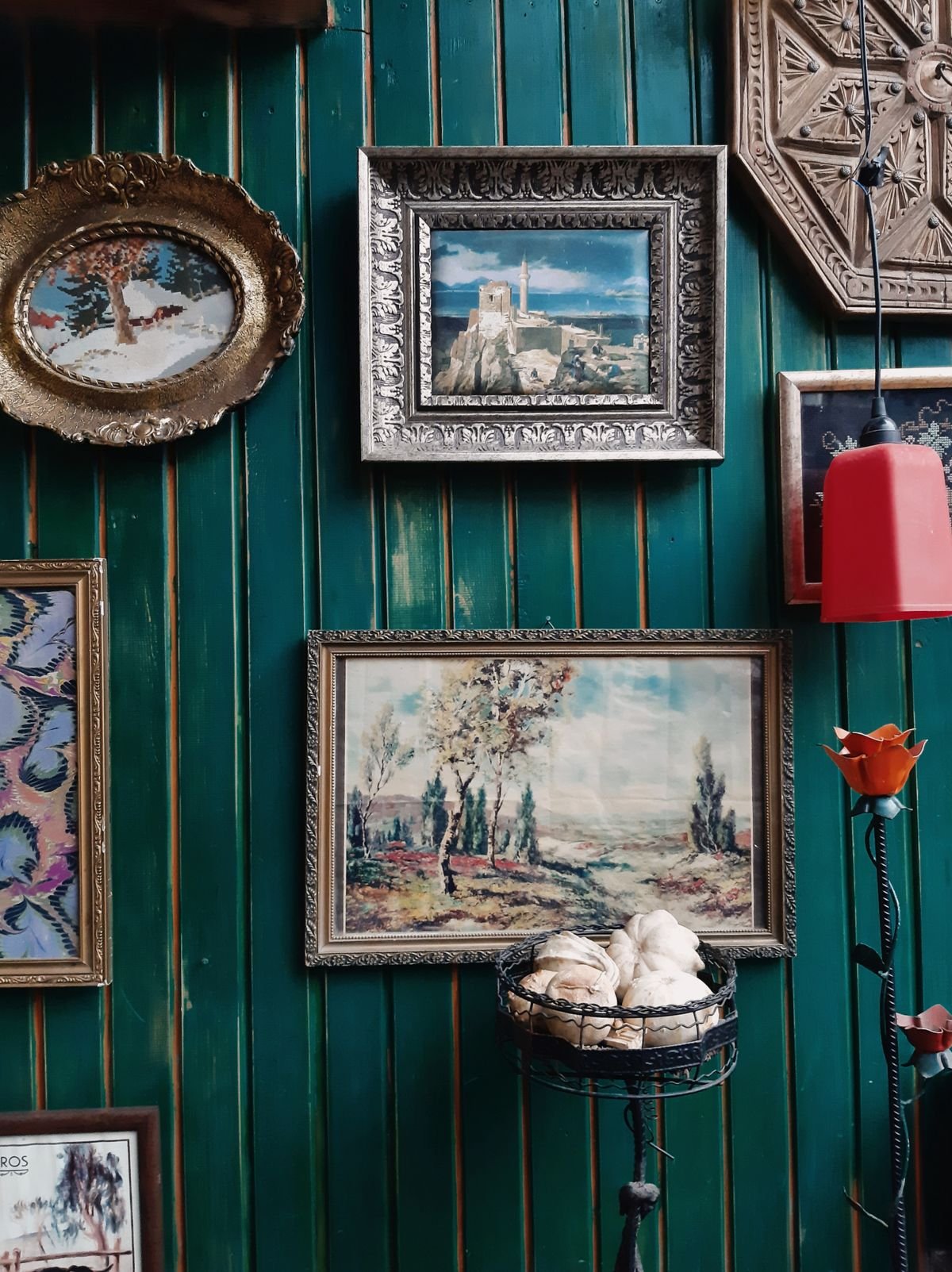
What it is: Original amateur paintings, faded landscapes and old portrait prints cost almost nothing secondhand, and their gentle colours are the making of a collected wall. One large landscape over a sofa, or a pair of moody portraits flanking a doorway, adds the patina new art tries hard to fake.
How to do it:
- Buy what you like looking at — taste is the only rule that matters
- Check canvases for tears and frames for loose joints
- Dust with a soft brush; never wet-wipe an oil painting
- Hang art slightly lower than feels natural — eye level when seated
Pro tip: A picture light or nearby lamp aimed at old art gives it gallery gravity for very little money.
Avoid this: Avoid sun-faded prints where half the image has bleached away; gentle overall fading is fine.
14. Create a Listening Corner Around an Old Radio
Style: Nostalgic nook | Best for: living room corners and studies | Price feel: Low
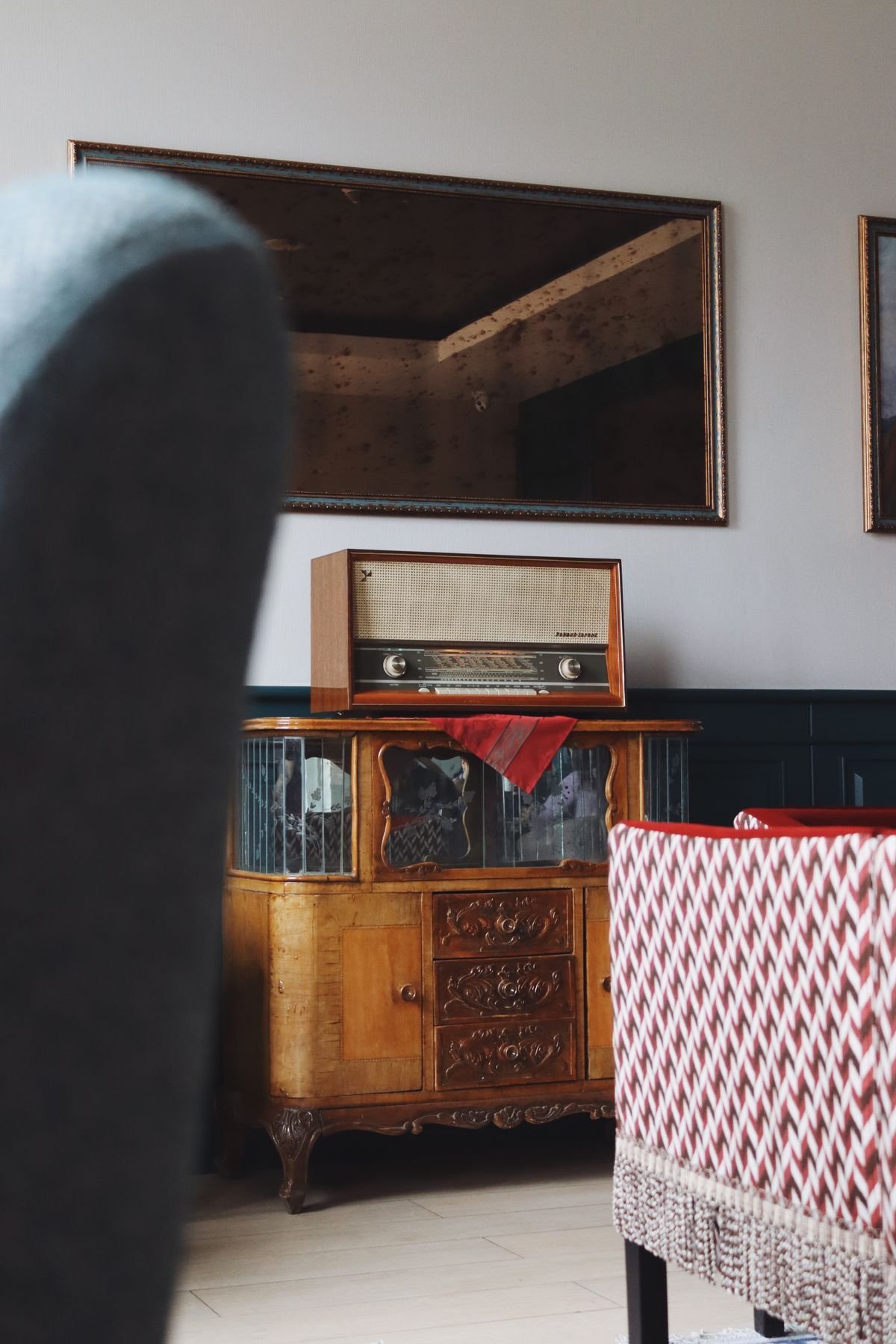
What it is: A Bakelite or wooden-cabinet radio is sculpture, sound and history in one object. Set it on a small cabinet with an armchair and a lamp nearby, and you have a listening corner that invites slower evenings — whether the radio itself still plays or simply glows in the imagination.
How to do it:
- Working sets exist, but buy the cabinet you love either way
- Old valve radios must be serviced before use — treat untested ones as decor only
- Hide a small modern speaker behind or beneath it for actual music
- Add a stack of music books or a record crate to complete the story
Pro tip: A radio on the kitchen dresser makes washing-up feel like a period drama, in the best way.
Avoid this: Avoid plugging in any untested vintage electrical item; display now, service later.
15. Gather a Collection of Ceramic Vases
Style: Shelf sculpture | Best for: shelves, mantels and dining tables | Price feel: Very low
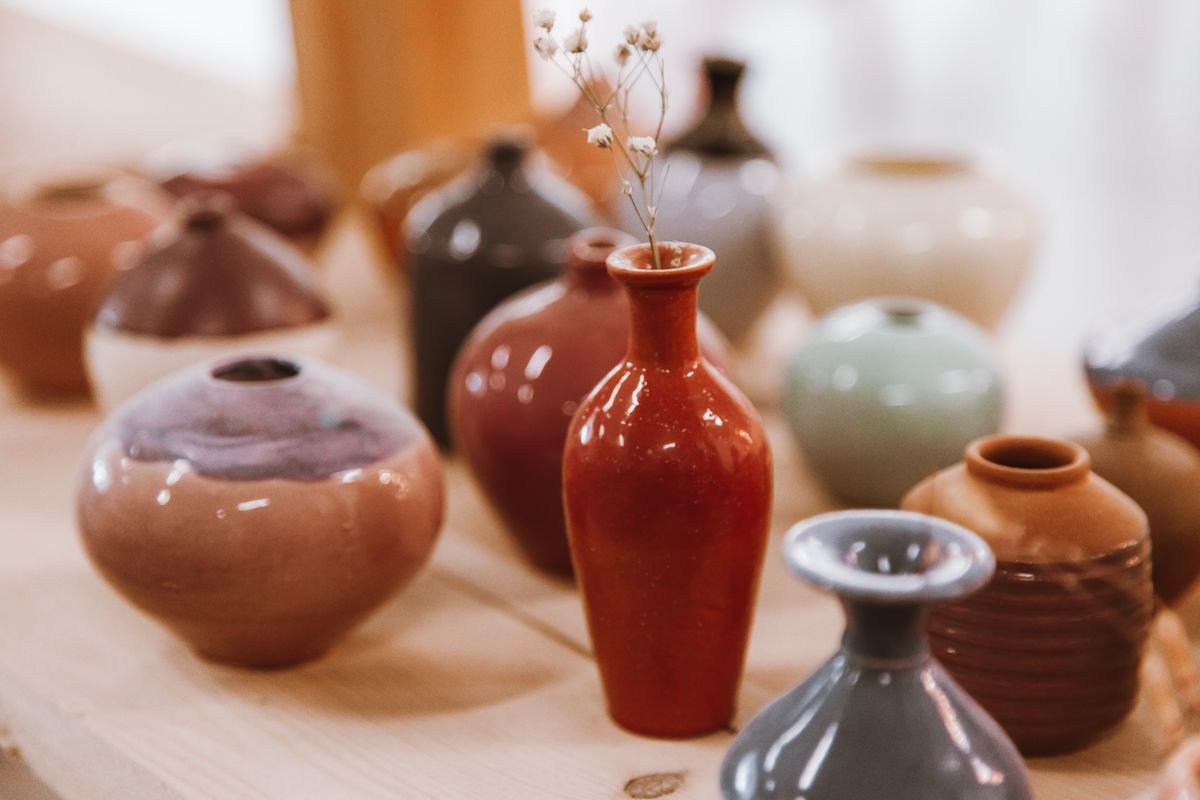
What it is: Studio pottery and mid-century ceramics are the thrift shop’s quiet treasure: hand-thrown, glazed in earthy colours, and sold for the price of a sandwich. Grouped in threes and fives, vases make shelves look curated; filled with dried grasses or a single stem, they become the arrangement.
How to do it:
- Collect within a palette — stoneware browns, say, or blue-and-white
- Check rims and bases for chips; hairline cracks leak slowly
- Vary heights and silhouettes so the group has rhythm
- Leave some empty — negative space makes the collection breathe
Pro tip: A vase that cannot hold water can still hold dried flowers, feathers or bare branches beautifully.
Avoid this: Avoid buying every pretty vase you see; a tight colour story is what separates collection from clutter.
16. Hang Vintage Kitchen Utensils and Tins
Style: Working-kitchen charm | Best for: kitchens and pantries | Price feel: Very low
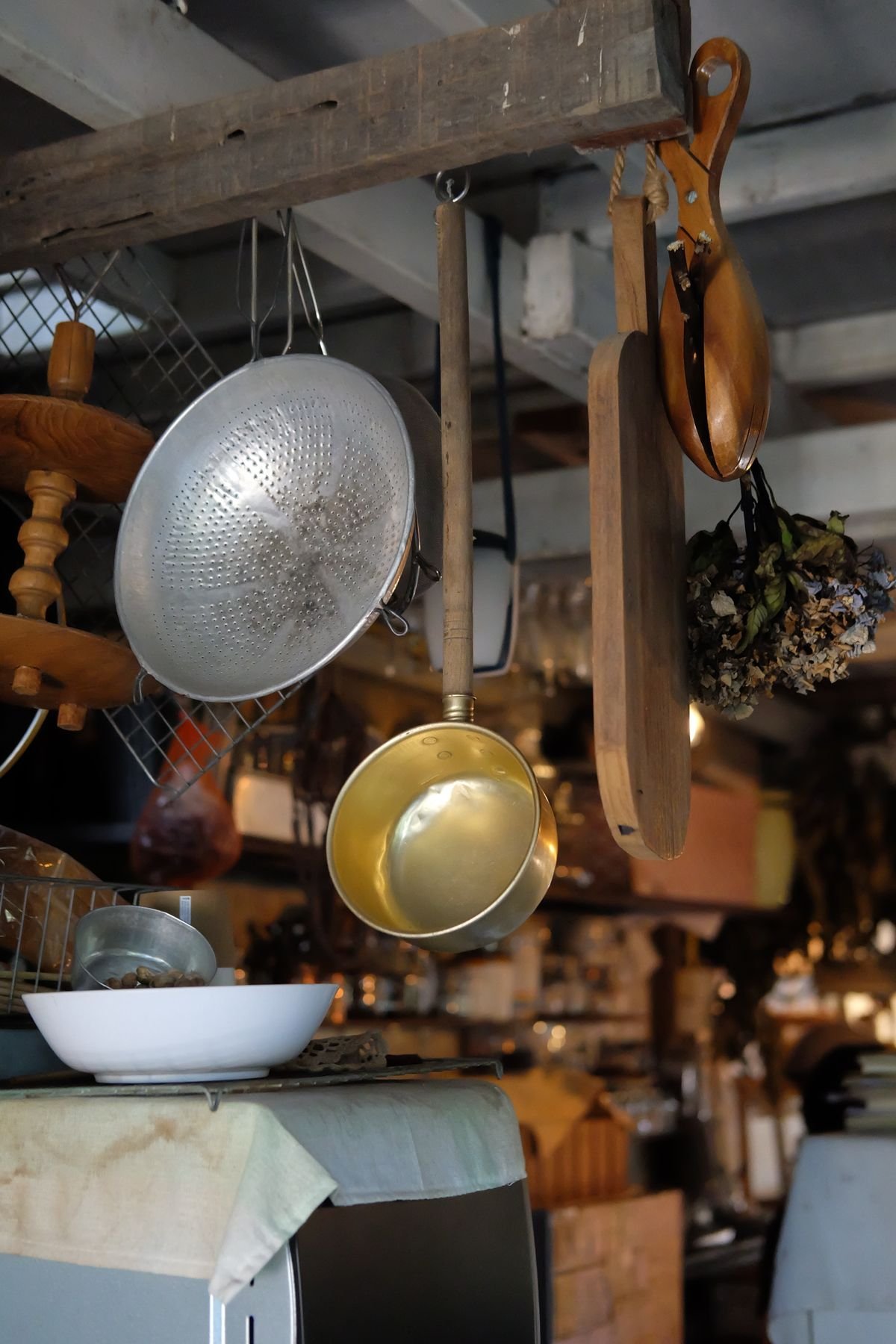
What it is: Old wooden spoons, copper measures, enamel ladles and printed storage tins were made to be used daily — and most still can be. Hung from a rail or gathered in a stoneware crock, they give a kitchen the warm, worked-in feeling no matching gadget set can buy.
How to do it:
- Favour solid, honest wear over rust; surface rust on steel can be cleaned, deep rust cannot
- Wash everything thoroughly and oil wooden handles with food-safe oil
- Hang a rail near the stove so the display is also the storage
- Decant flour, tea and coffee into old tins with tight lids only
Pro tip: A chipped enamel colander makes a wonderful hanging planter or fruit bowl — chips are character here.
Avoid this: Avoid old painted items for food use if the paint is flaking; keep those for display only.
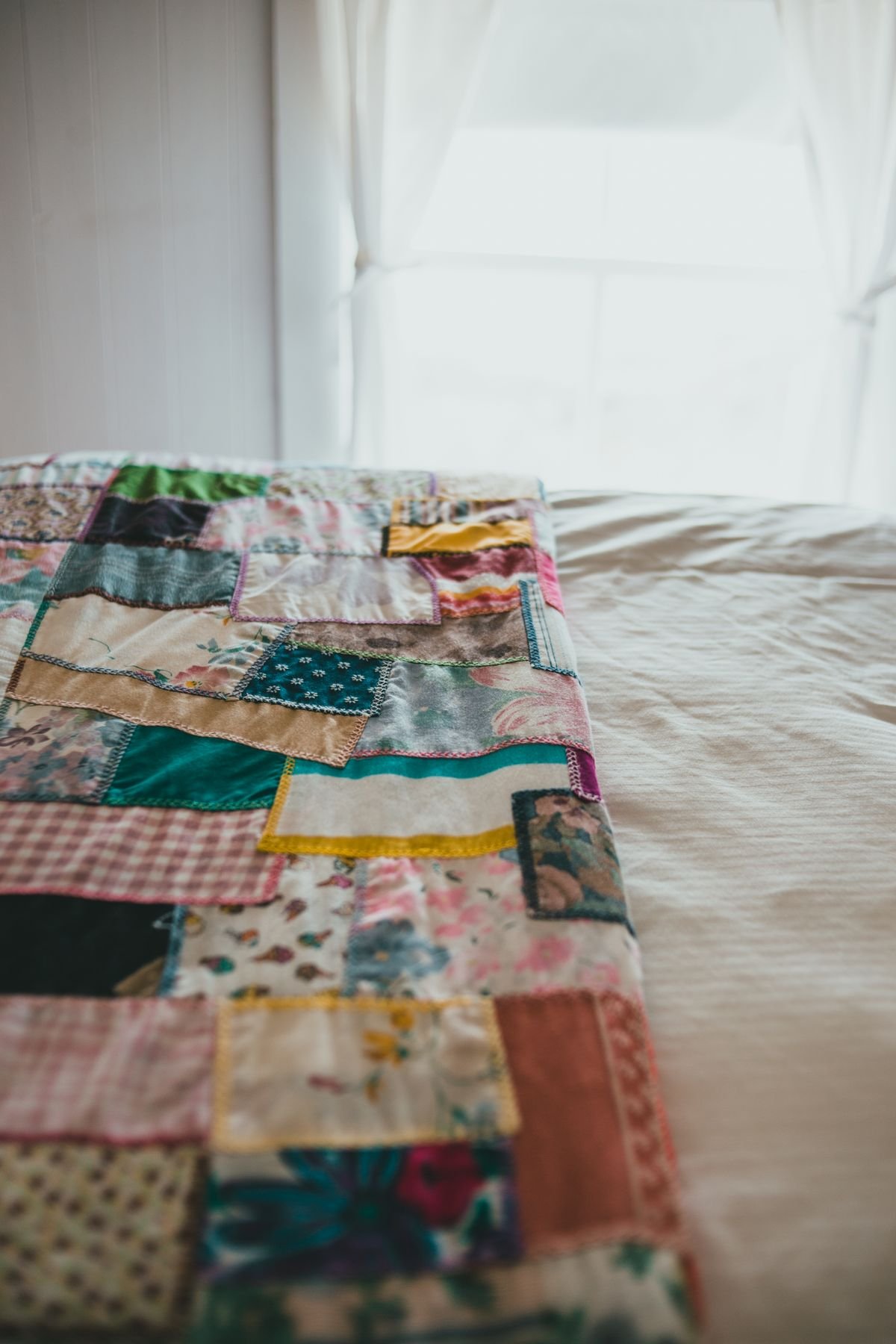
17. Drape a Patchwork Quilt Over the Sofa or Bed
Style: Handmade warmth | Best for: sofas, beds and armchairs | Price feel: Low
What it is: A patchwork quilt carries somebody’s patience and somebody’s fabric stash in every square. Folded over a sofa back or laid across a bed, it brings pattern, softness and instant hand-made credibility to a room — and it is genuinely useful on cold evenings.
How to do it:
- Hold the quilt to the light to check for thin, worn patches
- Wash gently by hand or on a wool cycle, and dry flat
- Fold to show the best-preserved section; rotate folds monthly to spread wear
- Small tears can be patched visibly — the mend becomes part of the story
Pro tip: A quilt in a colour family that matches nothing else in the room will somehow tie everything together — trust it.
Avoid this: Avoid quilts with active mildew spots; they stain neighbouring textiles and never quite lose the smell.
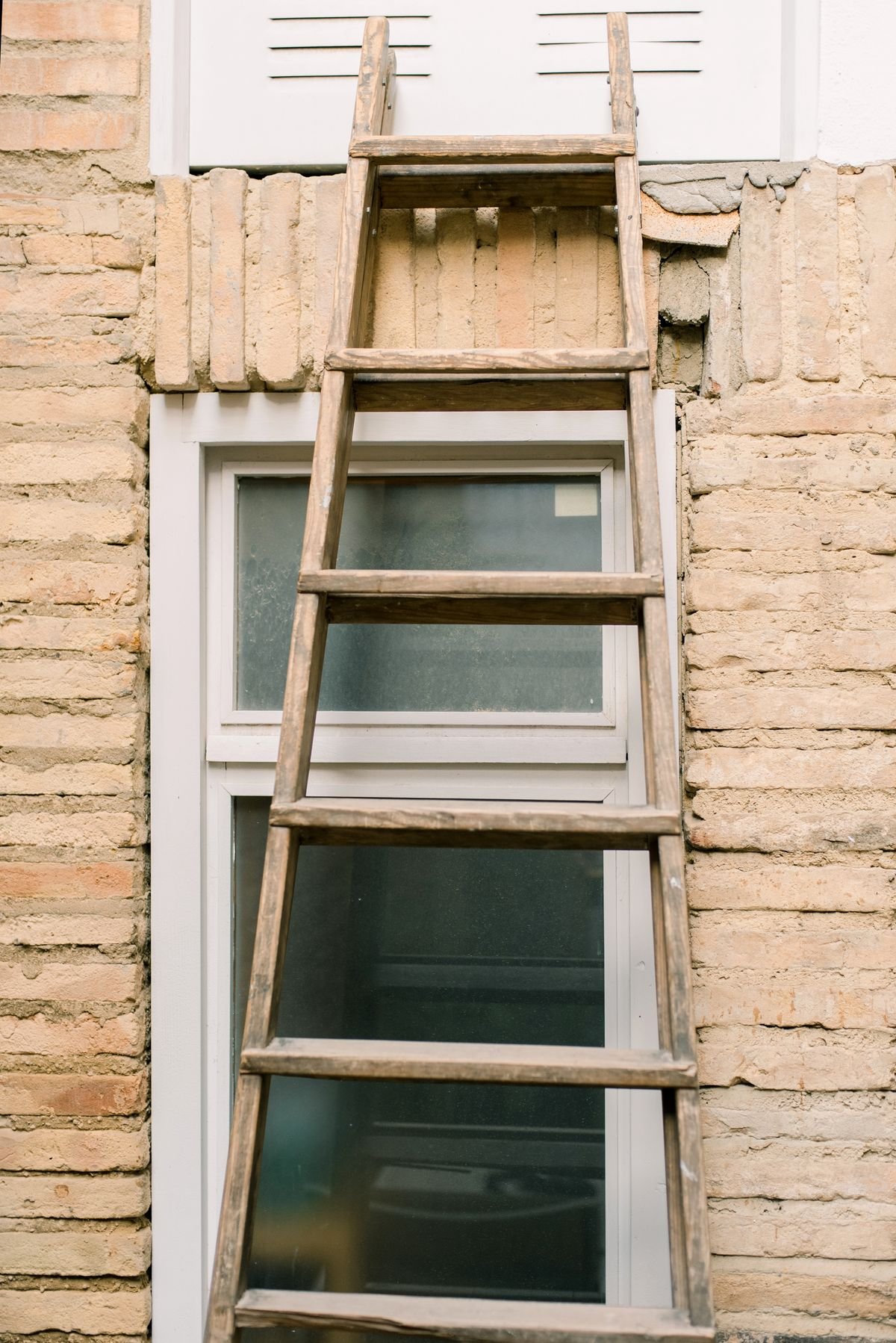
18. Lean a Rustic Ladder for Blankets and Display
Style: Vertical accent | Best for: living rooms, bathrooms and bedrooms | Price feel: Low
What it is: An old orchard or decorator’s ladder, leaned against a wall, is storage that takes up almost no floor: quilts and throws on the rungs, towels in the bathroom, even string lights or plants. Its worn rungs add the vertical, architectural note collected rooms love.
How to do it:
- Choose a ladder that is sturdy and dry — it is display now, not for climbing
- Sand splinters lightly and wax the wood to stop dust
- Add non-slip pads at the feet and rest the top on felt
- Drape textiles over alternate rungs so the wood still shows
Pro tip: In a bathroom, a short ladder beside the bath beats a towel rail for charm and capacity alike.
Avoid this: Avoid leaning ladders where children will treat them as climbing frames — fix the top to the wall if in doubt.
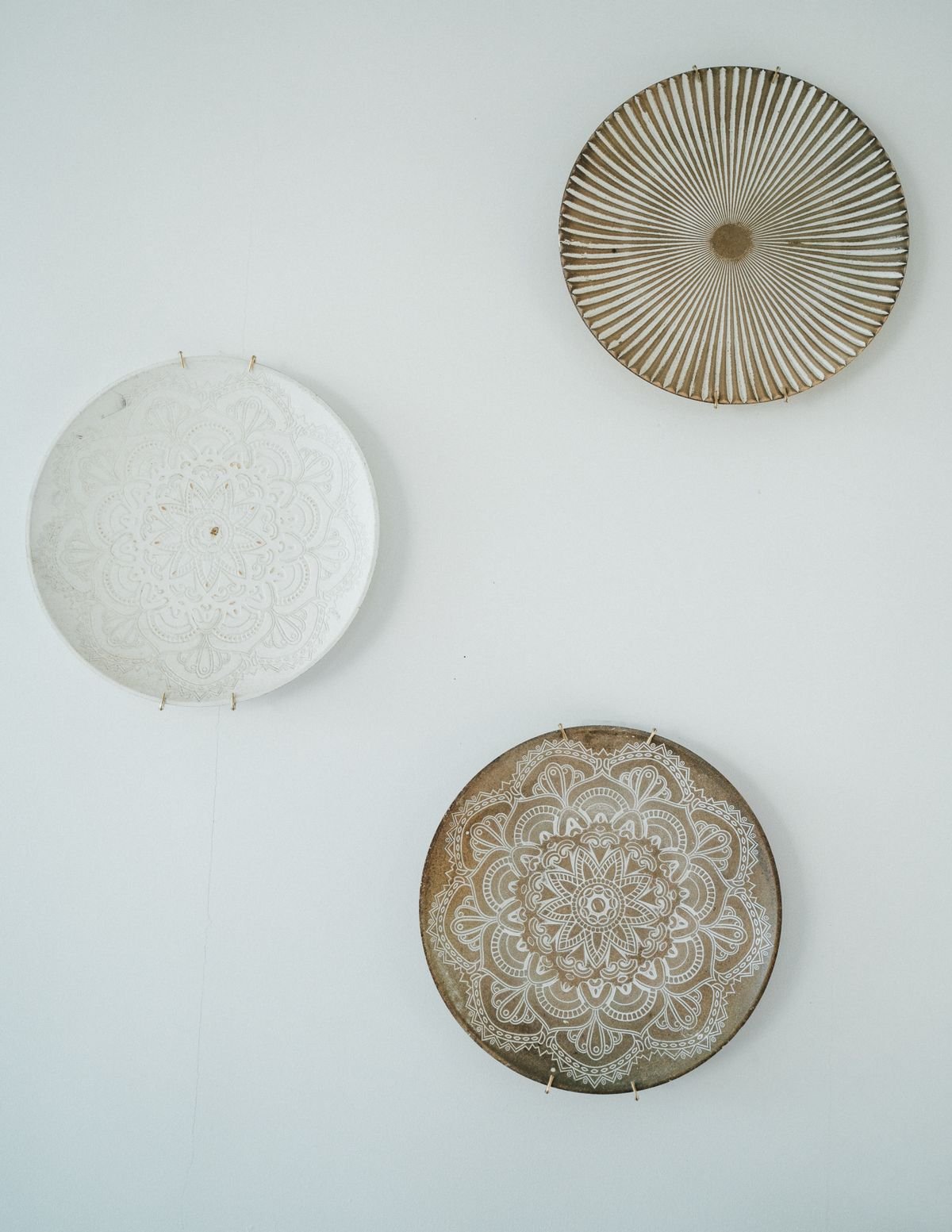
19. Make a Plate Wall from Decorative China
Style: Grandmother, but make it art | Best for: dining rooms and kitchens | Price feel: Very low
What it is: Single decorative plates — too pretty to eat from, too orphaned for a set — become joyful wall art in a group. Blue-and-white, floral chintz or souvenir plates all work; the pattern mixing is the pleasure. A plate wall fills a big blank space for almost nothing.
How to do it:
- Collect plates within one colour story so the mix looks composed
- Arrange on the floor first, largest plate at the centre
- Use proper plate hangers sized to each plate — never glue
- Leave small, even gaps; a tight constellation reads best
Pro tip: One dark or gilded plate in a pale group acts as the full stop that makes the arrangement feel designed.
Avoid this: Avoid hanging valuable antique china this way; plate walls are for the cheerful and replaceable.
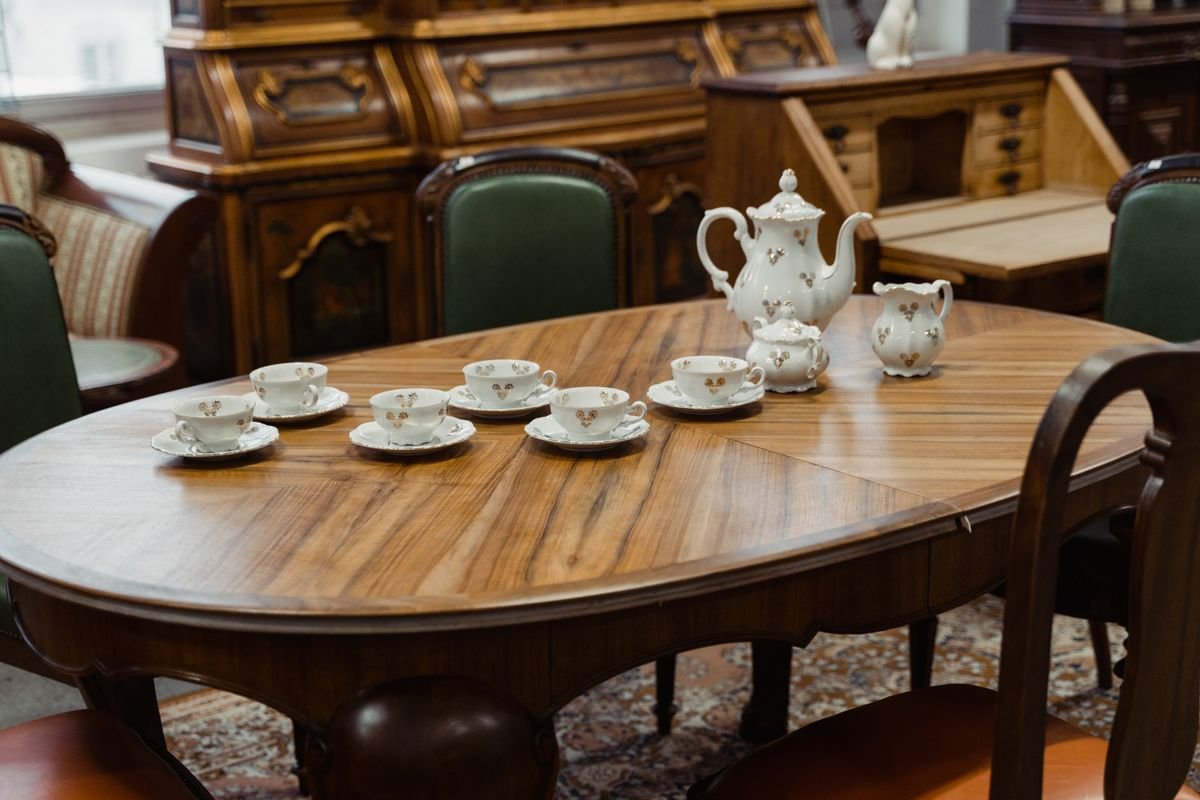
20. Mix Mismatched Dining Chairs Around One Table
Style: Relaxed gathering | Best for: dining rooms and kitchen tables | Price feel: Low
What it is: A full matching set of dining chairs is expensive; six interesting singles are not. Mismatched wooden chairs around one table — united by similar height and a shared finish family — create the easy, farmhouse feeling that dinner guests love and matching suites rarely achieve.
How to do it:
- Keep seat heights within a couple of centimetres of each other
- Wobble-test every chair; joints can be re-glued, missing rungs are harder
- Unify with cushions in one fabric, or paint two of them the same colour
- Give the two ends the grandest chairs if you find a carver pair
Pro tip: An old farmhouse table is the other half of this find — they are sturdy, cheap and improve with every scratch.
Avoid this: Avoid chairs with cracked seat rails; they fail suddenly, mid-dinner, under a guest.
21. Claim a Corner with a Vintage Desk
Style: The storied workspace | Best for: studies, bedrooms and living room corners | Price feel: Low to medium
What it is: A roll-top, a pedestal desk or a simple farmhouse table-desk brings gravity to a work corner that flat-pack furniture cannot. Old desks have deep drawers, real wood and proportions made for letters — which adapt gracefully to laptops, notebooks and the occasional novel.
How to do it:
- Check the kneehole height against your chair and knees, in person
- Drawers should glide; wax the runners if they stick
- A leather or felt desk pad protects the top and quiets the workspace
- Route modern cables through one back corner to keep the illusion
Pro tip: The pigeonholes of a roll-top hide chargers, stamps and life admin with nineteenth-century elegance.
Avoid this: Avoid desks with a lingering ink-and-damp smell in closed drawers; air and bicarbonate help, but test first.

22. Style a Typewriter or Retro Desk Object
Style: Writerly vignette | Best for: desks, shelves and hall tables | Price feel: Low
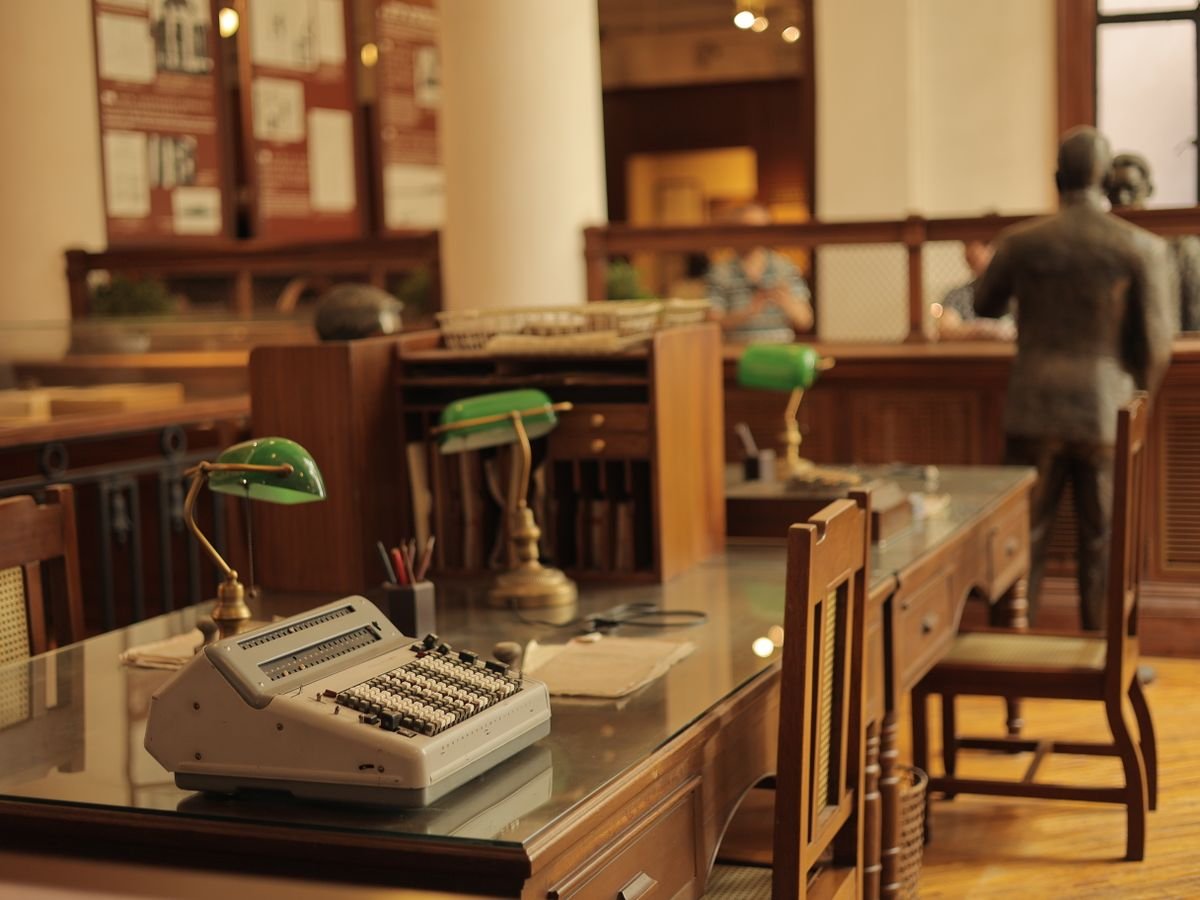
What it is: A manual typewriter, a rotary telephone or a brass desk lamp is the punctuation mark of a collected room: one confident retro object on a surface tells visitors this home values stories. Typewriters with a sheet of paper left mid-sentence are pure theatre, and guests always smile.
How to do it:
- Buy the object with the best silhouette; working order is optional
- Clean with a soft brush and a drop of machine oil on moving parts
- Give it breathing room — one hero object per surface
- Leave a typed note in the carriage for guests to add to
Pro tip: Typewriters still take modern ribbons, and a typed thank-you note or place card charms everyone who receives one.
Avoid this: Avoid clustering every retro object you own into one “museum shelf” — scatter them and let each breathe.
23. Roll in a Vintage Bar Cart
Style: Sociable glamour | Best for: dining rooms and living room corners | Price feel: Medium
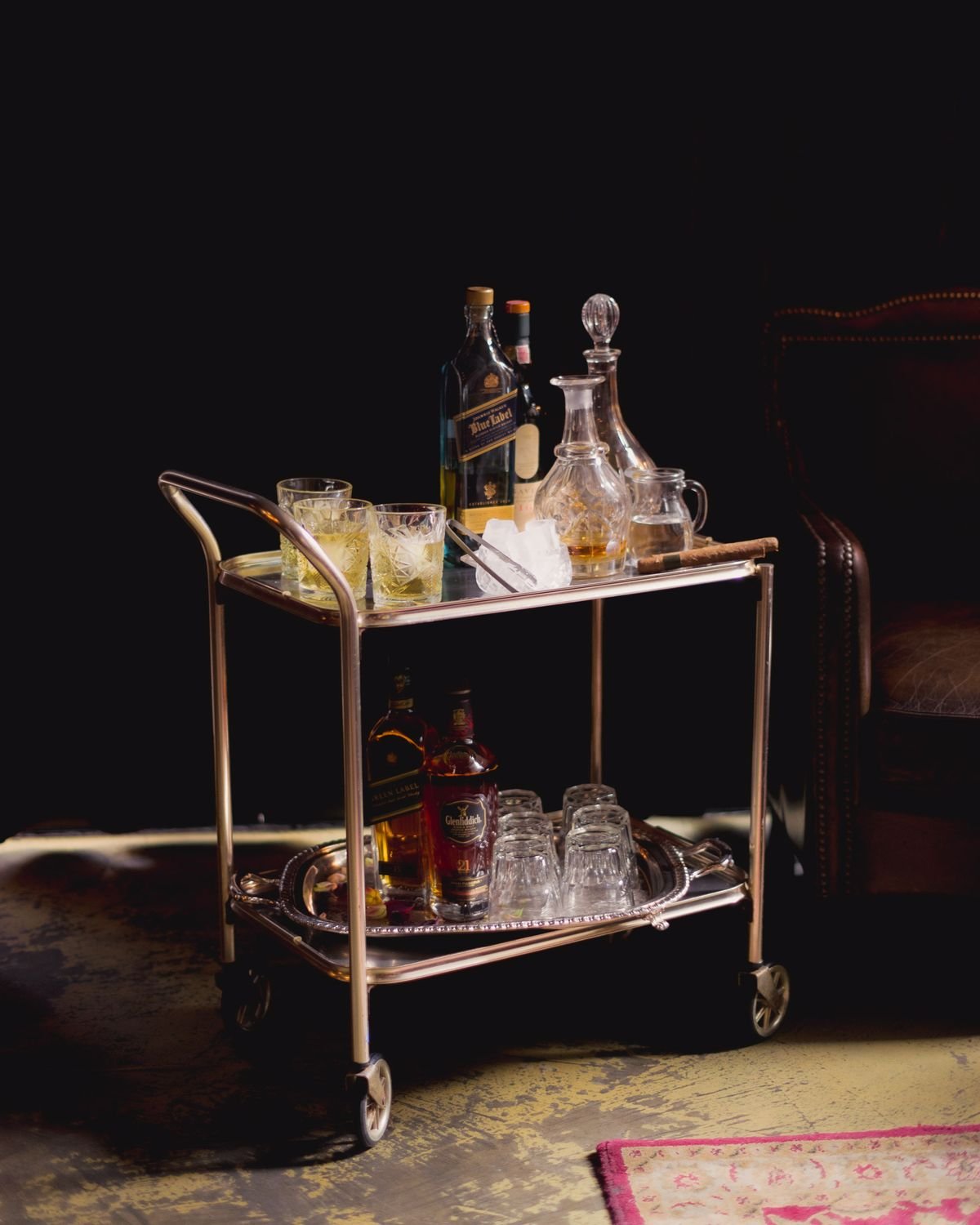
What it is: A brass-and-glass drinks trolley is the hardest-working party piece a home can own — and secondhand ones carry a glamour new carts imitate at three times the price. Between parties it moonlights as a tea station, a plant stand or a library on wheels.
How to do it:
- Rock the frame gently; wobble is common and usually a loose bolt
- Clean glass shelves and polish brass, or keep the patina for softness
- Style in layers: bottles below, glasses and one green plant above
- Keep wheels oiled so it rolls rather than rattles
Pro tip: A decanter bought separately from the cart looks more collected than a matching set — mix your sources.
Avoid this: Avoid overloading the top shelf; vintage glass and gravity are unforgiving partners.
24. Add a Rustic Bench to the Entryway
Style: Welcoming workhorse | Best for: hallways, porches and foot-of-bed | Price feel: Low
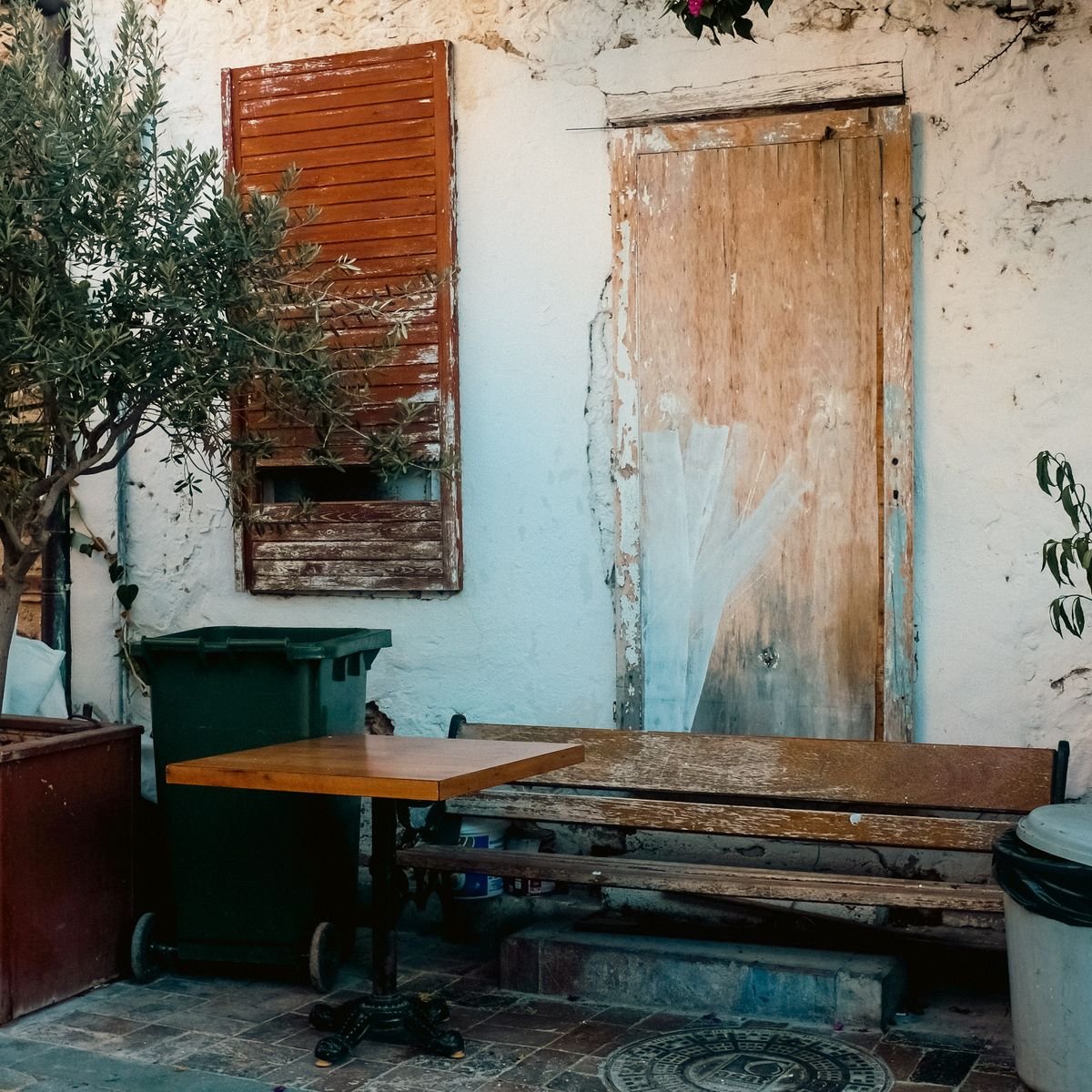
What it is: A simple wooden bench — from a farmhouse table set, a church hall or a garden — gives the hallway a place to sit, drop bags and pull on boots. Under a row of hooks and beside a basket, it turns a pass-through space into the hardest-working corner of the house.
How to do it:
- Measure your hallway width; benches are longer than you remember
- Sit and bounce gently — legs and stretchers should feel solid
- Add a cushion or folded quilt to soften the seat
- Tuck baskets or shoes underneath to keep the floor clear
Pro tip: A bench at the foot of a bed holds tomorrow’s clothes and tonight’s quilt with equal grace.
Avoid this: Avoid benches with split seat planks; they pinch, snag clothing and only get worse.
25. Group Rattan Chairs for a Sunlit Corner
Style: Light and breezy | Best for: conservatories, bedrooms and sunny corners | Price feel: Low
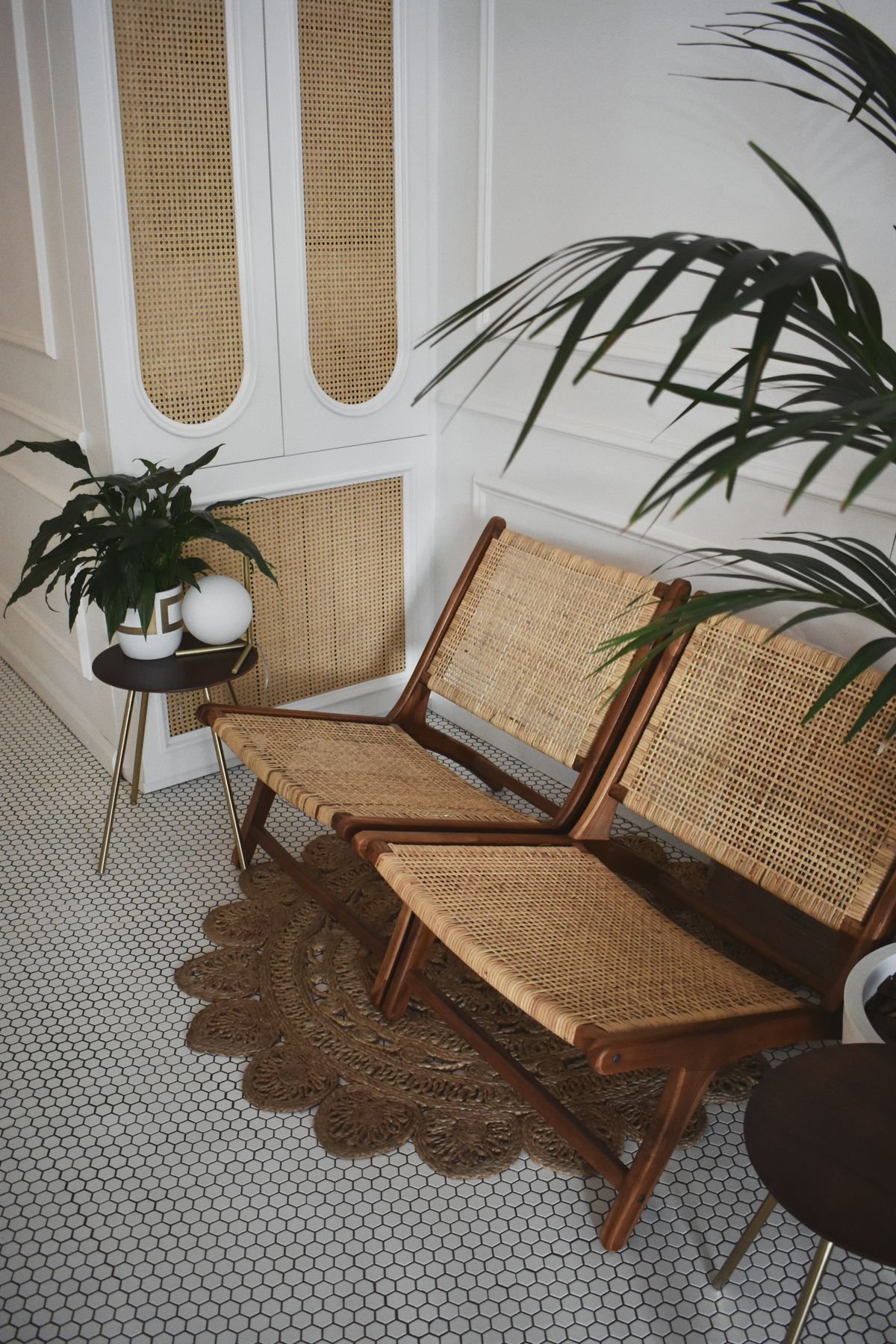
What it is: Rattan and cane chairs from the seventies and eighties are everywhere secondhand, light as air and full of texture. A pair with cushions and a small table between them makes a morning-coffee corner that feels like a holiday, even in February.
How to do it:
- Check cane seats for sagging and broken strands at the edges
- Wash with a soft brush and mild soap, then dry thoroughly
- Add seat pads — rattan is kind, but cushions make it linger-worthy
- Keep rattan out of damp rooms; it prefers dry, bright air
Pro tip: A peacock chair, if you ever find one at a fair price, needs nothing else in the corner — it is the corner.
Avoid this: Avoid brittle, grey rattan that has lived outdoors for years; its strength has quietly left.
26. Sleep in a Thrifted Iron Bed Frame
Style: Romantic classic | Best for: bedrooms and guest rooms | Price feel: Medium
What it is: A cast-iron or brass bed frame turns an ordinary bedroom into a period film set — and these frames were built to last a century. They arrive in charity warehouses and house clearances regularly, usually missing only their bolts and a good clean.
How to do it:
- Confirm the size — older frames can be narrower than modern doubles
- Count the parts: head, foot, side rails and slats or a base
- Replacement bolts are standard hardware-store items; bring an old one to match
- Touch up chips with matching enamel paint to stop rust spots
Pro tip: Dress an iron bed with white linen and one patterned quilt — the simplest styling is also the most striking.
Avoid this: Avoid frames with bent side rails; a sleeping surface must be level, and straightening iron is specialist work.

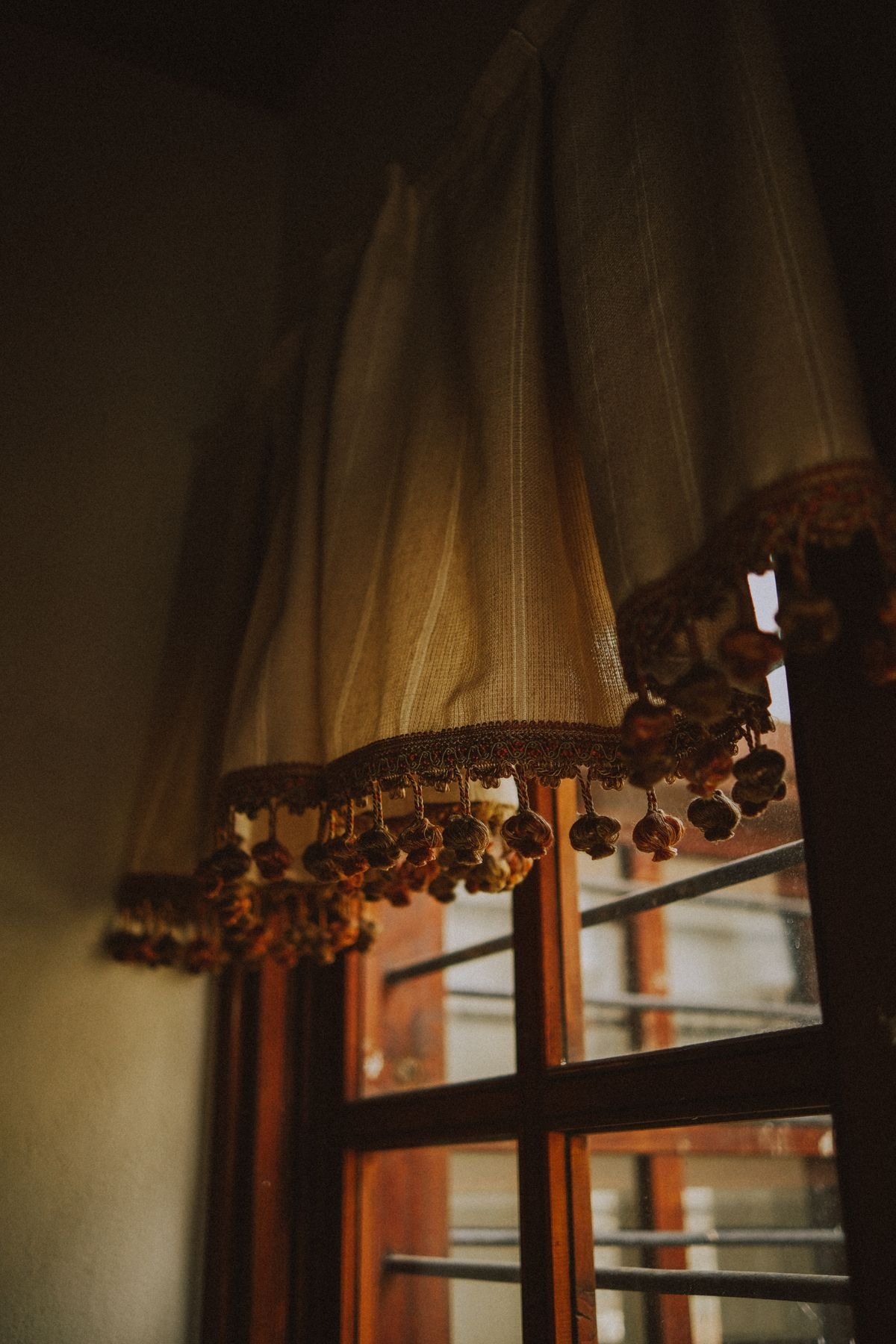
27. Hang Vintage Curtains for Instant Softness
Style: Soft filter | Best for: living rooms and bedrooms | Price feel: Very low
What it is: Heavy old curtains — velvet, linen, chintz — hang with a weight and drape that thin modern panels cannot copy, and they appear in charity shops for a few pounds a pair. Even used as a doorway hanging or a cupboard front, vintage fabric softens a room’s edges.
How to do it:
- Measure windows before you shop; older curtains run long and generous
- Hold fabric to the light to check for sun-rot along the folds
- Wash or air thoroughly — curtains hold a house’s worth of dust
- Shorten by hemming rather than cutting, so the fabric keeps its options
Pro tip: One velvet curtain panel makes a luxurious throw, table cover or cushion front if the pair does not fit your windows.
Avoid this: Avoid curtains that smell of smoke after airing; fabric holds scent more stubbornly than wood.
28. Light the Evening with Old Oil Lanterns
Style: Flickering calm | Best for: porches, mantels and dining tables | Price feel: Low
What it is: Hurricane lanterns and old railway-style lamps cast the kind of light electricity forgot: low, golden and alive. As decor they work anywhere — on a porch table, along a mantel, clustered on the hearth — and with modern LED candles inside they are safe in any home.
How to do it:
- Check glass chimneys for cracks; replacements are widely available
- Wire-brush light rust and wax the metal to deepen the finish
- Use LED candles for everyday glow, reserving real flame for outdoors
- Hang a pair at different heights for a lantern-light rhythm
Pro tip: A lantern on the hall table, lit at dusk, makes coming home feel like an occasion.
Avoid this: Avoid burning paraffin in untested vintage lanterns indoors; seals and wicks age unpredictably.

29. Arrange Candlesticks and Clocks on a Shelf
Style: The composed vignette | Best for: mantels, dressers and shelves | Price feel: Very low
What it is: Brass candlesticks, small clocks, a framed photograph and a stack of books: the classic shelf vignette is assembled entirely from thrift-shop smalls. The trick is arrangement, not acquisition — heights in a gentle staircase, one shiny thing, one matte thing, one living thing.
How to do it:
- Group in odd numbers and overlap objects slightly for depth
- Mix metals warmly — brass, copper and aged silver coexist happily
- Anchor the group with the largest piece slightly off-centre
- Edit ruthlessly; a vignette is finished when one more thing would crowd it
Pro tip: Photograph your shelf. The camera shows clutter your eye has learned to forgive.
Avoid this: Avoid lining objects up in a soldier row along the whole shelf — group, gap, group instead.
30. Give the Kitchen Retro Enamel Charm
Style: Cottage kitchen | Best for: kitchens of any size | Price feel: Low
What it is: A stovetop kettle in cream or cornflower blue, enamel canisters, a wooden-handled whisk: small retro kitchen pieces change how a kitchen feels every single day. They also tend to outlast their modern replacements, because they were made from steel, wood and not much else.
How to do it:
- Choose one accent colour and let enamel pieces repeat it around the room
- Check kettle interiors for rust before buying to brew
- Keep daily-use pieces within reach of the stove, not in a display cabinet
- Pair with open shelving so the collection is the decoration
Pro tip: Enamel mugs by the back door become plant pots, pen holders and garden markers for years after their drinking days.
Avoid this: Avoid chipped enamel on food-contact edges if the metal beneath is rusting; relegate those pieces to storage duty.

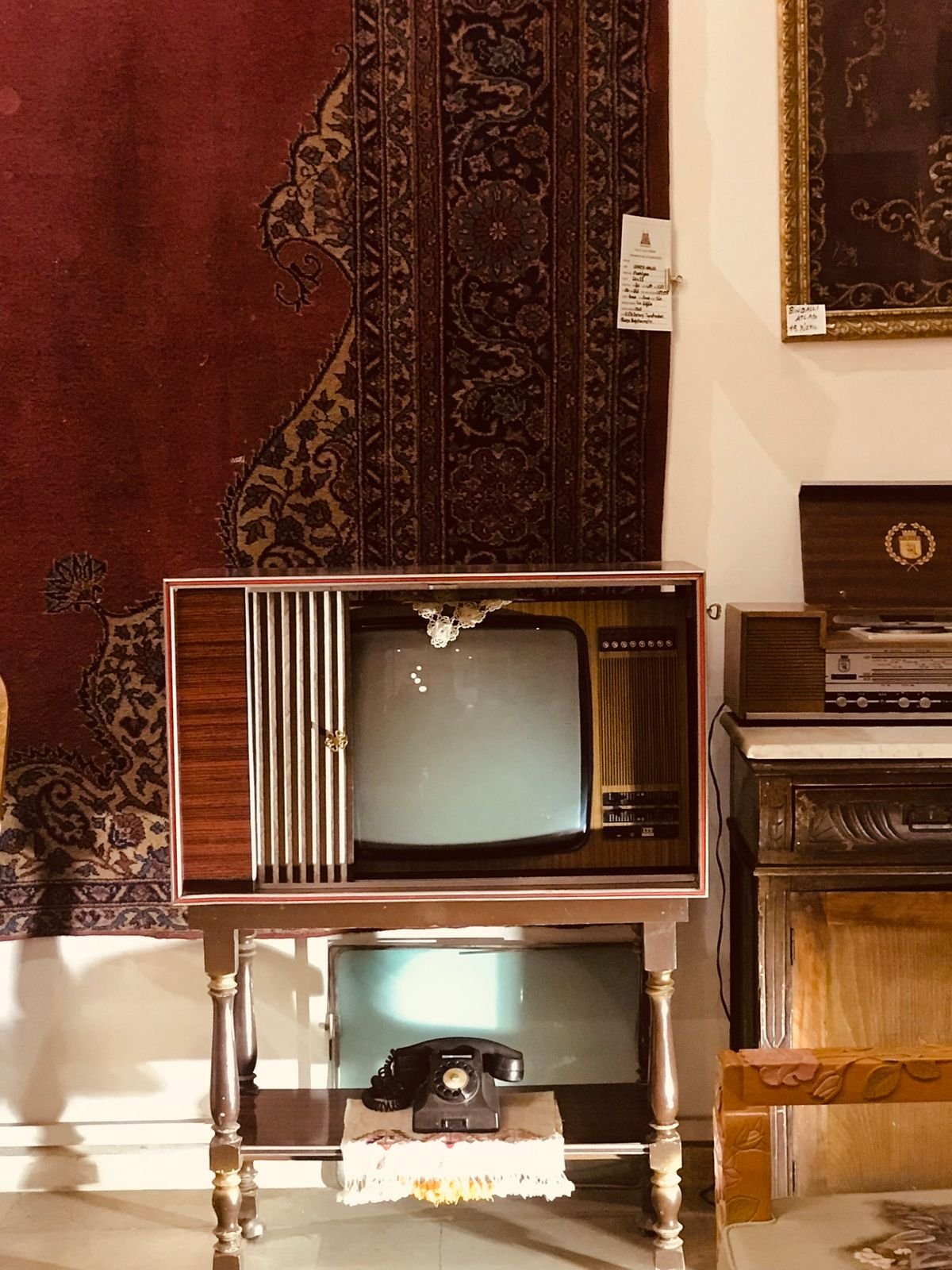
31. Use Retro Tech as Sculpture
Style: Nostalgic focal point | Best for: living rooms, dens and media corners | Price feel: Low to medium
What it is: A rounded old television, a rotary-dial telephone, a chunky cassette deck: yesterday’s technology has become today’s sculpture. One piece, placed with confidence on a cabinet or shelf, gives a room a wink of nostalgia that art prints rarely manage.
How to do it:
- One retro piece per room is the sweet spot — it should read as a choice
- Clean Bakelite and plastic with a damp cloth; avoid soaking dials and labels
- A rotary phone can still work on many landlines — test before assuming decor duty
- Old TV cabinets make excellent drinks cabinets or record storage once emptied
Pro tip: A small plant or stack of books on top of an old TV cabinet softens the tech into the room’s story.
Avoid this: Avoid opening up old televisions yourself; vintage sets can hold charge and fragile components — leave internals to specialists.
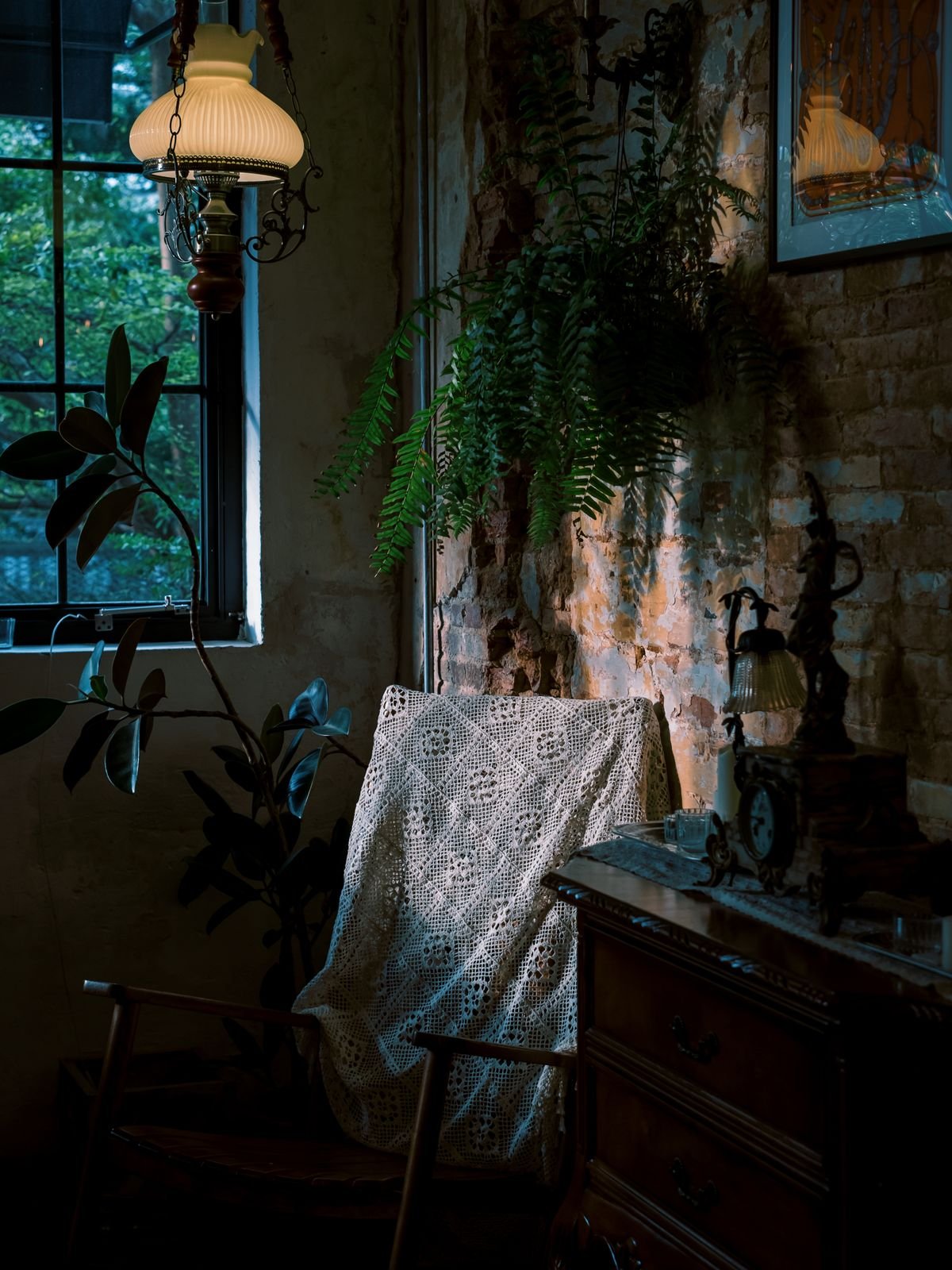
32. Build a Reading Corner Around One Great Chair
Style: The quiet retreat | Best for: any spare corner with decent light | Price feel: Low
What it is: Almost every item in a reading corner can be thrifted: the chair, the lamp, the side table, the footstool, the books. Assembled with care, the corner becomes the most fought-over seat in the house — proof that comfort is a design feature, not a budget line.
How to do it:
- Claim the corner with the best natural light, then add a lamp for evenings
- Layer a small rug under the chair to mark the territory
- Keep the current book stack within arm’s reach on a stool or crate
- Add one plant; green corners are measurably more inviting
Pro tip: A folded quilt over the chair arm is both decor and invitation — nobody resists a chair that looks that ready.
Avoid this: Avoid placing the corner where it becomes a dumping ground for bags and post; protect its purpose.
33. Top a Dresser with Collected Bottles and Jars
Style: Apothecary charm | Best for: dressers, shelves and bathroom counters | Price feel: Very low
What it is: Old glass bottles, stoneware jars and blue pharmacy glass catch light like nothing else in the thrift shop. Grouped on a dresser top or a sunny sill, they turn storage for cotton wool, brushes and dried flowers into a small, glowing still life.
How to do it:
- Favour coloured glass — blues, greens and ambers glow in daylight
- Soak away old labels, or keep one beautiful label as the star
- Cluster tightly in groups of five to nine, tallest at the back
- Put the group where sun reaches it at least part of the day
Pro tip: A single stem or feather in the tallest bottle lifts the whole group from storage to arrangement.
Avoid this: Avoid bottles with ground-glass stoppers fused by age unless you never need to open them.

34. Pull It Together: The Collected Whole Room
Style: The finished picture | Best for: every home, one room at a time | Price feel: Built slowly, costs little
What it is: The final idea is the sum of the other thirty-three: a room where the sofa, the rug, the mirror and the smallest candlestick were all found, not ordered. Collected rooms are never finished in a weekend. They grow — and that slow growth is why they feel like homes instead of sets.
How to do it:
- Keep one loose palette across the room so new finds land softly
- Repeat wood tones and metals at least twice each to create rhythm
- Leave some surfaces empty; collected is curated, not crowded
- Let each new piece replace or earn its place — one in, one considered
Pro tip: Photograph the room each season. Watching it gather itself, piece by piece, is the deepest pleasure of this way of decorating.
Avoid this: Avoid chasing a finished look by a deadline; the hunt is the hobby, and the room is the souvenir.
Buying & Materials Guide: How to Thrift Well
Good thrifting is a skill, and like most skills it is mostly a checklist. The best hunting grounds are charity shops on weekday mornings, house-clearance warehouses, and the humble flea market, where dealers expect haggling and prices start low. Estate sales reward the early; car-boot sales reward the patient. Wherever you shop, the same inspection habits protect your money and your home.
For furniture, your hands are the tools: rock it, sit on it, open every drawer, look underneath. Solid wood, dovetail joints and honest weight signal pieces that will serve for decades. For textiles, your nose and the light do the work — hold fabrics up, sniff for mildew, and walk away from anything whose smell survives the open air. For ceramics and glass, run a fingertip around rims and bases; your skin finds chips your eyes miss.
Use this table as a pocket reference for the most common finds in this guide.
| Item | What to Check | Fair Thrift Price | Where to Find It |
|---|---|---|---|
| Sofa | Hardwood frame, cushion smell, sit test | $75–$300 | Charity warehouses, house clearances |
| Wooden dresser | Drawer glide, square carcass, woodworm | $50–$180 | Flea markets, estate sales |
| Mirror | Secure glass, solid frame joints | $15–$60 | Antique shops, charity shops |
| Vintage rug | Moth damage, smell, flexible backing | $40–$150 | Estate sales, specialist dealers |
| Table lamp | Stable base, wiring condition | $8–$35 | Charity shops, car-boot sales |
| Ceramics & vases | Rim chips, hairline cracks | $2–$12 | Charity shops, flea markets |
| Frames | Joint strength, glass intact | $1–$8 | Everywhere — buy in bundles |
| Quilts & textiles | Thin patches, mildew, sun-rot | $20–$70 | Textile dealers, charity shops |
| Small metals (brass, clocks) | Weight, working order optional | $3–$25 | Flea markets, antique fairs |
Cleaning is the unglamorous half of the craft. Wood gets a wash with mild soap, a thorough dry, and wax or oil. Upholstery gets vacuumed, aired outdoors and, for anything that will touch skin daily, professionally cleaned once. Textiles are washed gently and dried flat. Do this before pieces cross your threshold and your home gains treasure, not trouble.
Set a gentle budget before each trip — a figure for smalls, a figure for furniture — and carry the tools of the trade: a tape measure, a phone torch for reading dark undersides, and a tote strong enough for ceramics. Haggling is welcome at flea markets and car-boot sales, less so in charity shops, where prices already fund the cause; a polite question about best price is never rude, and a firm no costs nothing. Finally, keep the one-in-one-out rule in mind: a new find that earns its place keeps the collection curated, while hoarding turns treasure into storage. Buy the best example you can afford of each thing, once — that is the whole economics of thrifting well.
Frequently Asked Questions
Where is the best place to find thrifted home decor?
Charity shops and thrift stores are best for small decor — ceramics, frames, books, lamps. For furniture, try house-clearance warehouses, estate sales and flea markets, where pieces are priced to move. Visit little and often rather than rarely and hopefully; stock turns over fast, and the regulars find the best things.
How do I know if a thrifted piece is good quality?
Lift it: quality is heavy. Look for solid wood rather than veneer over board, dovetail joints on drawers, woven rather than glued cane, and real metal rather than plated plastic. Sit on chairs and sofas, open and close everything that opens, and check the underside — makers hid their standards there, and so do flaws.
How do I clean thrifted furniture before bringing it home?
Clean outside or in a garage where possible. Vacuum upholstery thoroughly, wash hard surfaces with mild soapy water, and air everything for a day. Wash textiles gently, polish wood with wax, and consider one professional clean for sofas and rugs. Check wooden pieces for woodworm holes before they join indoor furniture.
What should I always buy secondhand — and what should I skip?
Always buy secondhand: solid-wood furniture, mirrors, frames, ceramics, brass, books, baskets and quilts — they age gracefully and cost a fraction of new. Be cautious with mattresses, upholstered pieces you cannot clean deeply, children’s soft furnishings, and any electrical item you will not have professionally checked.
How do I make thrifted pieces look cohesive, not cluttered?
Give the room one loose colour palette and repeat materials — the same wood tone twice, brass in three places. Group small objects into vignettes instead of scattering them, leave some surfaces empty, and let one piece per surface be the hero. Cohesion comes from rhythm and restraint, not matching.
Is thrifted decor really cheaper than buying new?
Usually, dramatically. Most ideas in this guide cost between a tenth and a third of their new equivalents, and the quality is frequently higher. The honest costs are time — the hunt takes longer than a checkout — and the occasional cleaning or repair. For most collectors, that time is the pleasure, not the price.
A Home That Gathers Itself
Every collected home starts with one find: the mirror that stopped you mid-aisle, the chair you could not leave behind. From there it grows the way friendships do — gradually, and by paying attention. The 34 thrifted home decor ideas above are not a shopping list to complete but a way of looking: at charity shops, flea markets and your own family’s attic with fresh, hopeful eyes. Notice, too, what this way of decorating gives back beyond beauty: furniture rescued from landfill, craft traditions kept in daily use, and rooms that could not be copied from a catalogue if anyone tried. Your home becomes yours in the truest sense — assembled by your eye, your patience and your Saturdays.
So take a tape measure, a tote bag and this guide, and go hunting this weekend. Buy the piece that makes you smile first and figure out its place second — in a collected home, there is always a place. From all of us at Decor Beam: happy thrifting.
