
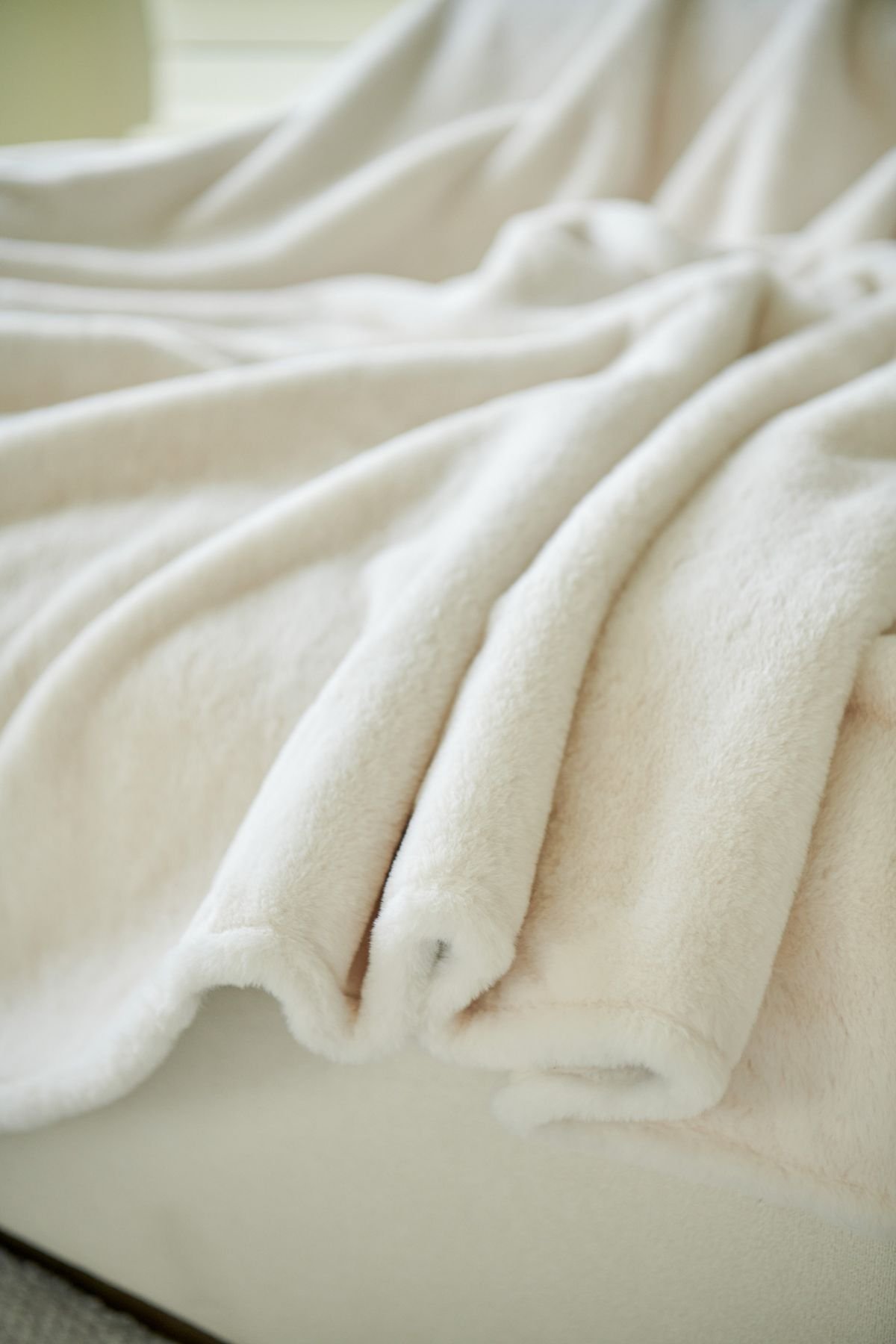
A deer blanket is the fastest way to bring the woods indoors without committing to a full lodge makeover. One fawn-print throw over a sofa back, one folded deer-motif blanket at the foot of a bed, and a plain room suddenly has a story: forest light, soft spots, warm earth tones. Unlike antler mounts or heavy rustic furniture, a blanket is reversible, washable, and cheap to experiment with — which is exactly why it is the smartest woodland purchase you can make.
This guide collects 31 deer blanket ideas for real rooms: sofa drapes and bed folds, reading nooks and window seats, cabin layering, autumn porch styling, and the color pairings — fawn with cream, rust, forest green, and cognac leather — that make a deer print read as grown-up decor instead of a novelty. Every idea names its style, best use, and price feel, and each one is a styling move, not a craft project: no patterns, no sewing, just placement.
Use the quick-pick table to shortlist by room and budget, then read the ideas in any order. One principle runs through all of them: a deer blanket works when it is treated like a textile first and a motif second. Get the drape, the fold, and the neighboring textures right, and the little fawn does the rest.
Quick-Pick Table: The 8 Most Popular Deer Blanket Ideas
| Idea | Best for | Price feel |
|---|---|---|
| 1. The Classic Sofa-Back Drape | An instant woodland focal point in the living room | Low |
| 3. A Reading Nook Built Around One Blanket | Corners, alcoves, and one good armchair | Low |
| 4. The Cabin Living Room Centerpiece | Cabins, lodges, and wood-panelled rooms | Medium |
| 6. Doubled Up: Deer Print Over a Plaid Wool Throw | Layered autumn and winter texture | Medium |
| 11. Hearthside Basket, Folded and Ready | Fireplace rooms and blanket storage that shows | Low |
| 19. The Christmas Woodland Sofa | Holiday living rooms with a tree and fireplace | Medium |
| 27. Cognac Leather and Soft Fawn | Leather sofas that need softening | Low |
| 31. The Blanket Ladder Display | Showing a collection without using it up | Low |
1. The Classic Sofa-Back Drape
Style: Woodland classic | Best for: an instant focal point in the living room | Price feel: Low
What it is: The move every other idea borrows from: a deer blanket unfolded to show its full fawn print and laid over the back of the sofa, print facing the room. It turns the largest piece of furniture into the woodland statement, and because nothing is fixed, it reads as relaxed rather than themed. On a plain linen or leather sofa, the spotted fawn pattern does the work of art, cushions, and a rug combined.
How to do it:
- Fold the blanket lengthwise into thirds so the print band runs unbroken
- Drape it over the sofa back, slightly off-center, never dead middle
- Let one end pool a little longer than the other — asymmetry looks lived-in
- Echo the fawn tones in one cushion, then stop adding motifs
Pro tip: Drape it over the back corner nearest the door — it becomes the first thing guests see, and the room’s whole palette seems chosen around it.
Avoid this: Avoid centering it like a flag and adding antler cushions beside it; one motif per sight line is the rule.
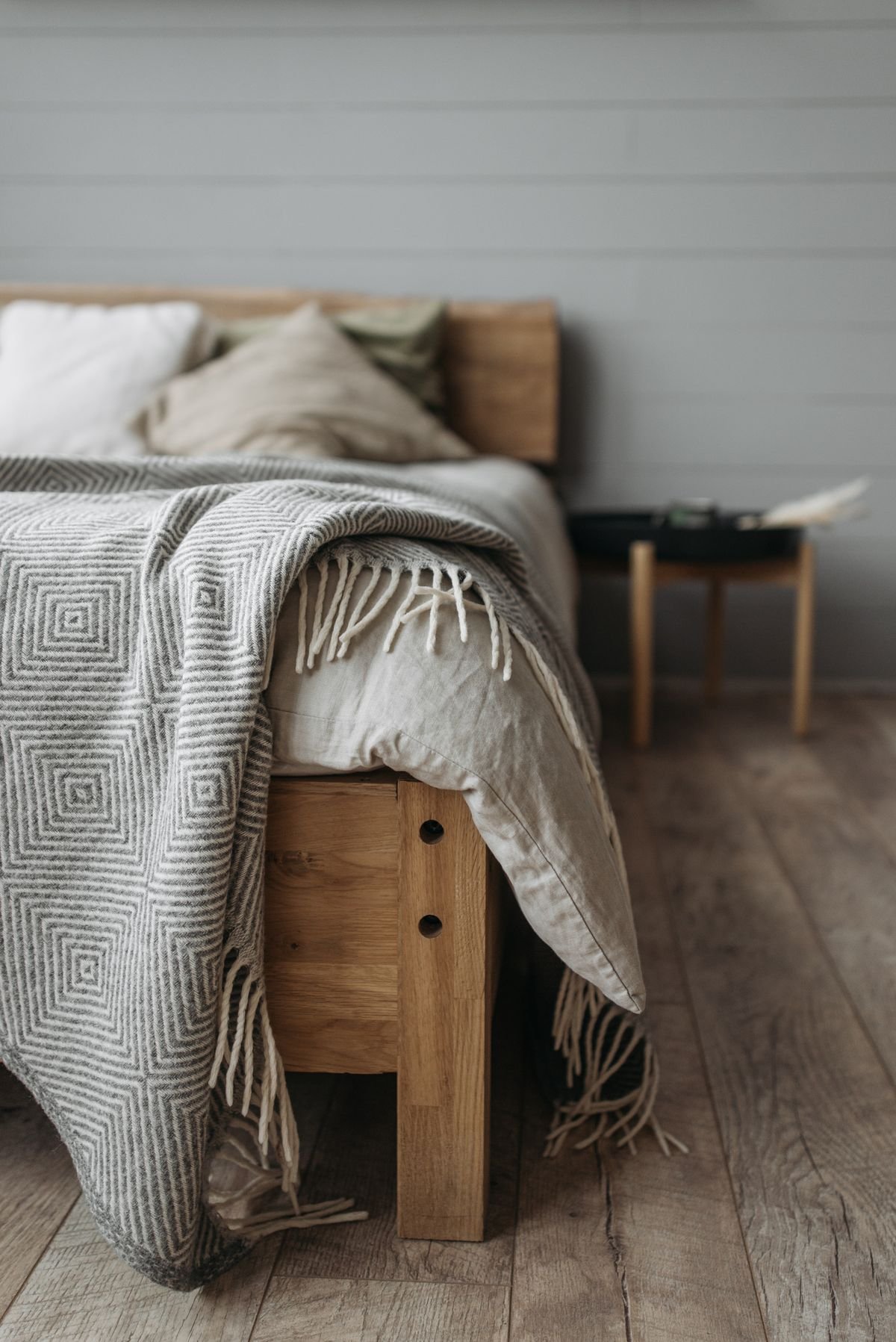
2. Folded at the Foot of the Bed
Style: Soft lodge | Best for: main bedrooms and spare rooms | Price feel: Low
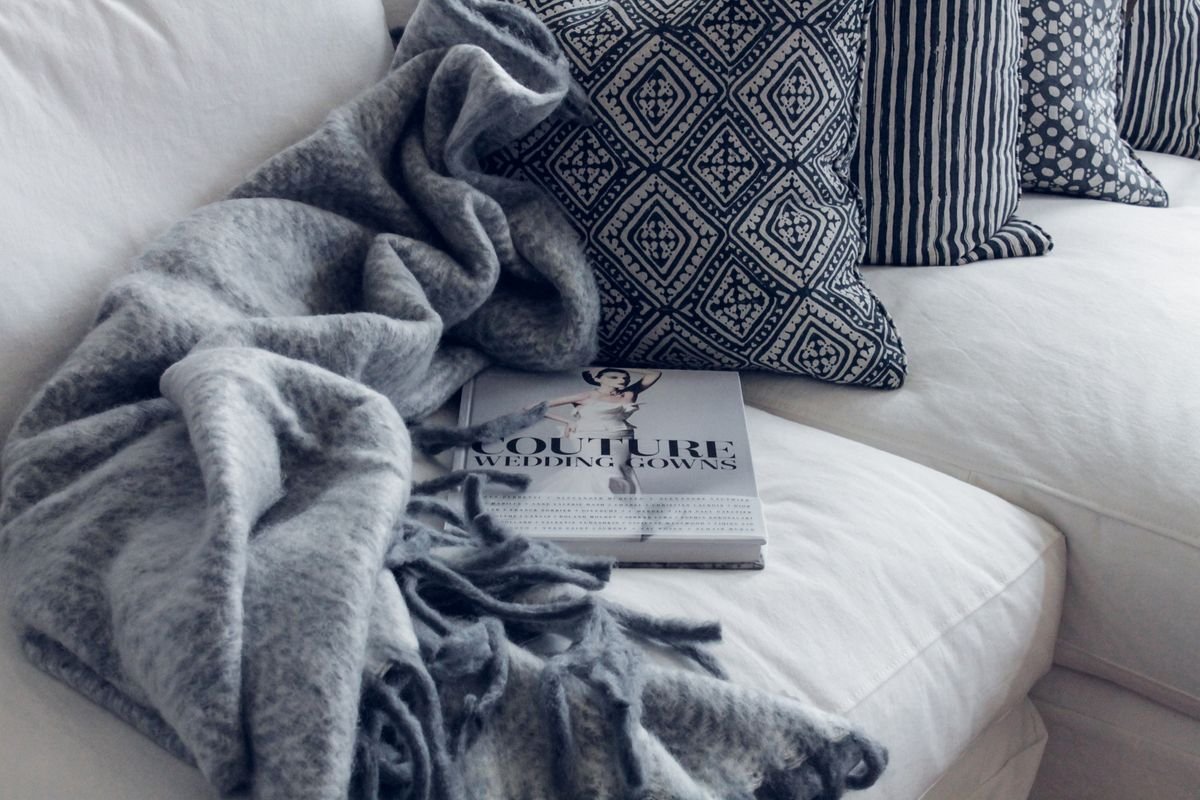
What it is: A deer blanket folded into a long band and laid across the foot of the bed, the way hotels finish a bed with a runner. The fawn print sits against plain bedding like a strip of forest floor, warming the whole bed without the commitment of a full woodland duvet set. It is also genuinely useful: the fold is exactly where cold feet look for extra weight at 2 a.m.
How to do it:
- Fold the blanket into a band roughly a quarter of the bed’s length
- Lay it across the lower third of the bed, edges squared
- Keep the bedding plain cream, white, or flannel grey underneath
- Add one wood or woven texture nearby — a tray, a basket, a stool
Pro tip: Match the fold width to your pillows’ height in the stack — repeated proportions are what make a bed look styled instead of made in a hurry.
Avoid this: Avoid patterned bedding under a patterned blanket; the fawn print needs a quiet field to show against.

3. A Reading Nook Built Around One Blanket
Style: Corner cocoon | Best for: alcoves, bay windows, and one good armchair | Price feel: Low
What it is: A chair, a lamp, a small table — and the deer blanket draped over the chair’s arm, ready to be pulled across your legs. The blanket is what converts a chair in a corner into a destination. Its fawn tones warm up the pool of lamplight, and the woodland hint makes the nook feel like a clearing: a small, deliberate pause inside the house.
How to do it:
- Choose the corner with the best natural light by day
- Drape the blanket over one arm of the chair, print outward
- Add a warm-bulb lamp and a table just big enough for a mug and a book
- Put a small rug under the chair to draw the nook’s boundary
Pro tip: Keep a second, plainer throw under the deer blanket in deep winter — the print layer stays pretty, the plain layer does the heavy warming.
Avoid this: Avoid a nook under a cold white ceiling light; lamplight at chair height is what makes fawn tones glow.
4. The Cabin Living Room Centerpiece
Style: True lodge | Best for: cabins, lodges, and wood-panelled rooms | Price feel: Medium
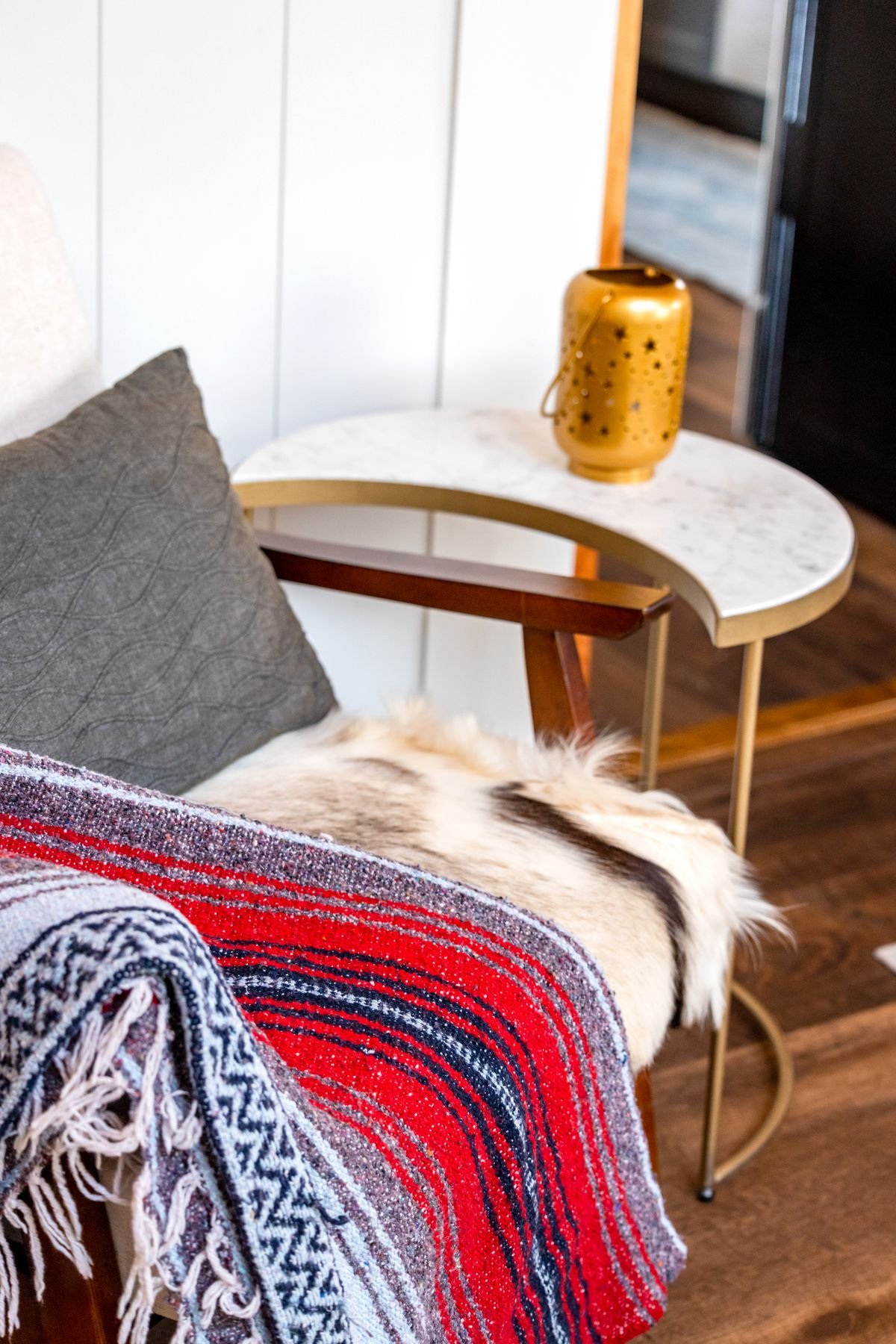
What it is: In a wood-panelled room, a deer blanket is not an accent — it is the missing middle layer between all that timber and the people. Draped over the main sofa or spread across a daybed, the fawn print speaks the same visual language as the walls: spotted light, forest shade, warm brown. Cabins forgive boldness, so this is the place for the largest-scale print you own.
How to do it:
- Use your biggest deer blanket on the biggest seat in the room
- Surround it with honest materials: wool, leather, raw wood, iron
- Repeat the blanket’s cream in one lampshade or rug border
- Keep window dressings plain so the print owns the pattern
Pro tip: In a rental cabin or lodge-style room, the blanket is the one personal layer you can add and remove in minutes — bring your own and the room is yours.
Avoid this: Avoid competing wildlife prints in the same room; deer on the sofa plus bears on the cushions reads gift shop, not lodge.

5. Autumn Porch Styling With Plaid and Pumpkins
Style: Harvest porch | Best for: front porches, benches, and entry steps | Price feel: Low
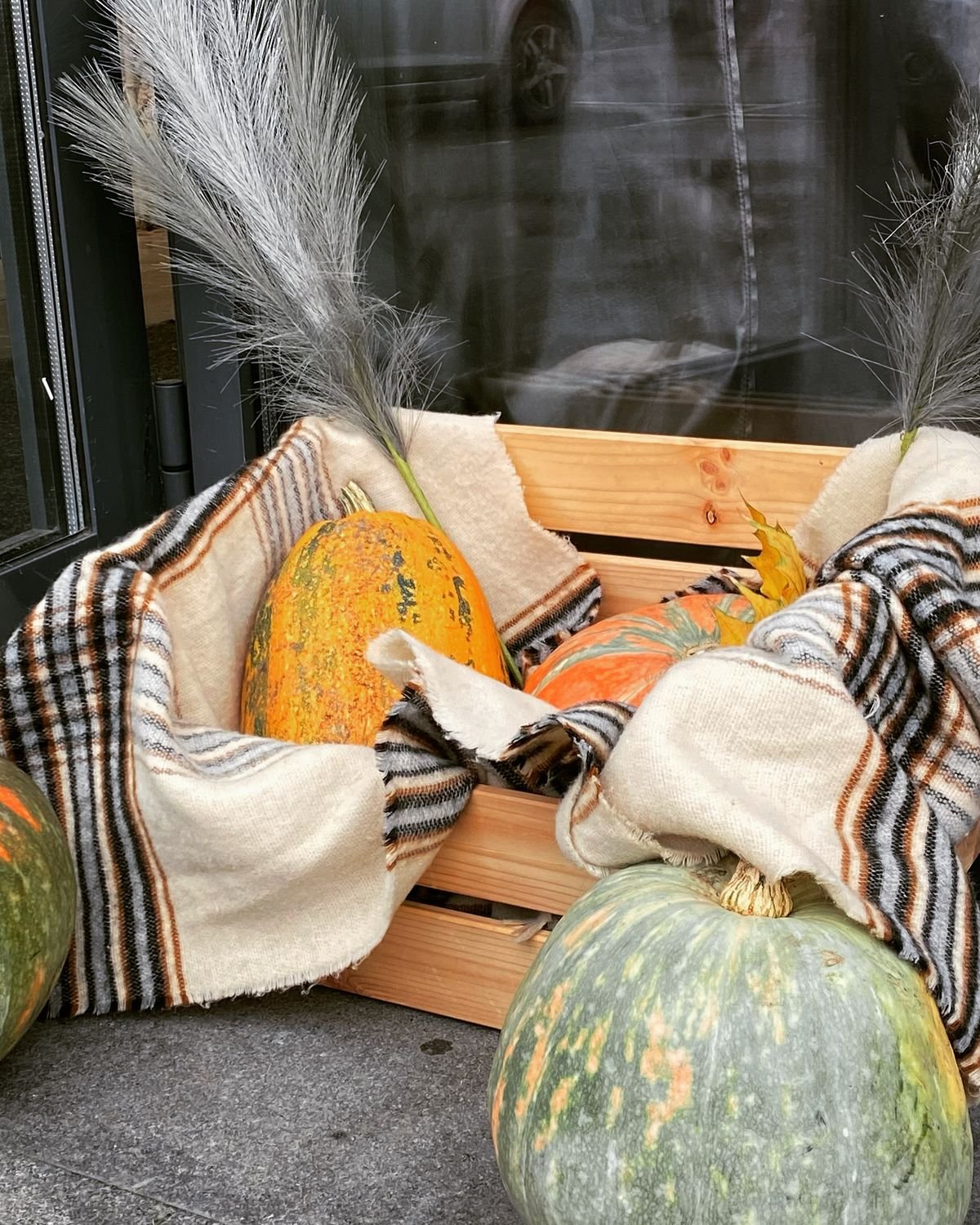
What it is: The porch is where a deer blanket earns its keep twice: once as decor, once as an actual wrap for cool evenings outside. Tucked into a wooden crate or folded over a porch bench beside pumpkins and pampas grass, the fawn print bridges the house and the season — it says the woodland theme starts at the front door. Choose a hard-wearing fleece or wool-blend blanket for outdoor duty.
How to do it:
- Fold the blanket over the bench back, or line a wooden crate with it, print visible from the street
- Cluster pumpkins or lanterns at one end, not both
- Add one plaid cushion to marry the blanket to classic fall checks
- Bring the blanket in at night or in rain — porch styling is daytime styling
Pro tip: A deer blanket on the porch bench photographs beautifully at golden hour; if your home has a listing, a rental, or just a group chat, this is the shot.
Avoid this: Avoid leaving a good wool or cotton blanket out in damp weather — mildew undoes in a week what styling built in an hour.
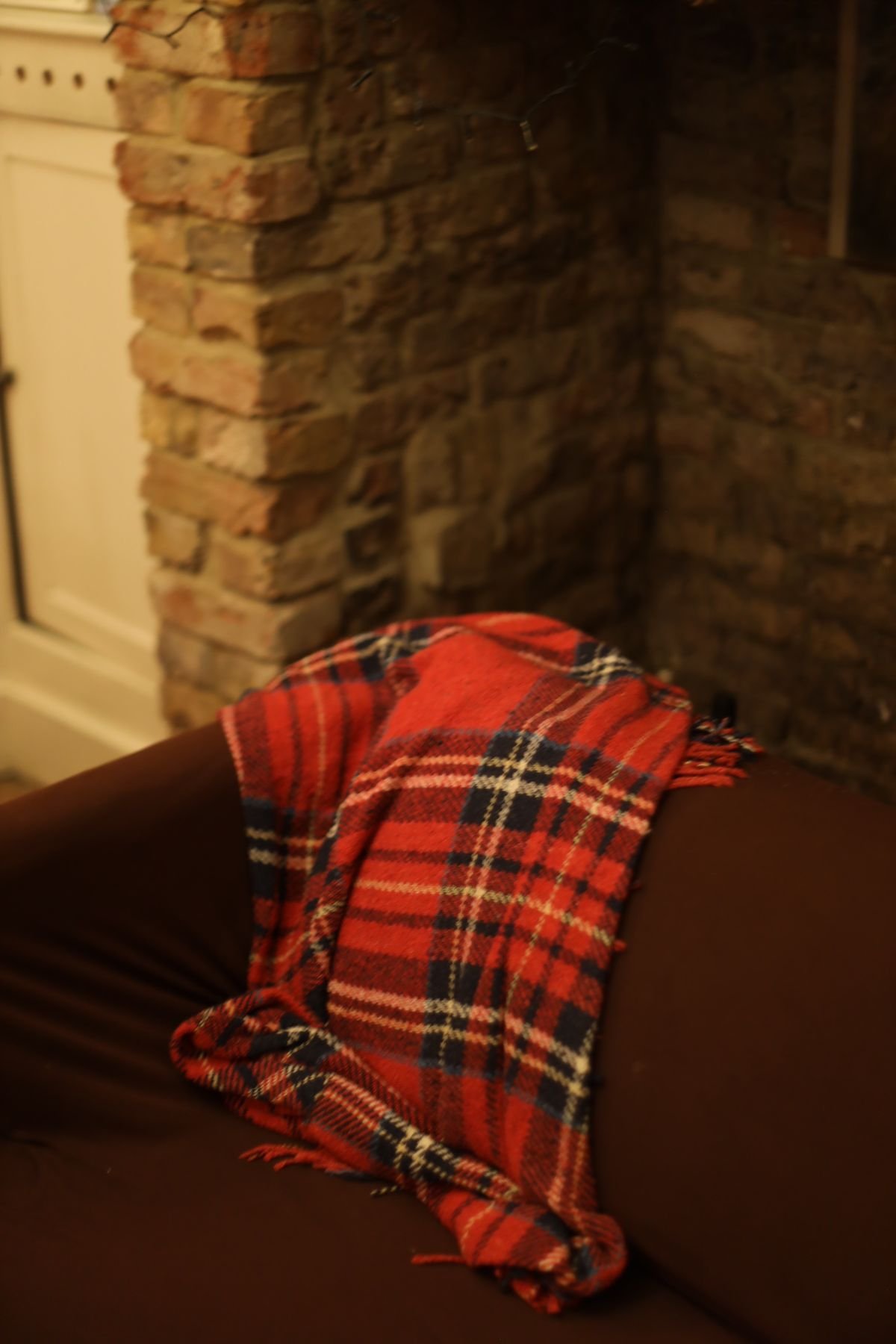
6. Doubled Up: Deer Print Over a Plaid Wool Throw
Style: Layered rustic | Best for: autumn and winter texture on sofas and beds | Price feel: Medium
What it is: Two blankets, one statement. A plaid wool throw goes down first as the base layer — all structure and classic cabin check — and the deer blanket drapes over the top, its fawn print softening the geometry. The pairing works because plaid and fawn spots are both woodland natives; together they look collected over years, not bought in one basket.
How to do it:
- Spread the plaid throw flat over the seat or bed end first
- Drape the deer blanket over one corner so both patterns show
- Share at least one color between the two — cream, rust, or brown
- Let the plaid’s fringe and the deer’s hem both stay visible
Pro tip: This is the best use for a plaid throw you already own and are bored of — the deer layer makes it look new without spending on a replacement.
Avoid this: Avoid two loud patterns at the same scale; if the plaid is bold, choose the subtlest deer print you have.
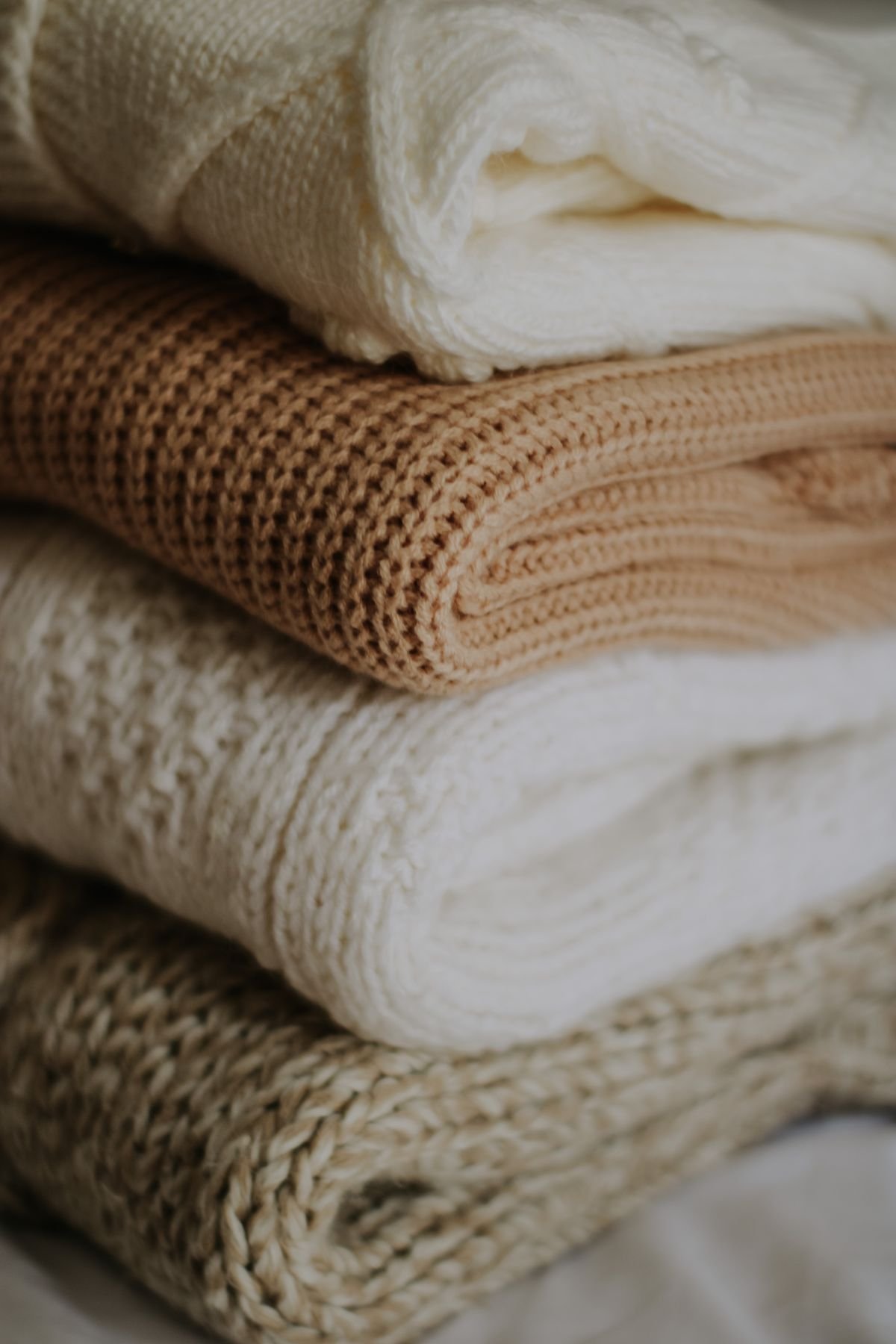
7. Cream and Fawn: The Calm Woodland Palette
Style: Quiet neutral | Best for: calm living rooms and light bedrooms | Price feel: Low
What it is: Not every deer blanket shouts. In cream and fawn, the spots become a gentle texture — visible up close, peaceful from across the room. Stacked or draped in a pale room, this palette gives you the woodland reference without a single dark or rustic note, which is why it suits Scandinavian and modern homes that still want a little forest in them.
How to do it:
- Choose a deer blanket in cream, oatmeal, or pale fawn tones
- Keep the surrounding textiles within the same pale family
- Add warmth with pale wood, rattan, or a sheepskin texture
- Use one deeper brown object — a basket, a frame — as the anchor
Pro tip: Pale fawn spots photograph as texture, not pattern, which makes this the safest deer blanket for a room that is listed, rented, or shared with a minimalist.
Avoid this: Avoid pairing the pale palette with stark black accents; it hardens a scheme that works because it is soft.
8. Rust and Terracotta: The Fall Pairing
Style: Autumn warmth | Best for: fall living rooms and harvest styling | Price feel: Low
What it is: Fawn is already half of autumn’s palette; rust and terracotta supply the other half. A deer blanket laid with pumpkins, a candle, and rust-toned cushions turns a sofa into the season’s centerpiece — the blanket is the neutral that lets the hot colors glow without fighting them. This is the pairing to build in October and relax into until December.
How to do it:
- Drape the deer blanket where lamplight or candlelight reaches it
- Add rust or terracotta in two places only — a cushion and one object
- Bring pumpkins or dried leaves to the same surface, not a separate display
- Keep metals warm: brass and copper, never chrome, beside fawn tones
Pro tip: A plaid in rust and cream under the deer blanket doubles the autumn signal for the price of one extra layer — see idea 6 for the layering order.
Avoid this: Avoid orange overload; the deer blanket should stay the calm center that the rust accents orbit.

9. Forest Green Depth, Fawn to Lighten It
Style: Jewel woodland | Best for: deep green rooms and evening spaces | Price feel: Medium
What it is: Deep forest green is the woodland color with the most drama, and a fawn deer blanket is its perfect counterweight — the pale spots read like light through leaves against the green. Drape the blanket over a green sofa, a green armchair, or at the foot of a bed in a green room, and the pairing borrows the richness of the jewel tone Christmas decor palette while staying usable all year.
How to do it:
- Let the green be the room’s largest surface — sofa, wall, or bedding
- Drape the deer blanket so its palest areas face the room
- Add brass or warm wood to keep the green from going cold
- Repeat the fawn once more in a small way — a cushion, a book spine
Pro tip: In lamplight, forest green darkens a full shade; choose a deer blanket one tone paler than you think you need, and it will land exactly right.
Avoid this: Avoid cool blue-greens beside fawn — the warmth of the print curdles against them. Stay with yellow-based, foresty greens.
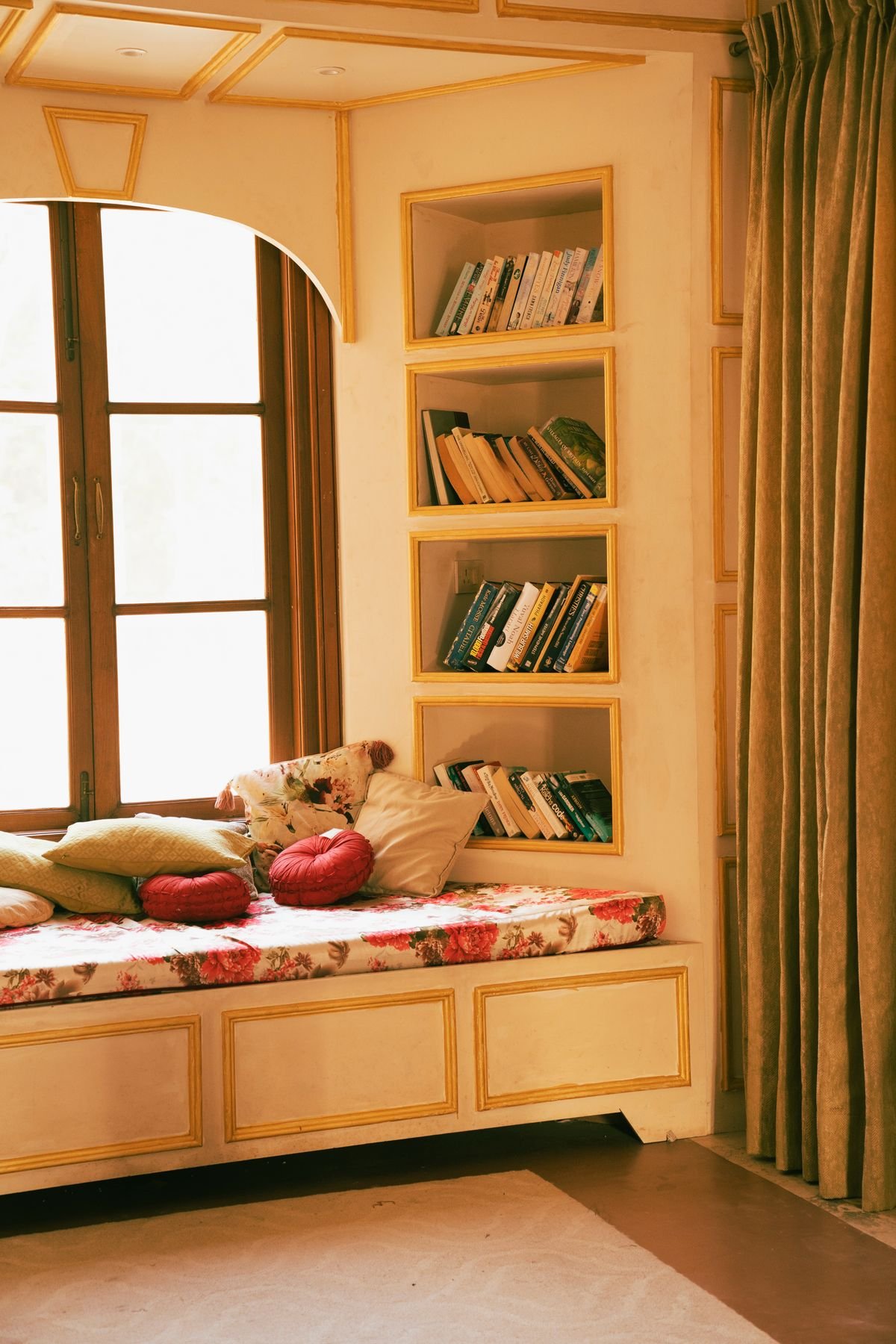
10. The Window Seat Woodland Corner
Style: Daylight nook | Best for: window seats and bay-window benches | Price feel: Low
What it is: A window seat is a room’s built-in clearing — the place where inside meets the trees outside. A deer blanket spread along the seat cushion, ready to pull over your legs, completes the picture: you sit in the warm house, wrapped in the fawn print, watching the actual woods. Bookshelves or a garden view nearby only strengthen the effect.
How to do it:
- Spread the blanket along the seat or fold it at one end as a backrest layer
- Add two cushions in plain linen or wool to frame it
- Keep a small stack of books within arm’s reach
- Choose a washable blanket — window seats collect dust and pet hair
Pro tip: On a sunny seat, rotate which side of the blanket faces up each week — sunlight fades one side of any print faster than the other.
Avoid this: Avoid blocking the window’s lower pane with a tall blanket pile; the view is half the point of the corner.
11. Hearthside Basket, Folded and Ready
Style: Fireside storage | Best for: fireplace rooms and blanket storage that shows | Price feel: Low
What it is: Storage that decorates. A wicker or woven basket beside the hearth, holding the deer blanket rolled or folded with its print showing at the top, does three jobs at once: it keeps the blanket within reach of the fire’s warmth, it softens the hard edges of the fireplace, and it tells every guest that this room is for settling into.
How to do it:
- Choose a basket wide enough that the blanket is not crushed
- Roll the deer blanket with the print outward and stand it in the basket
- Place the basket on the hearth’s edge or the floor beside it
- Keep one plain throw underneath for everyday use; the deer stays the show layer
Pro tip: A basket of blankets beside the fire is the single most photographed corner in cabin rentals — if you host, this is free atmosphere.
Avoid this: Avoid placing any basket within spark range of an open fire; hearthside means beside, never in front of, the flames.

12. The Guest Room Welcome Layer
Style: Host’s touch | Best for: spare rooms and guest beds | Price feel: Low
What it is: Guests read a room in the first ten seconds, and a deer blanket folded across the guest bed — with a book left on top — says someone thought about them. It also solves the oldest hosting problem: guests who are cold at night and too polite to say so. The woodland note makes a plain spare room feel like a little lodge break instead of an obligation.
How to do it:
- Fold the blanket across the foot of the guest bed, print showing
- Leave a book or magazine on the bed as an invitation to use the layer
- Wash the blanket between guests; freshness is part of the welcome
- Add a small bedside light warm enough to read by
Pro tip: Choose your most touchable deer blanket for the guest room — guests judge with their hands before their eyes.
Avoid this: Avoid a brand-new, stiff blanket; a guest layer should feel already loved, not fresh from the packet.

13. Movie-Night Sofa Nest
Style: Family cocoon | Best for: film nights and slow Sundays | Price feel: Low
What it is: Some blankets are styled; this one is deployed. For movie night, the deer blanket comes off the sofa back and becomes the shared roof of a two-or-three-person nest — cushions on the floor, lamps low, the fawn print on the outside so the room still looks good in the glow of the screen. It is the least formal idea in this guide and, in most houses, the most used.
How to do it:
- Keep the deer blanket on the sofa all week so it is already in place
- Pull floor cushions or a pouf up to the sofa edge for the front row
- Dim to one lamp behind the viewers; screens hate glare, blankets love glow
- Refold it over the sofa back when the film ends — the ritual resets the room
Pro tip: Popcorn and fleece are natural enemies; keep a plain dark throw as the eating layer and the deer blanket as the outer, photographed one.
Avoid this: Avoid white or cream deer blankets for movie night in a house with children and cocoa — choose the mid-fawn print for this duty.

14. Choosing the Print: A Fawn Motif That Reads Woodland
Style: Buyer’s eye | Best for: anyone choosing their first deer blanket | Price feel: Low
What it is: Everything in this guide depends on the print you bring home. A real fawn’s coat — the pattern deer species evolved for dappled forest light — is soft-edged, irregular, and warm-toned, and the best blanket prints copy exactly that. Cartoon deer with hard outlines belong to the nursery; blurred, painterly spots in fawn and cream belong in a grown-up living room. Hold any candidate print at arm’s length: if it reads as gentle texture, it is right.
How to do it:
- Look for irregular, soft-edged spots in fawn, cream, and warm brown
- Prefer a scattered, all-over pattern to one giant centered deer portrait
- Check the reverse side — a print that ghosts through looks cheap up close
- Judge it in warm lamplight, not shop fluorescence, before deciding
Pro tip: A stag or deer silhouette woven in a single tone (jacquard style) is the most timeless option of all — it never dates and never shouts.
Avoid this: Avoid glitter, sequins, or text slogans on a deer blanket; each one drags the motif from woodland toward novelty.

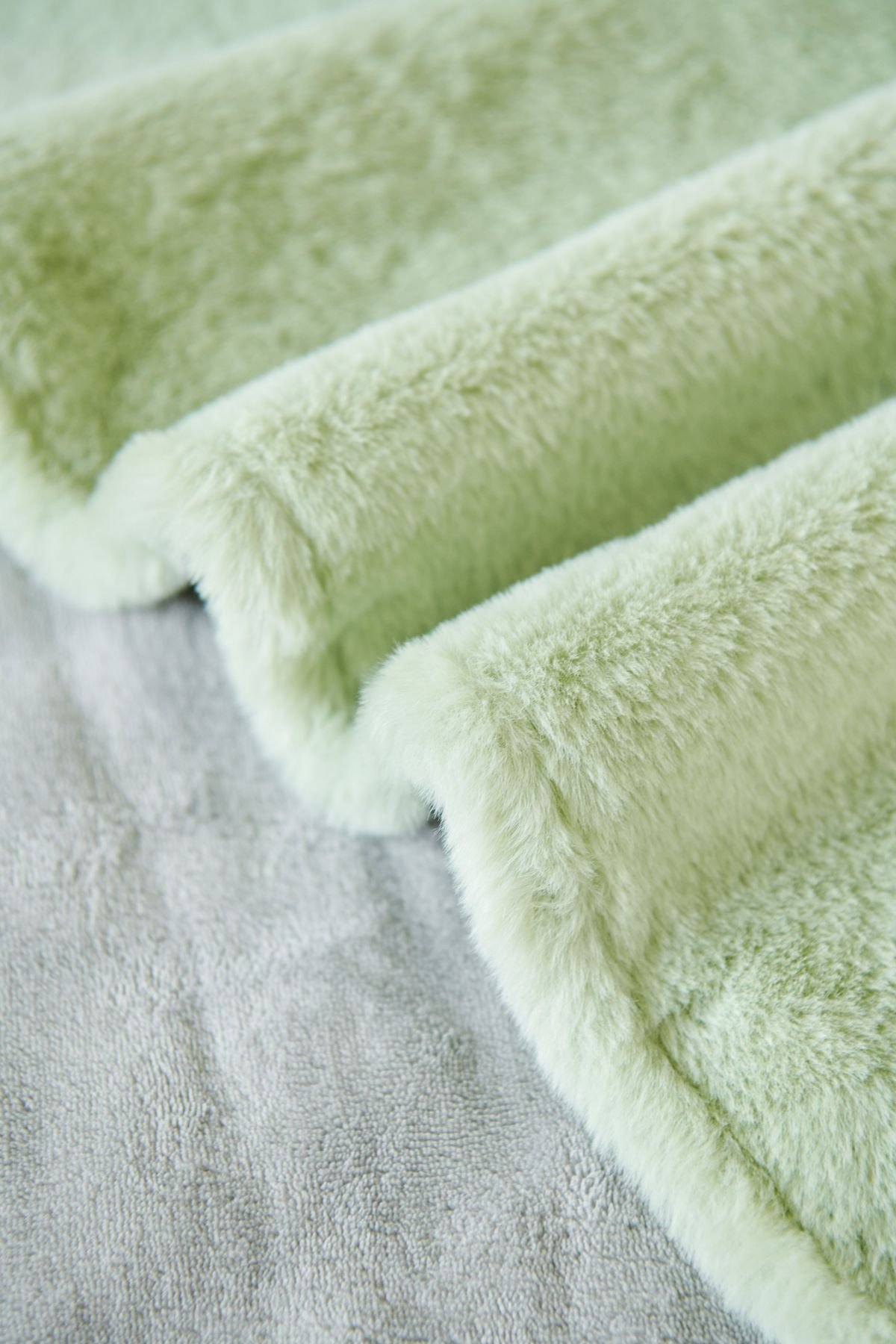
15. The Faux Fur Double Layer
Style: Plush woodland | Best for: deep-winter sofas and luxury cabin looks | Price feel: Medium
What it is: Faux fur is the deer blanket’s richest partner. Layer the deer print over a plush faux-fur throw — or reverse them, fur on top for the snuggle, print peeking at the edges — and the sofa gains the deep, touchable pile that makes woodland styling feel expensive. The two textures tell the same forest story at different volumes.
How to do it:
- Spread the faux fur first as the larger, lower layer
- Fold the deer blanket over the top third so both textures show
- Keep the fur in a natural tone — wolf grey, mink brown, cream
- Brush the fur’s pile one direction with your hand for a groomed finish
Pro tip: This double layer is the warmest combination in the guide; on the coldest nights it replaces a duvet on the sofa entirely.
Avoid this: Avoid real-antler or real-hide accessories beside faux fur — mixing the real and the imitation makes both look wrong.
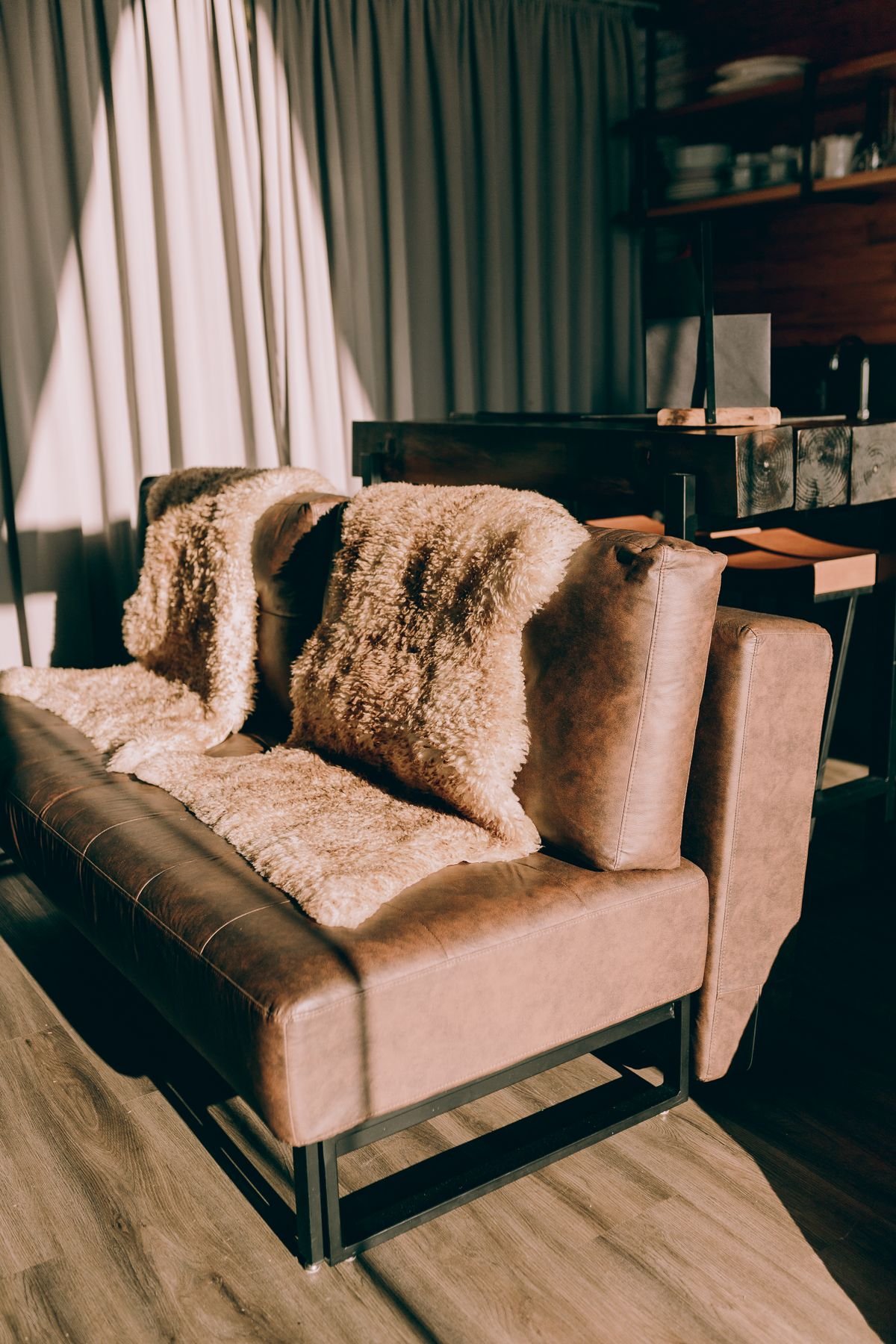
16. Scandinavian Pale Wood and Fawn
Style: Nordic woodland | Best for: pale, light-filled, modern-rustic rooms | Price feel: Medium
What it is: Northern forests inspired both the deer motif and Scandinavian design, so the two combine naturally. In a room of pale wood, white walls, and clean lines, a fawn-print blanket is the one organic pattern allowed — and because everything else is plain, it lands with unusual force. This is the woodland look for people who find log cabins too much and minimalism too cold.
How to do it:
- Start from pale wood furniture and a white or off-white base
- Drape the deer blanket simply — one fold, no arrangement theatre
- Add black only as tiny punctuation: a lamp stem, a picture frame
- Let one green plant stand in for the whole forest
Pro tip: In Scandi rooms, texture replaces color — pair the printed blanket with nubby wool cushions and smooth pale wood for contrast that never raises its voice.
Avoid this: Avoid rustic clutter here; antlers, signs, and plaid will drag the room from Nordic back to novelty lodge.
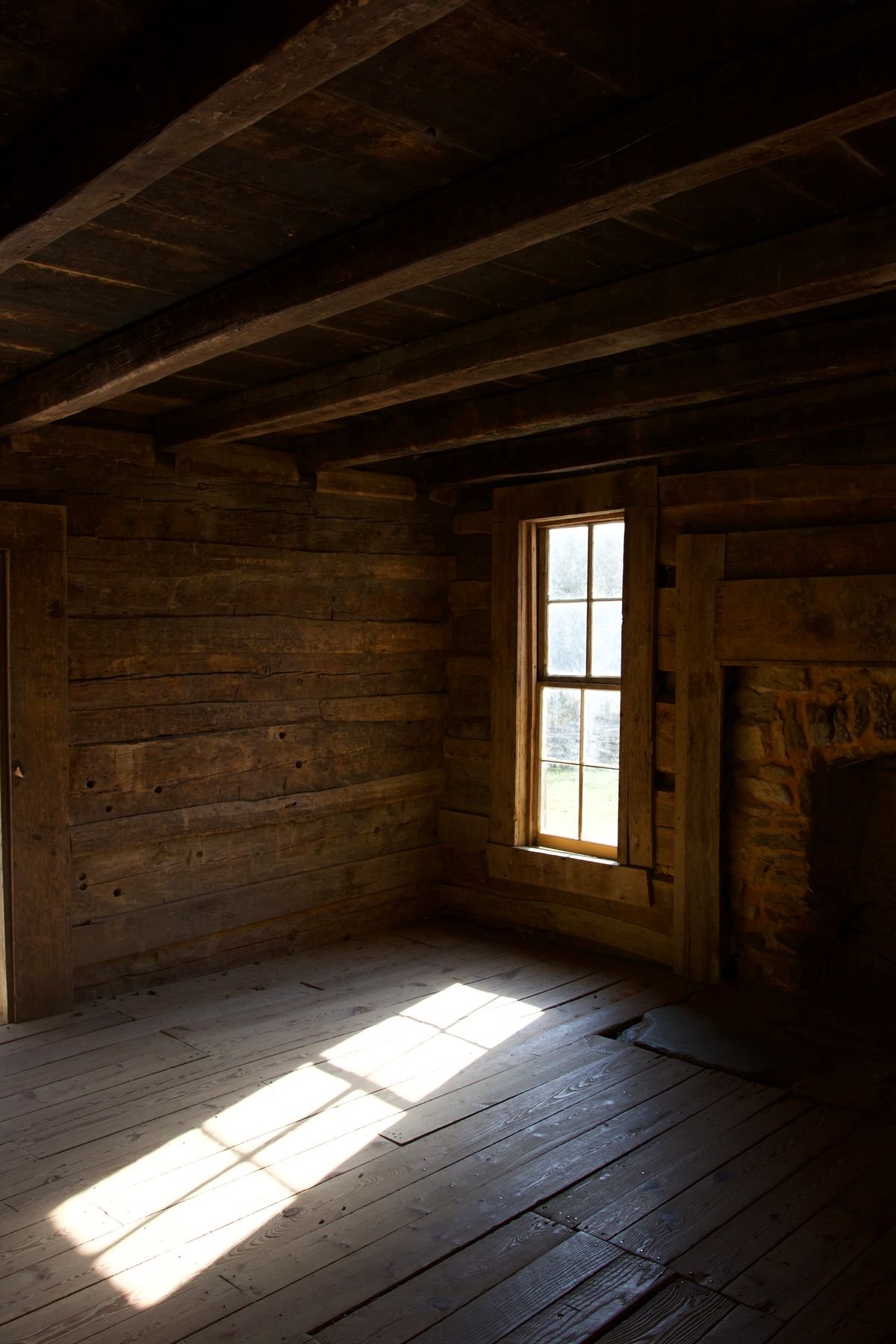
17. A Folded Throw as Coffee-Table Still Life
Style: Styled vignette | Best for: coffee tables, consoles, and side tables | Price feel: Low
What it is: A deer blanket does not have to cover furniture to decorate a room. Folded small and placed on a coffee table or console — with a plant, a candle, or a stack of books beside it — it becomes a still life: a soft, patterned base that makes hard objects look curated. Sunlight across the fold does half the styling for you.
How to do it:
- Fold the blanket into a neat rectangle, print side up
- Place it off-center on the table; still lifes hate symmetry
- Add one living thing (a plant) and one hard thing (a book or bowl)
- Keep the grouping to three objects, the blanket included
Pro tip: This is the best idea in the guide for a blanket whose print you love but whose size overwhelms your sofa — folded, it shows a postcard of itself.
Avoid this: Avoid coasters-and-remotes territory; a styled fold and daily clutter cannot share one table for long.
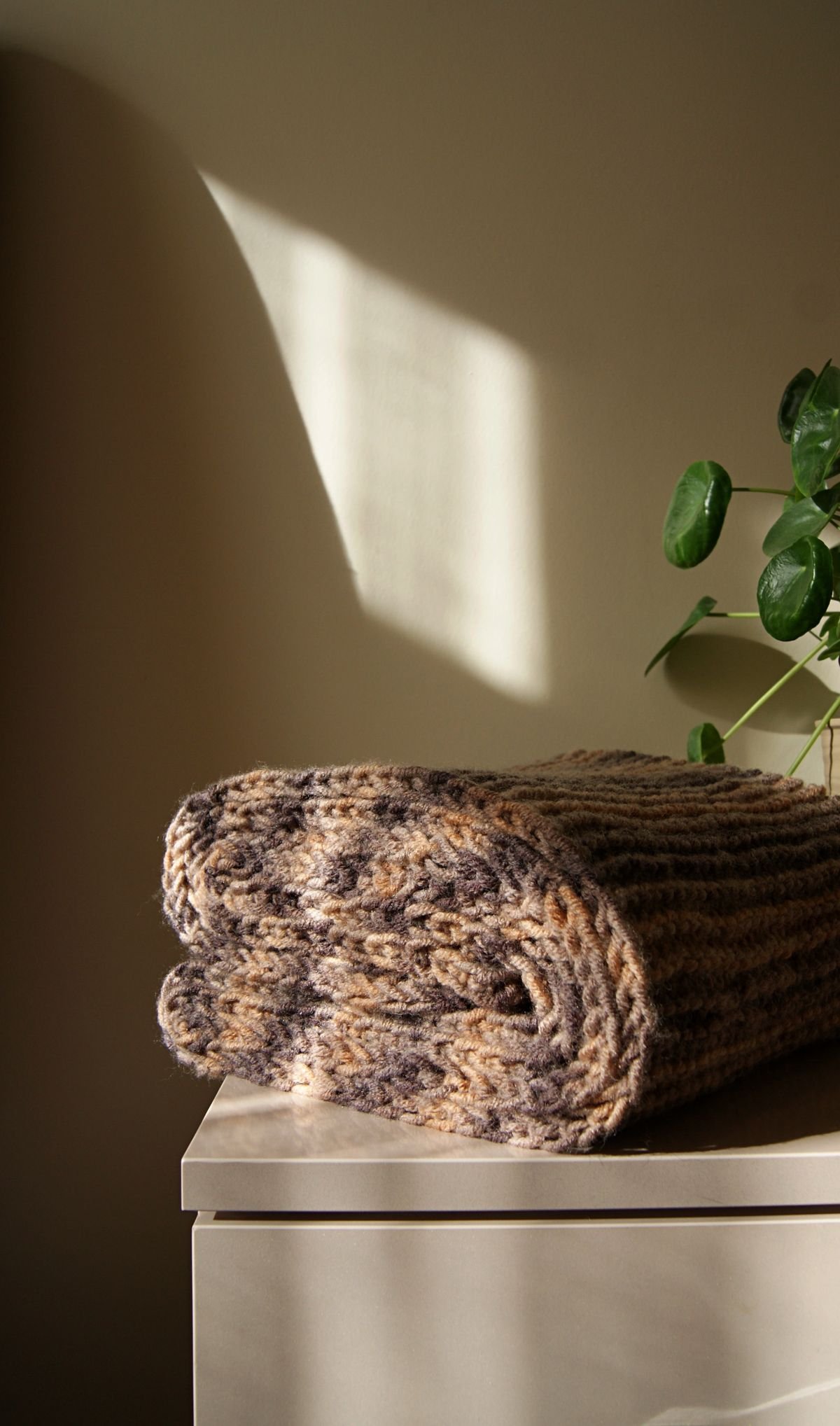
18. The Seasonal Swap: Out for Autumn, Away by Spring
Style: Seasonal ritual | Best for: homes that restyle with the seasons | Price feel: Low
What it is: A deer blanket has a natural season — the months of early dark, candles, and eucalyptus on the table. Bringing it out each autumn, and folding it away each spring, turns a blanket into a ritual the household feels. Seasonal scarcity also protects the print: a motif you see for five months a year never becomes invisible the way year-round decor does.
How to do it:
- Wash and fully dry the blanket before storing it in spring
- Store it in a breathable cotton bag, never sealed plastic
- Bring it out on a fixed cue — first fire, first frost, first October weekend
- Restyle its home each year: sofa one year, guest bed the next
Pro tip: Tuck a cedar block or lavender sachet in the storage bag — the blanket returns smelling of the woods it pictures.
Avoid this: Avoid storing any blanket slightly damp or in a hot attic; both quietly ruin fibers and fade prints.
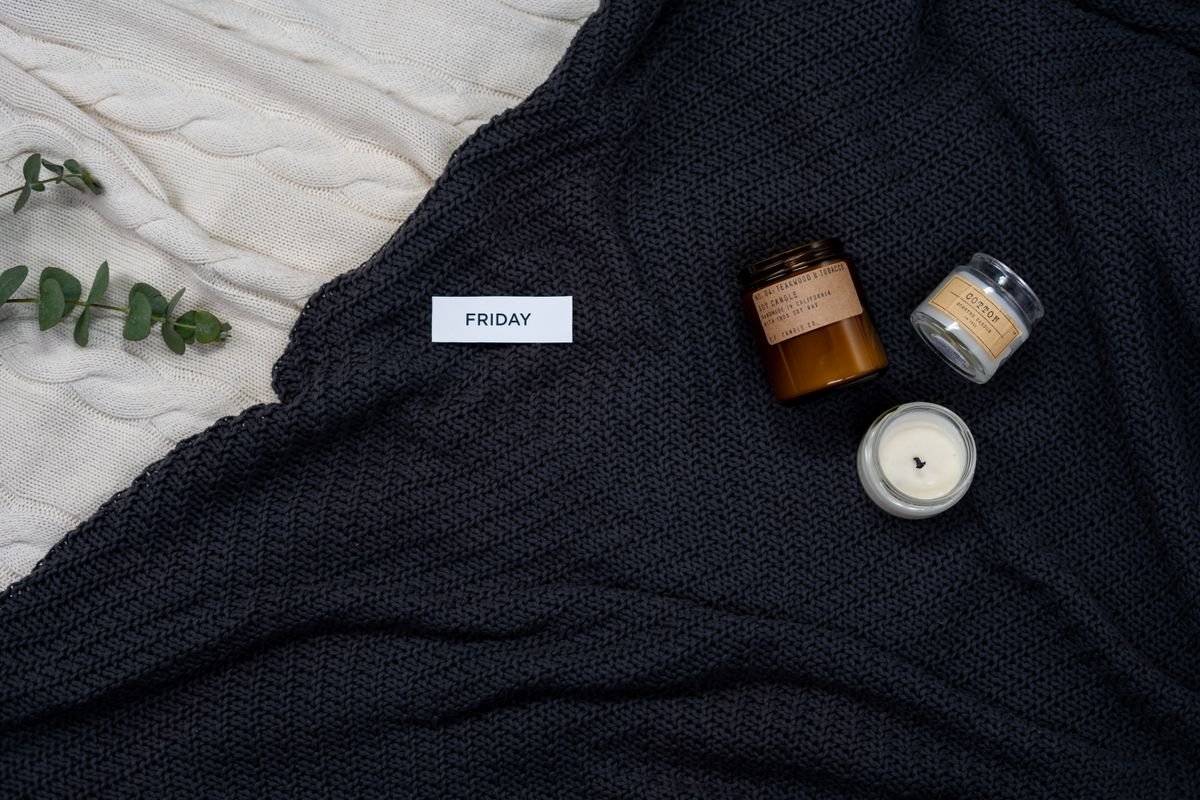
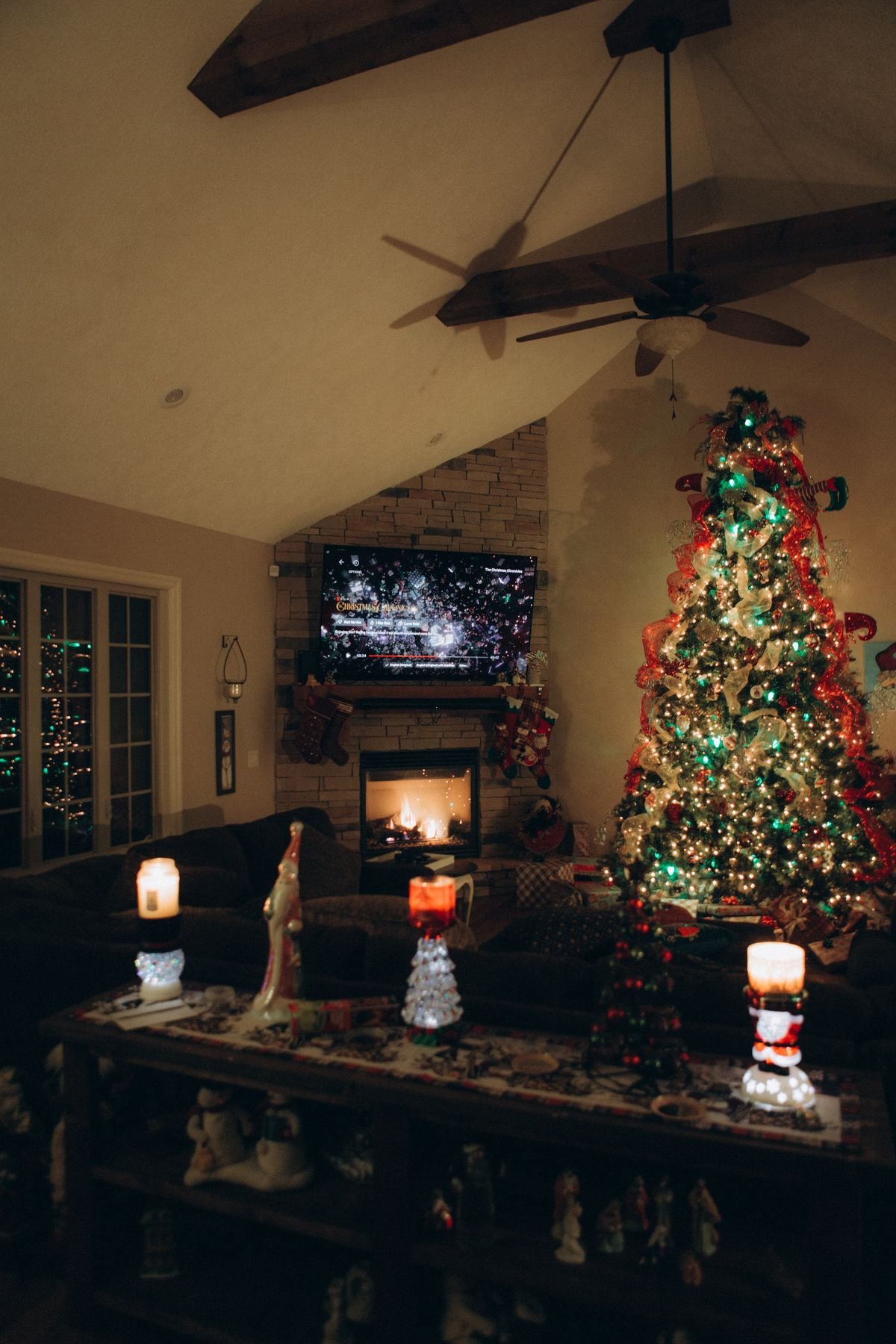
19. The Christmas Woodland Sofa
Style: Festive woodland | Best for: holiday living rooms with a tree and fireplace | Price feel: Medium
What it is: December is the deer blanket’s home season — the motif walks straight out of every woodland Christmas scene ever painted. Draped over the sofa in a room with a lit tree and a fireplace, a fawn-print or stag-motif blanket ties the holiday scheme to the forest instead of the shopping mall. It pairs naturally with the tree-side styling in our woodland Christmas decor ideas, where the same fawns appear on mantels and tables.
How to do it:
- Drape the deer blanket on the seat nearest the tree
- Echo its fawn tones in natural ornaments: pinecones, wood, hessian
- Keep red as the only strong accent color beside the green
- Let tree lights be the blanket’s spotlight after dark
Pro tip: A deer blanket under the tree as a gift-wrap alternative — wrapped around a present box — is the most reusable ‘paper’ you will ever buy.
Avoid this: Avoid mixing the woodland sofa with tinsel-and-glitter decor; choose the forest or the disco, not both.
20. Entryway Warmth: A Blanket Where Guests Land
Style: Welcoming hall | Best for: entryways, hall benches, and console tables | Price feel: Low
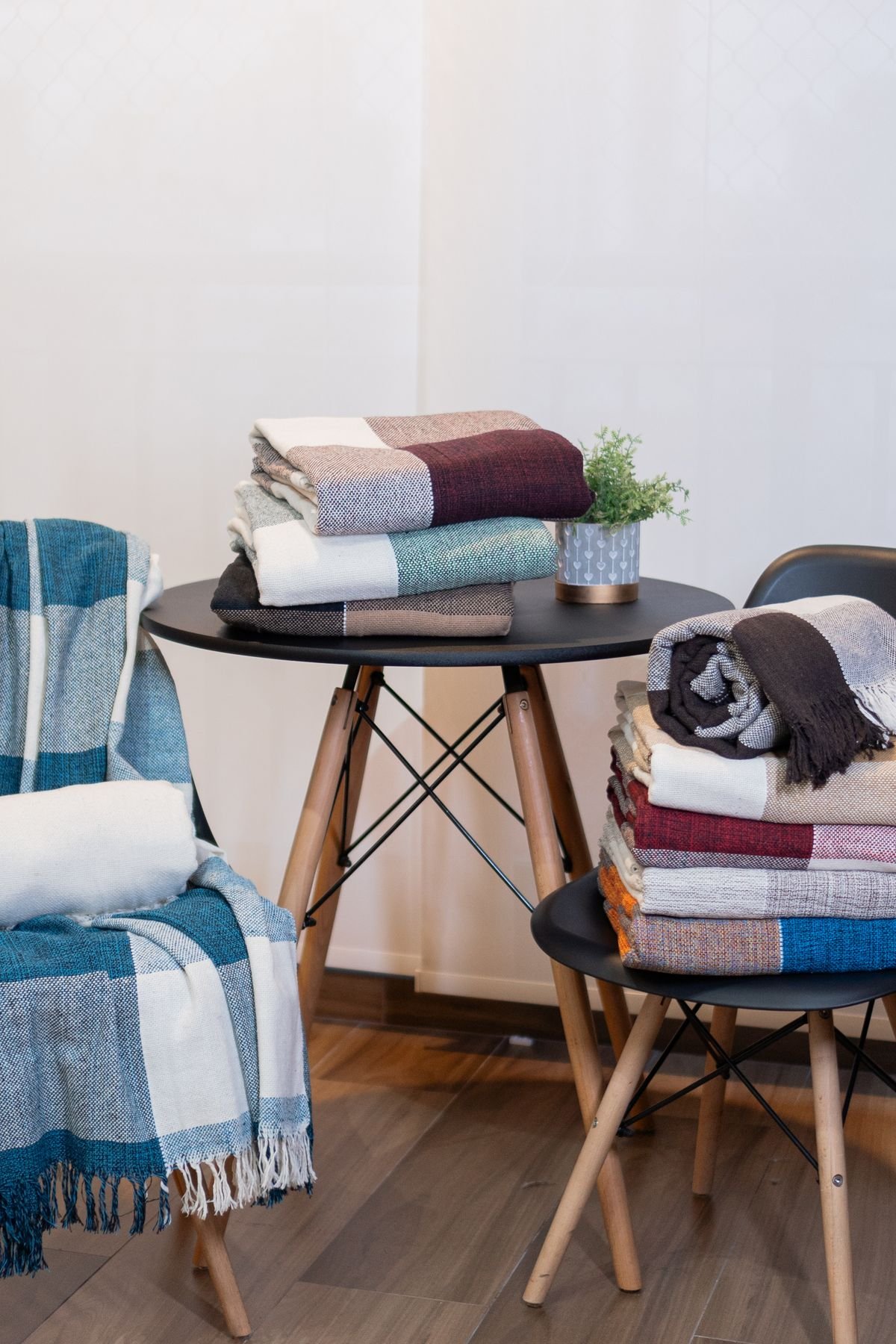
What it is: The entryway sets a home’s temperature — emotional as much as thermal. A deer blanket folded on the hall bench, or stacked neatly on the console with the household’s other throws, promises warmth before a guest has even taken off their coat. It also does practical duty: the blanket by the door is the one that goes around shoulders on the porch, to the car, to the garden.
How to do it:
- Fold the deer blanket on the bench or hang it from a wall hook at hand height
- Keep it the topmost, visible layer of any blanket stack
- Pair it with one piece of wood — bench, peg rail, or crate
- Choose a hard-wearing, washable blanket for this high-traffic spot
Pro tip: In a small flat with no hall, the back of the front door with a hook and the folded blanket does the same job in ten centimeters.
Avoid this: Avoid your best, palest blanket by the door — doorways collect weather, bags, and dog leads.
21. The Home Office Chair Drape
Style: Working woodland | Best for: desk chairs and study corners | Price feel: Low
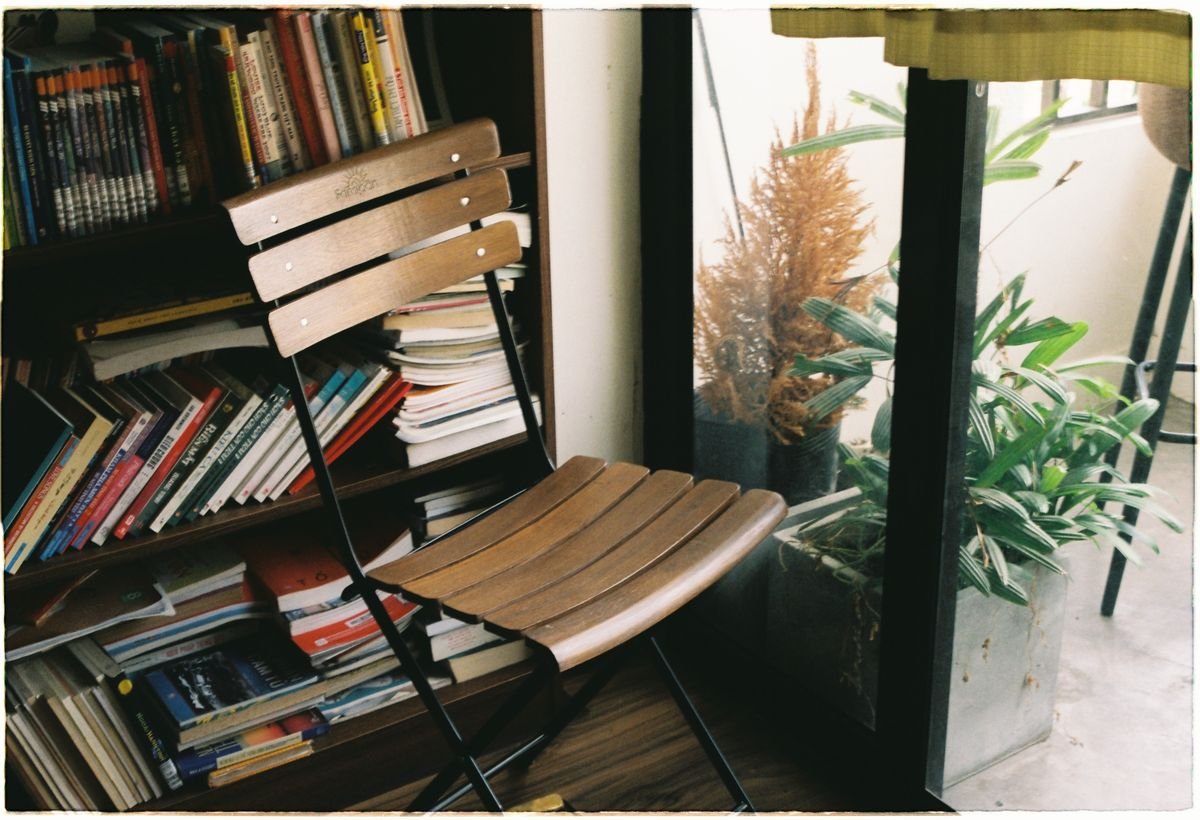
What it is: A home office is a room of hard rectangles — screen, desk, shelf — and it needs one soft, organic thing. A deer blanket over the back of the desk chair supplies it: warmth for early starts, a fawn pattern that softens every video call background, and a small daily reminder that the world outside the spreadsheet has trees in it.
How to do it:
- Fold the blanket over the chair back so the print faces the room (and the camera)
- Choose a thinner weave so the chair still tucks under the desk
- Keep desk objects plain; the blanket is the office’s one pattern
- Shake it out weekly — office blankets are champion dust collectors
Pro tip: On camera, fawn tones read warm and human against office light — colleagues will call it cozy, and they will be right.
Avoid this: Avoid draping any blanket where chair wheels or casters can catch its hem; fold it above wheel height.
22. Cabin Bedroom Layering
Style: Lodge sleep | Best for: cabin bedrooms and rustic guest rooms | Price feel: Medium
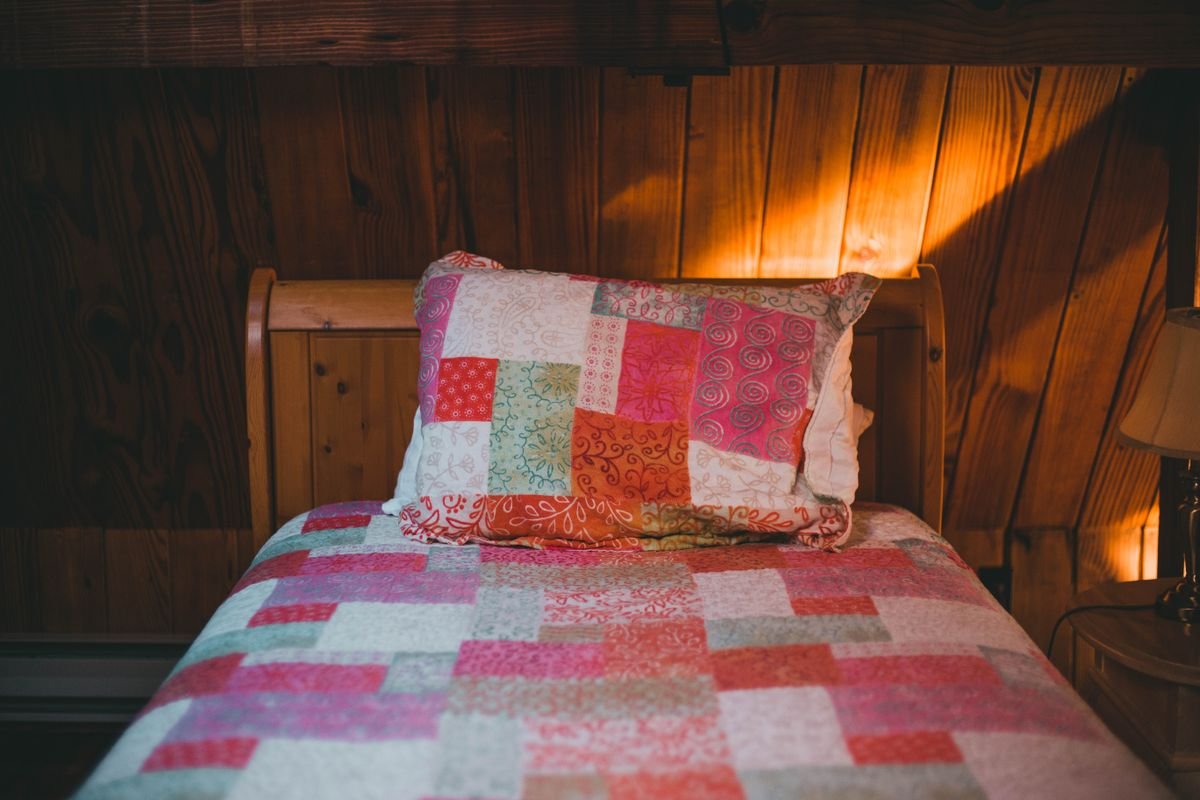
What it is: A cabin bedroom is where a deer blanket stops being decor and becomes part of the bed itself. Layered between the duvet and a quilt — or folded over a patchwork cover in the traditional stack — the fawn print is the top note of the warmest bed in the house. Wooden walls forgive a busy mix here: plaid below, deer above, plain linen at the pillows.
How to do it:
- Build the bed in layers: sheet, blanket, quilt, deer blanket last
- Let each layer show a hand’s width of the one below
- Keep pillow shams plain so the print owns the bed
- Add one bedside lamp with a warm shade to finish the lodge glow
Pro tip: Guests in a cabin bedroom will photograph the bed before they photograph the view — style the layers like you mean it.
Avoid this: Avoid a full matching ‘set’ of deer bedding; one blanket layered over honest quilts always looks better than head-to-toe motif.
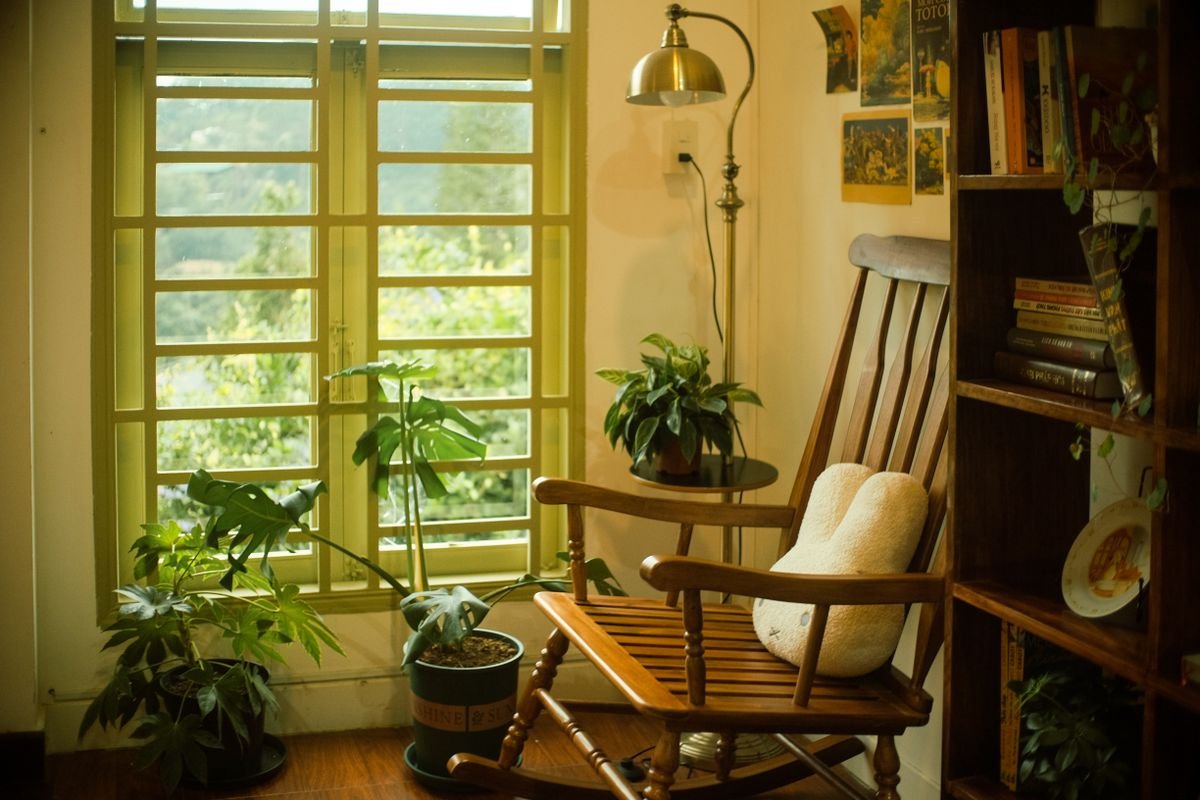
23. The Rocking Chair Corner
Style: Slow evenings | Best for: rocking chairs, gliders, and porch rockers | Price feel: Low
What it is: A rocking chair and a deer blanket are the two oldest pieces of comfort technology in the house, and they belong together. Draped over the rocker’s back, the blanket is always at hand for the lap, and its fawn print against wood spindles or slats is a small painting of patience — porches, nurseries-that-aren’t, and quiet windows all take this pairing gladly.
How to do it:
- Drape the blanket over the top rail so it hangs down the back
- Or fold it over one arm for the grab-and-sit move
- Place the chair where the light is best at the hour you actually sit
- Add a small side table; rocking with a mug needs a landing strip
Pro tip: A rocker by a window with the deer blanket is the seat every guest will choose first — put your second-best blanket there and keep the best for yourself.
Avoid this: Avoid letting the blanket trail to the floor near rockers; the rails find trailing hems and chew them.
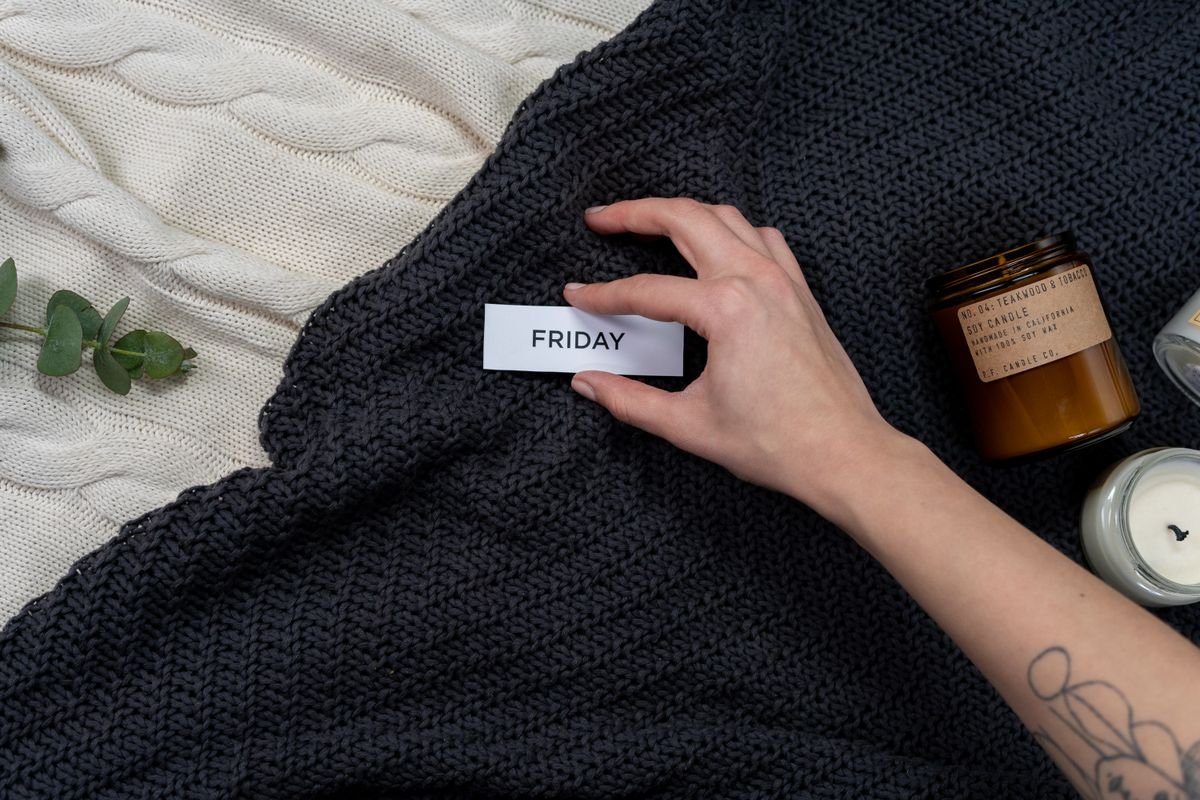
24. Fireside Evening: Candles, Low Light, One Blanket
Style: Evening ritual | Best for: hearths, candlelit corners, and winter nights | Price feel: Low
What it is: Fawn print was designed by evolution for dappled light, and candlelight is its indoor equivalent. Spread the deer blanket over your legs or across the sofa for the evening’s candlelit hour — book, tea, fire or candles — and the spots seem to move in the flicker. No other idea in this guide changes as much between noon and nightfall.
How to do it:
- Set candles at two heights for a layered glow
- Spread the blanket print-up so the light plays across the spots
- Turn off overhead lights entirely; one lamp maximum
- Keep a book or handwork in the scene — stillness is the styling
Pro tip: Beeswax candles’ warm color temperature is the closest indoor light to firelight — the fawn tones will look richer than under any bulb.
Avoid this: Avoid candles on the same surface as loose blanket folds; style the glow nearby, never within reach of a hem.
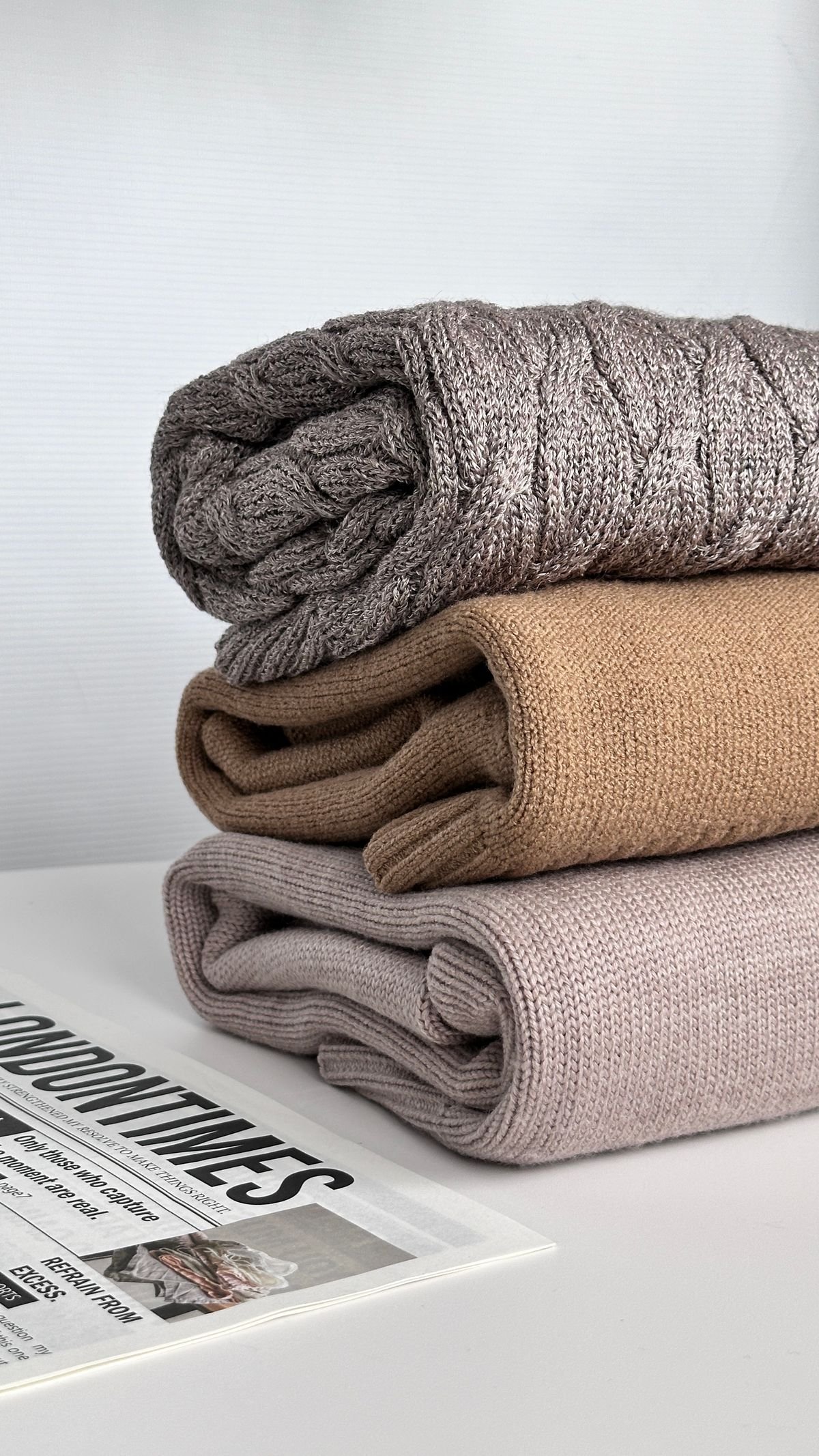
25. Gift-Ready: Rolled, Tied, and Tagged
Style: Considered giving | Best for: housewarmings, weddings, and winter birthdays | Price feel: Medium
What it is: A deer blanket is the rare gift that is decorative, useful, and personal at once — and rolled, tied with ribbon or twine, and tagged, it presents like something from a woodland boutique. Kept ready in your own home (one rolled on a shelf or console), it is also a display: the household’s generosity, visible. Choose mid-fawn tones for gifts; they suit the widest range of homes.
How to do it:
- Roll the blanket tightly, print outward, spots showing at the roll’s face
- Tie with twine, leather cord, or a ribbon in rust or forest green
- Add a handwritten tag — a line about warmth beats a paragraph
- Tuck in a sprig of dried greenery for the full woodland parcel
Pro tip: Keep one gift-ready roll at home through December; the forgotten-present emergency is real, and this solves it in thirty seconds.
Avoid this: Avoid gifting a deer blanket to a committed minimalist or a known anti-motif household — give them the cream palette version or none at all.
26. Boho Woodland: Dried Grasses and Earthy Layers
Style: Earthy boho | Best for: relaxed, plant-filled, collected rooms | Price feel: Low
What it is: Boho rooms run on earth, texture, and things that look gathered — and a fawn-print blanket fits the gathering perfectly. Spread it over a daybed or sofa among dried grasses, woven baskets, and plants, and the deer motif joins the natural specimens instead of fighting them. Where the lodge version is tidy, the boho version should look a little wild at the edges.
How to do it:
- Drape the blanket loosely, even rumpled — precision is the enemy here
- Surround it with dried grasses, rattan, and trailing plants
- Layer one woven textile under it for the gathered-over-time look
- Keep the palette earthy: clay, sand, sage, and the blanket’s fawn
Pro tip: Boho is the one style where a second animal motif is forgiven — a bird cushion or a butterfly print can share the room, if the colors stay earthy.
Avoid this: Avoid neon or jewel brights beside the blanket; they break the dried-and-gathered spell instantly.

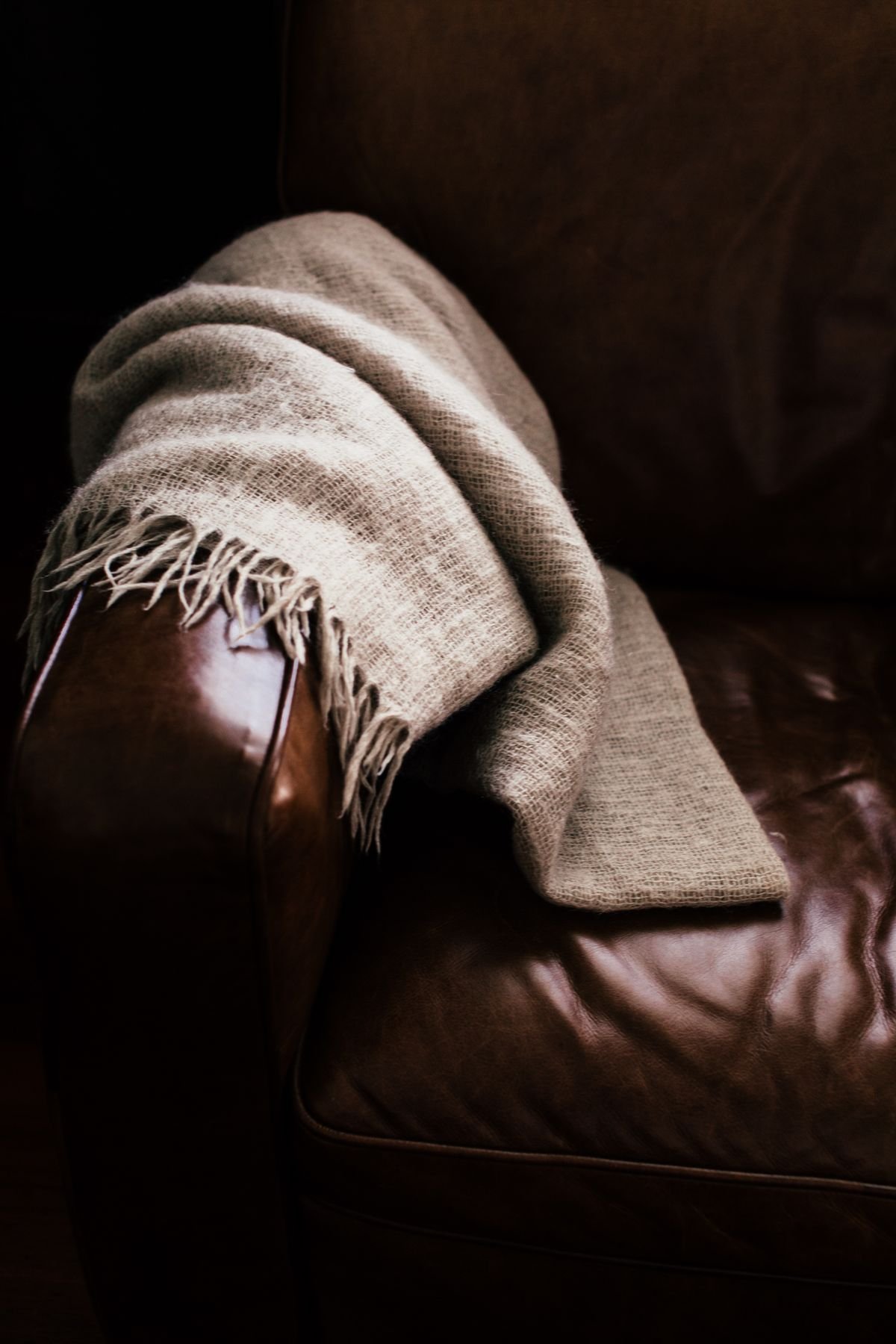
27. Cognac Leather and Soft Fawn
Style: Warm modern rustic | Best for: leather sofas and armchairs | Price feel: Low
What it is: Cognac leather and fawn print are cousins — same family of warm browns, different textures — and together they are the most sophisticated pairing in this guide. A deer blanket folded over the arm of a leather sofa softens the leather’s shine, warms its cool surface, and gives the room a saddle-and-forest richness that reads expensive far beyond the blanket’s price.
How to do it:
- Fold the blanket over one arm of the sofa, fringe or hem showing
- Let a corner fall onto the seat — the invitation to sit is the styling
- Keep other textiles minimal; leather plus fawn is a complete sentence
- Add warm wood or brass nearby to bridge the two browns
Pro tip: Condition the leather where the blanket rests a little less often — the slight contrast in sheen between covered and uncovered leather disappears the moment the blanket moves.
Avoid this: Avoid black leather with a pale fawn blanket; the contrast is harsh. This pairing belongs to brown, tan, and cognac hides.
28. The Minimalist One-Blanket Statement
Style: Quiet minimal | Best for: pared-back rooms that allow one pattern | Price feel: Low
What it is: Minimalism is not the absence of personality; it is personality with the volume turned down. In a room of plain surfaces, a single deer blanket — folded once, placed once, everything else silent — becomes a genuine statement, the way one painting holds a gallery wall. Choose the subtlest print you can find and let the room’s emptiness do the framing.
How to do it:
- Remove competing textiles from the room first
- Fold the blanket once, into a clean band or rectangle
- Place it on the single most visible seat or bed
- Resist the cushion, the second throw, the ‘just one more’ object
Pro tip: Photograph the room; if your eye lands on the blanket first and rests there, the minimal statement is working exactly as intended.
Avoid this: Avoid a loud, high-contrast print for this look — minimal rooms amplify whatever enters them, including mistakes.

29. The Bed-End Runner Fold
Style: Tailored bed styling | Best for: woodland bedrooms on a budget | Price feel: Low
What it is: A bolder variant of idea 2’s foot-of-bed fold: here the deer blanket is folded long and narrow, like a table runner, and laid precisely across the bed’s end with its ends dropping evenly on both sides. The symmetry makes it the most tailored deer blanket look in the guide — the one that suits neat beds, wooden frames, and people who fold hospital corners without being asked.
How to do it:
- Fold the blanket lengthwise into a band a hand’s width across
- Lay it across the bed’s final quarter, ends dropping evenly
- Smooth the top flat; a runner fold shows every wrinkle
- Pair with plain bedding and one textured cushion, nothing more
Pro tip: Mark the fold lines with a quick press the first time; afterwards the blanket will fall into its runner shape on its own.
Avoid this: Avoid the runner fold on a short or narrow bed — the dropping ends need a full-size bed to look deliberate.
30. The Pet-Approved Corner
Style: Practical cozy | Best for: homes with cats and dogs | Price feel: Low
What it is: Every blanket in a pet household is eventually claimed; the smart move is to choose where. Designate one deer blanket — a hard-wearing, dark-fawn, washable one — as the pet’s official layer on their bed, their sofa end, or their favorite chair. The pet gets the best seat’s comfort, the good blankets survive, and the fawn print hides a heroic amount of hair between washes.
How to do it:
- Choose a mid-to-dark fawn print; pale blankets show every paw
- Spread it where the pet already sleeps — habits beat training
- Wash weekly on a gentle cycle; pet blankets earn it
- Keep a lint roller in the same room as the blanket, always
Pro tip: Fleece deer blankets are the pet-corner champions — hair releases in the wash instead of weaving itself in, as it does with knits.
Avoid this: Avoid long fringe or tassels in the pet corner; they are chew toys with a head start.

31. The Blanket Ladder Display
Style: Collected display | Best for: blanket collectors and small rooms | Price feel: Low
What it is: A wooden ladder leaned against the wall, rungs holding folded blankets, is storage, sculpture, and inventory at once. Put the deer blanket on the top rung — print out, like the banner of the collection — with plaid, cream, and plain wool below. In small rooms this is also the space-saver: a whole blanket wardrobe in the footprint of a picture frame.
How to do it:
- Lean a sturdy wooden ladder at a slight angle in a dry corner
- Fold blankets to the ladder’s width and drape one per rung
- Order them by color: palest at top, deepest at bottom — or deer first
- Rotate which blanket is used weekly so none fades alone
Pro tip: The ladder is the best deer blanket storage for print health — air circulates, folds are few, and the print is never crushed in a drawer.
Avoid this: Avoid overloading the top rungs; a ladder display should look airy, and a heavy top makes the lean nervous.

Buying & Materials Guide: What to Buy in a Deer Blanket
A deer blanket is a textile purchase wearing a decor costume, so buy it the way you would buy any good blanket: fiber first, size second, print third. The fiber decides how the blanket drapes, washes, and ages — and drape is half of every styling idea in this guide. A print you love on a blanket that pills by February is a bad purchase wearing a pretty face.
For fibers: fleece (polyester microfiber) prints the sharpest deer patterns, washes endlessly, and costs the least — the right choice for pet corners, porches, and kids’ rooms. Cotton and cotton-blend weaves breathe better and look more grown-up on a bed, with softer, slightly muted prints. Wool and wool-blend throws cost the most and drape the most beautifully; their prints are usually woven jacquard silhouettes rather than printed spots, which is the most timeless look of all. Acrylic sits in the middle — warm, cheap, decent drape — but can pill and hold static in dry rooms.
Use the reference table below as a pocket checklist when you shop for a deer blanket for any of the rooms in this guide.
| Material / Item | Look For | Used For |
|---|---|---|
| Fleece deer blanket | Sharp printed spots, anti-pill finish, 130×150 cm or larger | Sofa drapes, pet corners, porches, movie nights |
| Cotton or cotton-blend throw | Woven texture, muted natural print, breathable hand-feel | Bed folds, guest rooms, window seats |
| Wool or wool-blend throw | Jacquard deer silhouette, fringed ends, heavier drape | Ladders, leather sofas, cabin layering, gifts |
| Faux fur throw | Natural tones (mink, wolf, cream), dense pile | The double-layer partner from idea 15 |
| Plaid wool throw | One shared color with your deer blanket | The base layer from idea 6 |
| Storage bag | Breathable cotton, not sealed plastic | The seasonal swap from idea 18 |
| Gentle detergent | Wool-safe or delicates formula | Keeping prints unfaded, wash after wash |
Size is the quiet deal-breaker. A throw of 130×150 cm drapes a chair or folds at a bed’s foot; a sofa-back drape that shows the full print wants 150×200 cm; and a blanket meant to be shared on movie night should be the largest you can find. When in doubt, size up: every styling failure in this guide traces back to a blanket that was slightly too small for its job.
Budget tiers keep the choice honest. Under $30: fleece prints for porches, pets, and first experiments (ideas 5, 13, 30). $30–$80: the sweet spot — good fleece, cotton weaves, and acrylics that will style a sofa or bed for years (ideas 1, 2, 7, 12). Above $80: wool jacquards and heirloom pieces for ladders, leather, and gifts (ideas 25, 27, 31). Whichever tier your deer blanket falls into, spend on the fiber and the print quality; the styling, as this guide shows, is free.
Frequently Asked Questions
What is a deer blanket in home decor?
In decor terms, a deer blanket is a throw blanket printed or woven with a deer motif — most often the spotted fawn pattern in cream and warm brown, sometimes a stag silhouette. It is used as a styling layer on sofas, beds, chairs, and benches to bring a woodland note into a room, exactly as the 31 ideas above show. It is decor first and bedding second: chosen for how it looks draped, not just how it sleeps.
How do I style a deer blanket without it looking childish?
Three rules do it. Choose a soft-edged, painterly fawn print rather than a cartoon deer (idea 14). Surround it with grown-up textures — wool plaid, leather, wood, linen — instead of other novelty motifs. And use only one deer item per sight line: the blanket is the motif; everything else is the supporting cast. Follow those, and a deer blanket reads rustic-luxe rather than nursery.
What colors go with a fawn-print blanket?
Fawn is a warm neutral, so it pairs widely: cream and oatmeal for calm rooms (idea 7), rust and terracotta for autumn (idea 8), forest green for depth (idea 9), cognac leather for richness (idea 27), and classic red-brown plaids for layering (idea 6). The pairings to avoid are cool blue-greys and stark black-and-white schemes, which fight the print’s warmth.
What size deer blanket should I buy?
Match the size to the job. For a chair drape or a folded bed-end band, 130×150 cm is enough. For the classic sofa-back drape that shows the whole print, choose 150×200 cm. For sharing — movie nights, double rocking chairs, guests on a daybed — go larger still. A deer blanket that is too small can only ever be folded; the right size can do all 31 ideas.
How do I wash a deer blanket without fading the print?
Wash cold on a gentle cycle with a delicates detergent, inside out if the print is one-sided, and dry flat or on low heat. Skip bleach and harsh stain removers, which attack print dyes first. Wool jacquards prefer a wool wash or dry cleaning. Rotate two blankets if one is in constant use — rest is what keeps any printed textile’s spots soft-edged instead of washed-out.
Can a deer blanket work in a modern home?
Yes — modern rooms are where the subtlest deer blankets shine. The Scandinavian approach (idea 16) and the minimalist one-blanket statement (idea 28) both use a single pale, soft-print blanket as the room’s only pattern. The key is restraint everywhere else: plain surfaces, few objects, and the blanket placed like art. A deer motif in a modern room reads as a deliberate nature reference, not a theme.
Bringing the Woods Home: One Blanket, Thirty-One Ways
Every idea in this guide began the same way: somebody unfolded a deer blanket and put it somewhere deliberate. On the sofa back, across the bed’s foot, over the plaid, beside the fire — the placements differ, but the principle never does. Treat the blanket as a textile first, let its fawn print warm the textures around it, and one modest purchase quietly re-themes a whole house toward the woods.
Start with the drape you already own the furniture for, test it for a week, and let the fawn earn its place. From all of us at Decor Beam: happy layering.
