
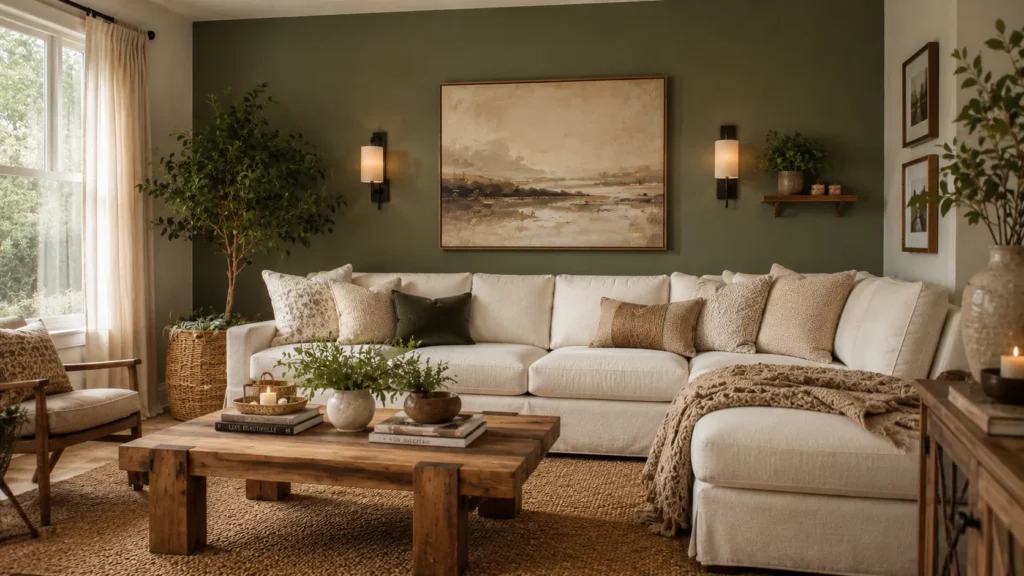
Your living room has one wall that’s just… there. Not bad, not ugly, just forgettable, and every time you walk past it you feel like something’s missing but you can’t quite name what.
That’s usually a job for an accent wall. I’ve watched clients transform flat, builder grade living rooms into spaces people actually want to sit in, and almost every time it comes down to one wall doing the heavy lifting. Below are the twelve approaches I reach for most often, along with the honest tradeoffs nobody mentions until you’re three weeks into living with the results.
My Design Notes
I had a client in Austin a couple years back who fell in love with a deep navy accent wall she’d seen on Pinterest, planned for the space right behind her sectional. Only problem was her living room faced north, so it got soft, indirect light most of the day instead of that warm golden glow the photo probably had. I tested three swatches with her, watched them all afternoon, and gently pushed back, telling her the navy would likely read almost black by early evening. She loved it too much to wait, so we moved forward anyway.
Six weeks later she called asking me to lighten it up. The wall felt like a cave by five o’clock every winter evening, and no amount of lamp lighting fixed it. We ended up repainting in a soft greige that actually worked with her light.
Now I make every client live with large swatches on the actual wall for at least two full days before we commit to paint. It’s a small step that saves a lot of regret.
12 Proven Strategies to Style an Unforgettable Living Room Accent Wall
1. Painted Accent Wall
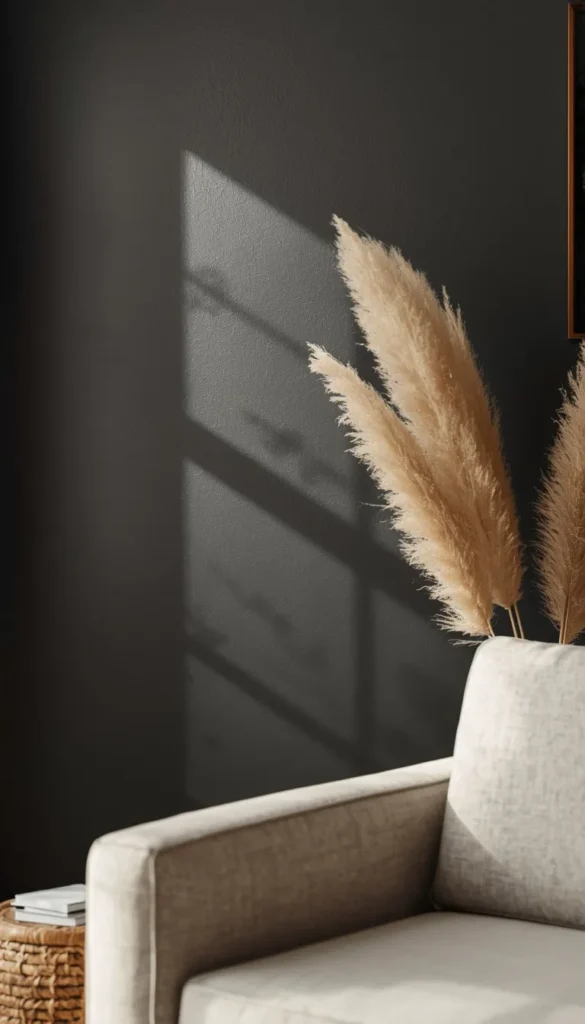
Paint is still the easiest, cheapest way to change how a room feels, and it’s usually where I start with clients who aren’t sure what they want yet. A gallon of quality paint runs you somewhere between thirty and sixty dollars, and you can repaint it in a weekend if you fall out of love with it.
Color choice is where people get stuck. Deep charcoal and black walls look incredible in south facing rooms with good natural light, but in a north facing room they can swallow the space by late afternoon, the same mistake I mentioned in my design notes above. Sage green and olive tones are more forgiving across different light conditions, which is part of why they’ve stayed popular for so long.
A few color directions worth considering depending on your room:
- Black or charcoal for drama, best with strong natural or layered artificial light
- Deep green or olive for warmth that holds up in almost any light
- Soft white or warm off white if you want texture to do the talking instead of color
One thing to watch out for is sheen. Flat and matte finishes hide wall imperfections beautifully, but they scuff more easily in high traffic living rooms, especially if you’ve got kids or pets brushing past.
2. Board and Batten Accent Wall
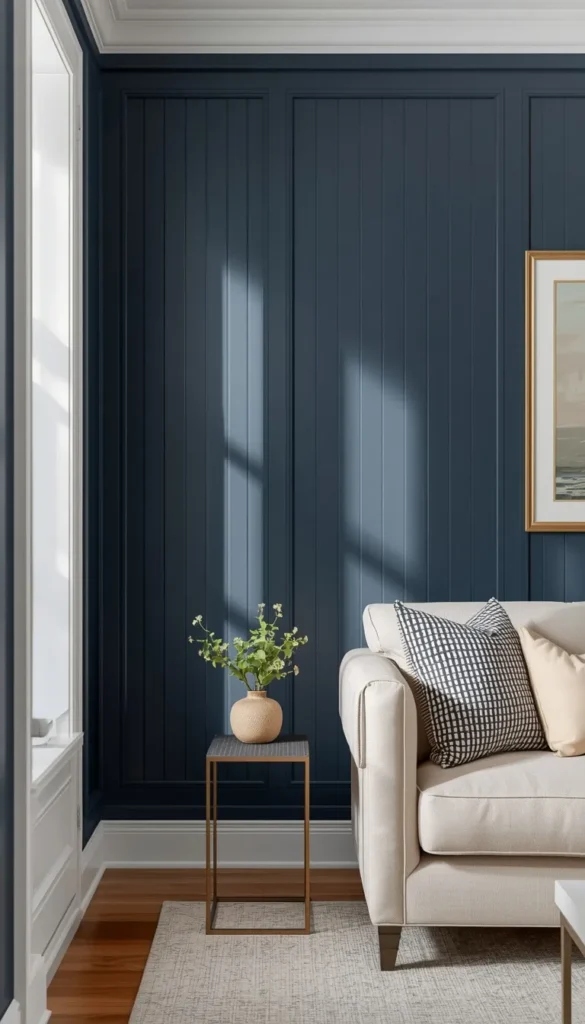
Board and batten gives you architecture without a full renovation, and it’s one of the few accent wall ideas that photographs just as well in a farmhouse living room as it does in something more transitional. You’re essentially adding vertical or horizontal strips of trim to a wall and painting the whole thing one cohesive color.
I like it for renters who own their unit but don’t want anything too permanent, since it’s removable if you’re careful during installation. Navy and taupe are the two colors I get asked for most, navy for a richer, more formal look and taupe when someone wants something quieter that won’t compete with their furniture.
A quick trick I’ve learned is to keep the batten spacing consistent, ideally somewhere between twelve and sixteen inches apart. Uneven spacing is the number one thing that makes a DIY board and batten wall look, well, DIY.
3. Shiplap Accent Wall
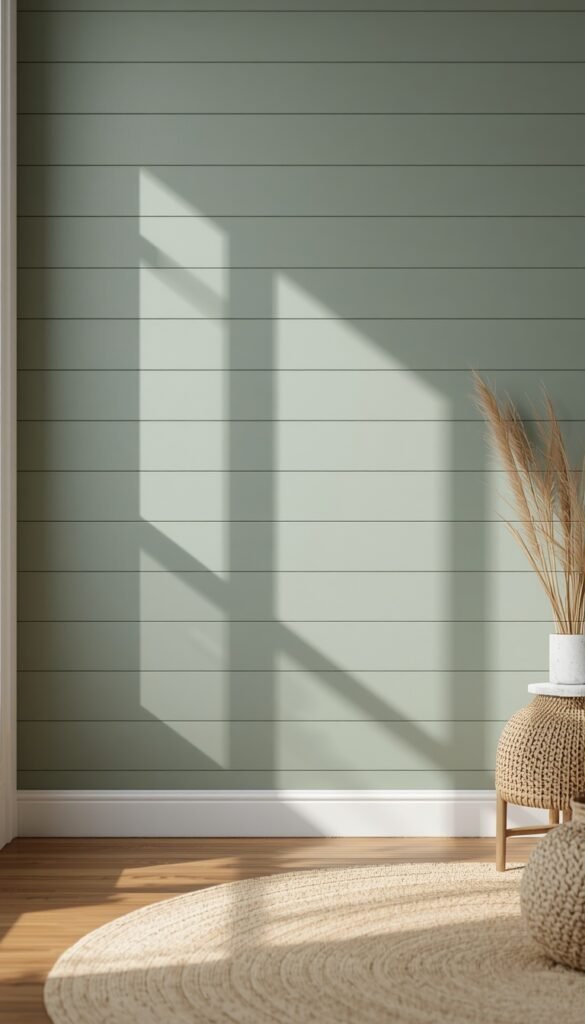
Shiplap had its viral moment years ago and never really left, mostly because it works. Horizontal shiplap in a lighter tone opens up a room and reads relaxed and coastal, while vertical shiplap does something different entirely, it pulls your eye upward and makes a low ceiling feel taller.
Here’s the part nobody tells you upfront. Shiplap collects dust in those horizontal grooves, and if you’ve got allergies in the house, you’ll notice it faster than you’d expect on a flat painted wall. It’s not a dealbreaker, it just means a light dusting every few weeks instead of the occasional wipe down a flat wall needs.
Black and sage green shiplap have become my two most requested colors for anyone chasing that modern farmhouse look without going full white on white.
4. Slat Wood Accent Wall
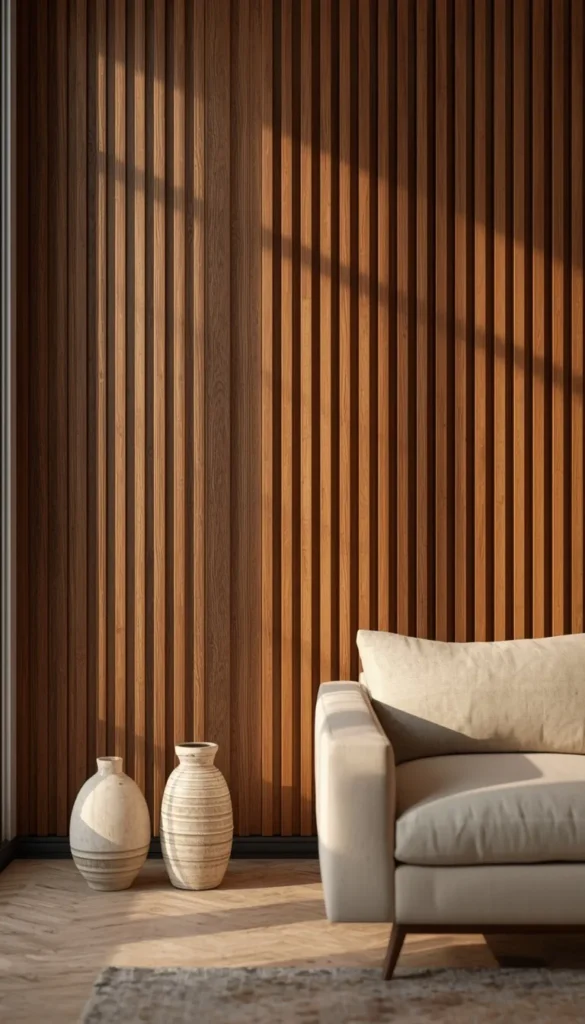
This is the one I’m installing most often right now, especially in mid century and Scandinavian inspired living rooms. Thin vertical wood slats, usually spaced with small gaps between them, add texture and warmth in a way flat paint just can’t compete with.
There’s a practical upside here too. Slat walls do a decent job of softening sound in a room, which matters more than people expect in open concept living spaces where every conversation and TV show bounces around. If you’re mounting a TV on or near the slats, plan your cable routing before installation, not after, because retrofitting cords into finished slats is a headache.
Budget wise, you’re looking at anywhere from four hundred to over a thousand dollars depending on whether you go with real wood or a more affordable MDF slat panel kit.
Is your accent wall going behind the sofa, around the fireplace, or somewhere you haven’t decided yet?
5. Stone or Brick Accent Wall
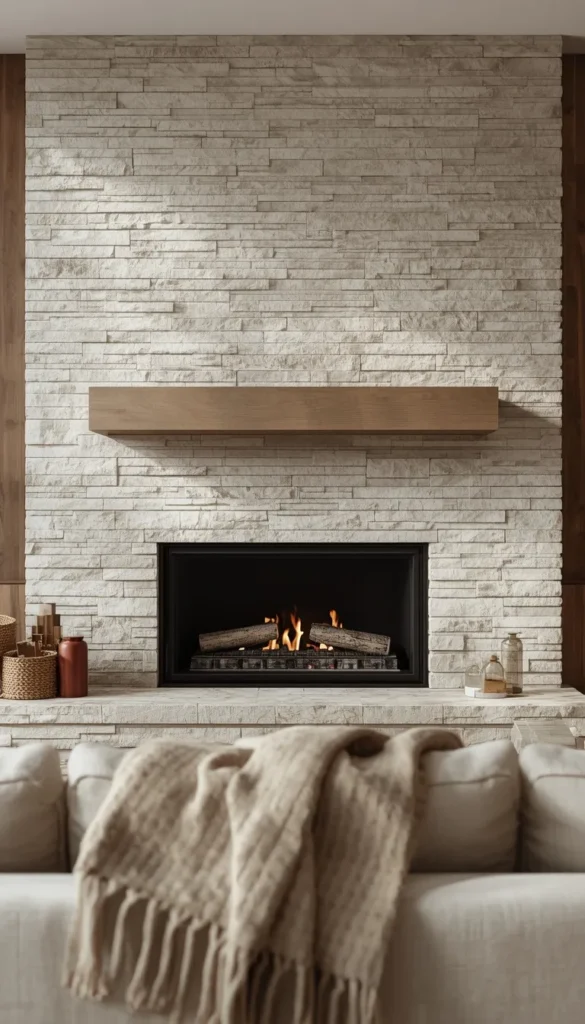
Nothing adds instant weight and warmth to a living room quite like stone or brick, and it’s the one accent wall idea that genuinely looks better with age. Thin veneer panels have made this so much more accessible than it used to be, you’re not tearing into structural walls anymore, you’re layering a lightweight material over drywall.
Fireplaces are the obvious home for this, but I’ve also done full accent walls with no fireplace at all, just a media console and some floating shelves against the stone. It grounds the room in a way paint alone can’t.
A couple things worth knowing before you commit:
- Lighter, desaturated stone keeps a room feeling bright and airy
- Darker stone or brick leans cozy and cabin like, better suited to rooms that already get good natural light
One thing I always mention to clients is that real stone veneer is heavier than people expect, so check with your contractor about wall support before ordering materials.
6. Wallpaper Accent Wall
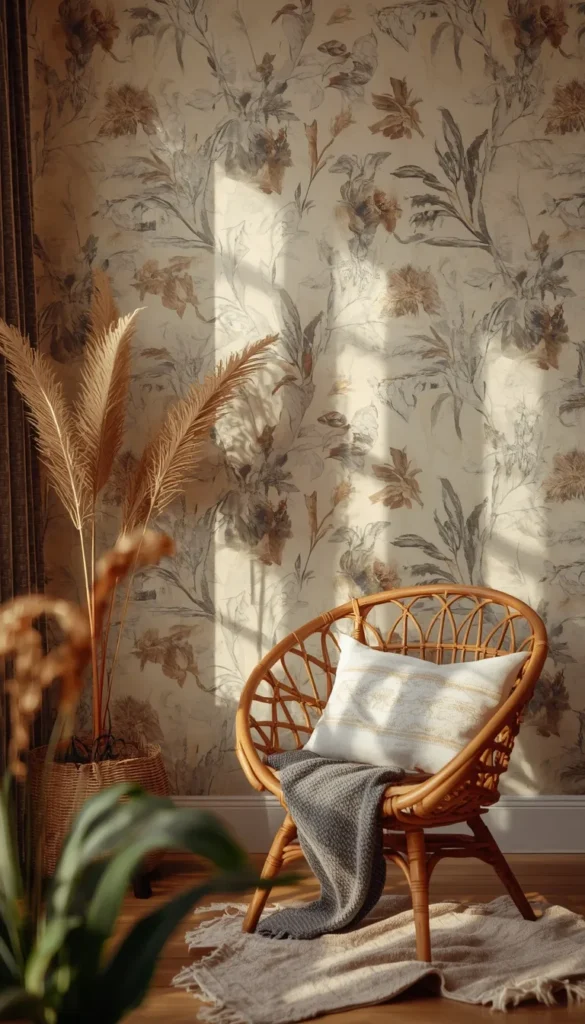
Wallpaper has come back in a big way, and honestly, it never should have left. The range available now, from bold botanical prints to subtle grasscloth textures, means there’s genuinely something for every style, not just the busy florals people associate with their grandmother’s dining room.
Peel and stick versions have made this a realistic option for renters too, which wasn’t really true a decade ago. My one caution is durability. Cheaper peel and stick rolls can bubble or lift at the seams within a year, especially in humid climates, so if you’re going that route, spend a little more on a reputable brand.
Traditional pasted wallpaper lasts far longer and looks more refined up close, but it’s a bigger commitment, both in cost and in the work involved if you ever want to remove it.
Top 6 Living Room Accent Wall Ideas
| Idea | Estimated Price | Maintenance |
|---|---|---|
| Painted Accent Wall | $30 – $60 per gallon | Low |
| Board and Batten | $150 – $400 per wall | Low |
| Shiplap | $200 – $600 per wall | Medium |
| Slat Wood Wall | $400 – $1,000+ per wall | Medium |
| Stone or Brick Veneer | $10 – $25 per sq. ft. | Medium |
| Textured Plaster | $300 – $900 per wall | High |
7. Textured Plaster Accent Wall
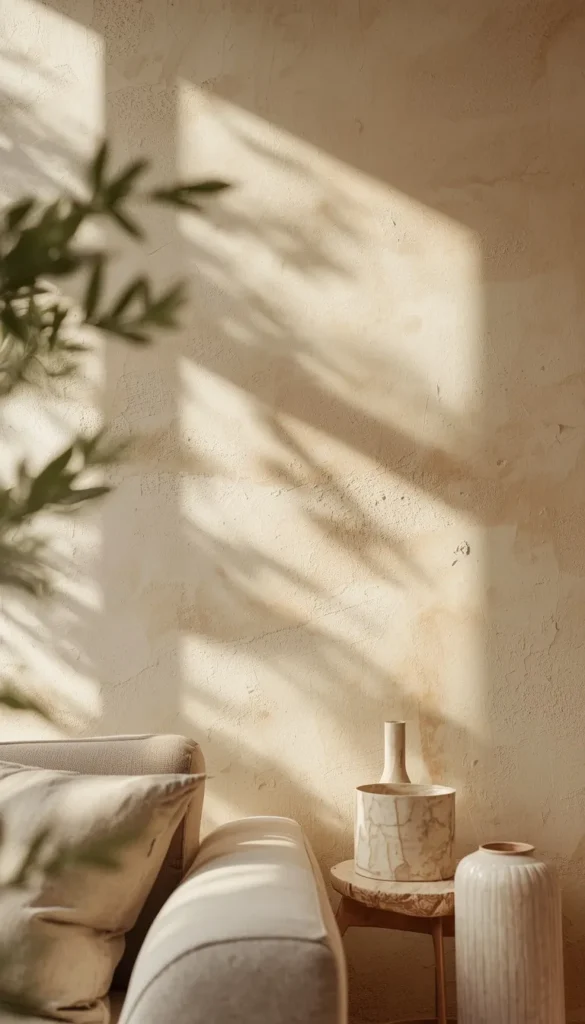
Limewash and Venetian plaster have quietly become one of my favorite requests over the last couple of years. There’s a soft, cloudy movement to the finish that flat paint simply can’t replicate, and it photographs beautifully because the texture shifts depending on the light hitting it throughout the day.
It’s not a beginner DIY project though. Getting that layered, organic look takes practice, and a rushed job can end up looking patchy instead of intentional. I usually recommend hiring someone experienced for this one, or at the very least practicing on a scrap board first.
We used a warm limewash in a client’s living room in New York last year, and even now, months later, she tells me it’s the first thing guests comment on when they walk in.
8. TV and Media Accent Wall
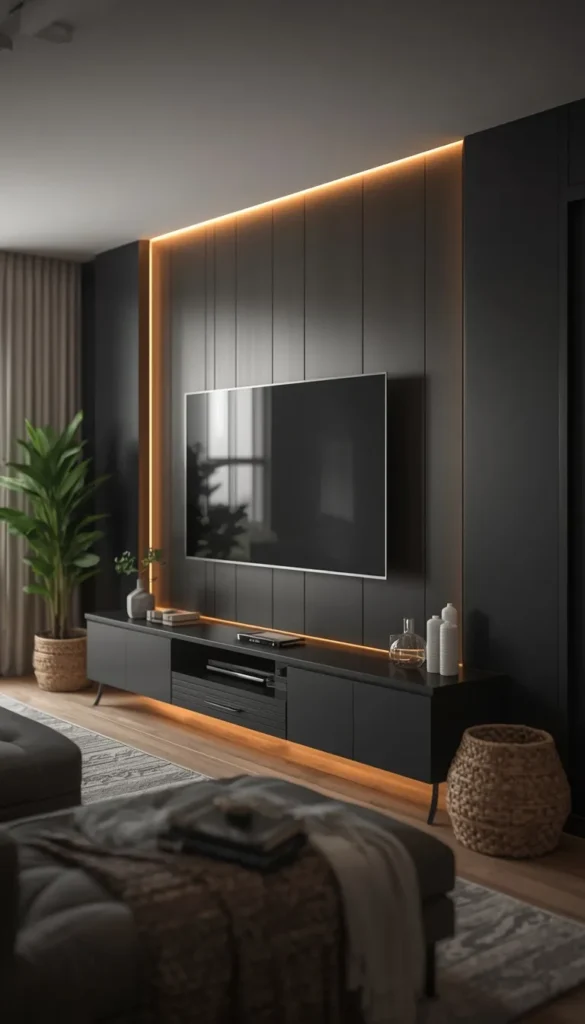
The TV wall is where function and design collide, and it’s one of the trickiest to get right because you’re designing around a black rectangle nobody actually wants to look at. A media accent wall, whether it’s paneling, a color drenched paint job, or slats, gives the eye something else to focus on besides the screen itself.
Cable management makes or breaks this. Nothing undoes a beautifully designed media wall faster than a tangle of visible cords hanging beneath the TV. In wall cable kits are inexpensive and solve this almost entirely, so there’s really no excuse to skip that step anymore.
A few things to plan for before you start:
- Matte or low sheen finishes reduce glare on the screen during the day
- Backlighting behind the panel adds ambiance without much extra cost
- Leave a few inches of clearance around the TV so decor doesn’t crowd the screen
Which one of these twelve is already halfway to working in your living room right now?
9. Fireplace Accent Wall
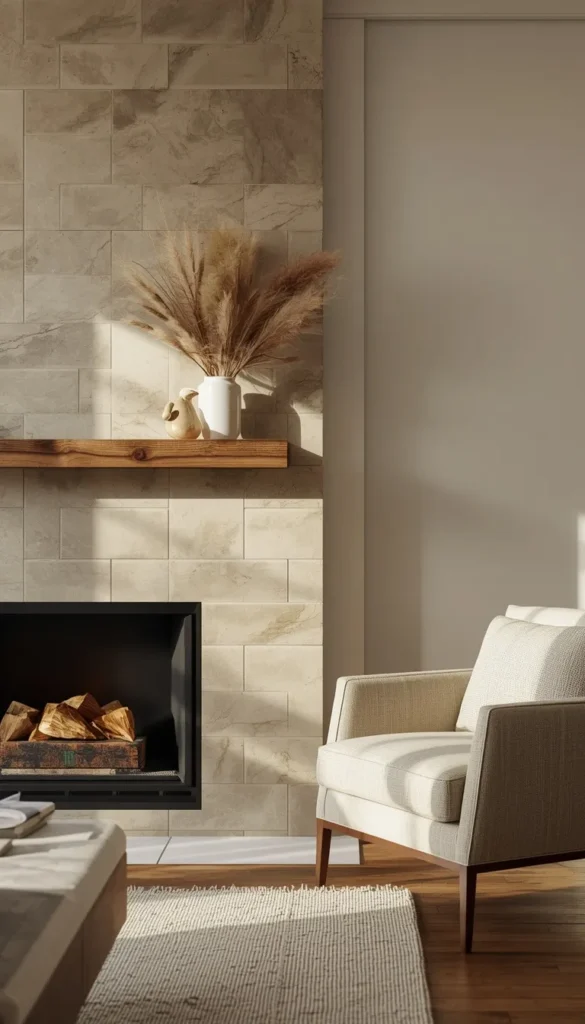
The fireplace is usually the wall your eye goes to first the moment you walk into the room, which makes it the most natural candidate for an accent treatment. Whether you go with paint, stone, tile, or wood paneling, the goal is the same, you want the fireplace to feel like the room was built around it instead of an afterthought bolted onto a plain wall.
Tile has become a favorite of mine for fireplace surrounds lately, especially small format tile run floor to ceiling. It reads modern and clean, and unlike stone, it’s easier to keep consistent since you’re not dealing with natural variation between pieces.
One thing worth thinking through early is your mantel, if you have one. Painting or paneling straight through without accounting for it can make the mantel look like it was added later, so plan the accent treatment and the mantel placement together rather than as two separate decisions.
10. Built In Shelving Accent Wall
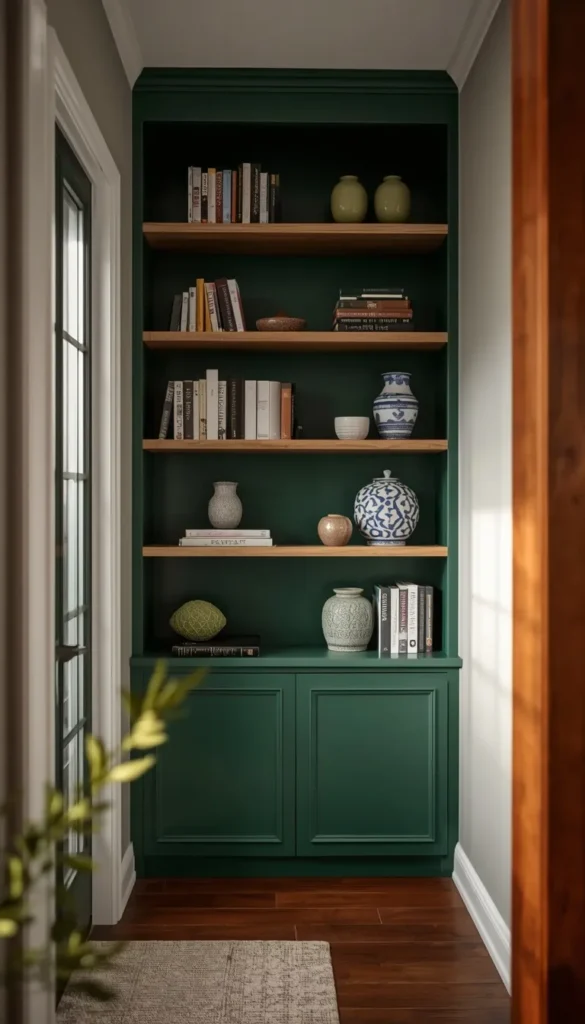
Built ins do double duty as storage and as the accent itself, which is part of why I love recommending them to clients who feel like they’re always fighting clutter. Painting the back panels of the shelves in a saturated color, even just navy or deep green, makes the whole wall feel curated instead of just functional.
The trick is restraint. I’ve seen built ins get overcrowded fast, every shelf packed edge to edge with books and knickknacks until the color you painted back there barely shows anymore. Give your favorite pieces room to breathe, and don’t be afraid to leave a shelf mostly empty.
Custom built ins aren’t cheap, often running into the thousands depending on your contractor and materials, but they add real value to a home in a way most accent walls don’t, since buyers tend to see them as a permanent upgrade rather than a decorating choice.
11. Small Living Room Accent Wall Ideas
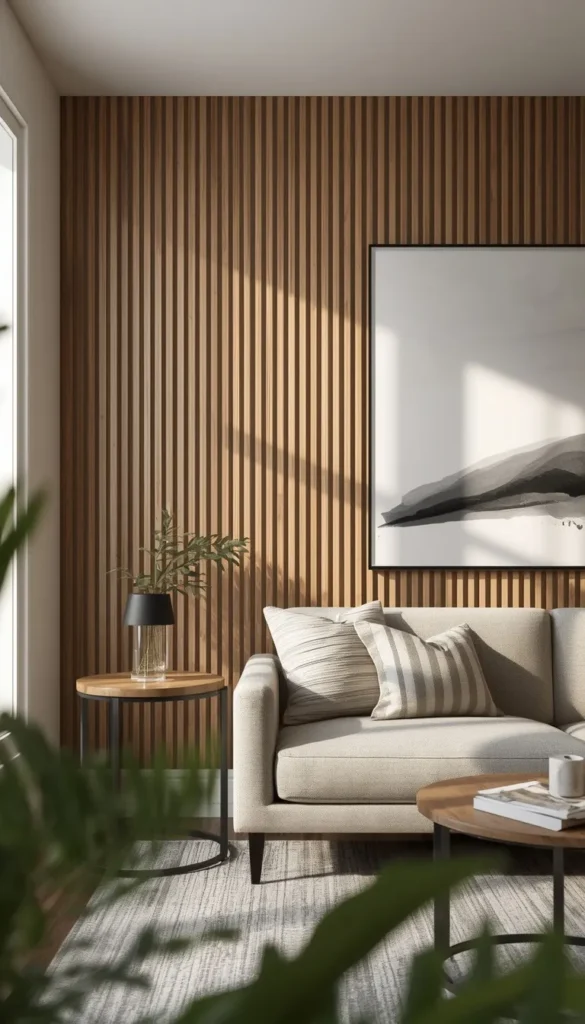
Small rooms need a slightly different approach, mostly because there’s less wall to work with and less room for error. Vertical elements, whether that’s slat wood, vertical shiplap, or a tall striped paint job, trick the eye into reading the ceiling as higher than it actually is.
Lighter, reflective finishes also matter more here than in a larger room. A glossy or satin paint bounces available light around, while a flat dark color in a small space with limited windows can feel like it’s closing in on you rather than adding depth.
A few moves that consistently work well in tighter spaces:
- Stick to one accent wall only, resist the urge to extend it around a corner
- Choose a single large art piece over a cluster of small frames
- Keep furniture pulled slightly away from the accent wall so it doesn’t feel boxed in
12. Accent Wall Mistakes to Avoid
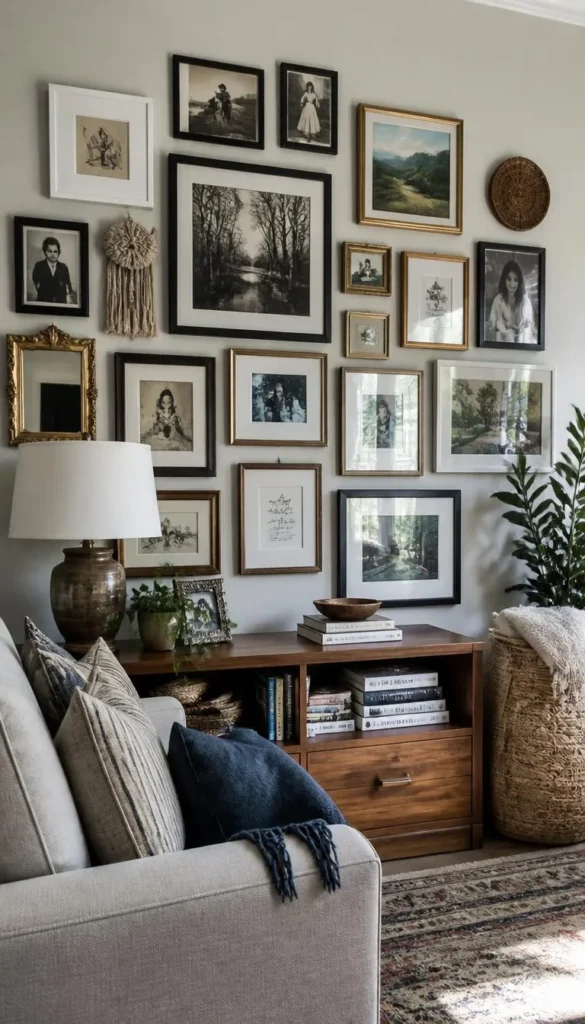
After enough projects, you start noticing the same handful of mistakes over and over, and most of them are avoidable with a little planning. Picking a random short wall just because it’s empty is probably the most common one I see, the wall needs to relate to your actual layout and sightlines, not just be the one with nothing on it yet.
Skipping the lighting test is another big one, and I’ve watched more than one client fall for a color online only to be disappointed once it’s actually on their wall. Test large swatches across a full day before committing, morning, afternoon, and evening light all change how a color reads.
A short list of the mistakes I run into most:
- Choosing texture heavy finishes like stone or heavily grooved shiplap in homes with pets, since scratches and trapped fur become a real maintenance issue
- Overcrowding a gallery wall with too many mismatched frames instead of a few intentional pieces
- Forgetting to repeat the accent color somewhere else in the room, a pillow, a book spine, a piece of art, so the wall feels tied in rather than isolated
Which Path Is Yours?
By budget
- Starter friendly: Painted accent wall, board and batten, peel and stick wallpaper
- Mid range: Shiplap, slat wood wall, built in shelving
- Luxury investment: Stone or brick veneer, textured plaster, custom built ins with tile surround
By lifestyle
- Busy families with pets: Painted walls or board and batten, skip heavily grooved textures like shiplap or plaster
- Renters: Peel and stick wallpaper, board and batten if removable, no nail gallery walls
- Small living rooms: Vertical slat wood, vertical shiplap, or a single large art piece
- Open concept layouts: Fireplace or TV media wall, since it naturally defines the zone
- Design lovers who want a statement: Textured plaster or a full stone wall
Frequently Asked Questions
What is the best accent wall color for a small living room?
Light, warm neutrals work best, think soft greige or a pale sage. Dark colors can work too, but only if the room gets strong natural light.
How much does it cost to add an accent wall?
The average cost ranges from thirty dollars for a simple paint job to over a thousand for wood slats or stone veneer. Your final number really depends on the material, not the size of the wall.
Which wall in the living room should be the accent wall?
Ideally, the wall your eye lands on first when you walk in, usually behind the sofa or around the fireplace. Avoid picking a short return wall just because it happens to be empty.
Can I do an accent wall myself or do I need a professional?
Paint, board and batten, and peel and stick wallpaper are all realistic DIY projects for most homeowners. Stone veneer and textured plaster are trickier, and I’d bring in a pro for those.
Will an accent wall make a room feel smaller?
Not if you choose the right approach, vertical elements and lighter finishes actually make a room feel taller. The mistake is going dark and heavy in a room with limited natural light.
Conclusion
Pick one idea from this list, the one that made you pause while reading, and just start there. You don’t need to overhaul the whole room this weekend, you need one gallon of paint or one honest look at a wall you walk past every single day without seeing anymore.
Your living room should feel like yours, not like a photo you scrolled past once. Grab a swatch, tape it up, and live with it for a couple days before you decide.
So tell me, which wall in your house has been begging for this for months now?
