
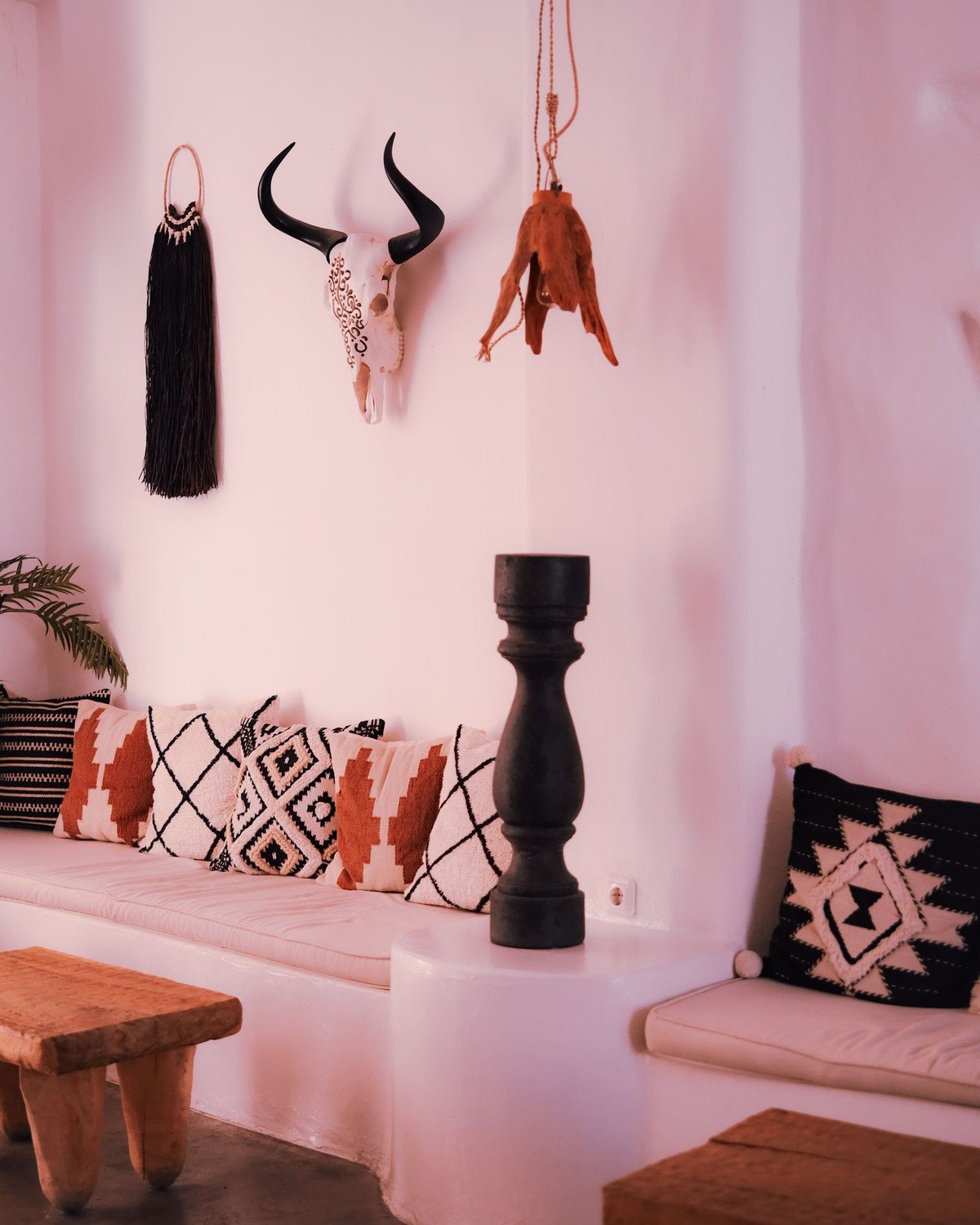
Afrohemian decor is where African craft meets bohemian ease: mudcloth and kente textiles, woven baskets, carved wood, terracotta, and a palette pulled from the earth itself — clay, ochre, indigo, charcoal, and cream. It is warm without being heavy, collected without being cluttered, and every piece has a maker behind it. If your current space feels a little flat and a little too matched, afrohemian decor is the fastest way to give it a soul.
This list rounds up 31 afrohemian decor ideas, from a single throw over the sofa to two complete room looks. Every idea lists its style, best use, and price feel, and the textiles, walls, furniture, and floors are grouped so you can build the look layer by layer. Start with one section, or copy a whole-room look at the end.
Quick-Pick Table
| Idea # | Name | Best For | Effort | Cost |
|---|---|---|---|---|
| 1 | Mudcloth Throw Over the Sofa | Instant warmth on plain seating | Easy | $$ |
| 2 | Mudcloth-Print Cushion Covers | Pattern without commitment | Easy | $ |
| 3 | Kente Cloth Table Runner | A color anchor for dining | Easy | $$ |
| 4 | Adire Indigo Layers on the Bed | Bedrooms that need depth | Easy | $$ |
| 5 | Undyed Woven Curtains | Softening harsh light | Moderate | $$ |
| 6 | Pattern-Mixed Cushion Stack | Confident, joyful color | Easy | $ |
| 7 | Woven Basket Gallery Wall | A big blank wall | Moderate | $$ |
| 8 | Carved Mask Focal Point | One strong statement | Easy | $$ |
| 9 | Textile Panel Hung Like Art | Oversized art on a budget | Moderate | $$ |
| 10 | Carved Wood Wall Plates | Texture in small doses | Easy | $ |
| 11 | Natural Fiber Leaf Hangings | Soft, organic wall texture | Easy | $ |
| 12 | Woven Mirror Hangings | Light plus texture over consoles | Easy | $$ |
| 13 | Carved Wood Stools | Side tables with sculpture value | Easy | $$$ |
| 14 | Rattan Peacock Chair | A reading corner hero | Easy | $$$ |
| 15 | Carved Sculpture Statement | Shelves and mantels | Easy | $$ |
| 16 | Tan Leather Pouf | Flexible extra seating | Easy | $$ |
| 17 | Cushioned Wall Bench | Entryways and dining nooks | Moderate | $$ |
| 18 | Woven Rattan Headboard | A bedroom focal point | Moderate | $$ |
| 19 | Jute Rug Base Layer | Grounding any room | Easy | $$ |
| 20 | Kilim-Style Rug Layered on Top | Pattern and warmth over jute | Easy | $$ |
| 21 | Round Woven Floor Mat | Reading corners and small zones | Easy | $ |
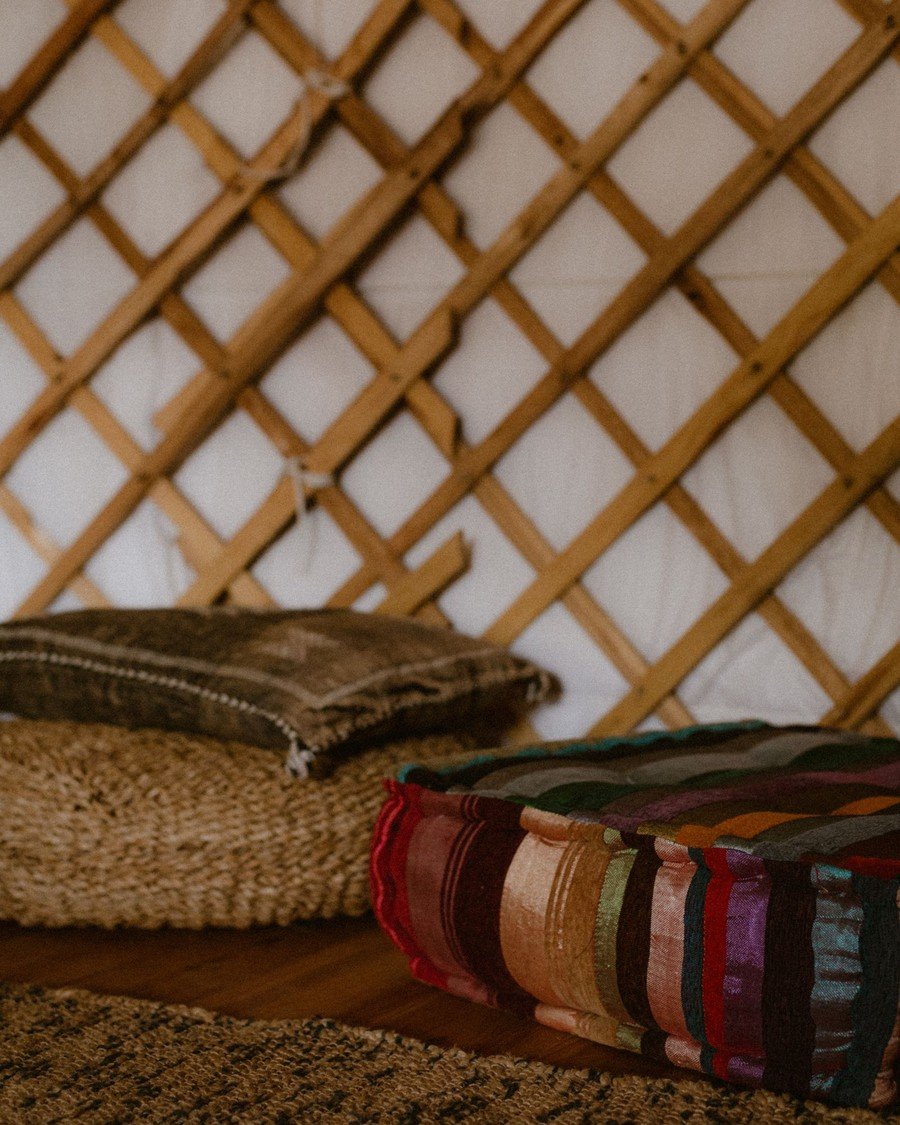
| 22 | Floor Cushions | Low, relaxed gatherings | Easy | $ |
| 23 | Bold Geometric Flatweave | The room’s color anchor | Easy | $$ |
| 24 | Woven Pendant Light | Warm light over a table | Moderate | $$ |
| 25 | Terracotta Vessel Cluster | Corners and hearths | Easy | $ |
| 26 | Brass Candlesticks | Evening glow on tables | Easy | $ |
| 27 | Handmade Ceramics on Shelves | Open kitchen shelving | Easy | $$ |
| 28 | Carved Figurines | Storytelling on shelves | Easy | $ |
| 29 | Plants in Woven Baskets | Greenery with texture | Easy | $ |
| 30 | Small-Room Afrohemian Look | Compact living rooms | Moderate | $$ |
| 31 | Budget Renter Afrohemian Look | Deposit-safe decorating | Easy | $ |
Textiles First: Mudcloth, Kente & Adire Layers
Textiles are where afrohemian decor begins, because cloth carries the pattern, the color, and the history all at once. If you love the joyful color of our dopamine decor ideas but want it grounded and earthy, start here: six ways to layer mudcloth, kente, adire, and woven cotton over furniture you already own.
1. Mudcloth Throw Draped Over the Sofa
Style: Textile layer | Best for: Instant warmth on plain seating | Price feel: Mid-range
What it is: A mudcloth throw is the single easiest entry into this style. Real bogolan is handwoven cotton from Mali, dyed with fermented mud and marked with white or ochre symbols; good printed versions copy the same bold geometry. In the photo, a deep green throw softens a neutral sofa and does the same job a mudcloth would: it breaks up a plain block of upholstery, adds hand-made texture, and gives the seat a clear focal point. Drape it over one arm or fold it lengthwise down the center cushion.
How to do it:
- Choose cream-and-black or indigo patterns for a calm room
- Fold lengthwise into thirds for a tidy, tailored drape
- Let one patterned end hang over the sofa arm
- Pair with plain linen cushions so the pattern leads
Pro tip: Buy slightly oversized — a little pooling over the arm looks generous; a short throw looks lost.
Avoid this: Avoid matching the throw to your cushions; the textiles should look collected, not boxed.
2. Mudcloth-Print Cushion Covers in Earthy Geometry
Style: Cushion covers | Best for: Pattern without commitment | Price feel: Budget
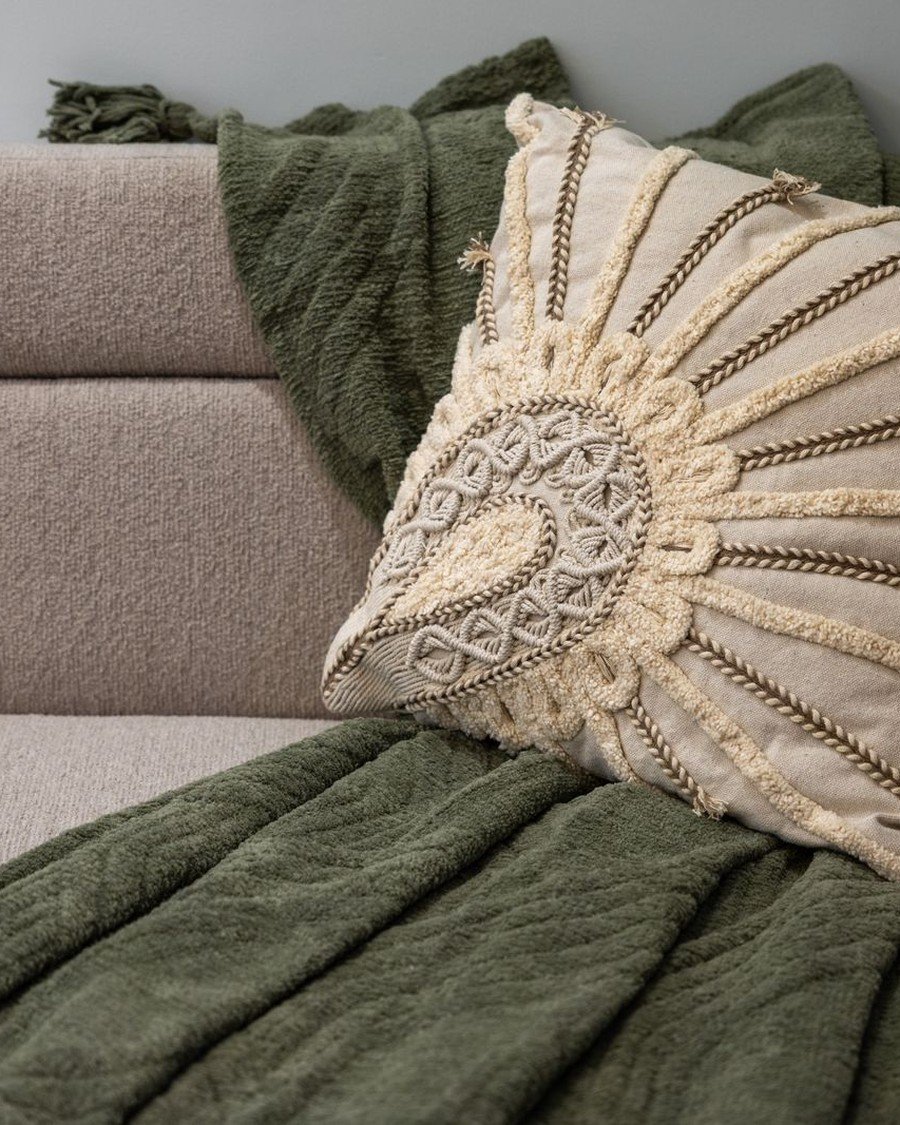
What it is: Swapping cushion covers is the cheapest full-room change there is, and mudcloth geometry — rows of triangles, lines, and dots in clay red, rust, charcoal, and cream — was made for it. The photo shows the effect to aim for: a stack of richly patterned covers in warm earth tones, no two alike, yet clearly one family. Covers zip off for washing and store flat. Mix squares with one long lumbar for a layered feel.
What to check:
- Heavy cotton or cotton-linen fabric, not shiny polyester
- Hidden zips so both faces of the pattern can show
- Patterns in one shared palette: rust, clay, black, cream
- Inserts one size up for a full, plump finish
Pro tip: Keep one plain textured cushion in every group of three — the eye needs a resting place between patterns.
Avoid this: Avoid neon-bright “tribal” prints; authentic palettes are mineral and muted, and bright versions cheapen the look fast.
3. Kente Cloth Runner Down the Table
Style: Table textile | Best for: A color anchor for dining | Price feel: Mid-range
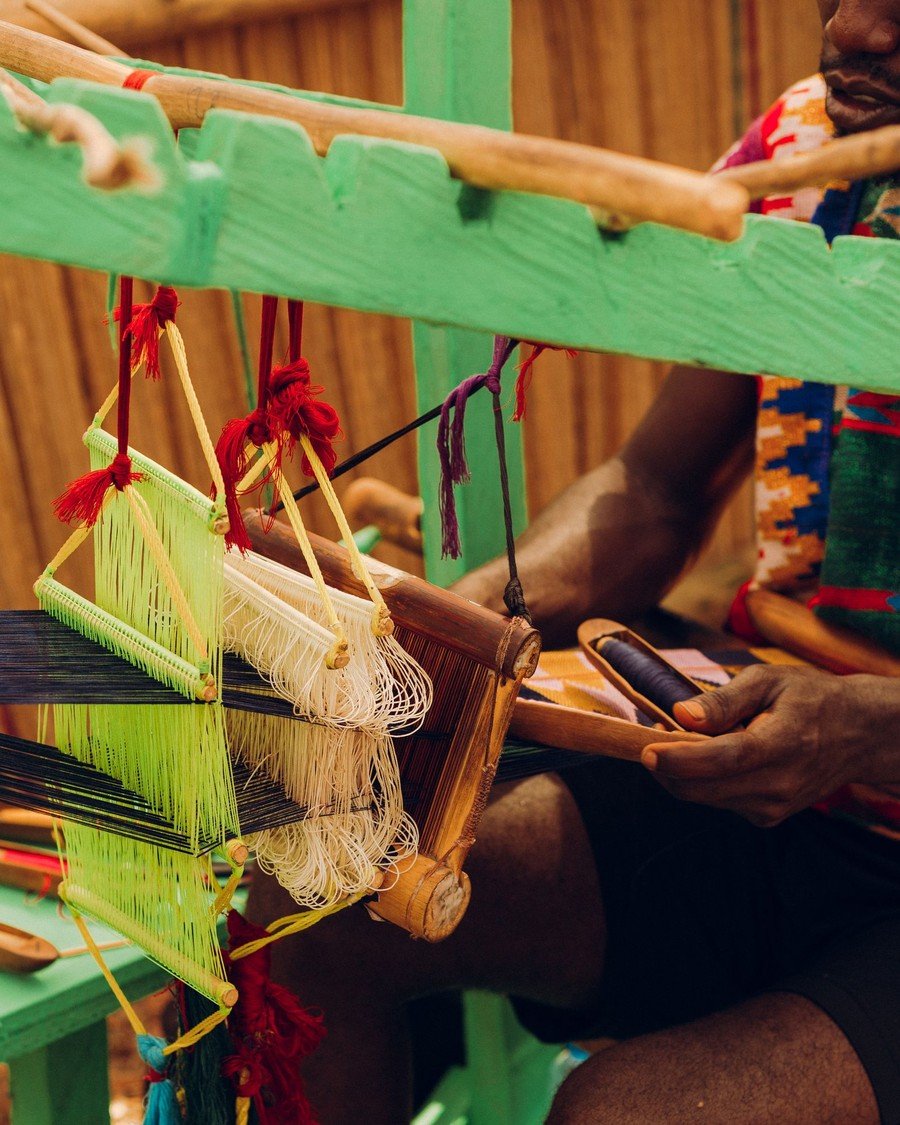
What it is: Kente is Ghana’s famous strip-woven cloth, built from narrow bands of silk and cotton in gold, green, red, and black geometry — the weaver in the photo is making exactly these strips on a traditional loom. As a table runner, a length of kente (or a good kente-style weave) turns a plain wooden table into the room’s color anchor. It is also a respectful way to use a storied textile: flat, visible, and center-stage. Read more about the cloth itself in the history of kente cloth.
How to do it:
- Let the runner hang 8–10 inches over each table end
- Keep tableware plain: wood, ceramic, and clear glass
- Use it on sideboards and consoles, not only dining tables
- Fold and store flat to protect the woven strips
Pro tip: A kente runner over a jute table mat layers two textiles without a pattern clash.
Avoid this: Avoid plastic-coated “kente print” tablecloths — the shine gives them away and kills the handwoven feel.
4. Adire Indigo Layers on the Bed
Style: Bedding layer | Best for: Bedrooms that need depth | Price feel: Mid-range
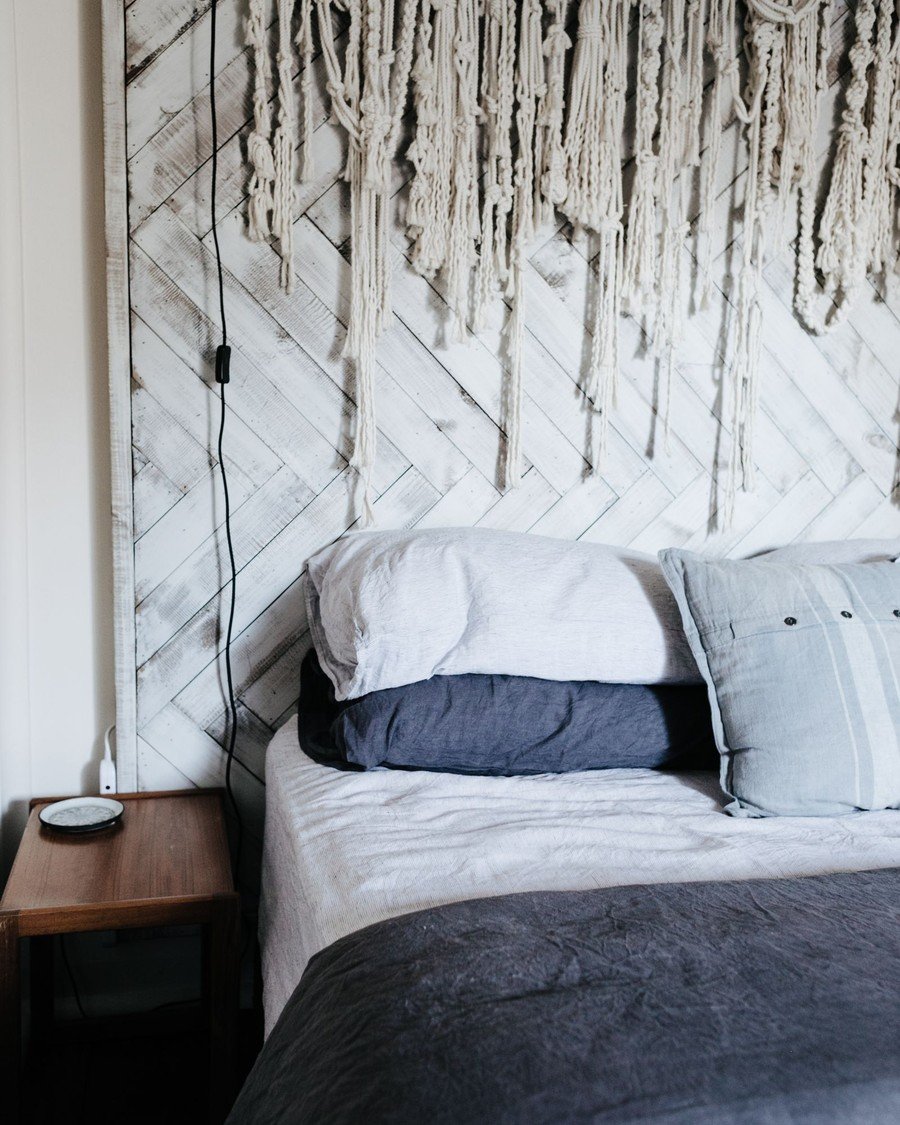
What it is: Adire is the indigo resist-dyed cloth of Nigeria’s Yoruba makers, patterned with white circles, lines, and stories drawn in starch or wax before dyeing. Layered on a bed — a folded throw, pillow shams, or a full coverlet — it brings the deep blue that balances all the clay and ochre in the room. The bedroom in the photo shows the mood: blue-grey bedding, natural textures above the bed, everything calm. Indigo is the cool note that stops an earthy room feeling sleepy.
How to do it:
- Fold an adire throw across the foot of the bed
- Mix one indigo piece with undyed linen, not more blue
- Add a woven basket or rattan piece to warm the cool blue
- Wash indigo textiles separately at first — dye can crock
Pro tip: Real hand-dyed adire varies slightly in depth from panel to panel; that variation is the proof of the hand, not a flaw.
Avoid this: Avoid head-to-toe blue bedding; adire works as the accent layer over natural linen or cotton.
5. Undyed Woven Curtains That Filter the Light
Style: Window dressing | Best for: Softening harsh light | Price feel: Mid-range
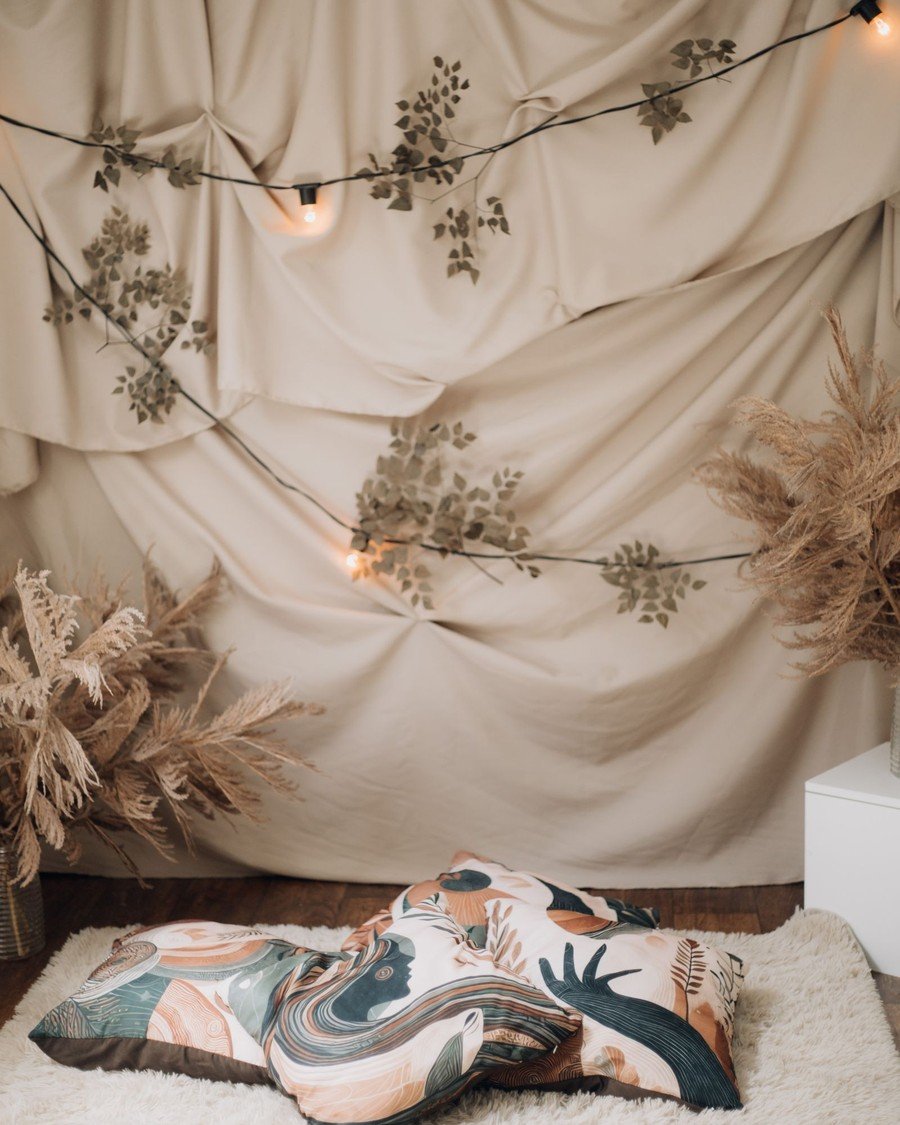
What it is: Heavy blackout curtains fight the whole afrohemian mood, which is built on daylight and natural fiber. Undyed woven cotton curtains — the loose, gauzy drapes in the photo, gathered and glowing with light behind them — filter sun into a soft wash, show their weave up close, and move a little in a breeze. Look for slubby handloom cotton or woven stripe panels in cream, sand, and pale clay. They are the textile layer most people forget, and the one guests feel first.
What to check:
- Open weave that glows when backlit, without see-through gaps
- Length to the floor, with a small puddle for softness
- Wooden or black iron poles — never shiny chrome
- Undyed or vegetable-dyed tones: cream, sand, pale terracotta
Pro tip: Hang panels wide of the window frame so the full glass stays bright and the curtains read as textile walls.
Avoid this: Avoid stiff synthetic sheers; the plastic drape and shine undo the natural-fiber story instantly.
6. A Pattern-Mixed Cushion Stack
Style: Mixed textiles | Best for: Confident, joyful color | Price feel: Budget
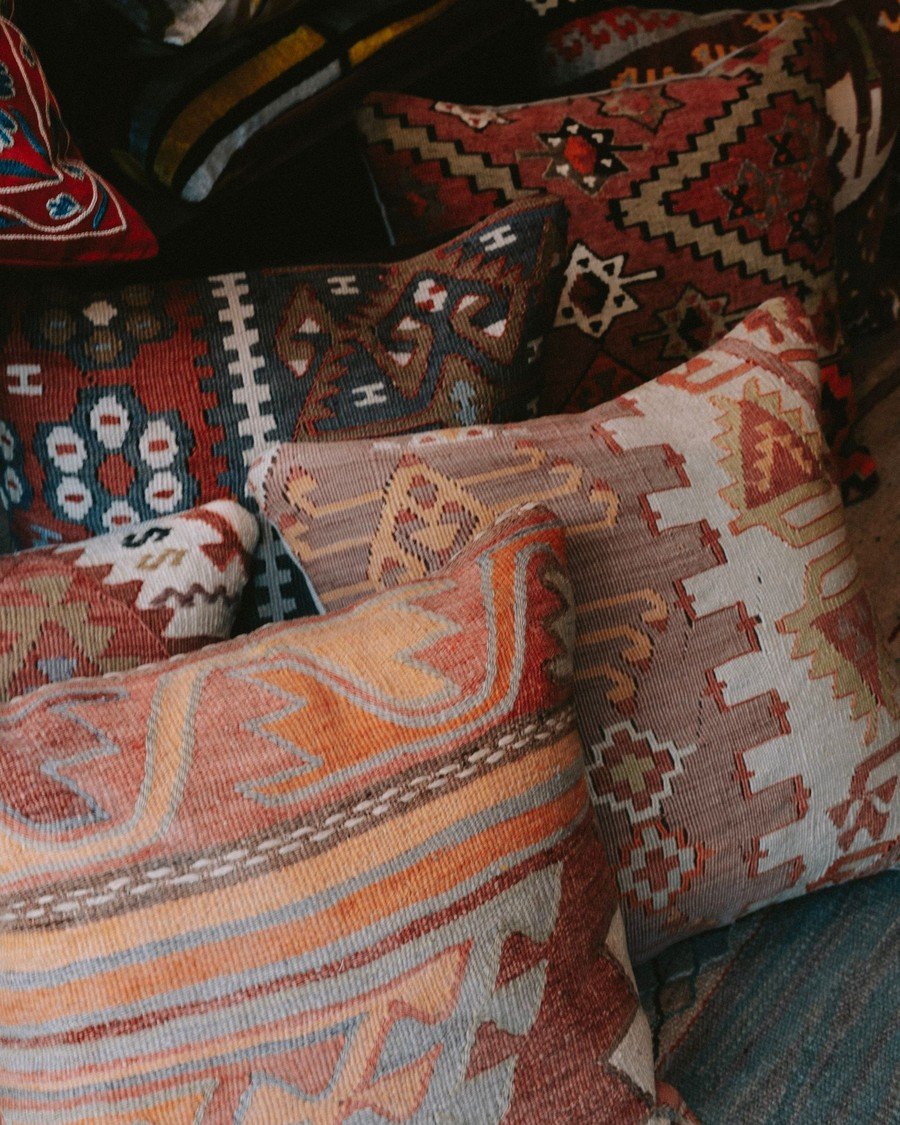
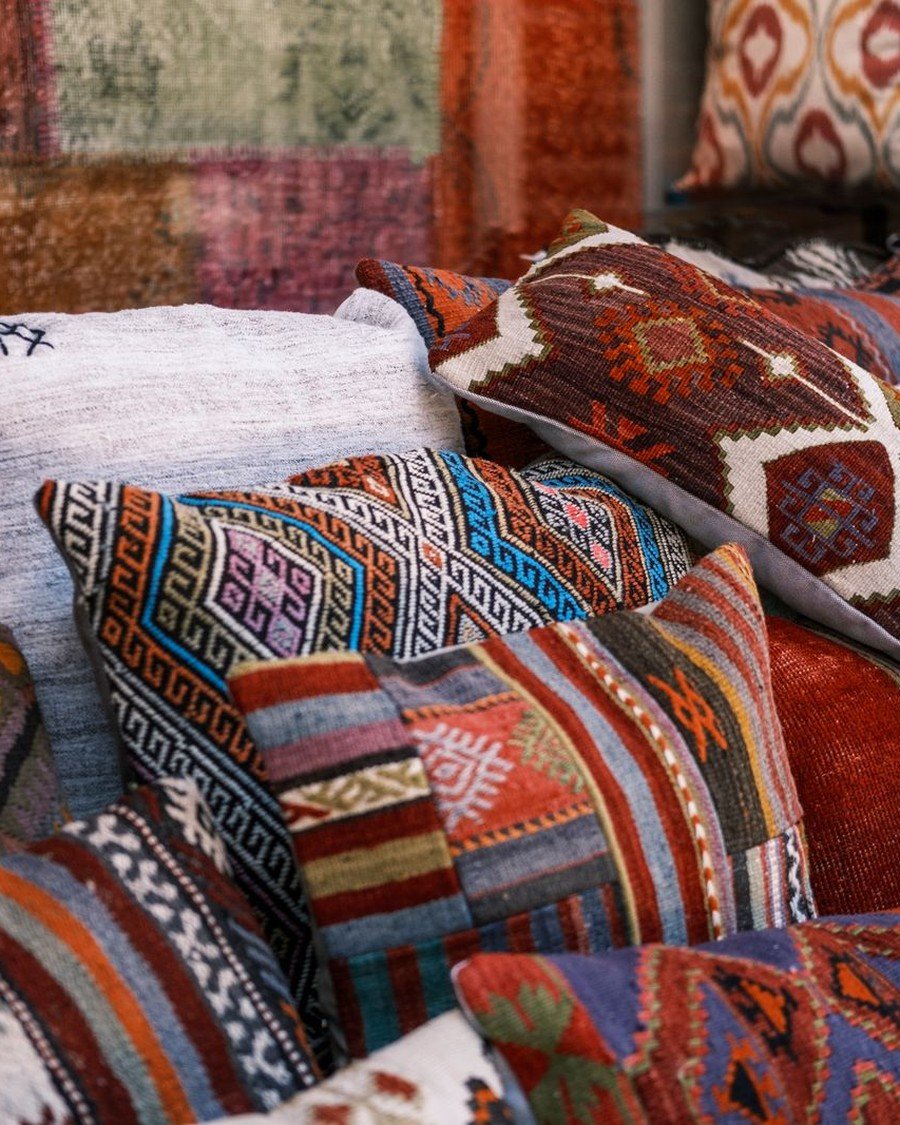
What it is: Once single patterns feel safe, mix them the way the photo does: cushions in different pattern scales — stripes beside geometry beside a solid — held together by one warm palette. This is where the style gets its collected energy, because the source cultures layer cloth generously and without fear. The rule that keeps chaos out is simple: repeat the same three or four colors everywhere, and let pattern scale vary instead of color. Start with mudcloth, one kente-toned piece, and plain dyed linen.
How to do it:
- Pick a palette of 3–4 colors and refuse everything else
- Combine one large-scale, one medium, one small pattern
- Add a solid cushion in a rough weave as the spacer
- Odd numbers group best: five cushions beat four
Pro tip: Photograph your sofa stack in daylight; the camera shows clashes your eye politely ignores.
Avoid this: Avoid adding a new color family in a single cushion — one outlier makes the whole stack look accidental.
Walls That Tell a Story: Baskets, Art & Carved Pieces
Bare walls are the biggest missed opportunity in an earthy room. These six ideas treat the wall the way our favorite living room wall decor ideas do — as the room’s largest surface for texture — but with woven, carved, and cloth pieces instead of framed prints alone. Every one of them is a hallmark of afrohemian decor, and most hang from a single nail.
7. Woven Basket and Plate Gallery Wall
Style: Woven wall art | Best for: A big blank wall | Price feel: Mid-range
What it is: If one piece defines afrohemian decor walls, it is this: a clustered arrangement of flat woven baskets and plates in natural grasses, dyed with geometric patterns in black, rust, and cream. The photo shows the full effect — a sunburst grouping where every circle is a different pattern. The arrangement borrows its layout logic from our living room gallery wall ideas — anchor piece first, odd numbers, tight gaps — but swaps glass and frames for warm, shadow-casting texture.
How to do it:
- Collect 7–11 baskets from 8 to 20 inches across
- Lay the arrangement on the floor and photograph it first
- Hang the largest basket at center, then build outward
- Use small nails or picture hooks through the weave center
Pro tip: Mix one or two dark-dyed baskets into a natural set; the contrast is what makes the patterns readable.
Avoid this: Avoid a perfect grid. Baskets should cluster like a constellation, not line up like plates in a shop.

8. One Carved Mask as the Focal Point
Style: Carved wall piece | Best for: One strong statement | Price feel: Mid-range
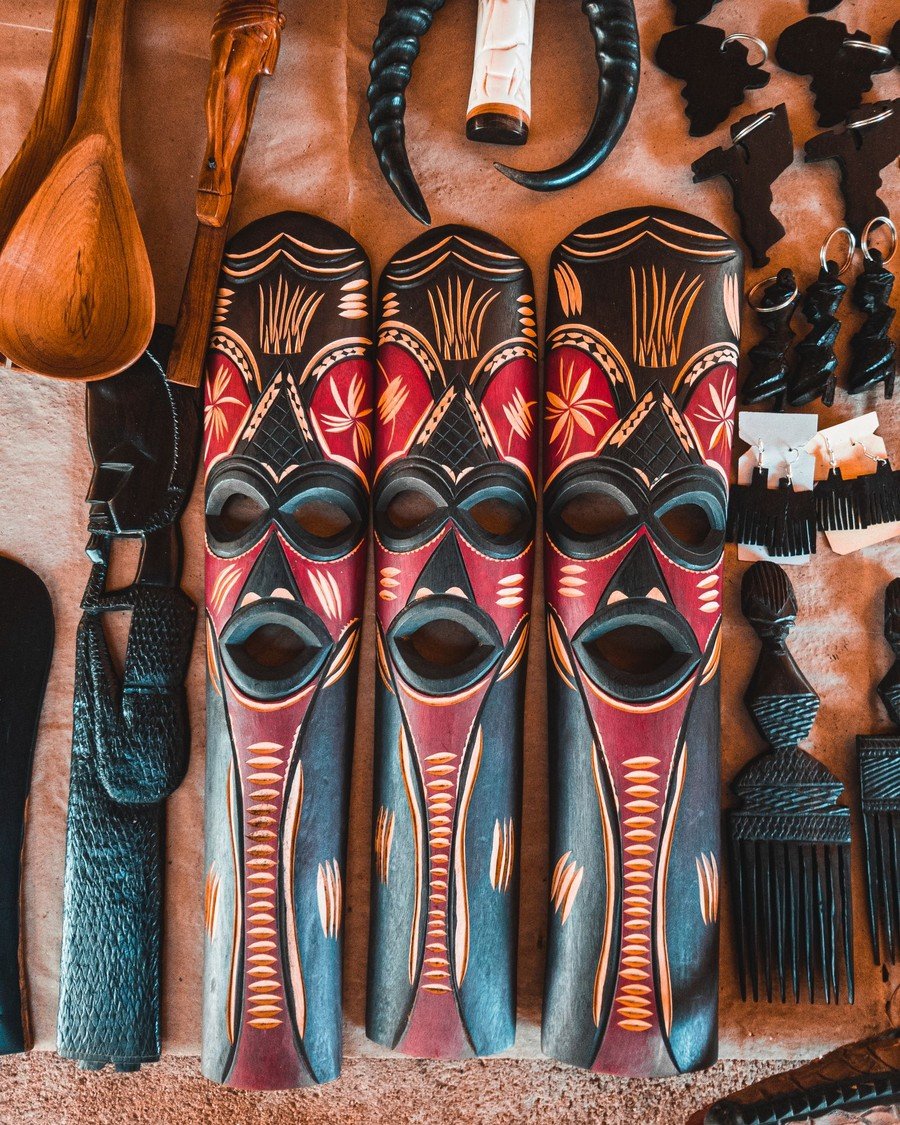
What it is: A single carved wooden mask, hung alone with space around it, does what a whole gallery of small prints cannot: it stops you. The masks in the photo — elongated faces in dark stained wood with painted detail — show the range of carving traditions to look for, from Dan and Baule styles to contemporary workshop pieces. Treat a mask as art with a lineage, not a novelty: buy from reputable dealers or fair-trade importers, and give it the respect of a painting — centered, lit, and uncluttered.
What to check:
- Solid carved wood with real weight, not molded resin
- A named style or region from the seller, in writing
- Secure hanging hardware — masks are heavier than they look
- Scale: 14–24 inches tall reads well over a console
Pro tip: Hang a mask where lamplight rakes across it in the evening; carved planes are made for side light and shadow.
Avoid this: Avoid clustering masks with party-shop “safari” items; one respected piece beats a themed corner every time.
9. A Large Textile Panel Hung Like Art
Style: Cloth wall art | Best for: Oversized art on a budget | Price feel: Mid-range
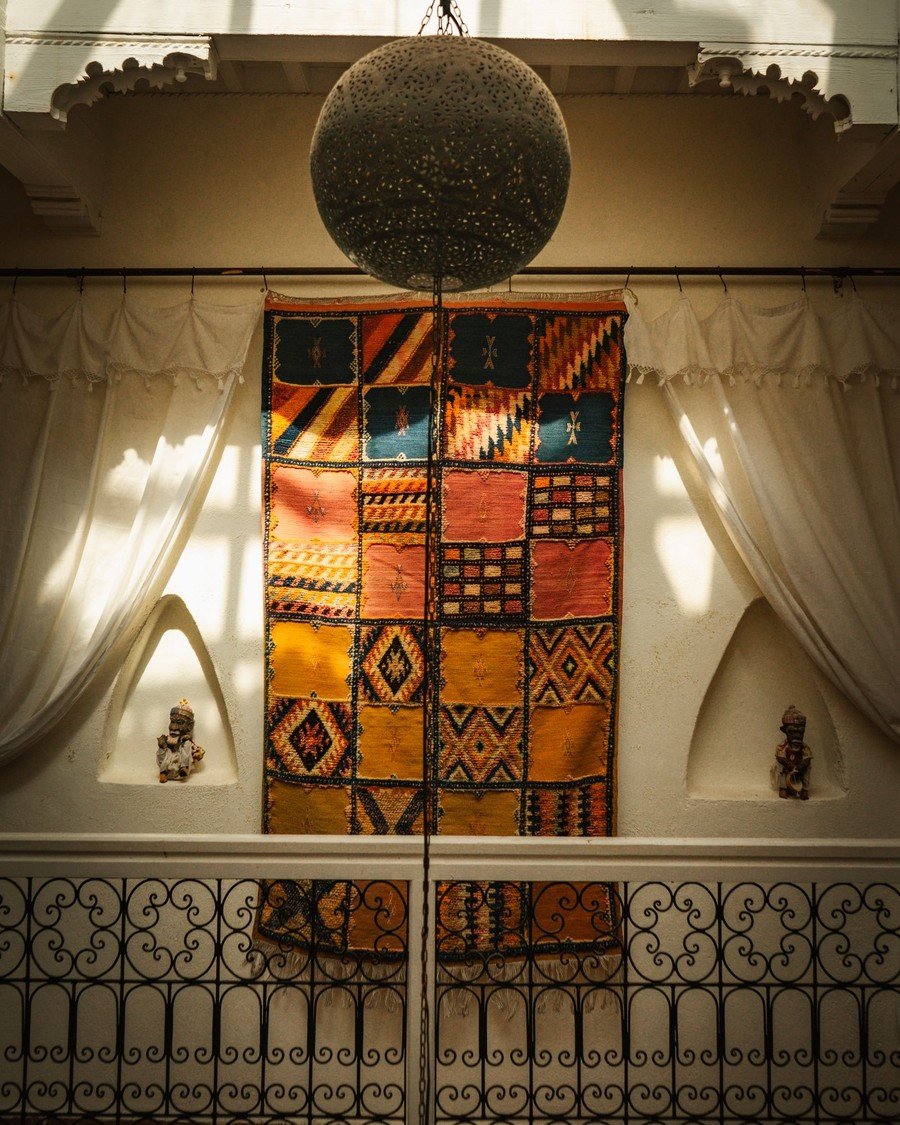
What it is: A full length of patterned cloth — bogolan, a strip-woven hanging, or block-printed cotton — hung from a dowel gives you a meter-wide artwork for the price of fabric. The paneled hanging in the photo, glowing in warm squares of amber and rust, shows how cloth softens a formal room in a way canvas never does: it moves slightly, absorbs sound, and carries pattern at architectural scale. It is one of the oldest tricks in the style, and still the best value per square foot of wall.
How to do it:
- Sew or clip a sleeve along the top edge for a dowel
- Weight the bottom with a second dowel so it hangs flat
- Steam, never iron directly, to drop out shipping creases
- Keep it out of direct sun; natural dyes fade gracefully but fast
Pro tip: A textile panel behind a sofa lets you go far bigger than framed art, because there is no glass weight or cost.
Avoid this: Avoid hanging unlined thin cloth in a damp room; choose a heavier weave or add a cotton backing.
10. Carved Wood Wall Plates and Trays
Style: Carved wall decor | Best for: Texture in small doses | Price feel: Budget
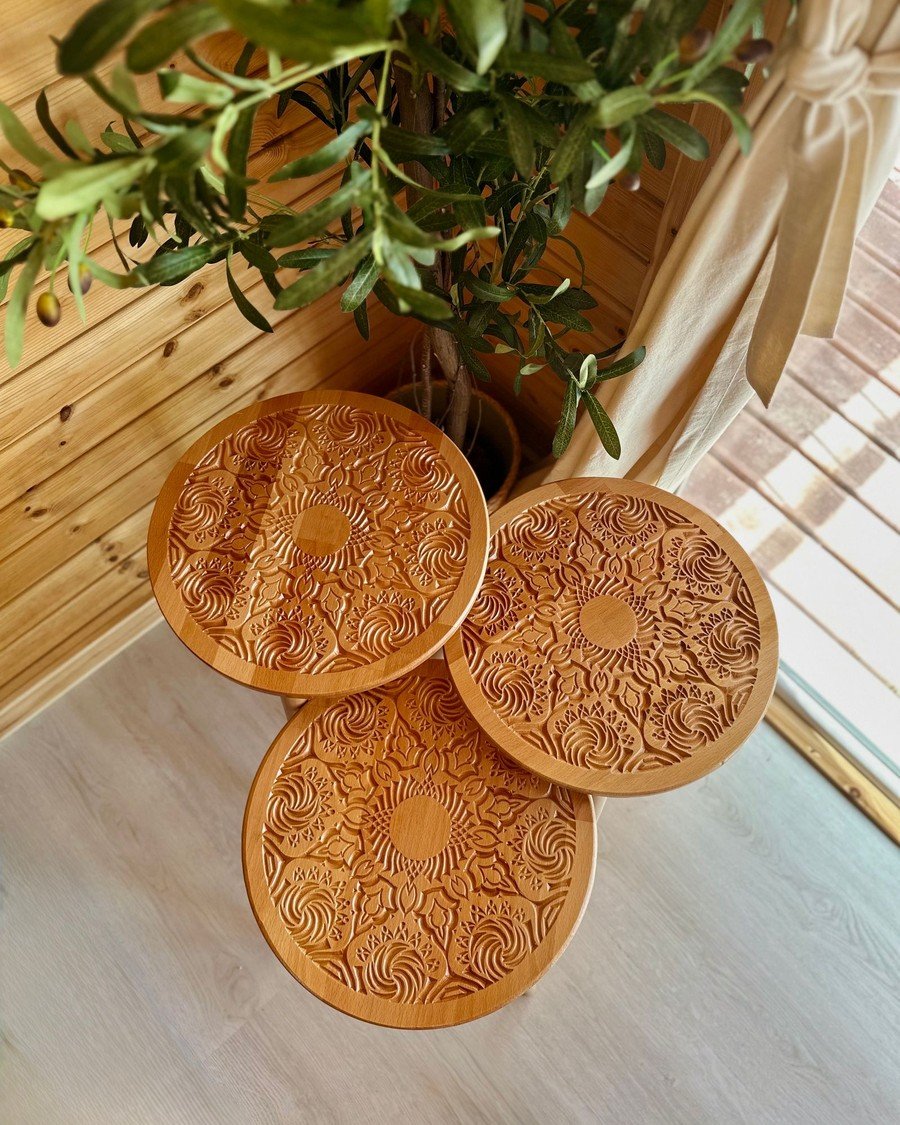
What it is: Carved wooden plates and trays bring carved texture — shallow bowls with incised patterns, hung in twos and threes or propped on a shelf edge. The trio in the photo, each with a different carved medallion, shows how much handwork can live in a small, affordable piece. They are a smart first buy if a full basket wall feels like a leap: one carved plate beside a doorway quietly changes a whole hallway.
How to do it:
- Group odd numbers: one large plate or a trio
- Use plate hangers or a small glued ring hanger on the back
- Mix carved wood with one woven basket for contrast
- Oil the wood yearly so the carving keeps its depth
Pro tip: Second-hand carved trays are everywhere and cheap; a wash and a coat of food-safe oil makes them glow.
Avoid this: Avoid hanging heavy solid plates on a single small nail — use a wall plug rated for the weight.
11. Natural Fiber Leaf Wall Hangings
Style: Woven fiber art | Best for: Soft, organic wall texture | Price feel: Budget
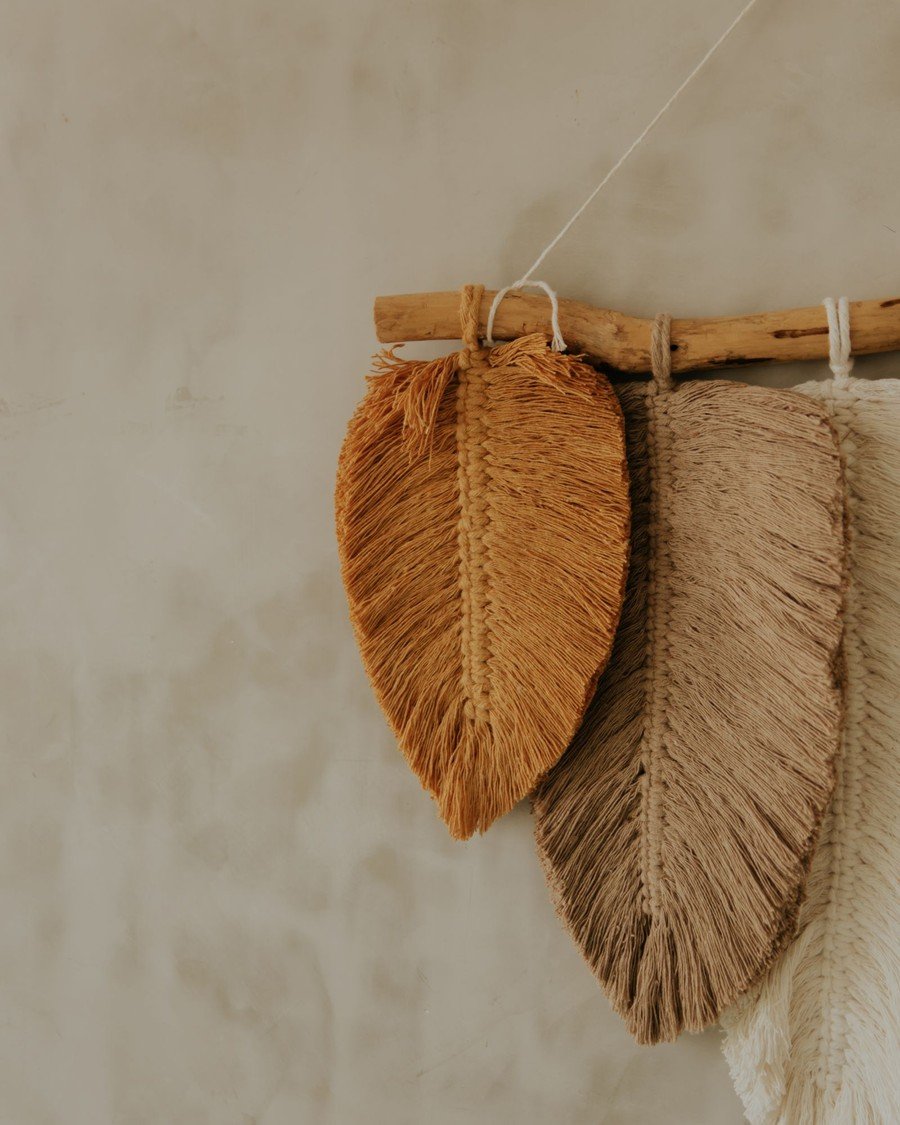
What it is: Not every wall piece in afrohemian decor needs pattern. Woven leaf and feather shapes in raffia, seagrass, and banana fiber — like the pair in the photo, hanging from a simple branch — give a wall organic silhouette and soft shadow with almost no color at all. They suit quiet corners — above a bed, beside a reading chair — anywhere the room needs texture, not another statement. Because they are feather-light, they hang from a pin, which makes them the easiest wall idea in this whole list for renters and the commitment-shy.
What to check:
- Tight, even weaving with no loose fraying ends
- Natural fiber, not plastic raffia — check the product details
- Pairs or trios read better than a single small piece
- A branch, dowel, or leather cord for hanging
Pro tip: Brush fiber hangings with a soft dry brush monthly; dust dulls natural fibers faster than anything.
Avoid this: Avoid hanging fiber pieces above a stove or fireplace — they are dry, light, and flammable.
12. Woven Mirror Hangings Above the Console
Style: Mirror wall decor | Best for: Light plus texture over consoles | Price feel: Mid-range
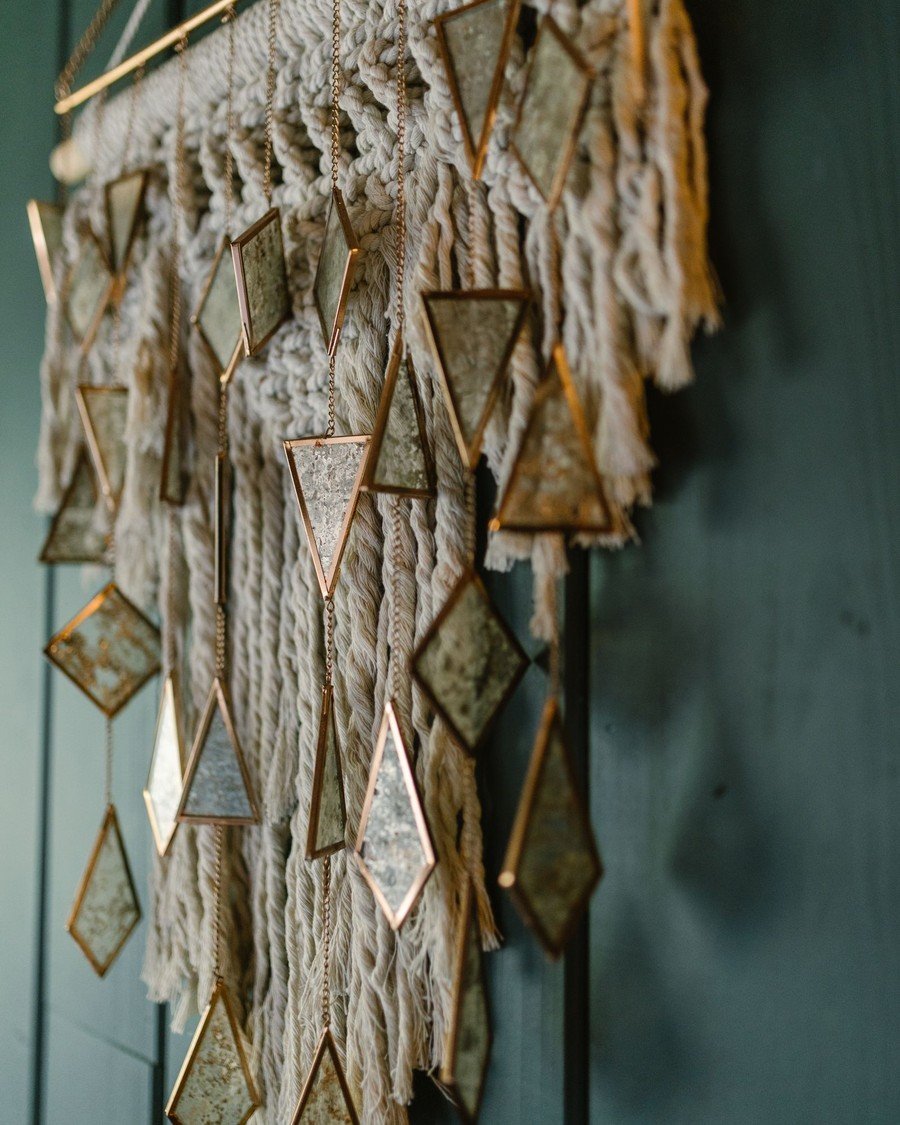
What it is: Mirrors earn their place here when they arrive dressed in fiber: small woven hangings studded with mirror medallions, like the piece in the photo, or a round mirror in a woven seagrass frame. Hung above a console or mantel, they do double work — the woven surround keeps the texture story going while the glass bounces daylight and lamplight deeper into the room. In a dark hallway, this is the wall idea that changes how the space feels at every hour.
How to do it:
- Center the mirror at standing eye level, about 57 inches
- Check what it reflects — aim it at a window or artwork
- Flank with fiber hangings or a carved plate for company
- Secure woven frames at two points so they hang straight
Pro tip: A mirror opposite a basket wall doubles your best piece for free — position them to face each other.
Avoid this: Avoid a mirror facing a cluttered shelf or the TV; it will faithfully double whatever it sees.
Furniture with Soul: Carved Wood, Rattan & Leather
Furniture is where afrohemian decor stops being a styling exercise and becomes a home. The shapes are sculptural, the materials honest — carved hardwood, rattan, cane, leather — and every piece doubles as art for its corner. You do not need much: one or two of these six will carry a room that textiles have already warmed.
13. Carved Wood Stools That Double as Side Tables
Style: Carved furniture | Best for: Side tables with sculpture value | Price feel: Premium
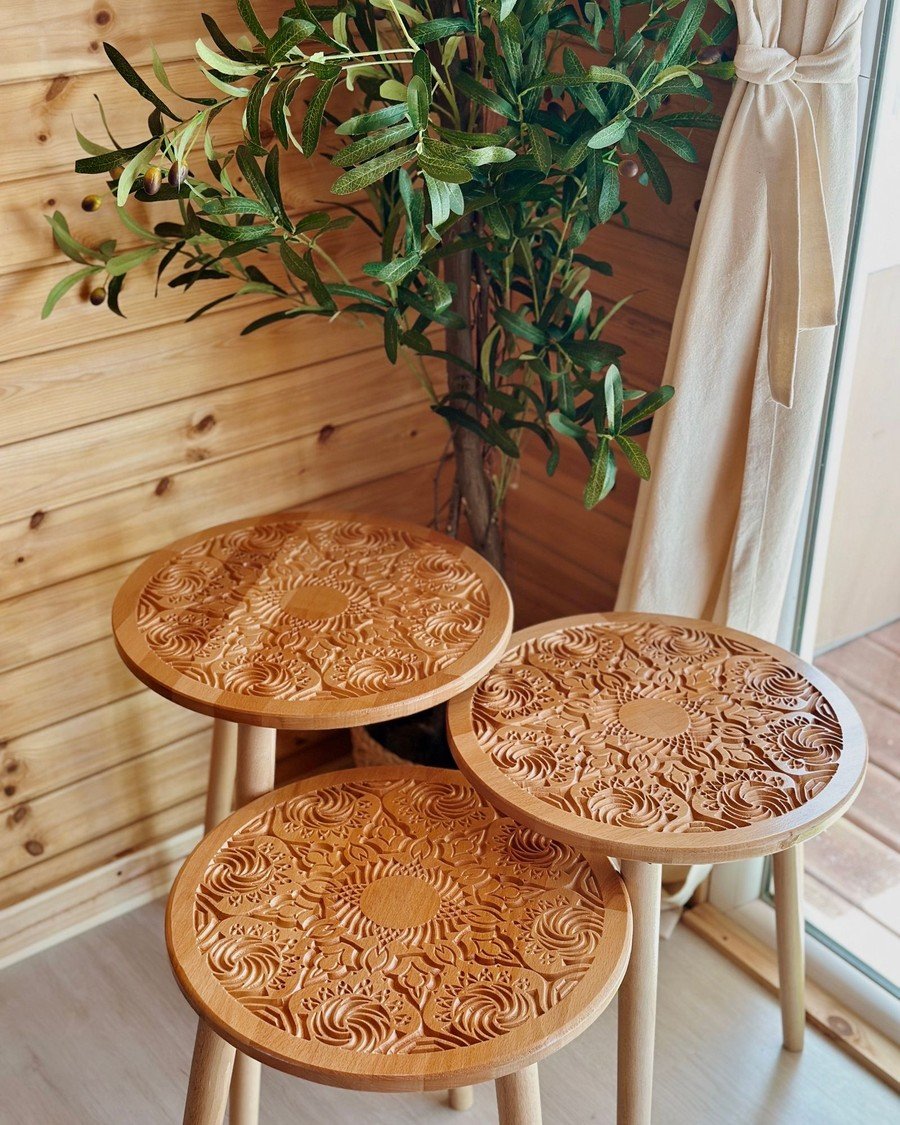
What it is: The carved stool is a West and Central African classic — think Ashanti and Bamileke stools — and in a modern room it is the hardest-working small furniture there is: side table, plant stand, extra seat, and sculpture in one heavy, beautiful object. The trio in the photo shows the standard: one piece of wood, carving you can feel with your palm, a finish that glows rather than shines. Of all the furniture in this list, this is the buy-once heirloom.
What to check:
- Carved from one solid piece — check for joins and filler
- Flat, level top if it will hold drinks or lamps
- Height 16–20 inches to sit level with sofa arms
- Weight: genuinely heavy is a good sign, hollow is not
Pro tip: Use a stool as the plant stand beside the sofa — elevation makes a mid-size plant read like a tree.
Avoid this: Avoid resin “carved look” stools; the weight, grain, and aging of real wood are the entire point.
14. A Rattan Peacock Chair in the Corner
Style: Statement chair | Best for: A reading corner hero | Price feel: Premium
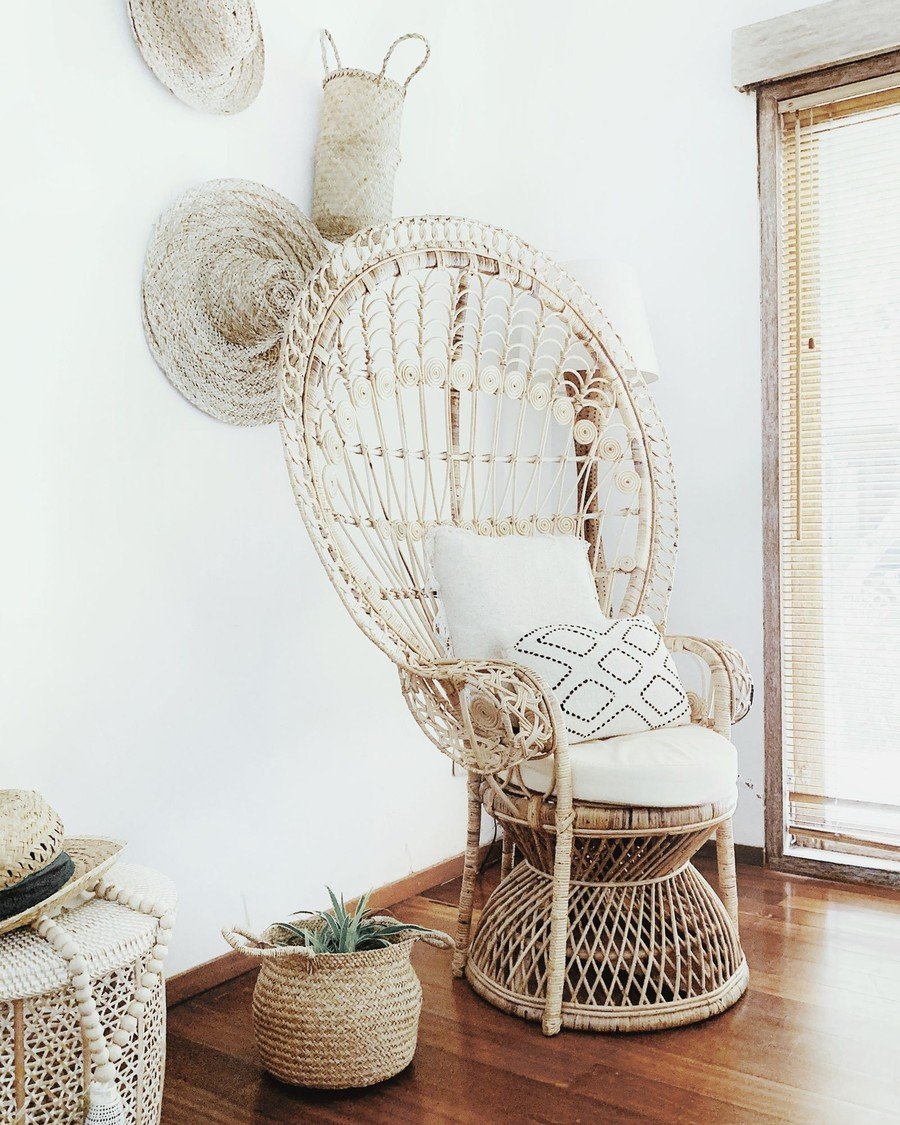
What it is: Every afrohemian room deserves one chair with presence, and the flared peacock chair — the bright woven throne in the photo — is the joyful extreme of rattan work: part seat, part sculpture, part halo for whoever sits in it. Rattan runs through the style’s furniture because it is light, strong, and repairable. Park one in a corner with a mudcloth cushion and a carved stool beside it, and you have built the room’s best reading seat in a single move.
What to check:
- Tight weave with no cracked or sprung strands
- A frame that does not creak or flex under weight
- Seat depth that fits a cushion plus a curled-up reader
- Vintage pieces: check the base ring, the usual weak point
Pro tip: A peacock chair needs empty air around it — give it a corner to itself and let smaller pieces orbit.
Avoid this: Avoid leaving rattan in strong direct sun for months; it dries, bleaches, and turns brittle.
15. A Carved Sculpture as a Shelf Statement
Style: Tabletop sculpture | Best for: Shelves and mantels | Price feel: Mid-range
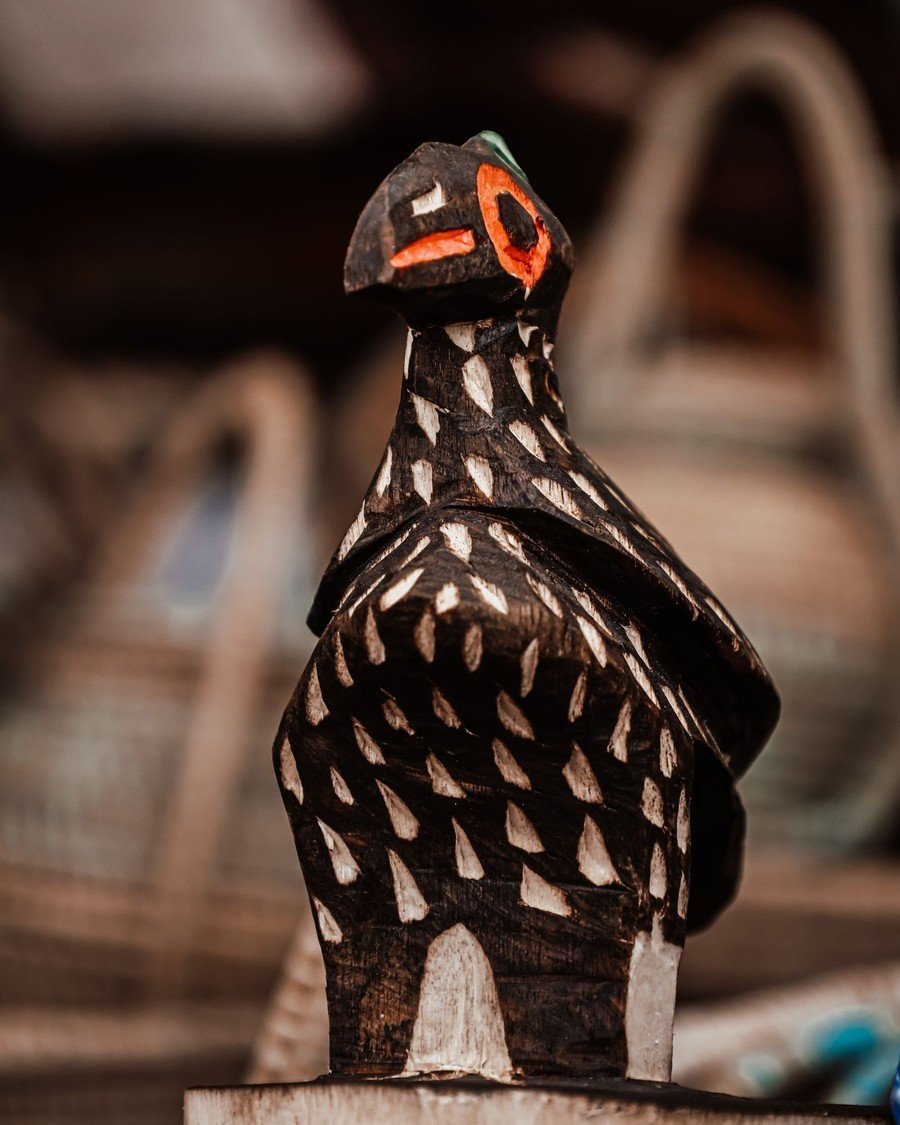
What it is: Between the big furniture and the small accessories sits the carved figure: a bird, an ancestor figure, an animal — hand-cut from a single block, like the bold black-and-white bird in the photo. Afrohemian decor has always made room for sculpture at tabletop scale, because a shelf of books and baskets comes alive the moment one carved silhouette stands among them. Choose a piece with a named tradition where you can, display it at eye level, and let it be the one purely decorative object on its shelf.
How to do it:
- Give the piece its own shelf zone, nothing within 6 inches
- Raise small carvings on a stack of art books
- Light from the side to model the carved planes
- Rotate pieces seasonally instead of adding more
Pro tip: Dark carvings disappear against dark shelves; stand them against a pale wall section or a light book row.
Avoid this: Avoid treating sacred or ceremonial objects as cute props — buy decorative carvings made for the home market.
16. A Tan Leather Pouf for Flexible Seating
Style: Soft seating | Best for: Flexible extra seating | Price feel: Mid-range
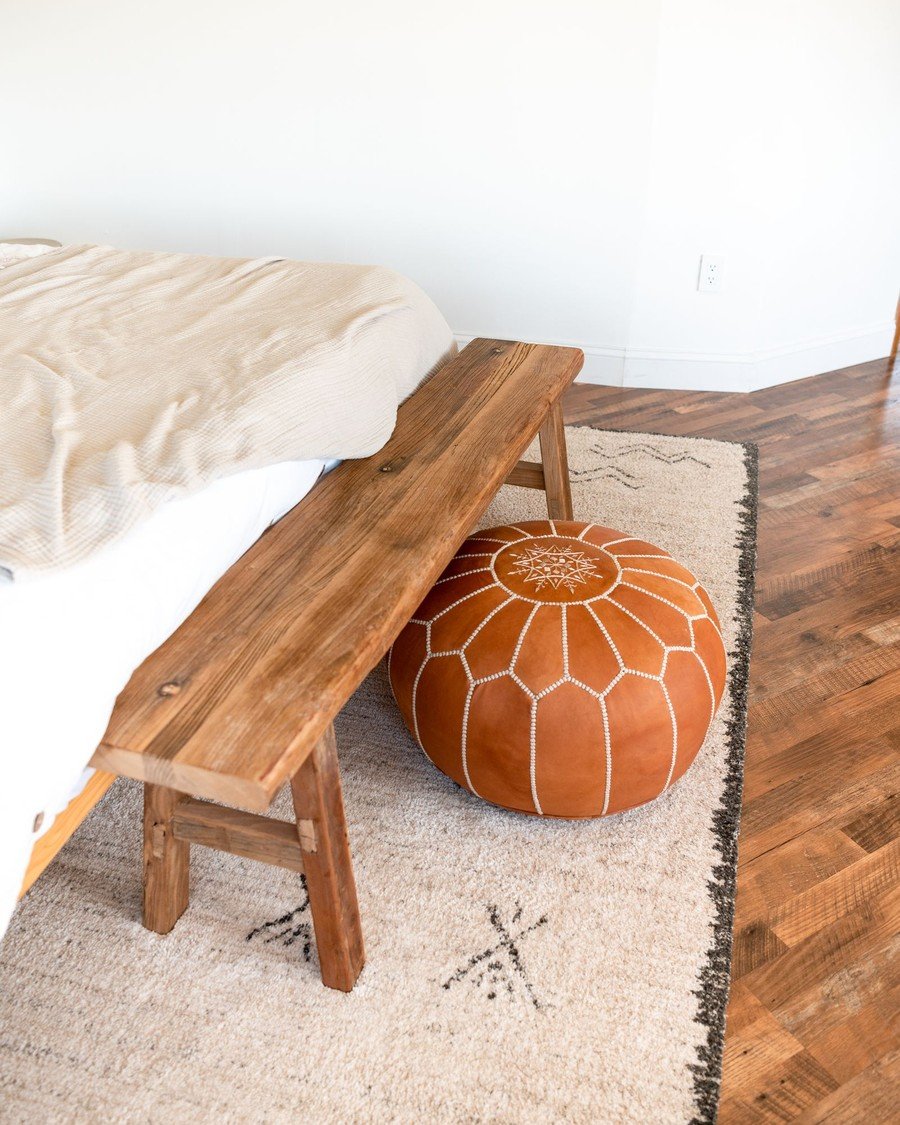
What it is: The stitched leather pouf — North Africa’s gift to every living room — is seat, footstool, side table, and floor cushion in one squashy cylinder. The bedroom corner in the photo shows a tan pouf doing quiet work beside a bench, its stitched seams and warm hide tying the wood and textiles together. Leather balances all the weaving: smooth where everything else is textured, and it ages into the room, darkening with every year of use.
What to check:
- Real leather with hand-stitched seams, not vinyl
- Firm fill — a pouf should hold an adult, not swallow them
- Tan and cognac tones warm up; black can feel heavy
- A zip base so you can top up the stuffing yearly
Pro tip: Stuff a new pouf tighter than feels right; leather relaxes within weeks into the perfect slouch.
Avoid this: Avoid placing leather in a patch of hard sun all day; it fades unevenly and can crack.
17. A Cushioned Bench Along the Wall
Style: Bench seating | Best for: Entryways and dining nooks | Price feel: Mid-range
What it is: A low bench — built-in, freestanding, or a simple wooden frame — piled with patterned cushions is the seating shape that appears again and again in afrohemian decor, from riad courtyards to the cushioned nook in the photo. It seats three where a chair seats one, hugs the wall so the room stays open, and invites you to layer every textile you own. In an entryway it catches bags and shoes; at a dining table it turns dinner into a gathering.
How to do it:
- Seat height 17–19 inches with cushions included
- Layer one long seat pad, then loose cushions against the wall
- Anchor the bench with a textile panel or baskets above it
- Choose washable covers — bench cushions work hard
Pro tip: A bench with storage underneath hides the extra cushions and throws when the room needs to look calm.
Avoid this: Avoid deep benches without back cushions; past about 20 inches of depth, everyone perches on the edge.

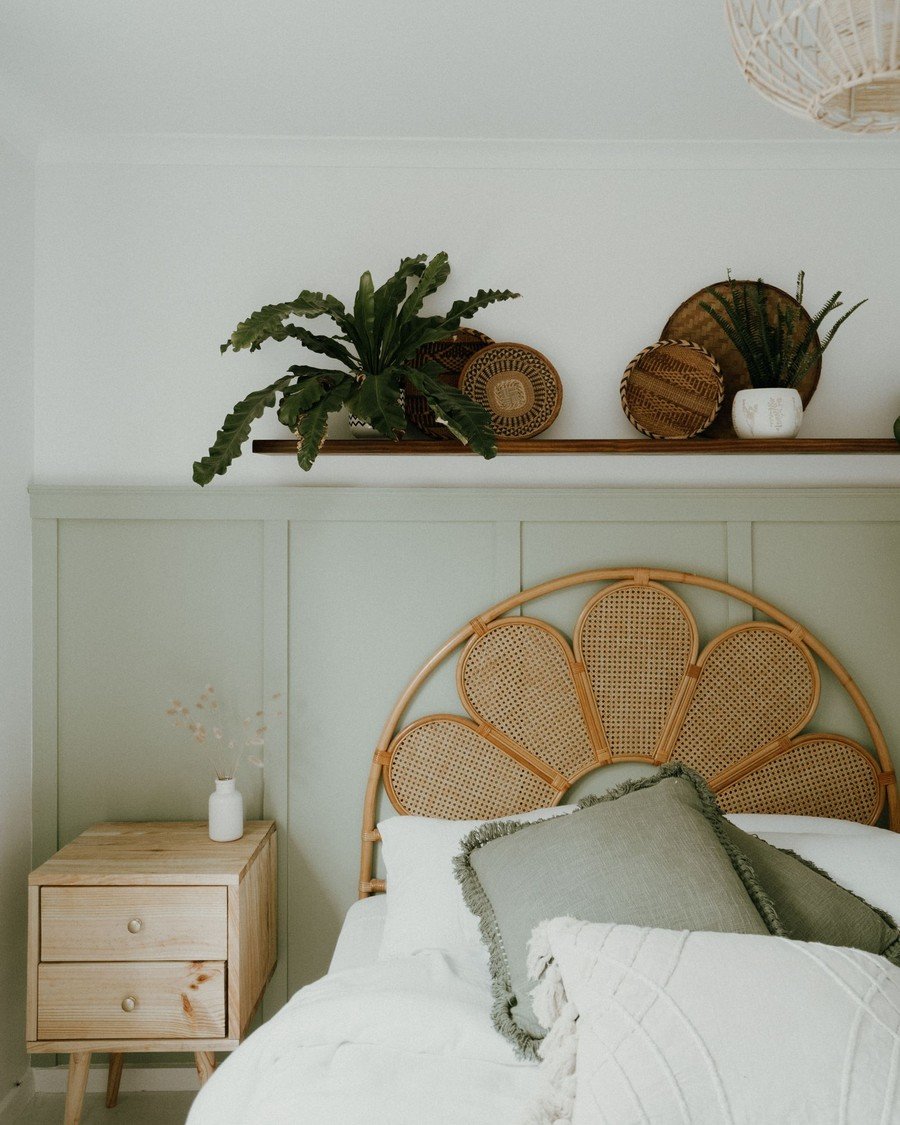
18. A Woven Rattan Headboard
Style: Bedroom furniture | Best for: A bedroom focal point | Price feel: Mid-range
What it is: If the bedroom gets one afrohemian furniture piece, make it the headboard. A woven rattan panel — the arched, sunburst-style frame in the photo — gives the bed a halo of pattern and shadow, and pairs perfectly with the adire and linen layers from the textile section. Rattan reads light and airy where upholstered headboards read heavy, so it suits small bedrooms too. Add a plant and a woven basket on the nightstand and the room is finished; nothing else needs to match.
What to check:
- Width at least the bed’s width, ideally 4 inches wider
- Even weave with no sharp cane ends at pillow height
- Wall-mount or frame-mount hardware included and sturdy
- A natural finish — painted rattan loses the texture story
Pro tip: Hang the headboard a few inches above the mattress line so the weave’s full arch shows over the pillows.
Avoid this: Avoid pairing a rattan headboard with rattan everything else — one woven hero per wall is the rule.
Rugs, Floors & Grounding Layers
Afrohemian decor is built from the floor up — literally. In the style’s source homes, rugs and mats carry as much design weight as the furniture. These five grounding layers start with a natural base and build pattern on top, one honest fiber at a time.
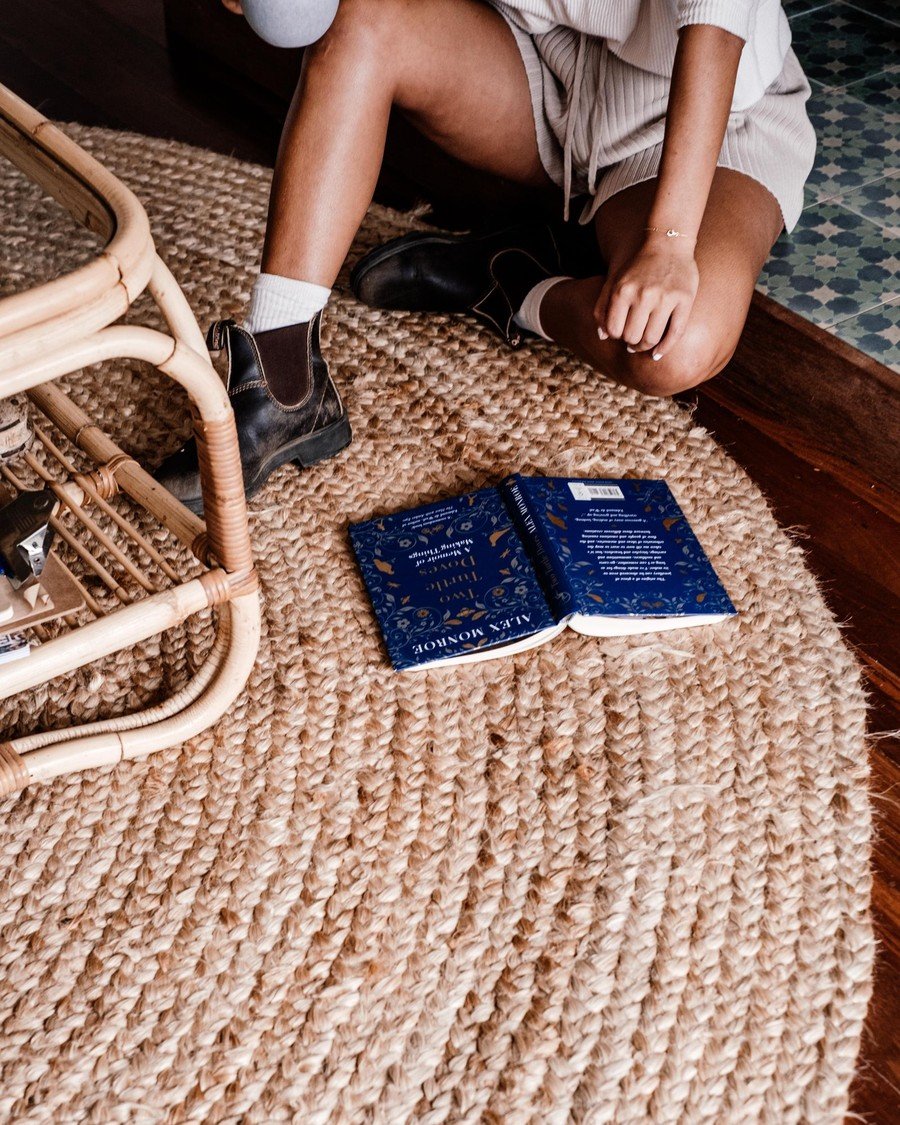
19. A Jute Rug as the Grounding Base
Style: Natural fiber rug | Best for: Grounding any room | Price feel: Mid-range
What it is: Before pattern, there is ground. A big jute rug — the round woven one in the photo, large enough to sit on with a book and a chair — lays a warm, nubby, golden base under everything else in afrohemian decor. Jute forgives busy furniture and adds the underfoot texture that makes a room feel finished. Buy it larger than feels brave: front legs of all seating on the rug, minimum. Every other layer in this section sits on top of this one, in spirit if not in fact.
What to check:
- Tight, even braiding or weaving with no loose loops
- Natural undyed jute — dyed versions can shed color
- A rug pad underneath; jute slides on hard floors
- Expect shedding for the first weeks; it settles
Pro tip: A round jute rug softens a boxy room better than any rectangle.
Avoid this: Avoid jute where it will get soaked; it is not a bathroom rug.
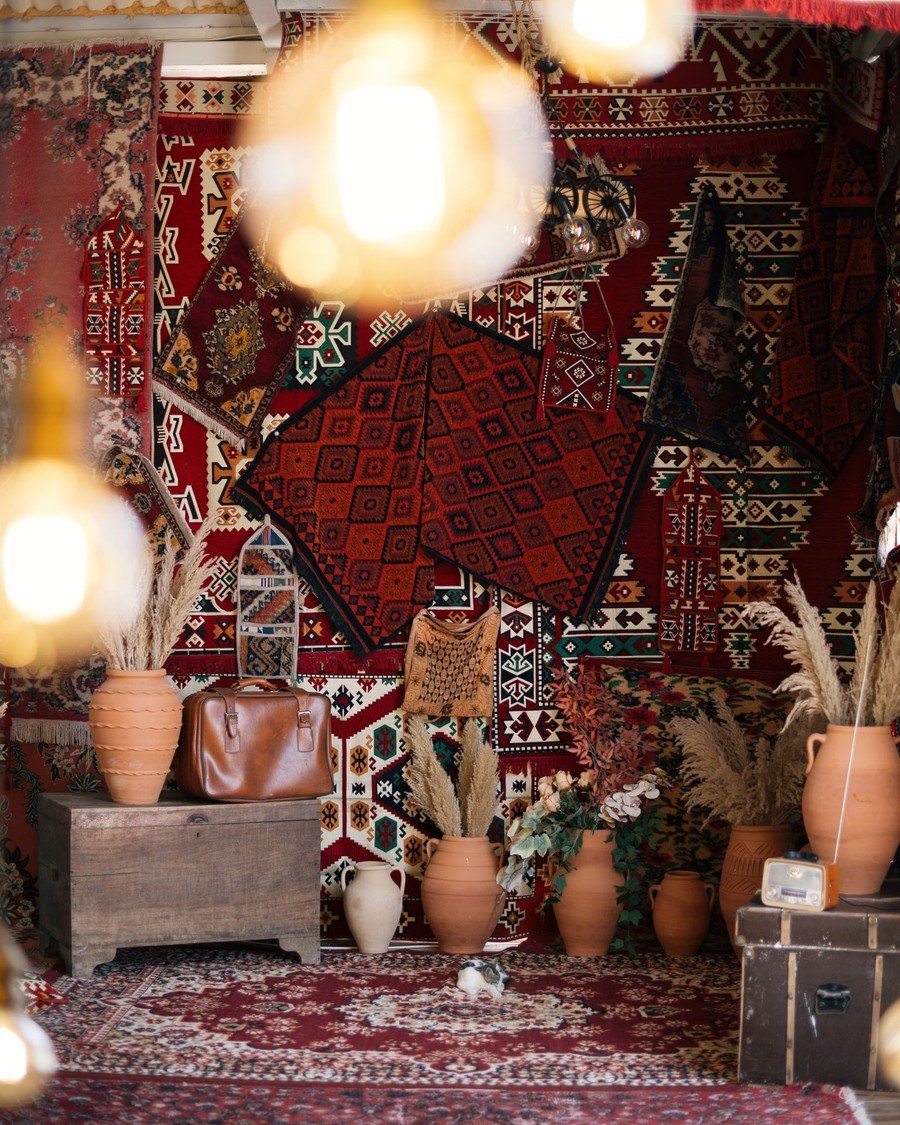
20. A Kilim-Style Rug Layered on Top
Style: Layered flatweave | Best for: Pattern and warmth over jute | Price feel: Mid-range
What it is: Layer two is where the color lands: a flatwoven kilim-style rug, smaller than the jute base, laid at a slight angle or centered under the coffee table. The room in the photo — deep red flatweaves, clay pots, vintage wood — is the layered look at full strength. In afrohemian decor, layering rugs is not indecision; it is the tradition, echoing homes where woven pieces accumulate over years. A wool or cotton flatweave in rust, burgundy, and charcoal over golden jute gives you pattern with a natural frame around it.
How to do it:
- Top rug roughly two-thirds the size of the base rug
- Leave a visible border of jute on all sides
- Pull one color from the rug into your cushions
- Use a thin pad between layers to stop creeping
Pro tip: Vintage flatweaves with a little wear are cheaper and better — the pattern is already softened to room scale.
Avoid this: Avoid two busy patterns competing; if the top rug is bold, everything above it calms down.
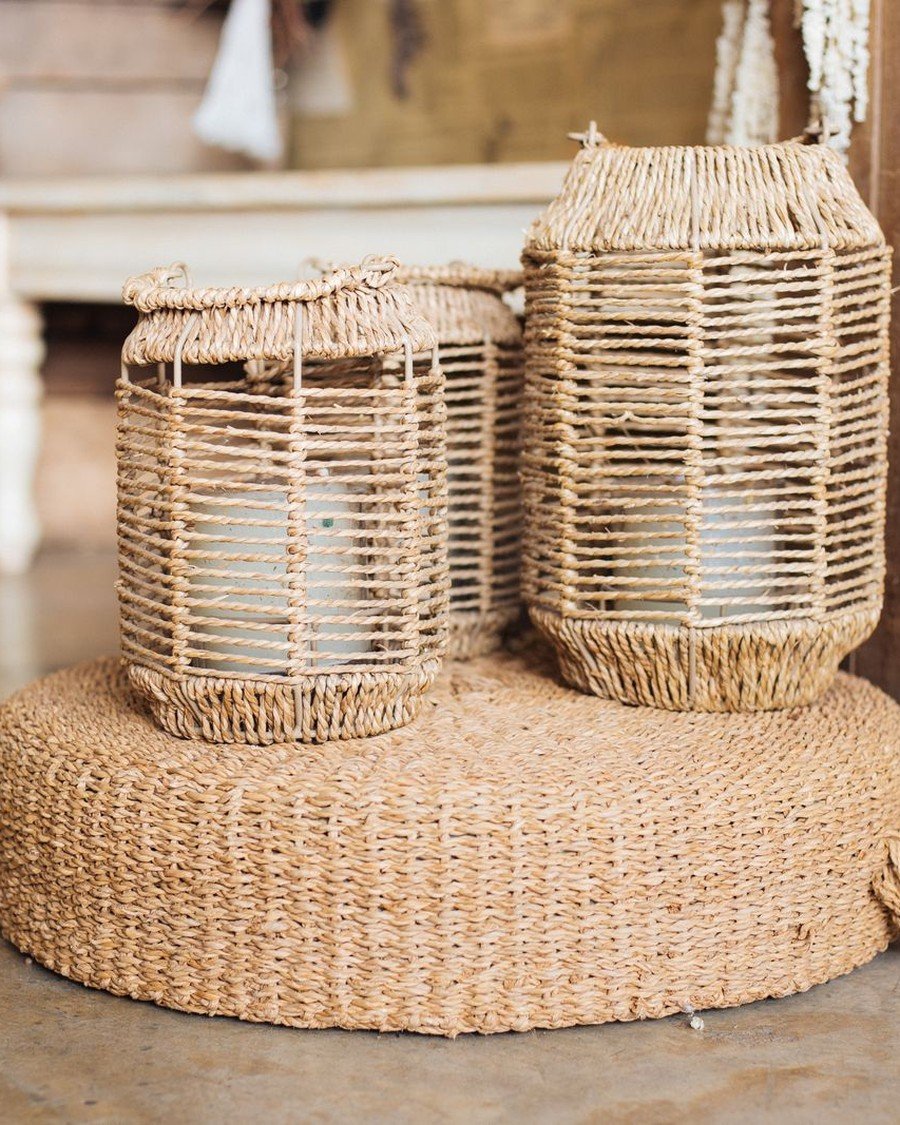
21. A Round Woven Mat Under a Reading Chair
Style: Woven floor mat | Best for: Reading corners and small zones | Price feel: Budget
What it is: Small rooms and renters cannot always commit to a wall-to-wall rug, and they do not need to: one round woven mat — like the thick jute disc in the photo, anchoring a pair of wicker lanterns — stakes out a zone and tells the eye “this corner is a place.” Woven mats in seagrass, sisal, and raffia have marked sitting places for centuries. Drop one under a reading chair or beside the bed, and a leftover patch of floor becomes a destination.
What to check:
- Diameter 4–5 feet for a chair zone, 3 feet beside a bed
- Edges bound or tightly finished so they do not fray
- Thickness under half an inch so doors still swing
- Natural fiber that can be shaken out outdoors
Pro tip: Two overlapping round mats of different sizes look deliberately styled and cover awkward floor shapes.
Avoid this: Avoid placing a round mat half under heavy furniture — the raised edge becomes a trip line.
22. Floor Cushions for Low, Relaxed Seating
Style: Floor seating | Best for: Low, relaxed gatherings | Price feel: Budget
What it is: The floor-level gathering is the social heart of this style: big cushions and woven pads — the sprawl in the photo — arranged around a low tray. Afrohemian decor keeps seating democratic and movable: cushions stack in a corner all week, then host six friends on Friday. They are also the cheapest seat you will ever buy, and in patterned covers they double as the textile layer for small rooms.
How to do it:
- Choose firm, thick pads — 4 inches or more of fill
- Anchor the group with a rug or round mat beneath
- Add one low tray or stool as the shared table
- Keep a basket nearby to gather cushions when not in use
Pro tip: Mix two patterned cushions with two plain dyed ones — the group looks styled instead of matched.
Avoid this: Avoid thin garden cushions indoors; they flatten in a month and kill the low-lounge comfort.
23. A Bold Geometric Flatweave as the Color Anchor
Style: Statement rug | Best for: The room’s color anchor | Price feel: Mid-range
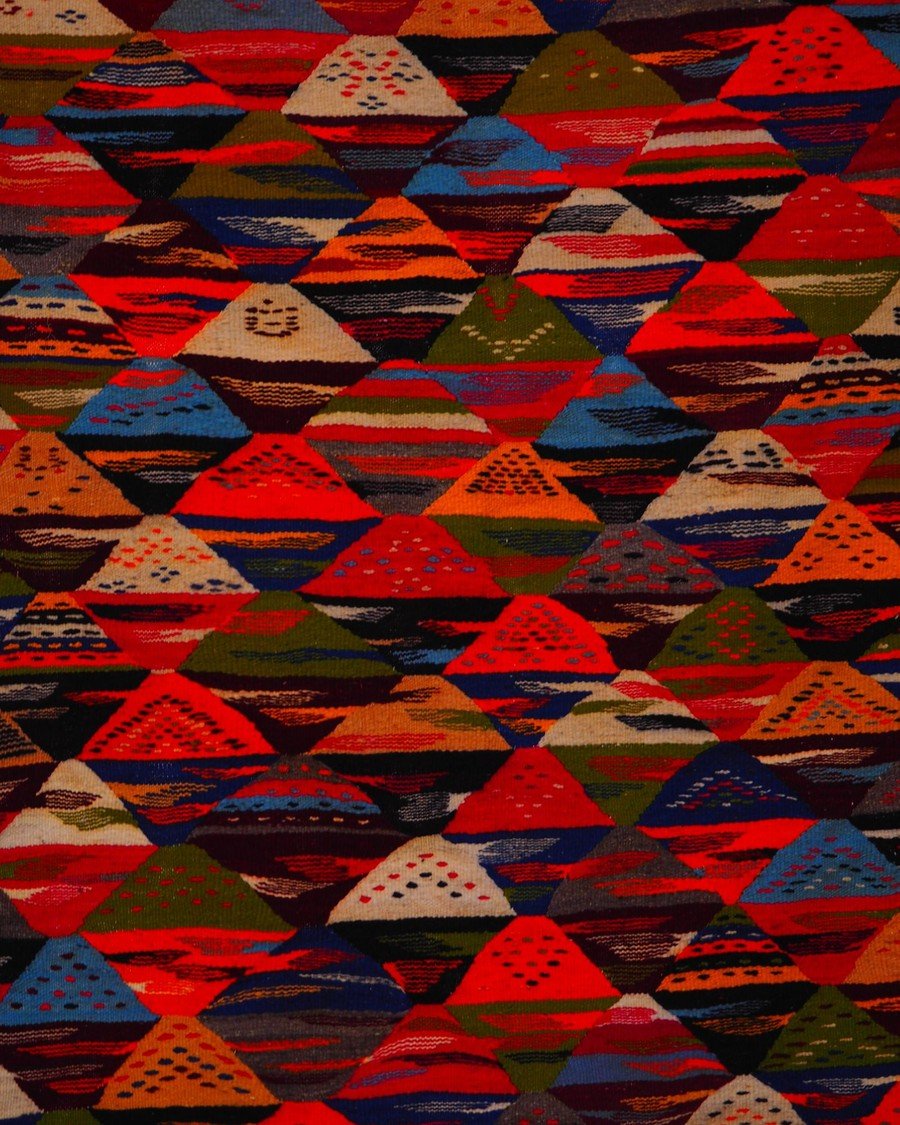
What it is: Sometimes the rug is not the base — it is the headline. A flatweave covered edge to edge in bold triangles and diamonds, like the red-and-blue geometry in the photo, can set the palette for an entire room the way a painting would. This is afrohemian decor at its most confident: one fearless woven piece, everything else natural and quiet around it. If your room has the baskets, wood, and plants but still feels beige, this is the fix — let cushions echo just two of its colors.
What to check:
- Wool or wool-blend for color depth and hard wear
- At least two colors you can repeat in textiles
- Flatweave profile so chairs and doors move freely
- Size to the seating group, not the whole room
Pro tip: Hang a too-small bold flatweave on the wall instead — see idea 9 — rather than letting it float lost on the floor.
Avoid this: Avoid a second bold pattern at eye level in the same room; the rug wins, everything else supports.
Lighting, Ceramics & Finishing Touches
The last ten percent of afrohemian decor does ninety percent of the evening work: woven light, clay, brass, and small carved things that catch the eye at arm’s length. These five are mostly small and affordable — the perfect place to buy your first handmade, fairly traded pieces.
24. A Woven Pendant Light Over the Table
Style: Woven lighting | Best for: Warm light over a table | Price feel: Mid-range
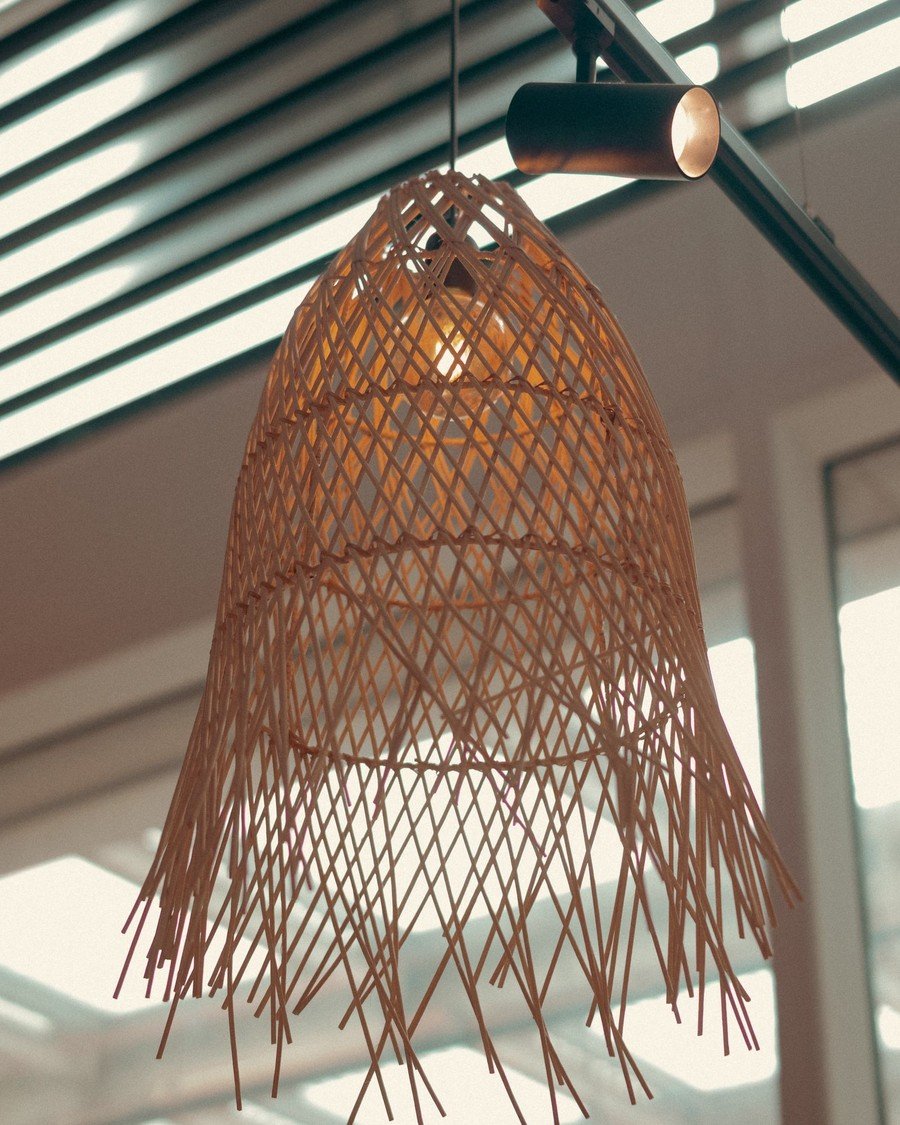
What it is: Light through weaving is the signature of afrohemian decor after dark. A rattan or seagrass pendant — the generous woven bell in the photo — throws patterned shadow and hangs a piece of craft at eye level. Over a dining table it replaces a chandelier with something warmer. Of all the lighting in afrohemian decor, this is the one piece worth wiring in properly and keeping for decades.
What to check:
- Shade 16–24 inches wide over a dining table
- Open weave for light, tighter weave for pure glow
- Warm bulb, 2700K, dimmable if possible
- Bottom of shade about 30 inches above the table
Pro tip: Two or three small pendants in a row beat one large one over long tables.
Avoid this: Avoid cool white bulbs; their blue light fights every warm fiber.
25. A Cluster of Terracotta Vessels
Style: Clay vessels | Best for: Corners and hearths | Price feel: Budget
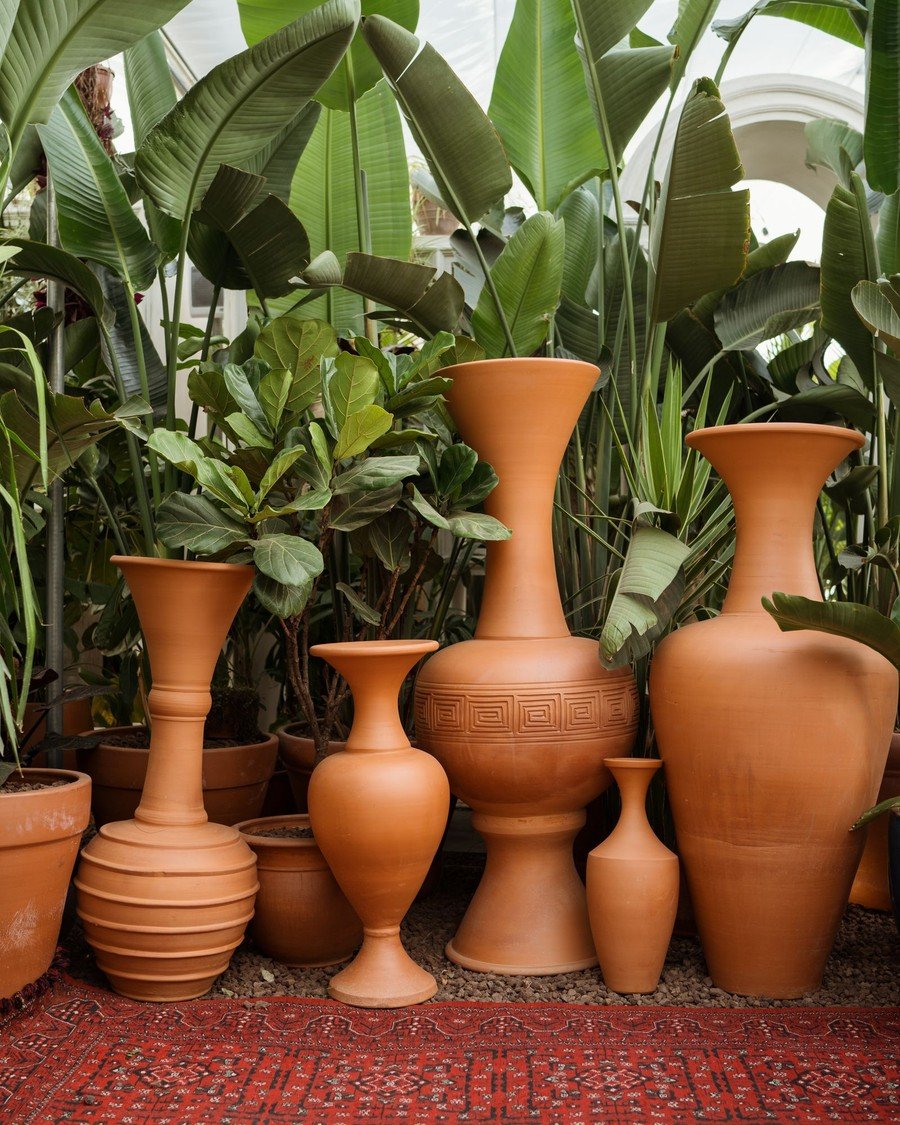
What it is: Unglazed clay is the earth, shaped. A cluster of terracotta vessels in graduated sizes — the generous gathering in the photo, shoulder to shoulder among green leaves — brings weight, matte texture, and the exact rust-clay tone the whole palette is built from. Group them empty as sculpture, or working: tall for branches, wide for a plant, small for candles. Terracotta is among the oldest materials in afrohemian decor and the cheapest way to buy something genuinely handmade.
How to do it:
- Group in threes or fives, heights clearly staggered
- Mix one patterned or burnished piece among plain ones
- Stand the cluster on a mat or tray to define it
- Use saucers under planted pots — terracotta sweats
Pro tip: Rub plain terracotta with a little olive oil on a cloth; it deepens the color to a rich, fired glow.
Avoid this: Avoid lining vessels up in a single row by size — clusters should nest, not queue.
26. Brass Candlesticks for Evening Glow
Style: Metal accents | Best for: Evening glow on tables | Price feel: Budget
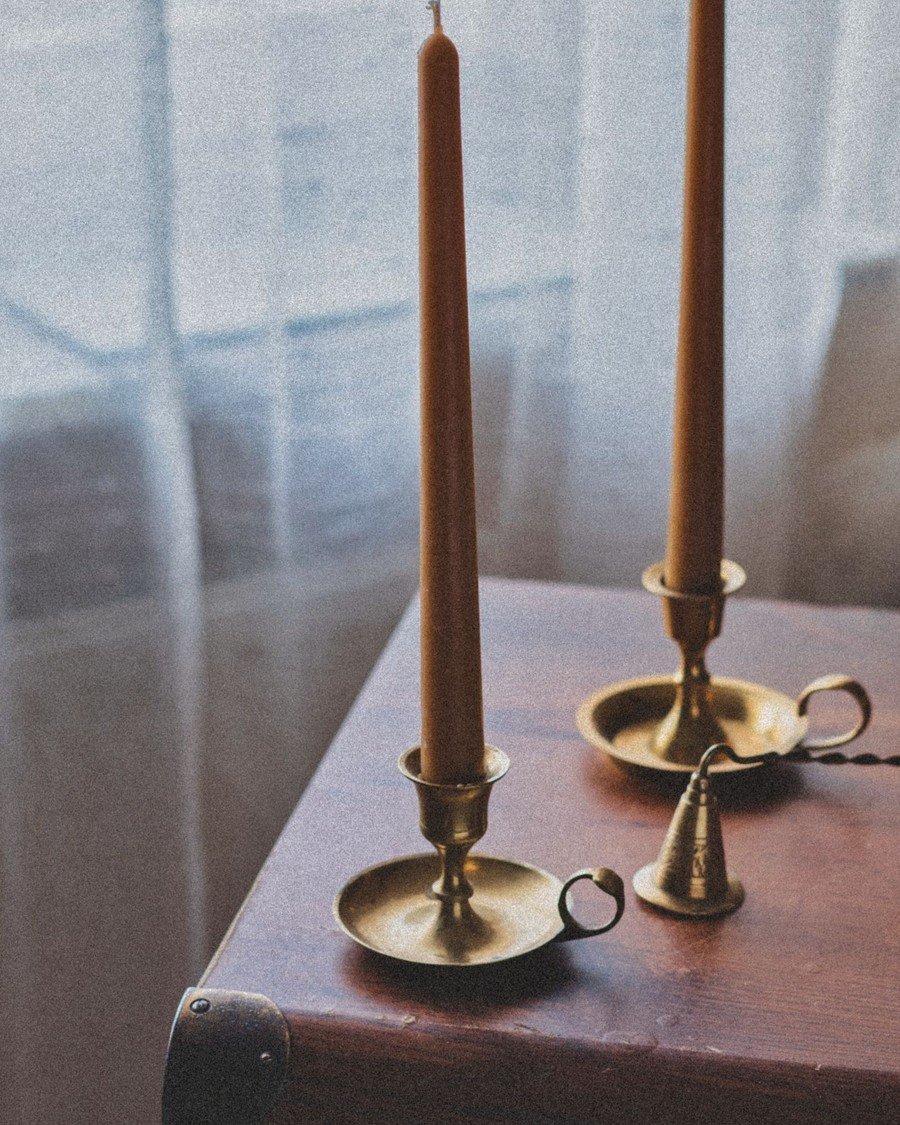
What it is: Every earthy room needs one material that catches light, and in afrohemian decor that material is brass. A pair of candlesticks — like the tall pair in the photo — threads small points of warm metal through the wood and clay. Brass suits the palette — yellow like jute, warm like terracotta — and it tarnishes into the story rather than out of it. Second-hand brass is abundant and cheap, which makes this the easiest authentic-feeling accent to collect slowly.
What to check:
- Solid brass has real heft; plated pieces feel hollow
- Mismatched pairs are fine — match height roughly instead
- Standard taper size so replacement candles are easy
- Felt pads under bases to protect wood surfaces
Pro tip: Let brass tarnish naturally in this style; a soft cloth is enough — mirror polish belongs to other rooms.
Avoid this: Avoid scattering brass everywhere; three to five touches per room keeps it precious.
27. Handmade Ceramics on Open Shelves
Style: Studio pottery | Best for: Open kitchen shelving | Price feel: Mid-range
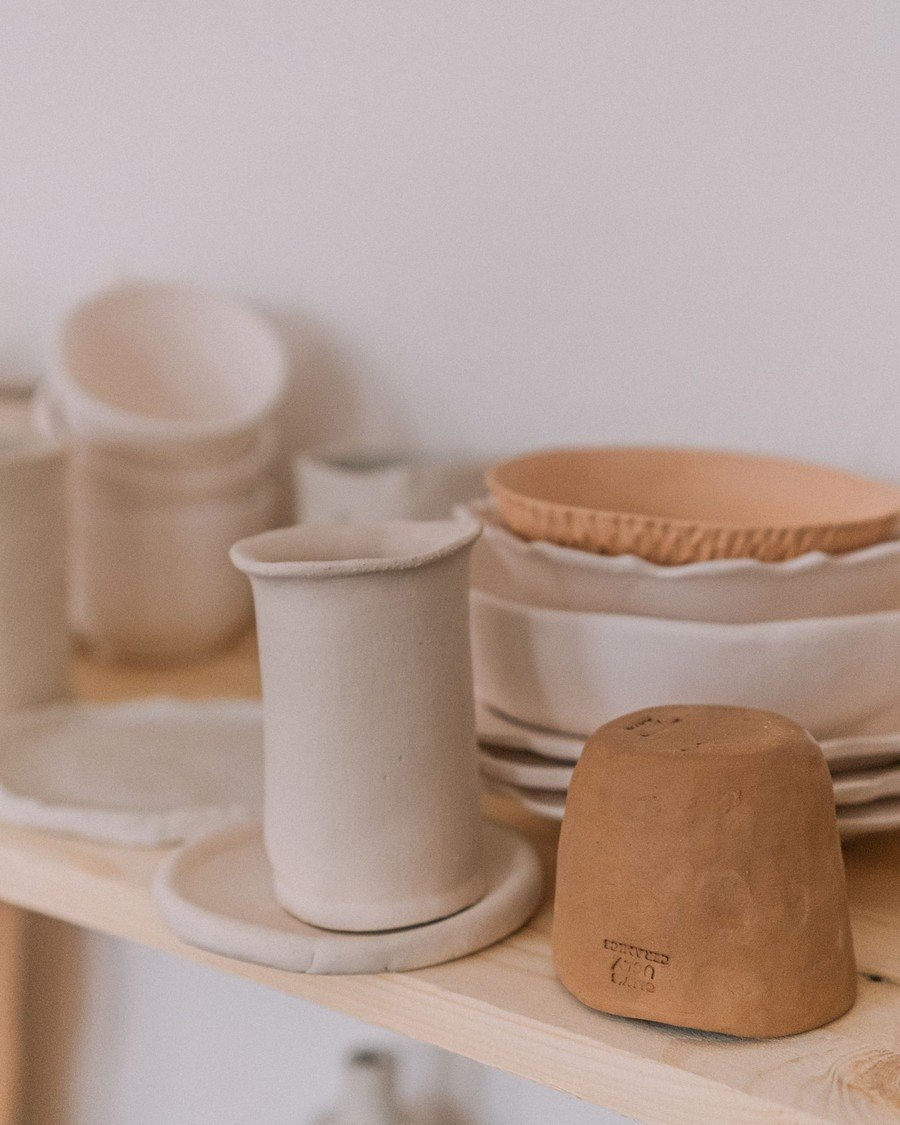
What it is: Afrohemian decor treats everyday objects as display, and nowhere is that easier than the kitchen shelf. Handmade stoneware — the softly uneven cups and vases in the photo, in cream, sand, and speckled clay — replaces matched factory sets with pieces that show the potter’s fingers. Used daily and shelved openly, they bring the palette into the room where you actually live. Buy slowly, one mug at a time, from local potters and African studios; the shelf should read as a collection, not a purchase.
How to do it:
- Keep the palette tight: cream, clay, charcoal, one accent
- Group by type — mugs together, bowls stacked, vases behind
- Leave gaps; crowded shelves hide the handmade shapes
- Use the pieces daily — pottery improves with handling
Pro tip: One dramatic handmade serving bowl on the counter does the work of a whole shelf of small pieces.
Avoid this: Avoid factory “artisan style” sets with printed-on texture; real throwing rings and glaze variation are visible up close.
28. Carved Figurines on a Shelf or Mantel
Style: Small carvings | Best for: Storytelling on shelves | Price feel: Budget
What it is: Small carved figures — mothers, musicians, dancers, animals, like the painted wooden figures in the photo — are the most personal layer of afrohemian decor, because each one tends to arrive with a trip, a gift, or a maker attached. A short row on a mantel gives a room its storytelling spark — the thing guests pick up and ask about. Buy them from carvers and fair-trade shops, and let the collection grow at the speed of your life.
How to do it:
- Group figures in one place rather than scattering singles
- Vary heights with books or small stands underneath
- Keep a maker’s name or origin note with each piece
- Dust with a soft brush; carve detail traps grime
Pro tip: Start the collection with one figure you genuinely love; a shelf of almost-right pieces never satisfies.
Avoid this: Avoid airport-grade novelty carvings with glossy varnish — matte, hand-finished wood is the real signature.

Plants & Whole-Room Looks
Finally, the layer that makes it all breathe, and two complete recipes that assemble everything. Plants are non-negotiable in afrohemian decor — green is the palette’s living color — and the whole-room looks at the end prove you can build the style in a small space or on a renter’s budget with no drilling at all.
29. Plants Dressed in Woven Baskets
Style: Plant styling | Best for: Greenery with texture | Price feel: Budget
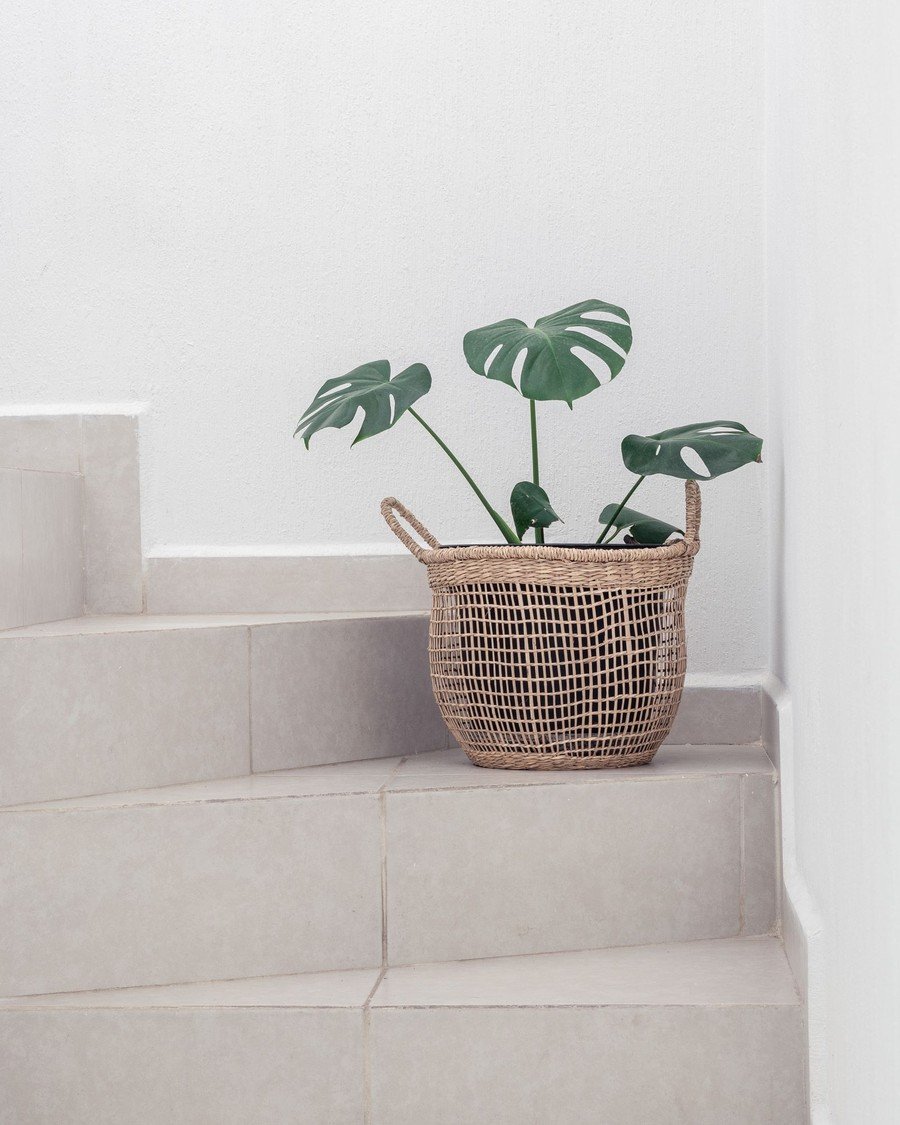
What it is: The quickest plant upgrade in existence: slip the nursery pot into a woven basket, as the photo’s monstera-on-the-stairs shows, and a plastic pot becomes a piece of afrohemian decor. Seagrass and belly baskets hide every ugly pot and add the signature weave at floor level. It is the same principle used throughout our greenery bedroom ideas — dress the pot, not just the plant.
How to do it:
- Measure the nursery pot; the basket must be 1–2 inches wider
- Line the basket with a plastic saucer to catch water
- Roll down the rim of tall belly baskets for a cuffed look
- Group three plants at staggered heights, never a lone soldier
Pro tip: A tall plant in a basket on a carved stool (idea 13) is the corner composition this whole style is famous for.
Avoid this: Avoid watering directly into an unlined basket; the weave rots from the inside within a season.
30. The Small-Room Afrohemian Look
Style: Whole-room look | Best for: Compact living rooms | Price feel: Mid-range
What it is: Small rooms do not need a smaller style — they need the style edited. This whole-room version of afrohemian decor keeps one of each layer: a jute rug, a mudcloth throw, a tight cluster of three baskets, one rattan chair, one plant in a basket. The cozy corner in the photo — woven chair, small table, art, and greenery in a few square feet — is the proof of concept. For a warm wall behind it all, borrow a clay tone from our living room accent wall ideas and paint just the one wall.
How to do it:
- Choose one hero: the chair or the basket wall, not both
- Keep the palette to three colors so the room breathes
- Use the walls, not the floor, for pattern and storage
- Every piece must earn its footprint twice — stool as table
Pro tip: A round jute mat (idea 21) defines the small room’s “living zone” better than any rug rectangle.
Avoid this: Avoid shrinking every pattern to match the room; one full-scale textile keeps a small space feeling generous.

31. The Budget Renter Afrohemian Look
Style: Whole-room look | Best for: Deposit-safe decorating | Price feel: Budget
What it is: No drilling, no painting, no landlord conversations — and still unmistakably afrohemian decor. The renter version leans on everything portable: covers and a throw, floor cushions and a flatweave, baskets on existing hooks, plants in baskets, and a pouf that moves out when you do. The eclectic apartment in the photo shows the energy to copy: layered color, a big plant, nothing built in. Second-hand rattan, thrifted brass, and one good textile carry the whole look for less than a single new sofa.
How to do it:
- Spend first on textiles — they move house with you
- Use leaning and propping instead of nails for wall pieces
- Buy furniture second-hand; rattan and wood clean up well
- Keep boxes for baskets and shades — they are fragile to move
Pro tip: Photograph your finished room before moving out; it becomes the template you rebuild — better — in the next home.
Avoid this: Avoid “temporary” plastic storage furniture; one wooden bench (idea 17) outlasts five moves and five plastic units.
Buying Guide: How to Choose Authentic Afrohemian Decor
Authentic afrohemian decor starts with a simple question: who made this, and were they paid fairly for it? The style is built on living craft traditions, mostly African and diaspora makers working by hand. Wherever you can, buy from African and Black-owned businesses, artisan cooperatives, and fair-trade importers who name their makers and pay documented fair prices. A mudcloth panel woven in Mali costs more than a factory copy — and the difference is the entire point: your money keeps a tradition alive instead of copying its surface.
Materials tell the truth faster than labels. Real bogolan (mudcloth) is handwoven cotton with a matte, earthy smell and slight irregularities in the pattern; real kente is strip-woven with a firm, almost ribbon-like hand; adire shows the soft, slightly crackled edges of hand-drawn resist. Carved wood should show tool marks and honest weight, baskets should be plant fiber all the way through, and pottery should carry throwing rings and glaze variation. Perfection is the factory’s signature — in afrohemian decor, small irregularities are the maker’s.
Use this reference to shop textiles by name — knowing the cloth turns a vague search into confident buying.
| Textile | Origin | Best Use |
|---|---|---|
| Bogolan (mudcloth) | Mali | Throws, cushion covers, wall panels |
| Kente | Ghana | Table runners, accent strips, framed pieces |
| Adire | Nigeria | Bed layers, curtains, upholstery accents |
| Aso Oke | Nigeria (Yoruba) | Ceremonial-weight throws, bench and chair covers |
| Kuba cloth (raffia) | Congo region | Wall panels, cushion fronts, table mats |
| Seagrass & sisal | East Africa | Baskets, mats, planters, lampshades |
Budget in tiers. Under $50: cushion covers, small baskets, terracotta, brass, and figurines — the finishing layer. From $50 to $200: real mudcloth throws, adire yardage, woven pendants, leather poufs, and good flatweaves — the textile layer that changes a room. Above $200: carved stools, statement chairs, large vintage rugs, and substantial sculpture — buy these rarely, buy them once, and buy them from makers or dealers you can name. A room built tier by tier, over a year, will always beat a room bought in a weekend.
Frequently Asked Questions
What is afrohemian decor?
Afrohemian decor is a fusion of African craft traditions and bohemian decorating: African textiles like mudcloth, kente, and adire; woven baskets and natural fibers; carved wood; terracotta and brass — layered with boho’s relaxed, collected, plant-filled ease. The style centers African and Black makers and design heritage rather than treating them as an accent. Think earthy palette, handmade everything, and rooms gathered over years.
How is it different from regular boho?
Regular boho mixes global influences freely — Moroccan, Indian, macramé-everything — with no single center. Afrohemian decor has a specific center: African textiles, carving, basketry, and color palettes, with named traditions (bogolan, kente, adire) and a commitment to buying from African and Black-owned makers. The palette is also more disciplined — earth minerals and indigo rather than boho’s pastels — and the furniture leans sculptural: carved stools and figures instead of purely soft, slouchy pieces.
What colors define afrohemian decor?
The palette comes from earth and plant dye: terracotta and clay red, ochre and turmeric gold, charcoal and black, cream and undyed cotton, warm wood browns — plus one deep accent, indigo blue. Green arrives mostly through plants rather than paint. If a color could not be dug up or dyed from a plant, it probably does not belong. Keep walls pale and warm so the textiles carry the color, and repeat each strong color at least twice in a room.
Is afrohemian decor expensive?
It can be built at almost any budget, because the style values handmade and second-hand over new and matched. Cushion covers, baskets, terracotta, and brass are inexpensive, especially thrifted; textiles cost more as authenticity rises; carved furniture is the investment tier. The renter look in idea 31 shows a full room on the smallest tier. What afrohemian decor does ask for is patience — buying slowly from real makers costs more per piece than factory copies, but each piece is kept for years.
Where can I buy authentic mudcloth and adire?
Start with fair-trade importers and African and Black-owned textile shops, online marketplaces with verified artisan sellers, and African art galleries in your city — all should name the country, the tradition, and ideally the makers. Specialist textile dealers sell vintage bogolan and adire by the panel. Ask questions before buying: handwoven or printed, hand-dyed or mill-dyed, and who wove it. A seller who can answer is worth the higher price; one who cannot is selling a copy.
Can afrohemian decor work in a small or minimal home?
Yes — arguably better than in a large one, because the style’s warmth comes from texture, not quantity. Idea 30 shows the edited recipe: one textile hero, one basket cluster, one carved or rattan piece, one plant, all inside a tight palette. Minimal homes should keep the same layers and simply choose quieter versions — undyed mudcloth instead of bold prints, a single basket instead of a wall — and afrohemian decor will read as warmth rather than clutter.
A home in this style is never really finished, and that is its charm: a basket from a market trip, a cloth from a maker whose name you know. Start with one textile this week — a throw, a runner, a pair of cushion covers — and let the room gather itself around it. Afrohemian decor rewards patience like no other style, because every layer arrives carrying a place, a tradition, and a pair of hands. Your warmest, most soulful room is not bought. It is collected.
