
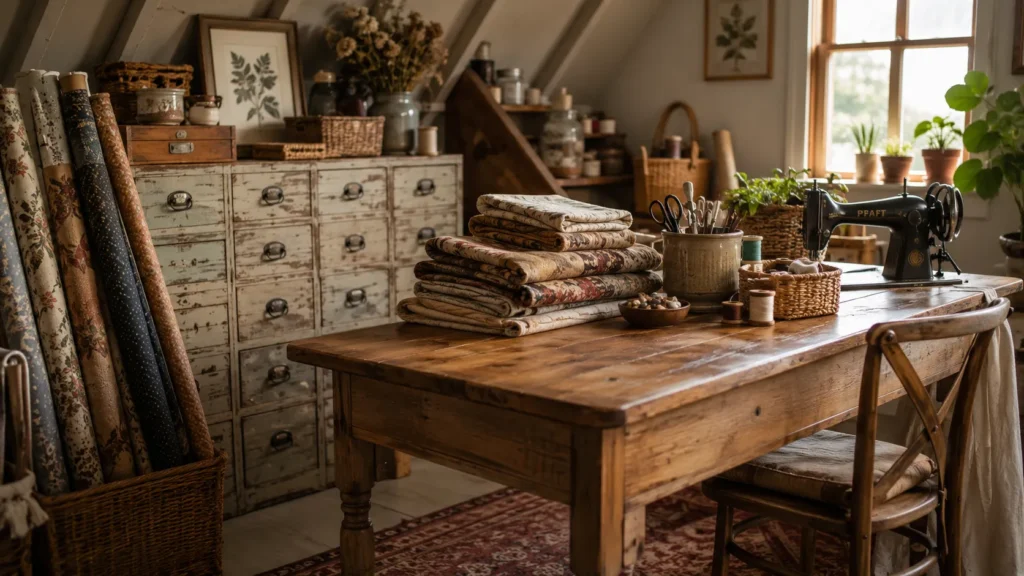
Your craft room does not need more square footage. It needs more character, and that is exactly what vintage delivers. I have walked into dozens of tiny closets and dining room corners that felt cramped until one chippy dresser or worn sewing table walked in and gave the whole space a personality. New furniture just sits there in a small room, but old pieces do the visual heavy lifting for you. So this is not another pretty photo dump. I am giving you the ideas that actually work on a real budget, plus the honest maintenance details nobody else bothers to mention.
My Design Notes
I learned this lesson the hard way on a client’s craft room in a converted attic space outside Boston. We had maybe 70 square feet to work with, and my first instinct was to go small and matchy with new furniture from a big box store. It looked fine. It also looked like nothing.So we pulled out a scarred oak library table I’d been sitting on for months, added a flea market apothecary cabinet with half its original paint gone, and the whole room clicked into place. My client called it “the room that finally feels like mine.”That’s the thing about vintage pieces in small rooms they don’t need company to look intentional. One good piece with history does more work than five coordinated new ones ever will.
18 Timeless Vintage Furniture Strategies for a Stunning Small Craft Room
1. An Antique Sewing Table as Your Main Work Surface
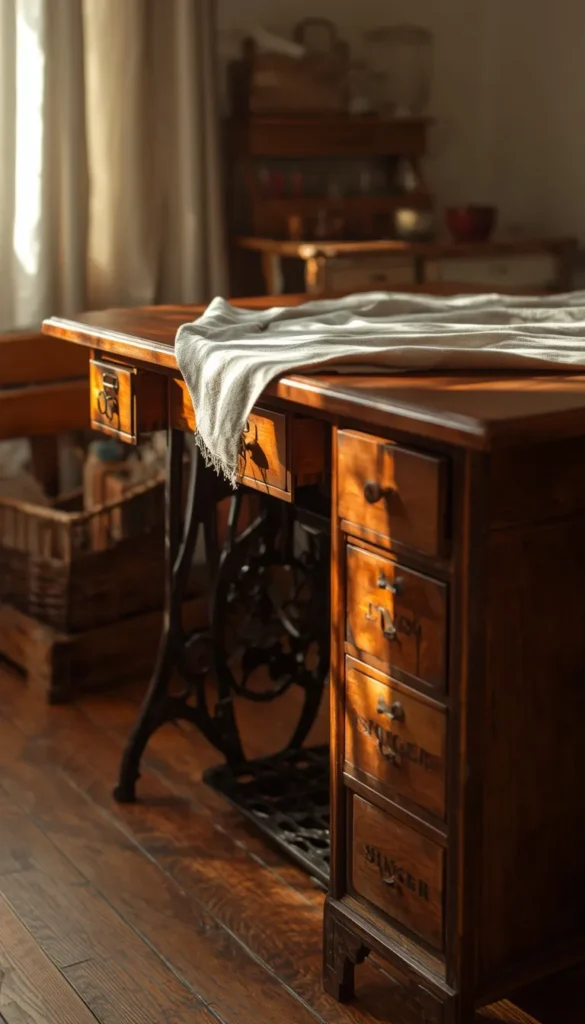
Before sewing machines got boxy and modern, tables were built specifically around the task, with drawers sized for spools and a surface just deep enough for fabric to lay flat without swallowing your whole room. Finding an old Singer cabinet at an estate sale gives you built-in storage and a genuine focal point in one piece. I always tell clients to check the leg clearance before buying though, since some antique models sit lower than modern chairs expect.
A few things worth checking before you commit:
- Drawer glide condition, since old wood warps
- Surface flatness for cutting fabric
- Whether the machine well can double as extra storage
2. A Vintage Dresser Repurposed for Fabric and Supply Storage
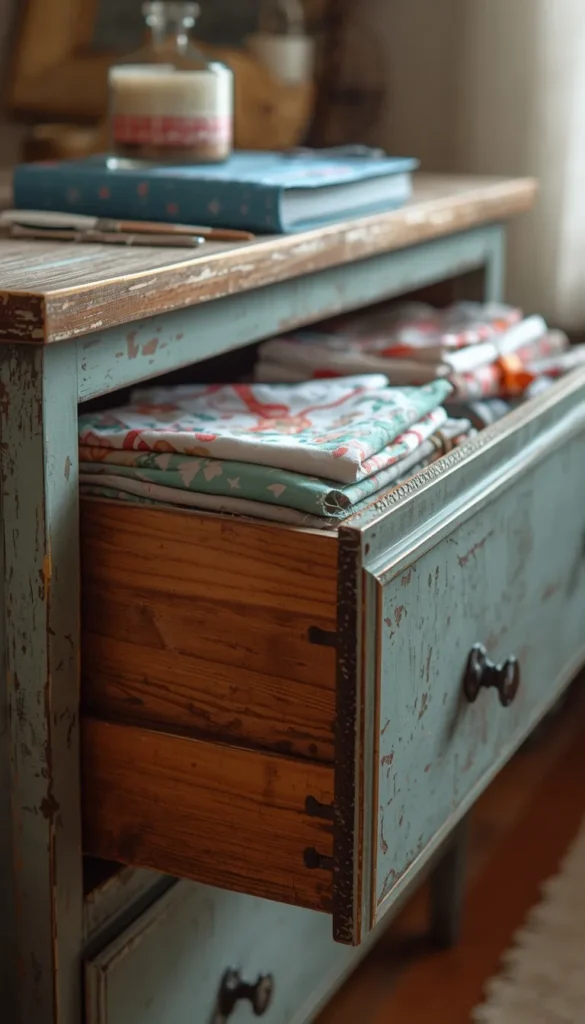
Dressers are quietly the best craft room investment you can make, and most people walk right past them at thrift stores because they only picture them in a bedroom. Every drawer becomes a sorted category. Fat quarters in one, ribbon and trim in another, and your messiest supplies hidden completely from view. I’ve furnished three separate craft rooms this way and never once needed to buy a single organizational bin.
One thing to watch out for is drawer depth. A dresser built in the 1950s often has shallower drawers than what you’re used to, which actually works in your favor for flat storage like paper or fabric, but makes it a poor choice if you’re trying to stash bulky items like yarn skeins or a stand mixer sized cutting tool.
3. A Weathered Farmhouse Table for Cutting and Layout
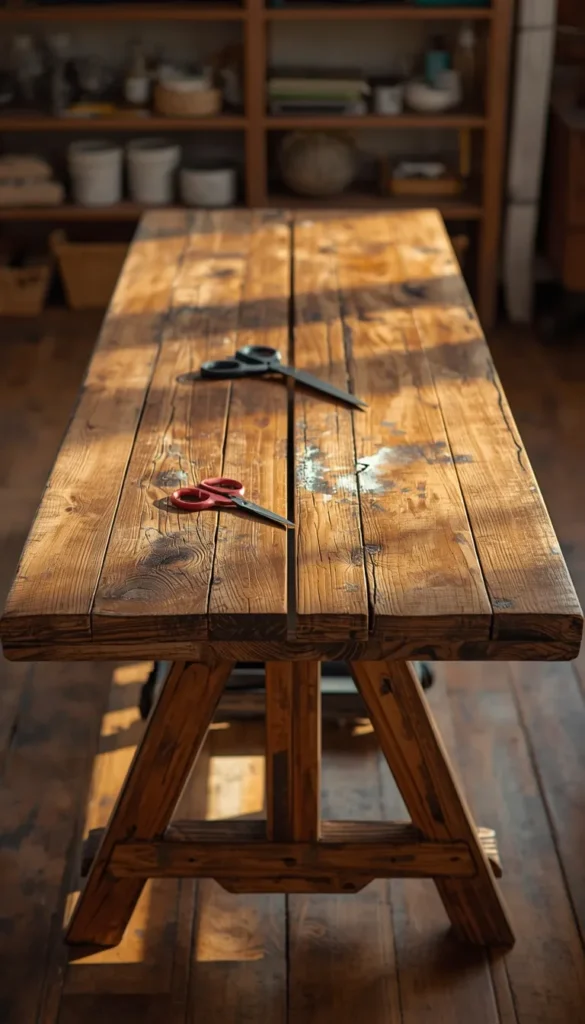
If your craft room does double duty, maybe it’s also where the kids do homework or you occasionally eat breakfast, a farmhouse table earns its keep in a way most craft furniture can’t. The wide plank top gives you real cutting space, and the worn patina means you never have to baby it. Spill some paint, nick it with scissors, it only gets better looking with age.
A quick trick I’ve learned is to hunt for tables with a trestle base instead of four corner legs. It frees up knee room and lets you slide a rolling cart underneath for extra storage without anything bumping into legs.
4. An Apothecary Cabinet for Small Parts Organization
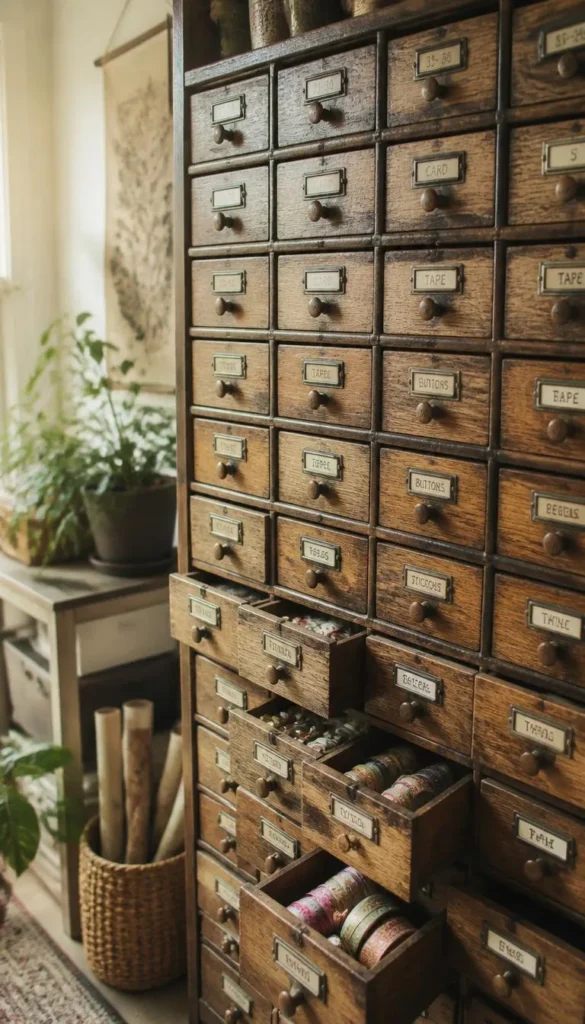
Old pharmacy and hardware store cabinets, the kind with dozens of tiny labeled drawers, were basically designed for craft supplies before craft supplies existed. Beads, buttons, washi tape, tiny embellishments. Everything gets its own home and stays visible from the front. These cabinets have become popular enough that prices have climbed, so I’d recommend checking architectural salvage yards before furniture shops, since the markup there tends to be lower.
The downside is weight. A real antique apothecary cabinet is often solid oak or chestnut, which means moving it once you’ve placed it is not a casual decision. Measure your doorway twice before you fall in love with one.
Which of these vintage pieces do you think would actually fit that empty corner in your craft room right now?
5. A Vintage Trunk as Hidden Storage and Extra Seating
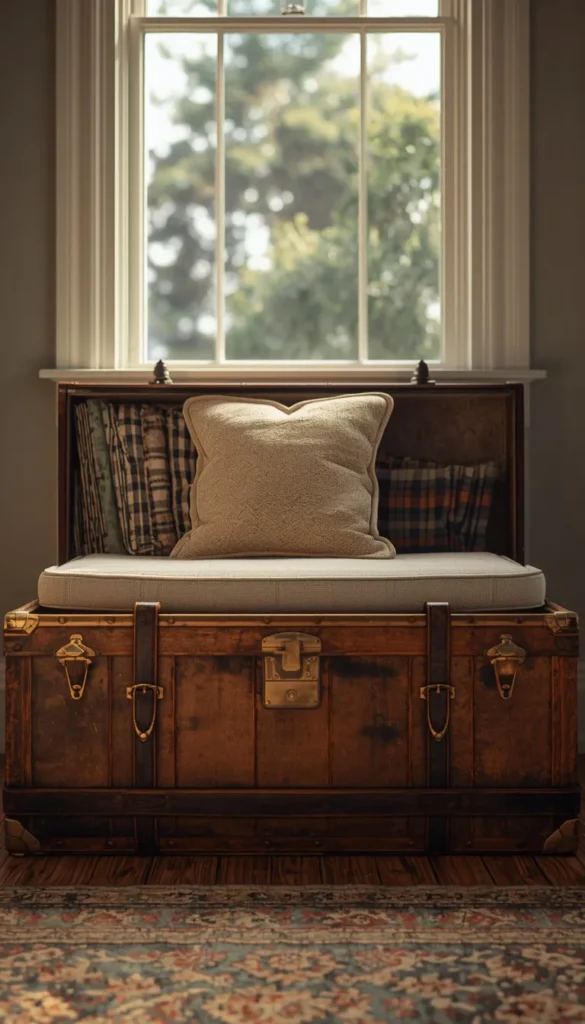
A steamer trunk solves two problems at once in a small craft room. It swallows bulky supplies like fabric bolts or unfinished projects, and the flat top gives you a spot to sit when you need a break from standing at your table. I’ve placed these under windows in more than one client’s space, since they double as a window seat when topped with a cushion.
Older trunks sometimes carry a musty smell from decades in storage. Airing it out in the sun for a full day before bringing it inside usually clears that up, though a persistent smell is a sign the interior lining may need replacing.
6. A Distressed Ladder Shelf for Vertical Storage
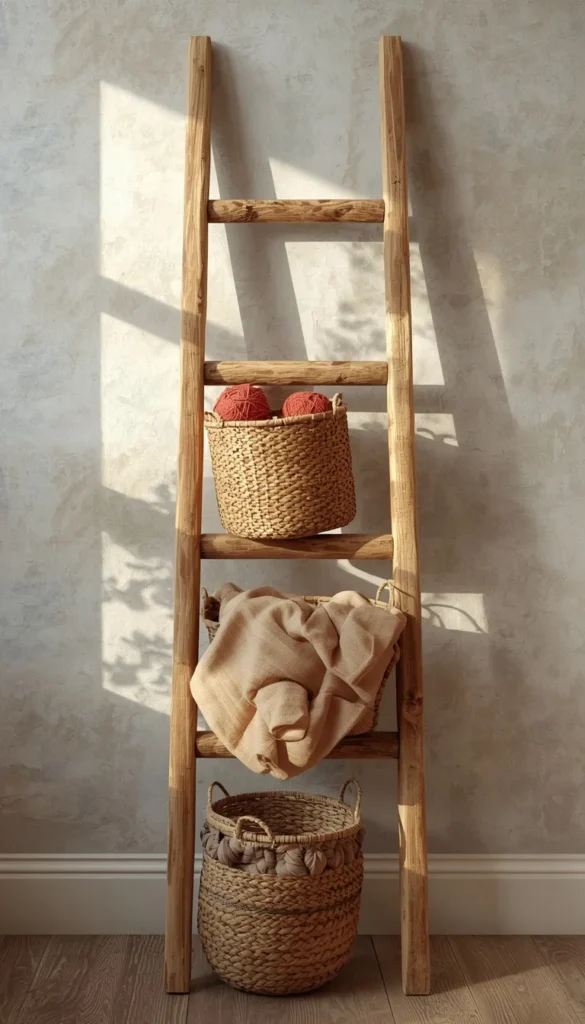
Small rooms live or die by how well you use your walls, and an old wooden ladder, the real kind, not the decorative reproduction, leaned against a wall gives you tiered storage without eating any floor space. Baskets of yarn or fabric rolls slide right onto each rung.
- Look for ladders with wide, flat rungs rather than rounded ones for stability
- Secure the top to the wall with a discreet strap if you have kids or pets in the house
- Sand any splinters before styling baskets directly on the wood
Top 6 vintage craft room ideas
| Idea | Estimated Price | Maintenance |
|---|---|---|
| Antique Sewing Table | $150 – $450 | Medium |
| Vintage Dresser for Storage | $80 – $300 | Low |
| Apothecary Cabinet | $400 – $1,200 | Medium |
| Chippy Painted Hutch | $200 – $600 | Medium |
| Reclaimed Barn Door Fold-Down Table | $100 – $350 (plus hardware) | Low |
| Weathered Workbench | $50 – $200 | Low |
7. A Chippy Painted Hutch for Displaying and Storing Supplies
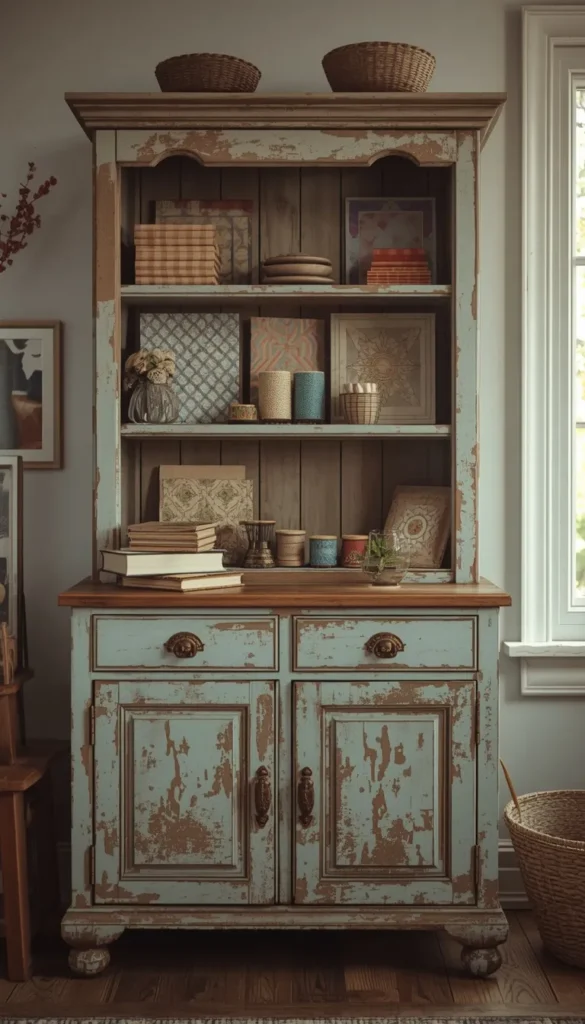
I’ve noticed that a hutch with peeling paint, what most people would call a flaw, is exactly what makes a small craft room feel curated instead of thrown together. The open top shelves let you display pretty supplies like patterned paper or colorful thread spools, while the closed bottom cabinets hide the less photogenic stuff.
One thing I always mention to clients is that chippy paint on furniture made before 1978 can contain lead. It’s not a reason to avoid the piece, but it does mean you should seal the surface with a clear coat rather than sanding it down, since sanding creates dust you don’t want to breathe in.
8. A Vintage Card Table That Folds Away When Not in Use
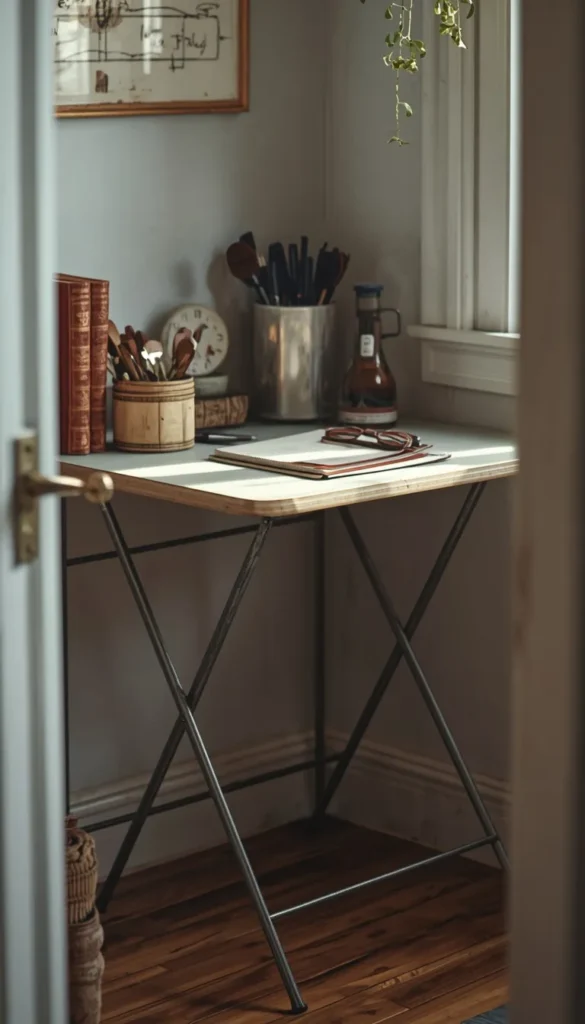
If your craft room is really a corner of another room, a card table is the most honest solution available. Set it up when you need it, fold it flat and slide it behind a door or under a bed when you don’t. Old card tables from the 1940s and 50s tend to have sturdier legs than what’s manufactured today, so they hold up better to repeated folding and unfolding over the years.
If you had to pick just one piece from this list to start with on a tight budget, which one would it be?
9. A Salvaged Church Pew for Extra Seating and Storage
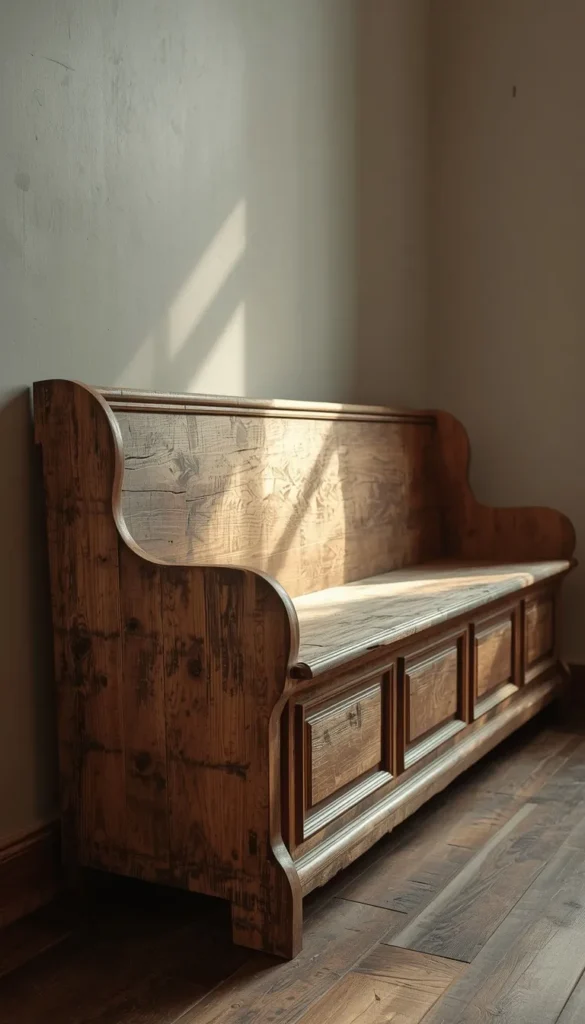
A church pew sounds like an unusual choice for a craft room, but the long bench seat is perfect when you want a second person crafting beside you, and many of them have a hinged seat that lifts to reveal storage underneath. I placed one in a Connecticut client’s scrapbooking room last year, and it became the spot her daughter parks herself every weekend.
Pews are long, often six feet or more, so they only make sense if your room has a full wall to dedicate. Measure before you fall for one at a salvage sale, because cutting a pew down is a bigger project than most people expect.
10. An Old Dress Form as Functional Decor
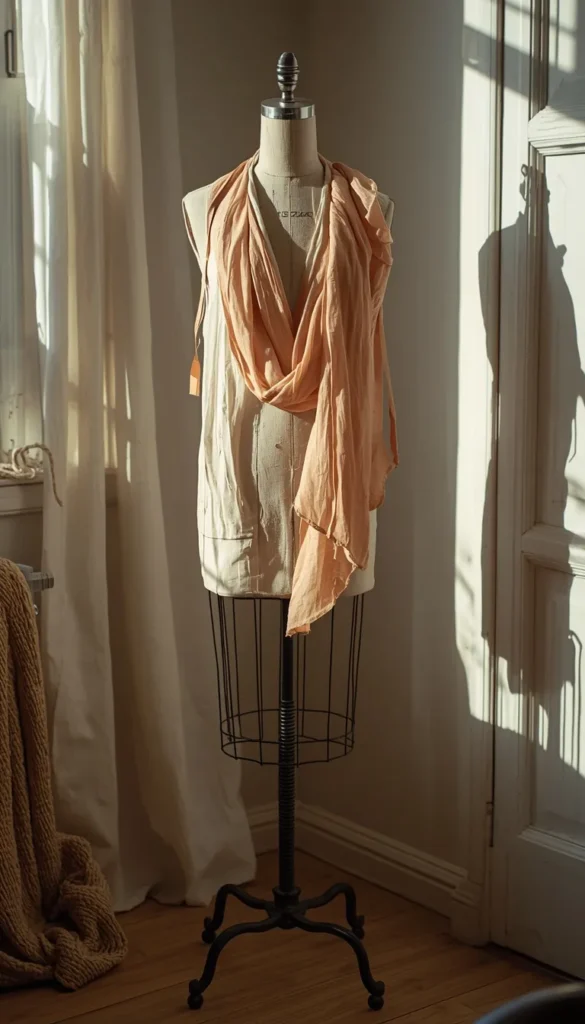
If you sew at all, a vintage dress form isn’t just decoration, it’s a working tool that also happens to look beautiful sitting in a corner. Drape ribbon over it, hang a project in progress, or use it to check hemlines without needing a second person around.
A few sizing notes worth knowing:
- Adjustable forms from the 1960s onward are more practical than fixed antique ones
- Wire and paper mache forms are lighter and easier to move than the older cloth covered kind
- Check the base for wobble before buying, since a shaky form is more frustrating than charming
11. A Weathered Workbench for a Sturdy, No-Fuss Work Surface
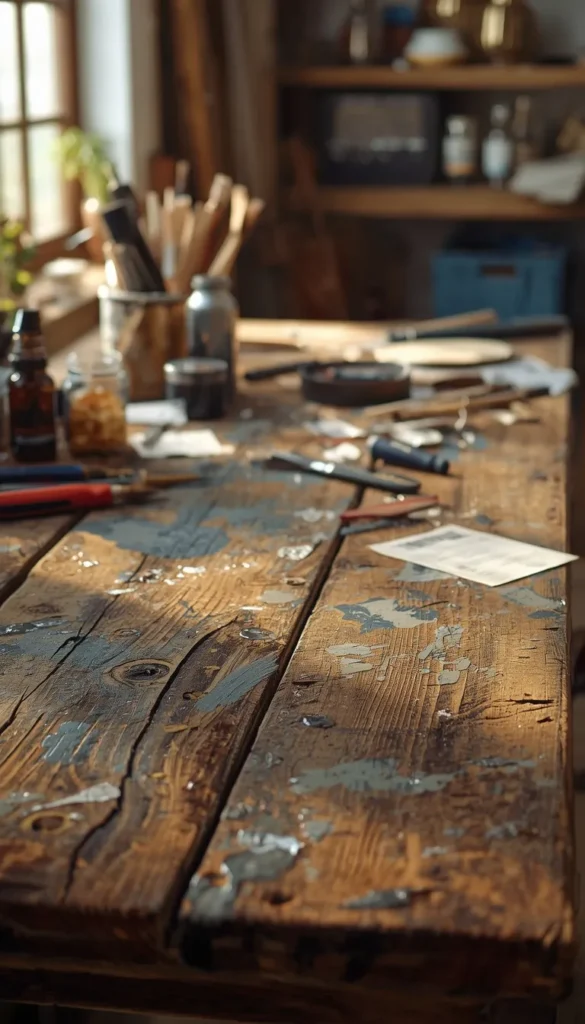
Not every piece in your craft room needs to be pretty first and functional second. An old workbench, the kind that used to live in a garage or barn, gives you a surface that can genuinely take a beating. Hot glue drips, paint spills, and craft knife marks just blend into the existing wear.
My honest opinion is that this is the best budget option on this entire list. Workbenches show up at farm auctions and estate sales constantly, and because they’re not considered decorative, they tend to sell for far less than a dresser or hutch in similar condition.
12. A Vintage Vanity With Mirror for a Pretty Detail Station
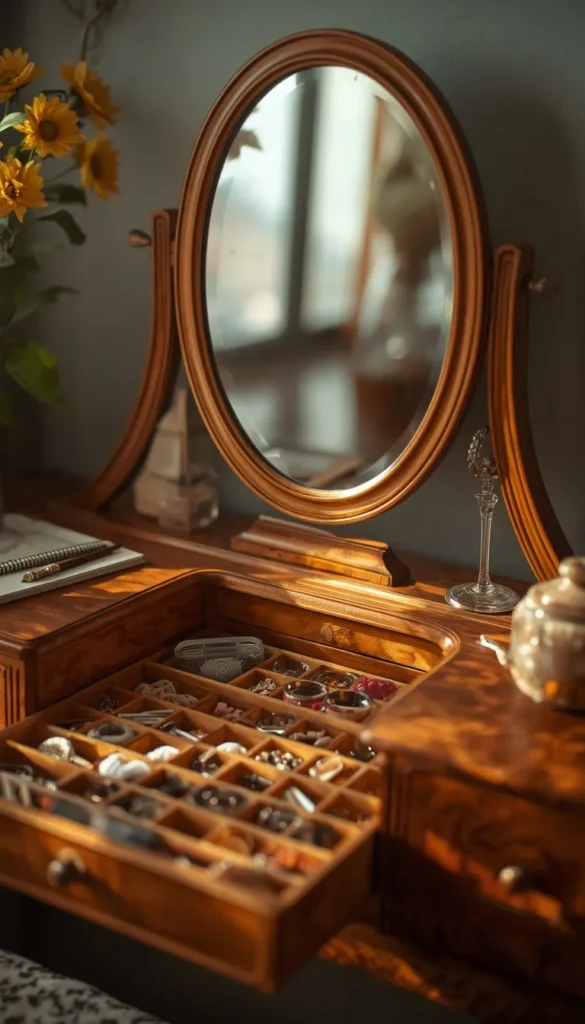
For anyone doing detail work like calligraphy, painting miniatures, or jewelry making, an old vanity with its attached mirror gives you both a proper desk and built-in lighting reflection. The small drawers that once held makeup are perfectly sized for tiny tools and supplies.
One thing to watch out for is the mirror hardware. Old vanity mirrors are often heavier than they look, and the swivel hinges can loosen with age. Give it a gentle test wiggle in the shop before you buy, since replacing that hardware is trickier than it seems.
Does your craft room lean more toward a cozy little nook, or do you have a full dedicated room to work with?
13. A Rustic Wine Crate Turned Wall Storage
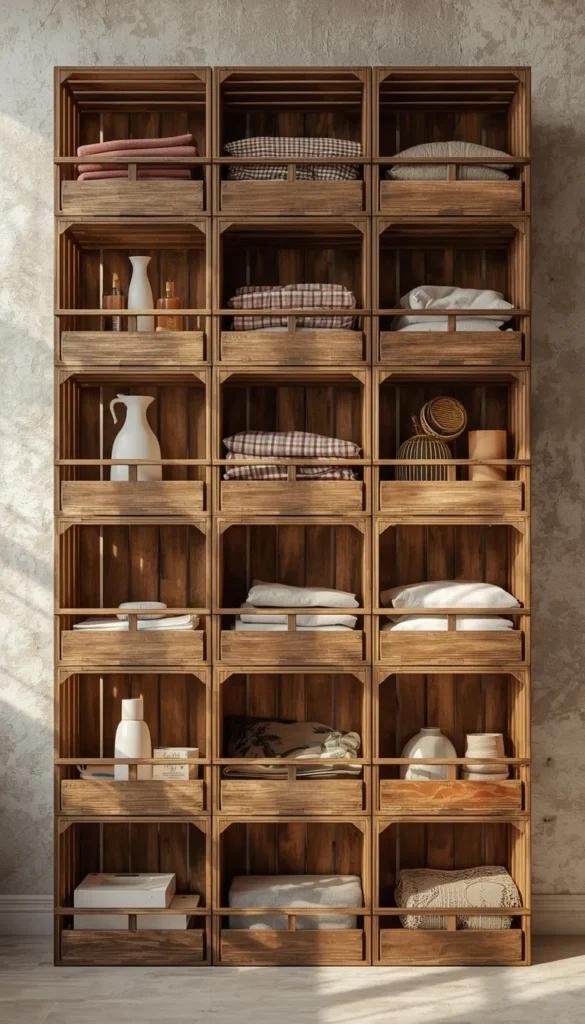
Old wooden wine crates are everywhere at flea markets right now, and mounting a few on the wall in a small grid gives you cubby style storage that costs almost nothing compared to a built-in shelf. Stack them, stagger them, or line them up in a neat row depending on how much personality you want.
We used this trick in a client’s condo craft nook where wall space was the only space available. It worked so well she went back and bought four more crates the following month.
14. A Vintage School Desk for a Compact Work Nook
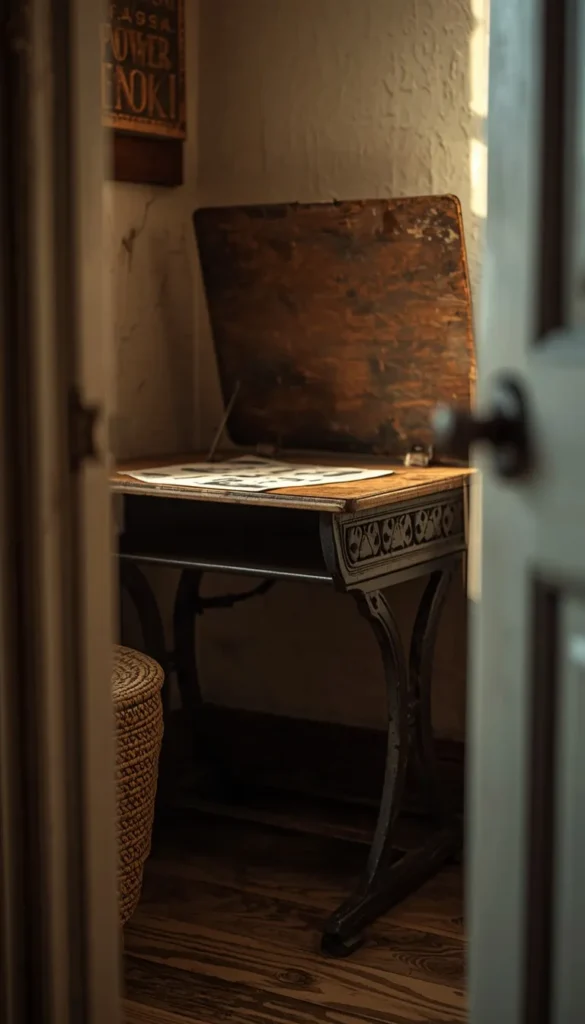
If your craft room is really just a corner, an old school desk with the attached seat solves the space problem completely since you’re not adding a separate chair into the mix. Many have a lift top lid that stores flat supplies like paper or stencils right underneath the work surface.
- Cast iron legs mean these desks are heavier than they look, so plan for help moving one
- Seat height is usually lower than modern chairs, which suits kids better than adults
- Check the hinge on the lid, since decades of use tends to loosen it
15. A Repurposed Bar Cart for Mobile Supply Storage
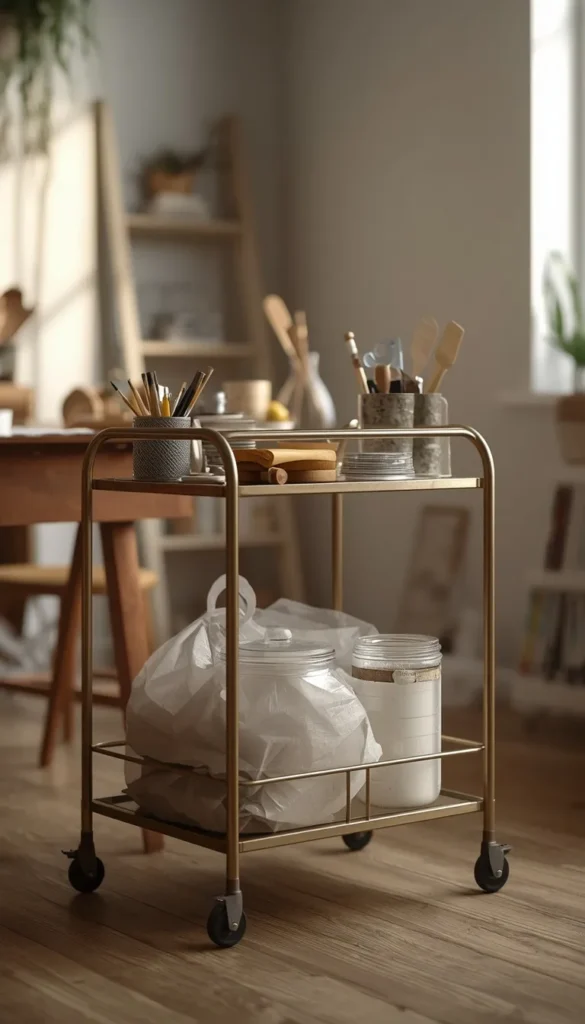
A vintage bar cart on wheels gives you flexibility that fixed furniture simply can’t. Roll it next to your work table while you’re deep into a project, then push it against the wall when you need the floor space back. The two tiered shelf design also works nicely for keeping frequently used tools on top and bulkier items on the lower shelf.
Rubber wheels from the 1960s and later roll far more smoothly than the older metal caster versions, so if smooth movement matters to you, check the wheel material before buying.
16. An Old Blanket Chest as a Low Storage Bench
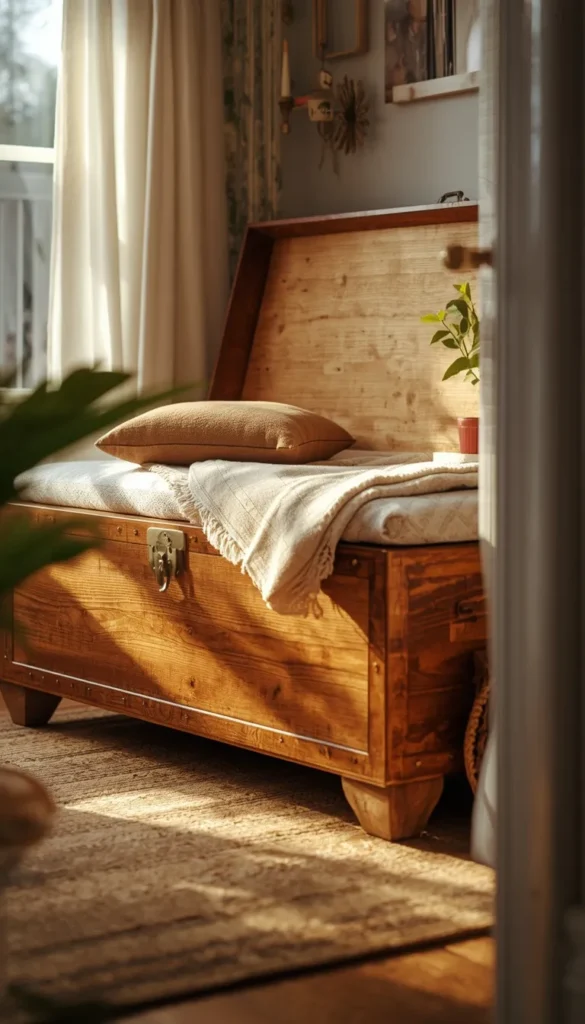
A blanket chest sits low enough to double as extra seating, which matters in a small room where every piece needs to earn its space twice over. Cedar lined versions are especially good for craft rooms since the wood naturally deters moths, which means your fabric stash actually gets some protection instead of just sitting there hoping for the best.
Have you already got a vintage piece sitting in your garage or attic that you never thought to bring into your craft space?
17. A Vintage Typewriter Desk for Paper Crafters
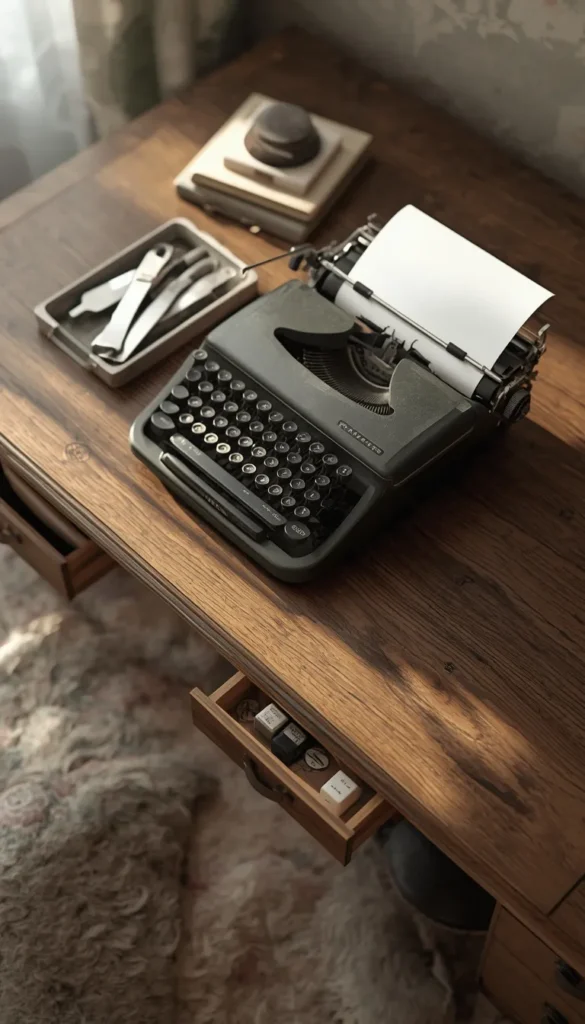
If your main craft focus is paper goods, journaling, or card making, an old typewriter desk gives you a compact surface with a pull out extension that used to hold the machine itself. That extension becomes ideal for a paper cutter or a second work surface when you need more room temporarily.
A quick trick I’ve learned is to check for the small side drawer that most of these desks have. It’s the perfect size for stamps, ink pads, or a stash of stickers, and it’s easy to overlook when you’re browsing quickly at an estate sale.
18. A Reclaimed Barn Door as a Fold Down Work Surface
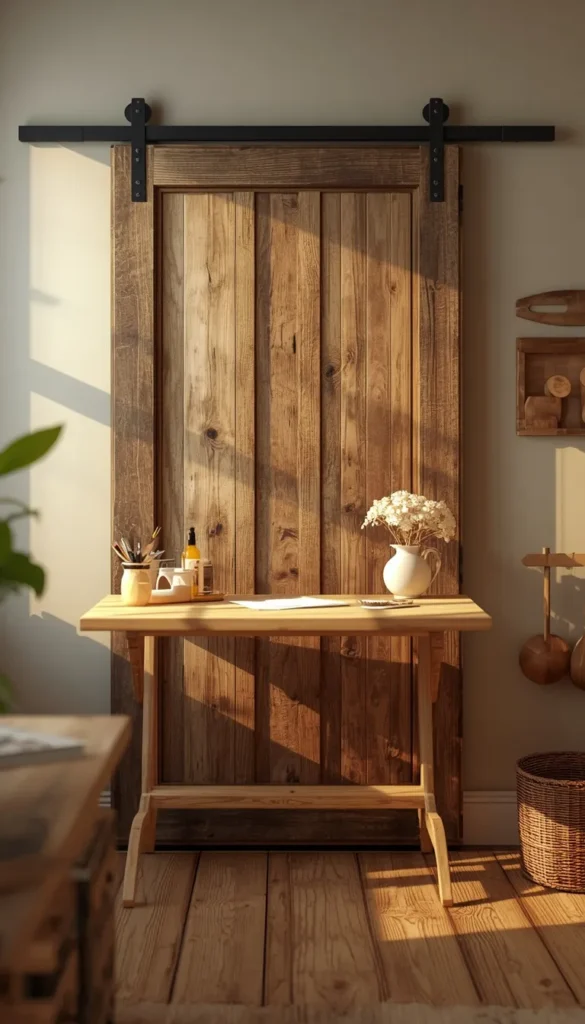
Mounting an old barn door on hinges against the wall, then propping it open with a folding leg, gives you a full sized work surface that disappears flat against the wall when you’re done. This is one of the best solutions I know of for a genuinely tiny craft room, since the floor space cost when it’s closed is basically zero.
The weight of a real barn door means you need to anchor the wall mounted hinges into a stud, not just drywall. This isn’t a project to rush, and I’d recommend having someone experienced handle the mounting if you haven’t hung something this heavy before
Your Quick Styling Guide
By Budget:
Starter/Thrift Find
- Weathered workbench
- Vintage card table
- Wine crate wall storage
- School desk nook
Investment/Statement Piece
- Antique sewing table
- Apothecary cabinet
- Chippy painted hutch
- Salvaged church pew
By Space Type:
Tiny Closet or Corner Craft Rooms
- Reclaimed barn door fold down table
- Vintage card table
- Wall mounted wine crates
- Vintage typewriter desk
Dedicated Room With Breathing Space
- Farmhouse table
- Apothecary cabinet
- Church pew
- Potting bench
By Lifestyle:
Busy Parents and Kid Friendly Spaces
- School desk
- Steamer trunk coffee table setup
- Blanket chest bench
Solo Hobbyists and Detail Workers
- Vintage vanity with mirror
- Dress form
- Typewriter desk
Frequently Asked Questions
Is vintage furniture actually cheaper than buying new for a craft room?
Yes, usually by a wide margin. A solid wood dresser or table from an estate sale often costs half of what a comparable new piece runs, and it’s already broken in.
How do I know if old furniture has hidden damage like woodworm or mold?
Check for small round holes and fine sawdust near joints, that’s your woodworm sign. A musty smell that lingers after airing it out for a day usually points to mold in the wood grain.
Can I paint over vintage furniture without ruining its value?
If it’s a true antique with documented history, painting can lower resale value. For everyday flea market finds though, paint it freely, function matters more than collectibility here.
What’s the best way to clean old wood furniture without damaging the finish?
Start with a dry microfiber cloth, then a barely damp one if needed. Skip harsh chemical cleaners entirely, they strip decades of natural patina fast.
Where can I find affordable vintage furniture near me for a craft room?
Estate sales and local auction houses beat thrift stores for selection and price. Facebook Marketplace and local salvage yards are also worth checking weekly, good pieces move fast.
Conclusion
Your craft room doesn’t need a bigger footprint to feel like it belongs to you. It needs one piece with a little history, something that makes you want to sit down and actually create instead of just tidy up and walk away. Small spaces done right have a way of pulling more life out of a house than the big showpiece rooms ever do.So don’t wait for the perfect estate sale haul to start. Clear one shelf this weekend, or go measure that empty corner you keep walking past. That’s usually all it takes to get moving.
