
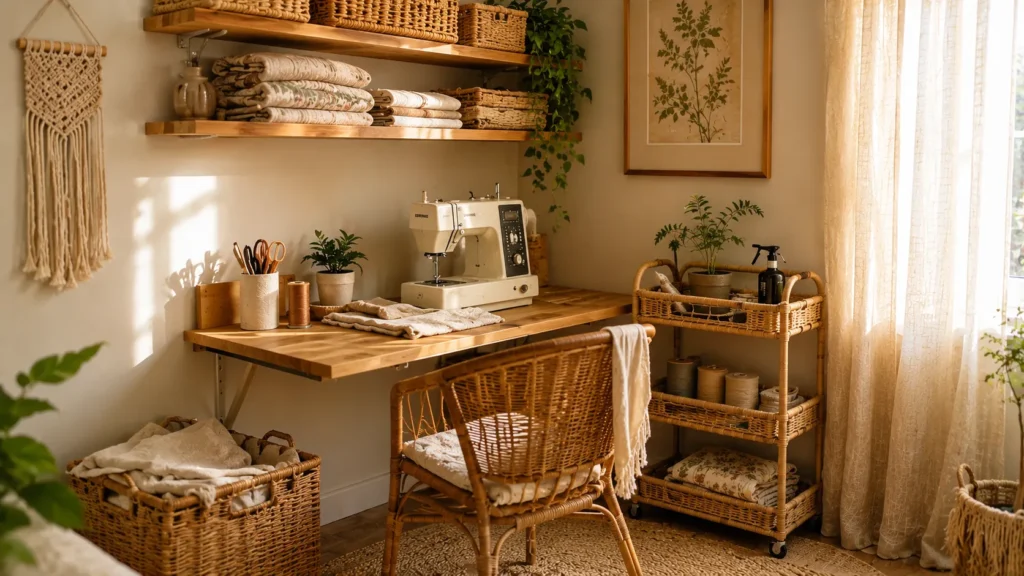
Your dream sewing room probably isn’t a spare bedroom, and that’s actually fine. I’ve worked with clients who turned closets, laundry room corners, and 6 by 8 foot nooks into fully functional studios that outperformed rooms twice the size. The secret was never square footage. It was smart layout, honest choices about storage, and a little restraint on what actually needs to be on display. Here are 13 small sewing room ideas that make the most of a tight space without making it feel like one.
My Design Notes
When I was working on a project in a 1920s Craftsman bungalow in Austin, my client wanted her sewing hobby out of the guest room closet and into something that felt like her own space. We only had a 6 by 8 foot nook off the laundry room to work with, two young kids in the house, and a budget of $600 total. I could have pushed for built in cabinetry, but with kids under six and a good chance she’d want to reconfigure things in a couple of years, that felt like the wrong call for her. We went with a wall mounted fold down desk and a rolling cart instead, and the whole project came in under $500. Eighteen months later, when her older daughter wanted a playroom, we moved the entire setup to a different wall in an afternoon. That flexibility ended up mattering more than any built in ever could have.
1. Start With a Fold-Down Wall Desk
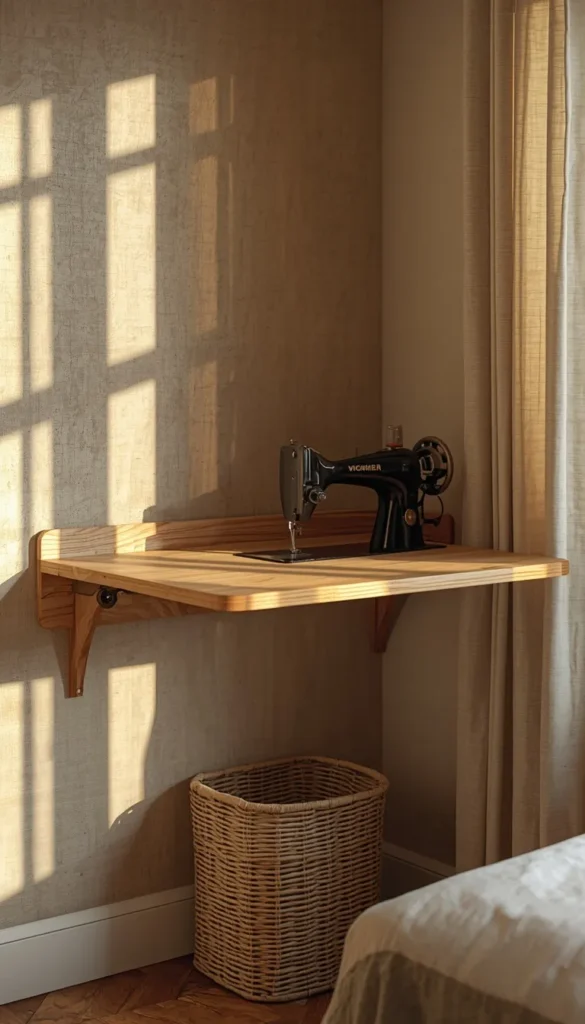
If you’re working with less than 50 square feet, a wall mounted fold down desk is probably your best move. It gives you a full surface to cut or sew on whenever you need it, then folds flat and gives the floor right back. One thing I’ve learned over the years is to check the weight rating before you buy. Anything under 50 pounds tends to flex under a heavier machine, and that wobble gets old fast once you’re three hours into a project.
2. Let a Rolling Cart Carry the Load
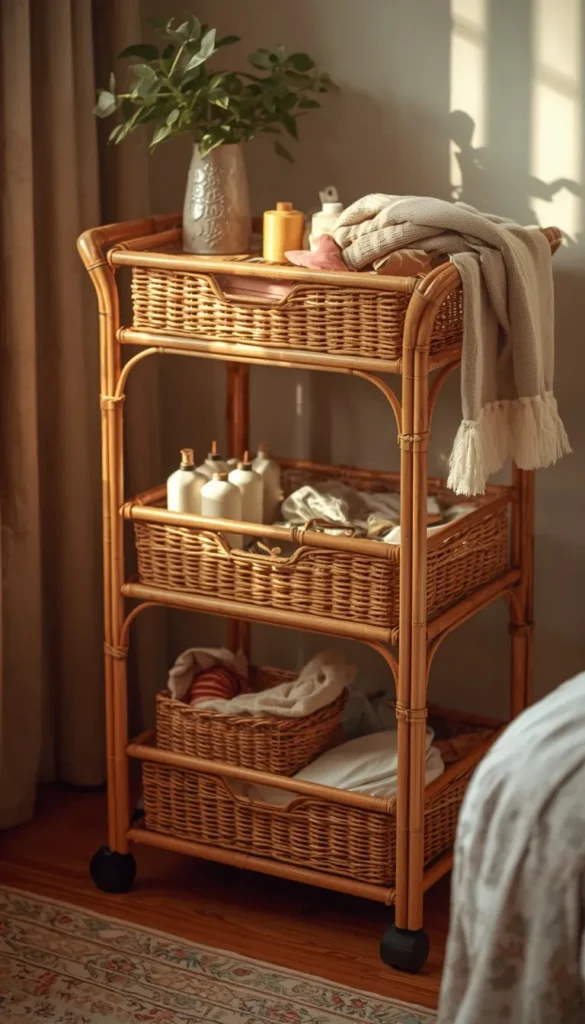
Skip the built in drawers and go with a narrow rolling cart instead, ideally 3 to 4 tiers. It keeps your thread, bobbins, and notions sorted without eating into your footprint. You can tuck it against a wall while you’re working, then wheel it right up to your chair the moment you need something.
- Easy to relocate if the room’s purpose ever changes
- Cheaper than custom cabinetry
- Doubles as a side table in a pinch
3. Mount the Machine on a Slide-Out Shelf
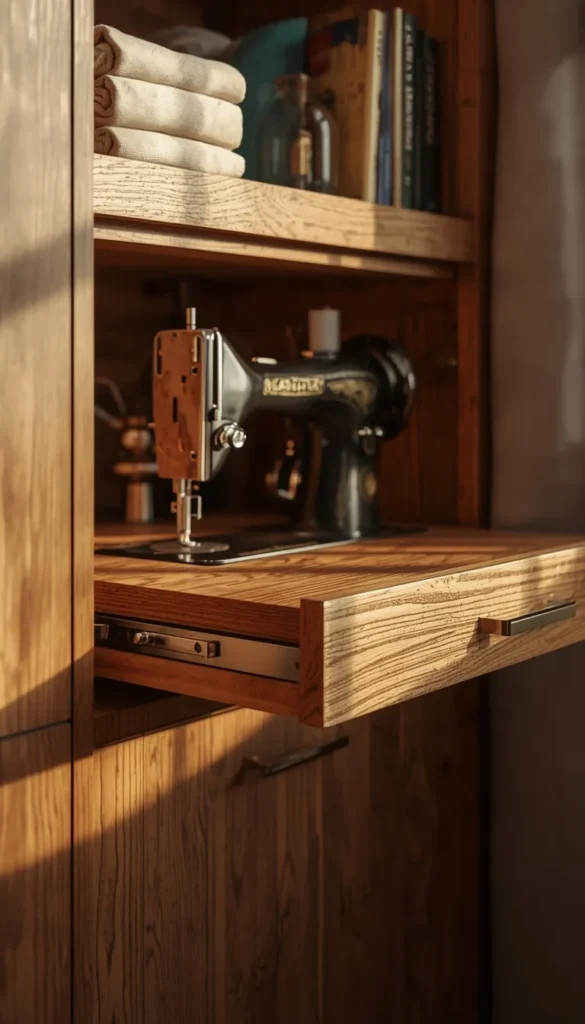
A slide out shelf mounted under a counter or shelf unit lets your machine sit tucked away vertically, then pull out level and ready the second you sit down. It sounds like a small thing, but in a closet conversion this one change can open up a surprising amount of floor space. A lot of people don’t realize how much a standing machine actually steals from a room until they see it gone.
4. Use Pegboard for Tools, Not Fabric
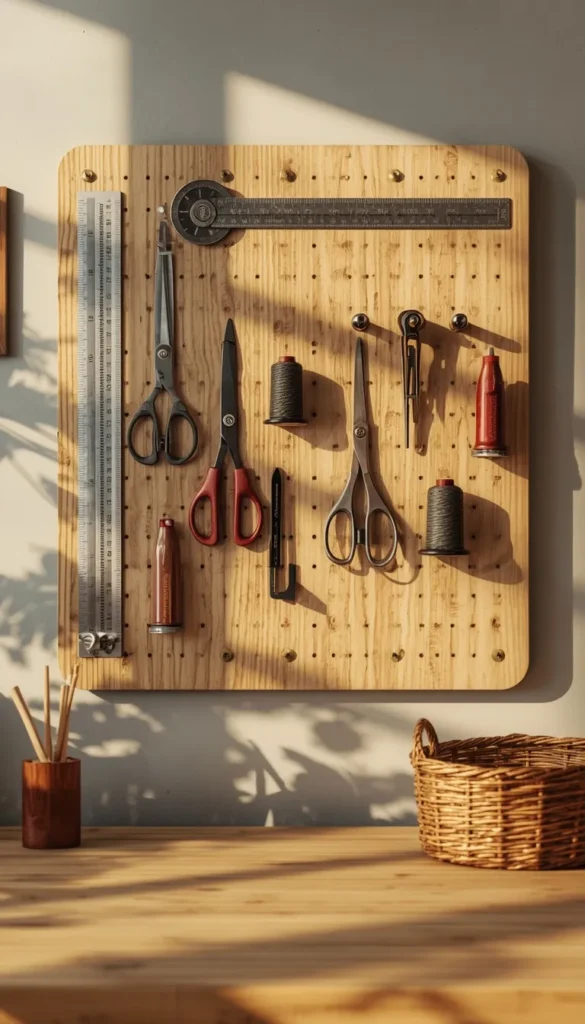
Pegboard is at its best holding scissors, rulers, rotary cutters, and spools, the things you want to grab without thinking twice. Fabric is a different story. One thing to watch out for is letting fabric pile up on open pegboard shelves, since it reads as clutter almost immediately no matter how neatly you fold it. Keep the pegboard for tools and give fabric a closed home instead.
Which corner of your home do you keep telling yourself could become a sewing space, if only you rearranged it a little?
5. Choose a Door That Doesn’t Swing Into the Room
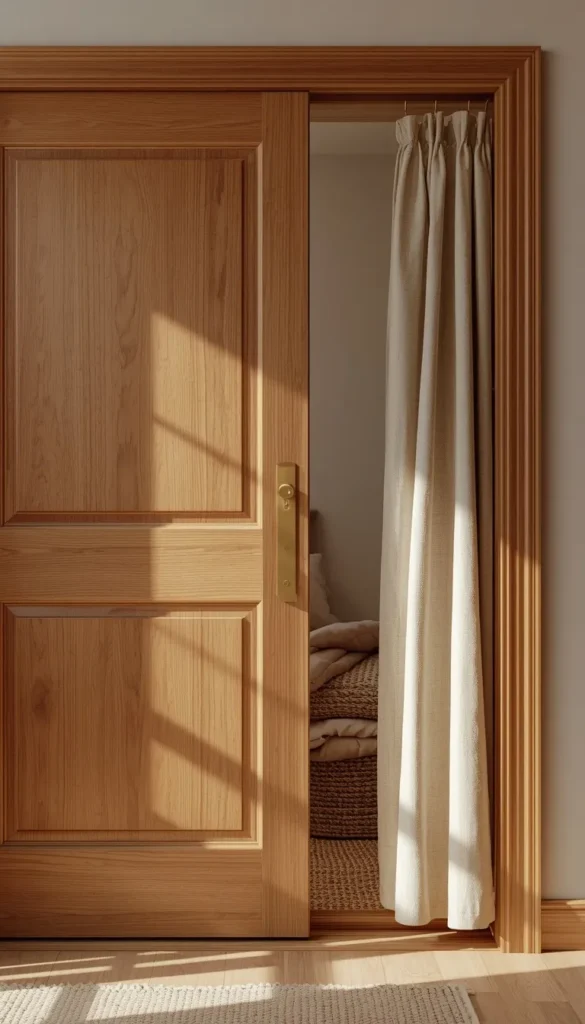
In tight nooks, a standard swinging door can quietly steal 8 to 10 square feet of usable floor space, just by existing. Swap it for a pocket door, a bifold, or even a simple curtain, and you get that space back for good. It’s a small change on paper but it genuinely reshapes how the room feels to move around in.
6. Build Vertical, Not Wide
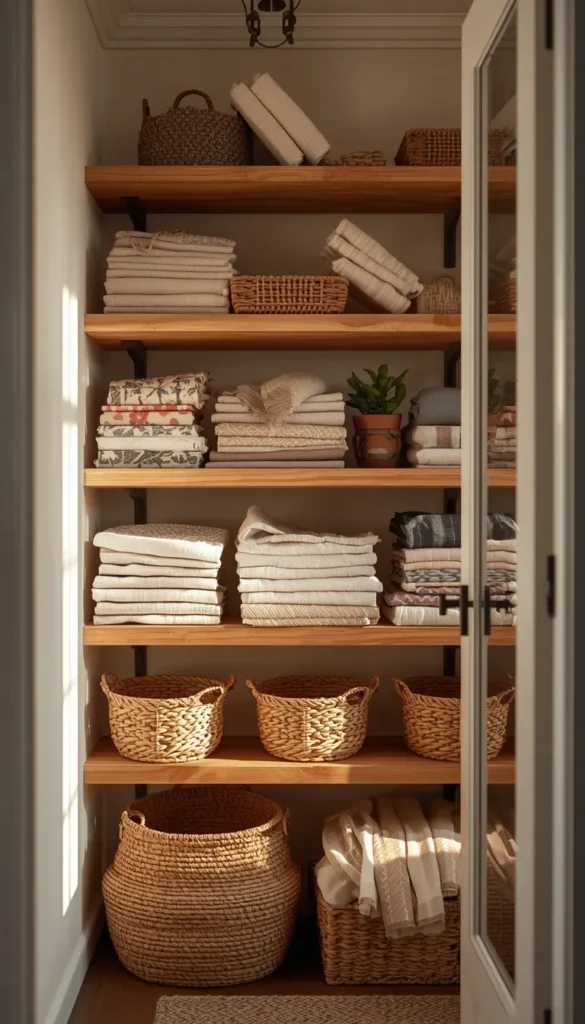
When your footprint is fixed, the ceiling becomes your best asset. Floating shelves stacked up toward the ceiling hold far more than one wide shelf ever could, and they leave the floor clear for your chair to actually roll around. A quick trick I’ve learned is to keep your most used items on the lowest two shelves and let the higher ones hold things you only reach for occasionally, like seasonal fabric or pattern archives.
- Frees up floor space for movement
- Keeps daily tools within easy reach
- Uses wall real estate most rooms waste
Top 6 small sewing room ideas
| Idea | Estimated Price | Maintenance |
|---|---|---|
| Fold-Down Wall Desk | $80 – $200 | Low |
| Rolling Storage Cart | $40 – $120 | Low |
| Slide-Out Machine Shelf | $60 – $150 | Medium |
| Floating Shelves (Vertical Storage) | $30 – $100 for a set | Low |
| Pocket Door / Curtain Swap | $100 – $400 | Low |
| Task Lighting (Clip-On, 2 lights) | $25 – $70 | Low |
7. Pick a Chair That Rolls and Tucks
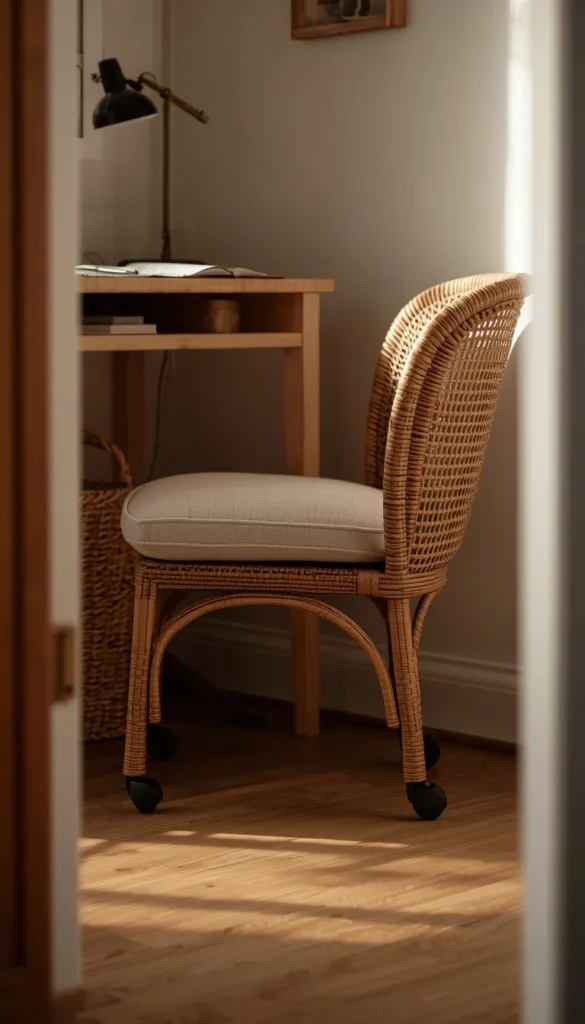
A low profile rolling chair that slides fully under your desk when you’re done matters more than people expect. Bulky chairs are one of the biggest silent space wasters in small studios, often taking up more visual and physical room than the sewing machine itself.
8. Use Bins With Labels, Not Bins With Lids You Forget
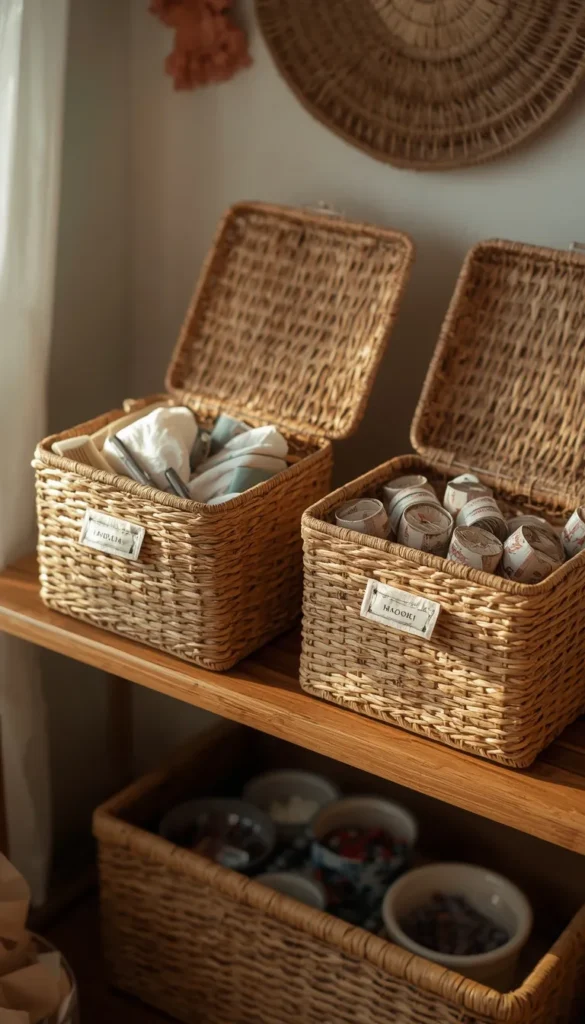
Open top bins on a shelf tend to beat lidded totes in small rooms, mostly because you can scan what’s inside at a glance instead of pulling everything down to check. Label the front of each bin rather than the top, so you can read it while it’s still sitting on the shelf. It sounds minor until you’re mid project and don’t want to dig through three totes to find your zippers
9. Add a Cutting Mat That Lives on Top of Storage
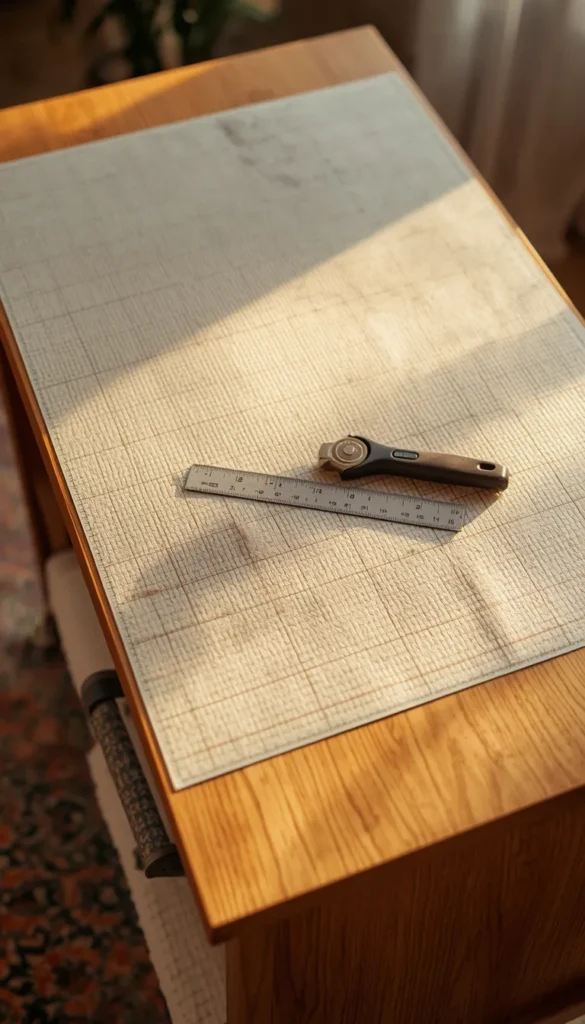
Instead of setting aside a whole surface just for cutting, try using a self healing mat that sits right on top of a rolling cart or a low dresser. You get a proper cutting station the moment you need one, and it disappears again just as fast when you don’t. This is one of those tricks that feels obvious once someone shows it to you, but almost nobody thinks of it on their own.
10. Light It Like a Workspace, Not a Bedroom
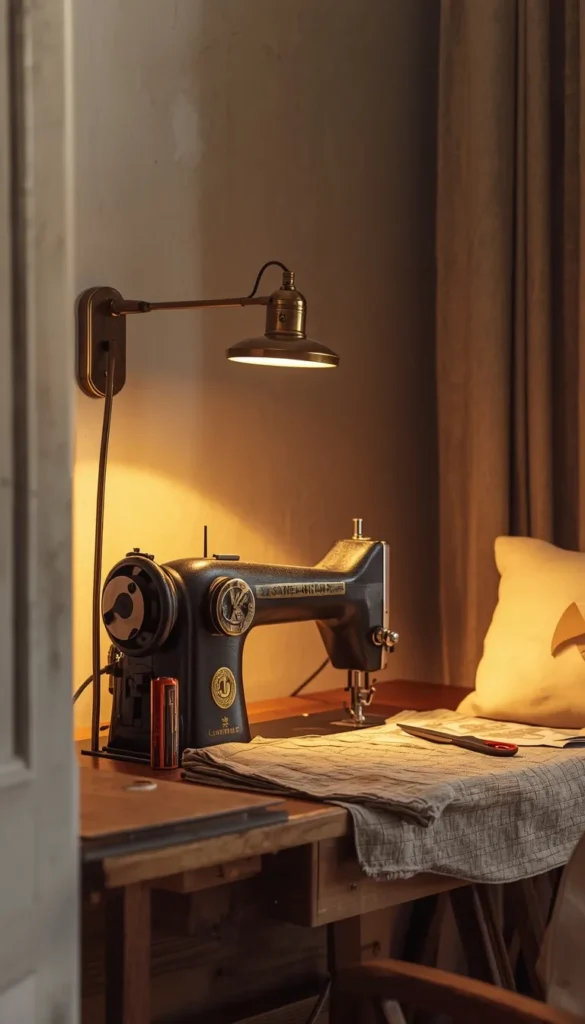
Small rooms often just inherit whatever fixture was already installed, usually a single dim overhead bulb that was never meant for detail work. A clip on task light positioned at your machine, plus a second one over your cutting area, will do more for your sewing than most storage upgrades combined.
- Reduces eye strain during long sessions
- Makes color matching far more accurate
- Costs less than most people expect
11. Keep One Wall Completely Clear
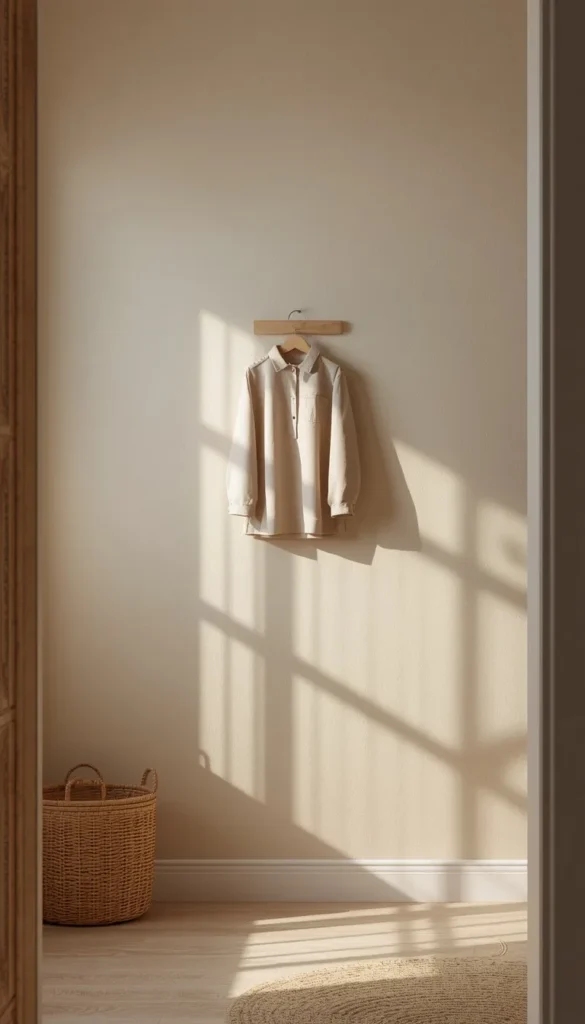
It sounds counterintuitive in a small space, but leaving one wall empty actually helps. Your eyes get somewhere to rest, and you get room to lay out a project, hang a finished garment, or pin a pattern without fighting for space every single time.
12. Store Fabric by Project, Not by Type
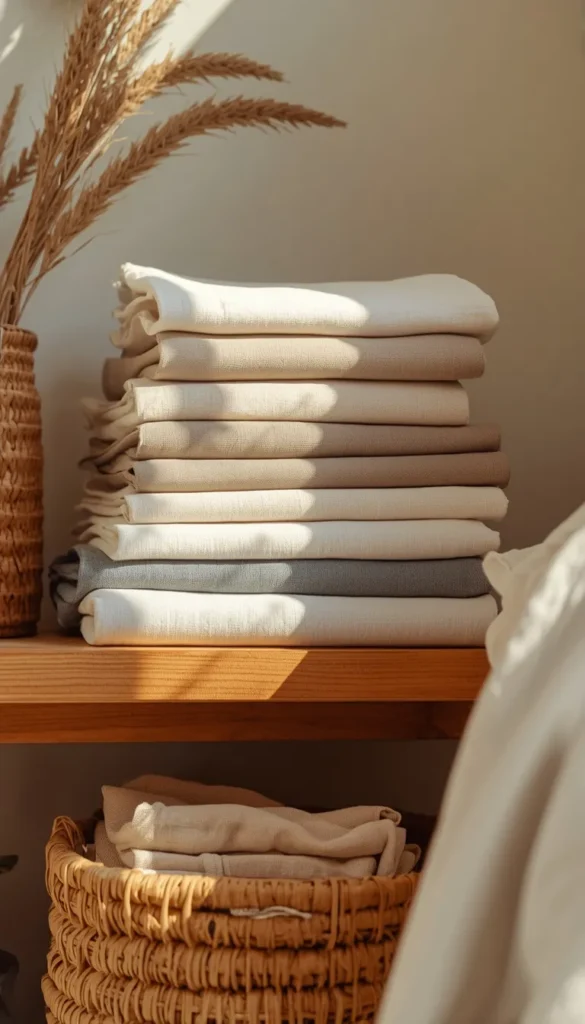
Rather than organizing fabric into broad categories like cottons or knits, try grouping it by what you’re actually working on right now versus everything else. Keep your current project fabric within arm’s reach, and let everything else move to less accessible storage. A quick trick I’ve learned is to do a five minute reset at the end of each project, moving leftover fabric out of the active zone before the next one starts. It cuts down on digging around and saves you from that scattered, half finished feeling a lot of small rooms end up with.
13. Design for the Version of the Room You’ll Need in Two Years
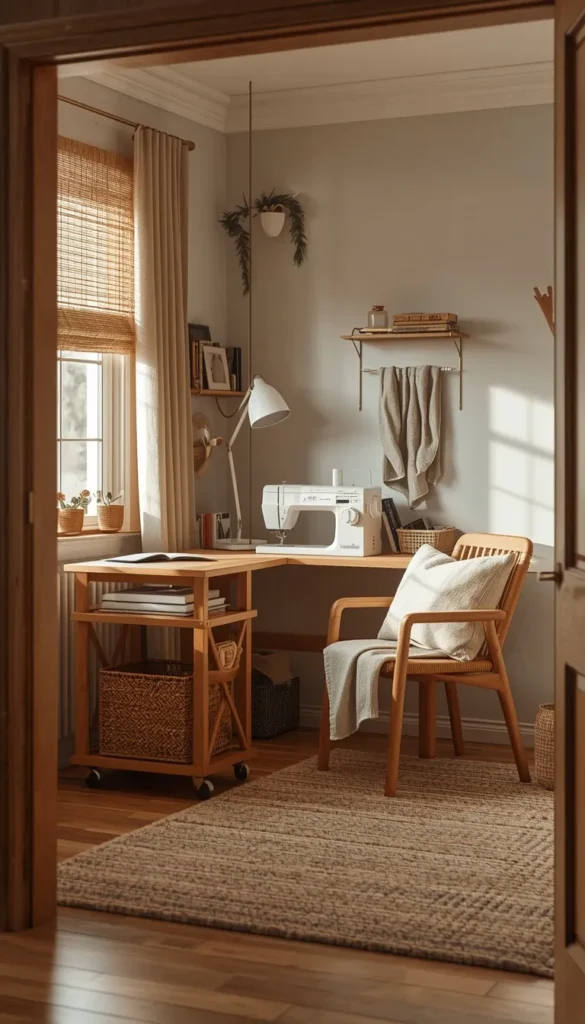
This is the one people skip most often. Small rooms get repurposed far more than big ones, whether that’s a growing family, a move, or just a shift in hobbies over time. Favor furniture that can be unbolted, rolled out, or repurposed over anything permanently built in. It costs a little more upfront in flexibility, but it saves you from tearing the whole room apart later when life changes shape.
Which Setup Fits Your Space?
By Budget
Starter/Budget:
- Rolling storage cart
- Pegboard for tools
- Clip on task lighting
- Floating shelves
Investment/Upgrade:
- Wall mounted fold down desk
- Slide out machine shelf
- Pocket door swap
- Full vertical shelving system
By Lifestyle
Small Spaces (closets, nooks, corners):
- Fold down desk
- Slide out shelf
- Vertical shelving
- Cutting mat on top of storage
Busy Households
- Rolling cart
- Bins with front labels
- Furniture that unbolts or rolls out
- Fabric stored by project, not type
Frequently Asked Questions
How much space do I actually need for a small sewing room?
A workable setup can fit into as little as 6 by 8 feet. What matters more than square footage is having one clear surface to cut on and enough vertical storage nearby.
What is the cheapest way to set up a sewing corner at home?
The average starter setup runs between 400 and 600 dollars. A rolling cart, a folding desk, and clip on lighting cover most of what you need without touching built ins.
Can I turn a closet into a functional sewing room?
Yes, and it’s one of the most common conversions homeowners ask about. Swap the swinging door for a pocket door or curtain, then build storage vertically instead of wide.
Do small sewing rooms need special lighting?
Ideally, you should use two light sources instead of one overhead bulb. A clip on task light at the machine and a second one over the cutting area make the biggest difference for color accuracy and reducing eye strain.
How do I keep a small sewing room from feeling cluttered?
Keep one wall completely clear and store fabric by current project instead of by type. Open bins with front facing labels also help a lot, since you can scan contents without digging through totes.
Conclusion
Your sewing space doesn’t have to wait for a bigger house or a bigger budget to feel like yours. Even a single cleared shelf or one well placed rolling cart can shift how a whole corner of your home feels to walk into every day. Start small this weekend, move one thing, clear one surface, and see how much lighter the room feels by Sunday night. Your home is where you unwind and create, and it deserves a little intention even in the tightest corners.
