
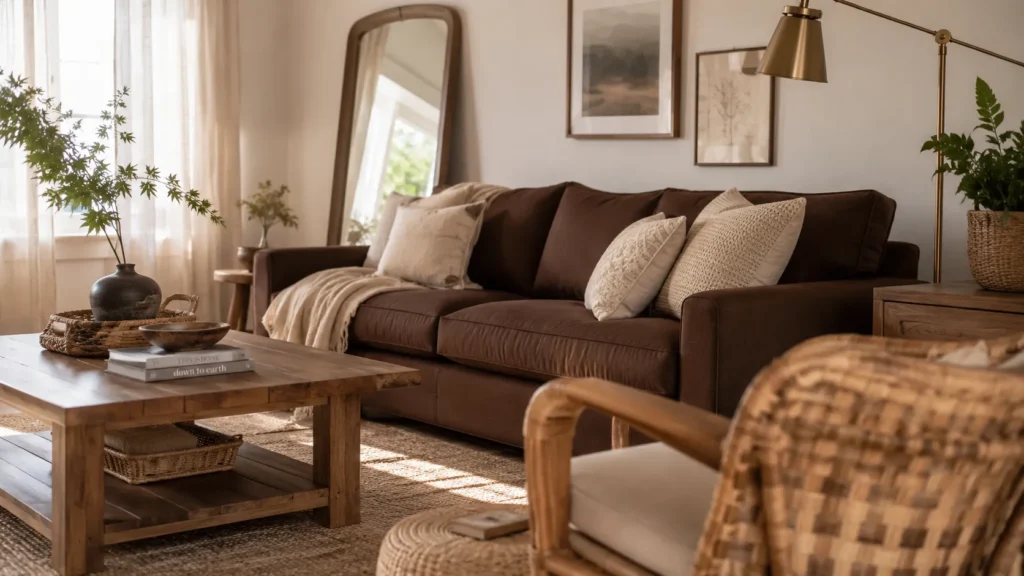
Stop apologizing for your brown sofa. I’ve walked into more living rooms than I can count where the client felt the need to explain it away before I’d even set my bag down, and it never needed defending. A dark brown couch is one of the most flexible pieces you can own, hiding everyday wear and pairing with nearly any wall color you throw at it. The real trick is matching the styling to your room’s size, since what works in a big open floor plan can backfire in a small apartment. Here’s how I approach both.
My Design Notes
I still think about a project I worked on in a 650 square foot condo in Chicago. My client had inherited her grandmother’s chocolate brown leather sofa and didn’t want to part with it, but she was convinced it would swallow her small living room whole. We didn’t replace a single piece of furniture. I floated the sofa a few inches off the wall, swapped her dark patterned rug for a simple jute one, and leaned a big mirror across from the seating area. We also switched her overhead bulbs to a warmer temperature, which made a bigger difference than I expected. Her golden retriever sheds constantly, and two years later that leather sofa still looks brand new, so I always point to her place when clients ask if leather is worth the extra cost. It’s proof that you don’t need a bigger room or a new couch, just a smarter plan for the one you’ve got.
13Stunning Design Strategies to Style a Dark Brown Couch in Any Size Living Room
1. Choose a Track Arm or Low Profile Silhouette
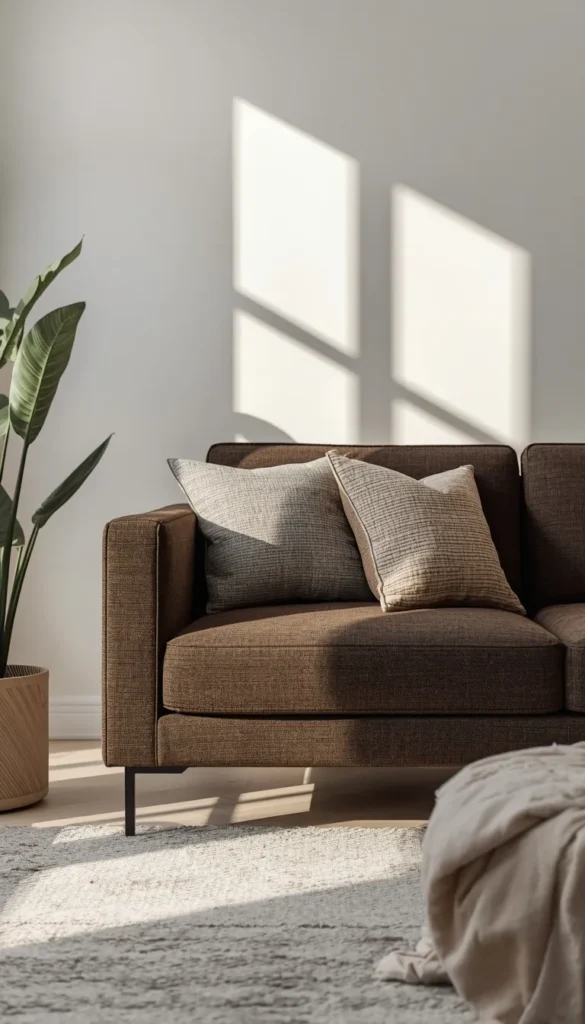
If your living room is on the smaller side, the shape of the sofa matters more than the color. A chunky rolled arm eats visual space fast, even in a neutral like brown. Swap it for a track arm or low back silhouette and the same dark upholstery suddenly reads lighter and more current.
I usually tell clients in studio apartments to measure the arm width before anything else. Anything over five or six inches per arm starts to feel bulky once you’re squeezed into a smaller footprint, and a slimmer profile gives you back a few inches on either side. In a tight room, those few inches make a real difference, especially near doorways or walking paths where every bit of clearance counts.
2. Anchor with a Light Rug So the Room Doesn’t Feel Boxed In
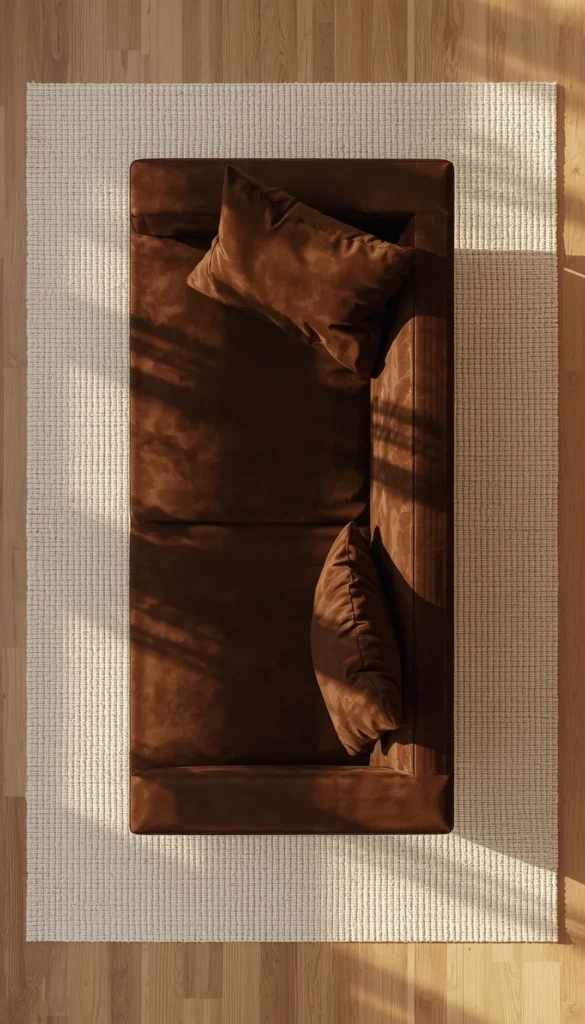
A dark rug under a dark sofa is where small rooms go to die visually.
- It creates one heavy block of color that flattens the whole space
- It makes the ceiling feel lower than it actually is
- It leaves nothing for the eye to rest on at floor level
Go the opposite direction instead. A pale jute, a cream flatweave, or a light gray wool rug creates contrast right at the base of the room, which tricks the eye into reading more floor space than you actually have. And here’s a trick I’ve learned after one too many white rug regrets: skip the pure white if you’ve got kids or pets. It looks gorgeous for about three weeks.
3. Float the Sofa Away from the Wall
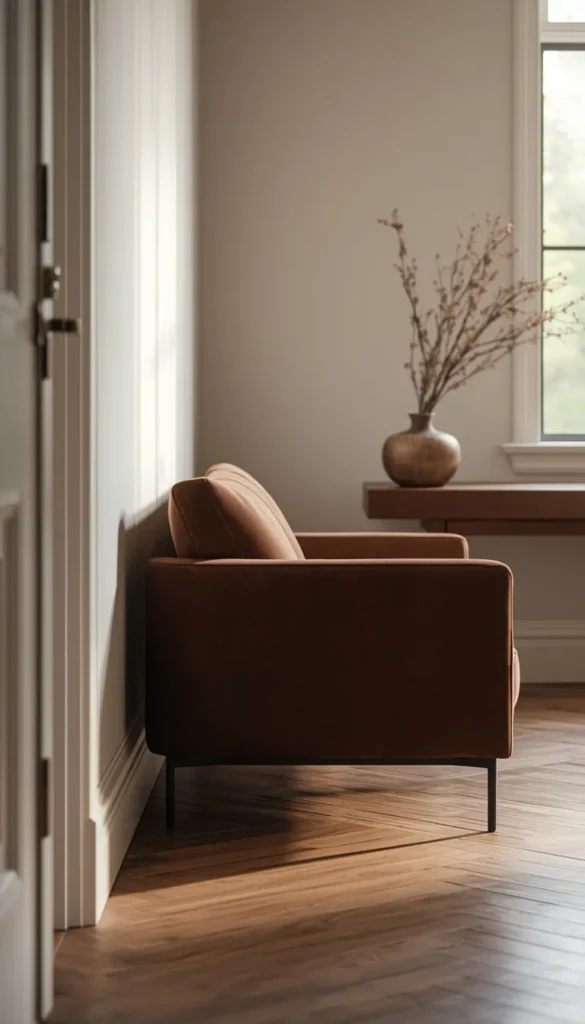
This one surprises people every time. Pushing a couch flush against the wall feels like the safe move in a small room, but it usually backfires. Pulling it out even four to six inches lets light travel behind the sofa and creates a shadow line that gives the room depth instead of one flat surface.
I did this in a client’s condo last year and she genuinely thought we’d rearranged the furniture. All we did was slide the sofa forward a few inches and slip a narrow console table behind it.
4. Use a Mirror Across from the Sofa to Bounce Light
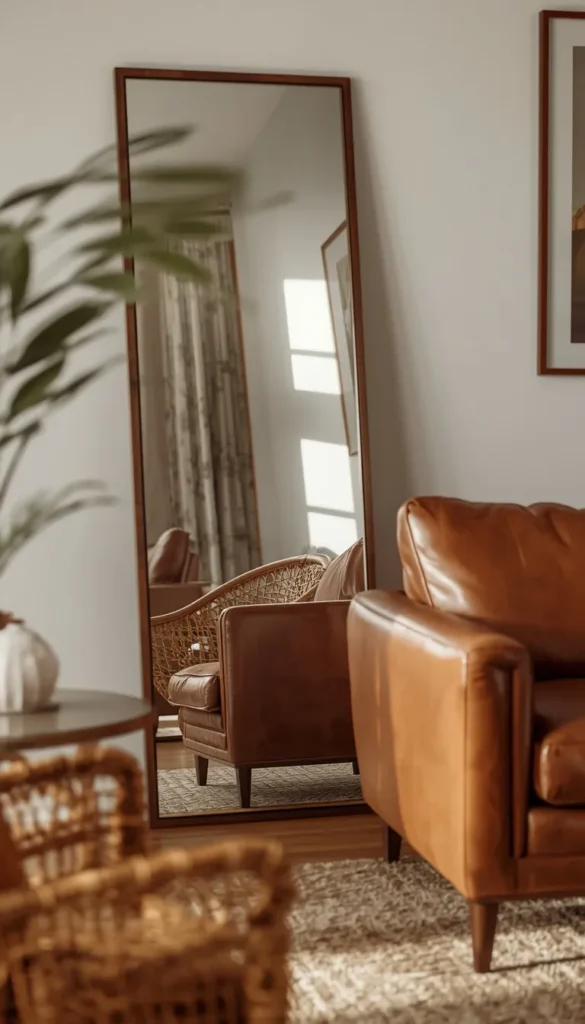
A dark sofa absorbs light instead of reflecting it, which is the last thing you want in a room already short on square footage. A large mirror placed across from or near the sofa bounces whatever light you do have, natural or lamp, back into the room, which keeps the brown from feeling like it’s swallowing the space. Lean a floor mirror against the wall opposite the couch, or hang something oversized above a console. It’s one of the cheapest fixes in this whole list and it works every single time I use it.
Is your brown couch stuck against the wall right now or have you already tried floating it?
5. Stick to a Loveseat or Apartment Size Sectional
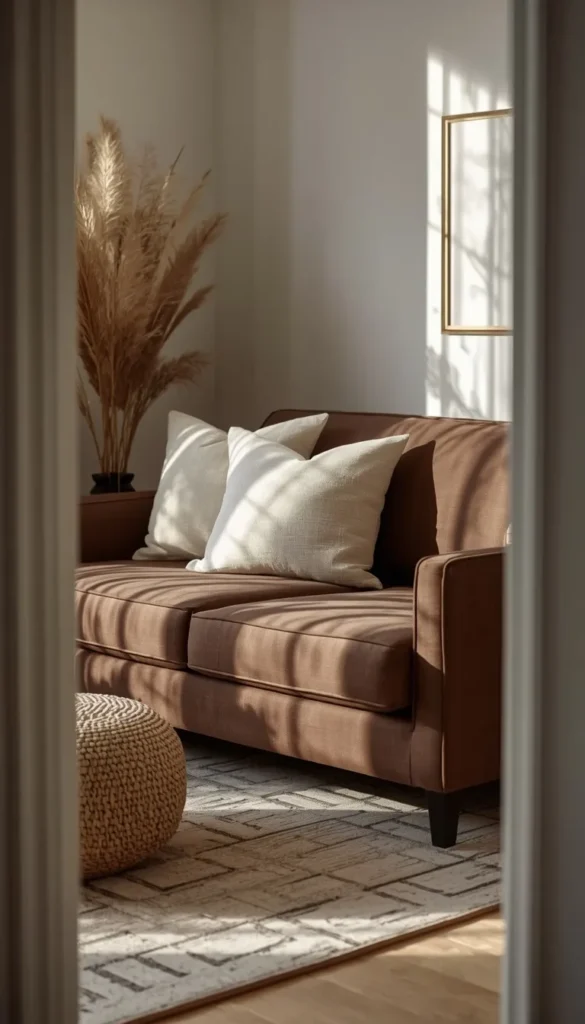
Not every small living room needs a full three seat sofa. Forcing one into a tight footprint is how you end up with a couch that blocks walking paths and makes the whole room feel cramped. Apartment size sectionals and loveseats are built with smaller footprints in mind, usually topping out around 70 to 80 inches wide instead of the 90 plus inches you’ll find on standard sectionals, and a bulky oversized sofa in a small room often ends up getting fewer people using it comfortably anyway. If you’re shopping on a budget, look at loveseats before full sofas since they’re almost always priced lower for the same quality.
6. Try a Slipcover or Throw Instead of Buying New
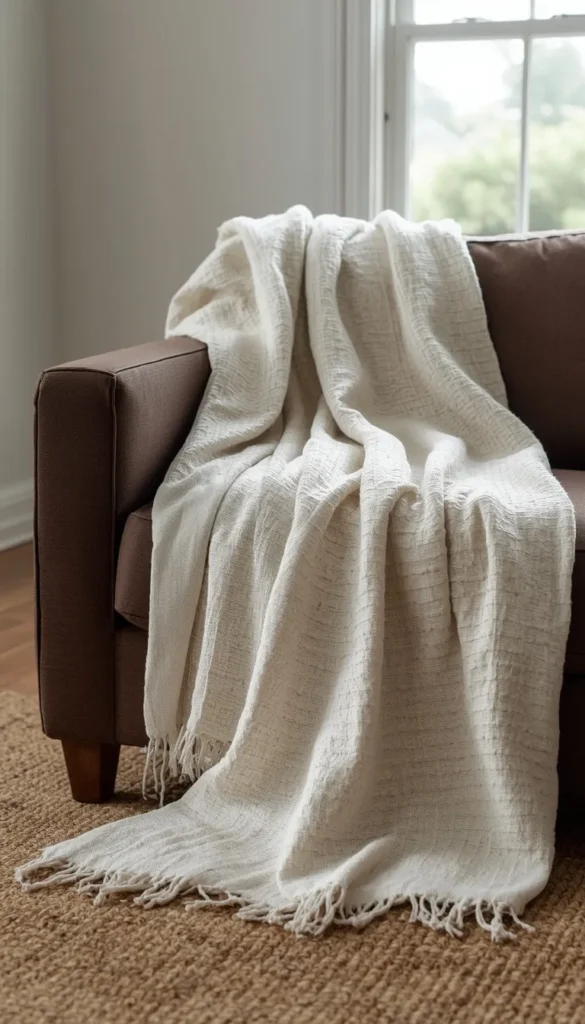
If you’ve inherited a brown sofa, or you already own one and you’re just tired of looking at it, you don’t have to replace it to change the room.
- A well fitted slipcover in a lighter neutral runs somewhere between fifty and two hundred dollars
- A couple of oversized textured throws draped over the arms get you most of that same visual lift
- Either option can be swapped out seasonally without much effort
One thing worth knowing before you commit to a slipcover though: they shift around with regular use, especially if kids are climbing on the furniture, so you’ll be tucking and straightening them more than you’d expect.
Top 6 dark brown couch living room ideas
| Idea | Estimated Price | Maintenance |
|---|---|---|
| Track arm or low profile sofa | $800 to $2,000 | Medium |
| Light colored jute or flatweave rug | $80 to $250 | Low |
| Large floor or leaning mirror | $100 to $400 | Low |
| Slipcover or oversized throws | $50 to $200 | Medium |
| Oversized dark brown sectional | $1,500 to $4,000 | Medium |
| Leather sofa for pet households | $1,200 to $3,000 | Low |
7. Go Bold with an Oversized Sectional
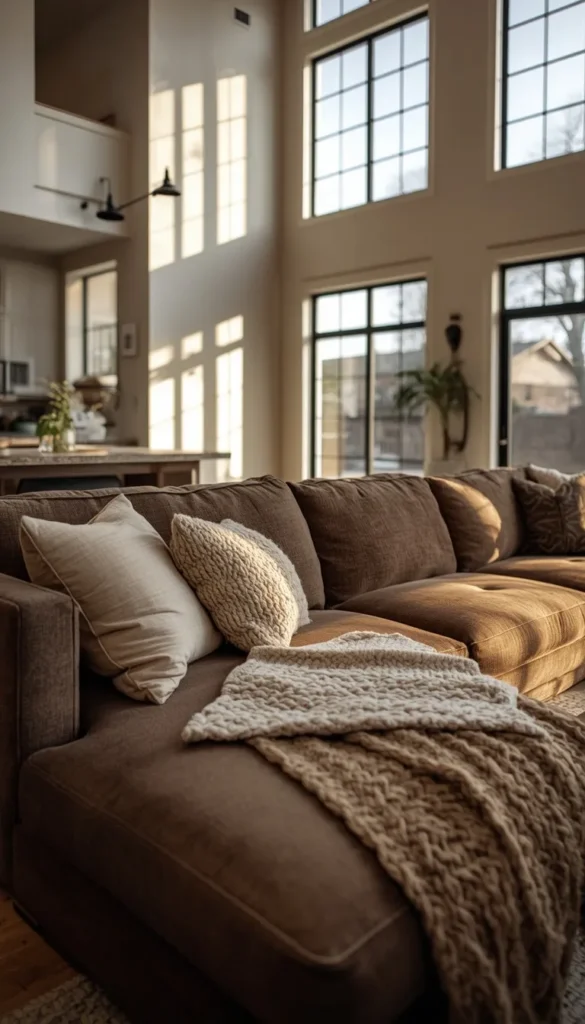
Once you’ve got the square footage to work with, the rules flip. A large open living room can actually swallow up a smaller sofa and leave the space feeling empty, so this is where I tell clients to go bigger than feels comfortable at first. An oversized dark brown sectional gives a big room an anchor, something for your eye to land on the second you walk in, and the deep color holds its own against natural light instead of washing out and disappearing into the walls.
8. Create Two Conversation Zones
If you’ve got the space, don’t feel like every piece of seating needs to face the television. Splitting a large living room into two separate zones, one built around the main brown sectional and a second smaller cluster using an accent chair or a second sofa, makes a big room feel intentional instead of just empty. I did this in a great room with 14 foot ceilings where a single sectional looked lost no matter where we placed it. Adding a pair of chairs and a small side table near the fireplace gave the room a second gathering spot, and it made the whole space feel finished instead of half furnished.
Small space or open layout, which camp are you decorating for?
9. Pair It with a Statement Wall Color
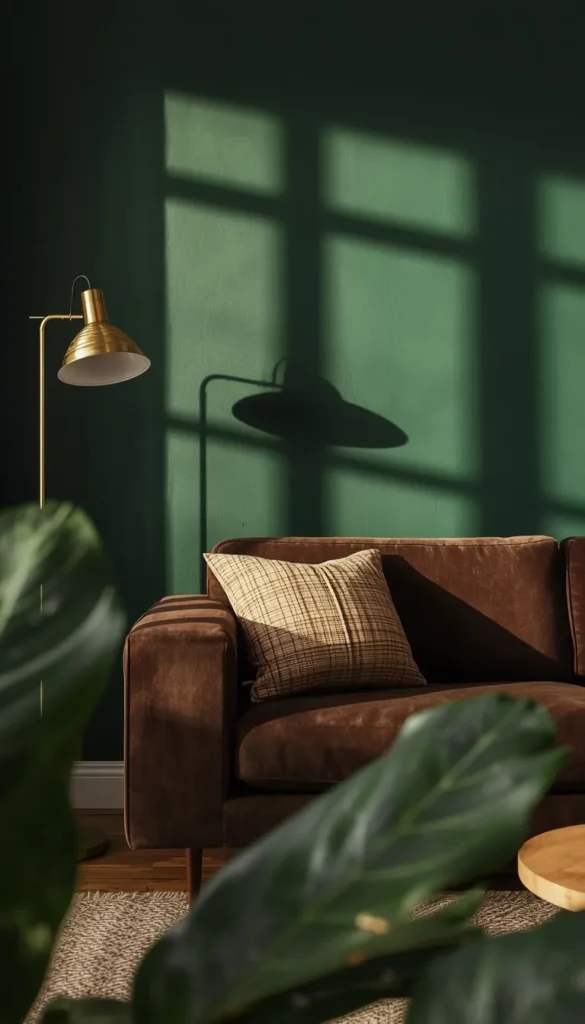
Dark brown is a warm neutral, which means it plays surprisingly well with bold wall colors most people are too nervous to try. Deep green, navy, and even a rich terracotta all bring out different undertones depending on whether your sofa leans more red, more gray, or more golden. Before committing to a full accent wall, paint a two foot sample square right next to the sofa and look at it morning and night, since a shade that looks perfect at noon can shift entirely once the lamps go on.
10. Layer In a Second Wood Tone
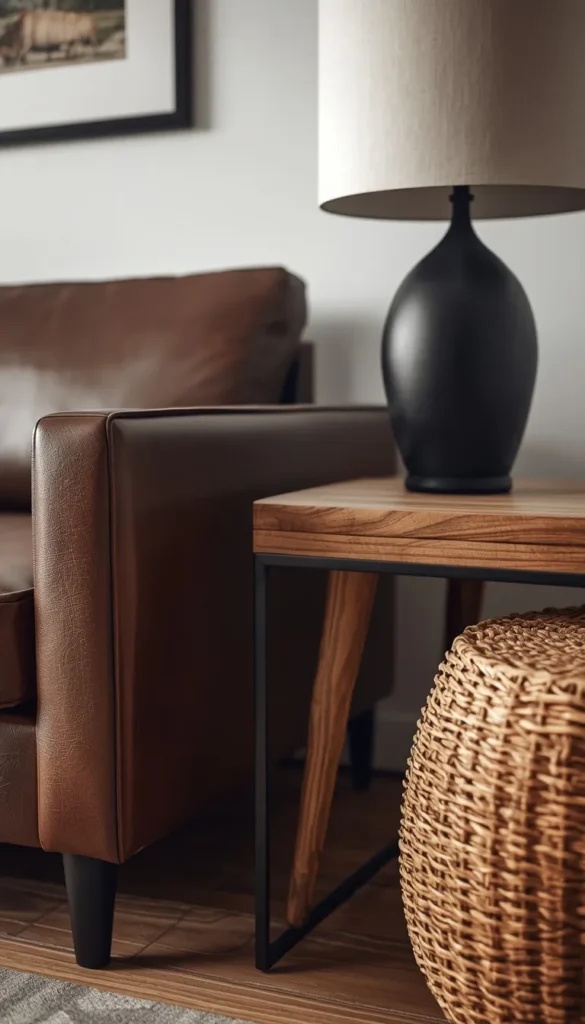
One thing I see constantly in larger rooms with a brown sofa is everyone matching every wood tone in sight, the coffee table, the floors, the shelving, all one identical shade. It reads flat pretty fast. Mixing in a second tone brings the texture back:
- A lighter oak side table against darker walnut floors
- A woven rattan piece next to a solid wood console
- Matte black metal legs to break up too much wood altogether
Keep warm tones paired with warm tones and cool with cool, and you’ll sidestep the clash that trips most people up the first time they start mixing finishes.
11. What Actually Goes with a Dark Brown Couch
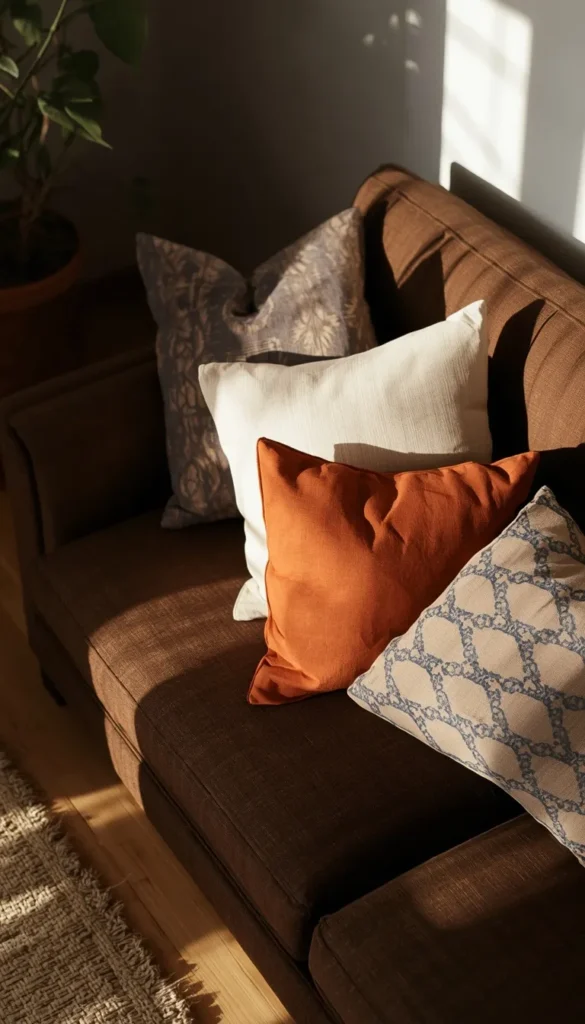
This is the question I get asked more than any other, so here’s the version I actually give clients. Cream, ivory, and warm white are the safest starting point, and they work in nearly every style of home from farmhouse to contemporary. Blue and green, especially a deep forest shade or a dusty navy, bring out richness in the brown without fighting it for attention. Blush and terracotta stack warmth on top of warmth for something cozier and more layered, while mustard and burnt orange lean straight into the autumn palette that brown already belongs to. What I’d steer you away from is pairing a very dark brown with another equally dark, cool toned color like charcoal or black in a room that doesn’t get much natural light. Two heavy dark tones in a dim space just cancel each other out, and the whole room can start to feel more like a cave than a retreat.
12. Why Lighting Temperature Changes Everything
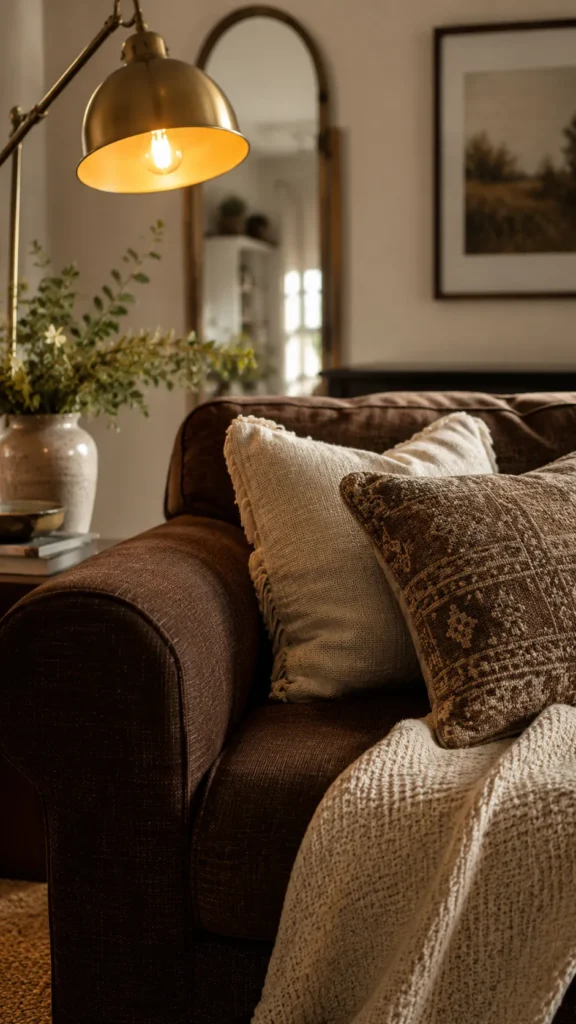
Nobody talks about this enough. The bulb temperature in your lamps changes how your sofa looks, sometimes more than your paint color does. A cool white bulb rated above 3000K mutes the warmth in brown upholstery and can leave it reading almost gray. Switch to something warmer, closer to 2700K, and the same sofa suddenly looks richer and more saturated, for less than the cost of dinner out.
Leather or fabric which one is actually sitting in your living room today?
13. The Real Maintenance Talk for Pets and Kids
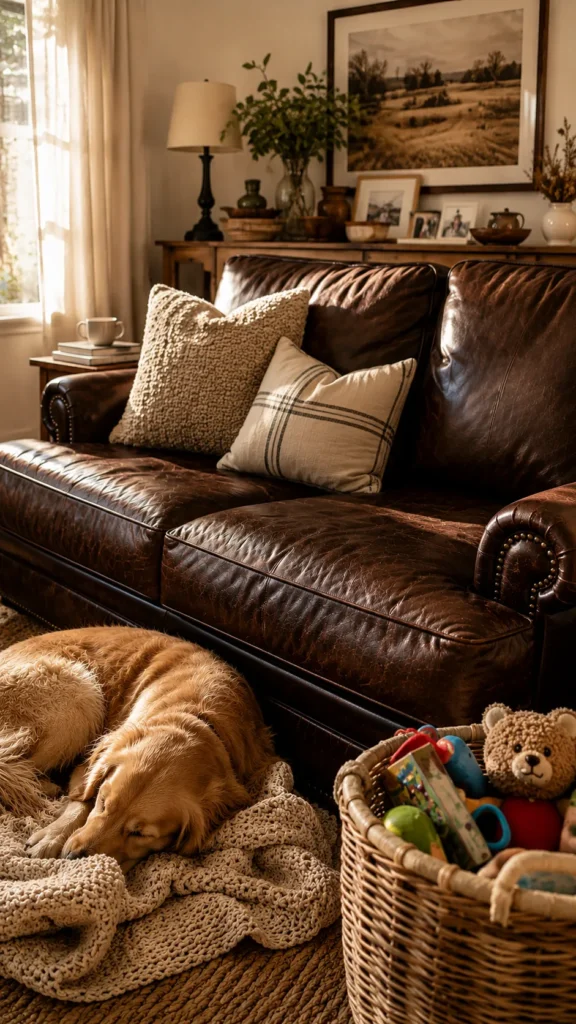
I’d be doing you a disservice if I didn’t get honest about upkeep, because this matters just as much as how the sofa looks. Leather is genuinely one of the best options if you’ve got pets. It wipes clean, it doesn’t trap pet hair the way fabric does, and dark leather in particular hides scratches and scuffs far better than lighter colors. The downside is cost and the fact that leather can crack or dry out over time if it’s not conditioned occasionally.
Which Path Is Yours?
Renter Friendly Fixes
- Slipcover or oversized throw over the sofa you already own
- Jute or flatweave rug swap
- Warmer temperature light bulbs
- Leaning mirror instead of new furniture
Full Room Investment
- Oversized dark brown sectional as the anchor piece
- Leather upgrade for long term durability
- Performance fabric built for pets and kids
- Professionally painted statement accent wall
Small Space Households
- Track arm or low profile silhouette
- Apartment size sectional or loveseat
- Sofa floated off the wall
- Light colored rug to open up the floor
Open Layout Households
- Two separate conversation zones
- Oversized sectional as the room’s anchor
- Mixed wood tones for texture
- Bold wall color to ground the space
Conclusion
Your living room is where you unwind at the end of a long day, and it deserves better than a couch you’ve been quietly tolerating for years. Sometimes the fix really is that small, a rug, a mirror, a warmer bulb, and the whole room suddenly feels like yours again. Grab that paint sample this weekend, or finally clear off the shelf you’ve been avoiding, and let that brown sofa do the job it’s actually capable of. Which one of these are you trying first?
