
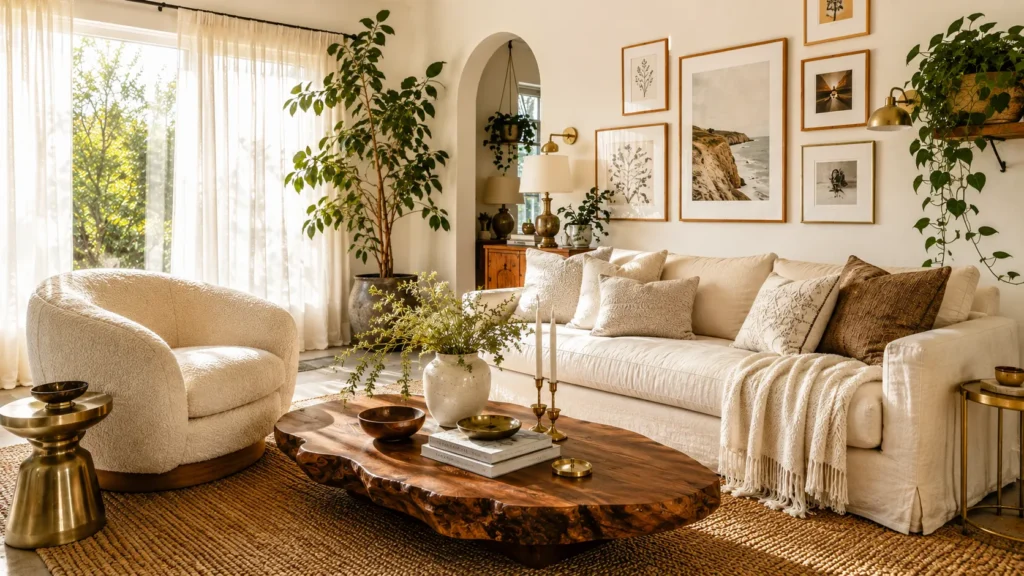
White living rooms get a bad reputation they don’t deserve. I’ve walked into more all white spaces than I can count, and the boring ones almost always made the same mistake: treating white as an absence of decision instead of the start of one. Done right, white is one of the warmest, most livable backgrounds you can build a room around. Here are 11 ways to get that warmth without touching a paint chip you’ll regret.
My Design Notes
A few years back, I worked with a young family in Austin who wanted an all white living room straight off a Pinterest board. I loved the vision, but I pushed back a little because they had a Golden Retriever and a toddler, and stark white plus muddy paws is a recipe for regret. We landed on a warm white for the walls and a performance fabric slipcover for the sofa instead of the raw linen they’d originally picked. Within the first week, the dog left a trail of paw prints straight across the wool rug we almost kept, and I was so glad we’d swapped it for an indoor outdoor jute at the last minute. That project taught me that a white living room isn’t really about the paint. It’s about planning for real life before it happens to your furniture. I still send that family paint swatches every time I find a new favorite white.
11 Mastering Stunning White Living Room Ideas for an Elevated Home
1. Pick the Right White for Your Light
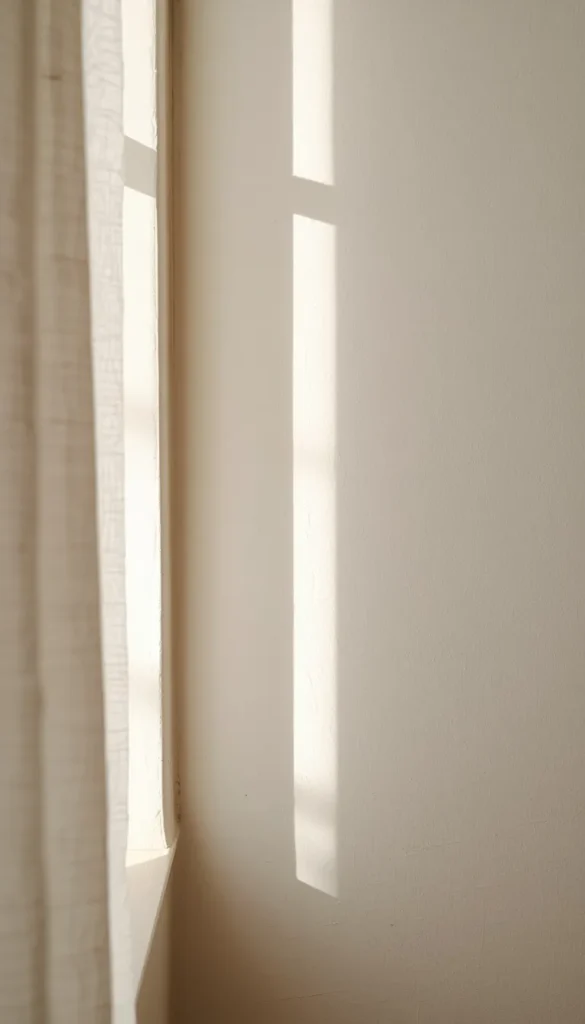
Not all whites behave the same way once they hit your walls, and this is the single biggest mistake I see people make. A white that looks crisp and fresh in a sunny showroom can turn flat and almost clinical in a room with limited natural light. Before you commit to a gallon, take a good look at which direction your windows face. North facing rooms tend to pull cooler and grayer, so a white with warm undertones will feel far more welcoming. South and west facing rooms get plenty of golden light already, so you have a bit more room to play with cooler whites without the space feeling cold.
A trick I always recommend is painting large poster board swatches instead of tiny paint chips, then moving them around the room across a full day. Morning light, afternoon light, and evening lamp light all change how a white reads, and you want to see it in all three before you decide.
2. Layer in Texture With Boucle, Linen and Wool
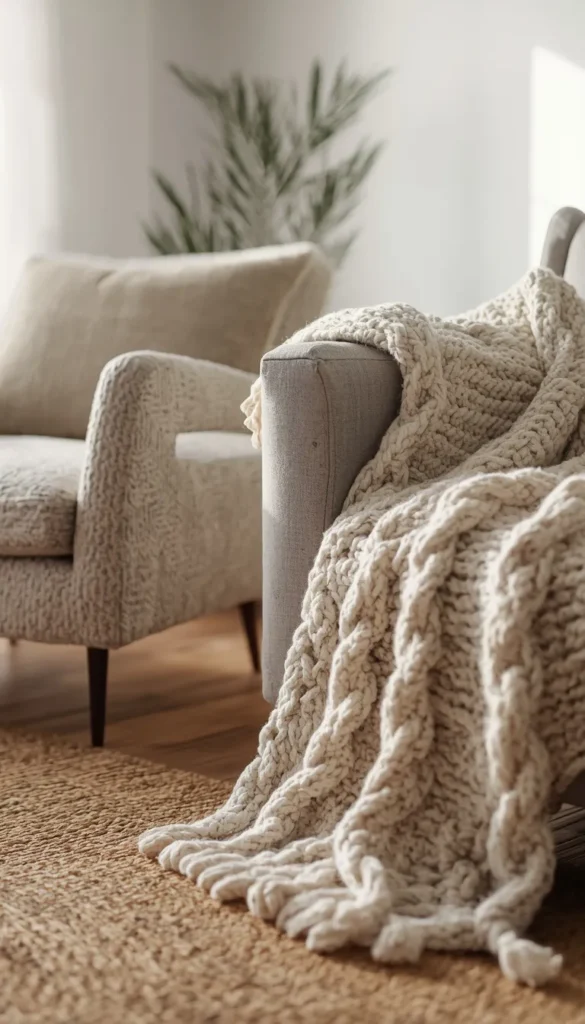
White walls are just the beginning. The real warmth in a white living room comes from what you put in front of them, and texture does a lot of heavy lifting here. Think about mixing materials the way you’d build an outfit, not matching them.
A few combinations I go back to again and again:
- A boucle or wool armchair paired with a smooth linen sofa
- A chunky knit throw draped somewhere it’ll actually get used
- A jute or natural fiber rug underfoot for grounding
The goal is contrast you can feel, not just see. A room full of flat, smooth surfaces in white will always read a little sterile, no matter how nice the paint color is.
3. Add Wood Tones to Break Up the Cold
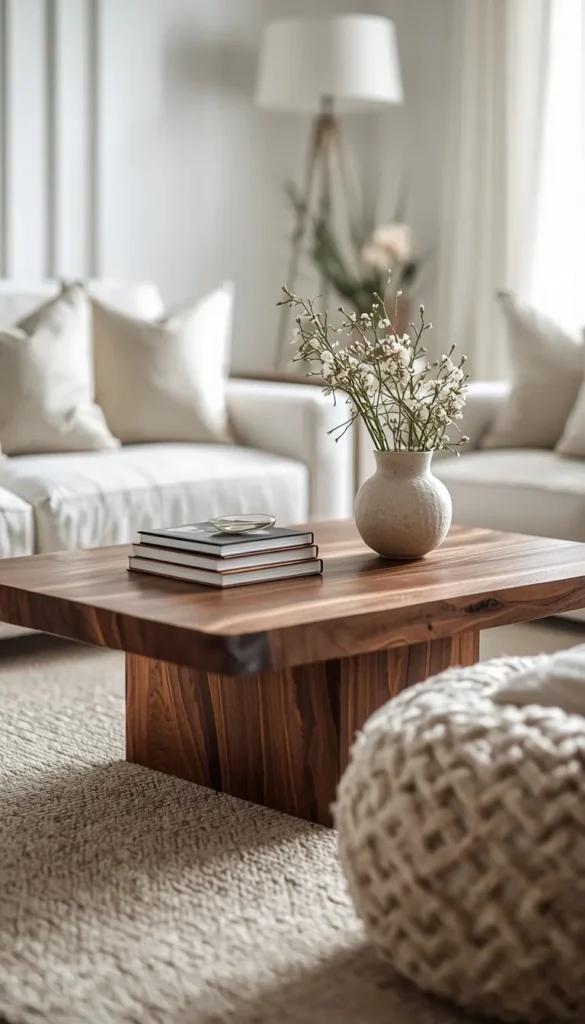
Wood is probably the single easiest fix for a white living room that feels a bit too clinical. It brings in warmth instantly, and it does it without competing with your color scheme the way another paint color might. Oak, walnut, and even reclaimed barn wood all work beautifully against white walls, and you don’t need much of it to make an impact. One substantial piece, like a live edge coffee table or a wood framed mirror, can shift the entire mood of the room.
I’ve also noticed that mixing wood tones, rather than matching them perfectly, actually looks more collected and less like a furniture showroom. A lighter oak side table next to a darker walnut console isn’t a mistake. It’s how real homes end up looking over time.
4. Warm Up Your Lighting
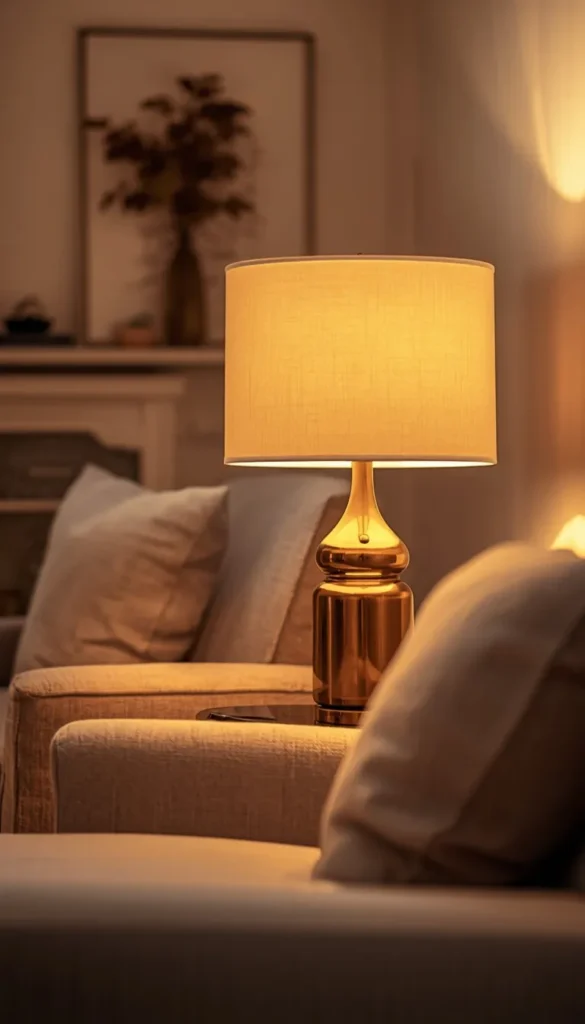
This one gets overlooked constantly, and it’s honestly one of the fastest fixes available. A cold LED bulb can undo hours of careful decorating in about five seconds. If your white living room feels flat or a little sterile in the evening, check your bulbs before you touch anything else.
Aim for bulbs in the 2700K to 3000K range for that soft, warm glow, and skip anything labeled daylight or cool white for your main living spaces. Layering your lighting matters just as much as the temperature. A single overhead fixture will always feel harsher than a mix of table lamps, floor lamps, and maybe a dimmer on your overhead light. My rule of thumb is at least three separate light sources in any living room, white walls or not.
Which room in your home do you think could actually handle going all white, and which one would you never risk it in?
5. Try Off White or Greige Instead of Stark White
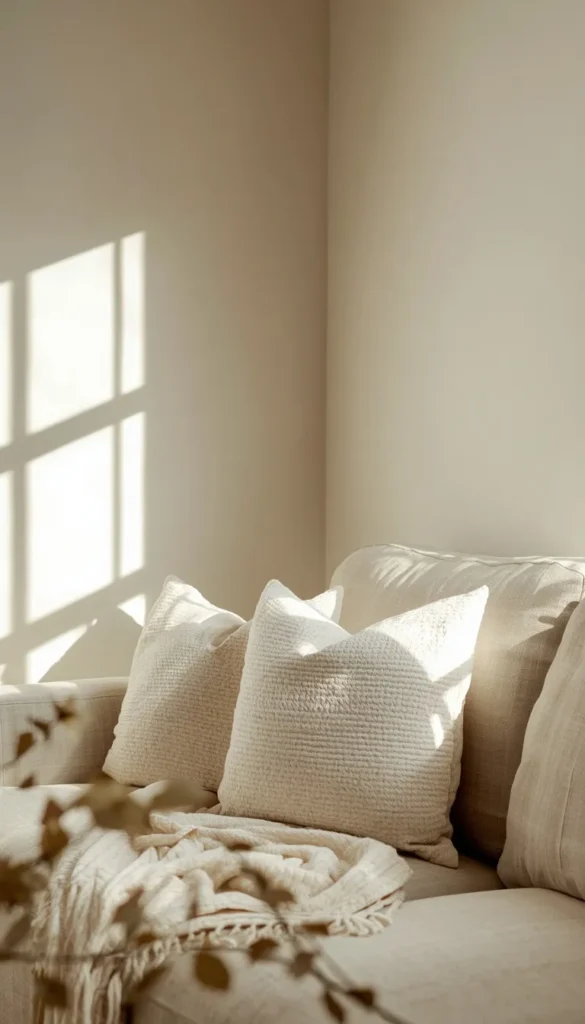
If you’ve tried a pure white and it still feels a little too stark for your taste, off white might be the answer you’re looking for. Shades with a hint of cream, beige, or gray woven in tend to feel softer and more livable, especially in homes that don’t get flooded with natural light all day. It’s a subtle shift, but it changes the entire personality of a room.
I find this option works especially well in older homes with a lot of trim and molding, since the slight warmth keeps those architectural details from feeling stark or clinical against a true white.
6. Build a Gallery Wall for Personality
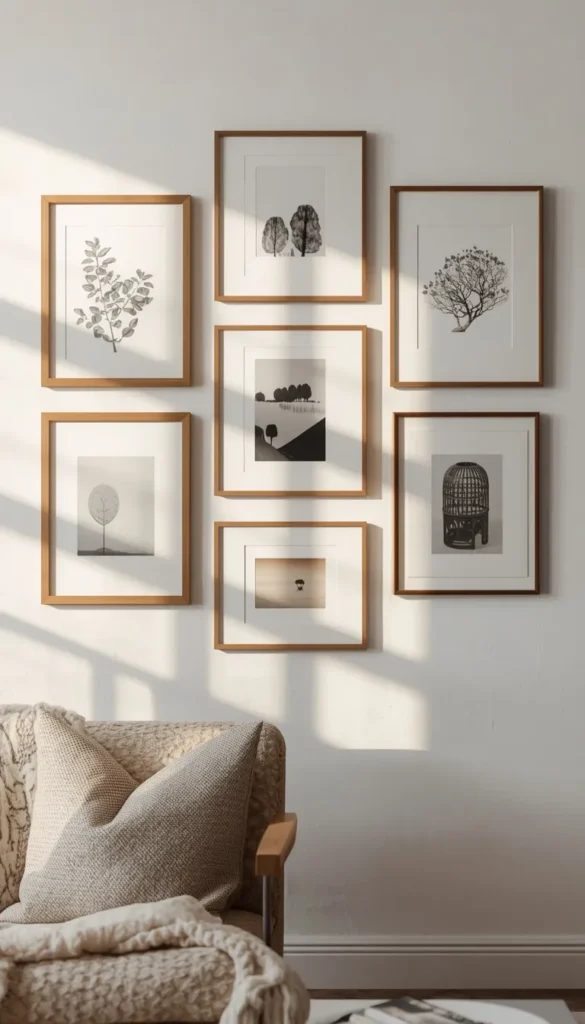
A blank white wall is basically an invitation, and one of my favorite ways to accept it is with a gallery wall. White backgrounds make artwork pop in a way that busier wall colors simply can’t compete with, so this is your chance to go a little bold with what you hang. Mix frame sizes, mix mediums, and don’t worry too much about perfect symmetry.
One thing I always tell clients is to lay the arrangement out on the floor first before a single nail goes in the wall. It saves you from a lot of frustrating patchwork later, and it lets you actually see how the pieces relate to each other before committing.
Top 6 White Living Room Ideas
| Idea | Estimated Price | Maintenance |
|---|---|---|
| Warm White Paint (Whole Room) | $50 – $80 per gallon | Medium |
| Boucle or Wool Accent Chair | $300 – $900 | Medium |
| Wood Coffee Table (Live Edge) | $250 – $700 | Low |
| Warm Bulb Lighting Swap | $30 – $100 total | Low |
| Statement Area Rug | $150 – $600 | Medium |
| Performance Fabric Sofa or Slipcover | $800 – $2,500 | Low |
7. Anchor the Room With a Statement Rug
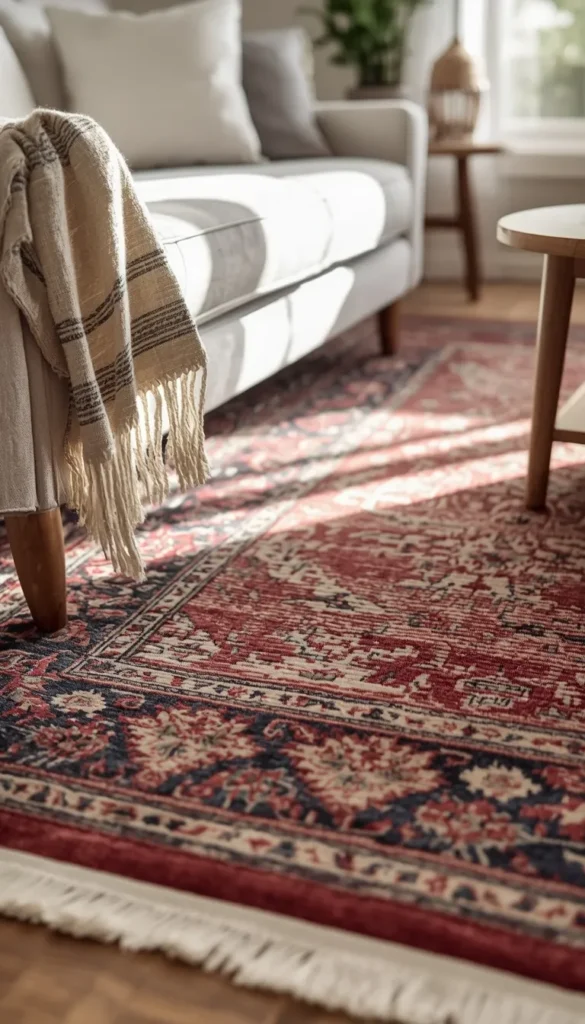
White walls give you an unusually generous amount of freedom when it comes to choosing a rug, and I think people underuse this. A patterned rug, a deep colored rug, or even a plain rug in a bold texture can become the visual anchor of the entire room without ever fighting with your walls.
Size matters more than most people expect here. A rug that’s too small will make even a beautifully designed white living room look unfinished and a little awkward.
- For the main seating area, aim for at least the front legs of your sofa and chairs to sit on the rug
- In smaller rooms, a rug that’s proportionally too tiny is one of the most common layout mistakes I see
8. Mix in Black or Bronze for Contrast
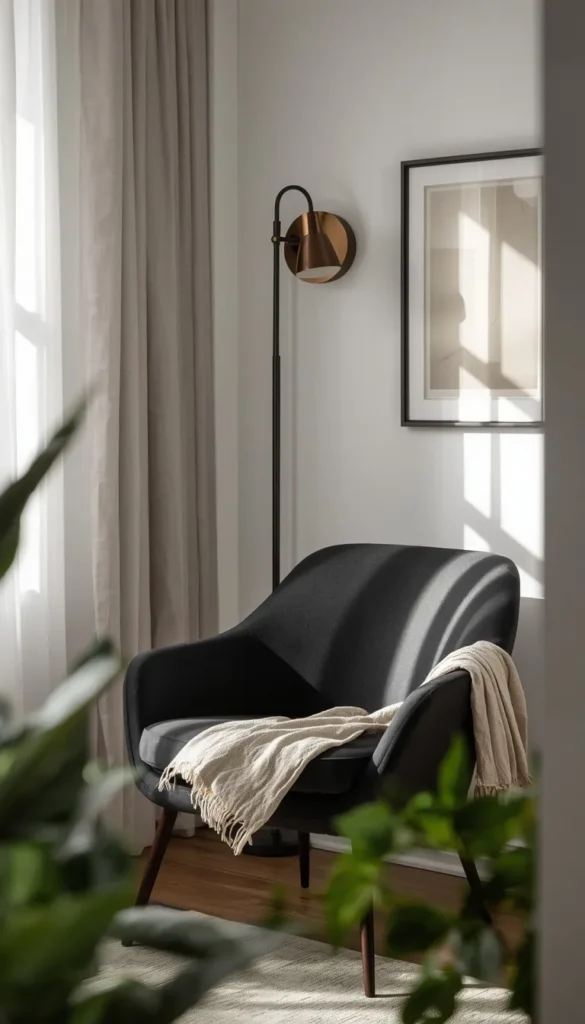
White living rooms can start to feel a little soft around the edges if everything else in the room is pale too. This is where a bit of black or bronze earns its keep. Even small doses, like matte black window frames, bronze picture lights, or a single black accent chair, give the eye somewhere to land and add a sense of definition the room might be missing.
I’ve noticed that clients who are nervous about adding dark accents almost always end up loving the result once they try it, because it doesn’t read as heavy the way they expect. It reads as intentional.
If you had to pick just one thing from this list to change this weekend, what would it be?
9. Bring in Real Plants, Not Fake Ones
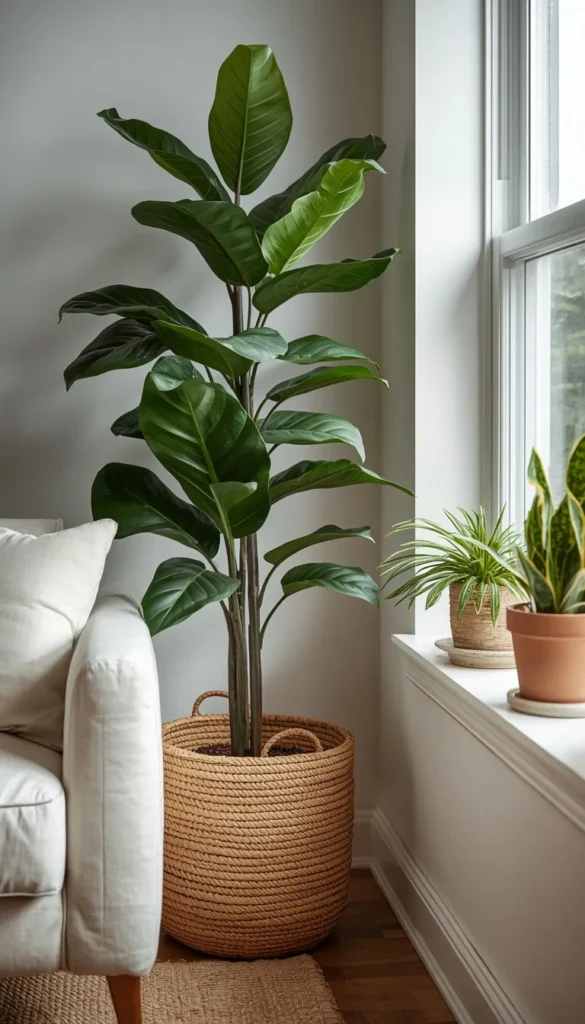
Nothing softens a white living room quite like greenery, and I’ll always push clients toward real plants over artificial ones whenever it’s practical. There’s something about living, growing things against a white backdrop that just feels right. It adds movement, a bit of unpredictability, and honestly a sense of life that a static room can be missing.
Vary the heights if you can. A tall fiddle leaf fig or olive tree in a corner, paired with something smaller on a side table or windowsill, creates a kind of layered landscape effect rather than one lonely plant sitting in the middle of the room looking a little out of place.
10. Know the Real Cons Before You Commit
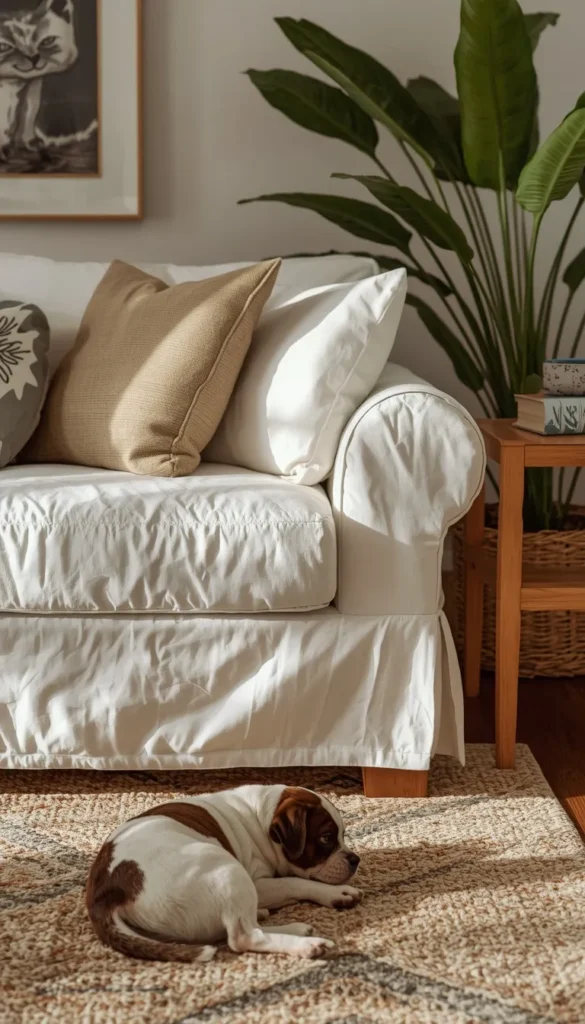
I think it’s only fair to be honest about this part, because most articles skip it entirely. White furniture and pets, or white furniture and small kids, is a genuinely tricky combination. A white sofa looks incredible in photos, but real life involves crayons, muddy paws, and the occasional spilled glass of red wine, and no amount of careful styling changes that reality.
A few things worth knowing before you commit:
- Performance fabrics and slipcovers make white upholstery far more forgiving
- Darker or patterned rugs hide wear and stains much better than pale ones near high traffic areas
- Matte paint finishes show scuffs more than eggshell or satin, especially at kid height
None of this means you should avoid white. It just means going in with your eyes open, and maybe choosing a few practical swaps in the areas that see the most daily life.
11. Choose Your Style: Farmhouse, Coastal, Mid Century or Transitional
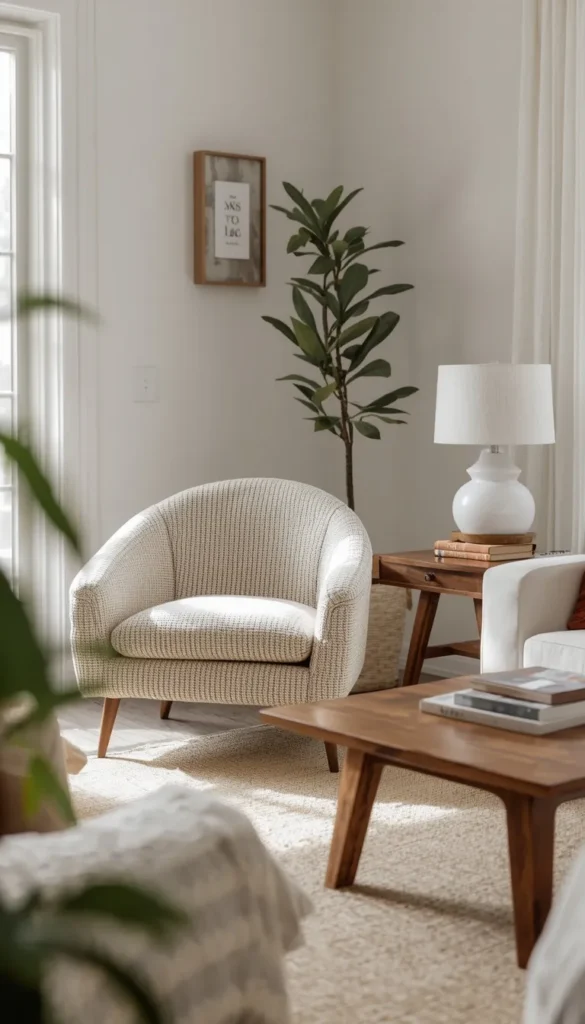
White is really more of a foundation than a finished style, and the direction you take it in comes down to what you layer on top. Modern Farmhouse leans into shiplap, black hardware, and a slightly rustic wood tone. Coastal style pairs white with soft blues, rattan, and lots of natural texture, almost like a beach house whether or not you actually live near one. Mid Century Modern brings in cleaner lines, walnut furniture, and a few bold accent colors like mustard or burnt orange. Transitional, my personal go to recommendation for most clients, blends traditional comfort with contemporary simplicity and tends to age the best over time if resale value is on your mind.
Your Quick Styling Guide
By Budget
- Starter Approach: Warm white paint, swap your bulbs to 2700K, add one wood accent piece. Under $200 total.
- Investment Approach: Performance fabric sofa, statement rug, wood built ins or panelling. $2,000 and up, built to last a decade or more.
By Lifestyle
- Busy Families with Pets or Kids: Skip the wool rug, go performance fabric on upholstery, choose greige over stark white for forgiving walls.
- Minimalists in Small Spaces: Stick to pure white walls, one statement piece per wall, keep textures simple and let the light do the work.
- Open Concept Living: Zone with a large rug, mix wood tones between zones, use lighting to separate areas without walls.
Frequently Asked Questions
Is a white living room hard to keep clean?
Yes, but only if you skip the right fabric choices. Performance fabrics and slipcovers handle daily life fine. The real risk zones are light rugs and matte paint near high traffic areas.
What is the best white paint for a living room with little natural light?
Go with a warm white that has yellow or cream undertones, not gray. Cool whites tend to look flat and a bit sad in rooms that don’t get much sun. Brands like Benjamin Moore and Sherwin Williams both have solid warm white lines built for this exact problem.
Does a white living room make a small space look bigger?
Yes, it’s one of the most reliable tricks in the book. White reflects light and removes visual boundaries, so walls feel like they recede rather than close in. Pair it with a large rug instead of a small one to keep the illusion working.
How do I stop a white living room from feeling cold?
Layer in texture and warm lighting before you touch the paint color. Boucle, wool, and wood tones do most of the work. Bulbs in the 2700K range finish the job.
Should I choose white or greige for a living room?
Choose greige if you want something more forgiving day to day. It hides scuffs better and feels a touch cozier in low light. Pure white looks crisper but shows every mark.
conclusion
Your living room is where your actual life happens, so it deserves more than a color you settled on because it was easy. Pick up one paint sample this week. Swap one bulb. Move one plant into that empty corner you’ve been ignoring. None of it has to happen at once, and honestly, the best white living rooms I’ve worked on came together slowly, one small decision at a time.
