
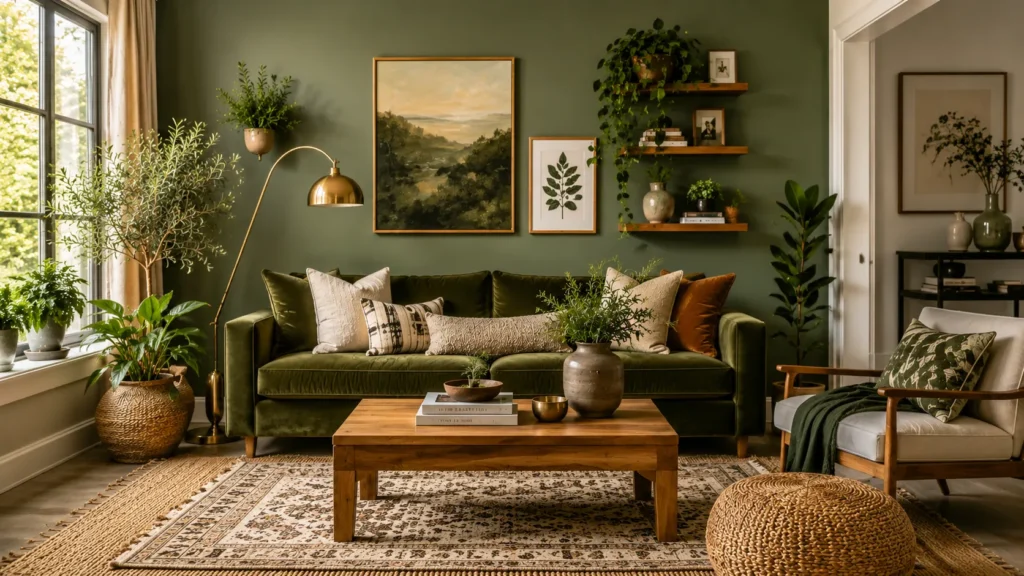
Green has quietly taken over as America’s favorite living room color, and honestly, I get it. I’ve walked into more client homes this year asking for green than any other shade, from dusty sage in a Nashville bungalow to a deep forest tone in a Seattle high rise. It’s the one color that manages to feel grounding and alive at the same time, whether your style leans Modern Farmhouse or Mid Century Modern. So if you’re standing in the paint aisle overwhelmed by fan decks, I’ve pulled together 13 green living room ideas that actually work in real American homes, not just in magazine spreads.
My Design Notes
I had a client outside Chicago last year who fell in love with a deep forest green for her living room, straight off Pinterest, no question about it. The problem was her space faced north, and the room only got soft, indirect light most of the day. I knew if we painted all four walls in that shade, we’d end up with something that felt more like a cave than a cozy retreat. So my team and I pitched a compromise: we kept the drama on just one wall and pulled a much lighter sage across the rest of the room. We also swapped her cool toned lamps for warm brass fixtures to counter the lack of natural light. When we finished the install, she told me it felt “like the forest, but the friendly version,” which might be my favorite client compliment ever. That project taught me something I now tell every client asking for a bold green: it’s never just about the color, it’s about how much light your room is working with.
13 Stunning Green Living Room Ideas to Elevate Your Everyday Space
1. Sage Green Living Rooms
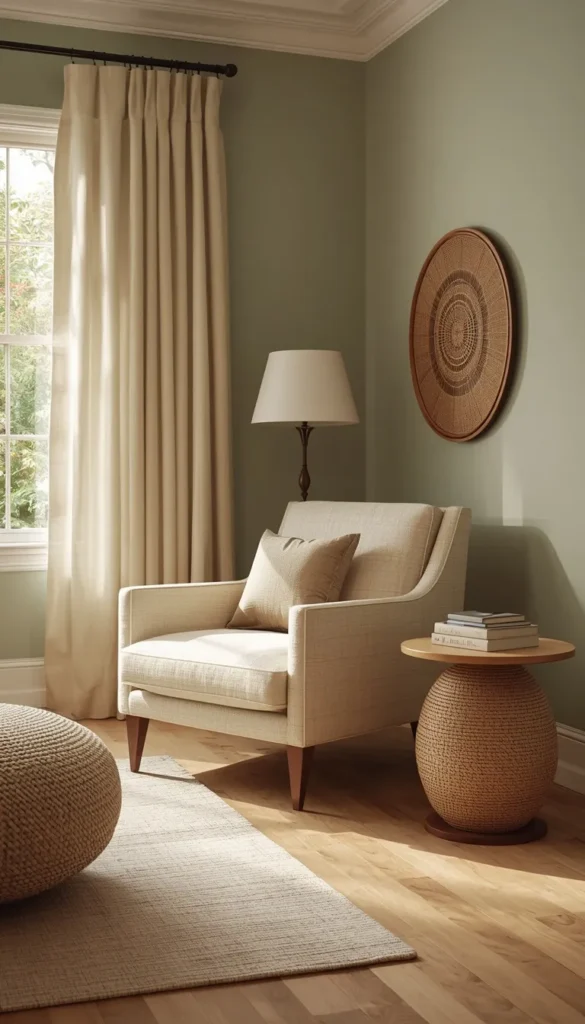
Sage is the shade I recommend most often when a client says they want green but aren’t ready to commit to anything bold. It reads as soft, almost gray in some light, and it plays incredibly well with natural materials like linen, rattan, and light oak. I’ve used it in everything from a Modern Farmhouse in Ohio to a Transitional space in Austin, and it never feels dated. A quick trick I’ve learned is to pair sage walls with warm white trim instead of stark white, since it keeps the room from feeling too clinical.
2. Olive Green Living Rooms
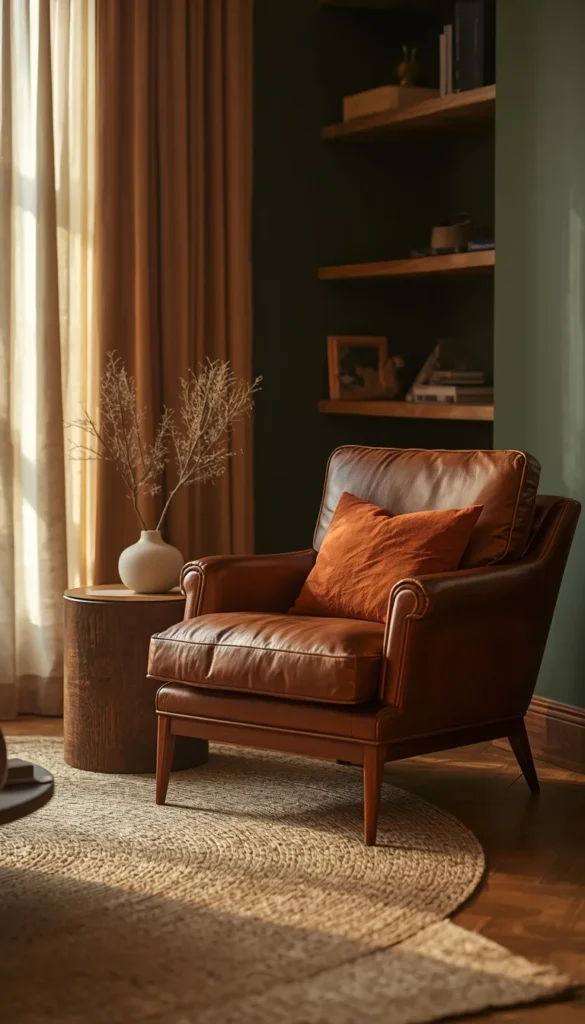
Olive is sage’s moodier cousin. It leans warmer and earthier, which makes it a natural fit if your home already has a lot of wood tones or terracotta accents. This is the shade I turn to for clients chasing that Organic Modern look. It can feel heavy in a room without much natural light, though, so I usually suggest it for south or west facing living rooms where the sun does some of the work for you.
3. Emerald Green Living Rooms
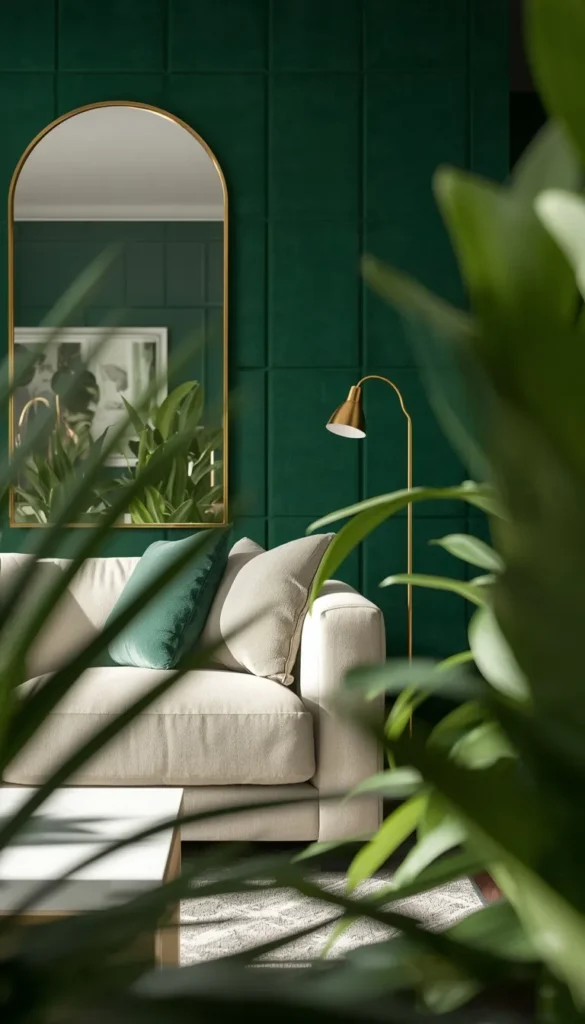
Emerald is the showstopper. It’s saturated, jewel toned, and honestly, it’s not for the faint of heart. This one works best as a statement, not a whole room commitment, at least not for most homeowners. Here’s where I’d use it:
- On a single accent wall behind the sofa
- On upholstery, like a velvet accent chair
- In a smaller powder adjacent nook that connects visually to the living room
One thing to watch out for is fading. Emerald velvet in particular can lose its richness fast in direct sunlight, so keep it away from south facing windows if you’re going the furniture route.
4. Dark and Forest Green Living Rooms
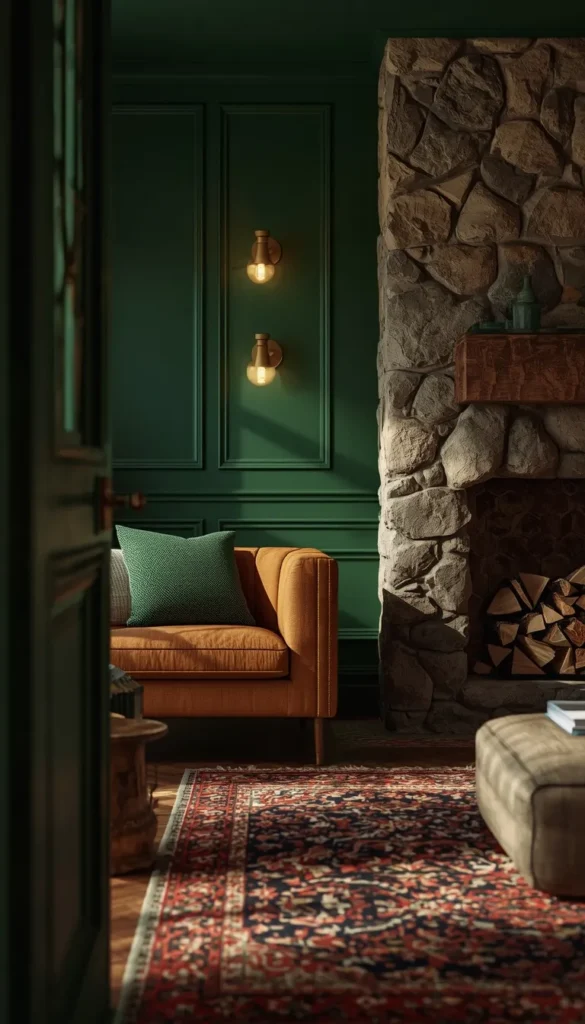
This is the shade from my Chicago project, and it’s become one of my favorite tools for building a cozy, cocooning living room, the kind you want to curl up in during winter. It’s dramatic without being trendy in a bad way. But I’ll be straight with you, dark green in a room with limited natural light can start to feel more like a cave than a retreat. My advice is to test it on one wall first, live with it for a week, and see how it feels morning versus evening before you commit the whole room.
Which room in your house do you think could actually handle a bold green right now?
5. Light and Mint Green Living Rooms
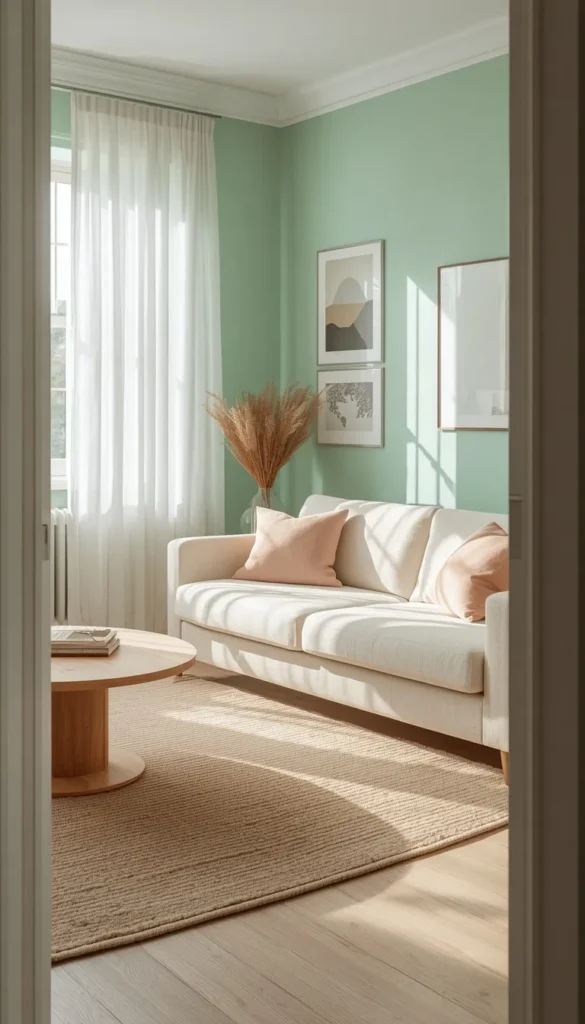
If your living room doesn’t get a ton of natural light, or you’re working with a small apartment, a light or mint green is going to be your best friend. It bounces light around instead of absorbing it, which makes even a tiny space feel more open. I’ve used this shade in a handful of Chicago and Brooklyn apartments where square footage was tight, and it consistently reads as fresh and calm rather than cramped. It pairs beautifully with blush pink and warm wood accents too.
6. Green Accent Wall Ideas
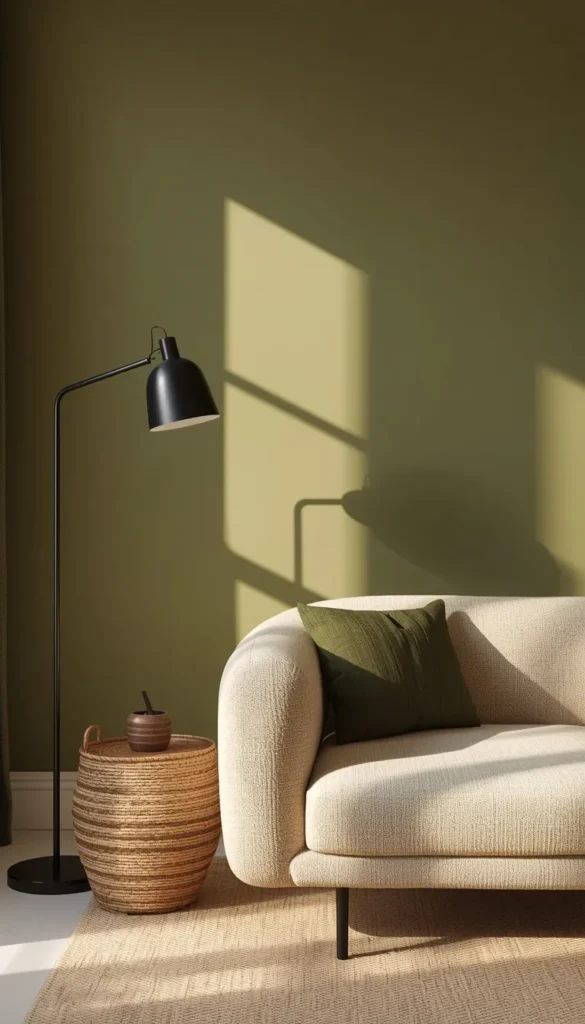
Not everyone wants to commit to four green walls, and honestly, you don’t have to. An accent wall gives you all the mood with a fraction of the risk. My rule of thumb is to choose the wall your eye naturally lands on when you walk into the room, usually the one behind the sofa or the one with the fireplace. Matte and eggshell finishes tend to look more sophisticated than satin or gloss in this application, since they soften the color rather than making it look plasticky under lamp light.
Top 6 Green Living Room Ideas
| Idea | Estimated Price | Maintenance |
|---|---|---|
| Sage Green Walls | $45 to $75/gallon | Low |
| Olive Green Walls | $45 to $75/gallon | Low |
| Emerald Green Accent Wall | $50 to $90/gallon | Medium |
| Dark Forest Green Room | $60 to $100/gallon | Medium |
| Green Velvet Sofa | $800 to $2,500 | High |
| Green Performance Fabric Sofa | $900 to $2,800 | Low |
7. Green Sofa or Couch as Your Anchor Piece
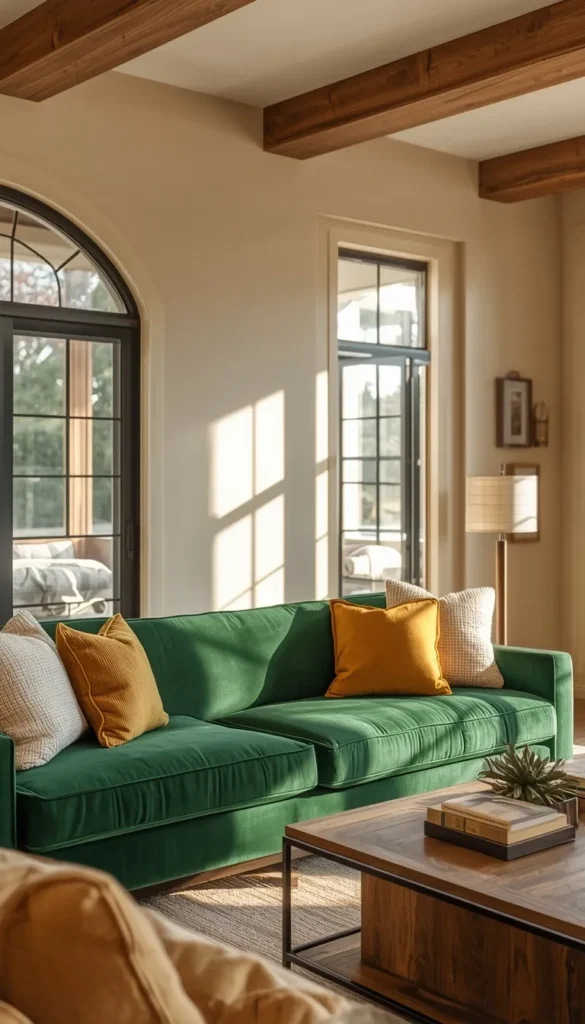
A green sofa does a lot of heavy lifting in a room, because it lets you keep your walls neutral while still getting that lush, nature inspired feel. Velvet is gorgeous, no argument there, but I always ask clients with pets or young kids to think twice before going that route.
- Velvet shows water marks and can pill under constant friction
- Performance fabrics now come in incredible green tones that look nearly identical to velvet
- Darker greens hide everyday wear better than lighter ones
We used a performance emerald fabric on a client’s sofa in Denver last spring specifically because of her two golden retrievers, and two years later it still looks brand new.
8. Green and White Living Rooms
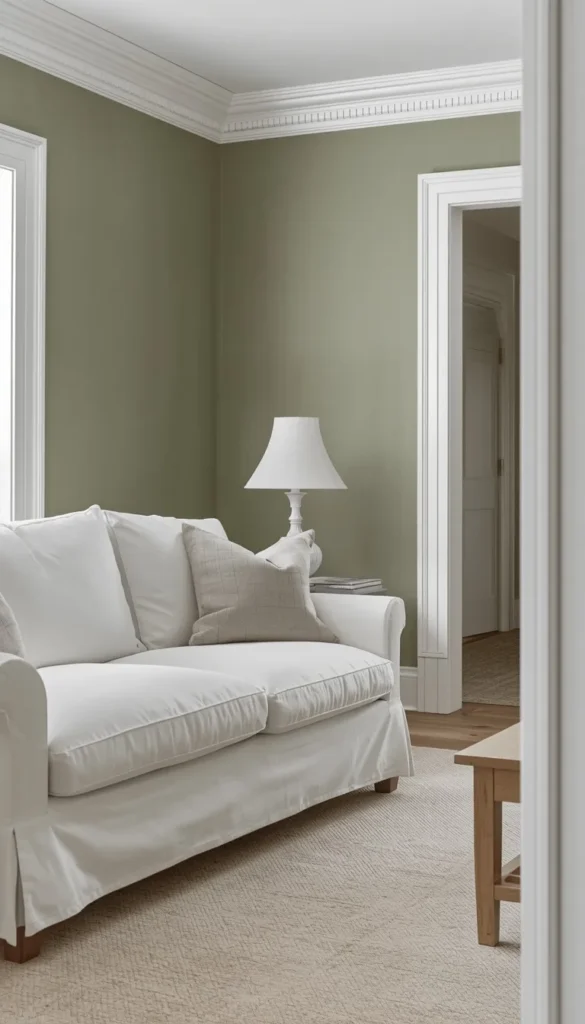
This is the combination I recommend to clients who want green but are nervous about going too bold. White keeps everything crisp and grounded, and it’s genuinely the easiest pairing to get right on your first try. Crisp white trim against a sage or olive wall gives you that classic, timeless look that never feels like it’s chasing a trend. It’s also the most forgiving combo if you’re renting and need something that photographs well without a huge investment.
If you had to pick just one wall in your home to go green, which one would it be?
9. Green and Beige Living Rooms
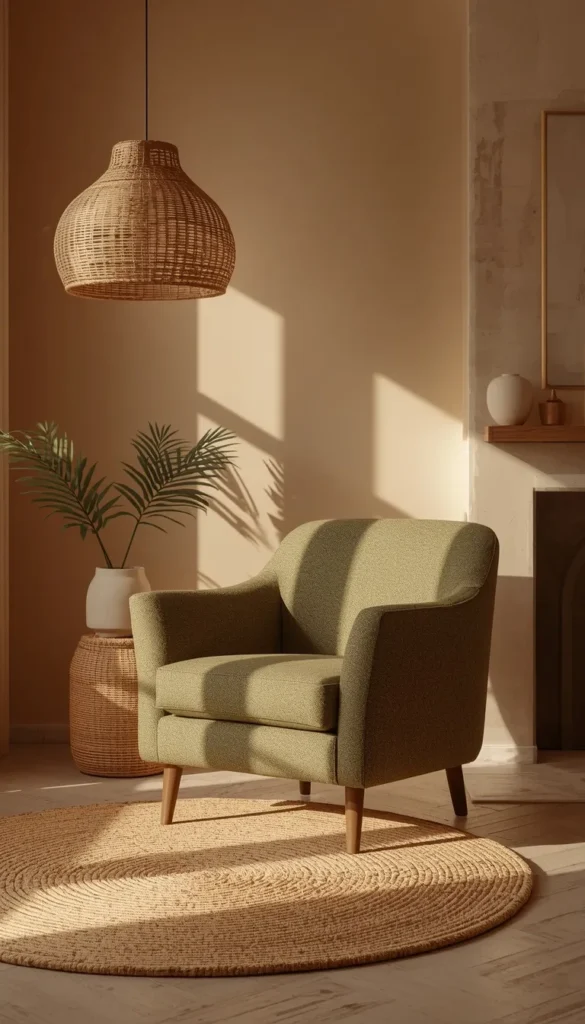
Green and beige together is basically the definition of Organic Modern, and it’s one of the most requested pairings I get right now. The warmth of beige takes the edge off a saturated green, so even a bold shade like emerald starts to feel approachable and livable. I like layering in a beige boucle chair or a jute rug to add texture, since the goal here is warmth, not just color coordination.
10. Green and Wood Tones
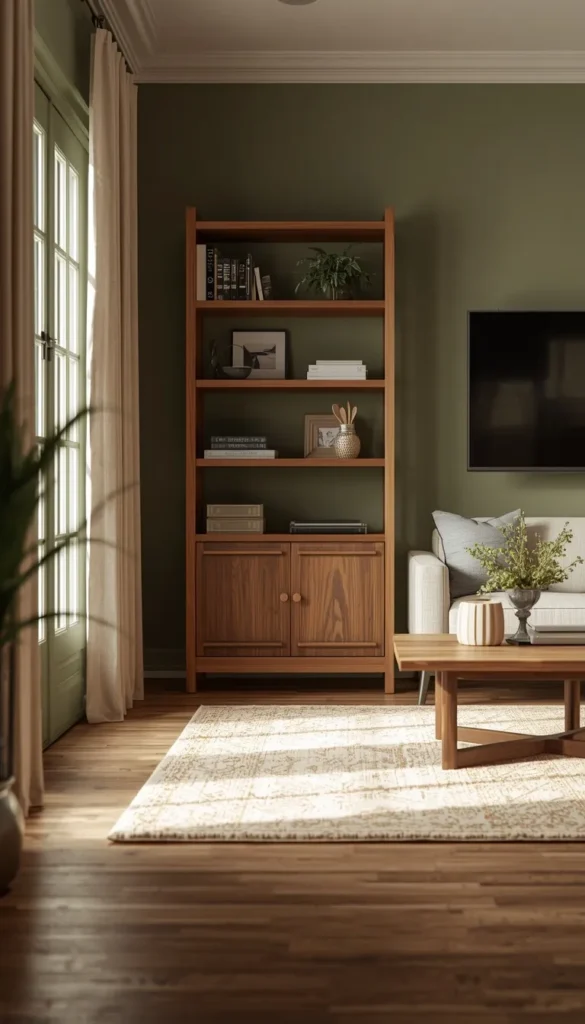
Green and wood is a pairing that basically can’t go wrong, but there’s a nuance most people miss. Cooler toned greens like sage look best against warm woods like walnut or oak, while warmer greens like olive actually pair better with cooler toned woods like ash or whitewashed oak. Getting this undertone match right is what separates a room that feels intentional from one that feels a little off, even if you can’t quite put your finger on why.
11. Small Apartment Green Living Room Ideas
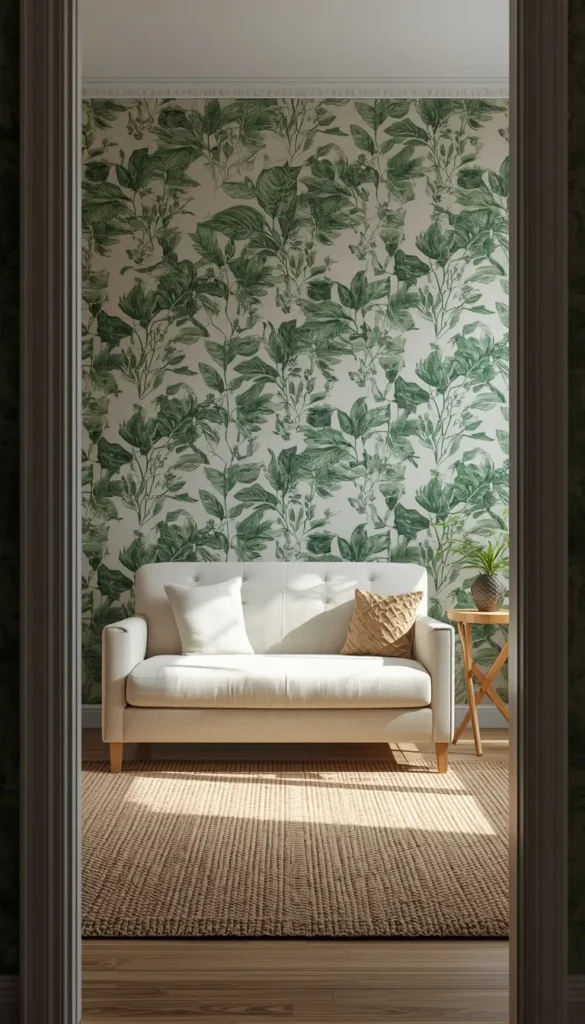
Renters and small space dwellers, this one’s for you. You don’t need to paint a single wall to get the green living room look, and honestly, that’s good news if your lease says no. Here’s what I tell clients working with limited space or a landlord’s rules:
- Peel and stick wallpaper in a green botanical print gives you the look without the commitment
- A green throw blanket and a couple of pillows go further than people expect
- One statement piece, like a green velvet accent chair, can carry the whole room
Light and mint greens work especially well here too, since they keep a small space feeling open instead of boxed in.
12. Budget Breakdown, Where to Splurge and Where to Save
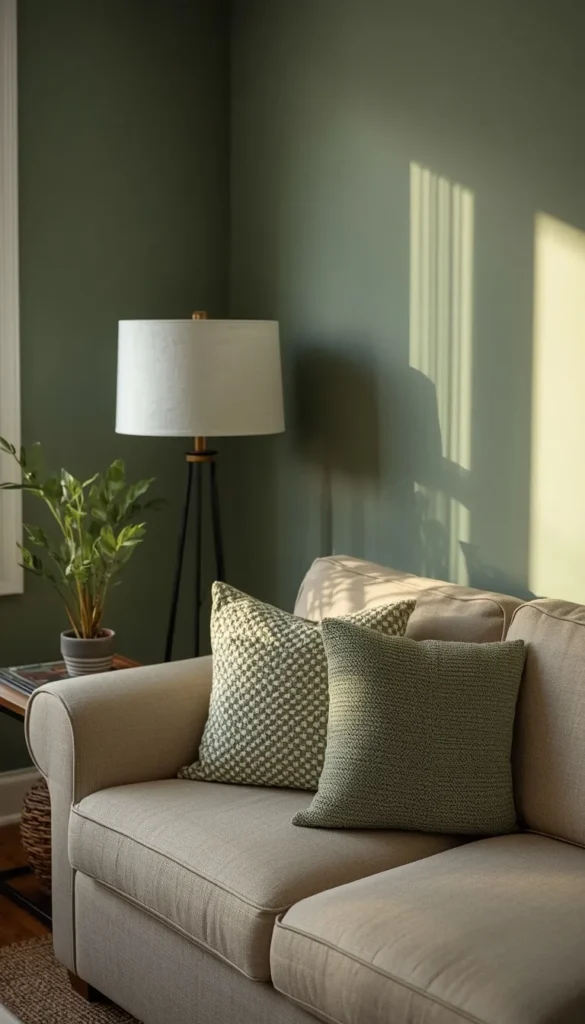
Green living rooms can be done on almost any budget, but knowing where to spend your money matters. I always tell clients to splurge on the sofa or the paint labor if you’re hiring a pro, since those are the pieces that touch the whole room. Save on things like throw pillows, small decor accents, and even the rug if you’re just starting to build out the space. A gallon of quality paint runs somewhere in the range of $45 to $75 depending on the brand, and that alone can transform a room more dramatically than almost anything else on this list.
Are you more drawn to a cozy dark green vibe, or something light and airy for your space?
13. Maintenance Reality, What Nobody Tells You About Green Rooms
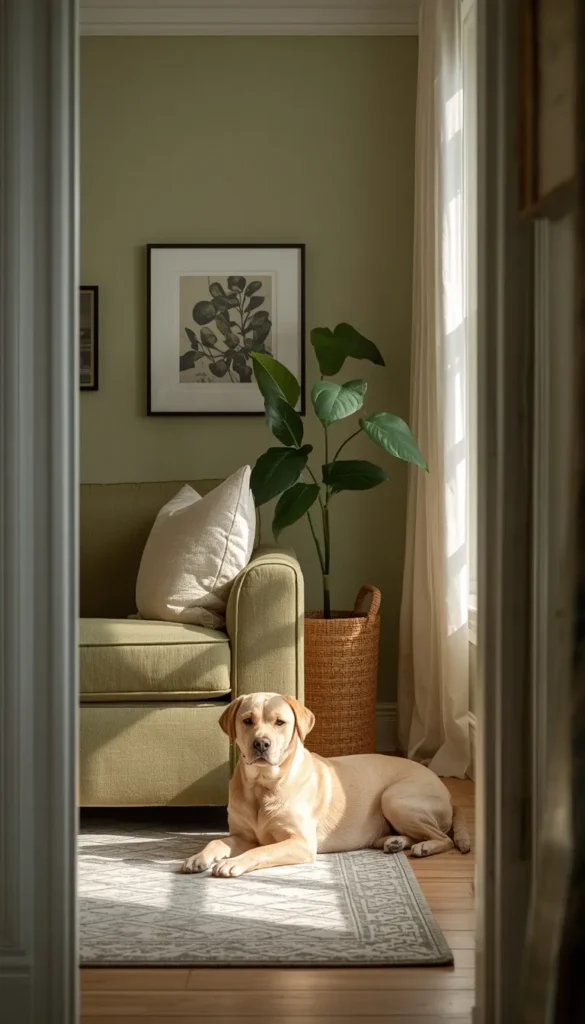
We’ve covered the pretty part, now let’s talk about what actually happens after you move in. Green rooms are gorgeous, but they come with a few real world considerations I wish more people knew going in.
Sunlight is the big one. Rooms with a lot of direct exposure will see fading over time, especially on fabric and especially with richer, more saturated shades like emerald. I always recommend UV protective window film if your living room gets hit with afternoon sun and you’ve gone bold with color.
Pets and kids matter too. If you’ve got a dog that loves the couch or little ones who treat furniture like a jungle gym, lean toward performance fabrics over velvet, and darker greens over lighter ones since they simply hide life a little better.
And one more thing worth knowing, greens with a lot of blue undertone can shift and look almost teal under certain LED bulbs. If you’re set on a specific shade, it’s worth testing a sample under your actual lighting at night before you commit to gallons of paint. It’s a small step, but it saves so many people from repainting a room they otherwise loved.
Which Green Is Yours?
By Budget
- Starter Budget: Sage or light green paint, one accent wall, throw pillows in a green pattern
- Mid Range: Full room in olive or sage, performance fabric accent chair, a quality area rug
- Investment: Emerald or dark forest green room with custom drapery, a velvet sofa, and professional paint application
By Lifestyle
- Small Spaces or Apartments: Light or mint green, peel and stick wallpaper, one statement piece instead of full paint
- Busy Families or Pet Owners: Performance fabric sofas, darker greens that hide wear, low maintenance paint finishes
- Design Lovers Who Want Drama: Emerald or forest green, velvet upholstery, bold accent walls
- Renters: Removable wallpaper, green textiles, no permanent paint commitment
Frequently Asked Questions
What color furniture goes with a green living room?
Warm neutrals work best, think cream, camel, or soft beige. Wood tones also pair beautifully, especially oak and walnut. Avoid stark black or cool gray, since it can make the green feel colder than intended.
Is green going out of style for living rooms?
No, green has real staying power because it’s rooted in nature, not a passing trend. Sage and olive especially have been consistent choices for years now. I don’t see that changing anytime soon.
What is the best green paint color for a small living room?
Light or mint green is your safest bet for a small space. It reflects light instead of absorbing it, which keeps the room feeling open. Darker greens can work too, but only with strong natural light.
Does a green living room need a lot of natural light?
Ideally, yes, especially for darker shades like emerald or forest green. Rooms with limited light do better with lighter greens like sage or mint. If you’re set on a dark shade, add warm lighting fixtures to compensate.
How do I make a green living room feel cozy and not cold?
Layer in warm wood tones, soft textiles, and brass or gold accents. Avoid pairing green with too many cool grays or stark whites. A few plants and natural fiber rugs go a long way too.
Conclusion
Your living room should feel like the place you actually want to end your day, not just a room you walk through. Green has a way of doing that better than almost any other color I work with, and you don’t need a full renovation to feel the shift. Grab a sample pot this weekend, paint a swatch on your wall, and just live with it for a few days before deciding. Small steps like that are how the best rooms actually come together.
