
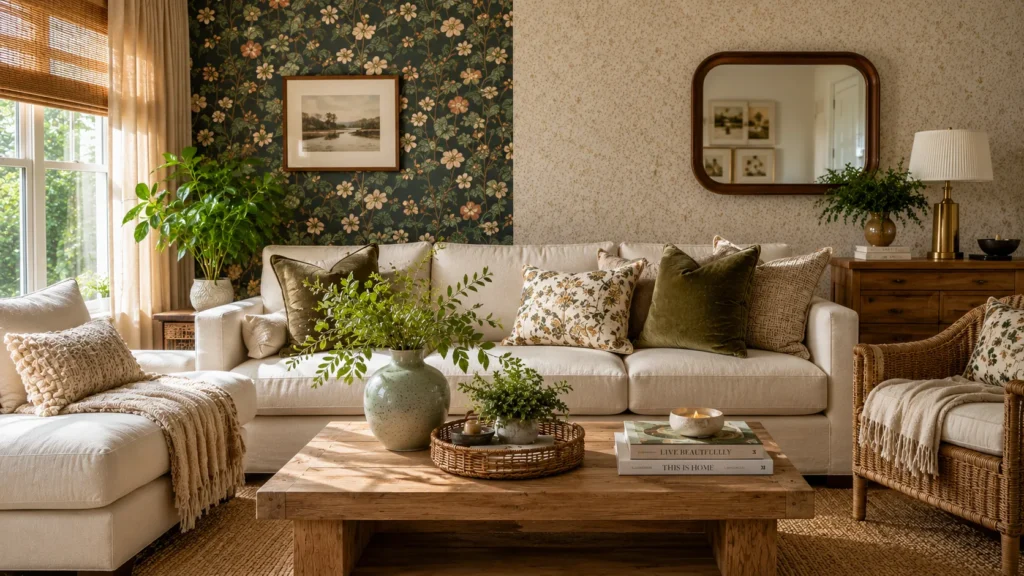
Your living room walls are begging for more than another coat of white paint. I’ve watched clients transform flat, forgettable spaces into rooms people actually want to sit in, and nine times out of ten, wallpaper is the move that gets there fastest. It’s not just about pattern anymore. The right paper can add warmth, hide a less than perfect wall, or make a small room feel intentional instead of cramped.
My Design Notes
When I was working on a project just outside Nashville, my client fell hard for a bold navy botanical print for the wall behind her sofa. I loved the instinct, but she had a young Golden Retriever who leaned on everything, and the paper she’d picked was a standard matte finish that would show every paw swipe and drool mark within weeks.
We pulled a few swatches and I ran a damp cloth test right there in the store, showing her how a scrubbable vinyl coated paper held up compared to the matte option she’d fallen for. She was skeptical at first. The scrubbable finish had a slightly different sheen and she worried it would look less luxe.
We found a similar botanical pattern in the tougher finish, and six months later, it still looks brand new, dog and all. That’s the part nobody tells you when you’re standing in a showroom picking a pattern you love. The finish matters just as much as the print.
15 Stunning Wallpaper Ideas to Elevate Every Corner of Your Living Room
1. Textured Grasscloth Wallpaper for Understated Luxury
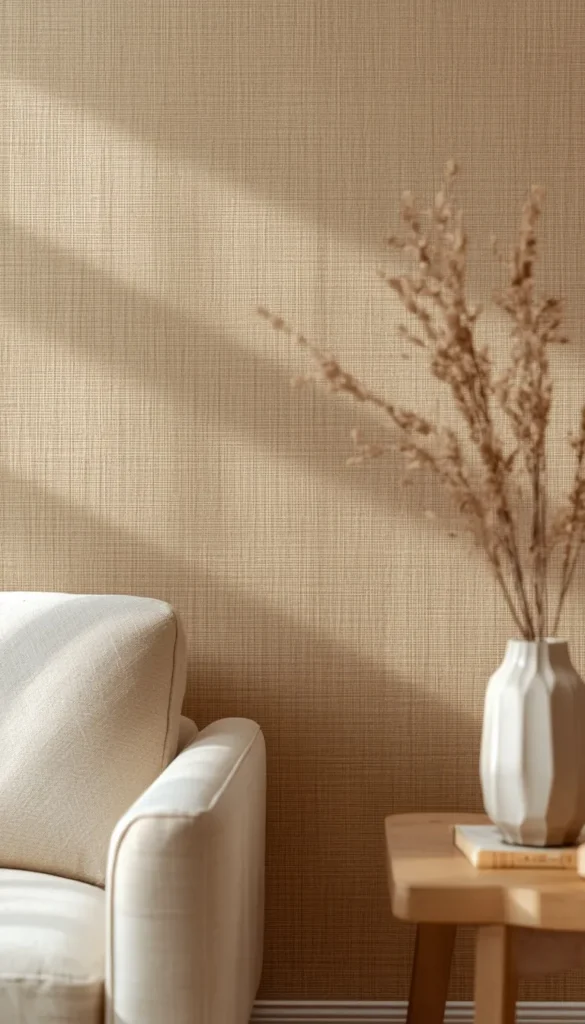
Grasscloth is the paper I reach for when a client wants their living room to feel expensive without screaming for attention. It’s woven from natural fibers like jute or arrowroot, so no two rolls look exactly alike, and that subtle irregularity is what gives a wall real depth instead of a flat, printed look. I’ve used it in rooms with almost no other pattern because it does so much work on its own.
One thing worth knowing before you commit is that grasscloth isn’t forgiving of humidity or direct sun. It can yellow over time near big south facing windows, and it’s not something you want in a room where little hands are constantly touching the walls. If your living room gets steady natural light and stays relatively dry, though, it holds up beautifully for years.
2. Oversized Botanical Prints for a Living Wall Effect
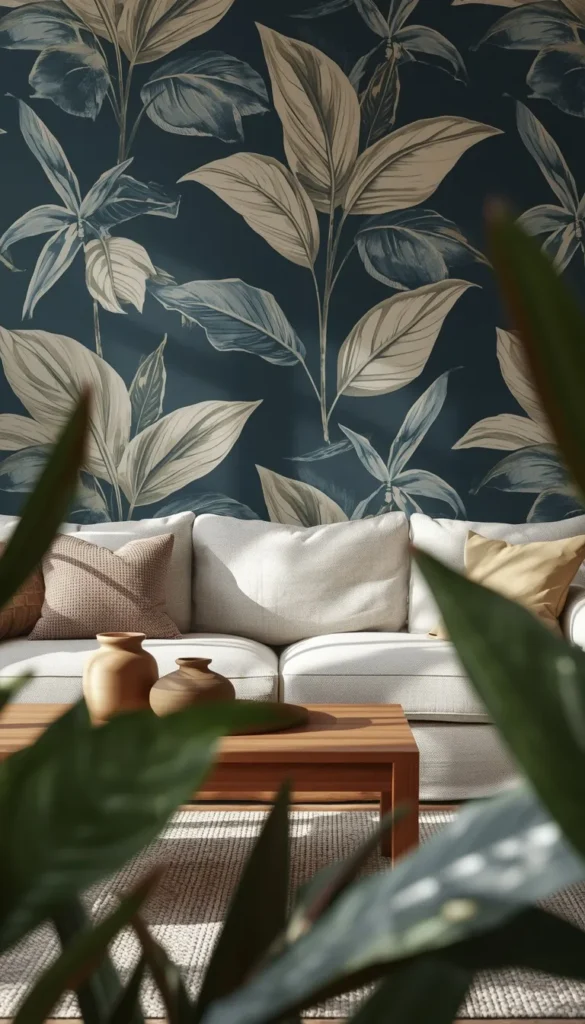
Big leaf prints have become one of my favorite ways to bring the outside in, especially in living rooms that don’t get much of a view. Done right, it feels less like wallpaper and more like a piece of art that happens to cover the whole wall.
A quick trick I’ve learned is to keep the rest of the room neutral when you go this bold. Let the wallpaper be the loudest thing in the space and everything else, the sofa, the rug, the throw pillows, can stay quiet and let it shine.
3. Classic Stripes for a Timeless Transitional Living Room
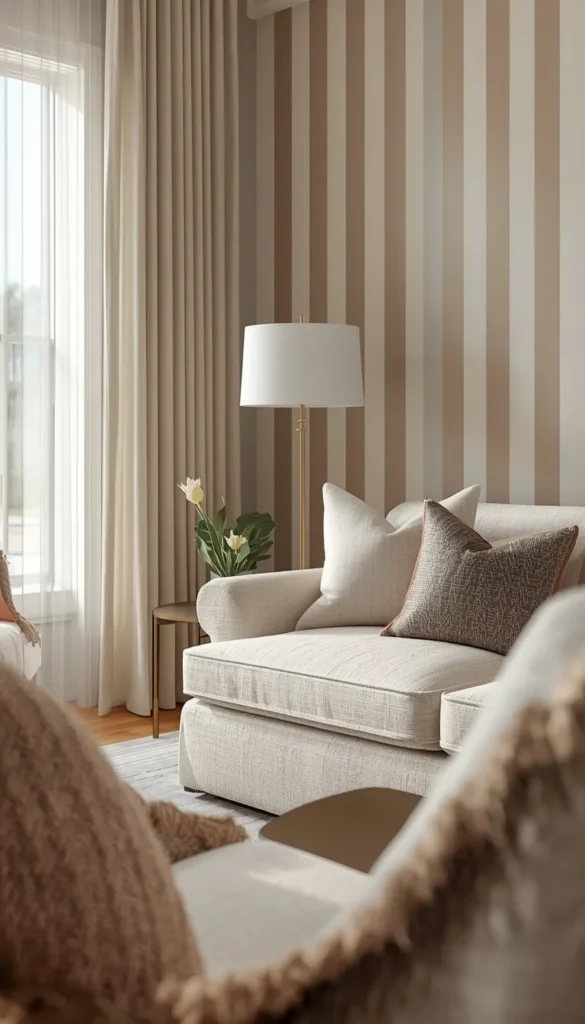
Stripes are the wallpaper equivalent of a well tailored blazer. They work in almost any home, they photograph well, and they rarely feel dated the way a trendier print might in five years. I tend to recommend them for clients who want personality on their walls but aren’t ready to commit to something loud.
A few things to keep in mind with stripes:
- Vertical stripes draw the eye up and can make low ceilings feel taller
- Wider stripes tend to read more traditional, narrower ones feel more modern
- Tonal stripes, where the colors are close in shade, are the safest bet if you’re nervous about commitment
4. Moody Dark Wallpaper for Rooms That Need Drama
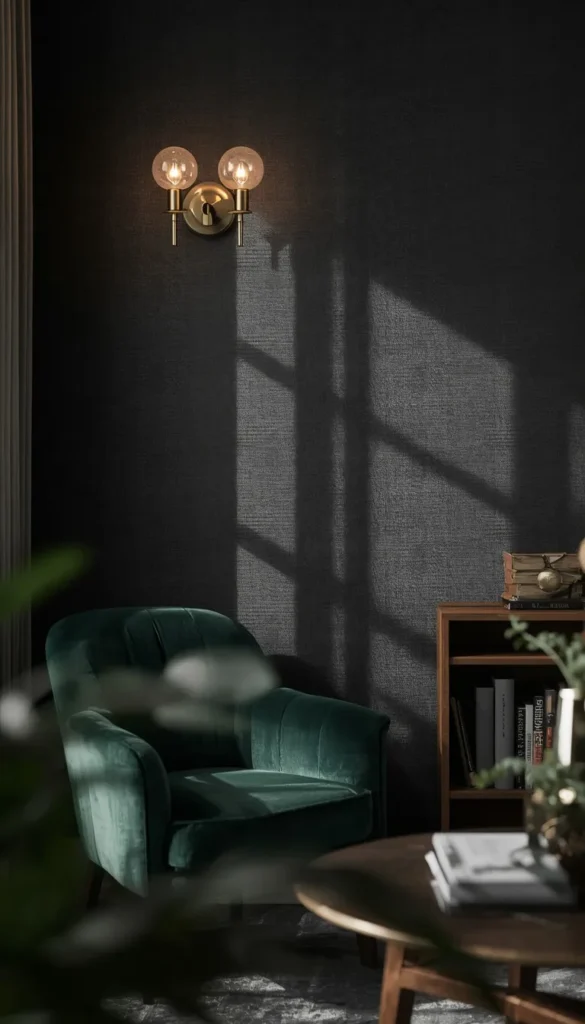
I get pushback on this one constantly. People assume a dark wallpaper will make their living room feel smaller, and in the wrong room, it can. But in a space with good natural light or a room you mostly use in the evening, a deep charcoal, forest green, or navy paper does something most people don’t expect. It makes the room feel warmer and more intentional, almost like the walls disappear and the furniture and art take center stage instead.
The rooms where this backfires are usually small, north facing spaces with one tiny window. If that’s your living room, I’d save the dark drama for a powder room or a reading nook instead, and keep the main living space lighter so it doesn’t feel like a cave.
Which wall in your living room do you keep looking at and thinking it needs something more?
5. Peel and Stick Wallpaper for Renters and Quick Refreshes
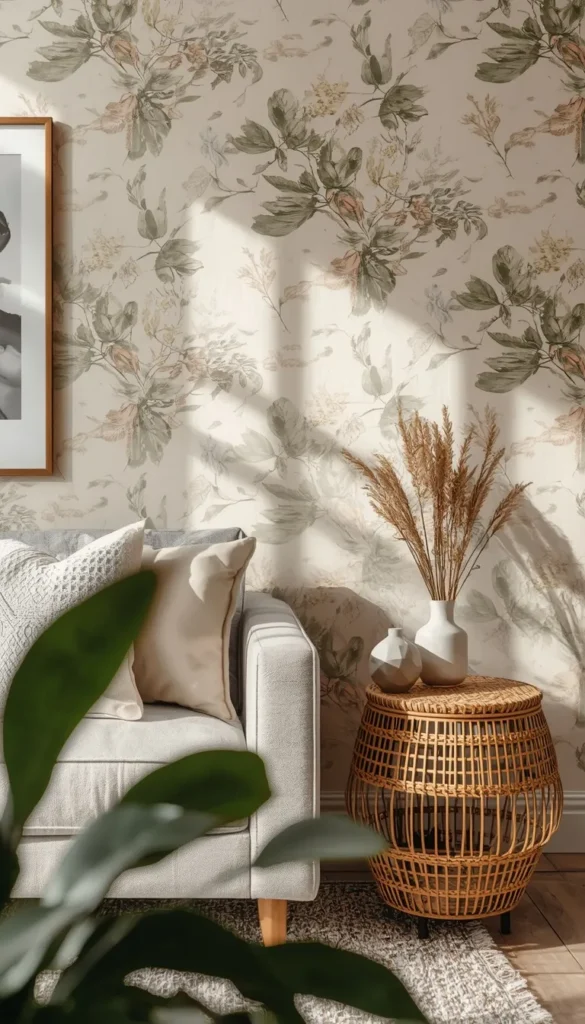
Peel and stick has come a long way from the flimsy, bubbly stuff it used to be. I now recommend it to renters, first time homeowners testing out a bold pattern, and honestly even some of my long term clients who just want a change without the commitment of traditional paper. The application is genuinely doable in a weekend, no paste, no mess, and it comes off clean when you’re ready for something new.
The catch is quality varies a lot between brands, and the cheap stuff will bubble, peel at the seams, and fade faster than you’d like. I always tell clients to spend a little more here. It’s the one category where the price difference actually shows up on your wall within a year.
6. Bold Geometric Patterns for a Mid Century Modern Vibe
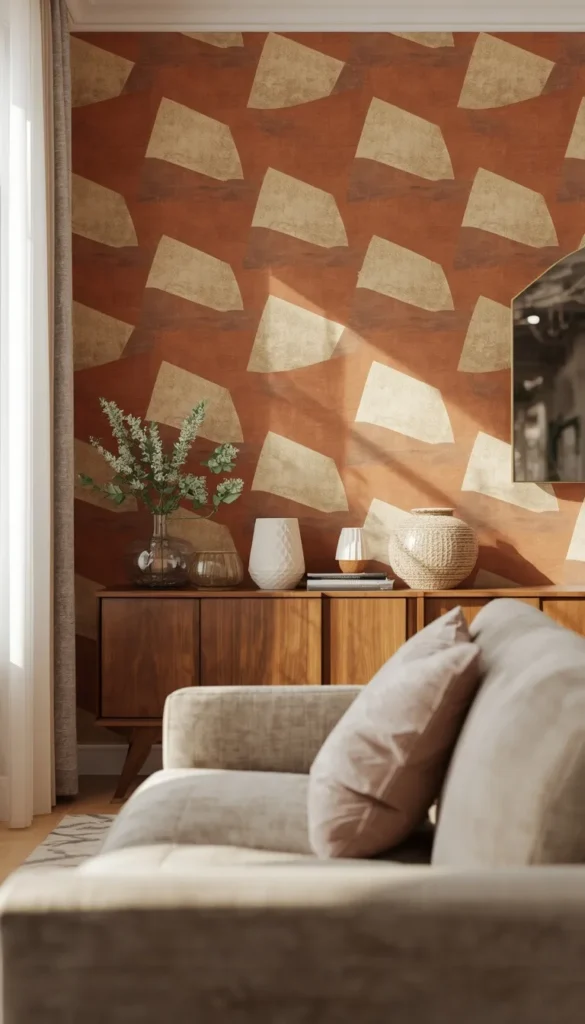
If your living room already leans mid century, with a low profile sofa, walnut furniture, and clean lines, a geometric wallpaper can pull the whole room together in a way that feels curated rather than themed. I like pairing these with a fairly restrained color palette. Two or three colors max, so the pattern reads as sophisticated instead of busy.
Here’s what tends to work well:
- Repeating diamond or hexagon shapes in muted tones
- Metallic accents woven into the print for a subtle shine
- Keeping the rest of the room’s patterns minimal so the wallpaper doesn’t compete with a busy rug
Top 6 Picks Living Room Wallpaper Ideas
| Idea | Estimated Price | Maintenance |
|---|---|---|
| Textured Grasscloth Wallpaper | $80 to $150 per roll | Medium |
| Peel and Stick Wallpaper | $30 to $60 per roll | Low |
| Wallpapered Accent Wall Behind Sofa | $200 to $500 total | Low |
| Bold Geometric Mid Century Wallpaper | $60 to $120 per roll | Low |
| Vintage Damask or Chinoiserie | $150 to $400 per roll | Medium |
| Ceiling Wallpaper | $10 to $25 per sq. ft. installed | High |
7. Soft Floral Wallpaper for a Traditional Living Room
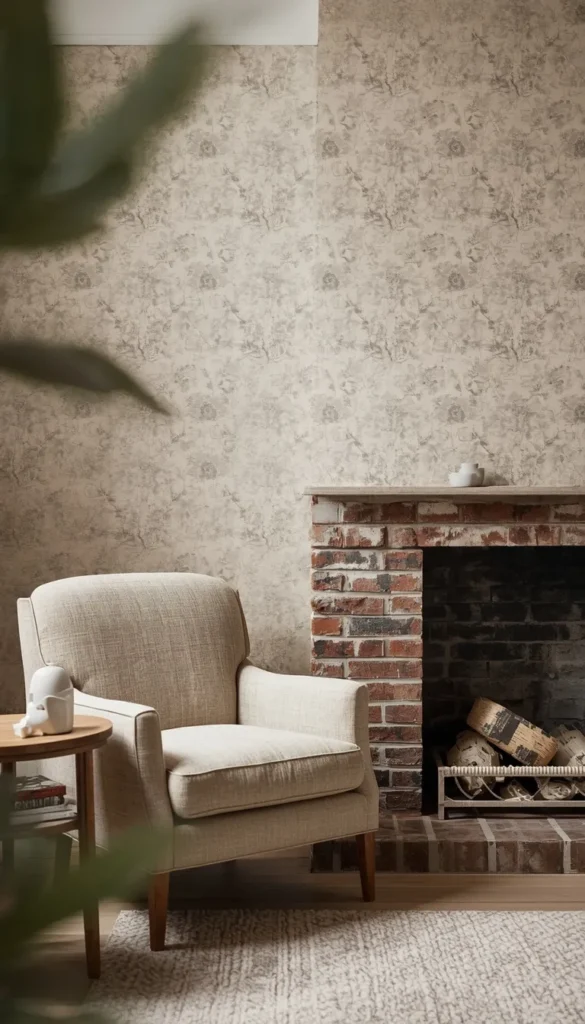
Floral wallpaper has a reputation problem. People hear floral and picture something their grandmother might have chosen, and I understand the hesitation. But the newer generation of floral prints, especially the smaller scale, muted color ones, are a completely different animal. They add warmth and softness to a room without feeling fussy or overly sweet.
I’ve found these work particularly well in living rooms with a lot of straight lines and hard surfaces already, think exposed brick, black metal window frames, or a stone fireplace. The floral softens all that architecture in a way that feels balanced rather than clashing.
8. Neutral Textured Wallpaper That Never Goes Out of Style
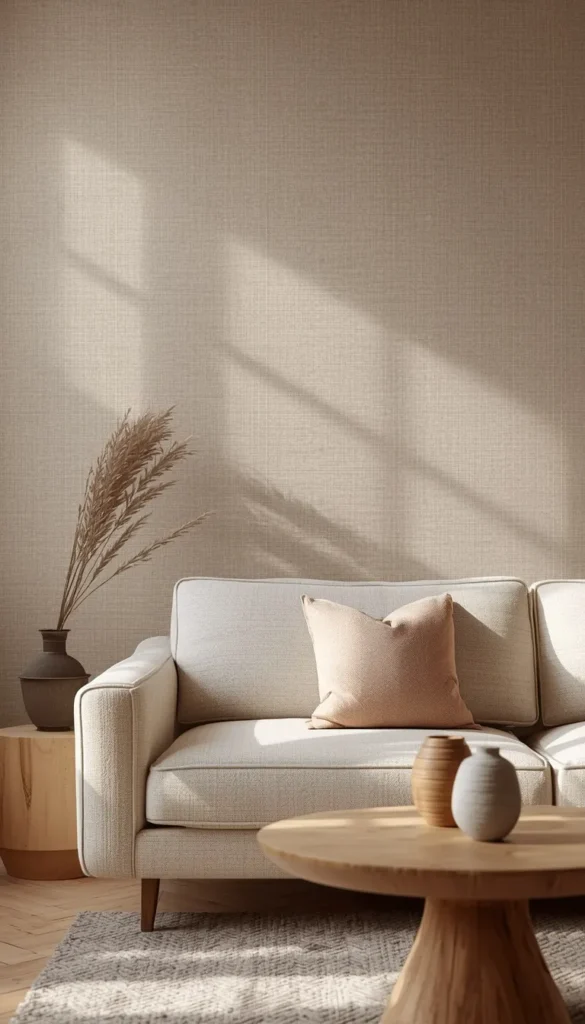
This is the choice I steer clients toward when they’re nervous about resale value or just aren’t sure they’re ready to commit to a bold statement. A subtle textured paper in a warm white, greige, or soft tan adds depth to a wall without pulling focus from furniture, art, or a great rug.
One thing worth watching out for is texture that’s too aggressive under certain lighting. Some heavily embossed papers can cast odd shadows under harsh overhead lights, so if that’s your main light source, ask for a sample and look at it after dark before you order enough for the whole room.
If you had to pick just one of these fifteen ideas to try first, which one would it be?
9. A Wallpapered Accent Wall Behind the Sofa
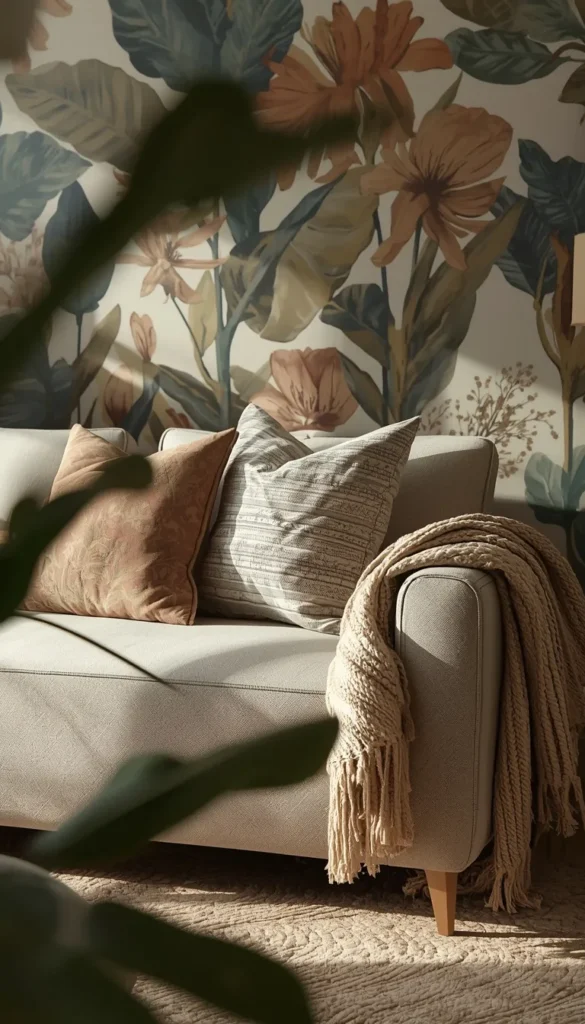
This is probably the single most requested wallpaper placement I get, and for good reason. It’s low commitment compared to papering the whole room, it’s budget friendly since you’re only covering one wall, and it gives the sofa a backdrop that makes the whole seating area feel designed instead of just furnished.
A few things make this work better:
- Choose the wall with the least interruption, so avoid walls with multiple doorways or windows breaking up the pattern
- Bold prints work best here since you have three plain walls to balance it out
- Keep your sofa fabric solid or very subtly textured so it doesn’t fight with the wall behind it
10. Wallpapering the Fireplace Wall for an Instant Focal Point
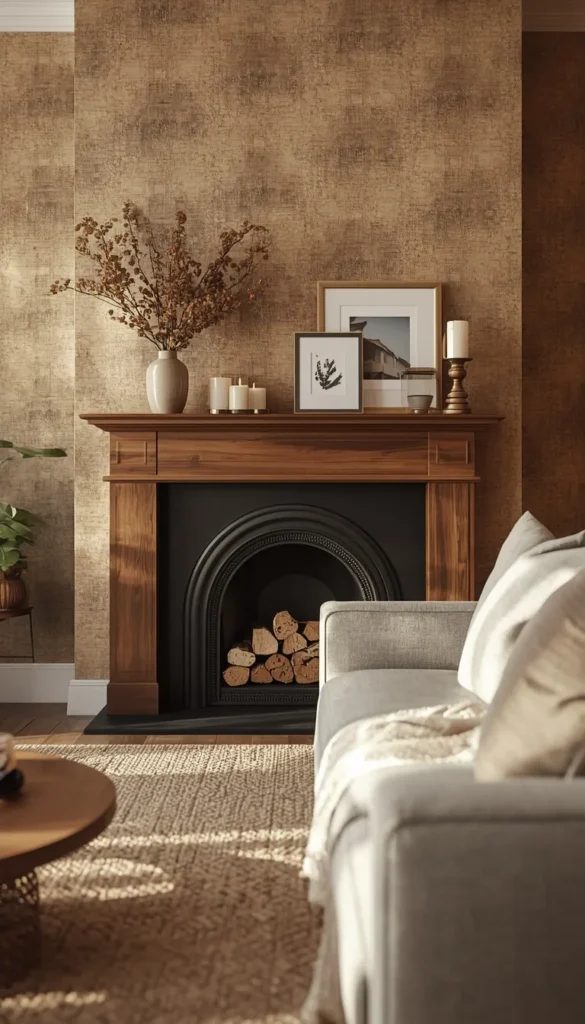
If your living room has a fireplace, it’s already the natural focal point, and wallpapering that wall just amplifies what your eye is drawn to anyway. I’ve done this in a handful of projects and it consistently reads as more expensive than the actual cost, since you’re often only covering a fairly narrow wall section on either side of the mantel.
The tricky part is working around the mantel itself, especially if it has ornate trim or molding. A quick trick I’ve learned is to have your installer dry fit the pattern before cutting anything, so the design lines up cleanly on both sides rather than looking slightly off center once it’s up.
11. Small Living Room Wallpaper Tricks That Actually Work
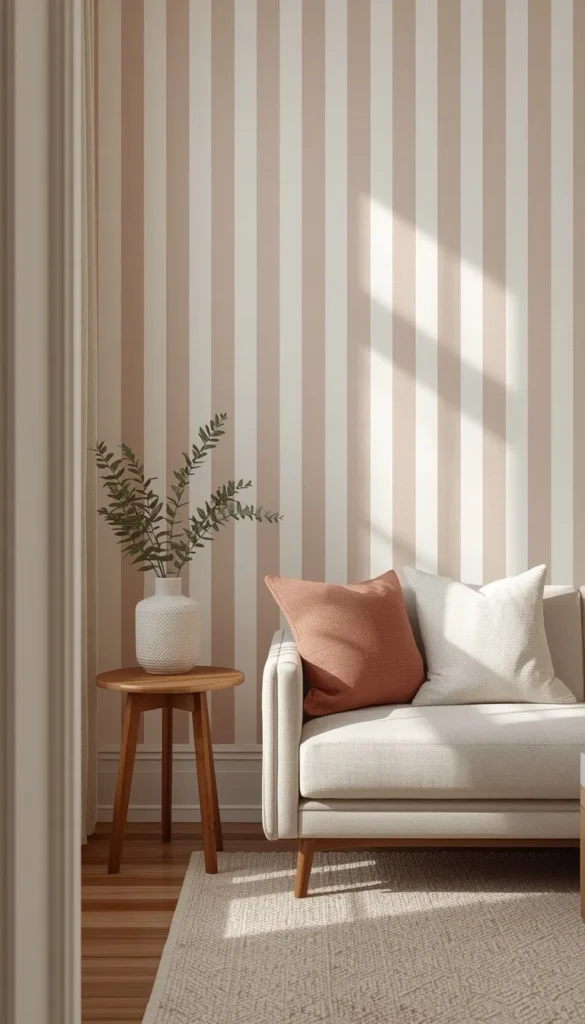
Small rooms and bold wallpaper aren’t mutually exclusive, but the print you choose matters more here than almost anywhere else. Tiny, tightly packed patterns can actually make a small room feel busier and more cramped, while the right pattern can trick the eye into seeing more space than there is.
What actually helps in a small living room:
- Vertical stripes or elongated patterns that pull the eye upward
- Lighter background colors, even if the pattern itself is bold
- Continuing the wallpaper onto the ceiling in a small room to blur the corner lines and make the space feel bigger, not smaller
12. Scandinavian Inspired Minimalist Wallpaper
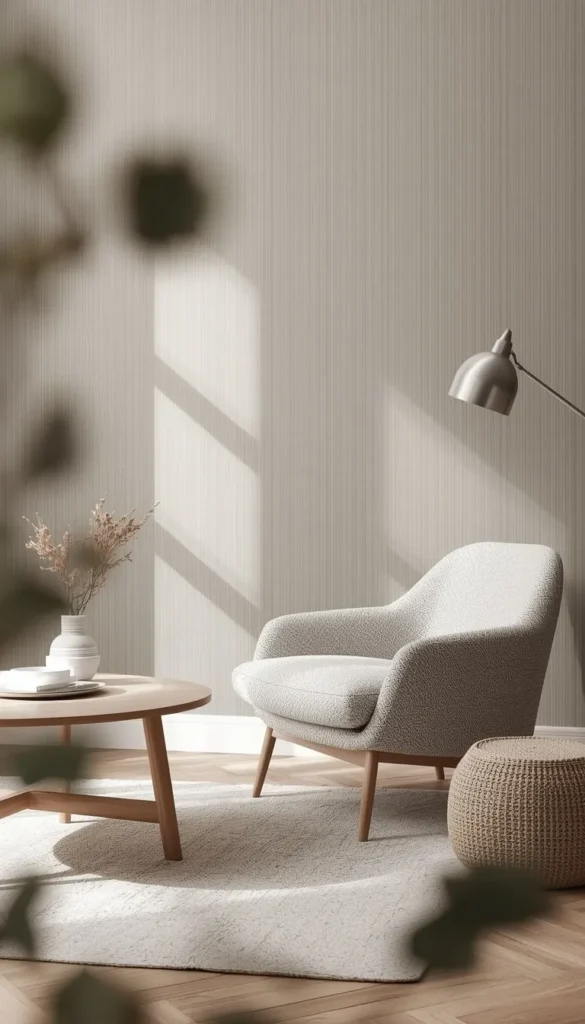
Scandinavian style has stuck around because it’s genuinely livable. Clean lines, muted colors, and just enough pattern to keep a room from feeling sterile. The wallpaper that fits this style tends to be simple line work, subtle botanicals, or soft geometric shapes in a very restrained palette of whites, warm grays, and muted blues.
I find this style works especially well for clients who want their living room to feel calm rather than energizing. It’s not the choice for someone who wants their walls to be the star of the show, but if you want a room that feels effortless and put together without trying too hard, this is where I’d point you.
Are you more of a bold accent wall person, or do you play it safer with something neutral and textured?
13. Vintage Damask and Chinoiserie for Old World Charm
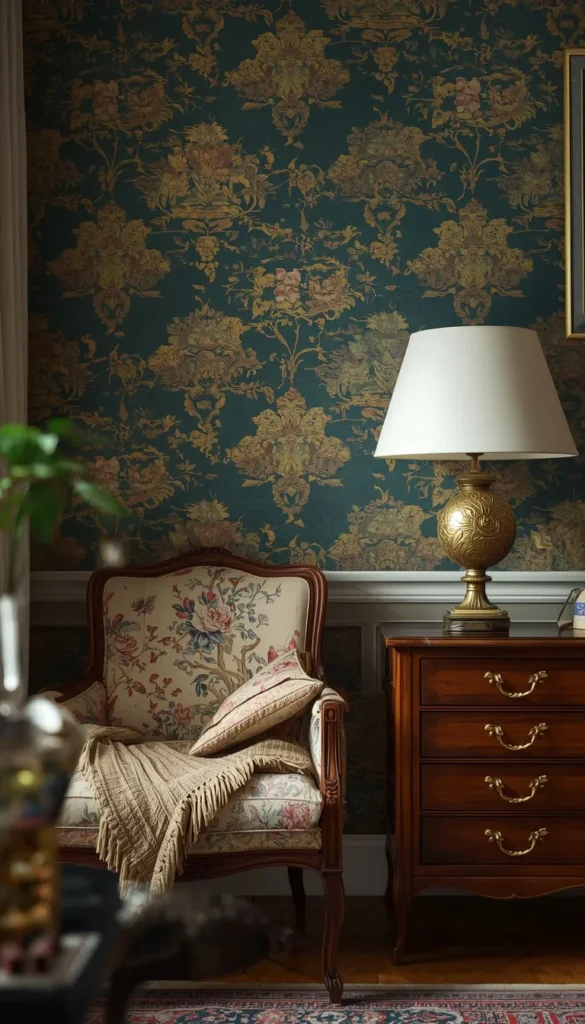
There’s a reason damask and chinoiserie prints have survived decades of changing trends. They carry a sense of history and craftsmanship that newer patterns just can’t fake, and I’ve watched clients fall in love with these prints specifically because they remind them of a grandparent’s house or a hotel they stayed in once and never forgot.
This is a bolder commitment than most of the other options on this list, so I usually recommend it for clients who already know they love traditional or maximalist interiors rather than someone dipping a toe in for the first time. When it’s done well, with the right furniture to match, it feels rich and layered instead of costume like.
14. High Contrast Black and White Graphic Wallpaper
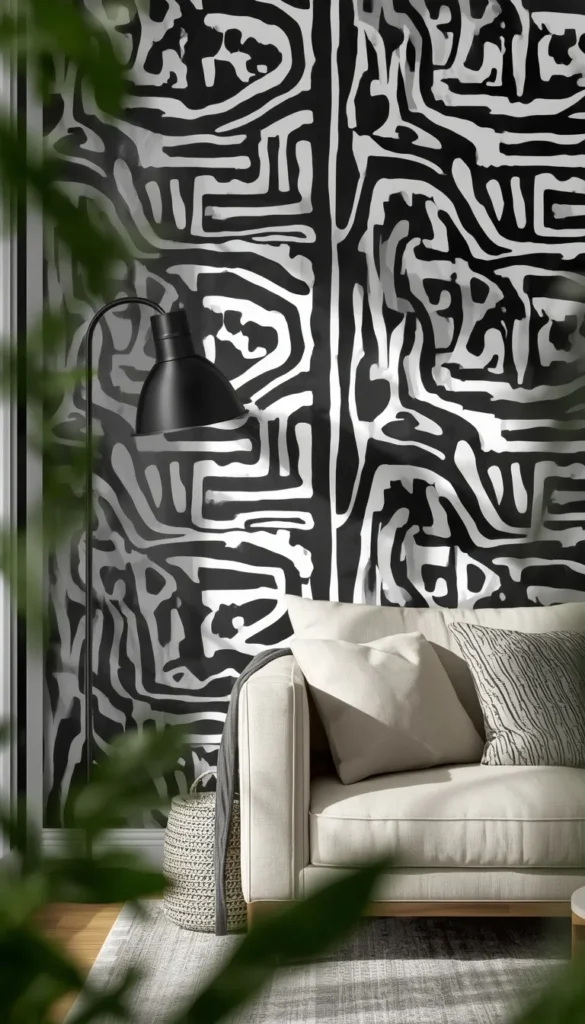
Black and white wallpaper is one of those choices that photographs incredibly well and tends to age better than trend driven color palettes. It works because it’s essentially neutral, just a very confident version of neutral, which means you can change your furniture, your art, even your whole color scheme down the road without ever having to touch the walls again.
The pattern scale matters a lot here. A large scale graphic print reads as modern and bold, while a tiny, tightly repeated pattern can start to vibrate a bit visually if you’re standing close to it. If you’re unsure, order a sample and tape it to the wall for a few days before deciding.
15. Ceiling Wallpaper for the Fifth Wall Trend
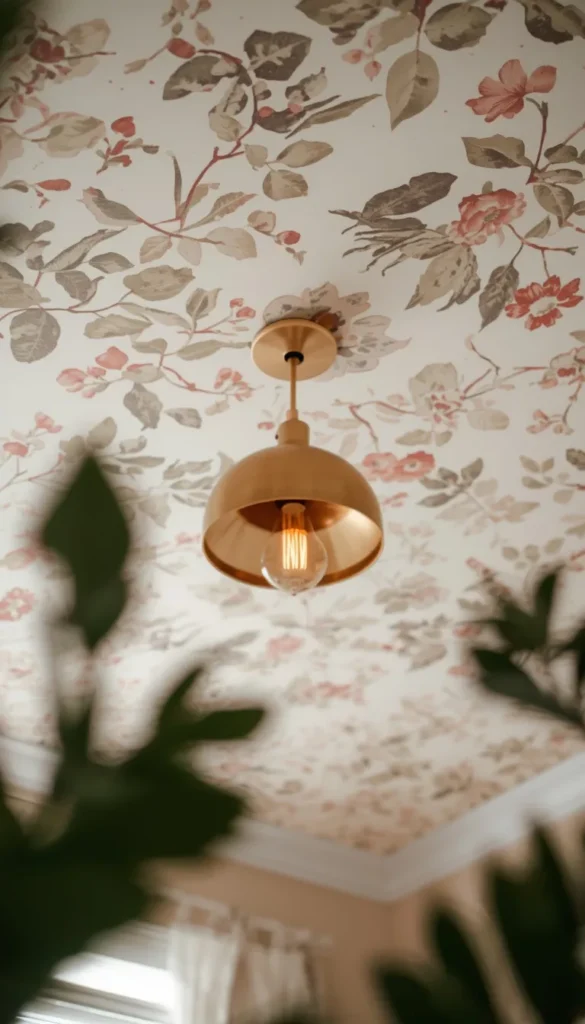
Papering the ceiling is the move I recommend when a client wants their living room to feel like a finished, designed space rather than four walls and a box overhead. It’s become known as the fifth wall for a reason. Once you start noticing it, plain white ceilings start to feel like a missed opportunity.
A few honest notes before you try this. Ceiling installation is genuinely harder than wall installation, since you’re working overhead the entire time, so this is one I’d hire a professional for rather than attempting solo. And in rooms with lower ceilings, stick to lighter colors or subtle patterns, since a heavy dark print overhead can start to feel like it’s closing in on you rather than opening the room up.
Which Path Is Yours?
By Budget
Starter Friendly
- Peel and stick wallpaper for a weekend refresh
- Neutral textured wallpaper for a safe, versatile pick
- One accent wall instead of the whole room
Luxury Investment
- Grasscloth for a rich, tactile finish
- Vintage damask or chinoiserie for a statement that lasts
- Ceiling wallpaper for a fully custom, designed look
By Lifestyle
Busy Households With Kids or Pets
- Neutral textured wallpaper, easy to live with day to day
- Peel and stick, simple to replace if it gets damaged
- Skip anything delicate like grasscloth near high traffic walls
Small Living Rooms
- Vertical stripes to pull the eye upward
- Light background botanicals to keep the room feeling open
- Ceiling wallpaper in a soft tone to blur the corners
Design Forward and Ready to Commit
- Bold geometric prints for a mid century feel
- High contrast black and white graphic wallpaper
- A wallpapered fireplace wall as your focal point
Renters or Frequent Movers
- Peel and stick, always the first choice
- Avoid anything requiring paste or a professional install
- Stick to one wall rather than the whole room
Frequently Asked Questions
Is wallpaper still in style for living rooms in 2026?
Yes, and it’s actually having a real moment right now. Homeowners are moving away from all white walls and reaching for texture and pattern again. The difference from a decade ago is how natural and livable the new prints feel.
How much does it cost to wallpaper a living room?
The average cost lands somewhere between 800 and 2500 dollars for a mid sized room, including materials and professional installation. Peel and stick can bring that number down significantly if you’re doing it yourself.
Can I put wallpaper over painted walls?
Yes, as long as the paint isn’t glossy and the wall itself is smooth and free of cracks. A flat or eggshell finish gives the adhesive something to grip. Glossy paint usually needs a light sanding first.
Does wallpaper make a small living room look smaller?
Not necessarily, and the right pattern can actually do the opposite. Vertical stripes and lighter backgrounds tend to open a room up rather than close it in. It’s the busy, tightly packed prints in dark tones that tend to shrink a space visually.
How long does living room wallpaper typically last?
Well installed traditional wallpaper holds up for 10 to 15 years without issue. Peel and stick has a shorter lifespan, usually around 3 to 5 years before edges start to lift. Sunlight exposure and humidity are the two biggest factors that speed up wear.
Conclusion
Your living room is where your day actually starts and ends, so it deserves more than an afterthought coat of paint. I’ve seen firsthand how one bold wall can change the way a family gathers in a space, how a soft floral can make a room feel like a hug after a long day. You don’t need to redo the whole house this weekend. Order one sample, tape it to the wall you’ve been staring at for years, and just sit with it for a few days.
