
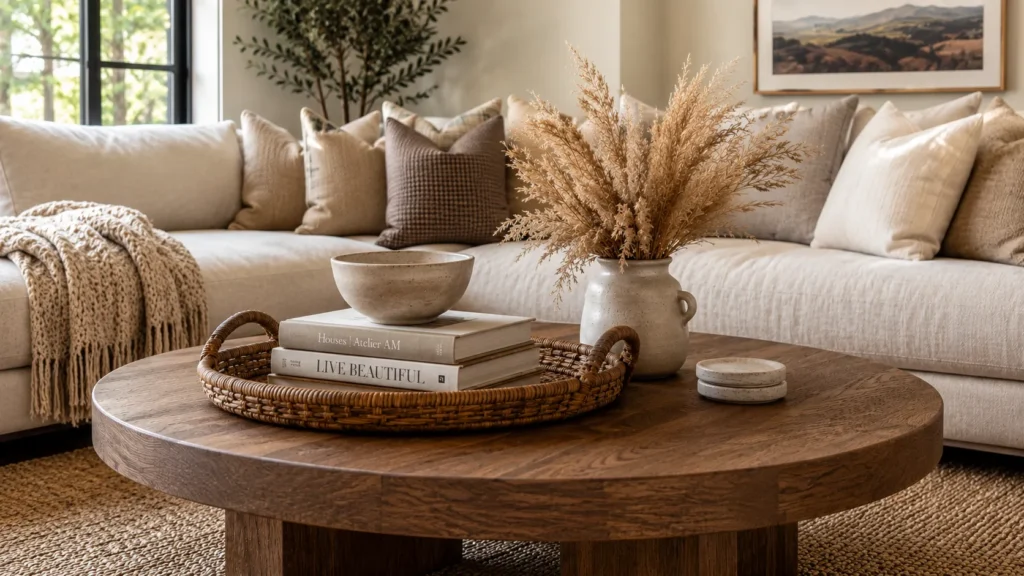
Your coffee table sees more real life than any other surface in your house. It’s where first dates turn into second ones over wine, where kids do homework while you catch the news, where your feet land the second you walk in the door. I’ve styled hundreds of them across farmhouse builds in Nashville and sleek city apartments in Chicago, and the ones that actually work aren’t the ones copied from a catalog. They’re the ones built around how you actually live. In this guide, I’m sharing 22 ideas that go beyond a pretty tray, real styling logic, honest maintenance talk, and a few lessons I learned the hard way with actual clients.
My Design Notes
When I was working on a project in Nashville, my clients had already bought a gorgeous white marble coffee table before I even walked through the door. It looked incredible in the showroom, but two months into living with it, that same table had a faint ring where a sweating water glass sat too long, plus a few scuffs from a very enthusiastic golden retriever using it as a launchpad.
Instead of talking them into replacing it, I redesigned the styling around the problem. We added a large woven tray as a buffer zone for anything with condensation, swapped their glass and ceramic pieces for a heavier bowl and one sturdy wood object that could take a hit, and had the top resealed to prevent future etching.
That project taught me something I tell every client now. Pick your material for the life you actually live, not the one in the photo. And if you’ve already bought it, you can always style around the damage instead of starting over.
16 Mastering Coffee Table Styling for an Elevated Living Room
1. Know Your Style First
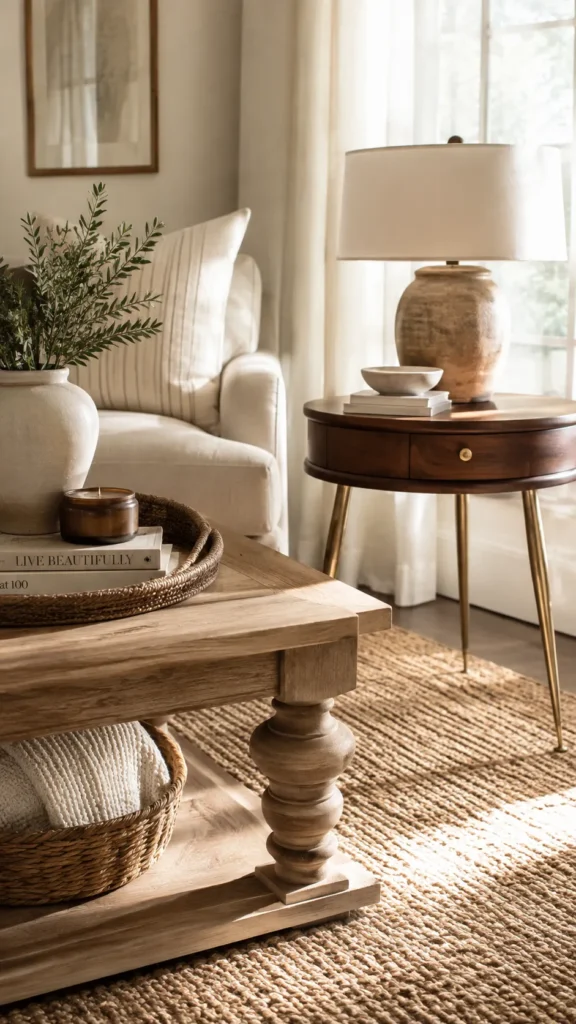
Before you buy a single tray or candle, figure out what your living room is actually saying. Modern Farmhouse leans on warm wood tones, chunky textures, and a slightly worn in feel, think turned wood legs and linen. Mid Century Modern wants clean lines, tapered legs, and a lower profile table with maybe one bold color accent. Transitional sits comfortably in between, mixing a classic silhouette with more current materials like brass or marble.
I always tell clients to walk into their living room and name the style out loud before they shop. If you can’t name it, your coffee table styling will feel scattered no matter how nice each individual piece is. Once you know your lane, everything from tray choice to book color gets easier to pick.
2. The Layered Tray Method
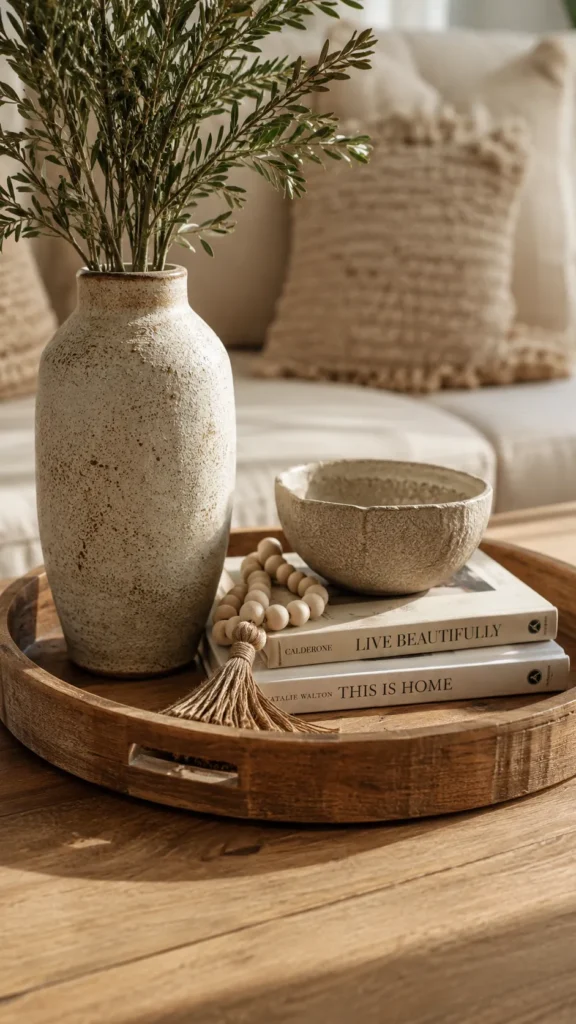
This is the formula I default to on almost every project because it just works. A tray gives your eye a place to land and keeps the whole vignette from looking like random objects tossed on a table.
Here’s the basic structure I use:
- One tray, wood or metal depending on your style
- One taller item, a vase or small stack of books
- One low, textural piece, a bowl, candle, or small sculpture
Once you’ve got those three, add a living element like a small plant or fresh stems. That’s it. You don’t need ten objects to make a table feel finished, you need the right three or four.
3. Stack of Coffee Table Books Styled Right
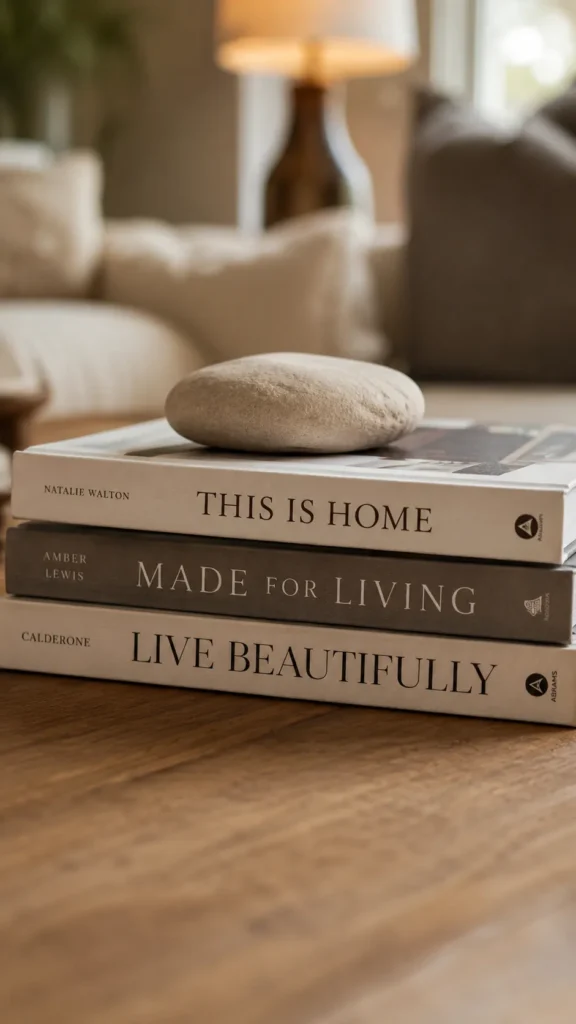
Books are an easy win, but I see people stack them wrong all the time. A stack that’s too tall looks precarious and blocks conversation, and one that’s too short just disappears into the table.
Two or three books is usually the sweet spot. Stack them by height, largest on the bottom, and turn the spines toward the sofa so the colors and titles actually read as decor rather than clutter. A quick trick I’ve learned is to top the stack with something small and unexpected, a smooth stone or a mini frame, so it doesn’t feel like a display at a bookstore.
4. A Low Bowl for Catch All Elegance
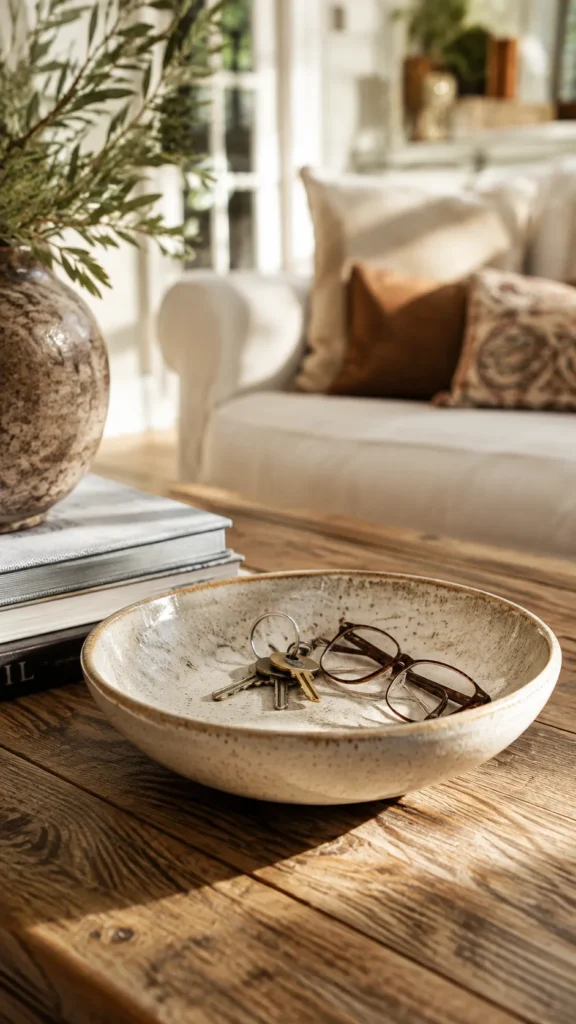
Every living room needs a landing spot for keys, remotes, or whatever ends up in your pockets by the end of the day. A low, wide bowl solves that without looking like storage.
Ceramic and wood both work well here, and honestly this is one of the more forgiving pieces to shop secondhand since a little wear only adds character. One thing to watch out for is choosing a bowl so shallow that things slide right out, function still matters more than looks on this one.
5. Fresh or Dried Florals
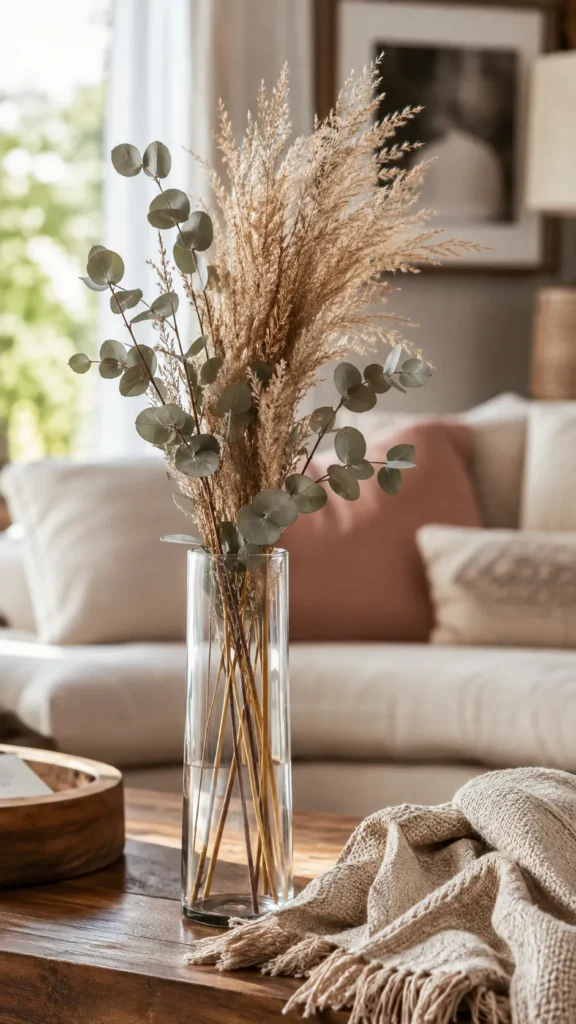
Nothing makes a coffee table feel alive quite like something that’s actually alive, or was recently. Fresh flowers are wonderful but they’re also a small weekly investment, so I tell budget conscious clients to lean on dried stems instead. Pampas grass, eucalyptus, or dried lavender hold their shape for months and still bring that same soft, organic movement to an otherwise hard surface.
If you do go fresh, a single stem in a slim vase often looks more intentional than a full bouquet crammed into something too small.
6. The Sculptural Object Rule
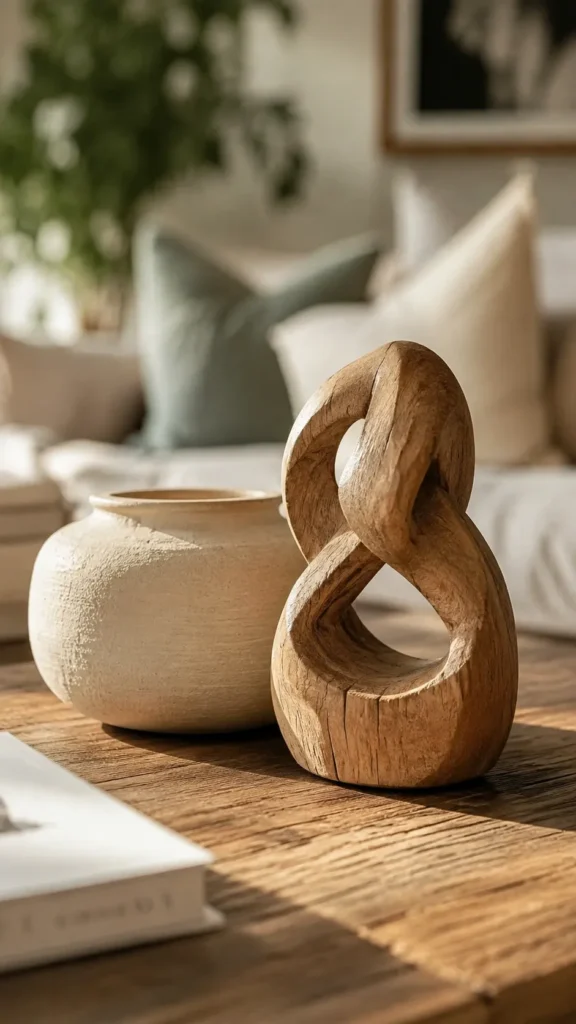
Every table needs one piece that doesn’t have an obvious job. Not a tray, not a book, not something you’d reach for during movie night, just an object that’s interesting to look at.
- A carved wood form
- A small abstract ceramic piece
- An interesting rock or geode picked up from travel
This is the piece that makes a coffee table feel like yours instead of a page torn from a catalog, and it’s usually my favorite thing to source for a client because it says something about who they are.
Here’s the summary table using six of the ideas covered so far.
Top 6 Coffee Table Ideas
| Idea | Estimated Price | Maintenance |
|---|---|---|
| Layered Tray Styling | $40 to $150 for tray and accents | Low |
| Fresh or Dried Florals | $15 to $60 per refresh | Medium |
| Vintage or Thrifted Table | $50 to $400 depending on find | Medium |
| Two Tier Storage Table | $200 to $600 | Low |
| Glass Top Table | $300 to $900 | High |
| Marble or Stone Top Table | $600 to $2,000+ | High |
7. Mixing Textures Wood Metal and Stone
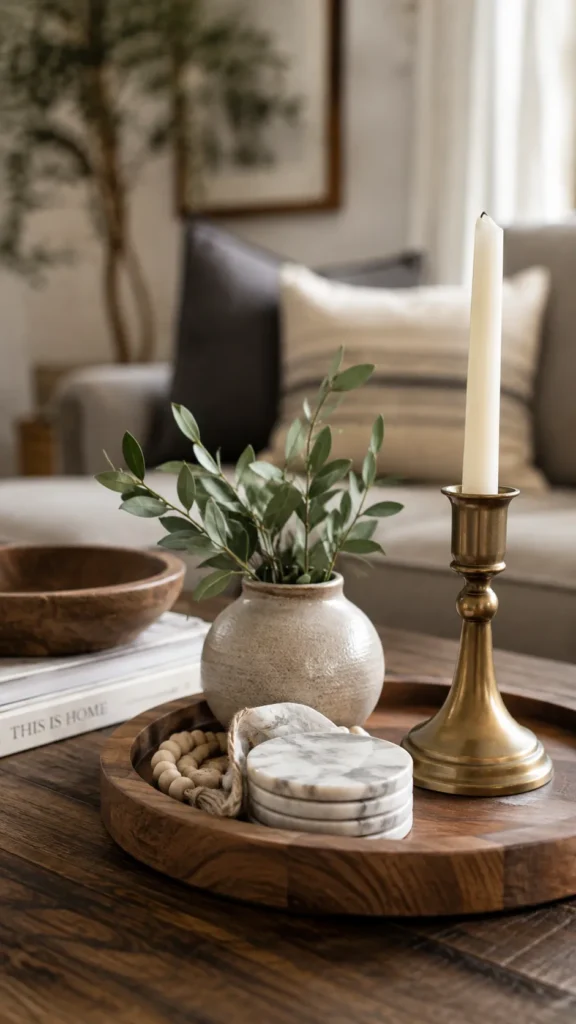
A table styled entirely in one material, all wood, all metal, all glass, tends to fall flat no matter how nice each piece is on its own. The magic happens in the contrast. Pair a warm wood tray with a cool marble coaster, then add a brushed brass candlestick to bridge the two. Your eye moves across the table instead of landing in one spot and stopping.
I’ve noticed clients get nervous about mixing metals, worried it’ll clash, but in practice a warm and a cool tone together almost always reads as more collected and less matchy than sticking to just one finish.
8. Round Versus Rectangular Versus Square Styling
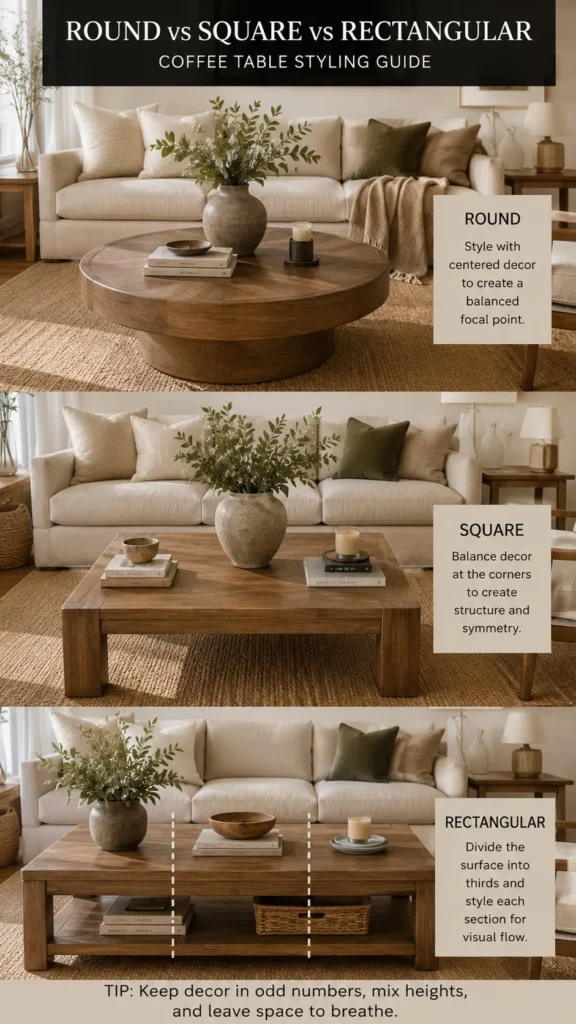
The shape of your table actually changes how you should style it, not just how it fits in the room.
Round tables have no corners to anchor visually, so styling works best when it’s centered, almost like a still life composed from every angle since you’ll see it from all sides. Square tables want a bit of symmetry, something in each corner or a strong centered piece. Rectangular tables give you the most room to play, and I usually break them into thirds mentally, one section for books, one for the tray, one left open for actual use because someone is going to want to set a drink down eventually.
13. Vintage and Thrifted Coffee Tables
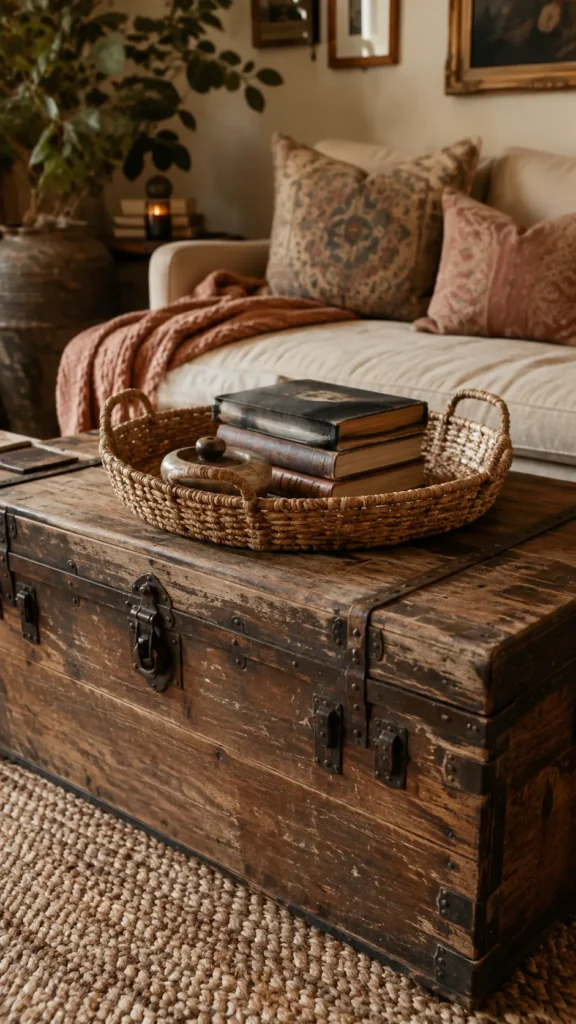
Some of the most character filled tables I’ve sourced for clients never came from a showroom. Estate sales, flea markets, and secondhand shops turn up pieces with a patina you simply can’t buy new, and often at a fraction of the price.
Before you commit to a vintage find, check that the legs are sturdy and there’s no active wobble, and give it a close look under bright light for water damage or deep gouges that go past the finish. A little surface wear adds warmth, but structural issues are a different problem entirely.
14. Two Tier Tables for Hidden Storage
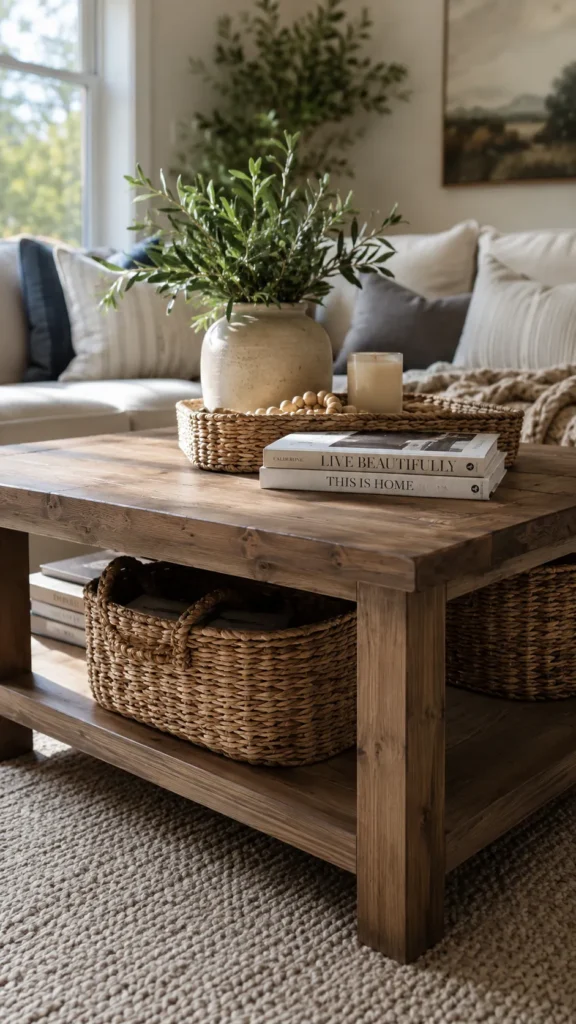
Small living rooms rarely have enough storage, and a two tier coffee table quietly solves part of that problem without taking up any extra floor space. The lower shelf becomes a home for baskets, extra throws, or the stack of magazines you don’t want cluttering the top surface.
I like using the lower shelf as a slightly more relaxed styling zone too, it doesn’t need to be as polished as the top since it’s naturally viewed from a lower angle.
15. Neutral Palette Styling for a Calm Living Room
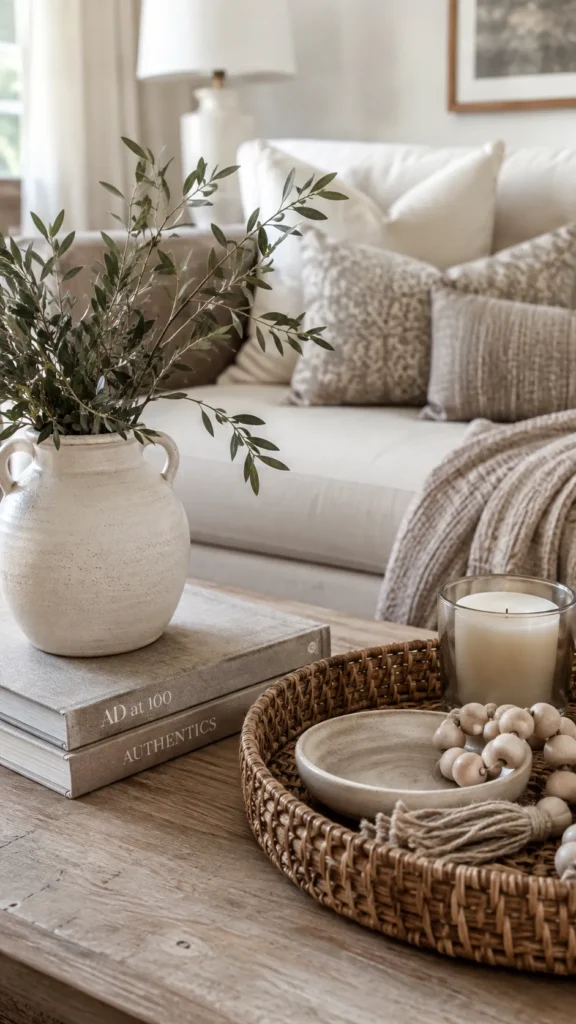
A neutral coffee table, whites, creams, soft wood tones, taupe ceramics, creates a kind of visual exhale in a room that might already be busy with pattern elsewhere, on the rug, the pillows, the art. It’s the styling equivalent of a deep breath.
The trick with neutral styling is leaning hard into texture since color contrast isn’t doing the work for you. Rough linen next to smooth stone next to woven rattan keeps a neutral table from reading as flat or boring.
16. Bold Color Styling for Personality Forward Homes
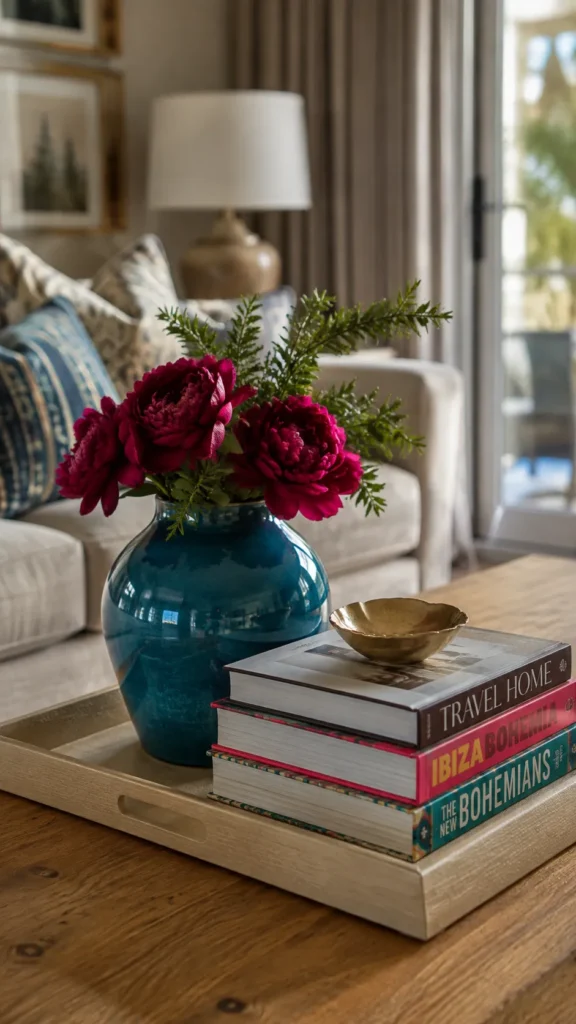
Not every client wants calm, and honestly some of my favorite projects have been the opposite. A bold coffee table styling moment, a bright ceramic vase, a jewel toned book stack, a candle in an unexpected hue, can become the punch of personality a neutral room needs.
- Pick one dominant color and let it repeat once or twice
- Keep the base pieces, the tray and any books, more neutral so the color pop doesn’t compete with itself
Color heavy styling ages faster than neutral styling, so this is also where I tell budget minded clients to spend less per item since you’ll likely want to refresh it sooner.
Which Path Is Yours?
By Budget
Starter Friendly
- Layered tray styling with pieces you already own
- Dried florals over fresh
- A thrifted or estate sale find
Investment Worthy
- Marble or natural stone top
- A designer nesting table set
- A custom vintage restoration
By Lifestyle
Busy Families
- Two tier storage table for quick cleanup
- Ottoman with a sturdy tray on top
- Skip glass and light marble entirely
Design Focused Minimalists
- Round table styled with one sculptural object
- Neutral palette with heavy texture contrast
- Glass top for that open, airy feel
Small Space Apartments
- Nesting tables finished on all sides
- Round shape for easier movement
- Compact two tier table for hidden storage
Frequently Asked Questions
What is the ideal coffee table size for my sofa?
Aim for about two thirds the length of your sofa. Go a bit smaller if your living room feels tight already.
How do I style a coffee table without it looking cluttered?
Stick to three or four objects max. One tray, one tall piece, one low piece, done.
What coffee table shape works best for small living rooms?
Round tables generally work best. No corners means easier movement and better flow around furniture.
How often should I change my coffee table decor?
Ideally every season. Swap out florals and one accent piece to keep things feeling fresh without a full redo.
Are glass coffee tables hard to maintain with kids or pets?
Yes, honestly. Fingerprints and smudges show constantly, so most families do better with wood or stone instead.
Conclusion
Your living room doesn’t need a magazine budget to feel like a place you actually want to spend time in. It needs a little intention, a tray that makes sense, a texture that surprises you, a table that fits how you really live instead of how a showroom photo looked. Pick one idea from this list and try it this weekend, even if it’s just clearing off what’s there now and starting fresh with three good pieces. Your home is the one space that’s entirely yours, so let it feel that way.
