
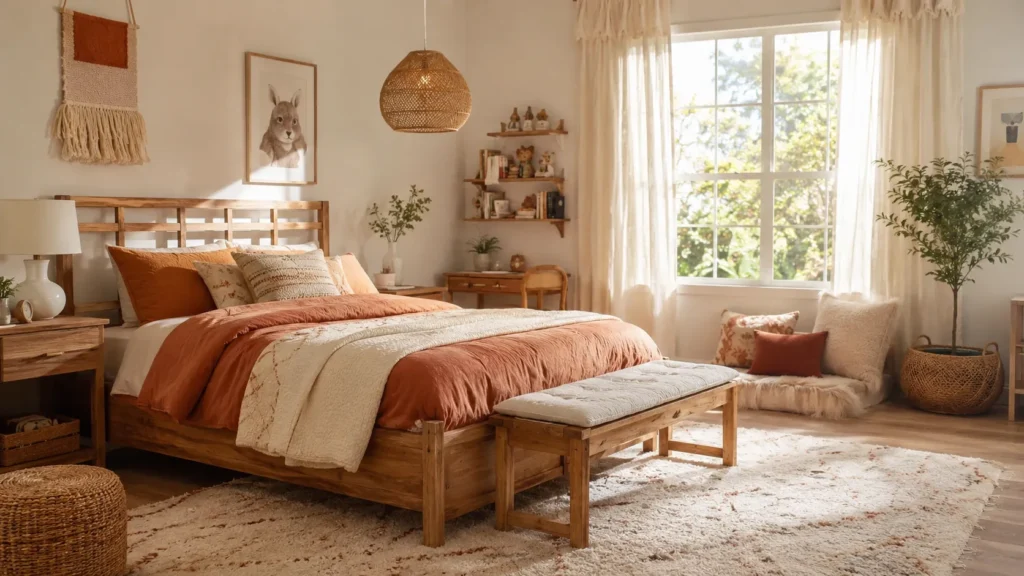
If your kid’s room currently looks like a toy store exploded, you’re not alone, and you’re definitely not doing it wrong. I’ve walked into hundreds of children’s bedrooms over the years, and the ones that actually work aren’t the ones ripped straight from a magazine spread. They’re the ones built around how a real kid lives, sleeps, and plays every single day. In this guide, I’m sharing the kids bedroom inspiration ideas I actually use with clients, the budget-friendly swaps, the safety details nobody warns you about, and the honest pros and cons behind every trend. Let’s get into it.
My Design Notes
A few years back, I worked with a family outside Denver who had two kids sharing one mid-sized bedroom, a nine-year-old boy and his five-year-old sister, and neither of them wanted to compromise an inch. My first instinct was to skip the wall divider they’d asked for and use an open bookshelf down the middle instead. It split the space visually without making the room feel chopped up or dark. We picked one calm, neutral color for the shared walls, then let each kid choose their own accent wall on their side, which solved about ninety percent of the arguments. For bedding, I leaned on a navy base for both beds and brought in swappable throw pillows in each kid’s favorite color, so nobody felt like they “lost.” My biggest takeaway from that project was simple: plan for the sibling standoff before you buy a single thing, not after. It saved us a repaint, and it saved that family a lot of bedtime drama.
Stunning and Unforgettable Design Secrets for Every Kids Bedroom
1. Design a Kids Bedroom That Grows With Them
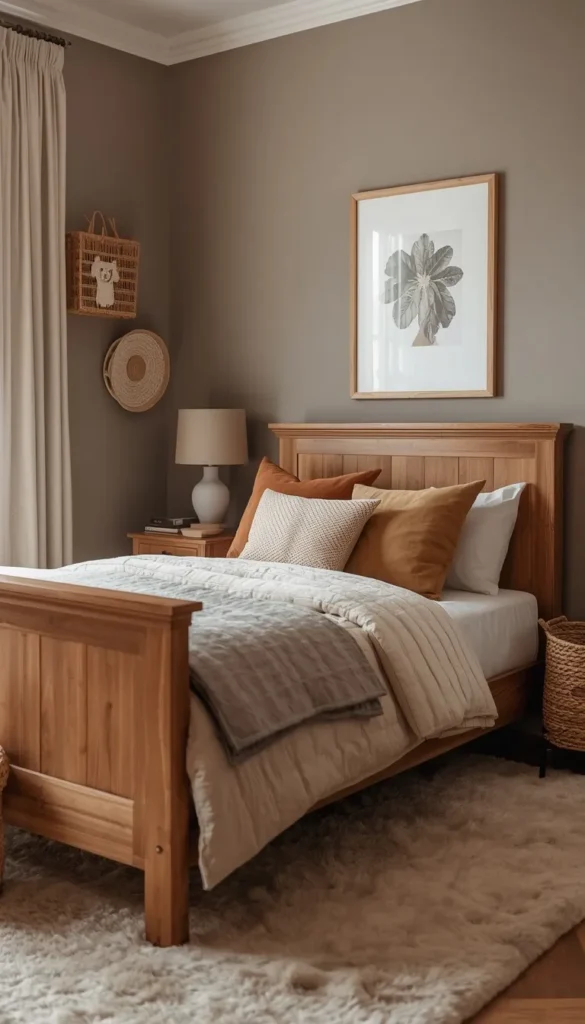
The biggest mistake I see parents make is designing for the kid they have right now instead of the kid they’ll have in three years. A nursery mural is adorable at two, but by six it usually feels babyish and expensive to undo. I always tell clients to build the “bones” of the room, meaning wall color, flooring, and big furniture, around something timeless, then let the personality come in through things that are cheap and easy to swap. Think bedding, art, lamps, and a few accent pieces. That way, when your kid’s obsession shifts from dinosaurs to soccer to K pop, you’re changing a few accessories instead of repainting an entire room.
One thing to watch out for is buying a “themed” bed frame or built in shelving that only makes sense for a five year old. It looks charming on day one and becomes a headache the day your kid decides it’s babyish. Stick with classic shapes in furniture, and save the fun stuff for what’s easy to replace.
2. Modern Kids Bedroom Ideas That Still Feel Playful
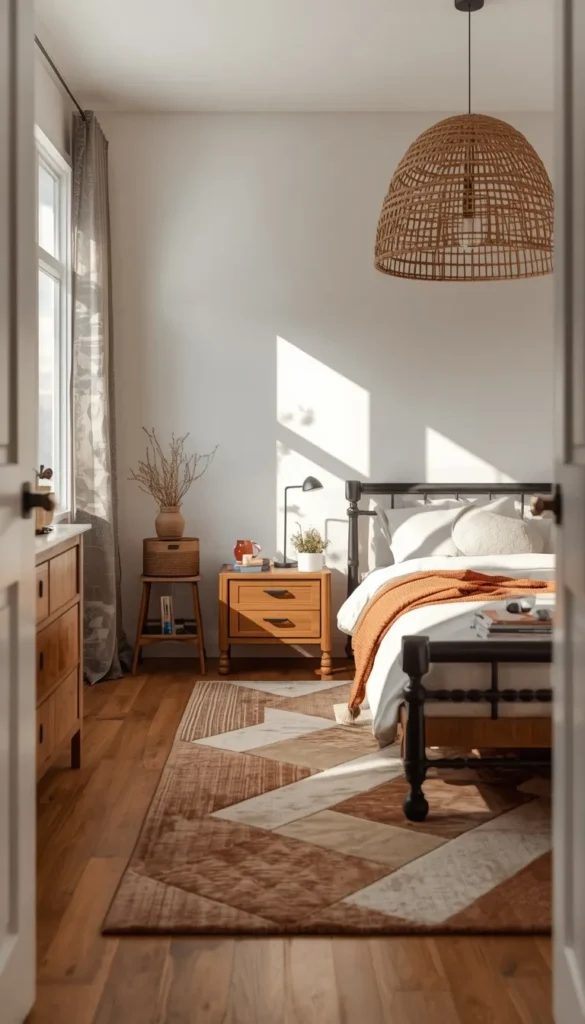
A modern kids bedroom doesn’t have to mean stark white walls and zero personality. The trick is pairing clean lines with texture and color so the space still feels warm and lived in. I like starting with a neutral base, think warm white, soft greige, or a muted clay tone, and then layering in playful elements through textiles and lighting.
A few things that make a modern kids room feel current without going cold:
- Matte black or brass hardware on simple, low profile furniture
- A bold geometric rug instead of a themed carpet
- One statement light fixture that doubles as art
This approach also ages really well. A modern foundation with playful layers on top can shift from toddler to teenager with just a few swaps, which saves you money down the road.
3. Small Kids Bedroom Ideas That Actually Work
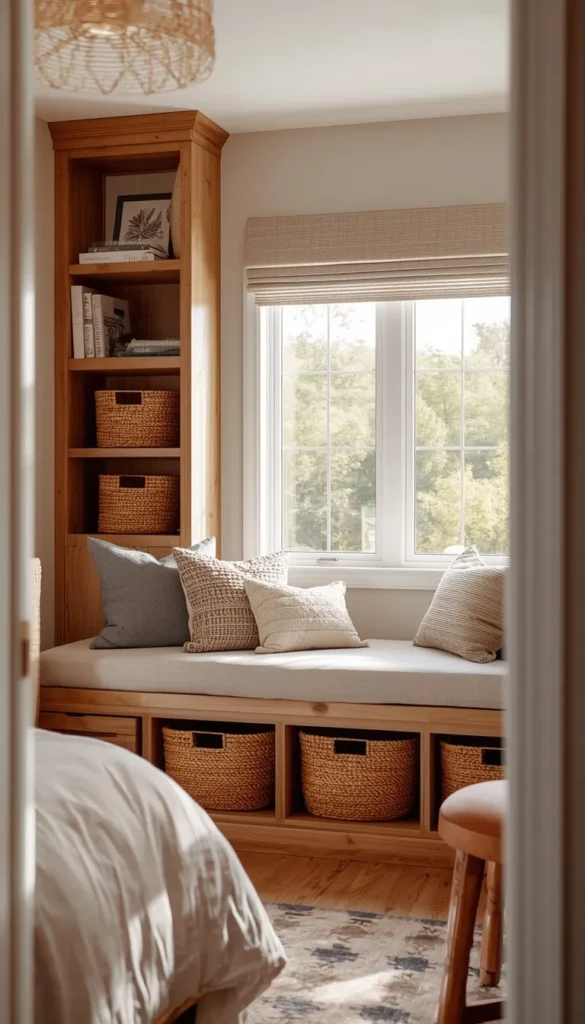
Small rooms are honestly where good design matters the most, because every square foot has to earn its keep. My first move in a tight kids room is almost always vertical storage. Wall mounted shelves, over the door organizers, and tall narrow dressers free up floor space for actual play, which is usually what the kid cares about most anyway.
Light colors help too, but I’ve learned that’s only half the story. A room can be painted white and still feel cramped if the furniture is too bulky or if there’s too much of it. I’d rather see one well chosen dresser doing double duty as a changing station or desk than three separate pieces crowding the walls. And if there’s a window, use it. A simple window seat with hidden storage underneath gives you a reading spot and a place to hide clutter in one move.
4. Space Saving Furniture for Kids Rooms
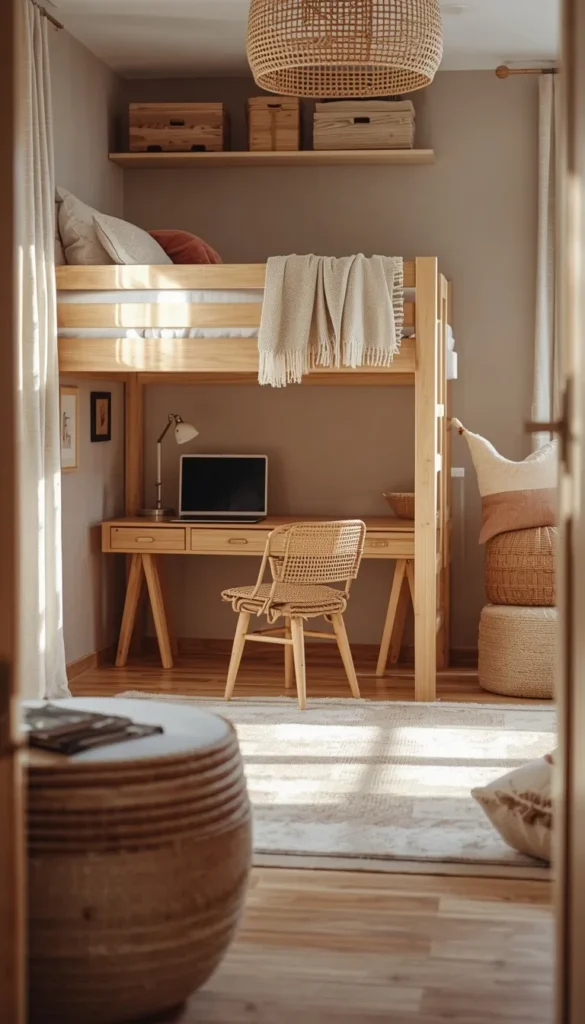
This is where a lot of parents overspend on the wrong things. Bunk beds and loft beds are the obvious go to for space saving, and for good reason, but they’re not one size fits all. A loft bed with a desk underneath is fantastic for a school age kid who needs a homework spot, but I wouldn’t recommend it for a room with low ceilings or for kids under six, since the top bunk safety guidelines really do matter here.
Beyond bunks, a few furniture picks I keep coming back to on tighter budgets are trundle beds for sleepovers, storage ottomans that double as extra seating, and wall mounted fold down desks for smaller rooms. None of these are flashy, but they solve real problems, and that’s what makes a kids room actually function day to day instead of just photographing well.
Which of these ideas do you think would work best in your kid’s room right now?
5. Shared Kids Bedroom Ideas That Keep the Peace
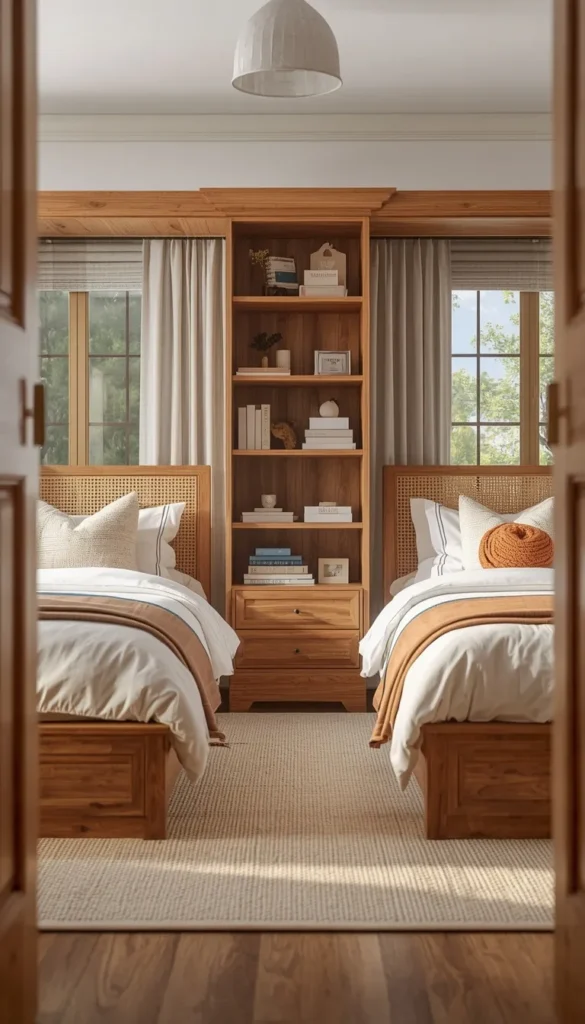
Sharing a room can be a genuinely great experience for siblings, but only if the space is set up to respect that each kid needs their own little territory. I almost always recommend some kind of visual divider, even a soft one. It doesn’t have to be a wall. An open bookshelf, a hanging curtain, or even just two different accent wall colors can do the job of saying “this side is yours” without closing off light or airflow.
Beyond the divider, the real key is giving each kid a say in something. It doesn’t have to be everything.
- Let each child pick their own bedding accent color
- Give each kid a personal shelf or cubby that’s entirely theirs
- Keep shared elements, like the rug or curtains, neutral so nobody “wins” or “loses”
A quick trick I’ve learned is to tackle the potential fights before they start, not after the room is already painted. Sit both kids down, ask what matters most to each of them, and build the plan around those two or three things. It saves you a repaint and saves everyone a lot of bedtime arguments.
6. Boys Bedroom Inspiration That Goes Beyond Blue
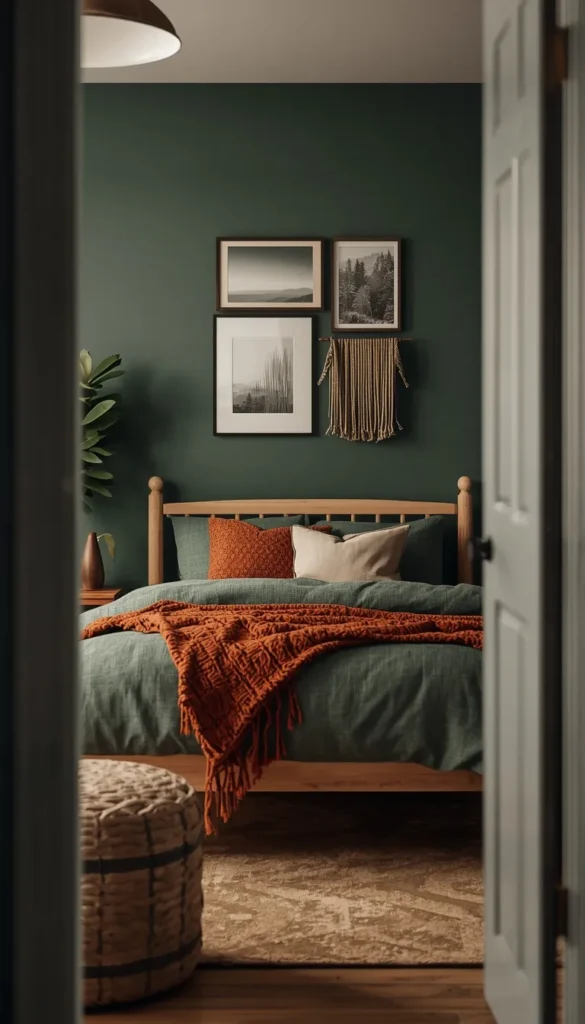
I’ll be honest, “boys bedroom” ideas online still lean way too hard on trucks, sports, and navy blue, and it gets stale fast. My favorite boys’ rooms lately have leaned into richer, moodier palettes, forest green, warm rust, deep charcoal, paired with natural wood tones and simple, sturdy furniture. It reads as confident and current rather than themed.
For younger boys, I like adding personality through art and textiles rather than an entire wall mural, since interests change so quickly at that age. A gallery wall of rotating prints, a patterned throw pillow, or a fun lamp gives you room to update without a full redo. And for older boys, a solid desk setup and good task lighting tend to matter more than any decorative element in the room.
Top 6 Kids Bedroom Ideas at a Glance
| Idea | Estimated Price | Maintenance |
|---|---|---|
| Loft bed with desk underneath | $400 – $900 | Medium |
| Bunk beds (standard, twin over twin) | $300 – $800 | Medium |
| Open bookshelf room divider | $150 – $400 | Low |
| Window seat with hidden storage | $250 – $700 (DIY) / $800+ (custom built) | Low |
| Statement wallpaper (accent wall) | $60 – $150/roll, plus $200 – $400 install | High |
| Storage ottoman or trundle bed | $80 – $300 | Low |
7. Girls Bedroom Inspiration Beyond Pink and Princess Themes
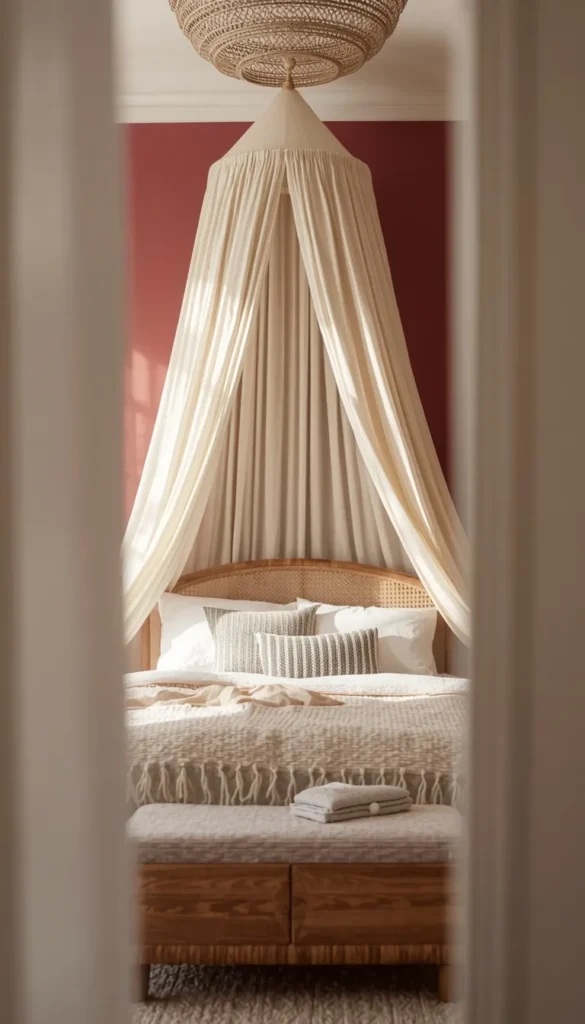
Girls’ bedrooms get pigeonholed into pink and florals so often, and while there’s nothing wrong with that if it’s genuinely what your kid loves, there’s a lot more room to play. I’ve had great results mixing soft, warm neutrals with one bold accent color, like a deep berry or a sunny mustard, so the room feels grown up but still joyful.
Canopy beds and statement wallpaper are gorgeous, and I use them often, but here’s a reality check worth knowing upfront: delicate canopy fabric and busy wallpaper near a crib or toddler bed can get grabbed, torn, or scribbled on fast. If your daughter is under five, I’d save the more delicate finishes for furniture and bedding instead, and bring in wallpaper or wall treatments once she’s past the toddler stage.
8. Gender Neutral Kids Bedroom Ideas That Actually Feel Warm
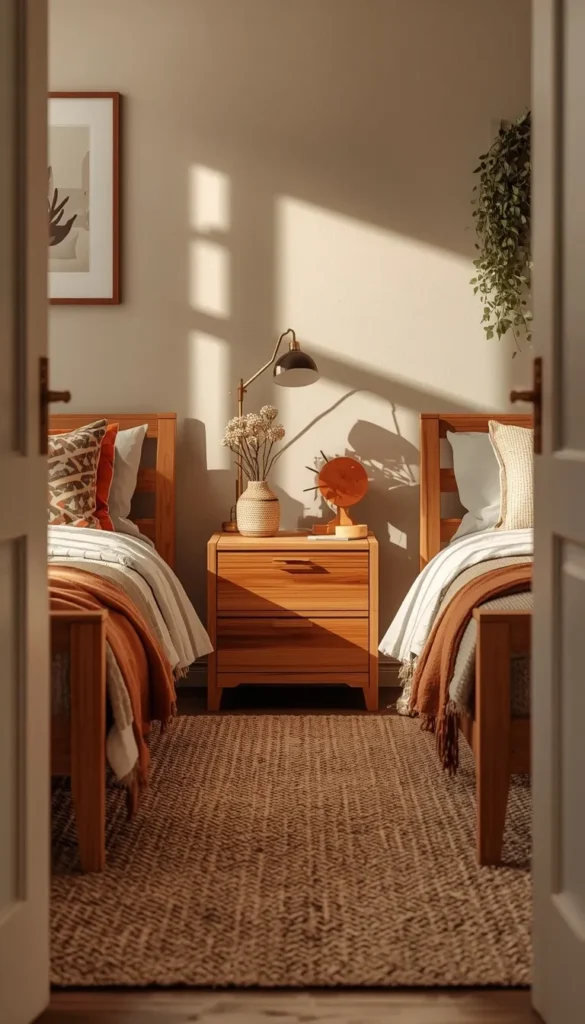
Gender neutral doesn’t have to mean beige and boring, though I know that’s the fear a lot of parents have. My go to approach is grounding the room in warm, earthy colors, think terracotta, sage, ochre, or a soft warm gray, and then layering in pattern through textiles rather than wall color. That keeps the palette flexible if you’re expecting another child down the line, or if this room needs to work for a sibling later.
A few combinations I keep coming back to for gender neutral spaces:
- Warm wood tones with brass or black hardware
- A mix of stripes, dots, and organic shapes instead of one dominant pattern
- Natural fiber rugs that hide wear better than light, solid colored ones
This approach also happens to be one of the most budget friendly directions, since neutral bases pair with almost anything you add later.
s your biggest challenge more about space, budget, or just picking a color everyone agrees on?
9. Toddler Bedroom Ideas With Safety Built In
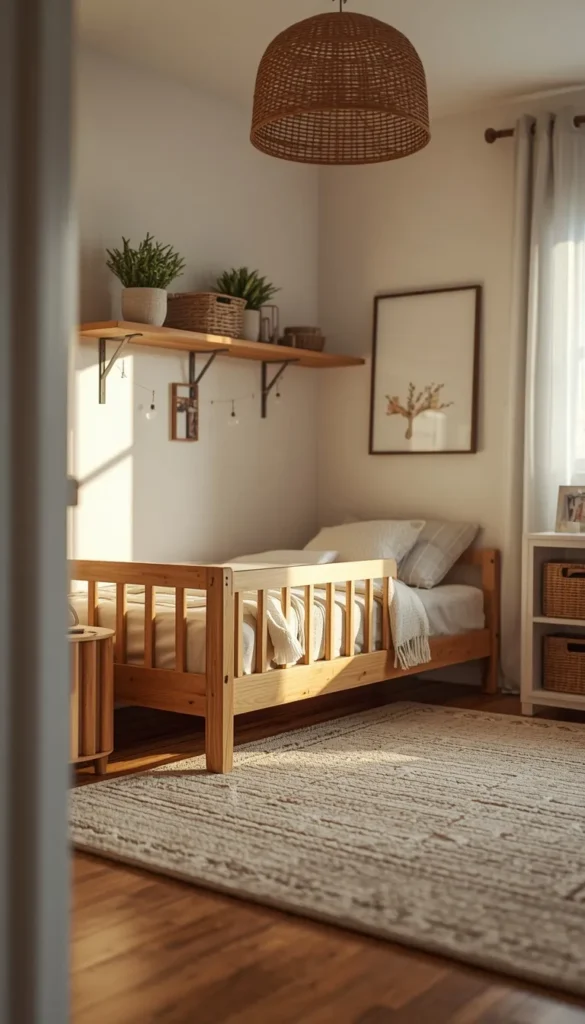
Toddler rooms are where I get the most cautious, honestly, because this is the age where safety details actually change how a room should be designed. Furniture needs to be anchored to the wall, cords from blinds need to be out of reach, and anything with small, detachable parts needs to stay far from the crib or toddler bed. It’s not the fun part of design, but it’s the part that matters most.
Once the safety basics are handled, toddler rooms are a great place to have fun with color and pattern, since kids this age genuinely respond to bright, cheerful spaces. A soft rug for floor play, low shelving so they can start grabbing their own books and toys, and a nightlight with warm, dim light all go a long way. One thing I always mention to parents is to resist the urge to buy a “big kid” bed too early. A toddler bed with rails, even a simple one, tends to help with the transition out of the crib far more smoothly than jumping straight to a twin.
10. Colorful Kids Bedroom Ideas Without the Chaos
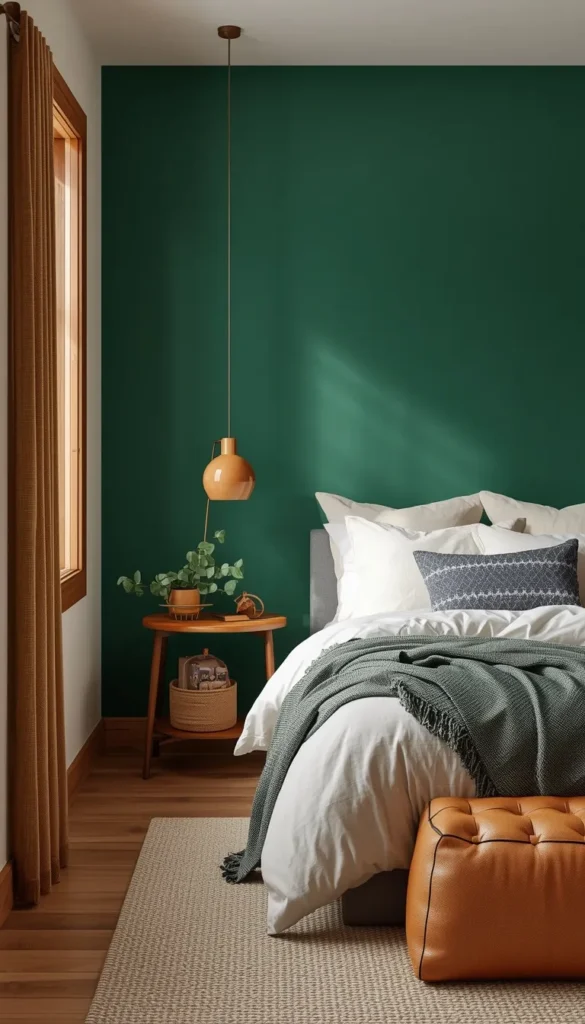
Color is where kids’ rooms get to be genuinely joyful, but there’s a real skill to using it well instead of it just feeling loud. My rule of thumb is one dominant color, one supporting color, and one accent, used across the room in different amounts. That keeps things playful without your eyes not knowing where to land.
- Paint one accent wall instead of all four for a bolder color
- Use your boldest shade in something easy to change, like bedding or curtains
- Balance a bright palette with plenty of white or wood tones to let it breathe
I’ve also noticed that saturated jewel tones, like emerald or cobalt, tend to age better with kids than pastel versions of the same colors, since pastels can start to feel babyish sooner. If you’re on the fence about how bold to go, err bolder on something swappable and safer on the walls.
11. Creative Kids Room Ideas That Spark Imagination
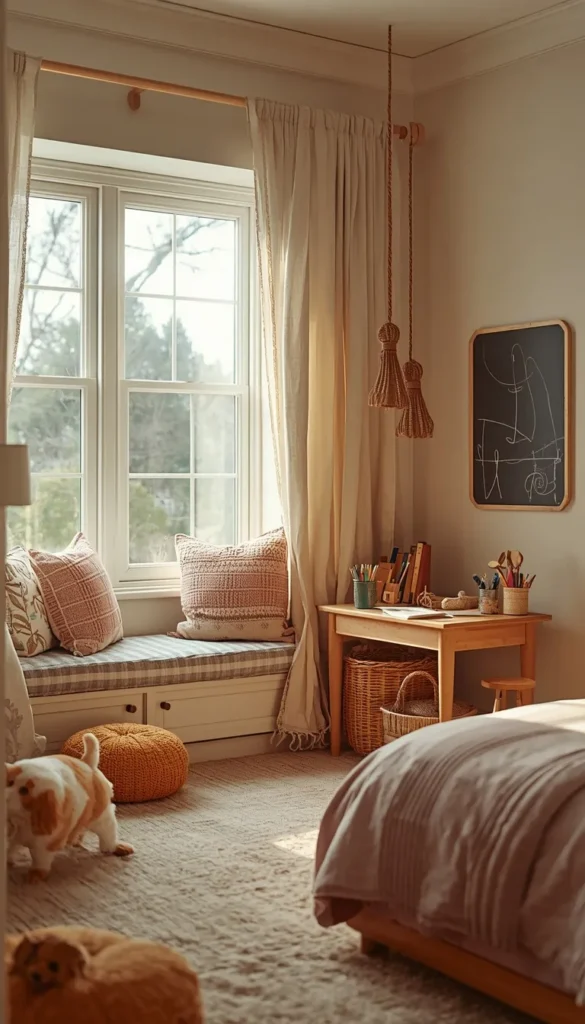
The most memorable kids’ rooms I’ve worked on all had one thing in common: a dedicated spot that felt like it belonged entirely to the kid’s imagination, not just their sleep schedule. A reading nook tucked into a window, a small tent or canopy corner, or even a repurposed closet turned into a tiny hideaway can do more for a child’s sense of ownership over their space than any amount of themed decor.
We also don’t give kids enough credit for wanting a “workspace” of their own, even a small one. A little art table with supplies at their height, or a chalkboard painted section of the wall, invites the kind of open ended play that a room full of toys sometimes doesn’t. These spaces don’t need to be big or expensive. They need to feel special and be genuinely theirs.
12. Kids Bedroom Furniture Ideas Worth the Investment
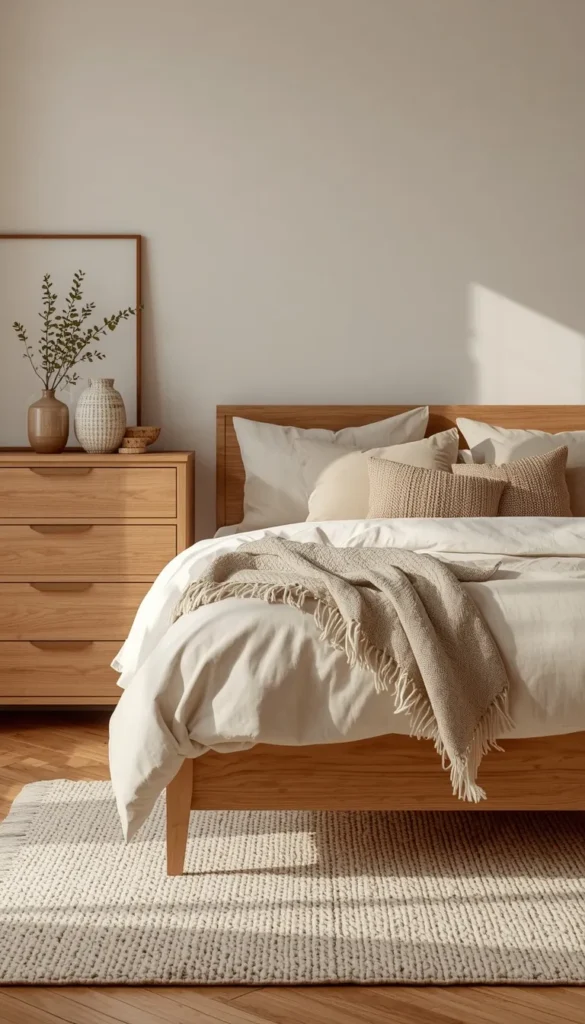
Not everything in a kids’ room needs to be expensive, and honestly, most of it shouldn’t be. But there are a few pieces I tell every client to spend a little more on, because they’ll get used daily for years. A solid, well built dresser and a supportive mattress are at the top of that list. Cheap versions of both tend to wear out fast or, worse, become unsafe.
On the flip side, here’s where I tell people to save:
- Decorative accents like lamps, art, and small storage bins
- Bedding, since kids’ tastes shift and this is the easiest thing to update
- Rugs, unless it’s a high traffic play area, where a slightly higher budget pays off in durability
A quick trick I’ve learned over the years is to buy the “boring” big pieces in classic finishes, like natural wood or simple white, so they can move rooms or get repainted later instead of becoming outdated along with your kid’s interests.
What’s the one thing about your kid’s current room that drives you a little crazy?
13. Budget Friendly Kids Bedroom Decorating Ideas
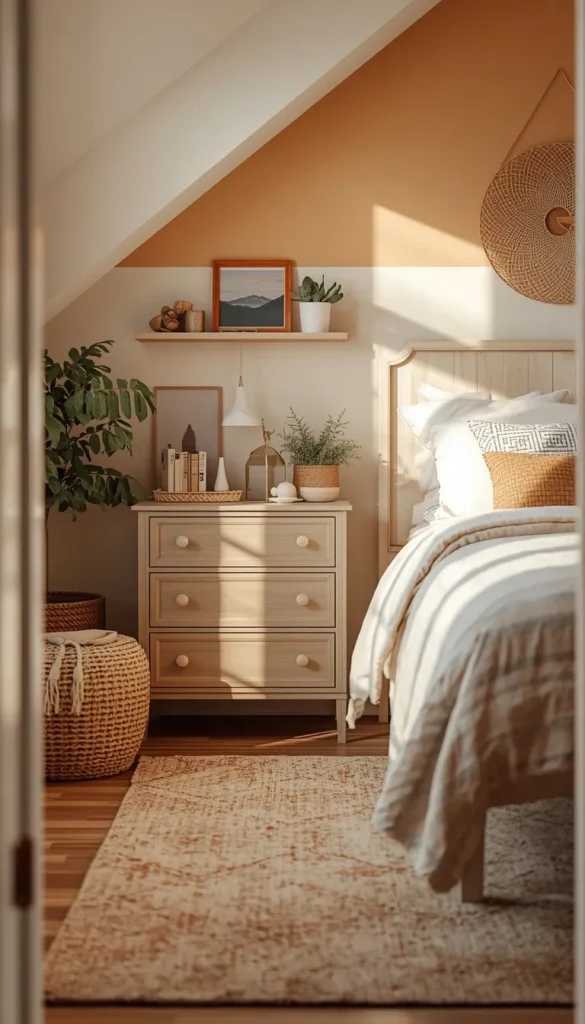
This is the part most design articles skip completely, and it’s usually the part parents actually need most. The truth is, a beautiful kids’ room doesn’t require a full renovation budget. I’ve done complete refreshes for under a few hundred dollars just by focusing on paint, textiles, and rearranging what’s already there.
If you’re working with a tighter budget, here’s where your money goes furthest:
- A fresh coat of paint on one wall instead of new furniture
- New bedding and a rug to instantly change the whole feel of a room
- Thrifted or secondhand dressers, sanded and repainted in a modern color
And if you do have more to spend, I’d rather see it go toward one great piece, like a well built bed frame or a quality mattress, than spread thin across a dozen small decor items. A room with one good anchor piece and a few affordable layers almost always looks more pulled together than one filled with a little bit of everything.
14. Kids Bedroom Design Details That Tie the Room Together
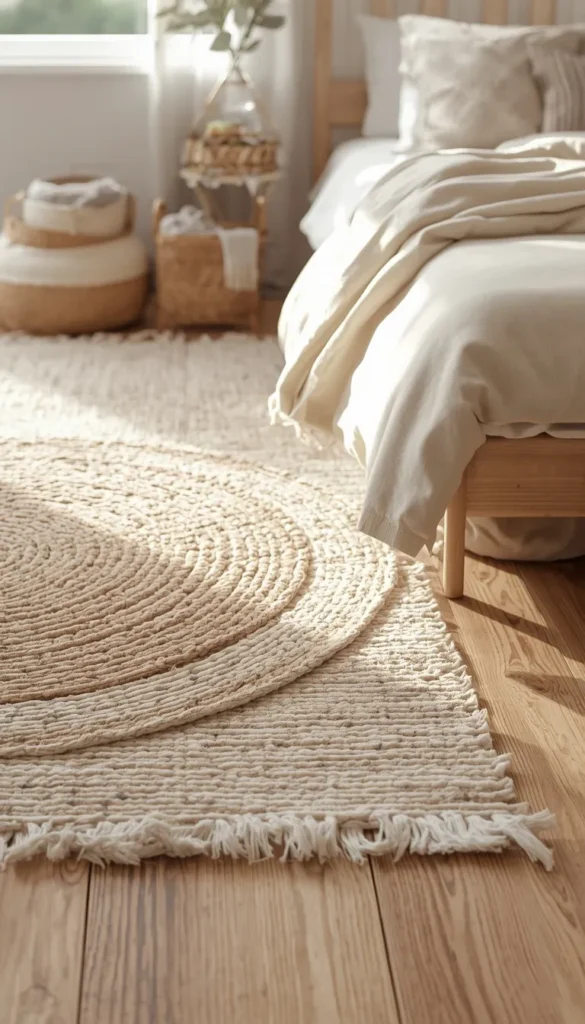
Once the big furniture and color decisions are made, it’s the smaller design details that make a room feel finished rather than half done. Lighting is the one I see overlooked constantly. A single overhead light is rarely enough. I like layering in a soft lamp for reading, a dim nightlight for younger kids, and if there’s a desk, a proper task light too.
Storage is the other detail that quietly makes or breaks a room. Baskets and bins at a kid’s height mean they can actually put things away themselves, which matters more than any built in shelving system if the goal is a room that stays tidy. And when it comes to paint, warmer, muted tones tend to keep a room feeling calm and easier to fall asleep in, while very bright, saturated colors on all four walls can actually be a bit overstimulating at bedtime. A little restraint on the big surfaces goes a long way toward a room that feels good to actually live in, not just look at.
15. Kids Bedroom Inspiration FAQs Parents Actually Ask
A few questions come up in almost every project I work on, so I wanted to answer them directly here.
How often should you redesign a kids bedroom? Every three to five years tends to work well, roughly matching the toddler to elementary and elementary to tween transitions, though swapping smaller decor items in between can stretch that timeline further.
What’s the best flooring for a kids bedroom? Durable, easy to clean options like laminate or engineered hardwood with a soft rug layered on top tend to hold up best against spills, art projects, and general wear.
How do you make a small kids room feel bigger? Vertical storage, a lighter color palette, and furniture that serves more than one purpose, like a bed with built in drawers, all help a tight space feel more open.
Is it okay to use dark colors in a kids room? Absolutely, and I’d encourage it. Deep, moody tones used as an accent wall or in textiles can make a room feel cozy and grown up, especially for older kids who are outgrowing brighter, more childish palettes.
Which Path Is Yours?
By Budget
- Starter Refresh: New bedding, one accent wall, thrifted dresser with a fresh coat of paint, swap in a playful rug
- Investment Room: Custom loft bed with built in desk, quality mattress, statement wallpaper, designer lighting layers
By Lifestyle
- Busy Families: Open bookshelf dividers for shared rooms, durable laminate flooring, low maintenance bedding, storage bins at kid height
- Small Space Households: Vertical wall storage, a bed with built in drawers, a window seat instead of a play corner, multi purpose furniture over decor
- Design Forward Parents: Moody accent colors, natural fiber rugs, brass or black hardware, one statement lighting fixture as the room’s anchor piece
Frequently Asked Questions
What age should a child move from a crib to a bed?
Most kids are ready between two and three years old. Watch for climbing out of the crib rather than going strictly by age. A toddler bed with rails is usually the safest first step.
How much does it cost to decorate a kids bedroom on a budget?
You can pull off a solid refresh for $300 to $600. Paint, bedding, and a rug do most of the heavy lifting. Save furniture spending for later if the budget’s tight.
Are bunk beds safe for a 5 year old?
Generally no, most guidelines recommend the top bunk for kids six and older. A trundle bed or loft bed with a low platform is a safer swap. Always check the weight limit too.
What is the best paint color for a kids room that will last?
Warm neutrals like sage, clay, or soft greige age the best. They pair with almost any bedding or decor as your kid’s taste changes. Save bold color for accents instead of all four walls.
How do I make two kids share a bedroom without constant fighting?
Give each kid a clearly defined space, even a small one. A bookshelf divider or two accent wall colors works well. Let them each choose one personal detail, like a pillow or shelf, to feel ownership over their side.
Conclusion
Your kid’s room doesn’t need a total overhaul to feel special, it just needs one honest, intentional change to get the ball rolling. Grab that paint sample, clear off one cluttered shelf, or finally hang the art that’s been sitting in a closet for months. Small moves add up faster than you’d think, and your kid will notice the effort even if they can’t quite explain why the room suddenly feels better. So tell me, which idea from this list are you trying first?
