
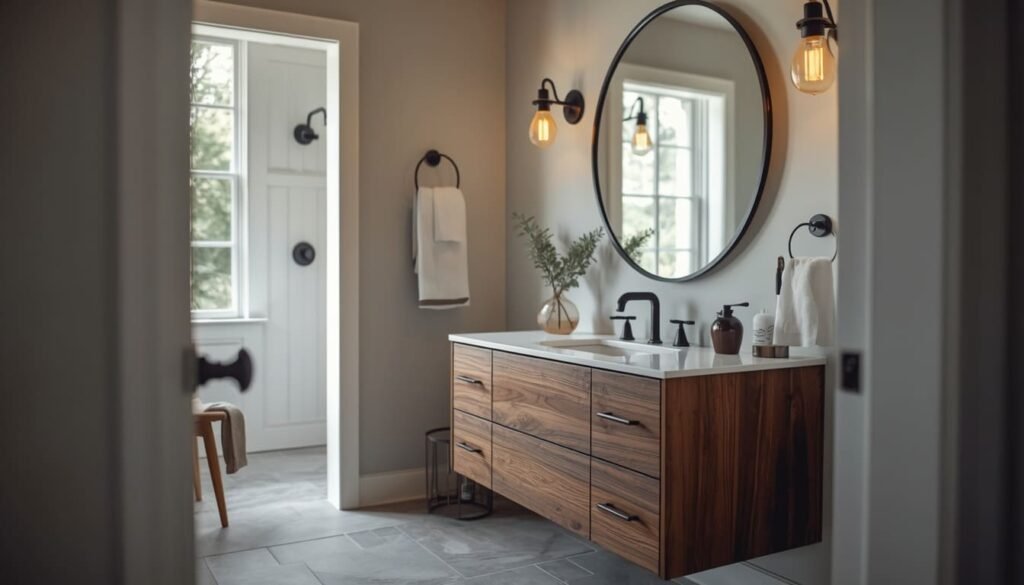
You don’t need a massive budget or a full gut renovation to make a small bathroom feel like it belongs in an interior design magazine. I’ve worked on dozens of compact bathrooms across the US from cramped 40-square-foot powder rooms in Brooklyn brownstones to narrow master baths in Arizona ranch homes and the same smart moves keep showing up. The truth is, most tiny bathrooms aren’t failing because of their size. They’re failing because of a few fixable design mistakes. These 12 small bathroom design tricks will change the way you see your space and more importantly, the way your space feels every single morning.
My Design Notes
One of my most memorable small bathroom remodels was a guest bath in a 1940s craftsman bungalow in Austin, Texas. The homeowner called it “the pink nightmare” original dusty rose tile, a hulking oak vanity, and zero natural light in just 42 square feet. My budget was tight, right around $4,200. The first thing I did was rip out that oversized vanity and replace it with a sleek floating unit. I still remember the homeowner’s reaction when she walked in she genuinely thought we had knocked out a wall. We hadn’t moved a single thing structurally. From there, we added dark navy shiplap, warm-toned sconces, and a recessed medicine cabinet. Everyone told us the dark color would make it feel like a cave. It did the exact opposite. That little bathroom ended up being the most talked-about room in her entire home.
Mastering Small Bathroom Design: Proven Strategies to Make Every Inch Count
1. Use a Floating Vanity to Open Up Floor Space
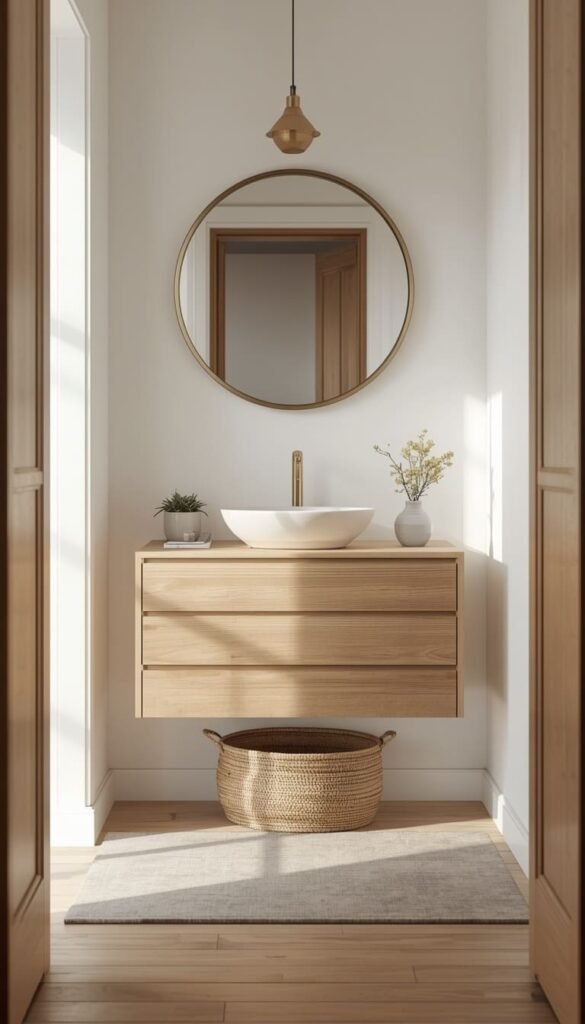
If there’s one single upgrade I recommend to almost every small bathroom client, it’s this one. A floating vanity mounted directly to the wall with no legs touching the floor creates a visual gap between the cabinet and the ground. That exposed strip of floor, even if it’s only 6 or 8 inches, tricks the eye into reading the room as larger than it actually is. It’s one of those small bathroom design moves that looks intentional and high-end without necessarily costing a fortune.
Budget-wise, you can find solid floating vanities starting around $300 to $400 at IKEA or Home Depot. Custom built-ins will run you $1,200 and up. One thing to watch out for is the installation you need to hit wall studs securely, especially if you’re going with a stone or quartz countertop. A wobbly floating vanity is not the vibe.
- Pair it with a vessel sink for a boutique hotel look
- Choose a light wood finish to keep the space from feeling heavy
- Add a small basket underneath for extra towel storage without blocking the floor view
2. Go Dark — The Counterintuitive Color Trick That Actually Works
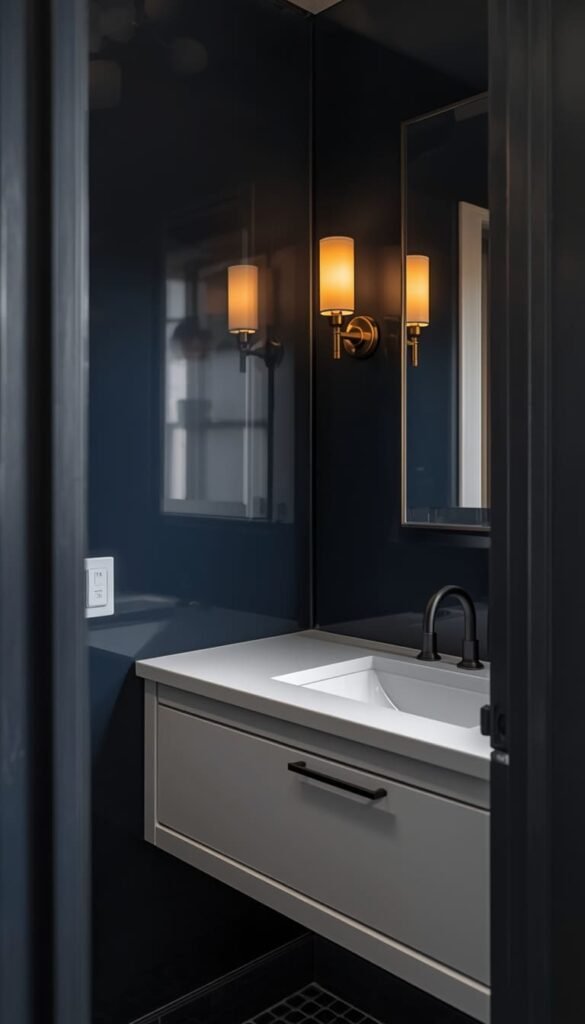
I know what you’re thinking. Dark paint in a small bathroom? That sounds like a recipe for disaster. But here’s what I’ve seen firsthand a deep navy, charcoal, or even black wall in a tiny bathroom can make the space feel moody, intentional, and surprisingly spacious. The key is that dark colors absorb the boundaries of a room. The walls essentially “disappear,” and your eye stops fixating on how close together they are.
This works especially well in windowless bathrooms. Jenny Wolf, one of the designers I deeply respect in this space, swears by high-gloss black for exactly this reason the sheen bounces whatever light you do have around the room beautifully. Just make sure your lighting is doing its job. If you go dark on the walls, your fixtures need to be brighter and warmer than you think. Skimp on the lighting here and yes, it will feel like a cave.
3. Large Format Tile for Small Floors — The Grout Line Secret
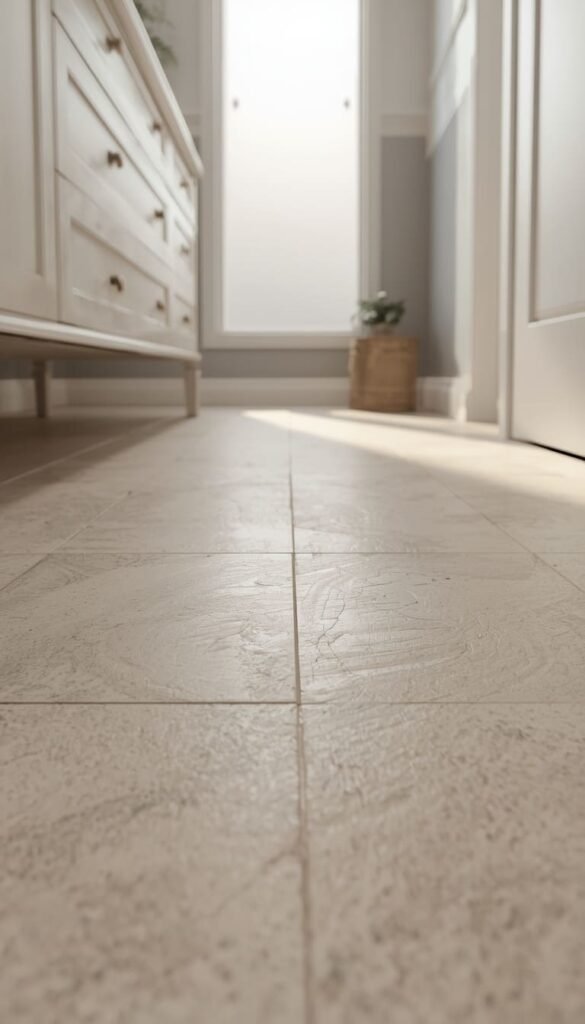
Here’s a trick that surprises most homeowners: bigger tiles actually make a small bathroom floor look larger, not smaller. When you use tiny mosaic tiles or standard 4×4 inch squares, you end up with dozens of grout lines chopping up the visual field. Your eye registers all those lines as busyness, and busyness reads as cramped.
A large format tile think 12×24 inches or even 24×24 has far fewer grout lines. The floor reads as one continuous surface, which visually expands the room. A quick trick I’ve learned over the years is to lay rectangular tiles diagonally or in a brick pattern. It adds just enough movement without adding visual noise.
One thing to watch out for though large tiles in a very narrow bathroom can look awkward if the proportions are off. If your bathroom is under 5 feet wide, stick to a 12×24 maximum and always do a dry layout before committing.
4. Mirror the Entire Wall — Not Just Above the Sink
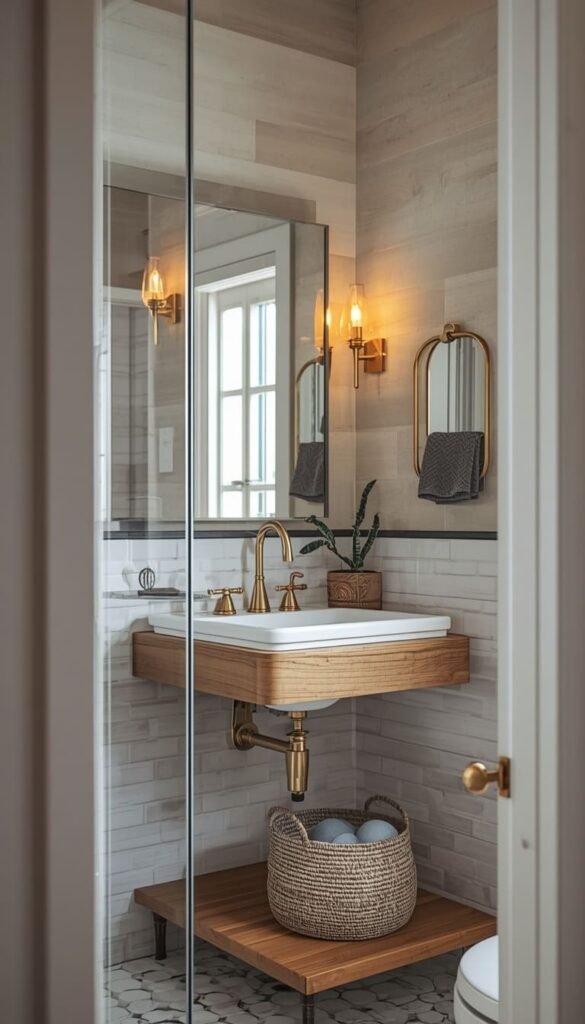
Most people hang one mirror above the vanity and call it a day. I get it it’s the obvious move. But if you really want your small bathroom to feel twice its size, consider mirroring an entire wall from countertop to ceiling. The reflection doubles every element in the room the light, the tile, the space itself. It’s one of the oldest tricks in the interior design playbook, and it never stops working.
Full wall mirrors are surprisingly affordable. A frameless mirror panel from a glass company typically runs $150 to $350 depending on your square footage. The installation is straightforward for a professional, usually a half-day job.
- Frameless mirrors feel modern and sleek
- An antique-framed large mirror works beautifully in Transitional or Farmhouse styles
- Avoid mirroring the wall directly opposite the toilet you know why
Top 6 ideas:
| Idea | Estimated Price | Maintenance |
|---|---|---|
| Floating Vanity | $300 to $1,200 | Low |
| Dark Paint (Full Wall) | $50 to $150 | Low |
| Large Format Floor Tile | $3 to $8 per sq. ft. | Low |
| Full Wall Mirror Panel | $150 to $350 | Medium |
| Glass Shower Panel | $200 to $2,500 | Medium |
| Recessed Medicine Cabinet | $80 to $600 | Low |
5. Ditch the Shower Curtain for a Glass Panel
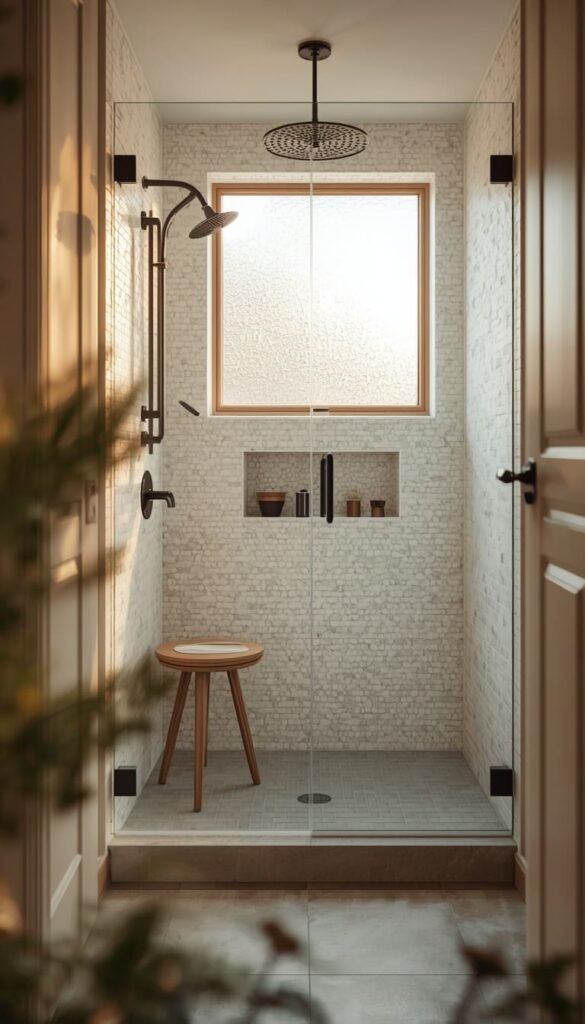
A shower curtain is one of those things that made sense before we really understood how much visual weight fabric adds to a small space. When you swap it out for a clear glass panel even a simple half panel you immediately open up the entire bathroom. Your eye can travel all the way to the back wall of the shower without hitting a visual barrier. That uninterrupted sightline is everything in a compact space.
Frameless glass panels start around $200 to $400 for a basic fixed panel. A full frameless glass enclosure will run you $900 to $2,500 depending on the size and hardware finish. If you’re renting and can’t make permanent changes, a tension-rod mounted clear PEVA liner is your next best option not as polished, but miles better than a patterned fabric curtain bunching up in the corner.
One thing to watch out for is water control. If you go with a half panel or an open shower design, your tile waterproofing and drain placement need to be on point. A bad drain situation turns a beautiful open shower into a flooded bathroom floor fast.
6. Vertical Tile Stacking to Steal Visual Height
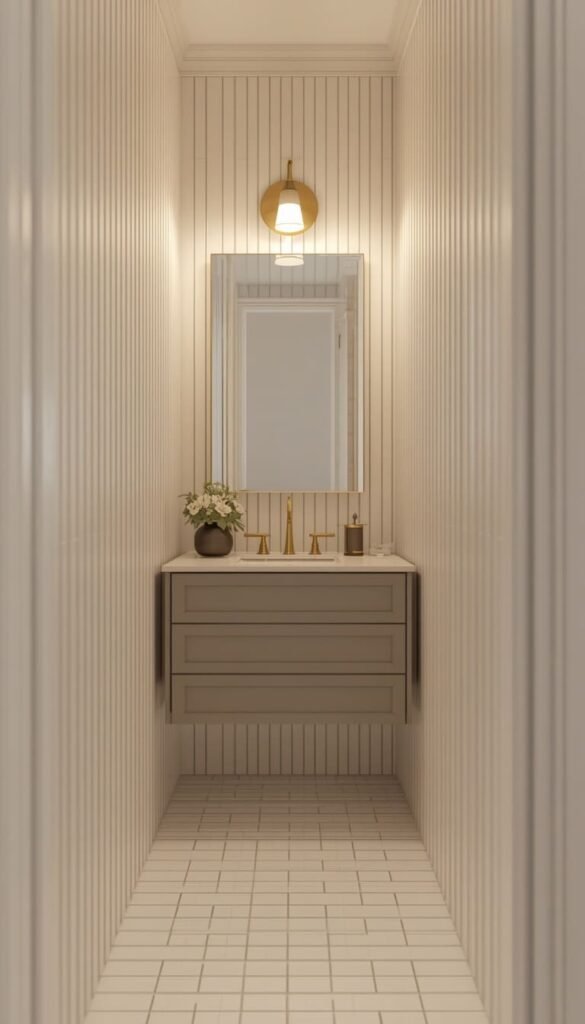
Most people think about floor space when they’re trying to make a small bathroom feel bigger. But ceiling height is just as important maybe more so. A bathroom that feels tall feels airy. One that feels low feels like a box. Vertical tile stacking is one of the simplest ways to pull the eye upward and create the illusion of height without touching the actual ceiling.
Instead of laying subway tiles in the traditional horizontal brick pattern, stack them vertically. Floor to ceiling. The eye naturally follows the lines upward, and suddenly a 8-foot ceiling reads more like 10.
- Elongated tiles like 4×12 or 3×12 work best for this effect
- Pair with a contrasting grout color to make the vertical lines pop
- This works especially well in narrow bathroom layouts where width is limited
I used this exact trick in a Philadelphia rowhouse bathroom that was only 36 inches wide. The homeowners were ready to gut the entire space. We changed the tile orientation, added a backlit mirror, and they fell in love with it all over again total tile cost was under $600.
Which one is your biggest small bathroom struggle right now storage or making the space feel larger?
7. Built In Shower Niches Over Plastic Caddies
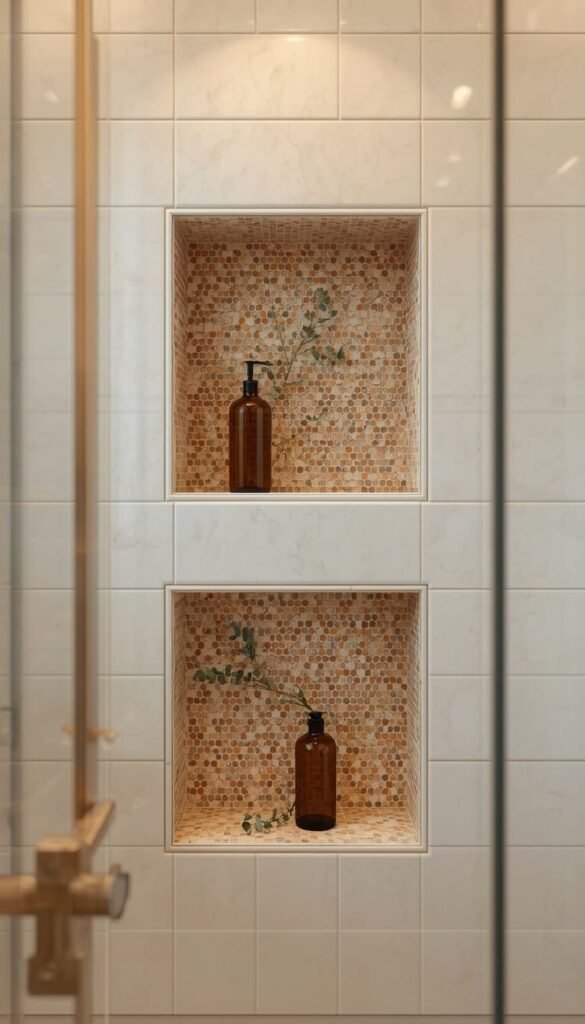
Let me be direct about this one a plastic shower caddy hanging off your showerhead is the fastest way to make even a beautiful bathroom look unfinished. It screams college dorm, regardless of how nice everything else is. A recessed shower niche, on the other hand, is built directly into the wall. It sits flush, stores your shampoo and body wash neatly, and adds an architectural detail that looks intentional and custom.
If you’re doing a remodel, adding a single niche runs about $150 to $300 in labor, plus tile. That’s it. It’s one of the highest value-to-cost upgrades in small bathroom design. You can stack two niches vertically if you need more storage one at eye level for daily products, one lower for backup items.
A quick trick I always share with clients is to tile the inside of the niche in a contrasting color or pattern. Even if your shower tile is plain white, a small hit of zellige or Moroccan tile inside the niche adds a design moment that looks intentional and collected.
8. Recessed Medicine Cabinets — Storage That Disappears Into the Wall
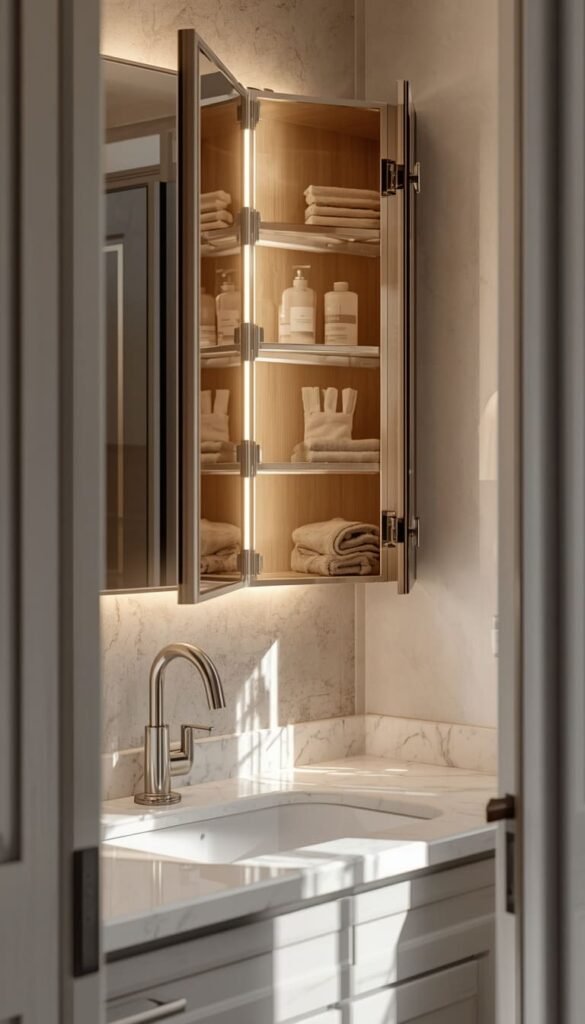
Surface-mounted medicine cabinets stick out from the wall and instantly make a small bathroom feel more cluttered and cramped. A recessed medicine cabinet solves both the storage problem and the visual noise problem at the same time. It sits flush with the wall, reflects light like a mirror, and hides everything from your skincare routine to your cold medicine completely out of sight.
In older American homes especially craftsman bungalows and colonial-style houses built before 1970 the wall cavity between studs is almost always deep enough to accommodate a standard recessed cabinet. In newer construction with thicker insulation, you may need to check first.
Recessed medicine cabinets range from $80 at big box stores all the way to $600 plus for designer options with interior lighting and adjustable shelving. The interior lighting versions are genuinely worth the upgrade if you wear makeup or contacts the light quality inside is so much better than relying on overhead fixtures alone.
- Kohler, Robern, and American Pride make excellent mid-range options
- Choose a frameless style for modern bathrooms and a thin-framed version for transitional or traditional spaces
- If your wall has electrical or plumbing running through it, you’ll need a surface mount always check before cutting
9. Match Your Hardware Finish — The One Rule That Ties Everything Together
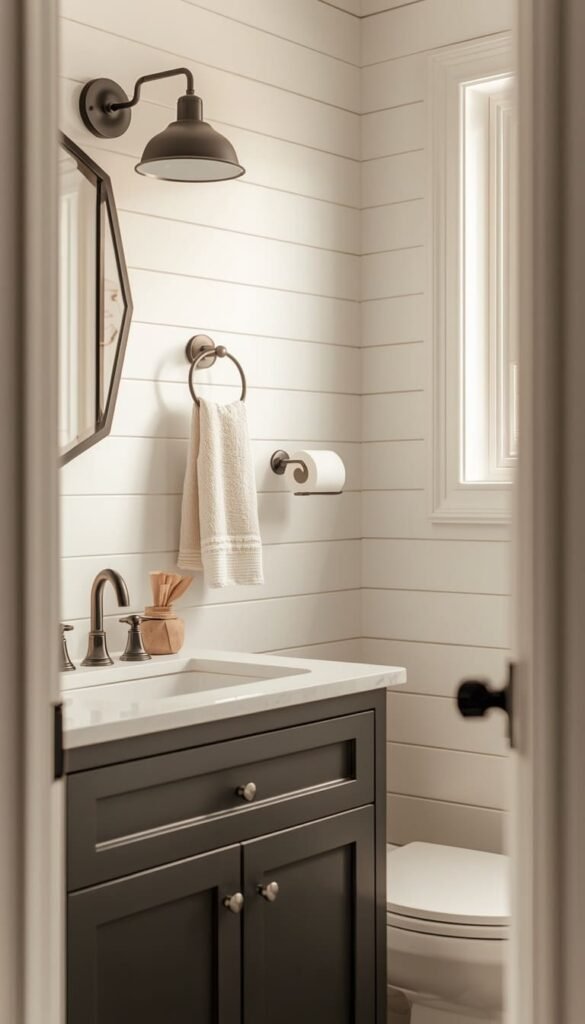
This is the design rule I wish more homeowners knew before they started buying fixtures piece by piece. When your towel bar is chrome, your faucet is brushed nickel, and your light fixture is matte black, the bathroom feels visually scattered even if every individual piece is beautiful on its own. Matching your hardware finish is the single easiest way to make a small bathroom look professionally designed without changing a single tile.
In the current US market, the three finishes dominating small bathroom design right now are matte black, brushed gold, and brushed nickel. Matte black works beautifully in modern and contemporary spaces. Brushed gold adds warmth to transitional and farmhouse styles. Brushed nickel is the safe, timeless choice that works with almost everything.
- Faucet, towel bar, toilet paper holder, light fixture, and mirror frame should all pull from the same finish family
- You can mix two finishes intentionally — but only two, and they need to be clearly different enough to look deliberate
- Swapping hardware is one of the most budget-friendly small bathroom upgrades — sometimes as low as $150 total for a complete set
10. Warm Lighting Over Bright White Bulbs
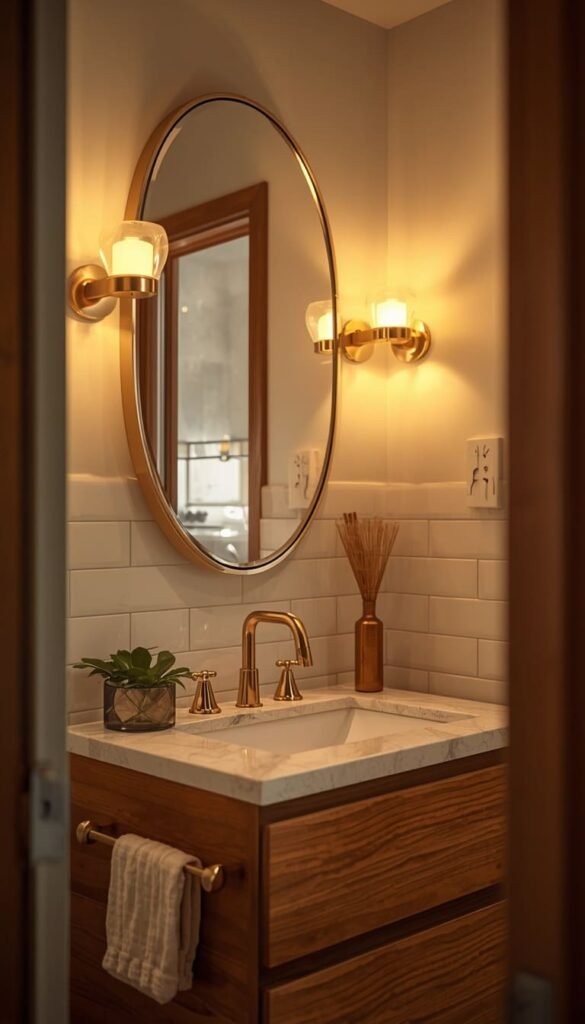
I cannot stress this enough. The lighting in most American bathrooms is doing the space absolutely no favors. That harsh, cool-toned overhead light that comes standard in builder-grade homes? It makes the room feel clinical, flat, and uninviting. It also makes you look tired every single morning, which is not the energy anyone needs before coffee.
Warm white bulbs in the 2700K to 3000K color temperature range change everything. They cast a soft, golden glow that makes tile colors look richer, wood tones look warmer, and the entire room feel more like a spa and less like a hospital corridor. This is a $15 fix. Fifteen dollars. Buy warm bulbs today.
Beyond the bulb swap, think about layering your light sources. A backlit mirror adds ambient glow right where you need it most. Sconces mounted at eye level on either side of the mirror eliminate the unflattering shadows that overhead lighting creates. In small bathrooms especially, where you’re often standing very close to the mirror, side-mounted sconces are genuinely worth the investment.
One thing to watch out for is bathroom lighting ratings. Any fixture inside or directly adjacent to a shower or tub zone needs to be UL-listed for damp or wet locations. This is a safety requirement, not just a suggestion.
11. A Statement Wallpaper in the Powder Room
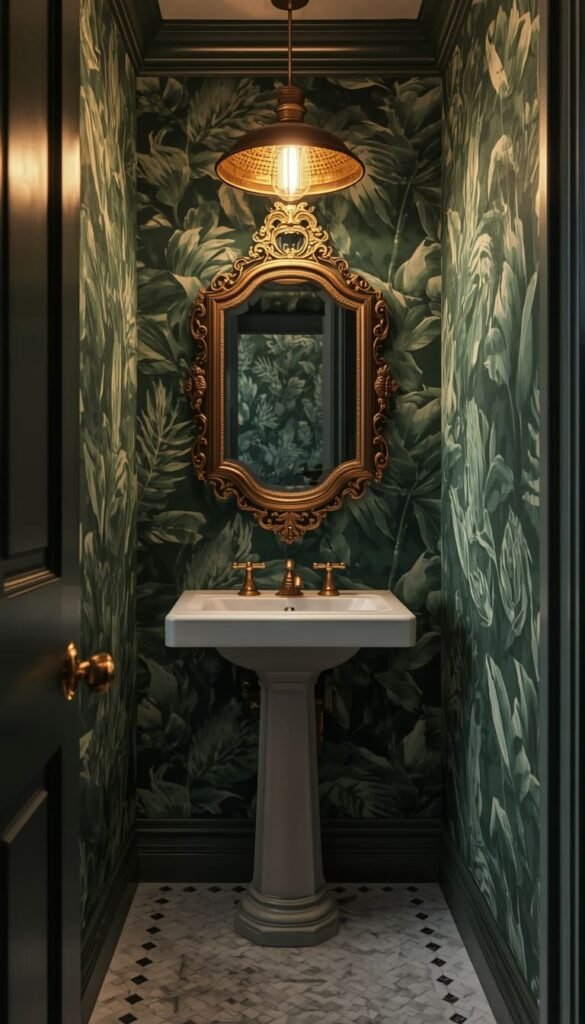
Powder rooms are honestly one of my favorite spaces to design. They’re small, they’re usually only used by guests, and because no one is spending significant time in them, you can take design risks you’d never take in a primary bathroom. A bold, dramatic wallpaper in a powder room almost always lands perfectly and it’s one of the most talked-about details when guests visit your home.
The scale rule here surprises most people. Bigger patterns actually work better in small spaces than tiny, delicate ones. A large-scale botanical print, a graphic geometric, or even a maximalist mural-style paper fills the room with intention. Small, busy patterns in a tight space just look like visual static.
- Peel-and-stick options from brands like Tempaper and Chasing Paper start around $50 per roll perfect for renters
- Traditional wallpaper in a powder room typically requires 2 to 4 rolls depending on pattern repeat
- Always line up your pattern at the most visible wall first usually directly across from the door
I worked on a powder room in a 1990s suburban home in Nashville where the homeowner was terrified of color. We compromised with a deep forest green botanical wallpaper, brass fixtures, and a vintage-style mirror. She texted me three weeks later saying her dinner party guests kept sneaking back in just to look at it.
And if you could change just one thing in your bathroom tomorrow, what would it be?
12. The Clear the Floor Rule for Instant Space
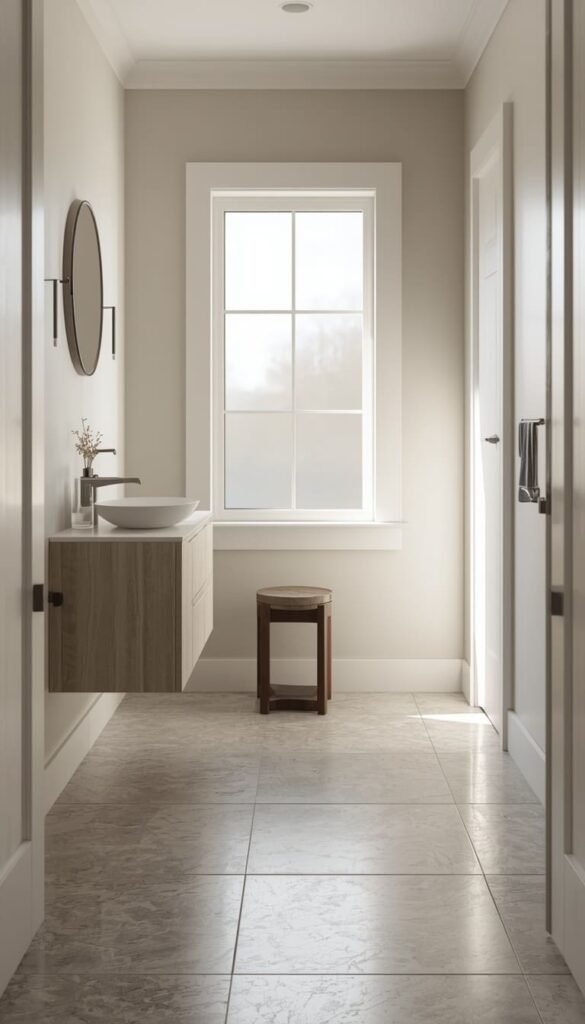
Of all the small bathroom design principles I come back to again and again, this one is the most universally effective and the least followed. Clutter on the floor freestanding storage towers, decorative baskets sitting directly on the ground, bulky vanity bases that go all the way down visually shrinks a bathroom faster than almost anything else. The more floor you can see, the larger the room feels. Full stop.
This is why floating vanities work so well, as I mentioned earlier. But it goes beyond just the vanity. Think about every object currently sitting on your bathroom floor. A toilet brush holder, a scale, a small trash can tucked in the corner each one of those interrupts the visual flow of the floor surface and subtly signals “cramped” to your brain.
Wall-mounted toilet brush holders are widely available and cost under $30. Recessed niches handle your storage needs without occupying floor space. A slim wall-hung trash can keeps the floor clear without sacrificing function. These are small moves individually. Together they create a bathroom that feels genuinely open and considered the exact feeling every good small bathroom design should deliver.
Your 2 Minute Bathroom Decision Map
By Budget
Starter Picks (Under $200)
- Swap to warm bulbs immediately — $15 fix, instant impact
- Match all hardware finishes — $100 to $150 for a complete set
- Add peel and stick wallpaper to your powder room — $50 to $100
- Clear the floor completely — free, zero budget required
Investment Moves ($500 and Above)
- Install a floating vanity for maximum floor visual — $300 to $1,200
- Replace shower curtain with a glass panel — $200 to $2,500
- Retile with large format floor tiles — $3 to $8 per sq. ft. plus labor
- Add a recessed medicine cabinet — $80 to $600 installed
By Bathroom Type
Tiny Full Bathrooms
- Prioritize floating vanity plus glass panel first
- Use vertical tile stacking to add visual height
- Built in shower niche over any freestanding storage
Powder Rooms and Half Baths
- Go bold with statement wallpaper — low risk, high reward
- Match brass or matte black hardware throughout
- One large mirror over multiple small ones always wins
Frequently Asked Questions
What is the best color for a small bathroom to make it look bigger?
Light colors like soft white, warm ivory, and pale gray work well but don’t rule out dark shades. A high-gloss deep navy or charcoal can actually make walls recede and the space feel intentionally designed.
How much does a small bathroom remodel cost in the USA?
The average small bathroom remodel runs $3,500 to $15,000 depending on scope. A cosmetic refresh stays under $2,000. A full gut renovation with new tile, fixtures, and layout changes pushes toward $10,000 to $25,000.
Can I make my small bathroom look expensive on a budget?
Yes, absolutely. Match your hardware finish, swap in warm bulbs, and add a statement mirror. These three changes cost under $300 combined and deliver the biggest visual return of any small bathroom upgrade.
What flooring makes a small bathroom look larger?
Large format tiles in 12×24 or bigger with minimal grout lines. Fewer grout lines mean less visual chop on the floor, which makes the entire room read as one continuous open surface.
Is wallpaper a good idea in a small bathroom?
Yes, especially in powder rooms. A bold large-scale pattern adds personality without requiring renovation. Use peel and stick for rentals and always ensure proper ventilation in full bathrooms to prevent peeling.
Conclusion
Your bathroom is the first room you walk into every morning and the last one you use every night. That matters. You don’t need a massive budget or a contractor on speed dial to start making it feel like a space you actually love sometimes it’s one warm light bulb, one cleared shelf, or one bold wallpaper sample that changes everything.
Pick one trick from this list today. Just one. Order the hardware, tape the paint swatch to the wall, or finally pull that plastic caddy off the showerhead. Small bathrooms respond to small changes faster than any other room in the house.
So tell me which of these 12 tricks are you tackling first in your bathroom?
