
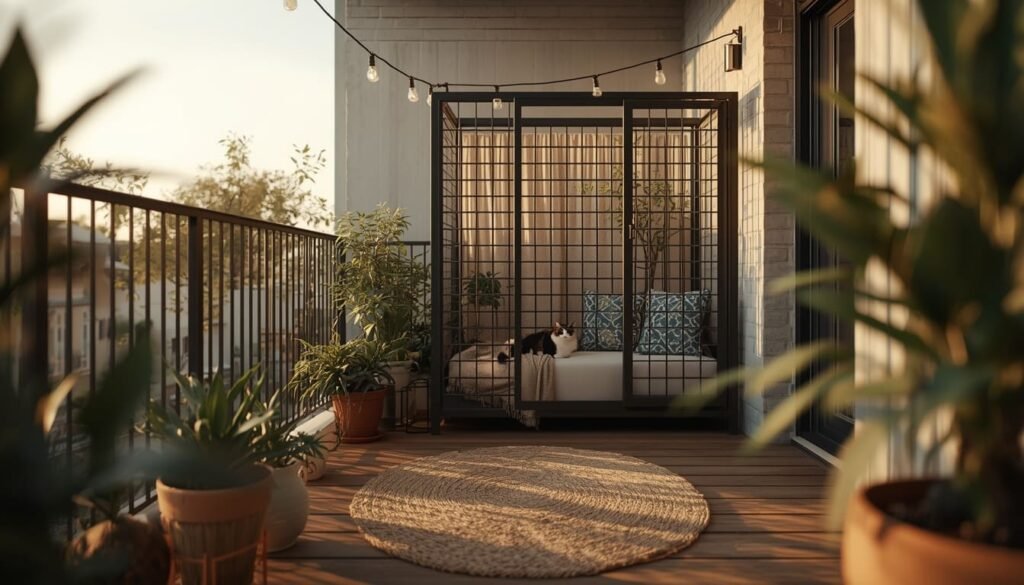
If your cat has been staring longingly at your balcony door, it’s time to stop feeling guilty and start getting creative.
A renter friendly catio on deck doesn’t have to mean ugly wire boxes and landlord complaints. I’ve seen renters in Austin, Brooklyn, and Seattle pull off stunning outdoor cat spaces that looked straight out of an Apartment Therapy feature no drilling, no damage, and zero lease violations. The best part? Most of these setups cost less than a single month of pet insurance. You just need the right ideas, and that’s exactly what I’m here to give you.
My Design Notes
A few years back, I was working with a client named Jess a young teacher renting a second-floor apartment in Austin, Texas. She had two rescue cats, a covered deck roughly 6×8 feet, and a lease that very clearly said “no permanent modifications.” She called me half-convinced it was impossible.
We proved that lease wrong in a single weekend.
Using zip-tied wire panels, a tension rod frame along one side, and a $40 outdoor rug from Target, we built her a fully enclosed catio for just under $180. No drills. No wall anchors. No damage deposit drama. When her landlord stopped by for a routine inspection a month later, he actually leaned over the railing to get a better look and said, “That’s pretty sharp.”
That project changed the way I approach small outdoor spaces for renters. It taught me that the constraint of “no permanent changes” isn’t a dead end it’s actually a design challenge. And honestly, some of the most creative catios I’ve ever seen came out of exactly that kind of limitation.
If Jess could do it in Austin on a teacher’s salary, I promise you can do it too.
Stunning Renter Friendly Catio Ideas to Elevate Your Deck Into a Cat Paradise
1. The Full Balcony Screen Conversion Renter Safe Version
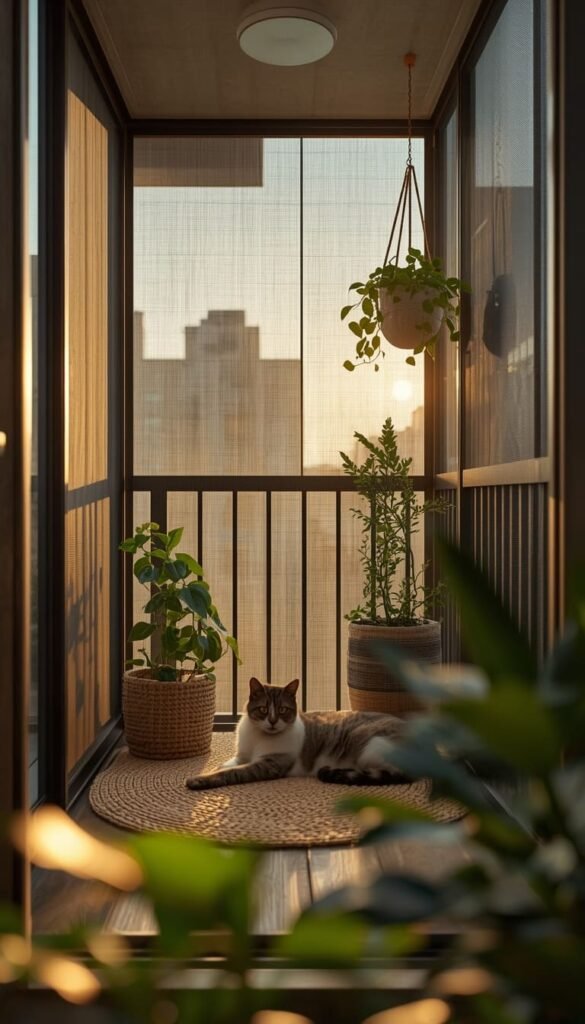
This is the most popular renter friendly catio on deck setup I recommend, and for good reason. You’re essentially turning your entire balcony into one big screened-in room think Florida sunroom vibes, but for your cat. The key is using tension-mounted screen panels or heavy-duty mesh that attaches to the ceiling and floor without a single screw going into the wall.
A quick trick I’ve learned is to use bungee cords and corner clamps to keep the mesh taut and clean-looking. It takes maybe three hours on a Saturday morning and holds up surprisingly well even in windy conditions.
What makes this work for renters:
- Everything is removable in under 30 minutes
- No wall damage means no deposit deductions
- The whole setup can move with you to your next place
2. The Zip Tie and Panel Method No Drill No Damage
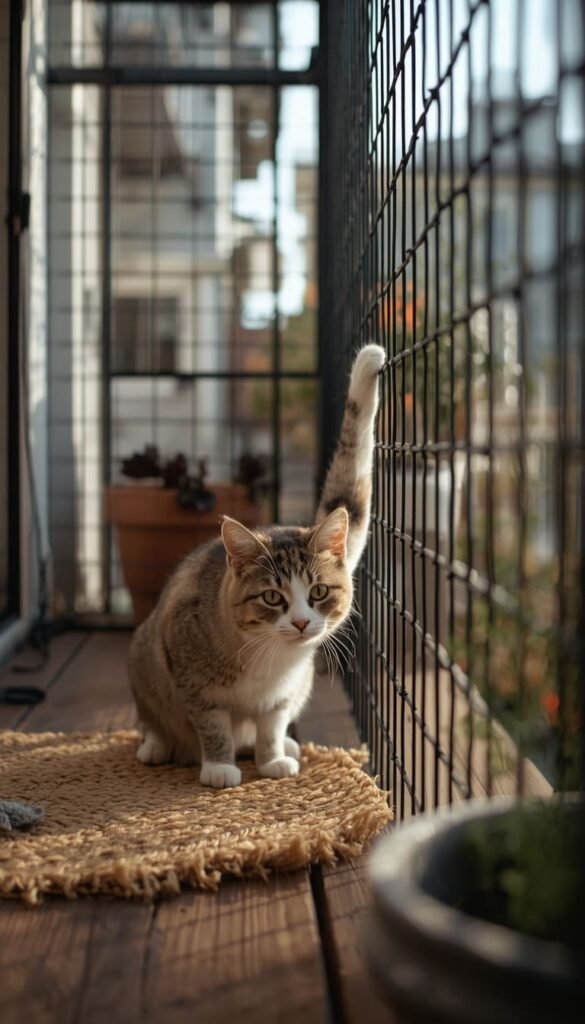
If you’ve ever browsed the “no drill catio for apartments” corner of Pinterest, you’ve probably already seen this one floating around. And yes, it’s as simple as it looks. You grab a set of wire grid panels the kind sold as closet organizers or cube storage units zip tie them together into whatever shape fits your deck, and anchor the base with sandbags or heavy planters.
One thing to watch out for is panel wobble. If your structure feels even slightly unstable, add a diagonal zip-tie brace across the back corners. It makes a huge difference and takes about two minutes.
3. Pre Made Portable Catio Placed on the Deck
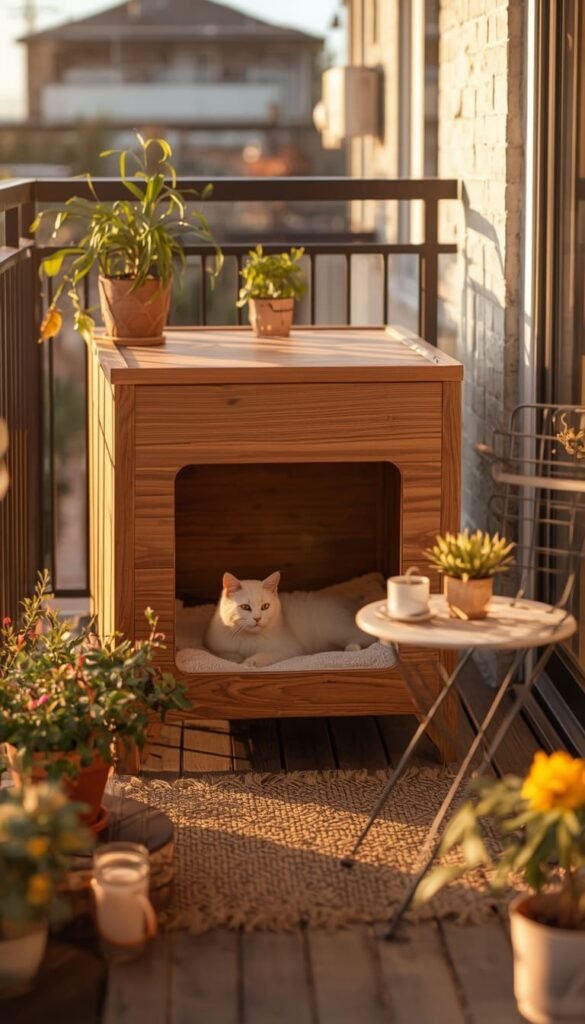
Not everyone wants to build from scratch, and I completely respect that. Pre-made portable catios have come a long way in the last few years. Brands like Aivituvin, Coziwow, and PawHut now make outdoor cat enclosures that look genuinely stylish not like a sad wire cage from 2009.
I usually recommend this option for renters who:
- Have less than a weekend to dedicate to a DIY build
- Want something that can be collapsed and stored when not in use
- Are dealing with a particularly strict landlord situation
The price range sits roughly between $120 and $350 depending on size, which honestly isn’t bad when you factor in zero tools required.
4. The Tension Rod Screen Wall Setup
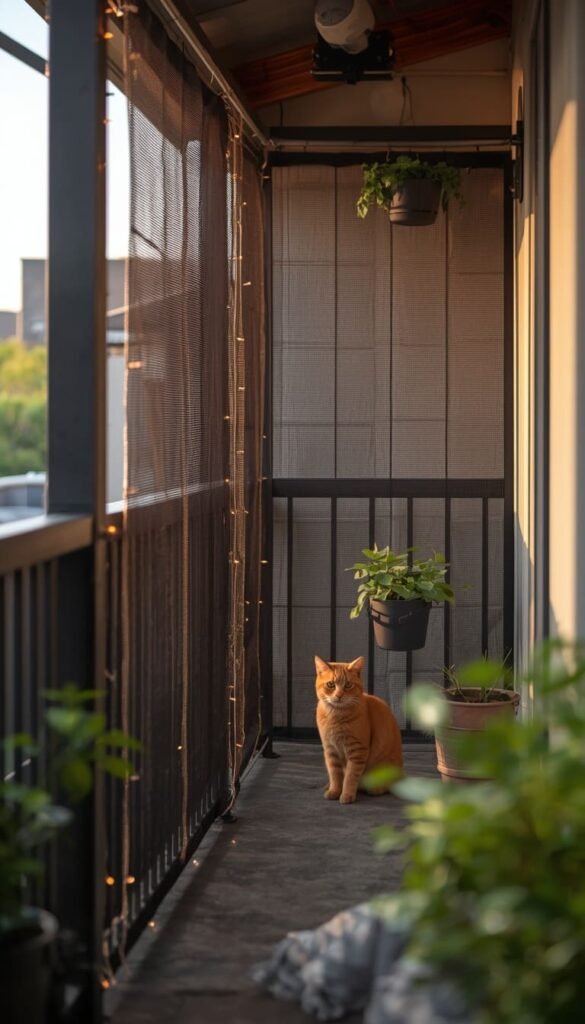
This one is my personal favorite for small covered decks, and it’s wildly underrated. You use heavy-duty tension rods the same kind used for room dividers mounted horizontally between your balcony walls. Then you attach a fine mesh or pet screen fabric using zip ties or curtain clips along the rods. The result looks clean, intentional, and almost decorative.
The whole thing costs around $60 to $90 in materials. I’ve seen this setup styled with string lights woven along the top rod and a couple of hanging planters on the side, and it genuinely looked like something a design blogger would post. Your cat gets fresh air. Your landlord sees nothing alarming. Everybody wins.
Top 6 ideas covered so far:
| Idea | Estimated Price | Maintenance |
|---|---|---|
| Full Balcony Screen Conversion | $80 – $150 | Low |
| Zip Tie and Panel Method | $40 – $80 | Low |
| Pre Made Portable Catio | $120 – $350 | Medium |
| Budget PVC Pipe Frame Catio | $60 – $100 | Low |
| Screened Gazebo Hack | $80 – $130 | Medium |
| Multi Level Balcony Cat Playground | $150 – $300 | High |
5. The Budget PVC Pipe Frame Catio
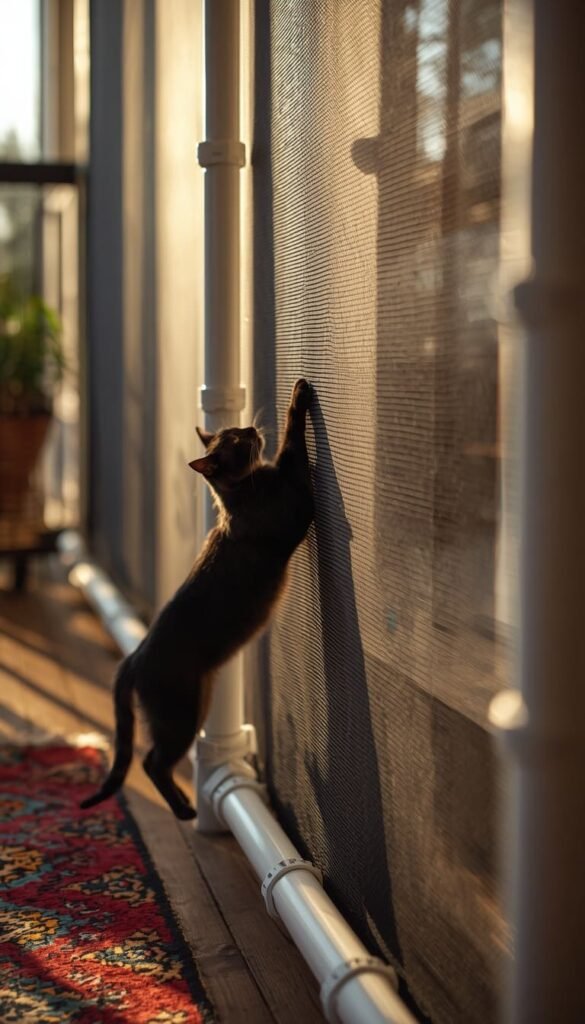
If you told me you wanted a solid, roomy catio for under $100, this is exactly where I’d point you. PVC pipe frames are lightweight, incredibly easy to cut and connect, and they leave absolutely zero marks on your deck. You build a simple rectangular frame, stretch pet screen or hardware mesh over it, and secure everything with zip ties or PVC cement.
What I love about this approach is the flexibility. Need a taller structure for a climber cat? Add a vertical extension. Working with an oddly shaped corner deck? Cut the pipes to fit. I’ve helped clients customize this design in ways a pre-made kit simply can’t match.
A few things to grab from your local hardware store:
- ¾ inch PVC pipes and corner connectors
- Pet-safe hardware mesh in 14 to 16 gauge
- UV-resistant zip ties so they don’t crack in summer heat
6. The Repurposed Dog Playpen Catio
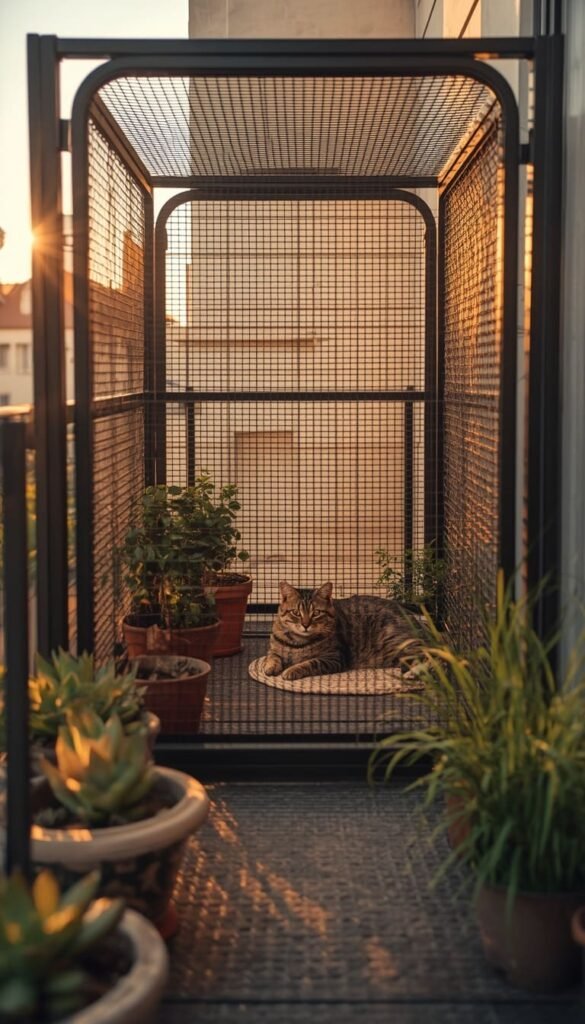
This is the ultimate lazy genius move and I mean that as a compliment. Those large metal dog playpens you see at pet stores or on Amazon? They make surprisingly effective DIY catio ideas for renters. You simply arrange the panels into your desired shape, add a zip-tied mesh roof, and you’re done.
One thing to watch out for is gap size. Standard dog playpen panels have openings wide enough for a curious cat to squeeze through or get a paw stuck. Always line the interior with a finer mesh layer before letting your cat anywhere near it.
The beauty here is cost. A decent 8-panel playpen runs about $45 to $70. Add $20 for roof mesh and you’ve got a functional catio for around $65 total. Hard to argue with that math.
Which of these catio styles fits your deck vibe are you leaning toward something clean and modern or more cozy and boho?
7. The Corner Deck Catio Small Space Solution
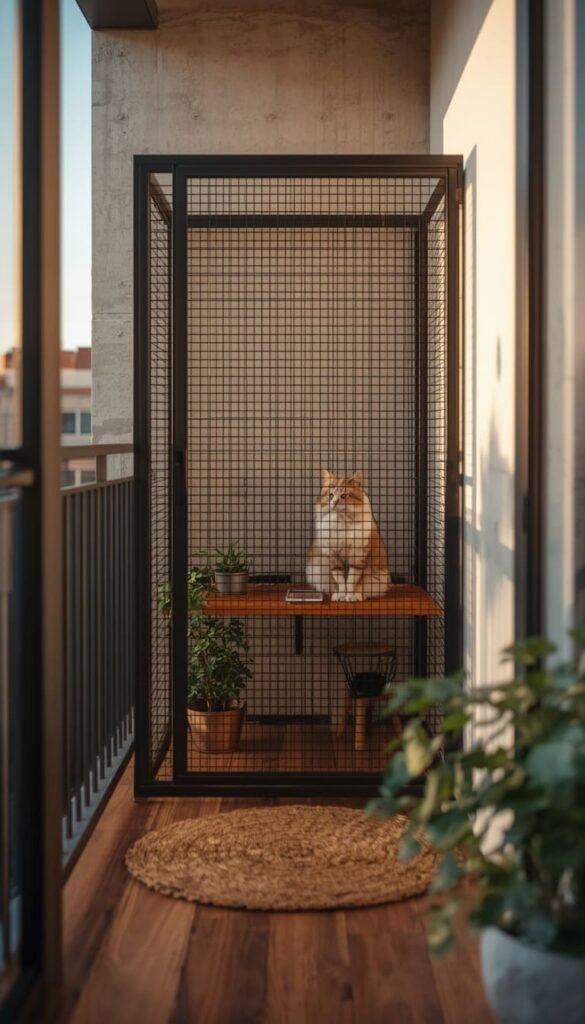
Small deck? Awkward layout? This one was practically designed for you. A corner catio uses two existing deck walls or railings as built-in sides, which means you only need to construct one or two additional panels to fully enclose the space. It’s efficient, it’s clever, and it makes even a tiny 4×4 deck feel purposeful.
I worked on a version of this for a client in Seattle who had maybe 35 square feet of total balcony space. We tucked a corner catio into the back left section, leaving the rest of the balcony open for her morning coffee setup. Her cats had their outdoor space. She kept hers. It was a genuinely elegant solution for a genuinely tight situation.
What makes corner catios work so well for small deck catio inspiration:
- Two sides are already enclosed by existing structure
- Requires fewer materials and less building time
- Leaves usable deck space for the human too
8. The Screened Gazebo Hack
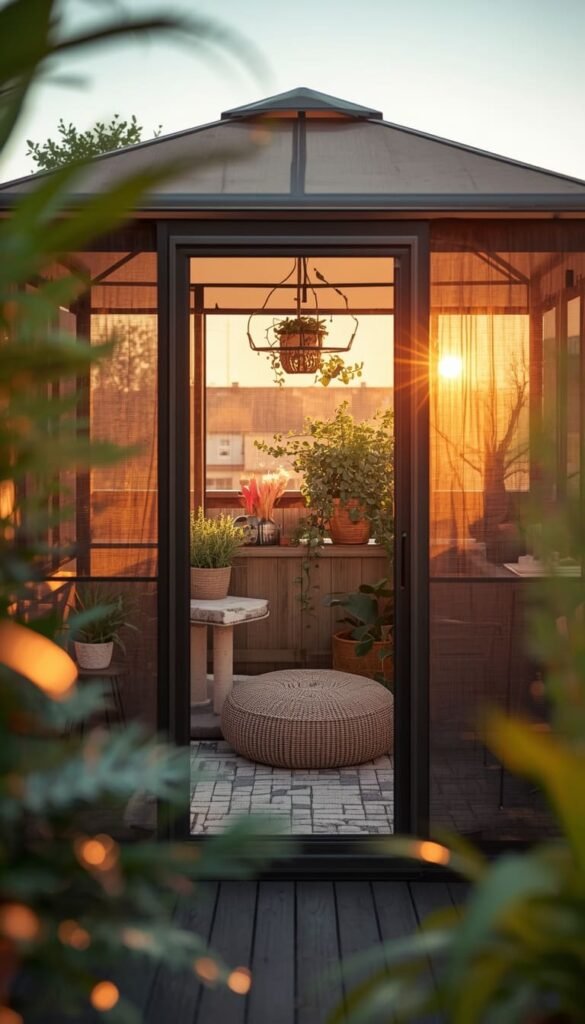
This idea gets me excited every time because it looks so intentional and polished that nobody would ever guess it started as a $80 pop up gazebo from Walmart or Amazon. You buy a basic canopy gazebo with mesh screen walls already attached, set it up on your deck, and add a few cat-friendly touches inside. Done. You now have a screened in cat patio that looks like you planned it from day one.
A quick trick I always share with clients: replace the standard zipper door with a magnetic closure pet door insert. It lets your cat come and go freely while keeping the enclosure secure. Style it with an outdoor rug, a small cat tree, and some potted cat grass and honestly, it photographs beautifully. I’ve seen versions of this setup that looked like they belonged in an outdoor living magazine spread.
9. The Modern Black Frame Wire Panel Look
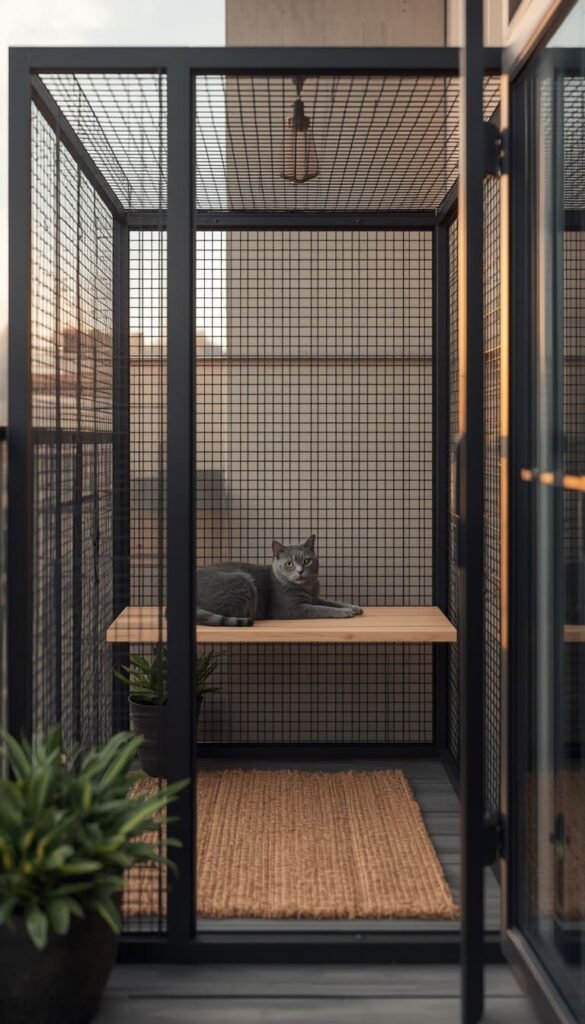
If aesthetics matter to you as much as they do to me, this is the setup that’s going to make your heart sing. Black powder-coated wire panels have this incredibly clean, architectural quality that reads as intentional and modern rather than “I built a cage for my cat.” Paired with a natural wood accent shelf or two inside, this becomes a genuinely beautiful modern outdoor cat enclosure.
The panels themselves are easy to find. Modular black wire grid panels on Amazon run about $25 to $40 for a pack of six. Connect them with cable ties, anchor the base with decorative planters filled with soil, and you’ve got a structure that looks like it cost three times what it actually did.
What pulls this look together visually:
- Matte black zip ties instead of standard white ones
- A jute or sisal outdoor rug on the floor inside
- One or two small potted plants placed just outside the panels for depth
10. The Boho Apartment Balcony Catio
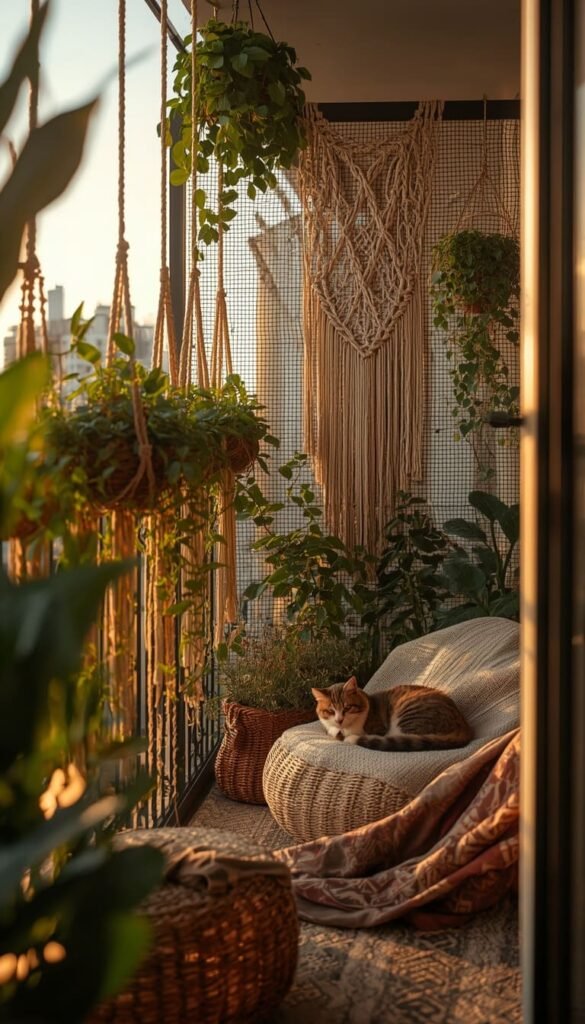
This one is for the maximalists, the plant moms, the people whose apartments already look like a curated Instagram feed. The boho apartment catio balcony setup layers texture, greenery, and warmth in a way that makes the enclosure feel less like a pet structure and more like an extension of your living space.
Think macrame wall hangings zip-tied to the mesh panels. Think woven outdoor poufs your cat will immediately claim as their throne. Think cascading pothos and spider plants along the top rail both of which are non-toxic to cats, by the way, and I always double-check that before recommending any plant near a catio.
I’ve noticed that boho catios tend to get the most attention on social media out of any style. There’s something about that layered, lived-in warmth that makes people stop scrolling. If sharing your catio journey online is part of the fun for you, this aesthetic is genuinely hard to beat.
11. The Vertical Garden and Catio Combo
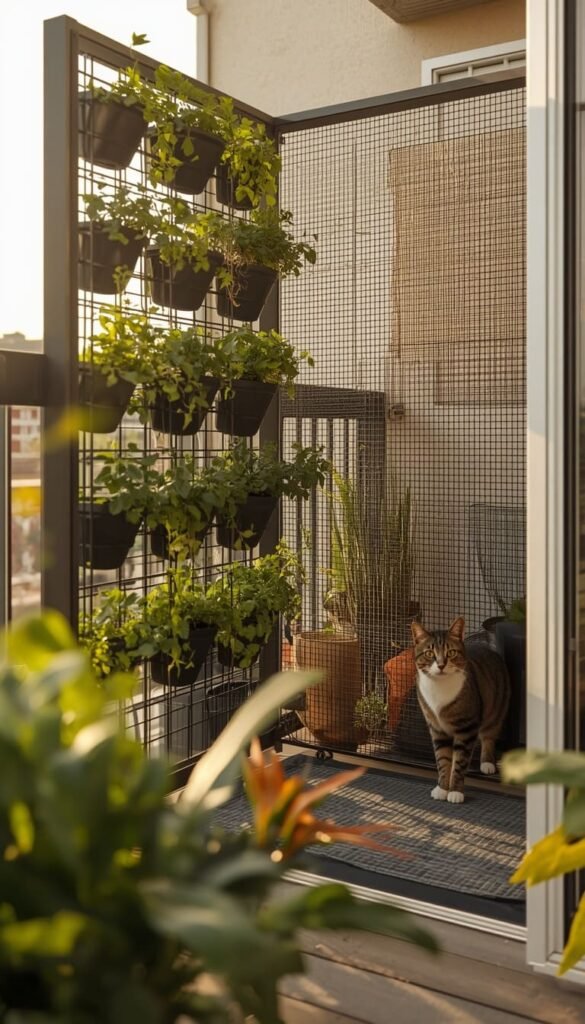
This is the idea I pull out when a client wants their deck to serve double duty beautiful outdoor living space for them and a safe outdoor space for their cat. The concept is simple. You build or place your catio structure along one wall of the deck and attach a vertical planter system to the exterior facing outward. From inside your apartment, you see a lush green wall. From the deck, your cat sees a cozy enclosed haven.
It’s a genuinely smart use of limited square footage and it transforms a cat friendly patio makeover into something that adds real visual value to your whole outdoor space. Just make sure every plant in that vertical garden is cat-safe. Herbs like cat thyme, valerian, and of course catnip are wonderful choices that your cat will actively appreciate.
One thing to watch out for is drainage. Vertical planters can drip, and you don’t want that moisture pooling on the catio floor where your cat spends time. A simple waterproof mat underneath solves it immediately.
12. The Farmhouse Style Wood and Wire Catio
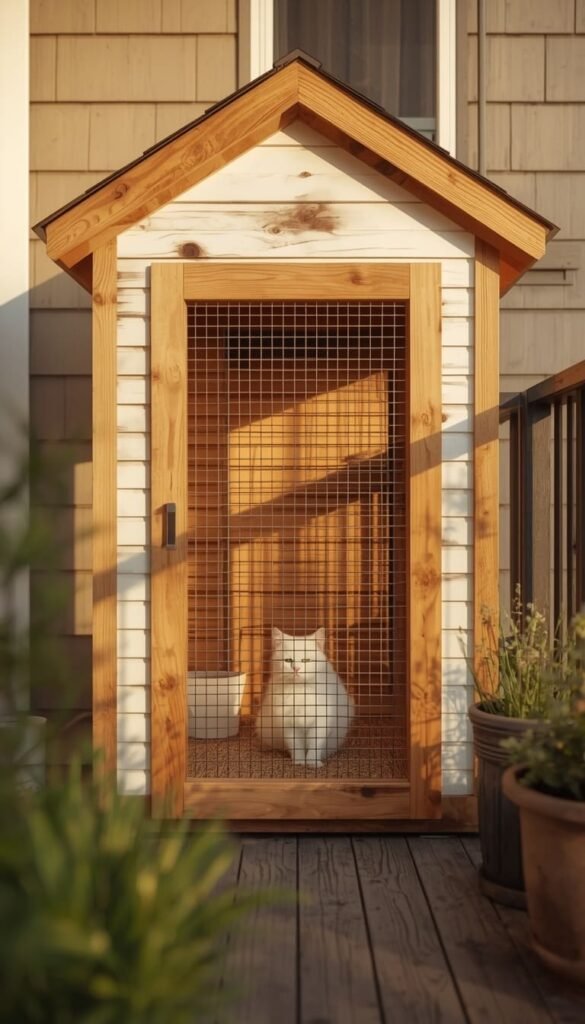
There is something timeless about natural wood paired with galvanized wire mesh, and this combination works just as beautifully on a rental deck as it does on a sprawling farmhouse property. The structure uses untreated cedar or pine boards as the frame both are weather-resistant and safe for cats with hardware cloth stretched across the openings and stapled into place.
Now I know what you’re thinking. Staples mean tools mean damage. But here’s the thing all the stapling happens on the wood frame itself, not on any surface belonging to your landlord. The finished unit sits freestanding on your deck, anchored by its own weight. You can pick the whole thing up and move it when your lease ends.
This style works especially well for renters who want their catio to look like a deliberate design choice rather than a pet accommodation. Stain the wood in a warm walnut or whitewash finish and it genuinely elevates the entire deck aesthetic. Cozy, character-filled, and completely renter safe.
13. The Minimalist IKEA Hack Catio
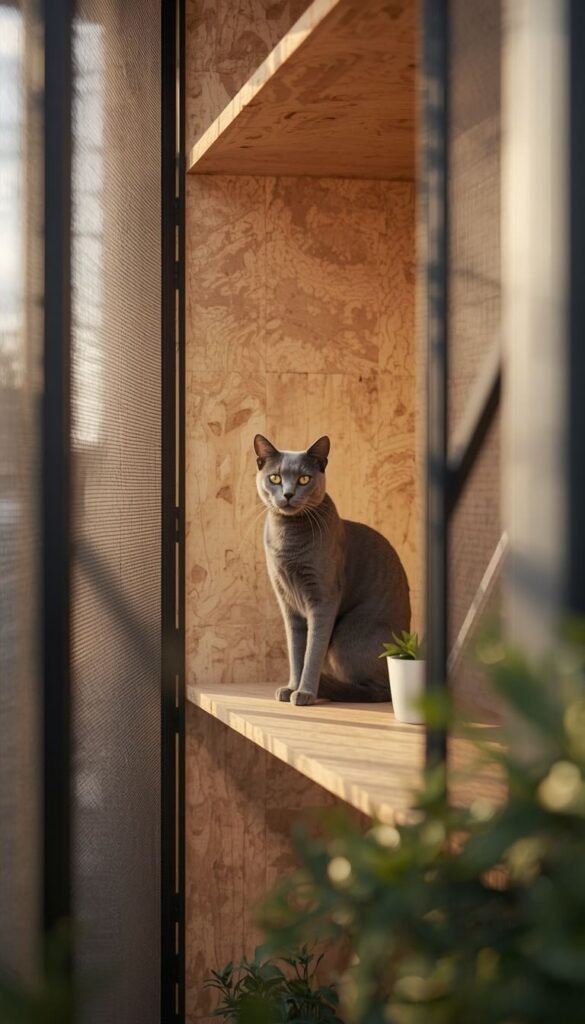
If your design sensibility leans clean, simple, and Scandinavian, this one was made for you. The IKEA hack catio uses the brand’s HINDO or SOCKELN plant stands, OMAR shelving units, or even basic KURA bed frames as structural bones, combined with zip-tied mesh panels to create enclosure walls. The result is a renter safe pet enclosure idea that looks like it belongs in a modern apartment rather than a backyard.
What I love most about this approach is how seamlessly it blends into a styled deck. When your cat isn’t using it, guests genuinely might not realize it’s a pet enclosure at all. It just looks like interesting outdoor furniture.
A quick trick I always mention with IKEA hacks: seal any raw particle board edges with waterproof wood sealant before placing anything outside. IKEA furniture is not built for weather exposure, and one rainy season will warp untreated edges badly. Cedar or teak outdoor pieces are always the safer long-term investment, but for covered decks in mild climates, a properly sealed IKEA structure holds up just fine.
And what’s your biggest challenge right now working with a tiny space or navigating a strict landlord situation?
14. The Multi Level Balcony Cat Playground
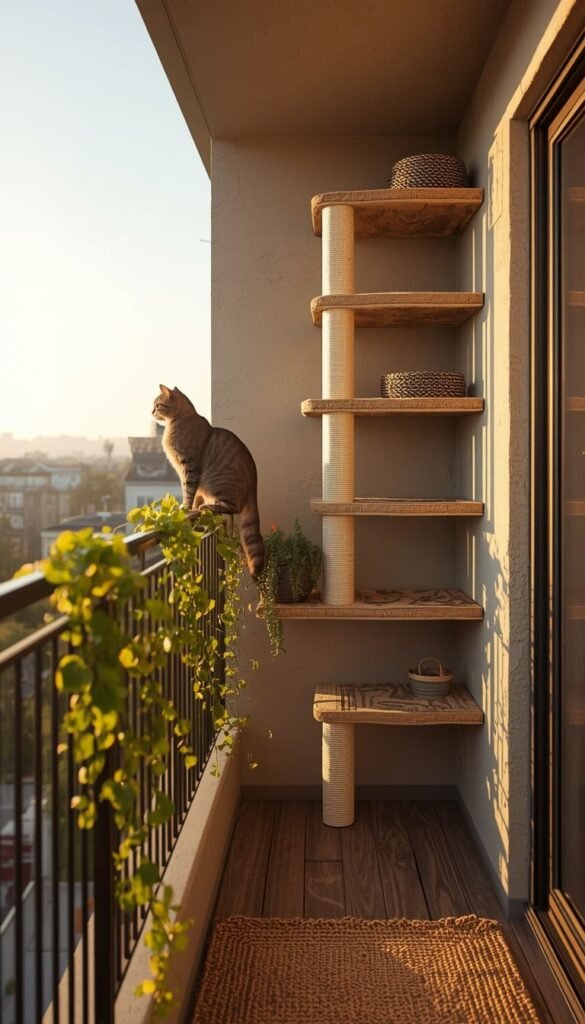
This is the showstopper. The one that makes visitors walk onto your deck and immediately say “wait, is this for your cat?” And yes, yes it is and it is absolutely spectacular. A multi level balcony cat playground stacks vertical space instead of spreading horizontally, which makes it the smartest possible solution for small decks where floor space is precious.
Think wraparound wall-mounted shelves along the interior catio walls, connected by sisal rope ramps and carpeted platforms at different heights. Your cat gets to climb, survey their kingdom, nap in an elevated bed, and watch birds from three different vantage points. It hits every single feline instinct in one structure.
The materials list is more involved than the other ideas here, I won’t pretend otherwise. But the payoff is unmatched. This is the kind of balcony cat playground idea that gets shared on Reddit threads and saved on Pinterest boards. Build it once and it becomes the thing your cat genuinely uses every single day.
The 2 Minute Catio Decision Map
By Budget
Starter Catio (Under $100)
- Tight on cash? Go with the zip tie panel method or repurposed dog playpen
- PVC pipe frame is your best bang for buck with the most customization
- Screened gazebo hack sits right at the $80 sweet spot and looks great doing it
Investment Catio ($150 and Above)
- Want something that photographs beautifully? The multi level playground is worth every dollar
- Pre-made portable catios in this range come with warranties and cleaner finishes
- Farmhouse style wood and wire builds age gracefully and add real deck charm
By Lifestyle
Renters Who Move Often
- Stick to fully portable options like the playpen hack or pre-made units
- Avoid any build that requires more than 30 minutes to disassemble
- Zip tie constructions are your best friend pack them flat in 20 minutes flat
Renters Who Nest and Stay
- Invest in the multi level playground or farmhouse wood build
- Style it properly with rugs, plants, and lighting make it a real outdoor room
- The boho or vertical garden combo works beautifully for long term deck setups
Frequently Asked Questions
Can I build a catio on my apartment balcony without breaking my lease?
Yes, but read your lease carefully before buying a single zip tie. Most leases only restrict permanent modifications, so a freestanding or tension-mounted catio is typically fair game.
How much does a renter friendly catio on deck actually cost?
The average cost runs between $60 and $350 depending on your approach. DIY builds using PVC or wire panels sit at the lower end, while pre-made portable units push toward the higher range.
What is the safest mesh or wire to use for an outdoor cat enclosure?
Galvanized hardware cloth in 14 to 16 gauge is your safest bet. It keeps predator birds and raccoons out while giving your cat a clear, unobstructed view outside.
Can a catio work on a small deck or balcony under 50 square feet?
Absolutely corner catios and vertical multi level designs were practically invented for tight spaces. Going vertical instead of horizontal is the smartest move you can make on a small deck.
Do I need my landlord’s permission to set up a portable catio?
Most of the time, no if nothing is drilled or permanently attached. That said, a quick friendly heads-up to your landlord never hurts and can save you headaches later.
Conclusion
Pick one idea from this list that made you stop scrolling and just start there. Order the mesh, grab the zip ties, clear that corner of your deck. You don’t need a perfect plan or a big budget Jess built hers for $180 on a teacher’s salary and her landlord loved it. You’re more capable than you’re giving yourself credit for.
Your deck is just sitting there waiting to become something your cat talks about to other cats.
Now I want to hear from you which of these 14 renter friendly catio ideas are you actually planning to try first, and are you working with a tiny balcony or do you have a little more room to play with?
