
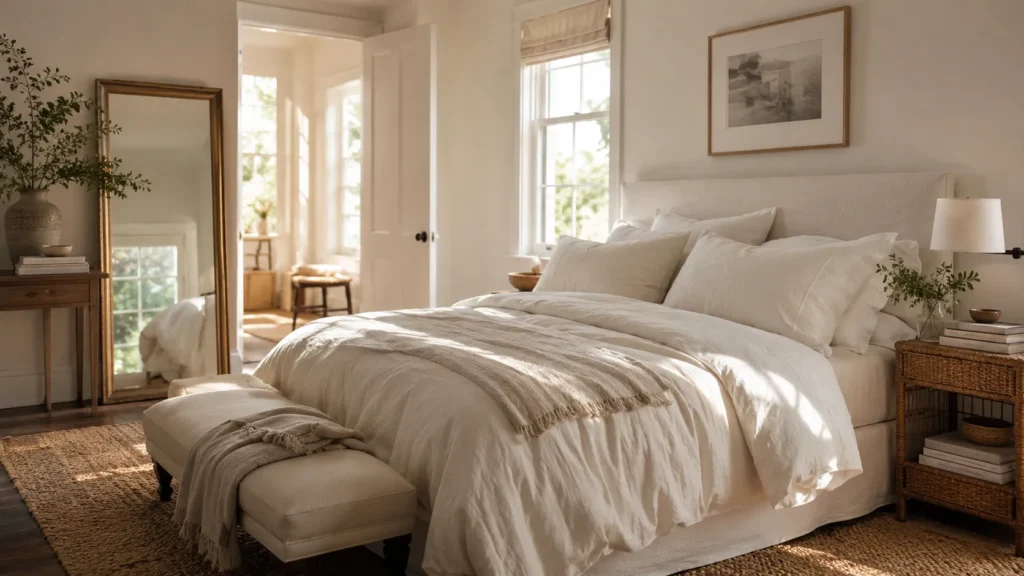
Nancy Meyers never designed a single real house, and yet half of America wants to live inside her movies anyway. There’s something about those warm, lamp-lit bedrooms the linen, the stacked books, the slightly rumpled duvet that feels less like a set and more like a memory you didn’t know you had. I’ve pulled this look into real client bedrooms more times than I can count, and I can tell you it’s not about money. It’s about restraint, texture, and knowing exactly when to stop decorating. Here’s how to actually get there, budget and all.
Mastering the Nancy Meyers Bedroom Aesthetic
My Design Notes
When I was working on a bedroom refresh for a client outside Westport, Connecticut, she came to me with one photo saved on her phone: the primary bedroom from Something’s Gotta Give. She wanted that exact softness, all white linen, layers of texture, that sunlit calm. There was just one problem. Her seventy pound golden retriever slept on that bed every single night, and her two kids used it as a launching pad most mornings. I knew true white linen wouldn’t survive a month.
So we made one smart swap. We kept real linen for the decorative euro shams up top, since those rarely get touched during the day, and used a performance blend duvet in the same warm white tone underneath. We also chose a subtly patterned quilt as the top layer instead of solid white, which hid dog hair and wrinkles without breaking the look. My client still gets that movie moment every time she walks in. It just happens to survive real life too.
1. Warm White Walls
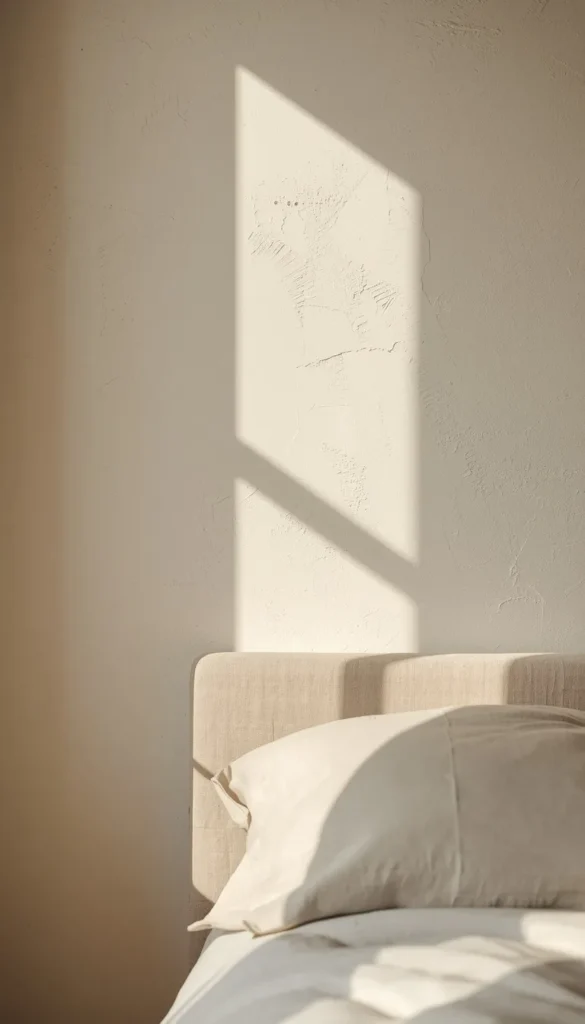
Nothing sets the mood faster than the wall color, and this is where most people get it wrong. A cool, stark white reads clinical. What you want is something with a whisper of warmth in it, so the room feels sunlit even on a gray morning. Benjamin Moore’s Swiss Coffee, White Dove, and Simply White all do this well. I’ve used White Dove in three different client bedrooms and it never once looked flat or cold, even in rooms with limited natural light.
2. A Slipcovered Bed Frame
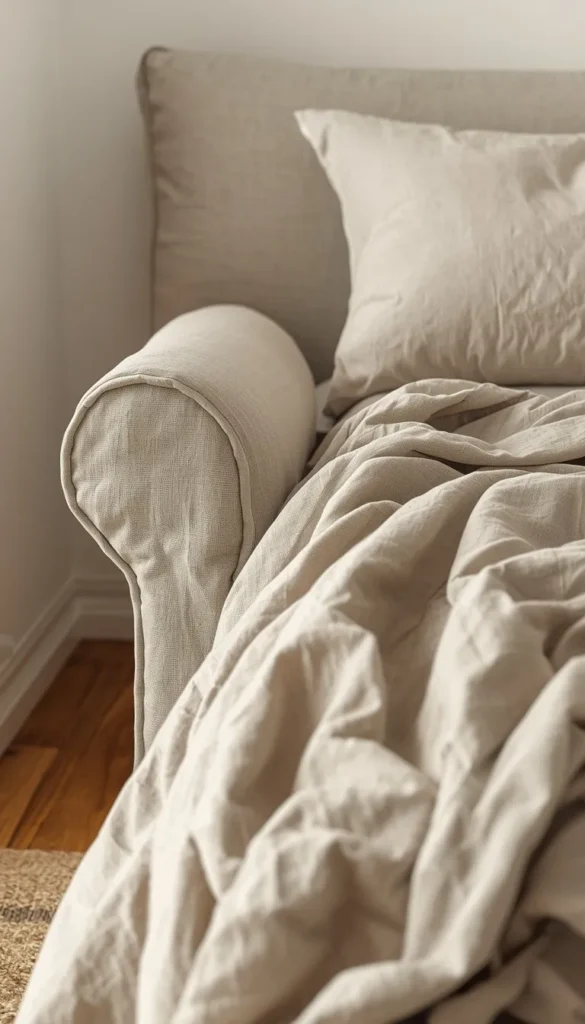
A hard, lacquered headboard just doesn’t fit this look. You want something soft, something that looks like it’s been slept against for years. Linen or cotton slipcovered frames are the move here, ideally in an oatmeal, cream, or soft dove gray.
- Look for a relaxed, rolled arm silhouette rather than sharp tailoring
- Slightly rumpled linen actually reads more authentic than a stiff, pressed fabric
- Removable, washable covers matter more than they sound like they would
3. The Bedding Layering Formula
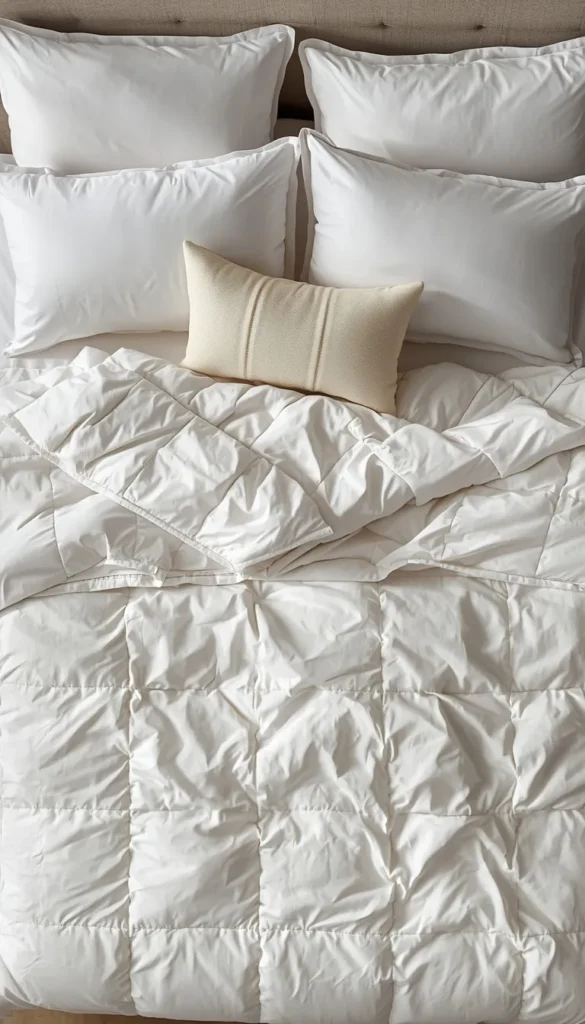
This is the part nobody explains clearly, so I will. Start with a fitted sheet and flat sheet in a soft, breathable cotton. Add a duvet in warm white or ivory. Layer a quilt or coverlet folded about a third of the way down the bed. Then stack two euro shams against the headboard, two standard or king pillows in front of those, and finish with one lumbar or accent pillow. That’s it. Six to seven pillows total is the sweet spot. Any more and it starts looking like a hotel display instead of a bedroom someone actually sleeps in.
4. Natural Fiber Textiles

Synthetic blends have their place, but they don’t move or drape the way natural fibers do, and that difference shows up in photos and in person. Linen, cotton, wool, and even a little silk in a throw or pillow all catch light differently than polyester ever will. A trick I’ve leaned on with clients who want the look but hesitate on the price tag: invest in one or two real linen pieces, like the euro shams or a throw, and let more affordable cotton blends fill in the rest. Nobody touching the bed will know the difference, but you will.
Which of these thirteen ideas would make the biggest difference in your bedroom right now?
5. A Jute or Wool Area Rug
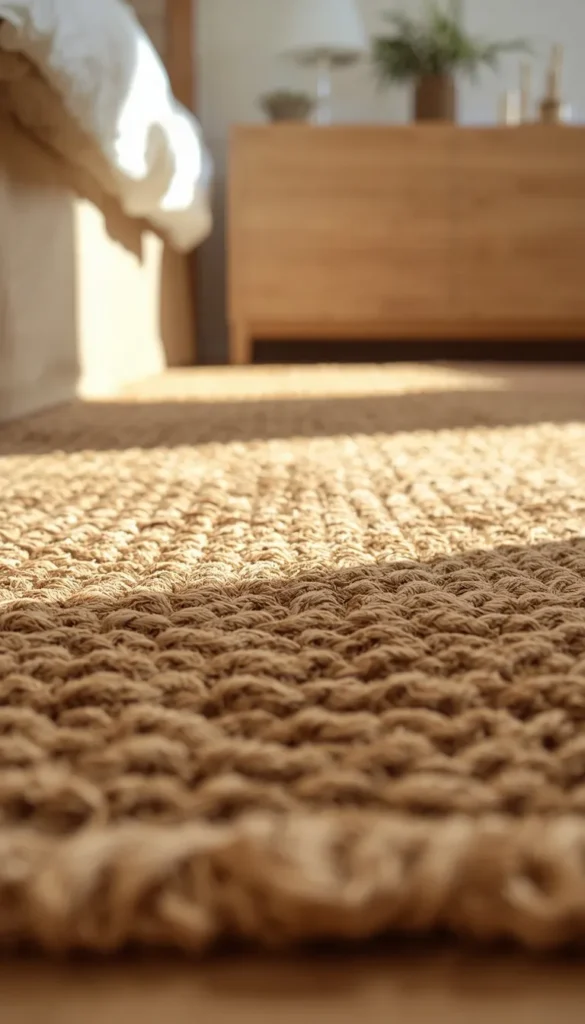
The rug is what grounds the whole room and keeps it from feeling too precious. Jute brings texture and warmth underfoot, while a chunky wool rug adds a little more softness if you’re in a colder climate. Either way, skip anything with a glossy, synthetic sheen. One thing I always tell clients: size up more than feels comfortable. A rug that’s too small makes even a beautifully styled room look unfinished.
6. Layered Lighting
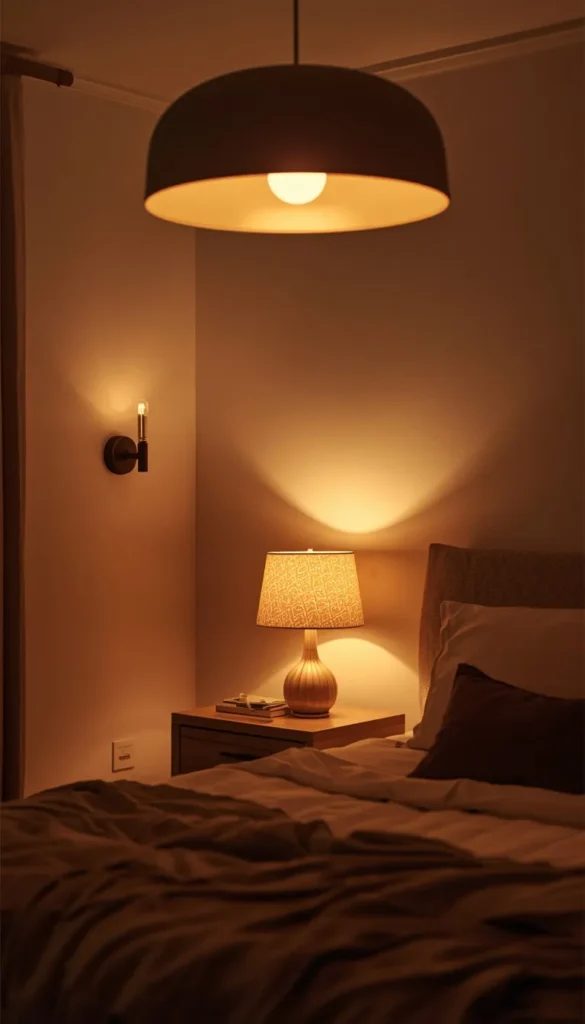
A single overhead fixture is the fastest way to flatten this whole aesthetic. You want light coming from multiple heights and sources so the room feels soft at night, not clinical.
- A statement chandelier or flush mount for ambient light
- Matching or complementary bedside lamps for warmth at eye level
- A wall sconce or two if you have the wiring for it
Top 6Nancy Meyers Bedroom Aesthetic
| Idea | Estimated Price | Maintenance |
|---|---|---|
| Warm White Wall Paint | $50 – $80/gallon | Low |
| Slipcovered Bed Frame | $600 – $1,800 | Medium |
| Jute or Wool Area Rug | $200 – $900 | Medium |
| Layered Lighting Setup | $150 – $600 | Low |
| Light Wood Nightstands | $100 – $400 each | Low |
| Bench or Chair for Foot of Bed | $150 – $700 | Medium |
7. Nightstands Styled With Intention
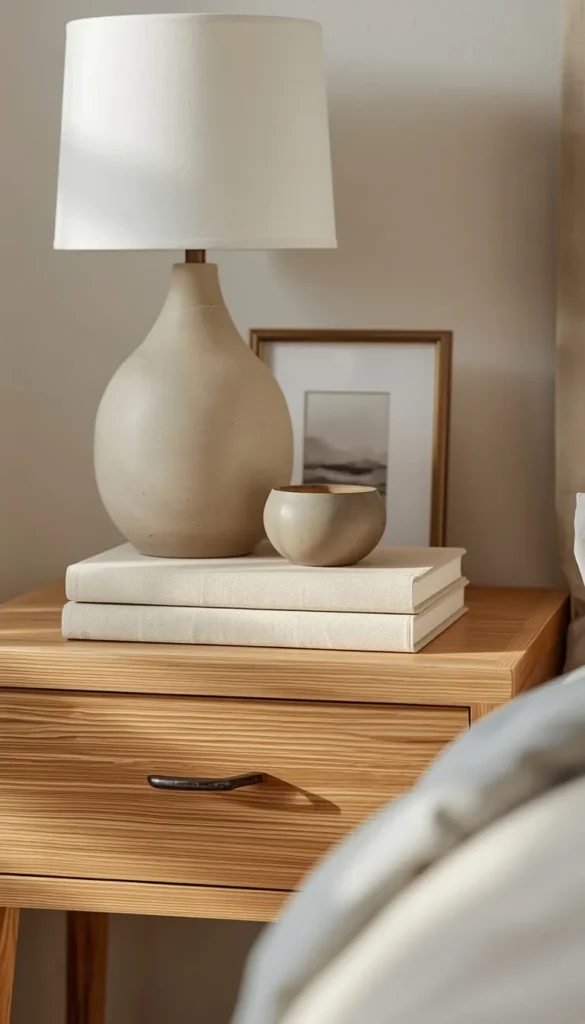
This is where a lot of people either overdo it or leave things too bare. I like what I call the rule of three: a stack of two or three books, a small lamp, and one personal object, like a small vase or a framed photo. That’s enough to feel curated without looking staged. Anything more starts to feel cluttered, and anything less feels like nobody actually lives there.
8. Light Wood Tones

Dark, matched wood furniture sets read heavy and dated against this soft, layered look. Light oak, whitewashed wood, or a natural rattan nightstand keeps things feeling airy instead. My favorite move is mixing wood tones slightly rather than matching everything perfectly. A rattan nightstand next to a light oak dresser looks more collected, more like it came together over time instead of arriving as a set from one store
9. One Vintage Piece
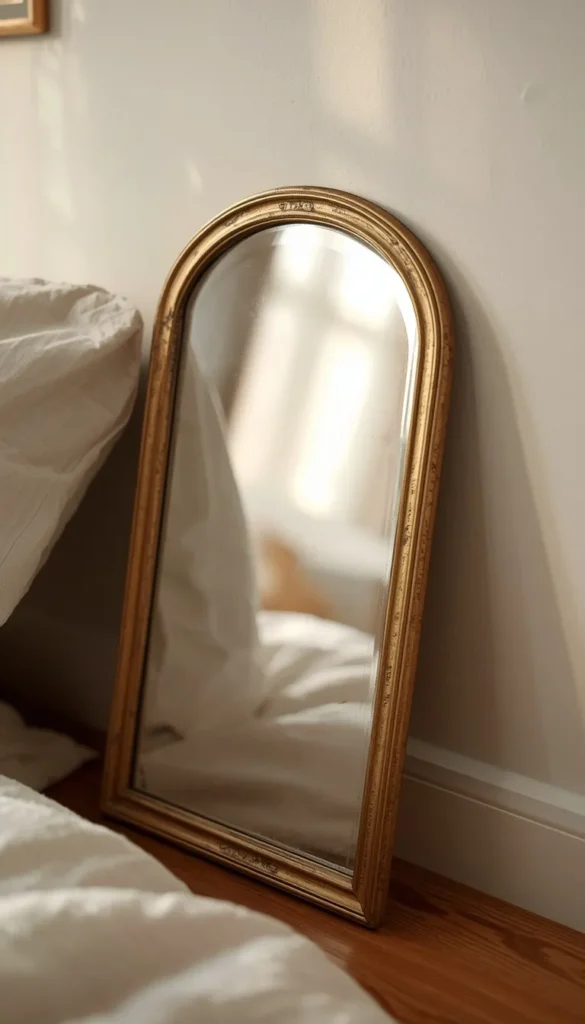
Every room in this style has one object that looks like it has history, something that wasn’t bought new last week. It could be a small antique mirror, an old wooden stool used as a side table, or a piece of art found at an estate sale. This is the detail that keeps a room from feeling like a showroom.
- A flea market find works just as well as anything expensive
- Even one small piece does the job, you don’t need more than that
- Family heirlooms are perfect here if you have them
10. A Bench or Chair at the Foot of the Bed
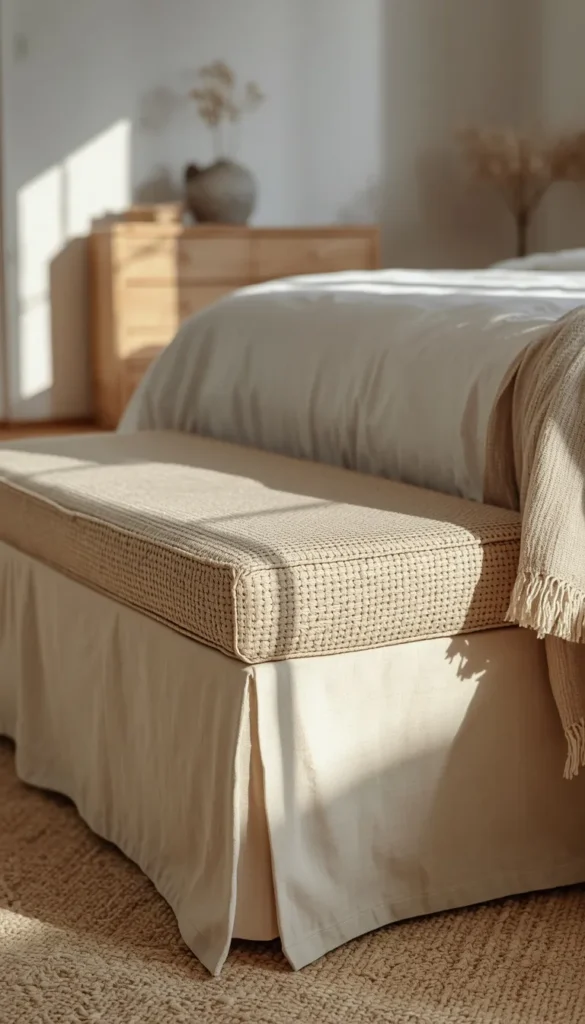
This is a small addition that makes a big difference in how finished a room feels. A slipcovered bench, a woven bergère chair, or even a simple upholstered stool at the foot of the bed adds that last layer of “someone designed this room on purpose.” It’s also genuinely useful for laying out clothes or sitting to put on shoes, so it earns its space beyond just looking good.
11. Where to Splurge and Where to Save
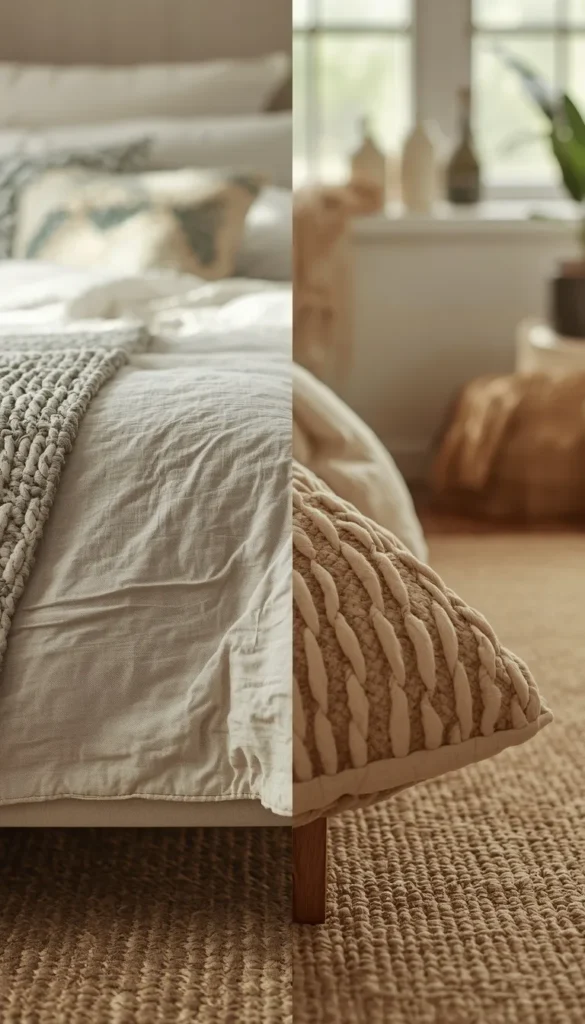
I get asked about budget on almost every project, so let’s talk numbers honestly. The bed frame and the rug are where quality actually shows, so if you’re going to spend, spend there. Pillow covers, art prints, and small decor objects are much easier to find affordable versions of without anyone noticing the difference. A tip that’s saved my clients real money: buy inserts separately and invest in nicer removable covers instead of pre-stuffed designer pillows. You get the same look for a fraction of the cost, and you can wash the covers whenever you need to.
12. The Maintenance Reality Check
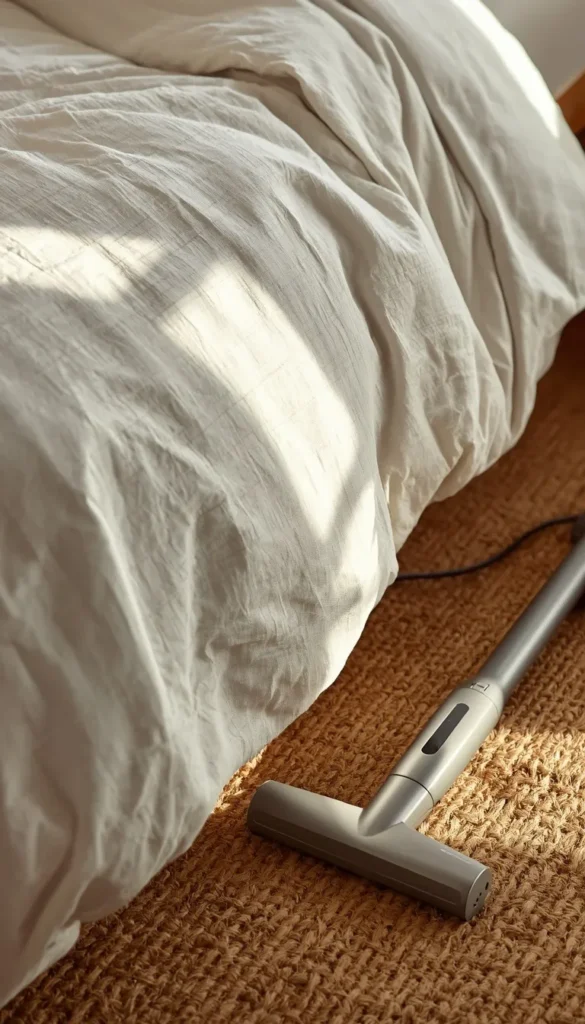
Nobody talks about this part enough. White linen bedding and a shedding dog are not a peaceful combination, and I’ve had more than one client learn that the hard way. Natural fiber rugs need regular vacuuming and the occasional professional clean, especially jute, which can stain if it gets wet and isn’t dried quickly. Slipcovers need washing more often than you’d think if you actually use the bed the way it’s meant to be used. None of this means skip the look. It just means go in with realistic expectations instead of a Pinterest board’s version of reality.
13. Common Mistakes That Break the Look
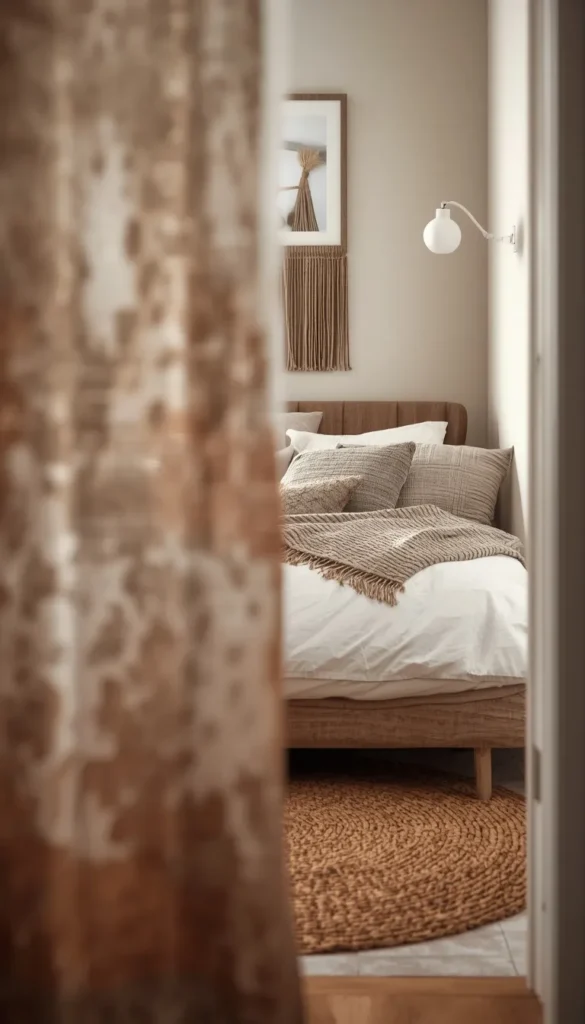
The biggest one I see is over matching. When every single piece of wood is the same tone and every pillow is the same shade of white, the room stops feeling collected and starts feeling like a catalog page. Texture is what saves this look, so mix your fabrics and don’t be afraid of a little imperfection.
- Skipping texture entirely and relying only on color
- Styling a bed so perfectly it looks untouched, which reads more staged than serene
- Forgetting a rug, which leaves the whole room feeling unfinished no matter how good the bed looks
That crisp, effortless feeling only works when the room looks like it’s actually lived in, not like it’s waiting for a photo shoot.
Which Path Is Yours?
By Budget
- Starter / Rental Friendly: Warm white peel-and-stick paint or removable panels, layered thrifted bedding, one vintage flea market find, affordable pillow covers over new inserts
- Luxury / Investment: Slipcovered custom bed frame, real linen bedding throughout, a wool area rug, a bergère chair at the foot of the bed
By Lifestyle
- Busy Families / Pet Owners: Performance blend duvets, patterned top layers to hide mess, washable slipcovers, skip the all white rug
- Minimalists / Empty Nesters: True white linens, one statement vintage piece, softer lighting layers, fewer but higher quality textiles
Frequently Asked Questions
What paint color is closest to the Nancy Meyers bedroom look?
Warm whites with a hint of cream, not stark white. Benjamin Moore White Dove and Swiss Coffee are the two most requested by clients chasing this exact look.
How much does it cost to get a Nancy Meyers style bedroom?
The average full room refresh runs $2,000 to $6,000 depending on whether you’re replacing the bed frame or just restyling with textiles and lighting. You can do a budget version for under $500 using paint, bedding, and thrifted pieces.
Is the Nancy Meyers aesthetic the same as quiet luxury?
Not exactly. Quiet luxury leans minimal and understated, while the Nancy Meyers look is warmer, softer, and more layered with texture and personal objects.
What bedding is used in Nancy Meyers style bedrooms?
Warm white or ivory duvets, layered with a quilt, euro shams, and one or two accent pillows. Linen and cotton blends work best for that relaxed, lived in texture.
Does this aesthetic work in a small bedroom?
Yes, it actually works well in smaller spaces if you keep the color palette consistent and avoid oversized furniture. Skip the four poster bed and focus on soft lighting and a well chosen rug instead.
.
Conclusion
Your bedroom sets the tone for how you start and end every single day, so it deserves more than an afterthought. You don’t need to renovate the whole room this weekend. Grab one paint sample, swap out a pillow cover, or clear off that nightstand and see how different the room feels with just that one change. Small shifts add up faster than people expect.
