
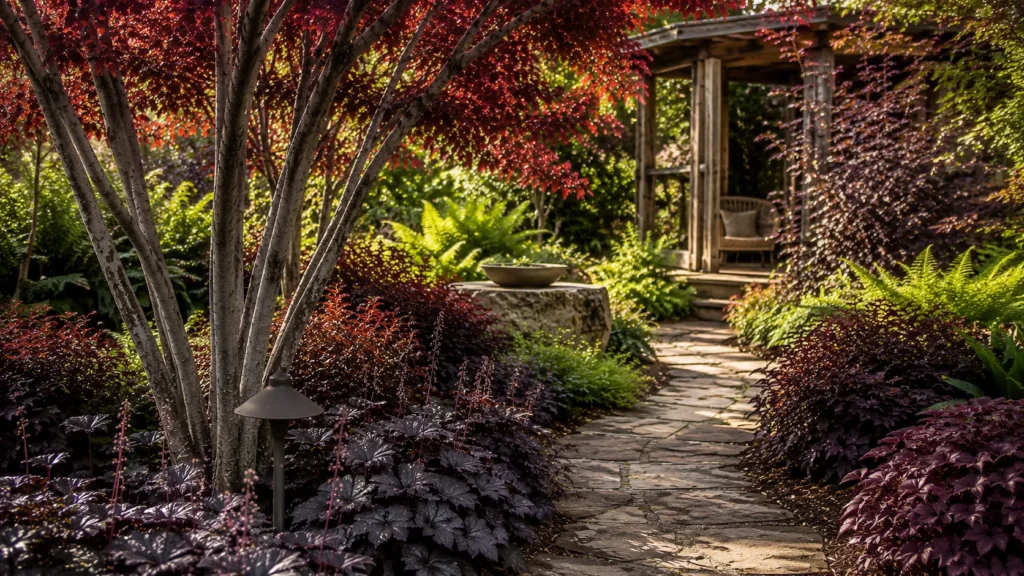
Most gardens play it safe with color, and that’s exactly why a patch of near black foliage stops people in their tracks. I’ve used dark ornamentals on client properties from Austin to the Pacific Northwest, and they never fail to make a bed look more intentional, more designed. The trick is picking the right ones and knowing where to put them. Below are 11 dark plants I’d actually recommend, plus what to plant next to them so they don’t just fade into the mulch.
My Design Notes
When I was working on a backyard renovation for a client in Austin, we leaned hard into ‘Diablo’ ninebark and black mondo grass to anchor a moody border along a white board and batten fence. My first pass looked more like a dead hedge than a design statement, honestly. The problem was I’d massed too much dark foliage together with nothing to break it up, so from the street it just read as a shadow, not a feature. I pulled in chartreuse sweet potato vine and a few white cosmos to create contrast, and I moved the darkest plants off the dark mulch and onto lighter gravel so they’d actually pop instead of disappearing. That one fix taught me the rule I use on every project since: dark plants need a light partner nearby or they vanish.
Stunning Dark Ornamental Plants Every Homeowner Should Master
1. Diablo Ninebark
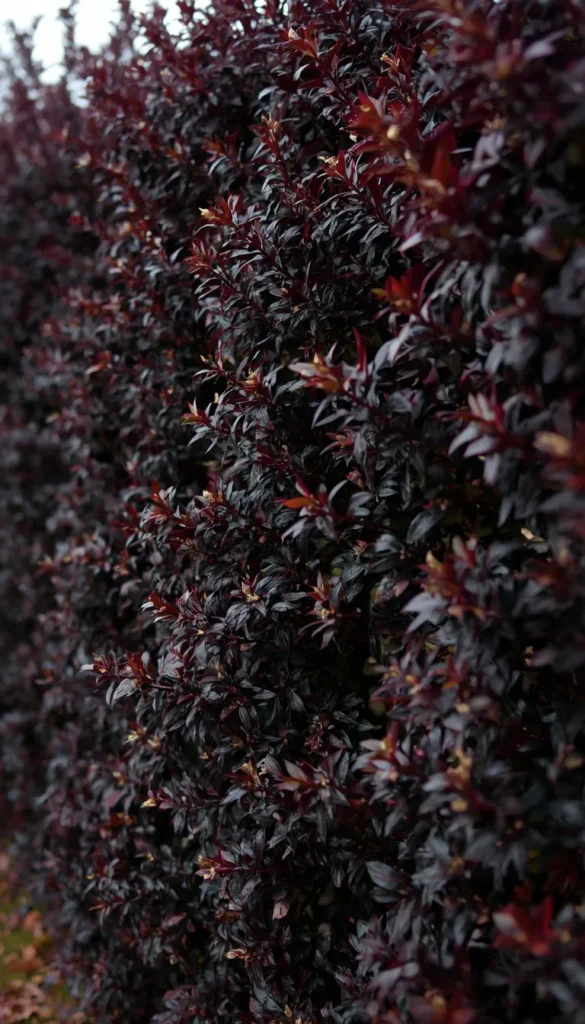
If you want one plant that does the most work for the least fuss, this is it. ‘Diablo’ ninebark builds a wall of deep purple foliage that holds its color from spring through fall, then drops to reveal peeling, cinnamon toned bark that keeps the garden interesting even in the dead of winter. I use it constantly as a backdrop shrub because it’s tough as nails, hardy from Zone 3 to 7, and shrugs off drought once established. Budget wise, expect to pay somewhere between $25 and $45 for a healthy one gallon plant at most nurseries. One thing to watch out for is spacing. Ninebark gets wide fast, so give it four to five feet of breathing room or you’ll be pruning constantly by year two.
2. Black Coral Bells
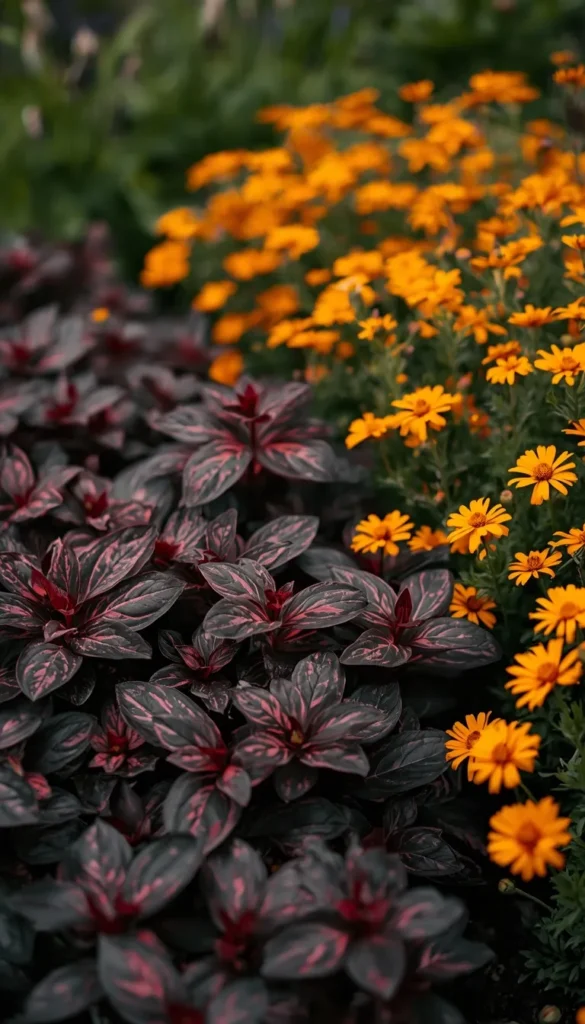
This one’s a favorite for shady corners that feel a little flat. ‘Northern Exposure’ coral bells brings smoky, near black foliage with red undersides, and it pairs beautifully with something bright like orange coreopsis. A few things I love about it:
- Thrives in everything from full sun to full shade, so it’s forgiving if your light conditions shift through the season
- Compact size makes it perfect for front of border planting
- Budget friendly at $8 to $15 per plant
3. Raven ZZ
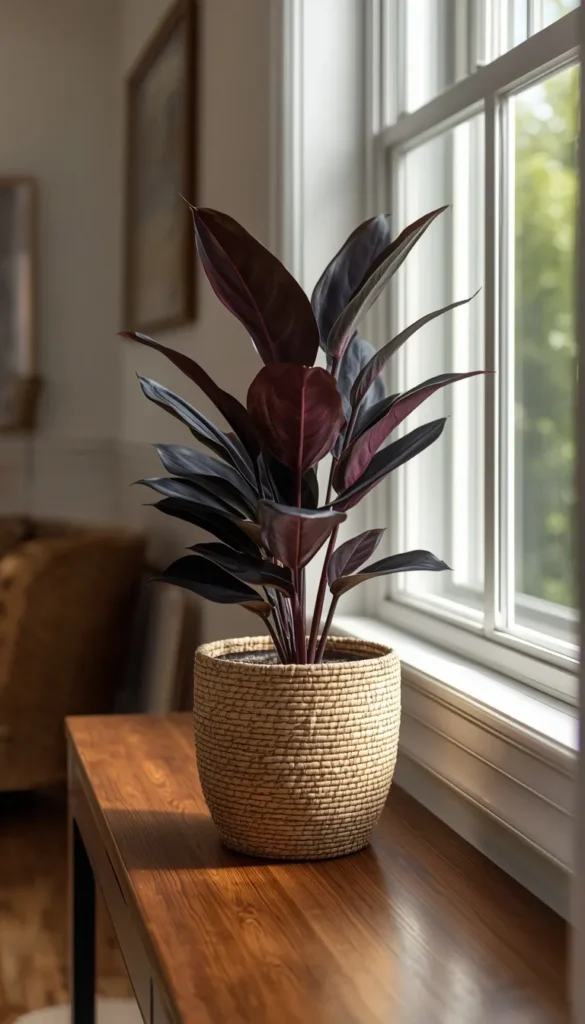
For anyone without a yard, or anyone who’s killed one too many houseplants, this is your entry point into dark ornamentals. The Raven ZZ has deep purple black leaves that look almost lacquered, and it thrives on neglect in a way that feels almost rebellious. It tolerates low light, doesn’t need frequent watering, and honestly does better when you forget about it for a week or two. A quick trick I’ve learned is to keep it out of direct sun, since too much light can actually fade that rich black color back toward green. Plants typically run $20 to $35 depending on pot size, and they’re widely available at big box stores now, not just specialty nurseries.
4. SolarPower Black Heart Ipomoea
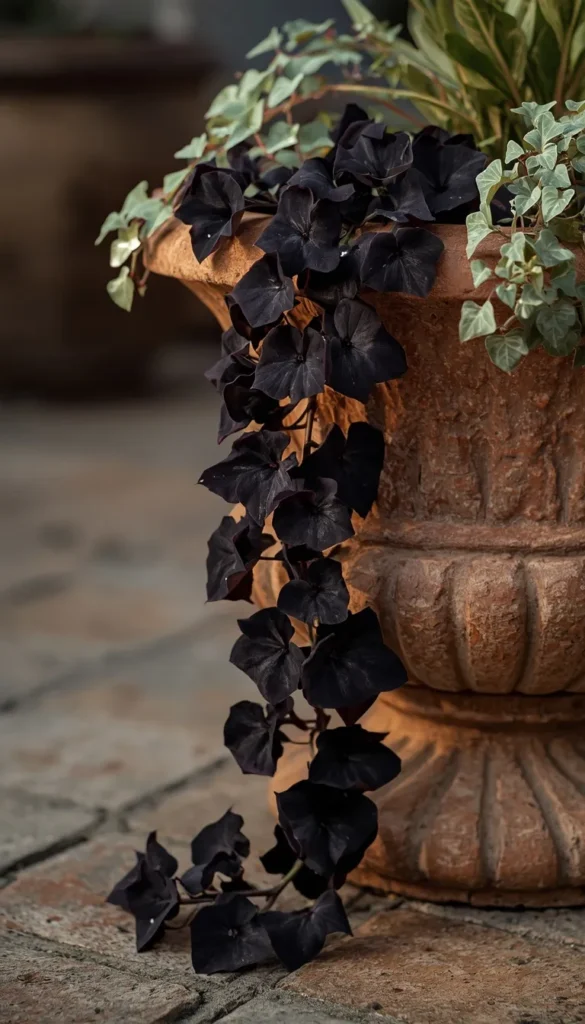
This is your container thriller, the plant that spills over the edge of a pot and drags everyone’s eye downward instead of just up. ‘SolarPower’ sweet potato vine holds its deep black color all season without fading in heat, which not every dark foliage plant can claim. It’s an annual in most zones, so budget it as a seasonal expense rather than a long term investment, usually $6 to $10 per starter plant. Pair it with something silver or chartreuse nearby and the contrast does most of the design work for you.
Which of these would look most at home in your backyard right now?
5. Midnight Express Redbud
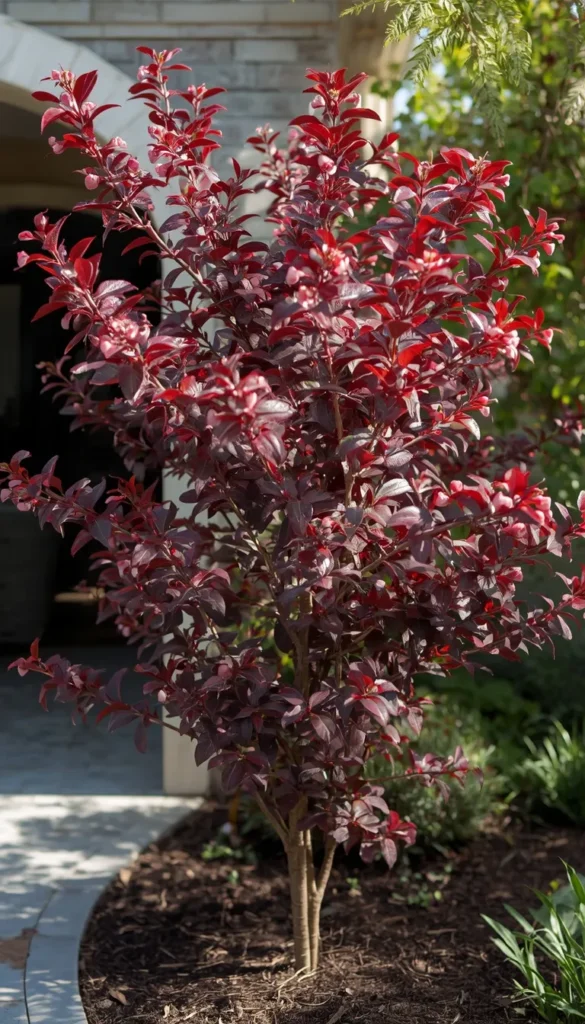
This is the investment piece on the list, the one you plant once and let it anchor the whole yard for the next twenty years. ‘Midnight Express’ redbud holds a deep burgundy color in its foliage nearly all season, then surprises you with pink, pea shaped blooms in early spring before the leaves even fill in. I like using it as a specimen tree near a patio or entryway where people will actually stand under it and notice the color up close. Expect to pay $80 to $150 for a young tree depending on size, which sounds steep until you realize you’re not replacing this one every year like an annual. It’s native to North America too, so it tends to handle regional weather swings better than a lot of imported ornamentals.
6. Black Mondo Grass
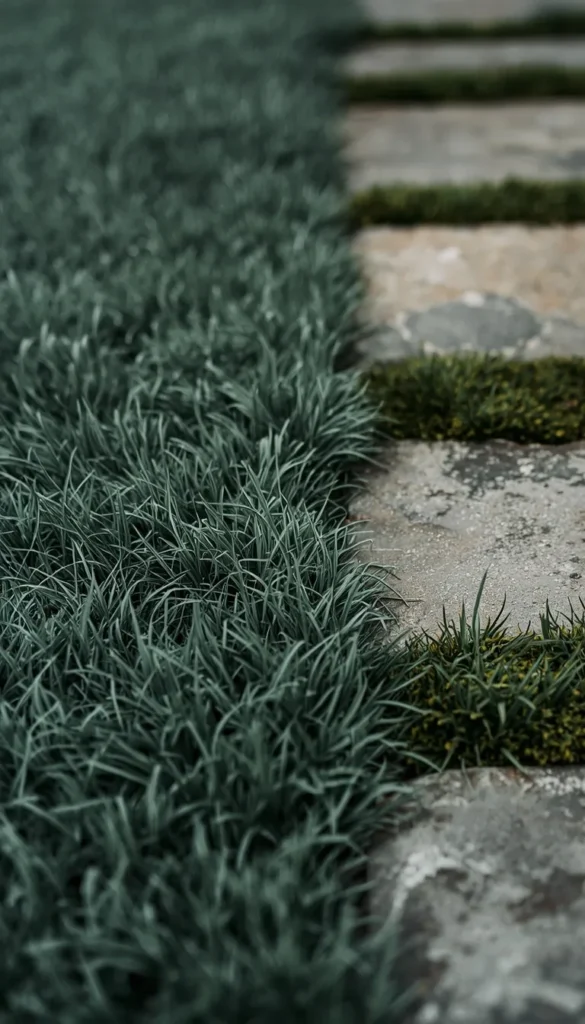
A groundcover that behaves more like a design tool than a plant, honestly. Black mondo grass spreads slowly to form a mat of near black, grass like blades, and I use it constantly to edge pathways or fill gaps between stepping stones. A few reasons it earns a spot on almost every dark garden plan I put together:
- Spreads on its own over a few seasons, so one small tray of plugs goes a long way
- Handles part shade well, which most true grasses hate
- Inexpensive at $5 to $10 per small pot
One thing worth knowing is that it’s slow to establish in year one, so don’t panic if it looks sparse at first. It fills in.
Top 6 dark ornamental ideas
| Idea | Estimated Price | Maintenance |
|---|---|---|
| Diablo Ninebark | $25 – $45 per plant | Low |
| Black Coral Bells | $8 – $15 per plant | Low |
| Raven ZZ | $20 – $35 per plant | Low |
| SolarPower Black Heart Ipomoea | $6 – $10 per plant | Medium |
| Midnight Express Redbud | $80 – $150 per tree | Low |
| Black Mondo Grass | $5 – $10 per pot | Medium |
7. Patio Baby Eggplant
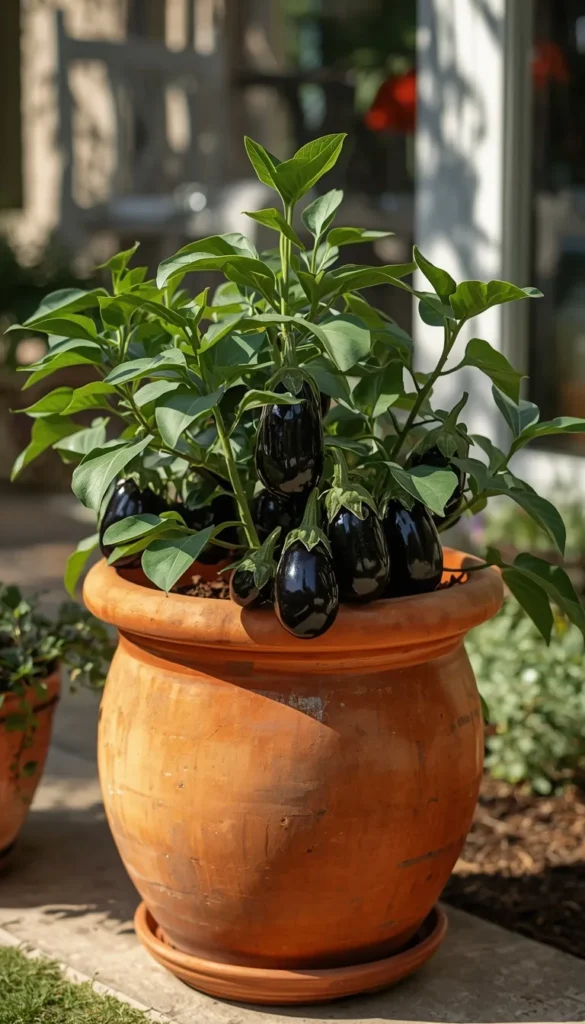
Here’s the plant that surprises people, because most of this list is ornamental only, but this one you can actually eat. ‘Patio Baby’ eggplant produces small, glossy black purple fruit on a compact plant that does just as well in a container as it does in a vegetable bed. Kids tend to get a kick out of it too, since the fruit looks almost toy like against the dark green leaves. It needs full sun and consistent watering to fruit well, and a single starter plant usually costs $4 to $8. If you’ve got a small patio and want something dark and productive rather than purely decorative, this is the one I’d point you toward.
8. Queen of the Night Tulip
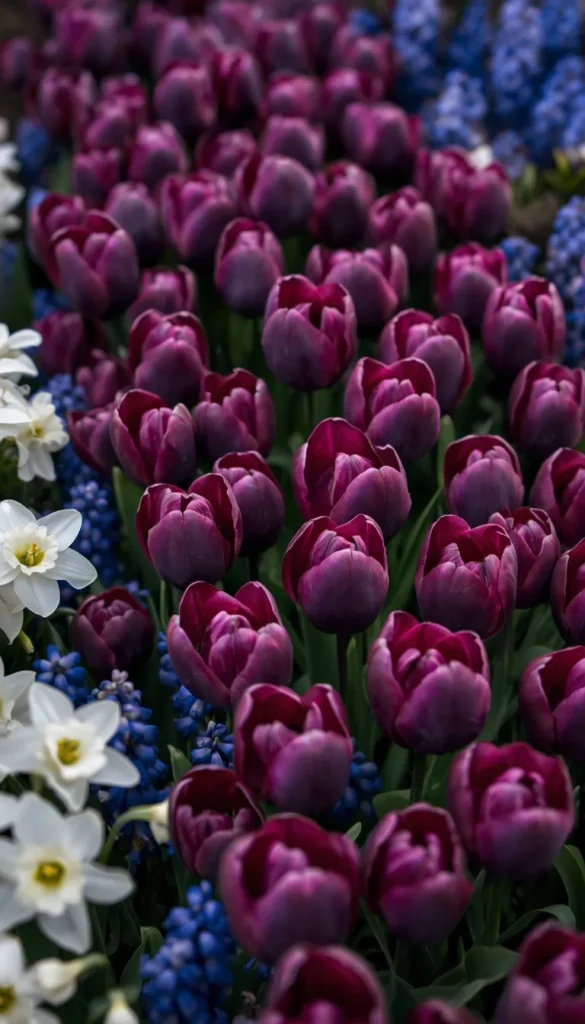
For spring drama that costs almost nothing, bulbs are hard to beat. ‘Queen of the Night’ tulip opens into deep, velvety purple blooms that read as black from a few feet away, especially against bright spring colors like blue grape hyacinth or white daffodils. Bulbs run about $1 to $2 each, and buying in bulk for a mass planting is honestly the best value on this entire list. Plant them in fall for a payoff the following spring, and don’t be shy about clustering a dozen or more together. Scattered singly, dark tulips tend to disappear into the bed, but massed together they make a statement.
Do you already have a spot in mind where one of these could go?
9. Hellebores Dark and Handsome
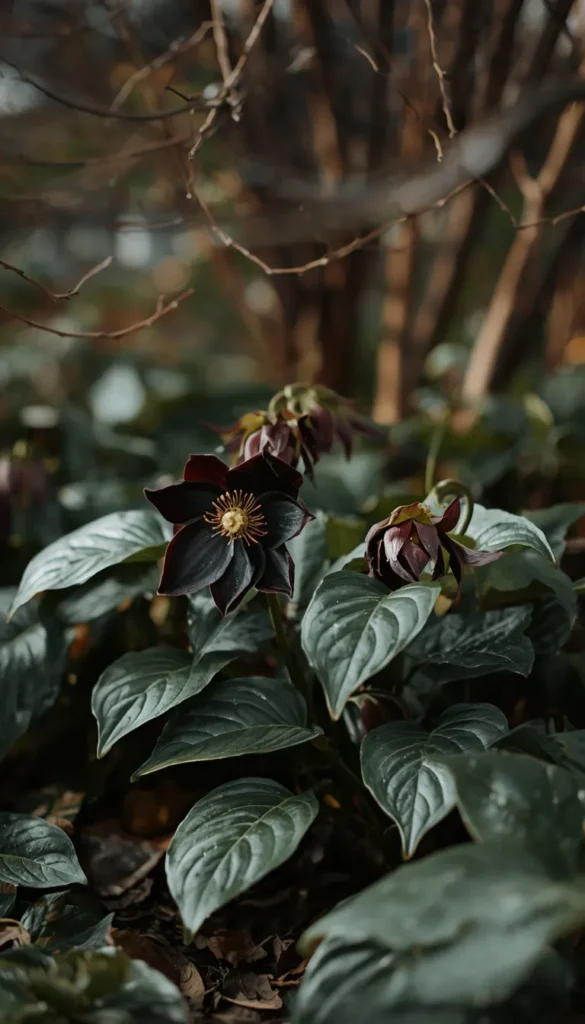
Most gardens go quiet in late winter, which is exactly why this one earns its spot. ‘Dark and Handsome’ hellebores bloom in shades so deep they read as black, showing up before almost anything else in the garden wakes up. They thrive in part to full shade, which makes them a great pick for that awkward spot under a tree where nothing else seems to want to grow. Deer tend to leave them alone too, thanks to the tough, leathery leaves, so they’re a solid choice if that’s been a problem in your yard. A single plant runs $12 to $20, and once established, they’ll come back reliably for years without much fuss on your part.
10. Black Magic Mangave
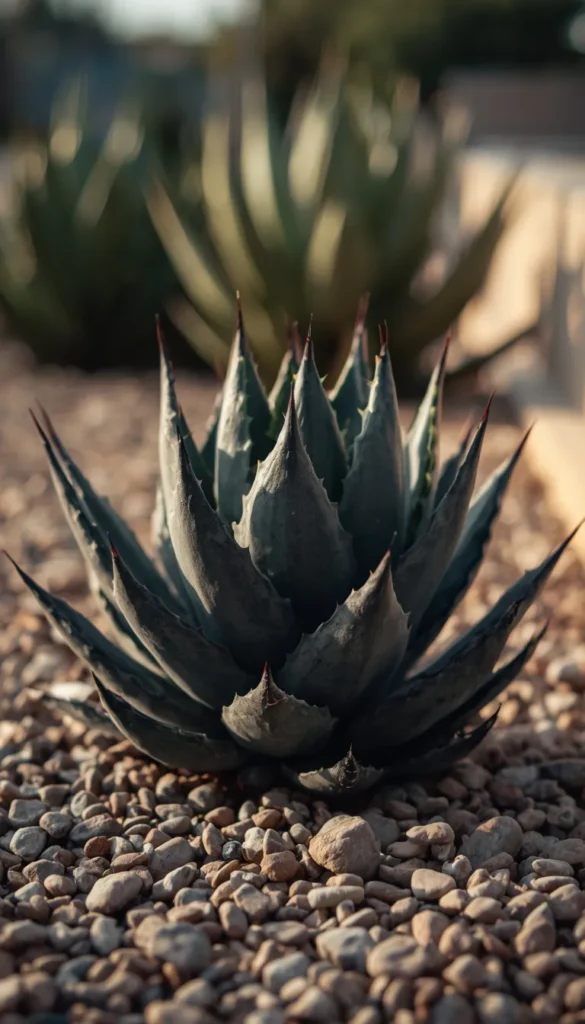
If you’re in a hot, dry climate and want something architectural rather than soft and blooming, this is the pick. ‘Black Magic’ mangave is a spiky succulent with jagged edged leaves that darken to a near black shade in full sun. A few things worth knowing before you commit:
- Color fades if brought indoors for winter, but returns after a few weeks back in the sun
- Needs excellent drainage, so a cactus mix or raised bed works better than regular garden soil
- Priced around $15 to $30 depending on size
I’ve used this one in xeriscape style front yards where water use matters, and it consistently holds up better than people expect from something that looks so delicate.
11. Black Hollyhock
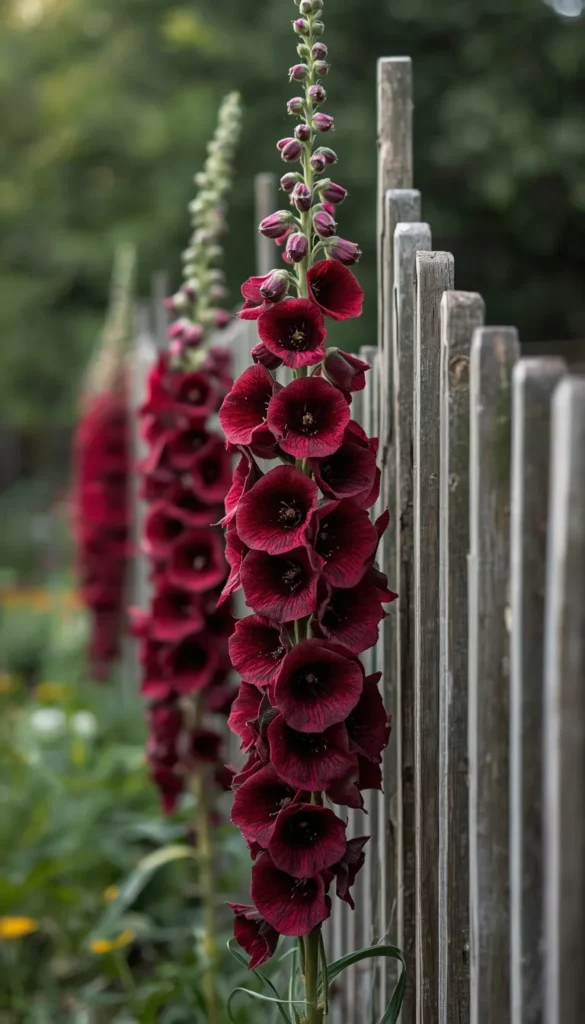
Ending on the showstopper felt right. Black hollyhocks send up tall stalks covered in deep maroon black blooms that can reach six feet or more, and they’ve become a favorite in modern cottage gardens for exactly that reason. I like pairing them along a fence line or the back of a border where their height won’t block shorter plants in front. They need full sun and decent airflow to avoid rust, a common issue with hollyhocks in general, so don’t crowd them too tightly against other tall plants. Seeds are cheap, usually under $5 a packet, making this one of the most budget friendly ways to add serious drama to a garden.
Here’s the decision guide, built to spec — punchy, scannable, topic-matched labels.
Which Dark Plant Fits Your Yard?
By Budget
- Starter/Budget — Queen of the Night Tulip, Black Hollyhock, Black Mondo Grass, Patio Baby Eggplant
- Luxury/Investment — Midnight Express Redbud, Diablo Ninebark
By Growing Style
- Low Effort/Set and Forget — Raven ZZ, Black Coral Bells, Hellebores Dark and Handsome
- Hands On/Statement Makers — Black Magic Mangave, Black Hollyhock, SolarPower Black Heart Ipomoea
By Space
- Small Spaces/Containers — Raven ZZ, SolarPower Black Heart Ipomoea, Black Magic Mangave
- Open Yards/Borders — Diablo Ninebark, Midnight Express Redbud, Black Hollyhock
This would slot in near the end, after Point 11, before or in place of the FAQ section we discussed earlier. Let me know if you want it placed differently, or if you want me to now assemble the full article top to bottom with everything we’ve built — intro, design notes, table, all 11 points, and this guide.
Frequently Asked Questions
Do black plants need more sun than regular plants?
Not necessarily, but it depends on the variety. Dark foliage plants like Diablo ninebark actually need full sun to hold their deepest color, while others like black mondo grass and hellebores do just fine in shade.
Will my black flowers fade to green over time?
Yes, this happens more than people expect, especially indoors. Low light is usually the cause, so move the plant closer to a window or outdoors for a few weeks and the color typically returns.
What plants pair well with black foliage in a garden bed?
Anything light or bright works best. Chartreuse, silver, or white blooms create the contrast dark plants need so they don’t just blend into the mulch.
Are dark ornamental plants harder to keep alive than regular plants?
Not really, most of these are just as hardy as their green counterparts. The real challenge is usually placement and light, not the plant’s toughness.
How do I keep black plants from looking too gloomy in my yard?
Space them out instead of massing too many together. One or two dark anchors per bed, paired with brighter plants nearby, reads as dramatic instead of dead.
Conclusion
Your yard should feel like your space, not a copy of the house next door, and a single dark plant can shift the whole mood of a bed in one season. I’ve watched clients go from unsure to genuinely excited about their own yard just by adding one moody anchor plant near the front door. You don’t need to redo the whole landscape this weekend. Grab one plant from this list, tuck it somewhere you’ll actually walk past every day, and see how it changes the way your space feels. Which one from this list is calling your name first?
