
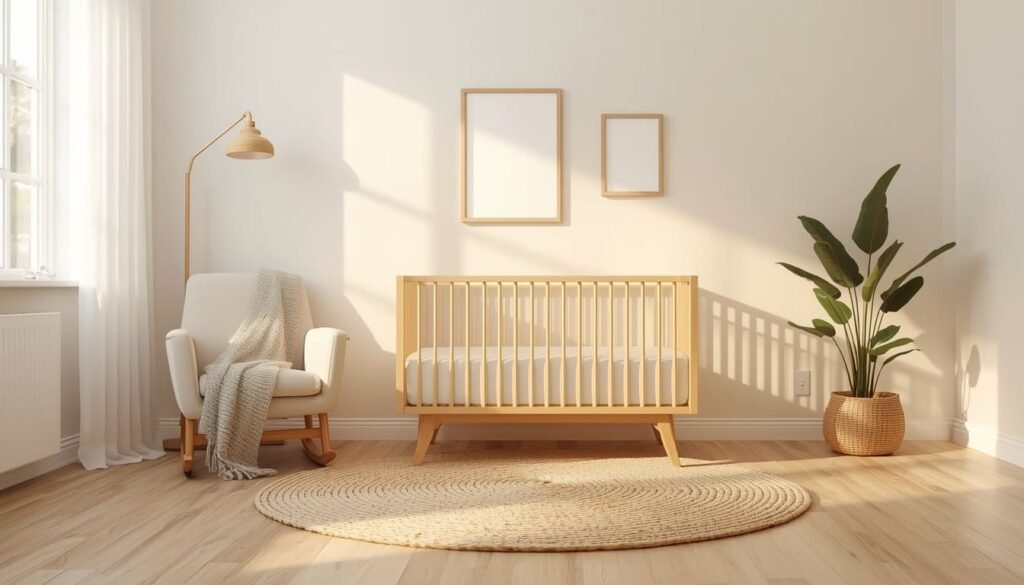
You don’t need a massive budget or a perfectly sized room to create a nursery that feels calm, beautiful, and completely intentional. In my years of working with American families from sprawling suburban homes in the Midwest to tight apartment nurseries in Austin and Brooklyn the most peaceful baby rooms I’ve ever designed had one thing in common: less stuff, done better. Minimalism isn’t about making a room look empty. It’s about making every single piece earn its place. If you’re expecting and feeling overwhelmed by the Pinterest rabbit hole of ideas, you’re in the right place this guide cuts through the noise and gives you exactly what works in real homes, for real families.
My Design Notes
Last spring, I worked with a first-time mom in a 10×11 nursery inside a compact apartment in Austin, Texas. Her budget was $1,200, and her Pinterest board had over 400 pins almost every single one of them was a room the size of a hotel suite. My first job wasn’t picking a paint color or sourcing a crib. It was sitting down with her, coffee in hand, and asking one simple question: what do you actually do in this room at 3 a.m.? That question changed every single decision we made together. We stripped the list down to what truly mattered a solid crib, a comfortable glider, soft lighting, and two good storage baskets. That’s it. The room we built together ended up being the most serene space in her entire apartment. Her words when she saw it finished? “It finally feels like I can breathe in here.” That’s exactly what a minimalist nursery should do and that’s exactly what this guide is going to help you build.
Stunning Minimalist Nursery Design Secrets Every American Parent Needs to Know
1. Start with Your Room Size, Not Pinterest
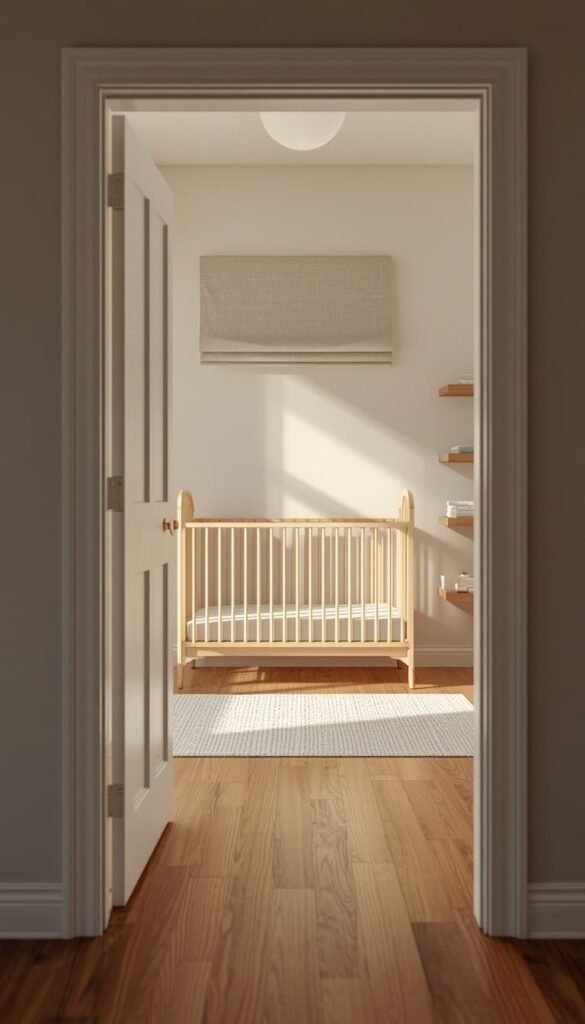
Before you fall in love with a single crib or wall color, I want you to do one thing first measure your room. I mean it. Grab a tape measure before you open a single browser tab. The biggest mistake I see American parents make is designing for a fantasy room instead of their actual room. A 10×10 nursery and a 14×16 nursery need completely different furniture plans, different storage strategies, and honestly, different décor approaches too.
For smaller rooms, I always tell my clients to keep the floor as clear as possible. Visual clutter at ground level makes a tiny room feel suffocating. Go vertical instead wall shelves, hanging storage, and tall dressers work so much better than wide, low furniture when square footage is limited.
For larger rooms, the challenge is actually the opposite. Too much empty space can feel cold and uninviting for a baby’s room, so you’ll want to create cozy zones a sleeping zone, a feeding zone, and a small play zone rather than just placing furniture randomly around the perimeter.
2. Build Your Neutral Color Foundation
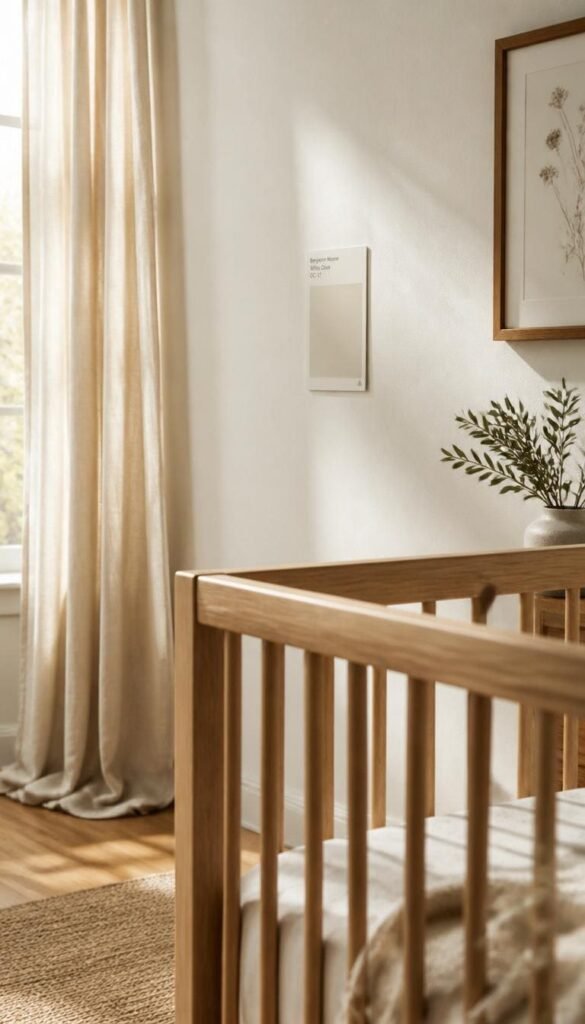
The color palette you choose is the single most powerful design decision you’ll make for a minimalist nursery. Get this right, and everything else falls into place naturally. Get it wrong, and no amount of beautiful furniture will save the room.
My go to recommendations for US clients right now are Sherwin Williams “Accessible Beige” for a warm, creamy neutral that works in both north and south facing rooms, and Benjamin Moore “White Dove” for a softer, airier look that doesn’t feel stark or clinical. Both of these shades photograph beautifully and age incredibly well as your child grows.
One thing to watch out for is going too grey. A lot of parents gravitate toward cool grey tones because they feel modern, but in a nursery with limited natural light, grey can turn the whole room feeling flat and a little sad. Warm whites, soft beiges, and muted sage greens almost always perform better in real life than they do on a paint chip.
3. The Minimalist Lighting Plan Nobody Talks About
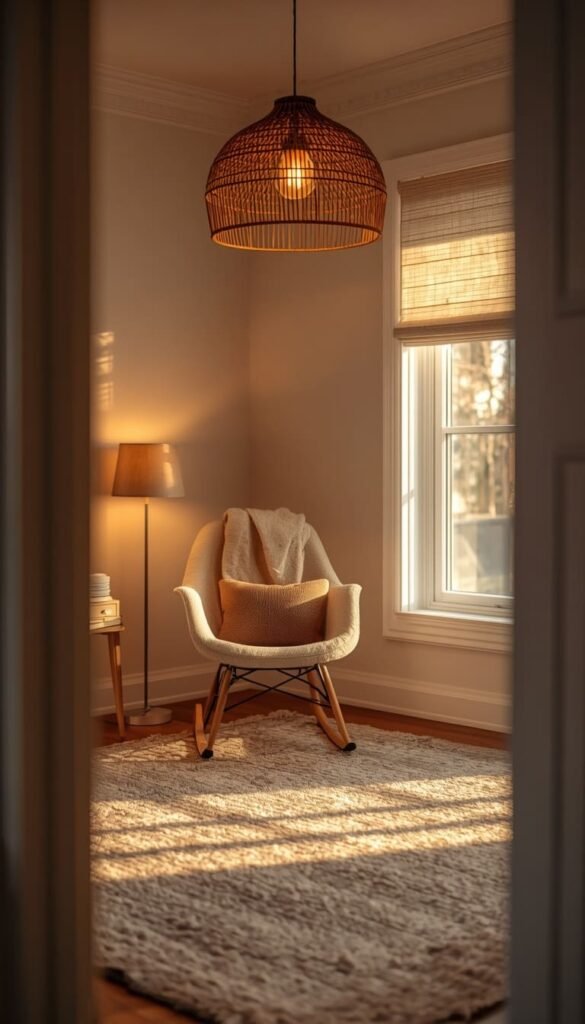
Lighting is where most nursery designs quietly fall apart, and it’s the detail that separates a truly serene baby room from one that just looks good in photos. You need three layers working together and none of my competitors seem to talk about this at all.
Here’s how I approach it with every client:
- Ambient light — your main ceiling fixture, ideally on a dimmer switch. This is non-negotiable. Being able to drop the light level for nighttime feeds without fumbling for a lamp switch is a genuine quality-of-life upgrade at 2 a.m.
- Task light — a small, warm toned lamp near the glider. Stick to bulbs in the 2700K range. Anything cooler than that will feel harsh during those late night feeding sessions and make it harder for both you and baby to settle back to sleep.
- Blackout window treatment — not technically a light source, but it controls light coming in. Roman shades in a linen fabric with a blackout liner give you that clean, minimal look without sacrificing function.
4. The Crib First Rule
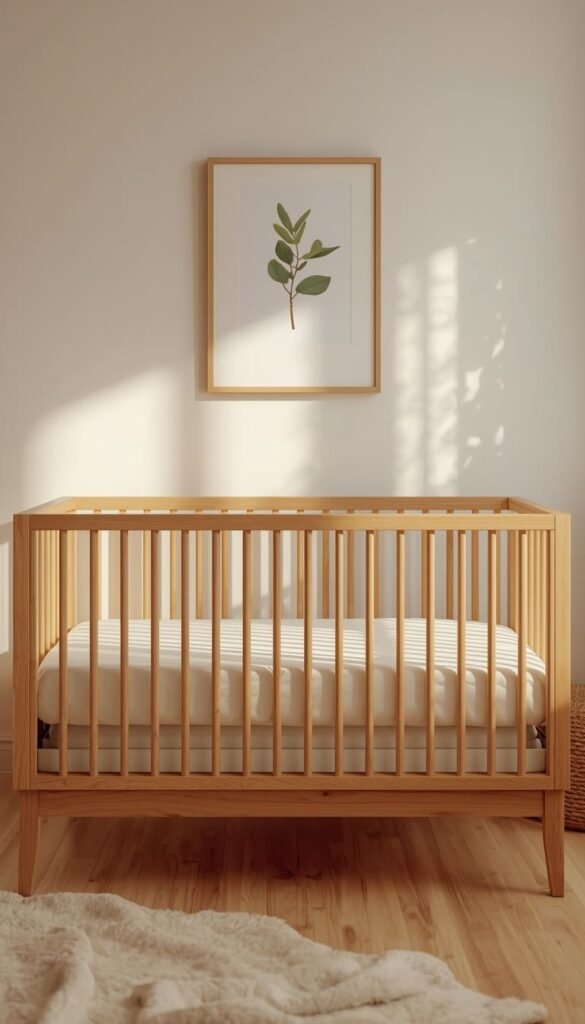
Every single time I start a nursery project, the crib is the first piece we select not the last. The crib is the visual anchor of the entire room. Its finish, its style, its scale all of it sets the tone for every other piece that follows. Choose a light natural oak crib and you’re heading toward a warm Scandinavian aesthetic. Choose a white painted crib with clean lines and you’re building toward something more modern and airy.
A quick trick I’ve learned over years of doing this: bring a photo of your shortlisted crib to the paint store before you finalize your wall color. Seeing them side by side under store lighting will save you from a very expensive mistake. Natural wood tones and warm whites pair beautifully. Natural wood and cool grey, on the other hand, can look surprisingly disconnected in person even when both look great separately.
One honest reality check worth mentioning solid wood cribs are almost always worth the investment over MDF alternatives. MDF is heavier, less durable, and doesn’t hold up well to the inevitable bumps and scrapes of toddler life. Spend a little more upfront on solid wood and you’ll still be happy with it in five years.
Top 6 Minimalist Nursery Ideas:
| Idea | Estimated Price | Maintenance |
|---|---|---|
| Scandinavian Nursery Decor | $800 – $2,000 | Low |
| Natural Wood Nursery | $600 – $1,800 | Low |
| Japandi Inspired Baby Room | $1,000 – $2,500 | Low |
| Soft Neutral Nursery with Warm Whites | $400 – $1,200 | Low |
| Boho Minimalist Nursery | $300 – $900 | Medium |
| Minimalist Nursery Lighting Fixtures | $80 – $350 | Medium |
5. The Convertible Crib vs. Standard Crib Decision
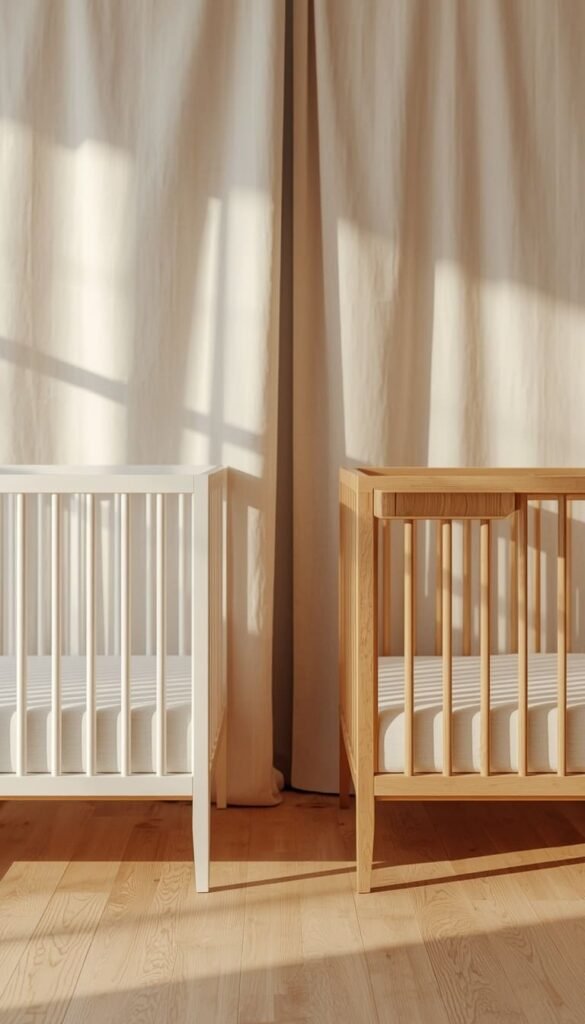
This is a debate I have with almost every client, and my answer is always the same run the actual numbers before you decide. A solid standard crib might cost you $300 to $400. A quality convertible crib that grows from bassinet to toddler bed to full-size bed runs anywhere from $500 to $900. Sounds expensive upfront, right? But when you factor in that you won’t be buying a toddler bed at age two or a twin bed at age four, the convertible almost always wins financially.
The one caveat I give every parent is this only buy a convertible crib if the brand actually sells the conversion kits separately and has been in business long enough that you trust they’ll still be around in four years when you need them. A convertible crib from a brand that discontinues its conversion hardware is just an expensive standard crib.
6. The Glider Splurge or Save?
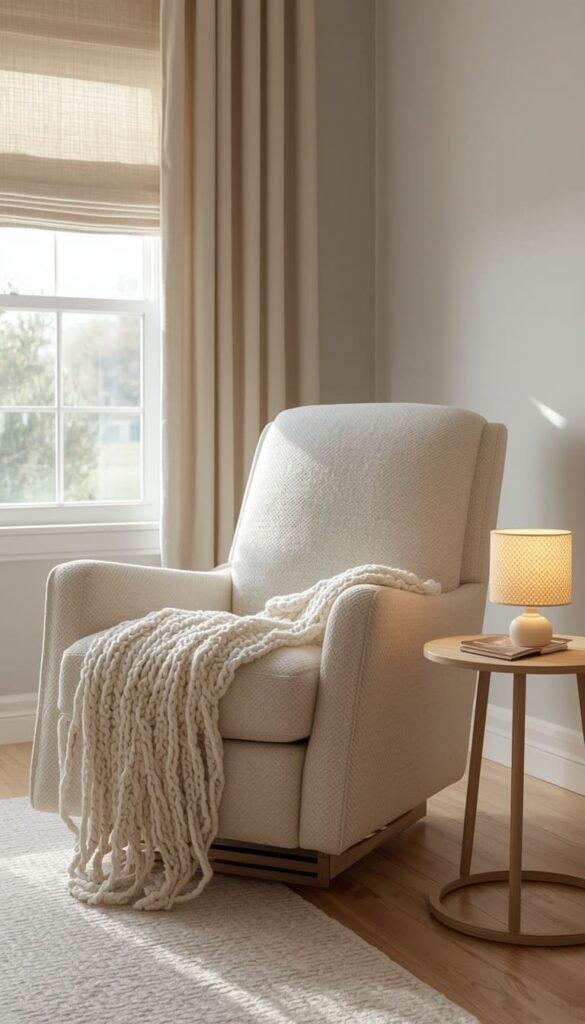
Honest answer? This is the one piece of nursery furniture where I always tell my clients to spend more than they think they need to. You will sit in this chair more hours than you can currently imagine. Middle of the night, cracked and exhausted, baby finally settling the last thing you want is a chair that squeaks, wobbles, or leaves your back aching.
A $200 glider from a big box store will do the job, technically. But the fabric pills, the glide mechanism gets stiff within a year, and the cushions lose their shape faster than you’d expect. A well made glider in the $500 to $800 range think performance fabric, smooth ball-bearing glide, proper lumbar support is genuinely one of the best investments you can make in your own postpartum comfort.
One thing to watch out for is trendy glider silhouettes that look stunning on Instagram but aren’t actually comfortable for long feeding sessions. Always sit in a glider before you buy it if you can. If you’re shopping online, read reviews specifically from people who mention nighttime use. That’s your real test.
Which minimalist nursery style feels most like you Scandinavian, Japandi, Boho, or soft neutrals?
7. The Dresser as Changing Station Hack
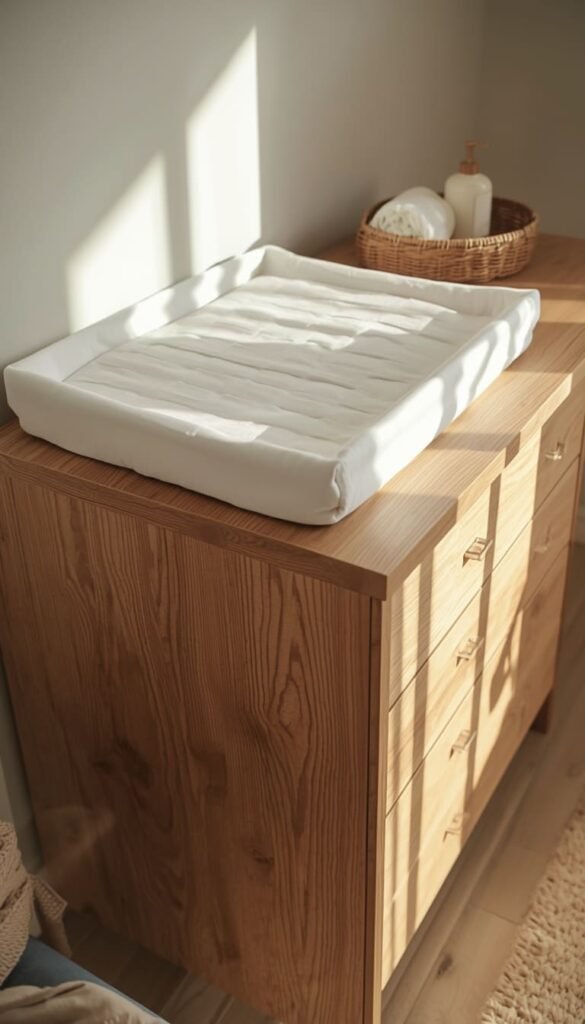
Skipping the changing table is one of the smartest space saving moves you can make in a minimalist nursery, and I honestly recommend it to almost every client working with a room under 12 feet wide. A standard changing table is a single purpose piece of furniture that becomes completely useless the moment your child is potty trained usually somewhere around age two to three. A dresser, on the other hand, you’ll use for the next decade.
Here’s exactly how I set it up for clients:
- Choose a dresser that sits between 32 and 36 inches tall that’s the ergonomic sweet spot for a changing surface without straining your back.
- Add a contoured changing pad with a safety strap on top. Make sure it has raised edges on all sides.
- Keep a small basket or caddy on the dresser surface with diapers, wipes, and cream everything within arm’s reach so you never have to take a hand off baby.
The total cost of this setup versus a dedicated changing table? You’re often saving $150 to $300 and gaining a piece of furniture with genuine long-term value. That’s a win on every level.
8. Multi Functional Ottoman Storage Hero
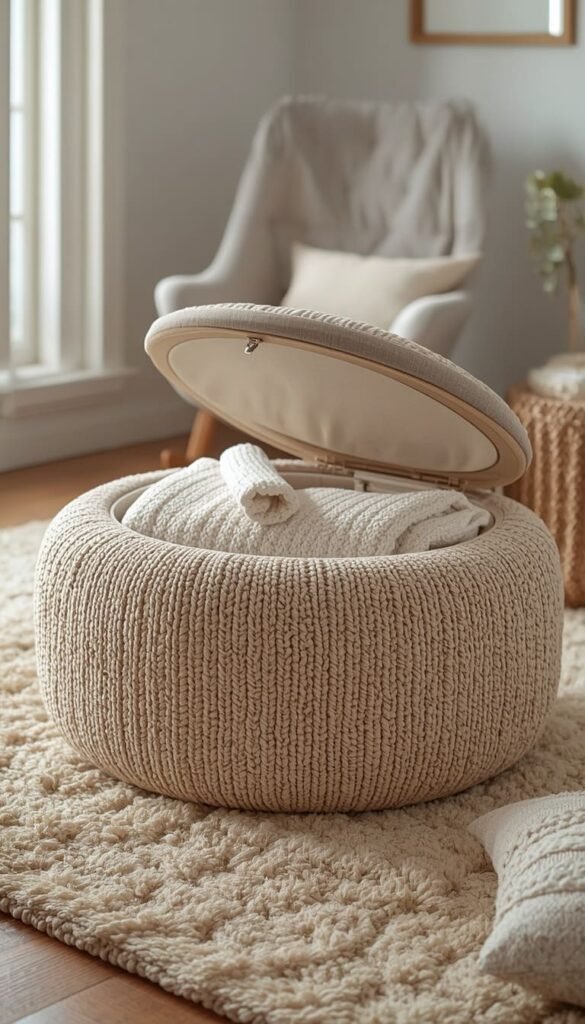
I’ve specced ottomans into almost every nursery I’ve ever designed, and clients always tell me afterward that it was one of their favorite pieces in the room. On the surface it looks like a simple footrest and it is. But open the lid and you’ve got a hidden storage compartment that’s perfect for extra blankets, swaddles, burp cloths, or anything else that tends to pile up and create visual clutter.
The key is choosing one that’s upholstered in a performance or stain resistant fabric. Nurseries get messy fast. A beautiful linen ottoman sounds lovely until week three of parenthood when it has spit-up on it and you realize it’s dry clean only. Performance velvet or a tightly woven boucle in a warm neutral are my top picks they look elegant, they clean up easily, and they hold their shape beautifully even with daily use.
Size wise, I usually recommend going slightly larger than you think you need. A petite ottoman gets pushed aside and forgotten. A generously sized one becomes a genuine feature of the room somewhere to perch while you’re playing on the floor with your baby, somewhere for a visiting grandparent to sit, and a proper footrest for those long glider sessions.
9. Scandinavian Nursery Decor
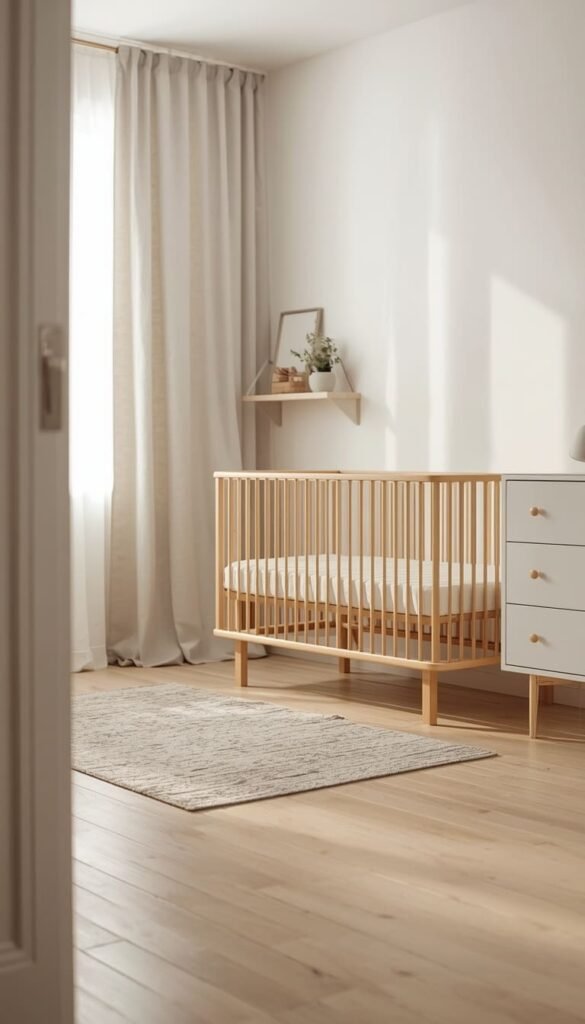
If there’s one aesthetic that was practically made for minimalist nurseries, it’s Scandinavian design. Clean lines, functional furniture, natural materials, and a palette so calm it almost feels like a exhale. I’ve designed several Scandi cinspired nurseries for clients across the US and the response is always the same they walk in and immediately feel their shoulders drop.
The foundation of a great Scandinavian nursery is birch or light oak wood paired with white or off-white walls. Keep the furniture low profile and simple. No ornate details, no heavy carvings, no brass hardware. Flat fronts, simple knobs, natural grain.
A quick trick I’ve learned is to source from IKEA strategically rather than exclusively. Their SUNDVIK crib and HEMNES dresser are genuinely solid pieces that photograph beautifully and hold up well. Pair them with higher quality textiles a good wool rug, proper linen curtains and the room looks far more considered and expensive than it actually is. That combination of affordable structure and quality softgoods is the secret most designers won’t tell you.
10. Boho Minimalist Nursery
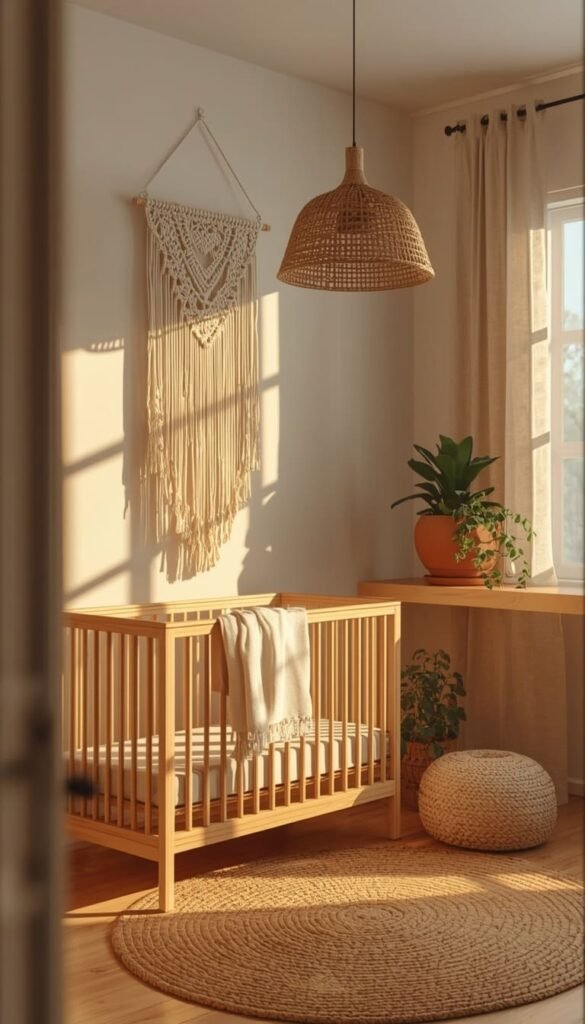
Boho and minimalism might sound like they’re pulling in opposite directions, but when you get the balance right, the result is one of the warmest and most inviting nursery aesthetics out there. The trick is keeping the boho elements natural and intentional rather than layering on every rattan, macramé, and fringe piece you find on Etsy.
My personal formula for a boho minimalist nursery is simple pick two or three natural texture elements and let them breathe. A woven jute rug on the floor. A simple macramé wall hanging above the crib. A rattan pendant light overhead. That’s genuinely enough. You don’t need all of it at once.
One thing to watch out for with rattan specifically it is a serious dust collector. The woven texture traps dust and pet hair faster than almost any other material. If you have allergies or a pet in the home, either commit to wiping it down weekly with a dry microfiber cloth or choose a sealed rattan finish that has a smoother surface. Beautiful material, but it needs a little more maintenance than most people expect going in.
11. Modern Minimalist Nursery with Black Accents
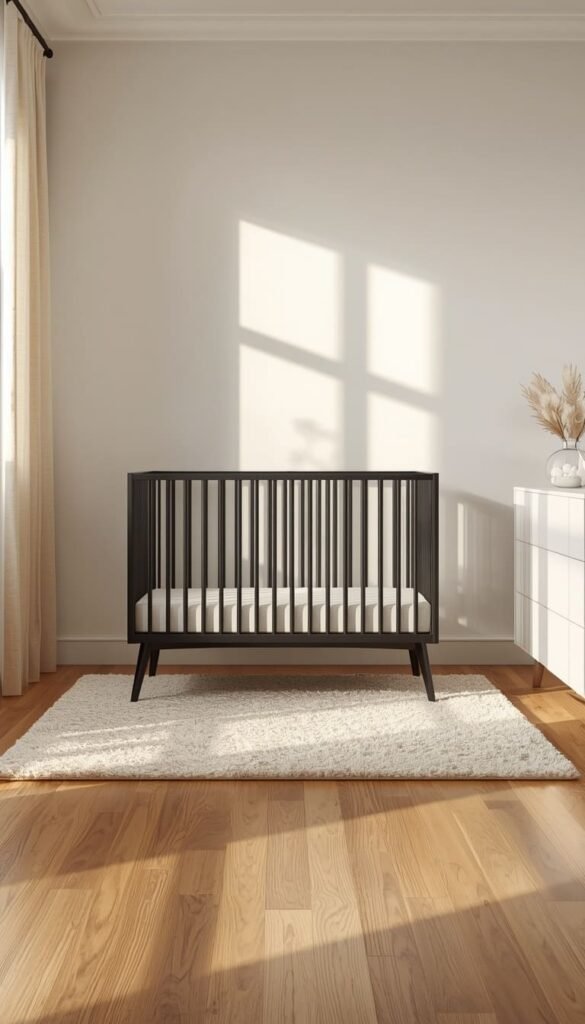
This is one of my favorite looks to design because it feels sophisticated without being cold, and it photographs absolutely beautifully for those first newborn photos in the nursery. The key is restraint. One dark element. Just one.
What I mean by that is this choose your single black accent and let it be the intentional punctuation mark of the room. It could be a matte black crib. Or black cabinet hardware on a white dresser. Or a simple black framed gallery wall. Pick one and stop there. The moment you add a second black element, the room starts feeling heavy and the minimalist quality disappears quickly.
The walls and all other furniture should stay in warm whites or soft naturals. Add a cream wool rug and linen curtains and that single black element will pop with just the right amount of visual tension. It’s a look that genuinely works for both a baby girl’s room and a baby boy’s room without leaning too far in either direction.
12. Soft Neutral Nursery with Warm Whites
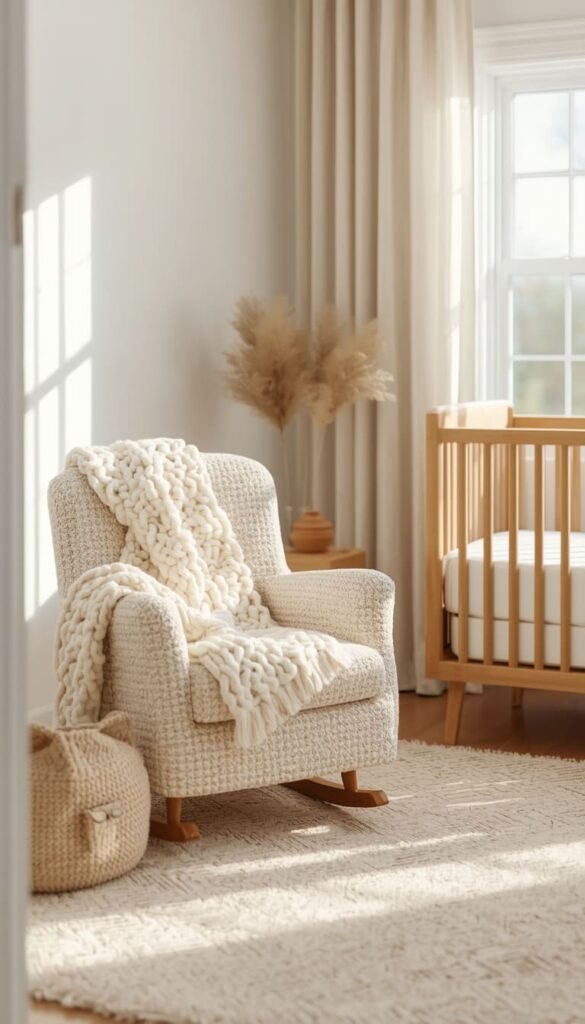
This is probably the most requested aesthetic I get from expecting moms right now, and honestly I completely understand why. There is something deeply soothing about a room that lives entirely in the ivory, linen, cream, and warm white family. It feels like the visual equivalent of a deep breath.
The challenge and this is real is keeping it from looking flat or like a blank canvas that was never finished. The secret is layering different whites with different undertones and textures so the eye has something interesting to travel across even though the palette is quiet.
Here’s how I approach it:
- Walls in a warm white with a slight yellow undertone Benjamin Moore “White Dove” or Sherwin-Williams “Alabaster” both work beautifully here.
- Textiles in natural linen, chunky cotton knit, and a wool or wool-blend rug to add tactile variation.
- Wood tones in a light honey or natural oak to ground the room and prevent it from floating away into an all-white void.
That combination of warm white paint, varied textures, and one natural wood tone is genuinely all you need. Keep accessories to a minimum and the room does the rest on its own.
Are you working with a tiny nursery or do you have more space to play with and what’s your biggest design challenge right now?
13. Gender Neutral Nursery Done Right
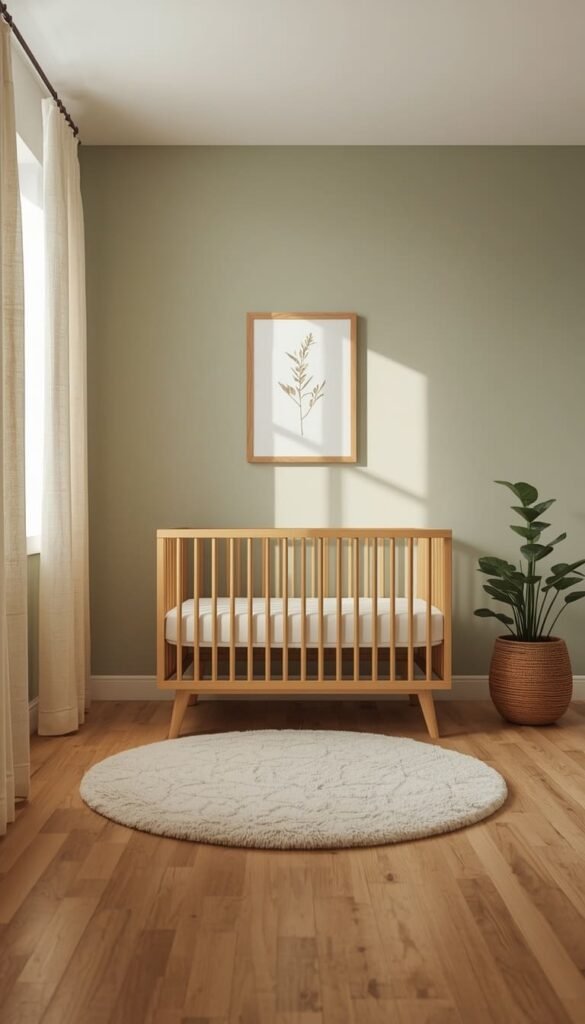
Let me be honest with you beige is not the only option for a gender neutral nursery, and I think the design world has done expecting parents a bit of a disservice by suggesting otherwise. Yes, beige works beautifully. But so does sage green, warm terracotta, dusty blue, and even a soft mushroom grey when it’s paired with the right warm wood tones.
My favorite gender neutral combination right now for US clients is sage green walls paired with natural oak furniture and cream textiles. It feels fresh and grounded at the same time. It works beautifully for a newborn and doesn’t feel babyish at all as your child grows into a toddler. I’ve had clients keep this palette all the way through elementary school with just a few accessory swaps along the way.
One thing I always remind parents gender neutral doesn’t have to mean personality free. A carefully chosen piece of wall art, a printed textile, or even a single statement plant can give the room genuine warmth and character without pushing it toward pink or blue. The goal is a room that feels like it belongs to your family, not just a showroom floor.
14. Natural Wood Nursery
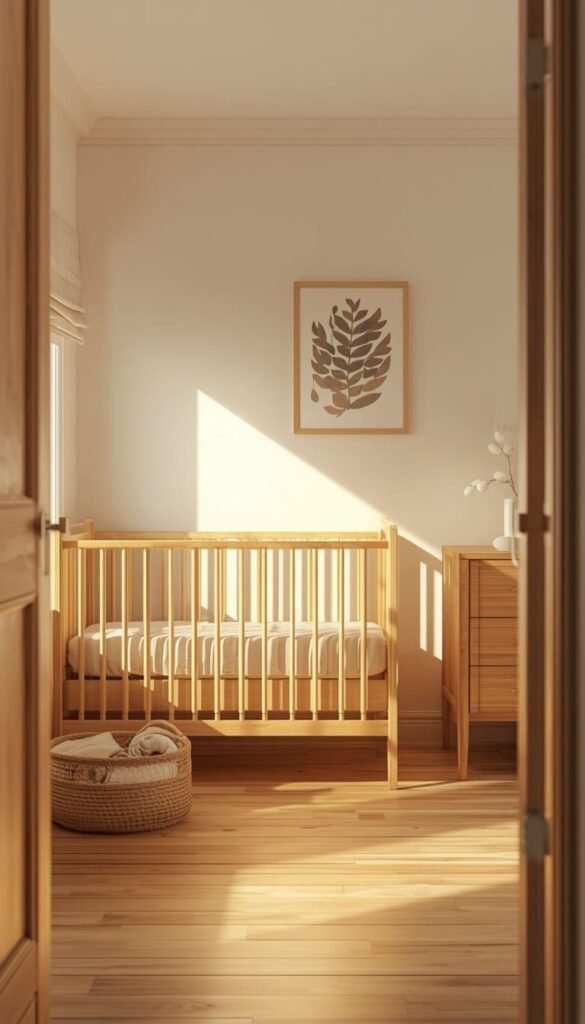
There is something genuinely timeless about a nursery built around natural wood tones, and I keep coming back to this aesthetic with clients who want a room that feels warm, organic, and completely unfussy. The wood does most of the design work for you you really don’t need much else.
When it comes to wood species, here’s my honest breakdown from years of sourcing furniture for nurseries across different budgets:
- Oak is my top recommendation. It has a beautiful open grain, ages gracefully, and the warm honey tone pairs with almost every wall color from white to sage to warm grey.
- Birch is lighter and slightly more affordable. It has a cleaner, more Scandinavian feel and works especially well in smaller rooms where you want the space to feel airy.
- Pine is the most budget-friendly option but also the softest wood, which means it dents and scratches more easily. Fine for a nursery where looks matter more than longevity, but I’d push clients toward oak if the budget allows even a small stretch.
A quick trick I’ve learned mix your wood tones intentionally rather than trying to match them perfectly. A light birch crib with a slightly warmer oak dresser looks curated and collected. Trying to match them exactly and getting it slightly wrong just looks like a mistake.
15. Japandi Inspired Baby Room
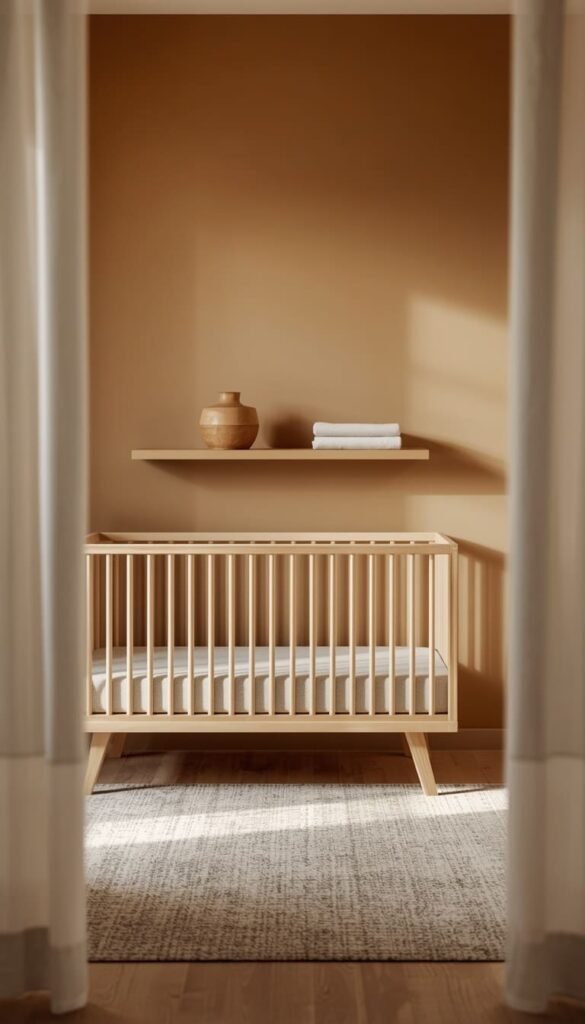
Japandi is the design aesthetic that has been quietly taking over high end US interiors for the past two years, and I’m genuinely excited every time a client brings it up for a nursery project because it is tailor made for the minimalist baby room. It’s the meeting point between Japanese wabi sabi philosophy finding beauty in imperfection and simplicity and Scandinavian functional warmth. The result is a room that feels deeply intentional without feeling cold or sterile.
For a nursery, I translate Japandi into a very specific set of choices. Low profile furniture in natural wood. A restrained palette of warm white, greige, and charcoal used sparingly as an accent. Handmade or artisanal looking ceramics on a shelf a simple vase, a small bowl. Linen everything. And crucially, negative space treated as a design element rather than something to fill.
The one thing that makes or breaks a Japandi nursery is quality over quantity in every single decision. One beautiful hand-thrown ceramic piece on a shelf is Japandi. Six small decorative items lined up on the same shelf is just clutter wearing a different label. Less, always less, but always better.
16. The Negative Space Nursery
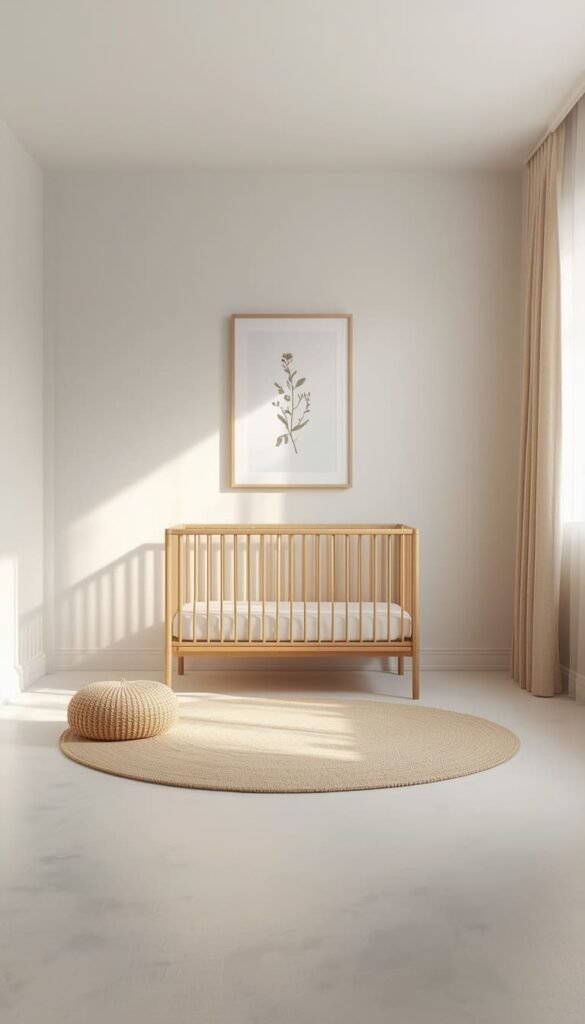
This idea makes some parents genuinely nervous when I first bring it up and I understand why. We’re culturally conditioned to think that empty wall space means an unfinished room. But in minimalist design, negative space is not emptiness. It is a deliberate choice. It is breathing room. And in a nursery specifically, it creates a visual calm that you will appreciate deeply at every 3 a.m. feeding.
The practical application of this is simpler than it sounds. Instead of hanging art across every wall, choose one wall to be your statement wall and leave the other three intentionally bare or nearly bare. Instead of filling every shelf, leave one third of each shelf empty. Instead of pushing furniture against every wall, pull pieces slightly forward and let the wall behind them have a moment.
What I’ve noticed with clients who commit to this approach is that the room actually feels larger than its square footage suggests. Visual rest is a real phenomenon when the eye has nowhere to travel frantically, the brain perceives the space as more generous and more calm. For a baby who is taking in every sensory input with fresh eyes, that calm is genuinely valuable beyond just aesthetics.
17. Floating Shelves as Both Décor and Storage
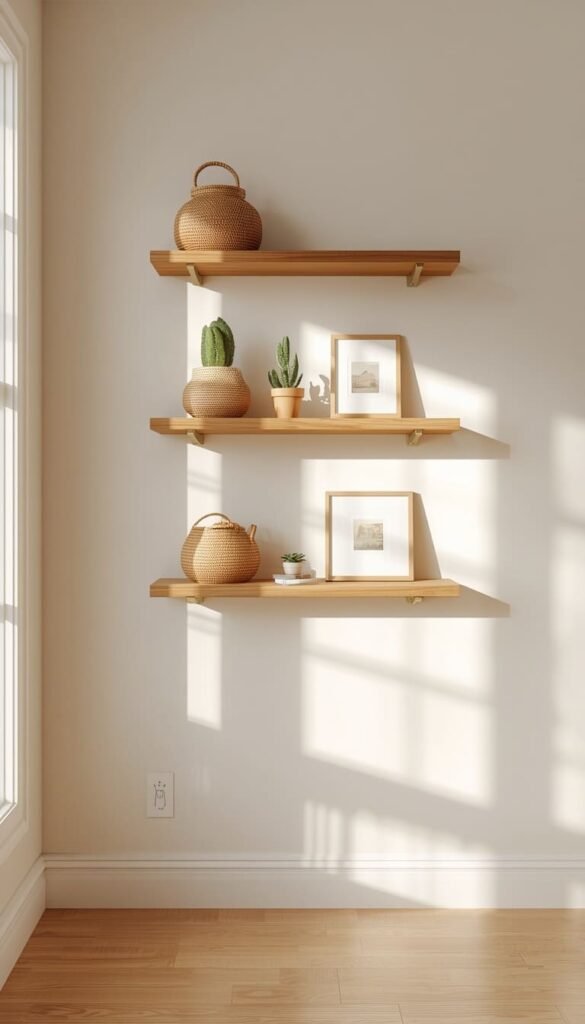
Floating shelves are one of my absolute favorite tools in a minimalist nursery because they solve two problems at once they give you storage without eating into your floor space, and they give you a place to add personality without cluttering surfaces. Done well, they look intentional and beautiful. Done poorly, they become a dust collecting jumble of random objects that actually makes the room feel busier than it did without them.
The installation detail that most people overlook is height. I always recommend installing nursery shelves at a minimum of 60 inches from the floor well out of reach once your baby starts pulling up and cruising around furniture. Safety first, always. Beyond that, spacing matters too. Two or three shelves grouped together on one wall looks deliberate and designed. Shelves scattered randomly across multiple walls looks like an afterthought.
For styling, I follow a simple rule with every client each shelf gets one functional item, one natural element, and one personal touch. A small basket of essentials, a little potted succulent, and a framed photo or small piece of art. That’s the whole formula. It works every single time.
If you could only splurge on one piece of nursery furniture, what would it be the crib, the glider, or something else entirely?
18. Texture Layering for a Cozy Minimalist Nursery
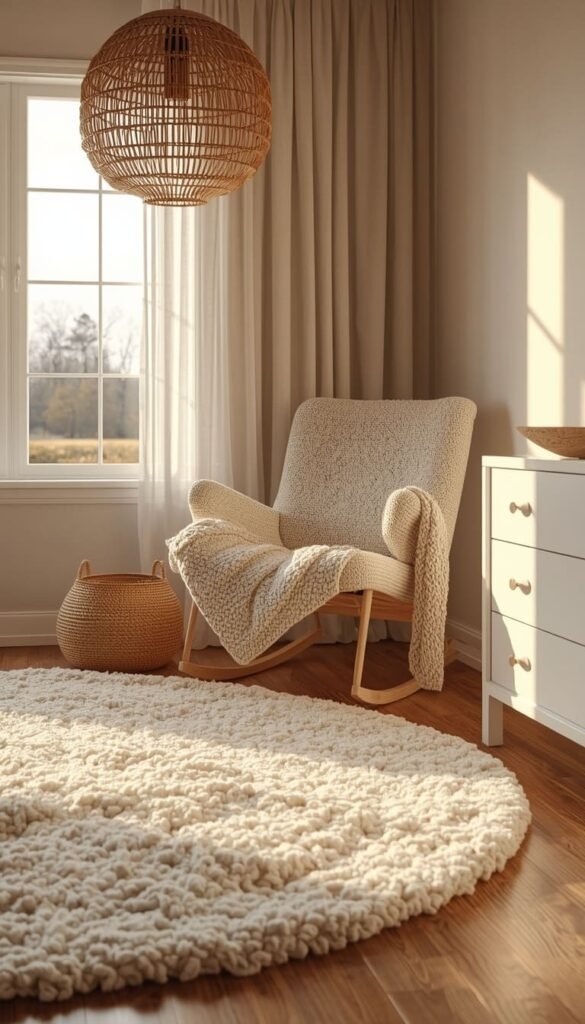
This is the design secret that separates a minimalist nursery that feels warm and lived in from one that feels cold and uninviting. When your color palette is intentionally quiet and in a minimalist nursery it should be texture becomes your primary design tool. It’s how you create visual interest and physical warmth without adding color or clutter.
My three texture rule is something I developed over years of working on neutral rooms that needed to feel cozy rather than sterile. Pick three distinct textures and make sure each one is present in at least two places in the room:
- Something chunky and soft — a knitted throw blanket draped over the glider, a boucle ottoman cover, a chunky wool rug underfoot.
- Something smooth and crisp — linen curtains, cotton crib sheets, a painted wood dresser surface.
- Something natural and organic — a woven jute basket, a rattan pendant shade, a raw wood shelf bracket.
When those three textures repeat and layer throughout the room, the space reads as intentional and rich even though the palette stays completely quiet. It’s genuinely one of the most effective tricks I know for making a neutral room feel anything but boring.
19. The Statement Crib Wall
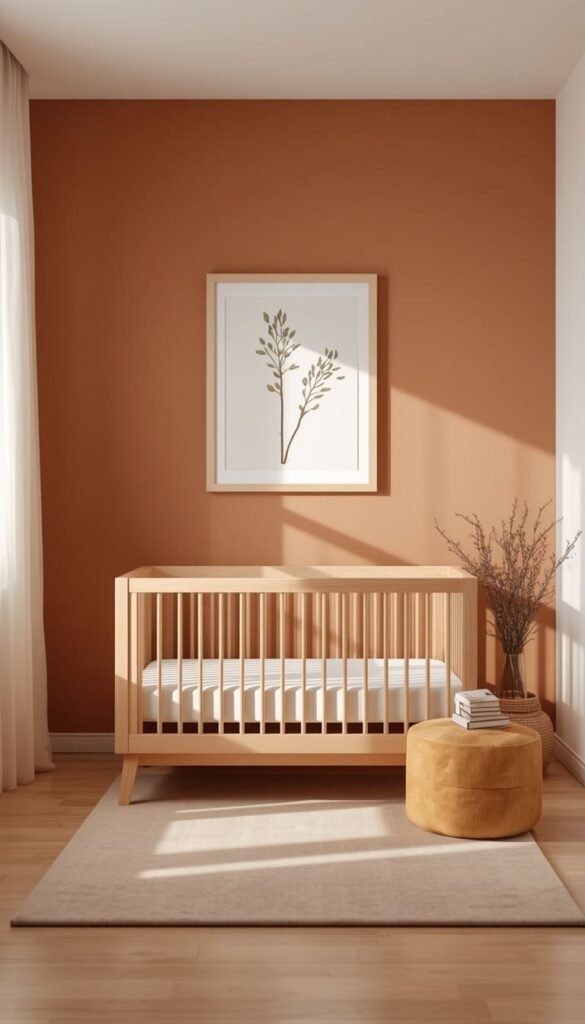
Every well designed minimalist nursery needs one focal point one wall that does a little more visual work than the others so the rest of the room can stay beautifully calm. The crib wall is almost always the natural choice for this, and I love designing it because you get to be slightly more expressive here while keeping everything else stripped back.
What works on a statement crib wall in a minimalist nursery is more restrained than you might think. A soft paint color that’s one shade deeper than the rest of the room. A simple piece of oversized wall art in a clean frame. A wooden name sign in a natural finish. Even just a subtle textured wallpaper panel behind the crib can do it beautifully without overwhelming the space.
What doesn’t work and I’ve seen this so many times is treating the statement wall as a license to go maximalist in one corner while keeping everything else minimal. The contrast ends up feeling jarring rather than intentional. Think of the statement crib wall as a whisper, not a shout. One degree more interesting than the surrounding walls, not ten degrees.
20. Vertical Storage Solutions for Tiny Nurseries
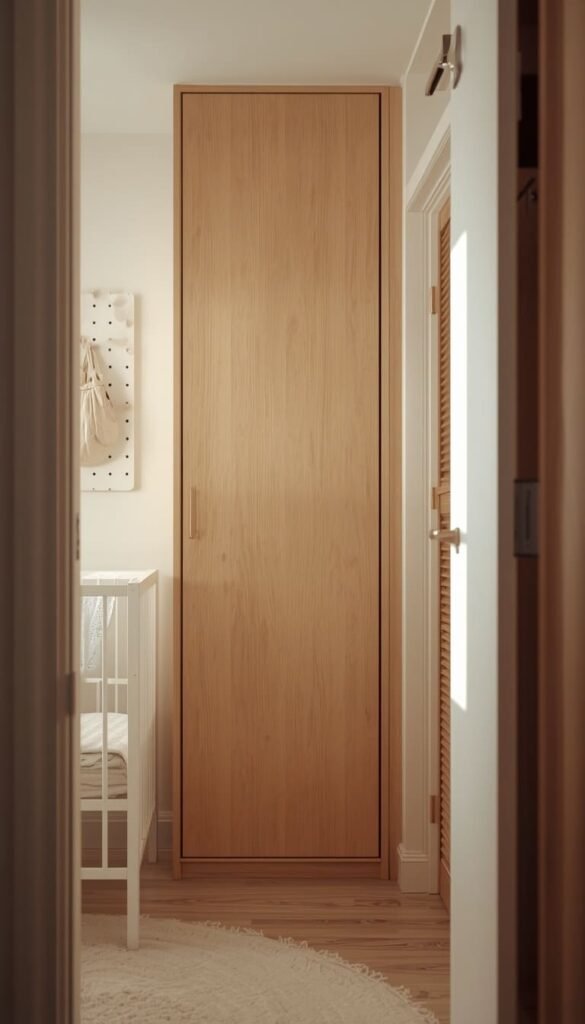
If you’re working with a small nursery anything under 10×10 vertical storage is not just a design choice, it’s a genuine necessity. The floor space in a small room is too precious to give to bulky horizontal furniture, and the walls are essentially free real estate that most parents completely underutilize.
Here’s exactly how I approach vertical storage in a compact nursery space:
- A tall, narrow bookcase or wardrobe rather than a wide, low dresser where possible. Height draws the eye upward and makes ceilings feel taller.
- An over the door organizer on the back of the closet door for small items like socks, mittens, pacifiers, and nail clippers all the tiny things that otherwise end up loose in drawers.
- A wall mounted pegboard or hook rail near the changing area for hanging bags, spare outfits, and accessories within easy reach but completely off the floor.
One thing to watch out for with vertical storage is top heaviness. Tall furniture must be anchored to the wall with an anti tip strap this is a non negotiable safety step that I remind every single client about regardless of their nursery size. It takes five minutes and it genuinely matters.
21. Indoor Plants in the Nursery Yes or No?
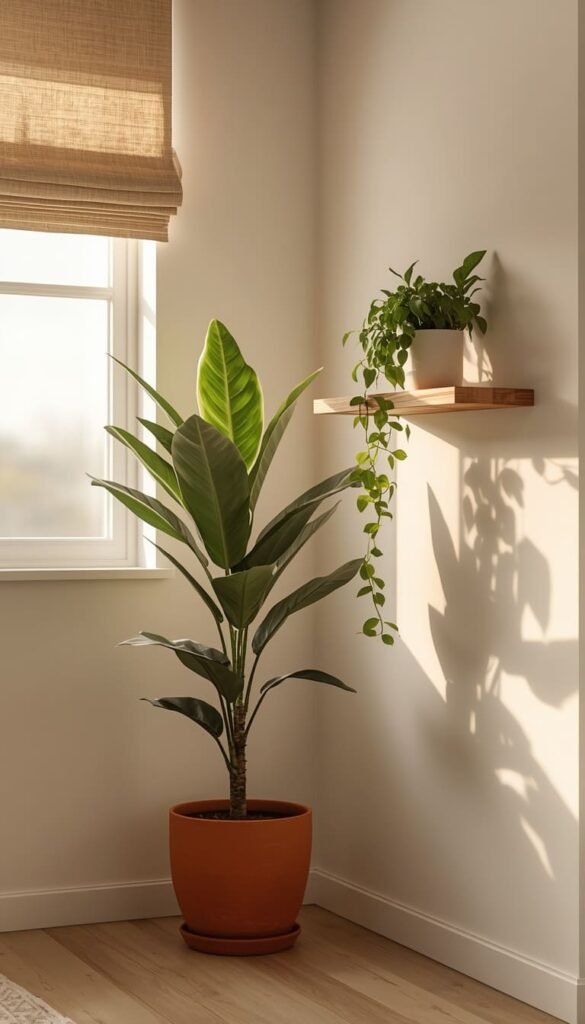
I get this question constantly from expecting parents, and my answer is always a careful yes with a very specific list of conditions attached. Plants bring life, color, and a genuinely organic quality to a minimalist nursery that no piece of décor can replicate. A single healthy potted plant in the corner of a neutral room does more for the atmosphere than a shelf full of decorative objects. But not every plant belongs in a baby’s room, and placement matters enormously.
The plants I personally recommend for nurseries are pothos, spider plants, and rubber plants. All three are low maintenance, tolerate the kind of inconsistent watering that comes with new parenthood, and are non toxic to children according to the ASPCA database which is the reference I always check before recommending anything green for a family space. A small pothos on a high shelf or a rubber plant in a simple terracotta pot in the corner both look beautiful in a minimalist nursery without requiring serious horticultural commitment.
What I steer clients away from is anything in the peace lily or philodendron family. Both are gorgeous plants and wildly popular on home décor accounts, but both are toxic if ingested. With a baby who will eventually be mobile and curious about everything at floor level, it’s simply not a risk worth taking when there are equally beautiful safe alternatives available.
22. Minimalist Nursery Lighting Fixtures
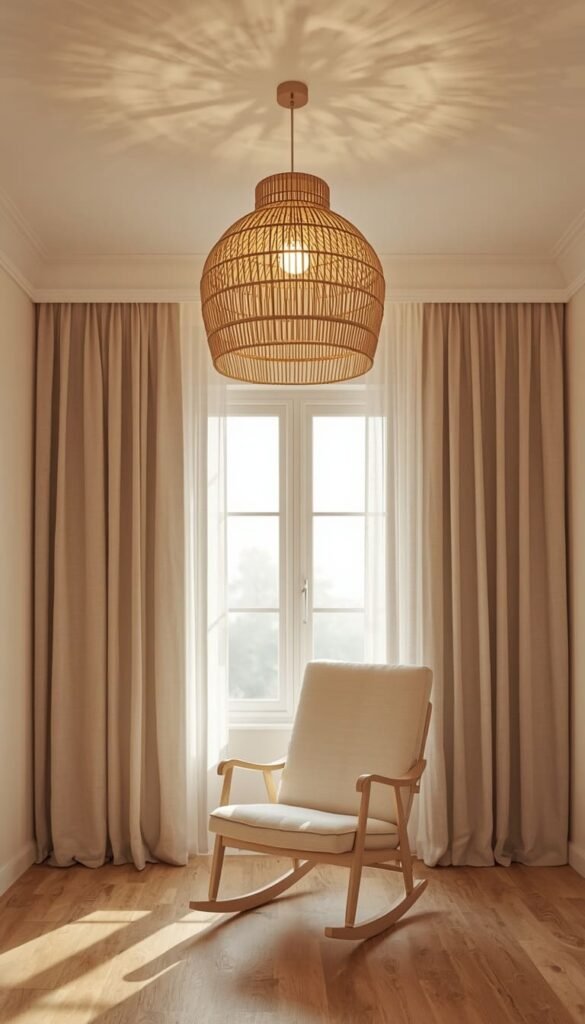
The fixture you choose for your nursery ceiling does double duty it’s functional infrastructure and it’s a design statement, often the first thing your eye lands on when you walk into the room. In a minimalist nursery, the fixture should feel intentional but never loud. It should complement the room rather than compete with it.
My current favorites for US nurseries are woven pendant lights in a natural rattan or seagrass material, simple white drum shades, and understated linen pendants. All of these feel warm and organic without demanding attention. They photograph beautifully in newborn sessions and they age well as the room evolves.
One thing to watch out for with woven rattan pendant shades specifically and I say this from experience because I’ve specced them into probably a dozen nurseries they collect dust inside the weave faster than almost any other fixture type. If you have a ceiling fan running frequently or live somewhere with dry air, plan to take it down every few months and give it a gentle vacuum with a soft brush attachment. It sounds tedious but it takes less than ten minutes and keeps the fixture looking fresh. Beautiful choice, just go in with your eyes open about the maintenance reality.
What’s the one thing in your nursery plan that you keep going back and forth on I’d love to help you finally decide?
23. Simple Gallery Wall That Doesn’t Look Cluttered
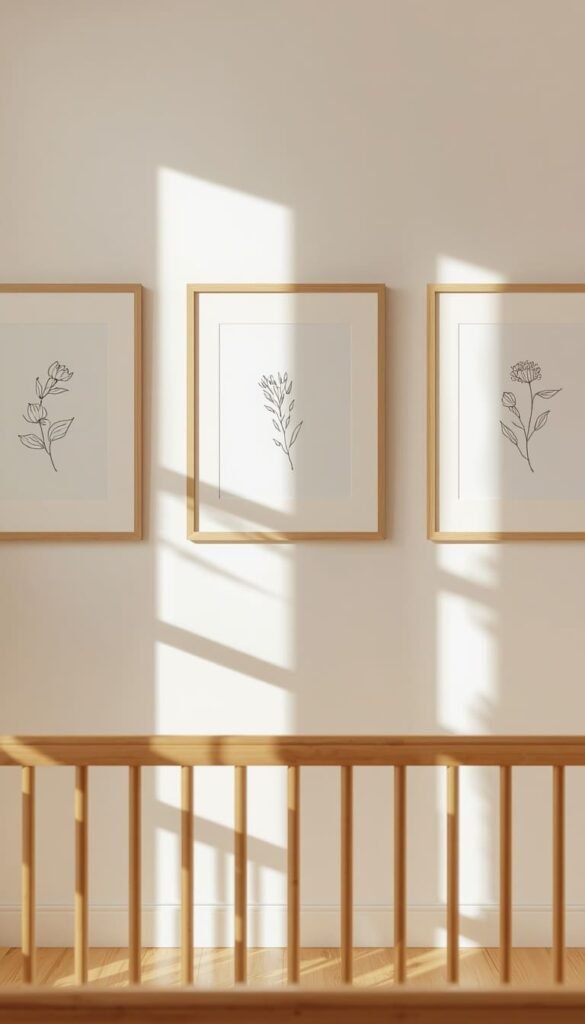
A gallery wall in a minimalist nursery sounds like a contradiction, and honestly, if you do it the way most people approach gallery walls, it is one. The typical approach collecting mismatched frames in different sizes, mixing prints and photos and quotes and mirrors is the opposite of minimalist. But a gallery wall done with real restraint is one of the most personal and beautiful things you can put in a baby’s room.
My rule is the three piece rule, and I rarely deviate from it in a minimalist space. Three frames, same finish, same color mat, arranged in a simple horizontal line or a tight triangular cluster. That’s it. The prints inside can vary a botanical illustration, a simple line drawing, a meaningful quote in clean typography but the frames themselves should be identical or as close to identical as possible. Consistency in the framing is what keeps a small gallery wall feeling curated rather than chaotic.
One quick trick I’ve learned is to always use odd numbers and always size up your frames slightly larger than your first instinct suggests. Three 8×10 frames on a large wall look timid and afterthought-ish. Three 11×14 frames in the same space look considered and intentional. Scale is everything with gallery walls, and going a size larger almost always improves the result.
Your 2-Minute Nursery Decision Map
By Budget
Starter Nursery (Under $800)
- Stick to IKEA SUNDVIK crib + a dresser with changing topper
- Skip the changing table entirely save $150 to $300 right there
- Use peel and stick wall decals instead of framed art
- One good jute rug from Target does more than three cheap ones
- Woven baskets for storage under $30 each and they look great
Investment Nursery ($2,000 and above)
- Convertible solid oak crib that grows to a toddler and full bed
- Quality glider with performance fabric and proper lumbar support
- Custom Roman shades with blackout lining worth every dollar
- Japandi or Scandinavian furniture pieces built to last a decade
- One statement pendant light fixture that anchors the whole room
By Space
Tiny Nursery (Under 10×10 ft)
- Go vertical tall narrow wardrobe over wide low dresser always
- Wall mounted shelves keep the floor completely clear
- One rug only and size it smaller than your instinct says
- Dresser doubles as changing station no room for separate table
- Mirrors on one wall to visually double the perceived space
Open Layout Nursery (12×14 ft and above)
- Create three distinct zones sleeping, feeding, and playing
- Use a large area rug to anchor the sleeping zone specifically
- A freestanding clothing rack adds function without closing the room in
- You have room for a proper glider AND an ottoman use both
- Negative space is your friend resist the urge to fill every corner
Frequently Asked Questions
What is the most essential furniture piece for a minimalist nursery?
The crib is your non negotiable starting point everything else gets built around it. A convertible solid wood crib gives you the best long-term value and anchors your entire room design.
How much does it cost to set up a minimalist nursery in the USA?
The average cost runs between $800 and $2,500 depending on your furniture choices. You can absolutely build a beautiful, functional minimalist nursery closer to the $800 mark if you prioritize multi functional pieces.
What colors work best for a gender neutral minimalist nursery?
Sage green, warm white, and soft terracotta are my top three right now. These shades feel fresh and calm without leaning pink or blue, and they age beautifully as your child grows.
Can a small apartment nursery look minimalist and still be functional?
Yes, and honestly small rooms are easier to keep minimalist because excess is immediately obvious. Go vertical with storage, use a dresser as your changing station, and keep the floor as clear as possible.
Are open shelves a good idea in a minimalist nursery?
Yes, but style them with strict discipline maximum three items per shelf. Open shelves become clutter magnets fast, so only display what you genuinely use or truly love.
Conclusion
Building a minimalist nursery is not about having the biggest budget or the most perfectly proportioned room it’s about making thoughtful decisions that serve your family’s real daily life. You now have 23 ideas, an honest budget breakdown, and the exact design framework I use with actual clients across the US. Pick one thing from this guide and do it today. Order that paint sample. Clear that one shelf. Measure your room before you open another browser tab. Small, decisive moves made now will save you weeks of overwhelm later.
So tell me which of these 23 ideas felt most like your nursery? Drop it in the comments, I’d love to help you take it further.
