
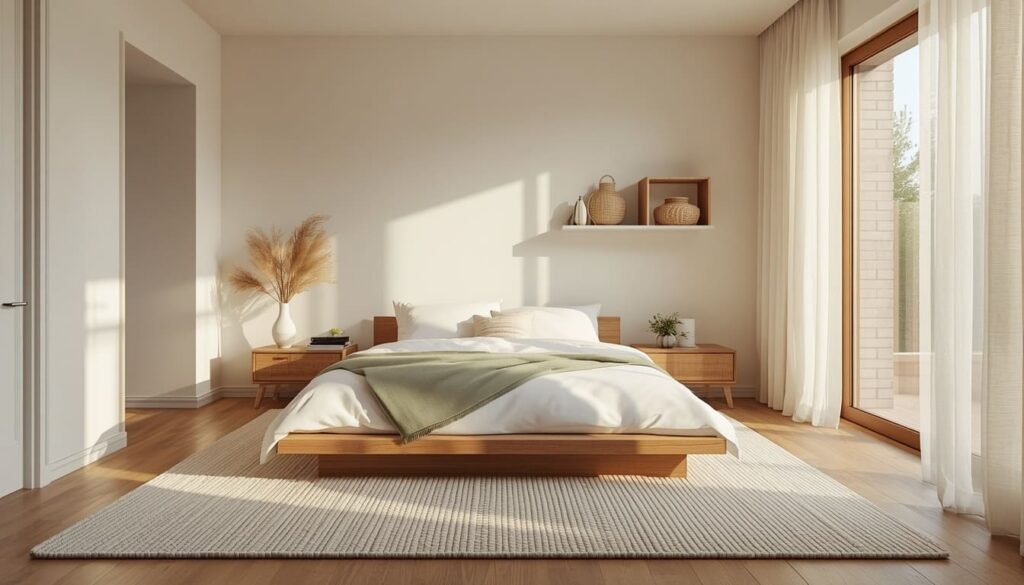
Less stuff, more magic that’s the secret every parent wishes someone had told them before they filled their kid’s room floor to ceiling with toys, bean bags, and that one giant inflatable unicorn. I’ve designed and styled dozens of children’s bedrooms across the US, and the rooms kids actually love spending time in? They’re almost always the simpler ones. A minimalist kids bedroom isn’t about taking things away from your child it’s about creating a calm, functional space where they can actually think, play, and sleep without sensory overload. In this guide, I’m sharing 22 of my favorite minimalist kids bedroom ideas that work beautifully in small spaces, tight budgets, and real American homes where life gets messy.
My Design Notes
A couple of years ago, I was called in to help a family in Denver, Colorado who had just welcomed their second child. Their older daughter, six years old at the time, was suddenly sharing a 10×11 ft bedroom with a newborn and the room was, to put it kindly, a organized disaster. My first instinct wasn’t to go shopping. It was to remove things. We pulled out nearly half the furniture, donated two giant bags of toys, and built the entire room around three simple anchors: a low platform bed, a cube shelf, and one washable rug in the softest sage green you’ve ever seen. What happened next honestly still makes me smile. About two weeks after we finished, the mom texted me a photo of her daughter tidying her own shelves. No nagging, no reminders. The room finally made sense to the child living in it. That Denver project shaped the way I approach every kids’ bedroom I work on today and it’s the foundation behind every idea I’m sharing with you in this article.
Stunning Minimalist Kids Bedroom Designs That Prove Less Is Always More
1. Start With a Neutral Base Then Add Personality in Layers
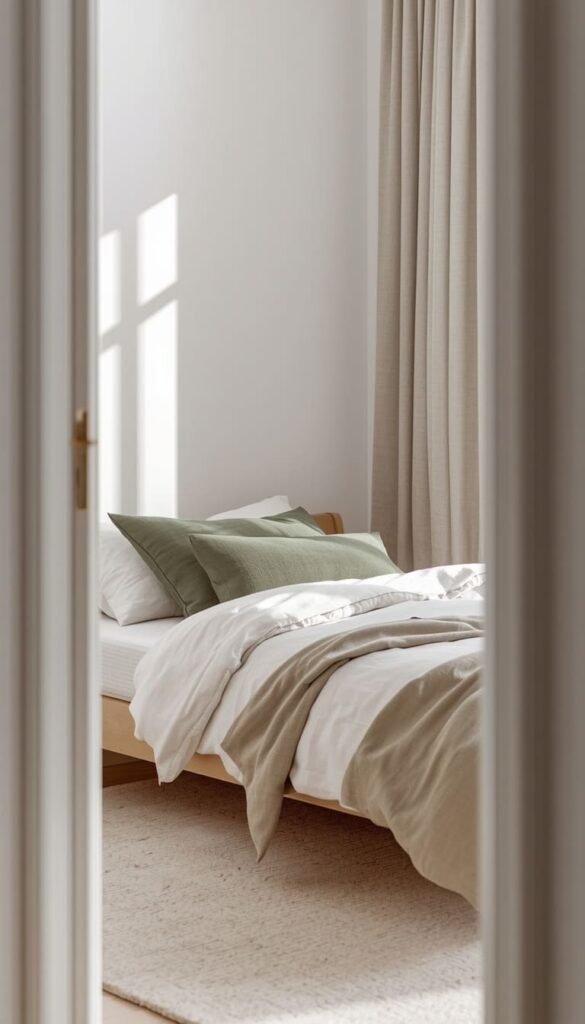
The single biggest mistake I see parents make is painting their child’s room a bold, trendy color and then regretting it eighteen months later when their kid decides they’re “over” dinosaurs. Start with a neutral base a warm white, a soft greige, or a creamy off-white and treat it like a canvas. The personality comes later, through bedding, art, and small accessories that can be swapped out without a paint roller in sight.
What makes this approach so powerful is the flexibility it gives you. When my clients in Austin did this with their son’s room, they spent $180 on wall paint and then rotated his “theme” twice in three years first space, then soccer without ever touching the walls again. The neutral base held everything together beautifully both times.
A quick trick I’ve learned: warm whites (think Benjamin Moore White Dove or Sherwin-Williams Alabaster) always feel cozier than stark, cool whites in a child’s room. Cool whites can feel clinical. Warm whites feel like a hug.
2. Choose a Low Platform or Floor Bed The Minimalist Game Changer
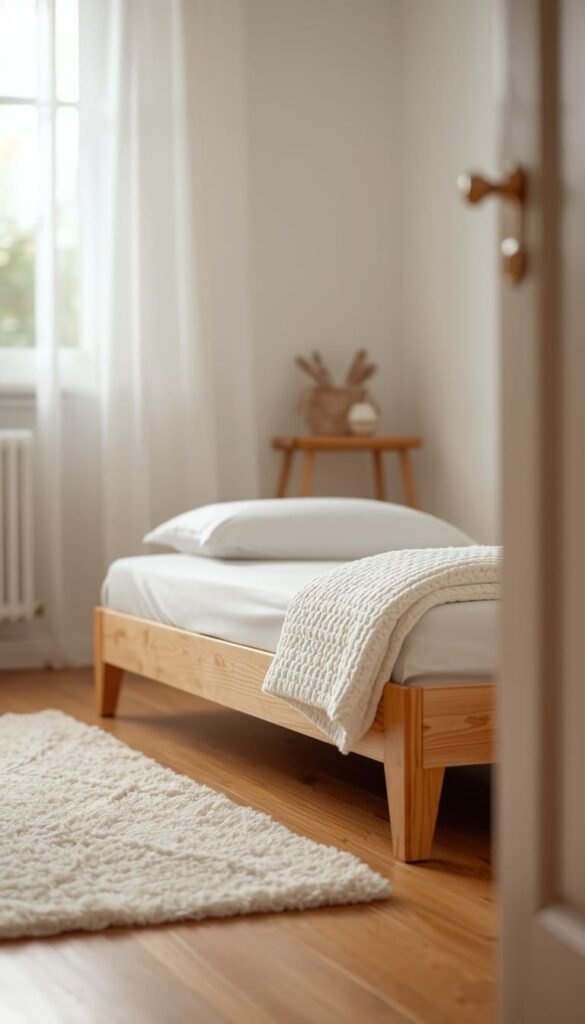
There’s a reason Montessori-inspired design has taken over American nurseries and toddler rooms the floor bed concept is genuinely brilliant. A low platform bed or a mattress set directly on the floor does three things at once: it keeps the room visually open, it’s safer for young children, and it creates that calm, grounded energy that minimalist spaces are known for.
For toddlers, I always recommend starting with just the mattress on the floor. Once they’re past the rolling-off stage, a simple low-profile frame like the IKEA TARVA (under $200) adds just enough structure without visual bulk. The room suddenly feels twice as large.
One thing to watch out for: floor beds and wall-to-wall carpet don’t always mix well in humid climates. If you’re in Florida or Houston, make sure there’s adequate airflow under the mattress to prevent mold. A slatted frame solves this completely.
3. Invest in One Quality Rug Everything Else Follows
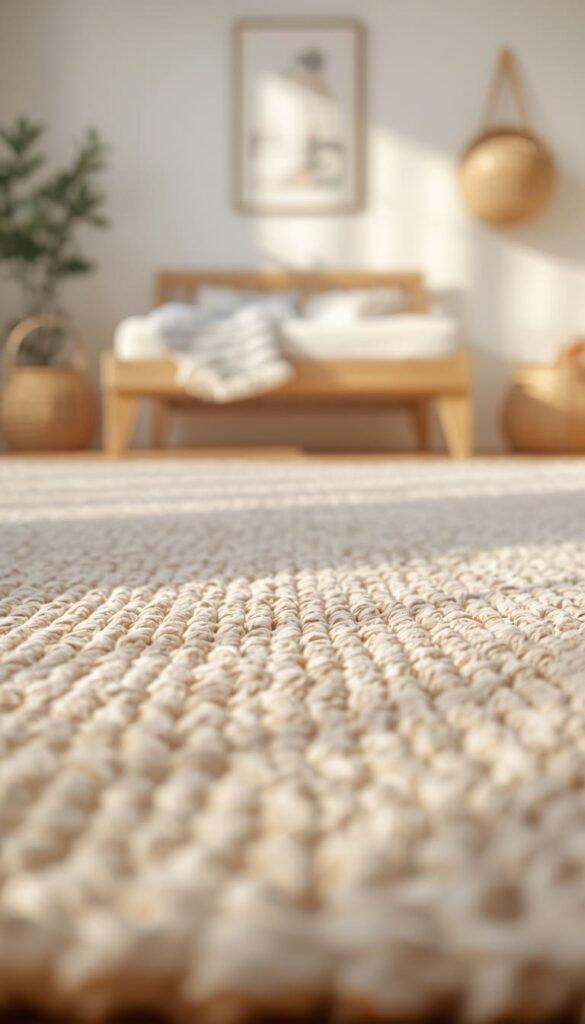
If there’s one thing I tell every single parent I work with, it’s this: the rug makes or breaks a minimalist kids room. A good rug grounds the space, absorbs sound (which is huge in rooms above a living area), and adds that layer of warmth and texture that keeps a simple room from feeling cold or sterile.
Here’s my honest take on the two most popular options in the US market right now:
- Ruggable machine washable, great patterns, holds up reasonably well. The two-piece system feels slightly less luxurious underfoot but the washability factor is a genuine lifesaver.
- IKEA STOENSE affordable, soft, and low-pile enough to work under rolling desk chairs. Not washable, but easy to spot clean and very budget-friendly.
Go bigger than you think you need. A rug that’s too small makes a room feel choppy and unfinished. In a standard 10×12 kids room, I typically recommend a 8×10 rug minimum.
4. The White and Wood Formula Why It Always Works
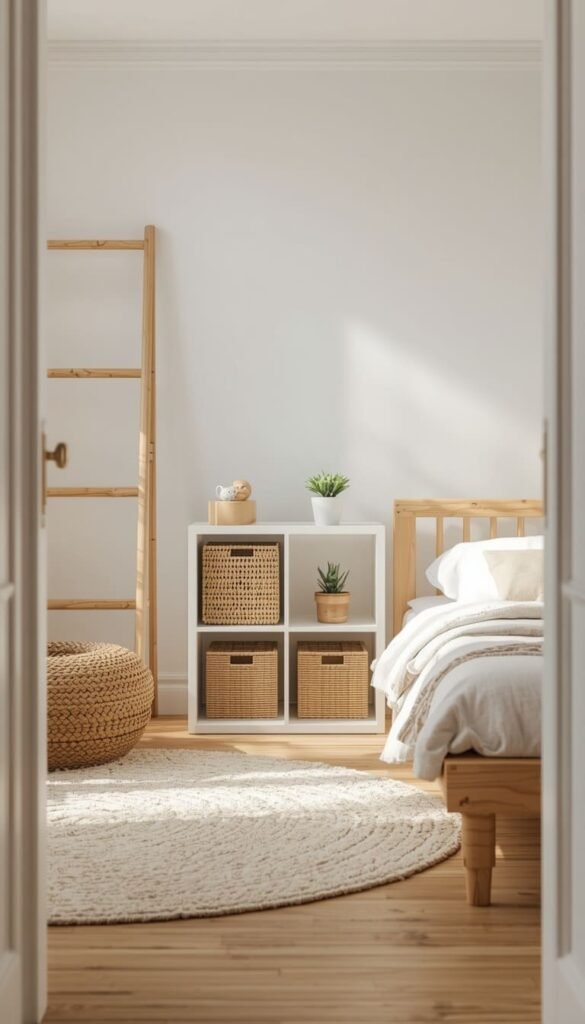
Walk into any well-designed minimalist kids bedroom on Pinterest or in an interior design magazine and I’d bet good money you’re looking at some combination of white walls and natural wood tones. This isn’t a coincidence it’s a formula that works because it’s rooted in how our eyes process warmth and calm simultaneously.
White keeps the space bright and visually expansive. Wood whether it’s a pine bed frame, a birch shelf, or even just a few rattan baskets brings in the organic warmth that stops a room from feeling like a hospital. Together, they create a space that feels collected and intentional rather than decorated on a Sunday afternoon in a panic.
The best part? This combination is incredibly budget-friendly to execute. IKEA, Target’s Hearth & Hand line, and even Walmart’s Better Homes & Gardens range all do white-and-wood beautifully at accessible price points. You genuinely do not need to spend a fortune here.
5. Natural Light as Your Secret Weapon
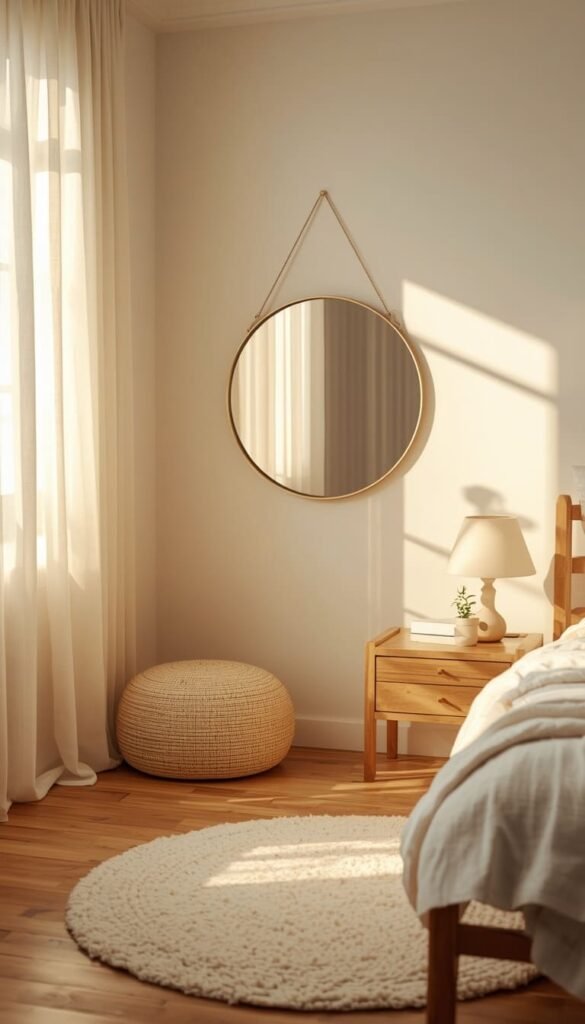
Honestly, no design decision you make will have a bigger impact on how a minimalist kids room feels than the light in it. Natural light makes neutral colors sing, makes small rooms feel generous, and creates that airy, open quality that every minimalist space needs. Before you buy a single piece of furniture, stand in the room at different times of day and just observe how the light moves.
For windows, swap out heavy drapes for sheer white or linen-look curtains. They filter light beautifully without blocking it, and they photograph like a dream if you’re the type to document your home on Instagram. One thing to watch out for is cheap white sheers they yellow surprisingly fast with sun exposure. Spend just a little more on a linen-cotton blend and they’ll last for years.
A quick trick I’ve used in darker rooms: place a medium-sized mirror directly across from the window. It bounces light back into the space and genuinely makes a 10×10 room feel closer to a 12×12. Simple, free if you already own a mirror, and surprisingly effective.
Are you starting from scratch with your child’s room or trying to simplify a space that’s already overflowing and what feels like the biggest hurdle right now?
6. Under Bed Storage Done Right The Hidden Workhorse
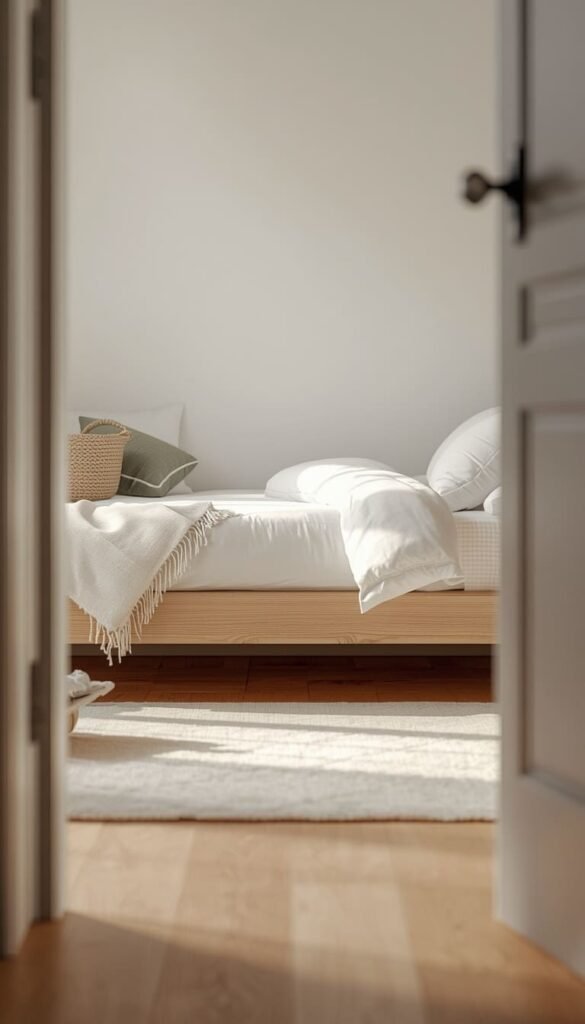
In a minimalist kids bedroom, the space under the bed is prime real estate. Done well, it keeps the floor clear, the closet manageable, and the overall room looking clean and intentional. Done poorly, it becomes a black hole where toys, socks, and approximately forty-seven hair ties go to disappear forever.
The key is using flat, lidded bins with wheels not open baskets that collect dust and become impossible to sort through. I love the IKEA SKUBB boxes for seasonal clothing and the Sterilite flat storage bins for larger toys and art supplies. Label everything. Seriously, label everything. Kids are far more likely to put things away when they can see exactly where things belong.
One honest reality check: under-bed storage only stays minimalist if you edit regularly. Every three months or so, pull everything out and reassess. What your six-year-old needed in January is rarely what they need in September.
Top 6 Minimalist Kids Bedroom Ideas:
| Idea | Estimated Price | Maintenance |
|---|---|---|
| Neutral Base Wall Paint | $40 — $180 | Low |
| Low Platform or Floor Bed | $150 — $400 | Low |
| Quality Washable Rug | $79 — $250 | Medium |
| White and Wood Furniture Formula | $200 — $600 | Low |
| Cube Shelf Storage System | $60 — $180 | Medium |
| Under Bed Storage Bins | $25 — $80 | Low |
7. Open Shelving vs Closed Cabinets The Honest Breakdown
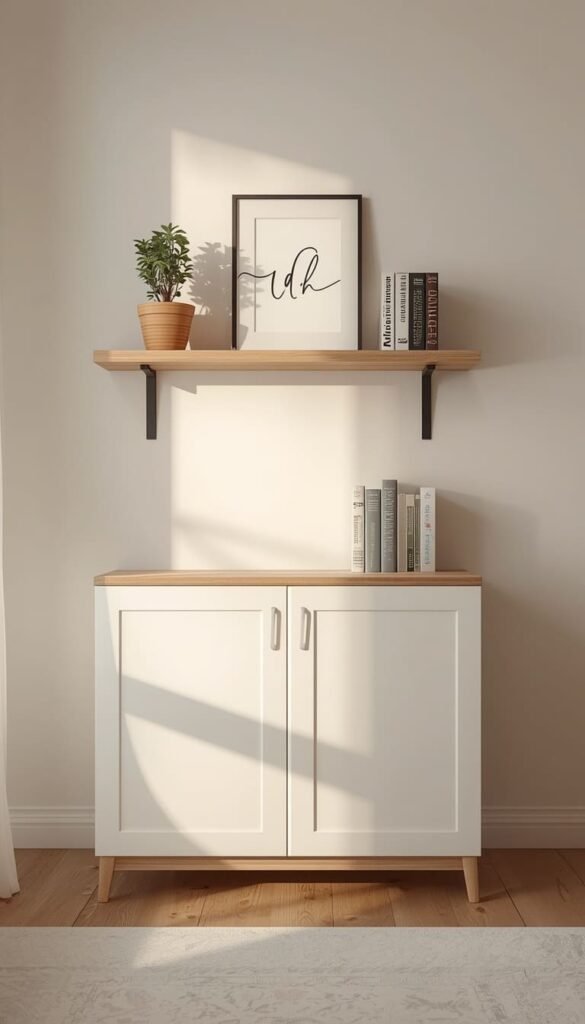
Here’s the truth nobody in the design world wants to say out loud: open shelving in a kids room looks incredible in photos and absolutely chaotic in real life approximately four days after you set it up. I’ve staged beautiful open shelf displays in children’s rooms that were completely dismantled by Wednesday.
That doesn’t mean avoid open shelves it means be strategic about them:
- Use the top two shelves for curated display items your child can’t easily reach framed art, a plant, a small lamp.
- Reserve the lower shelves for bins and baskets that contain the chaos rather than display it.
- Closed cabinet doors below and open styled shelves above is genuinely the sweet spot for most families.
If your child is under five, I’d lean heavily toward closed storage with simple magnetic latches. The visual calm it creates is worth every penny of a basic cabinet door.
8. The Cube Shelf System Most Versatile Buy in a Kids Room
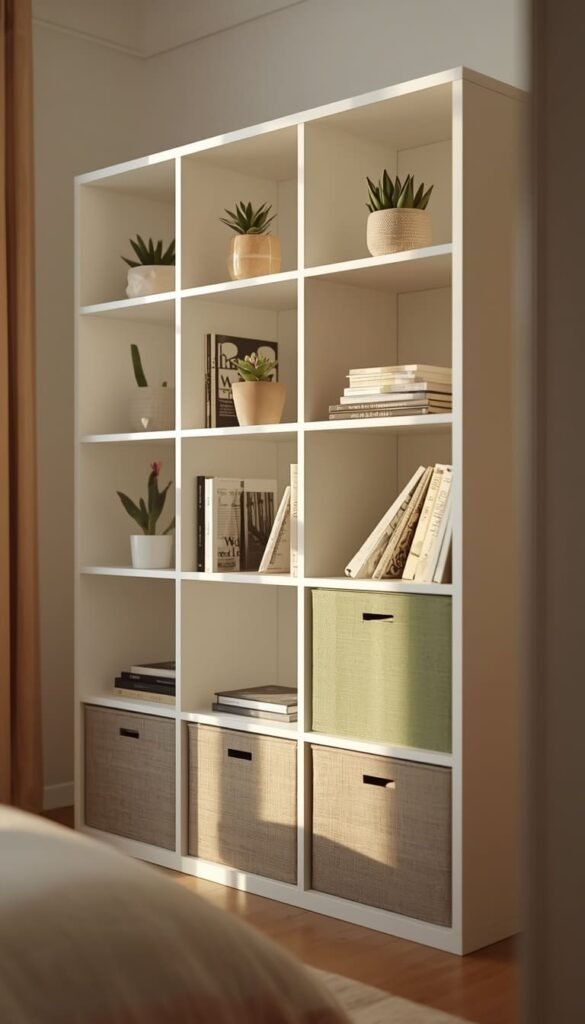
If I had to recommend exactly one furniture piece for a minimalist kids bedroom, it would be a cube shelf system without hesitation. The IKEA KALLAX is the obvious frontrunner here and for very good reason it’s sturdy, modular, affordable, and genuinely one of the most functional pieces of furniture ever designed for a family home.
What makes it work so beautifully in a minimalist kids room is its flexibility. Use it as a room divider in a shared bedroom. Turn it sideways and add a cushion on top for a window seat with hidden storage. Mix open cubes with fabric drawer inserts so half the contents are displayed and half are hidden. The visual weight stays low and the storage capacity is enormous.
A quick trick I’ve learned: stick to a maximum of two insert colors in a KALLAX. Three or more colors starts to feel busy and defeats the minimalist purpose entirely. White inserts plus one accent color sage, terracotta, navy is the sweet spot every single time.
9. Wall Mounted Storage That Saves Floor Space
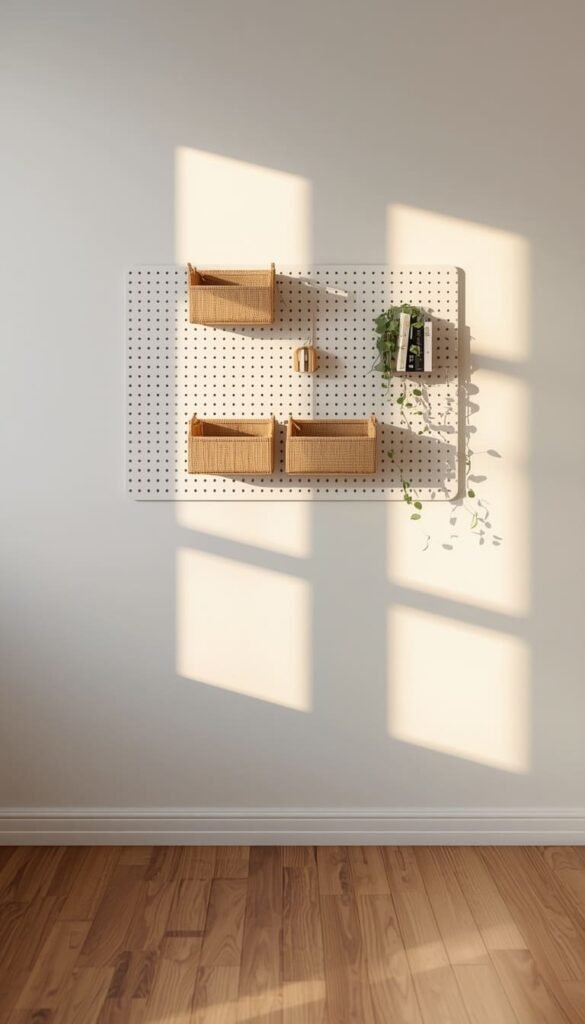
In a small kids bedroom, the floor is the most valuable real estate you have. Every toy bin, bookcase, and storage ottoman sitting on the floor is eating into the space where your child actually plays, moves, and exists. This is exactly why wall mounted storage is one of the smartest investments you can make in a minimalist kids room it moves the storage up and gives the floor back to your child.
Floating shelves work beautifully for books, small plants, and a few curated display pieces. A wall mounted pegboard (the IKEA SKÅDIS is excellent and very affordable) gives kids a visual home for art supplies, headphones, and small accessories without a single drawer or bin cluttering the floor. Wall nets and hanging canvas organizers are great for stuffed animals one thing to watch out for is overloading them. A wall net crammed with forty stuffed animals looks just as chaotic as a pile on the floor.
For placement, I follow a simple rule: anything your child uses daily goes at their eye level. Everything else goes higher. It sounds obvious but most parents mount everything at adult height and then wonder why their kids never put things away independently.
10. The One In One Out Basket System
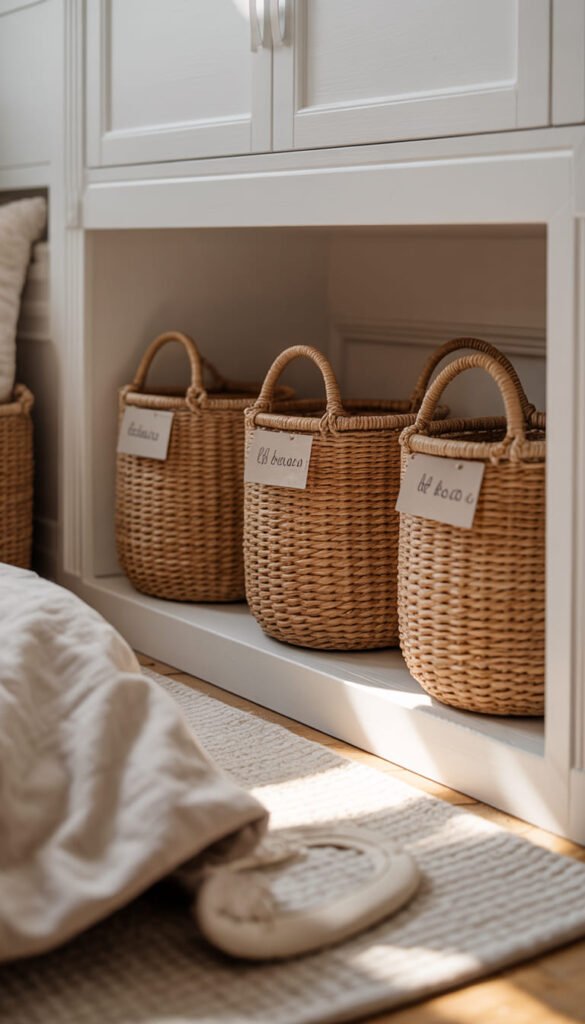
This is less of a decorating idea and more of a life changing household policy and honestly, it belongs in every minimalist kids bedroom guide ever written. The concept is simple: every toy category gets one designated basket or bin. When that bin is full and your child wants something new, something existing has to leave. No exceptions, no negotiations, no “but I’ll clean my room I promise.”
What I love about this system is that it puts the ownership entirely on the child rather than the parent. You’re not the toy police anymore. The basket is. I introduced this exact framework in a project I worked on in Nashville last year a seven year old’s bedroom that had genuinely become a storage unit with a bed in it. Within a month of implementing the one in one out rule, the mom reported that her daughter had started making her own decisions about what mattered to her and what didn’t. That’s a life skill, not just a tidying habit.
Keep the baskets themselves simple and consistent:
- Natural rattan or seagrass baskets for a warm, cohesive look
- All the same size where possible so the room feels intentional
- Labels with pictures for toddlers, word labels for older kids
11. Scandinavian Kids Bedroom Style How to Nail It in the USA
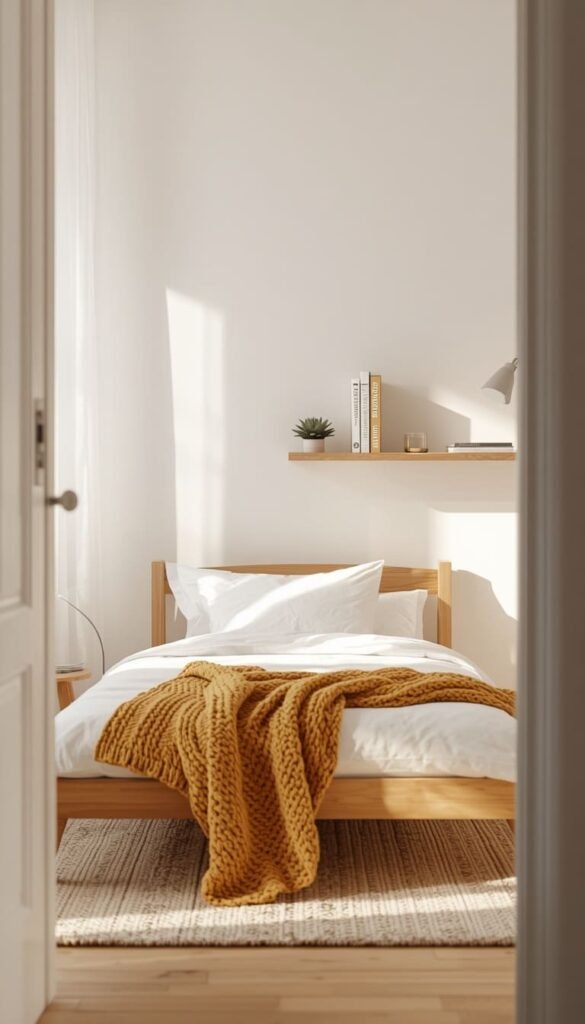
Scandinavian design has been having a long, well deserved moment in American homes and kids bedrooms are where it translates most naturally. The Scandi approach to a child’s room is built around the idea that simplicity and warmth can coexist clean lines without coldness, minimal clutter without sterility. It’s the exact opposite of the maximalist, theme-heavy kids rooms that dominated American design in the early 2000s.
To get the look right in a US home, focus on these core elements: natural wood tones, soft textiles in muted colors, a low bed frame, and deliberate negative space. That last one negative space, meaning empty wall and floor areas left intentionally bare is the part most American parents struggle with because it feels unfinished. It isn’t. It’s the whole point. Empty space in a Scandinavian kids room is breathing room, and children genuinely thrive in it.
A quick trick I’ve learned: if the room feels too sparse and you’re second guessing yourself, add one chunky knit throw blanket to the bed and one small potted plant to a shelf. That’s usually all the warmth the space needs before it clicks into place perfectly.
Which of these 22 ideas feels most doable for your child’s bedroom this weekend the neutral base, the cube shelf system, or something else that caught your eye?
12. Gender Neutral Color Palettes That Actually Look Chic
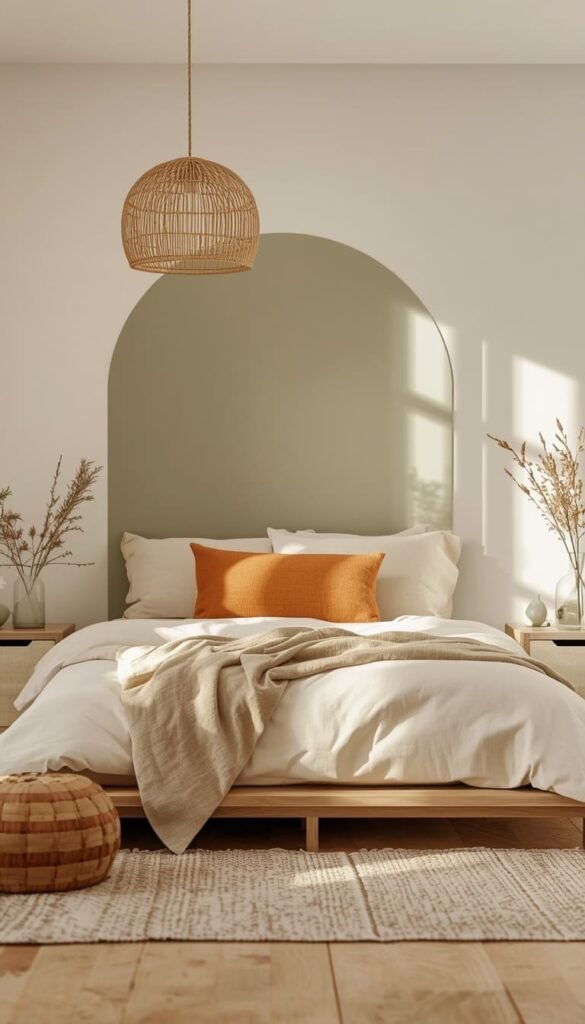
The gender neutral kids bedroom trend has moved so far beyond “just paint everything gray” and I am here for it. Today’s most beautiful gender neutral kids rooms in the US are working with color palettes that feel warm, considered, and genuinely stylish not like a compromise between pink and blue that resulted in something nobody actually wanted.
My current favorite palettes for gender neutral minimalist kids rooms:
- Warm sage green with natural wood and cream : earthy, calm, and works equally well for a toddler and a ten year old
- Terracotta with white walls and linen bedding : feels southwestern and modern, ages beautifully
- Warm charcoal with mustard yellow accents : slightly bolder but still clean and incredibly chic for a school age child’s room
One thing to watch out for with gender neutral spaces: “neutral” doesn’t have to mean colorless. The goal is simply to choose colors that aren’t culturally coded as exclusively masculine or feminine. Dusty blue, warm olive, and burnt orange all qualify and they all look significantly more interesting than beige.
13. The Power of a Single Accent Wall Without Wallpaper Costs
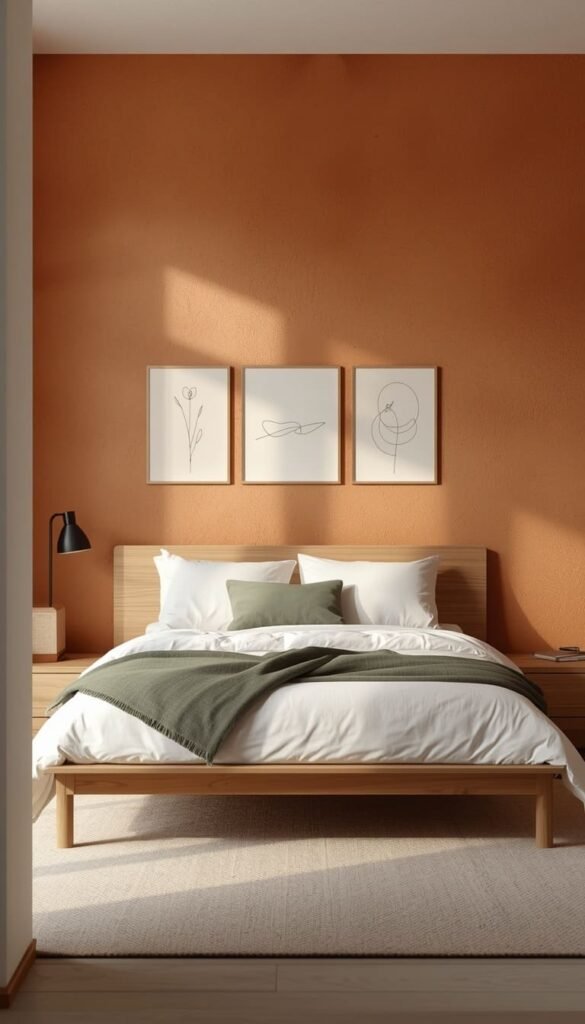
A full wallpaper installation in a kids bedroom can run anywhere from $400 to $1,200 once you factor in materials and labor and that’s before you account for the fact that your child will want something completely different by the time they turn nine. The good news is that a single accent wall can deliver the exact same visual impact at a fraction of the cost, and there are several approaches I genuinely love recommending to clients across every budget level.
Peel and stick wallpaper has come an incredibly long way in the last three years. Brands like Tempaper and Chasing Paper offer designs that look genuinely high-end, go up in an afternoon, and come down cleanly when your child inevitably pivots from jungle animals to basketball. For a 8×8 accent wall you’re typically looking at $80 to $150 total. Limewash paint is another beautiful option it creates a soft, organic texture that feels collected and artisanal rather than flat, and a single wall costs about $40 in materials plus an afternoon of your time.
DIY board and batten is my personal favorite for a kids room with longevity in mind. It adds architectural interest, photographs beautifully, and genuinely increases the perceived value of the space. Total material cost for an average wall sits around $60 to $90 at Home Depot or Lowe’s.
14. Textiles Are Everything Bedding Curtains and Rugs as Your Color Story
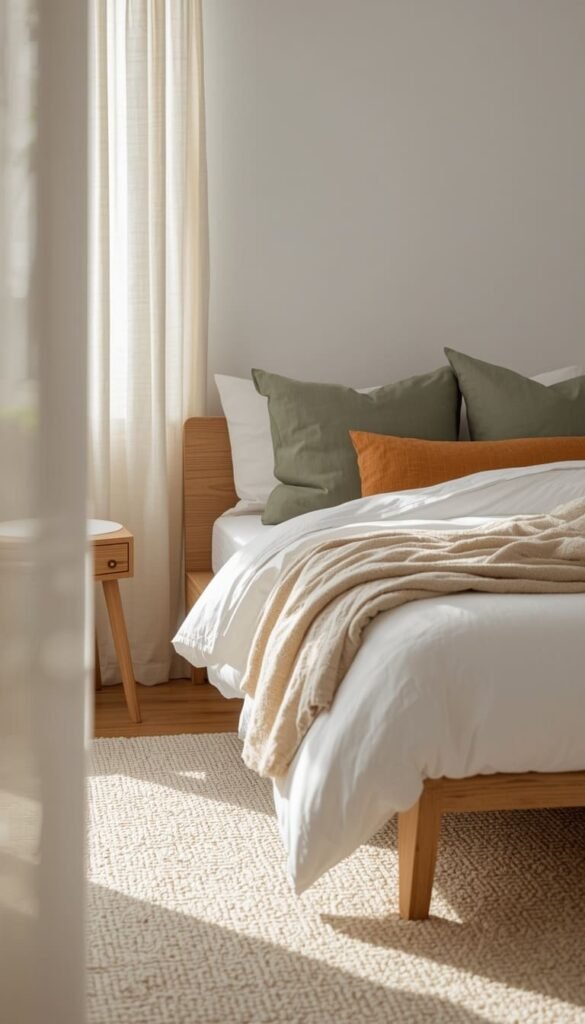
In a minimalist kids bedroom, your textiles are doing the heavy lifting that paint and furniture simply cannot. They’re the softest, most affordable, and most easily changed elements in the room which makes them the perfect place to introduce color, warmth, and personality without any long term commitment. I always tell my clients: if you’re nervous about color, put it in the textiles first.
The key to making textiles work in a minimalist space is the rule of three textures maximum. Choose one smooth texture, one slightly nubby or woven texture, and one soft or fluffy texture and stop there. For example: crisp cotton bedding, a chunky knit throw, and a low pile wool rug. Those three together create richness and depth without visual noise.
A quick trick I’ve learned: keep your largest textile almost always the bedding in a neutral or muted tone and let your smallest textile carry the color. A white duvet with sage green euro shams and a terracotta lumbar pillow tells a complete color story without overwhelming a small room. It also means swapping the whole look for the next season costs about $18 in new throw pillows rather than an entirely new bedding set.
15. Minimalist Wall Art That Grows With Your Child
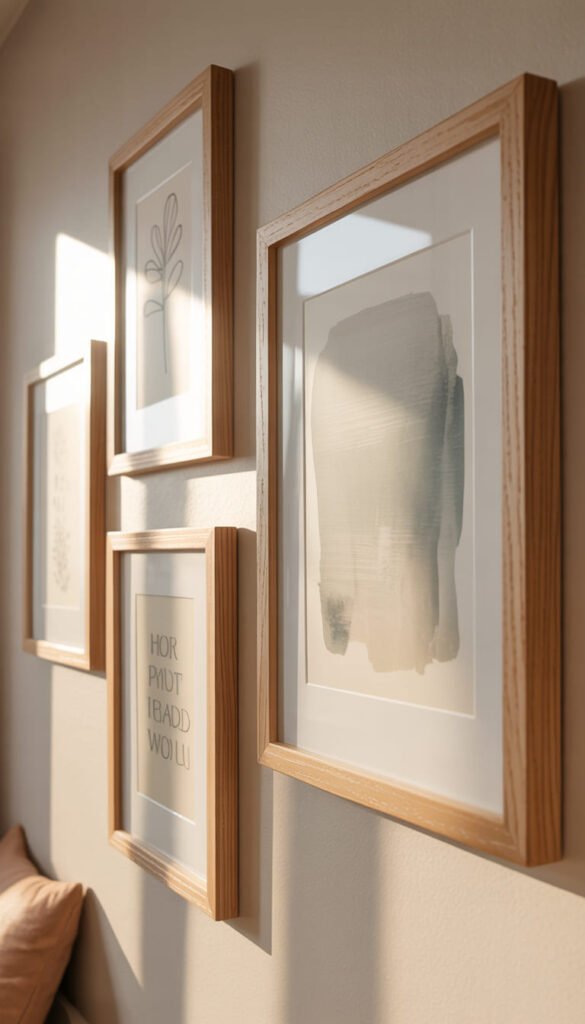
Wall art in a kids bedroom is one of those areas where parents consistently over invest early and under-think longevity. I’ve walked into rooms where every inch of wall space was covered in character-licensed prints, framed baby photos, and novelty signs and the child was six. By ten, the whole thing needed replacing and the parents were exhausted just thinking about it.
The minimalist approach to kids room wall art is straightforward: choose fewer pieces, choose them thoughtfully, and choose things that have enough visual staying power to age alongside your child. Simple black and white line art, abstract prints in the room’s accent color, nature illustrations, and typographic prints with meaningful words all fit this brief beautifully.
Here’s what actually works by format:
- Framed prints from Etsy: affordable, customizable, and infinitely replaceable as tastes change
- Your child’s own artwork: framed properly, a child’s drawing looks genuinely beautiful and means everything to them
- One larger statement piece: rather than a gallery wall of eight small prints, one 18×24 print makes a far stronger and more sophisticated visual impact
One thing to watch out for: gallery walls are stunning in design magazines and genuinely difficult to maintain in a real kids room. Bumped frames, missing nails, and faded prints happen fast. If you love the gallery wall look, limit it to three to five pieces maximum and use adhesive strips rather than nails for easy adjustment.
16. Minimalist Bunk Bed Room Style It Without the Chaos
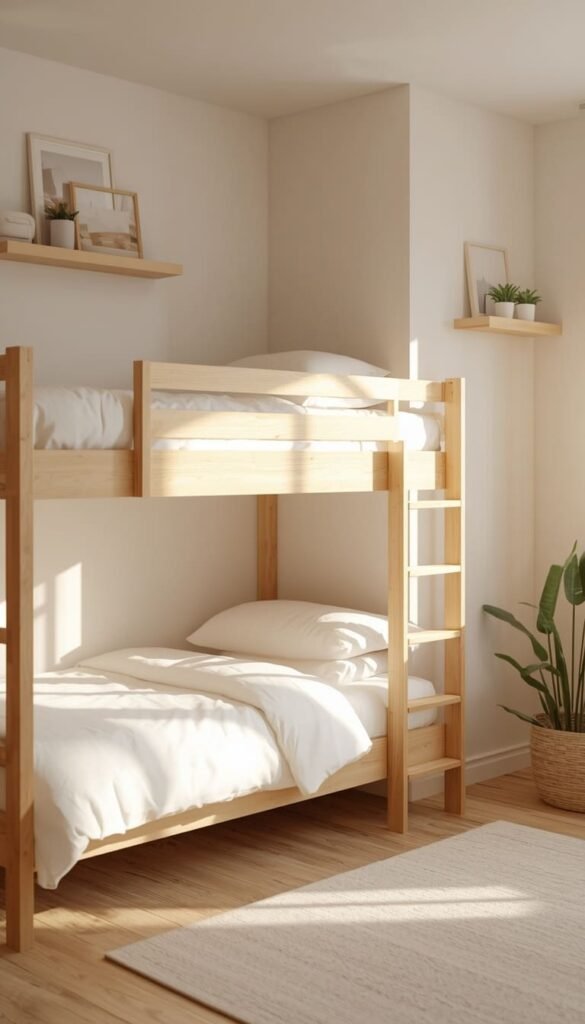
Bunk bed rooms have a reputation for feeling cramped, chaotic, and impossible to style and in my experience, that reputation is about 70% deserved. When you put two beds on top of each other and add two children’s worth of belongings to a single room, the minimalist dream can feel very far away. But I’ve styled enough bunk rooms across the US to know it’s absolutely achievable with the right approach.
The single most important thing you can do in a minimalist bunk bed room is treat the beds themselves as the design anchor and keep everything else extremely simple. Choose a bunk bed in natural wood or matte white, dress both bunks in matching or tonal bedding, and resist the urge to add curtains, string lights, canopies, and personalized name signs to every available surface. Each addition feels small individually. Together they create visual mayhem.
Storage in a bunk room needs to be almost entirely vertical and hidden:
- Built in drawers under the bottom bunk handle clothing beautifully
- A single tall narrow bookcase between the bunks or against an adjacent wall keeps books and small items contained
- Individual small wall mounted shelves at each child’s eye level give each kid their own defined personal space without doubling the furniture footprint
Is your child’s bedroom currently more “organized chaos” or full-on toy explosion and what’s the one thing you wish you could fix about it first?
17.Small Kids Bedroom Ideas Specific Hacks for Tight Spaces
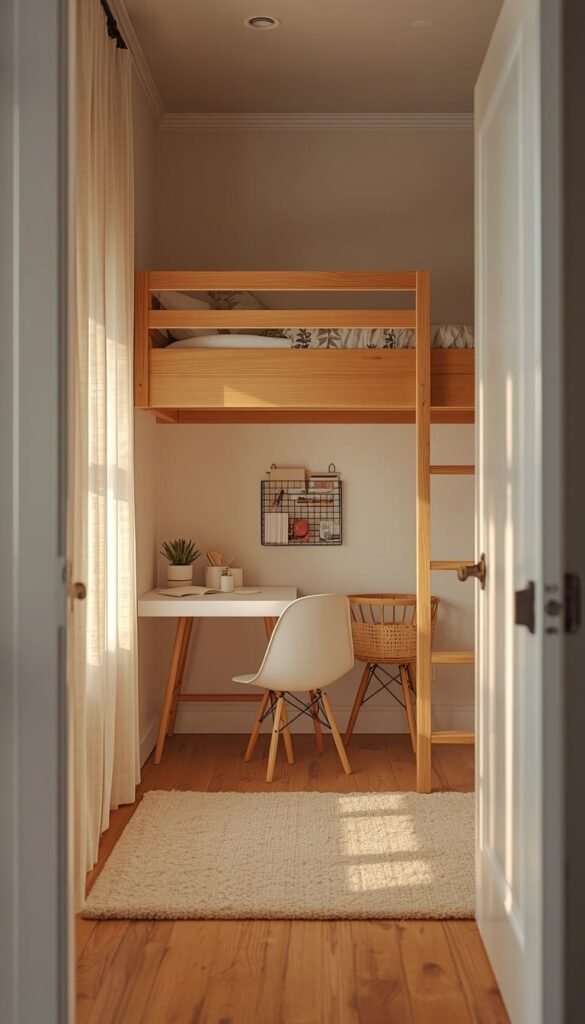
A small kids bedroom doesn’t have to feel small. I’ve worked in rooms as compact as 9×10 feet that ended up feeling genuinely generous once we applied the right spatial thinking and the secret is almost never buying smaller furniture. Counterintuitively, tiny furniture in a small room actually makes the space feel more cramped, not less. One well-proportioned bed, one properly sized rug, and smart vertical storage will always outperform a room stuffed with miniature pieces.
The loft bed is the single greatest space saving tool available in a small kids bedroom. Elevating the sleeping area frees up the entire floor footprint beneath it for a desk, a reading nook, or a small play area. For a school age child in a room under 120 square feet, a loft bed with a built-in desk underneath is genuinely life-changing. IKEA’s KURA and STUVA loft systems are excellent entry points and both come in well under $400.
A few more hacks that consistently work in tight spaces:
- Mount the desk to the wall instead of using a freestanding one you recover about 8 inches of floor depth and the room immediately feels more open
- Use the back of the door for hooks, an over-door organizer, or a small mirror it’s completely unused real estate in most kids rooms
- Choose furniture with legs rather than pieces that sit directly on the floor the visible floor space underneath creates the illusion of a larger room instantly
18. Minimalist Toddler Room Ideas Safe Simple and Sensory Smart
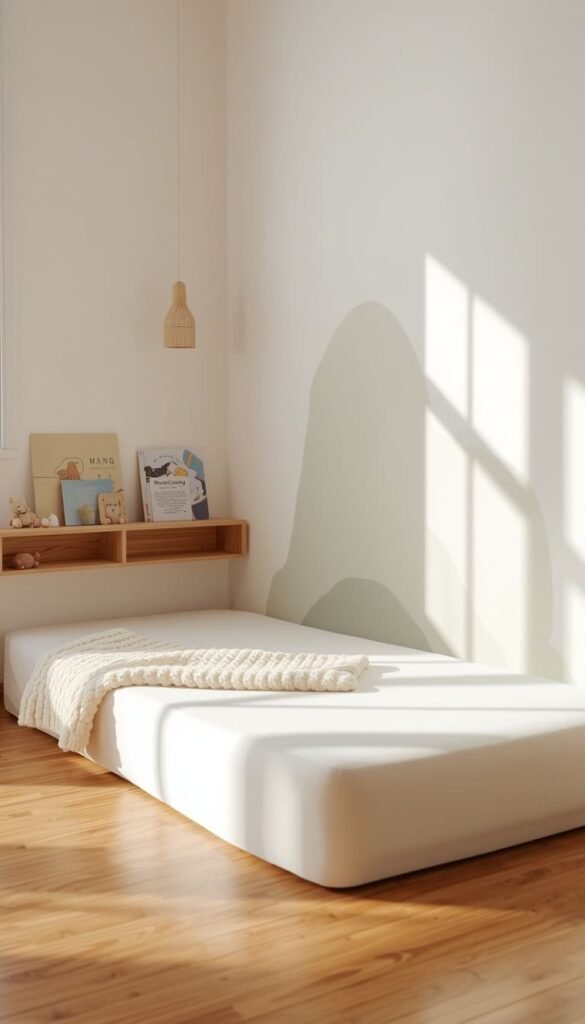
Designing a minimalist room for a toddler is one of my favorite projects because the constraints are actually incredibly clarifying. Toddlers need safety, independence, and sensory calm above everything else and those three requirements naturally push you toward a simpler, more intentional space. You’re not sacrificing style for practicality here. The two genuinely align.
The Montessori-influenced floor bed setup I mentioned earlier is the foundation of every minimalist toddler room I design. Pair it with a low open shelf at the child’s height not a towering bookcase they can’t access independently stocked with a small rotating selection of toys and books. The rotation piece is important. Keep the majority of toys in a closet and swap out a small selection every two to three weeks. Toddlers engage more deeply with fewer options and the room stays visually calm because there’s simply less stuff visible at any given time.
One thing to watch out for with toddler rooms specifically: soft, muted color palettes that look beautiful to adult eyes can occasionally feel understimulating for very young children who are still developing visual processing. A simple fix is adding one area of gentle visual interest a single wall with a naturethemed peel and stick mural, a mobile above the reading corner, or a small gallery of simple bold prints at the child’s eye level. It gives their developing eyes something to explore without overwhelming the overall calm of the space.
19. Minimalist Nursery Ideas Calm From Day One
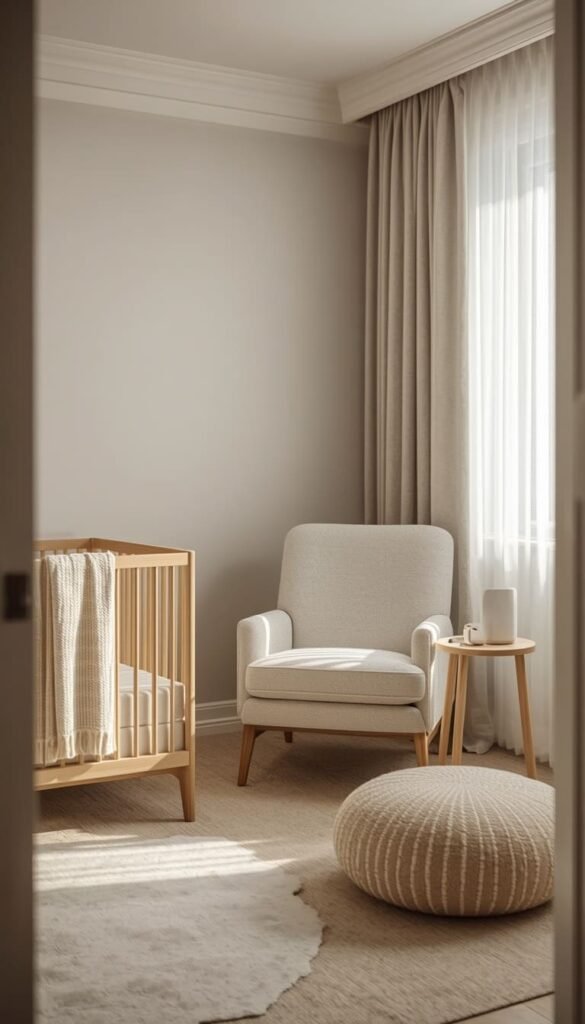
I want to be very direct with you here because the baby industry in the United States is extraordinarily good at convincing new parents that they need an enormous amount of stuff before their baby arrives. You don’t. The minimalist nursery is not a compromise it is genuinely the better option for your baby, your budget, and your sanity during those early months when the last thing you need is a cluttered, overstimulating room to navigate at 3am.
The five things a minimalist nursery actually needs are a safe sleep surface, a feeding chair, a dresser or small closet system for clothing, a white noise machine, and blackout curtains. That’s the complete functional list. Everything else the themed wall decals, the decorative mobiles, the coordinating hamper and tissue box cover is for the parents, not the baby.
For styling a minimalist nursery beautifully within that framework:
- Keep the crib or bassinet in natural wood or white: it becomes the visual anchor of the room and both finishes stay timeless as the space evolves
- Choose a nursing chair in a neutral upholstery: boucle, linen, or a soft gray performance fabric all hold up to the inevitable spills while looking genuinely elegant
- Add warmth through a single textile layer: a knitted blanket draped over the chair arm and a soft rug underfoot is all the coziness the room needs
A quick trick I’ve learned: design the nursery to work as a toddler room with minimal changes. If your crib converts to a toddler bed and your dresser doubles as a changing table, you’ve already bought yourself three to four years without a room overhaul.
20. Shared Kids Bedroom Minimalism When There Are Two of Everything
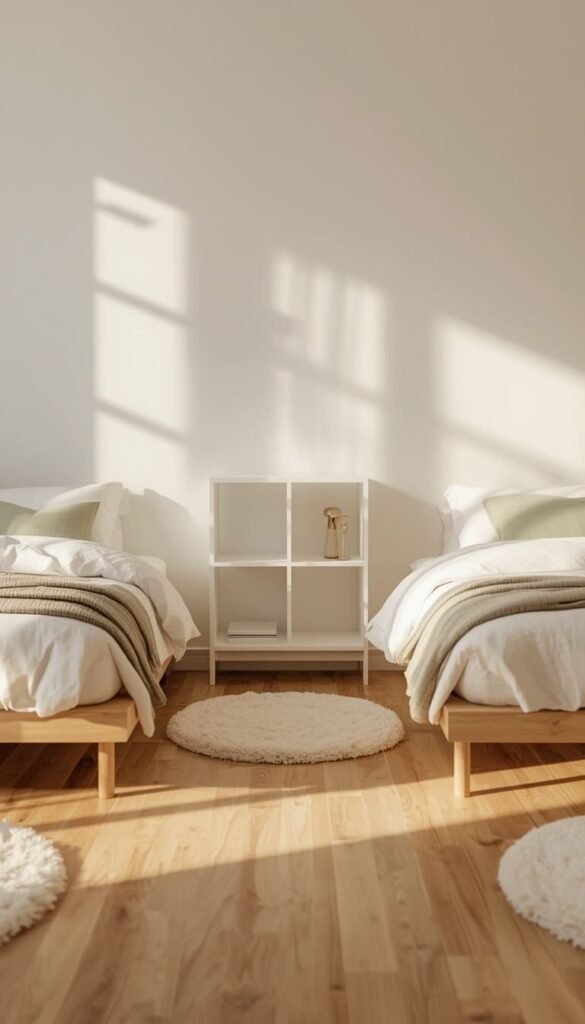
Shared kids bedrooms are one of the most common design challenges I encounter working with American families and one of the most consistently mishandled. The default approach most parents take is to simply divide the room down the middle and decorate each half according to each child’s preferences. The result is almost always a room that feels visually chaotic, territorially tense, and impossible to photograph without something clashing in the background.
The minimalist approach to a shared kids bedroom starts with a unified color palette for the room as a whole, then creates individual identity through smaller, contained personal touches. Both beds get the same or tonal bedding. Both sides of the room use the same flooring, the same wall color, and ideally the same or matching furniture. Individuality comes through each child’s personal shelf, their own small wall art selection, and their designated storage bins in their preferred accent color.
Zoning is everything in a shared minimalist bedroom. A cube shelf placed perpendicular to the wall creates a natural visual divider without requiring a physical partition. A small rug on each side of the room same style, different colorway defines each child’s territory gently and beautifully. What I love about this approach is that it teaches children something genuinely valuable: how to share a space graciously while still maintaining a sense of personal identity within it.
21. Budget Breakdown Minimalist Kids Room at $300 $700 and $1500
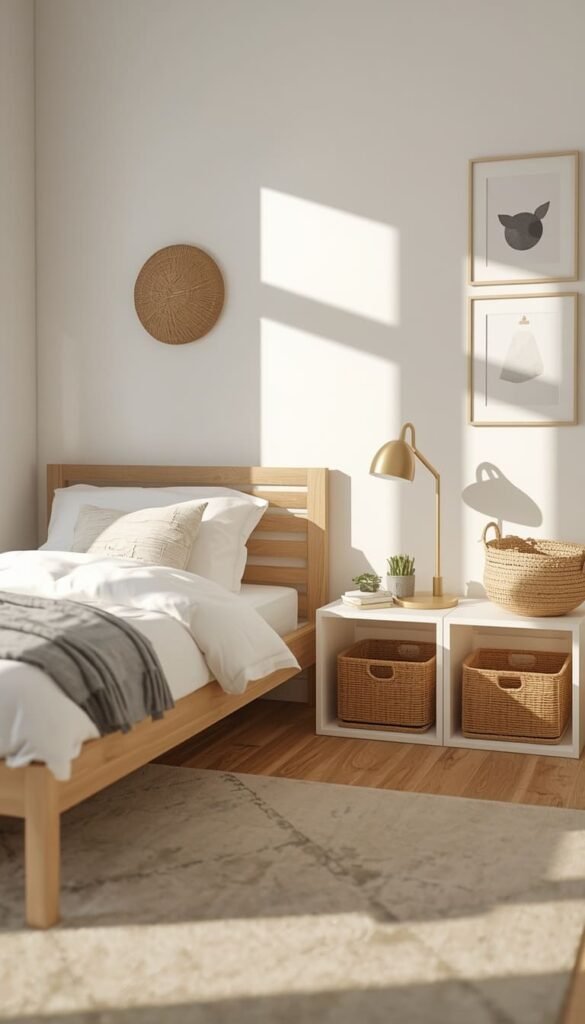
One of the things I find most frustrating about kids bedroom content online is how rarely anyone talks about actual numbers. Beautiful room, gorgeous styling, zero mention of what anything costs. I’m going to fix that right now because budget is real, budgets vary enormously across American households, and a minimalist kids bedroom is genuinely achievable at almost every price point if you know where to spend and where to save.
The $300 Room Smart Basics Done Well
This is the IKEA and Target budget and it works beautifully if you’re strategic. At this level, prioritize the mattress and the rug above everything else those two elements have the most direct impact on how the room feels daily. A IKEA MINNESUND mattress, a Target threshold rug, and a secondhand dresser from Facebook Marketplace dressed up with new hardware can create a genuinely lovely minimalist space. Paint one wall with a sample pot in a warm neutral, frame three pieces of your child’s own artwork, and call it done. The room will look intentional, calm, and styled.
The $700 Room Where Quality Starts to Show
At this budget you can invest in one or two pieces that will genuinely last. A IKEA TARVA bed frame, a Ruggable rug in a size that properly anchors the space, the KALLAX cube shelf with a handful of fabric inserts, and simple linen curtains from Amazon or IKEA get you most of the way there. Spend the remaining budget on good blackout curtains and a quality pillow two things that directly impact sleep quality and are worth every extra dollar.
The $1500 Room Considered and Complete
Here the focus shifts from functional to finished. At this level I’d invest in:
- A solid wood low platform bed from a brand like Oeuf, Land of Nod, or Pottery Barn Kids
- A quality wool or wool-blend rug that will last through multiple room refreshes
- Custom or semi-custom window treatments that fit the windows properly
- A full KALLAX system with a mix of open cubes and closed inserts
- Three to five pieces of considered wall art rather than a mix of whatever fits
One thing to watch out for at every budget level: Pottery Barn Kids and Restoration Hardware Baby and Child are beautiful but aggressively priced. Most of their aesthetic can be replicated at 40 to 60 percent less cost by combining IKEA structural pieces with thoughtful textile and accessory choices from Target, H&M Home, and Etsy.
White and wood, sage green and linen, or terracotta and cream which minimalist color palette feels most like your family’s style right now?
22. Maintenance Reality Check Keeping It Minimal Long Term
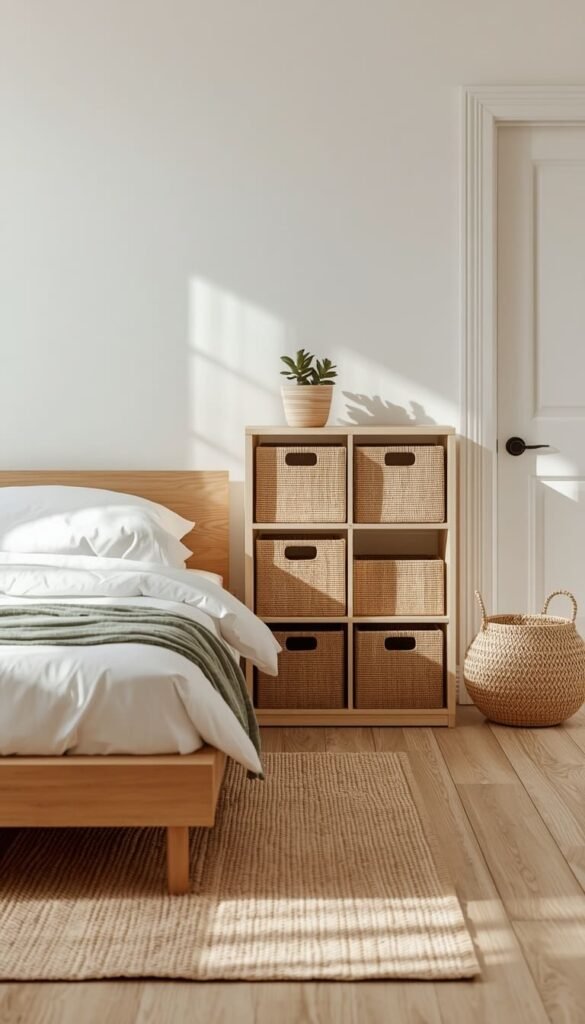
Here’s the part of the minimalist kids bedroom conversation that almost nobody wants to have but every parent desperately needs to hear: the room will not stay minimal on its own. Minimalism in a child’s space is not a one time project. It is an ongoing practice, and if you go into it expecting otherwise you will feel like a failure every time the room devolves back into chaos which it will, regularly, because a child lives there.
The families I’ve worked with who sustain a minimalist kids bedroom most successfully all share one habit: a seasonal reset. Four times a year I usually suggest the first weekend of each new season they go through the room together with their child and remove anything that’s broken, outgrown, unused, or simply taking up space without earning its place. This isn’t a punishment or a dramatic declutter. It’s a gentle, collaborative habit that keeps the room from quietly accumulating the kind of low-grade clutter that builds up invisibly until suddenly the room feels overwhelming again.
A few maintenance habits that genuinely work in real American households:
- The Sunday basket: every Sunday evening, anything left on the floor goes into a single basket. Your child has until Wednesday to retrieve and put away what they want. Whatever remains on Wednesday gets donated. Kids learn fast.
- The one shelf rule: each child gets one shelf that is entirely their own to style however they want, no parental input. Everything else in the room follows the minimalist framework. This compromise preserves their autonomy without sacrificing the overall calm.
- Seasonal clothing rotation: store off-season clothes in flat bins under the bed and swap twice a year. It keeps the closet manageable, makes getting dressed faster, and reduces the visual overwhelm of an overstuffed wardrobe considerably.
The honest truth is that a minimalist kids bedroom gets easier to maintain the longer you practice it. Your child internalizes the system, develops their own sense of what they value, and gradually becomes a genuine partner in keeping the space calm. That Denver family I mentioned at the start of this article? Their daughter is now eight. Her mom told me recently that she declutters her own shelf independently every few months without being asked. That’s the real long-term payoff of starting this early and it’s worth every bit of the effort it takes to get there.
Your 30-Second Styling Decision Map
By Budget
Starter Budget (Under $400)
- Start with neutral wall paint and a floor mattress
- Add one washable rug from IKEA or Target
- Use KALLAX cube shelf for all storage needs
- Frame your child’s own artwork free and genuinely beautiful
- Peel and stick accent wall under $150 total
Investment Budget ($700 and above)
- Solid wood low platform bed from Oeuf or Pottery Barn Kids
- Quality wool blend rug that survives multiple room refreshes
- Full KALLAX system with mixed open and closed inserts
- Linen curtains and proper blackout layer for better sleep
- Three to five considered art pieces instead of a gallery wall scramble
By Lifestyle
Busy Families with Young Kids
- Prioritize washable everything rugs, duvet covers, slipcovers
- One in one out basket system is non-negotiable
- Closed cabinet storage over open shelving every single time
- Seasonal reset habit beats daily tidying battles hands down
Design Intentional Minimalists
- Negative space is your best friend resist filling every corner
- Stick to white and wood as your permanent foundation
- Textiles carry all the color swap seasonally for under $30
- One quality statement piece beats five average ones always
FAQ
What is the most important element in a minimalist kids bedroom?
Honestly, it’s the edit meaning what you remove rather than what you add. Most kids rooms I walk into need subtraction far more than they need new furniture or fresh paint. Start by clearing the floor completely and only bring back what genuinely earns its place.
How do I keep a minimalist kids room looking clean when my child is messy?
Systems beat willpower every single time. The one in one out basket rule, labeled storage bins at your child’s height, and a simple Sunday reset routine will do more for long term tidiness than any amount of organizing products you buy on Amazon.
Can a minimalist kids bedroom still feel fun and playful?
Absolutely and this is the misconception I push back on most often. Minimalism removes clutter, not personality. A sage green accent wall, a teepee in the corner, your child’s own artwork in simple frames, and a basket of their favorite toys creates a space that feels genuinely playful and completely calm at the same time.
What age is best to start a minimalist approach in a kids room?
The earlier the better, but it’s never too late. Toddler rooms are the easiest starting point because young children genuinely thrive with fewer options and simpler environments. That said, I’ve successfully transitioned tween bedrooms to a minimalist framework too the key is involving your child in every decision so they feel ownership rather than loss.
Is a minimalist kids bedroom practical for a shared room?
Yes, and in my experience shared rooms actually benefit most from a minimalist approach. A unified color palette, matching or tonal bedding for both beds, and clearly defined personal zones for each child keeps a shared space feeling calm and intentional rather than chaotic and contested.
What is the biggest mistake parents make when designing a minimalist kids room?
Buying everything new all at once. The most beautiful minimalist kids rooms I’ve designed were built gradually and intentionally one considered piece at a time. Buying in a rush almost always leads to a room full of things that don’t quite work together, which is the opposite of what minimalism is trying to achieve.
Conclusion
Look, you don’t need a renovation budget or a free weekend to start this. You need twenty minutes, a donation bag, and the willingness to clear one surface and see how it feels. That shift alone one cleared shelf, one removed bin, one less thing competing for your child’s attention can change the entire energy of a room in a single afternoon. I’ve watched it happen more times than I can count.
Your child’s bedroom should feel like the calmest, safest, most personal space in your home. Not a storage unit with a bed in it. Start small, trust the process, and don’t wait for the perfect moment to begin because that moment is genuinely right now.
