
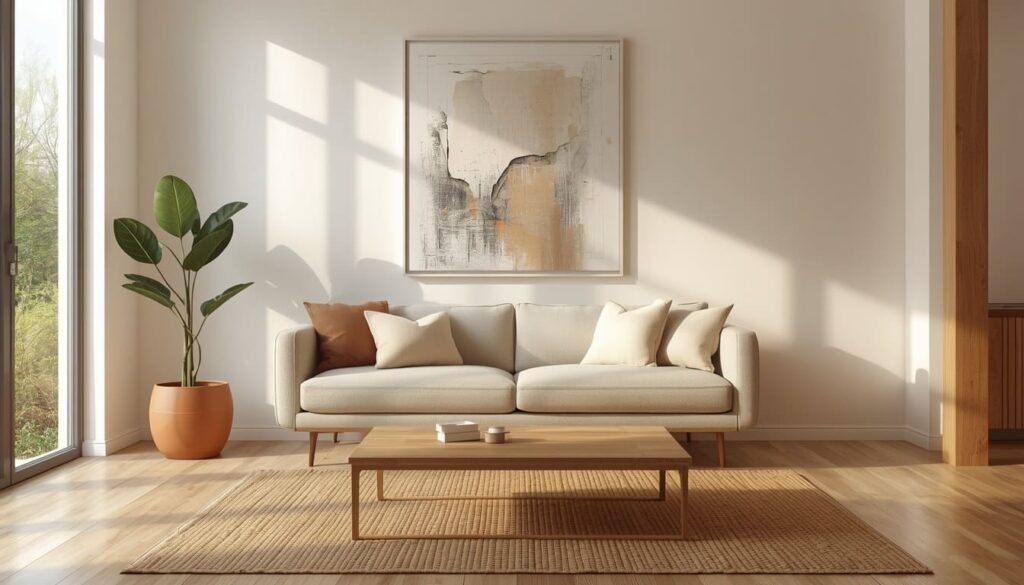
Your living room should feel like a exhale not another thing stressing you out. But somewhere between the throw pillows, the gallery walls, and the “just in case” furniture, most American living rooms quietly become the most cluttered room in the house. Minimalist living room ideas fix exactly that. I’ve helped dozens of homeowners across the US strip their spaces back to what actually matters — and the results are always the same: calmer minds, cleaner aesthetics, and rooms that finally feel intentional. These 22 ideas are the ones I come back to again and again.
My Design Notes
A few years back, I was working with a client in Austin, Texas a busy mom of two with a golden retriever named Biscuit and a living room that had completely gotten away from her. She had 14 throw pillows on one sofa, three overlapping rugs, and a coffee table so covered in “decorative” objects that nobody actually used it. She came to me with a saved Pinterest board and one simple request: “I want it to look like this, but it has to survive real life.” We spent one weekend making decisions together what stays, what goes, what gets repurposed. We kept four core furniture pieces, swapped her ivory shag rug for a durable flat weave vintage style one, and used IKEA KALLAX units dressed up with linen basket inserts to hide the kids’ stuff. I sourced a single large piece of abstract art from a local Austin market for $85. Total refresh spend came to just under $620. The room went from visually exhausting to genuinely calm and three months later, she texted me saying her kids actually clean up after themselves now because, as her seven-year-old put it, “the room looks too pretty to mess up.”
22 Stunning Minimalist Living Room Design Secrets Every American Homeowner Should Know
1. Start With a Strict “3 Piece Rule” for Furniture
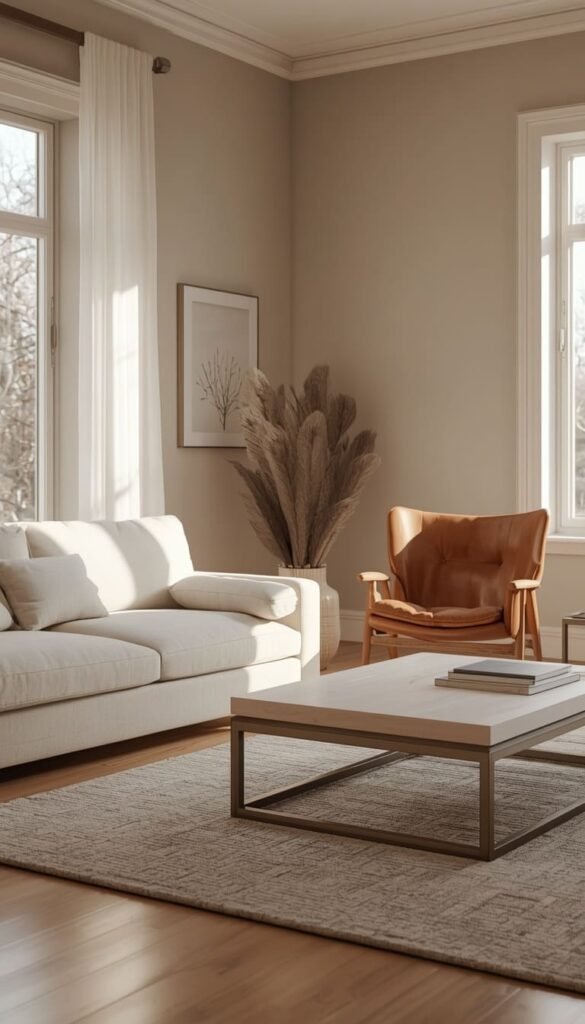
When I walk into a living room that feels overwhelming, the first thing I do is count the furniture pieces. Nine times out of ten, there are too many. The 3 piece rule is simple: anchor your room with a sofa, one accent chair, and one solid coffee table. That’s your foundation. Everything else needs to earn its spot. I’ve seen this single edit completely change the energy of a room and it costs nothing.
One thing to watch out for is the temptation to fill empty corners. In minimalist design, empty space isn’t a problem. It’s actually doing a job. It gives your eye somewhere to rest.
2. Choose a Neutral Base Palette and Stick to It
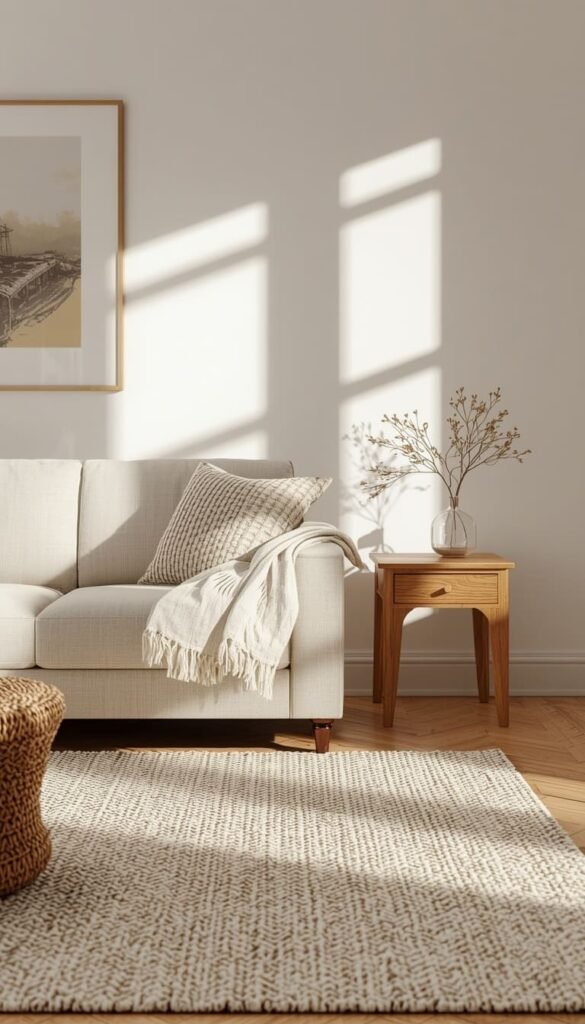
Color commitment is where most people lose the plot. They start with warm white walls, then add a gray sofa, then a beige rug, then a taupe throw and suddenly the room feels muddy instead of calm. Pick one neutral family and stay inside it. Warm neutrals like Benjamin Moore’s White Dove, Sherwin-Williams Accessible Beige, or even a soft greige work beautifully for most American living rooms.
Here’s what actually works when building your palette:
- Walls and large furniture should share the same undertone (warm or cool not both)
- Use texture to create contrast, not more colors
- One deeper accent shade, pulled from nature, keeps it from feeling flat
Budget note you don’t need to repaint the whole room. Sometimes just repainting the trim in a crisp white pulls everything together for under $40.
3. Let Natural Light Do the Heavy Lifting
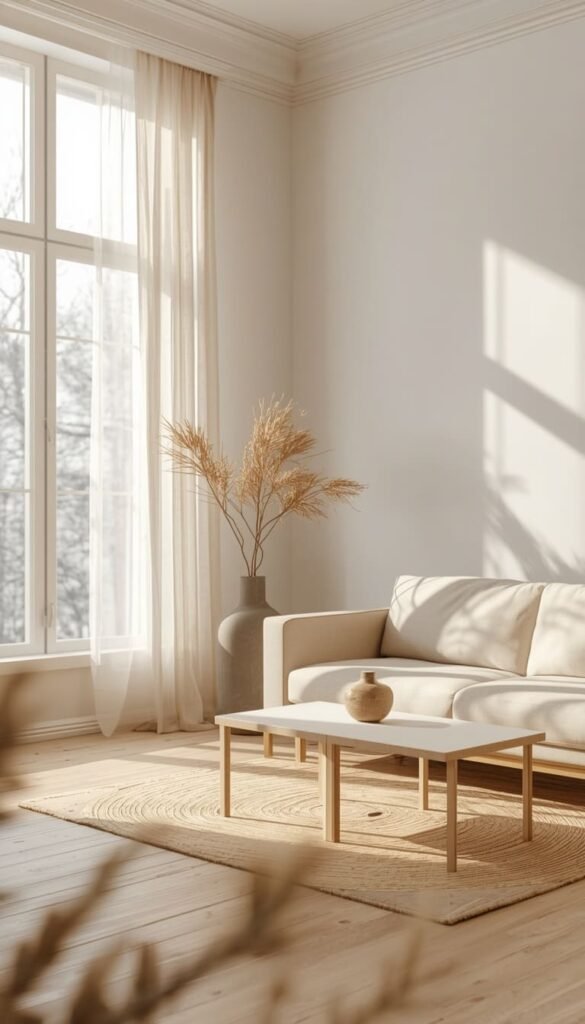
Natural light is the most underrated design element in any minimalist living room. It’s free, it’s beautiful, and it does more for a space than any lamp you’ll find at HomeGoods. My first move with any client is always the windows what’s blocking them, and how do we fix that?
For window treatments, keep it simple and keep it light:
- Under $50: White roller shades from IKEA or Amazon do the job cleanly
- Under $150: Linen tab-top curtains in ivory or oat from H&M Home or Target
- Under $300: Custom light-filtering shades if you want a truly polished finish
Heavy drapes in a small room are a mistake I see constantly. They eat light and make the ceiling feel lower. If privacy isn’t a concern, honestly? Leave the windows bare. Some of the most stunning minimalist rooms I’ve designed had nothing on the windows at all.
4. The “Float Your Sofa” Trick That Changes Everything
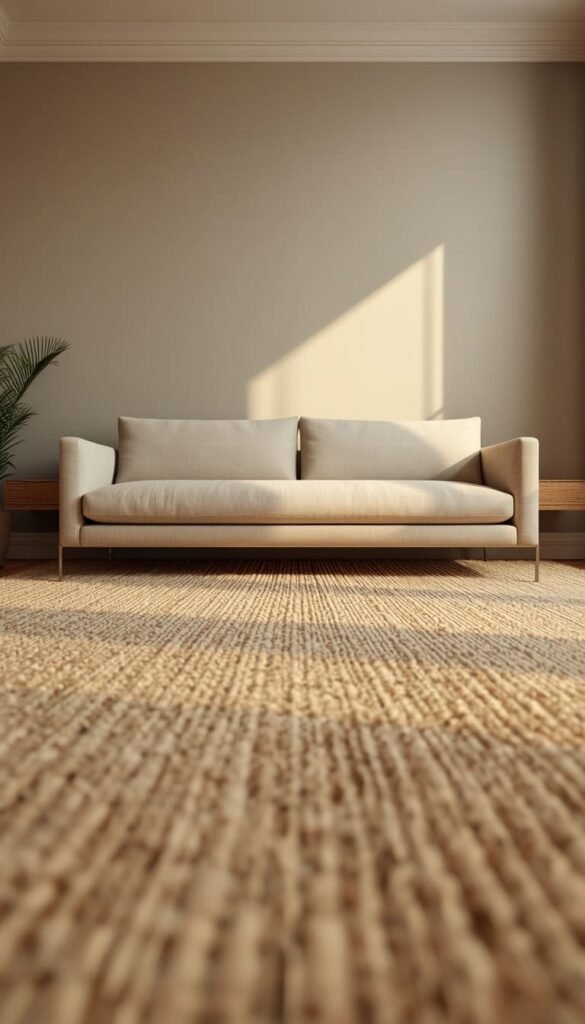
Most Americans push all their furniture against the walls. I understand the instinct — it feels like it creates more space. It actually does the opposite. Floating your sofa 18 to 24 inches away from the wall creates breathing room, defines a conversation zone, and makes the whole room feel more intentional and designed.
If you’re working with a smaller living room under 300 square feet, the same rule applies — just scale down. A loveseat floated slightly off the wall with a slim console table behind it looks far more considered than everything shoved to the perimeter. A quick trick I’ve learned is to place your area rug first, then build the furniture arrangement around it. The rug becomes your anchor, and everything else falls into place naturally.
5. Invest in One Statement Anchor Piece
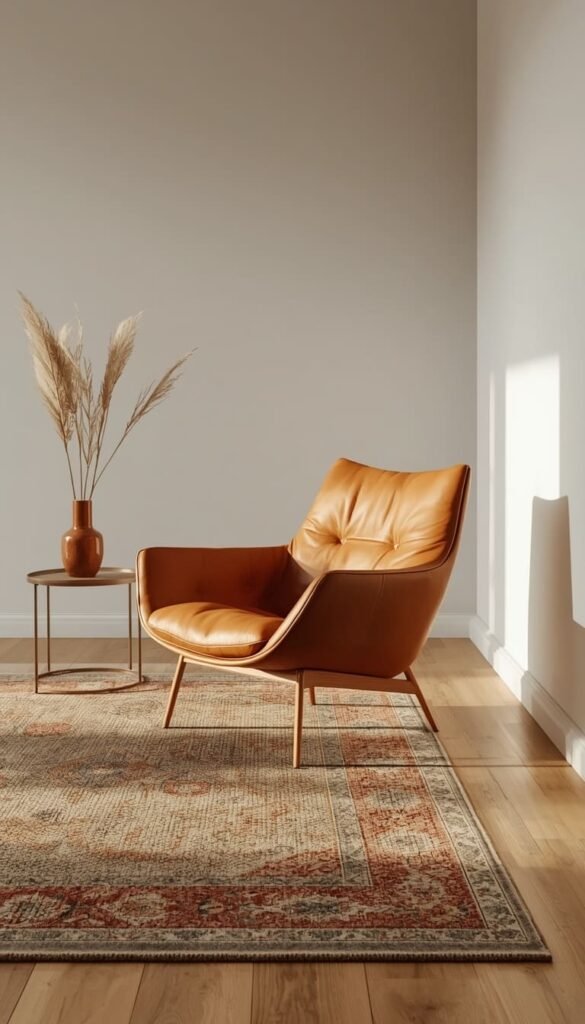
If there’s one piece of advice I give every single client before they start shopping, it’s this: stop buying a little bit of everything and put that budget into one remarkable piece instead. A sculptural sofa with clean lines. A vintage midcentury armchair in a warm cognac leather. A solid wood coffee table with real presence. That one piece becomes the soul of the room, and everything else simply supports it.
The secondhand market in the US is incredible for this right now. Facebook Marketplace, Chairish, and local estate sales are where I find the best pieces for clients who don’t have a $3,000 sofa budget. One thing to watch out for is scale a statement piece that’s too small for the room loses all its impact. When in doubt, go slightly larger than you think you need.
Which of these 22 ideas are you planning to try first in your living room and what’s the one thing you’re finally ready to let go of?
6. Go Monochromatic Not Colorless
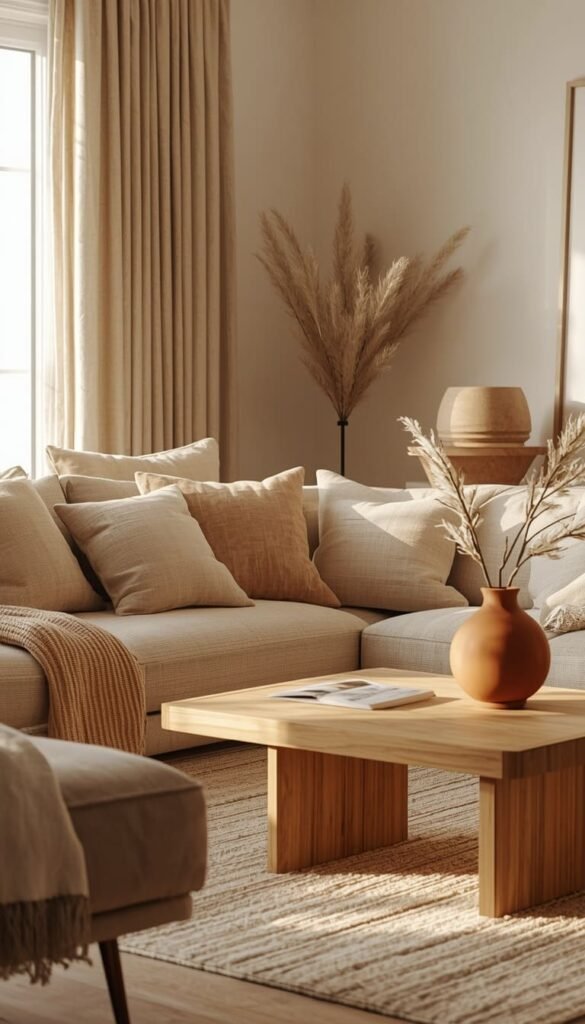
There’s a misconception I run into constantly that minimalist means white walls, white sofa, white everything. It doesn’t. Monochromatic means staying within one color story, and that story can be warm sand, deep charcoal, earthy terracotta, or even a moody sage green. The key is that every element in the room feels like it belongs to the same family.
A few combinations I’ve personally loved working with:
- Warm white walls + oat linen sofa + honey oak accents
- Soft greige walls + camel leather chair + brushed brass hardware
- Charcoal gray walls + cream boucle seating + black walnut shelving
Staying monochromatic actually makes shopping easier too. When everything has to live within one color lane, you stop second guessing every purchase.
Top 6 minimalist living room ideas:
| Idea | Estimated Price | Maintenance |
|---|---|---|
| Neutral Base Palette (Paint Refresh) | $40 to $150 | Low |
| Statement Anchor Piece (Sofa or Chair) | $300 to $2,500 | Medium |
| Hidden Storage Furniture | $80 to $600 | Low |
| The Right Area Rug | $150 to $800 | Medium |
| Large Scale Wall Art | $30 to $300 | Low |
| Performance Fabric Sofa for Families | $800 to $3,000 | Low |
7. Add Texture Not Stuff
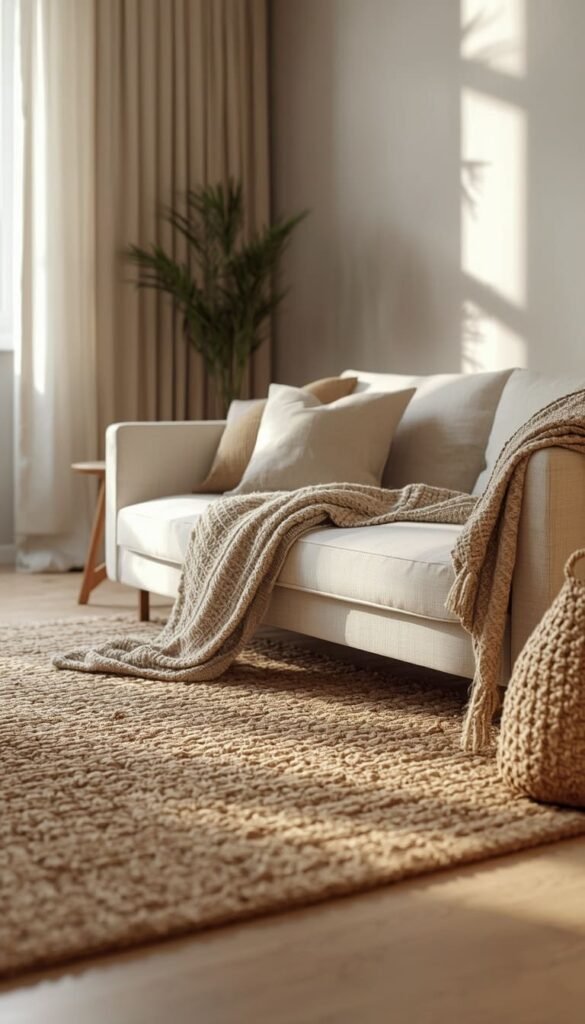
This is the secret that separates a minimalist room that feels cold and sterile from one that feels genuinely inviting. When you remove visual clutter, texture becomes your most powerful tool. A chunky jute rug underfoot. A boucle throw draped casually over the arm of a chair. Linen curtains that catch the afternoon light. None of these things add clutter but all of them add soul.
I worked on an apartment in Chicago where the client had almost nothing in her living room and yet it felt completely unfinished. The walls were bare, the sofa was smooth, the floors were polished concrete. Beautiful bones, zero warmth. We added a layered wool rug, swapped her cotton throw pillows for linen ones, and brought in a single rattan side table. The room transformed without adding a single large piece of furniture. Texture is doing more work in your space than you’re giving it credit for.
8. The Minimalist TV Wall Done Right
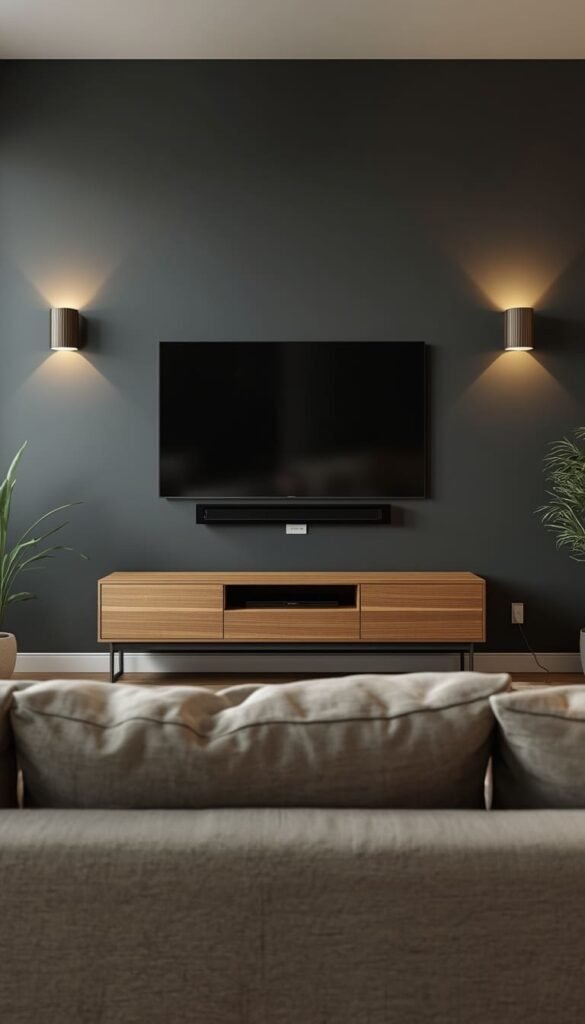
Let’s be honest the TV is the elephant in every American living room. Most minimalist inspiration photos you see online conveniently leave it out, which is completely unrealistic. Real homes have televisions, and figuring out how to handle them without breaking the whole aesthetic is one of the most common problems I solve for clients.
Here’s what actually works:
- Paint the wall behind the TV in a deep matte color like charcoal or warm black so the screen blends in when it’s off
- Mount the TV flush to the wall and invest in a cable management kit exposed cords are the fastest way to ruin a clean look
- Skip the oversized entertainment center and replace it with a low profile media console in wood or matte black
A quick trick I’ve learned is to treat the TV wall like a focal point rather than hiding it completely. Frame it intentionally with a simple floating shelf above or flanking sconces, and it becomes part of the design instead of fighting against it. The Frame TV by Samsung is genuinely worth the investment if you want it to display art when not in use several of my clients swear by it.
9. Bring in One Bold Organic Shape
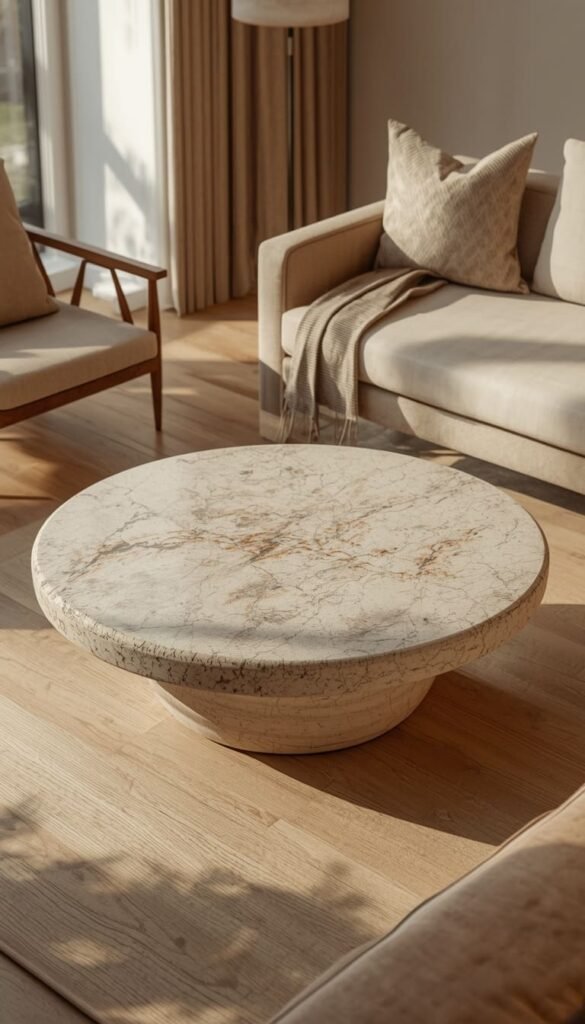
Clean lines are the backbone of minimalist design but a room built entirely on straight edges and sharp corners can start to feel more like an office than a home. This is where one organic shape makes all the difference. A round coffee table softens a room full of rectangular furniture. A curved sofa creates flow in an open-plan space. Even a single vase with an irregular silhouette on a shelf adds just enough visual interest to keep things from feeling rigid.
Budget-friendly options exist at every price point here. CB2 and West Elm carry beautiful sculptural accent pieces in the $80 to $200 range. If you’re thrifting, look for anything with a rounded or asymmetrical form ceramic vessels, wood bowls, curved side tables. One thing to watch out for is overdoing it. One organic shape is a design choice. Five organic shapes in the same room start to feel chaotic, which defeats the whole purpose.
10. Use Plants Strategically Not Randomly
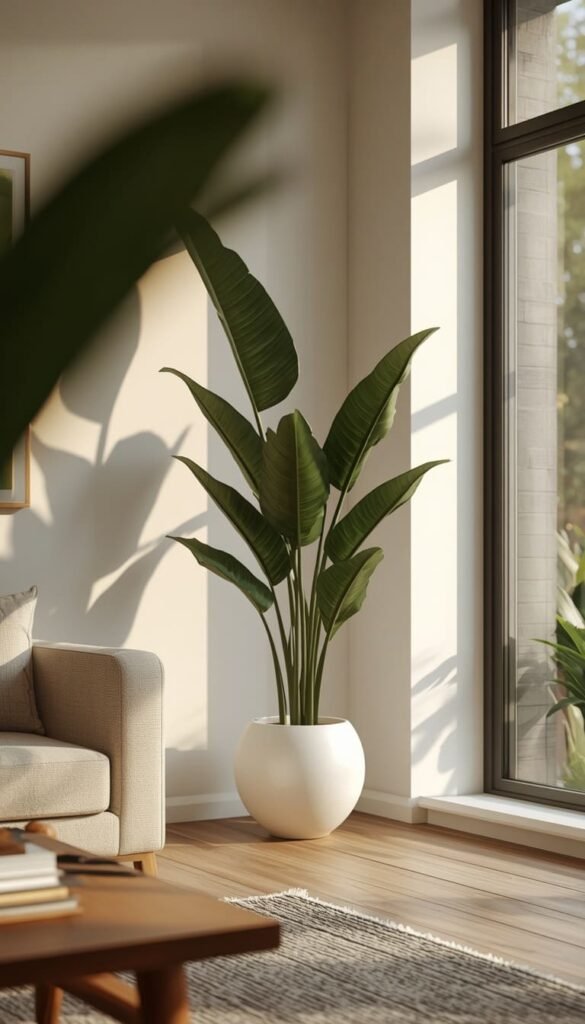
I love plants in a minimalist living room. Done right, they add life, color, and warmth without adding clutter. Done wrong, they become a collection of mismatched pots in random corners that makes the room feel busier than before. The difference is intention.
For a truly clean look, stick to these approaches:
- One large statement plant a fiddle leaf fig, a bird of paradise, or a tall snake plant makes more impact than six small ones scattered around
- Keep all your pots in the same material family, whether that’s terracotta, matte ceramic, or woven baskets
- Place plants where they interact with natural light, near windows or in bright corners, so they feel purposeful rather than decorative
If you’re not great with plants, be honest with yourself about it. A single high quality faux fiddle leaf fig from McGee & Co or Pottery Barn looks remarkably realistic and requires zero maintenance. No shame in it I’ve recommended them to plenty of clients who travel frequently.
Are you team Scandinavian minimalism or Japandi and does your current living room actually reflect the vibe you’re going for?
11. Hidden Storage Is Non Negotiable
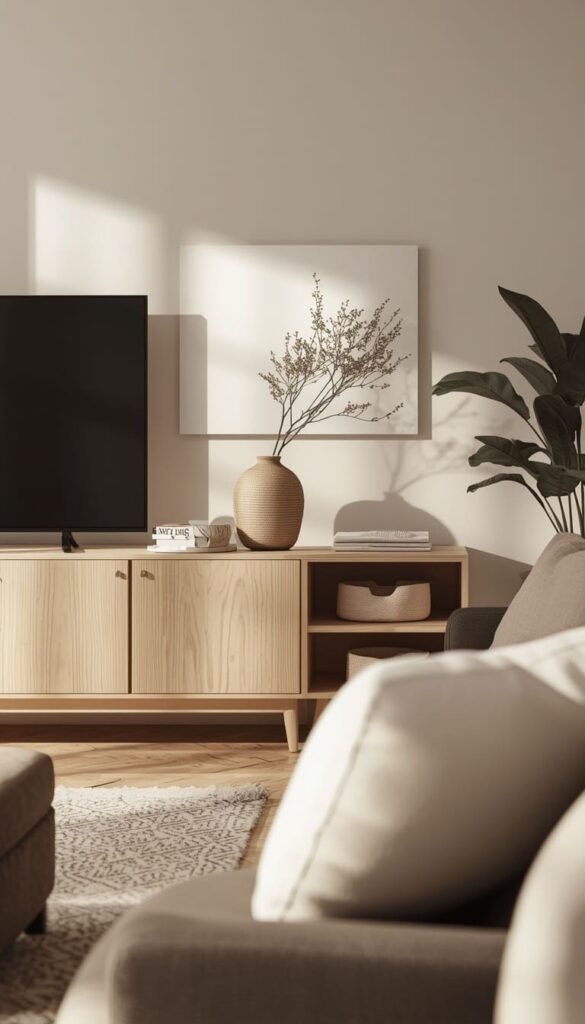
Here’s the hard truth about minimalist living rooms they don’t stay minimal on their own. Life happens. Remotes, blankets, kids’ toys, dog leashes, chargers. Without a real storage strategy built into the design, the clutter creeps back within weeks. I’ve seen it happen every single time a client skips this step.
The good news is that storage furniture has come a long way. You don’t have to choose between functional and beautiful anymore:
- Ottoman with interior storage does double duty as a coffee table and a hiding spot for blankets and remotes
- Low media consoles with closed cabinet doors keep everything off surfaces and out of sight
- IKEA KALLAX units with linen or leather basket inserts look custom and cost a fraction of built-ins
A quick trick I’ve learned is to do a “clutter audit” before buying any storage furniture. Gather everything that currently lives on your surfaces and floor, put it in a pile, and then shop for storage based on what you actually have. Most people overbuy storage for things they should just get rid of.
12. Minimalist Living Rooms for Small Spaces
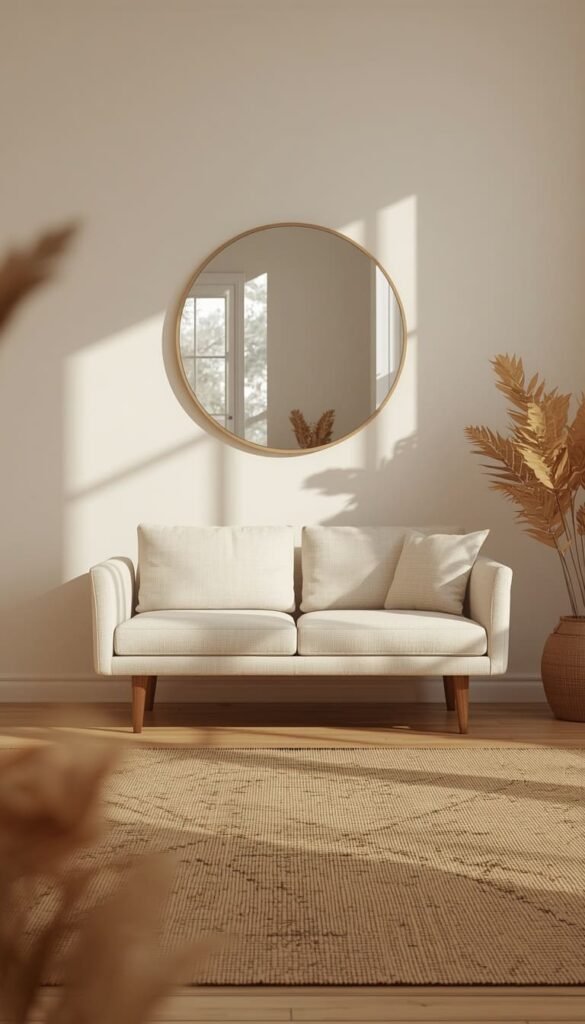
Small space minimalism is honestly where this design philosophy shines brightest. When you’re working with a studio apartment or a living room under 300 square feet, every single decision carries more weight and the payoff for getting it right is enormous. I’ve designed living rooms in New York and Chicago apartments where the entire space was under 250 square feet, and they felt more intentional and beautiful than rooms three times the size.
The rules shift slightly when space is limited:
- Choose furniture with exposed legs sofas and chairs that sit off the floor visually expand the room by showing more floor space
- A single large mirror on one wall does more for a small room than almost any other single purchase
- Stick to two to three furniture pieces maximum and resist the urge to fill every corner
- Vertical storage, like floor to ceiling shelving on one wall, draws the eye upward and makes ceilings feel taller
For renters specifically and there are 44 million of you across the US none of this requires drilling or painting. Command strips, freestanding shelving, and furniture that does double duty are your best friends. You can absolutely have a stunning minimalist living room without touching a single wall.
13. The Right Rug Changes the Whole Room
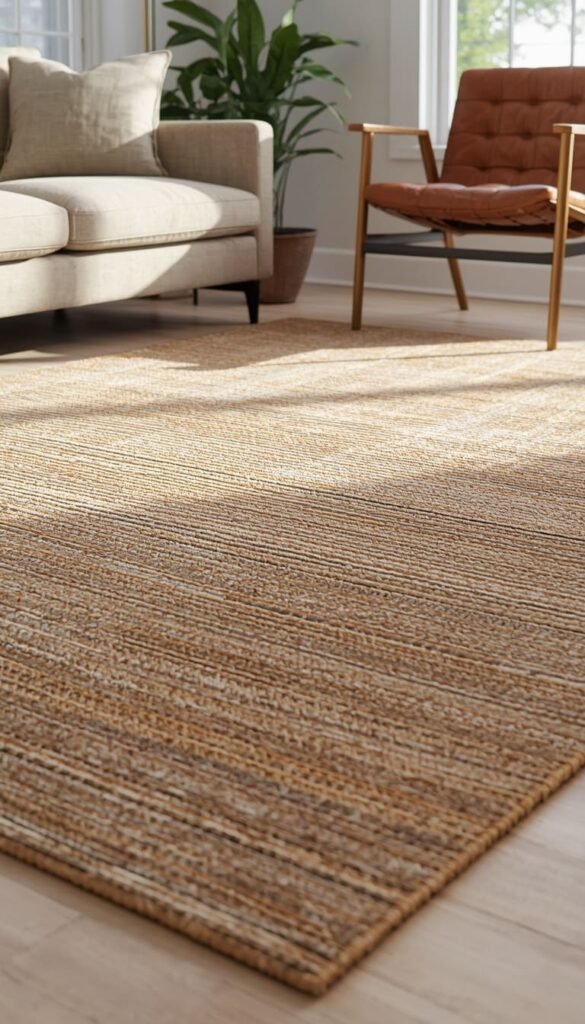
If there’s one purchase in a minimalist living room that I’d tell you to spend real money on, it’s the rug. It anchors the entire space. It defines the seating zone. It adds texture, warmth, and color all at once. And yet it’s the piece most people either skip entirely or buy too small both of which are costly mistakes.
Size is everything here. In most American living rooms, you want at least the front legs of every sofa and chair sitting on the rug. Better yet, go large enough for all legs on. A rug that’s too small floats awkwardly in the middle of the room and makes the whole space feel unfinished. When in doubt, size up.
For minimalist spaces specifically, I gravitate toward:
- Flat-weave vintage-style rugs in muted tones durable, beautiful, and they hide dirt far better than plush styles
- Natural fiber rugs like jute or sisal for a warm organic texture that works with almost any neutral palette
- A single subtle pattern like a tone-on-tone geometric that adds visual interest without competing with anything else
One thing to watch out for and I say this from real experience white or ivory rugs look absolutely stunning in photos and are an absolute nightmare in real life. If you have pets, kids, or simply eat food near your sofa, please choose something darker or patterned. Your sanity will thank you.
14. Large Scale Art Over a Gallery Wall
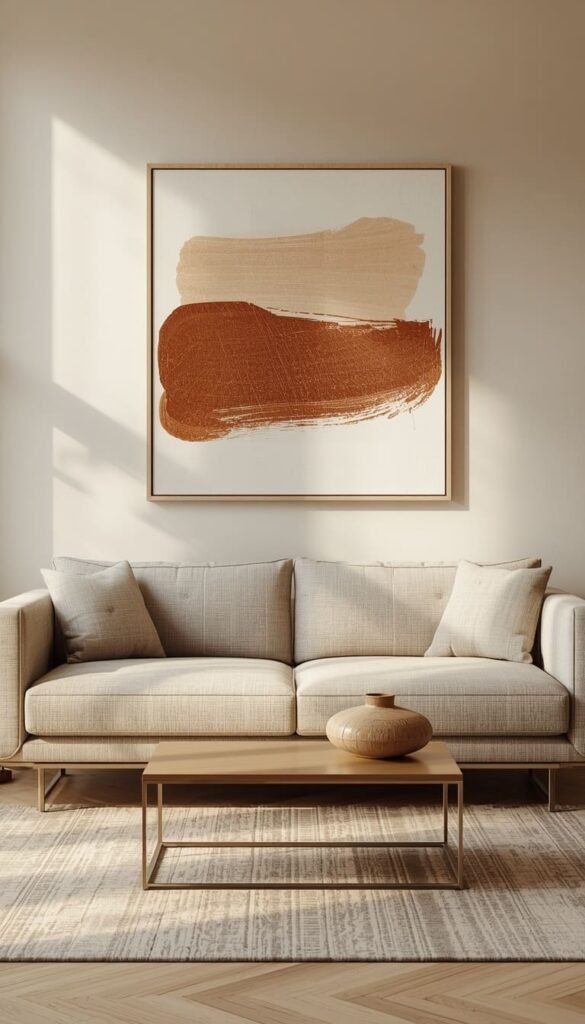
Gallery walls had their moment. And honestly, for a maximalist space, they still work beautifully. But in a minimalist living room, a collection of fifteen small frames creates exactly the kind of visual noise you’re trying to eliminate. One oversized piece of art does something a gallery wall simply cannot it commands attention, grounds the wall, and lets the rest of the room breathe.
It doesn’t have to be expensive either. Some of my favorite finds for clients have come from:
- Local art markets and university art shows where original pieces start around $75
- Society6 and Saatchi Art for affordable prints in large format sizes
- Printing a high-resolution personal photo or abstract digital download at a local print shop for under $30, then framing it in a simple Nielsen Nielsen frame from IKEA
The frame matters as much as the art itself. In a minimalist room, go thin and simple black, natural wood, or brushed brass depending on your palette. And hang it slightly lower than you think feels right. Art hung at true eye level, around 57 inches to center, always looks more intentional than art hung too high.
15. Embrace Negative Space Intentionally
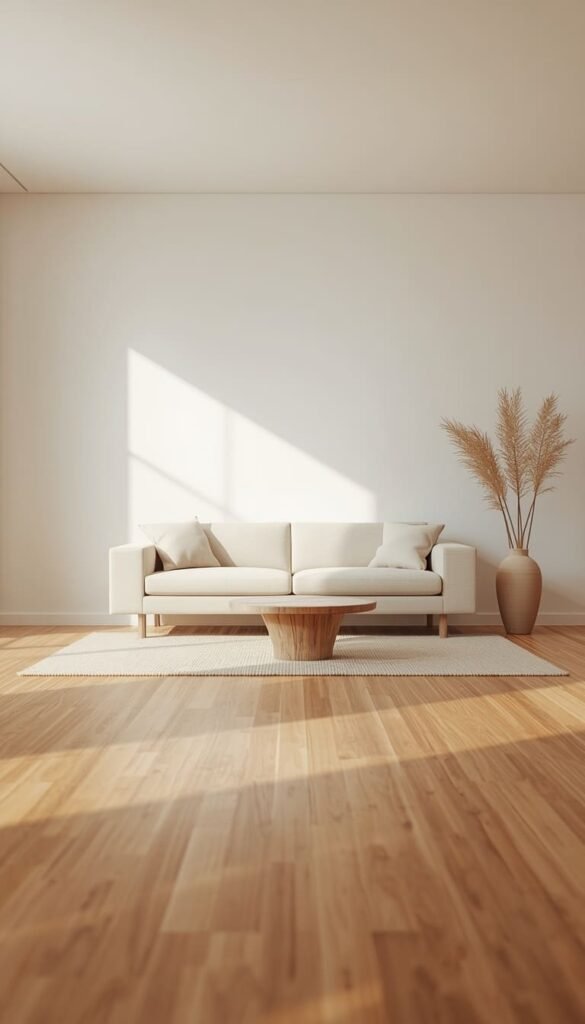
This is genuinely the hardest concept for most American homeowners to accept. We’re wired to fill space. An empty corner feels like a problem waiting to be solved. A bare wall feels unfinished. A surface with nothing on it feels forgotten. But in minimalist design, that emptiness is doing real work it gives your eye somewhere to rest, it makes your chosen pieces feel more deliberate, and it creates a sense of calm that no amount of carefully curated decor can manufacture.
I had a client in Denver who kept adding things back to her living room after we’d edited it down. A small plant here, a stack of books there, a little tray on the console. Each individual addition made sense. Together, they undid everything we’d worked toward. We had a real conversation about why the urge to fill space felt so uncomfortable for her and she realized it was less about design and more about a deeper discomfort with stillness.
Negative space isn’t emptiness. It’s confidence. A room that isn’t trying too hard is always the most impressive room in the house.
What’s the biggest challenge stopping you from going minimalist in your living room right now budget, family chaos, or just not knowing where to start?
16. Cozy Minimalism Its Not Cold If You Do This
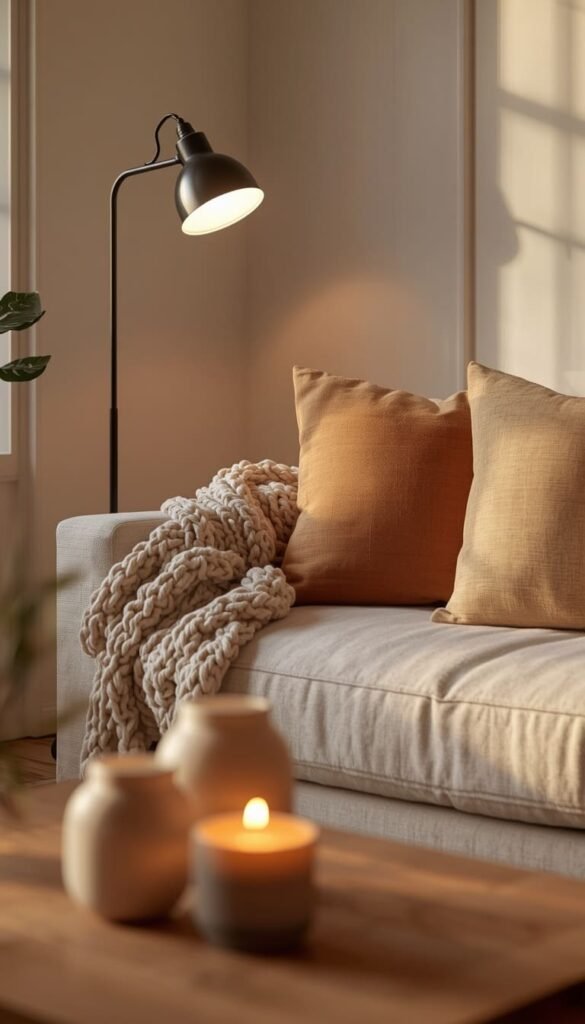
The number one objection I hear when I suggest a minimalist approach to clients is some version of “but I don’t want my home to feel like a hotel lobby.” It’s a fair concern. Minimalism done poorly absolutely can feel cold, stark, and unwelcoming. But cozy minimalism is a very real thing, and it comes down to two elements working together lighting and layering.
Lighting first. Overhead lighting alone is the enemy of cozy. In a minimalist living room, you want at least three light sources at varying heights a floor lamp in one corner, a table lamp on a side table, and either candles or low LED strips behind the TV or under a console for ambient warmth. Warm bulbs only, in the 2700K range. This single change transforms how a room feels after 6pm.
Layering second. You don’t need much:
- One chunky knit or waffle weave throw draped over the sofa arm
- Two to three pillows maximum in varying textures but the same color family
- A low candle or two on the coffee table for evening atmosphere
That’s genuinely all it takes. The room stays clean and intentional during the day and feels warm and lived-in by evening. Both things can be true at once.
17. Scandinavian Minimalism vs Japandi Pick Your Side
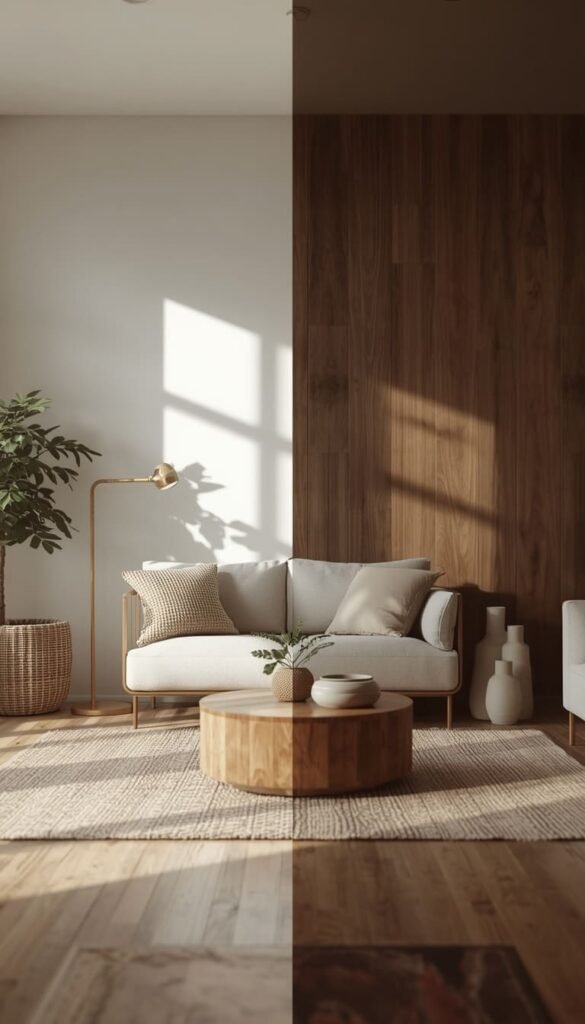
If you’ve been researching minimalist living room ideas for more than twenty minutes, you’ve almost certainly come across both of these terms. They’re related, they’re often confused, and knowing the difference actually helps you make better, more cohesive design decisions instead of accidentally mixing two distinct aesthetics into something that feels slightly off.
Scandinavian minimalism is lighter, airier, and more functional in its roots. Think white walls, pale wood tones, simple clean-lined furniture, and an emphasis on bringing natural light into dark Nordic winters. It’s warm but bright. Cozy but uncluttered. IKEA, at its best, is essentially democratized Scandinavian design.
Japandi is what happens when Scandinavian minimalism meets Japanese wabi-sabi philosophy. It’s slightly moodier, slightly more textural, and more comfortable with imperfection. Darker wood tones, handmade ceramics, low-profile furniture, and an appreciation for things that show their age gracefully. Where Scandi feels fresh and bright, Japandi feels grounded and meditative.
Neither is better. They just serve different personalities:
- Choose Scandinavian if you want your space to feel light, open, and family-friendly
- Choose Japandi if you want something that feels more curated, moody, and intentional
Mixing them works too but pick one as your primary direction and let the other inform the details.
18. The Renter’s Minimalist Living Room
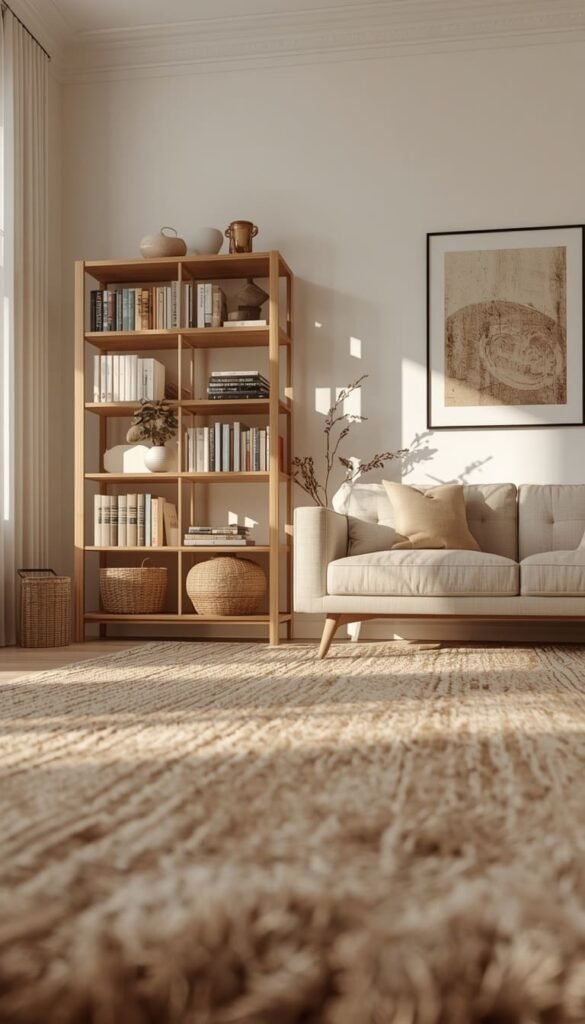
This section is for the 44 million Americans renting their homes who feel like minimalist design is somehow out of reach because they can’t paint walls or drill into anything without risking their security deposit. I want to push back on that completely. Some of the most beautiful minimalist living rooms I’ve ever designed were in rental apartments with off-white builder walls and zero permanent modifications.
The key is working with what you have rather than fighting against it. Neutral rental walls are actually a gift in minimalist design they’re already doing half the work for you. Here’s how I approach a renter’s minimalist living room:
- Large format peel-and-stick wall panels from brands like Tempaper or RoomMates can add texture and depth without damaging walls
- Freestanding furniture that looks built in a floor to ceiling BILLY bookcase from IKEA placed against a wall reads as intentional and architectural
- A large area rug over existing flooring instantly changes the entire character of a room, even over carpet
- Command strips rated for heavier loads now hold artwork up to 16 pounds, which covers most framed prints
One thing I always tell renters invest in your furniture, not your walls. Every piece you buy travels with you to your next home. A beautiful linen sofa, a solid wood coffee table, one great floor lamp. These things will outlast every apartment you ever live in.
19. Minimalist Decor on a Budget Under $500 Total
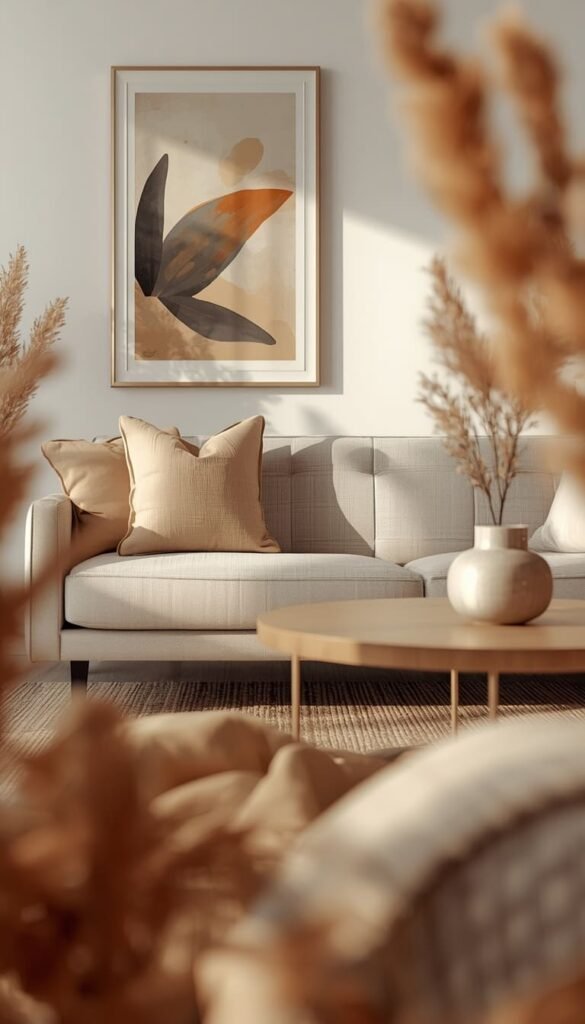
Yes, it’s possible. I’ve done it. That Austin project I mentioned earlier came in at $620 for a full living room refresh, and I’ve since helped clients do it for even less. The secret isn’t finding cheap things it’s making fewer, smarter purchases and being ruthless about what earns a place in the room.
Here’s a realistic breakdown of how I’d spend $500 on a minimalist living room refresh today:
- $150 — A large flat-weave area rug from Ruggable or Amazon’s Stone & Beam line
- $85 — Two linen throw pillow covers in a warm neutral from H&M Home or Target’s Threshold line
- $60 — A simple ceramic table lamp from IKEA or TJ Maxx
- $75 — One large piece of printable wall art, printed locally and framed with an IKEA RIBBA frame
- $80 — A set of matching linen basket inserts for existing shelving to hide clutter
- $50 — A small sculptural ceramic vase or wood bowl as the single coffee table object
That’s $500 and a room that looks genuinely considered and intentional. The real work isn’t the shopping it’s the editing. Getting rid of what doesn’t belong costs nothing and makes more difference than anything you could buy.
20. Seasonal Refresh Without Buying New Furniture

One of the things I genuinely love about minimalist living rooms is how responsive they are to small seasonal changes. Because the base is so clean and neutral, even a minor swap creates a noticeable shift in mood. You don’t need to redecorate every fall or buy a whole new set of accessories for spring. You just need a system.
My personal approach with clients is what I call the “three swap rule” change exactly three things with each season and nothing more:
- Swap your throw — a lightweight cotton throw in spring and summer, a chunky knit or faux fur in fall and winter
- Swap your pillow covers — same inserts, different covers in seasonal tones
- Swap one surface object — a vase of fresh branches in spring, a cluster of warm candles in winter, a single piece of driftwood in summer
That’s it. Three changes, maybe $60 to $80 total if you’re buying new covers and a candle. The room feels fresh and seasonally appropriate without losing its minimalist foundation or turning into a Pinterest holiday explosion.
If you could only make one change to your living room this weekend, what would it be the rug, the sofa arrangement, or finally clearing those surfaces?
21. What NOT to Do in a Minimalist Living Room
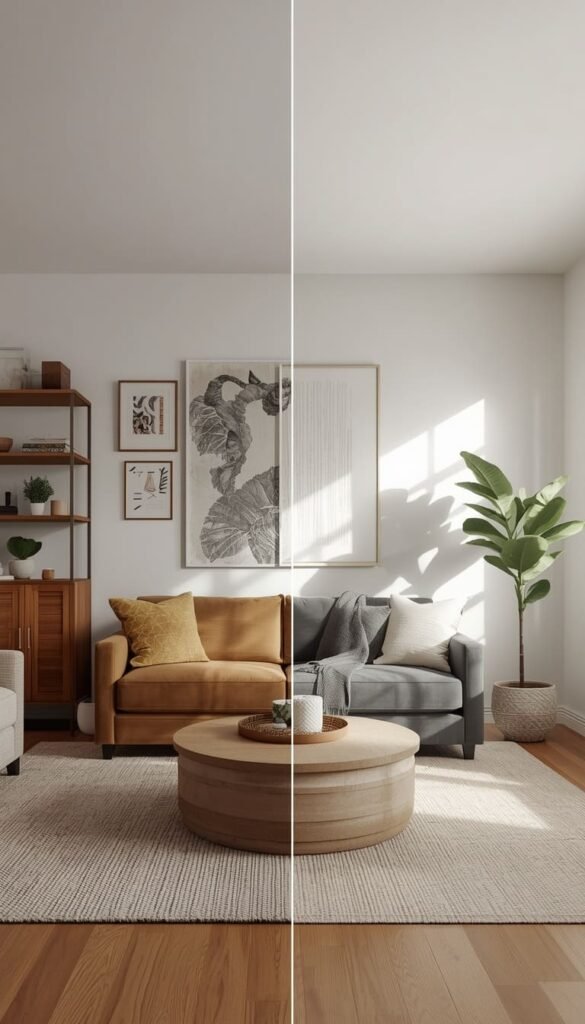
Every article in this space tells you what to add. I want to spend a moment on what to actively avoid because in minimalist design, the editing decisions matter just as much as the styling ones. I’ve walked into living rooms where every individual piece was beautiful, thoughtfully chosen, and well-made, and yet the room felt completely wrong. Usually it comes down to one of these mistakes.
Avoid these consistently:
- Too many competing focal points — a gallery wall, a statement rug, a bold sofa, and an oversized plant all in the same room is visual chaos dressed up as design
- Open shelving filled with everything — bookshelves work in minimalist rooms only when they’re curated down to the absolute best 20% of what you own
- Matching furniture sets — buying a sofa, loveseat, coffee table, and end tables all from the same collection makes a room look furnished rather than designed
- Trendy accent pieces bought in bulk — one trending item is a design choice, five trending items from the same TikTok aesthetic is a room that will look dated in eighteen months
One thing I watch out for with my own clients is what I call “minimalist hoarding” the habit of decluttering the room but hiding everything in baskets, boxes, and ottomans until the storage furniture itself becomes the clutter. Hidden storage is essential, but it has a limit. At some point the real answer is just owning less.
22. Minimalist Living Rooms That Work for Families and Pets
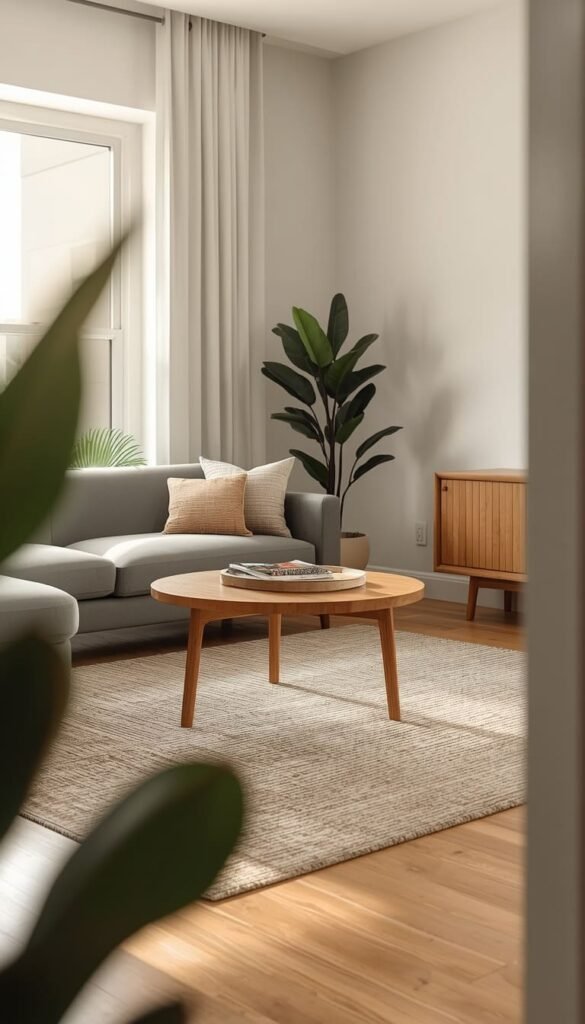
This is the most underserved conversation in the entire minimalist design world, and honestly it’s the one that matters most to the majority of American homeowners. The beautiful serene rooms on design blogs exist in homes without toddlers, without dogs who shake off mud at the back door, and without a teenager who leaves their backpack on the sofa every single day. Real minimalism has to work for real life or it doesn’t work at all.
The good news is that family-friendly and minimalist are not opposites. They just require smarter material choices and a more honest storage strategy. Here’s what I actually specify for clients with kids and pets:
- Sofa fabric — performance velvet or solution-dyed acrylic are the two most durable options I’ve found. Crypton-treated fabrics are worth every extra penny. Avoid linen and bouclé if you have pets — both attract hair like magnets and are genuinely difficult to clean
- Rugs — flat-weave or low-pile rugs in medium tones are your safest bet. Ruggable makes washable rugs that go straight into your home washing machine, and several of their styles are genuinely beautiful
- Coffee table — round edges matter with small children, and an ottoman with a tray on top serves the same purpose with zero sharp corners
- Storage — built-in cubbies or closed-door consoles at kid height teach children where things belong and make tidying up a realistic daily habit rather than a weekly ordeal
A quick trick I’ve learned over years of designing for families is to involve the kids in the editing process. When children help decide what stays and what goes, they develop a genuine investment in keeping the space tidy. That Austin client I mentioned earlier her seven year old became the room’s most enthusiastic guardian. Some things you just can’t design for, but you can absolutely design toward them.
Your 2 Minute Minimalist Decision Map
By Budget
Starter and Budget (Under $500)
- Refresh with paint in a warm neutral biggest impact, lowest cost
- Swap pillow covers and one throw for a seasonal feel
- Add a flat-weave rug from Ruggable or Amazon
- One large printable art piece framed in IKEA RIBBA
- Use linen basket inserts to hide clutter on existing shelves
Luxury and Investment ($500 and Above)
- Invest in one sculptural anchor sofa or statement chair
- Commission or source original local artwork for the main wall
- Choose performance fabric upholstery for longevity
- Upgrade to custom light-filtering window shades
- Consider The Frame TV by Samsung for a true minimalist TV wall
By Lifestyle
Busy Families and Pet Owners
- Choose Crypton treated or performance velvet fabrics only
- Ruggable washable rugs are non-negotiable
- Round-edge coffee table or padded ottoman with tray
- Closed-door storage consoles at every seating zone
- Involve kids in the edit it builds ownership and tidiness habits
Solo Dwellers and Intentional Minimalists
- Embrace true negative space resist filling every corner
- Curate open shelving down to your best 20% only
- One large plant over multiple small ones
- Japandi aesthetic for a moodier, more meditative feel
- Three swap rule for seasonal refreshes nothing more
Frequently Asked Questions
What is the best color for a minimalist living room?
Warm neutrals win every time. Shades like Benjamin Moore White Dove, Sherwin Williams Accessible Beige, or a soft greige work beautifully in most American homes without feeling cold or sterile.
How do I make my minimalist living room feel cozy?
Layer texture, not stuff. A chunky throw, two or three linen pillows, and warm 2700K bulbs in multiple light sources transform any minimal space after sundown.
Can minimalist living rooms work for families with kids and pets?
Yes, absolutely with the right materials. Performance velvet, Crypton-treated fabrics, and Ruggable washable rugs make minimalism completely livable for real family life.
How much does it cost to decorate a minimalist living room?
A solid refresh starts around $300 to $500 using Target, IKEA, and thrifted finds. A fully designed investment room with quality furniture typically runs $3,000 to $8,000 depending on your market.
How many furniture pieces should a minimalist living room have?
Three to five pieces is the sweet spot. A sofa, one accent chair, a coffee table, and one storage piece anything beyond that needs to genuinely earn its place in the room.
Conclusion
Your living room doesn’t need a complete overhaul to feel like a different space it needs better decisions. Start with one thing today. Clear one surface, move your sofa off the wall, or order a paint sample in a warm neutral. That single action creates momentum, and momentum is what actually changes homes. I’ve watched clients go from overwhelmed to completely at peace with their space by making three edits in a single afternoon no contractor, no big budget, no Pinterest spiral required. Your home is where you decompress, think clearly, and actually exhale after a long day, and it deserves to feel that way.
