24 Modern Navy Blue Kitchen Cabinets You’ll Love
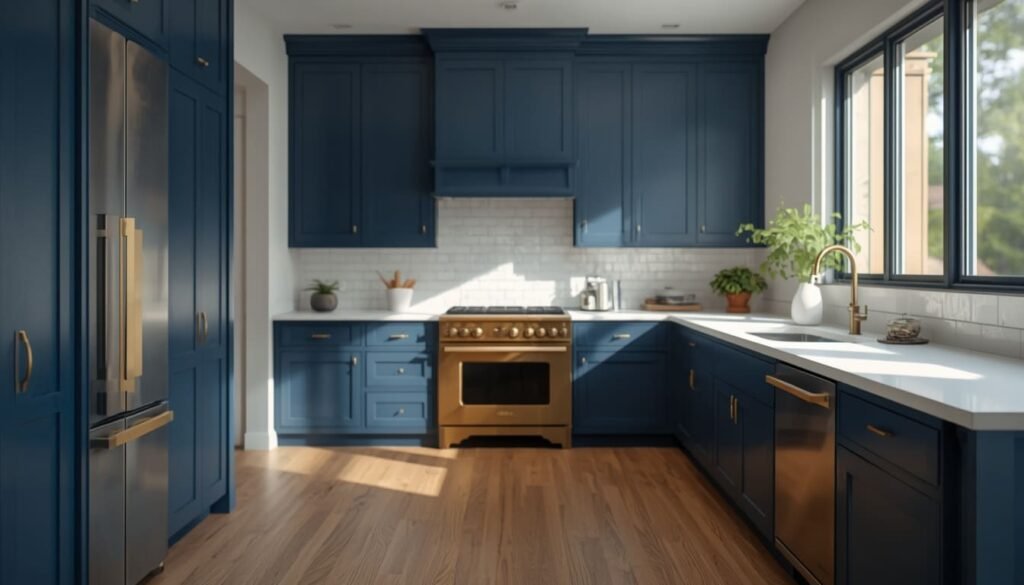
Navy blue kitchens are having a serious moment right now and honestly, it’s not hard to see why. There’s something about that deep, rich hue that makes a kitchen feel pulled-together, intentional, and just a little bit luxurious without trying too hard. I’ve worked on dozens of kitchen projects across the US, and navy is consistently the color that shocks homeowners the most in the best possible way. Whether you’re planning a full remodel or just thinking about a weekend paint project, these 24 navy kitchen cabinet ideas will give you everything you need to make a confident, beautiful decision.
My Design Notes
A few years back, I was working with a young couple in Austin, Texas who had a classic builder grade kitchen all white, flat, and completely forgettable. Their budget was tight, right around $12,000, and they were genuinely terrified of committing to color. I remember standing in their kitchen with paint swatches and just sliding Benjamin Moore’s Hale Navy next to their existing white quartz countertop. The room changed instantly even in swatch form. We painted just the lower cabinets, kept the white uppers, and swapped out their builder nickel pulls for brushed brass hardware from Rejuvenation. Total hardware spend was under $200. When the project was done, my client walked in, looked around, and got tears in her eyes. She kept saying “it looks like a real kitchen now.” That moment is exactly why I always tell hesitant homeowners: navy is the most forgiving bold color you can choose for a kitchen. It’s confident without being aggressive, and it makes everything around it look more expensive.
Stunning Navy Cabinet Designs Every American Homeowner Will Love
1. Classic Navy Shaker Cabinets
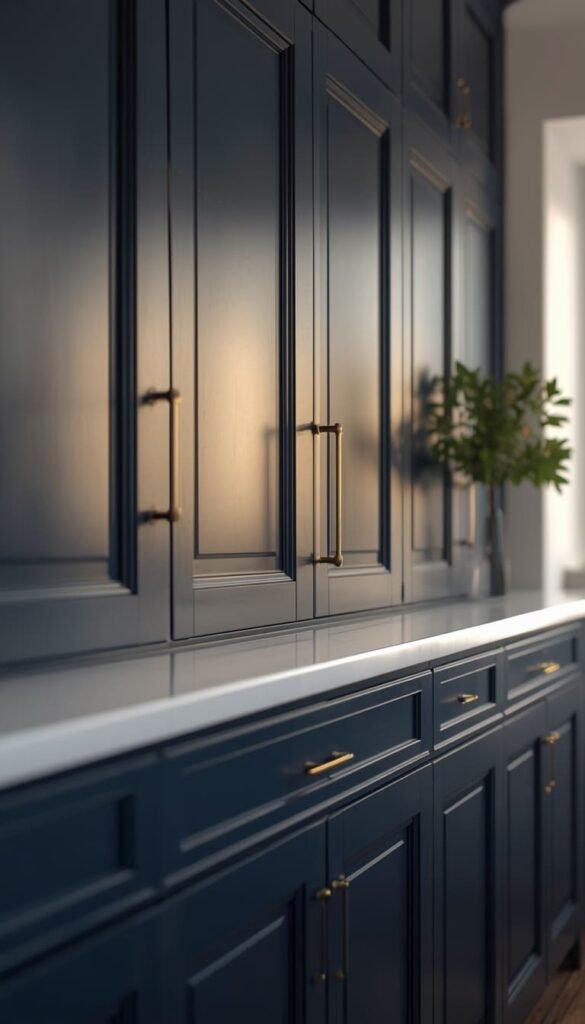
If there’s one style that never walks out of a kitchen looking dated, it’s the navy Shaker cabinet. That simple recessed panel door, paired with a deep navy finish, hits a sweet spot between traditional craftsmanship and modern sensibility. I’ve installed these in everything from 1940s bungalows in Charlotte to new builds in Denver, and they always land beautifully.
What makes them work so universally is the structure. The clean lines of a Shaker door don’t compete with the boldness of navy they actually calm it down. One thing to watch out for is choosing the right sheen. A flat or eggshell finish on Shaker doors can show fingerprints something fierce, especially around the pulls. I always recommend a satin finish for families it’s forgiving, wipeable, and still looks intentional.
- Works with virtually every countertop material from butcher block to marble
- Looks equally at home in a farmhouse kitchen and a transitional one
- Benjamin Moore Hale Navy and Sherwin-Williams Naval are my two go-to paint picks for this style
2. Matte Navy Lower Cabinets With White Uppers
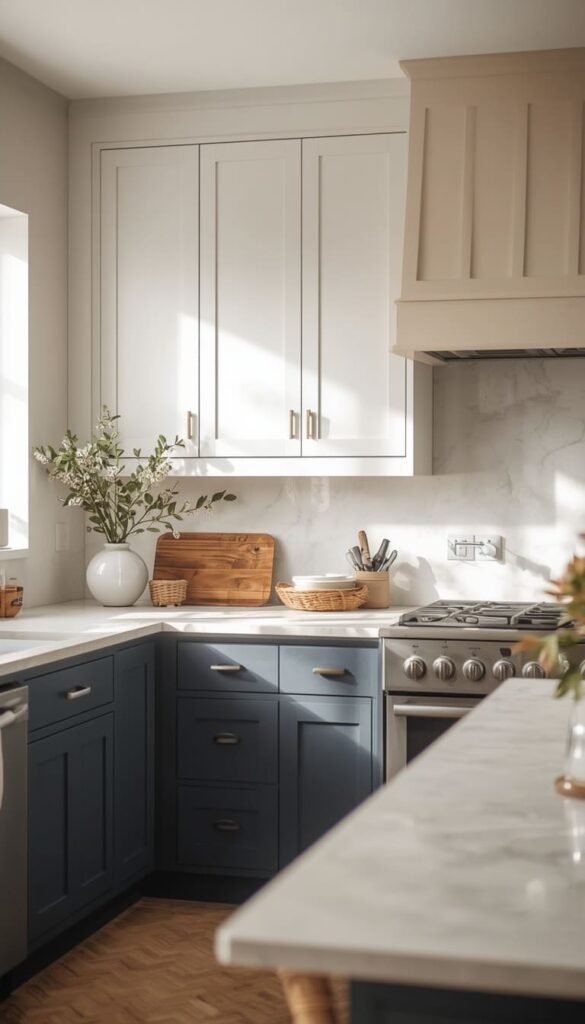
This is the combination I recommend most to first-time navy converts, and for good reason. Keeping your upper cabinets white while going navy on the lowers gives you the drama without the commitment. The kitchen feels grounded and anchored at the base, while staying light and airy up top exactly the visual balance most American kitchens need.
A quick trick I’ve learned over the years: make sure your white uppers are a true warm white, not a stark cool white. Cool whites can clash with navy’s blue undertones and make the whole palette feel a little off. Try Benjamin Moore Chantilly Lace or Simply White both play beautifully with navy lowers.
3. High Gloss Navy for Drama
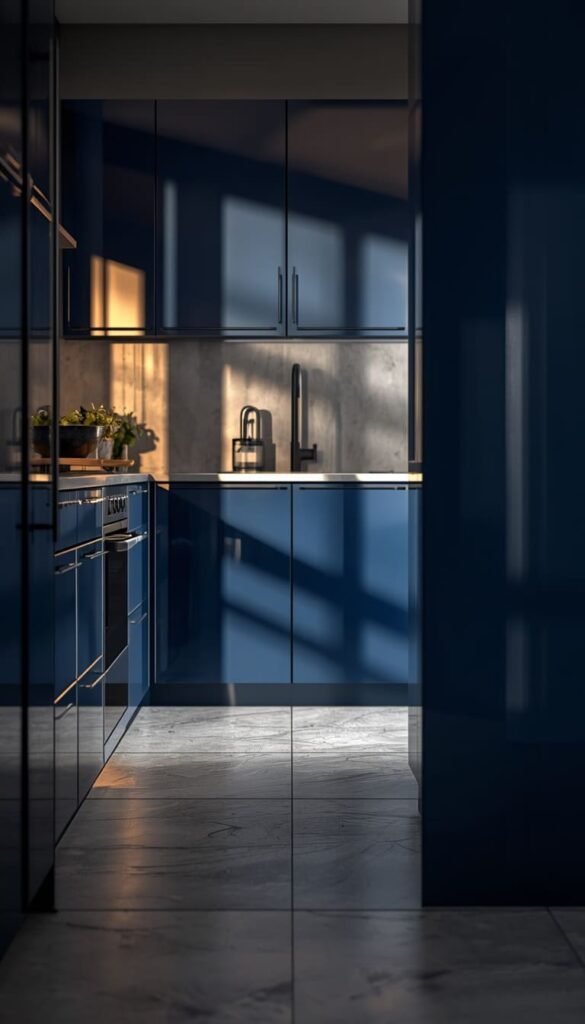
Matte gets all the design press, but don’t sleep on a high gloss navy cabinet. When light hits that lacquered surface, the kitchen genuinely looks like it belongs in a design magazine. I used a deep high-gloss navy in a Chicago condo project last year and the homeowner’s first reaction was “it looks like jewelry.” That pretty much sums it up.
The practical reality though? Gloss shows every smudge, water splash, and fingerprint in real time. If you have kids or a busy kitchen, you’ll be wiping those cabinets down constantly. For a low-traffic kitchen or a show stopping bar area, gloss navy is absolutely worth it. For a family of four who actually cooks? I’d steer you toward satin.
- High gloss works especially well in smaller kitchens because it bounces light around
- Pair with minimal hardware or go handle free for a truly sleek result
- Stick to professional spray application brush strokes on gloss finishes are painfully visible
4. Navy With Brass Hardware
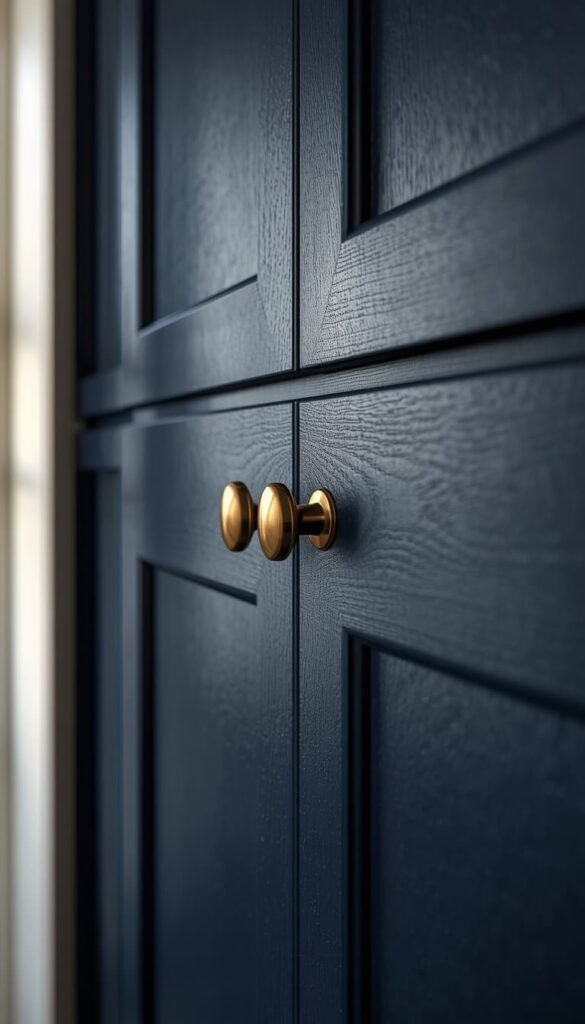
Honestly, if I had to pick one single hardware finish that was made for navy cabinets, brass would win every single time. There’s a warmth to brass that softens navy’s cool depth perfectly. It’s the design equivalent of a great accessory it doesn’t overpower, it just elevates.
Unlacquered brass is my personal favorite here because it develops a natural patina over time, giving your kitchen that lived-in, collected over time feel that no staged showroom can replicate. If you prefer something more consistent, brushed brass is the low maintenance alternative that still looks stunning. Budget-wise, you don’t need to spend a fortune brands like Rejuvenation, Schoolhouse, and even Amazon’s Cosmas line offer solid brass-toned pulls at very different price points.
5. Navy With Gold Hardware
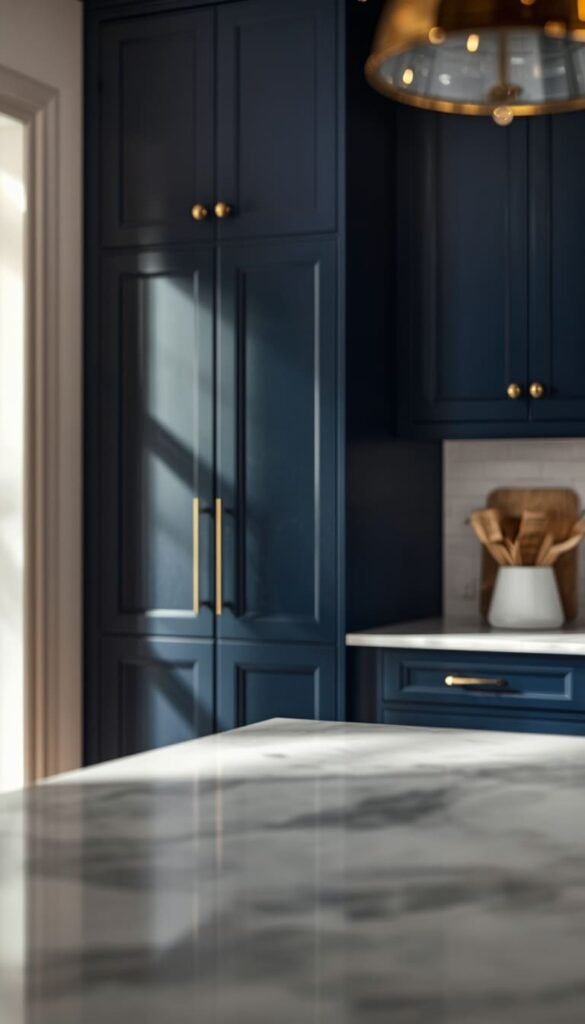
Gold and brass often get used interchangeably, but there’s a real difference worth knowing. Brass has those warm, slightly muted, almost antique undertones. Gold particularly polished gold is brighter, bolder, and more glamorous. When you pair polished gold hardware with navy cabinets, the result feels less “cozy farmhouse” and more “upscale boutique hotel.”
I’ve used this combination in a few higher-end projects in the Dallas area, and it never fails to photograph beautifully. The key is committing fully. If you’re going gold, take it through your faucet, your pendant lights, and even your cabinet hinges. A half-hearted gold moment looks accidental. A fully considered gold palette looks intentional and luxurious.
- Polished gold works best in kitchens with good natural light it can feel heavy in darker spaces
- Pair with white or cream countertops to keep the palette from feeling too busy
- Matte gold is a softer middle ground if full polished gold feels too flashy for your taste
Are you going full navy on all cabinets, or starting with just the lowers?
6. Navy Farmhouse Kitchen
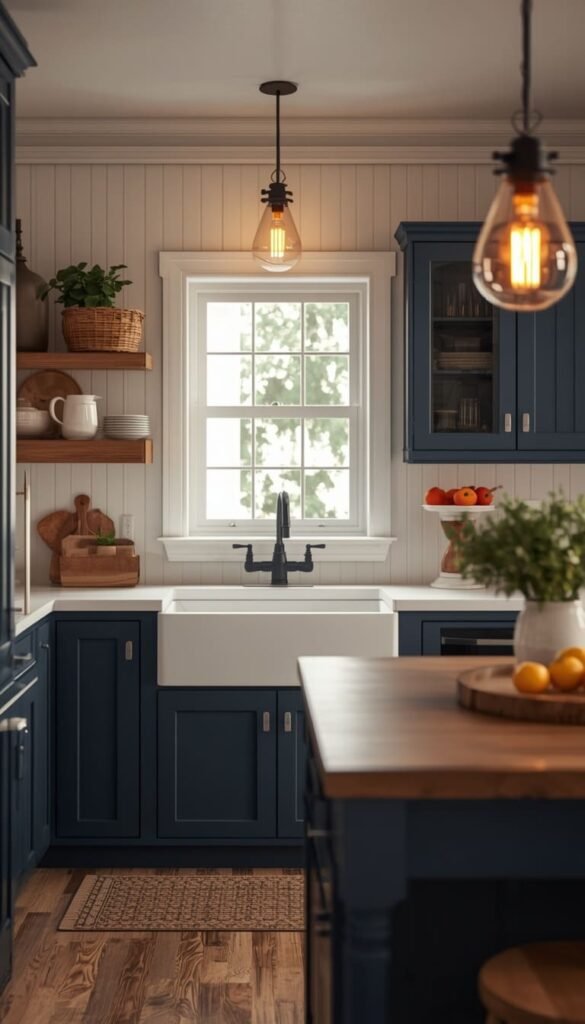
There’s a reason the navy farmhouse kitchen has become such a staple on Pinterest boards and in renovation magazines across the South and Midwest. It takes two things Americans genuinely love the warmth of farmhouse style and the sophistication of navy and puts them in the same room together. The result feels both nostalgic and fresh at the same time.
For this look, the details do all the heavy lifting. Think navy Shaker cabinets paired with an apron front farmhouse sink, open wood shelving above, and beadboard paneling on the kitchen island. Warm Edison bulb pendant lights and a shiplap ceiling wall finish the picture beautifully. One thing to watch out for is going too dark on every surface. Navy already carries visual weight, so balance it with plenty of warm white, natural wood, and soft linen tones throughout the space.
Top 6 Navy Kitchen Cabinet Ideas:
| Idea | Estimated Price | Maintenance |
|---|---|---|
| Classic Navy Shaker Cabinets | $1,500 – $4,000 (paint + hardware) | Low |
| Matte Navy Lower + White Uppers | $800 – $2,500 (DIY paint project) | Low |
| Navy With Brass Hardware | $150 – $600 (hardware swap only) | Low |
| Navy Island in All White Kitchen | $300 – $1,200 (repaint + new pulls) | Low |
| Navy With Butcher Block Countertops | $1,800 – $5,000 (cabinets + countertops) | Medium |
| Navy With White Marble Countertops | $4,500 – $12,000 (full countertop install) | High |
7. Navy Island in an All White Kitchen
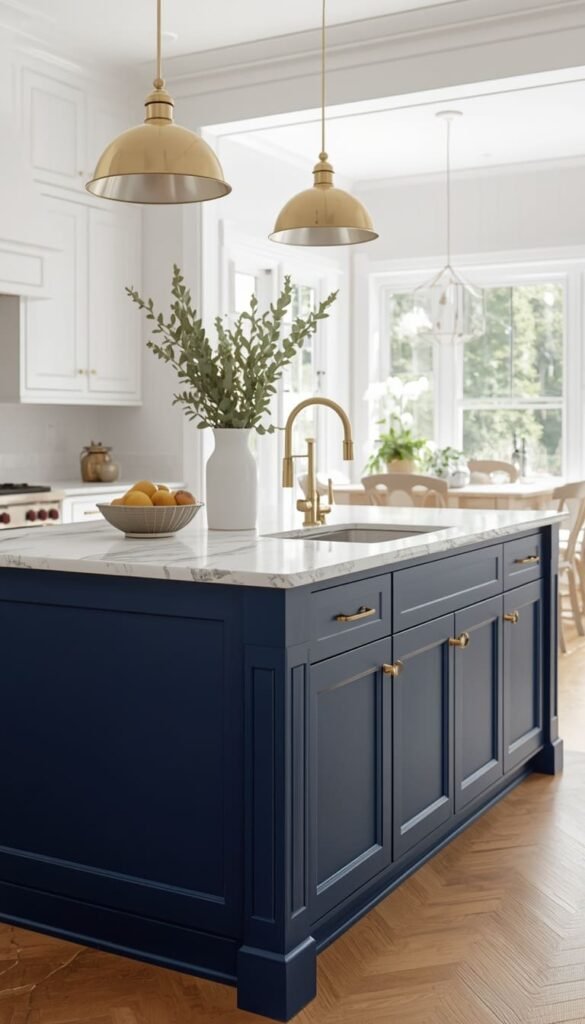
This is genuinely one of my favorite recommendations for homeowners who love the idea of navy but aren’t ready to commit to full cabinetry. A navy kitchen island in an otherwise white kitchen does something really clever it creates a focal point, adds personality, and gives the space a custom, designer feel without a full renovation.
The island becomes the anchor of the room. Everything else stays clean and neutral, which actually makes the navy pop even harder. I worked on a project in Nashville where we simply repainted an existing white island in Farrow and Ball’s Hague Blue and added new brass bar pulls. The homeowner spent under $400 total and said every single guest asked if they’d done a full kitchen remodel. That’s the power of a well-placed navy moment.
- Choose a countertop in a contrasting material for the island butcher block or a veined marble both work beautifully
- Make sure your island lighting echoes the navy palette, either in a complementary finish or a bold contrasting tone
- This approach works especially well in open-concept layouts where the island is visible from the living area
8. Navy With Butcher Block Countertops
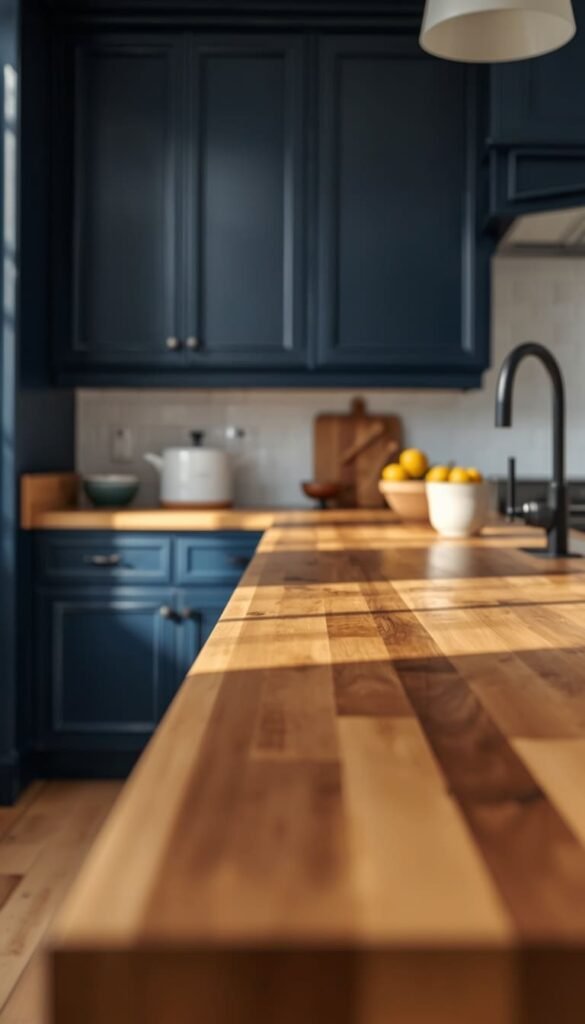
If navy and brass is the glamorous pairing, then navy and butcher block is the warm, approachable one the combination that makes a kitchen feel genuinely lived in and loved. The richness of navy against the honey tones of a natural wood countertop creates an immediate coziness that no marble or quartz can quite replicate.
From a budget perspective, this pairing is also a serious win. Butcher block countertops typically run between $30 and $60 per square foot installed, making them one of the most affordable countertop options that still looks high-end. The honest maintenance reality though butcher block needs regular oiling, maybe three to four times a year, and it doesn’t love sitting water around the sink area. Seal that sink zone well or consider a small section of quartz just around the sink and use butcher block for the rest. It’s a practical hybrid approach I recommend to almost every client considering this combo.
9. Navy With White Marble Countertops
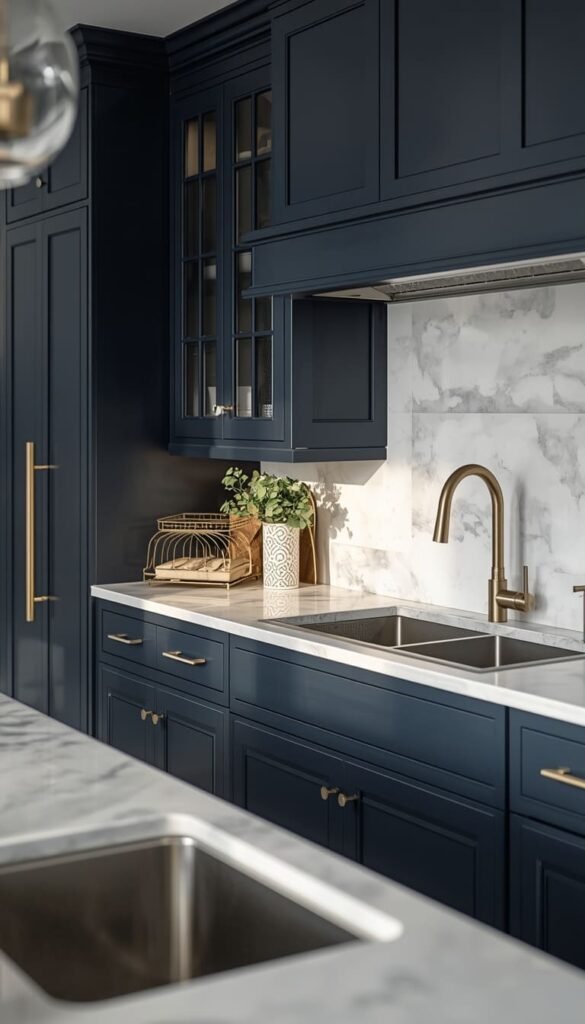
If you want a kitchen that feels genuinely luxurious without screaming for attention, navy cabinets paired with white marble countertops is the combination to beat. There’s a quiet confidence to this pairing that I find endlessly elegant. The cool veining in white marble whether it’s Carrara, Calacatta, or a high quality quartz alternative picks up the blue undertones in navy and ties the whole palette together effortlessly.
I designed a kitchen in a Georgetown townhouse a couple of years back using this exact combination, and the homeowner still sends me photos of it. We used Benjamin Moore’s Hale Navy on custom Shaker cabinets and paired it with a Calacatta Gold marble island top. The gold veining in the marble connected directly to the brushed brass fixtures we’d chosen. Every element was talking to each other. That’s what a well considered palette does it creates a conversation across the whole room.
One practical note worth mentioning real marble is porous and will stain if you’re not careful. For busy kitchens, I almost always recommend a high quality marble look quartz like Silestone or Cambria. You get the visual payoff without the anxiety every time someone sets a wine glass down.
10. Navy With Black Countertops
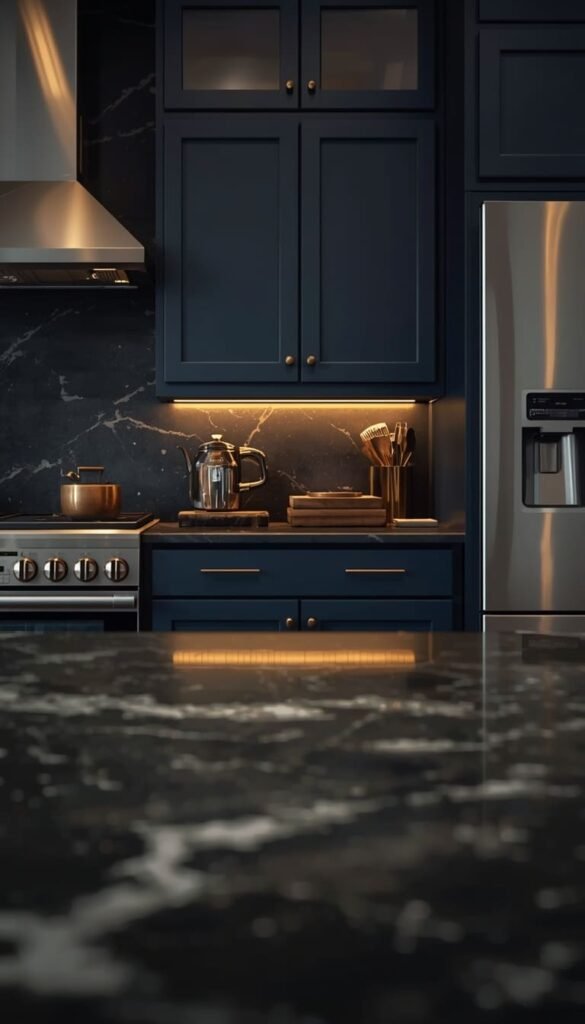
This is the combination for the homeowner who wants their kitchen to feel bold, dramatic, and unapologetically modern. Navy cabinets against black countertops creates a moody, layered palette that feels more like a sophisticated lounge than a cooking space in the absolute best way.
A quick trick I’ve learned with this pairing: lighting is everything. Navy already absorbs light, and black countertops do the same. Without proper lighting strategy, this combination can make a kitchen feel like a cave. Under cabinet LED strips are non-negotiable here, and I’d strongly recommend adding a statement pendant or two above the island to draw the eye upward and create visual lift.
- Matte black countertops in soapstone or leathered granite add texture that keeps the look from feeling flat
- Stainless steel appliances break up the dark palette beautifully and add a necessary lightness
- This combination has serious resale appeal in urban markets buyers in cities like Chicago, New York, and Seattle consistently respond well to it
11. Navy With Natural Wood Accents
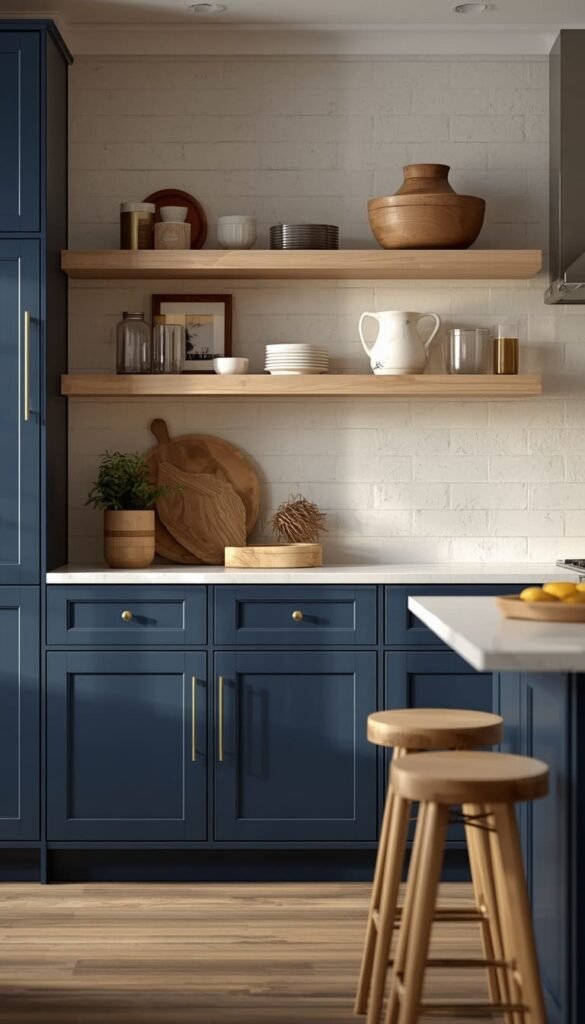
There is something deeply satisfying about navy cabinets paired with natural wood elements. It’s the kind of kitchen that feels simultaneously designed and organic like it evolved naturally rather than being decorated all at once. The warmth of wood against the cool depth of navy creates a balance that almost every design style can claim as its own.
In practice, wood accents can show up in several places. Open floating shelves in white oak above navy base cabinets is one of my personal favorite moves. A natural wood hood surround against a navy cabinet backdrop is another. Even simple details like wood bar stools at a navy island can shift the whole energy of a kitchen from cold to cozy.
What makes this pairing so versatile is that it works whether your kitchen leans coastal, farmhouse, Scandinavian, or transitional. The wood tone you choose does matter though. Lighter woods like white oak and maple keep the palette feeling fresh and airy. Darker woods like walnut add richness and depth beautiful, but be intentional about your lighting if you go that route.
Which hardware finish are you leaning toward brass, gold, or matte black?
12. Coastal Navy Kitchen
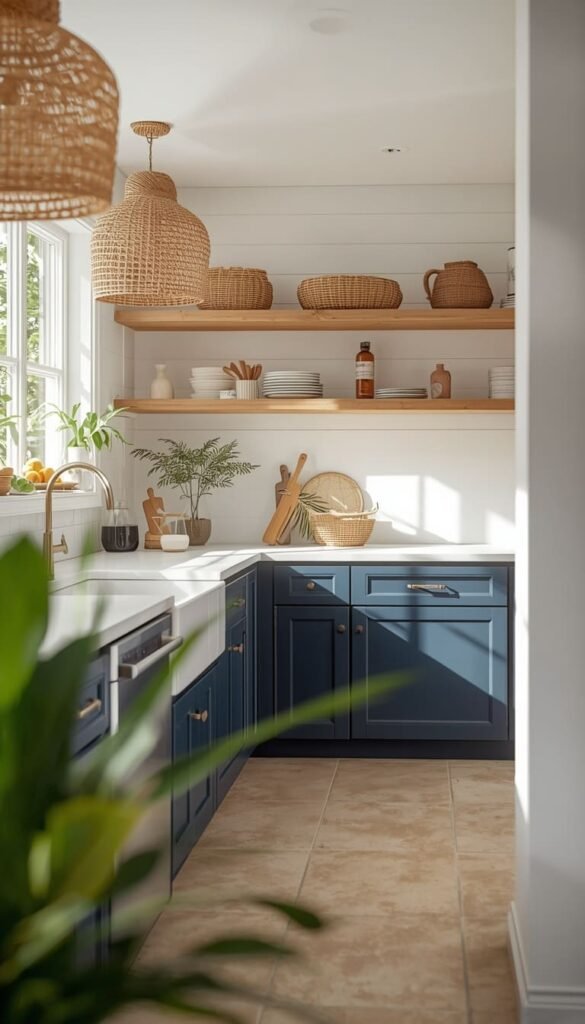
Coastal kitchens and navy blue have always had a natural relationship it’s almost too obvious. But done well, a coastal navy kitchen feels genuinely special rather than predictable. The secret is in the layering of textures and the lightness of everything surrounding the navy.
Think white shiplap walls, natural rattan pendant lights, open shelving with woven baskets, and maybe a pale gray or sandy beige tile floor that echoes a beachside palette. The navy cabinets become the anchor the one grounding element in a room full of light, natural texture, and easy living energy. I’ve done several of these along the Carolina coast and in beach communities in Florida, and they photograph stunningly while also being incredibly practical for families who track in sand and saltwater on a daily basis.
One thing to watch out for in actual coastal homes humidity. If your kitchen is in a genuinely humid environment near the water, make sure your cabinet construction is solid wood or a high quality plywood box with a moisture resistant finish. Cheaper MDF cabinets will swell and warp in high humidity coastal conditions, and no amount of beautiful navy paint will save them.
13. Navy Two Tone With Cream or Off White
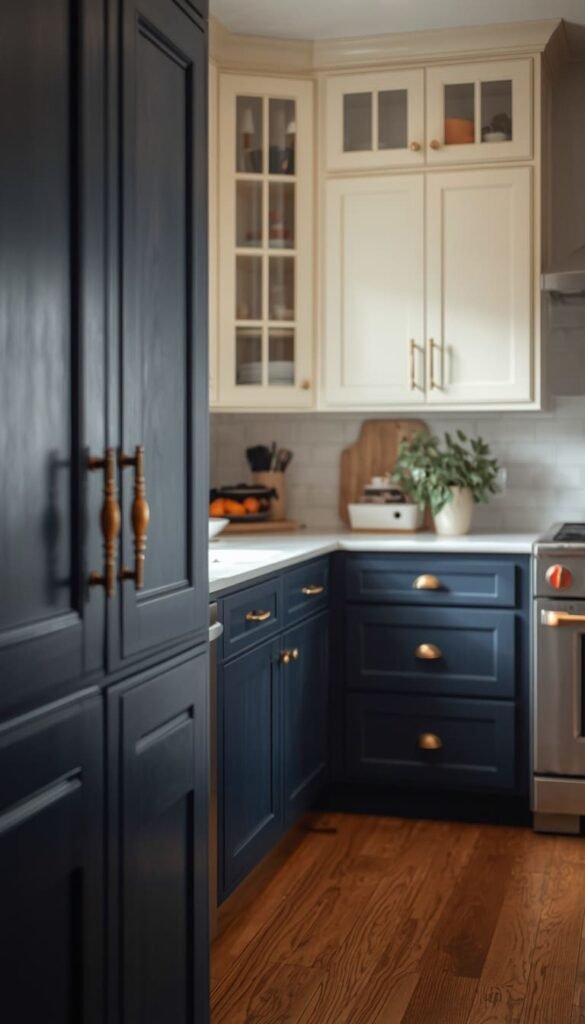
Cream and navy is a softer, warmer alternative to the classic navy and white pairing, and honestly I think it’s the more sophisticated choice of the two. Where bright white can feel a little stark against deep navy, cream brings a gentleness to the palette that makes the whole kitchen feel warmer and more inviting. It’s the difference between a kitchen that looks decorated and one that feels like home.
For this look, I typically recommend navy on the lower cabinets and a warm cream on the uppers. Benjamin Moore’s Ivory White or Sherwin Williams Antique White are both beautiful upper cabinet choices that sit comfortably alongside navy without competing with it. Add antique brass hardware, a warm wood floor, and maybe a ceramic farmhouse sink, and you have a kitchen that feels genuinely timeless.
- Cream uppers make ceiling height feel more generous a great trick for kitchens with standard 8 foot ceilings
- Avoid cool whites with blue undertones alongside navy they create an unintentional clash that reads as a mistake rather than a design choice
- This combination works beautifully in traditional, transitional, and farmhouse style kitchens across the board
14. Contemporary Flat Front Navy Cabinets
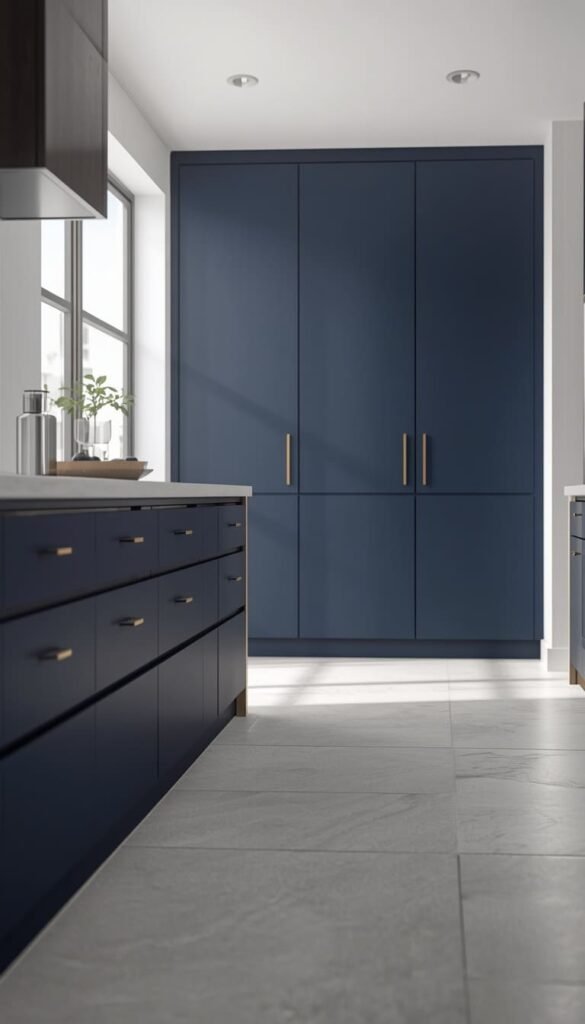
Clean lines, zero ornamentation, and a deep navy finish contemporary flat front cabinets are what happens when confidence meets restraint. There are no decorative details to distract you here. The cabinet door itself is the statement, and navy makes it a powerful one.
This is the style I gravitate toward in urban projects condos in Miami, lofts in Atlanta, modern townhouses in Seattle. The flat front silhouette works perfectly with integrated appliances, handleless push to open drawers, and large format tile floors. Everything about the design language says intentional and considered.
A quick trick I’ve learned with flat front navy cabinets specifically the quality of your paint application matters more here than with any other cabinet style. Without the visual distraction of a raised panel or a Shaker recess, every brush mark, drip, or uneven coat is completely visible. Always go with a professional spray finish on flat front doors. It’s worth every penny of the extra cost.
15. Navy Floor to Ceiling Cabinetry
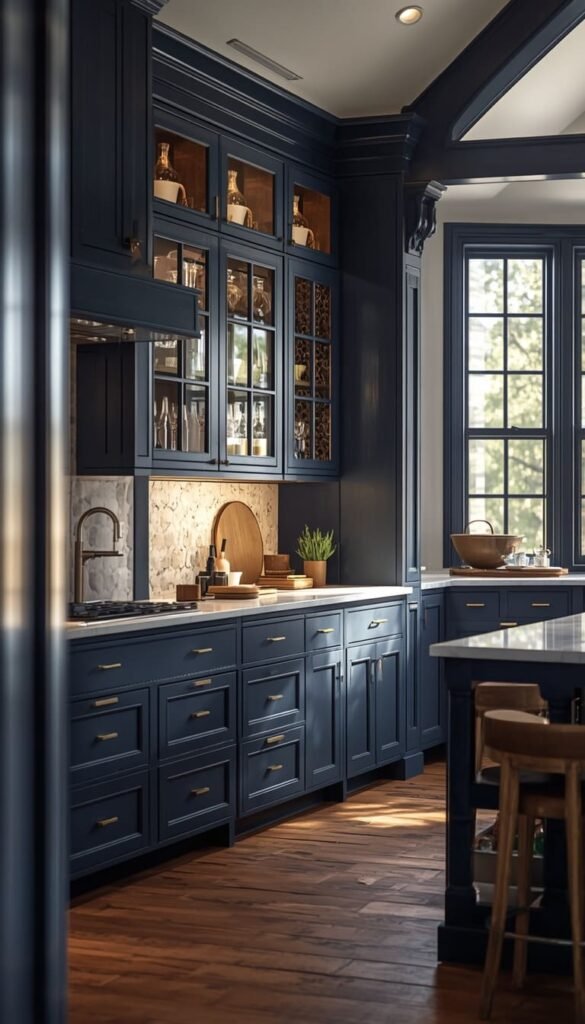
Going floor to ceiling with navy cabinetry is a bold move, and I’ll be honest with you it’s not for everyone. But when it works, it genuinely works in a way that no other kitchen decision does. A full wall of deep navy cabinetry creates a built-in, architectural quality that makes a kitchen feel like it was designed from the ground up rather than assembled from a catalog.
The rooms where I’ve seen this succeed most consistently share a few common traits. Good natural light is probably the most important factor floor to ceiling navy in a north facing kitchen with one small window can feel oppressive. But in a kitchen with generous windows, skylights, or an open plan layout that borrows light from adjacent spaces, it’s absolutely stunning.
- Break up the visual weight with glass front upper cabinet doors they lighten the look while adding a display element
- Integrated lighting inside upper cabinets transforms floor to ceiling navy from heavy to dramatic in the best sense
- Light countertops in white quartz or marble are essentially non-negotiable with this approach they provide the visual breathing room the design needs
16. Navy With Open Shelving
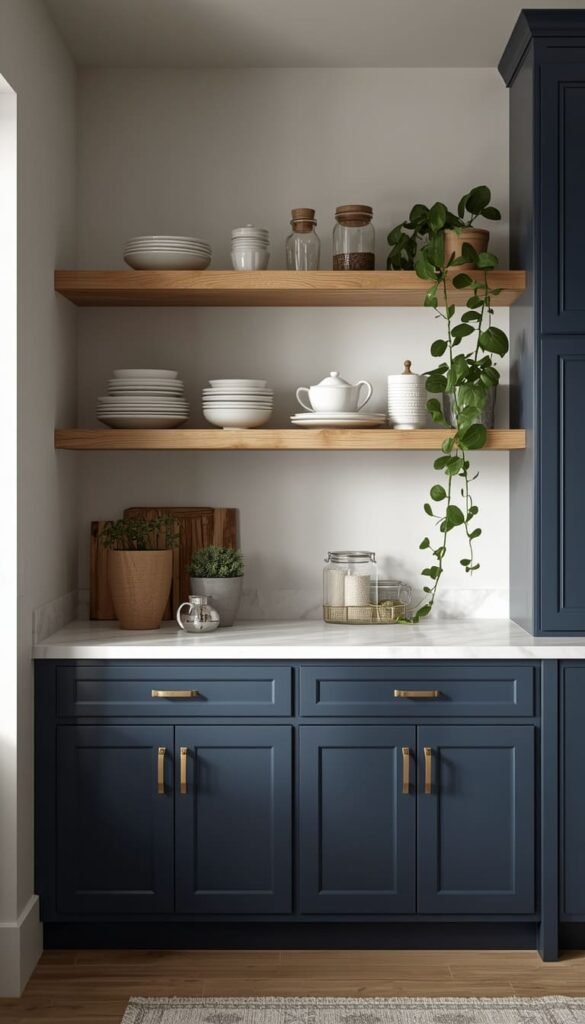
Open shelving above navy base cabinets is one of those design decisions that looks effortless in photos and requires a little more thought in real life but when you commit to it properly, the result is genuinely beautiful. The contrast between deep navy below and open, airy shelving above creates a visual lightness that keeps the kitchen from feeling too heavy or closed in.
My preference is always natural white oak floating shelves in this pairing. The warm wood tone against navy creates that organic balance I mentioned earlier, and the open shelving gives you a place to bring in ceramics, glassware, plants, and small decorative objects that add personality and color to the space.
Here’s the honest reality check that most design blogs skip over open shelves require daily tidying. Everything on those shelves is always on display, which means a stack of mismatched mugs or a collection of random spice jars will undermine the entire aesthetic instantly. If you’re a naturally organized person, open shelving is a dream. If your cabinets are currently a chaos of mismatched containers and forgotten appliances, closed uppers might genuinely serve you better.
Is your kitchen style more farmhouse cozy or contemporary clean?
17. Navy With Zellige or Patterned Backsplash
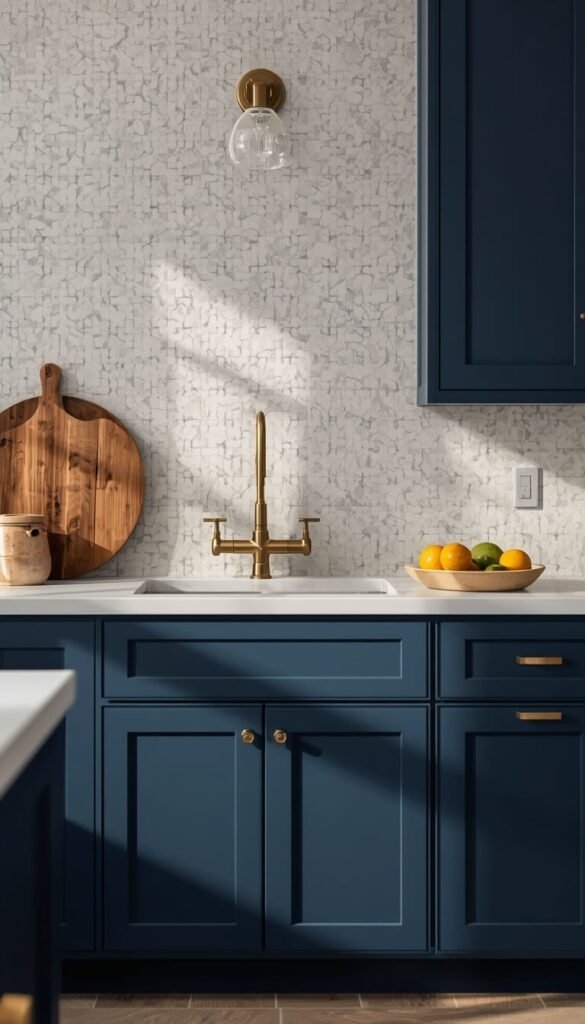
A statement backsplash behind navy cabinets is one of those design moves that separates a good kitchen from a truly memorable one. And right now, zellige tile is having an absolute moment in American kitchens for very good reason. That handmade Moroccan tile with its irregular surface, subtle color variation, and almost jewel-like quality catches light in a way that no standard subway tile ever could.
Paired with navy cabinets, zellige creates a layered, textural richness that feels both collected and intentional. I used a warm white zellige backsplash behind navy Shaker cabinets in a project in Savannah last spring, and the way the light moved across that backsplash throughout the day was genuinely something to watch. Morning light made it glow softly. Evening light turned it dramatic. The navy held steady through all of it.
Beyond zellige, geometric encaustic cement tiles and large format patterned porcelain are both showing up beautifully in navy kitchens right now. The key is making sure your backsplash pattern doesn’t compete with your hardware finish. If your tile is doing a lot of visual work, keep your pulls simple and let the backsplash breathe.
- White or warm cream zellige is the most versatile choice alongside navy it works with brass, gold, and matte black hardware equally well
- Patterned cement tiles work best in farmhouse or eclectic kitchens where the handmade quality fits the overall design language
- Grout color matters more than people realize a warm gray or putty grout ties navy and patterned tile together far better than bright white grout
18. Navy With Stainless Steel Appliances
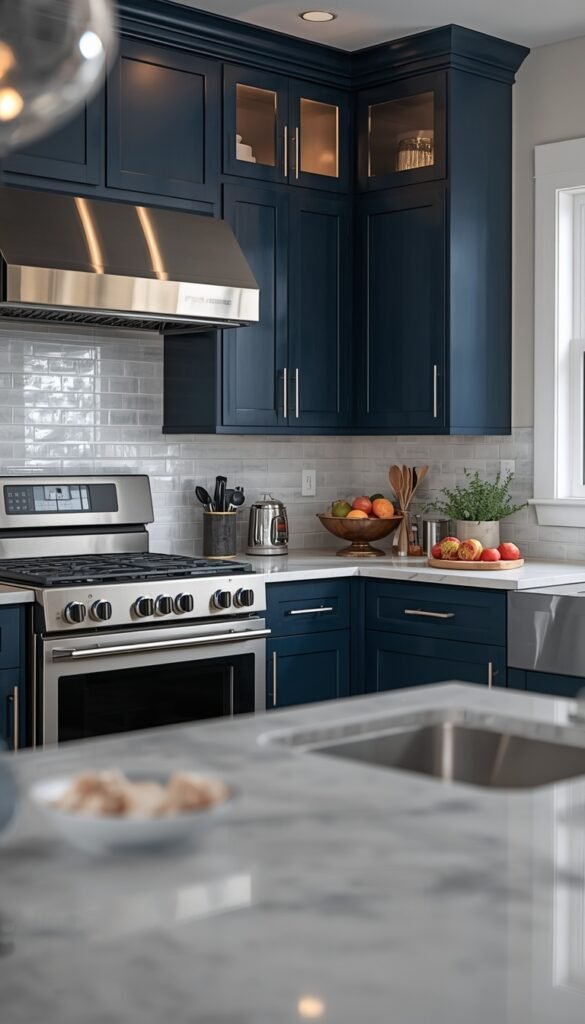
Navy and stainless steel is the most practical pairing on this entire list, and I mean that as a genuine compliment. Most American homeowners already have stainless steel appliances, which means this is often the combination people are working with whether they planned it or not. The good news is that it works beautifully.
Stainless steel has a cool, slightly blue undertone that sits naturally alongside navy without any visual tension. The reflective surface of stainless appliances also does something useful in a navy kitchen it bounces light around the space and prevents the darker cabinetry from absorbing everything. In kitchens where natural light is limited, that reflective quality is genuinely functional, not just aesthetic.
What I always tell clients going this route is to commit to a consistent stainless finish across all appliances. Mixing brushed stainless with polished stainless or fingerprint resistant coated stainless creates a subtle but noticeable inconsistency that undermines the clean look you’re going for. Pick one finish family and stay there throughout the kitchen.
19. Navy With Mixed Metals
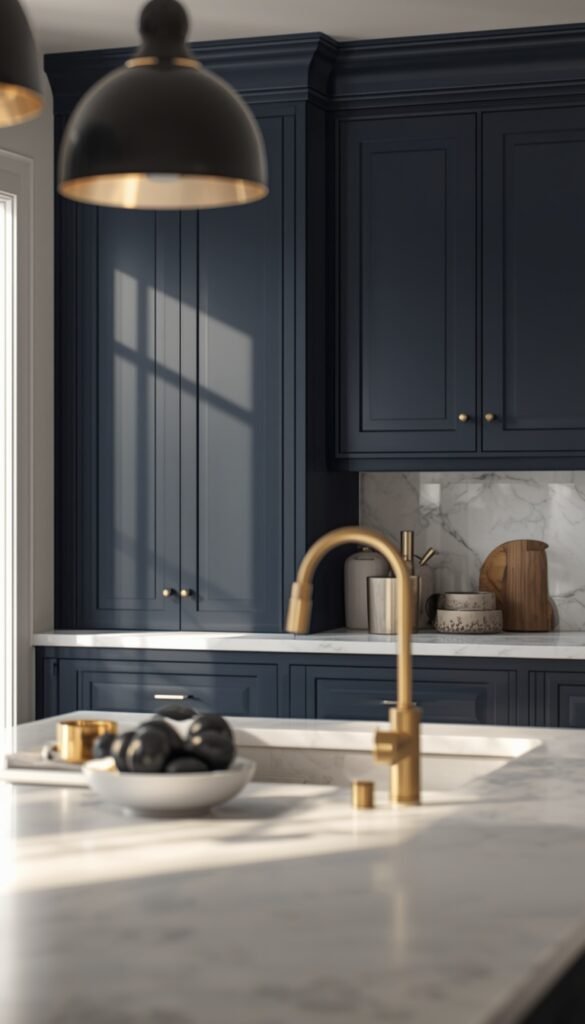
Mixed metals used to be considered a design mistake. Today, done with intention, it’s one of the most sophisticated moves you can make in a kitchen. Navy cabinets are actually one of the best backdrops for mixed metals because the depth of the color acts as a visual anchor that lets different finishes coexist without fighting each other.
The approach I use consistently in my own projects is choosing one dominant metal and one accent metal. For example, brushed brass as the dominant finish on cabinet pulls and faucet, with matte black as the accent on pendant lights and cabinet hinges. The navy ties it all together underneath. It sounds like it shouldn’t work on paper, and then you see it in person and it absolutely does.
- Never mix more than two metal finishes in a single kitchen three becomes genuinely chaotic regardless of how intentional you are
- Distribute your accent metal evenly throughout the space so it reads as a deliberate choice rather than an afterthought
- Warm metals like brass and bronze mix more naturally with each other than warm and cool metals do brass and chrome together requires a very careful hand
20. Navy in a Small Kitchen
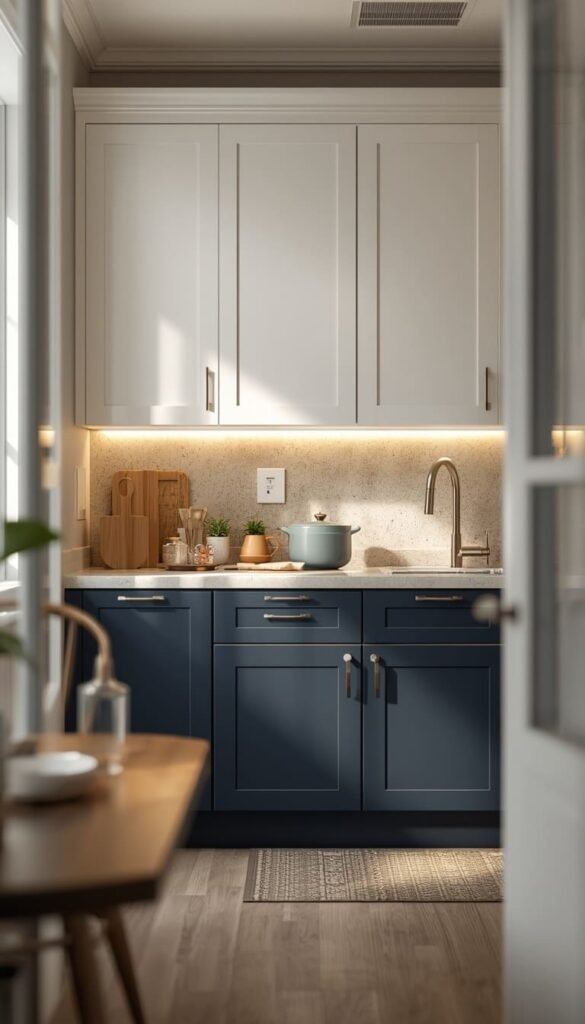
I want to push back on something you may have heard before that dark colors make small kitchens feel smaller. In my experience, that rule is far too absolute and has talked too many homeowners out of a navy kitchen they would have loved. The truth is more nuanced than that.
Navy in a small kitchen absolutely can work, and work beautifully, when you make smart decisions around it. Reflective surfaces are your best friend here. A high gloss or satin cabinet finish, light countertops, a mirrored or glossy backsplash tile, and strategic under cabinet lighting all work together to keep the space feeling open despite the depth of the color. I’ve done navy kitchens in New York City apartments that measure under 80 square feet and they looked intentional, cozy, and completely considered rather than dark or cramped.
- Use navy on lower cabinets only and keep uppers white or light to maintain visual airiness above eye level
- Handleless cabinets or slim bar pulls reduce visual clutter in tight spaces significantly
- A light floor white tile, pale wood, or light stone grounds the space without adding more visual weight at the bottom of the room
21. Navy Gray Kitchen
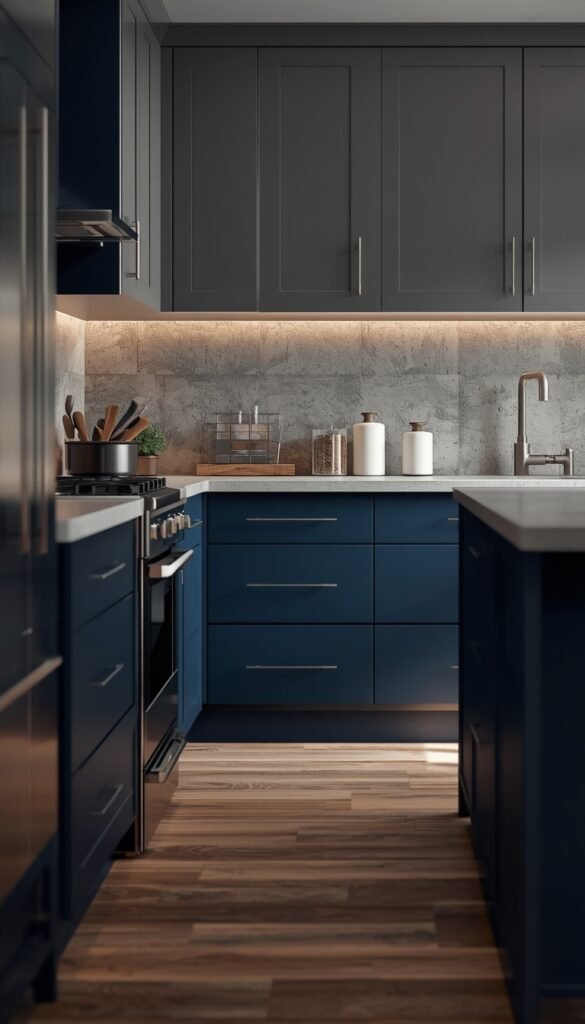
Navy and gray is the combination I reach for when a client wants something sophisticated and understated rather than bold and expressive. It’s a cooler, more restrained palette that has a quietly confident energy the kind of kitchen that doesn’t announce itself loudly but earns longer looks the more time you spend in it.
The key to making navy and gray work is contrast. If your navy and your gray are too close in value, the whole palette flattens out and loses its depth. I typically pair a deep true navy on lower cabinets with a medium warm gray on uppers something like Sherwin-Williams Intellectual Gray or Benjamin Moore Revere Pewter. The difference in depth between the two creates just enough contrast to keep the design feeling dynamic rather than monotonous.
Stainless steel appliances are the natural hardware companion for this palette, and concrete look countertops or honed soapstone bring in that industrial cool quality that makes navy gray kitchens feel genuinely current. This combination reads particularly well in urban homes, modern farmhouses, and any space where the architecture already has a strong geometric quality to it.
Are you planning a DIY paint weekend or calling in a professional?
22. Navy With Warm Wood Floors
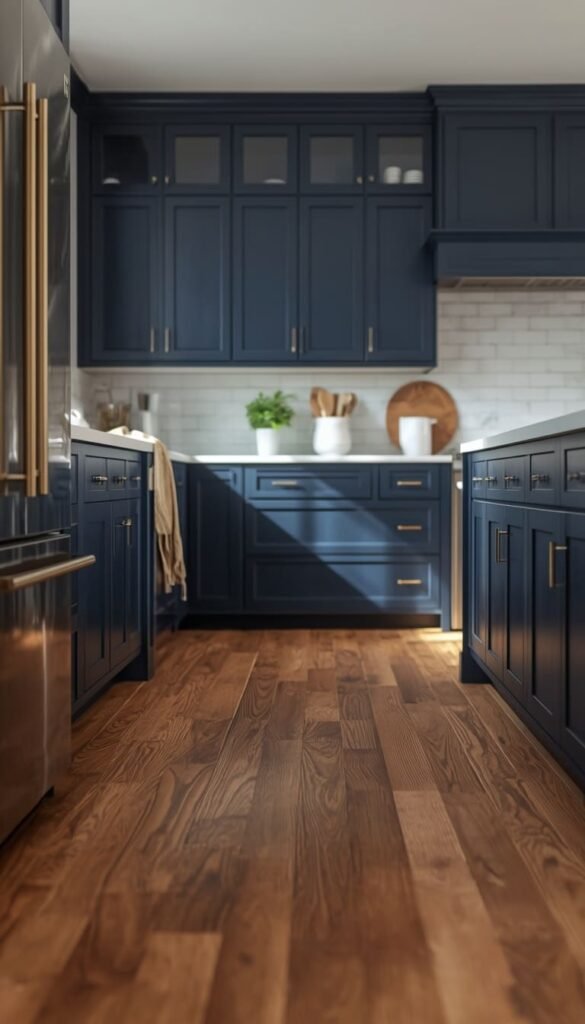
The relationship between navy cabinets and warm wood floors is one of those combinations that just makes instinctive sense the moment you see it. The warmth of honey toned or medium brown wood underfoot softens the cool boldness of navy above, and the result is a kitchen that feels simultaneously designed and deeply livable.
White oak floors are my personal favorite pairing with navy cabinets right now. That warm, slightly golden tone with visible grain character creates a beautiful organic contrast against the smoothness of painted navy cabinetry. Wide plank floors in particular anything from five inches and up add a generous, unhurried quality to the space that I find really compelling alongside navy.
A quick trick I’ve learned over years of doing this: make sure your wood floor tone doesn’t match your wood accents too perfectly. A little variation between your floor tone, your open shelving tone, and any wood furniture pieces actually makes the space feel more collected and natural. Perfect matching reads as staged. Thoughtful variation reads as lived in and real.
- Medium brown floors in walnut or hickory add richness and work particularly well in transitional and traditional navy kitchens
- Very dark floors paired with navy cabinets require exceptional lighting beautiful in the right space but unforgiving if the light isn’t there
- Avoid floors with strong orange or red undertones alongside navy the contrast can feel jarring rather than warm
23. Navy Cabinets With Under Cabinet Lighting
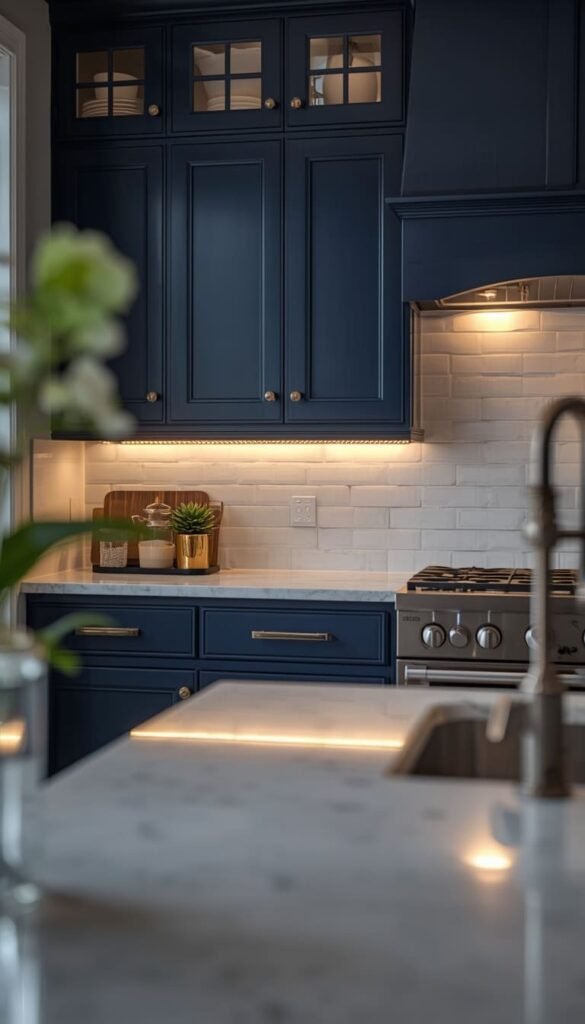
If there is one upgrade I would make non negotiable in every single navy kitchen I design, it is under cabinet lighting. Full stop. Navy is a light absorbing color by nature, and without proper task lighting along your countertops, even the most beautifully designed navy kitchen can feel dim and heavy during evening hours or on overcast days.
LED strip lighting tucked underneath upper cabinets does several things simultaneously. It illuminates your workspace practically, which every person who has ever tried to chop vegetables in a poorly lit kitchen will appreciate deeply. It also creates a beautiful warm glow along your countertop surface that highlights your backsplash tile and adds depth to the overall kitchen atmosphere. And perhaps most importantly in a navy kitchen specifically, it creates a visual separation between your upper and lower cabinets that makes the whole design feel more layered and considered.
The current generation of LED strips is genuinely impressive from a value perspective. Warm white LED strips from brands like Kichler or even well reviewed options on Amazon run between $30 and $80 for a standard kitchen installation and can be hardwired or plugged in depending on your preference and budget. Smart LED options that adjust color temperature throughout the day are worth the modest extra investment if you spend significant time in your kitchen during both day and evening hours.
24. Navy Kitchen With Statement Pendant Lighting
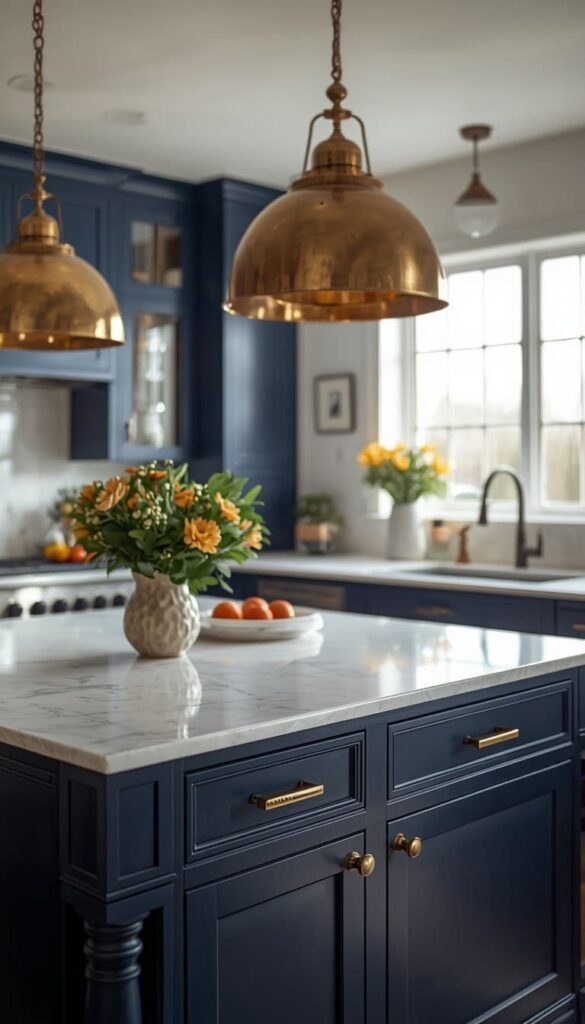
Pendant lighting in a navy kitchen is not just functional it’s the finishing moment that pulls the entire design together. After all the careful decisions about cabinet finish, hardware, countertops, and backsplash, your pendant lights are the jewelry of the room. They sit at eye level, they catch the light, and they communicate your design intention more immediately than almost any other single element.
In navy kitchens specifically, I tend to gravitate toward pendants that introduce warmth into the palette. Aged brass or unlacquered brass pendants above a navy island create that warm glow that balances the coolness of the cabinetry beautifully. Rattan or woven pendants bring in organic texture that softens the formality of deep navy. Even a bold black metal industrial pendant can work strikingly well if your navy kitchen leans more contemporary or urban in its overall feeling.
Scale matters more than most homeowners realize when choosing pendants. A pendant that is too small above a navy island disappears visually and feels like an afterthought. As a general rule I always recommend pendants with a shade diameter of at least 10 to 14 inches above a standard kitchen island, hung approximately 30 to 36 inches above the countertop surface. Get the scale right and your lighting becomes a genuine design statement rather than just a light source.
Your 2-Minute Navy Kitchen Decision Map
By Budget
Starter Budget ($200 – $2,500)
- Repaint existing cabinets in Benjamin Moore Hale Navy or Sherwin-Williams Naval
- Swap hardware to brushed brass for instant impact
- Go two tone navy lowers only, keep white uppers as-is
- Add under cabinet LED strips for under $80
Luxury Investment ($8,000 – $30,000+)
- Full custom navy Shaker or flat front cabinetry with professional spray finish
- Calacatta marble or high-end quartz countertops
- Zellige or statement backsplash tile with designer grout finish
- Integrated appliances with panel-ready fronts for a seamless look
By Lifestyle
Busy Families & Everyday Cooks
- Choose satin finish over gloss far more forgiving with fingerprints and spills
- Stick to closed upper cabinets open shelving requires constant tidying
- Butcher block countertops add warmth but need sealing near the sink
- Matte black or brushed brass hardware hides daily wear better than polished finishes
Design Forward Minimalists & Empty Nesters
- Go floor to ceiling navy for maximum architectural drama
- High gloss finish rewards low traffic kitchens beautifully
- Open shelving above navy base cabinets creates that curated, editorial look
- Handle free push to open drawers keep the aesthetic perfectly clean and uninterrupted
Frequently Asked Questions
Are navy kitchen cabinets still in style for 2025?
Yes, and they’re not going anywhere soon. Navy sits in that rare category of colors that feels current without being trendy it’s been a staple in high-end American kitchen design for years and continues to show up in every major design forecast for 2025 and beyond.
What is the best paint color for navy kitchen cabinets?
Benjamin Moore Hale Navy and Sherwin-Williams Naval are my two consistent go to recommendations. Both read as true navy without pulling too purple or too green depending on your kitchen’s light conditions.
Do navy cabinets make a kitchen look smaller?
Not necessarily. Pair navy lowers with white uppers, add under cabinet lighting, and choose light countertops your kitchen will feel intentional and cozy rather than cramped.
What countertop looks best with navy blue cabinets?
White quartz or marble is the most universally flattering choice. For warmth, butcher block is beautiful. For drama, go black granite just make sure your lighting is strong enough to handle the depth.
Is it cheaper to paint kitchen cabinets navy or replace them?
Painting is significantly more budget-friendly. A professional cabinet respray typically runs $1,200 – $3,500 depending on kitchen size, compared to $8,000 $25,000 for full cabinet replacement.
Conclusion
Navy blue is one of those decisions that homeowners almost never regret and I say that after years of watching people fall completely in love with their kitchens all over again after making this one change. Your kitchen is where your mornings start and where your evenings wind down, and it deserves to feel like a space you actually want to be in. You don’t need a massive budget or a full renovation to get there. Start small grab a sample pot of Hale Navy this weekend, paint a cabinet door, and just live with it for a few days. That one small step has started some of the most beautiful kitchen transformations I’ve ever been part of.