
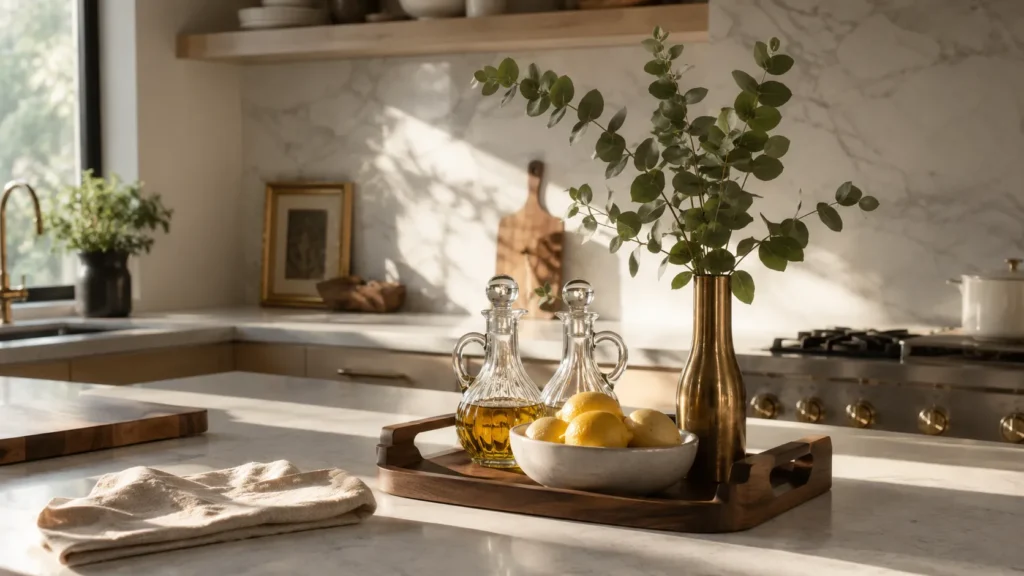
I’ve walked into more “finished” kitchens than I can count where the countertops still looked like an afterthought. A gorgeous island, top-tier quartz, and then… a random mail pile, three mismatched appliances, and a lonely fruit bowl doing all the heavy lifting. Countertop styling isn’t about buying more stuff it’s about editing what you have and giving each piece a real job to do. In this guide, I’m sharing the exact system I use with clients, from budget-friendly swaps to the mistakes that quietly wreck an otherwise beautiful kitchen
My Design Notes
I still think about a project I worked on in Austin, Texas, where my client had just dropped nine thousand dollars on a stunning quartz island. Within a week, she’d piled it right back up with a stand mixer, a toaster, three cutting boards, and a candle collection that had nowhere else to live. Her exact words to me were, “I don’t even see the counter anymore.” So we did what I call a one object earns its spot audit we pulled everything off and only let items back on if they were either beautiful or used daily, not both categories being optional. I had her decant her olive oils and dish soap into a matched set I found at a mid-range home store, and we used a single walnut tray to corral her everyday essentials near the stove. When we were done, that island finally looked like the investment it was, and she told me she started using it to set up drinks when she had friends over instead of hiding it under clutter. That’s the moment I realized styling isn’t about adding more it’s about giving every single object a reason to be there.
13 Mastering Designer Inspired Kitchen Countertop Styling: Elevated Ideas for a Stunning, Unforgettable Look
1. Start With Your Material, Not Your Décor
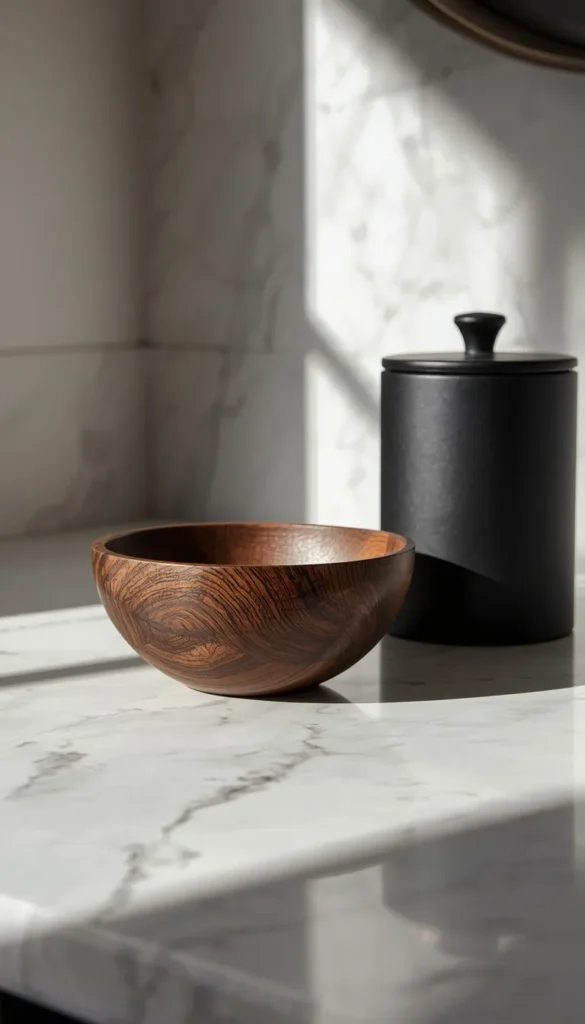
Before you buy a single tray or vase, take a real look at what your countertop is actually made of. This is the step most people skip, and it’s the reason so many styled counters fall flat. If you have white marble or light quartz, a white ceramic bowl is going to disappear into the background you’ll have spent money on something that basically vanishes. What actually works is contrast. A dark wood bowl, a piece of smoked glass, or a matte black canister will pop against a pale surface, while warm brass or copper looks incredible against dark soapstone or navy quartz. I always tell clients to hold the object right up against the counter before buying it. If it blends in instead of standing out, it’s not the right piece, no matter how much you love it in the store.
2. The 3 5 7 Rule Explained Properly
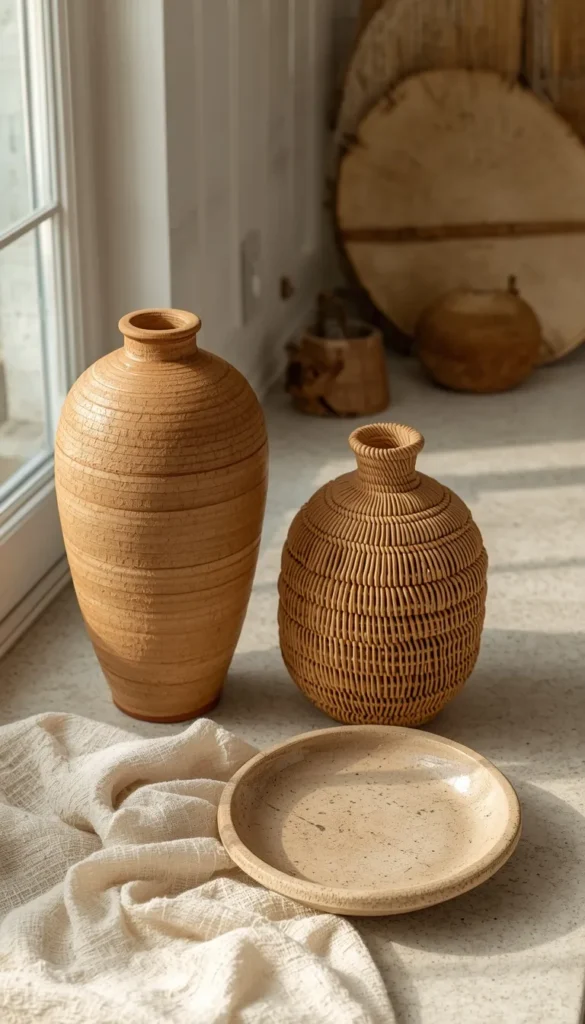
You’ve probably heard designers talk about grouping things in odd numbers, but almost nobody explains why it actually works. Our eyes read even numbers as static and symmetrical, which can feel a little stiff on a surface that’s supposed to feel lived in. Odd numbers create movement instead.
- Group three objects with different heights tall, medium, low
- Vary the shapes too, so you’re not lining up three round things in a row
- Leave visible counter space around the grouping so it doesn’t feel cramped
A trio works in almost every kitchen size, but if you have a larger island, five objects with varied textures can fill the space without feeling busy.
3. Zone Your Counter Like a Pro
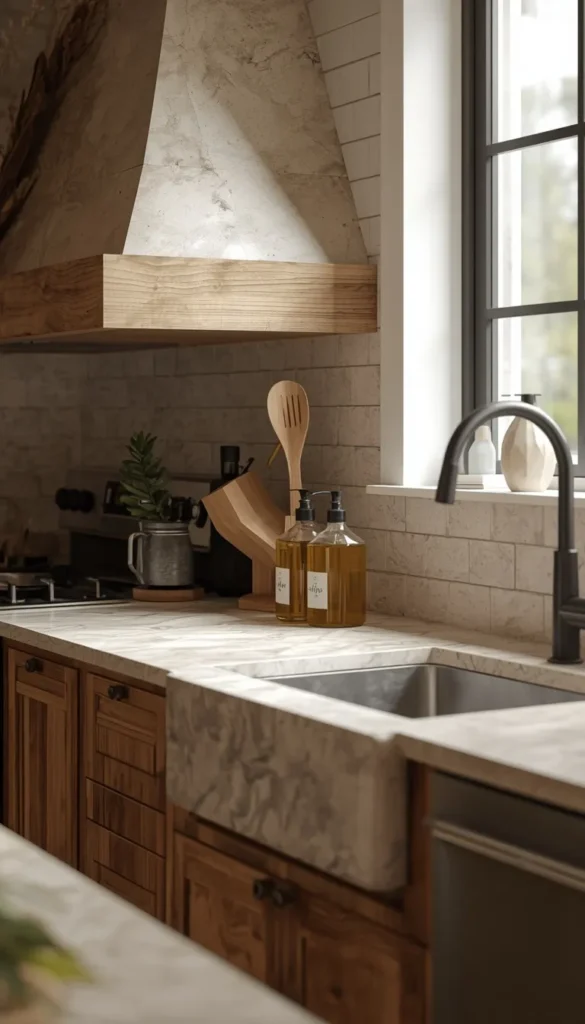
This is something I don’t see covered nearly enough, and it changes everything once you start thinking this way. Your countertop isn’t one big surface it’s actually several small zones, and each one has a different job. Near the stove, you want things you reach for constantly: oils, salt, a wooden spoon holder. Near the sink, function takes over completely, so soap and a scrub brush live there, just upgraded to look nicer. Then you’ve got your display zone, usually near the window or on an island, where the pretty stuff gets to shine without being touched every five minutes. Once you separate these zones in your head, styling stops feeling overwhelming because you’re not trying to solve the whole counter at once.
4. Farmhouse Countertop Styling What Actually Belongs There
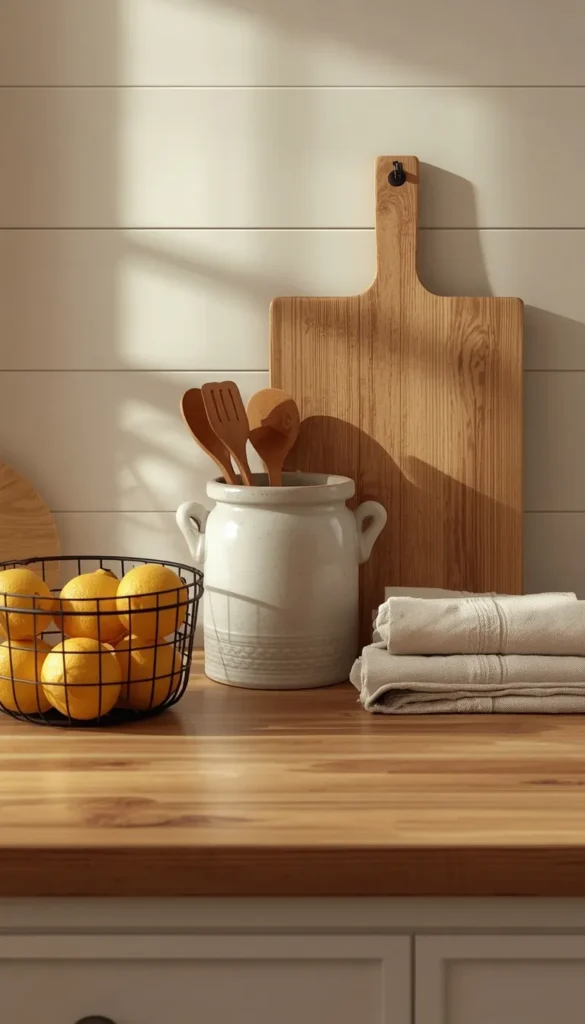
Farmhouse style gets misunderstood a lot. People assume it means piling on rustic clutter, but the best farmhouse kitchens I’ve styled are actually pretty restrained. Think a wire basket of lemons, a stoneware crock for utensils, and a stack of linen dish towels folded just so. Wood is doing most of the heavy lifting here cutting boards leaned against a backsplash, a walnut tray corralling your oils, maybe a small galvanized bucket holding fresh herbs. One thing to watch out for is going too matchy with your rustic pieces, because a counter full of only distressed wood starts to look like a prop shop instead of a real kitchen. Mixing in one modern element, like a sleek black faucet or a simple glass vase, keeps the whole look from feeling costume-y.
Which of these zones stove, sink, or display is the messiest spot on your counter right now?
5. Modern and Minimalist Countertop Styling
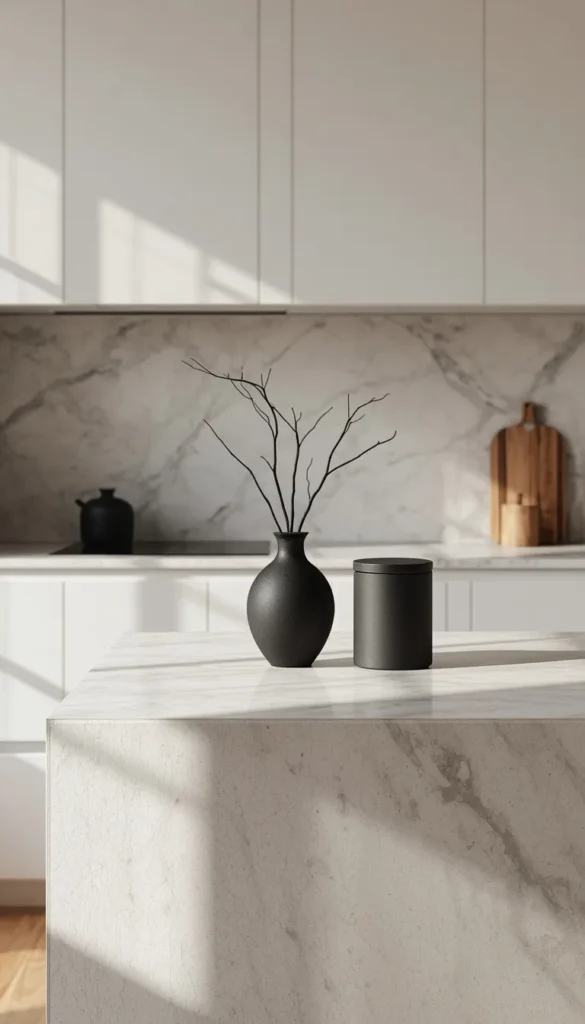
Modern styling is less about what you add and more about what you have the confidence to leave out. A single sculptural vase, one canister, and bare counter space around it will look more expensive than a counter packed with ten curated items. I’ve noticed clients get nervous with this much empty space at first, like they’re not “done” yet, but that negative space is exactly what makes the look feel high end. Stick to a tight color palette too black, white, warm wood, maybe one metal finish. The second you introduce four different materials, minimalist starts drifting into cluttered without you even realizing it.
6. Transitional Kitchen Styling The In Between Look Done Right
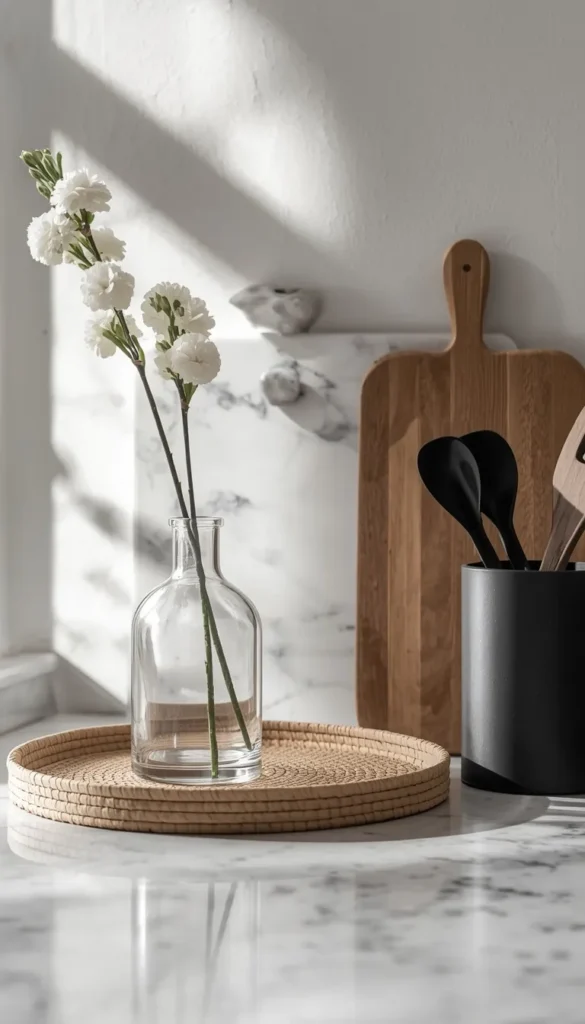
Transitional is honestly my favorite style to work with because it gives you room to breathe. You’re blending clean modern lines with warmer, more traditional textures, so your countertop decor should do the same. A simple glass or ceramic vase pairs beautifully with a woven wood tray underneath it. A classic marble cutting board next to a matte black utensil holder hits that same balance. The trick is picking one modern piece and one traditional piece per grouping instead of going all in on either direction that’s what keeps transitional from tipping into looking like two different kitchens mashed together.
Top 6 kitchen countertop styling ideas
| Idea | Estimated Price | Maintenance |
|---|---|---|
| Contrasting decor bowl or canister | $30 – $80 | Low |
| Odd-number tray grouping (3 items) | $40 – $120 | Low |
| Decanted soap and oil containers | $25 – $60 | Medium |
| Wood or rattan styling tray | $30 – $90 | Medium |
| Fresh fruit or seasonal bowl display | $15 – $40 | High |
| Statement vase with branches or florals | $40 – $150 | Mediu |
7. Luxury Countertop Styling on a Realistic Budget
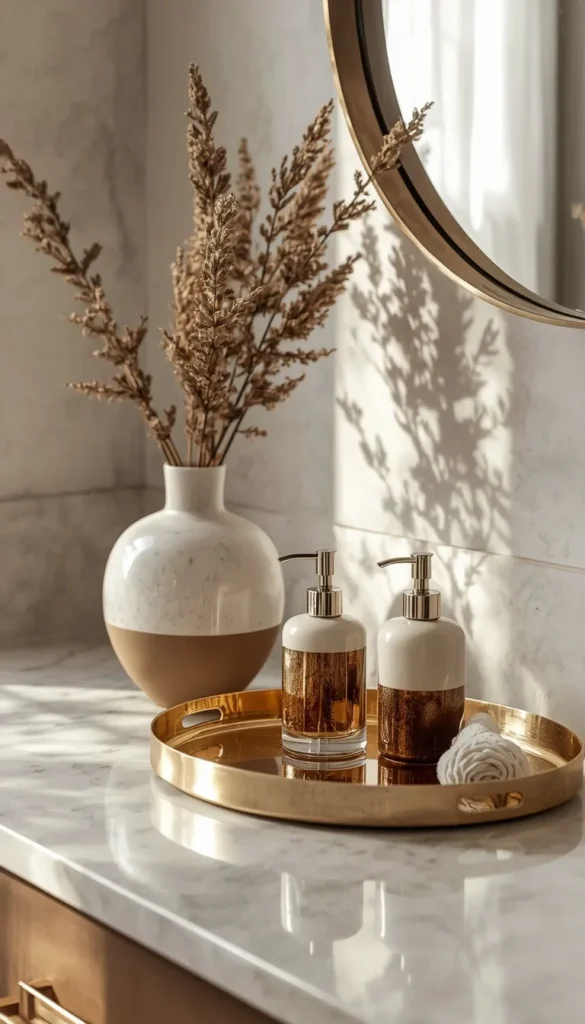
You do not need a five figure renovation to make your counters look like they belong in a design magazine. This is where I think a lot of people get discouraged, because luxury styling looks expensive, but the actual objects rarely are.
- A weighted, heavy-bottomed vase reads as expensive even at a modest price point
- Matching your soap dispenser and lotion bottle instantly elevates the whole sink area
- One statement piece, like a large ceramic bowl or a brass tray, does more visual work than five small trinkets
I’ve styled counters using pieces from mid-range retailers that clients swore came from a high-end showroom. Weight, finish, and restraint matter far more than the price tag.
8. Small Kitchen Countertop Styling
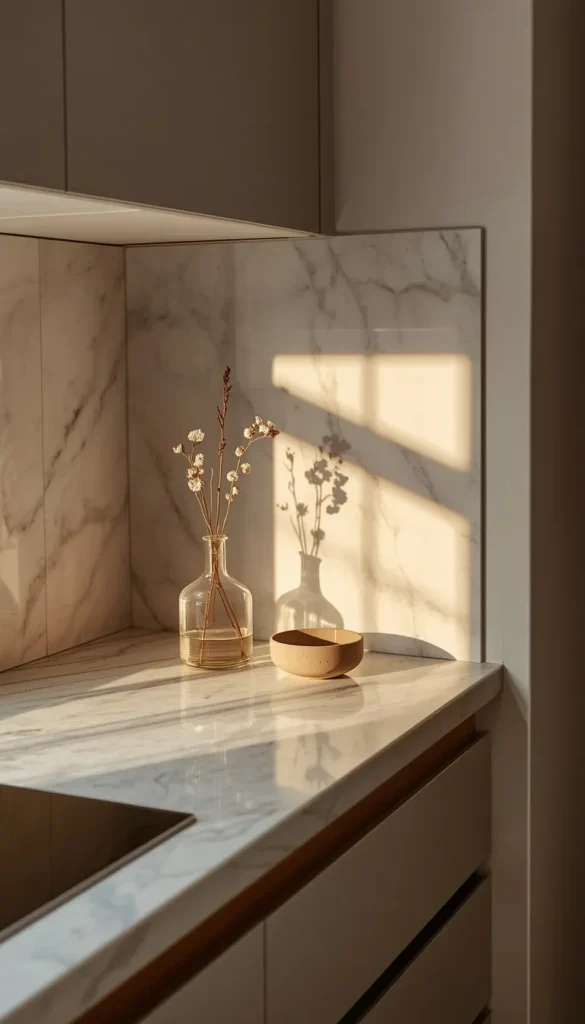
If you’re working with limited counter space, most styling advice out there just doesn’t apply to you, and that’s frustrating. Sprawling islands with five separate vignettes are not your reality, and that’s fine. In a small kitchen, every single object needs to earn double duty. A pretty canister that holds coffee is doing more for you than a purely decorative object taking up the same six inches. I always tell clients with tight kitchens to pick one small, beautiful moment maybe a bud vase and a single ceramic dish rather than trying to scatter little groupings across a counter that simply doesn’t have the square footage to support it
Are you Team Farmhouse or Team Minimalist when it comes to your kitchen counters?
9. The Tray Trick and Why Most People Use the Wrong Size
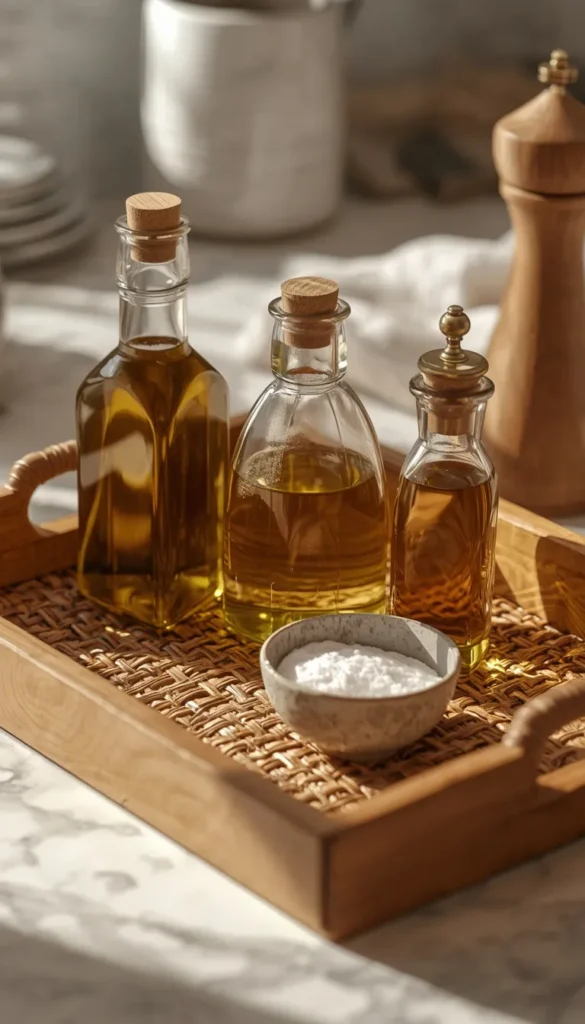
Trays are one of the most underrated tools in countertop styling, but I see the same mistake over and over people grab a tray that’s too small for what they’re trying to corral. If your oils, salt, and pepper barely fit with no breathing room, the tray isn’t doing its job of visually calming the space down. A good rule I use is to pick a tray about twenty percent larger than what you think you need, so there’s a little negative space around each item. Wood and rattan trays feel warmer and suit farmhouse or transitional kitchens, while a marble or lacquered tray leans more modern. Either way, the goal is the same: group loose items so your eye reads one clean shape instead of five scattered objects.
10. Upgrade Your Everyday Objects
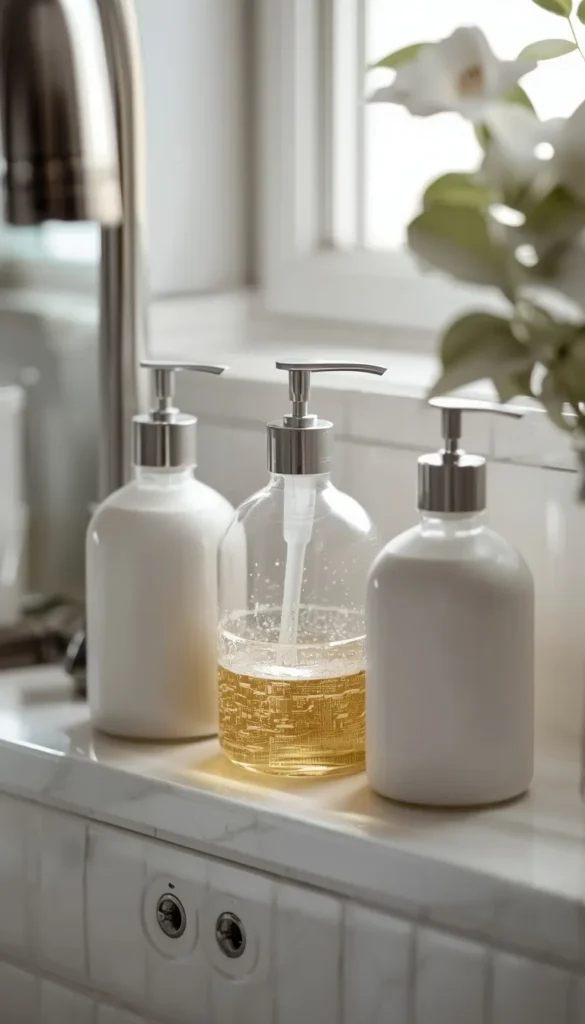
The stuff you use every single day is usually the ugliest stuff on your counter, and that’s the easiest fix in this entire list. Dish soap, hand soap, and cooking oil almost always come in packaging that was never meant to be seen. A quick trick I’ve learned is to decant these into a matched set of glass or ceramic containers you can find a nice set for well under thirty dollars at most home stores. Do the same with sugar, flour, or coffee if they live on your counter. It’s a small swap, but it changes the entire feel of a kitchen because suddenly your most-used items look intentional instead of like they got left out by accident.
11. Seasonal Rotation How to Refresh Without Rebuying Everything
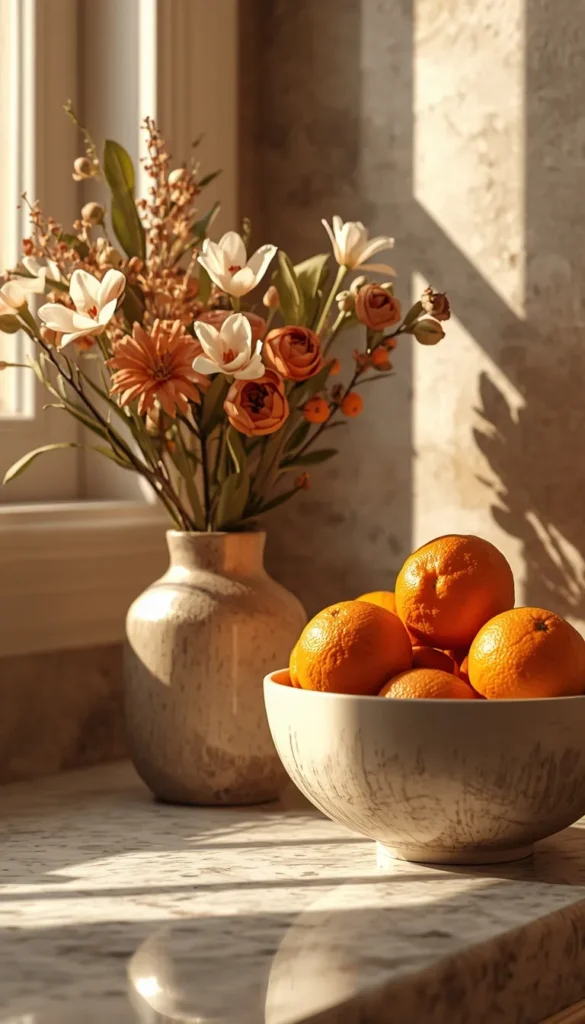
You don’t need a whole new set of countertop decor every few months to keep things feeling fresh. Swap your fruit bowl contents with the season lemons and limes in summer, pomegranates and apples in fall, clementines in winter. A bud vase can hold whatever’s blooming locally, or even a few grocery store stems. I usually tell clients to invest in one or two neutral, high-quality pieces, like a good bowl and a simple vase, and then let the seasonal color come from what goes inside them rather than buying new decor every quarter.
12. Maintenance Reality Check What Looks Great vs What Survives Real Cooking
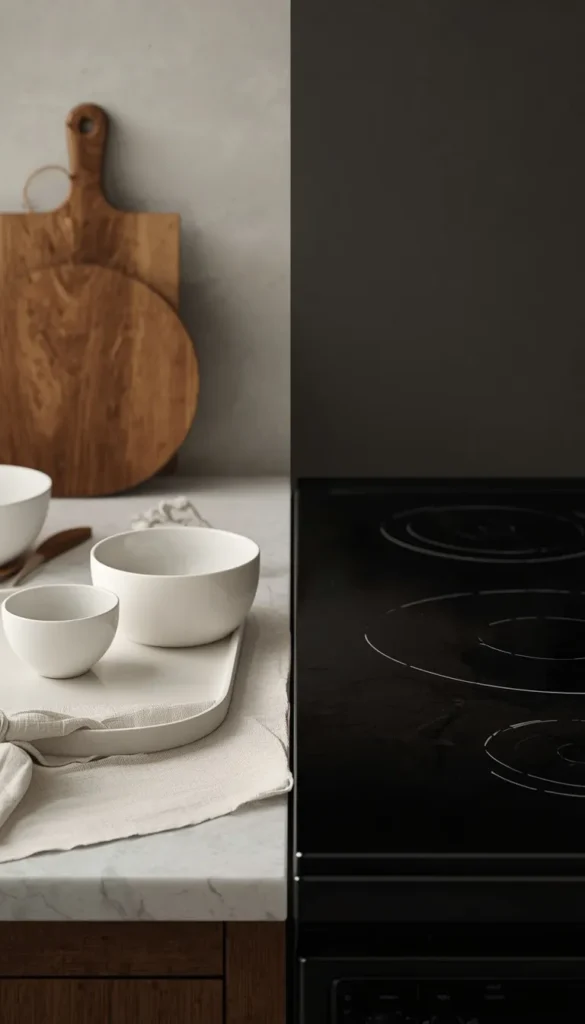
This is the part almost nobody talks about, and it’s where I’ve seen clients get genuinely frustrated after the fact. A white marble bowl or a pale linen tray looks stunning in photos, but if you’re cooking daily near it, expect oil splatters, water rings, and staining sooner than you’d think. Light colored wood boards can warp near a sink if they’re not sealed properly, and anything with tiny crevices, like woven baskets, becomes a magnet for crumbs and dust. My honest advice is to save your most delicate, high-maintenance pieces for the zones farthest from your stove and sink, and choose more forgiving materials, like dark wood, matte ceramic, or sealed stone, for anything living in your actual cooking zone.
13. The Biggest Countertop Styling Mistakes to Avoid
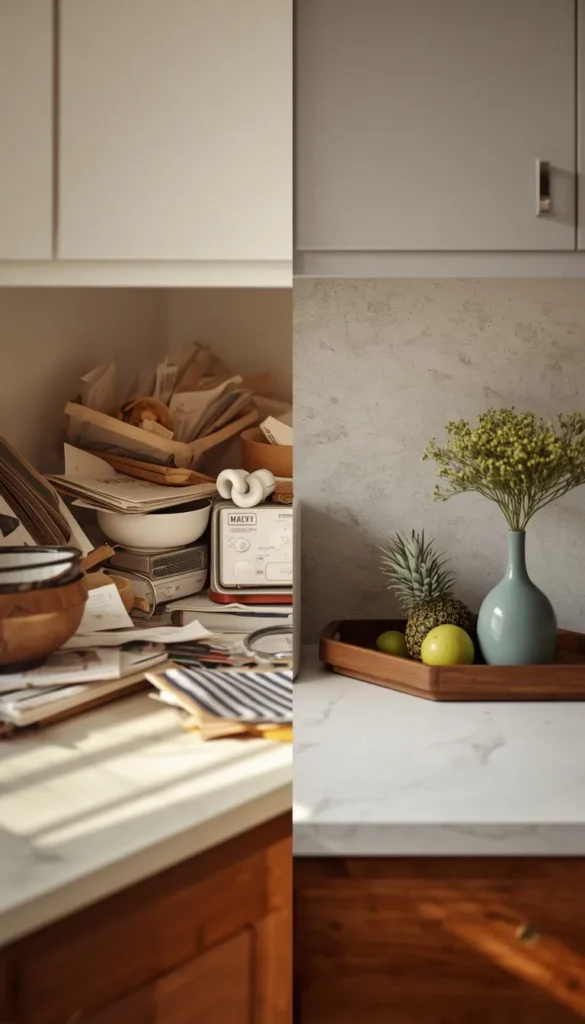
After styling more kitchens than I can count, I keep seeing the same handful of mistakes trip people up. The good news is they’re all fixable in an afternoon.
- Buying decor before checking if it actually contrasts with your countertop material
- Skipping the zones and treating the whole counter as one big display area
- Choosing delicate materials, like unsealed wood or pale linen, for spots right next to the stove or sink
The biggest one, though, is styling for a photo instead of for your actual life. If you cook every night, your counter needs to hold up to real use, not just look pretty for five minutes before dinner gets started. Once you fix these, everything else on this list falls into place a lot faster.
Here’s the decision guide, placed near the end of the article, right before point 13 wraps things up:
Which Countertop Style Is Yours?
By Budget
- Starter Edit: Fruit bowl swap, one decanted soap dispenser, single tray near the stove
- Mid Range Refresh: Matched canister set, statement vase, upgraded cutting board
- Investment Look: Weighted brass or marble tray, curated three-piece vignette, seasonal florals on rotation
By Lifestyle
- Busy Families: Zone-based styling, durable matte materials, minimal delicate pieces
- Minimalists: One sculptural object, maximum negative space, tight color palette
- Small Kitchens: Double-duty items only, one styled moment instead of multiple groupings
- Entertainers: Larger tray for glassware and pitchers, display zone near the island, seasonal centerpiece
Frequently Asked Questions
What should you put on kitchen countertops to make them look nice?
Stick to three to five items max, mixing something functional with something purely decorative. A good starting combo is a fruit bowl, a styled tray, and one vase or plant.
How many items should you have on a kitchen countertop?
Three items per grouping is the sweet spot for most kitchens. If you have a large island, you can stretch to five, but anything more starts reading as clutter.
Is it OK to have nothing on kitchen counters?
Yes, and in modern or minimalist kitchens it often looks more expensive. One or two intentional pieces will always beat an empty counter that feels sterile.
What is the 3 5 7 rule in kitchen decor?
It’s a grouping guideline where you display items in odd numbers, since odd groupings feel more balanced to the eye than even ones. Three works for most counters, five or seven suits larger islands.
How do you style countertops without buying new decor?
Start with what you already own and decant your everyday items, like oils and soap, into containers you already like. Rearranging into a tray with a fruit bowl often does the trick with zero extra spending.
Conclusion
Your countertops see more of your daily life than almost any other surface in your home, so they deserve a little more thought than a random pile of mail and mismatched appliances. You don’t need a full renovation to feel that shift clearing off three things tonight and adding one tray tomorrow can genuinely change how your whole kitchen feels to walk into. Pick one point from this list and just start there. Your home is where you unwind, cook, and gather the people you love, and it’s worth making even the small corners feel intentional.
