
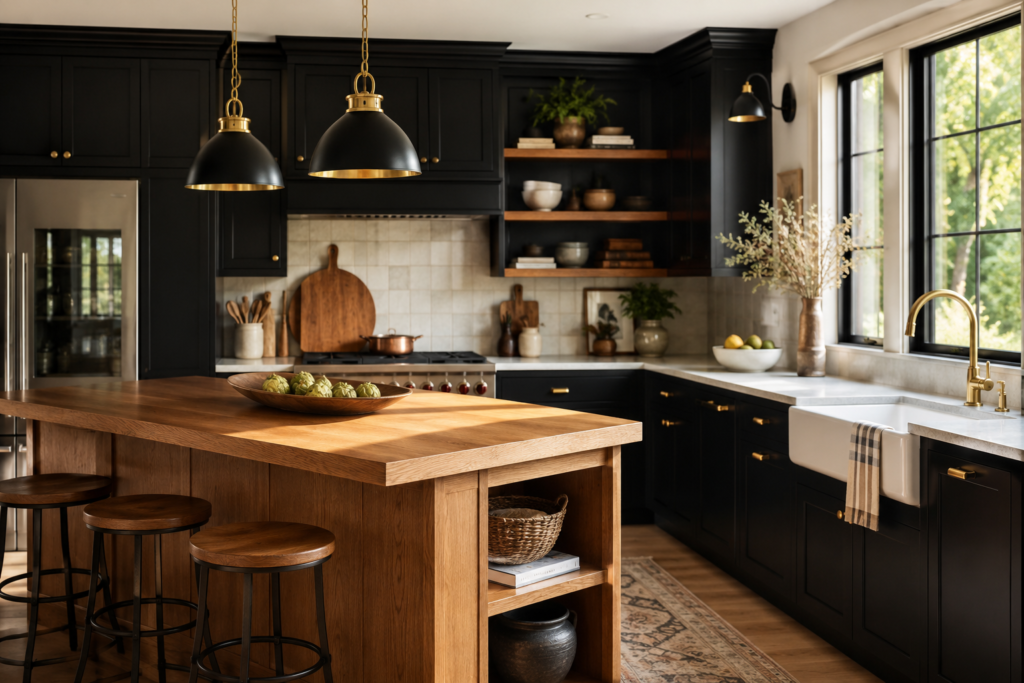
Walk into any designer’s kitchen right now and there’s a good chance you’ll see black cabinetry standing next to a slab of raw, honey toned wood. I’ve watched this pairing go from a niche designer secret to the single most requested look in my inbox over the past two years, and honestly, it earns the hype. Black brings the drama and the grounding weight a kitchen needs, while natural wood keeps the whole room from feeling cold or showroom stiff. It’s the rare combination that reads both moody and inviting at the same time, which is a tough balance to pull off in any other palette. In this guide I’m breaking down exactly how to get that balance right, from the undertones that make or break the look to nine real designs that show it in action.
My Design Notes
When I was working on a kitchen remodel for a client just outside Austin, their cabinets were that classic 1990s orange toned oak, and their first instinct was to paint everything black and start fresh. I talked them out of it. We kept the lower cabinets in a warmer walnut refinish and reserved black for the uppers and the island, which let the wood keep its warmth instead of fighting the black for attention. My favorite part of that project was watching them pick a paint sample that looked perfectly black on the card, only to hold it against their oak trim and see it read strangely blue and cold. We swapped to a warmer, browner black and the clash disappeared instantly. It’s a small adjustment, but it’s the difference between a kitchen that feels intentional and one that feels like two rooms stitched together. I still send clients back to that project as proof that undertones matter more than the paint color name ever will.
Mastering the Art of Black and Wood Kitchen Design
1.Why This Combo Works
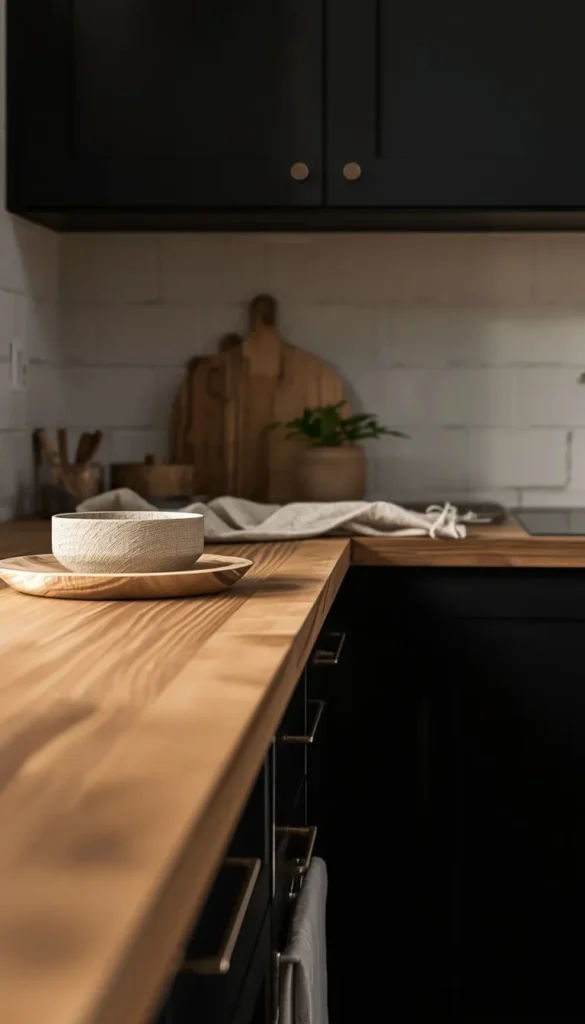
There’s a reason designers keep coming back to black and wood together instead of chasing the next trendy color. Black is technically a neutral, which means it doesn’t fight for attention the way a bold hue would, but it still reads as confident and grounded in a way that gray or beige never quite manages. Wood, on the other hand, brings texture and life into a room that would otherwise feel flat.
I think of it like pairing a tailored black blazer with a linen shirt underneath. One element brings the structure, the other brings the ease, and together they feel effortless rather than trying too hard. That’s really the whole appeal here. You get the sophistication of a dark, moody kitchen without losing the warmth that makes a space feel lived in.
2.The Ratio Rule
One question I get constantly is how much black is too much black. My answer is almost always the same: think in terms of a 60 30 10 split rather than picking colors first and hoping they balance out.
- 60 percent should be your dominant tone, usually the wood or a soft neutral wall color
- 30 percent goes to black, typically cabinetry, an island, or a black wall
- 10 percent is reserved for accents like hardware, lighting, or a stone countertop with contrast
Kitchens that skip this ratio tend to feel either too heavy or too flat. I’ve walked into spaces where black covers nearly everything and it starts to feel like a basement no matter how much natural light comes through the windows. Keeping wood as your anchor and letting black act as the accent, or vice versa depending on the mood you want, keeps the whole room breathing.
3.Undertone Matching
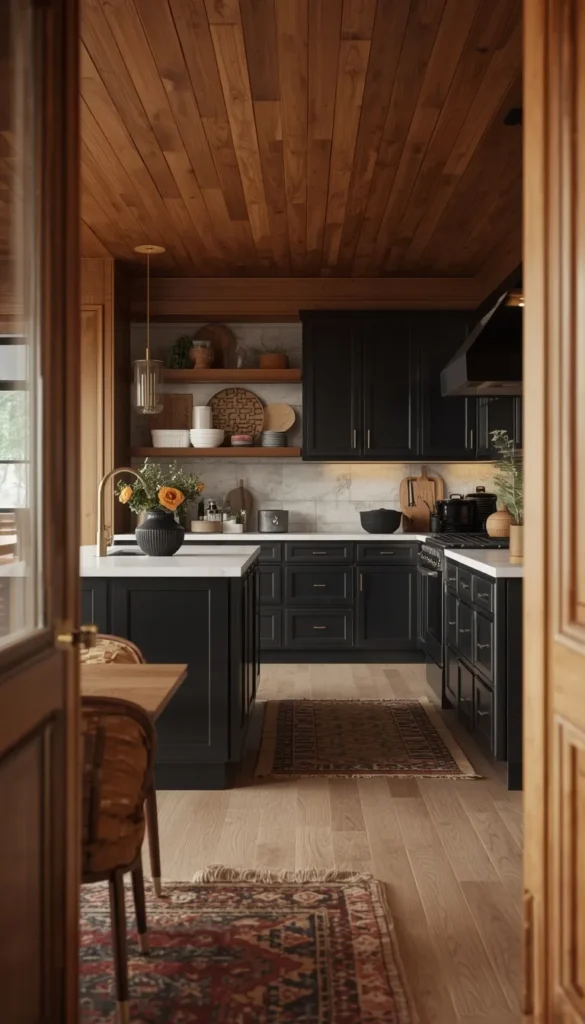
This is the part almost nobody talks about, and it’s the single biggest reason black and wood pairings go wrong. Not all black is the same black, and not all wood is the same wood. Some blacks lean warm with a hint of brown or green in them, while others are true cool blacks with a blue or gray cast. Wood tones follow the same pattern, splitting into warm oranges and reds versus cooler ashy, grayish finishes.
When you mismatch these, the whole kitchen can feel slightly off even if you can’t immediately say why. A cool toned black next to warm orange oak tends to look tense rather than intentional, almost like the two materials are arguing with each other. The fix is simple once you know to look for it. Hold your paint sample directly against your existing or planned wood tone in natural daylight, not under the store’s fluorescent lighting, and see whether they feel like they belong to the same family.
4.Named Paint Colors That Actually Work
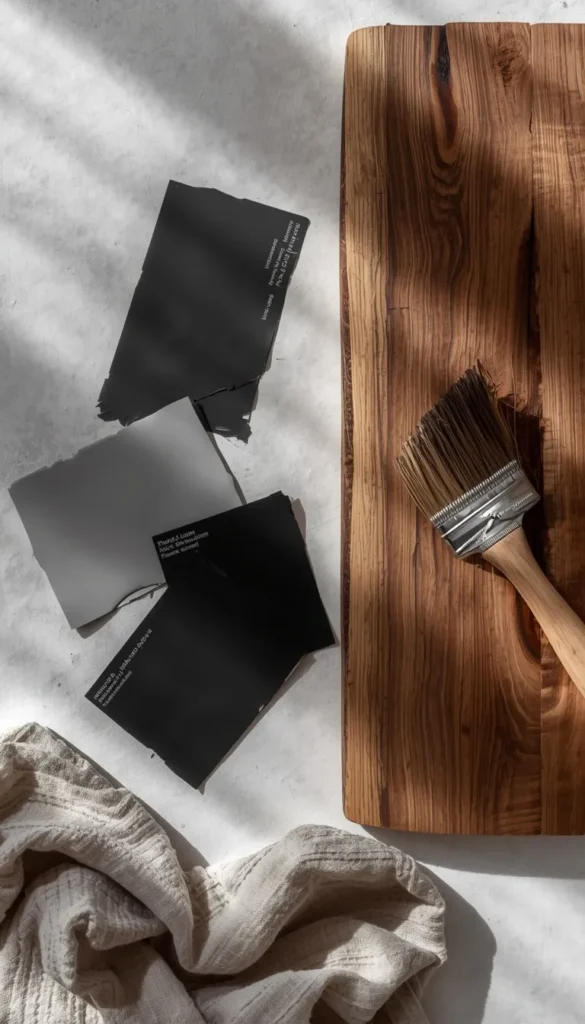
I get asked for exact paint names more than almost anything else, so here’s what I actually reach for on projects, broken down by the wood tone you’re working with.
For warm woods like golden oak or honey toned walnut, Sherwin Williams Tricorn Black works beautifully because it has just enough softness to avoid feeling harsh next to warm undertones. Benjamin Moore’s Black Panther is another favorite of mine for the same reason, it reads as black without the blue undertone that trips people up.
If you had to change just one thing in your kitchen this weekend, would it be the cabinets or the countertop?
5.Design One, Matte Black Island With Golden Oak Perimeter
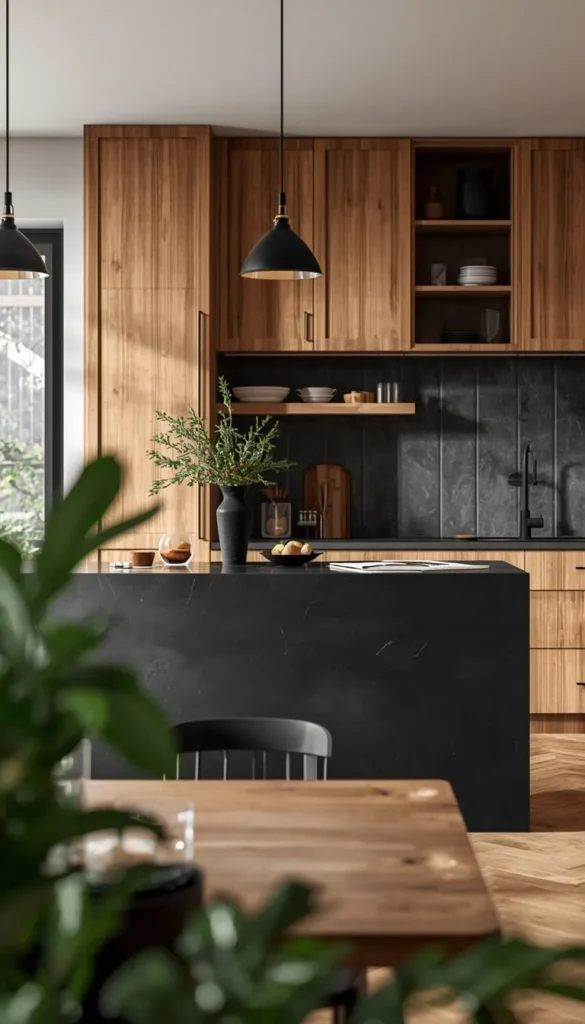
This is probably the pairing I recommend most often because it’s the easiest to get right on a budget. You keep your existing oak cabinetry along the walls, then paint just the island in a soft matte black. The island becomes the anchor of the whole room without demanding a full renovation. A quick trick I’ve learned is to pull the same black up into the pendant lighting above the island so your eye naturally connects the two, instead of the black feeling like it’s floating in isolation.
6.Design Two, Full Black Uppers With Warm Walnut Lowers
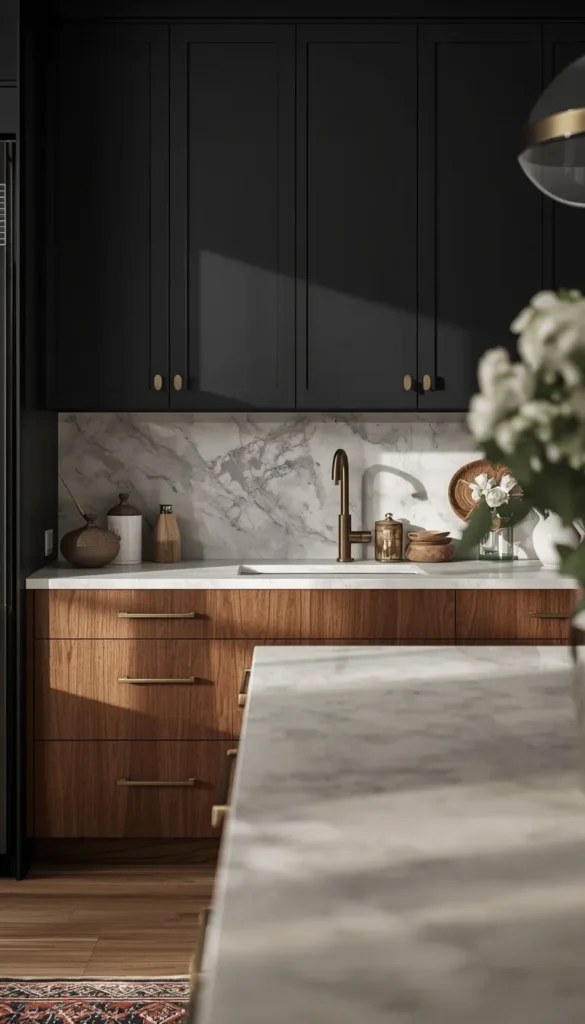
This one is dramatic but still livable, which is exactly why clients keep asking for it. The lower cabinets stay in a rich, honey toned walnut so the kitchen still feels grounded and warm at eye level, while the uppers go fully black to create height and visual weight above. One thing to watch out for is countertop choice here. A pale stone with soft veining works best because it acts as the breathing room between the two darker tones.
- Best paired with brushed brass or unlacquered hardware
- Avoid stark white countertops, they tend to look clinical against this combo
- Open shelving in black with a few wood cutting boards displayed adds texture without extra cost
Top 6 black and natural wood kitchen ideas
| Idea | Estimated Price | Maintenance |
|---|---|---|
| Matte Black Island With Golden Oak Perimeter | $800 – $1,500 (island only) | Low |
| Full Black Uppers With Warm Walnut Lowers | $4,000 – $8,000 (full cabinetry) | Medium |
| Black Frame Cabinets With White Oak Slab Doors | $60 – $90/sq. ft. | Low |
| Black Walls With A Single Wood Wall | $1,200 – $3,000 (paint + paneling) | Medium |
| Two Toned Island With Black Base And Wood Top | $2,500 – $5,000 | Medium |
| Charcoal Black Cabinets With Ashy Gray Oak Floors | $5,000 – $10,000 (cabinets + flooring) | Low |
7.Design Three, Black Frame Cabinets With White Oak Slab Doors
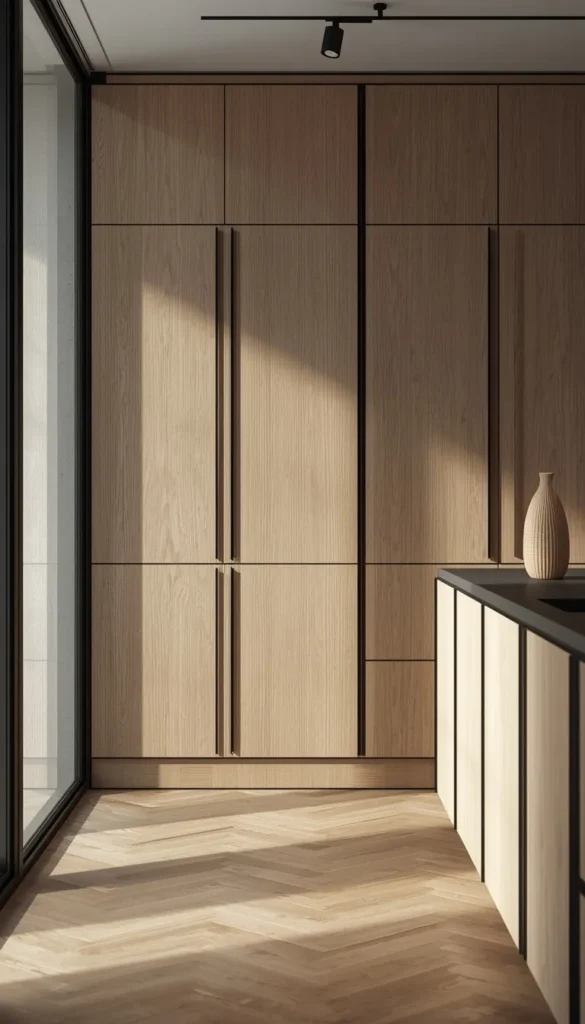
Think of this as the quiet luxury version of the trend. Instead of solid black panels, you get slim black frames outlining flat white oak slab doors. It reads more architectural than moody, and it tends to age incredibly well because the black is used almost like punctuation rather than a full statement.
8.Design Four, Black Walls With A Single Wood Wall
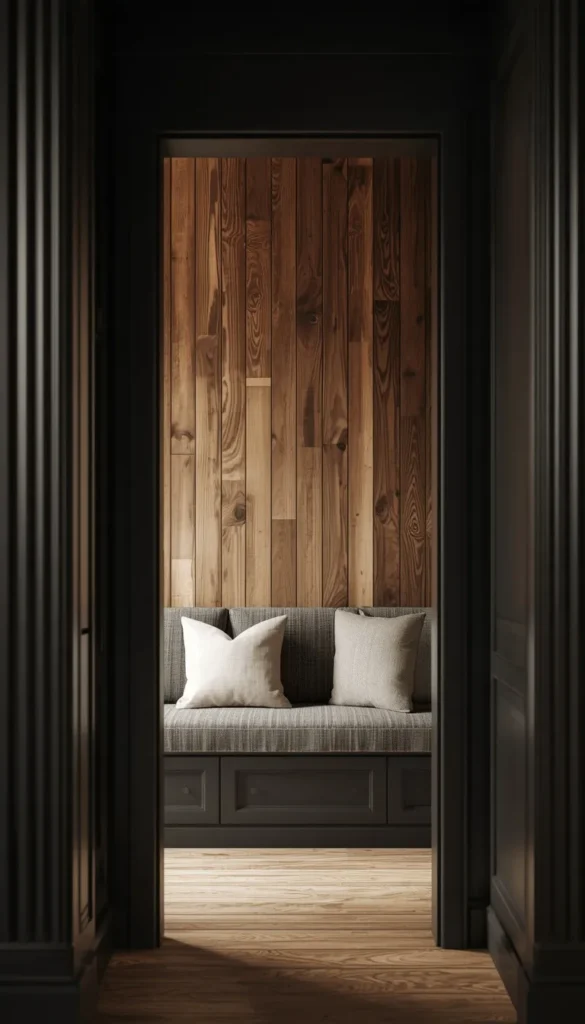
Sometimes the boldest move isn’t in the cabinetry at all. Painting three walls of the kitchen in a deep black and leaving one wall in raw, unfinished wood paneling creates a kind of visual anchor that cabinetry alone can’t achieve. It’s not a look for every home, and it does require confident, even lighting to keep the room from feeling cave like, but in the right space it photographs beautifully and feels genuinely custom rather than trend chasing.
Looking at your kitchen right now, is it the wood that needs more warmth, or is it missing that black anchor point?
9.Design Five, Black Shaker Cabinets With Rustic Reclaimed Wood Beams
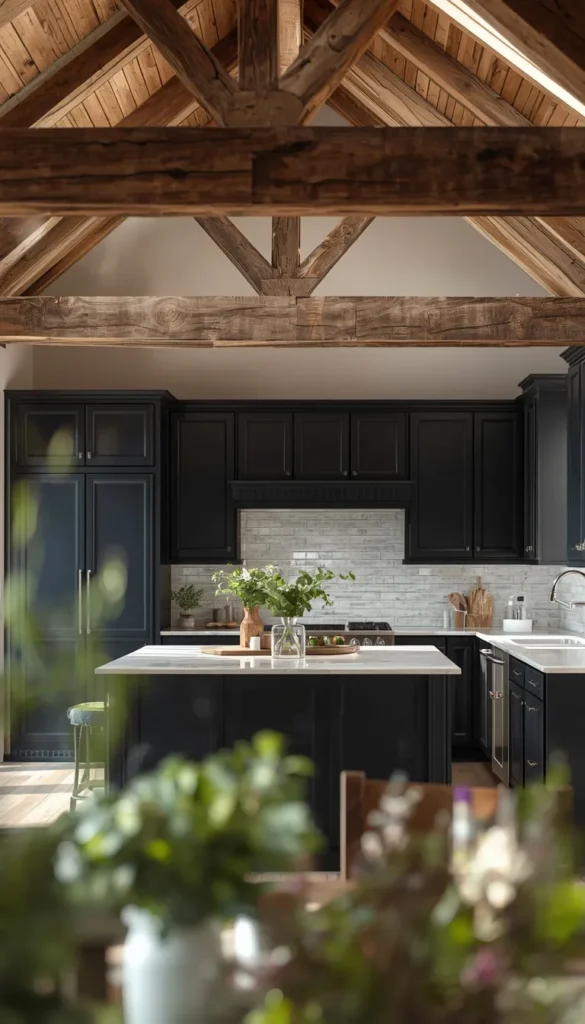
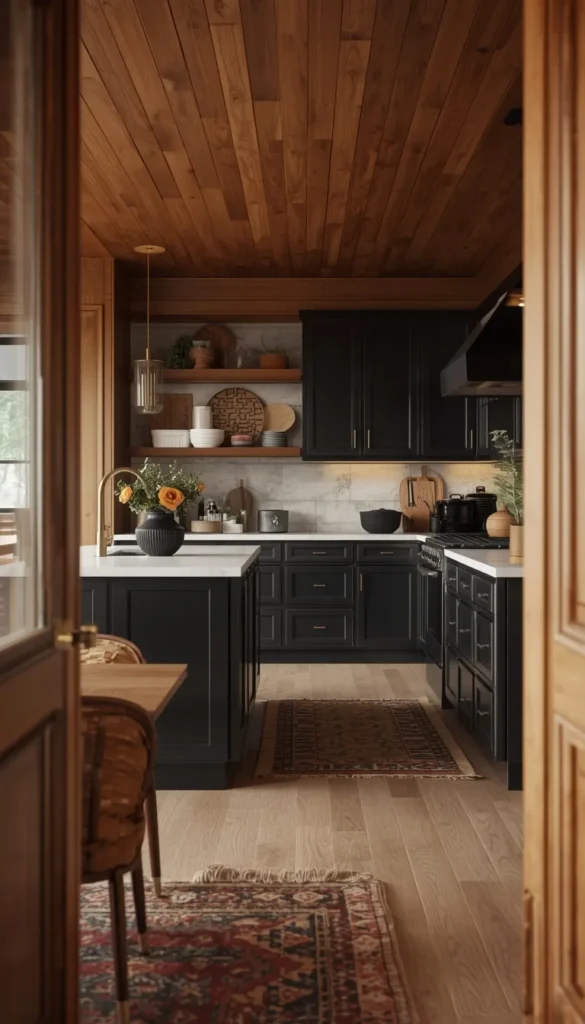
There’s something about pairing a clean, classic shaker profile in black with rough, reclaimed wood ceiling beams that feels like the best of both worlds, structured but not stiff. The beams bring in texture and a sense of history, while the cabinetry keeps everything looking current rather than dated farmhouse. This works especially well in kitchens with higher ceilings where the beams have room to actually breathe.
Which Path Is Yours?
By Budget:
- Starter/Budget: Matte black island with your existing oak perimeter, black frame accents on a few doors, or a single black accent wall paired with wood shelving
- Luxury/Investment: Full custom cabinetry in charcoal or true black, statement wood range hoods, reclaimed beam ceilings, or a full black wall plus raw wood paneling combo
By Lifestyle:
- Busy Families: Charcoal cabinets with ashy oak floors (forgiving on scuffs), two toned island with a wood top (durable, easy to wipe down), matte finishes over glossy ones
- Design Purists/Minimalists: Black frame cabinets with white oak slab doors, black perimeter with a single statement wood hood, restrained use of hardware and open shelving
By Space:
- Small Kitchens: Charcoal instead of true black, island only in black, white oak slab doors to keep sightlines clean
- Open Layouts: Two toned island as a natural room divider, black uppers with wood lowers to add height without closing the space in
Frequently Asked Questions
Does black cabinetry make a small kitchen feel darker?
Not if you balance it right. Keep black to the lower half or the island, and let white oak or a light ceiling color carry the rest of the room.
What’s the best wood tone to pair with black cabinets?
White oak and warm honey walnut are the two safest choices for most homes. Avoid orange toned 90s oak unless you refinish it first, since it tends to clash with true black.
Is matte or glossy black better for kitchen cabinets?
Matte, almost every time. Glossy black shows fingerprints and water spots fast, and it can read a bit too formal for everyday cooking spaces.
How much does it cost to paint kitchen cabinets black?
Expect $1,500 to $4,000 for a professional paint job on an average sized kitchen. DIY can bring that down to a few hundred dollars in paint and supplies, though prep work is the part people usually underestimate.
Will black cabinets hurt my home’s resale value?
Generally no, as long as there’s enough wood or light material balancing the room. Buyers respond well to contrast kitchens right now, but an all black kitchen with no warmth can feel niche to some shoppers.
Conclusion
The truth is, you don’t need to gut your whole kitchen to get this look working for you. Grab one paint sample, hold it against your cabinets in real daylight, and just see how it feels. That one small step tells you more than any mood board ever will, and it’s usually the moment clients stop overthinking and start actually moving forward. Your kitchen sees you every single morning before anyone else does, so it’s worth getting right.
