
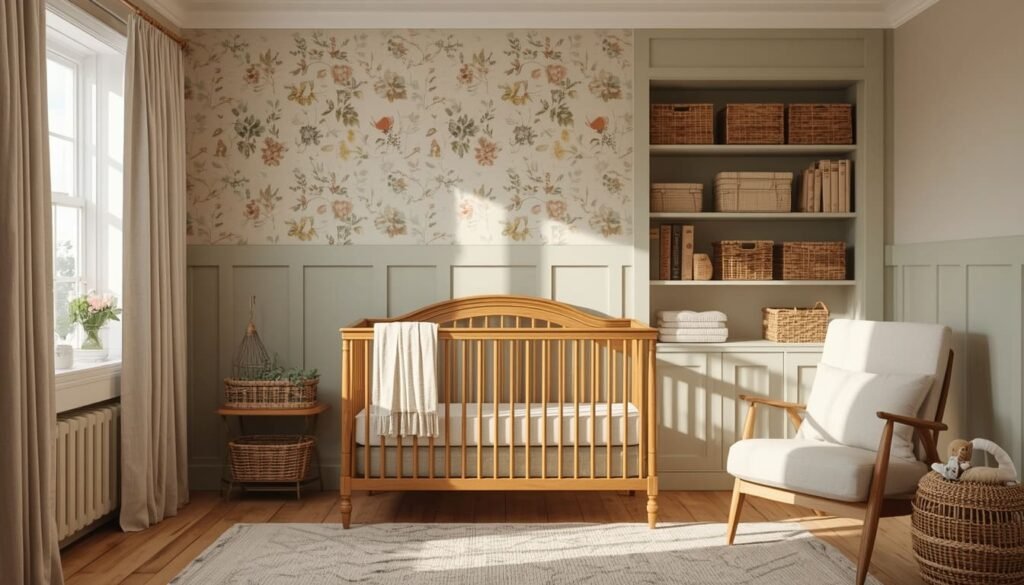
Some nurseries look pretty on Pinterest but feel cold and forgettable in real life a cottage nursery is the exact opposite. There’s something about warm wood, soft florals, and worn linen textures that makes a baby’s room feel like it was built with love, not just assembled from a checklist. I’ve designed enough family spaces across the US to know that this style hits differently it’s the one parents almost always cry over when they see it finished. Whether you’re working with a tight budget, a small room, or a serious Pinterest board, these 23 cottage nursery ideas will help you build something that actually feels like a storybook not just looks like one.
My Design Notes
When I was working on a nursery project in Nashville, Tennessee, my clients had a $1,200 budget and a Pinterest board with over 400 pins every single one of them cottagecore. The mom loved it all but was paralyzed by decision fatigue. She wanted the wallpaper, the canopy, the vintage dresser, the rattan baskets and she wanted it to look intentional, not chaotic. So we made a deal. We picked one statement move a peel-and-stick meadow mural behind the crib and let everything else support it quietly. A thrifted oak dresser, sage green walls in Sherwin-Williams Liveable Green, floor-length linen curtains hung high, and a handful of wicker baskets. Total spend came to $1,180. When she walked in and saw it finished, she stood in the doorway for a full minute without saying a word. That room taught me something I remind every client of now cottage style doesn’t reward the biggest budget. It rewards restraint, warmth, and knowing when to stop.
Stunning Cottage Nursery Design Secrets Every US Parent Needs to Know
1. Floral Wallpaper Accent Wall Behind the Crib
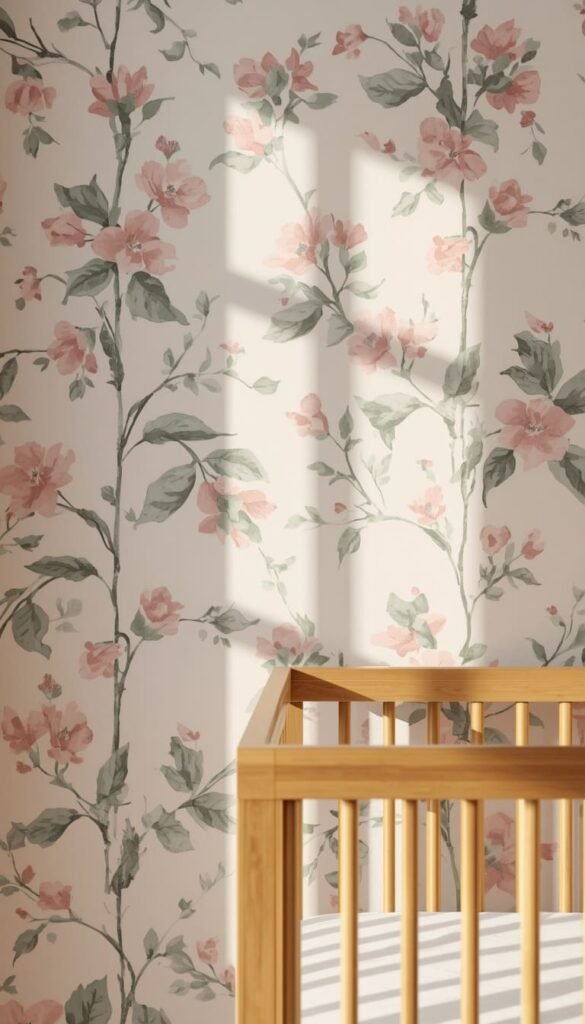
There is one design move that consistently stops parents in their tracks when they walk into a finished cottage nursery and it’s always the wallpaper. A single floral accent wall behind the crib does more for a room than any amount of decorative objects ever could. It anchors the entire space visually, sets the mood immediately, and gives every other element something to respond to.
The key is choosing the right scale. In a smaller nursery, go for a delicate, small-repeat floral something painterly and soft, not bold and graphic. In a larger room, you have room to go bigger with climbing vines or an oversized meadow print. Colors should pull from your existing palette, not introduce new ones that compete.
For renters or anyone not ready to commit, peel-and-stick wallpaper has genuinely improved. Brands like Chasing Paper and Tempaper carry beautiful cottage-appropriate florals that go up clean and come down without drama.
A quick trick I’ve learned over the years always order a sample first and tape it to the actual wall. What looks soft and dreamy on a screen can read completely different under your room’s specific light.
2. Warm Wood Crib in Natural Oak or Walnut
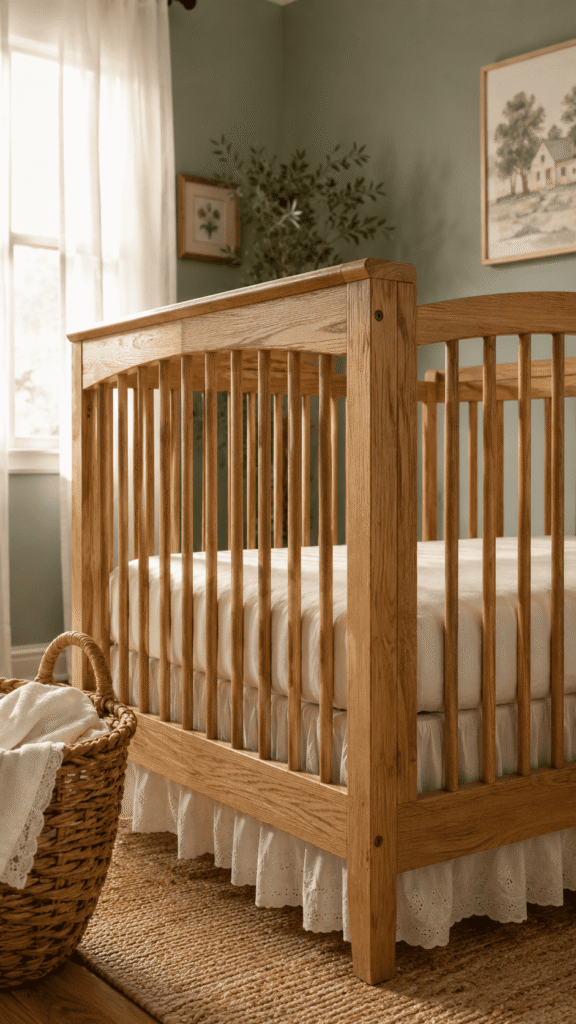
The crib is the first piece every eye goes to when entering a nursery. It’s the room’s anchor, and in a cottage-style space, a warm wood finish natural oak, honey walnut, or even a light ash does something that painted white simply cannot. It brings immediate warmth, connects to the nature-forward spirit of the style, and pairs beautifully with almost every soft, muted palette.
What I always recommend to my clients:
- Go convertible. A crib that transitions into a toddler bed and eventually a full-sized bed is the smartest investment you’ll make in this room. It carries the design forward without a full redesign at age two.
- Check US CPSC safety standards. Any crib you buy new or secondhand should meet current Consumer Product Safety Commission guidelines. Vintage cribs are charming but often don’t comply — keep them as decorative pieces only.
- Avoid high-gloss finishes. Matte or satin wood finishes photograph better, age more gracefully, and feel far more at home in a cottage aesthetic.
A solid convertible crib in natural oak from a reputable brand runs between $350 and $700 — a worthwhile spend when it’s going to be in that room for the next five or six years.
3. Sage Green Walls with Cream Millwork
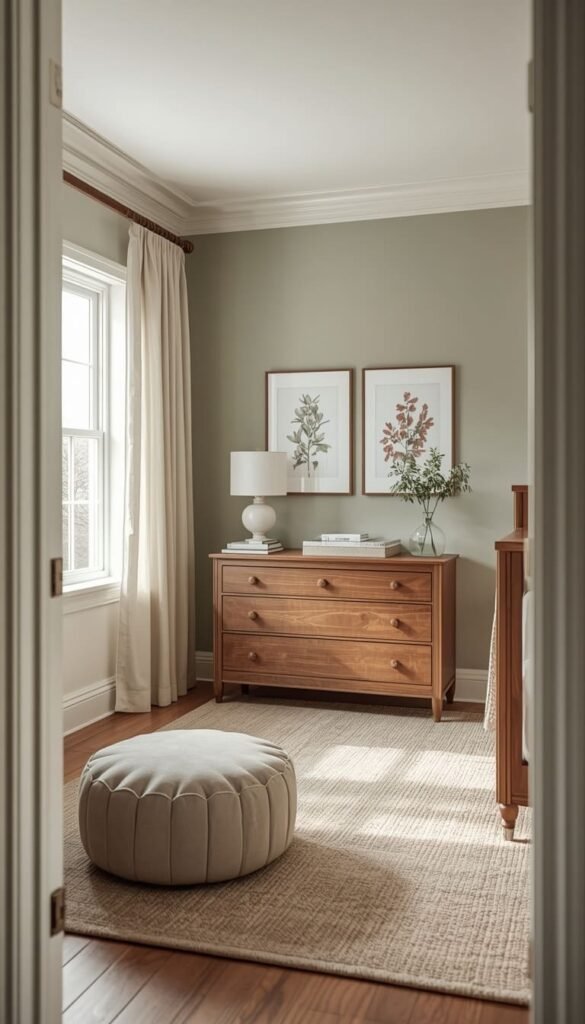
If there is one color I reach for most in cottage nurseries, it’s sage green. It’s warm without being heavy, nature-inspired without being loud, and it works beautifully with wood tones, florals, cream textiles, and brass hardware all at once. It is genuinely one of the most forgiving shades you can put on a nursery wall.
Two paint colors worth knowing by name: Sherwin-Williams Liveable Green (SW 6176) and Benjamin Moore Pale Avocado (HC-115). Both read as a soft, dusty sage with warm undertones not the bright, minty green that can feel cold under artificial light. Sample both in your specific room before committing because light changes everything.
Pair sage walls with cream or off-white millwork baseboards, window trim, crown molding if you have it and the room immediately reads elevated and intentional. This is a combination that works for a baby girl nursery, a baby boy nursery, and a fully gender-neutral space without any adjustments.
One thing to watch out for: if your room gets mainly cool, north-facing light, sage can sometimes pull slightly gray by evening. In that case, nudge slightly warmer toward SW Clary Sage (SW 6178), which holds its warmth better across different lighting conditions.
4. Sheer Canopy Over the Crib
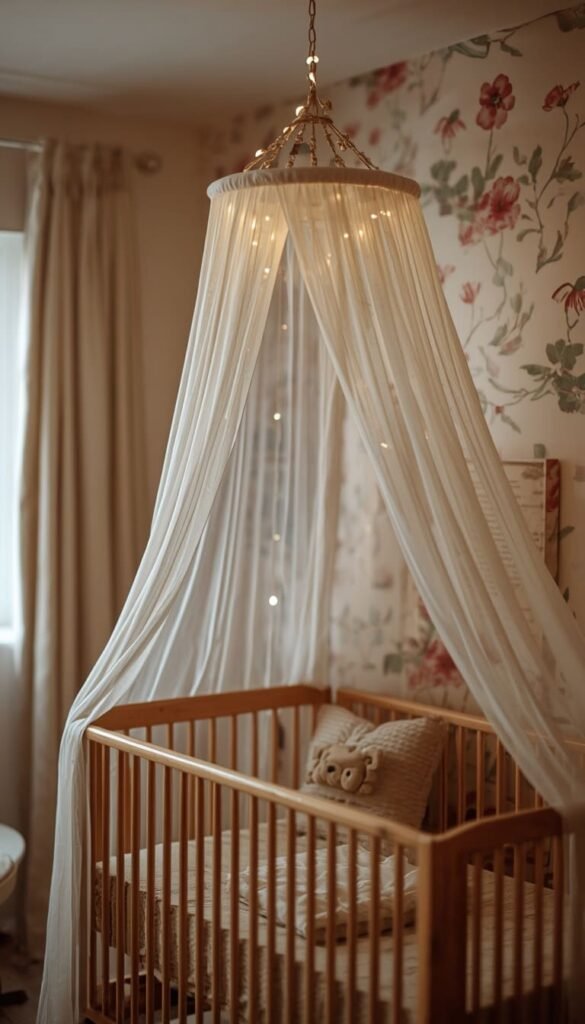
Few things in nursery design are as immediately dreamy as a soft, sheer canopy floating above a crib. It frames the whole sleeping space, adds a layer of visual softness, and honestly photographs like something out of a children’s book illustration. The effort-to-impact ratio here is almost unfair.
The simplest approach is a single ceiling hook centered above the crib with a circular or hoop canopy in white or ivory cotton voile. You don’t need to spend much most beautiful options fall between $25 and $60 on Etsy or Amazon.
Safety is the part most design guides skip over entirely, so let me be direct: the fabric should be completely clear of the crib mattress and sleeping area. The canopy is a visual element above the crib, not inside it. Make sure the ceiling hook is properly anchored into a stud or with a toggle bolt rated for the weight, and check it regularly. Never use a canopy with loose, dangling cords within reach of a baby.
When styled well with linen curtains nearby and warm lamp light in the corner a sheer canopy makes the crib feel like the coziest little world inside the room.
Top 6 Cottage Nursery Ideas:
| Idea | Estimated Price | Maintenance |
|---|---|---|
| Floral Wallpaper Accent Wall | $80 to $200 per roll | Low |
| Warm Wood Convertible Crib | $350 to $700 | Low |
| Linen Glider or Rocking Chair | $200 to $500 | Medium |
| Vintage Dresser as Changing Table | $80 to $250 | Medium |
| Peel and Stick Garden Mural | $120 to $300 per panel | Low |
| Washable Jute or Cotton Rug | $60 to $180 | Low |
5. Vintage Dresser as a Changing Table
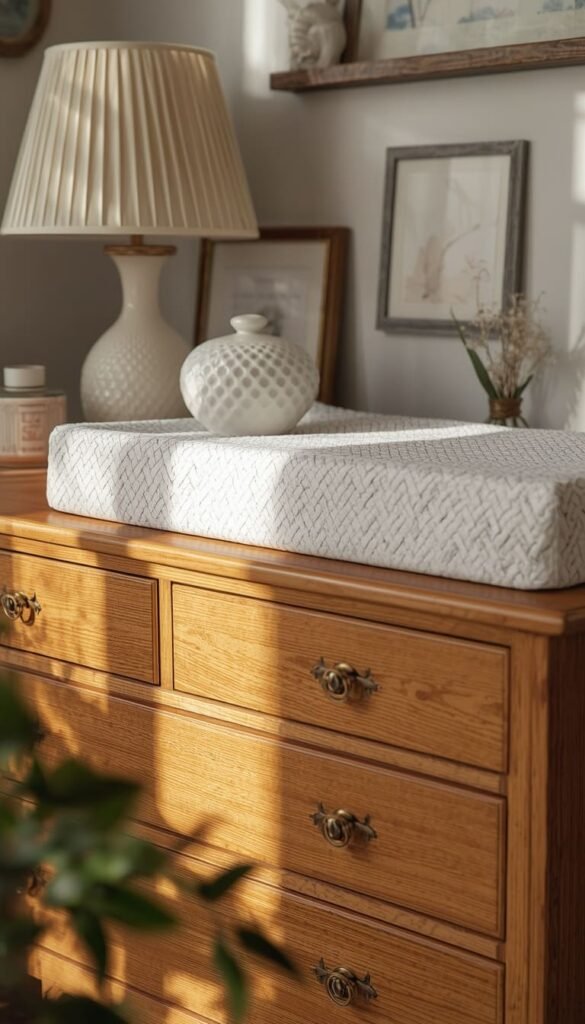
A vintage dresser repurposed as a changing table is one of those decisions that feels practical and beautiful at the same time which in nursery design, is a rare and wonderful thing. It gives you generous storage, a surface that fits the cottage aesthetic perfectly, and a piece that can transition into a regular dresser once the diaper days are behind you.
When thrifting, look for solid wood construction with dovetail drawers these hold up. Avoid anything with a strong chemical smell or visible mold, no matter how good the price is. Facebook Marketplace, Craigslist, and local estate sales are genuinely the best sources. I’ve found beautiful oak and walnut dressers for under $80 that cleaned up magnificently.
A few things worth knowing before you commit:
- Add a proper changing topper. A contoured foam changing pad with a safety strap is non-negotiable. The dresser surface alone is not safe.
- Secure it to the wall. Any dresser used near a baby should be anchored with an anti-tip strap — full stop.
- Keep the styling simple on top. A small lamp, a ceramic dish for tiny essentials, and one framed print. That’s the sweet spot between styled and cluttered.
Aged brass hardware is the easiest upgrade you can make to a thrifted dresser. Swap the pulls and the whole piece reads intentional instead of secondhand.
Are you going for a gender neutral palette or do you already have a color in mind for your cottage nursery?
6. Linen Glider or Rocking Chair in a Reading Nook
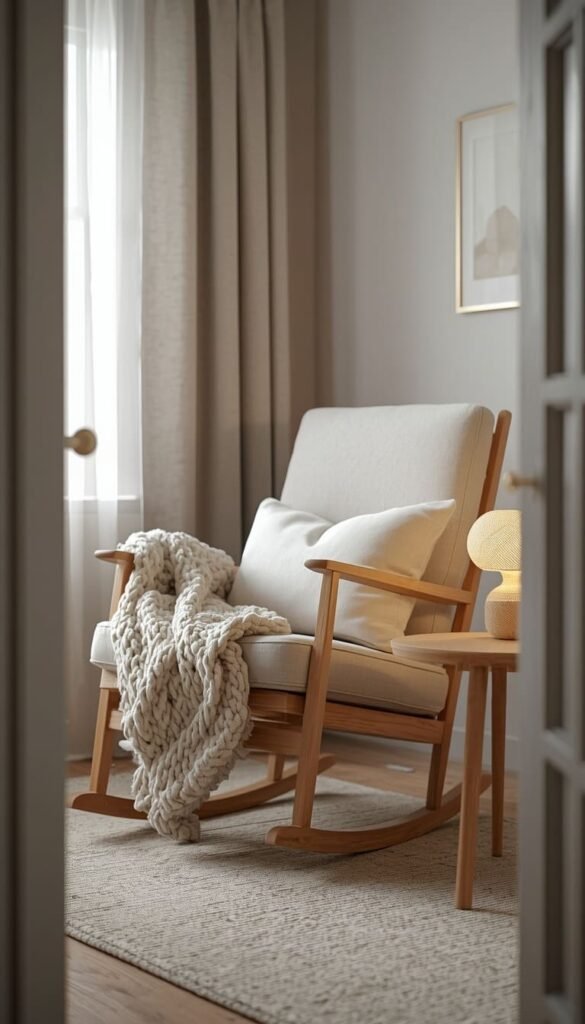
You will spend more time in this chair than almost anywhere else in your home for the first year of your baby’s life. I tell every client this before they choose comfort as an afterthought. The chair needs to feel good at 2am, at 4am, and again at 6am and it should still look beautiful in the corner of a cottage nursery while doing it.
For this style, look for a wooden frame glider or traditional rocker with soft curves and upholstery in linen, cotton, or boucle. Avoid anything that looks like it belongs in a contemporary office or a Scandinavian furniture catalog the silhouette matters here as much as the fabric.
Budget-wise, a solid, comfortable glider in a cottage-appropriate style runs between $200 and $500. Brands like Monte Design, Delta Children, and DaVinci all have options that hit the right notes without the five-figure price tag of some boutique nursery brands. If you find a beautiful vintage wooden rocker at a thrift store, a good cushion set can make it just as comfortable.
Style it with a knit throw draped over the arm, a small side table or stool for your water bottle and book, and a warm lamp nearby. That corner becomes the reading nook and honestly, it might become your favorite spot in the whole house.
7. Gingham and Eyelet Crib Bedding
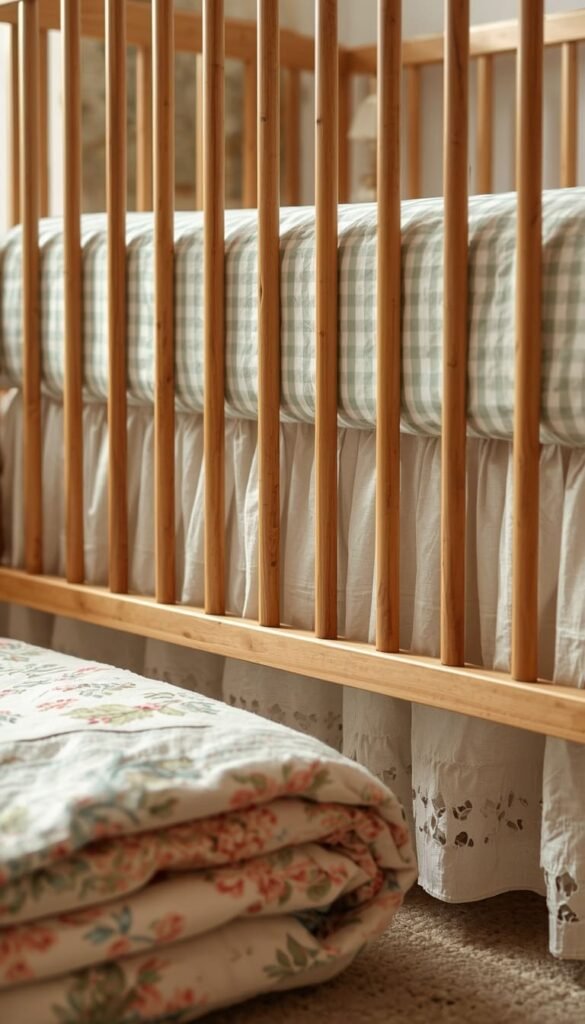
Gingham and eyelet are the quiet signatures of cottage style understated, classic, and immediately warm without trying too hard. A fitted crib sheet in soft gingham check or delicate eyelet linen is one of the easiest ways to pull the aesthetic together from the inside of the room outward.
Here’s something most nursery guides don’t say clearly enough: for safe sleep, the only thing that should be in the crib at night is a firm, flat mattress and a single fitted sheet. No bumpers, no quilts, no decorative pillows, no stuffed animals not while your baby is sleeping unsupervised. The American Academy of Pediatrics is very clear on this, and I always make sure my clients hear it before they fall in love with a beautifully layered crib setup.
That said, a gathered linen or eyelet crib skirt is completely safe and genuinely one of the prettiest details in a cottage nursery. It hides the crib hardware underneath and adds that soft, romantic finish that makes the whole crib look considered. During supervised playtime, a beautiful quilt folded at the foot of the crib is a lovely styling moment just move it before sleep.
For colors, a dusty pink gingham works beautifully for a baby girl nursery. A soft blue or sage check reads perfectly for a boy’s room. And a natural linen eyelet is the ideal choice if you’re going gender neutral.
8. Botanical Print Gallery Wall
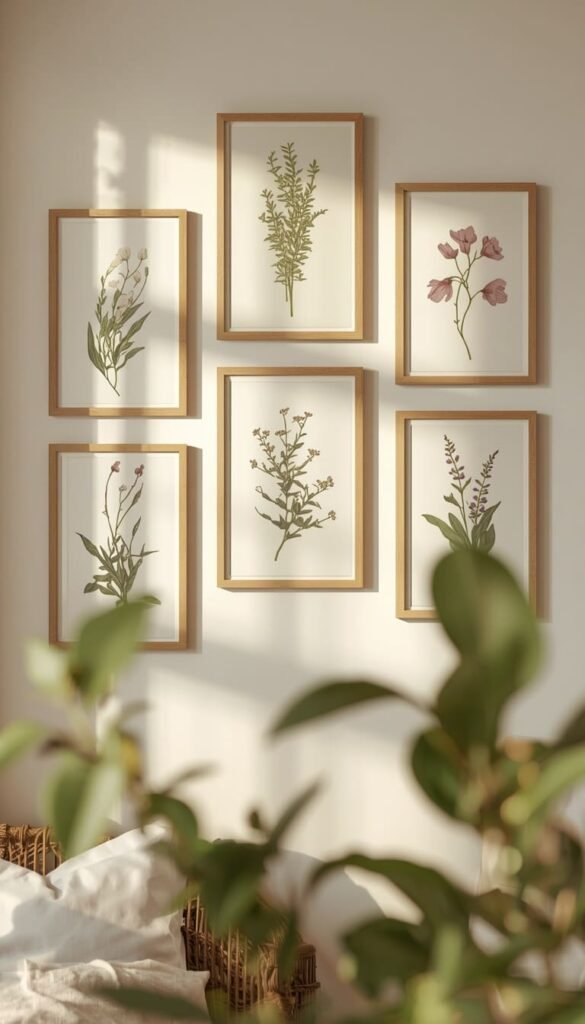
A gallery wall of botanical prints is one of the highest-impact, lowest-cost moves you can make in a cottage nursery. Done well, it gives the room that collected, layered quality that takes years to develop except you can pull it together in an afternoon with $40 and a good eye.
The secret is intentional imperfection. Slightly mismatched frames same finish, different sizes look far more authentically cottage than a perfectly matched grid. Mix small and medium prints rather than going uniform. Vintage-style botanical illustrations, wildflower prints, and simple herb drawings all feel at home here. Etsy has thousands of downloadable options you can print at home or at a local print shop for almost nothing.
Here’s how I approach hanging a gallery wall in a nursery:
- Lay it out on the floor first. Arrange your frames before touching the wall and photograph it from above so you have a reference.
- Use IKEA Ribba frames in the 5×7 or 8×10 size. They’re clean, inexpensive, and the matte finish works perfectly in a warm cottage palette.
- Keep the center of the arrangement at eye level when you’re sitting in the glider — not standing. That’s the view that matters most in this room.
A grouping of three to five prints feels curated. Seven or more starts feeling like a statement. Anything beyond that needs very careful spacing or it tips into overwhelming.
9. Wicker and Rattan Storage Baskets
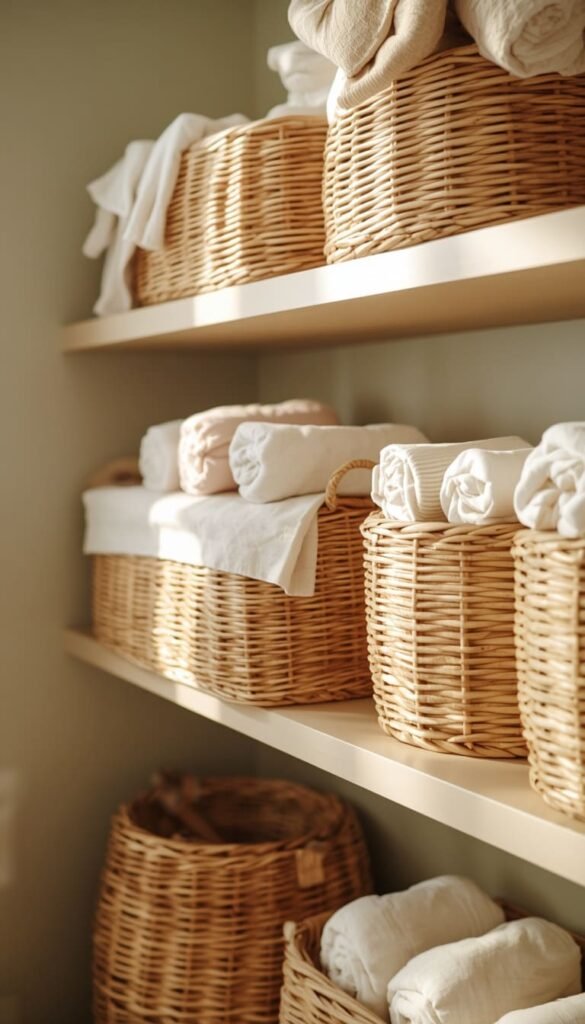
Wicker and rattan baskets are the hardest working pieces in a cottage nursery and the most underestimated. They solve the storage problem that every new parent quickly discovers is very real, and they do it while looking like they were placed there by a stylist. That combination is rare enough that when you find it, you lean into it fully.
The key is getting the sizing right from the start. A quick trick I’ve learned from outfitting dozens of nurseries buy at least one large, one medium, and two small baskets before the baby arrives, then adjust as you figure out what actually accumulates.
- Large baskets (think laundry-basket scale) are perfect for extra blankets, stuffed animals, and bulky items that multiply fast.
- Medium baskets work beautifully on shelves for diapers, wipes, and the random small things that have no logical home.
- Small baskets are ideal on a dresser top for pacifiers, hair clips, nail clippers — the tiny essentials you reach for constantly.
For quality on a budget, Target’s Threshold collection and IKEA’s NIPPRIG and BRANÄS lines are genuinely good. If you want to splurge on one piece, a beautiful large woven belly basket from a small Etsy shop adds a handcrafted quality that feels very true to the cottage spirit.
10. Woodland Animal Accents for a Neutral Theme
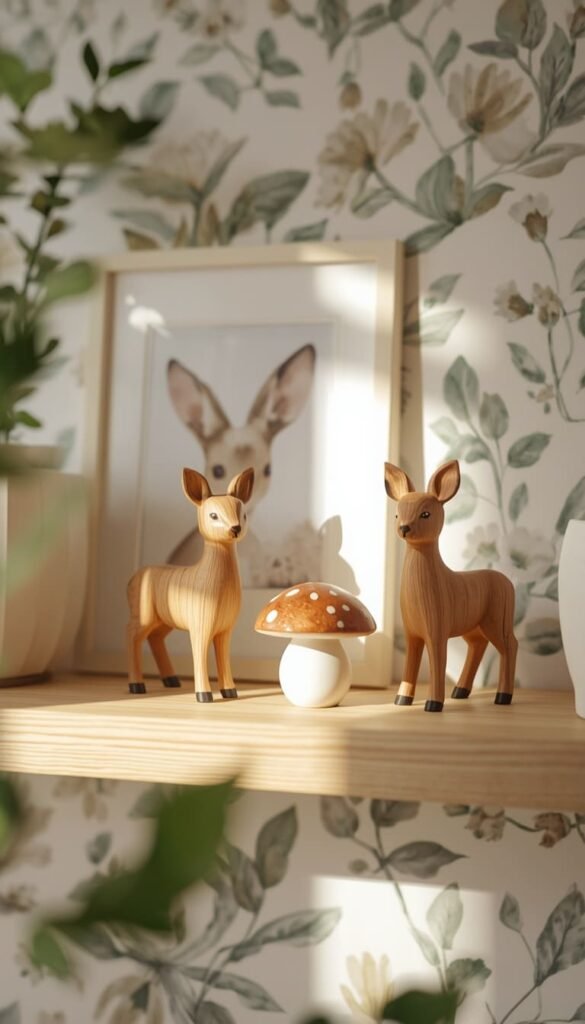
Woodland and cottage are close enough in spirit that combining them feels completely natural but there’s a line between the two that’s worth knowing. Woodland goes dark and moody with foxes, owls, and dense forest imagery. Cottage stays lighter, softer, and more garden-forward. The sweet spot between them is where some of the most beautiful gender-neutral nurseries I’ve ever designed have lived.
Think soft deer figurines on a shelf, a watercolor rabbit print above the dresser, a simple wooden fox on a bookshelf between two storybooks. These accents bring in warmth and whimsy without tipping the room into a fully “themed” space which is important if you want the design to age gracefully past the toddler years.
What makes this approach work is restraint. Three or four woodland accents scattered thoughtfully through the room feel collected and intentional. A dozen of them on every shelf, above every doorframe, on the crib mobile and the curtain rod starts reading like a theme park, and cottage style has no interest in that.
Natural materials are everything here. Carved wood animals, ceramic pieces, felt or knit woodland creatures. Skip the plastic figurines, even cute ones. The tactile quality of natural materials is what keeps a cottage nursery feeling warm rather than juvenile.
Which one of these 23 ideas are you stealing first and are you thrifting it or buying it new?
11. Vintage Style Table Lamp for Warm Layered Lighting
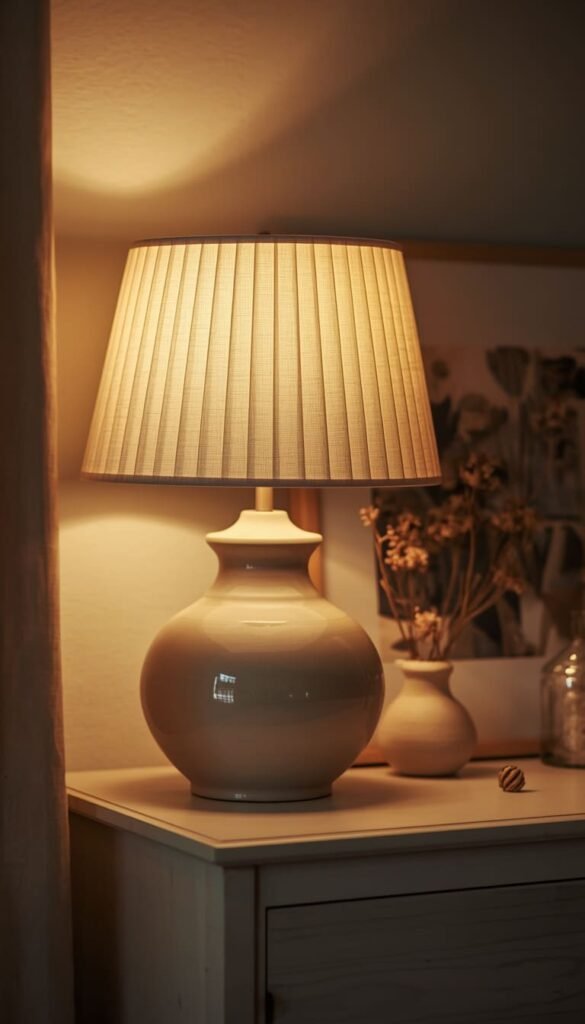
Overhead lighting in a nursery is one of those things that looks fine on a floor plan and feels terrible in real life. The minute you’re doing a 3am diaper change under a bright overhead fixture, you understand immediately why layered lighting is worth every bit of the planning it takes.
A warm-toned table lamp on the dresser is the first layer to get right. For a cottage nursery, look for a ceramic or linen base in a soft neutral cream, blush, sage, or aged white with a pleated or drum shade that diffuses light softly rather than directing it harshly. The lamp should feel like it has a history, even if it’s brand new.
Color temperature matters more than most people realize. Aim for bulbs in the 2700K range this is the warm, golden tone that makes a room feel cozy and relaxed rather than clinical. Anything above 3000K will pull cool and slightly harsh, which is exactly the opposite of what a cottage nursery needs after dark.
Layer in a small nightlight near the floor for feeds, and if you want that final touch of storybook magic, a strand of warm fairy lights tucked along a shelf edge or draped above the crib canopy creates the kind of gentle golden glow that makes the room feel like it exists slightly outside of regular time. Dimmers on any overhead fixture are worth installing before the baby arrives. You’ll thank yourself by week two.
12. Peel and Stick Mural for a Garden or Meadow Scene
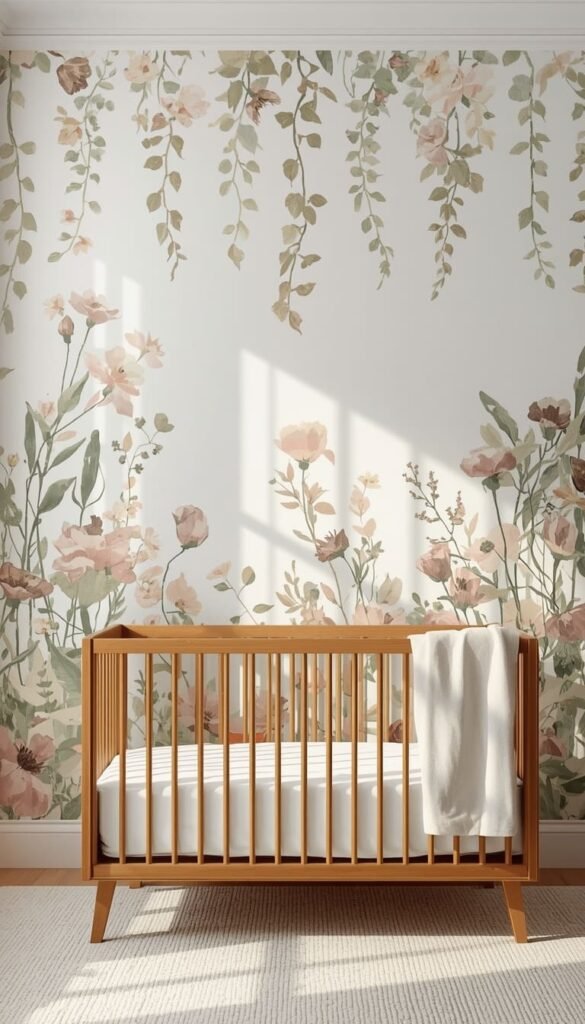
If floral wallpaper is a commitment you’re not ready for, a peel-and-stick mural is where hesitation ends and confidence begins. The quality of removable murals has improved dramatically in the last few years the texture, the color depth, the way they sit on the wall and in a cottage nursery, a garden or meadow scene can create the kind of immersive, storybook moment that makes the whole room feel like it was designed by someone who really knew what they were doing.
This is also the single best option for renters. You get the full visual impact of a feature wall with zero damage to the paint beneath, and when you move or simply want a change, it comes down cleanly without drama.
Two US brands worth knowing by name:
- Chasing Paper carries a beautiful range of botanical and garden-inspired designs with a painterly, editorial quality. Their colorways tend to stay in the muted, warm range that cottage style needs.
- Tempaper is another strong option, particularly for nurseries, because their adhesive is repositionable — which is genuinely helpful when you’re aligning a large-scale mural panel by panel.
One thing to watch out for: measure your wall precisely before ordering and add at least 10% extra to account for pattern matching and any slight misalignment. Running short mid-install on a mural is a frustration that’s entirely avoidable with a little math upfront.
13. Soft Blush or Dusty Rose Palette for a Baby Girl Nursery
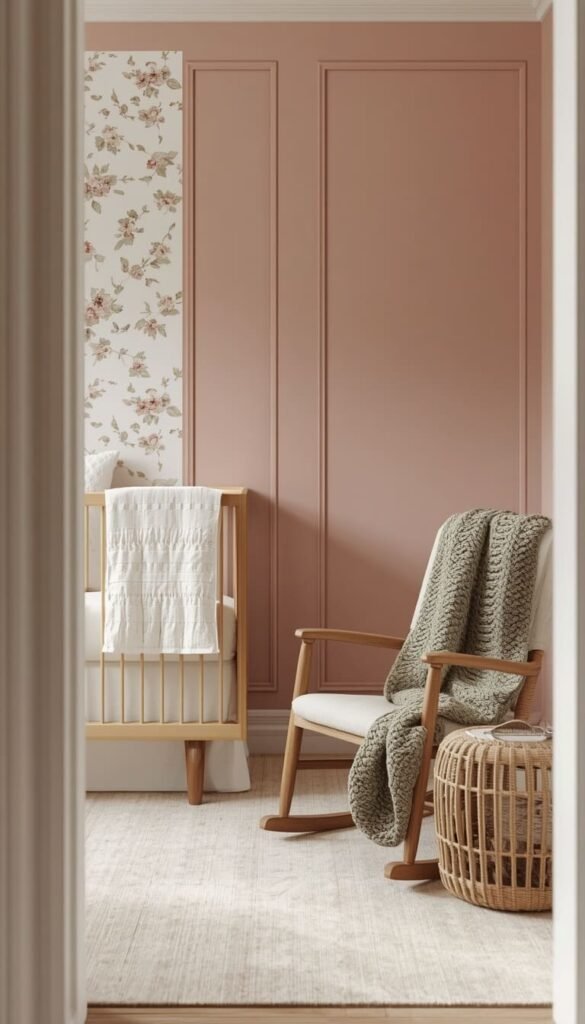
Blush is one of those colors that looks effortlessly right in a cottage nursery until it doesn’t. The difference between a dusty, sophisticated rose and a bright, candy-wrapper pink comes down entirely to undertones, and getting it wrong is far easier than most people expect. I’ve seen beautiful nursery concepts fall apart simply because the blush chosen pulled too warm and orange, or too bright and synthetic, against an otherwise perfect cottage backdrop.
The version you want reads soft, slightly muted, and almost like it’s been faded gently by sunlight. Benjamin Moore Pale Blush (OC-74) and Sherwin-Williams Hopeful (SW 6592) are two that consistently deliver that quality across different lighting conditions. Both hold their warmth without tipping into anything that reads “bubblegum” by afternoon light.
Here’s how to keep a blush palette feeling cottage rather than generic:
- Pair it with warm cream, not stark white. White walls next to blush will make the pink read louder and more synthetic than it actually is.
- Ground it with natural wood. An oak crib or walnut dresser next to a dusty rose wall immediately elevates the whole palette.
- Add sage or olive as a secondary accent. A sage green throw on the glider, a botanical print on the wall — these keep blush from feeling one-dimensional.
A baby girl nursery in dusty rose with cream millwork, warm wood furniture, and a single floral wallpaper panel behind the crib is one of the most timeless combinations in cottage design. It will still look beautiful when she’s five.
14. Muted Blue and Linen Palette for a Baby Boy Nursery
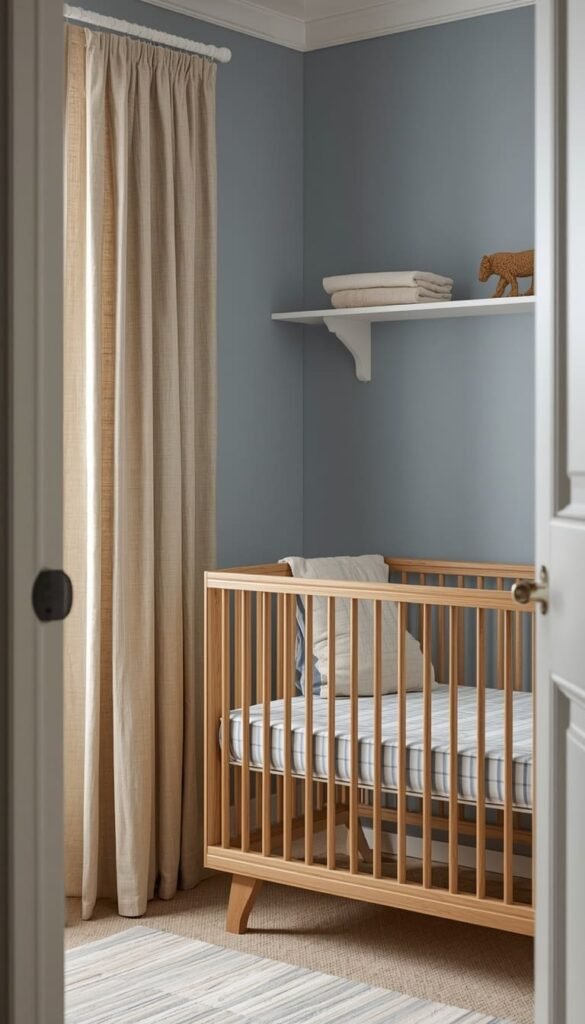
This is the cottage nursery angle that both competitors completely overlooked and it’s a real gap, because parents designing a baby boy nursery in a cottage style are searching for exactly this guidance and finding almost nothing useful. A muted, dusty blue paired with warm linen and natural wood is quietly one of the most sophisticated nursery palettes you can build, and it fits the cottage aesthetic beautifully without any gender-specific clichés.
The blue you’re looking for is not navy, not royal, and definitely not the bright primary blue of a classic boy’s room. Think slate, dusty cornflower, or a soft French blue with gray undertones. Sherwin-Williams Sleepy Blue (SW 6225) and Benjamin Moore Van Courtland Blue (HC-145) both hit that note perfectly calm, warm-adjacent, and deeply livable.
Pair the walls with natural linen curtains, a warm oak crib, and cream or oat-toned textiles throughout. A plaid crib sheet in soft blue and cream is a cottage-appropriate choice that reads classic without feeling predictable. Add a wooden animal or two on the shelf, a botanical print on the wall, and a woven jute rug on the floor. The room will feel intentional, warm, and genuinely beautiful nothing about it will feel like it was assembled from a “boy nursery” template.
One thing I always tell parents designing a boy’s cottage nursery: the style does all the heavy lifting. You don’t need to signal gender through every object in the room. The warmth and texture of cottage design creates a space that feels personal and considered regardless of the color anchoring it.
15. Handmade Crochet Mobile Above the Crib
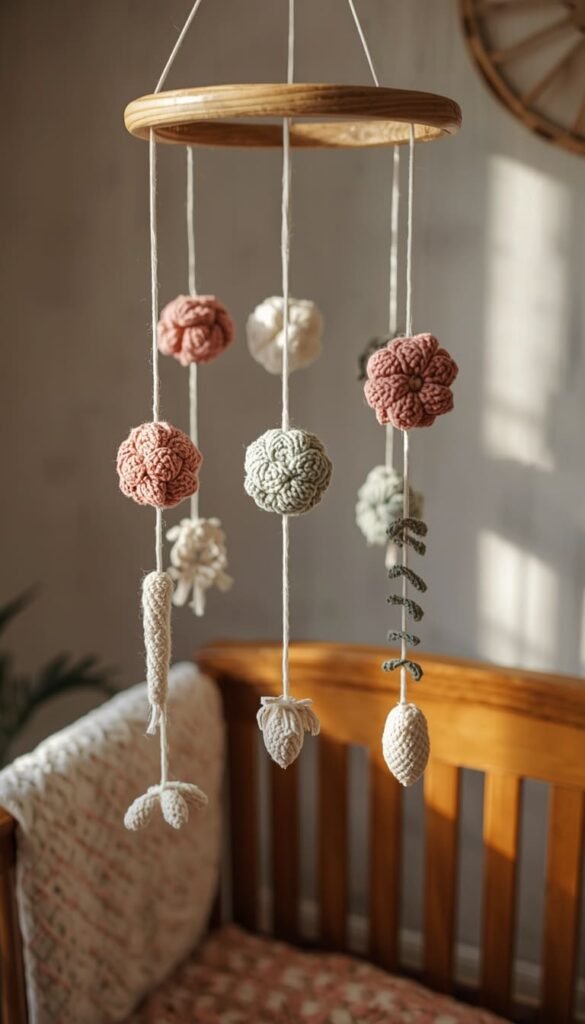
The crib mobile is the first thing a baby actually focuses on with genuine intention which means it’s both a developmental object and a design moment, and it deserves more thought than a last-minute Amazon order usually gives it. A handmade crochet mobile brings in that handcrafted, one-of-a-kind quality that is genuinely central to the cottage aesthetic. Nothing says “this room was put together with care” quite like something that was literally made by hand.
If you crochet, a simple floral or botanical mobile is an approachable beginner-to-intermediate project. Soft cotton yarn in your palette colors, a wooden hoop from a craft store, and a few hours over a weekend is genuinely all it takes. Free patterns for cottage-style nursery mobiles are widely available on Ravelry and Pinterest.
If making your own feels like one project too many right now completely valid, you’re growing a human Etsy is full of small makers producing beautiful handmade options. Search for crochet nursery mobiles in terms like “floral,” “botanical,” or “cottagecore” and filter by your color palette. Most quality handmade options fall between $35 and $75, which is a very reasonable spend for something this visible.
A quick note on safety: the mobile goes above the crib for visual interest during awake time, not during sleep. Once your baby can push up on their hands and knees typically around five months the mobile comes down entirely. That’s a universal safety guideline, not just a cottage nursery one.
Sage green walls or floral wallpaper if you could only pick one for your nursery, which one wins?
16. Floor Length Linen Curtains Hung High and Wide
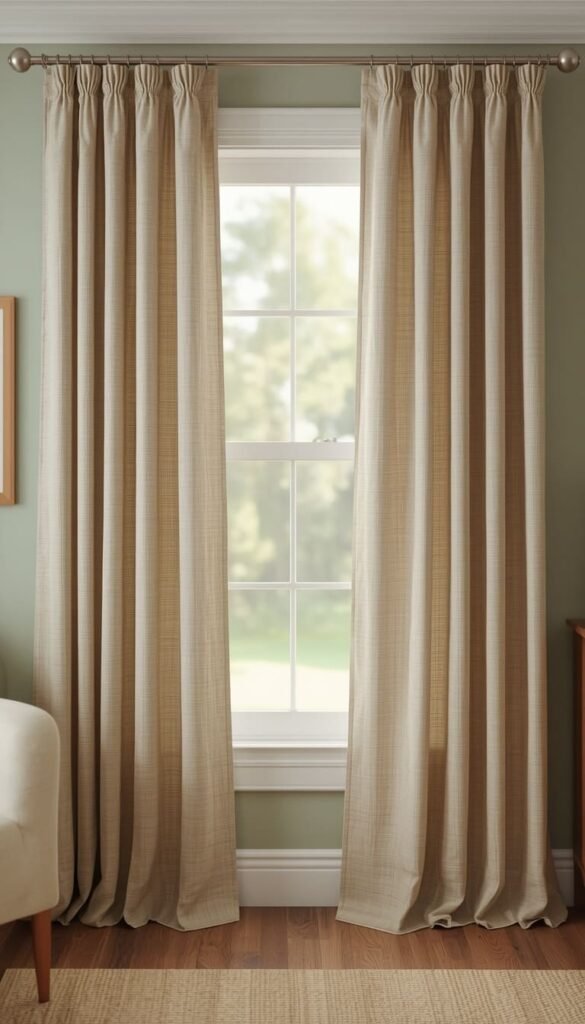
If there is one styling trick that interior designers use more consistently than any other, it’s this one hang your curtains higher and wider than the window frame. It’s the oldest trick in the book and it still works every single time. In a nursery, it makes the ceiling feel taller, the window feel larger, and the entire room feel more considered with almost zero additional effort.
For a cottage nursery, floor-length linen or cotton voile in a soft neutral is the right choice nearly every time. Cream, oat, soft white, or a barely-there sage these colors let the curtain soften the room without competing with your wallpaper or wall color. The fabric should be loose and relaxed, not stiff or structured. Linen that puddles very slightly at the floor is a perfectly cottage-appropriate choice.
Blackout lining is something most design guides mention as a footnote. I’m putting it front and center because it will genuinely change your quality of life during nap time. A linen curtain with blackout lining looks identical from the front and creates the kind of daytime darkness that makes a two-hour afternoon nap actually possible. It’s worth the extra $20 to $30 per panel without question.
Here’s how to hang them correctly:
- Mount the rod 4 to 6 inches above the window frame, not on it.
- Extend the rod 8 to 12 inches beyond the window frame on each side so the curtains clear the glass completely when open.
- Choose a simple brass or matte black rod — both work in a cottage nursery depending on your hardware finish elsewhere in the room.
The result looks effortlessly elevated, costs almost nothing extra to achieve, and makes a nursery window feel like a design feature rather than just a functional opening in the wall
17. Shabby Chic Nursery Touches with Distressed Frames and Soft Ruffles
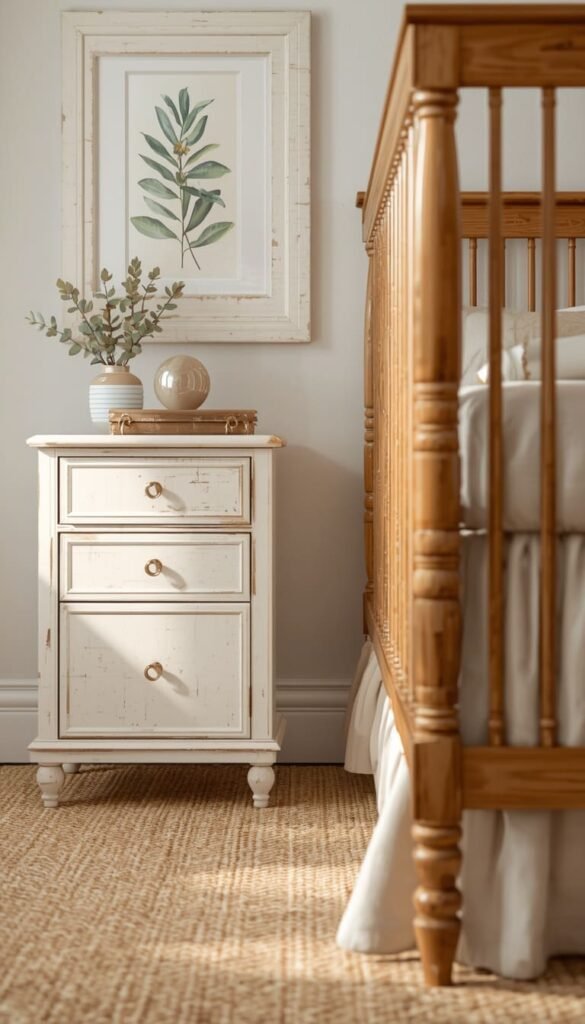
Shabby chic and cottagecore are close enough in spirit that people frequently search for one when they mean the other but they’re not identical, and understanding the difference helps you design with a clearer intention. Cottagecore leans nature-forward, warm, and storybook. Shabby chic leans romantic, slightly worn, and vintage-feminine. The overlap between them is where some genuinely beautiful nursery rooms are born.
In practical terms, shabby chic touches in a cottage nursery look like a distressed white picture frame on the gallery wall, a softly ruffled crib skirt in aged linen, a whitewashed side table with visible brushstroke texture, or a vintage-style mirror with a gently chipped painted frame. None of these elements are loud. All of them add a layer of lived-in charm that makes the room feel like it has a history.
The one thing to watch here is balance. Shabby chic has a tendency to accumulate one distressed piece leads to another and another until the room tips from curated into cluttered. My personal rule is no more than two or three deliberately worn or distressed elements in a single space. Let everything else be clean and warm. The contrast is actually what makes those pieces read beautifully rather than tired.
Budget-wise, this is one of the most affordable angles in cottage nursery design. Distressed frames, ruffled linens, and whitewashed accessories are everywhere at thrift stores, HomeGoods, and on Etsy. You rarely need to spend much to get this right.
18. Vintage Children’s Books as Shelf Decor
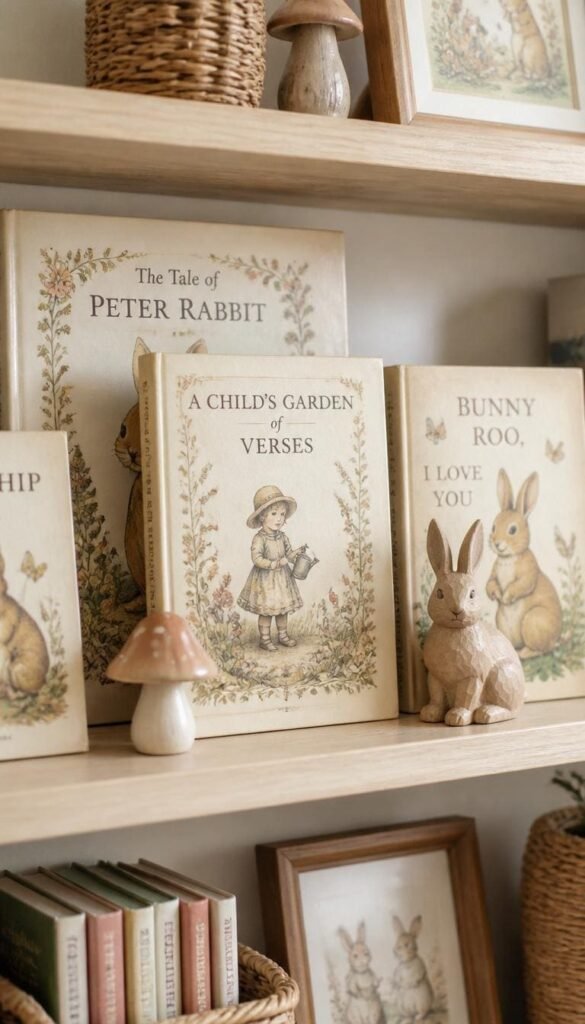
There is something quietly powerful about a shelf of beautifully illustrated children’s books in a nursery. It signals warmth, imagination, and intention all at once and it does it without a single word of explanation. A small, well-chosen collection of vintage storybooks is one of the easiest ways to give a cottage nursery genuine soul, and it almost never costs much to pull together.
The best sources in the US for vintage children’s books are ones most people already know but underuse for this purpose. Facebook Marketplace and local thrift stores almost always have a children’s book section with hidden gems. eBay is excellent for finding specific titles or illustrated editions from the 1960s through 1980s. Estate sales particularly in older neighborhoods are worth checking because book collections tend to come with them.
Here’s how to style them so they look designed rather than just stored:
- Display a few face-forward on a low shelf. A book displayed cover-out becomes wall art. Choose covers with botanical illustrations, soft color palettes, or classic storybook artwork.
- Mix sizes and orientations. Some upright, some stacked horizontally, one or two leaning slightly. The slight imperfection is the point.
- Tuck a small object between groupings. A ceramic mushroom, a small wooden animal, a tiny potted succulent. These break the visual line and make the shelf feel layered.
As the collection grows over time birthday gifts, hand-me-downs, finds from road trips the shelf builds its own quiet story. That slow accumulation is very much in the spirit of what cottage design is about.
19. A Washable Jute or Cotton Area Rug
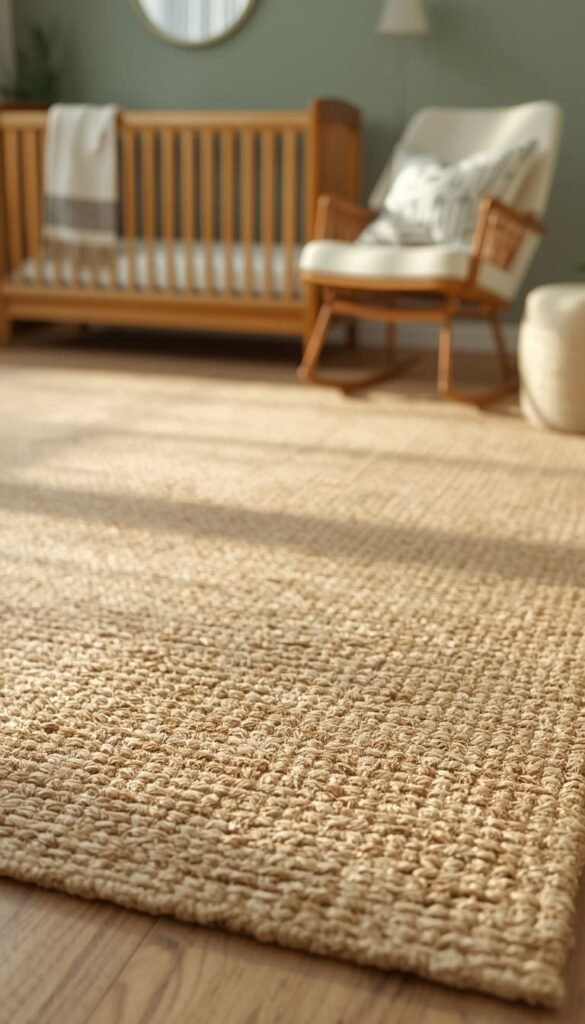
Let me be completely honest with you about nursery rugs in a way that most design guides are too polished to say out loud. White rugs are beautiful. They are also absolutely unforgiving the moment a baby enters the picture. Spit-up, diaper leaks, sweet potato puree, marker, mud these things will happen, and they will happen on the rug. A rug that cannot go into a washing machine is a rug that will cause you genuine stress within the first month.
So the rule in a cottage nursery is simple: soft, warm, and machine washable. Full stop.
Jute and cotton blend rugs in a natural, undyed tone are the ideal cottage nursery choice. They have the warmth and texture the style needs, they ground the room without competing with anything above them, and a good quality one can handle regular washing without falling apart. A vintage-style floral cotton rug in muted tones is another beautiful option if you want to introduce soft pattern at floor level.
For sizing, a 5×8 rug works well in most standard nurseries large enough to anchor the crib and glider visually, without overwhelming a smaller room. In a larger space, a 6×9 or 8×10 gives you more breathing room.
Two retailers consistently worth checking for washable cottage-appropriate rugs are Ruggable whose entire range is designed for machine washing and Lorena Canals, which makes beautiful cotton rugs with a handwoven quality that fits the cottage aesthetic perfectly. Neither requires a significant investment for a genuinely good result.
20. Ceiling Fairy Lights or a Star Projector
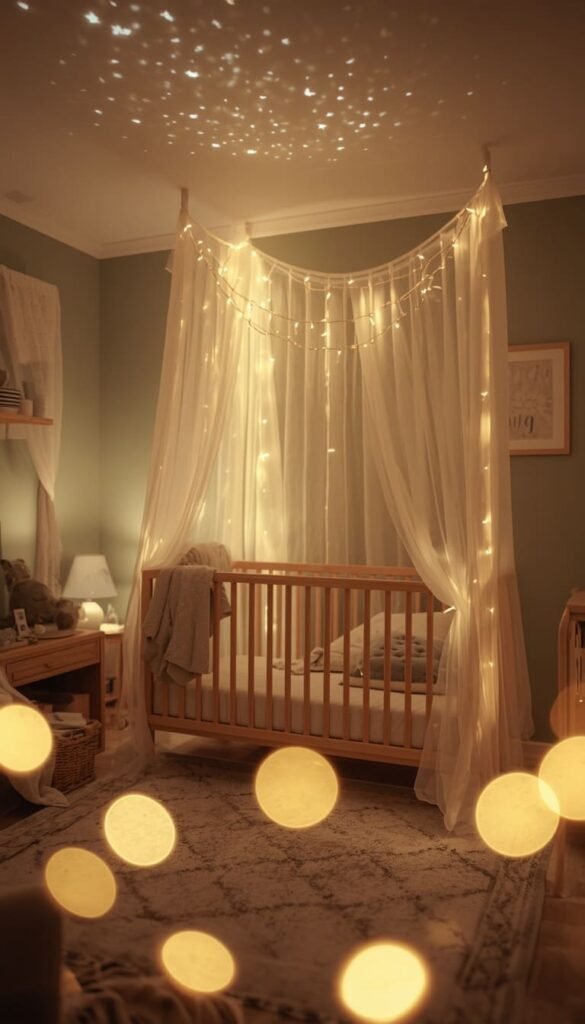
The ceiling is the one surface in a nursery that a baby actually looks at more than any other and in most nursery designs, it’s the most completely ignored. A cottage nursery that pays attention to what’s happening overhead feels noticeably more immersive and magical than one that doesn’t. It’s a small shift in thinking that makes a significant difference in how the finished room feels.
Warm fairy lights are the simplest and most cottage-appropriate approach. A strand of soft white or warm gold lights tucked along a shelf edge, draped loosely above a crib canopy, or wound through the rungs of an open bookshelf creates a gentle, golden ambient glow that transforms the room after dark. The effect is genuinely storybook the kind of light that makes even a tired parent feel like they’ve stepped somewhere slightly magical.
For cord management, which is the part nobody talks about until something goes wrong:
- Use battery-operated or USB-powered strands wherever possible to avoid cords running across floors or down walls.
- Secure all cords completely out of reach of the crib and any area where a baby or toddler might pull on them.
- Never drape lights inside or directly over the sleeping area — above a canopy is fine, inside the crib space is not.
A star projector is a lovely alternative or addition, particularly for sleep associations as your baby gets older. Look for one with a warm amber or soft white projection rather than a bright multicolor display the calmer the light, the more useful it is as an actual sleep tool rather than just a novelty. Models from Hatch and Munchkin both balance nursery aesthetics with genuine sleep-training functionality, which makes them worth the slightly higher price point.
Are you designing this nursery yourself or do you have a partner who thinks every idea is “too much”?
21. Greenery with Real Plants or High Quality Faux
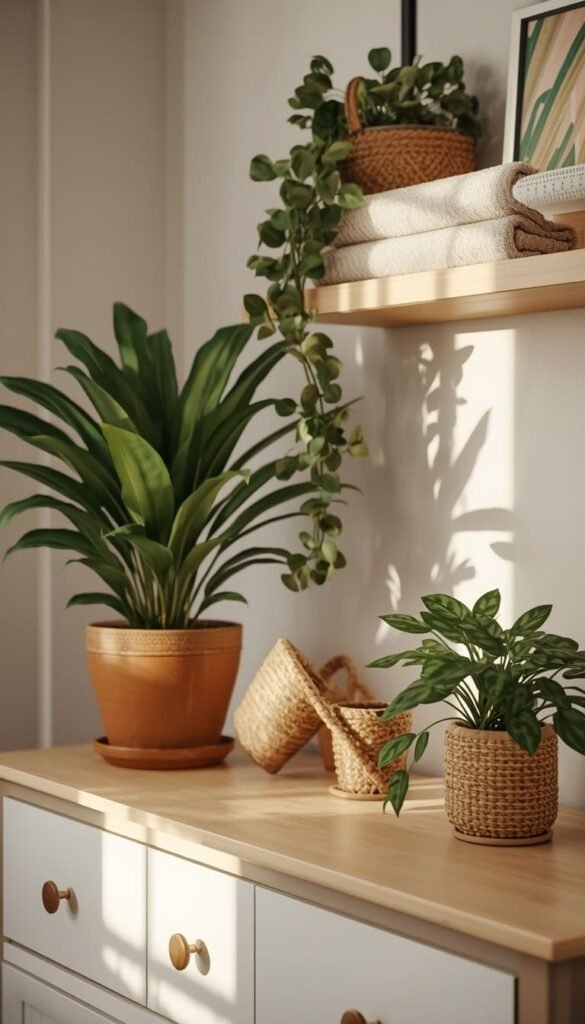
A little greenery in a nursery does something that no other decorative element quite replicates it makes the room feel alive. Not styled, not decorated, but genuinely inhabited and breathing. In a cottage nursery specifically, where the entire aesthetic draws its soul from nature, a plant or two is less of an accessory and more of a finishing argument for the whole design.
If you want to go the real plant route, the non-toxic list for babies and toddlers is shorter than most people realize, so knowing it upfront saves a lot of second-guessing later. Safe options that also happen to look beautiful in a cottage setting include:
- Parlor Palm — slow growing, tolerant of lower light, genuinely elegant.
- Boston Fern — lush and very cottage in spirit, though it does need consistent humidity.
- Spider Plant — practically indestructible, non-toxic, and produces trailing offshoots that look charming on a high shelf.
- Calathea — stunning patterned leaves, non-toxic, and thrives in the indirect light most nurseries have.
Keep anything real on a high shelf or dresser top well out of reach of a curious baby who will be mobile sooner than you expect.
If real plants feel like one more living thing to keep alive right now, a high-quality faux plant in a beautiful ceramic or woven pot is a completely legitimate choice. The key word is high-quality. A cheap plastic plant will undermine the warmth of everything around it instantly. Brands like Nearly Natural and IKEA’s FEJKA range offer convincing options at reasonable prices that hold up well in a warm, well-lit room.
22. Where to Shop for a Cottage Nursery in the US
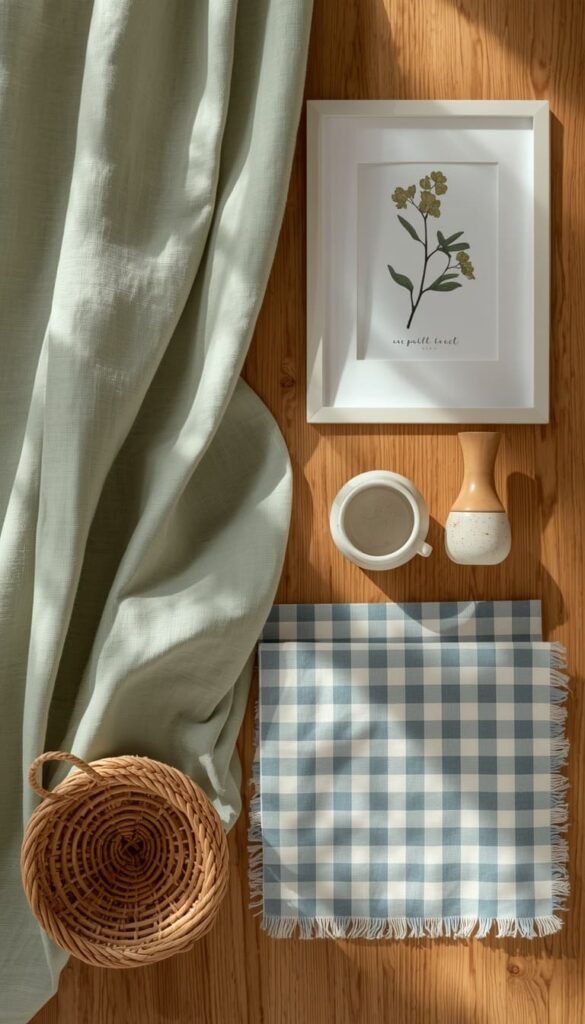
Knowing what you want is one thing. Knowing exactly where to find it without spending forty hours down a rabbit hole of browser tabs is another thing entirely and it’s something most nursery design guides simply don’t address. So here is my honest, practical breakdown of where to actually shop for a cottage nursery in the United States, by category and budget.
For furniture, Pottery Barn Kids remains one of the most reliable sources for cottage-appropriate cribs, dressers, and gliders with warm wood finishes and timeless silhouettes. Their quality justifies the price point, and their convertible crib options are particularly strong. Wayfair covers the mid-range well, with a wide enough selection that filtering by “natural wood” and “vintage style” yields genuinely good results. For budget-conscious shoppers, IKEA’s SUNDVIK and HEMNES lines punch well above their price point in a cottage context.
For textiles and soft goods, H&M Home and Target’s Threshold and Hearth & Hand lines consistently deliver cottage-appropriate bedding, curtains, and cushions at prices that don’t require a second thought. Etsy is irreplaceable for handmade and vintage textile finds a handwoven blanket, an embroidered pillow, a custom crib skirt in your exact palette color.
For decor and accessories, thrift stores and estate sales first, always. Then HomeGoods for ceramics, baskets, and lamps. Then Etsy for anything handmade or vintage-specific. For wallpaper and murals, Chasing Paper, Tempaper, and Rifle Paper Co. are the three names worth knowing by heart.
One thing I always remind clients: you do not need to buy everything at once. Cottage style actually looks better when it accumulates slowly. Buy the anchor pieces first crib, dresser, glider and let the rest of the room find itself over the first few months.
23. How to Make Your Cottage Nursery Grow With Your Child
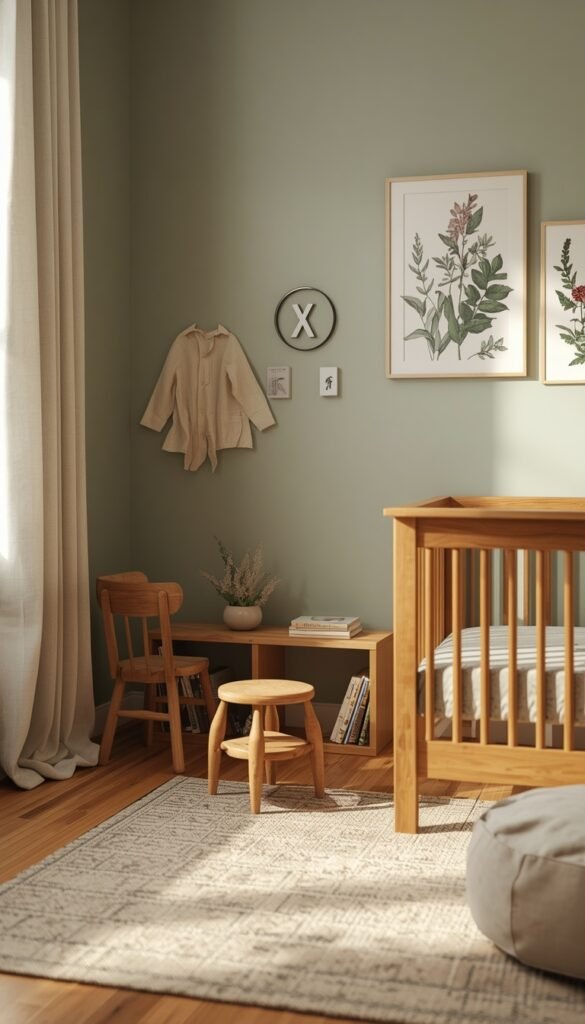
The most common nursery design mistake I see not the most dramatic, but the most avoidable is designing a room that’s perfect for a newborn and has nowhere to go by age two. A fully themed nursery, or one built entirely around infant-specific elements, tends to feel dated or mismatched the moment a toddler develops opinions. And they develop opinions fast.
A well-designed cottage nursery sidesteps this problem almost entirely, because the foundational elements of the style warm wood, soft neutrals, natural textures, botanical prints are genuinely timeless. The room doesn’t need a redesign when your baby grows up. It needs a thoughtful refresh. Here’s exactly how I approach that transition with my clients:
- Swap the crib for the toddler conversion. If you invested in a convertible crib, this is where that decision pays off. The warm wood frame stays, the mattress drops, and the room continues looking intentional.
- Replace the changing topper with a lamp and a small tray. The dresser remains; its purpose just quietly shifts.
- Bring the books down to a lower shelf. A floor-level bookshelf or a simple book ledge at toddler height makes the room feel like it was designed for the child it now belongs to.
- Add a small table and two chairs in a corner. This single piece does more to signal “big kid room” than almost anything else, and in natural wood it fits the cottage aesthetic perfectly.
- Let them choose one thing. One poster, one stuffed animal on display, one small personal object. Cottage style has always celebrated things that mean something to the person living in the space. Giving a toddler one meaningful choice teaches them that their room belongs to them and it keeps the design collaborative rather than imposed.
The bones of a cottage nursery the sage green walls, the warm wood furniture, the linen curtains, the botanical prints will carry through every stage of early childhood without apology. That staying power is not an accident. It’s exactly what this style was built for.
The Nursery Style Selector
By Budget
Nesting on a Budget (Under $500)
- Start with sage green paint and cream millwork — biggest visual impact, lowest cost
- Thrift the dresser and glider, buy the crib new (safety first, always)
- Peel and stick mural over traditional wallpaper — same look, fraction of the price
- Wicker baskets from Target, botanical prints from Etsy downloads
- One good linen curtain panel per window, hung high — that’s all you need
Investing in the Long Game ($500 and above)
- Convertible wood crib that grows from newborn to big kid bed
- Pottery Barn Kids or Monte Design glider for comfort you’ll actually feel at 3am
- Real wallpaper on the accent wall — quality shows and it lasts for years
- Ruggable or Lorena Canals washable rug — worth every dollar with a baby incoming
By Lifestyle
First Time Parents
- Keep it simple — crib, dresser, glider, one accent wall
- Washable everything, always
- Buy the canopy, skip the decorative pillows in the crib
- Convertible furniture only — you will not want to redecorate at age two
The Design Enthusiast
- Layer textures fearlessly — linen, boucle, crochet, jute all together
- Go for real wallpaper, real plants, real handmade details
- Invest in lighting — a pleated lamp plus fairy lights plus a dimmer switch
- Edit ruthlessly — cottage style rewards restraint more than abundance
Small Nursery, Big Dreams
- One accent wall only — wallpaper or mural behind the crib, nothing else
- Multi-functional furniture — dresser as changing table, crib as toddler bed later
- Hang curtains ceiling to floor to visually stretch the room
- Keep the palette tight — warm white walls let everything else breathe
Frequently Asked Questions
What makes a cottage nursery different from a farmhouse nursery?
Cottage nurseries lean romantic and floral think soft botanicals, warm wood, and storybook charm. Farmhouse goes more rustic and spare with shiplap, galvanized metal, and a cleaner neutral palette. Same family, very different personality.
How much does it cost to decorate a cottage nursery on a budget?
The average cost runs between $800 and $1,500 for a complete look. Thrift the dresser and glider, buy the crib new, and use peel-and-stick wallpaper. That combination delivers the full cottage aesthetic without overspending.
Is a cottage nursery style good for baby boys?
Absolutely. A muted blue and linen palette with warm wood furniture and botanical prints is deeply cottage and completely boy-appropriate. Gender-neutral sage green works just as beautifully.
What paint colors work best for a cottage nursery?
Sherwin-Williams Liveable Green and Benjamin Moore Pale Avocado are my two most-reached-for picks. Both hold warmth across different lighting conditions without pulling gray or minty by evening.
Can a cottage nursery work in a small room?
Yes, and honestly it can shine there. Use one accent wall instead of four, stick to a tight warm palette, and hang curtains ceiling to floor. Small cottage nurseries feel cozy rather than cramped when the layering is done right.
Conclusion
Your cottage nursery doesn’t need a massive budget or a perfectly clear weekend to get started it just needs one decision. Order the paint sample. Clear the shelf. Pull the trigger on that peel-and-stick mural you’ve had saved for three weeks. That first small move is what separates the Pinterest board from the actual room. I’ve watched hundreds of parents go from completely overwhelmed to completely in love with their nursery, and it almost always started with one thing done on a Tuesday afternoon. Your baby’s room deserves to feel like something warm, intentional, and genuinely yours. So start today, even if today is just picking the green.
I’d love to know are you designing for a boy, a girl, or keeping it gender neutral? Drop it in the comments and tell me which idea you’re starting with!
