21 Cozy Cottage Kitchen Ideas for Warm Country Charm
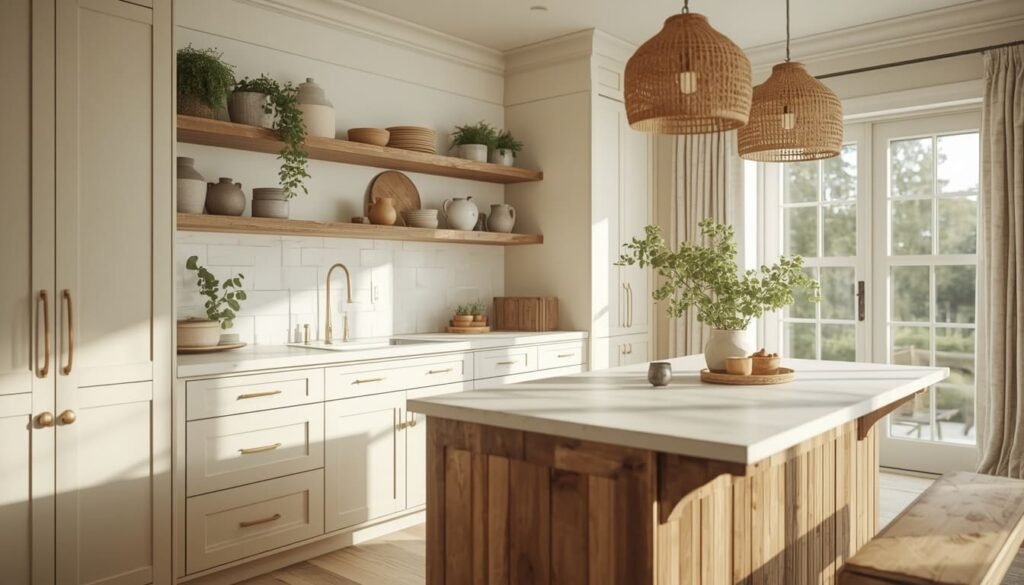
There’s something about a cottage kitchen that makes you want to slow down, pour a cup of coffee, and just stay awhile. Over my years designing homes across the US, I’ve found that this style more than any other makes people feel genuinely at home the moment they walk in. It’s not about perfection. It’s about warmth, collected charm, and spaces that look like they have a story to tell. Whether you’re working with a tiny galley or a generous open plan layout, these 21 cozy cottage kitchen ideas will help you build something that feels real, lived-in, and completely yours.
My Design Notes
A few years back, I was brought in to refresh a 1940s bungalow in Asheville, North Carolina. The kitchen was a narrow galley dark, dated, and honestly a little sad. The homeowner had an $8,500 budget and a big dream. We kept the original pine floors because they had too much soul to cover up. I painted everything in Benjamin Moore’s Pale Oak (OC-20), pulled the upper cabinets entirely, and replaced them with simple open shelves. We sourced salvaged brass hardware from a local estate sale for under $60 total. The finishing touch was a $340 pendant light from Rejuvenation that tied the whole room together. When we were done, three separate visitors asked if the homeowner had spent $40,000 on the renovation. She hadn’t. That project is still the one I tell people about when they say cottage style is too expensive or too complicated. It isn’t it just asks you to choose personality over perfection.
Stunning Cottage Kitchen Design Secrets Every American Homeowner Needs to Know
1. Start With the Right Cabinet Style
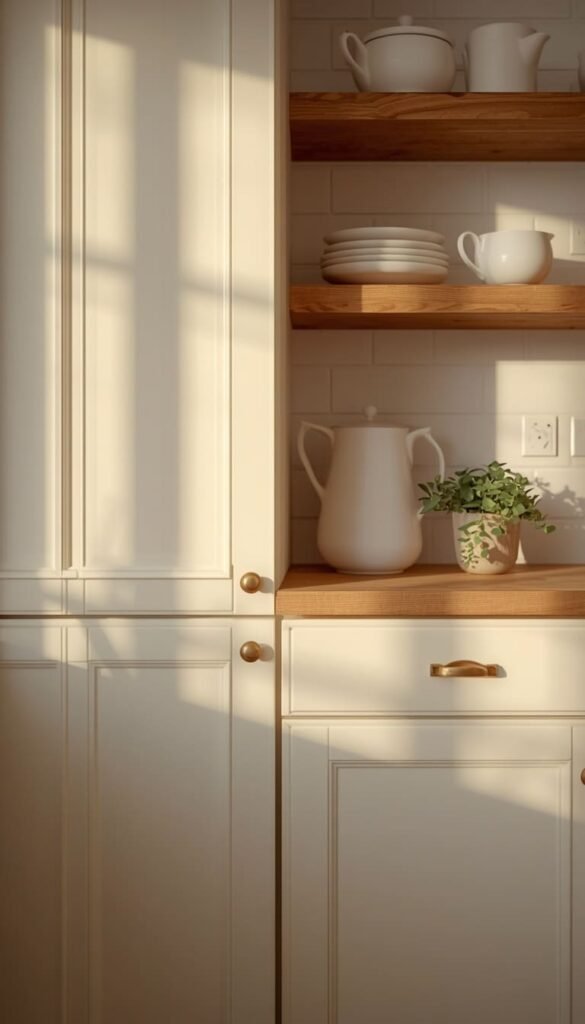
When it comes to cottage kitchens, cabinets set the entire mood. Get them right, and everything else falls into place. Get them wrong, and no amount of pretty accessories will save you. In my experience, two styles consistently deliver that warm, cozy cottage feeling better than anything else Shaker and beadboard.
Shaker cabinets are my personal go to for most US cottage projects. Their clean, framed doors feel timeless without being fussy, and they work beautifully whether you’re going for an English country look or something more relaxed and coastal. Beadboard fronts, on the other hand, bring instant vacation cottage nostalgia think Cape Cod, think wraparound porches, think Sunday mornings with nowhere to be.
A quick trick I’ve learned over the years: if your kitchen is small, stick with Shaker in a soft muted tone and skip the ornate detailing. It keeps the space breathing. One thing to watch out for is going too modern with your cabinet profile anything with a flat, handle less Euro style door will fight the cottage aesthetic every single day.
2. Paint Like a Pro Best Cottage Colors for US Homes
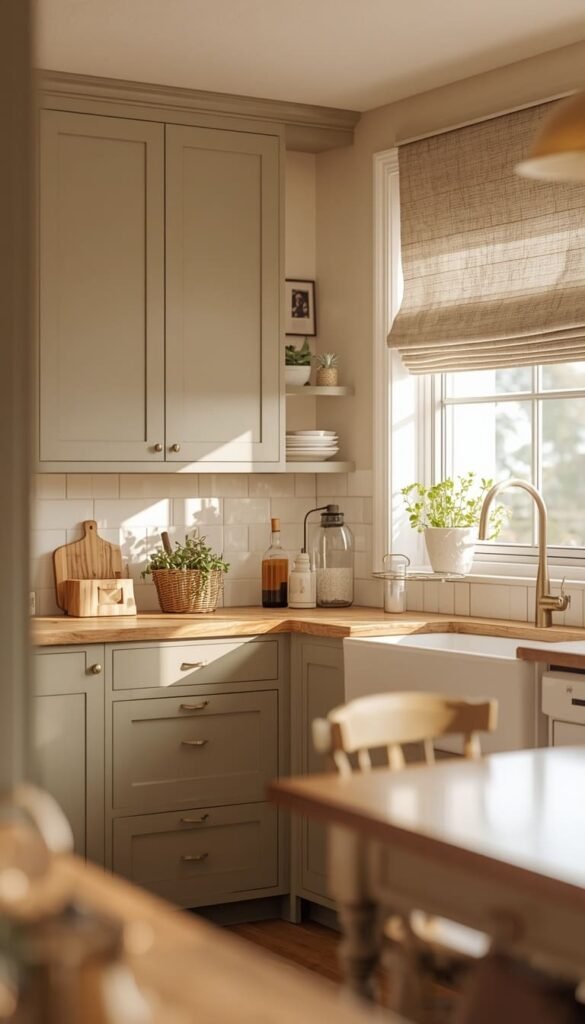
Color is where cottage kitchens truly come alive, and I’ll be honest this is where most homeowners either nail it or overthink it completely. The sweet spot for cottage kitchens sits in the warm neutral and soft nature inspired territory. We’re talking creamy whites, dusty sage greens, weathered blues, and soft clay tones.
Some of my most reached for paint colors on US cottage projects:
- Benjamin Moore Pale Oak (OC-20) a warm, creamy neutral that works in almost any light
- Sherwin-Williams Clary Sage (SW 6178) a muted green that feels both fresh and grounded
- Benjamin Moore Hale Navy (HC-154) for anyone brave enough to go bold on an island or lower cabinets
Avoid anything too cool toned or stark. Bright white with blue undertones tends to make cottage kitchens feel clinical rather than cozy. Warm always wins here.
3. Go White But Do It Right
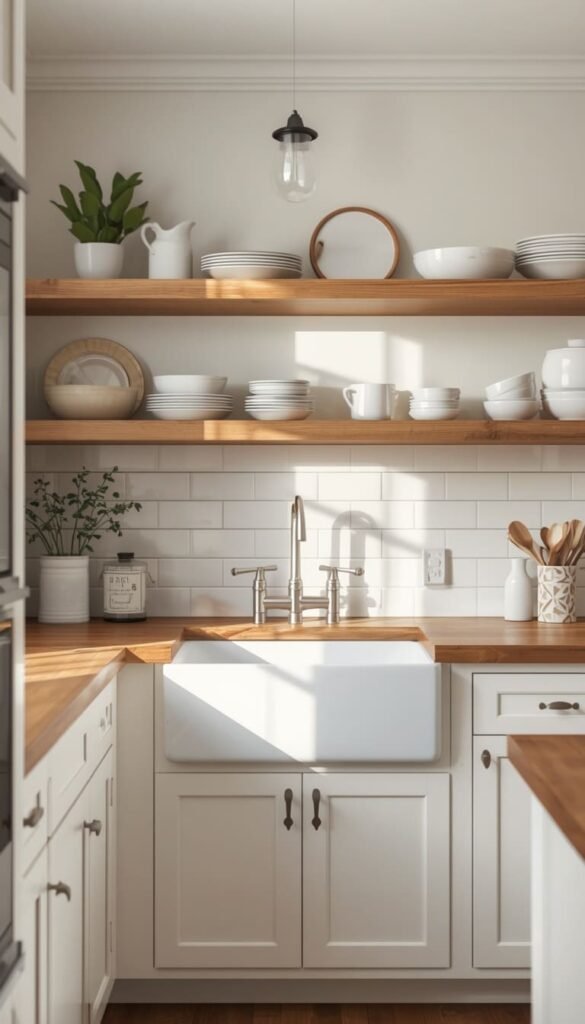
White cottage kitchens are gorgeous. I’ve designed quite a few of them, and the photos always stop people mid scroll. But I’d be doing you a disservice if I didn’t share the full picture before you commit to an all-white scheme.
The reality is that white kitchens require consistent upkeep. Cabinet doors near the stove will yellow faster than you expect. Open shelves in white show dust within days, not weeks. And white grout? It’s beautiful for about three months before the maintenance becomes a part-time job.
That said, white done right is genuinely stunning in a cottage kitchen. Here’s how I approach it with clients:
- Choose an off white or creamy white (like Sherwin-Williams Alabaster SW 7008) rather than a stark bright white
- Pair white cabinets with a warm wood countertop or butcher block to keep things from feeling sterile
- Use a darker grout on any tile to cut your cleaning time dramatically
4. Reclaimed Wood Character You Simply Cannot Buy New
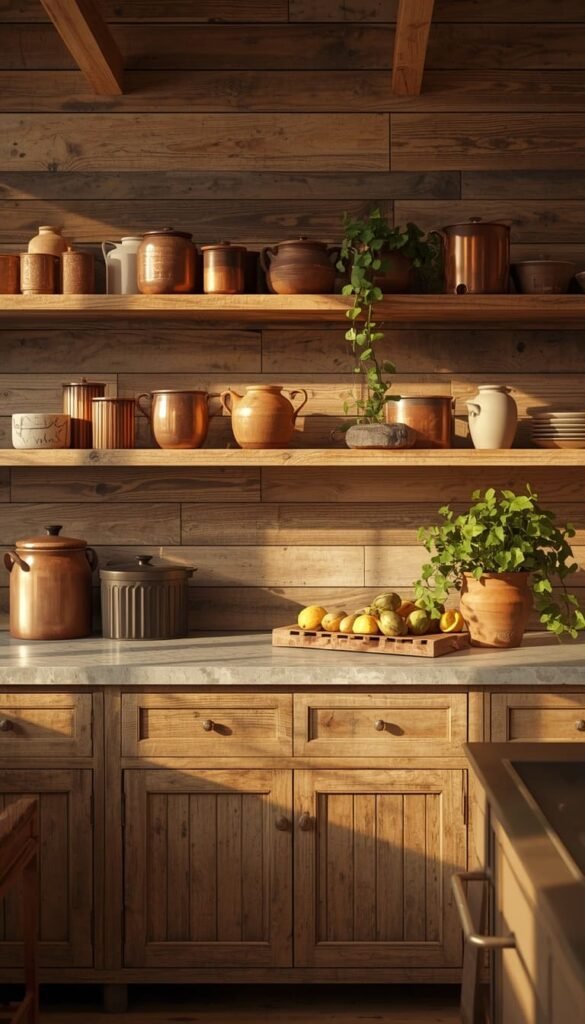
If there’s one material that defines the soul of a cottage kitchen, it’s reclaimed wood. I’ve used it on cabinet fronts, open shelving, ceiling beams, kitchen islands, and even backsplash panels and it never once looked out of place. There’s a warmth and an authenticity to reclaimed wood that no amount of factory finishing can replicate.
The best part for budget conscious homeowners is that reclaimed wood doesn’t have to be expensive. Local salvage yards, Habitat for Humanity ReStores, and even Facebook Marketplace are goldmines. I once sourced enough reclaimed barnwood shelving for an entire kitchen wall for under $200 in Tennessee.
One thing to watch out for is moisture. Reclaimed wood in a kitchen needs to be properly sealed, especially near the sink and dishwasher. Skip this step and you’ll be dealing with warping within a year. Done correctly though, reclaimed wood only gets better looking with age and that, honestly, is the whole point of cottage style.
5. The English Cottage Kitchen How to Nail It in America
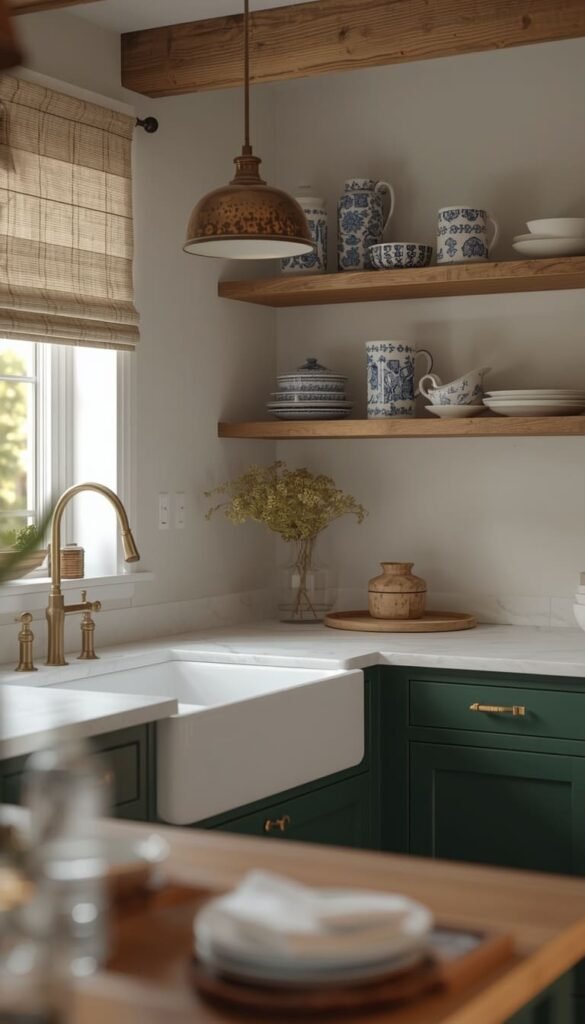
The English cottage kitchen is one of those aesthetics that American homeowners fall completely in love with on Pinterest, then struggle to translate into their actual homes. I get it. There’s something deeply romantic about those moody, characterful British kitchens the Belfast sinks, the Aga cookers, the centuries old stone floors. But here’s the good news: you don’t need a 300-year-old farmhouse in the Cotswolds to pull this off.
The key is layering. English cottage kitchens feel collected and lived in because they genuinely are. Start with Shaker cabinets in a deep, earthy tone think forest green, navy, or a warm charcoal. Add in unlacquered brass hardware that will patina beautifully over time. Swap a standard sink for an apron front farmhouse sink if your budget allows. Then finish with open shelving displaying mismatched ceramics, a few trailing plants, and some well worn cookbooks.
One authenticity trick I always use: mix your light fixtures. A vintage style pendant over the sink paired with simple recessed lighting overhead gives that layered, “it happened over time” feeling that makes English cottage kitchens so believable.
Which cottage kitchen style speaks to you most English, French, Modern, or Cottagecore?
6. French Cottage Vibes Warm Lived In and Effortlessly Chic
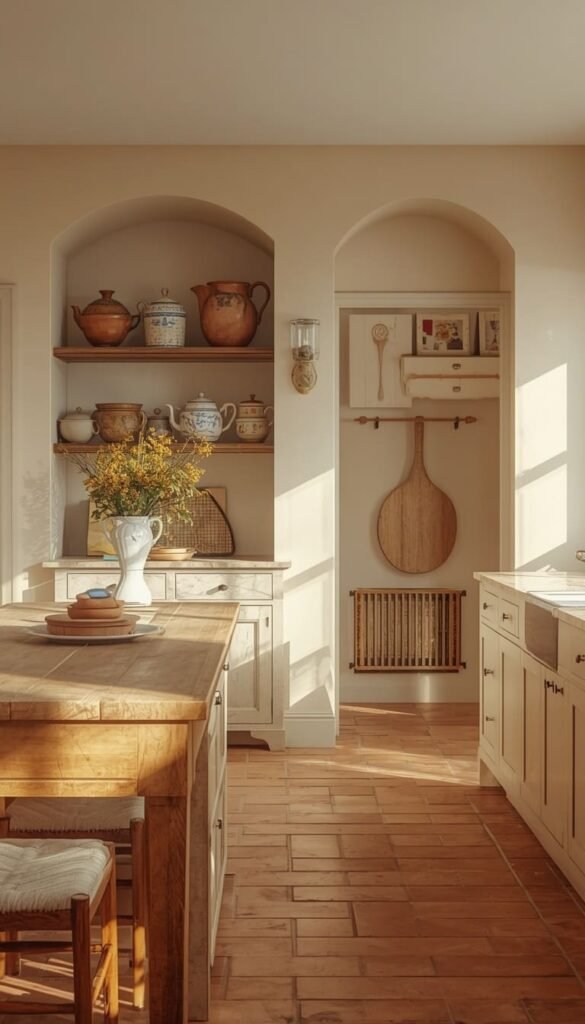
French cottage kitchens operate on a completely different frequency than their English counterparts, and I think they’re criminally underrepresented in American home design conversations. Where English cottage leans dark and cozy, French cottage leans warm, sun-washed, and almost carelessly beautiful.
Think:
- Soft plaster walls in warm white or faded terracotta
- Open shelves displaying mismatched French faience pottery
- A farmhouse table in the center instead of a traditional island
- Linen curtains instead of cabinet doors on lower units
- Unlacquered brass or aged iron hardware throughout
The material palette is key here. Natural stone countertops, terracotta or encaustic tile floors, and weathered wood surfaces are your best friends. Benjamin Moore’s Pale Almond (OC-87) on the walls with warm wood accents hits that sun-drenched Provence feeling remarkably well in US homes.
A quick trick I’ve learned with French cottage kitchens don’t over accessorize. The beauty of this style is in its restraint. A single bunch of dried lavender, a ceramic bowl of lemons, and a well placed copper pot will do more for the room than a shelf full of carefully curated décor ever could.
Top 6 ideas:
| Idea | Estimated Price | Maintenance |
|---|---|---|
| Shaker Cabinet Style | $3,000 to $8,000 installed | Medium |
| Cottage Paint Colors | $200 to $600 labor and paint | Low |
| White Kitchen Done Right | $2,500 to $7,000 full repaint | Medium |
| Reclaimed Wood Elements | $200 to $1,500 depending on scope | Low |
| Soapstone Countertops | $70 to $120 per square foot | Low |
| Vintage Hardware Swap | $150 to $600 full kitchen | Low |
7. Modern Cottage When Clean Lines Meet Cozy Charm
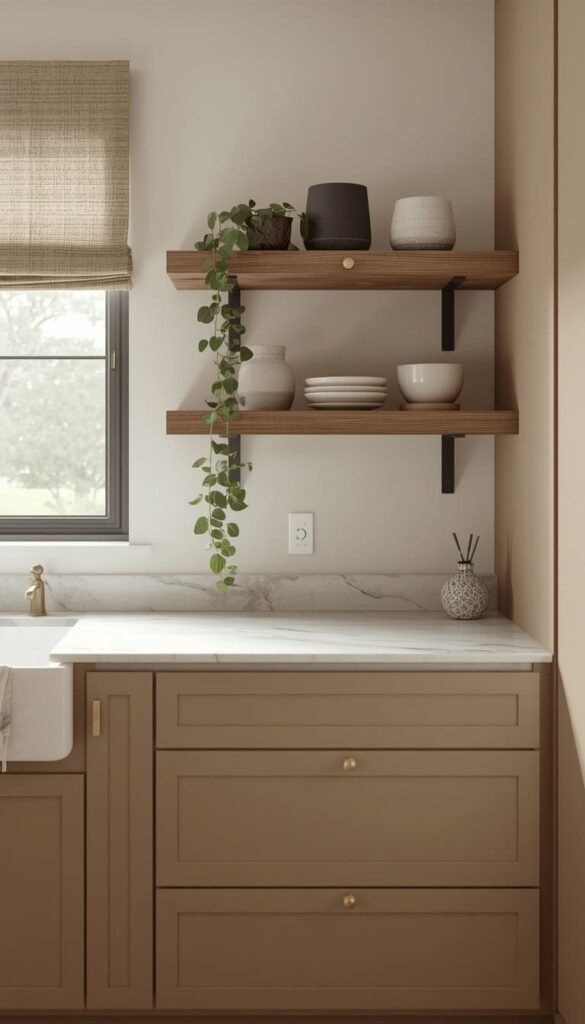
Modern cottage is honestly one of my favorite styles to design right now because it solves a real problem: a lot of homeowners love the warmth of cottage aesthetics but hate the clutter that can come with it. Modern cottage gives you the coziness without the visual noise.
The formula is simpler than you might think. Keep your cabinet lines clean flat-front Shaker or even a slightly more streamlined profile works here. Choose a limited, intentional color palette of two or three tones maximum. Then bring in cottage warmth through materials and texture rather than accessories. A linen Roman shade, a honed marble countertop, a single reclaimed wood floating shelf these details do the heavy lifting without overwhelming the space.
What I always tell clients pursuing this look: invest in quality over quantity. Modern cottage kitchens look expensive because every single element is deliberate. There’s no filler, no “good enough” pieces. One thing to watch out for is accidentally crossing into full minimalism if your kitchen starts feeling cold or sparse, add a woven basket, a small potted herb, or a stack of cookbooks to bring the warmth back immediately.
8. Cottagecore Kitchen Aesthetics The TikTok Worthy Version

If you’ve spent any time on TikTok or Instagram in the last few years, you’ve seen cottagecore and there’s a reason it has captured so many people’s imaginations. It’s romantic, it’s nostalgic, and it celebrates a slower, more intentional way of living that honestly sounds pretty wonderful right now.
In a kitchen context, cottagecore is about embracing the handmade, the foraged, and the beautifully imperfect. This is the style where dried herb bundles hanging from ceiling hooks aren’t just decorative they’re the point. Where a handthrown ceramic mug collection displayed on open shelving tells a story about who lives here.
Some elements that define a genuinely great cottagecore kitchen:
- Dried botanicals lavender, eucalyptus, chamomile hung near windows or above the sink
- Mismatched vintage ceramics and stoneware used as everyday dishware
- A hand-painted or hand stamped tile backsplash, even a small section
- Woven textures a jute rug, linen dish towels, a rattan pendant light
One thing I’d caution against is going so thematic that the kitchen loses function. Cottagecore should feel like a natural extension of how you actually live, not a stage set. The most successful versions of this aesthetic I’ve seen belong to people who genuinely love to cook, bake, and gather and that spirit shows in every corner of the room.
9. Country Cottage Kitchen Farmhouse’s Softer Cousin
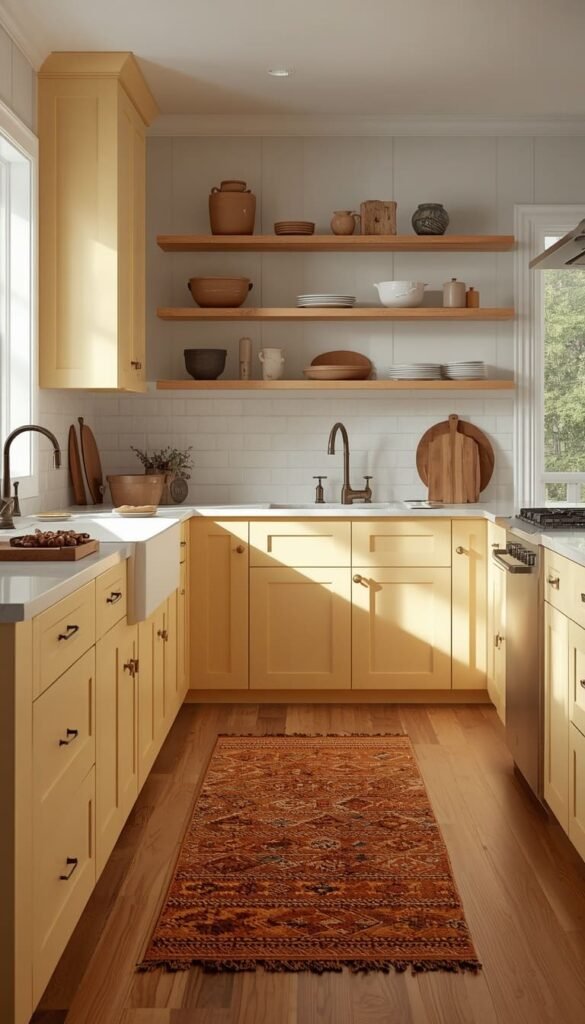
A lot of people use “country kitchen” and “farmhouse kitchen” interchangeably, and I completely understand why. They share DNA. But country cottage has a distinctly softer, more relaxed energy than the sometimes stark modern farmhouse look that dominated American homes for the better part of a decade. Less shiplap, more soul.
Country cottage kitchens feel genuinely comfortable rather than designed. The color palette tends toward warm, earthy tones soft butter yellows, dusty terracottas, faded sage greens. Furniture style cabinets with visible feet rather than a solid toe kick instantly elevate the look. And natural materials are non negotiable here: knotty pine floors, butcher block countertops, woven window treatments.
A quick trick I’ve used on several US projects to nail this look without a full renovation: replace your cabinet hardware with hand-forged iron pulls, add a vintage style faucet in an oil rubbed bronze finish, and layer in a patterned runner rug in warm tones. Three changes, completely different kitchen.
10. Farmhouse Cottage Fusion Best of Both Worlds
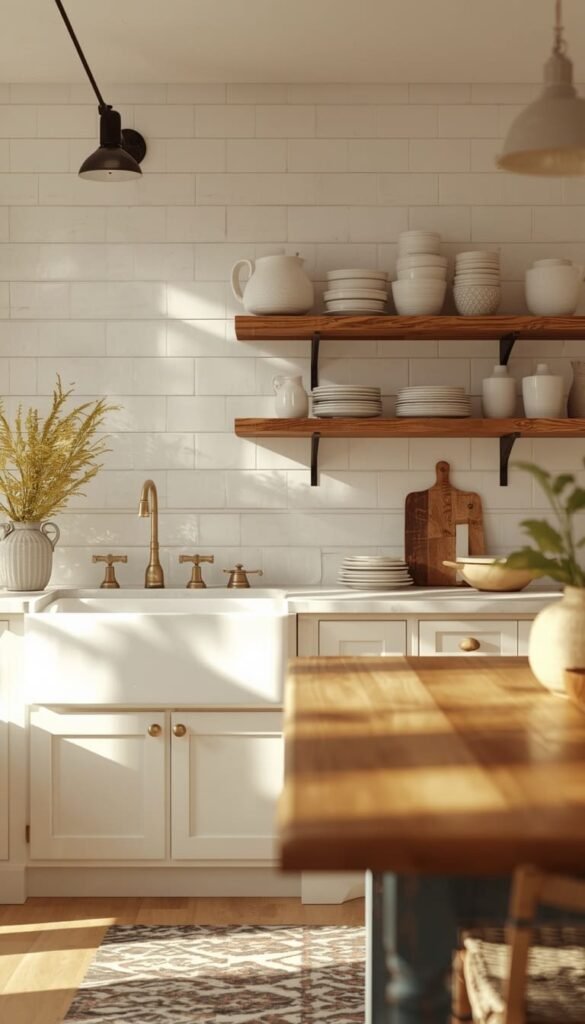
Here’s the thing about farmhouse cottage style it’s not a compromise. It’s actually one of the most cohesive and livable kitchen aesthetics I work with, because both styles share the same core values: warmth, practicality, and a deep appreciation for natural materials. When you blend them thoughtfully, the result feels completely intentional.
The farmhouse side of the equation brings structure apron front sinks, shiplap accents, simple pendant lighting, and a strong connection to the outdoors. The cottage side softens everything patterned tile, open shelving with collected ceramics, vintage textiles, and a color palette that feels more personal and less formulaic.
What makes this fusion work beautifully in American homes specifically:
- An apron front sink in white or fireclay paired with unlacquered brass fixtures
- Shiplap on a single accent wall rather than throughout the entire kitchen
- Open shelving in a warm wood tone displaying a mix of everyday dishes and vintage finds
- A large farmhouse table instead of a traditional island for casual gathering
One thing to watch out for with this fusion is letting the farmhouse elements overpower the cottage warmth. If your kitchen starts feeling more like a barn renovation than a cozy home, dial back the shiplap and add softer textiles and more personal collected pieces to restore the balance.
If you could change just one thing in your kitchen tomorrow, what would it be?
11. Small Cottage Kitchen Space Smart Tricks That Actually Work
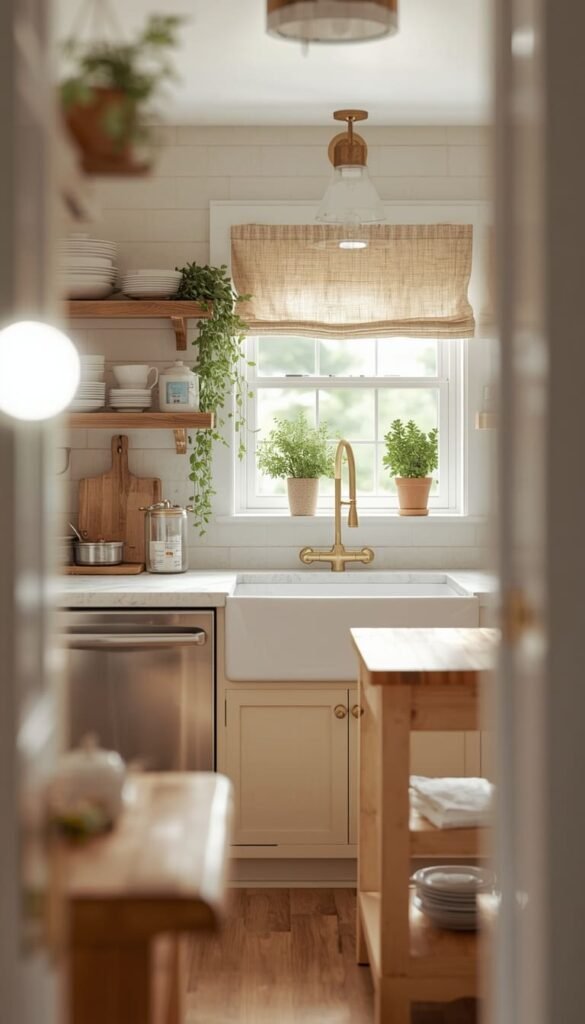
Small cottage kitchens are genuinely special, and I say that having worked in some truly tiny spaces over the years. There’s an intimacy to them that larger kitchens simply can’t replicate. But they do require smarter planning, and the decisions you make in a small cottage kitchen matter more than in any other space.
The single most impactful change I recommend to homeowners with small cottage kitchens? Remove the upper cabinets. I know it sounds counterintuitive you’re losing storage but the visual openness it creates is dramatic. Replace them with two or three floating shelves and suddenly the room breathes. Pair this with a light, warm paint color and good task lighting under the shelves, and a small kitchen can feel genuinely generous.
A few more tricks that consistently deliver results:
- Use a moveable butcher block cart instead of a fixed island to keep the floor plan flexible
- Install a pot filler above the range to eliminate traffic across a narrow kitchen
- Choose cabinet hardware in a light metallic finish brass or brushed gold to reflect light and add depth
- Add a shelf above the window to capture vertical space most homeowners completely overlook
The biggest mistake I see in small cottage kitchens is trying to cram in too much storage and ending up with a space that feels cluttered and closed-in. Edit ruthlessly. In a small cottage kitchen, every single item on display should earn its place.
12. Vintage Finds That Actually Work And Where to Source Them
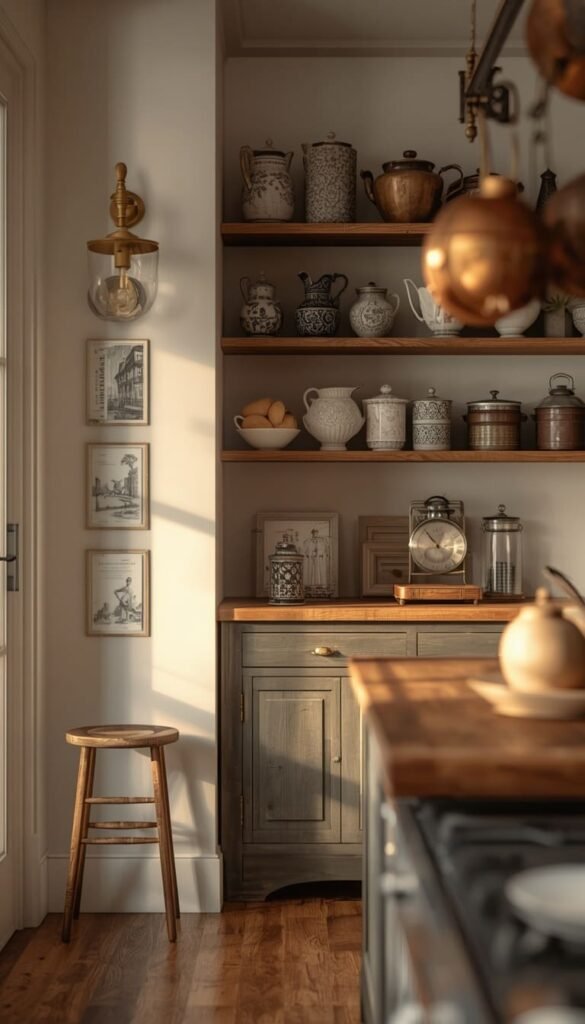
Vintage pieces are the heartbeat of any great cottage kitchen, and I genuinely believe no amount of brand-new shopping can replicate what a well chosen vintage find brings to a space. There’s a reason those kitchens you see in magazines and stop scrolling for always have that one piece a worn wooden stool, a collection of mismatched ironstone, a patinated brass sconce that makes the whole room click.
The trick is knowing what to buy vintage versus what to buy new. I always source vintage for lighting fixtures, hardware, open shelving brackets, ceramics, textiles, and small furniture pieces like stools and side tables. These are the elements where age adds beauty. For anything structural or heavily functional dishwashers, ranges, countertops buy new and invest in quality.
For US based homeowners, my favorite sourcing spots are consistently:
- Facebook Marketplace and Craigslist for larger furniture pieces and architectural salvage
- Habitat for Humanity ReStores for hardware, light fixtures, and cabinet pulls at a fraction of retail cost
- Local estate sales for ceramics, ironstone, copper cookware, and vintage textiles
- Etsy for handmade and vintage inspired hardware when local sourcing comes up short
One thing to watch out for is buying vintage pieces that are damaged beyond what’s charming. Worn patina is beautiful. Structural damage, deep water stains on wood, or badly chipped ceramics that you’re planning to “deal with later” those will sit in your garage for two years. Trust me on that one.
13. Open Shelving The Honest Truth About Style vs Sanity
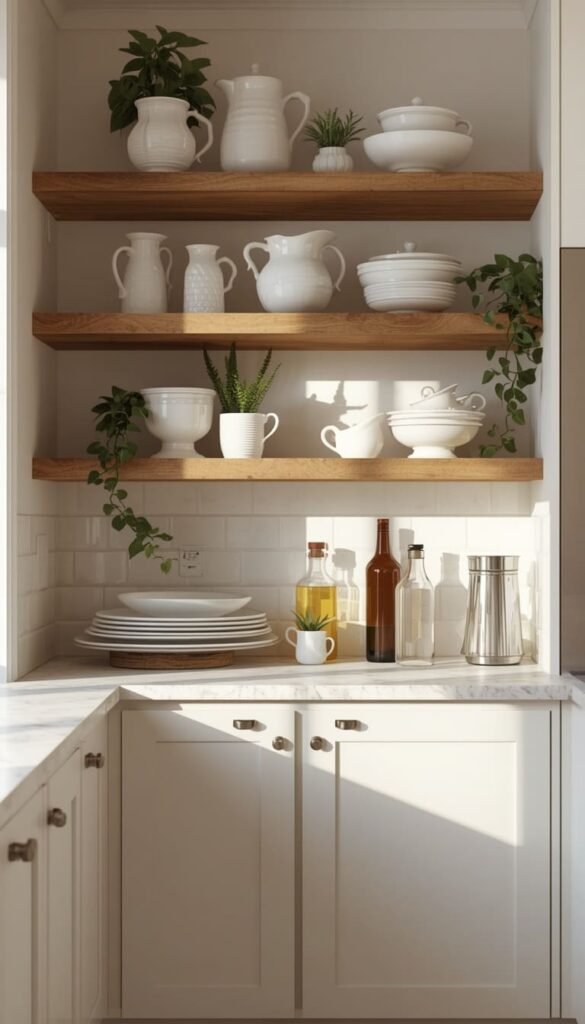
Open shelving is one of those cottage kitchen ideas that looks absolutely breathtaking in every photo you’ve ever saved to your Pinterest board. And I genuinely love it I’ve specified it in dozens of projects and it consistently delivers that airy, collected, lived-in feeling that defines great cottage style. But I’d be lying if I told you it was all romance and pretty ceramics.
The reality is that open shelves require a level of daily maintenance that closed cabinets simply don’t. Dust settles on displayed dishes faster than you’d expect. Grease from cooking creates a fine film on everything within reach of the stove. And if you’re the kind of household where cabinets get thrown open and slammed shut in the morning rush, open shelving will look chaotic within a week.
Here’s how I make it work for real families in real homes:
- Keep open shelves away from the cooking zone position them on walls flanking a window or opposite the range
- Limit your display to items you actually use regularly so nothing sits long enough to collect serious grime
- Use a consistent color palette for displayed items all white ceramics, all wood tones, or a curated mix to keep things looking intentional rather than cluttered
If you love the look but know your lifestyle honestly, consider a hybrid approach. Keep closed cabinets for everyday chaos and add just one or two open shelves for styled display. You get the aesthetic without the upkeep commitment.
14. Cottage Kitchen Island Ideas for Every Budget
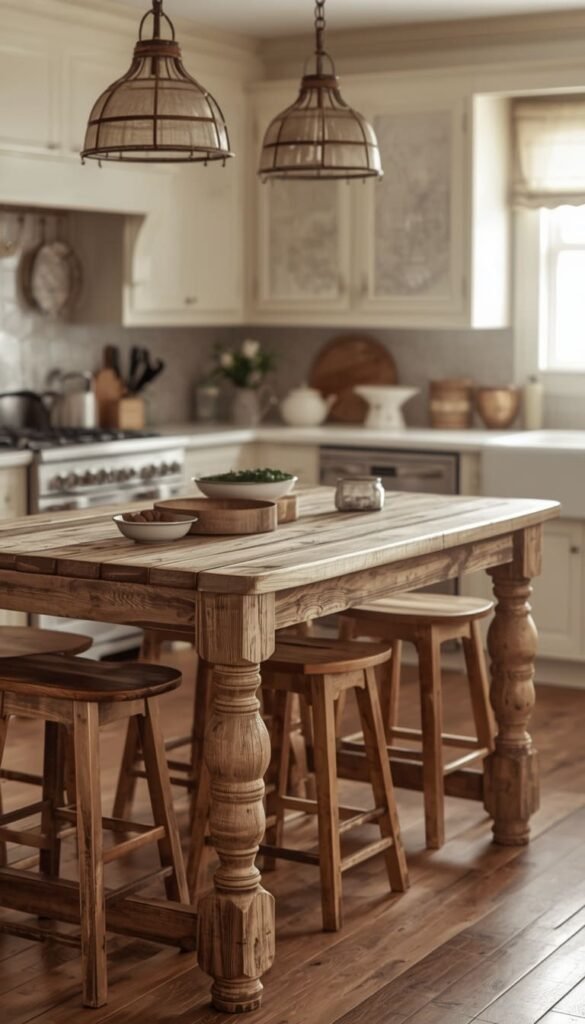
A kitchen island in a cottage space has to work harder than in almost any other style, because it needs to feel like it belongs rather than like it was dropped in from a different house entirely. The worst thing you can do in a cottage kitchen is install a sleek, waterfall edge quartz island with chrome legs. It will fight everything around it every single day.
The good news is that cottage appropriate island solutions exist at genuinely every price point, and some of the most charming ones are also the most affordable.
For a budget under $500, a vintage wooden farmhouse table used as a kitchen island is hands down my favorite recommendation. It brings instant warmth, provides seating on all sides, and has that furniture like quality that makes cottage kitchens feel so personal. Check estate sales and Facebook Marketplace before you spend a dollar at retail.
For a mid-range budget between $500 and $2,000, a butcher block topped kitchen island either custom built or from a retailer like IKEA’s BEKVAM hacked with better legs and hardware delivers serious visual impact. Add some shiplap paneling to the sides and vintage bin pulls, and it looks genuinely bespoke.
For homeowners with more flexibility above $2,000, a furniture style island with inset doors, turned legs, and a honed marble or soapstone top is the absolute pinnacle of cottage kitchen design. It looks like it has always been there, and that timeless quality is exactly what cottage style is all about.
15. Tile Backsplash That Tells a Story
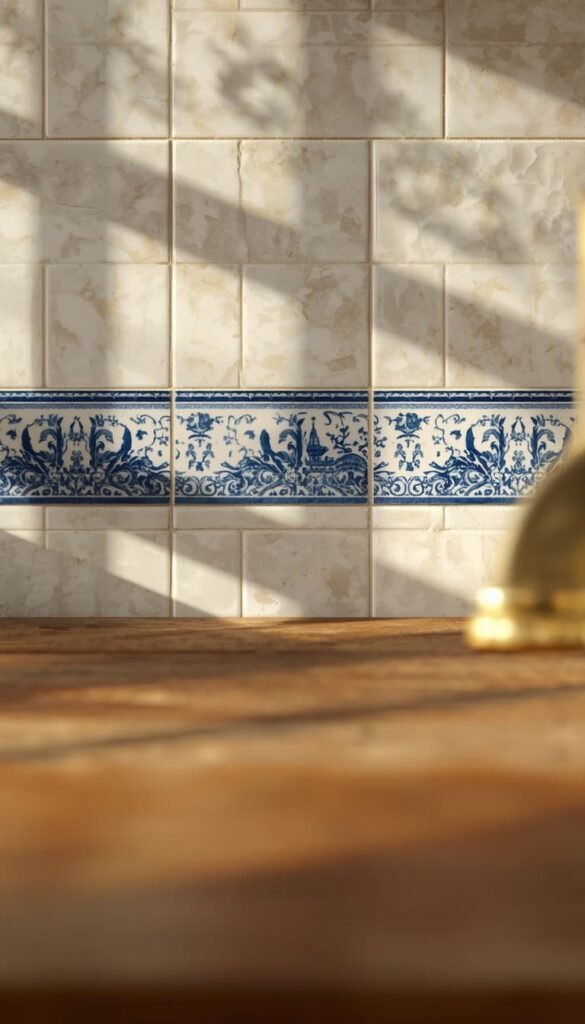
In a cottage kitchen, the backsplash is never just a backsplash. It’s a design statement, a mood setter, and often the single element that pulls the entire room together. I’ve seen a well chosen backsplash tile completely transform an otherwise ordinary kitchen into something people walk into and immediately respond to emotionally.
The classic cottage choices white subway tile, hand painted Delft style tiles, classic checkerboard remain classics for a reason. They’re timeless, they’re versatile, and they photograph beautifully. But I’ve been increasingly drawn to more characterful options on recent projects.
Zellige tiles, with their naturally uneven surface and subtle color variation, bring an artisanal quality to cottage kitchens that mass produced tile simply cannot replicate. They’re more expensive typically $25 to $45 per square foot installed but even a small section above the range as a focal point backsplash delivers enormous visual impact without breaking the budget.
One thing to watch out for with patterned tiles specifically: scale matters enormously in a small cottage kitchen. A large, bold pattern in a tiny kitchen will overwhelm the space rather than enhance it. In smaller kitchens I always recommend running a patterned tile as a single row border or limiting it to the range area only, then using a simpler complementary tile for the rest of the backsplash.
Are you team open shelving or do you prefer the ease of closed cabinets?
16. Lighting That Makes a Kitchen Feel Like a Hug
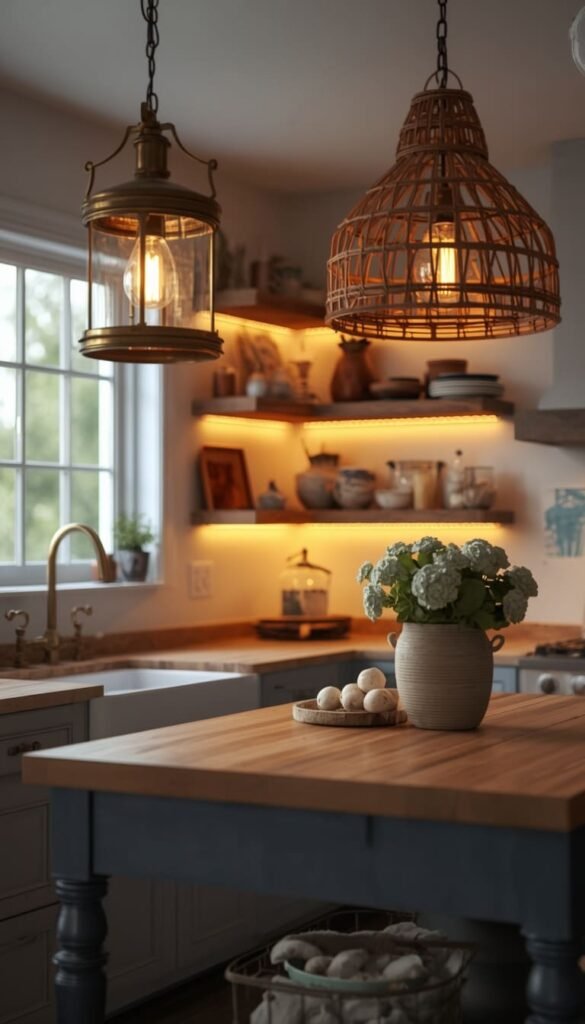
If I had to choose one single element that separates a good cottage kitchen from a truly magical one, it would be lighting. Every time. The right lighting makes a cottage kitchen feel warm, intimate, and deeply welcoming the wrong lighting makes even the most beautifully designed space feel flat and lifeless.
Cottage kitchens thrive on layered lighting, and that means thinking beyond the standard overhead fixture most homes default to. In my projects I work with three layers consistently: ambient lighting for overall illumination, task lighting for workspaces, and accent lighting to highlight architectural features or open shelving displays.
For pendant lights over an island or sink, I gravitate toward these styles in cottage kitchens:
- Aged brass or antique bronze lantern pendants for an English cottage feel
- Rattan or woven pendants for a softer, cottagecore adjacent warmth
- Vintage style schoolhouse pendants in white or black for a cleaner modern cottage look
Under-cabinet lighting is something I consider non negotiable in cottage kitchens with open shelving, because it creates that warm glow that makes displayed ceramics and glassware look genuinely beautiful rather than just stored. LED strip lighting in a warm 2700K color temperature installed under shelves costs very little and delivers an outsized impact on the overall atmosphere of the room.
17. Natural Stone and Soapstone Countertops Worth the Investment
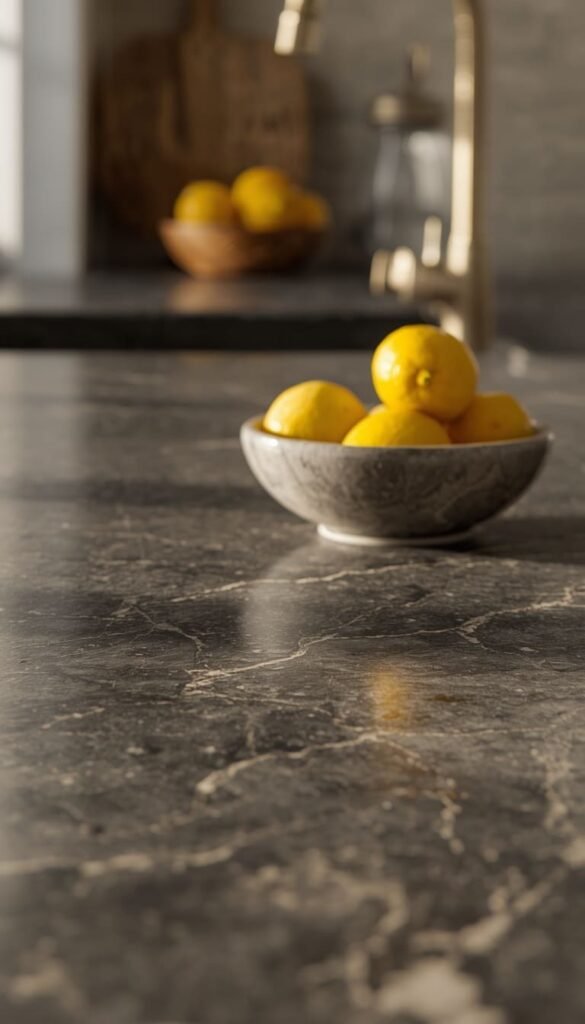
Countertops are one of those decisions in a cottage kitchen where budget and beauty genuinely collide, and I want to give you an honest answer rather than just telling you to splurge on marble and move on. The truth is more nuanced than that, and the right choice depends entirely on how you actually use your kitchen.
Marble is the dream countertop for cottage kitchens. It’s undeniably beautiful, it photographs extraordinarily well, and that cool, veined surface has a timeless quality that fits cottage style perfectly. But marble etches. It stains. Acidic foods like lemon juice and red wine will leave marks on an unsealed or poorly maintained marble surface, and if that reality bothers you, marble will stress you out rather than bring you joy.
Soapstone is my personal recommendation for cottage kitchen clients who want natural stone without the anxiety. It’s durable, non porous, and develops a rich, dark patina over time that only makes it more beautiful. It requires occasional oiling with mineral oil to maintain its appearance, which takes about ten minutes and honestly feels more like a ritual than a chore. Pricing typically runs between $70 and $120 per square foot installed depending on your region.
For homeowners working with tighter budgets, here’s what I consistently recommend:
- Butcher block — warm, beautiful, and repairable. Sand out scratches and re-oil. Avoid around the sink unless you’re diligent about drying
- Honed quartzite — the durability of quartz with the natural stone look of marble, at a mid-range price point
- Painted and sealed concrete — surprisingly beautiful in cottage kitchens and genuinely budget-friendly if you DIY
Whatever you choose, I’d encourage you to think long term. Countertops are not a quick swap get something you’ll still love in ten years.
18. Hardware The Jewelry of Your Cottage Kitchen
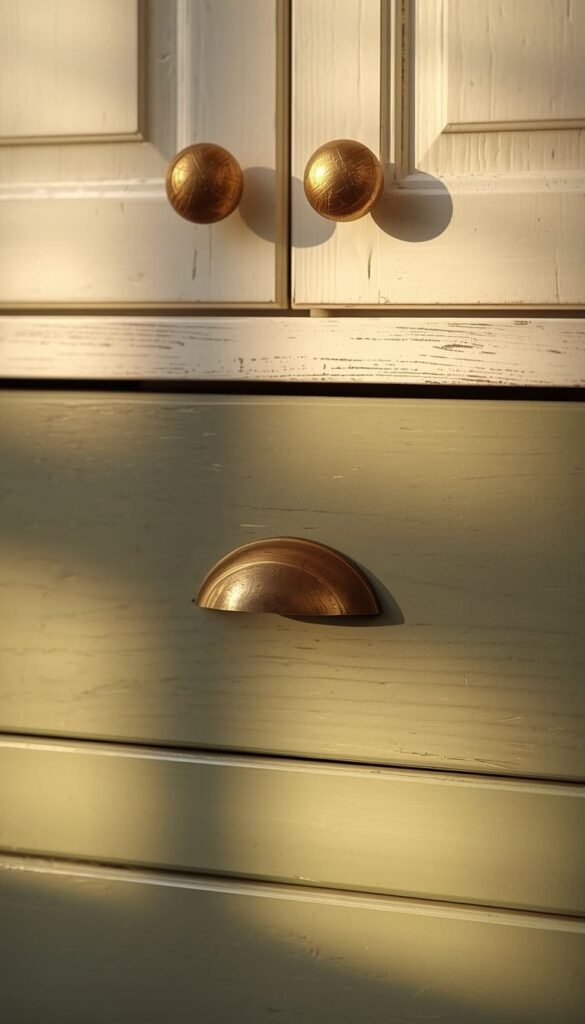
I’ve walked into kitchens where every single major element was perfectly chosen beautiful cabinets, gorgeous countertops, stunning tile and the space still felt somehow unfinished. Nine times out of ten, the culprit is hardware. It’s the detail most homeowners treat as an afterthought, and it shows.
In cottage kitchens, hardware does serious design work. It’s the jewelry of the space small in scale but enormous in impact. The right pulls and knobs tie every element together and give the kitchen a sense of completion that no other single detail can achieve quite as efficiently.
My most reached for hardware finishes for US cottage kitchen projects are unlacquered brass and oil rubbed bronze. Unlacquered brass develops a natural patina over time that only gets more beautiful with age it feels genuinely vintage without being precious. Oil rubbed bronze brings a darker, more grounded quality that works beautifully in English cottage and country cottage schemes.
A few hardware rules I live by in cottage kitchens:
- Mix knobs and pulls intentionally knobs on doors, pulls on drawers for a furniture like, collected feel
- Choose oversized cup pulls for lower cabinets and drawers if you want that unmistakably English cottage look
- Never match your hardware finish perfectly to your faucet. A slight variation feels more authentic and collected
One thing to watch out for is buying hardware online without holding it first. Scale is everything what looks perfect on a screen can feel absurdly small or comically large on an actual cabinet door. Order samples whenever possible before committing to a full set.
19. The $5K Cottage Kitchen Makeover Yes Really
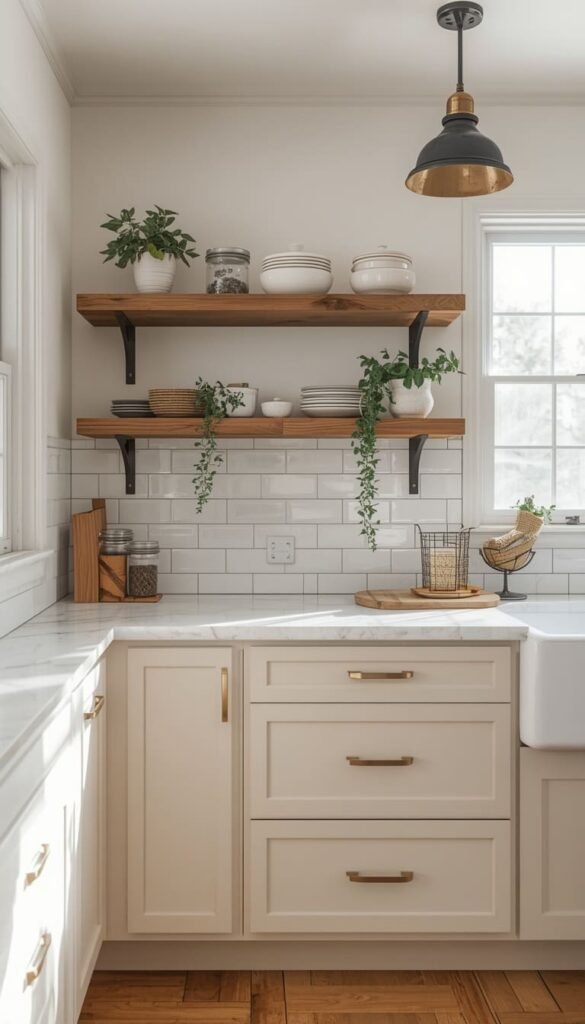
This is the section I know a lot of you have been waiting for, because not everyone is starting from scratch with a blank check and a contractor on speed dial. Most real homeowners are working with existing kitchens, real budgets, and the genuine desire to create something beautiful without going into debt over a room.
The good news and I mean this sincerely is that cottage style is arguably the most budget friendly aesthetic to achieve of any kitchen design style. Why? Because imperfection is part of the charm. Collected pieces, painted cabinets, vintage finds, and layered textiles are the building blocks of this look, and none of those require a full renovation.
Here’s how I’d allocate a $5,000 cottage kitchen makeover budget based on what consistently delivers the most visual impact:
- Cabinet painting including new hardware — $800 to $1,200: This single change transforms a kitchen more dramatically than almost anything else. A professional painter plus quality paint and new unlacquered brass hardware will make your existing cabinets look completely intentional
- New pendant lighting — $200 to $400: Swap your builder-grade fixtures for vintage-style pendants. Rejuvenation, Schoolhouse Electric, and even Amazon have genuinely beautiful cottage-appropriate options at every price point
- Backsplash tile — $400 to $900: A new backsplash is high-impact and surprisingly manageable as a DIY project if you’re comfortable with basic tiling
- Open shelving addition — $150 to $400: Remove one or two upper cabinet doors, add floating shelves, and style them with collected ceramics and plants
- Vintage and thrifted accessories — $200 to $500: A farmhouse table runner, ironstone serving pieces, a vintage ceramic canister set, woven baskets. These finishing layers are where the personality lives
- Remaining budget as contingency: Because something always costs slightly more than expected, and having a buffer means you finish the project without compromise
20. Bringing the Outside In Plants Herbs and Natural Textures
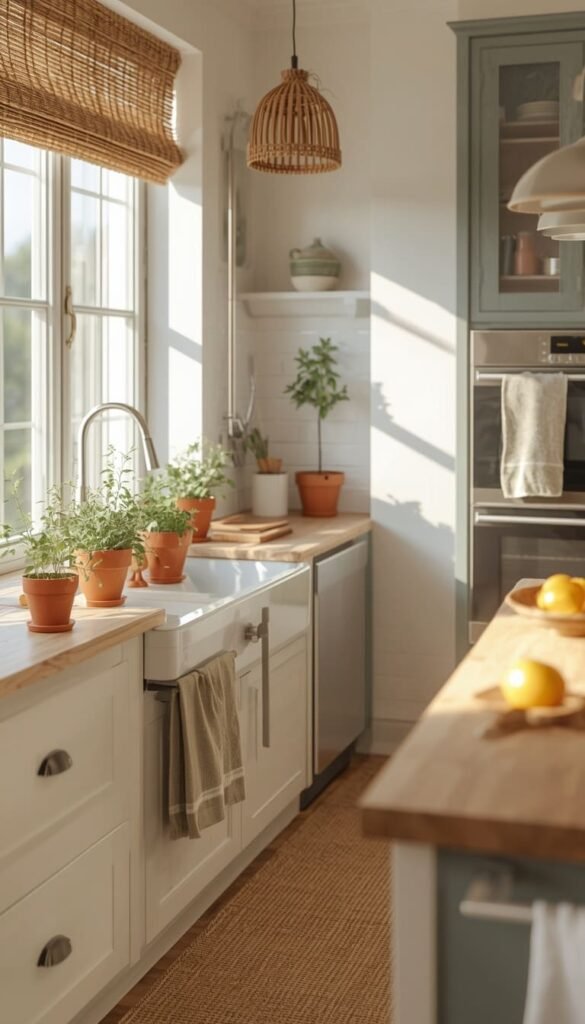
Cottage kitchens have an almost instinctive relationship with the natural world, and that connection is one of the things that makes them feel so genuinely alive compared to more minimal or contemporary kitchen styles. A cottage kitchen that ignores nature feels like it’s missing something essential and it usually is.
The simplest and most impactful way to bring the outside in is through a working herb garden on the windowsill. Basil, rosemary, thyme, and mint in a mix of terracotta pots costs almost nothing, smells extraordinary, and adds exactly the kind of casual, living beauty that cottage kitchens are built around. I’ve specified this in nearly every cottage kitchen project I’ve worked on, and it never fails to make the space feel more human.
Beyond herbs, natural textures do enormous work in grounding a cottage kitchen:
- A jute or seagrass runner in front of the sink brings warmth underfoot and softens the hardworking quality of a kitchen floor
- Woven rattan pendant lights filter light beautifully and add organic texture overhead
- Linen or cotton dish towels in muted natural tones hanging from an oven handle add softness and color simultaneously
- A simple wooden bowl filled with seasonal fruit on the counter lemons in summer, apples in fall is one of those details that costs almost nothing and looks like it was styled by a professional
One thing I always tell clients who want this look: resist the urge to buy artificial plants for a cottage kitchen. The whole point of this connection to nature is that it’s real, it’s alive, and it changes with the seasons. Fake greenery in a cottage kitchen always reads as fake, no matter how convincing the quality. Embrace the occasional wilted leaf it’s part of the charm.
What is the biggest challenge stopping you from creating your dream cottage kitchen right now?
21. The Finishing Layers Textiles Ceramics and Collected Charm
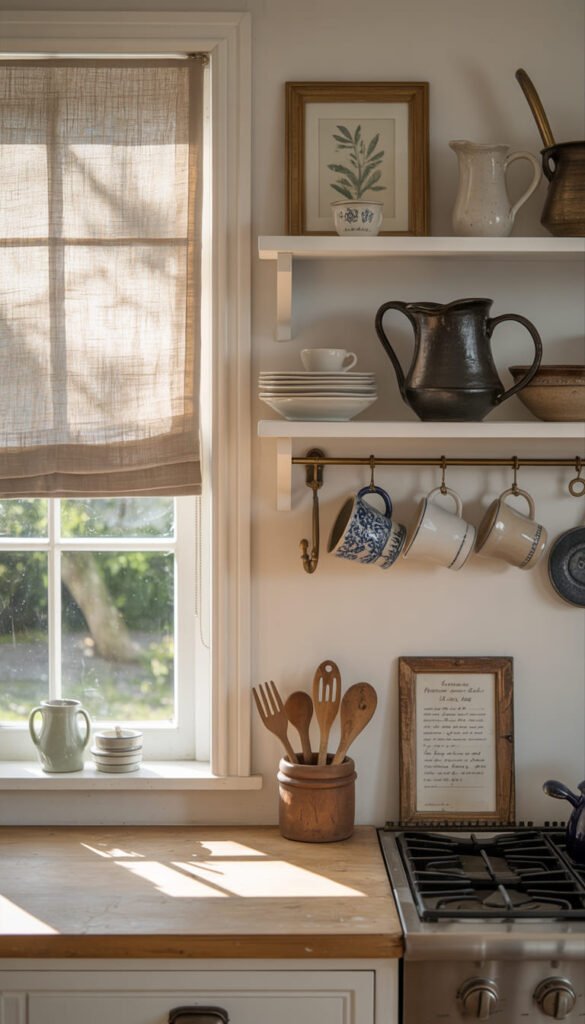
Every great cottage kitchen I’ve ever designed or walked into has had one thing in common it feels layered. Not cluttered, not overdone, but genuinely layered in a way that suggests this space has been lived in and loved over time. That quality doesn’t happen by accident, and it almost never comes from a single shopping trip to a home goods store.
The finishing layers of a cottage kitchen are the textiles, ceramics, and collected objects that transform a well designed space into a home. These are the elements that carry personality, tell stories, and make guests feel like they’re somewhere real rather than somewhere staged.
Textiles deserve far more attention than most homeowners give them in a kitchen. A well chosen window treatment a relaxed linen Roman shade, a simple cotton café curtain, a panel of printed fabric changes the quality of light in a room and adds softness that hard surfaces simply cannot provide. For cottage kitchens I consistently reach for natural fibers in muted, organic tones. Linen, cotton, and even lightweight wool all work beautifully.
Ceramics are the soul of cottage kitchen styling. A collection of ironstone pitchers, a stack of hand-thrown stoneware bowls, mismatched vintage mugs hanging from simple hooks these pieces add color, texture, and deeply personal character to open shelving and countertop displays. The best collections are built slowly over time from estate sales, thrift stores, and travels rather than purchased all at once from a single retailer.
And finally the collected objects. A framed botanical print above the window. A vintage scale on the counter. A small crock of wooden spoons beside the range. A handwritten recipe card tucked into a frame. These are the details that make people stop, look closer, and feel something. They cost almost nothing and mean everything in a cottage kitchen.
Your 2-Minute Cottage Kitchen Decision Map
By Budget
Starter and Budget ($500 to $5,000)
- Paint cabinets instead of replacing them
- Swap hardware to unlacquered brass or oil rubbed bronze
- Add open floating shelves in place of upper cabinets
- Source a vintage farmhouse table as your island
- DIY a tile backsplash with classic white subway tile
- Layer in thrifted ceramics, linen textiles, and potted herbs
Luxury and Investment ($10,000 and above)
- Install custom Shaker cabinets with inset doors and furniture feet
- Choose soapstone or honed marble countertops
- Invest in a furniture style kitchen island with turned legs
- Add unlacquered brass plumbing fixtures and a pot filler
- Commission hand painted or zellige tile for the backsplash
- Source a statement vintage light fixture from a specialty dealer
By Lifestyle
Busy Families and Everyday Cooks
- Choose closed cabinets over open shelving to manage clutter
- Pick honed quartzite or butcher block over marble for durability
- Opt for darker grout on tile to cut cleaning time dramatically
- Go with oil rubbed bronze hardware it hides fingerprints beautifully
- Keep herbs on the windowsill but skip the fragile vintage ceramics in high traffic zones
Empty Nesters and Style Focused Homeowners
- Embrace open shelving and build a curated ceramic collection slowly
- Choose unlacquered brass it patinas gorgeously when you have time to appreciate it
- Invest in marble knowing you can care for it properly
- Layer textiles, botanicals, and collected objects without worrying about little hands
- Let the kitchen be a genuine reflection of your taste and travels
Frequently Asked Questions
What is the difference between a cottage kitchen and a farmhouse kitchen?
Cottage kitchens feel softer, more collected, and personally layered farmhouse leans more structured with shiplap, stark whites, and industrial touches. Think of cottage as farmhouse’s warmer, more eclectic cousin.
How much does a cottage kitchen makeover cost in the USA?
The average cost runs between $3,000 and $15,000 depending on scope. A paint and hardware refresh can cost as little as $1,500 while a full custom renovation with stone countertops runs $30,000 and up.
Are open shelves practical in a cottage kitchen?
Yes, but only if you’re consistent about tidying. Grease and dust settle fast near cooking zones position open shelves away from the range and limit displays to items you actually use daily.
What colors work best in a cottage style kitchen?
Warm neutrals win every time. Benjamin Moore Pale Oak, Sherwin Williams Alabaster, and muted sage greens consistently deliver that cozy, lived in cottage feeling without making the space feel dark or dated.
Can I create a cottage kitchen on a tight budget?
Absolutely cottage style actually favors budget renovations. Repainting cabinets, swapping hardware, adding one vintage light fixture, and styling open shelves with thrifted ceramics can transform a kitchen for under $2,000.
Conclusion
Your cottage kitchen doesn’t have to be perfect to be beautiful it just has to feel like you. I’ve seen a single coat of paint and a handful of vintage finds completely change the way a family experiences their home every single morning. Start small today: order that paint sample, clear one shelf, or spend twenty minutes on Facebook Marketplace hunting for that farmhouse table you’ve been thinking about. The momentum of one good decision has a way of carrying you further than you expect. So tell me what’s the one change you’ve been putting off that would make your kitchen feel like home?