
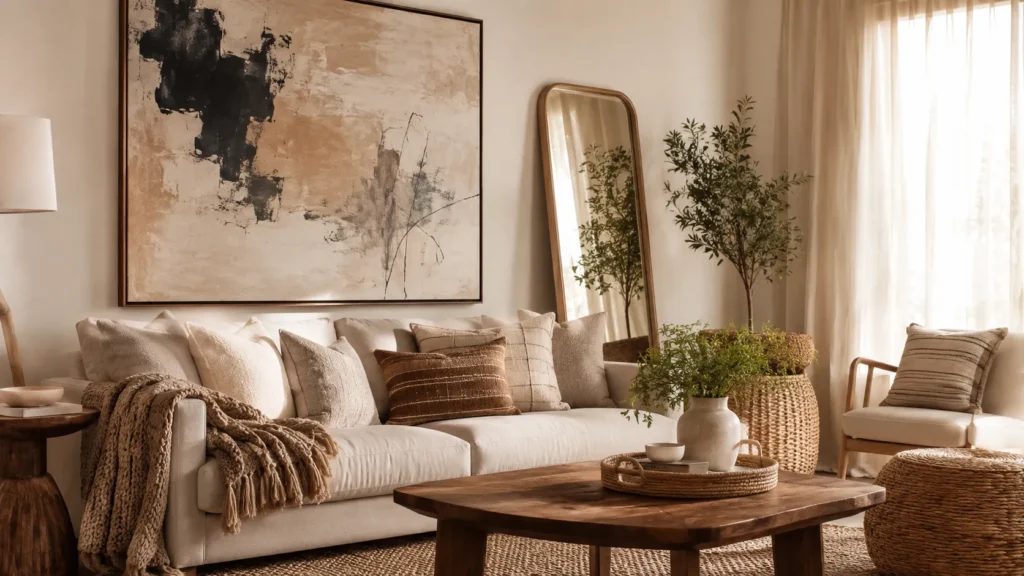
Blank walls have a way of making even the most beautifully furnished living room feel unfinished, like a sentence missing its last word. I’ve walked into so many client homes where the sofa is perfect, the rug is perfect, and then there’s this huge stretch of nothing above it all. The good news is that fixing it doesn’t always mean an expensive art purchase or a weekend of drilling holes you’ll regret later. Whether you’re renting your first apartment or finally redoing a forever home, the right wall decor pulls a room together in a way furniture alone never can. I’ll walk you through what actually works, what it costs, and what nobody tells you about living with these choices day to day.
My Design Notes
I worked on a project a few years back for a young couple in a Logan Square walk up in Chicago, and their lease was strict about no drilling into the walls. They had already bought a large framed print from a local gallery, and once we hung it, it looked almost lost against their fourteen foot stretch of wall. I could tell they were disappointed, since it wasn’t a cheap piece.
Instead of buying something bigger, we installed a picture rail system that didn’t touch the drywall at all, and I paired it with two vintage mirrors I found at a Ravenswood estate sale to bounce light around the room, since they only had windows on one side. The whole thing cost under four hundred dollars including hardware. My one honest note is that one of those mirrors had a bit of antique foxing on the glass that looked charming in the shop and a little strange once afternoon light hit it directly.
When they moved out two years later, the landlord walkthrough came back clean. No damage, no deposit deduction, and a wall that finally matched how good the rest of the room felt.
11 Stunning Design Secrets for Elevated Living Room Wall Decor
1. How To Measure And Plan Your Wall Before You Buy Anything
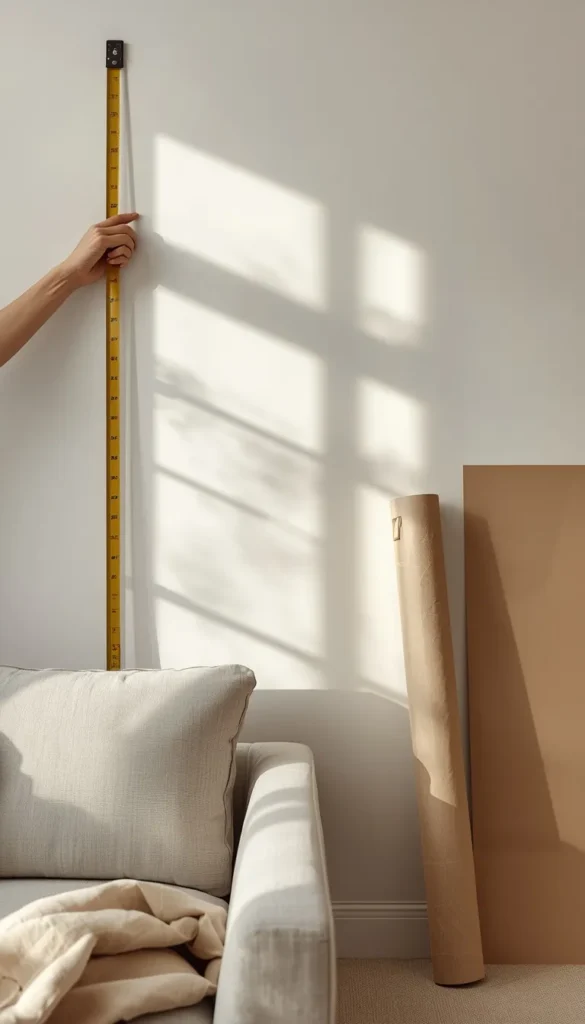
Before you fall in love with anything on Pinterest, grab a tape measure. I know that sounds unglamorous, but this single step prevents almost every wall decor regret I’ve seen in client homes. A good rule of thumb is that your art or arrangement should span roughly two thirds of the width of whatever furniture sits below it, whether that’s a sofa, console, or fireplace mantel. Go much smaller and the piece reads as an afterthought floating in space.
Height matters just as much. The bottom of your frame should sit about six to eight inches above the back of your sofa, not eye level from across the room like a museum would do it. One thing I always tell clients is to cut a piece of kraft paper to the exact size of the art they’re considering and tape it to the wall first. Live with it for a few days before committing to nails.
2. Oversized Art And Single Statement Pieces
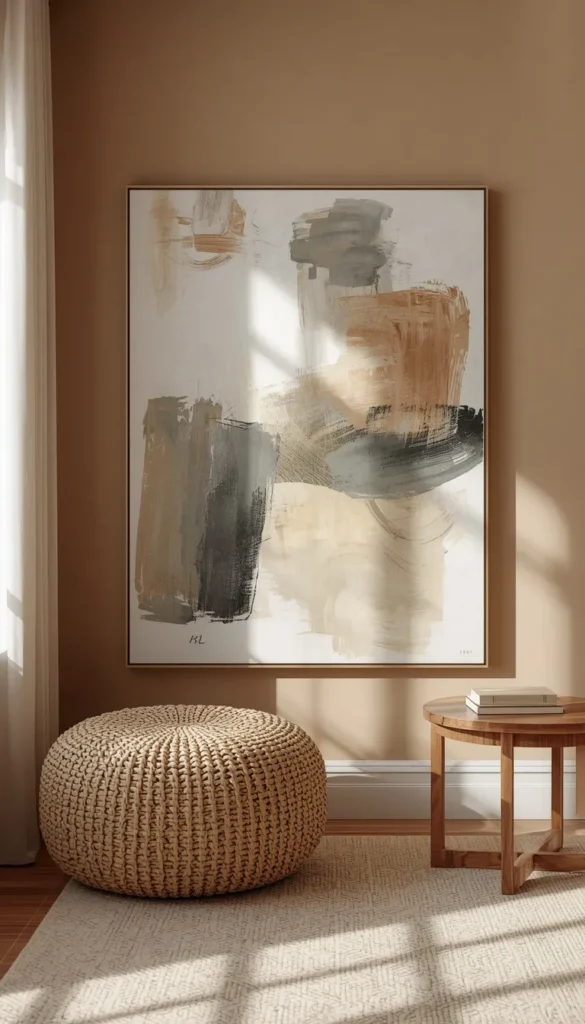
There’s something confident about walking into a living room with one large piece of art doing all the work. It skips the fuss of arranging multiple frames and instead gives your eye one clear place to land. A single canvas at forty by sixty inches or larger, hung centered above a sofa, tends to outperform a cluster of smaller prints in terms of visual impact per dollar spent.
You don’t always have to hang it either. Leaning a large framed piece against the wall on a console or floating shelf creates a more relaxed, collected look, and it happens to be a favorite trick of mine for renters who don’t want to commit to a permanent hole. A quick trick I’ve learned is to choose art with colors that already exist somewhere else in the room, even if it’s just a throw pillow, so the piece feels tied in rather than dropped on top of an unrelated scheme.
3. Gallery Wall Ideas That Actually Work
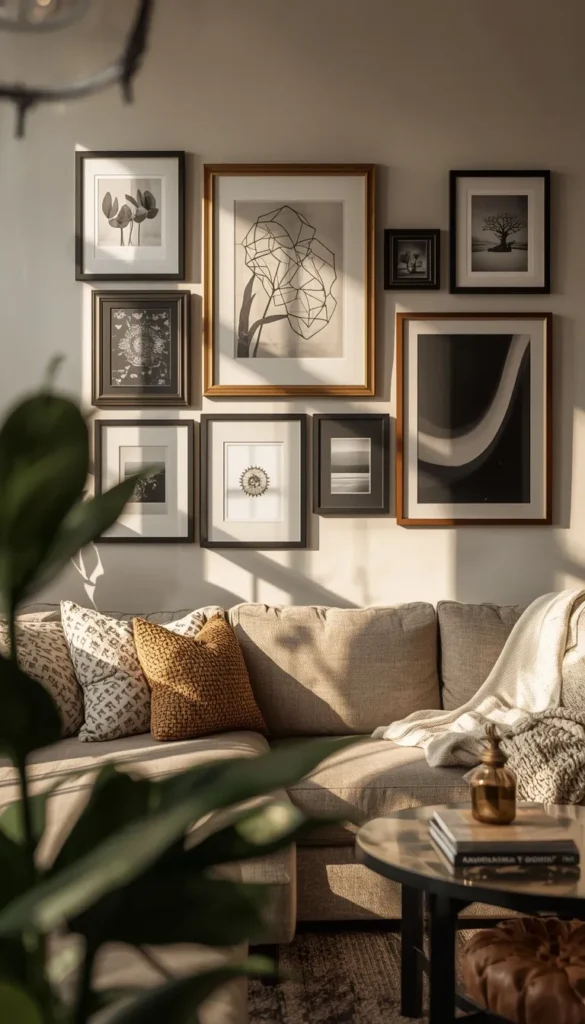
Gallery walls get a bad reputation because they’re genuinely easy to get wrong. The fix comes down to picking one organizing principle and sticking with it. You can go the formal route with matching frames in a tight grid, which reads as polished and works beautifully in traditional or transitional living rooms. Or you can lean eclectic, mixing frame finishes, sizes, and even mediums like a woven piece next to a painting.
What I’ve noticed is that most disasters happen when people try to split the difference between formal and eclectic without committing to either. My advice is simple:
- Pick a frame color story first, whether that’s all black, all wood tones, or a mix of exactly two finishes
- Lay everything out on the floor before you touch a hammer
- Leave two to three inches of breathing room between each piece so it doesn’t feel cramped
4. Mirrors That Make A Room Feel Bigger
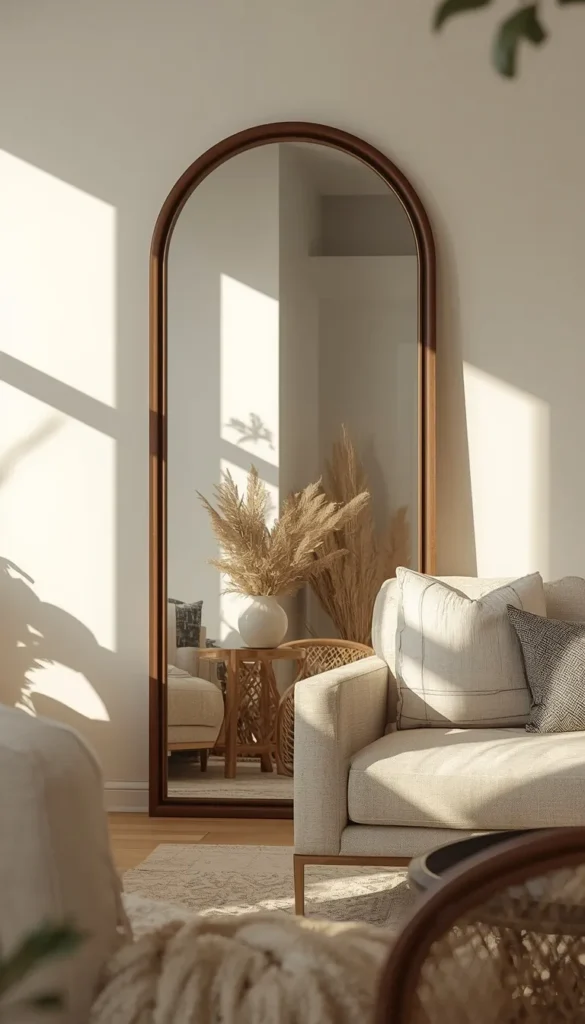
A well placed mirror does something art simply can’t, it reflects light and makes a room feel like it has more square footage than it actually does. Hanging one large statement mirror behind a sofa, especially opposite a window, is one of the fastest upgrades I recommend to clients dealing with a dim or boxy living room.
Vintage and antique mirrors have a particular charm that new ones often can’t replicate, and estate sales or flea markets are genuinely good sources if you’re patient. One thing to watch out for is foxing, that speckled discoloration that appears on older mirror glass over time. It can look lovely and moody in low light, but I’ve had it look a little odd once direct afternoon sun hits it straight on, so pay attention to where the mirror will actually hang before you buy.
Which wall in your living room has been bugging you the longest, the one behind the sofa or the one everyone sees first when they walk in?
5. Shelving And Ledges For Layered Display
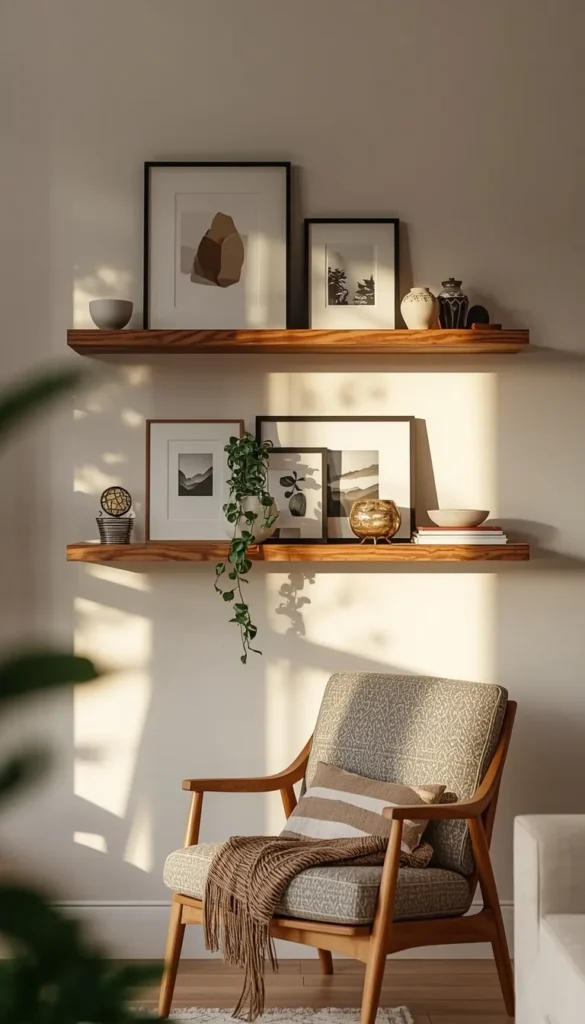
Floating shelves and picture ledges solve a problem that flat framed art never can, they let you keep changing your mind. I love these for clients who collect things over time, whether that’s travel souvenirs, ceramics, or a growing stack of coffee table books. Picture ledges specifically let you lean frames rather than hang them permanently, so you can swap out photos with the seasons without patching a single hole.
If you have the wall space and the budget, floor to ceiling shelving on either side of a fireplace or television creates a built in look without the built in price tag. Actual custom millwork can run into the thousands depending on your market, but a few well chosen freestanding units from a retailer like CB2 or even IKEA, styled thoughtfully, can get you eighty percent of the visual payoff for a fraction of the cost.
6. Wallpaper Paneling And Accent Walls
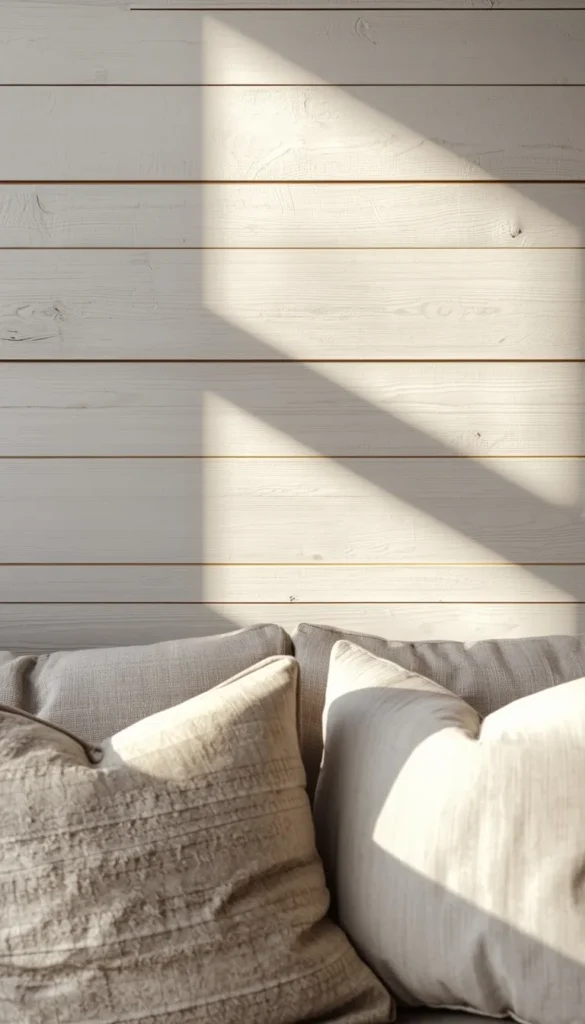
This is where a living room gets real personality, and it’s also where I see people hesitate the most out of fear of commitment. Peel and stick wallpaper has genuinely changed that equation. It’s removable, renter friendly, and forgiving enough that a slightly crooked seam won’t ruin your weekend the way traditional paste up wallpaper might.
Painted accent walls remain the lowest cost option by a wide margin, sometimes under a hundred dollars for a single wall depending on paint quality. For anyone wanting more texture, shiplap and board and batten add dimension that paint alone can’t. A few things worth knowing before you commit:
- Wallpaper tends to show seams more in direct, harsh sunlight
- Board and batten adds visual height, which helps rooms with lower ceilings
- Dark accent colors can make a room feel cozier, but they also show scuffs faster near high traffic areas
Top 6 Living Room Wall Decor Ideas
| Idea | Estimated Price | Maintenance |
|---|---|---|
| Oversized Statement Art | $150 to $2,000+ | Low |
| Gallery Wall | $200 to $1,200 | Medium |
| Statement Mirror | $80 to $1,000+ | Medium |
| Floating Shelves | $100 to $600 | Medium |
| Peel and Stick Wallpaper Accent | $60 to $300 | Low |
| Picture Rail System | $150 to $400 | Low |
7. Three Dimensional And Textural Wall Decor
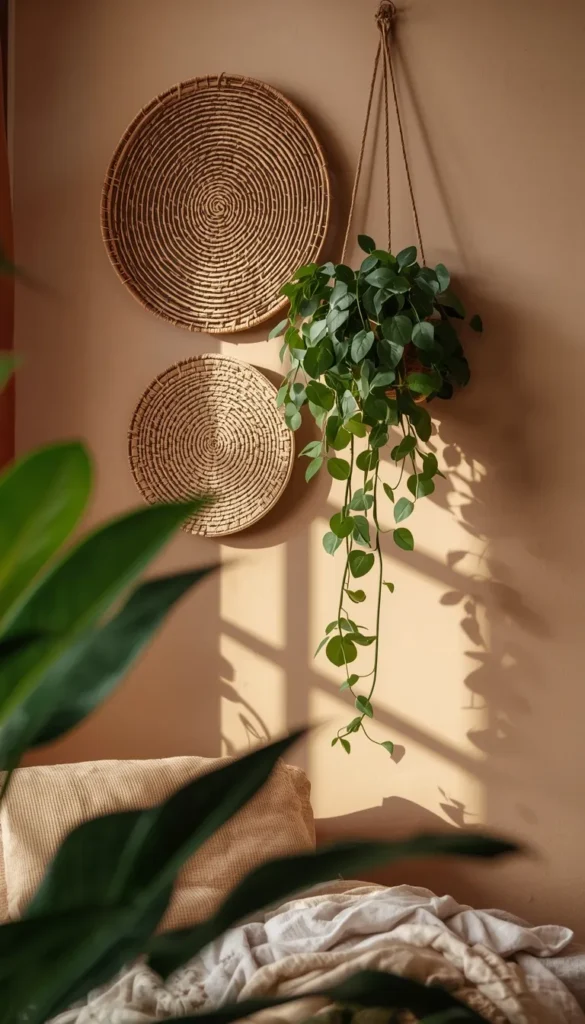
Flat art isn’t the only way to fill a wall, and honestly, some of the most memorable living rooms I’ve worked on lean on texture instead. Woven baskets, hung in a cluster or scattered asymmetrically, bring in warmth and pattern without a single frame involved. Vintage plates, musical instruments, or even a collection of small sculptural objects can do the same job.
Wall mounted plants deserve a mention here too, since biophilic elements genuinely change how a room feels day to day, not just how it photographs. My honest note is that live plants on a wall need real thought given to watering access and light exposure, so if that feels like too much upkeep, a few faux stems in a wall planter give you most of the visual benefit with none of the maintenance anxiety.
8. Lighting That Elevates Your Wall Decor
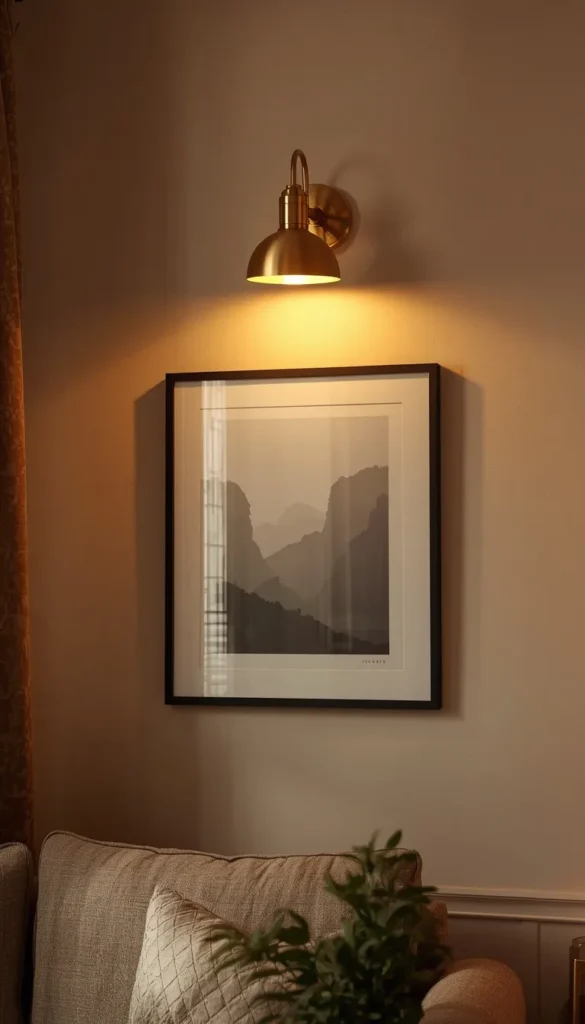
Good wall decor without good lighting is a little like a great outfit worn in a dim room, nobody quite sees it the way it deserves. Picture lights mounted directly above a piece of art add an elegant, almost gallery like quality, and they’re a detail I return to again and again in higher end projects because the effect is disproportionate to the cost.
Sconces serve a slightly different purpose, adding ambient warmth to a gallery wall or highlighting an architectural feature like paneling or a fireplace surround. If you’re dealing with a television mounted on the wall, flanking it with art or a symmetrical shelving arrangement helps the screen feel like part of an intentional composition rather than a black rectangle interrupting everything else. Dimmers on any wall lighting are worth the small extra cost, since they let the mood shift from bright and functional in the afternoon to soft and layered in the evening.
If you had to pick just one from this list to try this weekend, would it be something you hang or something you lean?
9. Budget Breakdown For Every Style
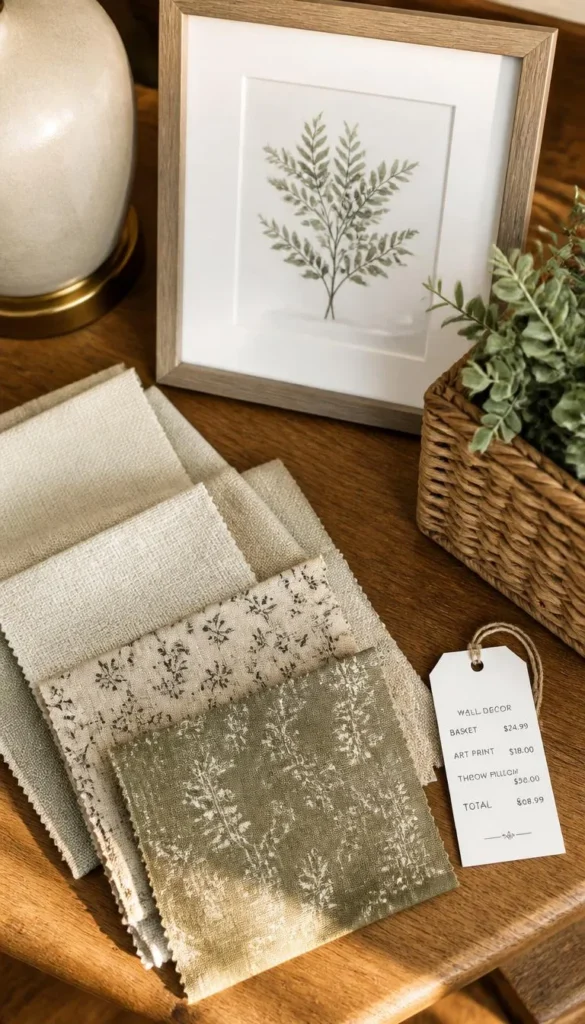
Let’s talk actual numbers, because this is the part most design articles skip entirely. A single statement art piece can range anywhere from fifty dollars for a print you frame yourself to several thousand for an original from a working artist, so where you land depends entirely on your source. Etsy, local art fairs, and even university art school shows tend to be underrated places to find something genuinely good without gallery markup.
Gallery walls are surprisingly flexible on cost too. You can build one almost entirely from thrifted frames and printed photos for under two hundred dollars, or you can invest in a curated mix of originals and prints that climbs well past a thousand. Mirrors sit in a wide range as well, with a large budget option from a big box retailer running under a hundred dollars, while a genuine vintage piece with an ornate frame can run several hundred to over a thousand depending on age and condition. My general advice is to spend the most on the one piece that will sit at eye level and save on everything around it.
10. Mistakes I See Homeowners Make Constantly
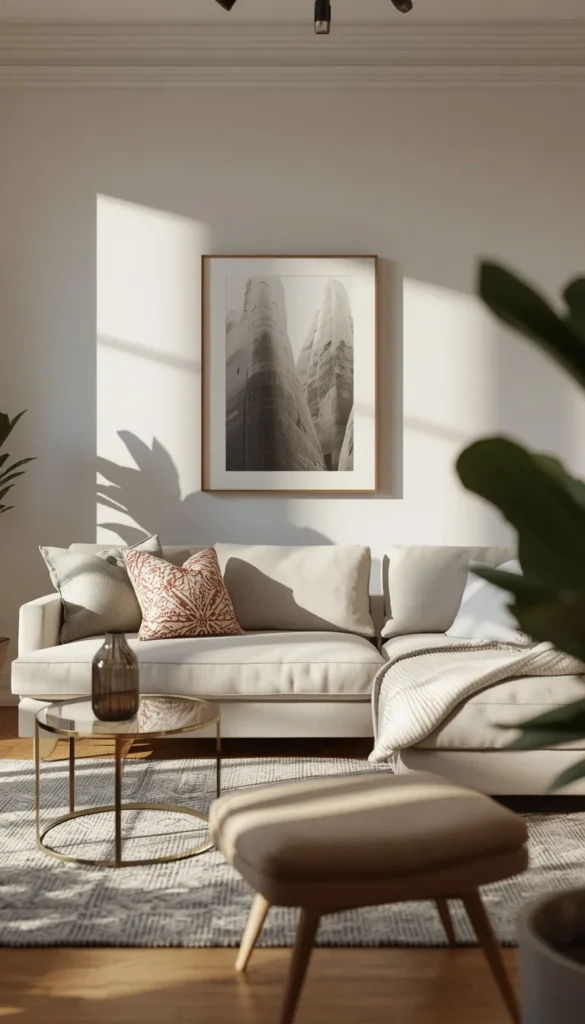
After enough projects, certain mistakes start to repeat themselves, and I think pointing them out is more useful than another list of pretty ideas. The most common one by far is art that’s simply too small for the wall or the furniture beneath it. A dinner plate sized frame above a large sectional will always look lost, no matter how nice the piece is on its own.
Ignoring natural sightlines is another one. People decorate the wall directly above the sofa and forget about the wall you actually face when you walk into the room or sit down. A few other patterns worth avoiding:
- Making a gallery wall too perfectly symmetrical, which can end up feeling stiff rather than curated
- Mixing too many frame finishes without any unifying color or theme
- Skipping the paper template step and ending up with extra nail holes from trial and error
11. Renter Friendly Options That Wont Cost Your Deposit
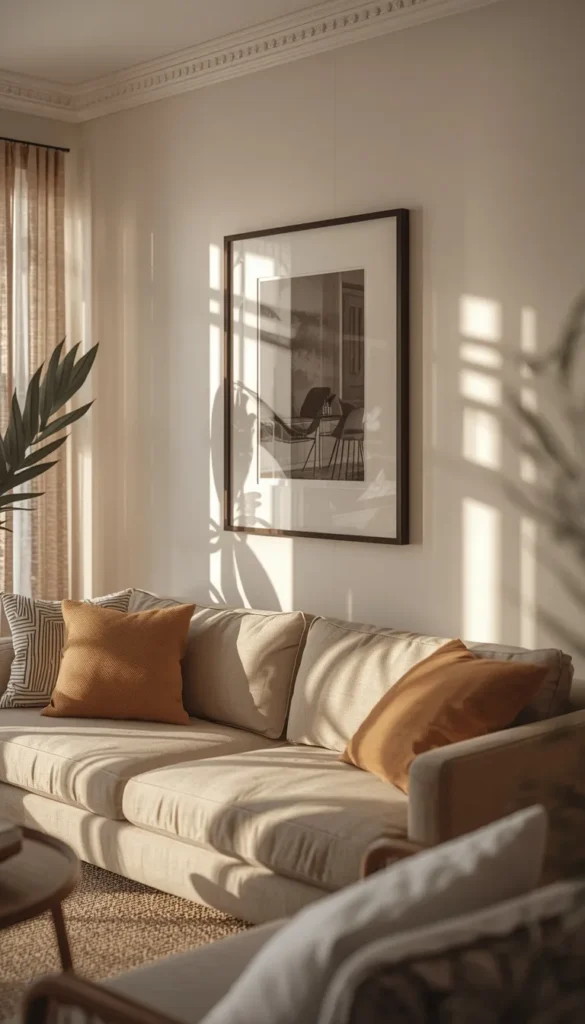
Renting shouldn’t mean living with bare walls for years, and honestly some of the most creative solutions I’ve used have come out of working around a strict no drilling lease. Command strips have come a long way, but pay attention to the weight limits printed on the package, since a heavier framed piece can pull right off the wall along with a strip of paint if you push past what it’s rated for.
Picture rail systems are my favorite renter friendly option by far, since they hang from a single discreet track near the ceiling and let you rearrange art without touching the drywall at all. Leaning art on a console, mantel, or floating shelf works well too, and it has the added bonus of looking effortlessly collected rather than fussy. I worked on exactly this kind of setup for a couple in a Logan Square walk up in Chicago, using a picture rail and a couple of vintage mirrors, and when their landlord did the final walkthrough two years later, the walls came back completely clean, with the full deposit returned.
Which Path Is Yours?
By Budget
Starter Budget
- Peel and stick wallpaper accent wall
- Leaned art on a console or shelf
- Thrifted frames styled into a gallery wall
- Faux plants on a wall mounted planter
Investment Level
- Original art from a working artist
- Custom built in shelving
- Vintage sourced statement mirror
- Full wall paneling or shiplap installation
By Living Situation
Renters
- Picture rail systems
- Command strip friendly leaning art
- Removable wallpaper
- Freestanding shelving units
Homeowners
- Built in bookshelves
- Painted accent walls
- Wall paneling and architectural trim
- Permanently mounted picture lights
By Space
Small Living Rooms
- Picture ledges instead of bulky shelves
- One well chosen mirror over multiple small pieces
- A single oversized art piece rather than a busy gallery wall
Larger Or Open Layouts
- Floor to ceiling gallery walls
- Multiple statement zones across different walls
- Floating shelves flanking a fireplace or television
Frequently Asked Questions
What is the best living room wall decor for a small space?
One large piece of art beats several small ones every time in a compact room. It gives the eye a single place to land instead of visual clutter.
How high should I hang art above my sofa?
Ideally, the bottom of the frame sits six to eight inches above the sofa back. Any higher and it starts to feel disconnected from the furniture below it.
What is a cheap way to decorate a large empty wall?
Peel and stick wallpaper on a single wall runs sixty to three hundred dollars depending on the pattern. It’s the fastest way to fill a big space without a big price tag.
Do gallery walls need matching frames?
No, but they do need one unifying element, whether that’s color, spacing, or a shared theme. Mixing frames without any thread connecting them tends to look accidental rather than curated.
Can I hang heavy art without drilling into the wall?
Yes, as long as you check the weight rating on your command strips first. Anything over the limit is safer hung with a picture rail system instead.
Conclusion
Your walls have been waiting long enough, and you don’t need a full renovation budget to finally give them the attention they deserve. Pick one idea from this list, whether that’s a single mirror or a stack of leaned frames, and try it this weekend. Small changes like this add up to a home that actually feels like yours every time you walk through the door. Grab a tape measure, clear a shelf, or order that one print you’ve had saved for months, your future self sitting on that sofa will thank you.
