
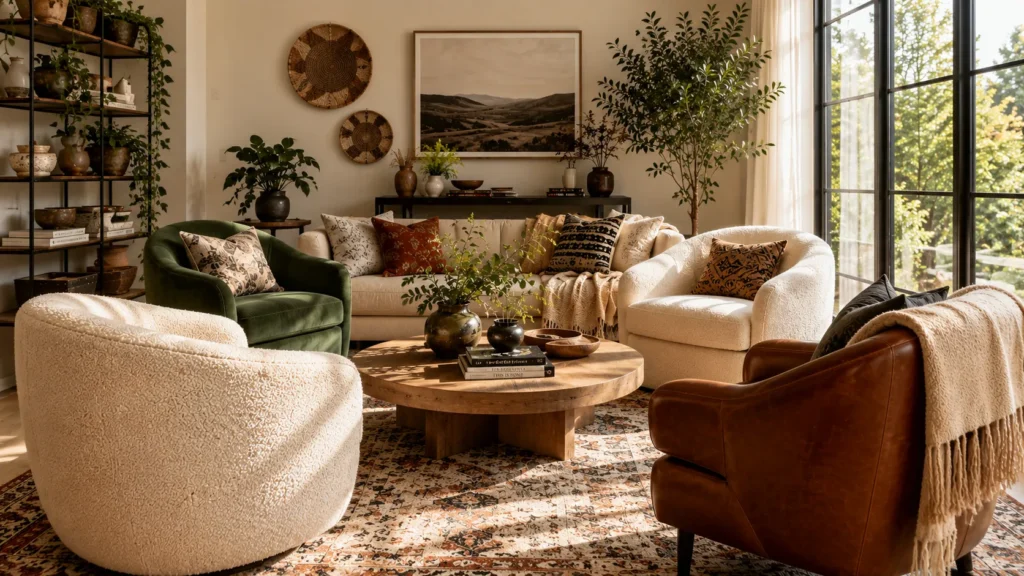
Walk into any living room that actually stops you in your tracks, and I’ll bet there’s a great chair doing the heavy lifting. Not the sofa. Not the rug. The chair. I’ve watched a single well chosen accent chair rescue a flat, forgettable room more times than I can count, and I’ve also watched a beautiful chair get ruined in under a year because nobody thought about the dog. In this guide, I’m walking you through the ideas that actually work in real American living rooms, along with the budget numbers, the maintenance truth, and the mistakes I see clients make again and again.
My Design Notes
I had a client in Austin who fell hard for a pair of ivory boucle swivel chairs, and no amount of talking her out of it worked. She had a golden retriever the size of a small pony, and I told her upfront this was going to be a problem. She bought them anyway. Six months later we were back in that same living room, and the arms had this dull gray cast that no steam cleaner could fully lift. I didn’t tell her to get rid of them. Instead, we had matching performance fabric slipcovers made, and now she swaps them out every few months depending on the season. My takeaway from that project is simple. If you love a fabric that isn’t practical for your life, don’t abandon it. Just build in a backup plan before you need one.
12 Elevated Ideas to Style Your Living Room With a Statement Accent Chair
1. Let a Modern Accent Chair Set the Tone
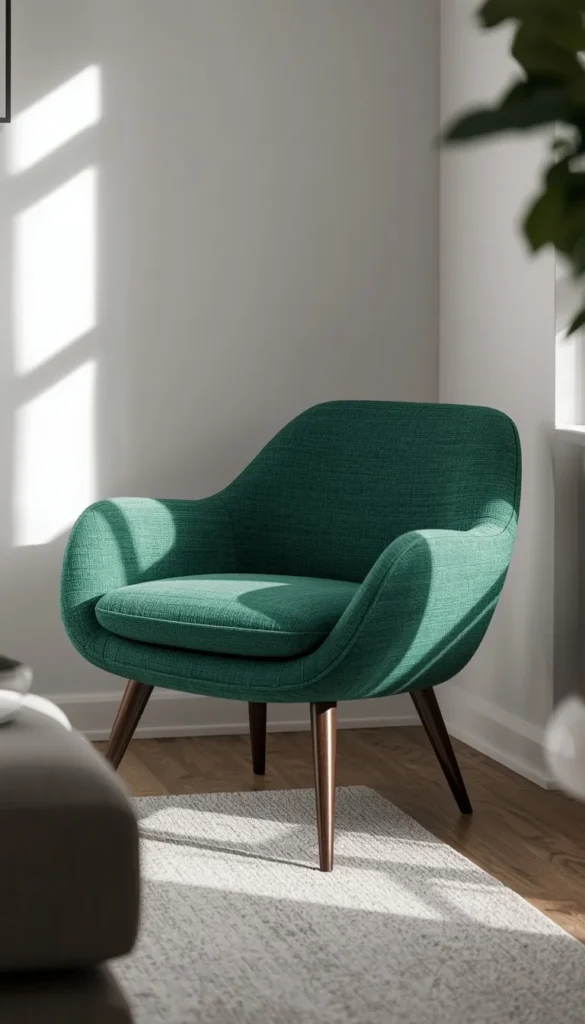
If your living room leans clean and current, start here. A modern accent chair usually means simple lines, a low profile, and a material that feels a little unexpected, think boucle, leather, or a nubby weave instead of anything too matchy with your sofa. I always tell clients the chair should feel like it was chosen, not just ordered as part of a set. That contrast is what makes a room feel designed instead of decorated.
A few things that read modern instantly:
- Exposed wood or metal legs instead of a skirted base
- A single bold color against an otherwise neutral room
- Curved silhouettes over sharp, boxy shapes
2. Bring In Mid Century Modern Charm
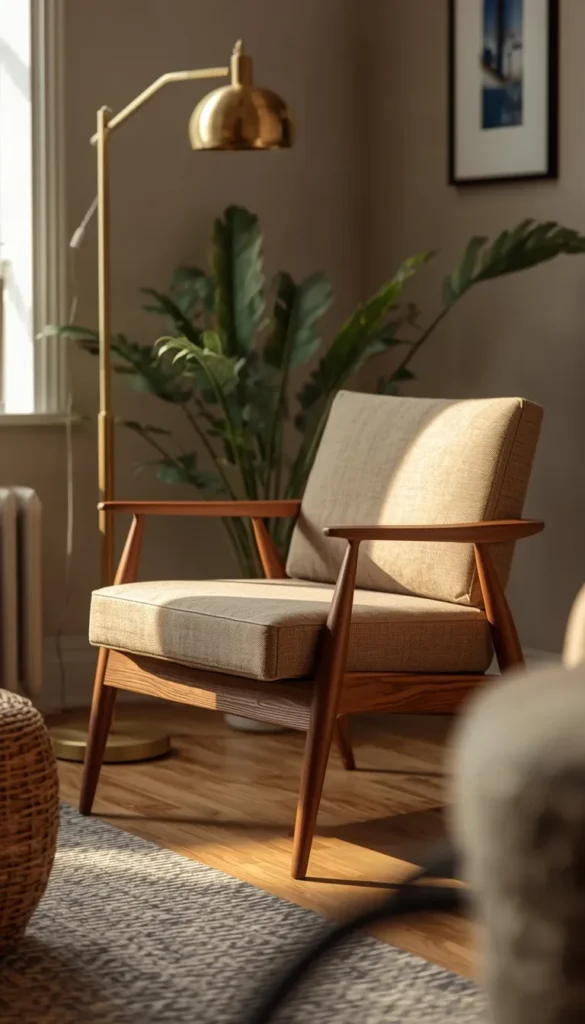
Mid century modern accent chairs have staying power because they’re built around comfort and proportion, not trend. Tapered wood legs, a slightly angled back, and a seat that sits a touch lower than you’d expect. This is the style I reach for most often when a client wants something that feels collected rather than brand new out of the box.
One thing I’ve noticed over the years is that people overthink the color. You don’t need a bold orange or mustard chair to nail this look. A walnut frame with a simple oatmeal or clay colored cushion does the job just as well, and it ages a lot better in photos five years from now.
3. Go Farmhouse Cozy
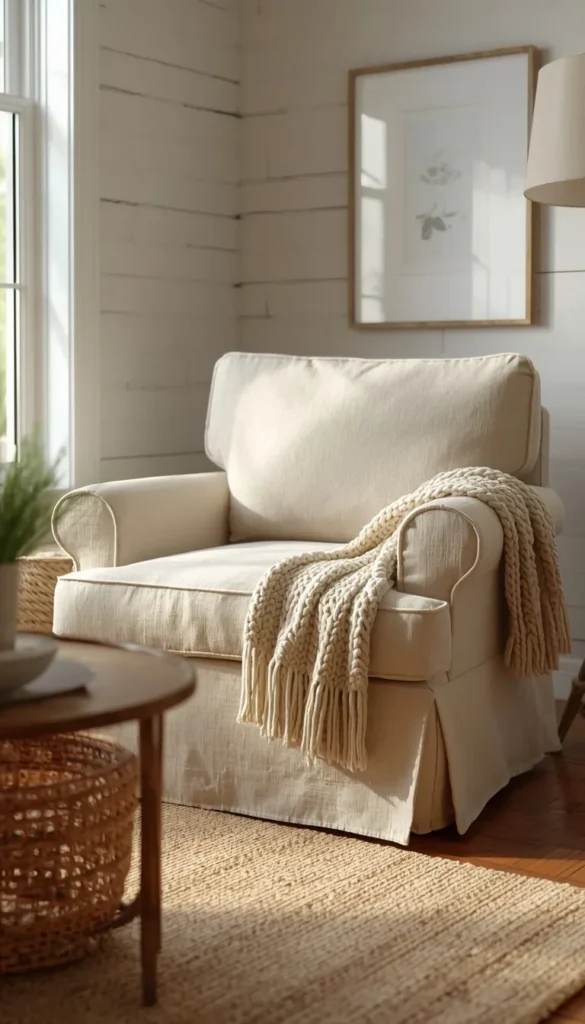
Farmhouse living rooms are all about texture layered over texture, so the accent chair needs to feel soft and a little worn in, even if it’s brand new. Slipcovered chairs, linen upholstery, and slightly oversized proportions all work here. This is one of the few styles where a chair that looks a little imperfect actually helps the room.
My honest take is that farmhouse style is forgiving in almost every way except one. Skip anything too polished or glossy, since a shiny finish will fight with everything else in the room instead of blending in.
4. Choose Transitional Elegance
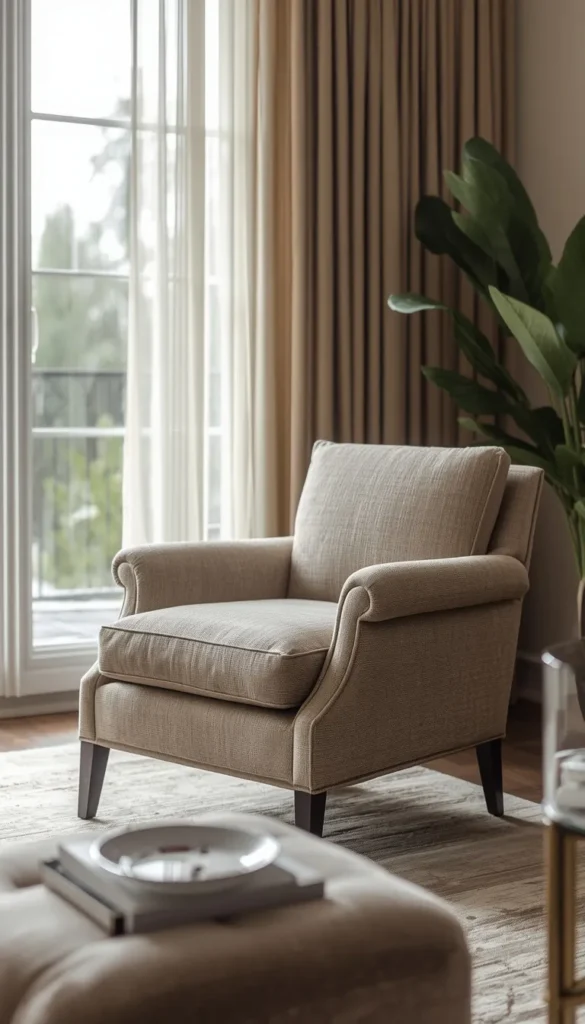
Transitional style splits the difference between traditional and modern, and it’s genuinely one of the easiest looks to get right in an American living room. Rolled arms with clean, tailored lines. A neutral palette with maybe one texture that adds a bit of shine, like a subtle velvet or a soft chenille.
A trick I’ve learned with transitional rooms is to let the chair be slightly more formal than the sofa. It creates a nice visual hierarchy in the space, almost like the chair is hosting the room. Keep the fabric practical though, since transitional homes tend to be the most lived in of any style on this list, full of kids, guests, and everyday life happening right there in the room.
If you had to pick just one style for your space right now, which one are you leaning toward?
5. Try Boucle for Texture and Warmth
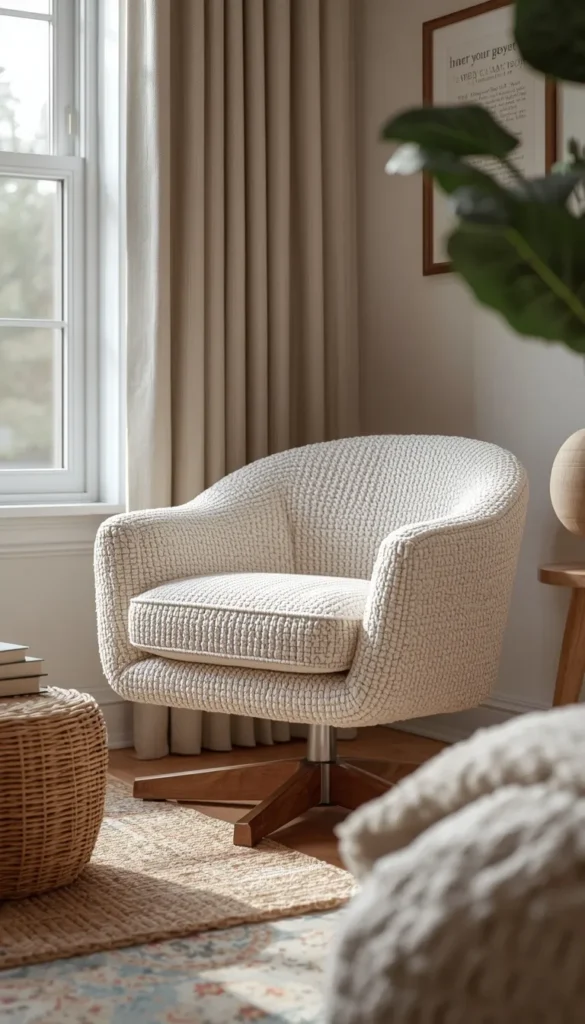
Boucle accent chairs are having a real moment right now, and honestly, I get why. That looped, nubby texture adds warmth to a room in a way flat fabrics just can’t. It photographs beautifully too, which is probably why it’s everywhere on Pinterest lately.
Here’s the part most articles skip. Boucle is not low maintenance. It traps pet hair, it can pill over time, and light colored boucle shows stains more than you’d think. A quick trick I’ve picked up is to have clients choose boucle for chairs that get occasional use, like a reading corner, rather than the spot where everyone piles in during movie night.
6. Add a Swivel Chair for Flexibility
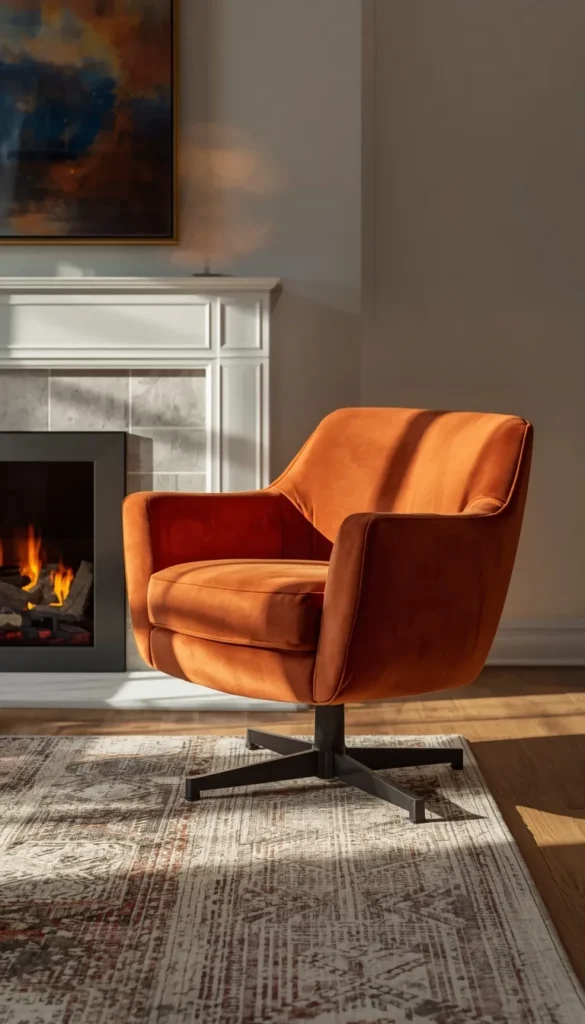
A swivel accent chair earns its keep in almost any living room layout. It lets you turn toward the fireplace during a quiet evening and swing back toward the conversation the second guests show up. Small living rooms benefit from this more than people expect, since one chair ends up doing the job of two fixed pieces.
Placement matters more with swivel chairs than with stationary ones. Leave enough clearance around the base so the chair can actually rotate without clipping a side table or a lamp, which sounds obvious until you’re the one measuring it wrong.
Top 6 Living Room Accent Chair Ideas
| Idea | Estimated Price | Maintenance |
|---|---|---|
| Modern Accent Chair | 300 to 900 | Low |
| Mid Century Modern Chair | 250 to 800 | Low |
| Farmhouse Slipcovered Chair | 200 to 600 | Medium |
| Boucle Accent Chair | 350 to 1000 | High |
| Leather Accent Chair | 600 to 2000 | Low |
| Velvet Accent Chair | 300 to 1200 | High |
7. Consider Leather for Longevity
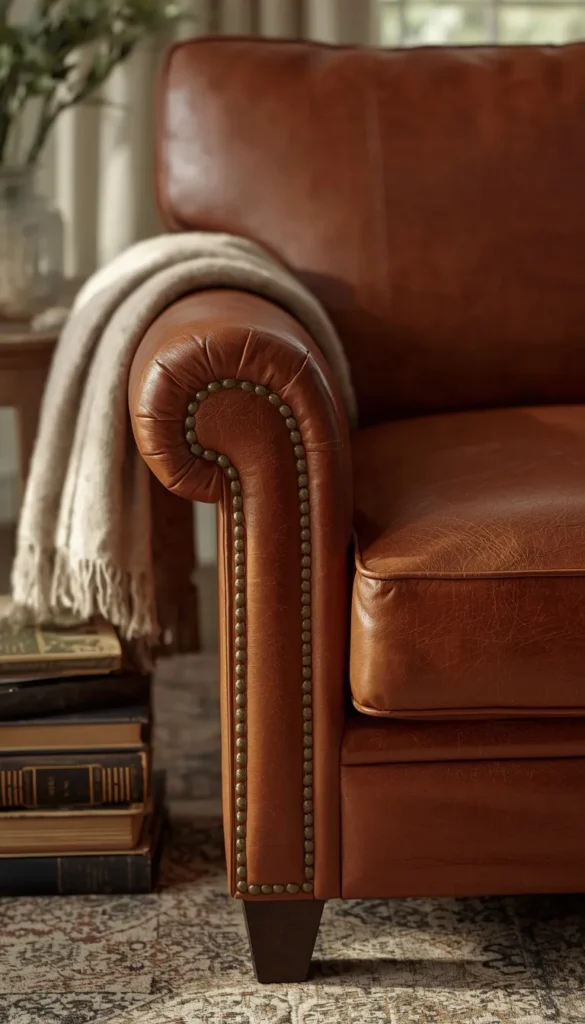
Leather accent chairs are an investment, but they earn that price back in durability if you take care of them. A good leather chair can genuinely outlast three or four fabric replacements, and it only gets more character with age.
That said, I won’t sugarcoat the downsides:
- Leather can feel cold or sticky in warmer climates without air conditioning
- Pet claws and sharp jewelry can scratch it over time
- Direct sunlight will fade and dry out lower quality leather faster than people expect
If your living room gets a lot of natural light, ask about UV protected leather before you buy, because standard finishes will fade noticeably within a year or two.
8. Use Velvet for a Little Drama
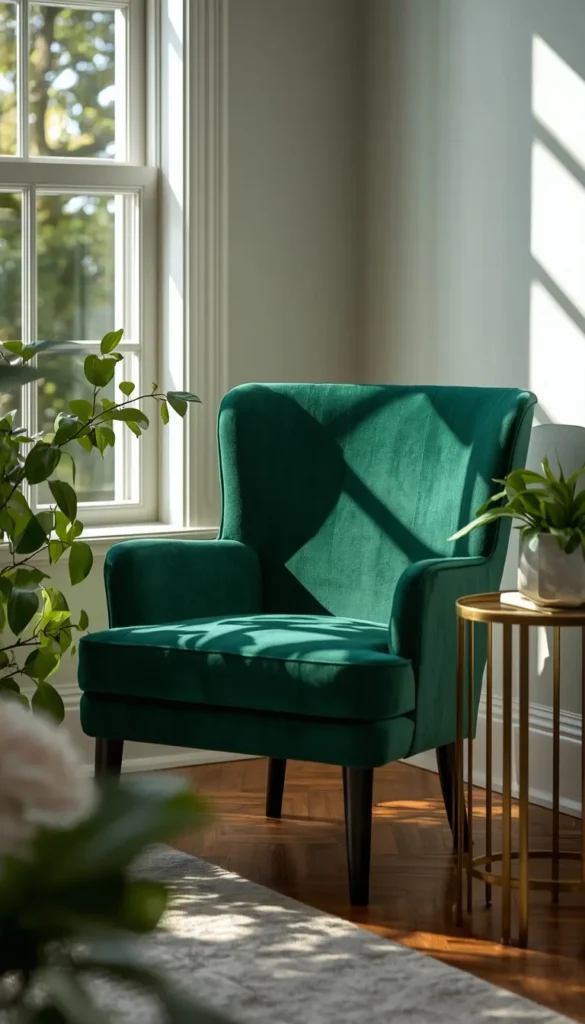
Velvet accent chairs bring an instant sense of luxury into a room, and a jewel tone velvet chair against a neutral sofa is one of my favorite combinations for adding personality without repainting a single wall.
The catch is that velvet crushes and shows wear patterns faster than most people expect, especially in high traffic spots like where you’d naturally rest your arms. I always suggest saving velvet for a chair that gets admired more than it gets sat in daily, like one tucked into a corner or angled near a window rather than parked directly in front of the television.
Is your living room missing a statement piece, or is it more of a maintenance problem you’ve been avoiding?
9. Design for a Small Living Room
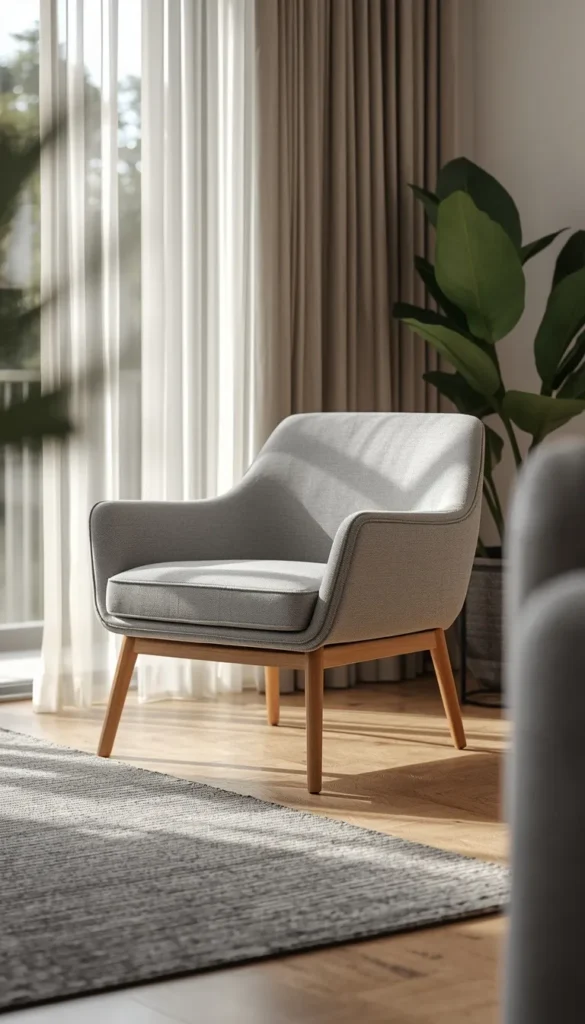
Small living rooms don’t need small chairs, they need the right chairs. A slim profile with visible legs will always read lighter than a bulky, fully upholstered piece, even if the actual dimensions are similar. I’ve walked into plenty of cramped rooms where swapping one heavy armchair for a slender swivel chair completely changed how the space felt to move through.
A few sizing rules that actually make a difference:
- Keep at least 30 inches of clear walking space around any chair
- Choose arms that are narrow or open rather than wide and boxy
- Pick a chair that’s slightly lower than your sofa so it doesn’t visually crowd the room
10. Go Bold with an Oversized Statement Chair
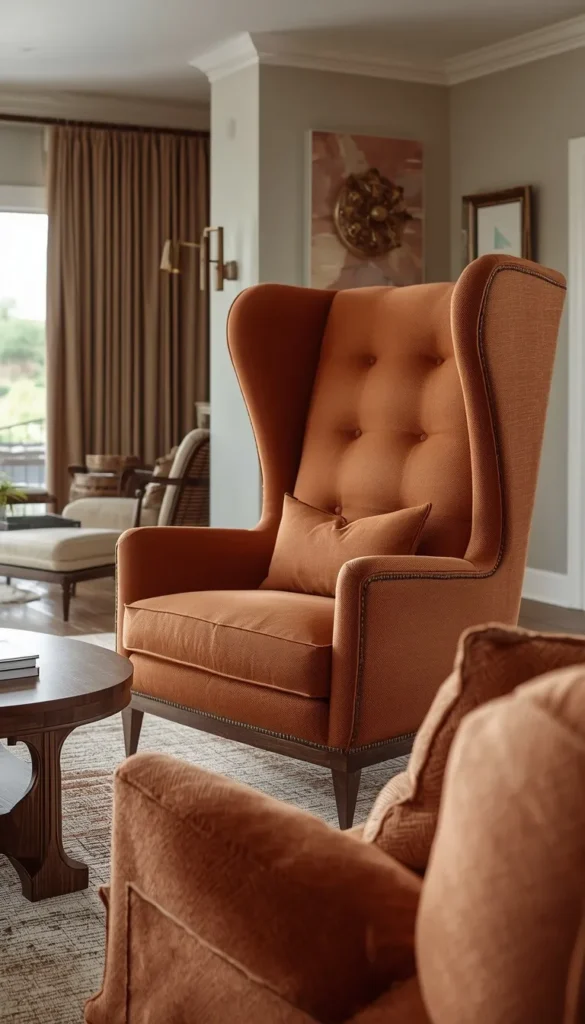
If you’ve got a bigger living room, an oversized accent chair can anchor the whole space in a way a smaller piece never will. I’m talking about a deep seat, a high back, and enough presence that it doesn’t get lost across the room from the sofa.
One thing to watch out for is scale creep, where the chair looks perfect in the showroom but suddenly feels enormous once it’s home. Before buying, tape out the actual footprint on your floor with painter’s tape and live with it for a day. It sounds excessive, but it’s saved more than one client from a very awkward return process.
11. Play It Safe with Neutral Tones
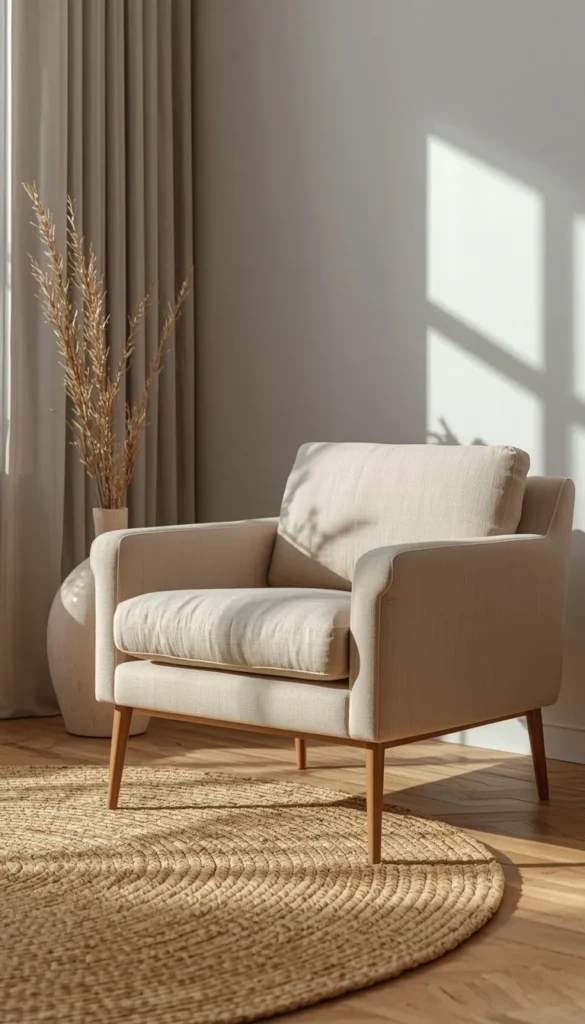
Neutral accent chairs are the quiet workhorses of a living room. Cream, oatmeal, warm gray, soft taupe, these colors let everything else in the room do the talking, and they’re genuinely the easiest to live with long term since they won’t clash if your style evolves.
I lean toward neutral for clients who redecorate often or who are furnishing a room they plan to sell the house from eventually, since neutral pieces photograph well and appeal to a wider range of tastes.
12. Take a Risk with Bold Color
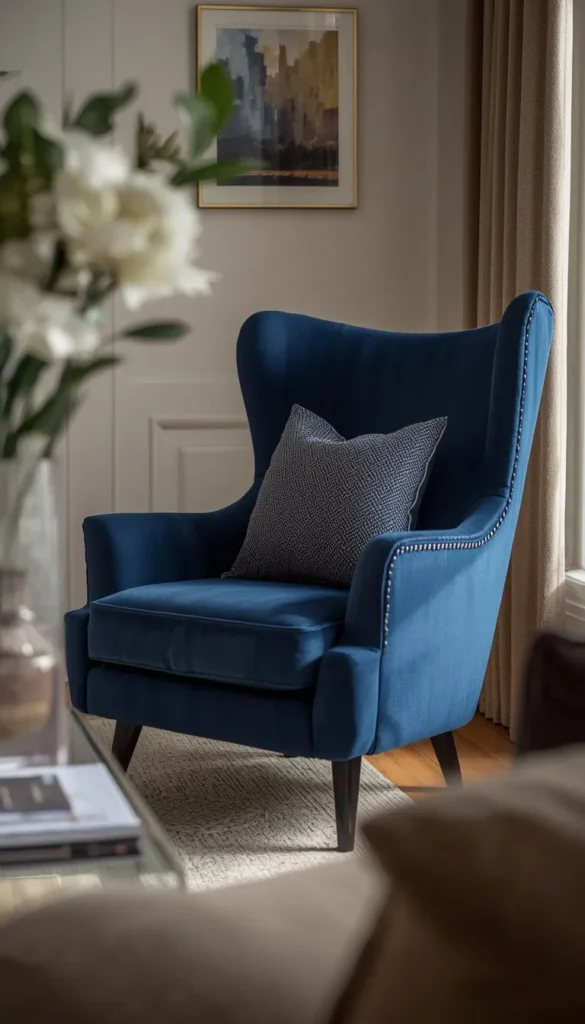
On the flip side, a bold colored accent chair is one of the fastest ways to give a room personality without a full renovation. Emerald green, deep rust, even a saturated navy can turn a plain living room into something people remember.
My advice here is simple. Commit to one bold chair, not two, unless you’re intentionally going for a matched pair look. A single colorful chair acts as a focal point, but two competing bold pieces can make a small or medium sized room feel chaotic instead of curated. If you’re nervous about commitment, look for a bold chair on a budget first, then upgrade once you know you actually love living with that color every day.
Which Chair Is Yours?
By Budget
- Starter Pick: Farmhouse slipcovered chair, easy on the wallet and easy to swap covers later
- Mid Range Pick: Mid century modern chair, solid value that holds up over time
- Investment Pick: Leather accent chair, costs more upfront but outlasts almost everything else on this list
By Lifestyle
- Busy Families with Pets: Leather or performance fabric, skip boucle and velvet entirely
- Small Space Dwellers: Slim profile swivel chair with visible legs
- Design Lovers Who Redecorate Often: Neutral tone chair that won’t clash with future changes
- Statement Seekers: Bold colored chair or oversized piece as a single focal point
Frequently Asked Questions
How many accent chairs should a living room have?
Most living rooms work best with one or two. One chair acts as a lone statement piece, while two creates balance and gives you extra seating for guests without crowding the room.
What is the difference between an accent chair and a regular armchair?
An accent chair is chosen to stand out, not to match. It usually has a different color, fabric, or shape than the rest of your furniture on purpose.
Where should I place an accent chair in a living room?
Ideally, angle it slightly toward the sofa or coffee table instead of lining it flat against a wall. Leave at least 30 inches of walking space around it so the room still feels open.
What is the best accent chair fabric for pets?
Leather or a performance fabric labeled for high traffic use is your safest bet. Avoid boucle and light colored velvet, since both show fur and stains fast.
How much should I spend on a living room accent chair?
The average range runs from 300 to 900 for a quality chair, though leather pieces can run higher. Spend more on the chair you’ll use daily, and save on anything purely decorative.
Conclusion
Your living room doesn’t need a full renovation to feel completely different, sometimes it just needs one chair that actually feels like you. I’ve seen clients transform a flat, forgettable corner into the spot everyone fights over just by committing to the right piece and being honest about how they actually live. So pick one idea from this list, even something small like ordering a fabric swatch or finally clearing that corner you’ve been ignoring, and start there this week. What’s stopping you from making that change today, and which style from this list is calling your name?
