
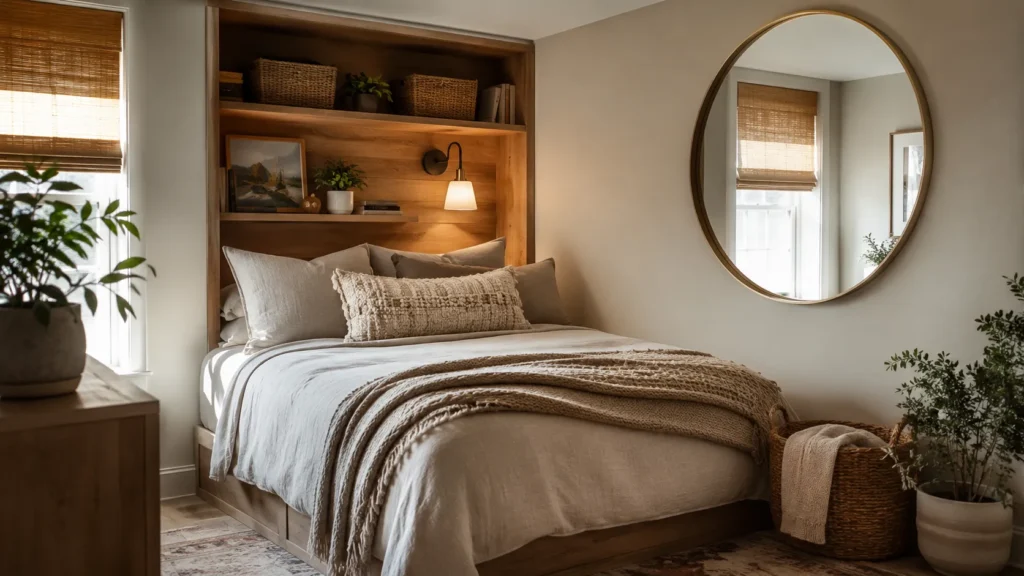
Your small bedroom is not the problem. Your furniture is probably too big, your lighting is probably doing one job when it should be doing three, and your storage is probably sitting on the floor instead of built into the walls. I’ve walked into more tiny rooms than I can count over the years, and the ones that finally work always come down to the same handful of smart moves, not a bigger budget or a bigger room. In this guide, I’m walking you through nine makeover ideas that actually hold up in real American homes, apartments, and rentals, not just in a photoshoot. Some of these you can do this weekend for under a hundred dollars, others are worth saving up for, and I’ll tell you honestly which is which as we go.
My Design Notes
When I was working on a guest room and home office conversion in a 1920s bungalow in Nashville, I made a mistake I still think about. My client wanted a moody, photo ready navy on all four walls, the kind you see all over Pinterest, and I talked myself into agreeing because it looked incredible in the inspiration photos. The room only had one small window, and by four in the afternoon in winter, it felt less like a cozy retreat and more like a cave. We ended up pulling the navy back to just the bed wall and warming up the rest with a soft white, then added a wall mounted swing arm lamp so we didn’t lose floor space to a lamp her husband needed for his desk setup. My biggest takeaway from that project is that a color can be right and still be wrong for the light you’re actually working with. We brought the whole makeover in around eighteen hundred dollars, and it’s one of the rooms I’m still proudest of, mistakes and all.
9Proven Strategies for an Elevated Small Room Makeover
1. Start With a Real Plan Before You Buy Anything
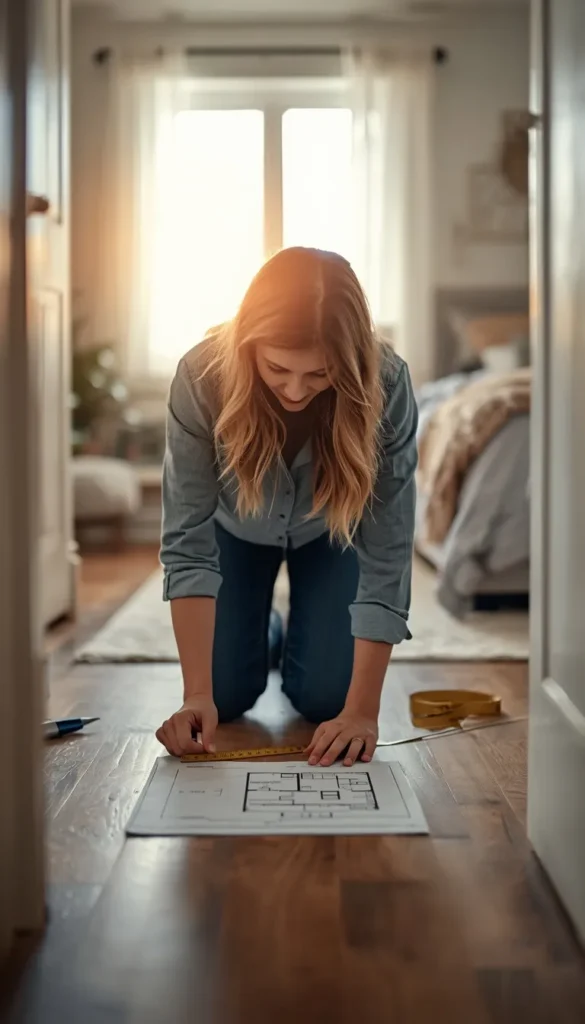
I know it’s tempting to jump straight to Pinterest and start filling a cart, but the small rooms that actually turn out well always start with a tape measure, not a shopping cart. Before you spend a single dollar, walk into the room and measure the width, the length, the ceiling height, and where every outlet, vent, and window sits. Sketch it out, even roughly on the back of an envelope, because a room that looks spacious in your head can suddenly feel impossible once you try to fit a real bed frame into it.
One thing to watch out for is buying furniture based on what looks good online instead of what actually fits your walkway space. You need at least twenty four inches of clearance to move around a bed comfortably, and skipping that step is the number one reason small room makeovers stall halfway through.
Set your budget in tiers before you start, too. I usually tell clients to think in three brackets:
- Under 500 dollars, which covers paint, textiles, and small styling swaps
- 500 to 1500 dollars, which opens up furniture pieces and wallpaper
- 1500 dollars and up, which is where built ins and custom work come into play
Knowing your tier ahead of time keeps you from falling in love with a murphy bed system before realizing it’s three times what you wanted to spend.
2. Build Storage Into the Walls Instead of On Them
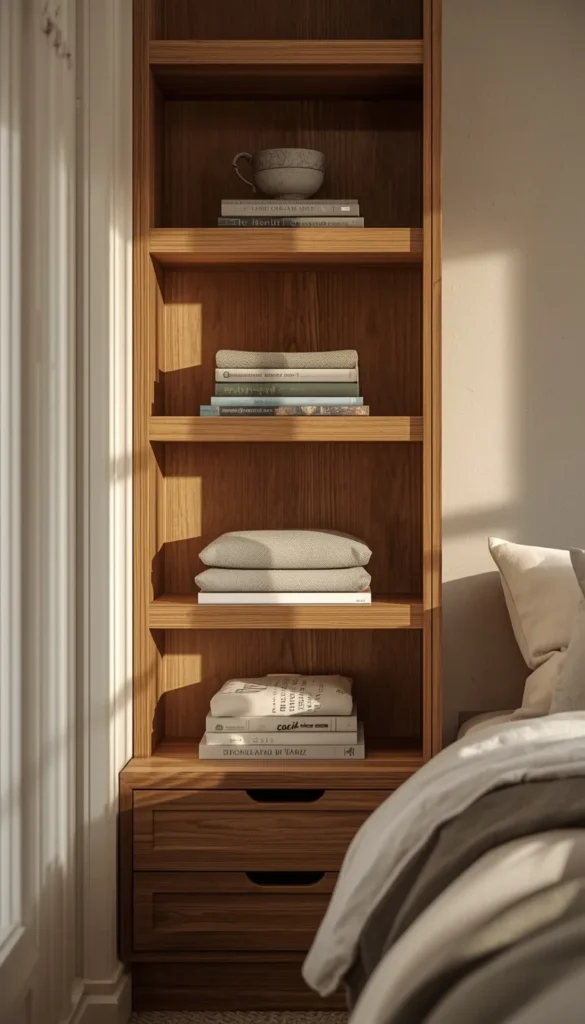
Floor space is the most valuable real estate in a small room, and every piece of furniture sitting on it is costing you square footage you probably need. My go to move is building storage vertically into the wall itself rather than adding another freestanding dresser or bookcase.
If you’re a homeowner and can commit to it, custom built in shelving around the bed or into an alcove is worth every penny. It looks intentional, it uses dead space most people ignore, and it almost always increases resale value. If you’re renting or working with a tighter budget, IKEA’s PAX or BILLY systems can mimic that built in look for a fraction of the cost, and they’re fully reversible when you move out.
A quick trick I’ve learned over the years is to paint the shelving the same color as the wall behind it. It visually disappears into the room instead of reading as another piece of furniture competing for attention.
The one real con here is commitment. True built ins are semi permanent, so if you’re in a rental with strict lease terms, stick with the freestanding or modular route instead.
3. Let a Bold Headboard or Wallpaper Do the Heavy Lifting
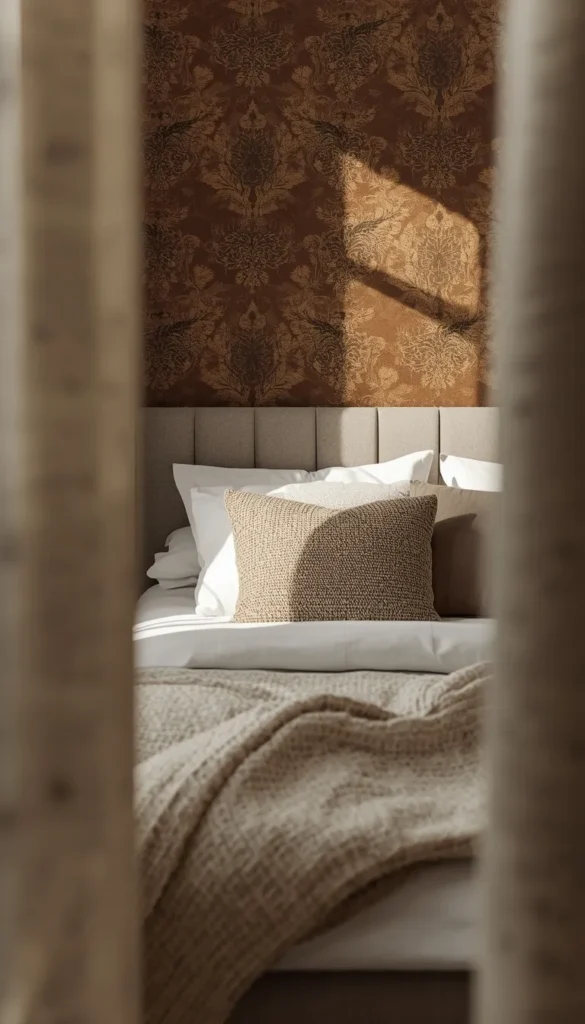
Small rooms can actually handle more pattern and color than people expect, as long as it’s concentrated in one spot instead of spread thin. An oversized headboard, or a single wall of bold wallpaper behind the bed, gives the room a focal point and tricks the eye into thinking the space was designed on purpose rather than just furnished.
If you’re renting, peel and stick wallpaper has come a long way. Brands like Tempaper and Spoonflower offer removable options that look genuinely custom, and most rolls run between 40 and 80 dollars depending on the pattern.
A few ways to bring this to life without overcommitting:
- Extend the wallpaper only behind the headboard, not the full wall, for a lower cost version
- Choose a custom fabric covered headboard if you want texture without pattern overload
- Stick to one dominant print and let your bedding stay simple so the wall doesn’t fight with the linens
The con worth knowing here is that busy wallpaper in a very dim room can occasionally make the space feel more closed in rather than more designed, so if your room gets minimal natural light, lean toward a lighter background tone within the pattern.
4. Choose Furniture That Pulls Double Duty
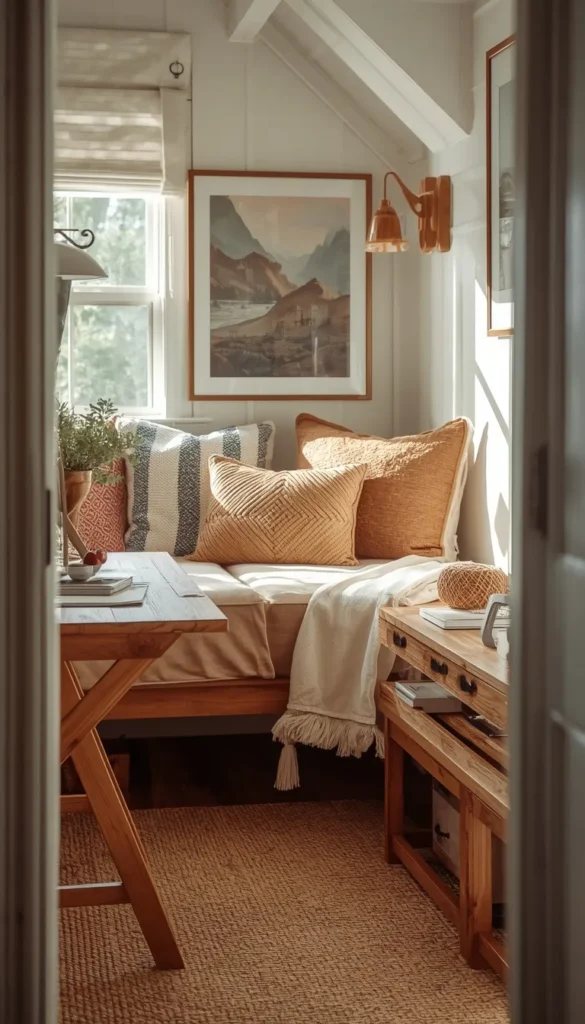
Every piece of furniture in a small room should be doing at least one and a half jobs. A daybed that works as seating by day and sleeping space by night. A bench at the foot of the bed that also opens for storage. A nightstand with drawers instead of open shelving, so clutter has somewhere to hide.
Murphy beds get a lot of attention for good reason, but I want to be honest about the investment. A quality wall bed system typically runs anywhere from 2,000 to 6,000 dollars installed, depending on whether you go custom or a ready made kit from a brand like Wilding Wallbeds. It’s a real upgrade if the room needs to double as an office or den, but it’s not a weekend project or a small budget swap.
For a lighter lift, wall mounted nightstands and fold down desks solve a similar problem at a much lower price point, usually under 200 dollars per piece, and they still free up visible floor space.
5. Get Strategic With Paint
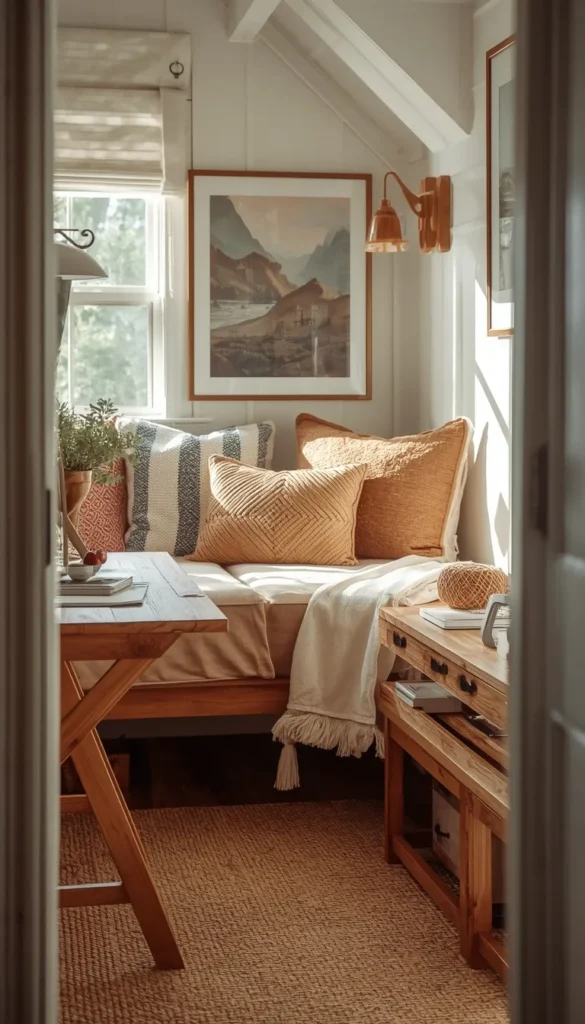
Paint is still the cheapest way to transform a small room, but the advice to “always go light and airy” isn’t the whole truth. Dark, saturated colors can make a small room feel intentional and cozy rather than cramped, especially in a bedroom where you want a cocoon like feeling at night.
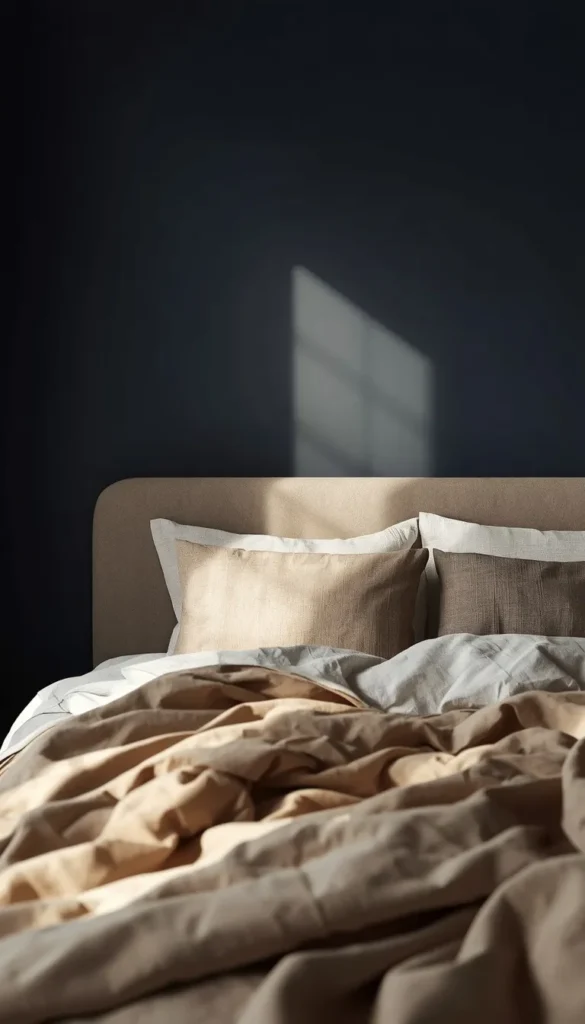
Here’s the part most articles skip though. I learned this one the hard way on a project in Nashville, which I mentioned earlier in my notes above. A deep navy or charcoal can look stunning in photos, but if your room only gets a small amount of natural light, that same color can feel heavy and dim by late afternoon. Before committing to a full room in a dark shade, test it on one wall first and watch how it behaves at different times of day, not just in the morning when the light is at its best.
If you do want the drama without the risk, painting just the bed wall or the ceiling in a deep tone gives you the same cozy effect while keeping the rest of the room light enough to breathe.
Which room in your house feels the most cramped right now, and is it actually a furniture problem or a storage problem?
6. Use Mirrors to Trick the Eye, Not Just Decorate
A well placed mirror does more for a small room than almost any other single object, but placement matters more than people realize. Hang it directly across from a window, and it bounces natural light back into the room, making the whole space feel brighter and larger almost instantly.
A few placement rules worth following:
- Position the mirror so it reflects a window or a view, not a blank wall or closet door
- Go bigger than feels comfortable. An oversized mirror almost always reads better in a small room than a small one
- Lean a floor mirror in a corner if you don’t want to commit to wall mounting
Budget wise, you don’t need a designer piece here. A simple mirror from HomeGoods or Amazon in the 80 to 150 dollar range does the same optical trick as a high end antique version. The effect comes from the placement and the size, not the price tag.
Top 6 small room makeover ideas
| Idea | Estimated Price | Maintenance |
|---|---|---|
| Built in wall storage | $150 – $2,000 depending on custom vs IKEA hack | Low |
| Peel and stick wallpaper accent | $40 – $80 per roll | Medium |
| Murphy bed system | $2,000 – $6,000 installed | Medium |
| Wall mounted nightstands | $80 – $200 per piece | Low |
| Statement paint (bed wall or ceiling) | $50 – $150 for paint and supplies | Low |
| Oversized mirror | $80 – $150 | Low |
7. Layer Your Lighting Instead of Relying on One Fixture
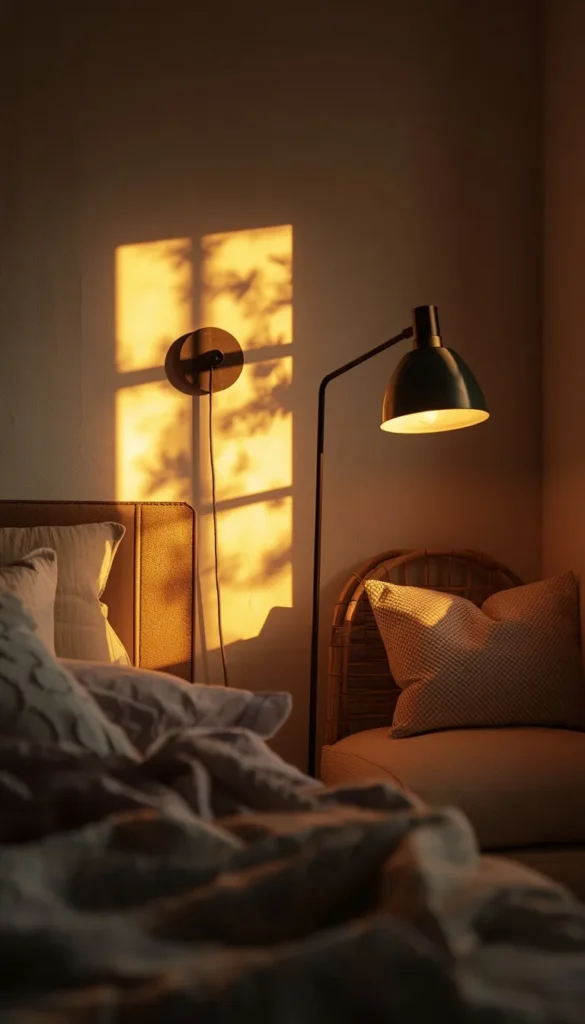
One overhead light doing all the work is one of the fastest ways to make a small bedroom feel flat and uninspired. I always tell clients to think in layers, meaning at least two or three light sources at different heights in the room.
Wall mounted sconces on either side of the bed are one of my favorite small room moves because they free up the nightstand entirely, which matters a lot when your surface space is already limited. Add a soft floor lamp or a plug in pendant in a reading corner, and suddenly the room feels considered rather than just lit.
Cost wise, a pair of hardwired sconces with installation can run 300 to 600 dollars depending on your electrician, but plug in sconce versions with a cord cover kit get you the same look for under 100 dollars total, no electrician required. That’s usually where I point renters and anyone on a tighter budget.
8. Get the Scale Right on Rugs, Bedding, and Art
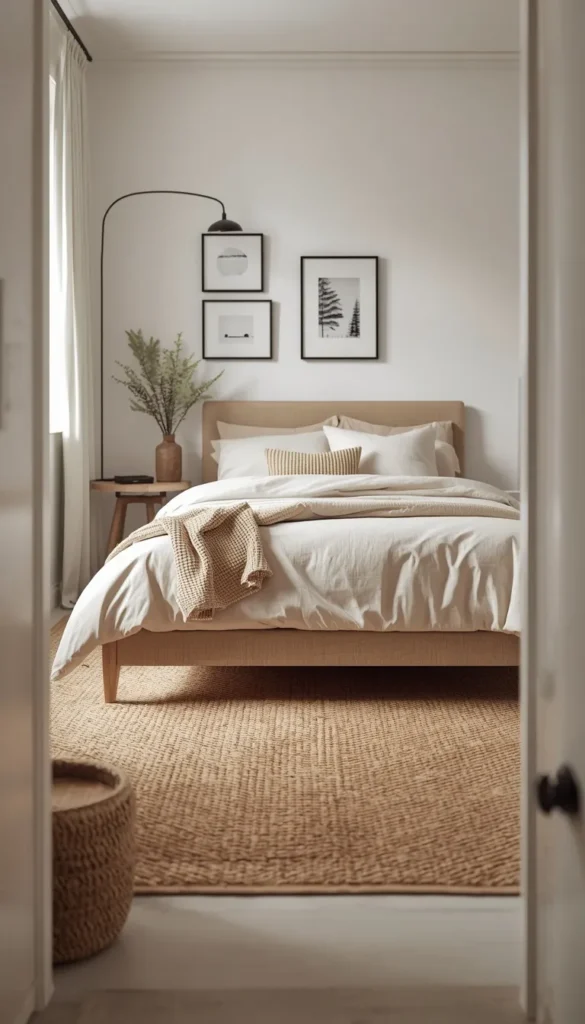
This is the mistake I see more than almost any other, and it’s rarely about color or style. It’s about size. A rug that’s too small floats in the middle of the room and actually makes the space feel choppier and smaller, not bigger. As a general rule, you want the rug to extend at least a foot beyond the sides of the bed, even in a tight room.
Bedding is the same story. Oversized, fluffy duvets can visually swallow a small bed and make the whole room feel like it’s overflowing with fabric. A flatter, well tailored bedding style almost always reads as more polished in a compact space.
If you had to pick just one of these nine ideas to do this weekend, what would you tackle first?
9. Add One Personal Touch That Makes It Feel Finished
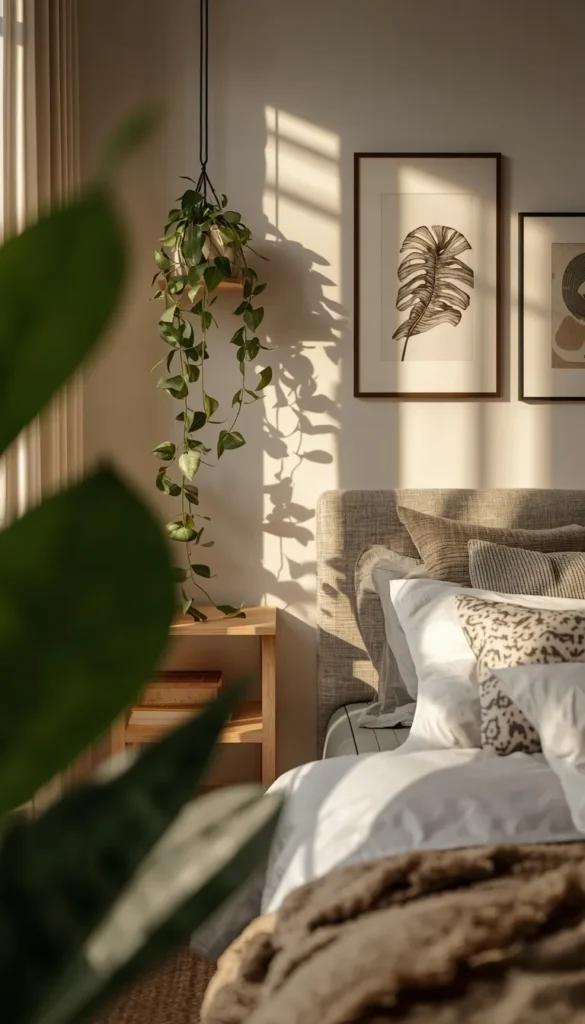
After all the planning, the storage, the paint, and the lighting, a small room still needs one thing that makes it feel like yours instead of a showroom. This is usually the cheapest step in the whole process, and it’s the one people skip because it feels less “functional” than everything else on this list.
Which Path Is Yours?
By Budget
Weekend Refresh (Under 300 dollars)
- Paint one accent wall or the ceiling
- Add wall mounted sconces with plug in cord kits
- Swap in an oversized mirror
- Style one shelf with plants or a small gallery wall
Investment Makeover (1,500 dollars and up)
- Custom built in shelving around the bed
- A proper murphy bed or wall bed system
- Hardwired sconces with professional installation
- Full wallpaper coverage on a feature wall
By Lifestyle
Renters and Apartment Dwellers
- Peel and stick wallpaper instead of paint or paste
- IKEA hack shelving instead of true built ins
- Plug in sconces instead of hardwired fixtures
- Removable art strips instead of nail holes
Homeowners Settling In Long Term
- True custom built ins for storage
- Hardwired lighting layered through the room
- A daybed or murphy bed as a semi permanent fixture
- Bolder, less reversible paint choices like a full dark room
Frequently Asked Questions
How much does it cost to makeover a small bedroom?
Most small bedroom refreshes land between 300 and 1,500 dollars depending on how much furniture you’re replacing. Paint and styling alone can cost under 300. Add a wall bed or built ins and you’re closer to the higher end.
What is the best paint color for a small bedroom?
Soft warm neutrals work safest if the room gets limited light. Deep tones like navy or charcoal look great too, just test them first before committing to all four walls.
Can you make a small bedroom look expensive without a big budget?
Yes, focus your money on one statement piece like a headboard or wallpaper wall. Keep everything else simple and let that one feature do the work.
Are dark walls a bad idea in a small room?
Not always, but they can feel heavy in rooms with little natural light. Try one wall first and check how it looks at different times of day before painting the whole room.
What is the biggest mistake people make in a small bedroom makeover?
Buying furniture that’s too large for the actual floor space. Always measure clearance around the bed before you shop, not after.
Conclusion
Your small room doesn’t need to stay small in feeling, it just needs a little intention behind it. I’ve seen tiny bedrooms go from cramped to genuinely beautiful with nothing more than a can of paint and one weekend of effort, so don’t wait until you can do all nine of these at once. Pick the one that’s bothering you the most right now, clear a shelf, grab a paint sample, whatever feels doable today, and start there.
