
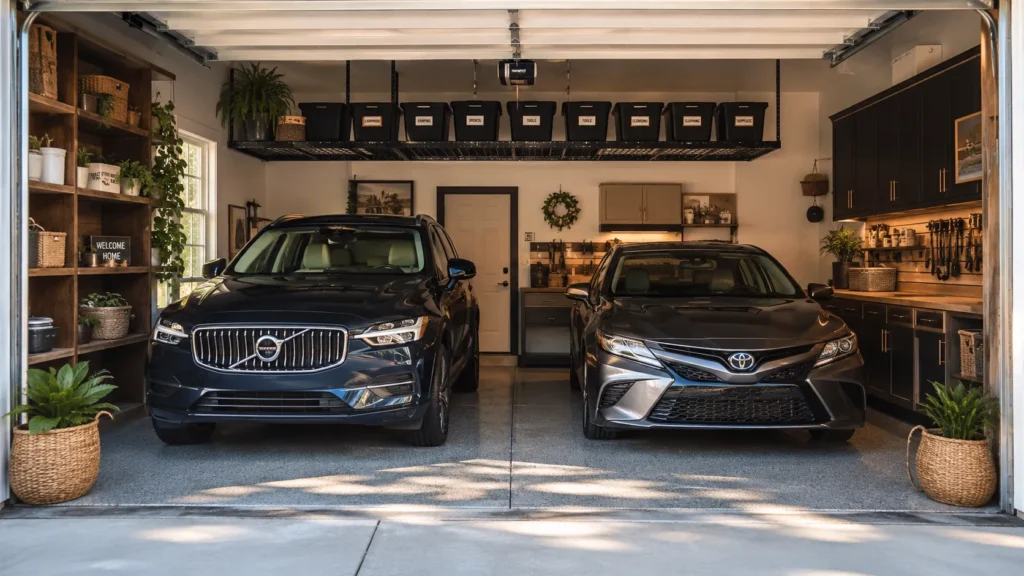
You’ve got two cars and about half the space you actually need for them. Somewhere between the holiday decorations, your kid’s old bike, and that box of paint cans you swore you’d deal with “next weekend,” your garage stopped being a garage and turned into an overflow room with a door that happens to open upward. I’ve walked into more two car garages than I can count where the family owns two vehicles but hasn’t parked either one inside for years. The good news is that with the right layout and a little planning before you buy anything, you can get both cars back in and still have room for everything else.
My Design Notes
I think about a project I did for a family just outside Franklin, Tennessee more than almost any other garage I’ve worked on. Two SUVs, two kids, and a garage that hadn’t seen a car parked in it for three years. The husband wanted custom cabinets installed immediately, and I get that instinct, but I asked them to hold off for fifteen minutes first. We taped off the actual footprint of both vehicles on the garage floor, mirrors and all, because their newer SUV was wider than the one it replaced. That small exercise saved us from installing a shelving unit that would’ve clipped the passenger mirror every single day. We ended up going with wall mounted shelving on one side and a slim cabinet run on the other, then moved the kids’ hockey gear up onto an overhead rack. Both cars were parked inside within a week, and I don’t think either of them has looked back since.
Proven Strategies for Mastering Two Car Garage Organization
1. Split the Garage Into a True Center Zone and Two Side Zones
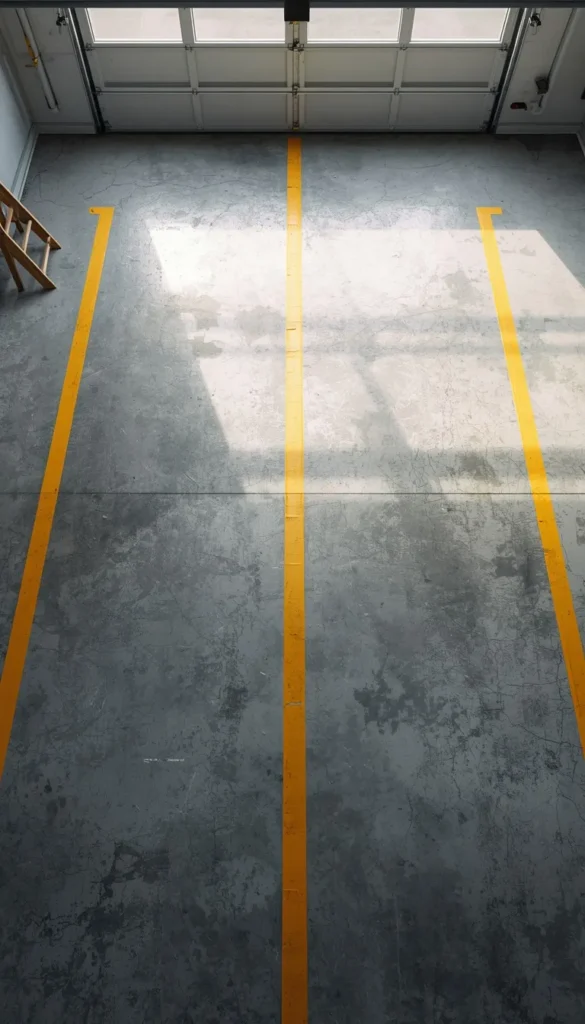
This is the first thing I tell every client before they buy a single shelf. Picture your garage as three vertical strips instead of one big open box: a wide center lane for actually pulling both cars in, and two narrower zones on either side for storage. Once you commit to that mental map, every purchase decision gets easier because you already know which strip it belongs in.
2. Choose Wall Mounted Shelving Over Floor Units
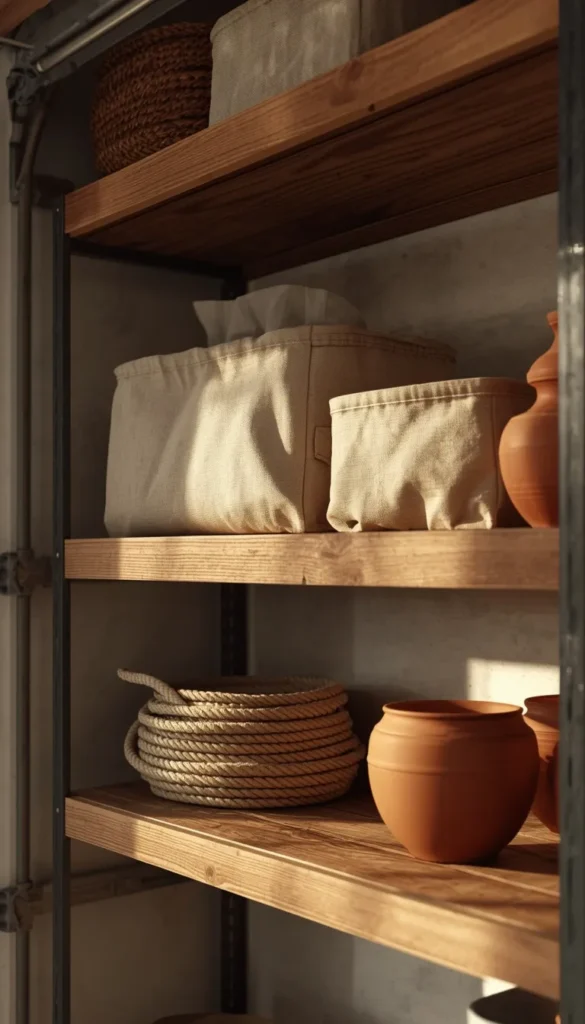
Floor standing shelving eats into your parking width in a way that sneaks up on people. Wall mounted shelving keeps everything up and out of the drive path, which matters more in a two car garage than almost anywhere else. A quick trick I’ve learned is to measure your car’s mirror width with the door open before choosing shelf depth, since twelve inch shelves can feel roomy on paper and painfully tight once a mirror is two inches away from them every morning.
3. Add Ceiling Mounted Overhead Racks for Rotating Storage
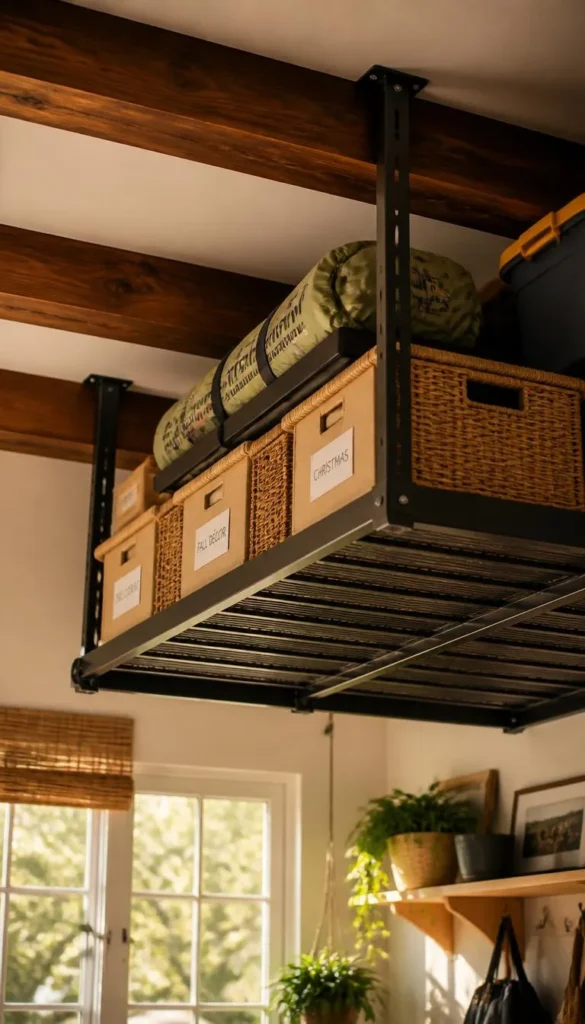
If you’ve got the ceiling height, overhead racks are honestly one of the best moves you can make in a two car layout. They’re perfect for the stuff you only touch twice a year:
- Holiday decorations
- Off season sports gear
- Suitcases and travel bags
Just don’t treat them as a catchall for everything you don’t want to deal with. I’ve seen racks sagging under the weight of things that really belonged in a donation pile.
4. Install a Slatwall or Track System for Flexible Storage
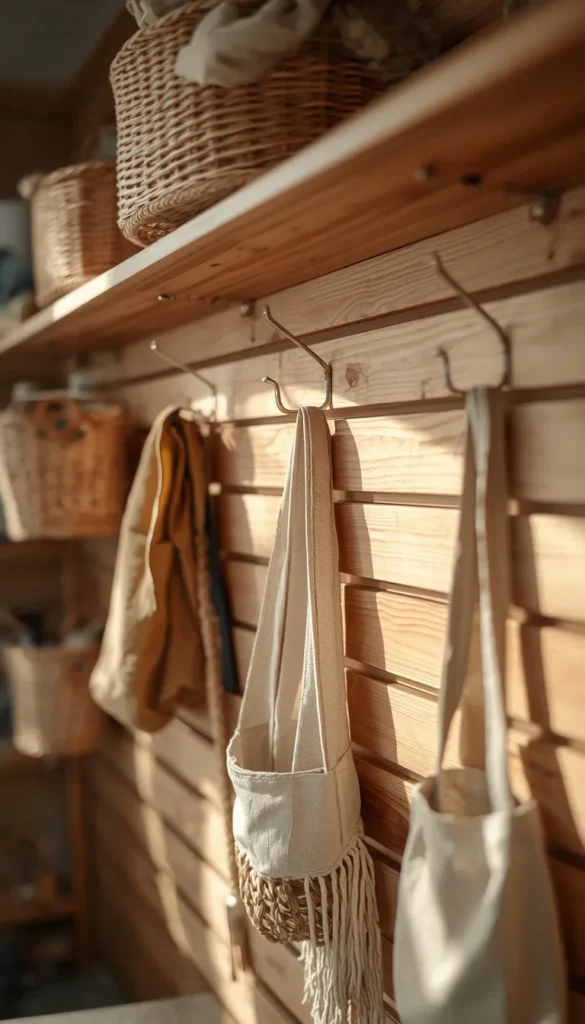
Slatwall and track systems earn their keep because they adapt as your needs change, which is something fixed shelving just can’t do. You mount the panel once, and then hooks, baskets, and small shelves clip in and move around depending on the season or the project you’re working on. One thing to watch out for is that not every track system holds up the same under heavy loads, so if you’re planning to hang something substantial like a mower or a kayak, check the weight rating before you commit rather than after.
Which of these eighteen ideas feels like the easiest win for your garage right now?
5. Give Bikes a Vertical Home
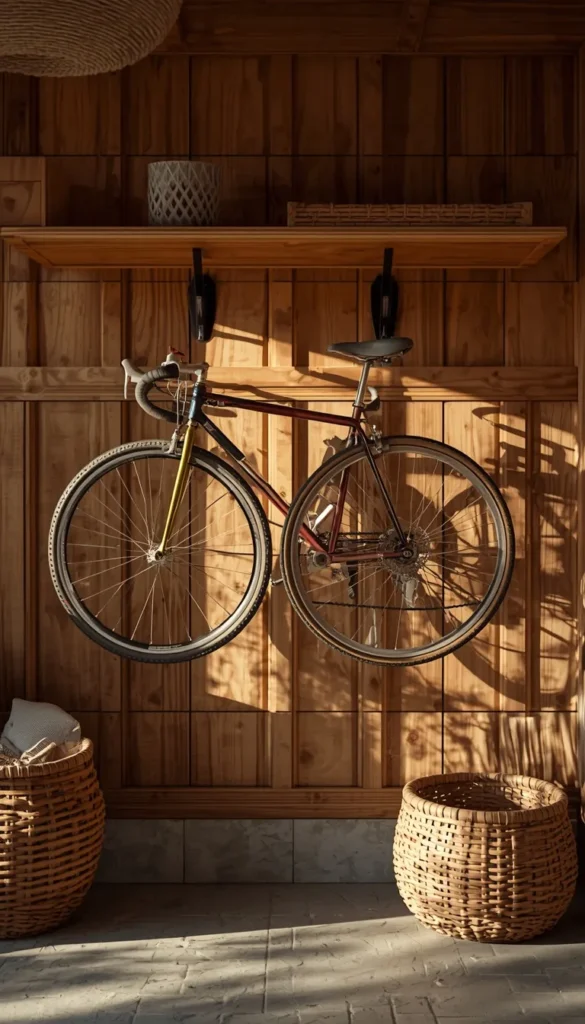
Bikes are some of the worst floor space offenders in a two car garage, especially if you’ve got more than one kid who rides. Wall mounted hooks or a simple pulley system will get them up and out of the way in minutes, and honestly, once you see two or three bikes hanging neatly instead of leaning against your car door, you won’t want to go back.
6. Create a Drop Zone for Sports Equipment
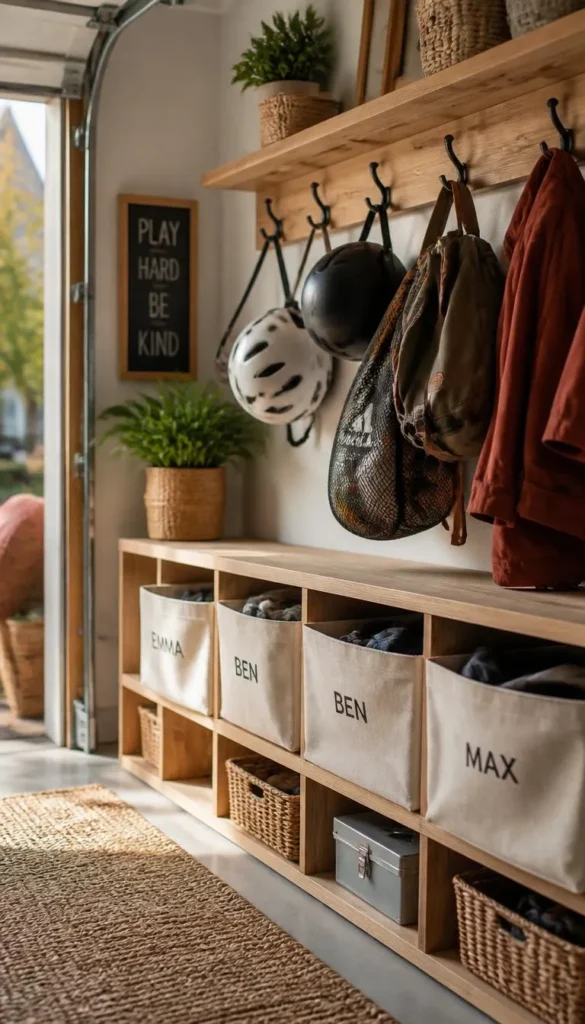
If you’ve got kids in sports, you already know the drill: they walk in the door, drop their bag wherever they’re standing, and disappear into the house. A dedicated drop zone near the entry solves this before it becomes a fight. I like using:
- Low, open shelving they can reach without help
- A few sturdy hooks for helmets and pads
- One bin per kid so gear doesn’t get mixed up
The lower the effort to put something away, the more likely it actually happens. That’s true for kids and adults both, if we’re being honest.
Top 6 two car garage organization ideas
| Idea | Estimated Price | Maintenance |
|---|---|---|
| Wall Mounted Shelving | $150 – $450 | Low |
| Overhead Ceiling Racks | $200 – $600 | Low |
| Slatwall or Track System | $300 – $900 | Medium |
| Cabinet Storage System | $800 – $2,500 | Low |
| Pegboard Workstation | $50 – $150 | Medium |
| Epoxy Floor Coating | $3 – $7/sq. ft. | Medium |
7. Build a Small Pegboard Workstation
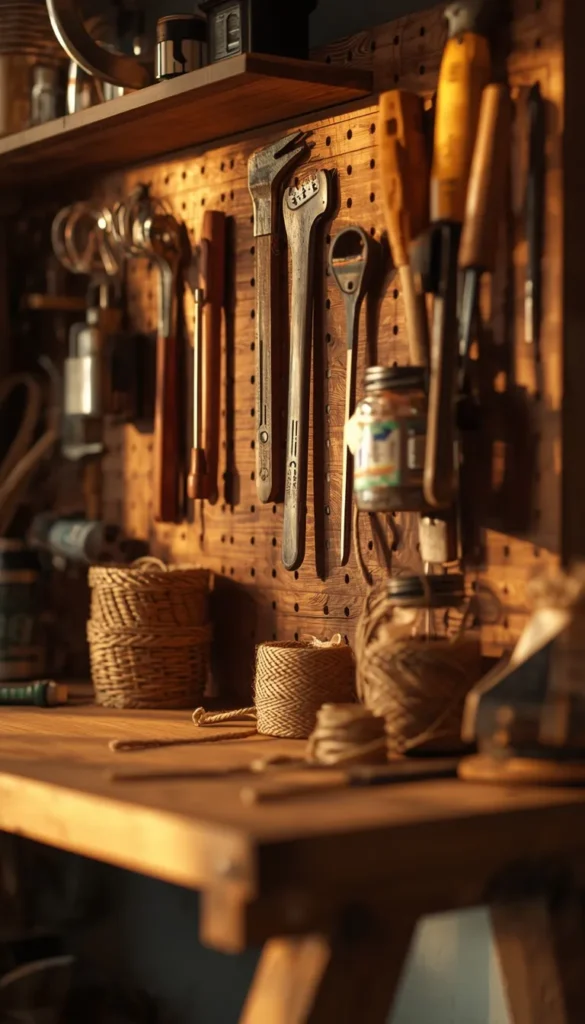
A pegboard workstation doesn’t need to be elaborate to earn its spot on the wall. Even a modest four foot section with a mix of hooks and small shelves can hold most of the hand tools and hardware a typical household reaches for. What I appreciate about pegboard specifically is how visible everything stays, so nothing gets buried in a drawer and forgotten about until you buy a replacement you didn’t actually need.
8. Use Cabinets to Hide the Less Attractive Items
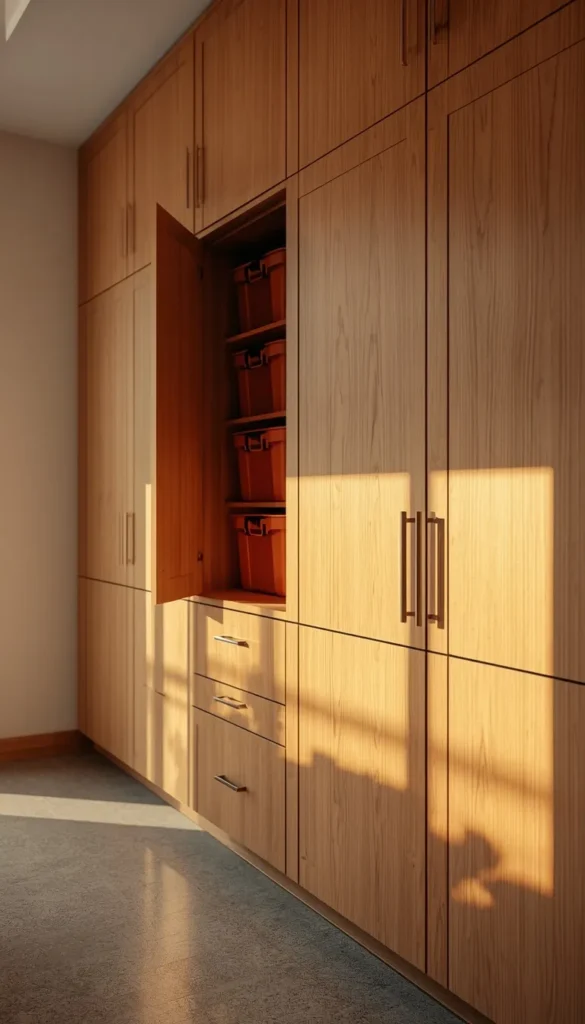
Open shelving is great for things you don’t mind seeing, but every garage has a category of stuff that just looks messy no matter how well you organize it. Think cleaning chemicals, half used bags of fertilizer, or random hardware you’re saving for a future project. Cabinets with doors solve this instantly, and if your garage door is up often, which it is in most neighborhoods I’ve worked in, that visual difference from the street or the driveway is bigger than people expect.
Are you more of a weekend fix person, or is your garage begging for the full investment?
9. Add a Rolling Cart for Cleaning Supplies
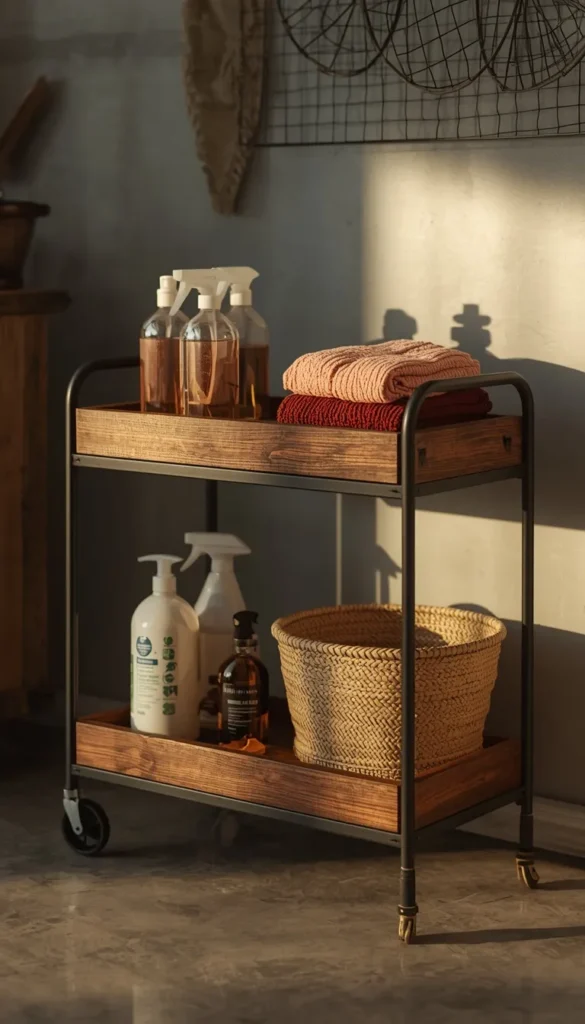
If your washer and dryer live in the garage, or you just keep your cleaning stash out there, a rolling cart is one of the simplest upgrades you can make. It lets you wheel everything straight from the garage to wherever you’re cleaning without making three trips. I’ve set these up in a handful of homes now, and the ones with kids especially love being able to grab the whole cart and go rather than digging through a shelf.
10. Fill Corners With Angled Shelving
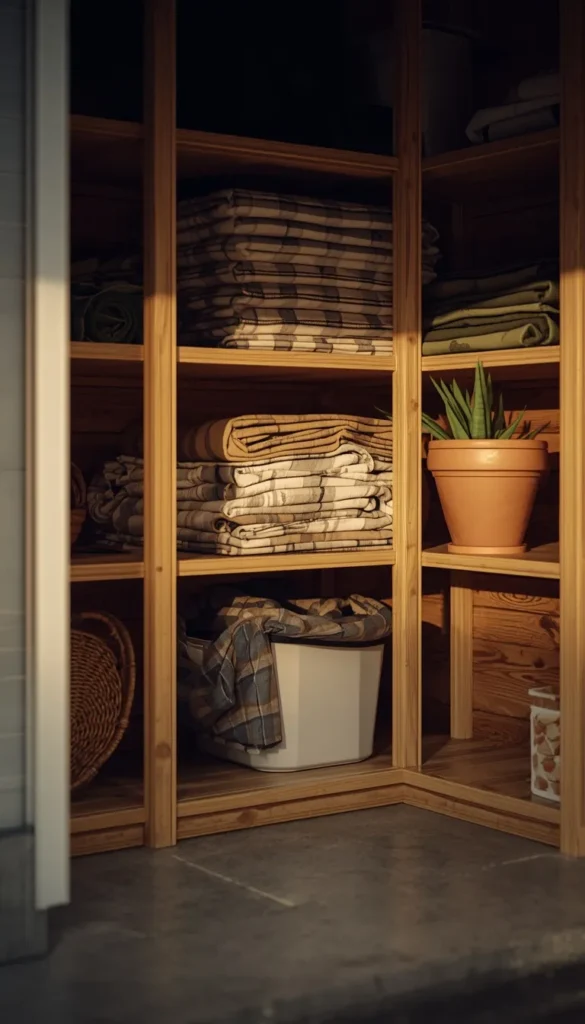
Corners are the most overlooked real estate in almost every garage I walk into. Standard shelving units leave that triangle of space empty because they’re built for straight walls, not corners. A corner unit, even a small one, can hold a surprising amount:
- Folded tarps or drop cloths
- Extra paper goods or bulk pantry overflow
- Smaller bins that don’t need daily access
It’s not glamorous, but it’s free square footage you’re already paying for.
11. Use the Space Above the Garage Door
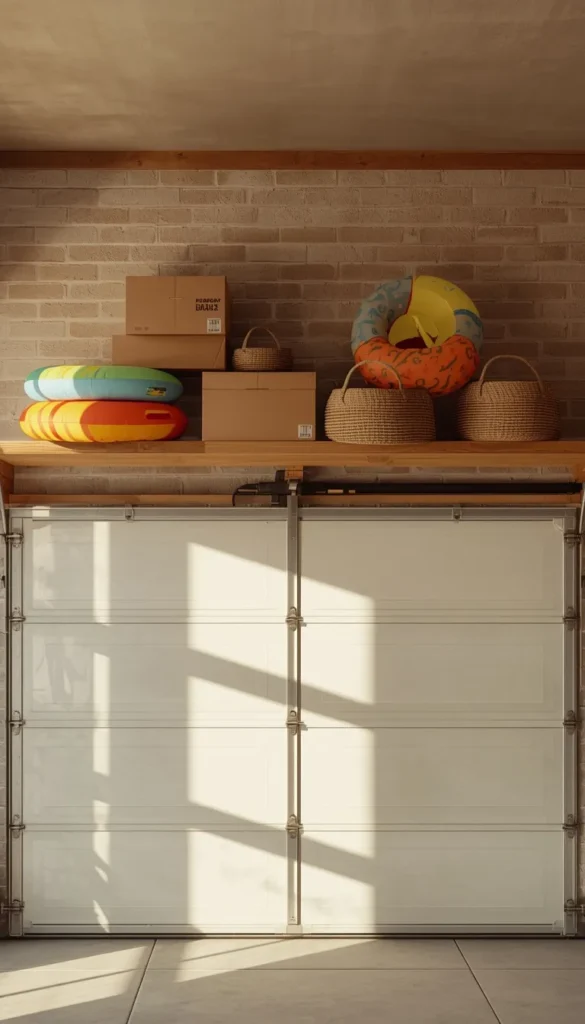
There’s almost always a stretch of wall above the garage door that goes completely unused, and it happens to be perfect for lightweight seasonal items you don’t need often. A single shelf up there can hold inflatable pool toys, empty planters, or flattened moving boxes you’re keeping just in case. One thing to watch out for is weight. That space is easy to reach with a ladder but not meant for anything heavy, so keep it to the lighter stuff.
12. Commit to Labeled, Stackable Bins by Category
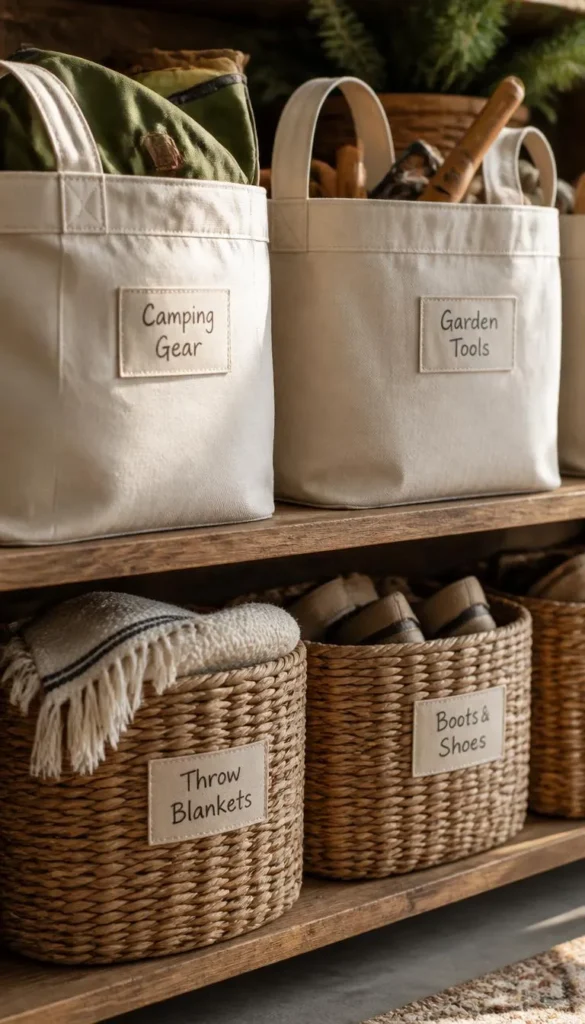
I know bins feel like an obvious tip, but the difference between bins that work and bins that quietly become clutter magnets comes down to two things: they’re labeled, and they’re grouped by actual category rather than just “stuff that didn’t have a home.” Once you label bins by what’s inside rather than vaguely by room or season, everyone in the house, not just the person who organized it, can find what they need and actually put it back.
If you could only fix one wall of your garage this month, which one would it be?
13. Mount Magnetic Strips for Quick Grab Tools
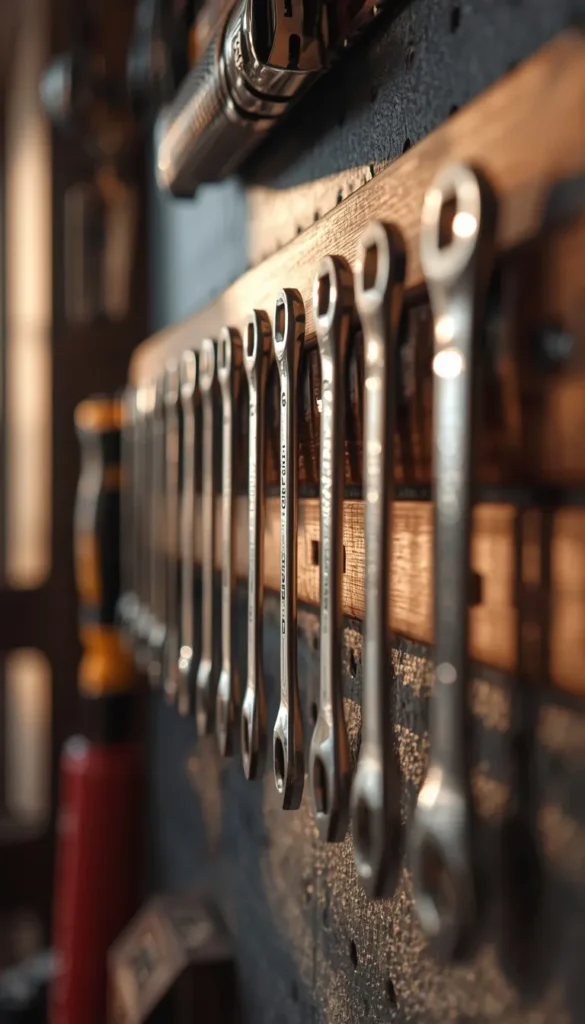
For the handful of tools you reach for constantly, a magnetic strip near your workbench or entry door beats digging through a toolbox every time. Screwdrivers, wrenches, utility knives, the stuff you use weekly rather than once a year, all sit right there in plain sight. It’s a small addition, but it’s one of those changes that makes daily use of the garage noticeably smoother.
14. Install a Fold Down Workbench
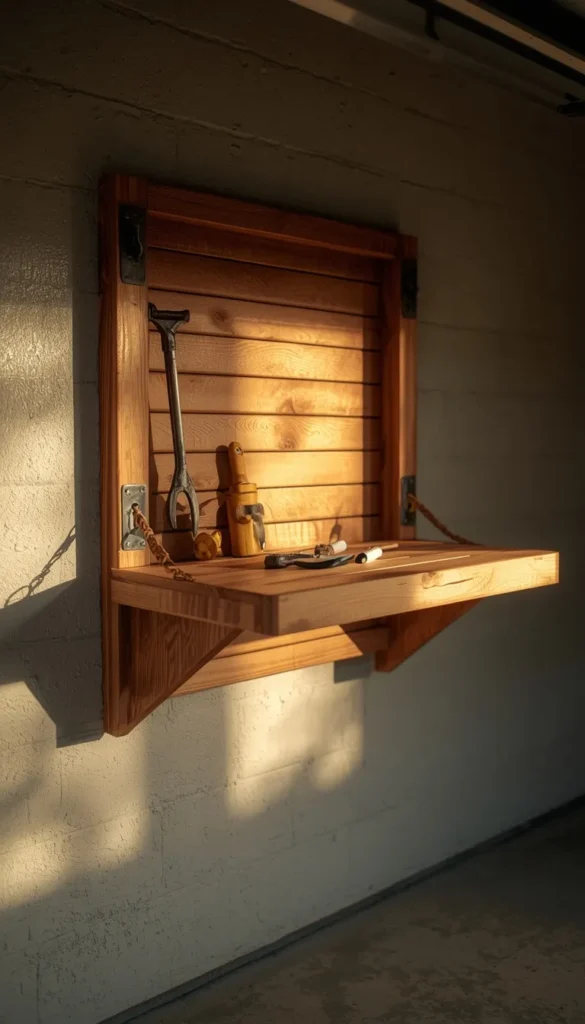
A full sized workbench is wonderful if you have the floor space to spare, but in a true two car garage, that space is usually the first thing you sacrifice. A fold down workbench gives you a real work surface when you need it and gives that width back to your car the rest of the time. I’ve had clients tell me the folding aspect actually improved their habits too, since putting tools away becomes part of folding the bench back up rather than an afterthought.
15. Add Locker Style Storage for Kids’ Gear
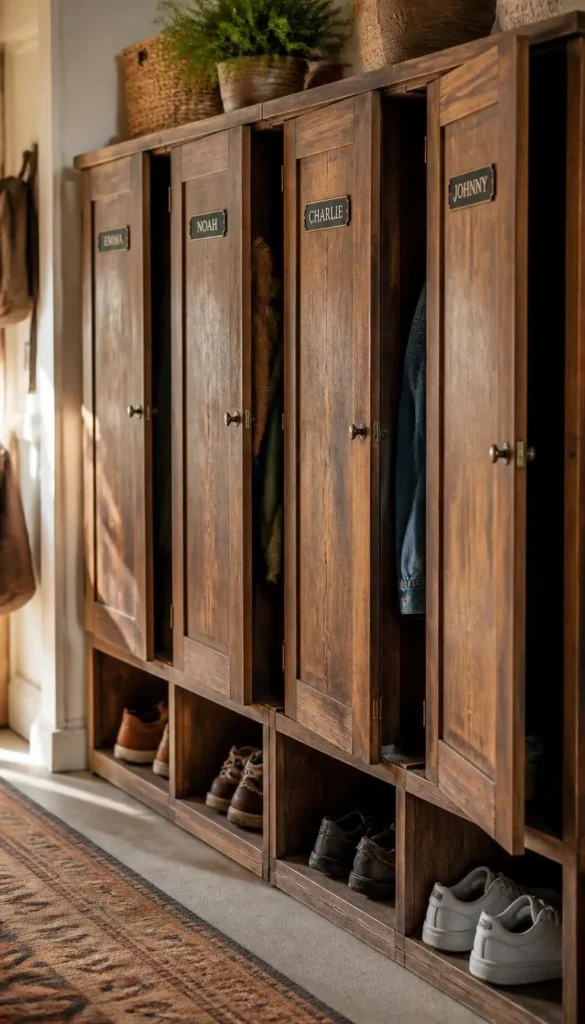
If you’ve got more than one kid, individual lockers or locker style cabinets solve the “whose backpack is this” problem before it starts. Each kid gets their own space for shoes, jackets, and gear, which means:
- Less mixing and searching between siblings
- A clear boundary of what belongs to whom
- An easier habit to enforce since the system is visual
It also just looks tidier than a shared pile ever will, even on the days nobody’s fully cooperating with putting things away.
16. Mount the Hose Reel and Yard Tools Near the Door
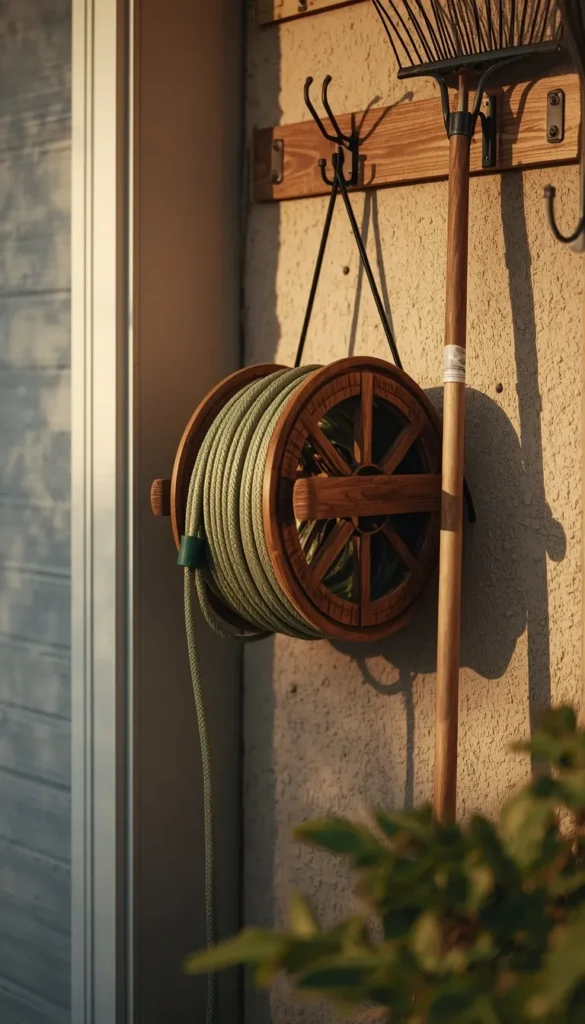
Whatever you reach for most when you’re doing yard work should live as close to the garage door as possible, full stop. A wall mounted hose reel keeps the hose from turning into a tangled mess on the floor, and nearby hooks for rakes, shovels, and trimmers mean you’re not walking to the back of the garage every time you need to do something outside. It sounds minor until you’ve actually lived with it set up this way. Then it’s hard to imagine going back.
Does your garage lean more toward the busy family setup, or is it crying out for a proper workbench?
17. Size Your Trash and Recycling Corral to the Space You Actually Have
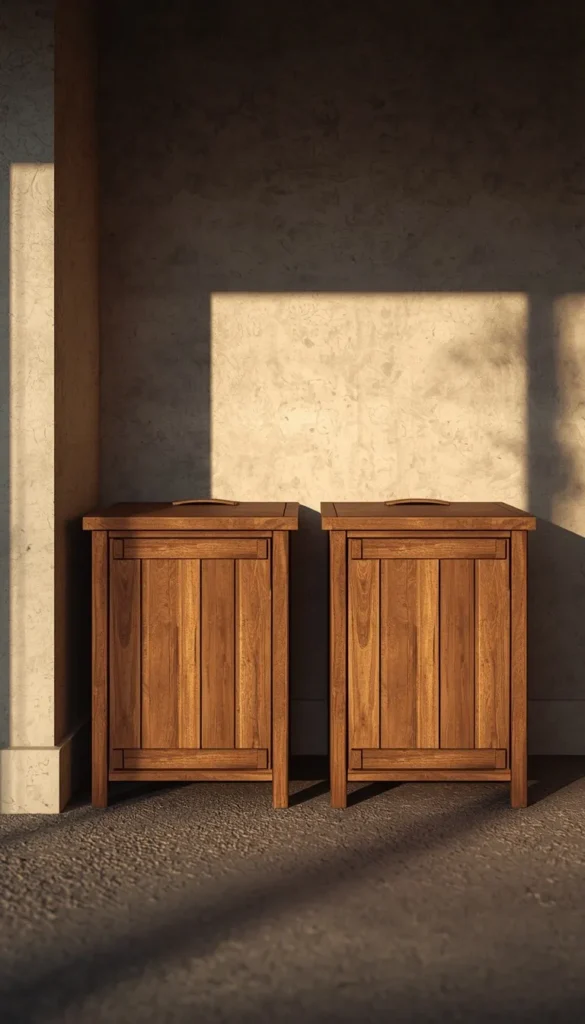
Round trash cans look fine in the store, but they take up more real width than most people expect once you try to fit two cars around them. Square or rectangular bins tuck against the wall far more efficiently and roll out to the curb just as easily. I’d rather see someone measure the exact width they have to work with on trash day before buying anything, because that fifteen minute check saves you from a return trip to the store later.
18. Finish the Floor With Epoxy or a Coated Surface
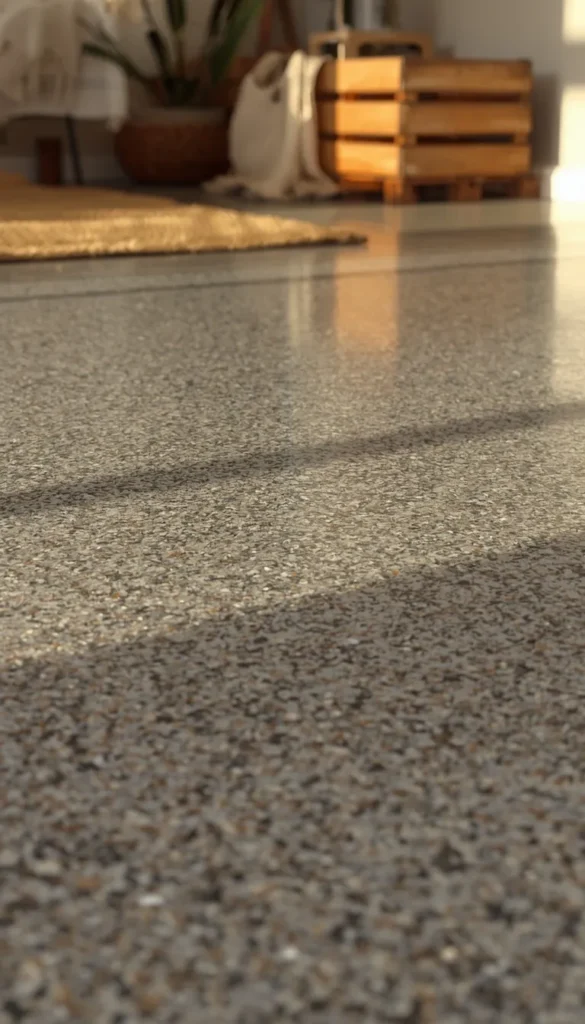
Once everything else is in place, the floor is what ties the whole space together. A coated or epoxy finish does more than look sharp. It smooths over cracks, makes spills easy to wipe up, and genuinely changes how the garage feels to walk into. My honest take is that most people underestimate this step because it’s not “storage” in the traditional sense, but a clean, finished floor makes every other system you’ve installed look more intentional and less like an afterthought.
Which Path Fits Your Garage?
By Budget
- Weekend Fix — pegboard, magnetic strips, a few wall hooks, and stackable bins. Most of this you can knock out in a Saturday without hiring anyone.
- Mid Range Upgrade — wall mounted shelving, a slatwall or track system, and a rolling cart. This is where most two car garages land, and it’s the sweet spot for value.
- Full Investment — custom cabinetry, epoxy flooring, and locker style storage. Best if you’re planning to stay in the home long term or you want the garage to feel like a finished room.
By Lifestyle
- Busy Families — drop zones for sports gear, locker storage for kids, and low shelving they can actually reach on their own.
- DIY and Project Lovers — fold down workbench, pegboard workstation, and magnetic tool strips near the action.
- Minimal Storage Needs — wall shelving, a few well placed hooks, and labeled bins. Skip the overhead racks if you’re not sitting on much seasonal gear.
- Tight on Space — corner shelving, vertical bike storage, and the zone above the garage door. Anything that gets bulk off the floor without adding footprint.
Frequently Asked Questions
How much clearance do I need between two cars in a garage?
Ideally, you want at least 36 inches on each side for comfortable door swing. Anything under 24 inches and you’ll be squeezing out of your car more often than not.
What is the cheapest way to organize a two car garage?
The average starting point is $200 to $500 using pegboard, hooks, and stackable bins. You can knock most of it out in a single weekend without hiring anyone.
Should I choose shelving or cabinets for garage storage?
It depends on what you’re storing and who sees your garage. Shelving is cheaper and faster, but cabinets hide clutter better if your garage door is up often.
How do I stop my garage from filling back up with clutter?
Assign every item a specific zone and label it. Once things have a home, they’re far more likely to actually go back there.
What is the average cost to fully organize a two car garage?
A mid range overhaul typically runs $1,500 to $4,000 depending on shelving, cabinets, and flooring. Full custom builds can climb past $5,000.
Conclusion
You don’t need to tackle all eighteen of these in one weekend, and honestly, I wouldn’t recommend it. Pick one zone, clear it out completely, and get one system in place before you move to the next. That single shelf or that one pegboard you finally hang up will change how it feels to walk into your garage every single day, and that adds up faster than people expect. Your garage is part of your home too, not just the place you drive through on the way inside, so give it the same care you’d give any other room. What’s the one corner of your garage that’s driving you the most crazy right now? Tell me in the comments, I’d love to help you figure out where to start.
