
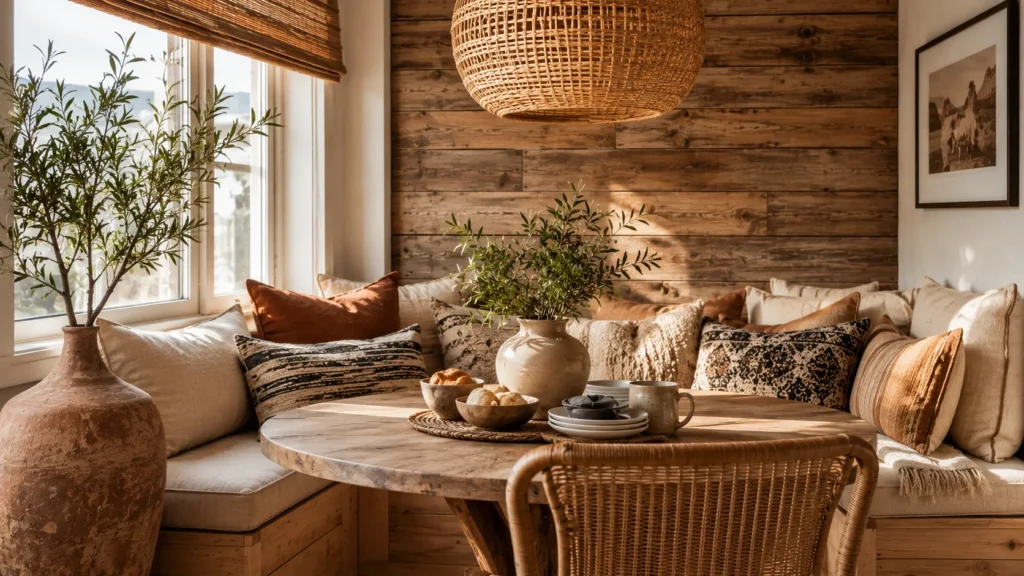
If you’ve ever stood in your kitchen wishing you had a cozy little corner to sit and eat breakfast without hauling in a full dining set, a banquette might be the answer you didn’t know you needed. I’ve walked into more cramped breakfast nooks than I can count, and nine times out of ten, a built-in bench solves the space problem better than any table-and-chairs combo ever could. The best part is you don’t need a contractor or a fat budget to pull this off. With a little plywood, some basic tools, and an afternoon or two, you can build something that looks custom made. Here are 18 DIY banquette seating ideas that actually work for small kitchens and breakfast nooks, plus a few things I’ve learned the hard way along the way.
My Design Notes
When I was working on a client project in a 1920s bungalow just outside Nashville, I ran into a problem I see all the time. The kitchen had this awkward, narrow breakfast nook that couldn’t fit a table and four chairs without someone bumping into the fridge every single time. My clients had a toddler, a dog, and a growing pile of board games and art supplies that kept taking over their hallway closet. I suggested a corner banquette with hidden storage underneath, and honestly, it solved two problems in one shot. We debated the fabric for weeks. They wanted a soft, breezy linen, but I pushed hard for a performance fabric instead once I found out about the dog and the inevitable juice spills. Six months later, my client texted me a photo of that bench still looking brand new, and I’ll admit, I felt pretty smug about it.
Stunning DIY Banquette Ideas to Elevate Your Breakfast Nook
1. IKEA Kallax Hack Banquette
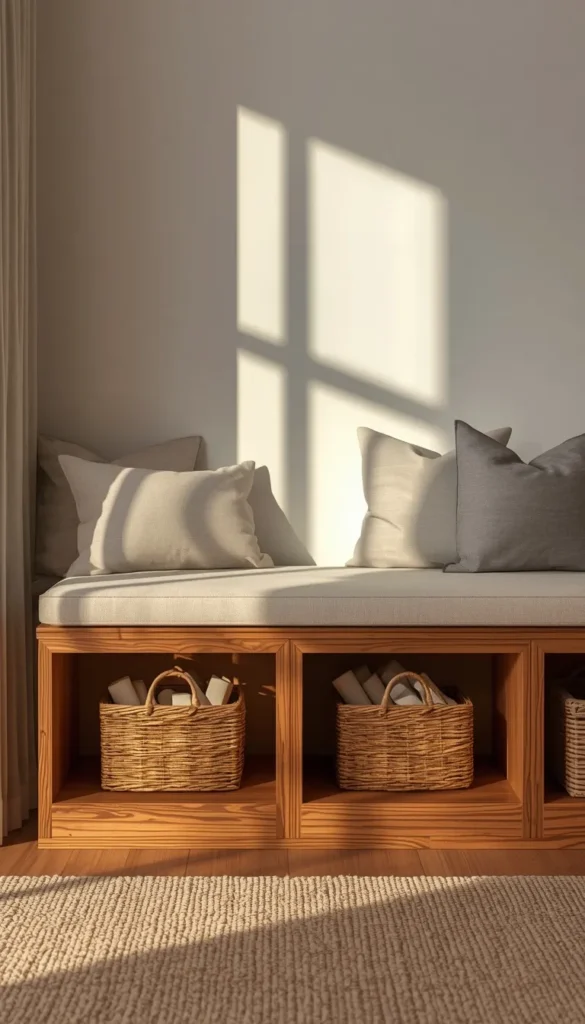
This is one of my favorite budget hacks and I recommend it constantly. You basically take two Kallax bookcases, lay them on their backs, and build a cushioned top over them. What you end up with is a bench that has built in storage cubbies facing into the room, so you can tuck away place mats, kids’ art supplies, or extra napkins without anyone seeing the clutter. A quick trick I’ve learned is to add piano hinges to the top so it opens like a lid instead, which gives you even more hidden storage underneath. Budget wise you’re looking at around $250 to $350 depending on the cushion fabric you choose, which is a fraction of what a custom built banquette would cost from a carpenter.
2. Thrifted Bench Reupholster Banquette
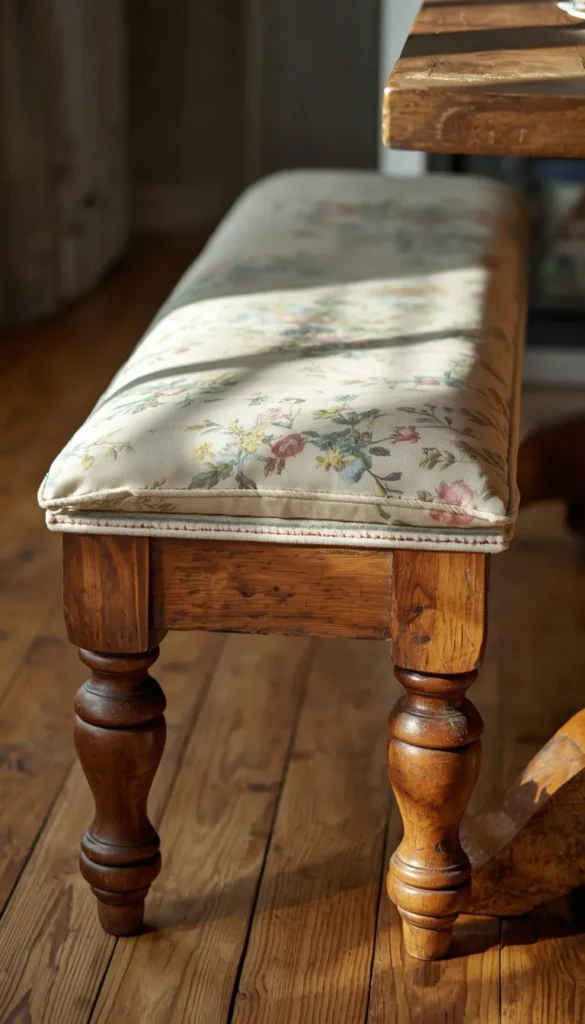
If you already own an old bench, or you find one secondhand, this might be the easiest entry point into banquette seating. I love this approach because it keeps a piece of furniture out of the landfill and gives it a whole new purpose in your kitchen.
- Strip the old fabric and batting down to the wood frame
- Add furniture legs if you need extra height for your table
- Rebuild the cushion with fresh foam, batting, and fabric
One thing to watch out for is that secondhand benches are rarely the exact length you need, so measure your space before you fall in love with one on Facebook Marketplace.
3. Simple 2×4 and Plywood Built In Frame
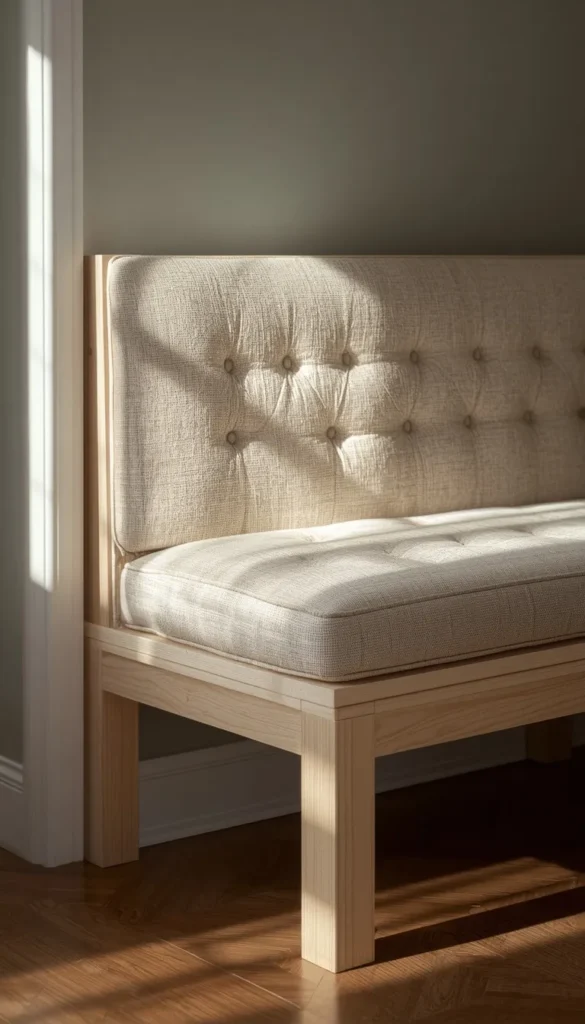
Sometimes the most straightforward option really is the best one. Building a frame out of basic 2x4s and plywood gives you complete control over the height, depth, and shape of your banquette. This is the method I go back to when a client wants something that looks truly custom rather than hacked together from existing furniture. You screw the 2x4s into the wall studs for the backrest support, attach a plywood seat and back panel, then layer foam, batting, and fabric on top just like you would with any upholstery project. It takes a bit more carpentry confidence than the other methods on this list, but the payoff is a bench that fits your exact space down to the inch.
4. L Shaped Corner Banquette for Small Kitchens
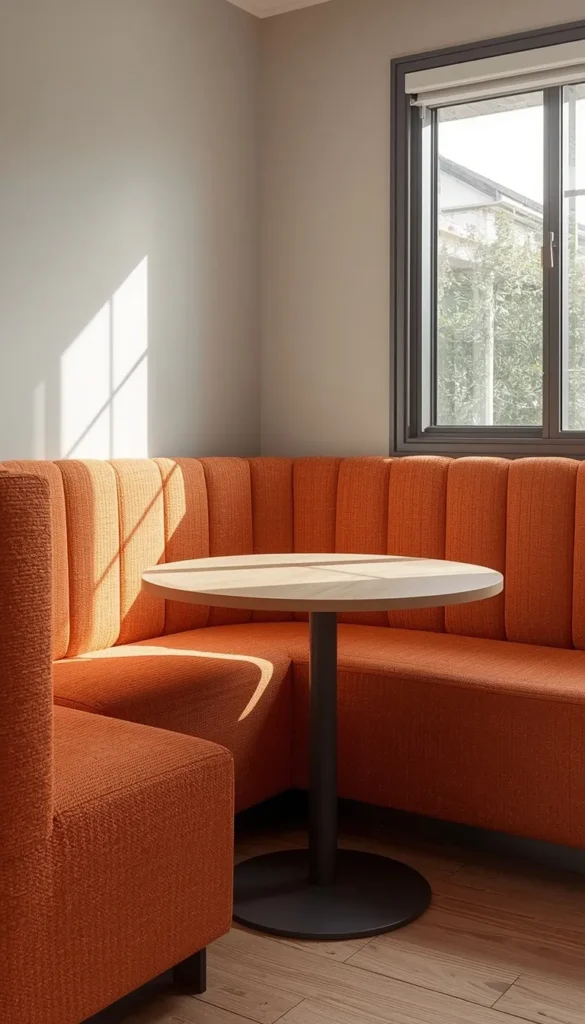
Corner banquettes are my go to recommendation for narrow or awkward shaped kitchens because they make use of a corner that would otherwise sit empty. My clients are always surprised by how much seating you can squeeze into a tight L shape once the bench wraps around two walls instead of sitting flat against one. A round or oval table tends to work better than a rectangular one here since it keeps the flow open and nobody feels boxed in when getting up. If you’re building this yourself, plan for a support bracket in the corner itself, since that’s the spot most likely to sag over time without extra reinforcement underneath.
Which of these 18 ideas would actually fit that awkward corner in your kitchen right now?
5. U Shaped Banquette for Larger Nooks
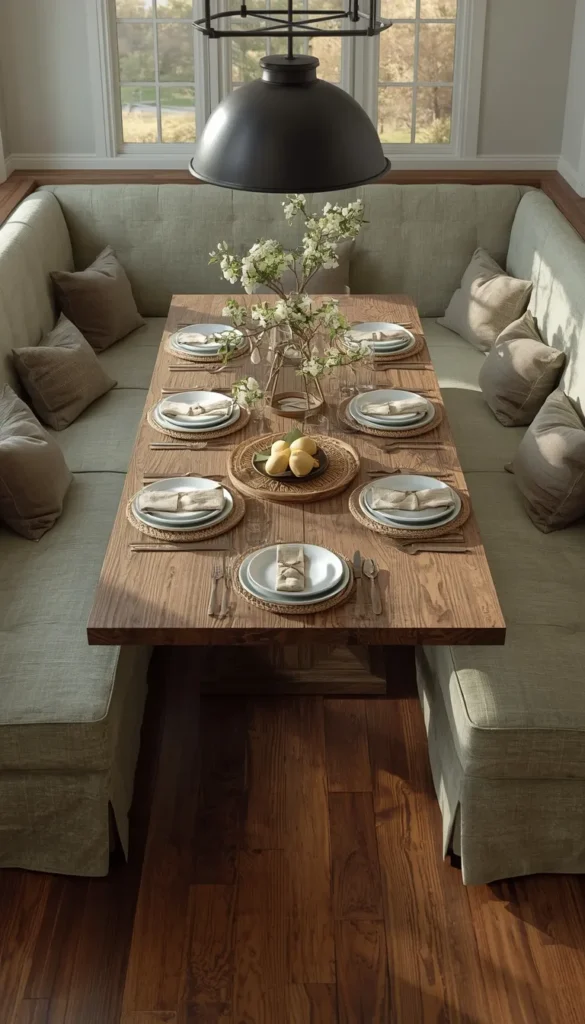
If you’ve got a bigger breakfast nook, a U shaped banquette turns the whole area into something that feels almost like a restaurant booth. I’ve used this layout in a few larger farmhouse kitchens and it always becomes the spot where everyone ends up gathering, even during parties when there’s plenty of other seating around. The wraparound shape means you can seat six or more people comfortably without anyone needing to squeeze past chairs. One thing worth planning ahead for is your table shape and size, since a U bench really only works well with a table that’s proportional to the opening, otherwise the middle seats become hard to reach.
6. Floating or Wall Mounted Backrest Banquette
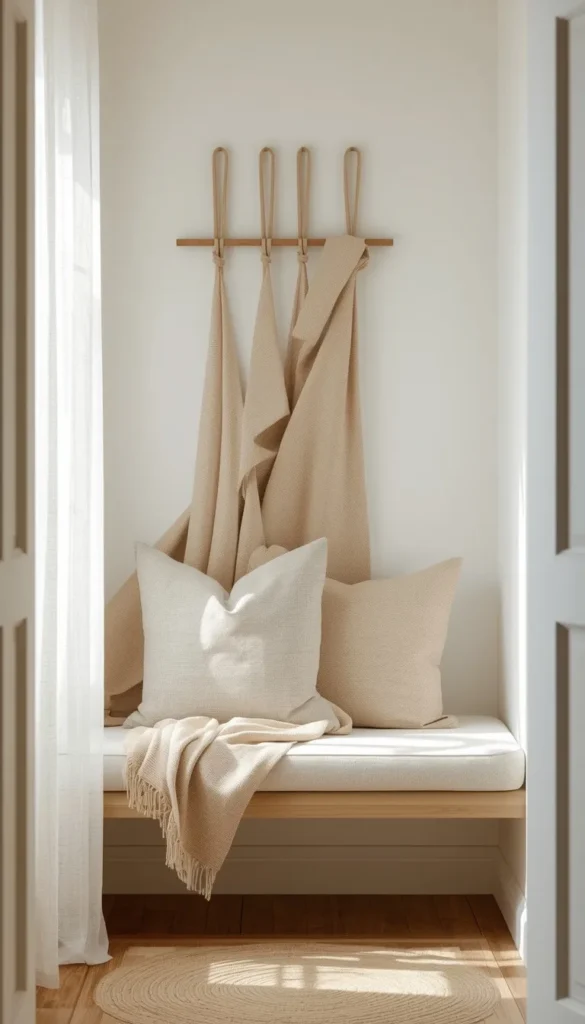
This is a clever workaround if you don’t want the bulk of a fully upholstered backrest taking up visual space. Instead of building a padded frame, you mount a slim wooden bar or bracket to the wall and attach fabric loops or straps that hold up individual cushions.
- It keeps the design feeling airy and open
- It’s easier to swap out cushions when you want a refresh
- It works well in smaller nooks where every inch of visual space matters
I first saw this done in a coastal style kitchen and it gave the whole room a lighter, less boxy feeling compared to a traditional built in.
Top 6 diy banquette seating ideas
| Idea | Estimated Price | Maintenance |
|---|---|---|
| IKEA Kallax Hack Banquette | $250 to $350 | Low |
| Thrifted Bench Reupholster | $100 to $250 | Medium |
| Simple 2×4 and Plywood Frame | $300 to $600 | Low |
| L Shaped Corner Banquette | $400 to $800 | Low |
| Banquette with Hidden Under Seat Storage | $350 to $700 | Medium |
| Pet Friendly Performance Fabric Banquette | $500 to $900 | Low |
7. Banquette with Hidden Under Seat Storage
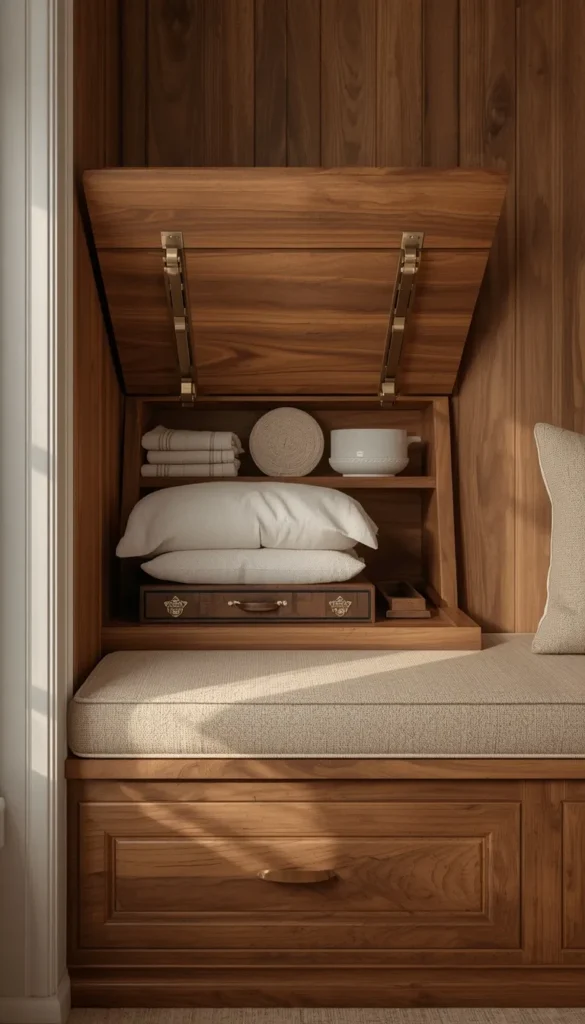
Storage is honestly the number one reason most of my clients ask for a banquette in the first place, especially in older homes where kitchen cabinetry tends to run short. Building a hinged lid into your seat lets you tuck away everything from board games to extra linens without it ever being visible. A quick trick I’ve learned is to use piano hinges rather than standard door hinges, since they distribute weight more evenly across the whole seat and hold up better over years of daily use. Just make sure whatever you’re storing underneath isn’t something you need on a daily basis, since lifting a cushion and a lid every time gets old fast.
8. Banquette with Open Shelving Base
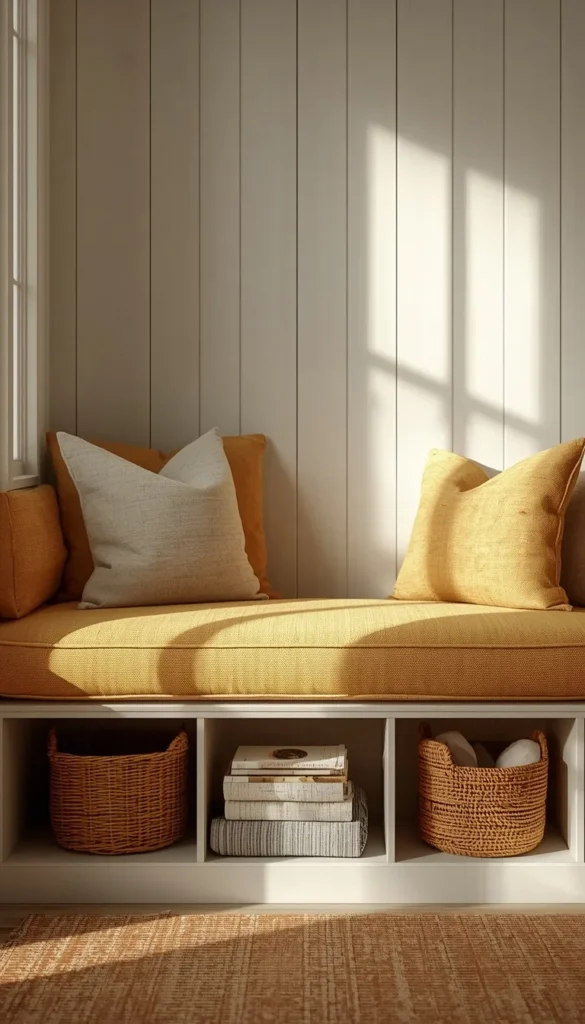
If hinges and lids feel like more carpentry than you want to take on, open shelving underneath your bench is a simpler alternative that still adds function. You lose a bit of the polished, hidden look, but you gain easy access to baskets, cookbooks, or bins without any moving parts to worry about. This tends to work best in more casual or farmhouse style kitchens where a little visible texture and clutter actually fits the vibe rather than fighting against it.
Are you more of a weekend DIY builder, or would you rather hire this one out?
9. Window Seat Banquette
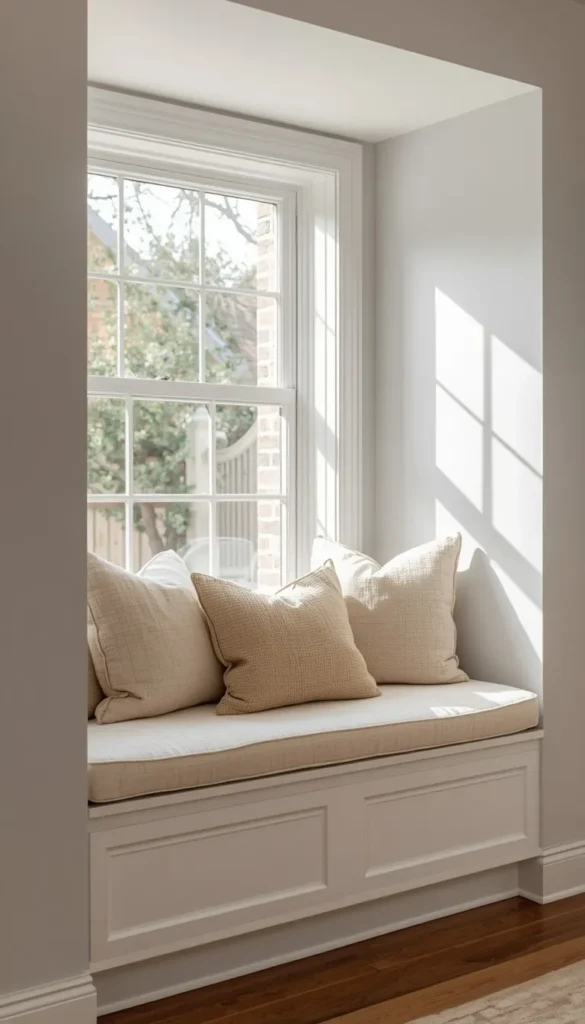
There’s something about a banquette tucked under a window that instantly makes a breakfast nook feel like the best seat in the house. I always tell clients that natural light does half the design work for you here, so keep window treatments minimal or skip them entirely if privacy allows. Building the bench to fit snugly beneath the window sill creates a built in look even if the rest of your kitchen is fairly simple. If your window has a deep sill, you can even skip a separate backrest and let the wall itself do double duty, which saves both money and space.
10. Farmhouse Style Banquette
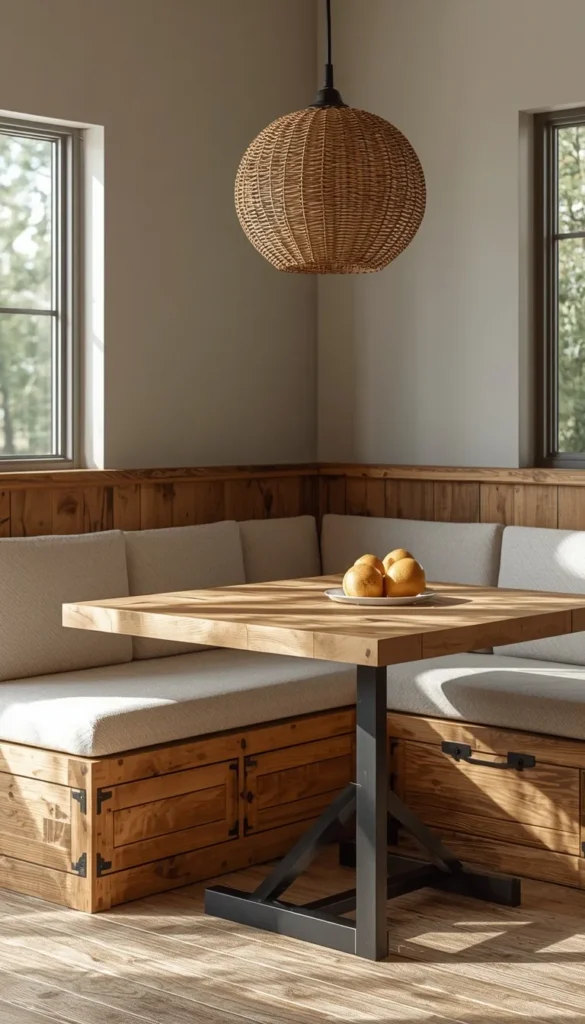
Warm wood tones, simple lines, and a slightly worn in feel define this look, and it remains one of the most requested styles I work with across the country. A natural wood finish on the bench frame paired with a linen or cotton cushion in a soft neutral keeps things feeling collected rather than overly polished.
- Pair with a vintage or reclaimed wood table for authenticity
- Add a woven pendant light overhead to tie the materials together
- Keep hardware simple, like black iron hooks or pulls if storage is visible
This style ages beautifully too, since the imperfections that come with natural wood only add character over time instead of looking dated.
11. Modern Minimalist Banquette
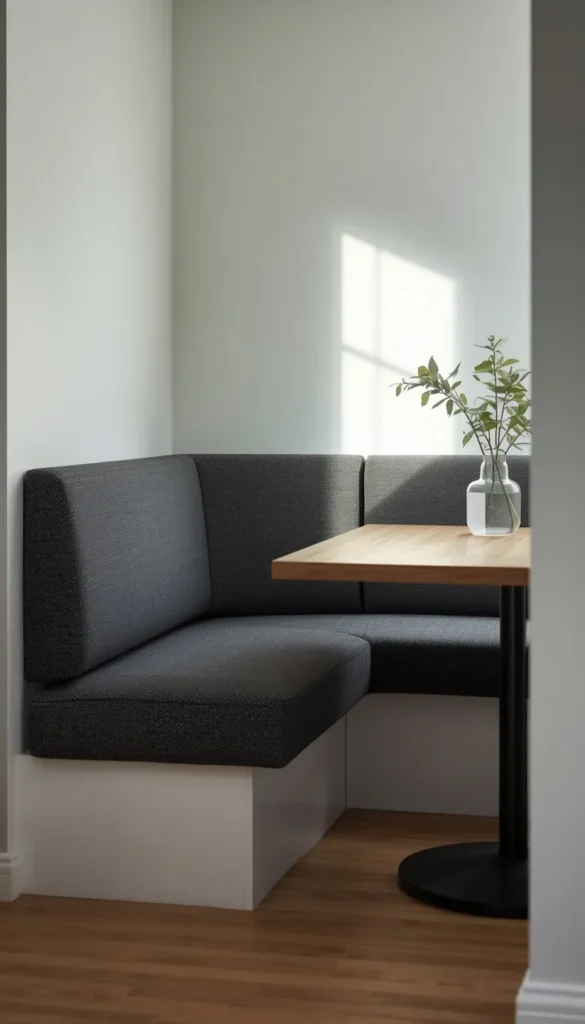
For clients who want their kitchen to feel calm and uncluttered, a minimalist banquette with clean geometric lines and a monochrome palette does a lot of heavy lifting. I usually recommend sticking to one or two colors total, including the cushion, walls, and table, so nothing competes for attention. A simple boxy frame without a fussy backrest or piping tends to read as more modern than anything with ruffles or curves. The tradeoff is that this style shows wear a little more visibly than a busier pattern would, so factor that into your fabric choice if you’re going this route.
12. Coastal or Cottage Banquette
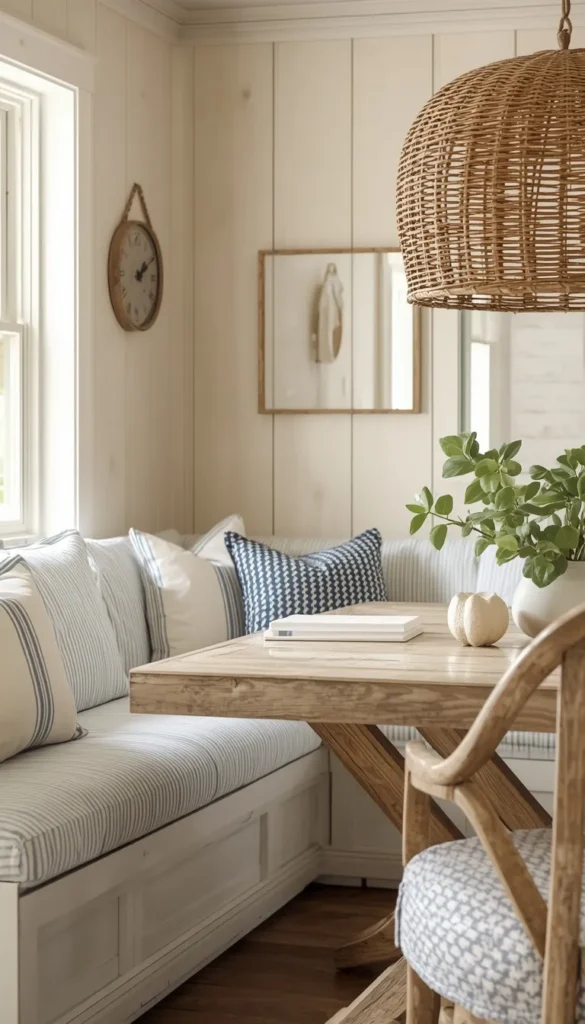
Light woods, soft blues and whites, and a slightly relaxed, lived in feeling define this style, and it’s one of my favorites for beach adjacent homes or anyone who just wants their kitchen to feel like a permanent vacation. Slipcovered cushions work particularly well here since they’re easy to remove and wash, which matters if your home sees a lot of sandy feet or wet swimsuits. A woven or rattan pendant light and a distressed wood table finish this look off nicely without it tipping into anything too theme heavy or costume like.
If storage is your biggest struggle, would you go with a hinged lid or open shelving underneath?
13. Moody or Dark Academia Banquette
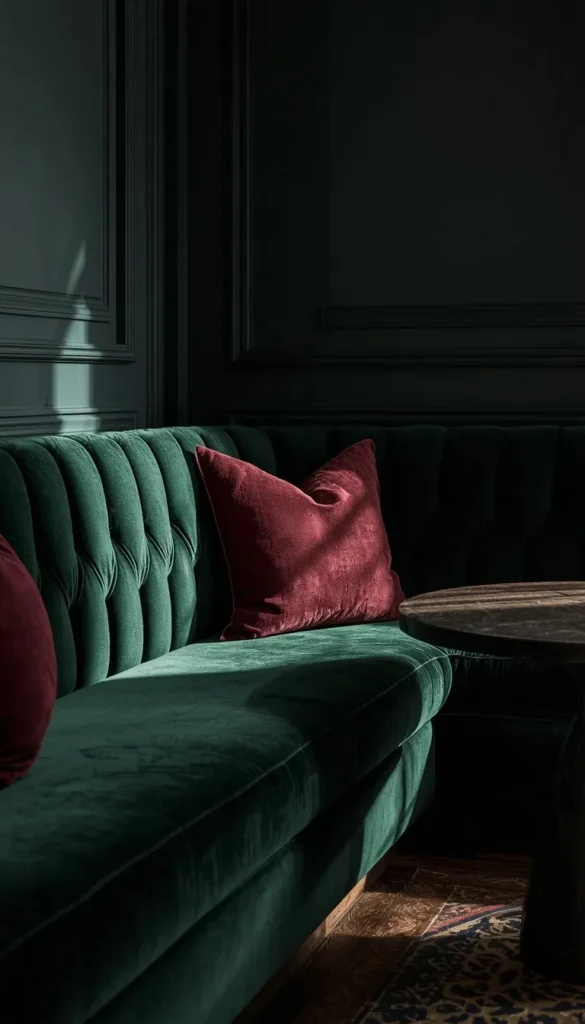
Not every banquette needs to be bright and airy, and honestly some of the most striking ones I’ve designed lean into deep, moody tones instead. Think forest green velvet, deep navy, or even a rich burgundy paired against dark painted walls or a dramatic wallpaper. This style photographs beautifully and gives a small nook a sense of coziness that a bright white kitchen sometimes lacks. My honest take is that darker upholstery actually hides everyday stains and crumbs better than pale fabrics do, which makes it a surprisingly practical choice for families despite how dramatic it looks.
14. Small Space Studio Apartment Banquette
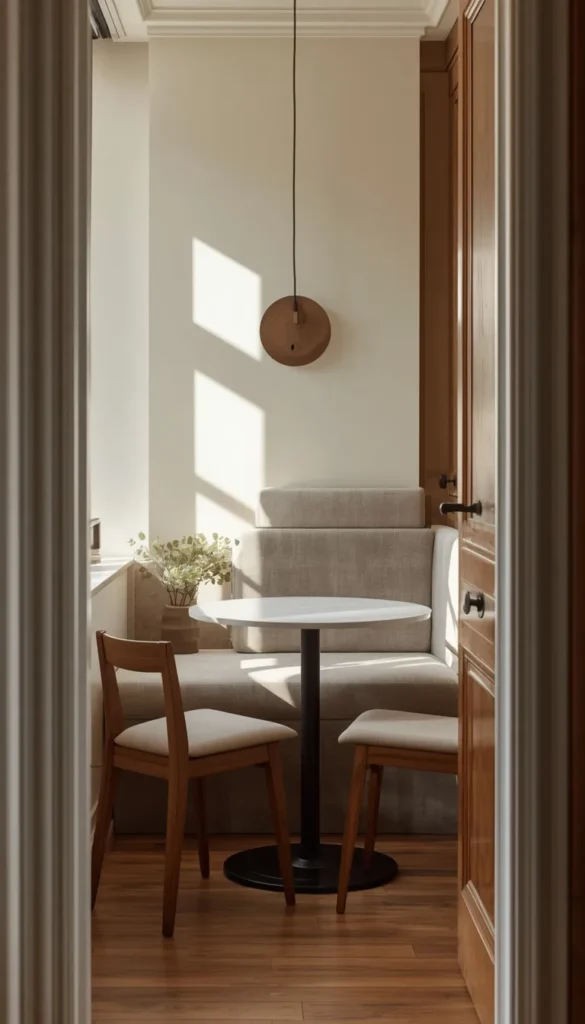
You don’t need a dedicated breakfast nook to make this work. A single straight bench pushed against one wall, paired with a small bistro table and a couple of chairs on the opposite side, can turn even a tiny studio kitchen corner into a real eating area.
- Choose a bench under 48 inches to fit tight footprints
- Skip the backrest and use a wall mounted cushion instead to save inches
- A round table opens up walking space better than a square one
This is the setup I recommend most often for city apartments where every square foot has to earn its keep.
15. Renter Friendly Freestanding Banquette
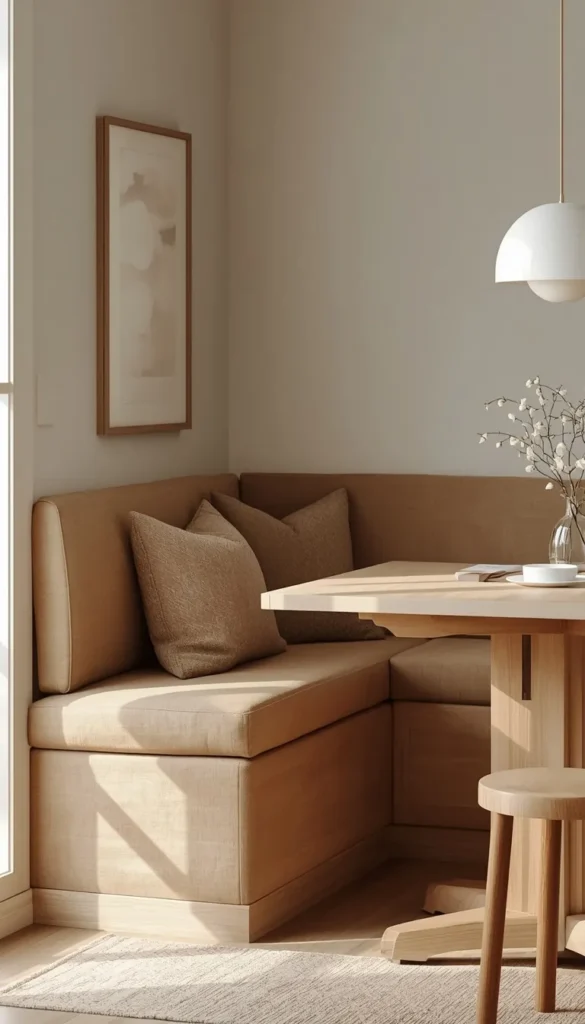
If drilling into walls or leaving behind mounting holes isn’t an option, a freestanding banquette bench is the way to go. You can buy one ready made or build a simple standalone box frame that never touches the wall at all, just push it into place and add a table. It won’t have quite the built in look of a permanent installation, but it gets you 90 percent of the way there without risking your security deposit. When you eventually move, the bench comes right along with you, which is honestly a nice bonus most renters don’t think about until moving day.
16. Banquette with Ruffled or Skirted Base
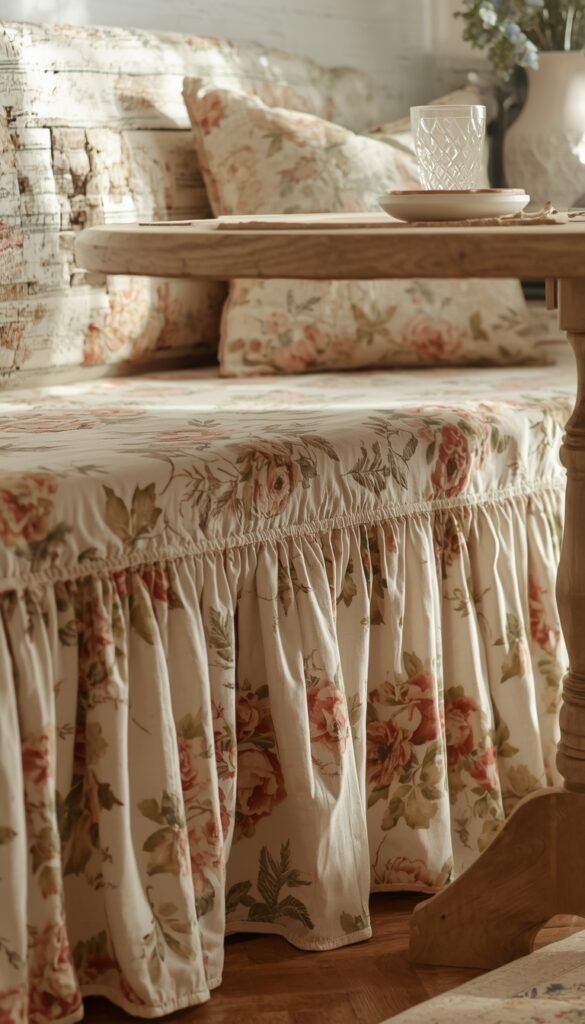
This is a detail that instantly adds a softer, more romantic feel to an otherwise simple bench. Instead of a hard wood or painted base, you staple a gathered fabric skirt around the bottom edge, which hides the frame entirely and gives the whole piece a custom, tailored look. I’ve seen this done beautifully in cottage style kitchens where the ruffle picks up a color from the wallpaper or curtains. A quick trick I’ve learned is to use a hem tape along the raw edge before stapling, since it keeps the fabric from fraying over time as people brush past it while sitting down or getting up.
Does your kitchen lean more farmhouse, modern, or coastal, and did that style make the list?
17. Banquette with Bolster Pillow Backrest
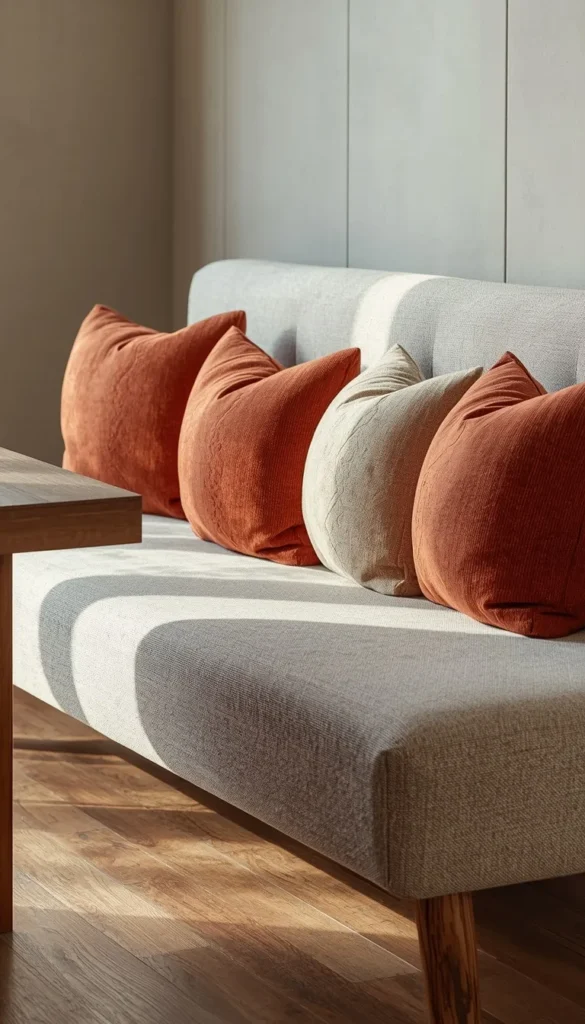
If building a fully upholstered backrest feels like too much for your first DIY project, bolster pillows are a simple workaround that still looks intentional. You skip the padded wall panel entirely and instead line the back edge of the bench with a row of matching or coordinating bolster cushions. It’s a soft landing for anyone new to upholstery work since there’s no batting or stapling involved at all. I like this option for renters too, since the pillows can move with you and nothing gets permanently attached to the wall.
18. Pet Friendly Performance Fabric Banquette
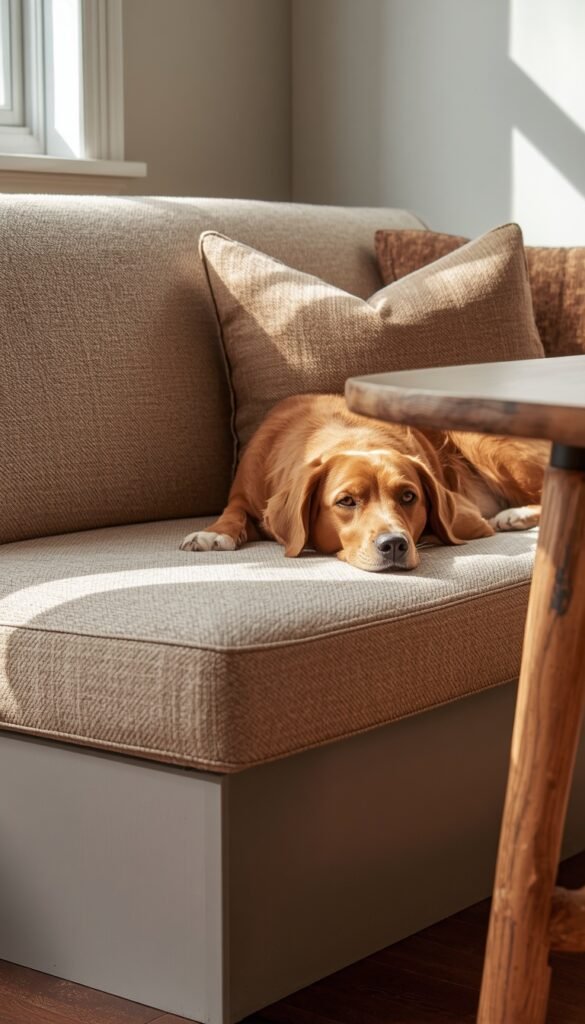
This one comes straight from personal experience with more than one client, and it’s honestly the upgrade I push hardest for these days. Performance fabrics like Sunbrella or Crypton are designed to resist stains, moisture, and general wear in a way that regular linen or cotton just can’t compete with.
- They wipe clean with just water in most cases
- They hold up against dog hair, drool, and muddy paws
- They still come in soft, high end looking textures despite being so practical
A quick trick I’ve learned is to always order a fabric sample before committing to yardage, since performance fabrics can feel slightly different in person than they look online. It’s a small step that saves a lot of regret later.
Which Banquette Fits Your Kitchen?
By Budget
Starter Build
- IKEA Kallax Hack Banquette
- Thrifted Bench Reupholster
- Renter Friendly Freestanding Banquette
Investment Build
- L Shaped or U Shaped Corner Banquette
- Simple 2×4 and Plywood Custom Frame
- Pet Friendly Performance Fabric Banquette
By Lifestyle
Busy Families
- Banquette with Hidden Under Seat Storage
- Pet Friendly Performance Fabric Banquette
- U Shaped Banquette for Larger Nooks
Small Space Dwellers
- Small Space Studio Apartment Banquette
- Floating or Wall Mounted Backrest Banquette
- Renter Friendly Freestanding Banquette
Style First Homeowners
- Farmhouse Style Banquette
- Moody or Dark Academia Banquette
- Banquette with Ruffled or Skirted Base
Frequently Asked Questions
How much does it cost to build a DIY banquette seating?
Most DIY banquette projects run between 250 and 800 dollars depending on materials and storage features. IKEA hacks land on the lower end, while custom plywood builds with upholstery cost more.
What is the ideal seat depth for banquette seating?
Ideally, you should aim for 18 to 20 inches of seat depth for comfortable dining. Anything shallower feels cramped, and anything deeper makes it awkward to sit upright at the table.
Can I build a banquette without drilling into the wall?
Yes, a freestanding banquette works great if you’re renting or don’t want permanent changes. Just push it flush against the wall and add a table, no anchoring required.
What is the best fabric for a banquette with kids or pets?
Performance fabrics like Sunbrella or Crypton are your best bet here. They resist stains and wipe clean easily, which regular cotton or linen simply can’t handle long term.
How tall should a banquette bench be for a standard table?
The standard bench height is 18 inches to match most dining tables comfortably. Adding a cushion typically brings it close to 19 inches, so measure your table height first before building.
Conclusion
Your kitchen doesn’t need a full renovation to feel like your favorite room in the house. Sometimes it just takes one cozy corner where your family actually wants to sit and linger over coffee instead of eating standing up at the counter. Pick one idea from this list that felt right to you, grab a fabric sample or measure your nook this weekend, and see where it takes you. Small changes like this are how a house slowly turns into a home you’re proud of. So tell me, which banquette style are you leaning toward for your space?
