
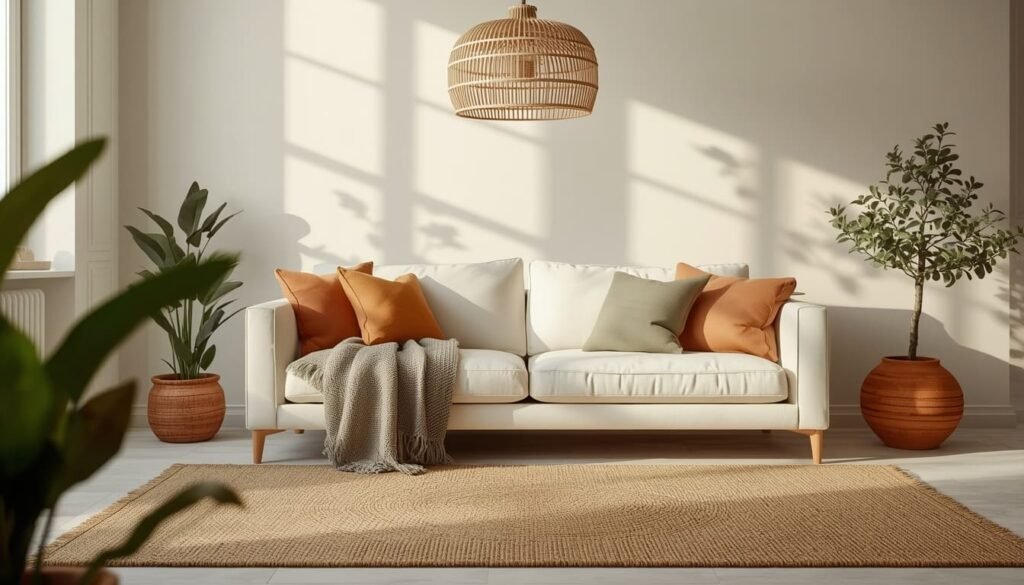
There’s a reason Scandi Boho living rooms feel like a deep exhale the moment you walk in. This style takes Scandinavian minimalism clean lines, neutral foundations, that obsession with natural light and softens it with the warmth, texture, and free spirited layering of bohemian design. The result is a living room that looks effortlessly curated but actually lives like your coziest sweater. I’ve pulled together 24 of my favorite ideas, from budget friendly fixes to intentional design moves, so you can build a space that genuinely feels like you.
My Design Notes
Last spring, I worked with a couple in Austin, Texas who had just moved into a 700 sq ft rental apartment. White walls they couldn’t paint, cold builder grade tile floors, and a $600 total budget. They wanted something warm and collected not a catalog page, but an actual home. We layered a jute rug over that cold tile, hung IKEA linen curtains high and wide to fake taller ceilings, and tracked down a gorgeous mid century sofa on Facebook Marketplace for $120. I added clusters of pothos plants in mismatched terracotta pots, a few thrifted ceramic vases, and a secondhand rattan floor lamp. Three weeks after we finished, they told me every single guest asked if they’d hired a professional designer. That project is honestly what made me fall in love with this style all over again.
Mastering the Art of Cozy Scandinavian Boho Decor for an Effortlessly Relaxed Living Room
1. What Is Scandi Boho, Really
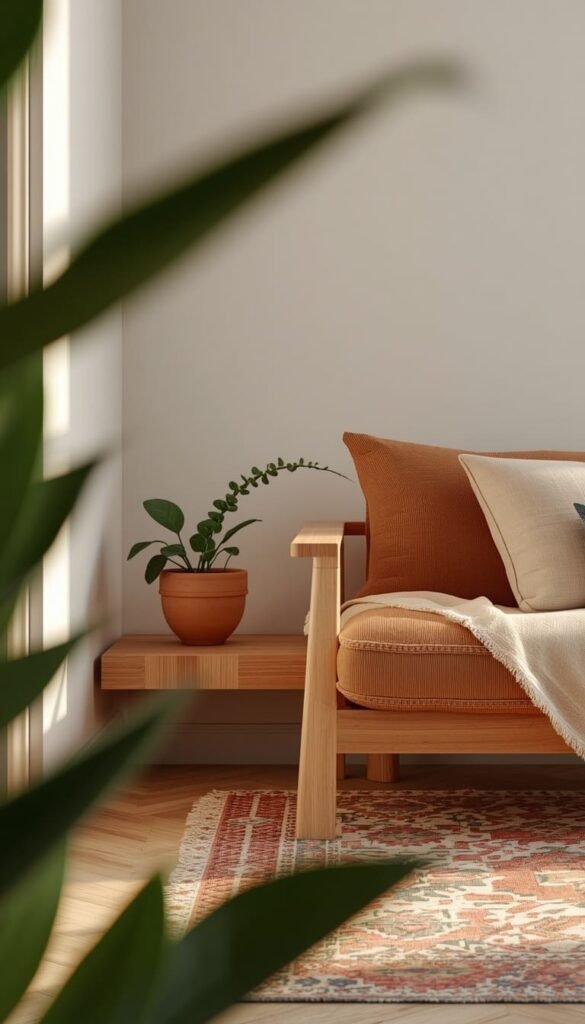
Scandi Boho is what happens when two seemingly opposite design philosophies decide they actually like each other. Scandinavian design brings the discipline neutral palettes, clean lined furniture, a deep respect for natural light and negative space. Bohemian design brings the soul layered textiles, global finds, plants everywhere, and an unapologetic love of personality. Together, they create something that feels both restful and alive.
In American homes, this style translates beautifully because it’s incredibly forgiving. You don’t need a perfectly renovated space or a massive budget. What you need is an eye for texture, a willingness to mix old with new, and a genuine comfort with leaving things a little undone. That “lived-in” quality? That’s not an accident. That’s the whole point.
2. The Core Color Formula Neutrals as Your Canvas
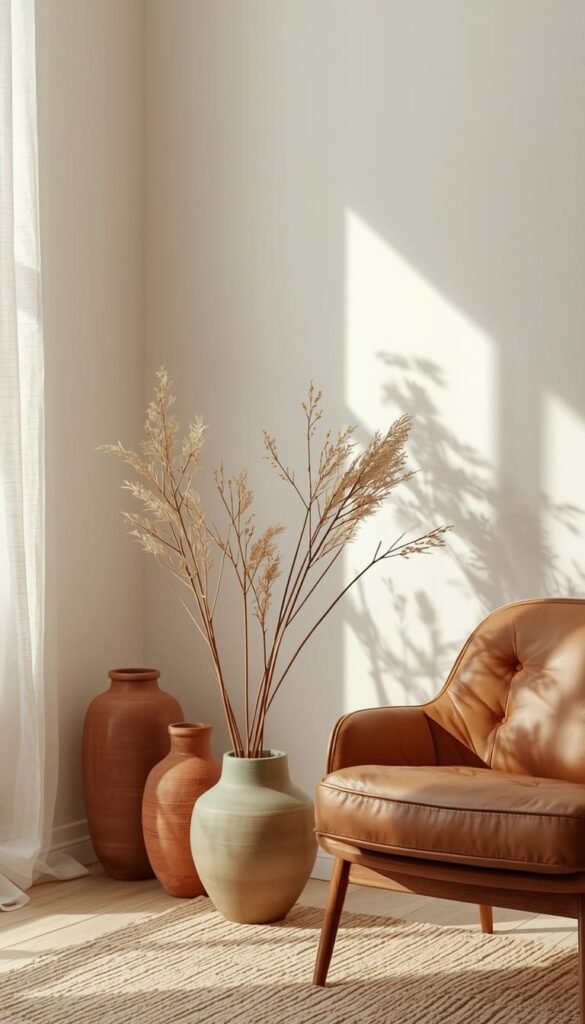
If there’s one thing I always tell clients before we touch a single piece of furniture, it’s this get your neutrals right first, and everything else becomes easier. In Scandi Boho interiors, the wall color is never the star. It’s the supporting cast that makes everything else shine.
Stick to warm whites, soft creams, greige, and oat tones on your walls. Think Benjamin Moore’s “White Dove,” Sherwin Williams “Accessible Beige,” or even a warm greige like “Agreeable Gray.” These shades create that airy Scandinavian base without feeling cold or sterile. Then and this is where the boho magic comes in you bring the color through:
- Terracotta and rust in your throw pillows or ceramics
- Dusty sage or olive in your plants and planters
- Warm caramel and cognac in leather or wood accents
One thing to watch out for is going too cool with your whites. A stark, blue toned white wall kills the warmth this style depends on entirely.
3. Why This Style Works in Almost Every American Home
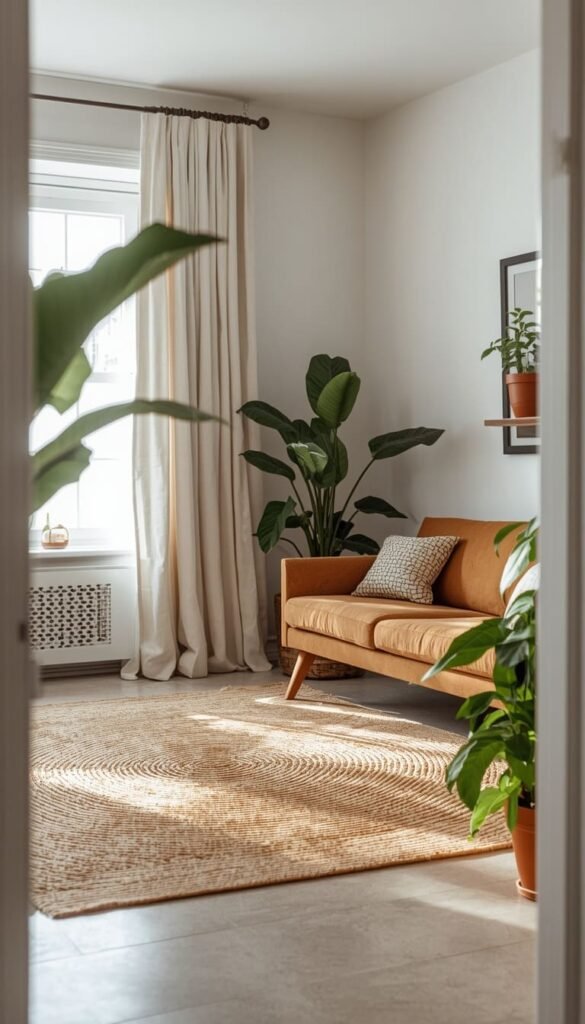
This is genuinely one of the most adaptable design styles I’ve worked with across different American homes and I’ve applied it in everything from a narrow Brooklyn apartment to a sprawling open plan ranch home in Colorado. The beauty of Scandi Boho is that it doesn’t demand perfection from your architecture.
Popcorn ceilings? Layer in enough texture at eye level and nobody looks up. Builder-grade flooring? A well chosen jute rug changes the entire energy of a room. Can’t paint your rental walls? Tall linen curtains and a gallery wall do more heavy lifting than most people realize. This style is also deeply practical for American family living it’s casual enough for kids and pets, but intentional enough to feel designed.
4. Start With One Clean Lined Sofa (The Anchor Piece Rule)
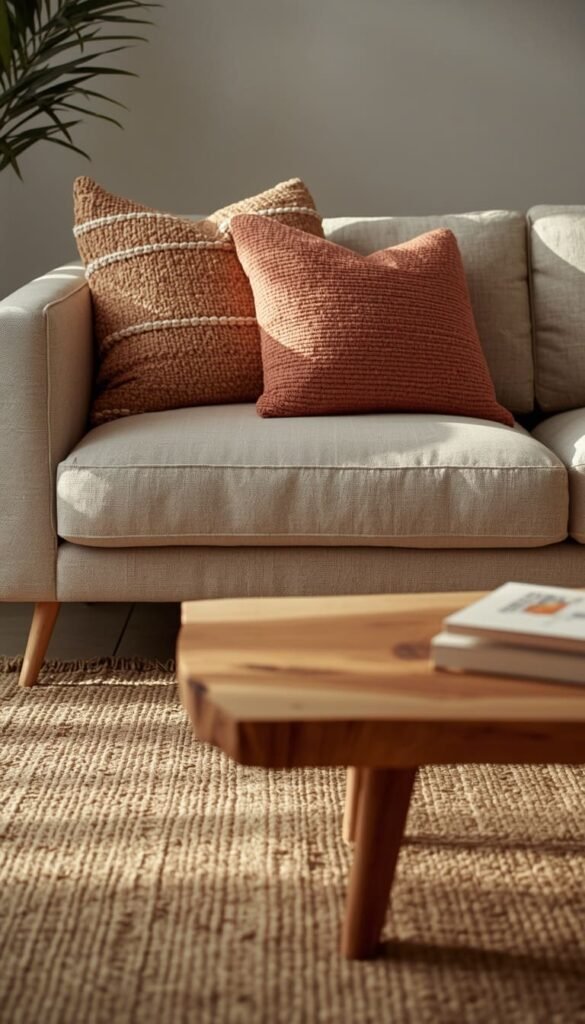
Every Scandi Boho living room needs one grounding piece and nine times out of ten, that’s the sofa. I always recommend starting here before buying anything else, because the sofa sets the entire visual tone of the room. Get this right, and the rest of the room almost styles itself.
Look for a sofa with:
- Simple, straight or gently tapered legs in natural wood
- Upholstery in a neutral oatmeal, cream, warm gray, or soft camel
- A low to medium profile that doesn’t dominate the room visually
A quick trick I’ve learned over years of doing this avoid sofas with heavy rolled arms or overly ornate details. They fight the Scandinavian side of this aesthetic and make the layering feel chaotic rather than collected. West Elm’s “Haven” sofa and IKEA’s “Uppland” are both solid starting points at very different price points.
Top 6 Scandi Boho Ideas:
| Idea | Estimated Price | Maintenance |
|---|---|---|
| Neutral Wall Paint (Warm White or Greige) | $30 to $80 per gallon | Low |
| Clean-Lined Anchor Sofa | $400 to $1,800 | Medium |
| Low Profile Coffee Table (Live Edge or Travertine) | $150 to $900 | Medium |
| Jute Base Rug (Large) | $79 to $250 | Medium |
| Linen Curtain Panels (Floor to Ceiling) | $40 to $150 per pair | Low |
| Rattan Floor Lamp (Secondhand or Budget Find) | $40 to $180 | Low |
5. Go Low Low Sofas, Low Coffee Tables, Low Energy
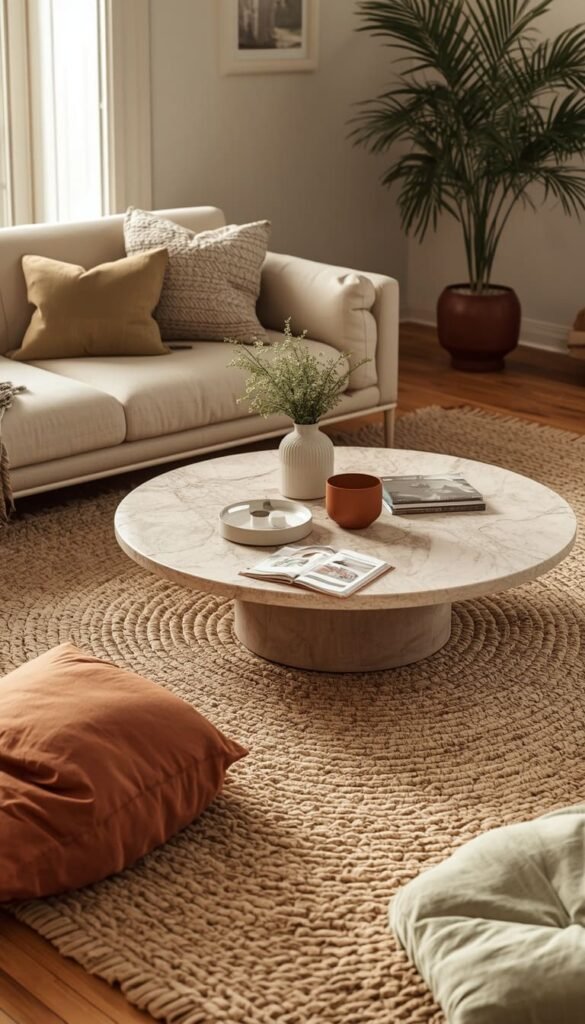
There’s something about a low slung living room that instantly feels more relaxed. It’s not just aesthetic it’s psychological. When furniture sits closer to the ground, the eye reads the space as calmer, more grounded, and more intentional. Scandinavian design figured this out decades ago, and bohemian style reinforced it with floor cushions, poufs, and daybeds that practically invite you to sink in and stay awhile.
For your coffee table, look for something that sits between 14 and 18 inches high. A live edge wood slab, a round travertine table, or even a vintage wooden trunk all work beautifully here. Pair that with a low sofa and suddenly your living room has that effortlessly cool, “I didn’t try too hard” quality that is genuinely the hardest thing to fake.
6. Mix Patinaed and New Furniture Without It Looking Chaotic
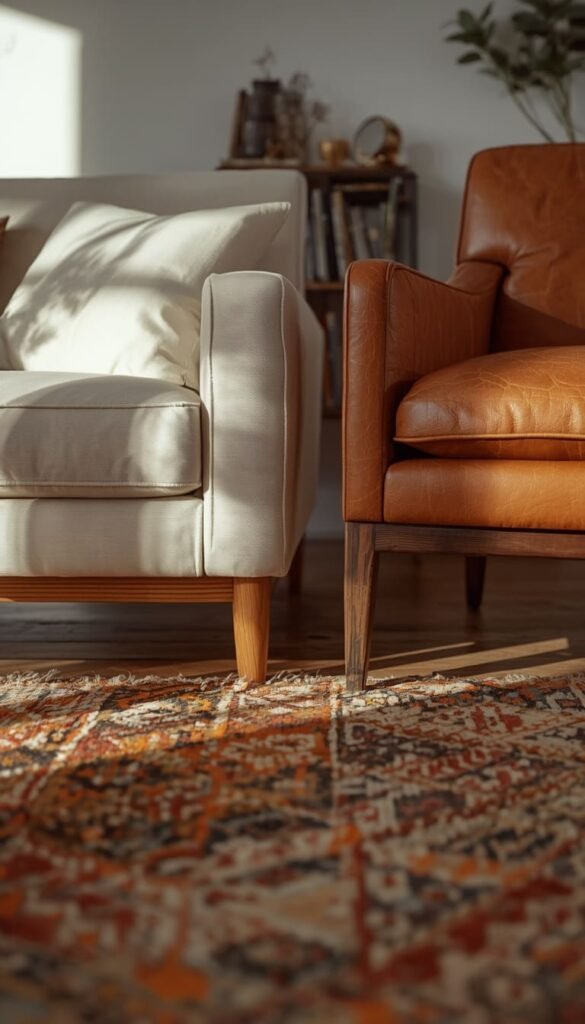
This is where a lot of people get nervous and I completely understand why. Mixing old and new furniture sounds great in theory, but in practice it can quickly tip from “curated” to “confused.” The secret is finding a common thread that runs through every piece, whether that’s wood tone, leg style, or overall silhouette.
A combination that never fails me a new clean lined linen sofa paired with a vintage mid century armchair in worn leather, anchored by a handwoven rug that pulls the tones together. The rug is doing the diplomatic work. It’s connecting pieces that wouldn’t naturally belong together and making the whole room feel intentional.
One reality check worth mentioning genuinely patinaed vintage pieces require more maintenance than new furniture. Leather needs conditioning, old wood frames sometimes need re-gluing, and cane seating can loosen over time. Budget a little extra time and money for upkeep if you’re going heavy on vintage finds.
Which part of your living room feels the least ‘you’ right now and what’s the one thing you’d change about it first?
7. Small Living Room? Here’s How Scandi Boho Actually Saves You Space
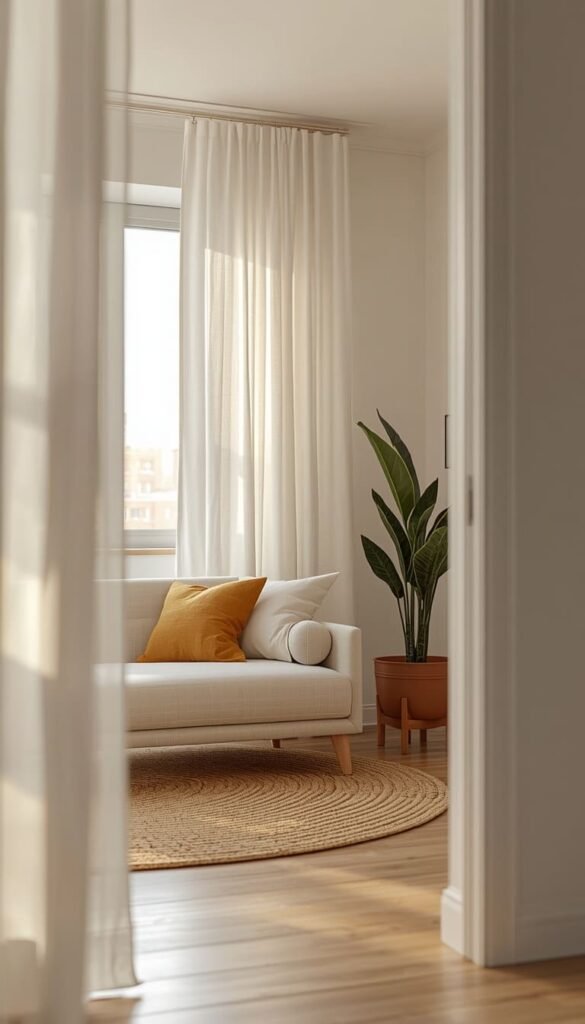
Most design styles punish small rooms. Scandi Boho is one of the few that actually thrives in them and I say this from direct experience. The Scandinavian side of this aesthetic is naturally disciplined about scale and clutter, which means you’re never tempted to overfill a small space. The boho side adds warmth and personality without requiring square footage.
Here are three moves that make a real difference in a small Scandi Boho living room:
- Hang curtains high and wide mount the rod as close to the ceiling as possible and extend it 8 to 12 inches beyond the window frame on each side. This fakes both height and width dramatically.
- Choose furniture with visible legs pieces that show floor underneath them make a room feel airier and more open than furniture that sits flat on the ground.
- Use one large rug instead of multiple small ones a single well sized rug grounds the space and makes it read as larger and more cohesive.
The biggest mistake I see in small boho leaning rooms is too many plants competing for floor space. Go vertical hang trailing plants from the ceiling or use a tall plant stand in one corner instead.
8. The Hero Piece Strategy One Bold Item, Everything Else Calm
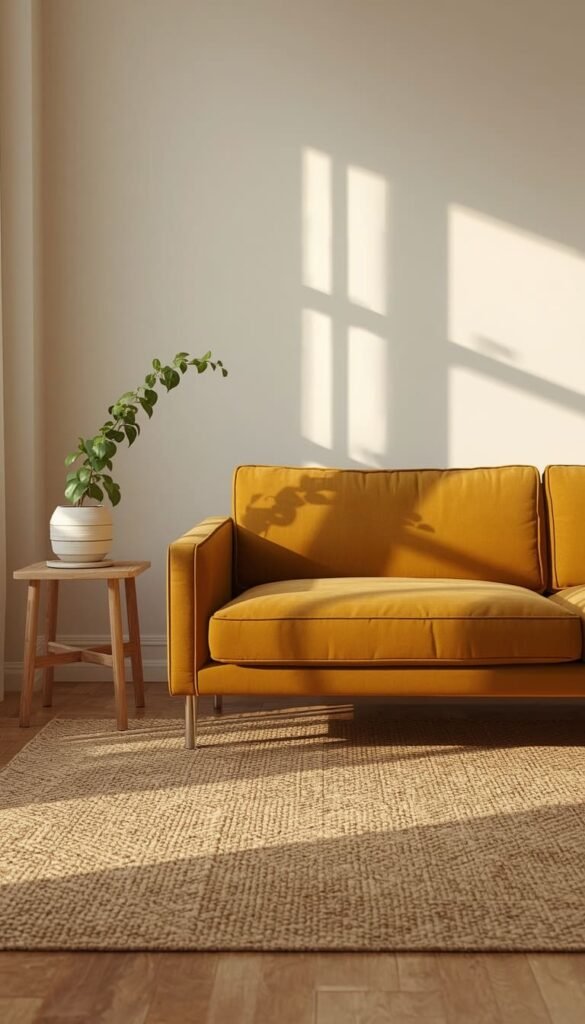
I use this approach with almost every client who tells me their living room feels “flat” or “forgettable.” The fix is almost always the same there’s no single element commanding attention, so the eye doesn’t know where to land and the whole room reads as background noise.
The hero piece concept is simple. Choose one item that does the talking a mustard yellow sofa, an oversized vintage Moroccan rug in deep jewel tones, a sculptural rattan pendant light, or a large piece of abstract art. Then let everything else in the room be calm, neutral, and supportive of that one moment.
What I love about this strategy in Scandi Boho spaces specifically is that it honors both sides of the aesthetic. The bold hero piece satisfies the bohemian need for personality and visual interest. The restrained, neutral everything else satisfies the Scandinavian need for order and breathing room. It’s genuinely the most foolproof way to get this style right without formal design training.
9. Layer Rugs Like a Pro (Jute Base and Beni Ourain Magic)
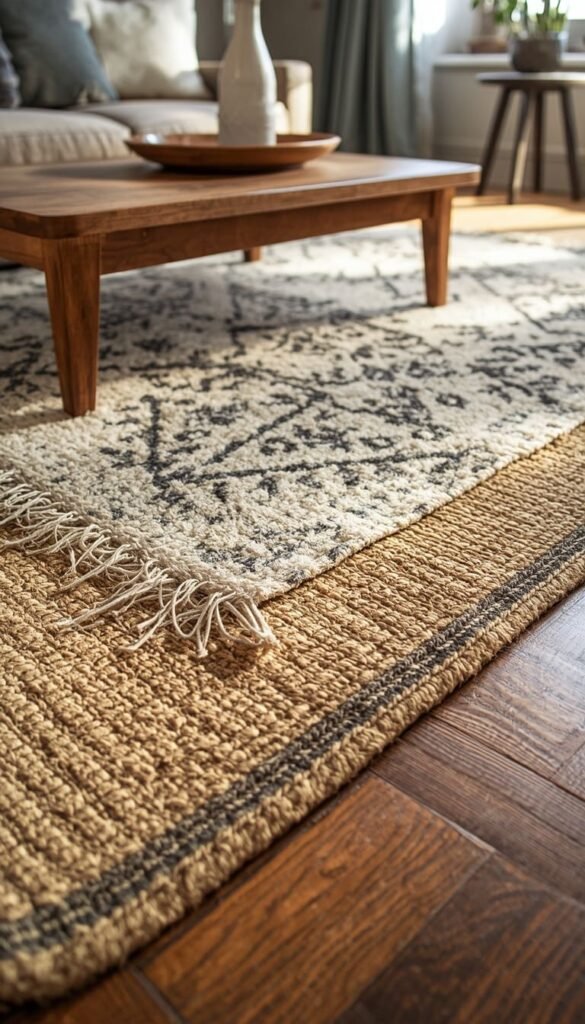
If I had to pick one single styling move that does the most work in a Scandi Boho living room, layered rugs would win every single time. It adds warmth, defines zones in open plan spaces, and introduces that collected, well traveled quality that makes a room feel like it has a story.
The formula I keep coming back to start with a large flat woven jute or sisal rug as your base. Something natural, textural, and neutral that covers most of the seating area. Then layer a smaller, high pile Beni Ourain or vintage Moroccan rug on top, slightly off center toward the sofa. The contrast between the flat weave underneath and the plush pile on top creates incredible depth.
A quick trick I’ve learned the top rug doesn’t need to be expensive. Some of my favorite layered looks have come from a $900 vintage Moroccan paired with a $79 IKEA jute base. Nobody can tell which one cost what. What they notice is how good the combination feels underfoot and how intentional the whole room looks.
10. The Cozy Textile Stack: Throws, Cushions and Boucle Done Right
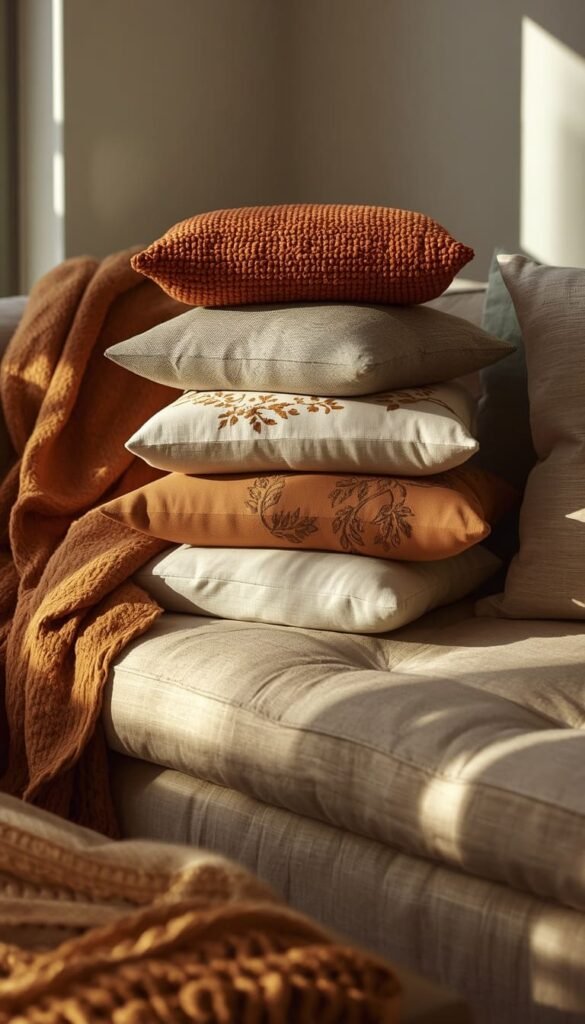
Textiles are where the boho warmth really enters the picture and where most people either nail it or completely overdo it. The goal is to feel layered and inviting, not like a textile warehouse exploded in your living room.
For cushions, I work in odd numbers. Three or five on a sofa almost always looks more natural than two or four. Mix your textures deliberately:
- One or two boucle or chunky knit cushions for softness
- A printed or embroidered cushion in an earthy pattern for personality
- A solid linen or cotton cushion in a deeper neutral to ground the group
For throws, drape don’t fold. A casually draped throw over one sofa arm or the back of an armchair reads as effortless and lived in. A neatly folded throw reads as a hotel. This style is about comfort first let it look that way.
One thing to watch out for with boucle specifically it attracts pet hair like nothing else on earth. If you have dogs or cats, consider boucle accent cushions rather than a full boucle sofa. You’ll thank me later.
11. Rattan, Wicker and Macrame How Much Is Too Much?
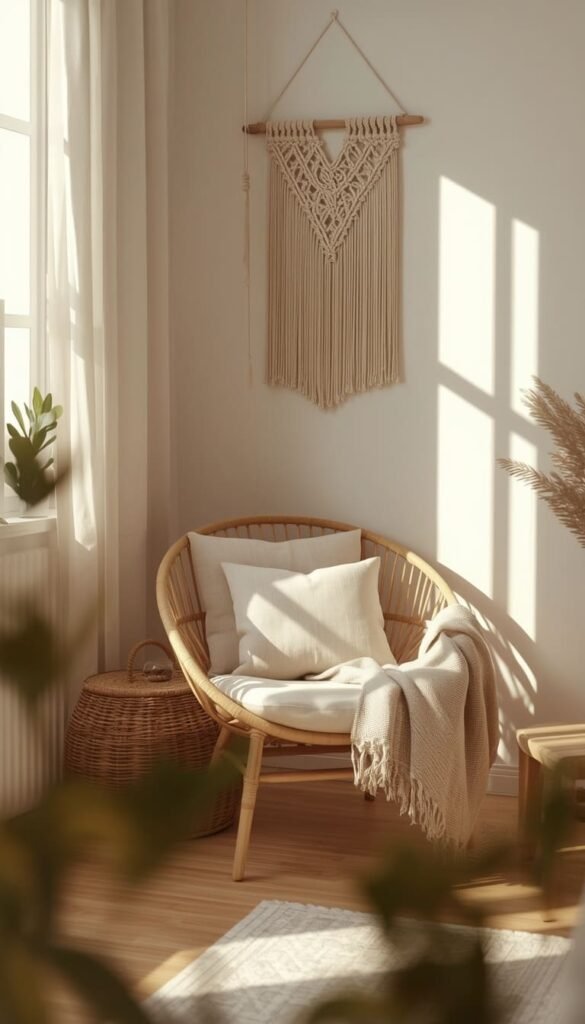
Rattan, wicker, and macrame are the holy trinity of boho decor and also the easiest way to tip your living room from “stylish” into “beach shack.” I’ve seen it happen, and it’s a hard thing to walk back once you’re in too deep.
My personal rule is the one third guideline. Natural woven materials rattan chairs, wicker baskets, macrame wall hangings, bamboo blinds should never account for more than one third of the visual texture in a room. Let the other two thirds come from softer materials like linen, wool, leather, and wood.
Macrame in particular has a tendency to overwhelm a space when it’s mass produced and oversized. If you’re going to use a macrame wall hanging, make it one intentional piece from an independent maker rather than three generic ones from a big box store. Handmade pieces have an irregularity and warmth that manufactured ones simply cannot replicate and that authenticity is everything in this style.
12. Wall Texture Ideas That Aren’t Just Shiplap
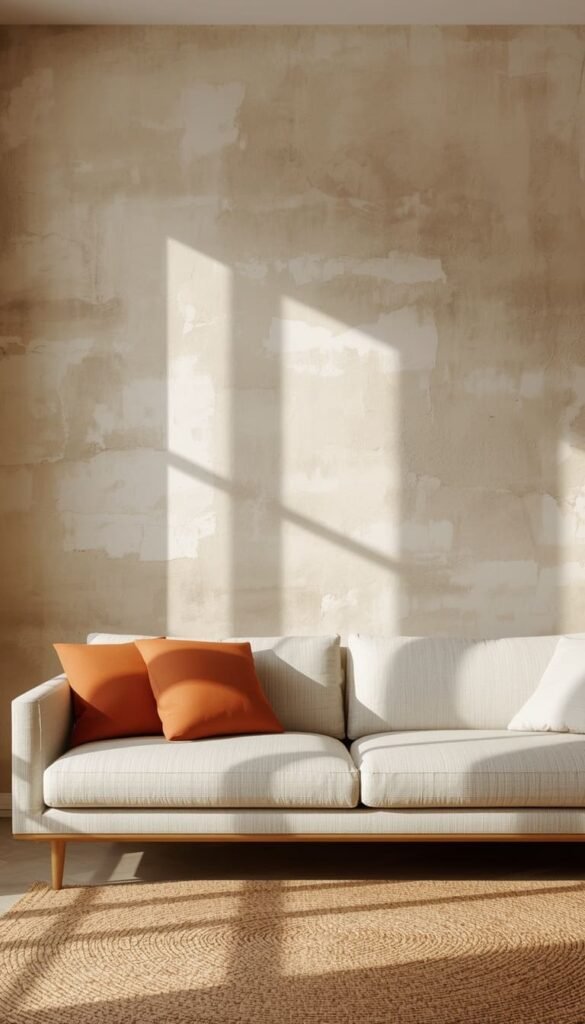
Can we talk about shiplap for a second? I love a good shiplap moment as much as anyone, but it has become so synonymous with farmhouse style that it can actually work against the Scandi Boho aesthetic if you’re not careful. There are genuinely better options that feel fresher and more aligned with this style right now.
Limewash paint is my current obsession for Scandi Boho walls. It creates a soft, layered, almost watercolor effect on the wall that adds incredible texture without adding visual weight. Brands like Portola Paints offer beautiful ready to apply limewash in warm neutrals that look genuinely stunning in natural light.
Other wall texture approaches worth considering:
- Grasscloth wallpaper on a single accent wall natural, warm, and deeply textural without being loud
- Roman clay paint for a smooth but dimensional plaster like finish
- A large-scale gallery wall in simple matching frames this adds visual texture through art rather than material
Each of these options works beautifully in rentals too, with the exception of limewash directly on walls. If you’re renting, grasscloth peel and stick wallpaper has gotten genuinely good in the last two years and is completely reversible.
Are you more drawn to the clean Scandinavian side of this style, or does the layered bohemian warmth speak to you more?
13. Earthy Palette Breakdown Exact Paint Colors That Work (US Brands)
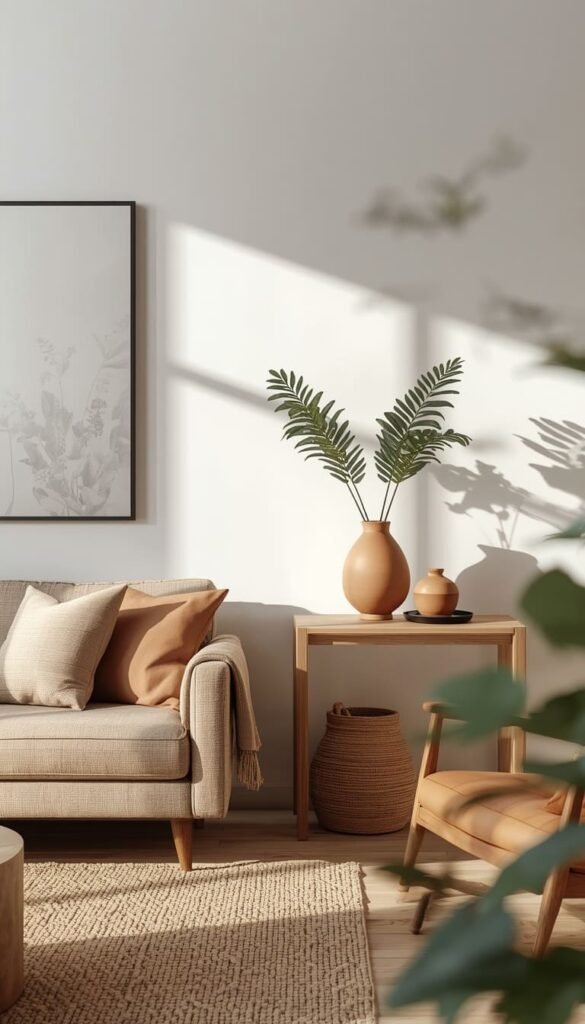
Color is where a lot of homeowners freeze up and I completely get it. Choosing a paint color from a tiny chip under fluorescent store lighting and trusting it to transform your entire living room feels like an enormous gamble. So let me make this easier with specific colors I’ve actually used in real projects.
For that warm, breathable Scandi Boho base, these are my go-to recommendations:
- Benjamin Moore “White Dove” OC-17 the most universally flattering warm white I’ve ever worked with. Creamy without being yellow, bright without being cold.
- Sherwin-Williams “Accessible Beige” SW 7036 perfect for rooms that get limited natural light. It reads as a sophisticated warm neutral rather than a flat beige.
- Behr “Cracked Wheat” an underrated oat tone that pairs beautifully with terracotta and sage accents.
- Farrow and Ball “Elephant’s Breath” if you want to go slightly deeper and moodier while staying neutral, this is the one.
One thing I always remind clients paint your chosen color on a large piece of cardboard and live with it for 48 hours before committing. Look at it in morning light, afternoon light, and evening lamplight. Paint colors are dramatically different at different times of day, and what looks perfect at noon can look completely wrong by 7pm.
14. When to Add Color And Where to Stop
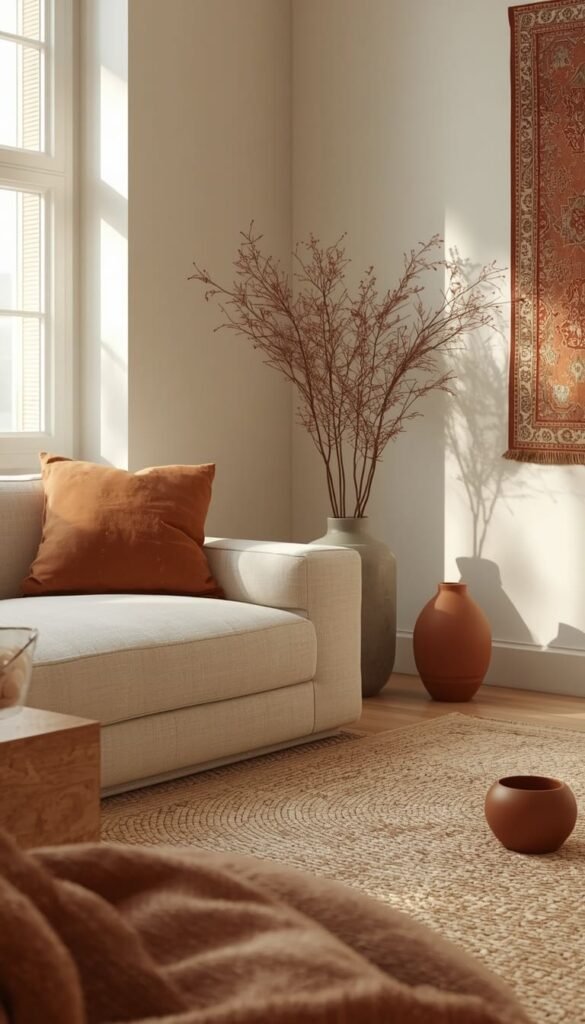
Scandi Boho is not a colorless style that’s one of the biggest misconceptions I encounter. The Scandinavian side keeps things grounded and neutral at the architectural level. The bohemian side is where color gets to breathe and play. The trick is knowing exactly where each belongs.
Color lives in the accessories, textiles, and plants in this style. Never in the large furniture pieces and almost never on the walls. A terracotta throw pillow, a dusty sage ceramic vase, a vintage rug in faded burgundy and gold these moments of color feel intentional because they’re surrounded by calm.
Where people go wrong is adding color in too many places at once without a connecting thread. Pick two or three tones that feel cohesive say, terracotta, warm cream, and olive and let those three colors appear in different scales and materials throughout the room. A little terracotta in the cushion, a little in the planter, a little in the artwork. That repetition is what makes a room feel designed rather than assembled.
15. Patterned Textiles That Feel Boho Without Looking Chaotic
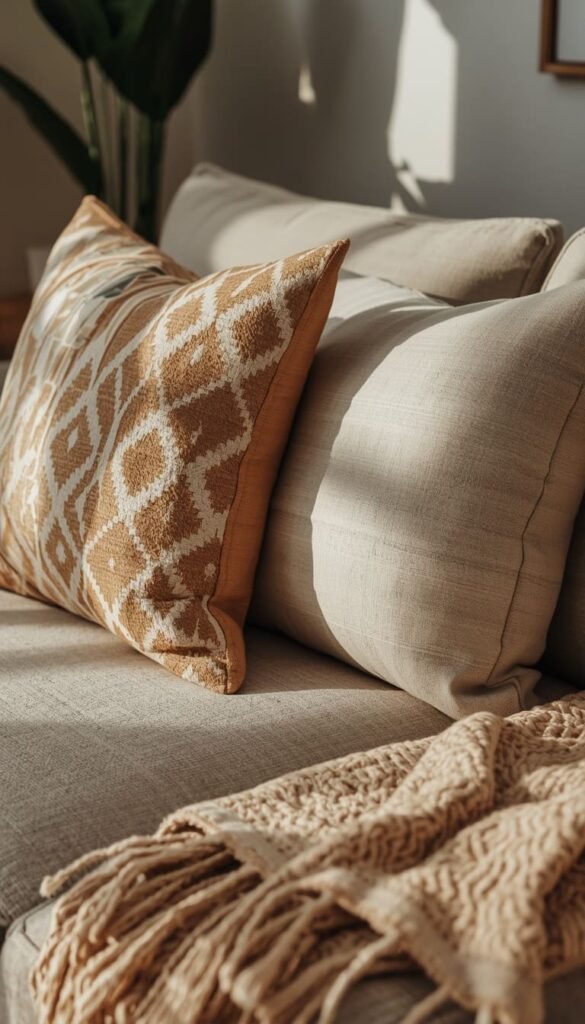
Pattern is one of the most powerful tools in a Scandi Boho living room and also one of the most misunderstood. The goal is never to fill every surface with pattern. The goal is to use pattern strategically so it adds visual interest without creating noise.
My approach is what I call the “one loud, two quiet” rule. Choose one textile with a genuinely bold pattern a graphic Moroccan print cushion, a heavily embroidered throw, a vintage kilim with strong geometric shapes. Then let the other two patterned elements in the room be quieter a subtle stripe on the curtains, a simple texture weave on the rug.
Scale matters enormously here too. Mixing pattern scales one large scale print with one small-scale texture creates visual harmony even when the patterns themselves are quite different. What creates chaos is placing two large scale bold patterns directly next to each other with no breathing room between them. I’ve seen beautifully decorated rooms completely derailed by this one mistake, and it’s so easy to avoid once you know what to look for.
16. Best Houseplants for Scandi Boho Living Rooms (Low Maintenance Picks)
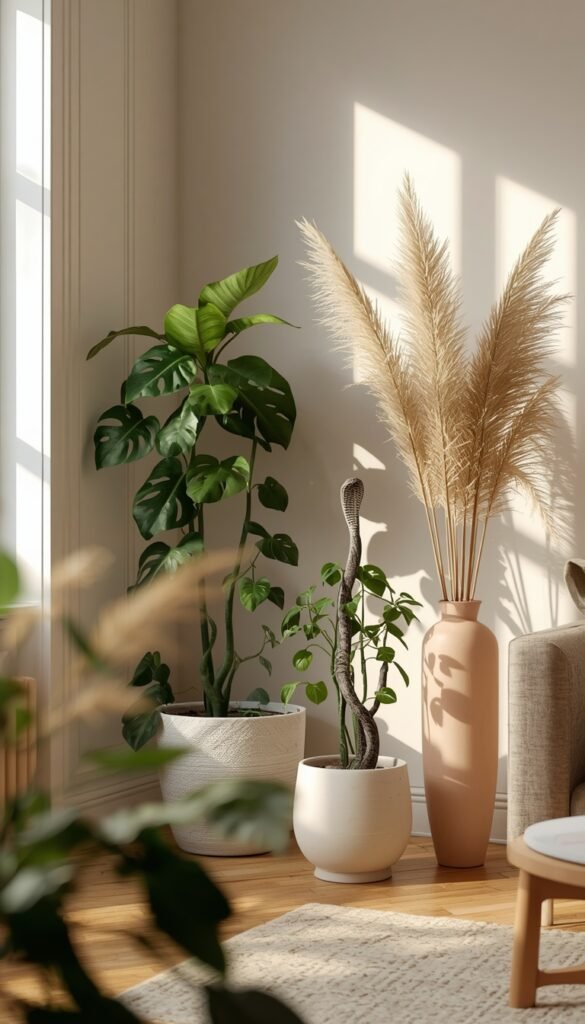
Plants are non negotiable in this style. Full stop. They bring in the organic, living quality that both Scandinavian and bohemian design depend on and they do something no piece of furniture or textile can replicate. They make a space feel genuinely alive.
That said, I never recommend plants that require a horticulturist to keep alive. Real homes need real plants ones that forgive a missed watering or two and still look beautiful. My tried and true picks for Scandi Boho living rooms:
- Pothos trails beautifully from shelves and hanging planters, nearly impossible to kill, and looks lush within weeks
- Fiddle Leaf Fig a sculptural statement plant that earns its corner spot; needs bright indirect light but rewards you generously
- Snake Plant incredibly architectural, thrives in low light, and adds that clean vertical line that complements Scandinavian furniture beautifully
- Olive Tree my personal favorite for this style right now. It brings a Mediterranean warmth that pairs perfectly with earthy neutrals and terracotta
- Pampas Grass technically dried rather than living, but the feathery plumes add incredible texture and height with zero maintenance required
One reality check pampas grass sheds. Especially in the first few weeks after you bring it home. Keep it away from air vents and ceiling fans, and give it a light hairspray coating to minimize the shedding. Worth it for how good it looks, but go in with eyes open.
17. Maximize Natural Light Without Sacrificing Privacy
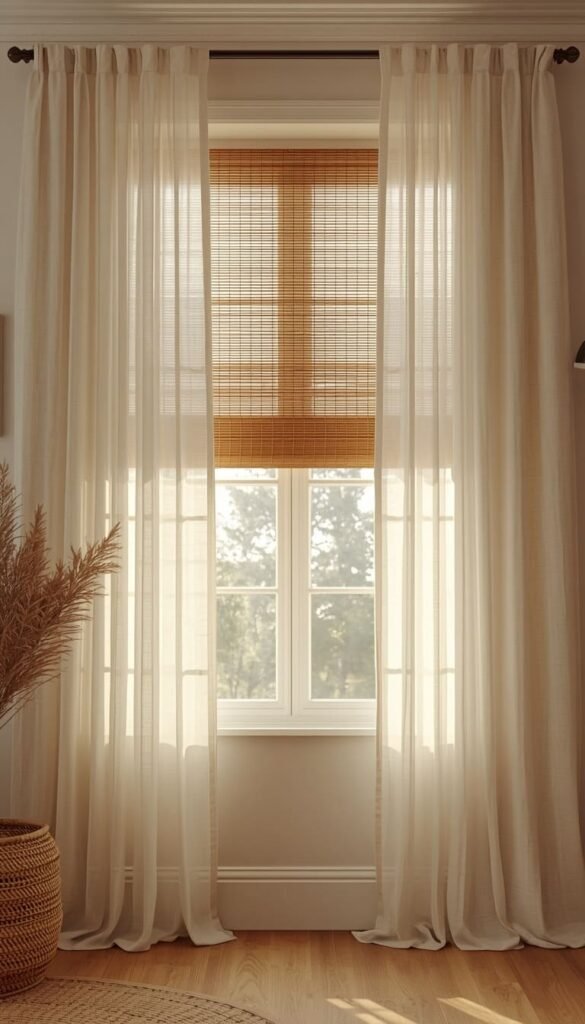
Natural light is the single most important design element in a Scandi Boho living room and it costs absolutely nothing. Scandinavian design is practically built around the pursuit of it, born from long Nordic winters where daylight is precious and every window is treated like a gift. In American homes, we often block that light without even realizing it, with heavy curtain panels, dark blinds, or furniture placed directly in front of windows.
The fix is simpler than most people expect. Swap heavy lined drapes for sheer linen panels in white or warm cream. Hang them as close to the ceiling as possible and let them pool slightly on the floor this keeps the light flowing while adding that soft, romantic quality this style thrives on. IKEA’s “Dytåg” linen curtains are genuinely one of the best affordable options on the market right now, and they photograph beautifully too.
For privacy without sacrificing light, these are the window treatment approaches I reach for most often:
- Sheer roller shades mounted inside the window frame, paired with floor-length linen panels on either side
- Natural woven shades in bamboo or grasscloth that filter light warmly rather than blocking it completely
- Cafe curtains on the lower half of the window only a particularly great solution for ground-floor apartments and street-facing rooms
18. Candles, Fireplace and Ambient Light Building Your Hygge Glow
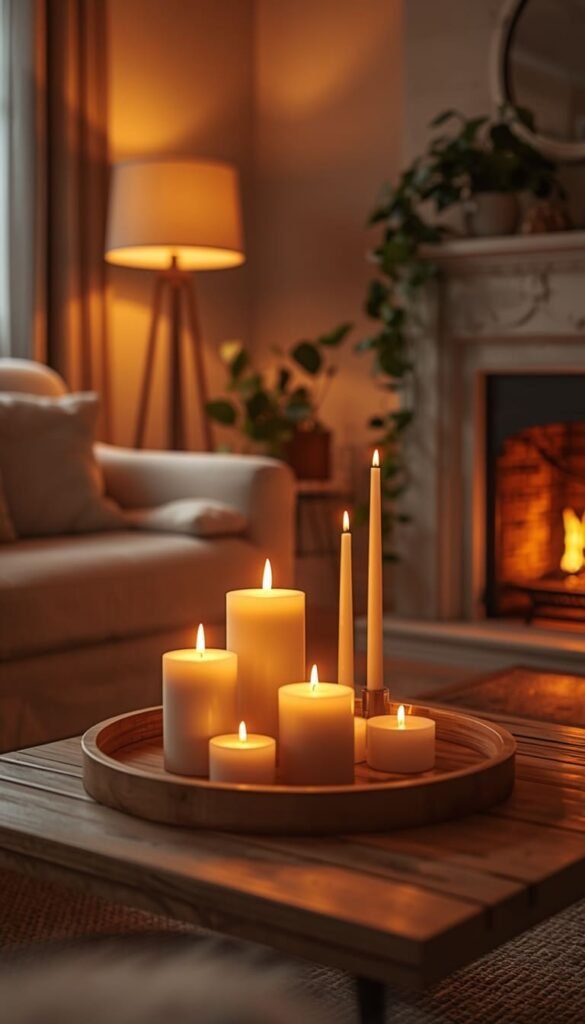
Here’s something I tell every single client who complains their living room feels cold or uninviting even after decorating the problem is almost never the furniture. It’s almost always the lighting. Overhead lighting alone creates a flat, institutional feel that no amount of beautiful decor can fully overcome. Hygge that Danish concept of cozy, contented warmth is built almost entirely through layered light sources at different heights.
If you have a fireplace, use it. Even a few evenings a week of actual fire changes the entire emotional temperature of a room in ways that no light bulb can replicate. If you don’t have a fireplace, an electric fireplace insert has come a remarkably long way in the last five years. Some of the flame effect models from Dimplex and PuraFlame are genuinely convincing at a fraction of the cost of a real installation.
For the rest of your lighting layers, build from the ground up:
- Floor lamps with warm Edison bulbs tucked into corners these create pools of golden light that make a room feel intimate rather than exposed
- Table lamps on side tables and console tables, always with warm white bulbs in the 2700K range
- Candles everywhere chunky pillar candles on the coffee table, tapers in simple ceramic holders on shelves, tea lights grouped in clusters on trays
A quick trick I’ve learned over years of doing this never underestimate the power of a dimmer switch. Installing dimmers on your existing overhead lights costs around $15 to $30 per switch and completely transforms how a room feels after dark. It’s the single highest-return upgrade I recommend to every homeowner regardless of budget.
If you could only add one thing to your living room today a rug, a plant, or a throw which one would it be?
19. Curated Shelf Styling vs. Cluttered Shelves The Line You Can’t Cross
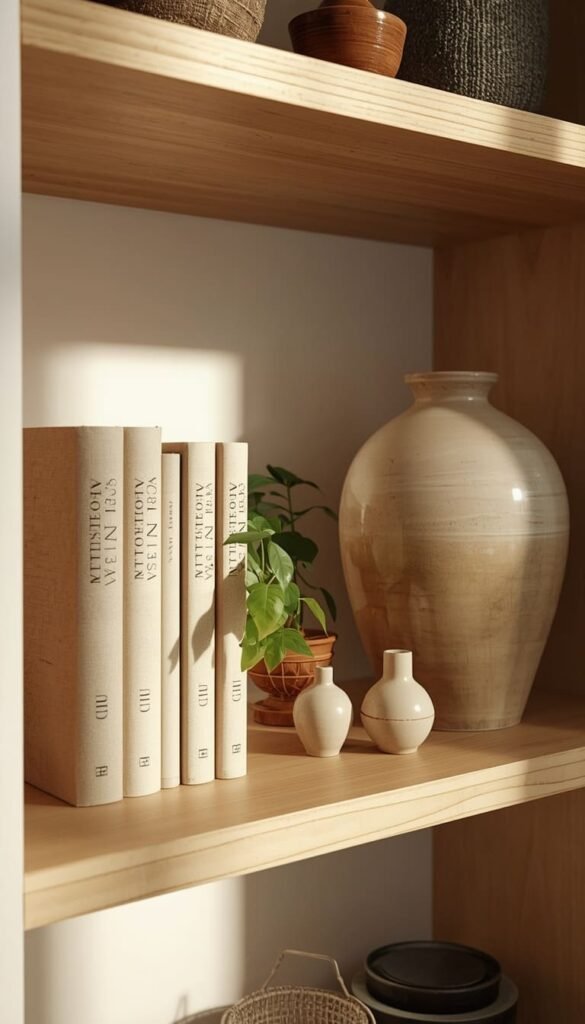
Open shelving is one of the most beautiful and most dangerous elements in a Scandi Boho living room. Done well, a styled shelf tells a story it shows personality, warmth, and a well traveled life. Done poorly, it just looks like you haven’t unpacked yet. The line between the two is thinner than most people realize, and I’ve seen gorgeous rooms completely undone by chaotic shelving.
The approach that works consistently is what I think of as the “anchor and breathe” method. Every shelf needs one anchor a larger item that commands attention and gives the eye a place to land. A tall ceramic vase, a stack of oversized coffee table books, a trailing plant in a handmade pot. Then everything else on that shelf should be smaller, quieter, and given genuine breathing room between pieces.
Specific things I always edit out during a shelf styling session:
- Duplicate items in different styles three mismatched small picture frames fight each other instead of telling a cohesive story
- Too many items at the same height vary the scale dramatically so the shelf has rhythm and movement
- Anything purely functional with no aesthetic value remotes, chargers, random paperwork. These kill the vibe instantly and belong in a drawer
20. Sculptural Lighting That Makes a Statement Under $200
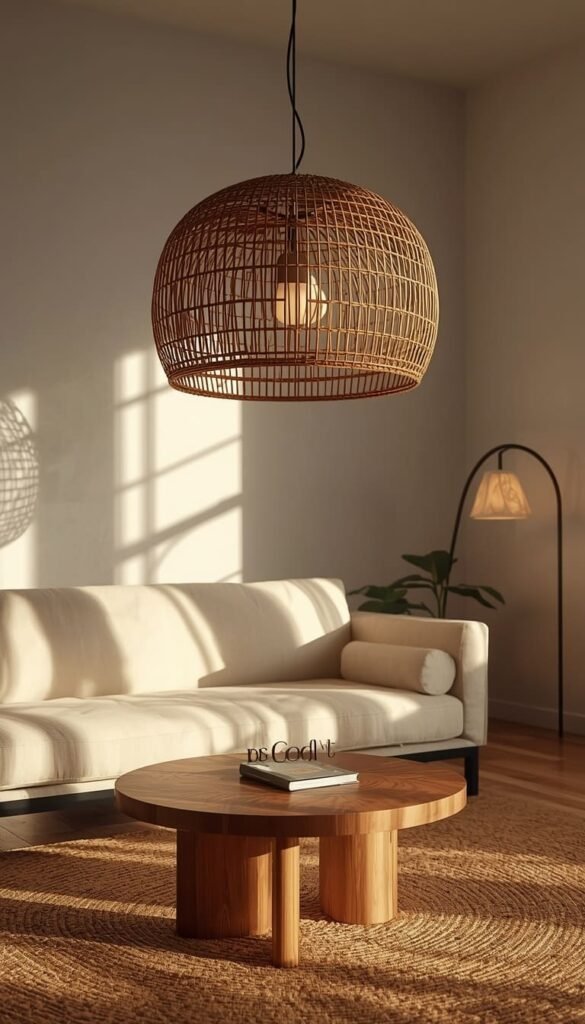
Lighting is jewelry for a room and in Scandi Boho interiors, it might be the single most personality defining element you can add. The right pendant light or floor lamp does something remarkable. It bridges the gap between the clean Scandinavian structure and the organic bohemian warmth in one single object.
The good news is you genuinely don’t need to spend thousands to get this right. Some of my favorite lighting finds for this style have come from very accessible price points. Here’s where I shop for clients on a real budget:
- Rattan or bamboo pendant lights from Amazon or Wayfair look for ones with an irregular, handwoven quality rather than a perfectly uniform weave. The imperfection is what makes them feel authentic rather than mass produced. Budget: $60 to $120.
- Paper lantern pendants inspired by Isamu Noguchi’s Akari lamps the originals cost thousands, but beautiful interpretations exist at World Market and IKEA for under $50.
- Arched floor lamps with a linen or rice paper shade these are having a major moment right now and for good reason. They add incredible height and warmth to a corner without taking up floor space. Budget: $80 to $180 at Target or CB2.
One thing to watch out for with rattan pendant lights specifically they cast the most beautiful dappled shadow patterns on the ceiling and walls when lit, which is genuinely magical. But they also accumulate dust quickly inside the weave. A can of compressed air every few months keeps them looking their best.
21. Vintage and Thrifted Finds Where to Shop in the US
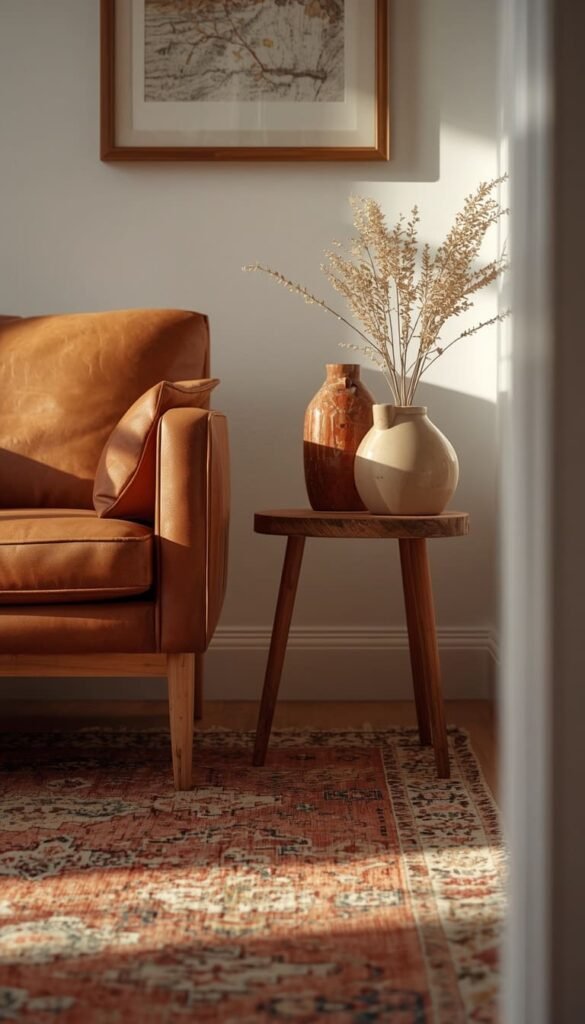
This is honestly one of my favorite conversations to have with clients because the thrill of finding a genuinely beautiful vintage piece for a fraction of its retail value never gets old. Vintage and thrifted items are the soul of a Scandi Boho living room they bring that collected, well traveled quality that no amount of new furniture can fake. A room full of brand new pieces, no matter how beautiful, always reads as slightly hollow. Vintage finds give a space its biography.
Here’s where I consistently find the best pieces for this style across the US:
- Facebook Marketplace my absolute first stop for mid century sofas, armchairs, wooden side tables, and ceramic lamps. Prices are negotiable, pieces are local so no shipping damage, and the turnover is remarkable. I’ve found genuinely stunning pieces for under $100 regularly.
- Chairish and 1stDibs for when you want something more curated and authenticated. Chairish sits at a more accessible price point and has an excellent filter system for style and era.
- Local estate sales Estate Sale Robot and EstateSales.net aggregate sales in your area and are worth checking every single week. Estate sales consistently yield better quality pieces at lower prices than thrift stores because items haven’t been pre-sorted for resale value.
- Goodwill Bins also called the “Goodwill Outlet” in many cities. You pay by the pound, the selection is unpredictable, but the prices are extraordinary and the finds can be remarkable if you’re willing to dig.
- Etsy specifically for handmade ceramics, vintage textiles, macrame from independent makers, and one-of-a-kind wall art that gives your room genuine personality
One reality check worth mentioning vintage upholstered pieces sometimes need reupholstering before they’re truly livable. Budget an extra $200 to $500 for a professional reupholstery job on a thrifted sofa or armchair. It’s still almost always cheaper than buying new, and the quality of older furniture frames frequently surpasses what you’d get at a contemporary retailer.
22. Scandi Boho on a Budget $500 Living Room Refresh Plan
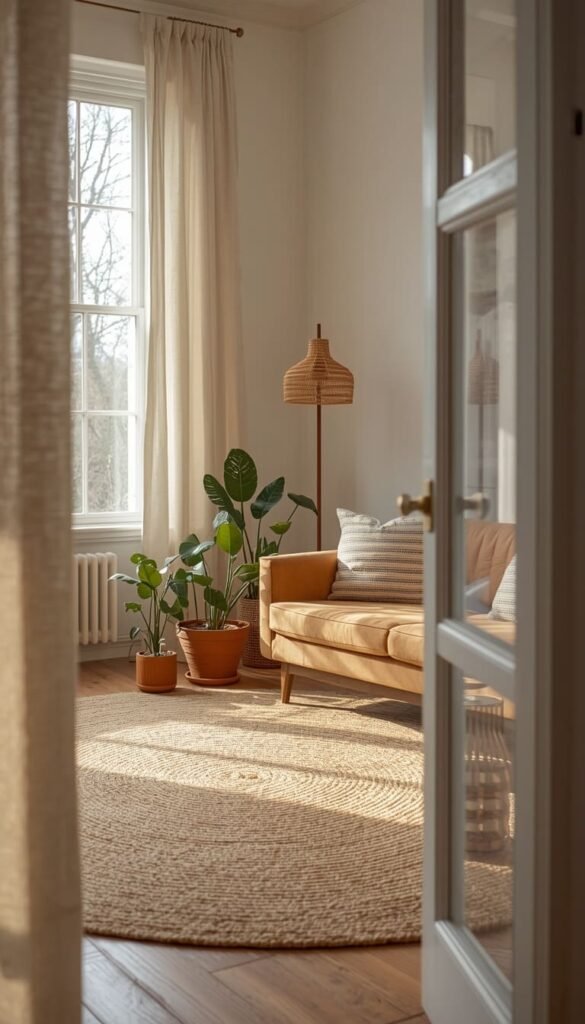
I want to address something directly this style is not inherently expensive, and anyone who tells you otherwise is trying to sell you something. The most beautiful Scandi Boho living rooms I’ve ever worked on were built on tight budgets with a clear plan and a willingness to be patient and creative. Here’s exactly how I’d spend $500 to transform a living room in this style from scratch.
$0 to $80 The Foundation Layer Start with what you already own. Edit ruthlessly and remove anything that doesn’t feel warm, natural, or intentional. Rearrange your existing furniture to create a more intimate conversation area. This costs nothing and has an immediate impact.
$80 to $150 The Rug A large jute rug from IKEA’s “Lohals” collection or Amazon’s basics range anchors the entire room. This is your single most impactful purchase. Don’t skip it and don’t go too small a rug that’s too small makes a room feel disconnected and cheap.
$150 to $250 Textiles and Cushions Three to four cushion covers from H&M Home, Target’s “Threshold” line, or TJ Maxx in complementary earthy tones. One good throw blanket in cream, oatmeal, or warm gray. Linen curtain panels from IKEA hung high and wide.
$250 to $380 Plants and Lighting Two or three plants in mismatched terracotta pots pothos, snake plant, and one trailing plant for a shelf. A secondhand rattan floor lamp from Facebook Marketplace or a paper pendant from World Market.
$380 to $500 The Personality Layer A few vintage ceramic pieces from a thrift store or Goodwill. One piece of simple wall art in a natural wood frame. A scented candle in a beautiful vessel that doubles as decor when burned down.
The result won’t look like a $500 room. I promise you that.
23. Maintenance Reality Check What No One Tells You About Natural Materials
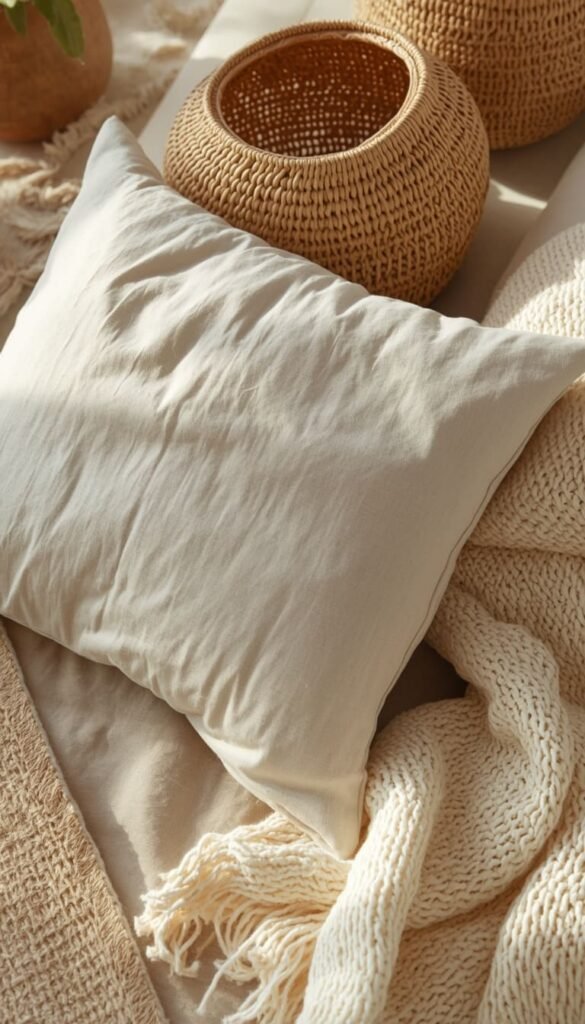
This section might be the most genuinely useful thing in this entire article because nobody and I mean nobody talks honestly about the maintenance realities of this style. Natural materials are beautiful. They are also demanding. Going in with clear expectations means you’ll love your space long-term instead of resenting it six months after decorating.
Here’s my honest rundown of what you’re signing up for with the most popular Scandi Boho materials:
Jute and Sisal Rugs These are not pet or kid friendly. Jute absorbs liquid spills almost instantly and stains permanently. They’re also scratchy underfoot compared to wool or synthetic rugs. That said, they’re inexpensive enough to replace every few years and nothing beats their texture and warmth visually. Keep a small bottle of white wine vinegar nearby for spot treatment and vacuum regularly to prevent fiber breakdown.
Linen Cushion Covers and Curtains Linen wrinkles. Constantly. If you are a person who is bothered by wrinkles, either embrace it as part of the aesthetic which is genuinely the Scandi Boho approach or switch to a linen cotton blend that holds its shape slightly better.
Rattan and Wicker Furniture Rattan dries out in low humidity environments and can crack, particularly in desert climates like Arizona or Nevada. A light application of linseed oil or furniture wax twice a year keeps it supple and prevents cracking. Also worth noting rattan is not outdoor furniture, despite how it photographs. Keep it indoors or in covered, humidity controlled spaces only.
White and Cream Upholstery I will be direct with you here. White sofas and cream boucle chairs are genuinely beautiful and genuinely impractical for households with children or pets. If you love the look, invest in Crypton treated fabric or removable, washable slipcovers. Otherwise, go one shade deeper a warm oatmeal or light camel gives you ninety percent of the aesthetic with dramatically less stress.
Live Edge Wood Surfaces Beautiful, unique, and prone to movement. Wood expands and contracts with seasonal humidity changes, which means hairline cracks can appear over time. This is normal and in keeping with the wabi sabi philosophy this style embraces but it’s worth knowing before you spend $800 on a live edge coffee table.
What’s the biggest challenge you’re facing in decorating your living room right now budget, space, or just not knowing where to start?
24. Seasonal Refresh How to Shift Your Scandi Boho Room From Winter to Summer
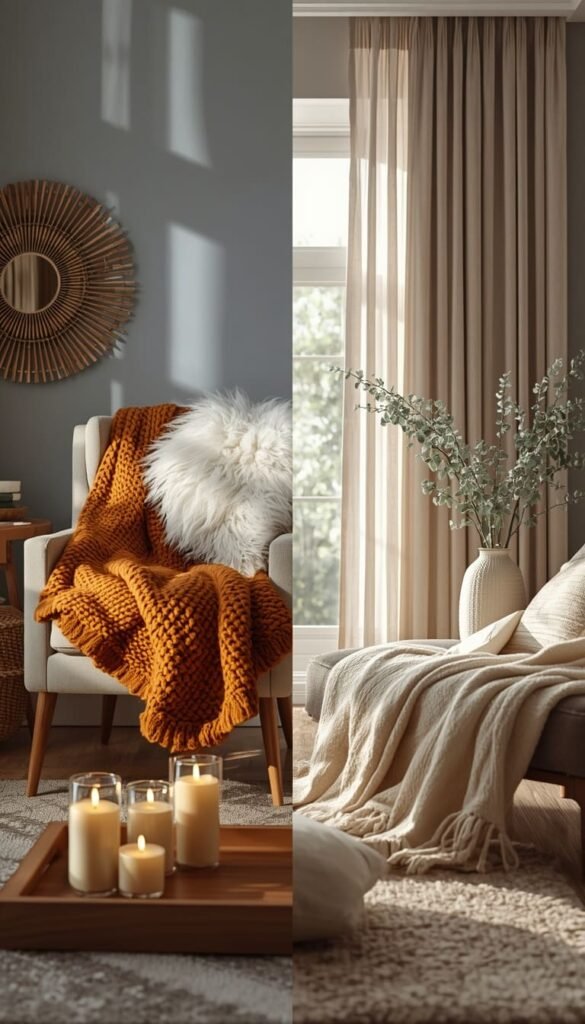
One of the things I love most about Scandi Boho style is how naturally it adapts to the seasons and how little effort it actually takes to make a room feel completely different from January to July. The bones of the room stay exactly the same. You’re just swapping the layers.
Fall and Winter Lean Into Hygge
This is when the style really sings. Pile on the throws chunky knit blankets, faux fur draped over the sofa arm, sheepskin on the armchair. Swap lightweight linen cushion covers for heavier wool or velvet versions in deeper tones burnt orange, forest green, deep burgundy. Light every candle you own. If you have a fireplace, this is its season. Add a tray of pillar candles to the coffee table and keep a warm-toned floor lamp burning in the corner through the darker evenings. This is hygge in its fullest, most beautiful expression.
Spring and Summer Lighten Everything
Fold away the heavy throws and replace them with a single lightweight cotton or linen blanket in a soft natural tone. Swap the deeper winter cushion covers for lighter versions in warm white, soft sage, or sandy beige. Pull back the curtains fully during the day and let the room breathe. Bring in fresh florals a simple arrangement of eucalyptus, dried botanicals, or even grocery store sunflowers in a tall ceramic vase costs almost nothing and completely shifts the energy of the room.
The plants you’ve been nurturing all winter will be thriving by summer, so let them take center stage. Move the fiddle leaf fig to a brighter spot, let the pothos trail a little longer, and add one or two new seasonal plants to keep the room feeling fresh and alive. This style is genuinely meant to evolve and the seasonal rhythm is a big part of what makes it feel so livable year after year.
Your 30-Second Scandi Boho Styling Map
By Budget
Starter and Rental Friendly ($0 to $500)
- Begin with a large jute rug it anchors everything instantly
- Shop Facebook Marketplace and Goodwill before buying anything new
- IKEA linen curtains hung high and wide are your best friend
- Terracotta pots with pothos or snake plants cost under $15 each
- Layer cushion covers from Target Threshold or TJ Maxx for texture
- Edit what you own first removing clutter costs nothing
Luxury and Investment ($500 and Above)
- Invest in one genuine vintage mid century armchair or sofa
- Commission a handmade macrame piece from an independent Etsy maker
- Choose a Beni Ourain rug as your hero textile it lasts decades
- Limewash paint on one accent wall transforms the entire room
- A sculptural rattan or paper pendant light elevates every corner
- Live edge coffee table as your statement furniture moment
By Lifestyle
Busy Families and Pet Owners
- Skip white upholstery go oatmeal or warm camel instead
- Choose Crypton treated fabric or washable slipcovers always
- Avoid jute rugs in high traffic zones wool or polypropylene blends hold up better
- Keep plants on high shelves or in hanging planters out of reach
- Opt for darker cushion covers in fall and winter to hide everyday life
Minimalists and Small Space Dwellers
- One hero piece only let everything else breathe around it
- Vertical plants on stands save precious floor space
- Choose furniture with visible legs to keep the room feeling open
- A single large rug beats multiple small ones every time
- Stick to three tones maximum warm white, one earthy accent, natural wood
Frequently Asked Questions
What is the difference between Scandi Boho and Japandi style?
Scandi Boho mixes bohemian warmth and global textures into a Scandinavian base it’s layered, earthy, and relaxed. Japandi leans far more minimal and austere, with Japanese wabi-sabi principles keeping things quieter and more restrained. If you love plants, textiles, and a collected feel, Scandi Boho is your style.
How do I make my living room look Scandi Boho on a tight budget?
Start with a large jute rug, linen curtains hung high, and three plants in terracotta pots that combination alone shifts a room dramatically. Shop Facebook Marketplace for mid century furniture and TJ Maxx for cushion covers.
What colors work best for a Scandi Boho living room?
Warm whites, soft creams, and greige on walls then bring terracotta, sage, and warm camel through textiles and plants. Keep your walls neutral and let the accessories carry all the color.
Can I do Scandi Boho style in a small apartment?
Yes, and honestly it works better in small spaces than most styles. Choose furniture with visible legs, hang one large rug instead of several small ones, and go vertical with plants on stands or hanging planters.
Is Scandi Boho style hard to maintain with kids or pets?
The style itself is easy the materials require some smart swaps. Skip white upholstery and jute rugs in high traffic zones, and choose washable slipcovers and wool blend rugs instead.
Conclusion
Your living room doesn’t need a full renovation or a designer budget to feel like the most comfortable, beautiful space you’ve ever walked into. Scandi Boho is genuinely one of those rare styles that rewards intention over spending one good rug, a few honest plants, and the right light can shift the entire feeling of a room in a single afternoon. Start small today. Clear one shelf, hang those curtains higher, or just move your furniture into a tighter, more intimate arrangement. You’ll feel the difference immediately, and that first small win is usually all the motivation you need to keep going.
So tell me which of these 24 ideas are you trying first? Drop it in the comments, I’d love to see where you’re starting.
