
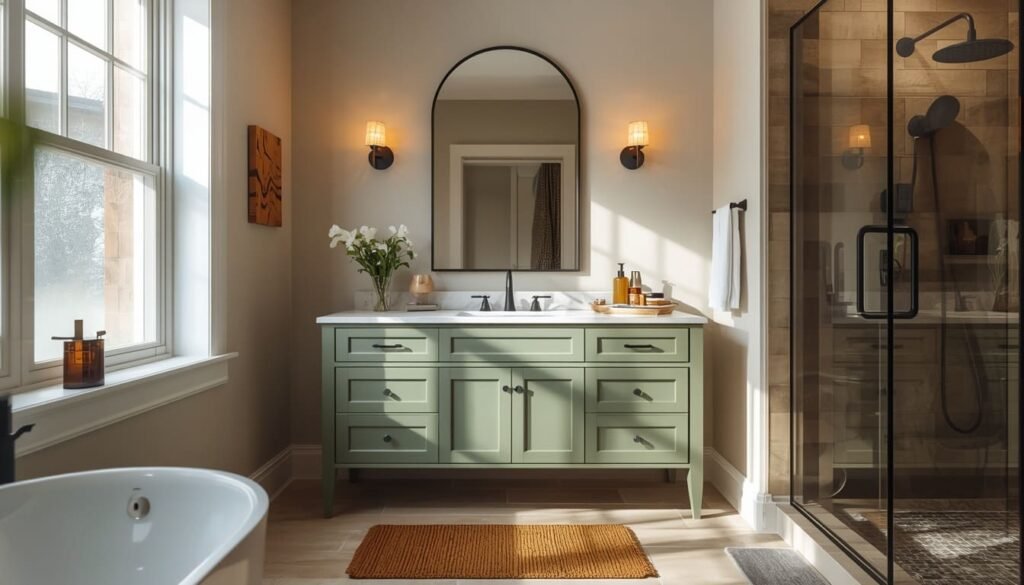
There’s a moment every homeowner knows you walk into your bathroom, look around, and think “I cannot live with this anymore.” Maybe it’s the outdated fixtures. Maybe it’s that builder grade vanity that’s been there since 2003. Or maybe the whole space just feels tired, cramped, and completely uninspiring. The good news? You don’t need a massive budget or a three month renovation to fix it. These 10 bathroom redo ideas are the exact strategies I recommend to my clients practical, stylish, and designed for real American homes.
My Design Notes
A few years back, I was working with a young couple in suburban Nashville who had just bought their first home. The primary bathroom was straight out of a 1994 builder’s catalog pink ceramic tile, brass fixtures that had seen better days, and a single bare bulb above the mirror that made everyone look like they hadn’t slept in a week. Their total budget was $1,800. I won’t lie, I had to get creative. We repainted the vanity in Sherwin Williams Sage, swapped every fixture for matte black hardware, hung a $90 arched mirror from HomeGoods, and replaced that sad light bar with warm toned side sconces. Final spend came to $1,640. When my client sent me the after photos, her message just said “It feels like a completely different house.” That project stuck with me. It’s the reason I tell every single client the same thing before we start: a bathroom redo doesn’t have to be expensive to feel expensive. It just has to be intentional.
Stunning Bathroom Redo Ideas That Proven Design Experts Swear By
1. Bathroom Redo Ideas Start With the Vanity and Here’s Why It’s Always My First Move
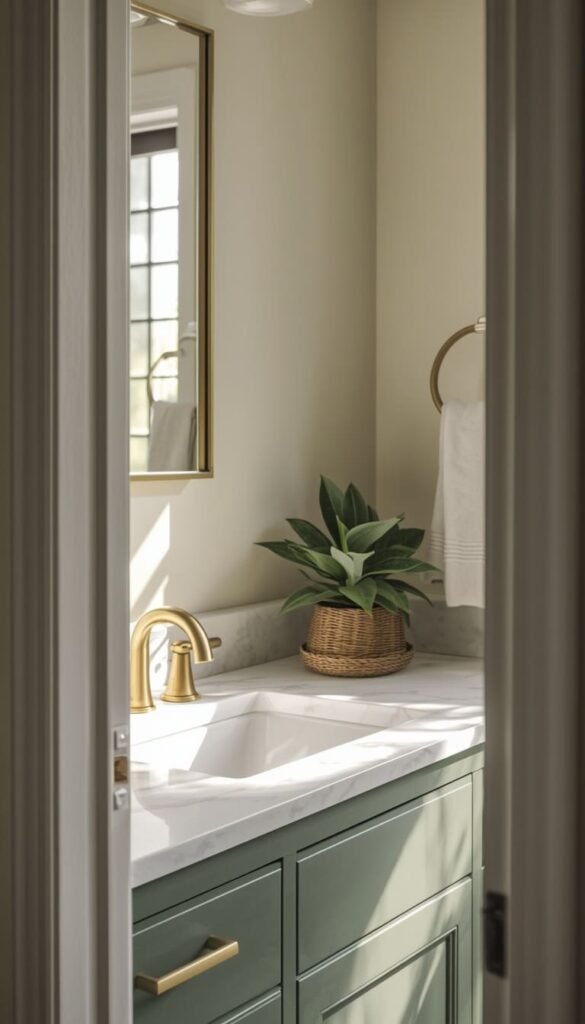
If I had to pick one thing that transforms a bathroom faster than anything else, it’s the vanity. It’s the anchor of the entire space. Everything else the mirror, the lighting, the hardware takes its visual cue from what’s happening at that vanity. So when a client asks me where to start, my answer is always the same.
Now here’s where it gets interesting. You don’t necessarily need to replace it. A lot of homeowners assume “vanity update” means spending $800 at Home Depot. Not true. If the bones are solid good drawer function, no water damage, sturdy frame a fresh coat of paint does something almost magical. I’ve used Sherwin Williams Emerald Urethane Trim Enamel in satin finish on dozens of vanities and the results are consistently stunning. It levels out beautifully and holds up against bathroom humidity far better than standard wall paint.
Here’s a quick decision framework I use with every client:
- Paint it if the structure is solid and you just hate the color
- Reface it if the doors are warped but the base is fine
- Replace it only when there’s water damage, mold, or a complete style mismatch you simply can’t work around
One thing to watch out for chalk paint. It photographs beautifully on Pinterest but chips within months in a steamy bathroom. Stick with a cabinet-specific enamel and always sand and prime first. Budget wise, a DIY paint job runs $30 to $80. A full vanity swap lands between $400 and $1,200 installed, depending on your market.
2. The Best Bathroom Redo Idea Nobody Talks About Is Swapping Your Hardware
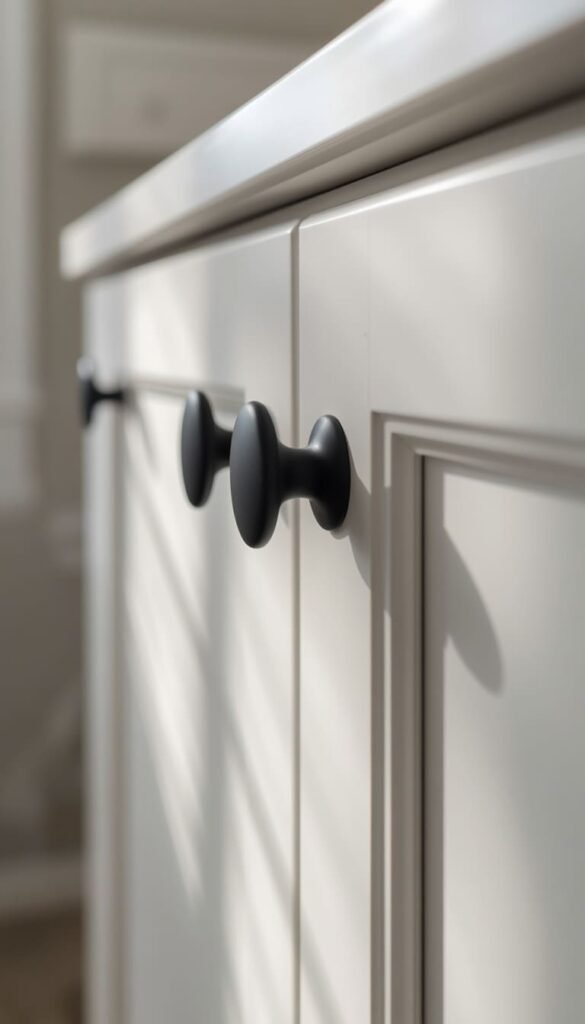
Honestly, this one surprises people every time. I’ll walk into a consultation, the homeowner is ready to gut the whole bathroom, and I’ll point to the cabinet pulls and say “Let’s start here.” They look at me like I’ve lost my mind. Then I show them the before and after photos from a project I did in Franklin, Tennessee, where we only changed the hardware and the mirror. The client thought I had replaced the entire vanity.
Hardware is the jewelry of your bathroom. The finish you choose sets the entire mood.
- Matte black reads modern, bold, and pairs beautifully with white or gray cabinetry
- Brushed gold adds warmth and works perfectly in Transitional and Traditional spaces
- Brushed nickel is the safe, timeless choice that never dates itself
Budget for this entire update? Anywhere from $40 to $150 depending on how many pieces you’re replacing. DIY difficulty is about as beginner friendly as it gets a screwdriver and twenty minutes per cabinet. The one thing to double check before ordering: measure the hole spacing on your existing pulls. Standard is 3 inches center to center, but older vanities sometimes run at 2.5 inches, and mismatched holes mean extra patching work you don’t want.
3. Bathroom Remodel Inspiration How Statement Tile Can Do All the Heavy Lifting
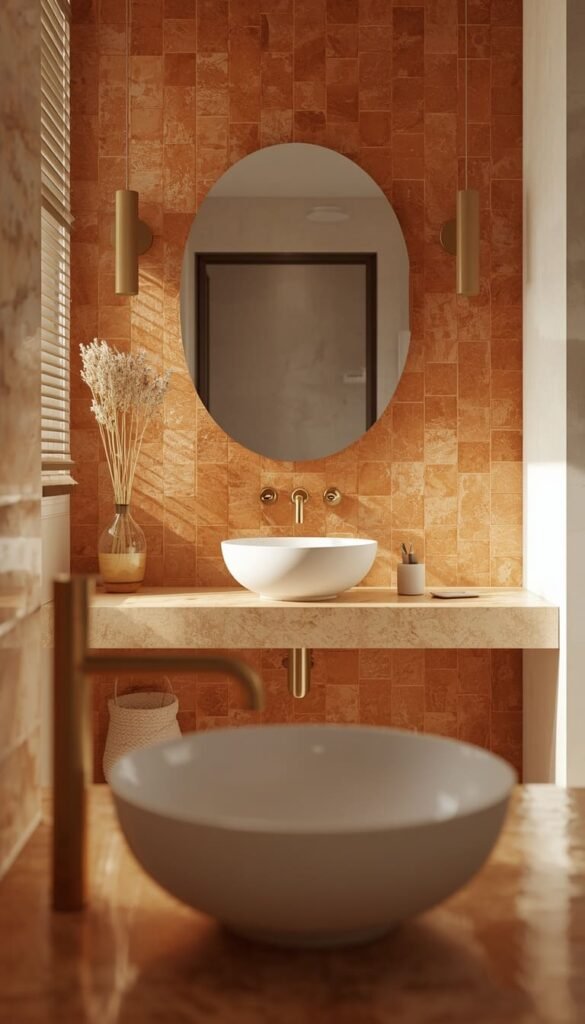
Tile is where personality lives in a bathroom. It’s the single design element that can make a $15,000 renovation look like $40,000 or make a budget refresh look genuinely custom. I’ve seen it work both ways, and the difference usually comes down to one decision: focal wall versus full room.
A full retile is a serious project. We’re talking $200 on the low end for a small powder room with budget tile, all the way to $2,500 or more for a primary bath with quality material and professional labor. But a single accent wall behind the vanity or inside the shower? That’s where you get maximum visual impact for minimum spend.
Right now in the US market, three tile styles are leading the conversation:
- Zellige tiles handmade Moroccan clay tiles with a gorgeous imperfect finish. Stunning but pricey, around $15 to $30 per square foot
- Large format porcelain clean, minimal, makes small bathrooms feel significantly larger
- Subway tile still relevant, especially with a dark grout. Classic for a reason
A quick trick I’ve learned over years of projects: never use light grout in a steam shower. It stains within months and no amount of sealing fully prevents it. Go charcoal or dark gray and save yourself the maintenance headache.
4. Modern Bathroom Makeover Secret Lighting Changes Everything and Most People Ignore It
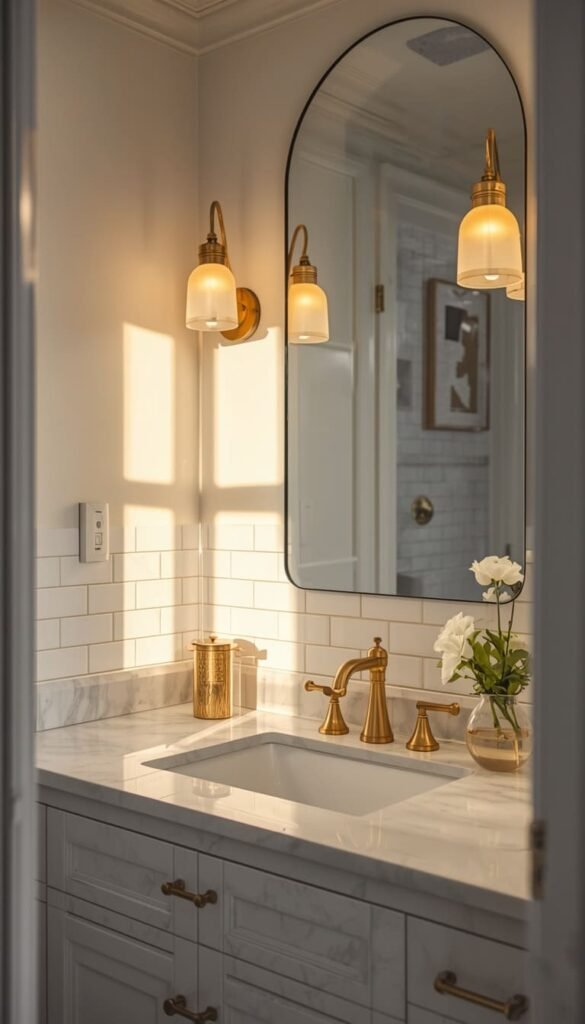
This is probably the most underestimated element in any bathroom redo. I cannot count how many gorgeous renovations I’ve walked into that were completely undermined by bad lighting. New tile, beautiful vanity, perfect mirror and then one harsh, cool-toned strip light above the mirror washing everything out. It undoes all the work.
The position of your vanity lighting matters more than most people realize. Side mounted sconces at eye level roughly 60 to 65 inches from the floor eliminate the unflattering shadows that overhead lighting creates. It’s the difference between a bathroom that looks like a spa and one that looks like a department store fitting room.
For bulb temperature, I have a personal rule I never break with primary bathrooms: 2700K only. It’s warm, it’s flattering, and it makes the whole space feel inviting rather than clinical. Anything above 3000K starts reading as harsh and cold.
Budget range here is genuinely accessible a quality vanity light bar runs $80 to $250, and a pair of side sconces lands between $120 and $400 for the set. One important note: any electrical work near water requires a permit in most US jurisdictions. A licensed electrician for a simple fixture swap typically charges $100 to $200 and it’s absolutely worth it for both safety and resale protection.
Top 6 Bathroom Redo Ideas:
| Idea | Estimated Price | Maintenance |
|---|---|---|
| Vanity Paint Refresh | $30 to $80 | Low |
| Hardware Swap | $40 to $150 | Low |
| Statement Tile Accent Wall | $200 to $2,500 | Medium |
| Vanity Lighting Upgrade | $80 to $400 | Low |
| Floating Vanity Installation | $300 to $1,200 | Low |
| Heated Towel Bar | $80 to $200 | Low |
5. Small Bathroom Renovation Win The Floating Vanity Trick That Steals Extra Inches
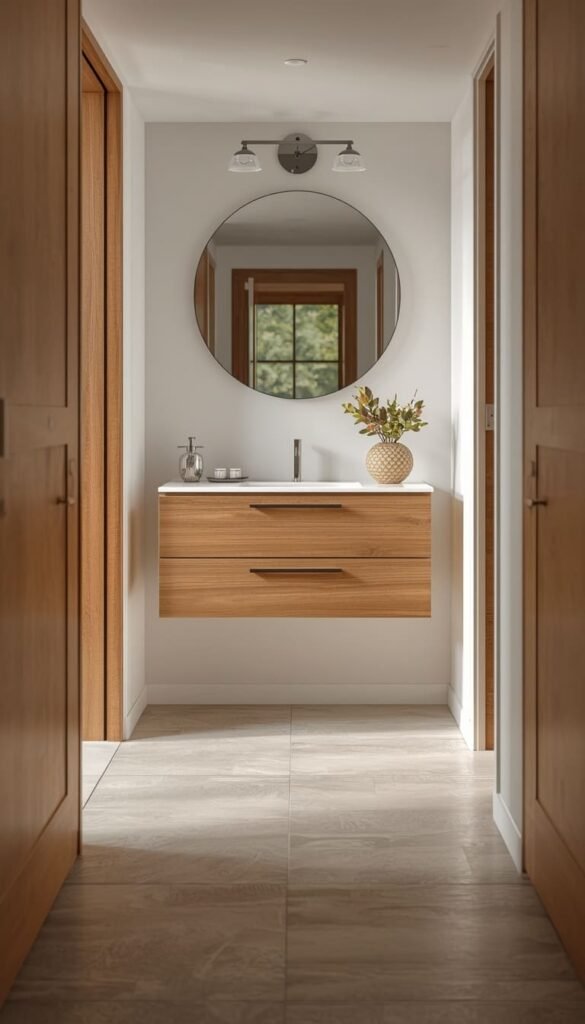
Small bathrooms are my favorite design challenge. There’s something genuinely satisfying about making a tight space feel generous and well considered. And if I had to pick one single upgrade that delivers the biggest visual payoff in a small bathroom, it’s switching to a floating vanity every single time.
Here’s the psychology behind it. When your vanity sits on the floor, it visually cuts the room in half. The eye reads it as a solid, heavy mass. Lift that same vanity off the floor by even 6 to 8 inches and suddenly the room breathes. The floor reads as continuous, the ceiling feels higher, and the whole space opens up in a way that genuinely surprises people.
A quick trick I share with clients who are tight on budget you don’t always need to replace the vanity entirely. Sometimes a skilled carpenter can modify an existing piece to float. It depends on the construction, but it’s worth asking before you spend $800 on something new.
A few things to know before committing:
- Floating vanities require solid wall studs or a properly reinforced mounting surface. Drywall anchors alone will not hold long term
- Wall mounted plumbing is typically required, which means a plumber visit budget $150 to $300 for that piece
- Style wise, floating vanities look sharpest in Contemporary, Scandinavian, and Modern Farmhouse spaces
Total installed budget runs $300 on the low end for a simple swap, up to $1,200 for a custom floating build with plumbing adjustments.
Which part of your bathroom feels the most outdated to you right now the vanity, the lighting, or the tile?
6. Budget Bathroom Makeover Fresh Paint Is the Most Underrated Redo Move
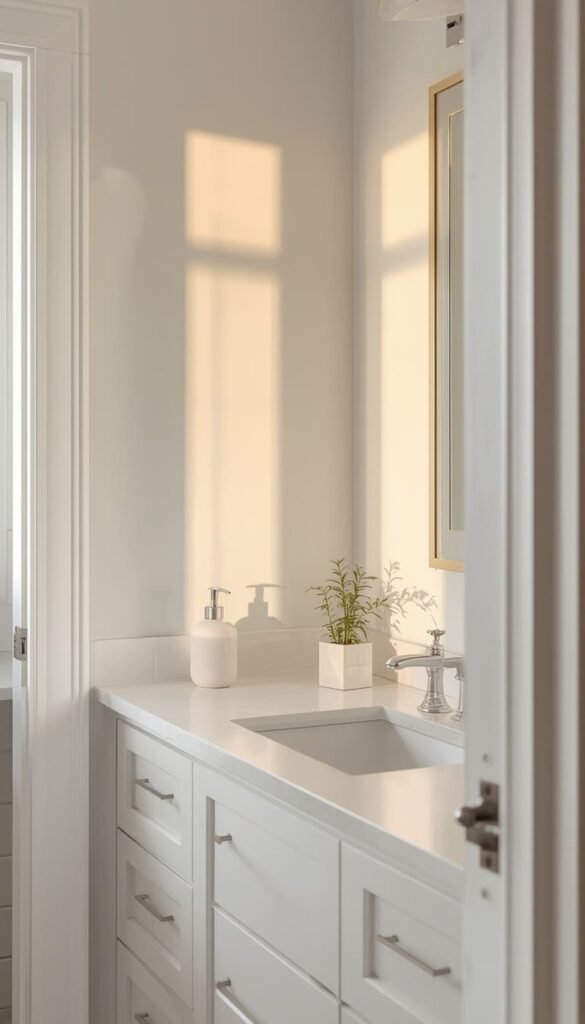
I’ll be honest paint doesn’t photograph as dramatically as new tile or a statement vanity. So it gets overlooked in renovation content constantly. But in terms of dollar for dollar return on effort, nothing in a bathroom redo even comes close. A $45 can of quality paint and a weekend afternoon can make a bathroom feel completely new.
The finish debate is one I get asked about constantly. Here’s my definitive answer: satin for walls, semi-gloss for trim and door. Satin is easier to clean than eggshell and doesn’t have the plastic sheen that full semi gloss can create on large wall surfaces. In a bathroom with high humidity, never go flat or matte it traps moisture and grows mildew faster than you’d expect.
Color is where it gets personal. For the US market right now, these are the shades I’m recommending most often:
- Benjamin Moore White Dove OC-17 — warm white that works in virtually any lighting condition
- Sherwin-Williams Agreeable Gray SW 7029 — the perfect greige for Transitional bathrooms
- Benjamin Moore Hale Navy HC-154 — for powder rooms where you want drama without commitment
One thing to watch out for is skipping primer when going over a dark color. I’ve seen homeowners apply three coats of a light paint over dark gray walls and still see the old color bleeding through. One solid coat of a quality primer saves you an entire extra paint coat and a lot of frustration.
7. Spa Bathroom Ideas That Actually Work on a Real American Budget
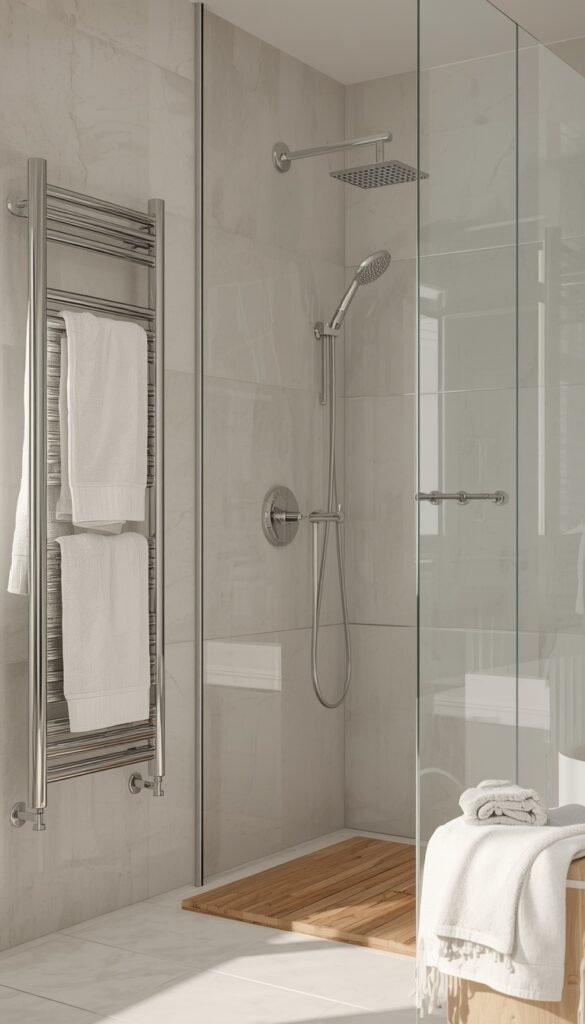
The word “spa bathroom” makes people assume we’re talking about a $30,000 renovation with heated marble floors and a soaking tub the size of a small car. And yes, that version exists. But the feeling of a spa bathroom that exhale the moment you walk in is actually very achievable on a real budget. It comes down to three things: warmth, softness, and sensory detail.
The single upgrade I recommend to almost every client who wants that spa feeling without the spa price tag is a heated towel bar. It sounds simple. It is simple. But wrapping yourself in a warm towel after a shower genuinely changes the experience of your bathroom in a way that’s hard to explain until you’ve felt it. Quality options run $80 to $200 and most are straightforward plug-in installations.
A rainfall showerhead is the other one. No contractor needed it’s a direct swap in most cases, takes about 20 minutes, and transforms your daily shower from functional to genuinely enjoyable. Budget $60 to $180 for a quality option.
Now, about bath rugs. White fluffy rugs photograph like a dream. In real life, with pets, kids, or just the general chaos of an American household, they’re an absolute nightmare to maintain. I always steer clients toward a teak shower mat or a low-pile Turkish cotton rug in a warm neutral beautiful, practical, and actually washable without drama.
8. Bathroom Vanity Makeover Plus Mirror Upgrade Equals the Combo That Looks Like a Full Remodel
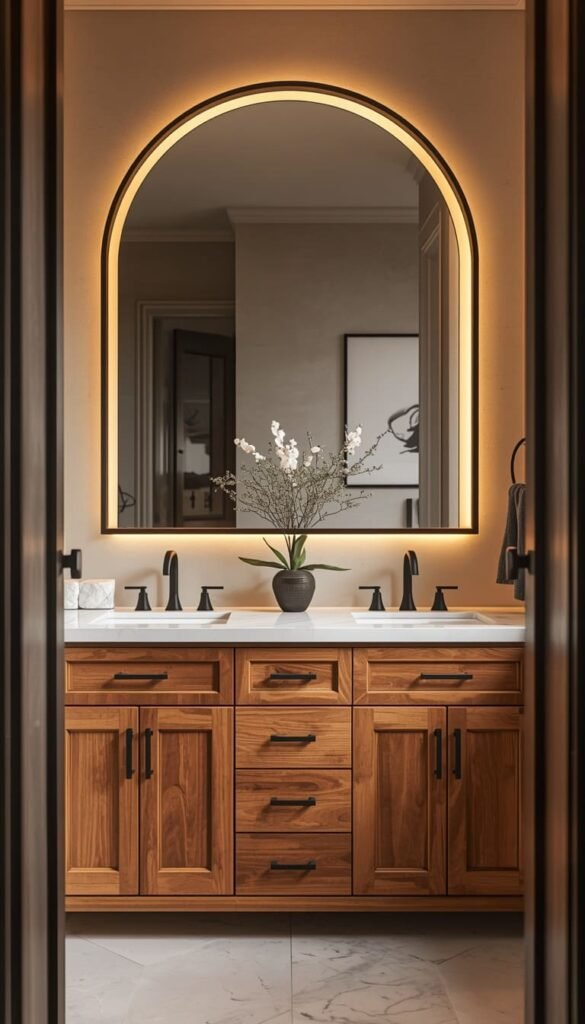
Here’s something I’ve noticed across hundreds of projects when people walk into a bathroom, their eyes go straight to the vanity and mirror zone. That pairing is the face of the room. Get it right and the rest of the bathroom almost doesn’t matter. Get it wrong and even expensive tile and fixtures feel somehow off.
The mirror is where most homeowners underinvest. They spend $800 on a new vanity and then hang a $30 builder grade rectangle above it. The whole look falls flat. A well chosen mirror the right shape, the right scale, the right finish pulls everything together instantly.
Right now in the US market, arched mirrors are having a serious moment. They soften hard lines, add architectural interest, and work across multiple styles from Modern Farmhouse to Contemporary. That said, if you want something truly timeless rather than trendy, a clean rectangular mirror with a thin metal frame in your hardware finish will never look dated.
One sizing rule I never bend on: your mirror should not be wider than your vanity. It sounds obvious but I see it broken constantly. Match the mirror width to the vanity width or go slightly narrower never wider. For double vanities, you have two choices: one long mirror spanning both sinks, or two individual mirrors centered above each sink. Both work beautifully depending on the overall style direction.
Backlit mirrors are worth a mention here. They’re trending hard right now and for good reason the soft glow they cast is genuinely flattering and functional. Budget $150 to $500 for a quality option. The added ambient light they provide can actually reduce your need for additional sconces in a smaller bathroom.
9. DIY Bathroom Remodel Reality Check What You Can Do Versus What Needs a Pro
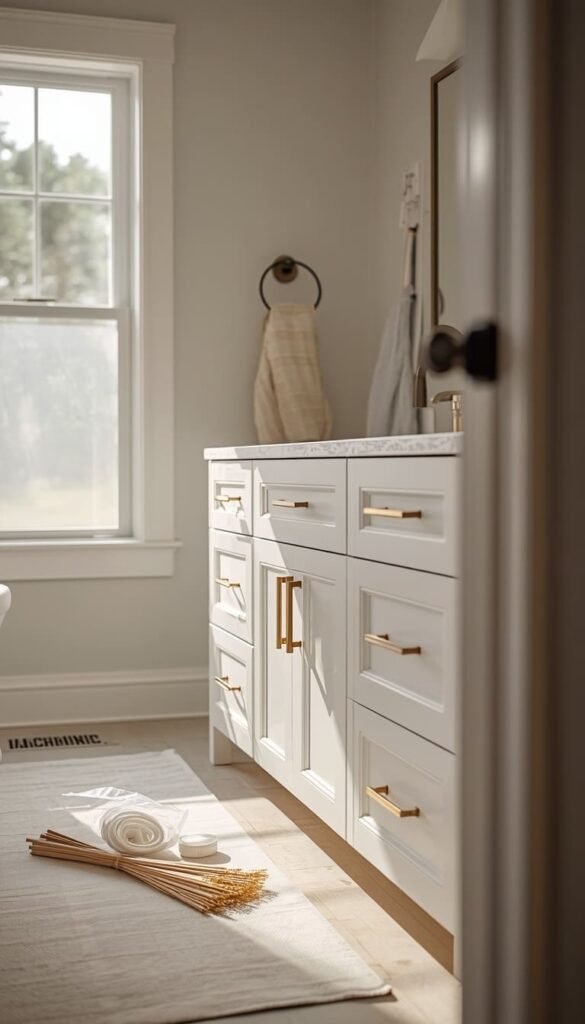
This is the conversation I have with almost every client who comes to me fired up from a weekend of watching renovation videos online. And I love the enthusiasm truly. But there’s a real difference between what looks doable on a YouTube tutorial and what actually goes smoothly in your specific home, with your specific plumbing, in your specific wall construction. So let me give you the honest version.
Here’s how I break it down for my clients:
- Confident DIY territory: Painting walls and vanities, swapping hardware, replacing faucets, hanging mirrors, installing peel-and-stick backsplash, changing light fixtures on existing wiring, caulking around tubs and sinks
- Proceed carefully: Installing a new vanity top, tiling a backsplash, replacing a toilet, laying new flooring over existing subfloor
- Always hire a pro: Moving plumbing walls, relocating drain lines, any new electrical circuits near water, structural wall changes, full shower builds from scratch
The permit question is one Americans consistently get wrong. If your bathroom redo involves moving any plumbing, adding an electrical circuit, or changing the layout in a way that affects structural elements you need a permit in virtually every US jurisdiction. Skipping it feels fine until you sell your home and the inspector flags unpermitted work. That conversation with a buyer’s agent is not a fun one.
On the contractor side, I always tell clients to ask three questions before hiring anyone: Can you show me your license and insurance? Can you give me three references from bathroom projects specifically? And will you pull the permits yourself? If any answer makes them hesitate, keep looking.
The financial reality of DIY is genuinely compelling though. Handling the work yourself on eligible tasks saves roughly 30 to 50 percent on total project cost. On a $10,000 bathroom renovation, that’s real money. Just be honest with yourself about your skill level before you start demoing tile at 9pm on a Saturday.
If you could change just one thing in your bathroom this weekend, what would it be?
10. Master Bathroom Renovation When It Is Time to Go All In and How to Plan It Right
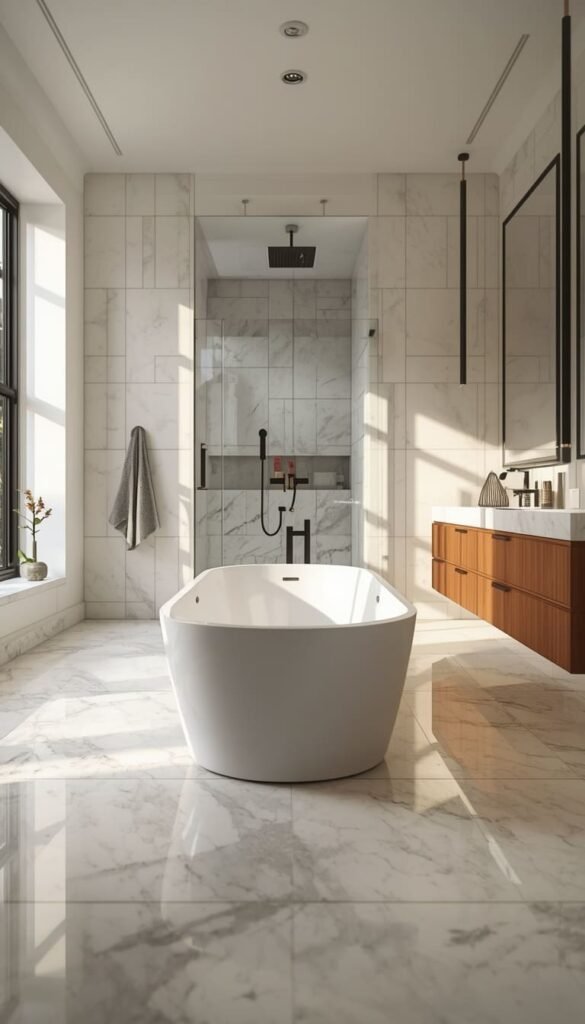
There comes a point where small updates just aren’t enough anymore. The layout doesn’t work. The plumbing is aging. The entire space feels like it belongs to a previous decade and no amount of new hardware or fresh paint is going to fix that. When that moment arrives, a full master bathroom renovation is absolutely the right call but only if you go in with a clear plan and realistic expectations.
I always walk primary bathroom clients through what I call the three phase approach. First comes demo and discovery this is where you find out what’s actually inside your walls and whether the subfloor has any water damage surprises waiting for you. Second is the plumbing and electrical rough-in, which has to happen before a single tile goes up. Third is the finishing phase tile, vanity, fixtures, lighting, mirrors, and all the details that make the space feel like yours.
The number one budget mistake I see at this level is moving plumbing walls. It sounds like a minor change on paper. In reality, relocating a drain line or shifting a shower by two feet can add $2,000 to $5,000 to your project almost instantly. Whenever possible, I design around the existing plumbing footprint. It’s not a limitation it’s a budget saving strategy.
Here’s what realistic budgets look like for a US primary bathroom renovation in 2025 and 2026:
- Entry level refresh with quality finishes: $8,000 to $12,000
- Mid range full renovation: $12,000 to $18,000
- High end with custom tile, freestanding tub, and luxury fixtures: $20,000 to $35,000 and beyond
The ROI picture is genuinely encouraging. According to Angi data, bathroom renovations return approximately 72.7 percent of their cost at resale. That’s not a guarantee, but in a competitive US housing market, an updated primary bathroom consistently shortens time on market and strengthens your negotiating position.
One last thing I want every homeowner to hear before they start: the decisions you make in the planning phase cost nothing. The decisions you change mid construction cost everything. Spend real time on your layout, your tile selection, and your fixture choices before a single wall opens up. Your future self and your contractor will thank you.
Your 2 Minute Bathroom Redo Decision Map
By Budget
Weekend Warrior (Under $200)
- Repaint the vanity in a cabinet grade enamel
- Swap hardware to matte black or brushed gold
- Replace the mirror with an arched or backlit option
- Add a heated towel bar for instant spa feeling
- Fresh paint in a designer-approved neutral
Serious Investment ($1,000 and Above)
- Full floating vanity installation with plumbing adjustment
- Statement tile accent wall or full retile
- Primary bathroom gut renovation with custom fixtures
- Rainfall shower system with professional installation
- Backlit mirror paired with side mounted sconces
By Lifestyle
Busy Families and Pet Owners
- Skip white rugs go low pile Turkish cotton or teak mat
- Choose dark grout light grout in a family bath never stays clean
- Matte black hardware hides water spots far better than chrome
- Floating vanities make floor cleaning significantly faster
Design Lovers and Minimalists
- One statement tile wall beats full room retiling every time
- Fewer accessories styled intentionally beats a cluttered counter
- Warm 2700K lighting is non negotiable for a curated look
- Arched mirror plus matching hardware finish ties everything together
Frequently Asked Questions About Bathroom Redo Ideas
What is a realistic budget for a bathroom redo in the USA?
The average bathroom redo costs between $6,500 and $17,000 depending on scope. A cosmetic refresh paint, hardware, mirror can run as low as $200. Full primary bathroom renovations typically land between $12,000 and $25,000 in most US markets.
Can I redo my bathroom without replacing the vanity?
Yes, and honestly it’s my first recommendation. Repainting with a cabinet grade enamel and swapping the hardware can make an existing vanity look completely new for under $150.
What adds the most value to a bathroom before selling?
Walk in showers, updated vanities, and fresh flooring consistently deliver the strongest returns. Bathroom renovations return roughly 72 percent of their cost at resale according to Angi data.
How long does a bathroom redo take?
A cosmetic refresh takes one weekend. A mid range renovation with new tile and fixtures runs two to four weeks with a contractor. Full gut renovations can stretch to six to eight weeks depending on permit timelines in your area.
Is it cheaper to refinish a bathtub or replace it?
Refinishing wins every time on cost. A professional tub refinish runs $300 to $600. A full replacement with labor easily hits $1,500 to $3,000 and that’s before you factor in tile repair around the new tub.
Conclusion
Your bathroom doesn’t have to be perfect to feel like yours again. Pick one idea from this list just one and start there. Buy that paint sample. Order those new cabinet pulls. Measure your mirror wall. Small moves made consistently are exactly how good spaces get built, and I’ve watched it happen in homes of every size and every budget across the country. Your daily routine deserves a space that actually makes you feel good the moment you walk in.
So tell me which of these bathroom redo ideas are you planning to tackle first? Drop it in the comments, I’d love to hear what direction you’re taking your space.
