
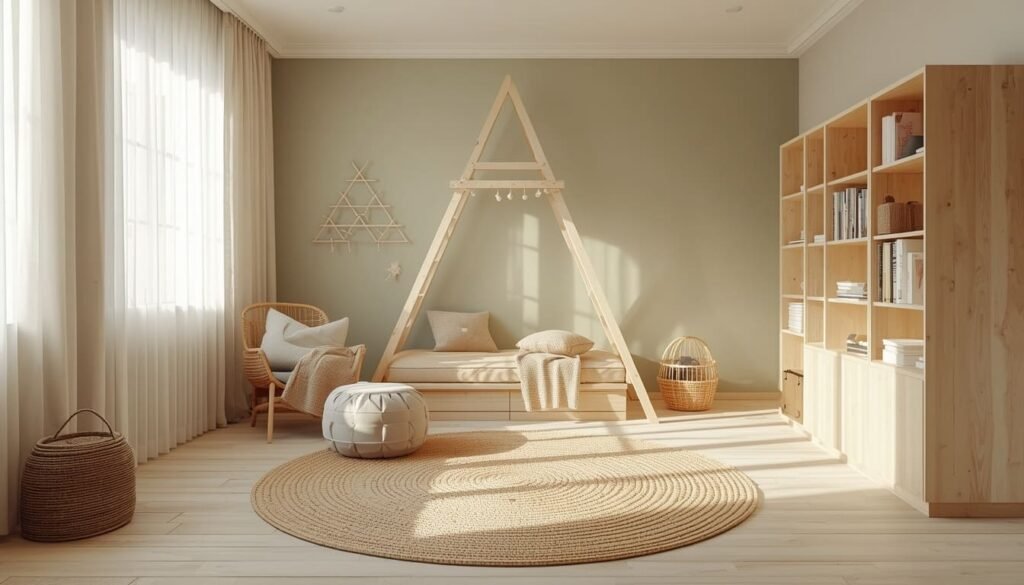
If your kid’s playroom looks like a toy store exploded inside a rainbow factory, trust me you are not alone, and there is a better way. Scandi playroom ideas have taken over American homes for one simple reason: they actually work. The Scandinavian approach gives kids a space that feels open, calm, and genuinely fun to play in without turning your home into an eyesore. I’ve designed dozens of kids’ spaces across the US, and every single time I introduce Nordic principles into a playroom, parents tell me it’s the one room in the house they no longer dread walking into. That’s the real power of getting this right.
My Design Notes
A couple of years ago, I was hired to redesign a 10×12 spare bedroom in a suburban home in Austin, Texas one room, two kids, and three completely different opinions on what it should look like. The mom had a saved folder of Nordic playroom inspiration on Pinterest. The dad’s only request was “easy to clean, please.” And the 3 year old just wanted a slide inside the house. I told them I could make all three of them happy, and we landed under $1,400 total. We painted the walls in Sherwin Williams Accessible Beige, used an IKEA KALLAX unit as a natural zone divider between the active play area and a cozy reading nook, and brought in a birch climbing arch from a small Etsy seller based in Oregon. I’ll be honest with you my first rug choice was a white boucle, and it lasted exactly 11 days before a juice box took it out for good. We switched to a washable wool blend in oatmeal from Ruggable and never looked back. That project taught me more about real world Scandi playroom design than any mood board ever could.
Stunning Scandinavian Playroom Design Ideas Every American Parent Needs Right Now
1. What Actually Makes a Playroom “Scandi”
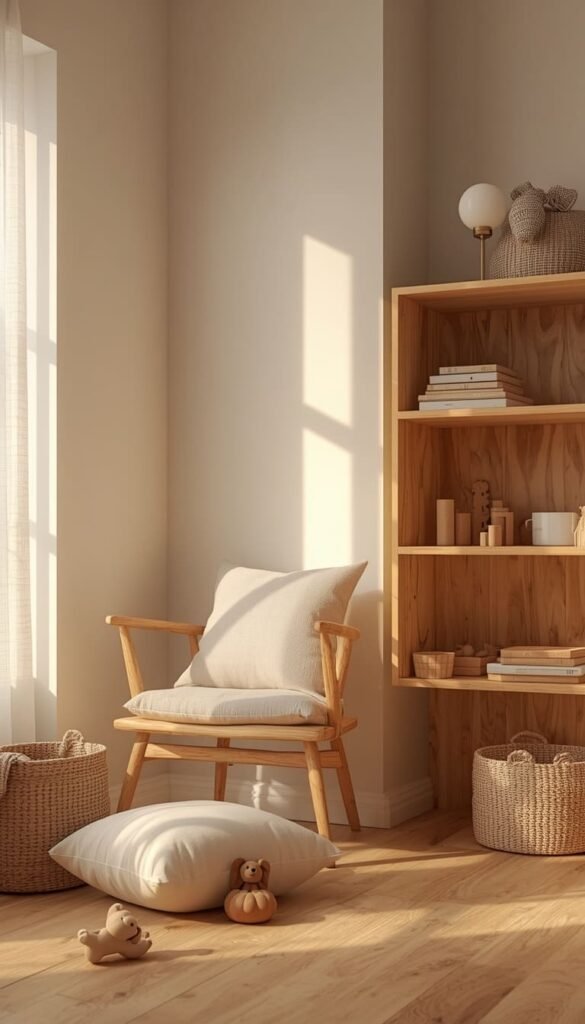
I get this question all the time from clients, and my answer always surprises them. Scandi design is not about making everything white and empty. It’s built on three real pillars natural materials, functional minimalism, and cozy warmth and all three have to show up together for the look to actually land. Pull out one of those pillars and the whole room starts to feel either cold and sterile or just plain messy.
What I love about the Scandinavian approach is how unapologetically practical it is. Every piece of furniture earns its place. Every textile serves a purpose. There’s no decorating for the sake of decorating. For a kids’ playroom specifically, that mindset is genuinely life changing because it forces you to be intentional about what goes in the room and what stays out.
2. The Scandi Color Palette for Kids’ Rooms
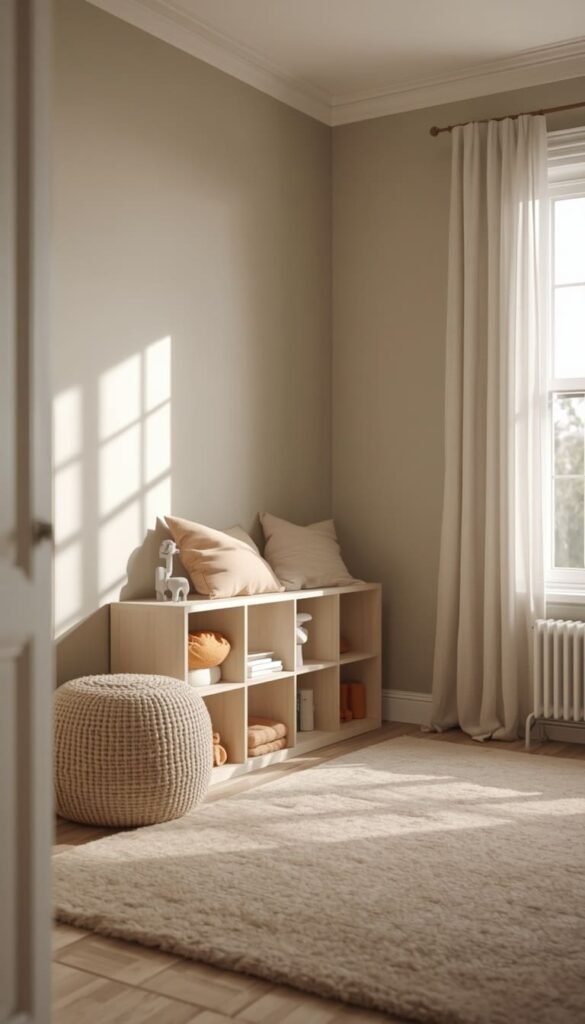
Soft and neutral does not have to mean boring, and this is where a lot of American parents get stuck. The Scandi palette for a kids’ room is actually richer than people expect. Think warm whites, dusty sage, muted terracotta, pale birch tones, and soft slate. These colors layer beautifully together without ever feeling chaotic.
For US parents shopping at their local paint store, here are three combinations I personally recommend:
- Sherwin-Williams Accessible Beige on walls paired with Simply White on trim
- Benjamin Moore Pale Oak as a base with Dried Thyme as an accent wall
- Sherwin-Williams Drift of Mist for a cooler, airy Nordic feel in rooms with good natural light
One thing to watch out for is going too gray. A lot of people confuse Scandi with industrial, and a cold gray playroom feels nothing like the warm Nordic spaces that make this style so appealing in the first place.
3. Why Neutral Playroom Decor Actually Benefits Your Child’s Brain
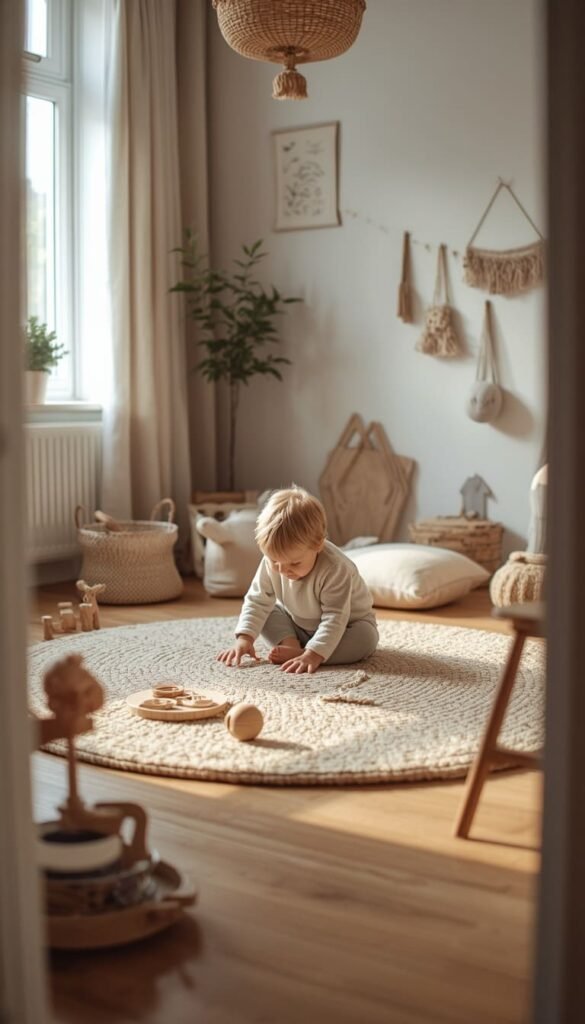
Here’s something the competitor blogs never talk about, and I think it’s one of the most compelling reasons to go Scandi with your playroom. Research in environmental psychology consistently shows that visually busy, high-contrast spaces can overstimulate young children, making it harder for them to focus, self-regulate, and settle into play. Soft neutral environments do the opposite.
When I redesigned that Austin playroom I mentioned earlier, the mom told me two weeks later that her 3-year-old was playing independently for longer stretches than ever before. She credited the climbing arch. I gently pointed out it was probably also the fact that the room no longer had 47 competing visual elements screaming for attention.
A calm visual environment lets the child not the decor become the most interesting thing in the room.
4. Build a Cozy Reading Nook with a Hygge Corner
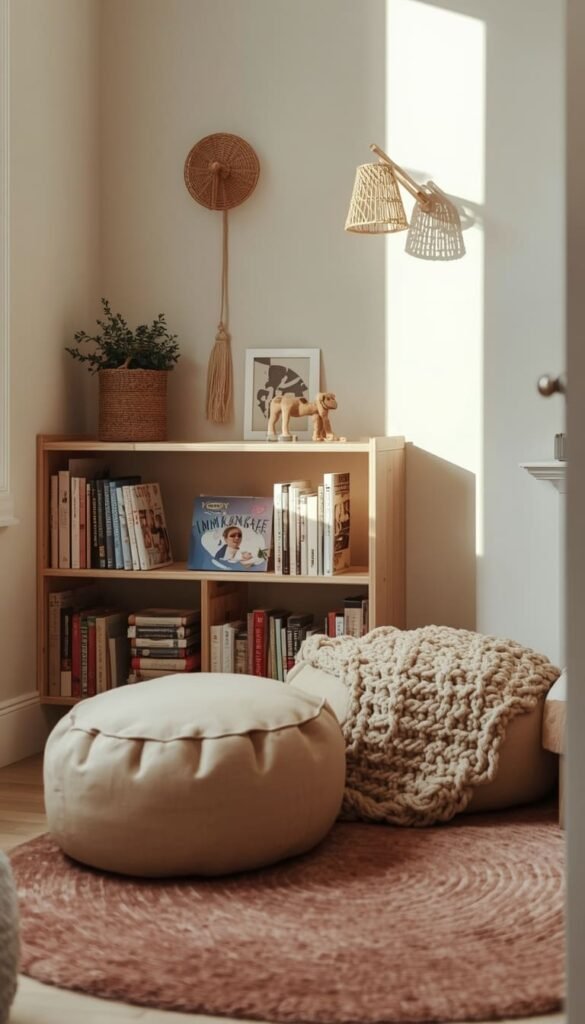
Every Scandi playroom I design gets a reading nook, no exceptions. This is the hygge heart of the whole space, and kids gravitate toward it instinctively. You don’t need a built-in window seat or an expensive canopy bed to pull this off. A corner of the room, a low bookshelf, two or three oversized floor cushions, and a warm toned plug in wall sconce is genuinely all it takes.
Budget reality: you can put together a solid reading nook for around $150 to $250 using IKEA’s FLISAT bookshelf, a couple of poufs from Target’s Pillowfort line, and a simple rattan wall lamp from Amazon. A quick trick I’ve learned over the years is to anchor the whole nook with a small round rug even a 3 foot circle in oatmeal or dusty rose instantly signals to kids that this spot is special and separate from the rest of the room.
5. Use Light Wood Playroom Decor for Warmth Without Weight
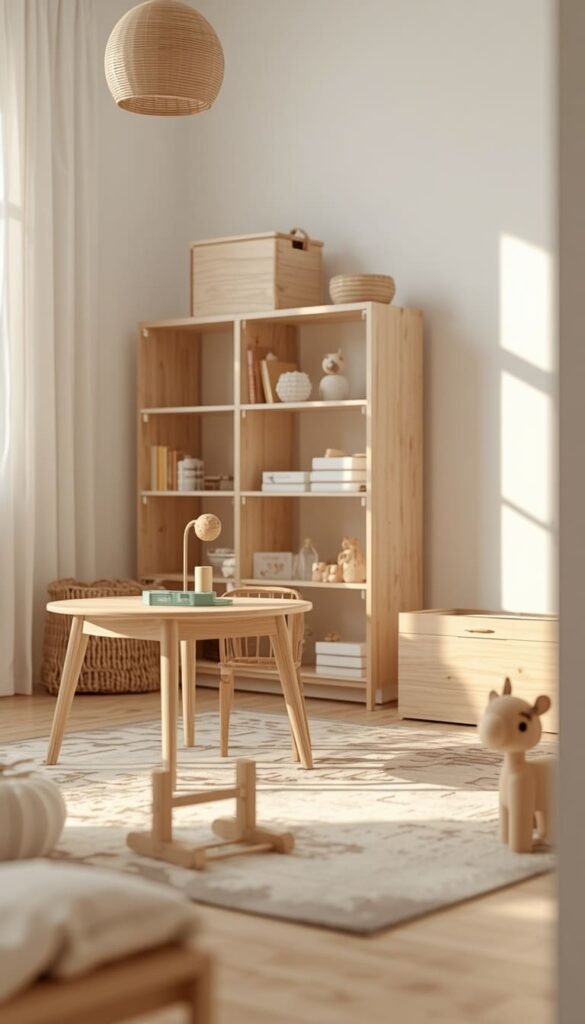
Light wood is the backbone of every Scandi playroom I’ve ever designed, and for good reason. Birch, pine, and beech bring this incredible warmth into a room without making it feel heavy or dark. That balance is especially important in kids’ spaces where you want energy and brightness, not a room that feels like a furniture showroom.
Here’s how I break it down for clients when it comes to budget:
- IKEA is your best friend for light wood basics their TROFAST and KALLAX lines are genuinely hard to beat at that price point
- Mid range splurge goes to Pottery Barn Kids for their Larkin and Reese wood collections
- If budget allows, small Etsy makers crafting solid birch pieces are worth every penny for longevity
One thing to watch out for is mixing too many wood tones. Light birch next to dark walnut next to honey oak creates visual noise that completely undermines the calm Scandi aesthetic you’re going for. Pick one dominant wood tone and stay consistent throughout the room.
Which of these Scandi ideas feels most doable for your space right now the reading nook, the wooden climbing structure, or the toy storage setup?
6.The Scandi Toy Storage Idea That Actually Works
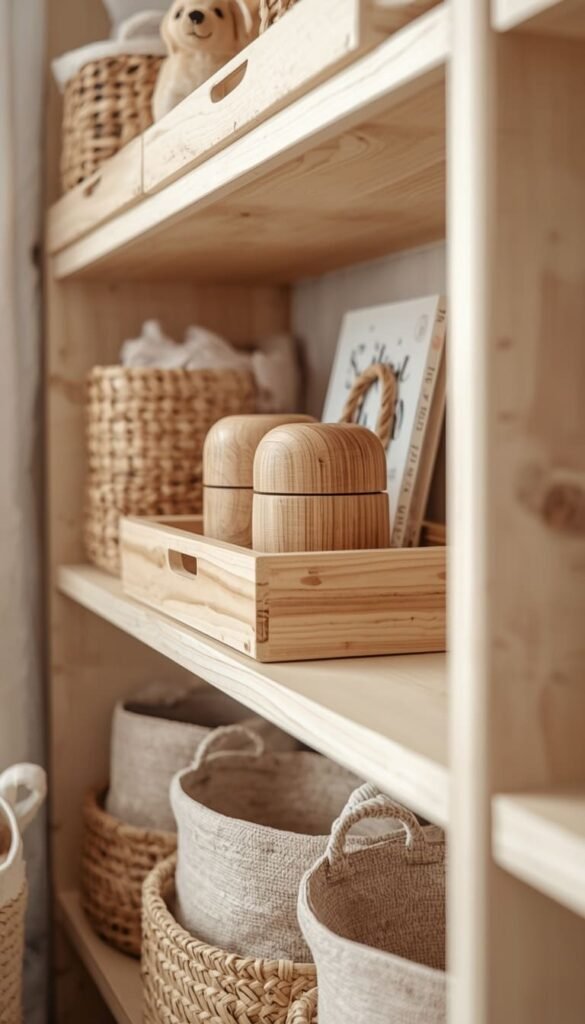
Open low shelving is a cornerstone of both Scandinavian design and Montessori philosophy, and the combination is powerful. When toys are visible, accessible, and at a child’s eye level, kids make better choices about what they want to play with. They also and I say this from real project experience clean up more willingly because the system makes sense to them.
I’ll be honest with you though. Open shelving looks stunning on day one and like a yard sale by day four if you don’t set it up correctly. The secret is editing ruthlessly before you even start arranging. Keep only what genuinely gets played with regularly and rotate everything else into storage bins in a closet. What stays on the shelf should fit comfortably with breathing room between items not packed in like a Tetris game.
A simple wooden tray on each shelf level works beautifully for corralling small pieces like crayons, puzzle parts, and building blocks without needing lids or labels.
Top 6 Scandi playroom ideas:
| Idea | Estimated Price | Maintenance |
|---|---|---|
| Cozy Reading Nook with Hygge Corner | $150 to $250 | Low |
| Light Wood Playroom Decor | $200 to $800 | Low |
| Open Low Shelving Storage | $100 to $400 | Medium |
| Wooden Climbing Structure | $300 to $900 | Low |
| Scandi Montessori Hybrid Setup | $400 to $1,200 | Medium |
| Layered Scandi Lighting System | $80 to $300 | Low |
7. Create a Scandi Kids Corner in ANY Room Size
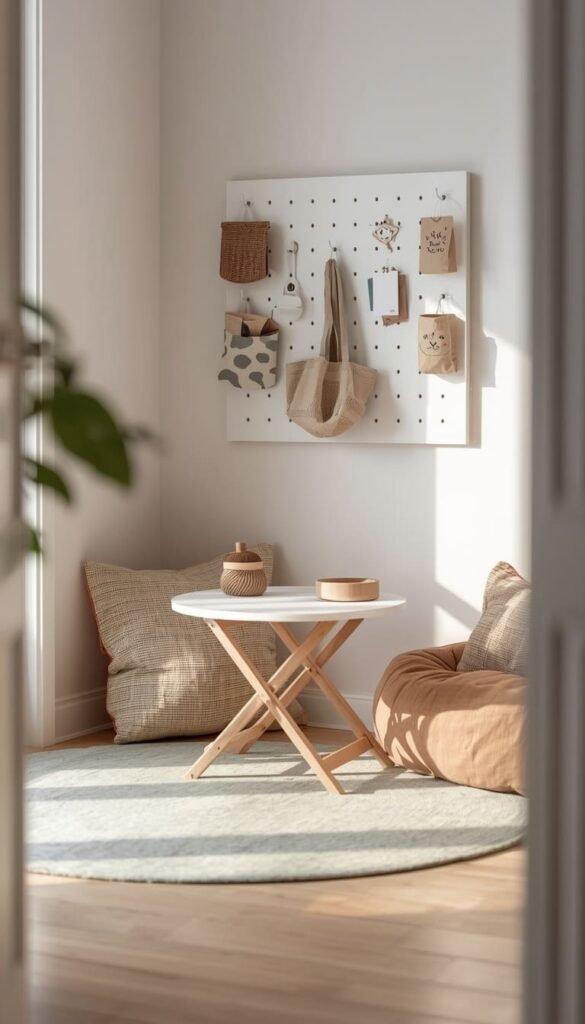
Not everyone has a dedicated playroom, and honestly some of my favorite Scandi kids’ spaces have been carved out of the tiniest corners imaginable. A 4×4 foot area in a living room, the end of a bedroom, even a wide hallway nook all of these can become a genuinely functional and beautiful Scandi play space with the right approach.
The single most effective tool for defining a small Scandi kids’ corner is a rug. Drop a soft neutral rug in that zone and suddenly the space has an identity. Everything sitting on or near that rug belongs to the play area. Everything off it doesn’t. It’s a visual boundary that works for kids and adults equally well.
For small scandi playroom ideas specifically, I always recommend:
- Wall-mounted storage over floor storage to preserve precious square footage
- A fold-flat activity table that tucks away when not in use
- Vertical pegboards painted in a soft white for hanging bags, dress-up items, and art supplies
8. Add a Wooden Climbing Structure for Active Play
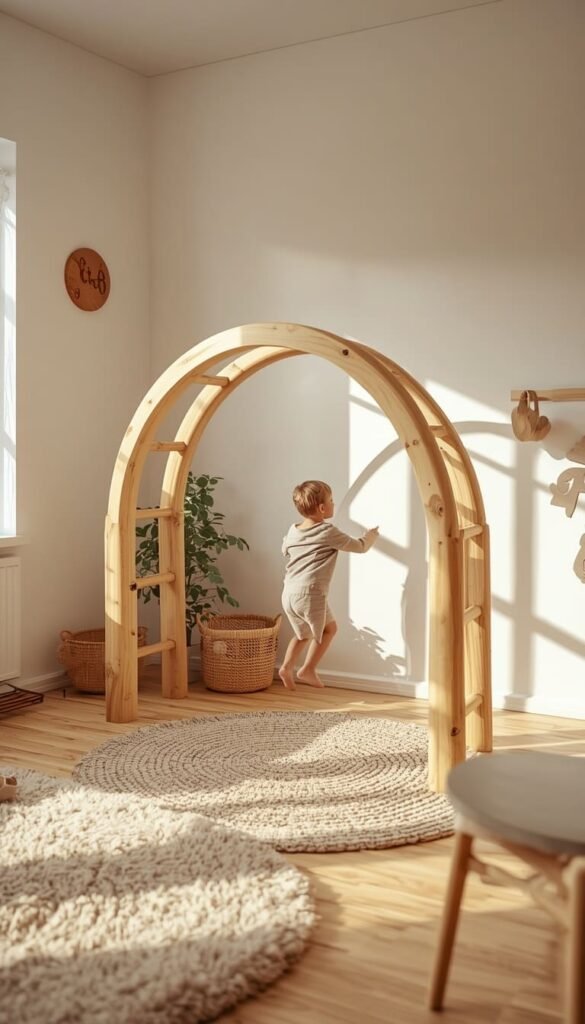
This is the one idea that makes every kid in every project light up without fail. A wooden climbing structure whether it’s a simple arch rocker, a triangle climber, or a more involved indoor jungle gym brings active physical play into the Scandi playroom in a way that feels completely at home with the aesthetic.
Natural birch and pine climbing structures blend seamlessly with the rest of your light wood decor instead of sticking out like a plastic eyesore. From a developmental standpoint, indoor climbing builds core strength, spatial awareness, and confidence in ways that no screen ever will. A quick trick I share with every parent: size the structure to your room first and your child second. A climbing arch that overwhelms a 9×10 room helps nobody, no matter how beautiful it is.
Safety note worth mentioning always check for ASTM certification on any indoor climbing equipment sold in the US market, and anchor any structure that has a tipping risk, even if the product description says it’s freestanding.
9. Layer Textiles the Scandinavian Way Without the Clutter
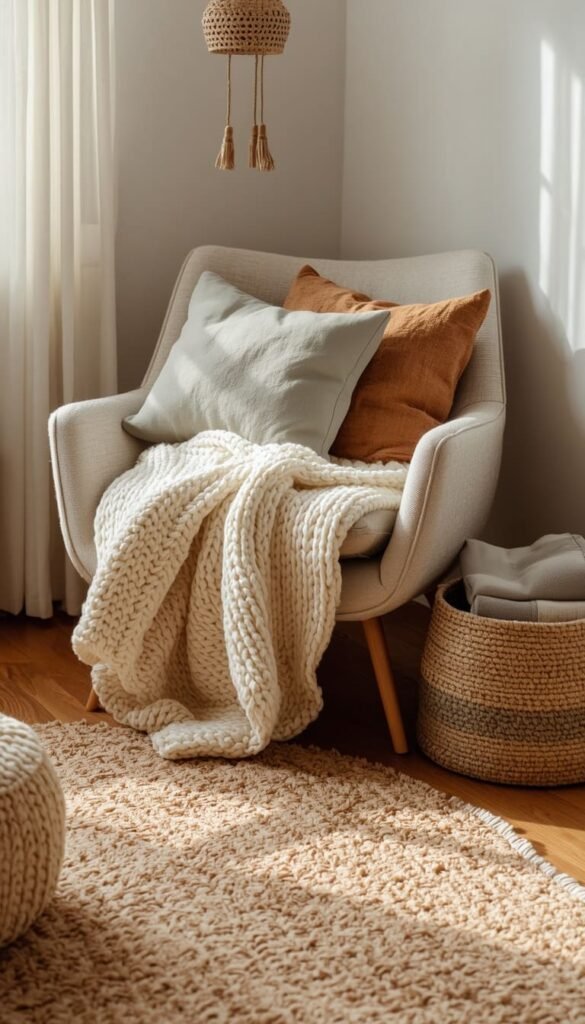
Textiles are what separate a Scandi playroom that feels genuinely cozy from one that just looks cold and staged. The Nordic approach to layering is intentional and restrained a chunky knit throw draped over a reading chair, a linen cushion or two on the floor, a soft wool-blend rug anchoring the play zone. That’s really all you need, and that’s the point.
The maintenance reality is something I always bring up with clients before they fall in love with a fabric. Here’s the honest breakdown:
- Wool blends are warm and durable but need spot cleaning not ideal for homes with kids under 3
- Linen cushion covers are washable and age beautifully but wrinkle easily and show dirt faster than cotton
- Cotton knit throws are my personal favorite for playrooms machine washable, soft enough for kids, and they hold up through years of fort building
A quick trick I’ve learned is to keep a small woven basket in the corner of the room specifically for textiles. At the end of the day everything gets tossed in the basket. The room looks intentional and tidy in under 60 seconds.
10. Choose Earth Tone Playroom Ideas Over Bold Primary Colors
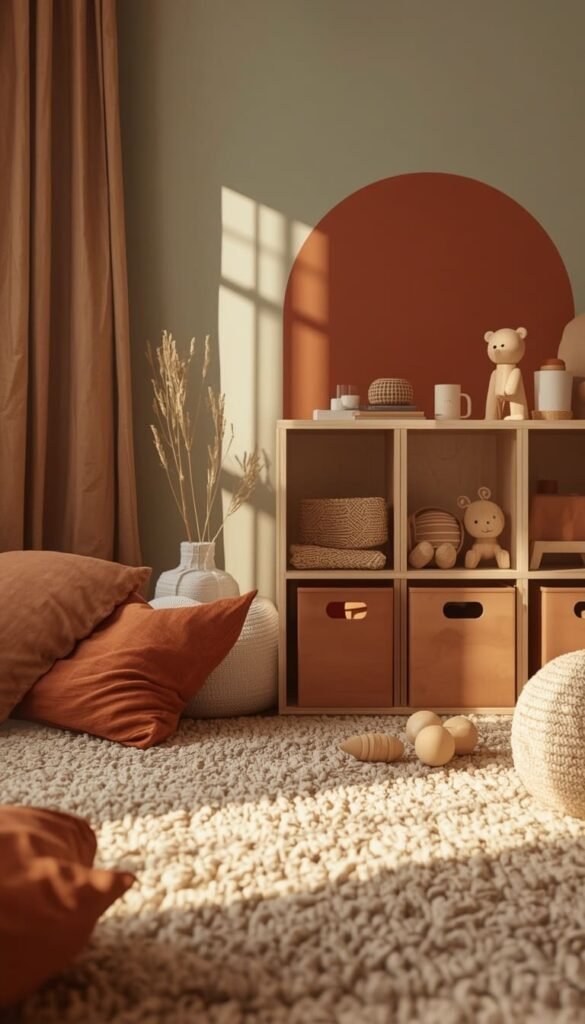
I know this one feels counterintuitive. We’ve been conditioned to think kids need bright red, yellow, and blue in their spaces. But here’s what I’ve seen consistently across dozens of US playroom projects earth tones age better, photograph better, and genuinely serve children better from a sensory standpoint.
Terracotta, warm sage, dusty rose, oat, and soft clay are colors that feel alive without being aggressive. They work with natural light instead of fighting it. And from a purely practical standpoint, when your child outgrows the playroom and the space needs to transition into something else, earth tone walls and decor don’t need to be completely gutted to make that happen.
The other thing nobody tells you about primary color playrooms is that they date incredibly fast. That cherry red accent wall that looked great in 2019 is the first thing every client asks me to cover up when we start a refresh. Earth tones simply don’t have that problem.
11. Design a Scandi Montessori Playroom Hybrid
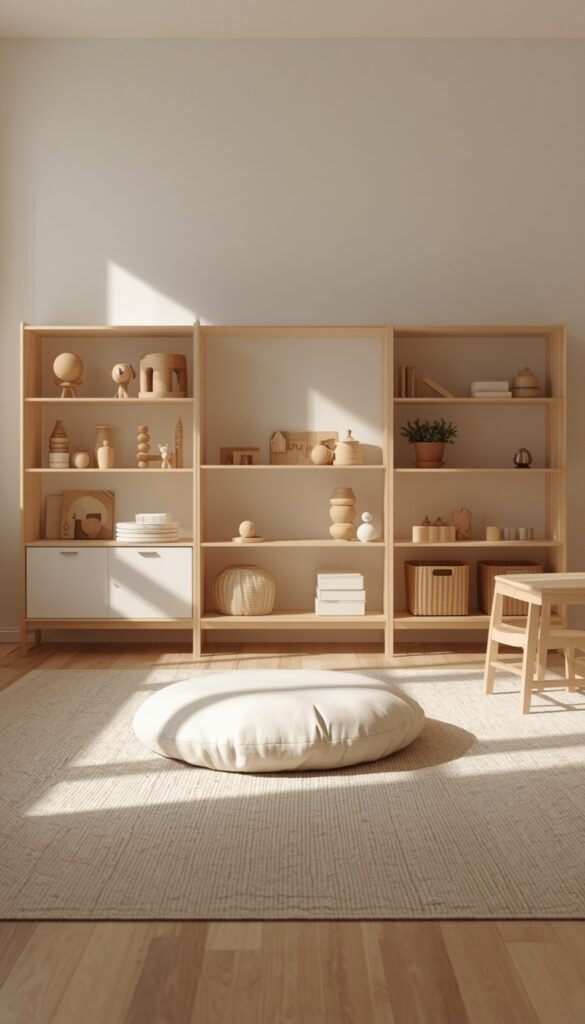
This combination has become one of the most requested styles in my US client work over the last two years, and I completely understand why. Scandi design gives you the aesthetic calm, natural, beautiful. Montessori philosophy gives you the function child led, purposeful, independence-building. Together they create a playroom that works harder than either style does alone.
Setting this up correctly comes down to a few specific decisions:
- Furniture at child height across the board low tables, floor level shelving, accessible coat hooks by the door
- A “yes space” where everything within reach is safe and available without asking permission
- Toy rotation built into the system from day one so the shelves never get overwhelmed
What I love about the Scandi Montessori hybrid is that it respects both the child and the parent. The child gets autonomy and a space designed around their actual scale. The parent gets a room that doesn’t look like chaos wearing a wooden frame.
Are you starting your playroom from scratch or giving an existing space a Nordic refresh?
12. Set Up a Scandi Nursery Playroom That Grows With Your Child
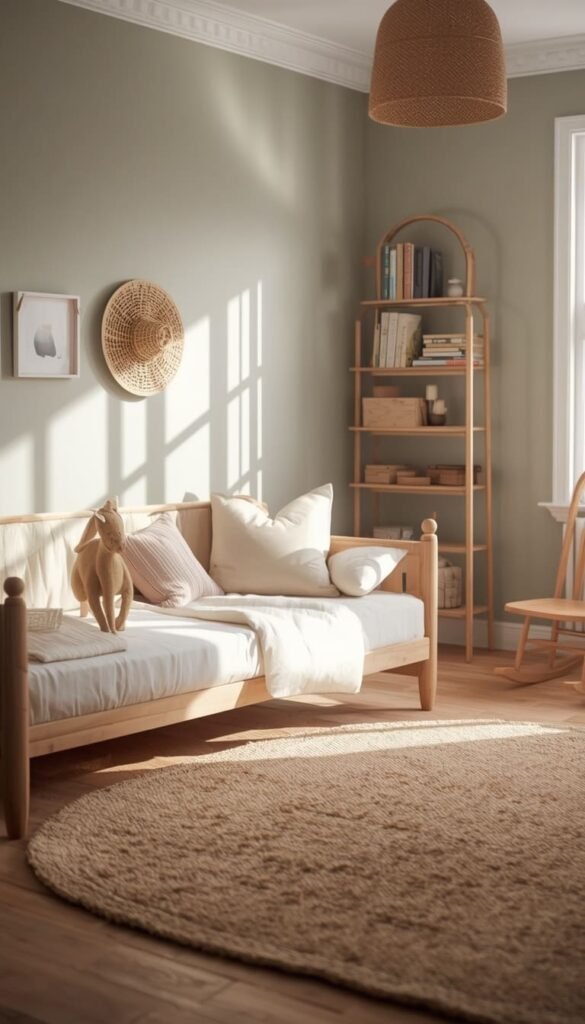
One of the most common and expensive mistakes I see American parents make is designing a nursery playroom for the baby their child is right now instead of the kid they’re becoming. You end up redesigning the entire room 18 months later and spending twice the money.
The Scandi approach naturally solves this problem because it’s built on timeless materials and flexible systems rather than themed characters or age-specific gimmicks. A solid birch shelving unit works for board books at 18 months and chapter books at 8 years. A neutral wool rug doesn’t need to be replaced just because your child stopped being obsessed with dinosaurs.
A few specific investments that genuinely grow with your child in a Scandi nursery playroom setup:
- A convertible floor bed that transitions from infant to toddler without a new frame
- Open shelving units you can reconfigure as storage needs change
- A wooden climbing arch that functions as a rocker for infants and a climber for preschoolers
13. Smart Functional Playroom Storage the Nordic Way
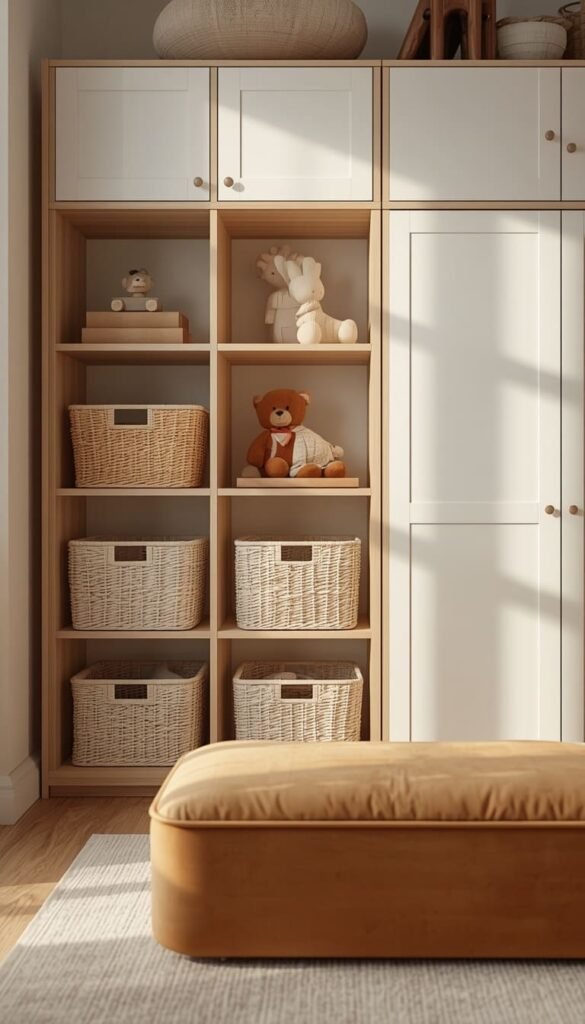
Storage is where most American playrooms completely fall apart, and I say that with zero judgment because the toy industry is genuinely working against you. The Nordic approach to playroom storage is built on one core principle everything needs a home, and that home needs to make sense to a child, not just an adult.
The system I come back to again and again in my projects uses three tiers:
- Open bins or baskets on lower shelves for everyday items kids access independently
- Closed storage on higher shelves for art supplies, craft materials, or anything that needs adult supervision
- A single deep drawer or lidded ottoman for the “miscellaneous” category that every playroom inevitably generates
One thing to watch out for is over-labeling. I’ve seen beautifully designed playrooms where every single bin has a printed label with an icon and a word, and the kids completely ignore the entire system within a week. For younger children, picture labels on two or three key bins work far better than labeling absolutely everything. Keep the system simple enough that a 4 year old can actually run it independently.
14. Bring Nature Indoors with Wooden Toy Room Ideas
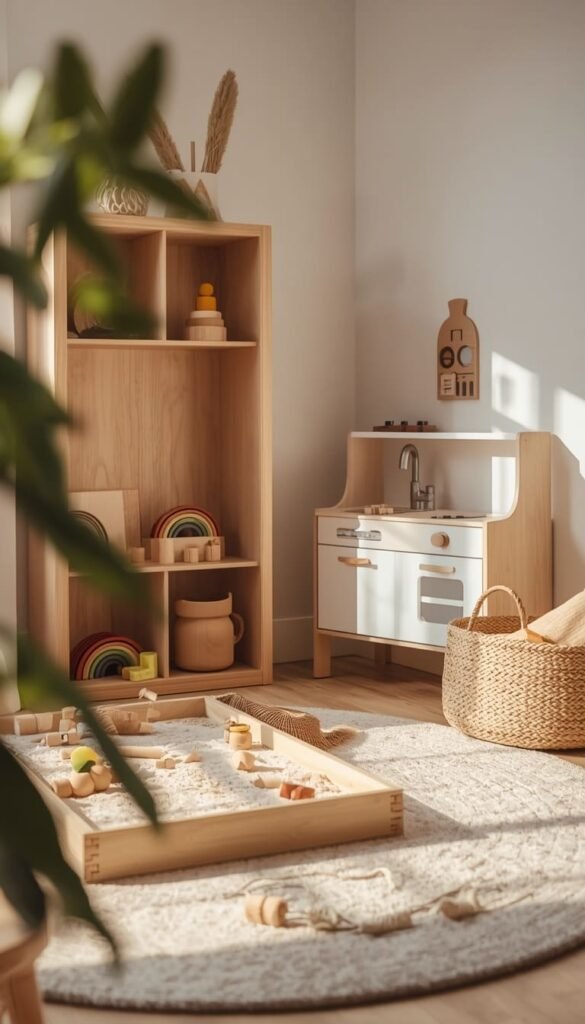
There’s something about natural wooden toys in a Scandi playroom that just feels right on every level. They’re quieter than plastic, more beautiful to look at, and from a sensory standpoint they offer children a texture and weight that synthetic materials simply can’t replicate. I’ve watched toddlers choose a simple wooden stacker over a flashing electronic toy more times than I can count once the room is designed correctly.
The toy rotation method is something I recommend to every single client regardless of budget or room size. Pull out a third of the toys, store them in a closet bin, and swap them back in every three to four weeks. Children engage more deeply with fewer options and the “new toy” excitement gets recycled without spending a single dollar. It also keeps those open Scandi shelves looking intentional rather than overwhelmed.
For wooden toy room ideas specifically, a few categories worth investing in:
- Open ended building sets in natural wood like unit blocks or Grimm’s rainbow stackers
- Sensory play trays in birch or beech for sand, kinetic clay, or loose parts play
- A simple wooden play kitchen in white or natural finish that photographs beautifully and lasts through multiple children
What’s the one thing about your current playroom that drives you absolutely crazy every single day?
15. Get the Lighting Right with Scandi Layered Lighting for Kids
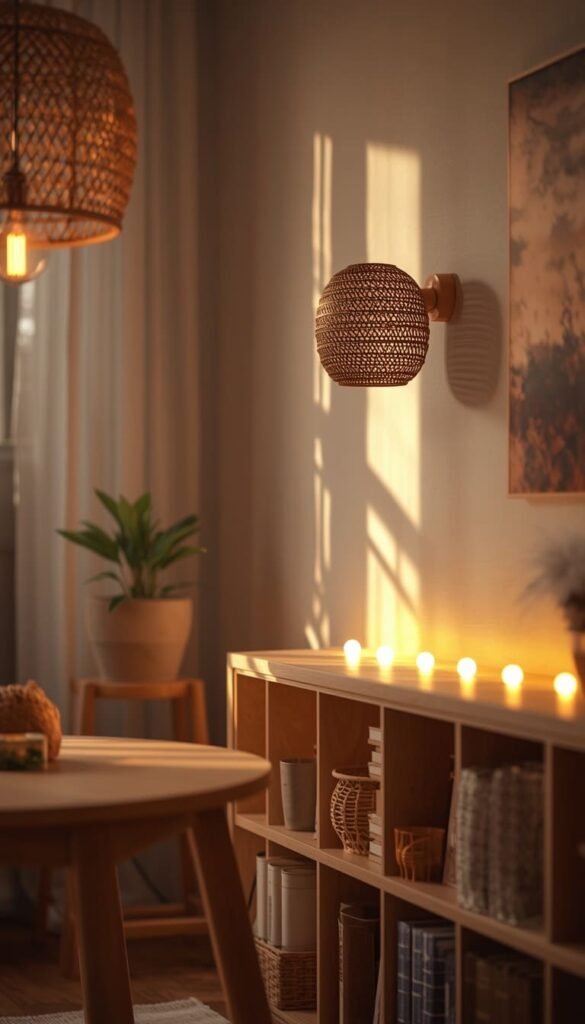
Lighting is the most underestimated element in any playroom design, and it’s the one thing that can make or break the cozy Scandi atmosphere you’re trying to create. A single overhead flush mount doing all the work is the fastest way to make a beautifully designed room feel flat and institutional. The Nordic approach layers at least three light sources in every room, and a kids’ playroom is no exception.
Here’s how I layer lighting in every Scandi playroom project I take on:
- Ambient light from a central fixture with a warm bulb I always specify 2700K to 3000K color temperature for that golden Nordic glow
- Task lighting directly over the activity table or art station a simple plug-in wall sconce works perfectly and keeps cords off the floor
- Accent or night lighting in the reading nook a small rattan table lamp on a high shelf or a string of warm LED lights along the bookshelf edge
One thing I feel strongly about and always tell parents no floor lamps in a kids’ playroom, ever. They get knocked over, the cords become trip hazards, and they create a safety issue that no amount of aesthetic value is worth. Wall mounted and shelf placed lighting only in this room.
Your 2 Minute Scandi Playroom Decision Map
By Budget
Starter Scandi ($150 to $600)
- Focus on one reading nook and one KALLAX shelf unit
- Shop IKEA, Target Pillowfort, and Ruggable first
- Stick to paint as your biggest design move it costs least and changes most
- Add textiles gradually one rug, one throw, two cushions to start
Investment Nordic ($800 to $2,000+)
- Prioritize a solid birch climbing structure as the room’s anchor piece
- Commission a small Etsy maker for custom wood shelving
- Layer in Pottery Barn Kids light wood furniture for longevity
- Budget $300 to $500 separately just for lighting done right
By Lifestyle
Busy Families with Young Kids
- Choose washable everything rugs, cushion covers, throw blankets
- Skip white go oatmeal, warm taupe, or dusty sage instead
- Open bins over labeled baskets faster cleanup, less friction
- Keep the toy count ruthlessly low rotate the rest from a closet
Minimalist Parents Who Love Clean Spaces
- One climbing structure, one shelf unit, one rug that’s your whole room
- Invest in quality over quantity on every single item
- Natural wood and linen only no plastic bins, no bright accents
- Art on walls limited to one framed print or your child’s own work
Frequently Asked Questions
What is the best color for a Scandi playroom?
Warm whites, soft oat, and dusty sage are my top picks for US homes. They keep the space calm without feeling cold or sterile.
How much does it cost to design a Scandi playroom on a budget?
The average starting budget is around $300 to $600 if you shop IKEA and Target strategically. A reading nook, one shelf unit, and a washable rug will get you 80% of the way there.
Are wooden toys worth it for a Scandi playroom?
Yes, especially if you buy open ended pieces like stackers or unit blocks. They last through multiple children and hold up far better than plastic over time.
Can I create a Scandi playroom in a small space?
Absolutely a 4×4 corner with a rug, wall mounted storage, and a floor cushion is genuinely enough. Define the zone first and let the furniture follow.
How do I keep a Scandi playroom looking tidy with young kids?
Rotate toys every three to four weeks and keep only what fits comfortably on open shelves. Less visual clutter means kids actually clean up faster on their own.
Conclusion
Your Scandi playroom doesn’t have to be perfect to be beautiful it just has to be intentional. Start with one corner, one shelf, one rug in a color that makes you exhale when you walk in the room. I’ve seen a single $200 reading nook completely change the energy of a home, and I genuinely believe the same can happen for you. You don’t need a full renovation budget or a Pinterest-perfect space to give your child somewhere calm, creative, and truly theirs.
