
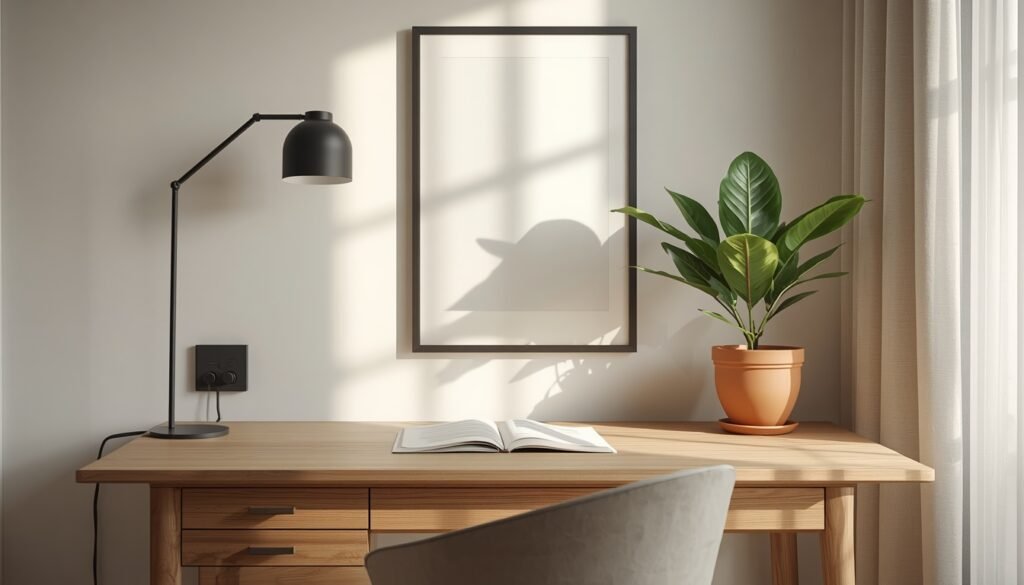
Your Scandi office ideas are not just about white walls and a wooden desk they are about designing a space that actually makes you want to sit down and work.
I have seen so many home offices that look beautiful in photos but feel completely wrong in real life. Too cold, too sparse, or just weirdly uncomfortable. The Scandinavian approach fixes all of that when you do it right. It is functional first, beautiful second, and deeply personal always.
My Design Notes
Last spring, I took on a project in Madison, Wisconsin for a remote UX designer who had converted a 10×10 spare bedroom into her full-time workspace. North-facing wall, zero natural light, and a total budget of $1,800. She told me she wanted the space to feel “calm but not boring” and honestly, that is my favorite kind of brief.
I paired a white oak desk with a plug-in wall sconce mounted just above it no electrician needed, no renovation drama whatsoever. We hung two matte black-framed prints and tucked a fiddle-leaf fig into the far corner for that touch of life the room desperately needed. My total came in at $1,640, well under budget.
She texted me three weeks later and said she had stopped dreading Monday mornings. That is exactly what a well-executed Scandi office is supposed to do for you.
Mastering the Art of Scandinavian Workspace Design for a Calmer and More Stylish Home Office
1. Go All In on a White Oak Desk Setup for That Effortless Nordic Look
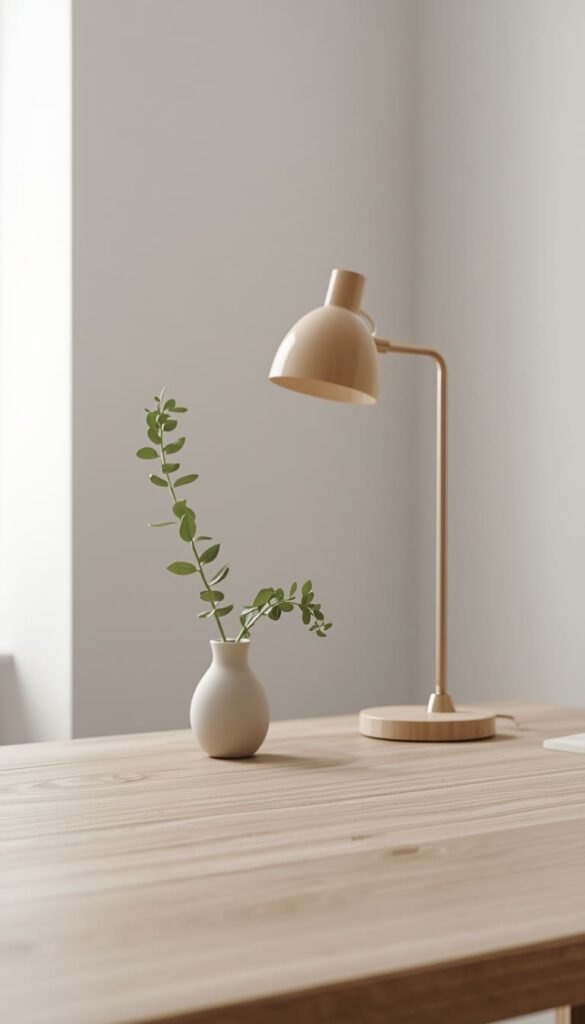
If there is one piece of furniture that defines a Scandinavian desk setup, it is a white oak desk. The grain is subtle, the tone is warm, and it pairs with absolutely everything black frames, linen curtains, matte white walls, you name it.
What I love most about white oak is that it photographs beautifully but it also just feels good in person. It does not try too hard. A simple rectangular desk in white oak with clean tapered legs is genuinely all you need to anchor the whole room.
A quick trick I have learned over the years is to keep the desktop itself intentionally sparse. One monitor, one small plant, one lamp. That is it. The desk does the talking.
- Look for desks with a matte lacquer finish rather than a high-gloss one it reads far more authentically Nordic
- Warm white oak pairs better with brass hardware than chrome if you want to avoid that cold, corporate feel
- IKEA ALEX and LINNMON combinations still hold up as budget-friendly starting points in this style
Budget range: $150 to $900 depending on whether you go IKEA or solid wood.
2. Use a Built-In Corner Desk to Maximize Every Inch of a Small Scandi Office
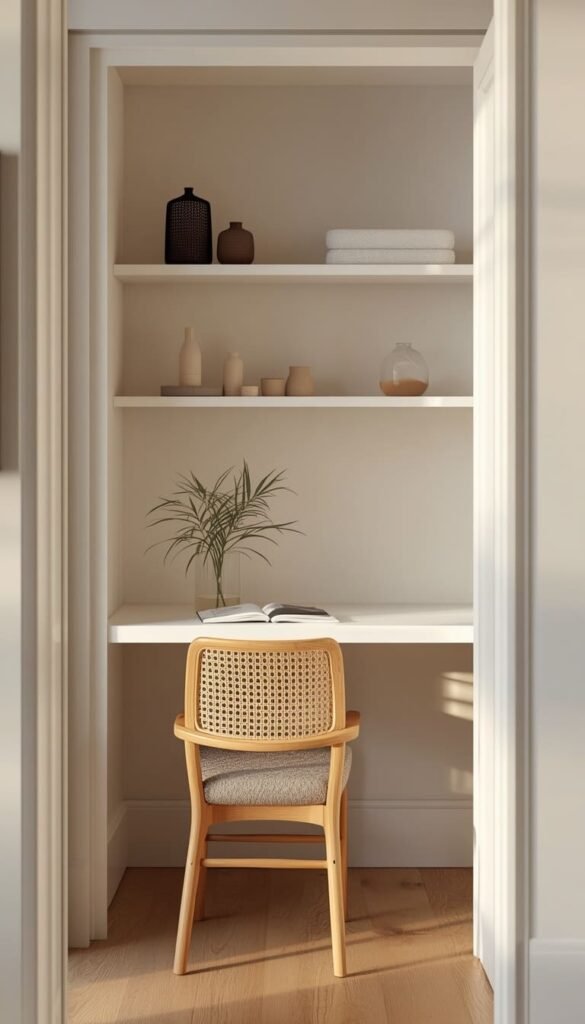
Small Scandi office design is genuinely one of my favorite challenges. When you are working with a tight footprint think a 9×9 spare room or a wide hallway nook the built-in corner desk is your best friend.
The concept is simple. You install a floating shelf or a custom-cut laminate surface directly into the corner of the room at desk height. No legs eating into floor space, no bulky frame to navigate around. Just a clean, continuous surface that wraps the corner and gives you far more usable workspace than any freestanding desk at that price point.
Paint the shelf and the wall behind it the same color and the whole thing disappears into the architecture of the room. It stops looking like furniture and starts looking intentional. That is the Scandinavian way.
One thing to watch out for is monitor placement. In a corner setup, your screen ends up slightly off-center, which can cause neck strain over time. A monitor arm solves this instantly and keeps the whole surface looking clean.
3. Layer Three Light Sources Instead of Relying on One Overhead Fixture
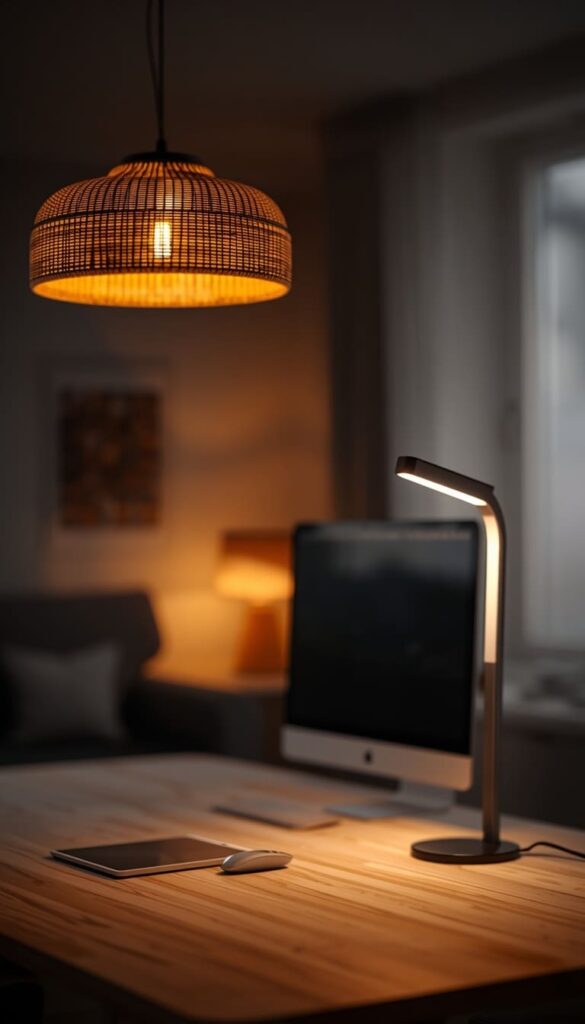
This is the single most impactful change you can make to any Nordic office decor setup and almost nobody talks about it enough. One overhead light even a beautiful one flattens the whole room. It makes a Scandi space look like a dentist waiting room rather than a thoughtfully designed workspace.
The rule I use with every client is simple: aim for three layers.
- Ambient light: A ceiling fixture or recessed lights for general brightness
- Task light: A desk lamp or wall-mounted sconce aimed directly at your work surface
- Accent light: A small LED strip behind your monitor, a plug-in picture light over a print, or a candle grouping on a shelf for evening hours
All three layers working together create that warm, dimensional glow that makes Scandinavian interiors look so effortlessly cozy in every photo you have ever saved to Pinterest. The key is keeping all bulbs at the same color temperature 2700K to 3000K warm white. Mixing cool and warm bulbs in the same room is the fastest way to ruin the mood.
4. Try a Japandi Office Setup If Pure Scandi Feels Too Cold
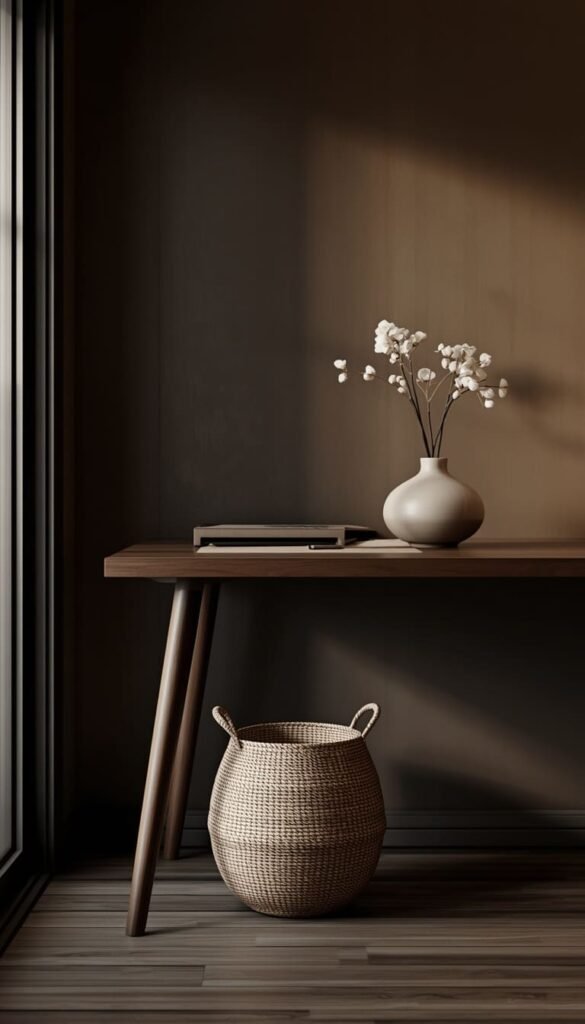
Japandi office ideas have exploded in popularity across the US over the last two years and honestly, I completely understand why. Pure Scandinavian design, when executed without enough warmth, can tip into feeling stark and uninviting. Japandi is the fix.
Japandi blends Scandinavian functionality with Japanese wabi-sabi philosophy the appreciation of imperfect, natural beauty. In practice for a home office, that means darker wood tones like walnut or smoked oak instead of pale birch, more negative space, and decorative objects that feel handmade rather than mass-produced. A ceramic pen holder. A handwoven basket for files. A single branch in a bud vase instead of a full bouquet.
The color palette shifts slightly too. Where Scandi leans white and light gray, Japandi is comfortable with deeper taupes, warm charcoals, and clay tones. It feels quieter somehow. More grounded.
If you have tried Scandinavian minimalist workspace setups before and found them too clinical, Japandi is almost certainly the direction you actually want to go.
Top 6 Scandi Office Ideas:
| Idea | Estimated Price | Maintenance |
|---|---|---|
| White Oak Desk Setup | $150 to $900 | Low |
| Built-In Corner Desk | $200 to $600 | Low |
| Three Layer Lighting | $80 to $300 | Low |
| Japandi Office Setup | $400 to $1,200 | Medium |
| Muted Scandinavian Blue Accent Wall | $40 to $80 | Low |
| Wishbone or Shell Chair | $150 to $1,200 | Medium |
5. Paint One Wall in Muted Scandinavian Blue to Add Depth Without Chaos
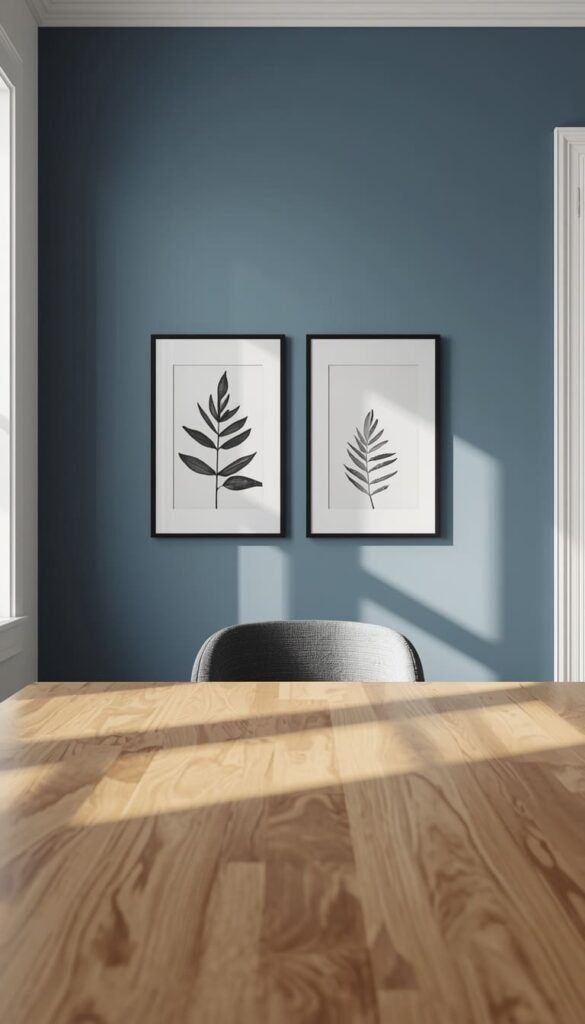
Neutral office decor does not have to mean beige and white forever. One of the most elegant moves you can make in a Scandinavian home office is painting a single wall in that signature muted Nordic blue. Not a bright cobalt, not a navy. Something closer to a faded denim or a soft slate the kind of blue that looks almost gray in certain light.
This color has a genuinely calming effect on the nervous system, which makes it particularly smart for a workspace. Studies on color psychology consistently show that soft blue tones reduce stress and support focus. Scandinavian designers have understood this intuitively for decades.
The wall I always recommend painting is the one directly behind your desk. It frames your setup beautifully, gives video calls a polished backdrop, and adds visual depth without requiring a single additional accessory.
- Benjamin Moore’s Wolf Gray and Farrow and Ball’s Mizzle both land in that perfect muted Nordic range
- Pair with warm white trim and natural wood furniture to stop the blue from reading as cold
- Matte finish always over eggshell it absorbs light rather than reflecting it and looks far more intentional
The best part? A single accent wall costs under $60 in paint and transforms the entire energy of the room in a single afternoon.
6. Style Your Desk Vignette With the 3 Object Rule for an Instant Designer Look
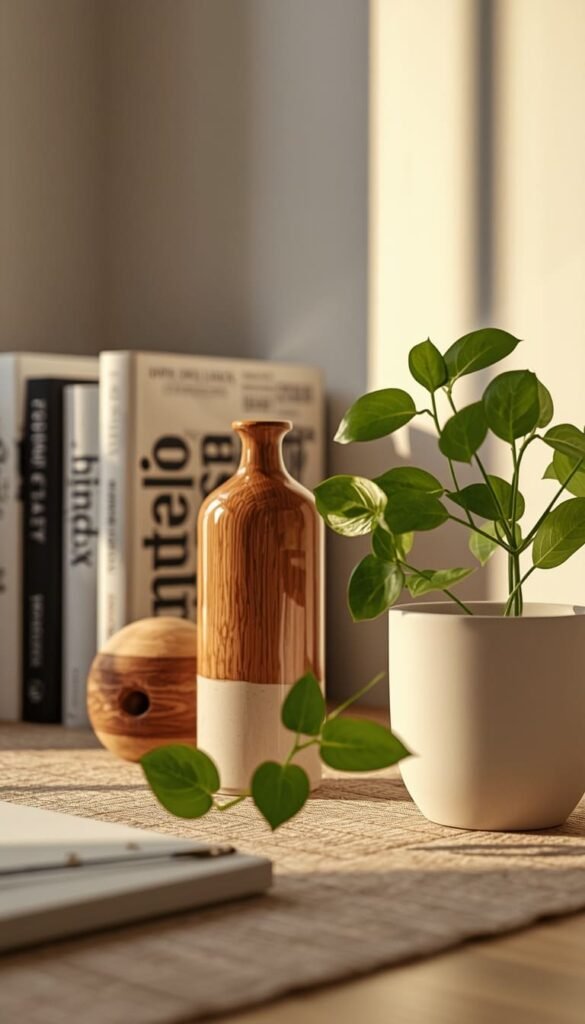
This is one of those minimal office decor tips that sounds almost too simple until you actually try it and realize your desk has never looked better. The 3 Object Rule is exactly what it sounds like. Choose three decorative objects for your desk surface and stop there.
The trick is in how you choose the three. You want variation in height, variation in material, and variation in shape. A tall ceramic vase, a short stack of design books, and a small trailing plant covers all three bases perfectly. One object tall, one medium, one low. One hard material, one organic, one soft.
What I find consistently is that people either over-style their desks too many small objects that create visual clutter or they leave them completely empty, which feels cold and impersonal. Three objects sits right in that sweet spot between lived-in and composed.
A quick trick I always use is to place the tallest object slightly off-center rather than dead-center on the desk. It feels more natural, less like a shelf display and more like something you actually arranged yourself in five minutes on a Tuesday morning.
Which part of your home office feels the least “you” right now the furniture, the lighting, or the walls?
7. Choose a Wishbone or Shell Chair to Nail the Classic Nordic Silhouette
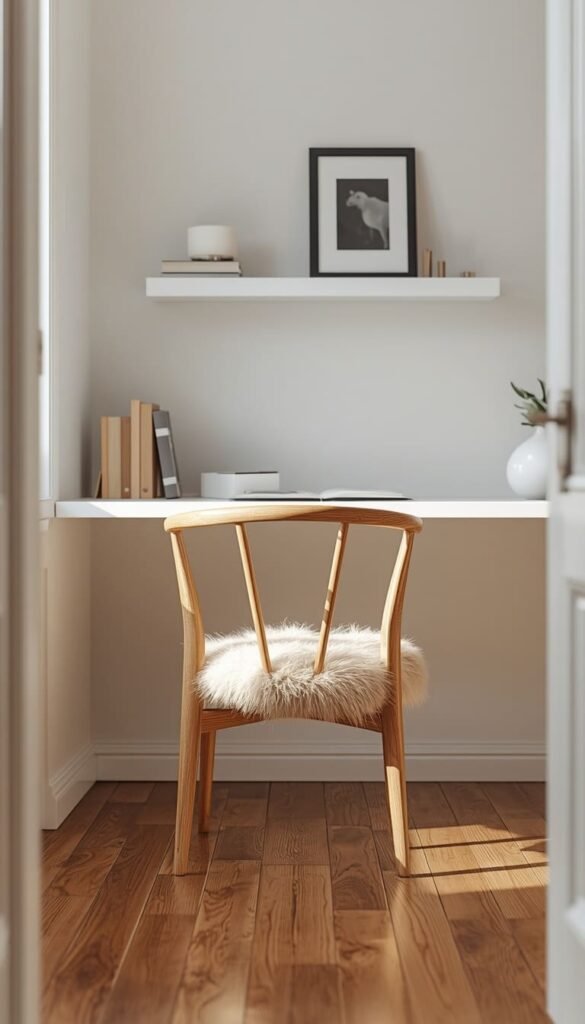
The chair is where so many Scandinavian workspace setups go wrong. People invest in a beautiful desk and then pair it with a bulky ergonomic office chair in black mesh that immediately kills the whole aesthetic. I understand the appeal ergonomics matter, especially for full-time remote workers but there is a better way.
The wishbone chair, originally designed by Hans Wegner in 1949, remains one of the most recognizable pieces of Nordic design ever created. Its Y-shaped back, curved seat, and tapered wood legs give any desk setup an instant Scandinavian signature. It works in natural wood, black-stained wood, and even painted white.
The shell chair is the other classic option. Molded in a single organic curve with slender wood or metal legs, it photographs beautifully and reads as both modern and timeless at the same time.
One thing to watch out for is long sitting sessions. Neither the wishbone nor the shell chair was designed for eight-hour workdays. My honest advice is to use one of these as your primary desk chair if you move around frequently during the day, and keep a lumbar cushion on hand. If you are desk-bound for long stretches, pair a beautiful chair with an under-desk mat and take movement breaks seriously.
Budget note: Authentic Hans Wegner wishbone chairs run $800 to $1,200. Very solid reproductions exist in the $150 to $350 range that hold up well for daily use.
8. Bring in Natural Textures — Rattan, Linen, and Sheepskin — to Warm Up White Walls
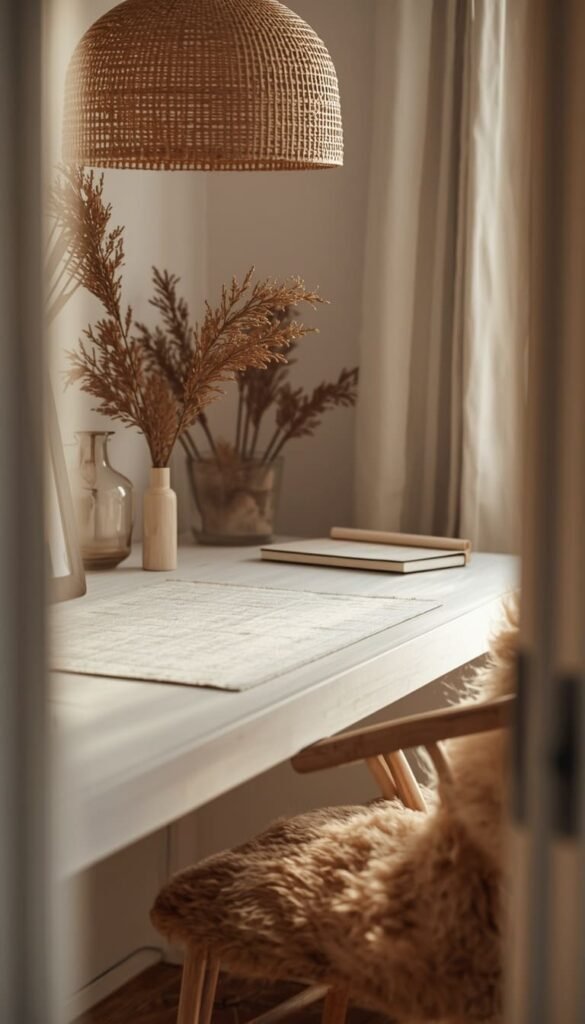
A cozy home office does not happen through furniture alone. Texture is doing at least half the work in every warm, inviting Scandinavian interior you have ever admired. And the great news is that adding texture is almost always the most affordable upgrade you can make to a space.
Rattan is my first recommendation. A rattan pendant shade over a bare bulb immediately shifts the room from sterile to warm. A small rattan file tray on the desk adds organic visual interest without taking up much space at all.
Linen is the fabric of Nordic interiors. A simple linen curtain panel even if your window is small softens the whole room instantly. A linen desk mat replaces a plastic mousepad and elevates the entire desktop vignette in one swap.
Sheepskin is the texture most people forget about. Draped over a chair back or folded over the seat of a wishbone chair, a small sheepskin throw does more for the cozy factor of a home office than almost any other single accessory. It is also practical in cooler months when home office spaces tend to run a little cold.
- Natural textures work best when you limit yourself to two or three materials rather than mixing five or six
- Keep colors in the natural range undyed sheepskin, raw linen, natural rattan rather than dyed or colored versions
- Texture layering is especially effective in small Scandi offices where you cannot rely on square footage to create warmth
9. Use Floating Shelves as Both Storage and a Curated Art Display
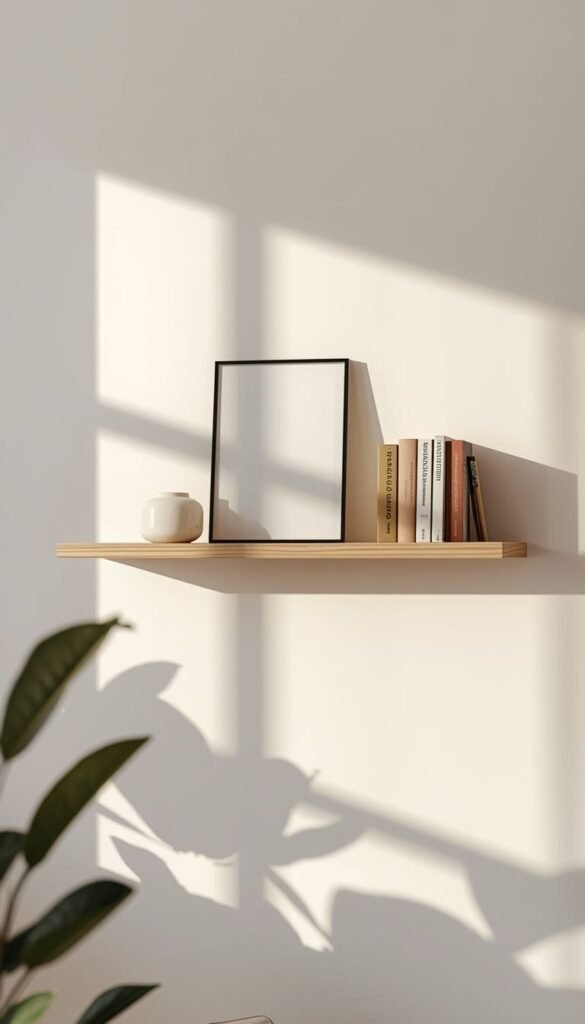
Floating shelves in a minimalist workspace are doing double duty and that is exactly the point. In a true Scandinavian home office, shelving is never purely functional. It is part of the visual composition of the room, and every shelf gets treated with the same intentionality as a gallery wall.
The key difference between Scandi shelving and generic office shelving is editing. You are not filling every inch. You are placing objects with deliberate gaps between them so the wall itself becomes part of the display. A small framed print leaning against the back. Three books stacked horizontally. A single ceramic object. Empty space on either side.
What I always recommend to clients is the rule of odd numbers. Groups of three or five objects read as naturally balanced to the human eye. Groups of two or four feel symmetrical and a little stiff which is fine in formal spaces but works against the relaxed warmth you want in a Scandinavian workspace.
Shelf placement matters just as much as what sits on them. Two shelves staggered at slightly different heights look far more considered than two shelves installed at the same level side by side. It is a small detail that makes a significant difference in how finished the wall looks.
10. Go Monochrome With Black and White Photography for That Moody Nordic Edge
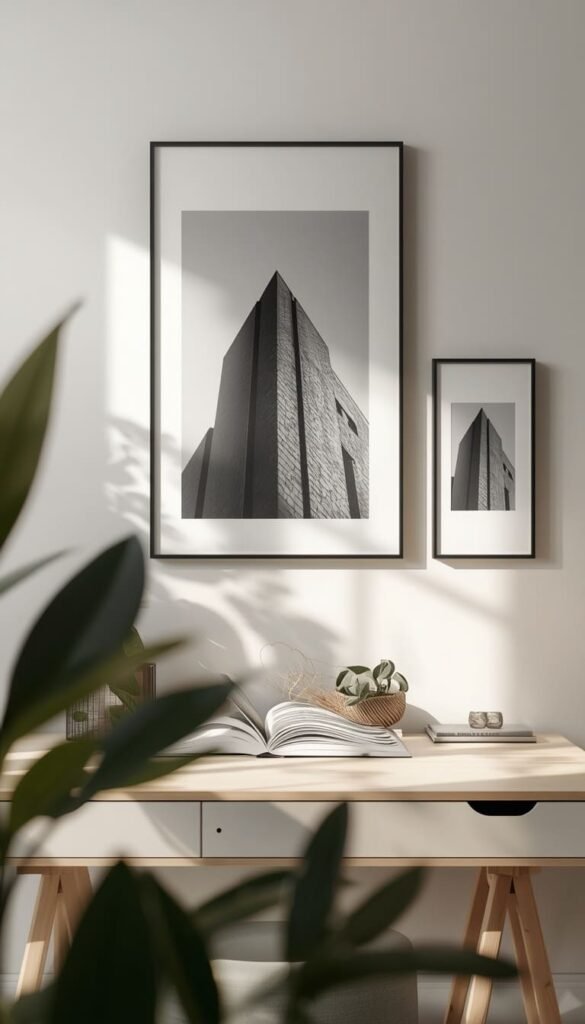
Black and white photography is genuinely one of the most consistently reliable ways to add character to a neutral home office without introducing color or visual noise. It works in virtually every Scandi setup regardless of whether your palette runs warm or cool.
The subject matter is completely personal. Architecture, nature, abstract close-ups, portraits all of it works. What matters more is the framing and the finish. Thin black frames in matte finish are the default choice for a reason. They read clean, they photograph well, and they never compete with the work on the wall.
A quick trick I have used in several projects is to mix one larger print around 18×24 inches with two smaller ones rather than hanging three identical sizes in a row. The variation in scale adds movement to the wall and makes the whole arrangement feel curated rather than formulaic.
One thing worth knowing is that you do not need to spend much here at all. Desenio, Artifact Uprising, and even Framebridge offer genuinely beautiful black and white prints at accessible price points. A set of three framed prints can come in well under $120 and completely transform a blank wall above your desk.
11. Add One Statement Plant to Bring Life Into Your Minimalist Workspace
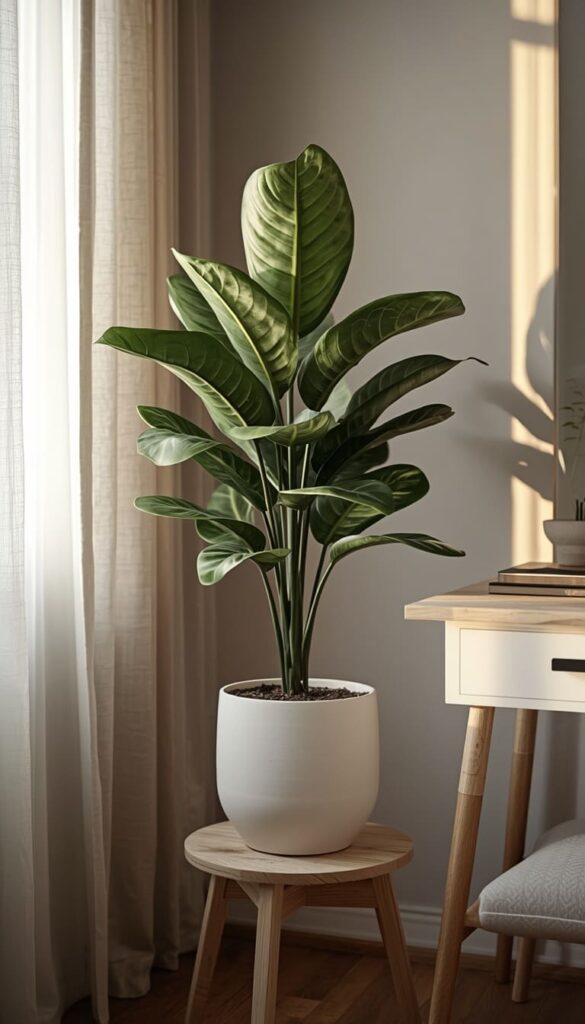
Every cozy minimalist office needs at least one plant. Not a collection, not a shelf crowded with succulents just one well-chosen, properly sized plant placed with intention. This is the Scandinavian approach to greenery and it is far more impactful than it sounds.
The reason one statement plant works better than many smaller ones in a minimalist space is visual weight. A single large fiddle-leaf fig, a tall snake plant, or a dramatic monstera commands attention and anchors the room. It becomes a design element rather than an accessory. Smaller plants scattered around a minimal space tend to create the same kind of visual busyness that Scandinavian design actively avoids.
Placement is everything. The corner beside your desk is the classic choice it frames the workspace without crowding it. A plant on a simple wooden stool at varying height adds dimension to the corner without requiring a plant stand that competes with everything else in the room.
- Fiddle-leaf figs are beautiful but genuinely high-maintenance they drop leaves dramatically if you move them or if your home runs dry in winter
- Snake plants and ZZ plants are the honest low-maintenance alternatives that still look sculptural and intentional
- Always choose a simple ceramic or concrete pot in white, matte black, or natural terracotta the pot is part of the composition
Are you drawn more to the clean airy Scandi look or the warmer, moodier Japandi direction?
12. Design a Cozy Reading Nook Corner Beside Your Desk for Mental Reset Breaks
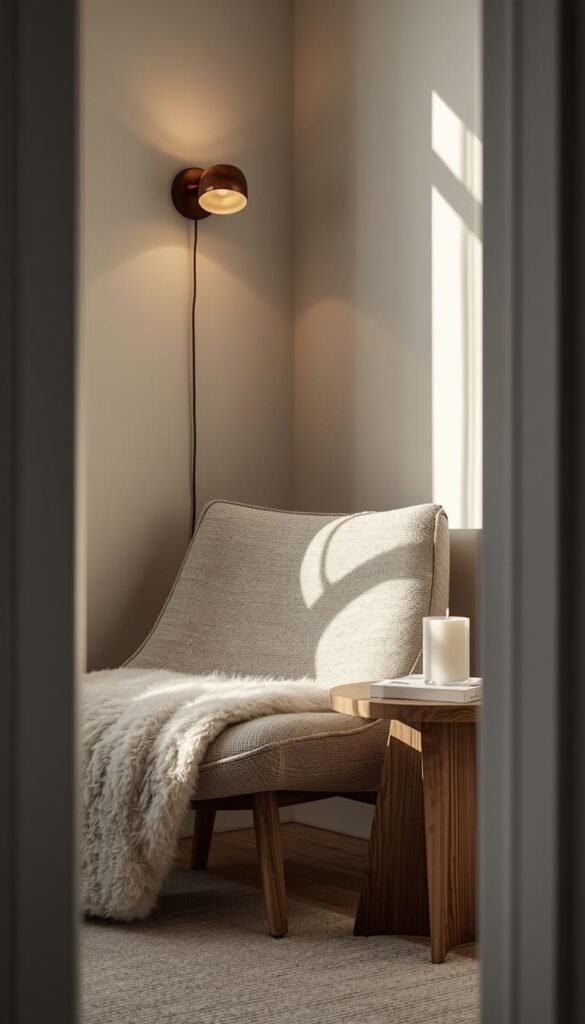
This last idea is one I feel strongly about because it addresses something most home office design guides completely ignore. A workspace that is only built for work eventually starts to feel like pressure every time you walk into it. Adding a small cozy corner even in a tight room gives the space a second energy that makes you want to spend time there even when you are not actively working.
In a Scandinavian context, this nook does not need to be elaborate. A comfortable low chair a sheepskin-draped accent chair or even a floor cushion positioned beside a small side table with a candle and a book is genuinely enough. The point is to create a physical distinction between work mode and rest mode within the same room.
I designed one of these in a 10×12 office in Portland, Oregon last year. We used a low-slung linen armchair tucked into the far corner, a small solid oak side table, and a plug-in wall sconce above it for reading light. The client told me it changed how she related to her office entirely. She started taking proper breaks instead of scrolling her phone at her desk, and her afternoon productivity improved noticeably as a result.
The reading nook corner works particularly well in the Nordic design framework because hygge the Danish and Norwegian concept of cozy contentment is built into the philosophy of Scandinavian interiors. You are not just decorating a room. You are designing a feeling.
Your 30 Second Scandi Office Decision Map
By Budget
Starting Out — $150 to $600
- Begin with a white oak or birch desk from IKEA as your foundation
- Add a plug-in wall sconce instead of a wired fixture to save on installation costs
- Use floating shelves for storage rather than buying a separate bookcase
- One statement plant in a simple terracotta pot does more than ten small ones
- Black and white prints from Desenio keep wall decor beautiful and budget-friendly
Investment Level — $800 and Above
- Prioritize a solid white oak or walnut desk from a quality furniture maker
- Authentic wishbone or shell chair as the hero seating piece
- Custom built-in corner desk if your room layout allows it
- Layer all three light sources with designer pendants and a quality task lamp
- Commission a reading nook corner with a linen accent chair for the full Nordic experience
By Lifestyle
Remote Worker Full Time
- Three layer lighting is non-negotiable — your eyes and mood depend on it
- Add a reading nook corner to create a physical break zone in the same room
- Invest in the chair first — ergonomics matter more than aesthetics at eight hours a day
Minimalist at Heart
- Stick to the 3 Object Rule on every surface without exception
- One statement plant only — resist the urge to add more
- Japandi direction over pure Scandi if you want warmth without clutter
Working With a Small Space
- Built-in corner desk is your single best investment
- Floating shelves over floor-standing storage every time
- Paint the desk wall one color to make the whole setup feel intentional and spacious
Frequently Asked Questions About Scandi Office Ideas
What colors work best for a Scandinavian home office?
Warm white, soft greige, muted blue, and natural wood tones are your core palette. Avoid bright whites they read too clinical for the Nordic aesthetic.
Can I create a Scandi office on a tight budget?
Yes, and quite easily. An IKEA desk, a plug-in sconce, two black-framed prints, and one plant will get you 80% of the look for under $400.
Is a Japandi office the same as a Scandinavian office?
Not exactly. Japandi runs darker and warmer think walnut over white oak, deeper neutrals, and a slightly more grounded, less airy feel than classic Scandi.
How do I make a small home office feel Scandinavian?
A built-in corner desk, floating shelves, and a single accent wall painted in muted Nordic blue will make even a 9×9 room feel intentional and spacious.
What kind of chair fits a Scandinavian desk setup?
The wishbone chair is the classic choice. If you sit for long hours, add a lumbar cushion it was designed for style first, marathon work sessions second.
Conclusion
Your Scandi office does not need to be perfect before it starts working for you. Pick one idea from this list just one and act on it this week. Clear a shelf, order a print, or grab a paint sample in that muted Nordic blue you keep coming back to. Small moves made consistently are how every beautiful room actually gets built.
You spend real hours in your workspace every single day. It deserves the same care you give every other room in your home.
I would love to know are you starting from scratch with your home office, or are you refreshing a space that just needs a little Nordic direction? Drop your situation in the comments and I will point you toward the right starting point.
