
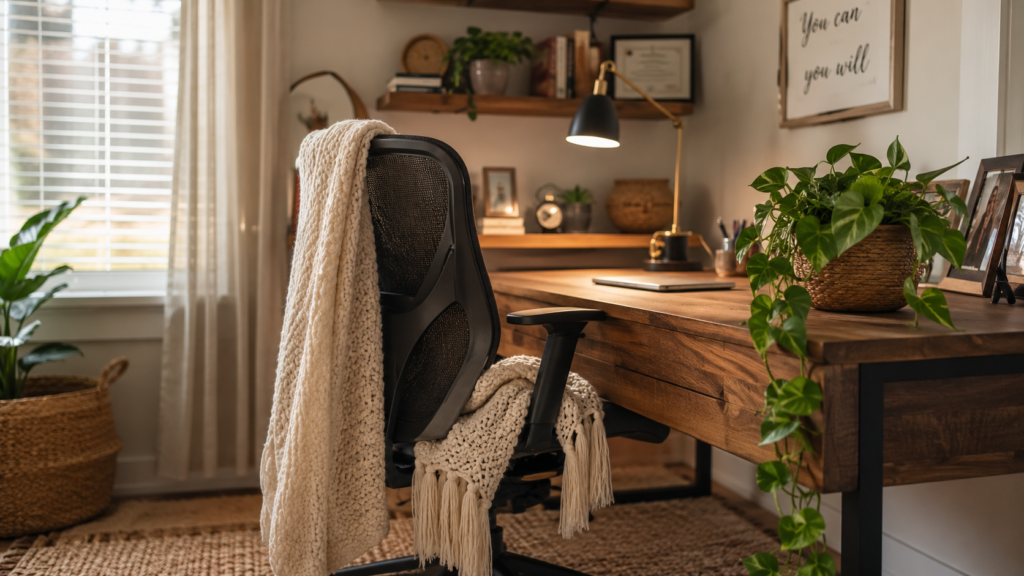
Your office should feel like a place you want to walk into not one you drag yourself to every morning. I’ve worked with dozens of homeowners and remote professionals across the US, and the ones who thrive are almost always the ones who’ve made their workspace feel genuinely comfortable. A cozy work office isn’t about spending a fortune or following every trend on Pinterest. It’s about making small, intentional choices that quietly shift how you feel, focus, and perform every single day.
My Design Notes
When I was working with a client in Austin, Texas, she came to me with a spare bedroom that doubled as her home office and she absolutely dreaded going in there every morning. The room had harsh overhead lighting, a cluttered IKEA desk, and zero personality. We had a budget of just $400 to work with, which honestly is more than enough when you know where to put it. I swapped her cold white bulb for a warm LED, added a pothos plant from a local nursery, and pulled in a rust-colored linen curtain to hide the shelving mess behind her desk. A small vintage-style rug from HomeGoods tied the whole floor together. Six weeks after the makeover, she texted me saying she now starts every morning with her coffee at her desk voluntarily. That right there is exactly what a cozy work office should do. It shouldn’t just look good in photos. It should make you want to show up.
15 Mastering the Art of a Cozy Work Office
1. Why Your Office Environment Is Silently Affecting Your Mental Health
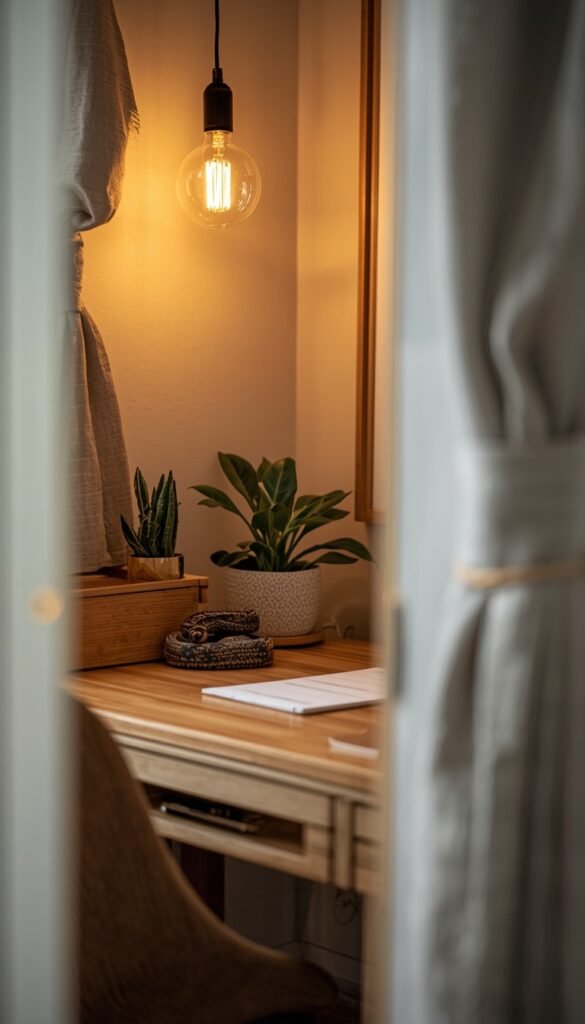
Most people don’t realize that their workspace is constantly sending signals to their brain signals that either say “you’re safe and focused here” or “escape as fast as you can.” There’s solid research behind this. Studies from the American Psychological Association have found that cluttered, poorly lit, and impersonal workspaces are directly linked to higher cortisol levels and lower daily satisfaction. That’s not a small thing when you consider how many hours a week you’re sitting in that space.
I always tell my clients: before you buy a single throw pillow or desk plant, understand that every design decision you make is either working for your mental state or quietly working against it. A cozy work office isn’t decorating for Instagram. It’s designing for your nervous system.
2. Step Zero Define Your Cozy Style Before You Buy Anything
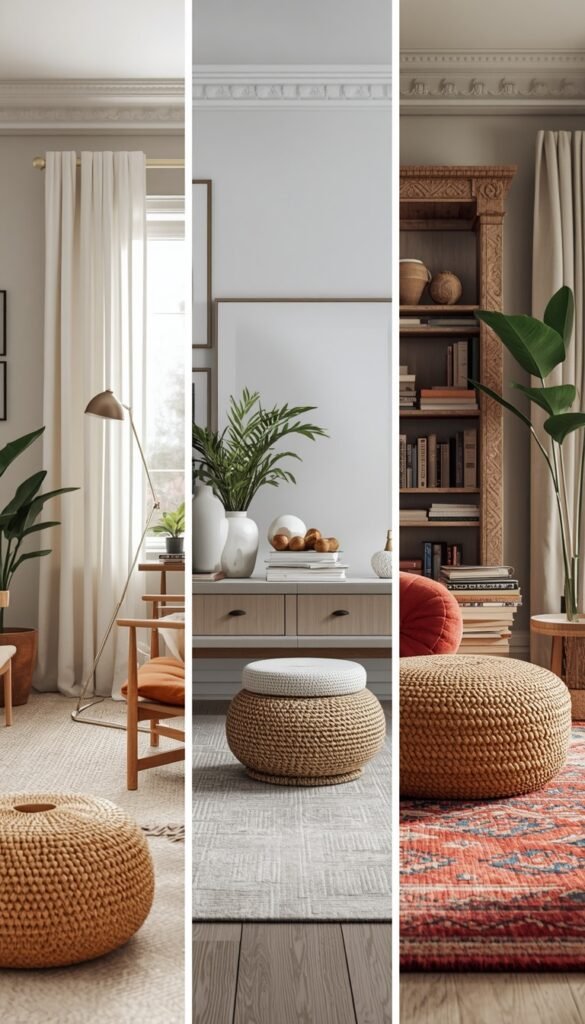
Here’s the mistake I see constantly someone scrolls Pinterest for an hour, buys a bunch of random things, and ends up with a desk that looks like three different moods had an argument. Before you spend a single dollar, decide what “cozy” actually means to you.
In the US market right now, there are a few styles that translate beautifully into a work setting:
- Modern Farmhouse warm woods, cream tones, woven textures, and simple greenery. Feels grounded and calm.
- Japandi a blend of Japanese minimalism and Scandinavian warmth. Think clean lines, neutral palettes, and zero visual clutter.
- Maximalist Cozy layered rugs, rich jewel tones, stacked books, and lots of personal items. Bold but intentional.
Picking your lane first saves you money and makes every purchase decision easier. A quick trick I’ve learned is to save exactly 10 inspiration images, then look for the 3 elements they all share. That overlap? That’s your style.
3. The Lighting Layering Method That Interior Designers Actually Use
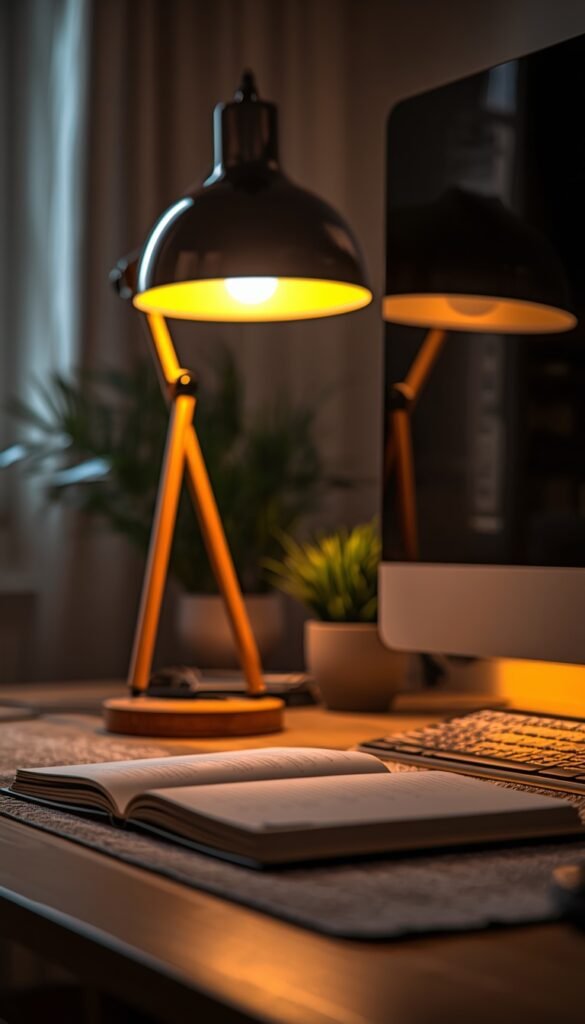
Lighting is the single most underestimated element in a cozy work office, and I mean that seriously. Most offices rely on one harsh overhead light, which is honestly the fastest way to make a space feel cold and institutional. What you want instead is what designers call a three-layer lighting approach.
The first layer is ambient light your general room illumination. The second is task lighting a focused desk lamp that reduces eye strain during screen work. The third is accent lighting a small LED strip behind your monitor, a glowing shelf light, or even a salt lamp in the corner. That third layer is what creates warmth and dimension. One thing to watch out for is going too warm with your task light. Anything below 2700K can make reading and screen work genuinely harder on your eyes, so aim for around 3000K for your desk lamp specifically.
4. Choosing the Right Color Palette for a Cozy Work Office
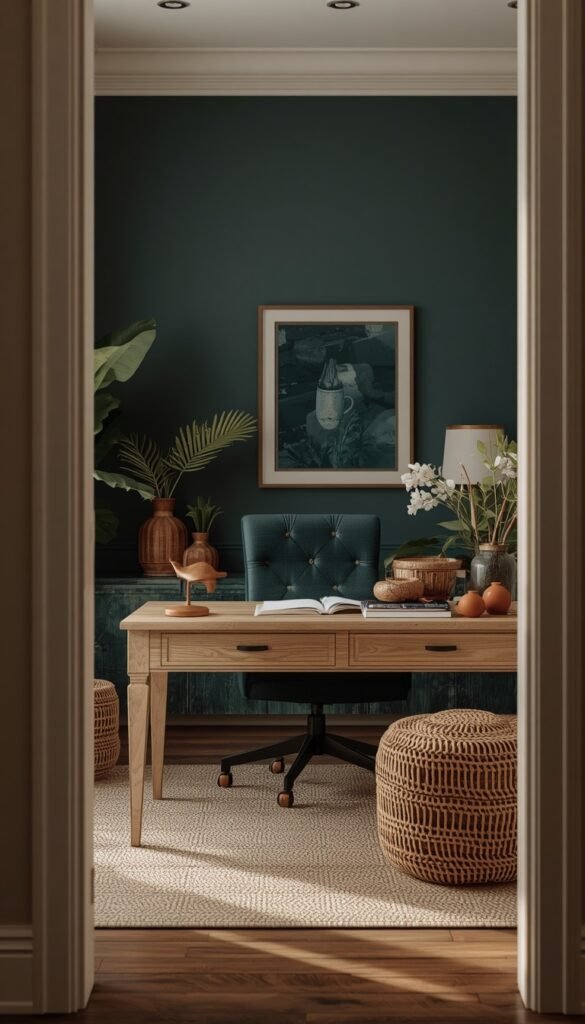
Color does more psychological heavy lifting than most people give it credit for. In a work setting especially, the wrong palette can make you feel either wired and anxious or so relaxed you can barely focus. The sweet spot for a cozy work office sits in what I call the “warm neutral zone.”
Some of my favorite combinations that work beautifully in American homes right now:
- Sherwin-Williams “Accessible Beige” on walls paired with deep forest green accents
- Benjamin Moore “Pale Oak” as a base with warm terracotta accessories
- A crisp white desk against a moody, dark-painted accent wall in navy or charcoal
That last one surprises people, but a dark accent wall actually makes a room feel more intimate and cocooning especially in a smaller home office. I used “Hale Navy” by Benjamin Moore in a client’s Philadelphia row home office last year, and the transformation was genuinely stunning. Keep your large surfaces neutral and let your accessories carry the color story.
Which cozy upgrade feels most doable for your office right now the lighting, the plants, or a desk declutter?
5. Ergonomic Furniture That Feels Cozy AND Supports Your Body
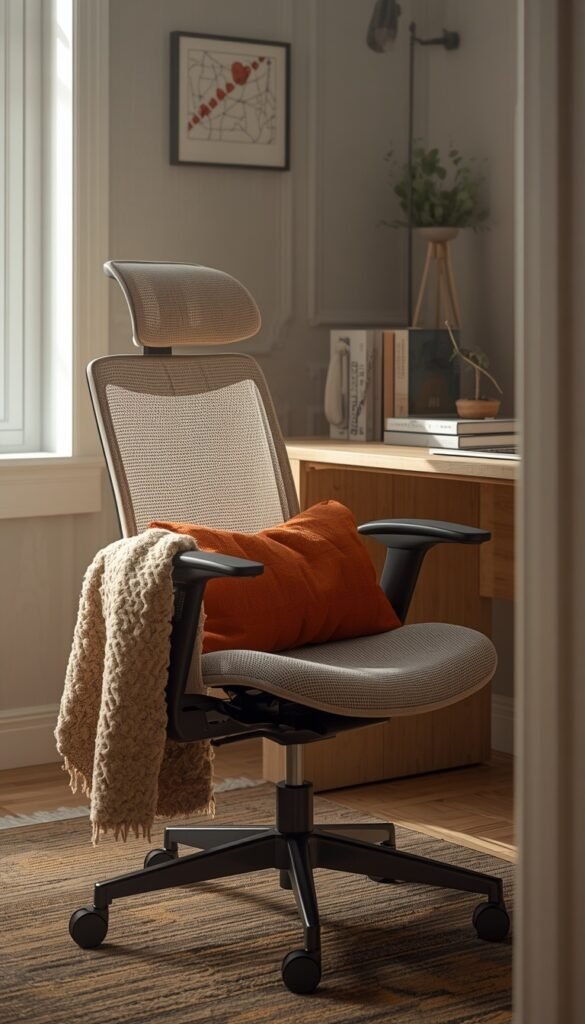
Let me be straightforward with you here no amount of pretty decor will make your office feel good if your back hurts by 2pm. Ergonomic furniture is the foundation of a cozy work office, and it’s worth prioritizing above everything else on this list. The good news is that comfortable and stylish are no longer mutually exclusive.
Here’s a realistic budget breakdown based on what I’ve seen work for my clients:
- Under $200 Brands like Hbada and Sweetcool offer surprisingly solid mesh chairs with lumbar support. Not forever chairs, but genuinely good starting points.
- $200 to $500 This is where options like the HON Ignition 2.0 or the Serta Executive live. Real quality, real comfort, and they look polished in a home setting.
- $500 and above Herman Miller, Steelcase, and Branch are the gold standard. If you’re working 8+ hours a day, this investment pays for itself in productivity and physical health alone.
One thing to watch out for is buying a chair purely based on looks. I’ve had clients fall in love with a gorgeous tufted accent chair as their desk chair, only to have serious neck pain within two weeks. Style matters, but support comes first.
6. The Plant Strategy Which Ones Thrive on a Desk With Zero Drama
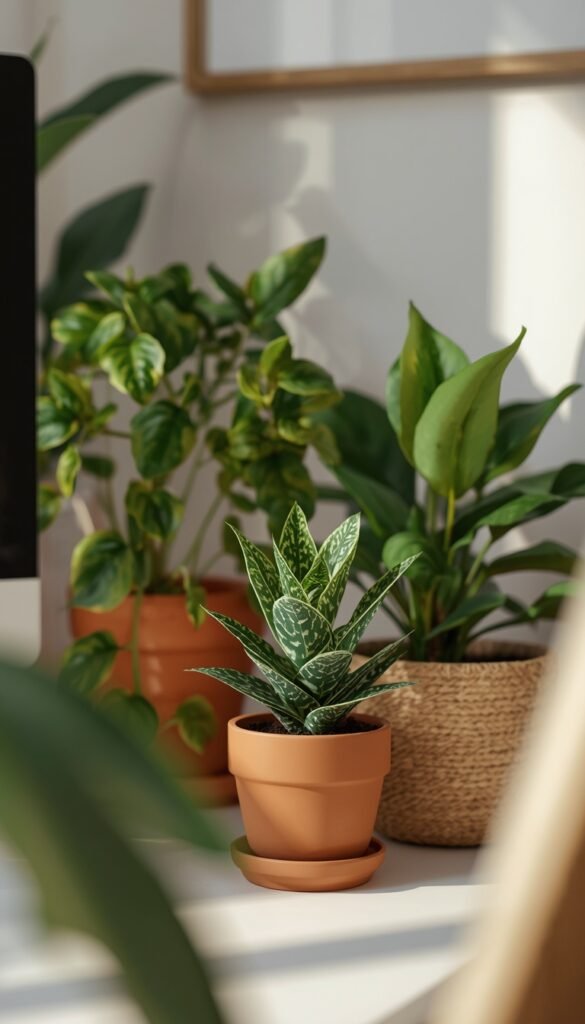
Plants are one of the fastest ways to make a work office feel alive and genuinely cozy. There’s something about a bit of green on a desk that softens the whole room it’s almost impossible to explain until you experience it yourself. That said, I want to be honest with you: plants do require some attention, and the wrong choice for your light conditions will leave you with a sad, droopy mess within a month.
For low-light office conditions, which honestly describes most American home offices and cubicles, these are my go-to recommendations: pothos, ZZ plants, and snake plants. They are nearly impossible to kill, they grow beautifully without direct sunlight, and they genuinely improve air quality. A quick trick I’ve learned is to group three small plants at different heights rather than placing one large plant on the desk. It looks more intentional and creates a little indoor garden moment that feels warm and curated rather than accidental.
Top 6 Cozy Office Ideas
| Idea | Estimated Price | Maintenance |
|---|---|---|
| Lighting Layer Upgrade (desk lamp + LED accent strip) | $25 – $75 | Low |
| Ergonomic Chair (entry to premium) | $150 – $600 | Low |
| Desk Plants (pothos, ZZ, snake plant) | $6 – $30 | Low |
| Cozy Textiles (rug + throw + desk mat bundle) | $50 – $120 | Medium |
| Wall Decor (floating shelves + one gallery print) | $30 – $100 | Low |
| Cable Management + Smart Bulb Upgrade | $20 – $60 | Low |
7. Textiles That Transform a Cold Desk Into a Warm Workspace
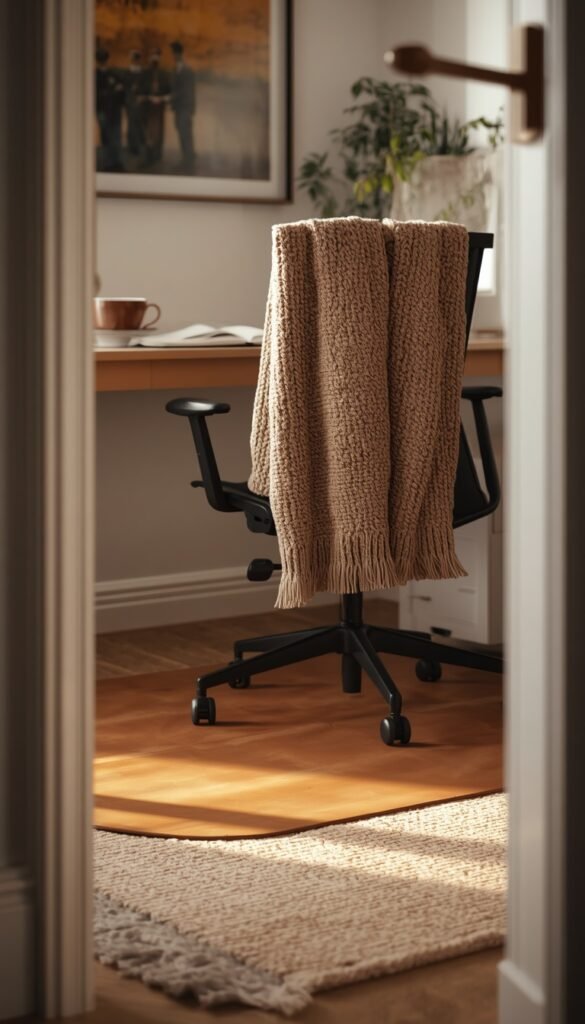
If there’s one category that delivers the biggest visual impact for the smallest budget, it’s textiles. A $30 desk mat in a warm caramel leather look, a $25 throw draped over your chair back, a small woven rug under your desk these things collectively shift the entire feeling of a space from “corporate” to “cozy” almost instantly.
For the rug specifically, I always recommend going with a low-pile option if your chair has wheels. High-pile rugs and rolling desk chairs are a frustrating combination that nobody warns you about until it’s too late. Natural fiber rugs like jute and sisal look beautiful and are very affordable, but they can feel rough underfoot if you’re someone who kicks off their shoes at their desk. A soft wool blend is honestly the sweet spot. Also and I say this from real experience with clients who have dogs and toddlers white and cream rugs look absolutely gorgeous in photos and are an absolute nightmare in real life. Go one shade warmer than you think you need.
8. Wall and Vertical Space How to Decorate Without Losing Square Footage
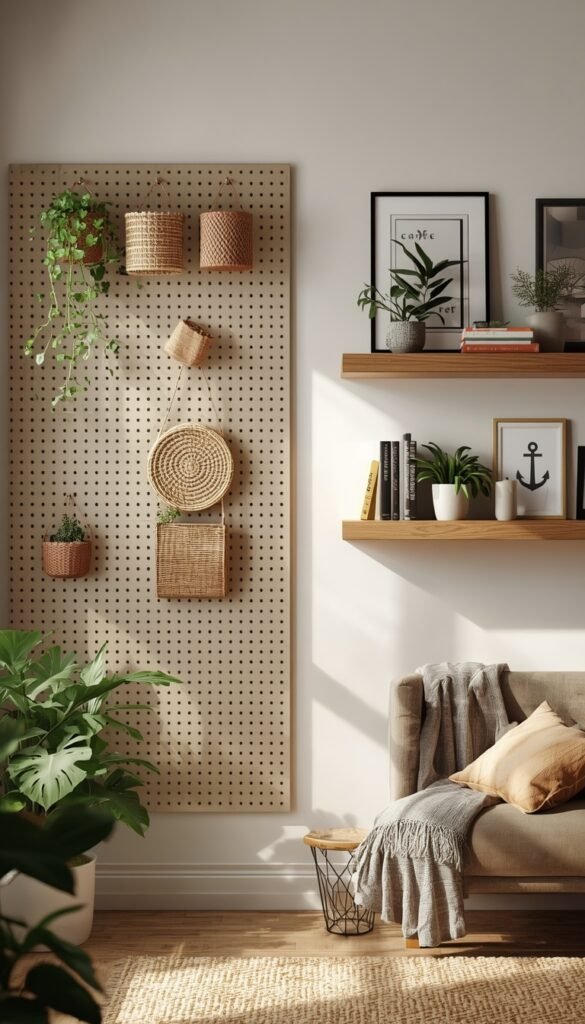
Most people treat their office walls like an afterthought, which is such a missed opportunity. Your vertical space is essentially free real estate, and in a small home office especially, it can do an enormous amount of design and functional work without eating into your floor plan at all.
A few approaches that I’ve used successfully with clients across different budget levels:
- A pegboard painted in a matte neutral makes for incredibly functional and visually interesting wall storage. You can hang plants, organizers, headphones, and small shelves all in one cohesive system.
- Gallery walls work beautifully in a cozy work office, but keep them intentional. Mix one larger anchor print with two or three smaller frames rather than covering the entire wall.
- Floating shelves at varying heights add depth and give you space to style books, plants, and personal objects in a way that feels curated rather than cluttered.
One thing I always remind clients: leave some breathing room on your shelves. A shelf stuffed to capacity looks chaotic. A shelf that’s 70% full looks styled.
If you could change just one thing about your home office today, would it be the lighting, the furniture, or the overall vibe?
9. Scent Design for Your Office What Works and What Crosses the Line

Scent is one of those design elements that most people completely overlook, and yet it has an almost immediate effect on how a space feels. Walk into a room that smells like warm vanilla or fresh eucalyptus and your shoulders drop within seconds. That’s not coincidence that’s your nervous system responding to environmental cues. In a cozy work office, scent is your secret weapon.
For home offices, you have total freedom here. A ceramic essential oil diffuser with a lavender and cedarwood blend is my personal favorite for long focus sessions. Citrus scents like lemon and bergamot work beautifully in the morning when you need energy and clarity. Beeswax candles are a gorgeous option too they burn cleaner than paraffin and cast the most beautiful warm glow while they’re at it.
Now, if you work in a corporate office or shared cubicle space, this is where you need to pump the brakes slightly. Many US workplaces have fragrance-free policies, and even where they don’t, a heavily scented candle in an open office is genuinely inconsiderate to colleagues with allergies or sensitivities. In shared spaces, stick to a very subtle personal diffuser kept close to your own workspace, or opt for a lightly scented lotion on your hands instead. The goal is a scent you notice, not one your entire floor notices.
10. The Clutter Free Cozy Paradox Organization as a Design Tool
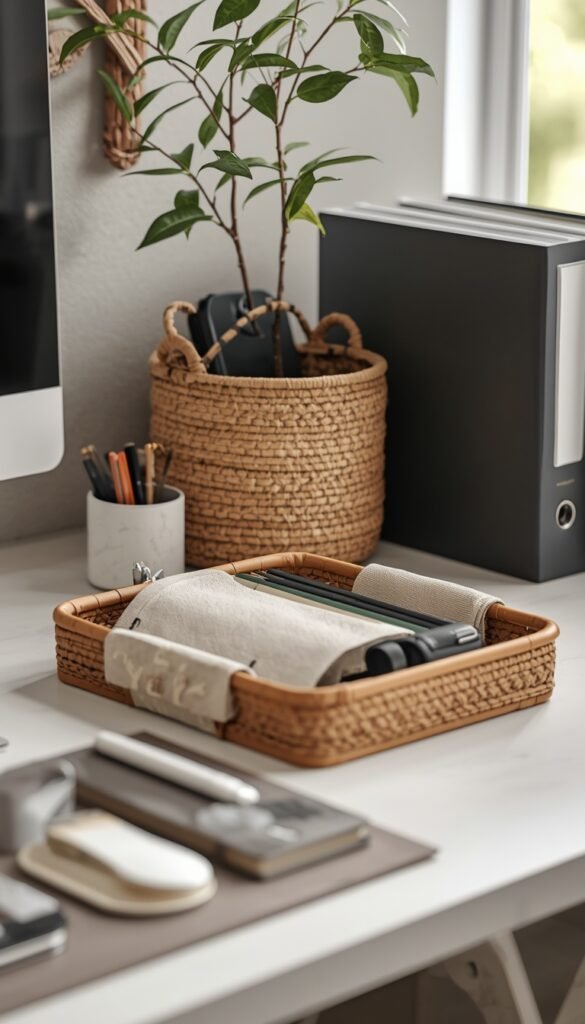
Here’s something that surprises almost every client I work with: cozy and cluttered are not the same thing. I think Pinterest and Instagram have blurred this line badly over the years. True coziness comes from warmth, texture, and personality not from piling things on every surface until the room feels chaotic. Organization, done right, is actually one of the most powerful design tools you have.
The key is choosing storage that looks good enough to live on your desk openly. A few pieces that consistently earn their place in my client projects:
- Rattan or woven baskets for storing charging cables, notebooks, and miscellaneous items they add texture while hiding chaos beautifully
- A leather or linen-wrapped catchall tray on the desk surface for the things you reach for constantly
- Vertical file holders in a warm wood or matte black finish instead of the standard cheap plastic ones that make every desk look like a supply closet
A quick trick I’ve learned is the “one in, one out” rule for desk surfaces. Every time something new lands on your desk, something else has to find a permanent home elsewhere. It sounds simple, but it genuinely keeps the space from slowly drifting back into chaos over time.
11. Tech That Enhances Comfort Without Making Your Desk Look Like a Cockpit
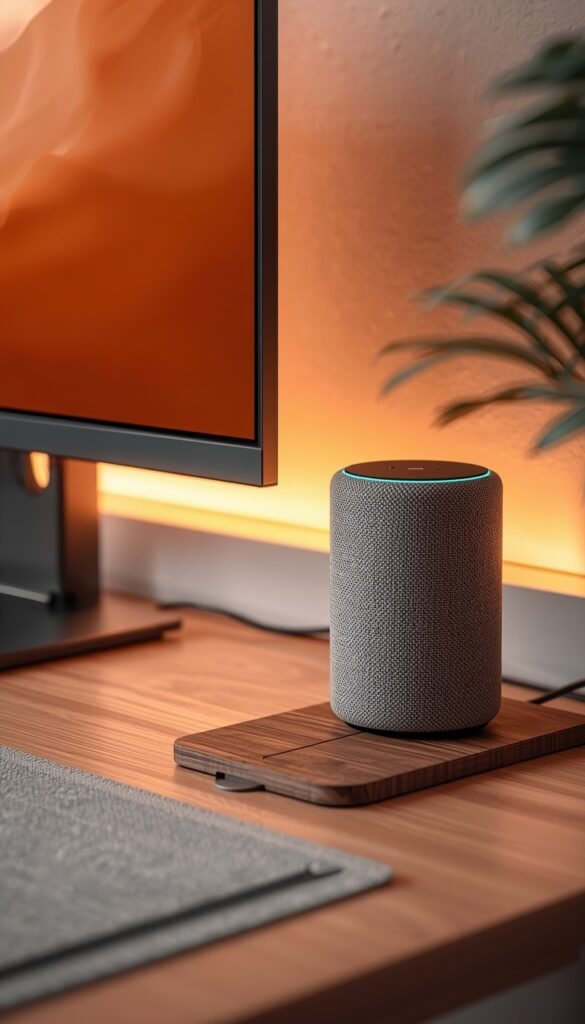
Technology is non-negotiable in a modern work office, but it doesn’t have to dominate the visual story of your space. The biggest complaint I hear from clients is that their desk looks like a tangle of wires and gadgets, which kills every cozy vibe they’ve tried to create around it. The solution isn’t less tech it’s smarter integration.
Start with cable management. A simple cable box on the floor near your outlet, combined with adhesive cable clips along the back edge of your desk, eliminates about 80% of visible wire chaos instantly. From there, think about the aesthetic of your actual devices. A white or warm-toned monitor against a neutral wall reads completely differently than a black gaming-style setup with RGB lighting neither is wrong, but know which mood you’re going for.
Some tech additions that genuinely enhance coziness without visual clutter:
- A smart bulb in your existing desk lamp so you can adjust warmth and brightness without buying new fixtures
- A small Bluetooth speaker in a wood or fabric finish brands like Transparent and Loftie make options that look like decor
- A wireless charging pad that doubles as a desk mat anchor point, keeping your surface tidy and your devices topped up
12. Cozy on a Budget 7 High Impact Changes Under $100 Total
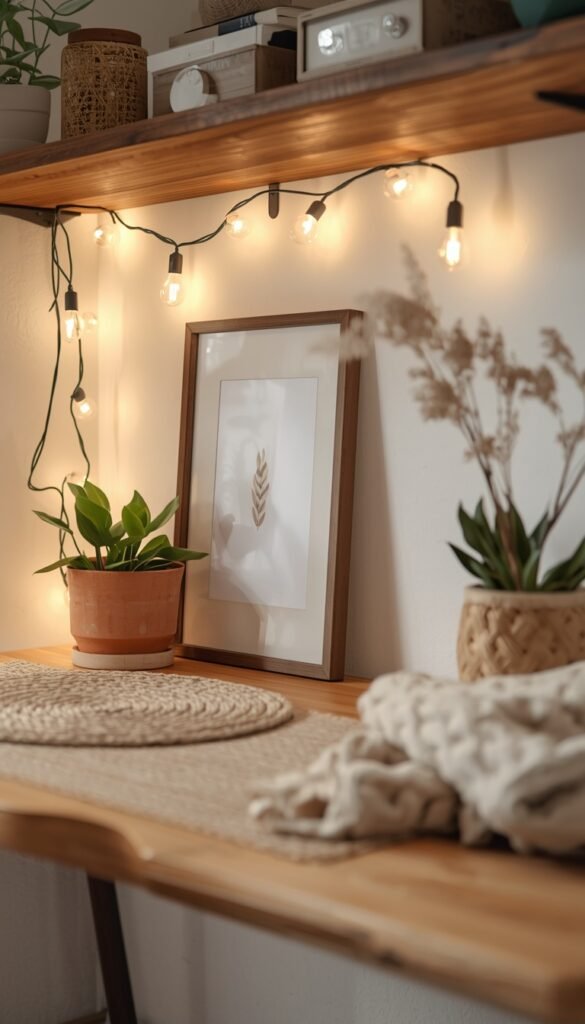
I want to address something directly: you do not need to spend thousands of dollars to create a cozy work office. Some of the most successful office transformations I’ve done for clients cost less than a nice dinner out. It comes down to knowing which changes deliver the most visual and emotional return for your dollar.
Here are seven changes that collectively cost under $100 and make a genuinely noticeable difference:
- Swap your overhead bulb for a warm LED (2700K to 3000K) around $8 at any hardware store
- Add a small pothos or snake plant from a local nursery usually $6 to $12
- Pick up a woven desk mat or small table runner in a warm neutral $15 to $25 on Amazon or HomeGoods
- Hang one large print from Society6 or Desenio in a simple frame $20 to $30 total
- Add a string of warm Edison-style fairy lights along a shelf $10 to $15
- Buy a small ceramic or rattan catchall tray for your desk surface $10 to $18
- Place a folded throw blanket over the back of your chair $15 to $25 at TJ Maxx or Target
That’s a complete sensory and visual refresh for under $100. Every single one of those changes targets a different sense or design layer, which is exactly how professional designers think about transforming a space efficiently.
Which part of your office bothers you most right now the clutter, the harsh lighting, or the lack of personality?
13. Corporate Cubicle vs Home Office Different Rules Different Strategies
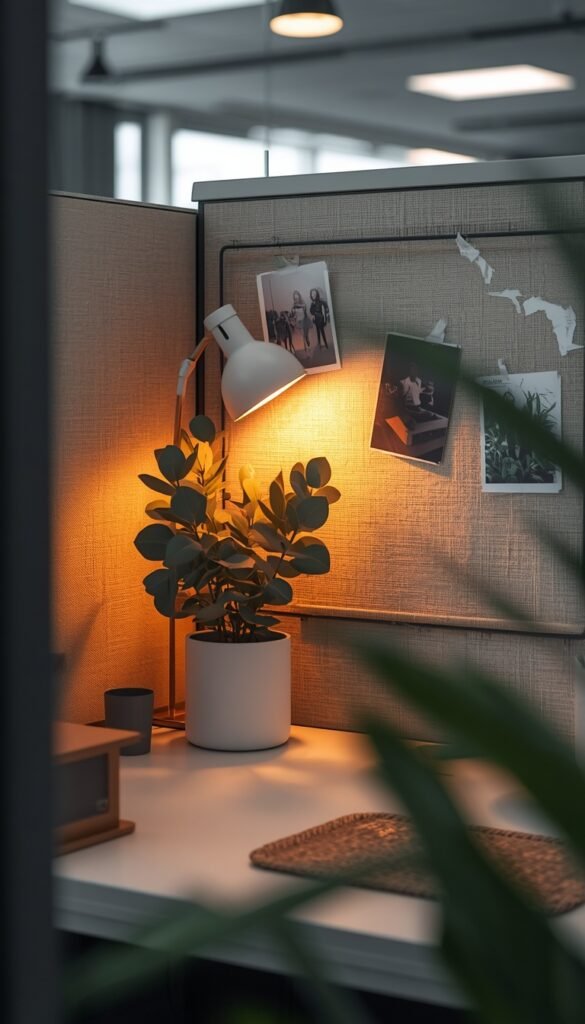
This is a distinction that almost no design article ever addresses properly, and I think it leaves a lot of people frustrated. The strategies for making a cozy work office at home and making a cozy corporate cubicle feel human are genuinely different conversations and conflating them sets people up for disappointment.
In a home office, you have complete creative freedom. Paint the walls, hang shelves, put a vintage rug down, get a floor lamp nobody is stopping you. The only limits are your budget and your taste. But in a corporate cubicle, you’re working within a set of real constraints that vary by company and even by floor manager. Before you do anything, check your workplace’s policy on the following:
- Wall attachments many companies prohibit nails or adhesive strips on cubicle panels, so opt for clips or magnetic strips instead
- Candles and open flames almost universally prohibited in US office buildings for fire safety reasons
- Personal appliances small fans and desk lamps are usually fine, but space heaters often require facilities approval
Within those constraints though, there is still so much you can do. A small framed photo, a desktop plant, a quality desk mat, a cozy mug you actually love using these things matter more than people realize. I worked with a client in a Chicago law firm who transformed her gray cubicle with nothing but a eucalyptus plant, a warm desk lamp her company approved, and a linen-textured pinboard she mounted with removable strips. The difference was remarkable and completely policy-compliant.
14. The Quiet Focus Corner Designing a Mental Reset Zone Within Your Office
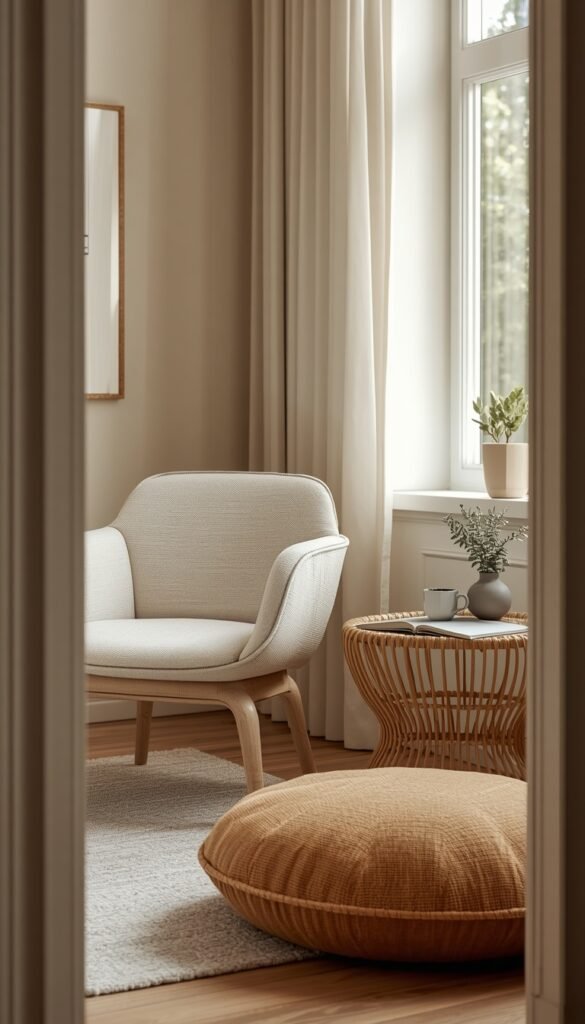
Every well-designed cozy work office needs what I call a mental reset zone a small designated spot that isn’t your desk. This might sound like a luxury, but I promise you it doesn’t require much space at all. Even in a compact home office, carving out a 3-foot by 3-foot corner for a completely different kind of sitting changes how your brain experiences the entire room.
The psychology behind this is straightforward. When your desk is the only place you sit, your brain associates that single spot with both focused work and mental exhaustion. Having a separate spot even just a floor cushion and a small side table gives your nervous system a genuine change of scenery without you ever leaving the room.
For this corner, keep the design intentionally simple and soothing. A low-profile chair or large floor cushion in a warm fabric, a small basket with a book or journal, and soft lighting that’s distinctly different from your task lighting. No screens allowed in this zone. That boundary is actually the whole point. A quick trick I’ve learned is to place this corner near your best natural light source, because even five minutes of sitting near a window during a mental break does measurably more for your energy levels than five minutes scrolling on your phone ever will.
15. My Design Notes A Real Office Makeover Story
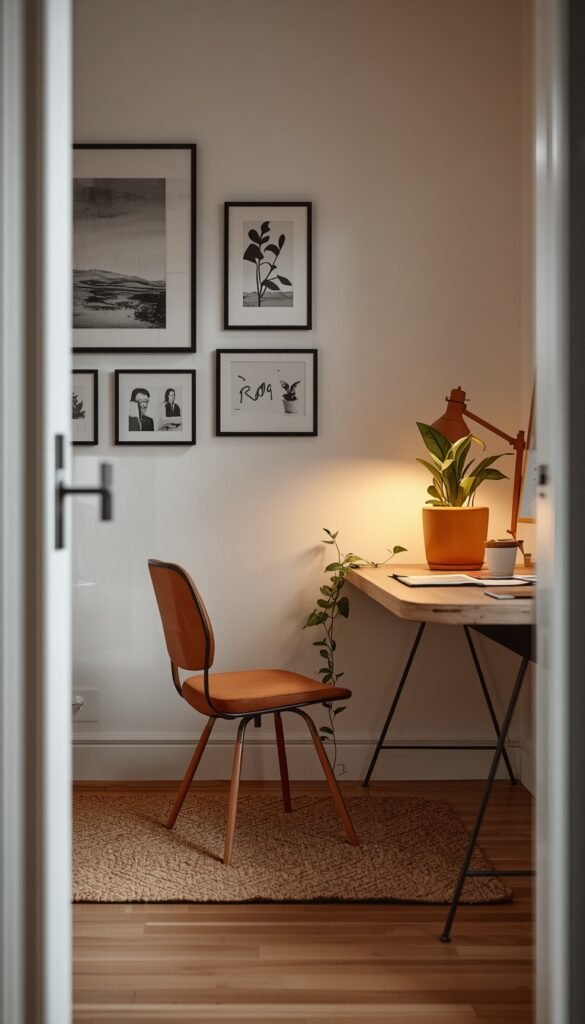
When I first started working with residential clients on home office projects, I assumed the biggest challenge would always be budget. What I discovered pretty quickly is that the real challenge is almost always clarity people don’t know what they actually want their space to feel like, so they keep buying things that don’t add up to anything cohesive.
A client I worked with in Nashville last spring is a perfect example. She was a freelance graphic designer working from a small second bedroom, and she had already spent close to $600 on random office decor that somehow made the room feel worse than when she started. There were three different wood tones on the desk, shelves, and frames. The lighting was layered but chaotically so. The rug was beautiful but the wrong scale entirely.
We didn’t buy a single new piece of furniture. Instead we:
- Repainted two picture frames in a matching matte black finish to unify the gallery wall
- Moved the rug forward so it anchored under the front legs of the desk chair properly
- Replaced two mismatched shelf items with a single trailing pothos in a warm terracotta pot
- Swapped her cool white desk lamp bulb for a 2700K warm LED
The total additional spend was under $40. The room went from feeling scattered and accidental to feeling genuinely intentional and cozy. She told me afterward that she had started closing her office door at the end of the day not to escape the room, but to keep that feeling in. That, to me, is the real measure of a successful cozy work office design. It’s not about how good the space looks in a photo. It’s about how it makes you feel when you’re actually in it, doing the work, living your day.
The 30 Second Office Upgrade Map
By Budget
Starter (Under $100)
- Warm LED bulb swap biggest ROI, lowest effort
- Pothos or snake plant ($6–$12) instant life, zero drama
- Woven desk mat in caramel or warm neutral
- One framed print + fairy lights on a shelf
- Catchall tray to corral daily chaos
Investment ($200–$600+)
- Ergonomic chair first always, no exceptions
- Herman Miller/Steelcase for 8+ hour workdays
- Smart bulb + Bluetooth speaker in wood/fabric finish
- Wireless charging pad as desk anchor
By Lifestyle
The Busy, Easily Overwhelmed Worker
- Pick ONE cozy style lane before buying anything
- “One in, one out” rule strictly on desk surfaces
- Rattan baskets hide chaos while adding texture
- Dark accent wall = cocooning, not depressing
The Detail-Obsessed Minimalist
- Japandi palette neutrals, clean lines, zero clutter
- Shelves at 70% capacity only never stuffed
- Three small plants grouped > one large plant plopped
- Cable box + adhesive clips = 80% of wire chaos gone instantly
Frequently Asked Questions
How do I make my home office feel cozy without spending a lot?
Swap your overhead bulb for a warm LED ($8), add a pothos plant, and throw a blanket over your chair back under $40 total, genuinely transformative.
What color should I paint my home office for focus and warmth?
Sherwin-Williams “Accessible Beige” or Benjamin Moore “Pale Oak” hit the sweet spot. Warm neutrals keep you calm without killing your concentration.
How many plants should I keep on my office desk?
Three small plants at different heights beats one large one every time. Looks intentional, not accidental and fits any desk size.
Is a expensive ergonomic chair actually worth it for a home office?
Yes, if you’re working 8+ hours daily. Back pain by 2pm kills productivity faster than any bad decor decision ever will.
What lighting is best for a home office to reduce eye strain?
Layer three sources ambient, task, and accent. Keep your desk lamp around 3000K; anything cooler feels clinical, anything warmer strains your eyes during screen work.
Conclusion
Your office doesn’t need a full renovation it needs one intentional decision made today. Swap that harsh bulb, clear one shelf, or finally order that desk plant you’ve been eyeing for weeks. Small moves compound fast, and six weeks from now you could be the person who actually looks forward to sitting down at their desk every morning. Your workspace should work for you, not drain you before the day even starts.
