
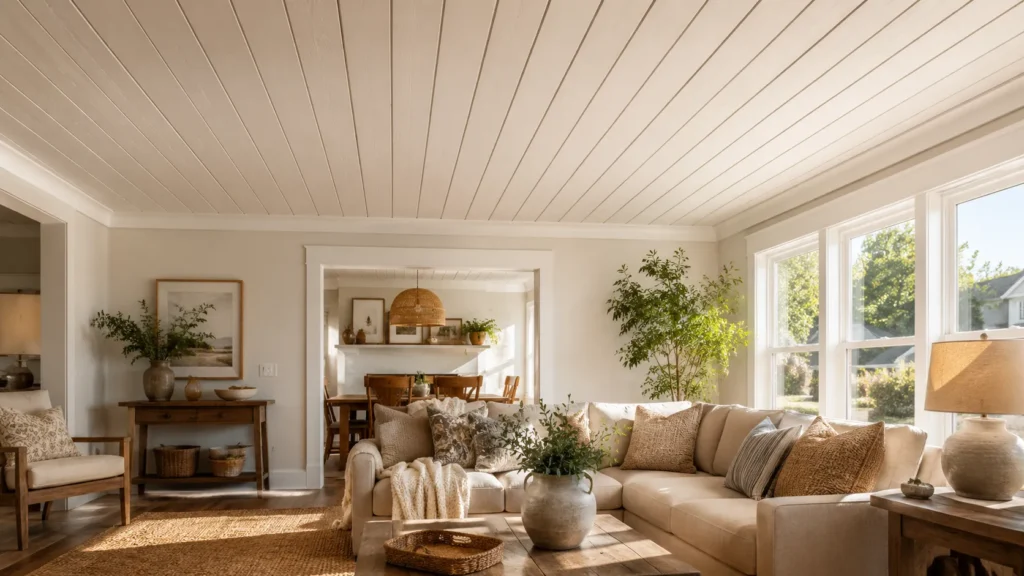
Your ceiling doesn’t have to stay boring white forever, and it definitely doesn’t need a five thousand dollar budget to look like it belongs in a magazine. I’ve worked with plenty of homeowners who assumed wood ceilings were only for people with deep pockets, and every time I get to prove them wrong, it’s one of my favorite parts of the job. The truth is, some of the coziest, most photographed ceilings I’ve helped design cost less than a nice dinner out. In this guide, I’m sharing fifteen real, budget friendly ways to bring warmth and character overhead, from painted plywood tricks to peel and stick panels that even renters can use.
My Design Notes
When I was working on a project just outside Columbus, Ohio, I met a young couple who wanted that cozy, wood ceiling look they kept saving on Pinterest, but their budget was only four hundred dollars. I remember walking through their boxy 1970s living room and thinking, real tongue and groove pine would blow past that number easily. So my team and I sourced primed pine boards from the cutoff bin at our local Lowe’s and had them ripped down to matching widths for almost nothing. We had the couple prime and paint the boards themselves over a weekend, and honestly, the husband got surprisingly good with a drill by the end of it. Our first coat did show some knot bleed through, which taught me to always reach for a stain blocking primer on budget lumber. In the end, we finished the whole ceiling for under three hundred and eighty dollars, and it still looks like a designer feature years later. That project taught me something I repeat to every client now: the paint finish and plank spacing matter more than how expensive the wood grade is.
Stunning Budget Friendly Wood Ceiling Ideas to Elevate Any Room
1. Painted Plywood Plank Ceiling
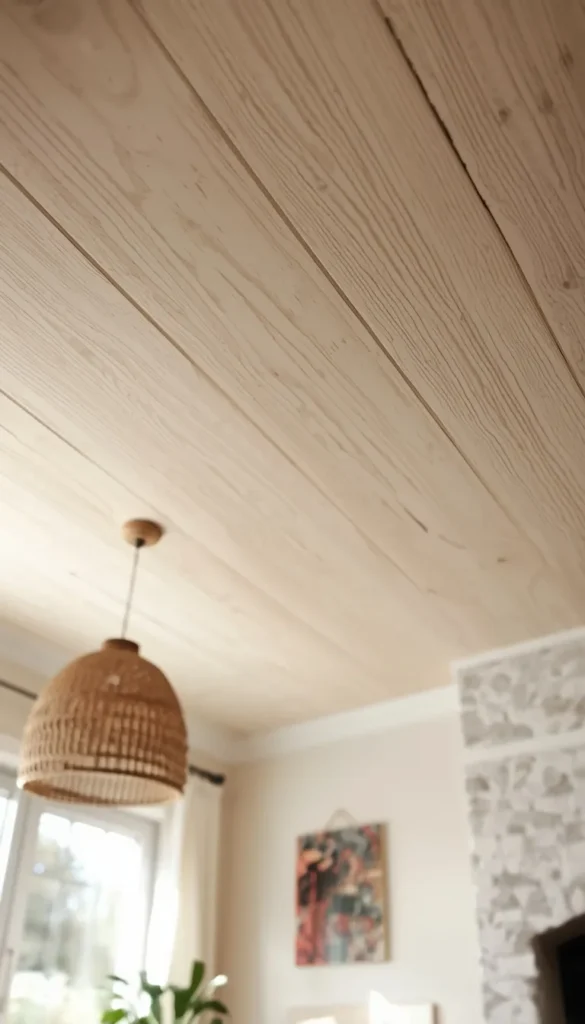
This is where I tell almost every budget conscious client to start. Plain plywood sheets, cut into even planks and finished with a soft matte paint, can mimic the look of a real wood ceiling for a fraction of the price. I’ve used this trick in more than one small bungalow where the client wanted texture overhead without the real wood price tag. Sand the edges lightly before painting so the seams don’t look sharp, and choose a paint finish with a hint of warmth rather than stark white if you want it to still read as wood adjacent rather than flat and plain.
2. Pallet Wood Ceiling
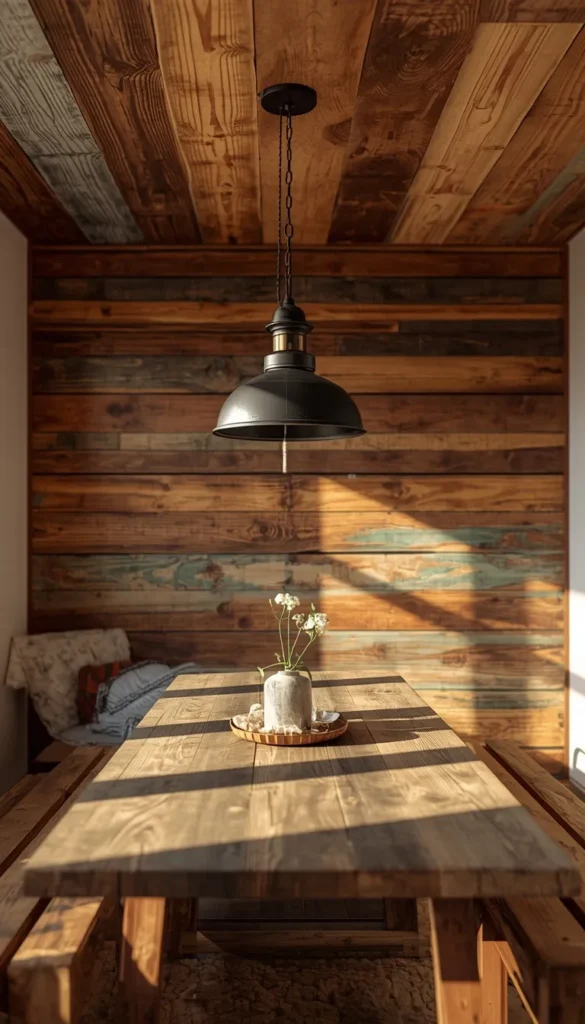
Pallet wood is about as close to free as ceiling material gets, and the character it brings is honestly hard to fake. My team sourced pallets from a local warehouse for one project and spent a weekend sanding, denailing, and sorting boards by color before installation. It’s labor intensive, I won’t pretend otherwise, but the payoff is a ceiling with genuine texture and history.
A few things worth knowing before you start:
- Always check pallets for chemical stamps and avoid anything marked MB, which means it was treated with methyl bromide
- Plan for at least a full weekend of prep work before you even touch a nail gun
- Mix board tones as you go rather than sorting light and dark into separate sections, it reads more natural that way
3. Peel and Stick Wood Panels
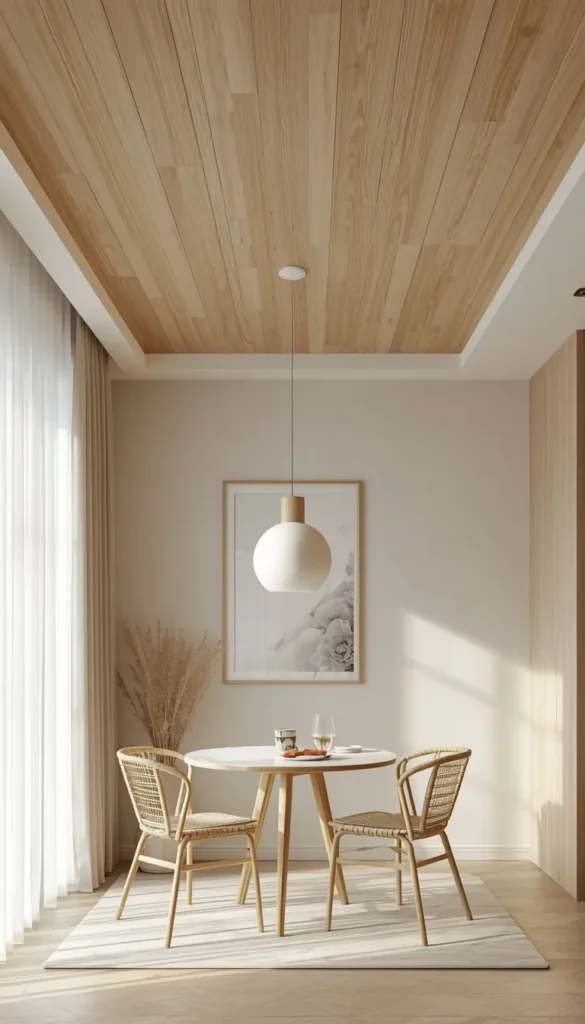
If you’re renting or just don’t want to commit to anything permanent, peel and stick panels are a smart move. They’re lightweight, install in an afternoon, and can be removed later without damaging the ceiling underneath. I recommended these to a client in a Chicago apartment who wasn’t allowed to alter the unit permanently, and the transformation in her small dining nook was honestly one of the more dramatic ones I’ve seen for so little effort. The main thing to watch is ceiling texture. A popcorn ceiling won’t hold the adhesive well, so you may need a skim coat first.
4. Faux Wood Beams
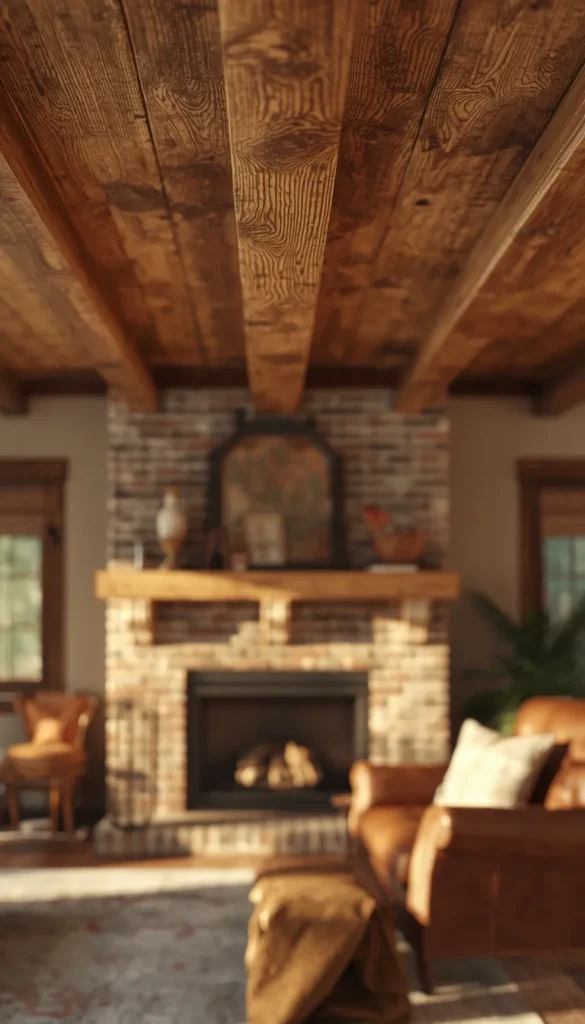
Faux beams have come a long way from the obviously fake versions you might remember from a decade ago. Modern styrofoam core beams, once painted and lightly distressed, are shockingly convincing from the floor looking up. I like to run a dry brush technique with two complementary stain tones over the base coat to fake real wood grain, and it fools almost everyone who hasn’t touched it themselves. They’re also a fraction of the weight of real lumber, which matters if your ceiling joists aren’t rated for heavy timber anyway.
Which room in your home do you think could use a wood ceiling the most right now?
5. Whitewashed Pine Tongue and Groove
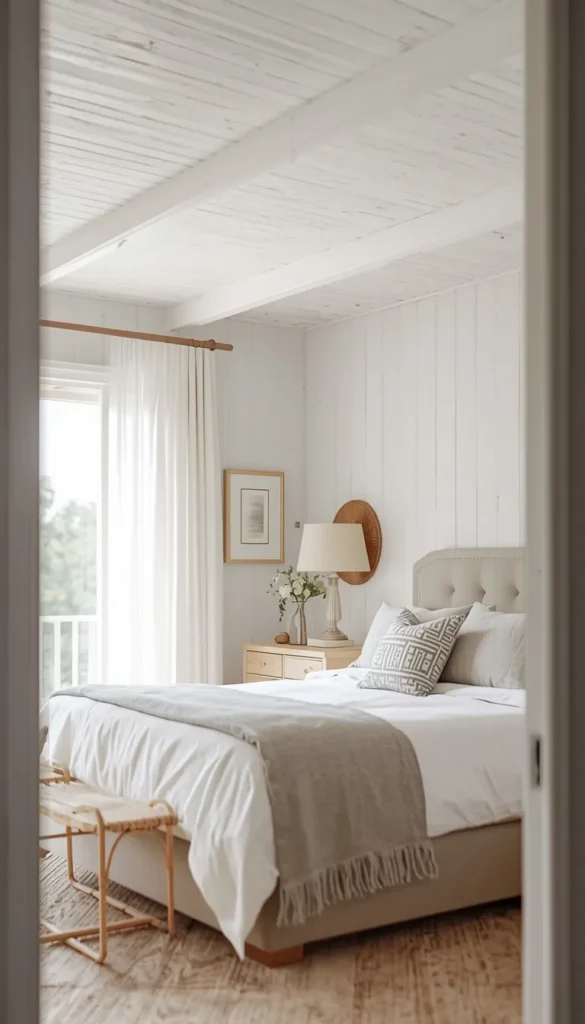
There’s something about a whitewashed pine ceiling that instantly makes a room feel like a coastal cottage, even if you’re nowhere near a beach. Big box lumber stores sell tongue and groove pine boards at a reasonable price point, and a thinned white wash lets the grain show through instead of hiding it completely. I used this in a small guest bedroom in North Carolina where the client wanted brightness without losing that natural wood warmth, and it turned out to be one of the most requested looks from her friends afterward. One thing to watch out for is over diluting your whitewash mix, since too thin and it barely shows, too thick and you lose the grain entirely, so always test on a scrap board first.
6. Luan Plywood Strips Cut Into a Plank Pattern
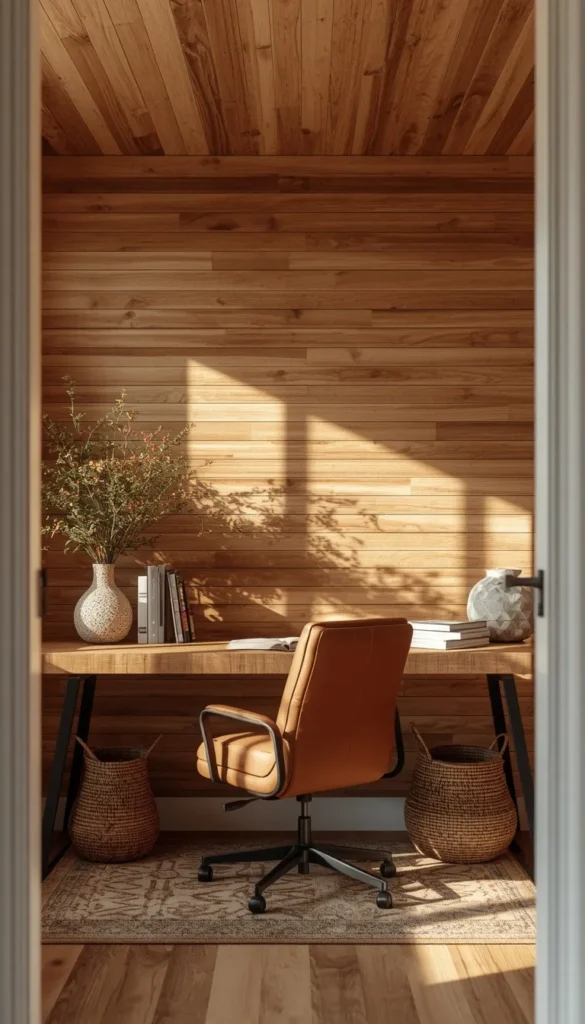
Luan plywood is thin, cheap, and often overlooked, but it works surprisingly well when ripped down into narrow plank widths. It’s the kind of material you’d find backing a cabinet, not typically on anyone’s ceiling wishlist, yet the finished look holds up beautifully once it’s painted or stained.
- It’s roughly a third of the price of standard plywood sheets
- It’s light enough that one person can install it solo with a helper holding the other end
- It takes stain unevenly, so a wood conditioner beforehand really does make a difference
Top 6 cheap wood ceiling ideas
| Idea | Estimated Price | Maintenance |
|---|---|---|
| Painted Plywood Plank Ceiling | $150 to $400 for an average room | Low |
| Pallet Wood Ceiling | Free to $250, mostly labor cost | Medium |
| Peel and Stick Wood Panels | $100 to $350 for an average room | Low |
| Faux Wood Beams | $30 to $80 per beam | Low |
| Whitewashed Pine Tongue and Groove | $2 to $5 per square foot | Medium |
| Furring Strip Grid Ceiling | Under $150 for most rooms | Low |
7. MDF Slat Ceiling
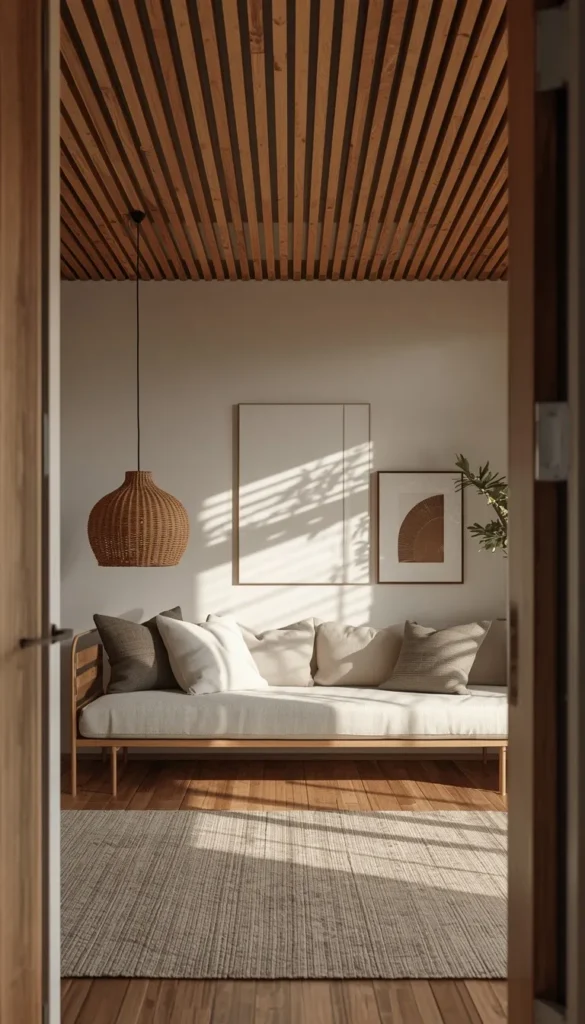
MDF slats give you that clean, linear, almost Scandinavian look that’s been everywhere in interior photos lately. We installed a slat pattern in a home office for a client who wanted acoustic softening as much as visual interest, and the slats genuinely cut down on echo in that boxy little room. MDF takes paint beautifully and the edges stay crisp, which real wood doesn’t always do. The tradeoff is moisture sensitivity, so this isn’t the choice for a bathroom or a laundry room no matter how good it looks in photos.
8. Furring Strip Grid Ceiling

This one surprises people because it barely uses any actual wood panel material at all. Thin furring strips, arranged in a simple grid pattern and painted a warm tone, create the illusion of a coffered or beamed ceiling using almost nothing but cheap lumber yard strips and paint. My rule of thumb here is to keep the grid spacing consistent, uneven gaps are the fastest way to make this look like a DIY mistake rather than an intentional design choice. It’s one of the most budget forgiving looks on this list since the total material cost for an average room often stays under a hundred dollars
Are you leaning more toward a rustic look or something clean and modern for your space?
9. Reclaimed Pallet Herringbone Accent
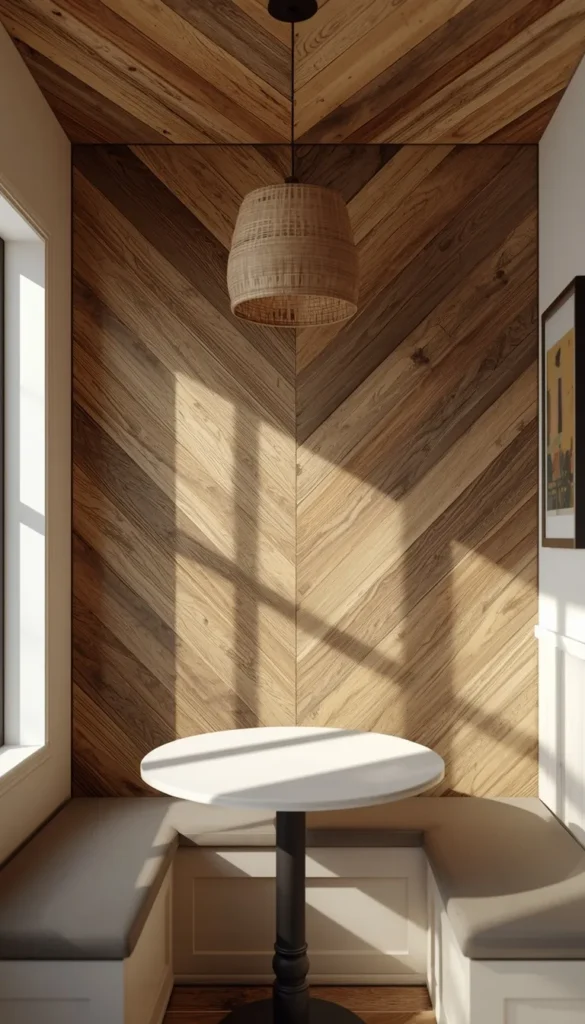
A full herringbone ceiling in real wood can get expensive fast, but scaling it down to a single accent area keeps the drama without the price tag. I did this over a breakfast nook in a Denver kitchen, using leftover pallet boards cut into short, even lengths and arranged in the classic V pattern. It took patience, there’s no way around that, since herringbone requires more precise cuts than a straight plank layout. But limiting it to one smaller zone meant the whole project used less than a single pallet’s worth of wood, and the visual payoff was completely disproportionate to the actual material cost.
10. Bargain Bin Cedar Fence Pickets as Ceiling Planks
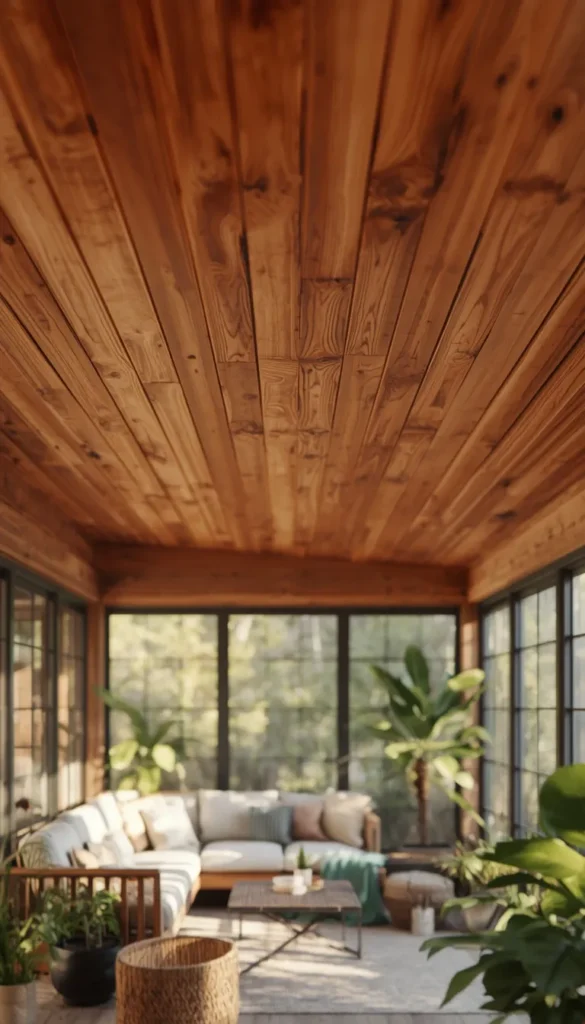
This is one of my favorite insider tricks, and most people are shocked when I tell them where the wood actually came from. Cedar fence pickets, the same ones sold in the outdoor lumber section for backyard fencing, make gorgeous ceiling planks once you plane down the rough side and seal them properly. They’re naturally rot and insect resistant, which is a nice bonus, and the price per board is a fraction of what you’d pay for anything labeled “ceiling grade.”
A few notes if you try this yourself:
- Pickets often have one rough side and one smooth side, so decide early which will face down
- Cedar has natural knots and color variation, which adds character rather than detracting from it
- Seal both sides before install to prevent warping from humidity changes
11. Shiplap Style Ceiling Using Primed Pine Boards
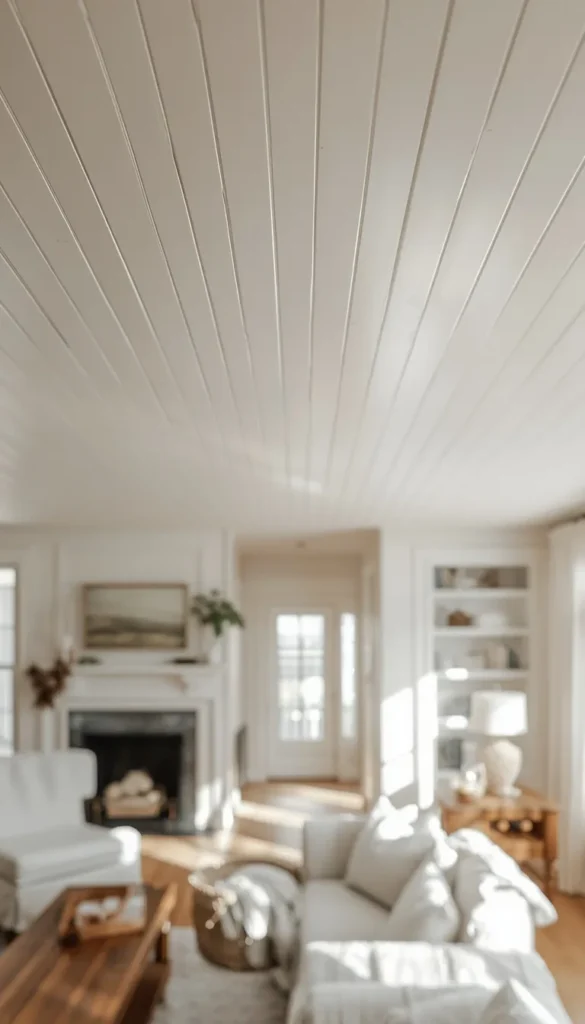
You don’t need reclaimed barn wood to get that shiplap look everyone fell in love with a few years back. Primed pine boards from any home improvement store, installed with a small consistent gap between each board, give you that same shadow line effect for a fraction of the cost. I like this option for clients who want a clean, farmhouse adjacent look but aren’t drawn to anything too rustic or weathered. Since the boards come primed, you’re really only paying for your finish coat and installation time, which keeps this one of the more approachable weekend projects on this whole list.
12. Single Accent Wall to Ceiling Wood Wrap
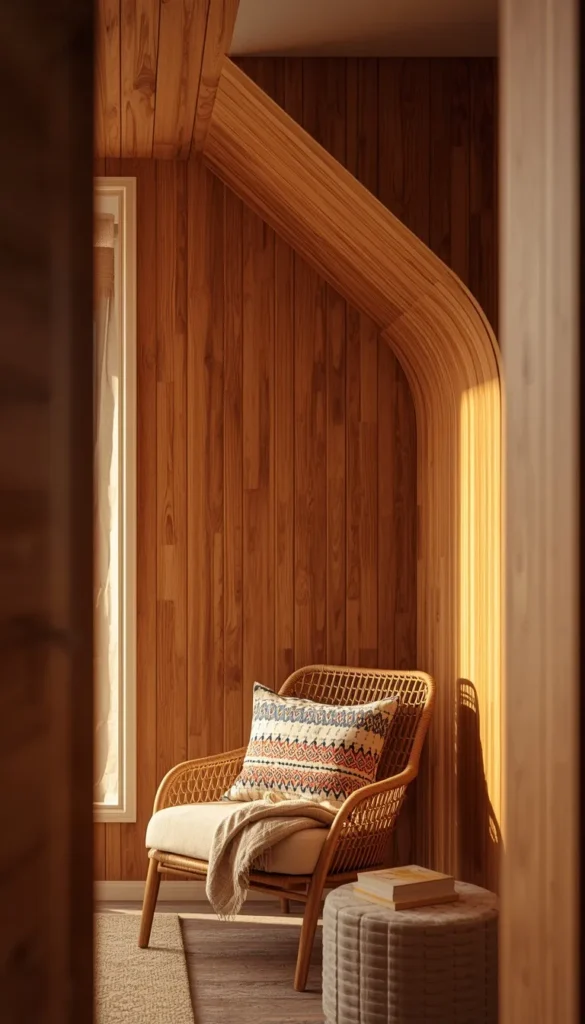
Sometimes the smartest budget move isn’t finding cheaper wood, it’s simply using less of it. Wrapping wood paneling from an accent wall up and across a portion of the ceiling, rather than covering the entire ceiling, creates a bold focal point while keeping material costs contained to one zone of the room. I used this approach in a small reading nook where a full ceiling treatment would have felt overwhelming in such a tight space anyway. It’s a great option if you’re drawn to a dramatic look but still want to stay well under budget.
If you had to pick just one idea from this list to try this weekend, which one would it be?
13. Painted Beadboard Ceiling Panels
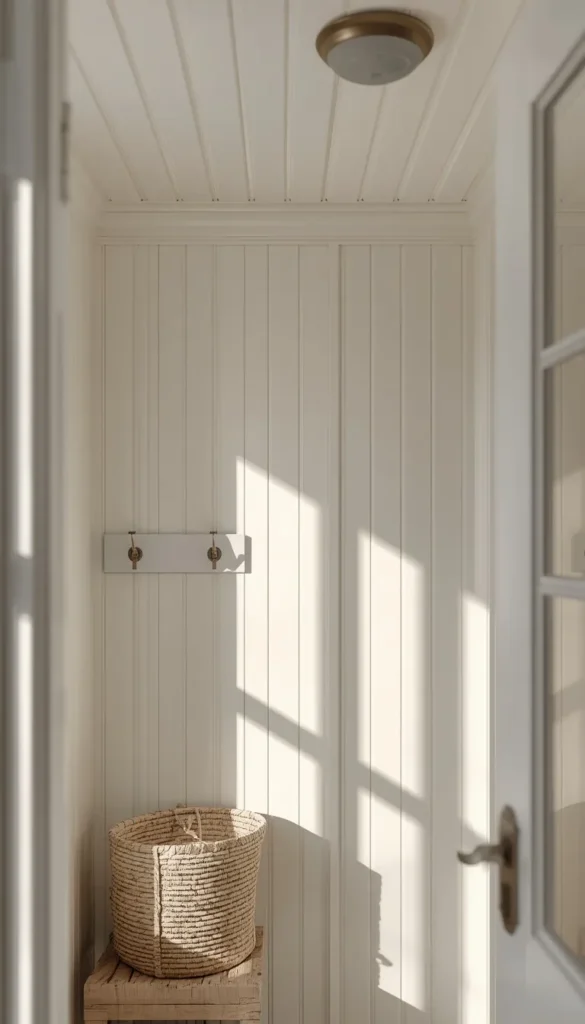
Beadboard has been a classic in American homes for generations, and using it overhead instead of just on walls gives a room instant cottage charm. Prefabricated beadboard panels are inexpensive, install quickly, and take paint beautifully in whatever tone fits your space. I added this to a small mudroom ceiling for a client in Vermont who wanted something that felt collected and traditional without any real design risk. It’s one of the more forgiving options here since the vertical grooves hide minor imperfections in your cuts far better than a flat plank would.
14. Stick On Vinyl Wood Look Ceiling Tiles
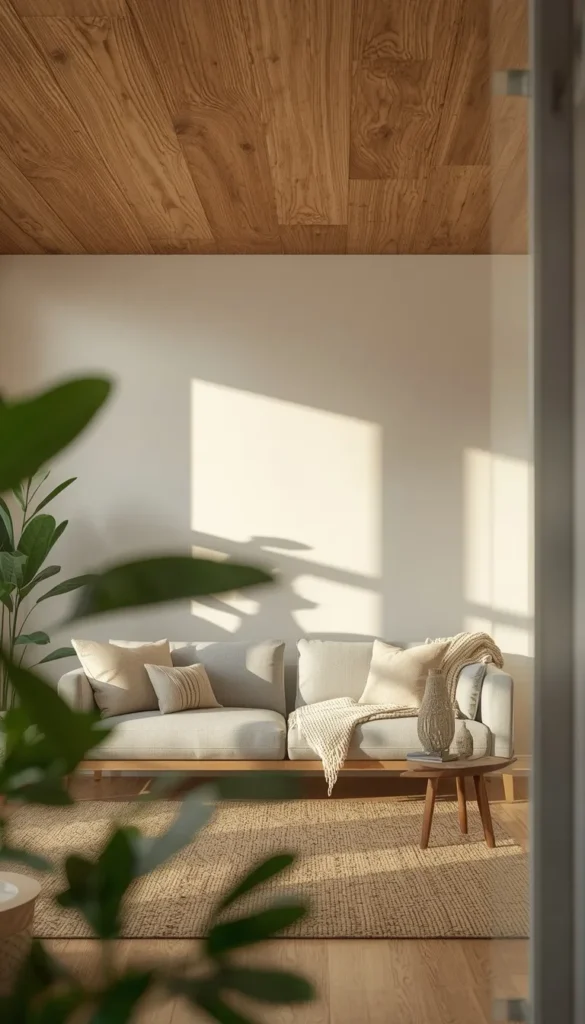
For renters or anyone working with an extremely tight budget, vinyl tiles that mimic wood grain are worth a look. They’re not real wood, and I’ll always be upfront about that with clients, but from a normal viewing distance they read surprisingly convincingly. My biggest piece of advice here is to buy a single tile first and live with it under your actual lighting for a few days before committing to the whole ceiling, since the printed grain pattern can look different under warm versus cool bulbs than it did online.
15. DIY Wood Ceiling Medallion or Focal Point
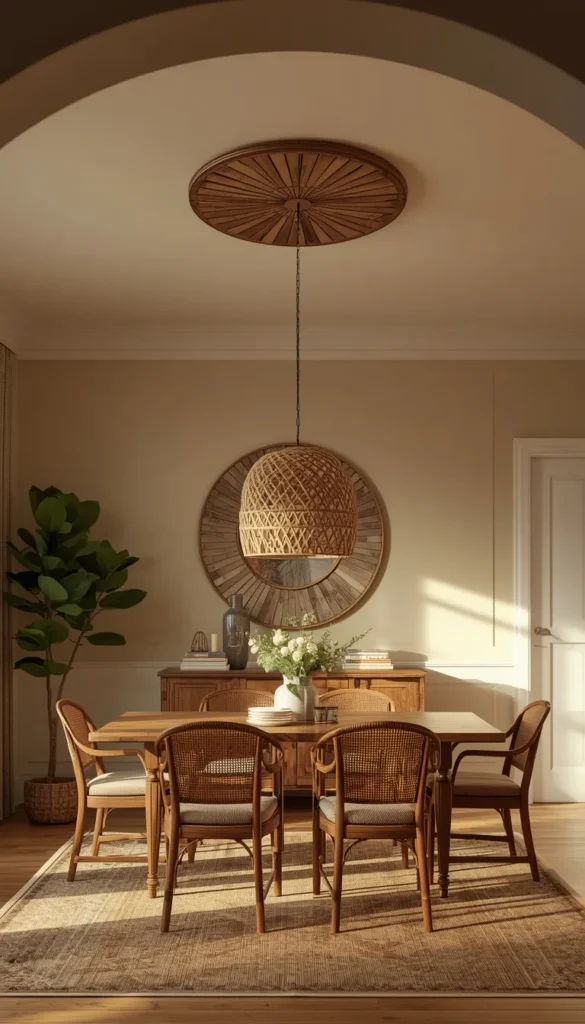
Not every budget project needs to cover the whole ceiling. Sometimes a single wood medallion or small paneled section, centered over a dining table or bed, gives you nearly all the visual impact of a full wood ceiling using a tiny fraction of the material. I built one for a client’s dining room using scrap wood left over from a flooring project, and it became the first thing every guest commented on. It’s proof that scale and placement often matter more than square footage when you’re working with a limited budget.
Which Path Is Yours?
By Budget
- Rock Bottom Budget: Peel and stick vinyl panels, furring strip grid, faux beams
- Weekend Project Budget: Painted plywood planks, luan strips, primed pine shiplap
- A Little Room to Splurge: Whitewashed tongue and groove, cedar picket planks, beadboard panels
By Lifestyle
- Renters and Temporary Spaces: Peel and stick panels, stick on vinyl tiles, faux beams
- Hands On DIYers: Pallet wood, herringbone accent, plywood plank ceiling
- Busy Families Who Want It Done Fast: Primed pine shiplap, beadboard panels, furring strip grid
- Small Space Owners: Wood medallion focal point, single accent wall wrap, luan strips
- Open Layout Homes: Full plank coverage with plywood, statement beams with truss detailing, herringbone accent zones
Frequently Asked Questions
What is the cheapest way to get a wood ceiling look?
Painted plywood or furring strips are the cheapest routes, often under two hundred dollars for a full room. Peel and stick panels come close if you want zero tools involved.
Can I install a wood ceiling myself without hiring anyone?
Yes, most of the ideas on this list are beginner friendly weekend projects. Herringbone patterns and true coffered ceilings are the exceptions, those are worth calling in help for.
Will a cheap wood ceiling still increase my home’s value?
It can, especially in living rooms and primary bedrooms where buyers notice ceiling detail. Just keep the finish clean, a sloppy DIY job can work against you.
How do I keep a budget wood ceiling from looking cheap?
Consistent spacing and a good paint or stain finish matter more than the wood grade itself. Rushed cuts and uneven gaps are what actually give it away.
Is plywood or MDF better for a low cost ceiling?
Plywood handles humidity better, so it’s the safer pick for kitchens or bathrooms. MDF gives a cleaner edge but swells if it gets wet.
Conclusion
A ceiling is the one surface you look at every single day without even realizing it, and giving it some love pays off in a way most people don’t expect until they’ve actually done it. You don’t need a big budget or a contractor on speed dial, just one weekend, a few boards, and a little patience with a paint roller. Pick one idea from this list, grab a sample piece, and see how it feels in your space before you commit to the whole room. Your home is where you unwind after long days, and it deserves more than a blank white ceiling staring back at you.
