
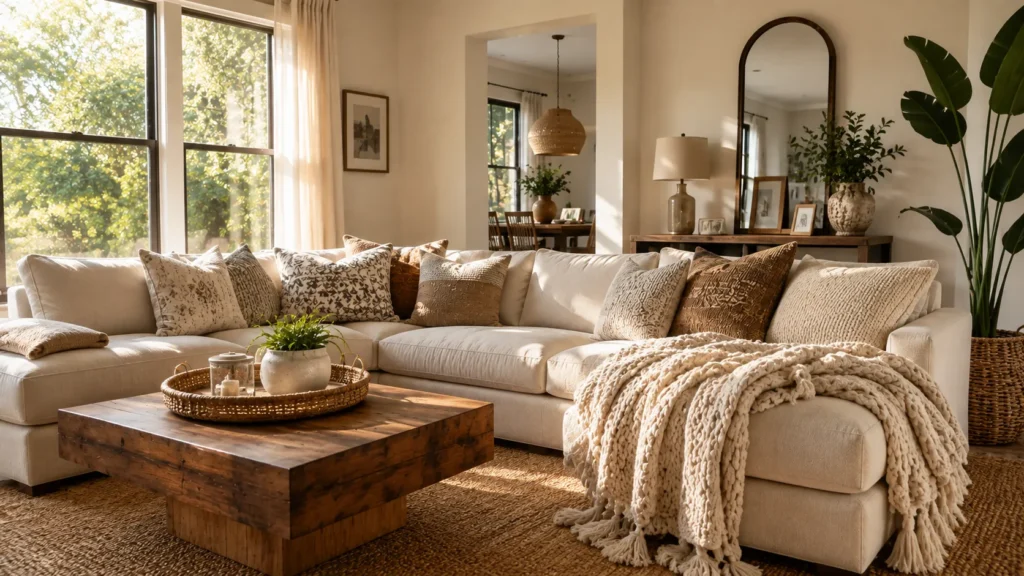
A sectional is the one piece of furniture that can make or break an entire living room, and I’ve seen both outcomes more times than I can count. When it’s right, it’s where everyone ends up at the end of the night. When it’s wrong, it blocks the walkway and eats half the room. So this isn’t another list of pretty photos, it’s what I actually tell my clients before, during, and after they buy one. Budget, sizing, pets, kids, and style, all of it.
My Design Notes
When I was working on a family’s living room in Nashville, they fell hard for a linen blend U shaped sectional before we’d even measured the staircase to the bonus room. It never made it upstairs. We ended up choosing a modular piece instead, one that could be carried up in separate sections, and honestly it turned out better than the original plan. A few months later their golden retriever knocked over a full glass of red wine on the arm during a football game, which taught us both a second lesson about fabric choice. I bring these two moments up throughout this list because they’re the kind of thing you only learn once, and I’d rather you learn it from me than from experience.
15 Proven Design Secrets for an Unforgettable Sectional Living Room
1. Float It Away From the Wall
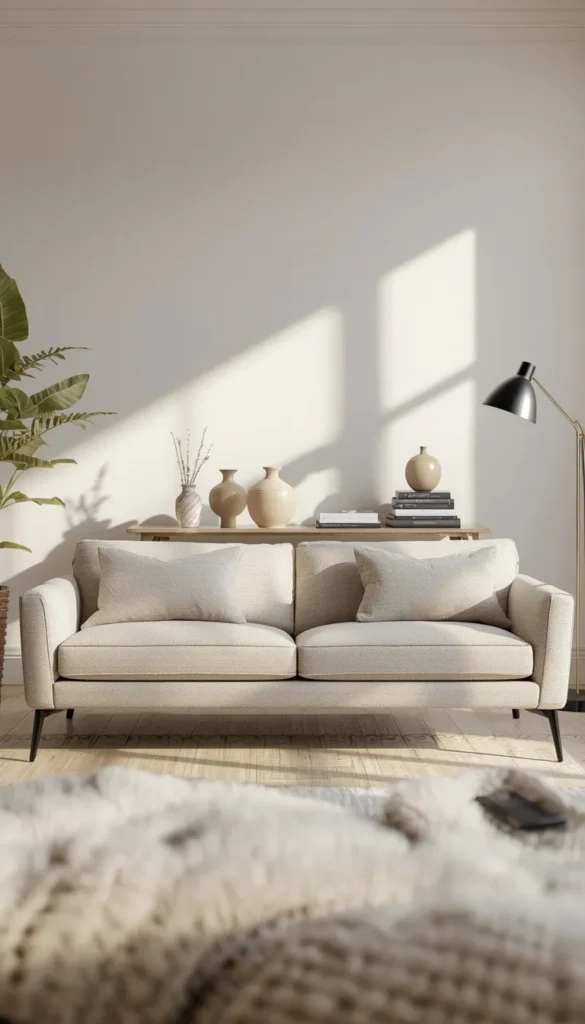
My instinct used to be pushing every sectional flush against the wall, and honestly, that’s still the right move in a lot of smaller rooms. But once a room has generous square footage, pulling the piece forward changes everything. It creates a defined seating zone instead of furniture that just trails off into empty carpet, especially if you use that gap behind it for a slim console or a floor lamp. One thing to watch out for is the back of the sofa itself. Some budget pieces have a flat, unfinished rear panel that looks fine against a wall and cheap sitting in the middle of a room, so check that before you commit to floating it.
2. Go L Shaped for Small Living Rooms
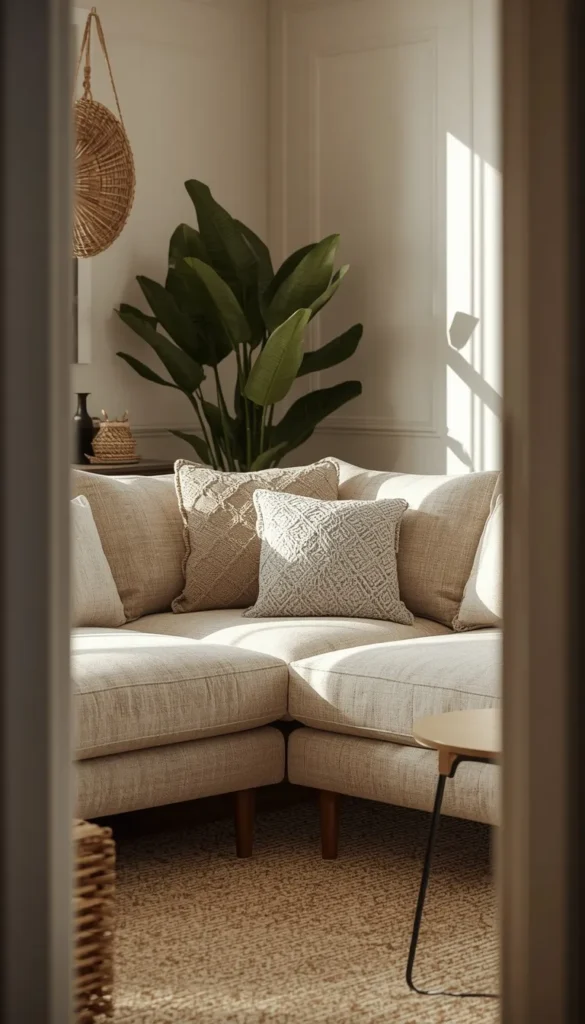
An L shaped sectional is my default recommendation for smaller living rooms, and it’s not close. You get corner seating a straight sofa can’t offer, and the short leg tucks against a wall without eating into your walking path.
A few numbers I actually use when I’m sizing this for a client:
- At least 30 inches of clearance on any side someone needs to walk through
- An 84 to 96 inch main run for rooms under 200 square feet
- A reversible chaise if there’s any real chance you’ll rearrange the room later
That last one costs a bit more upfront, but I’ve had clients thank me for it two years down the line when their layout needed to change.
3. Go U Shaped for Big Family Rooms
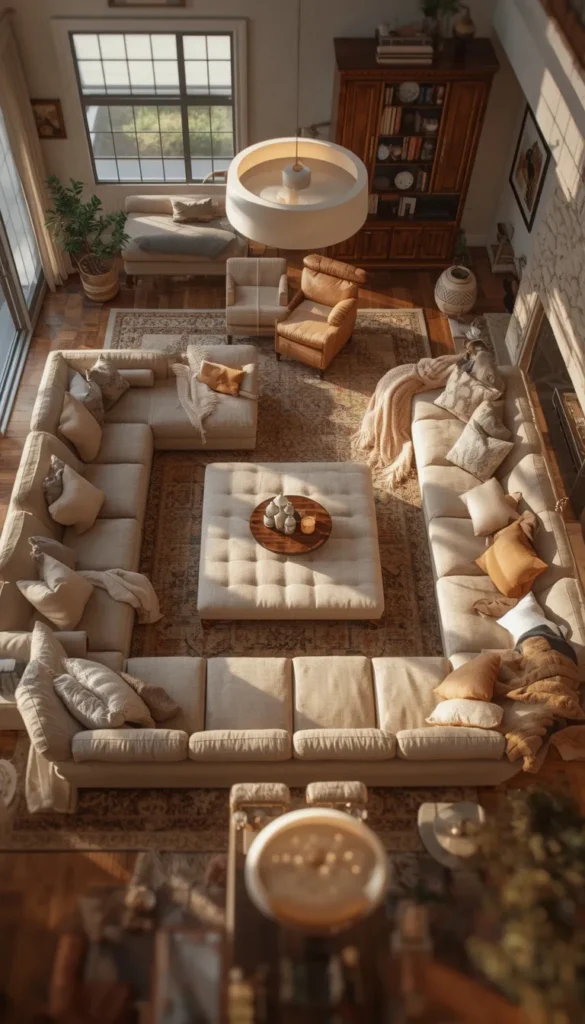
A U shaped sectional is a commitment, and I only recommend it for rooms of 300 square feet or more, ideally for households that actually entertain or have enough people to fill it. I’ve watched more than one client buy a U shape because it looked incredible in a showroom, then spend years with four empty seats nobody ever sits in. Where it genuinely earns its keep is around a big TV or fireplace, with everyone facing the same direction and nobody stuck out on the awkward end. Budget for a substantial coffee table or ottoman in the middle too. A U shape without something anchoring the center just feels like three sofas that got into an argument.
4. Tuck It Into an Awkward Corner
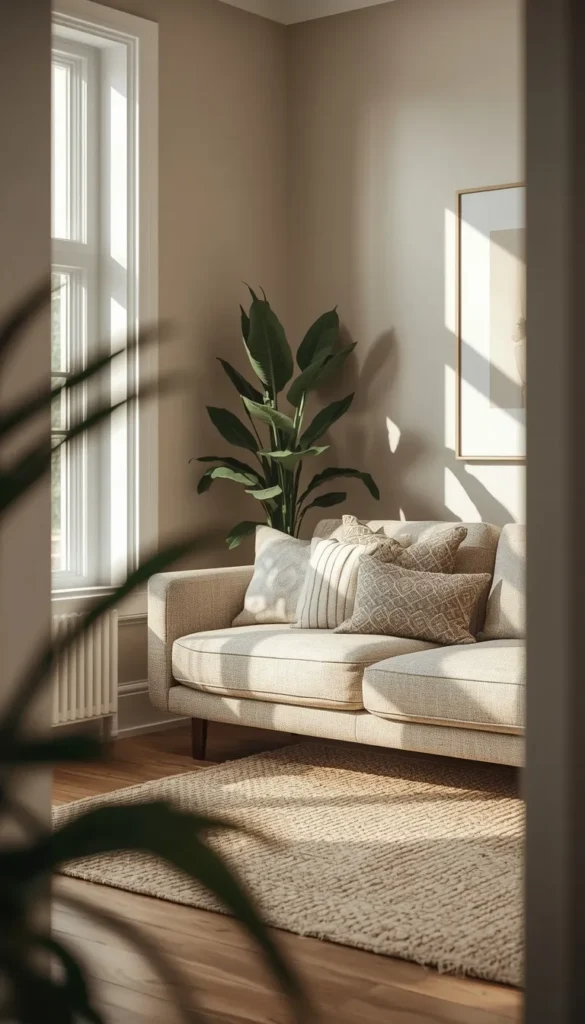
Almost every home has one dead corner nobody knows what to do with, and a compact sectional is often the cleanest fix I know. The angled shape follows the room’s geometry instead of fighting it.
A quick trick I’ve learned is to resist the urge to oversize the piece to “fill” the space. A sectional that’s too large for a tight corner doesn’t solve the awkwardness, it just relocates it somewhere else in the room.
- Measure the actual usable footprint first
- Size down from what you think you need
- Add height nearby with a tall plant or artwork, since low furniture in a corner tends to read as cramped
If you had to pick one spot in your living room to fix first, where would it be?
5. Modern Farmhouse Sectional Styling
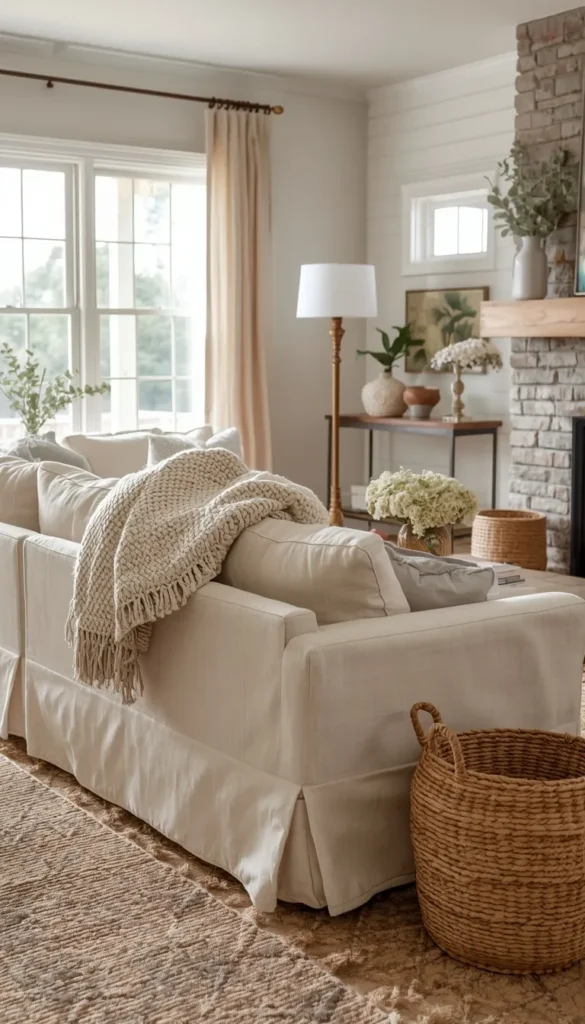
Modern farmhouse is still one of the most requested looks I get across the country, and a sectional is honestly perfect for it. Think slipcovered linen or a performance weave in warm white, oatmeal, or a soft greige, paired with turned wood legs or a simple skirted base. The real appeal here is practicality. A lot of farmhouse sectionals use removable, washable slipcovers, which matters enormously if you have kids, and I’ve had clients literally throw cushion covers in the wash after a birthday party. The downside is that slipcovers shift and bunch over time. If a perfectly crisp look matters to you, budget the extra ten minutes a week to straighten it back into shape.
6. Mid Century Modern Sectional
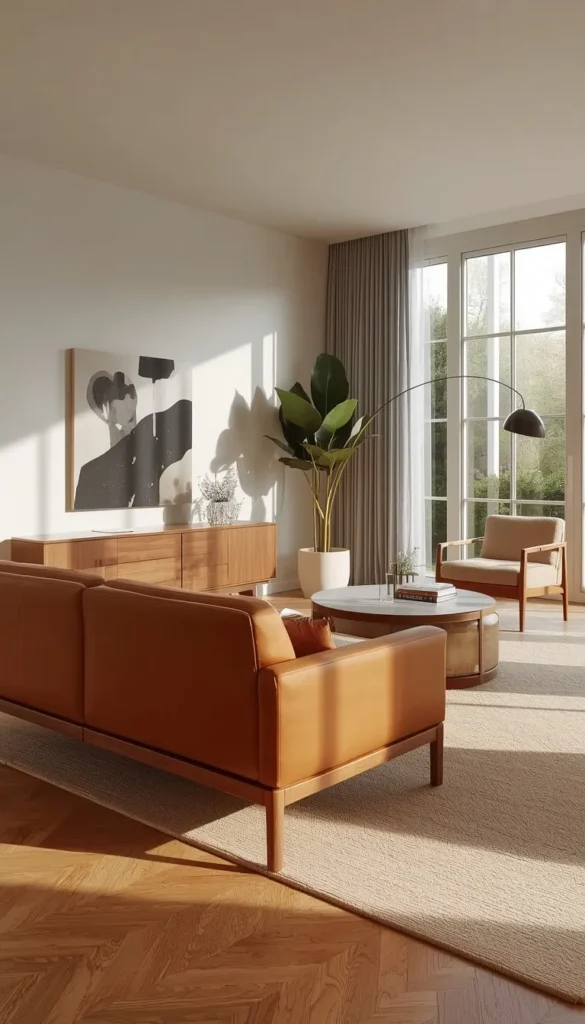
Mid century modern sectionals are lower profile, with tapered wood legs and clean, straight lines. They photograph beautifully and work well in rooms with lower ceilings.
Here’s where the style falls apart in real life, though. That low profile isn’t always comfortable for older family members or anyone who struggles to get up from a low seat, and I’ve had more than one client fall in love with the look and quietly complain about it six months later.
If you love the aesthetic but not the practicality, look for a mid century inspired piece with a slightly raised seat height. You keep the silhouette without the knee strain.
Top 6 Living Room Sectional Sofa Ideas
| Idea | Estimated Price | Maintenance |
|---|---|---|
| L Shaped Sectional | $800 to $2,500 | Low |
| U Shaped Sectional | $1,800 to $4,500 | Medium |
| Modern Farmhouse Sectional | $1,200 to $3,000 | Medium |
| Mid Century Modern Sectional | $1,500 to $3,800 | Low |
| Bold Color or Pattern Sectional | $1,500 to $4,000 | High |
| Outdoor Sectional | $600 to $2,800 | Medium |
7. Transitional Neutral Sectional
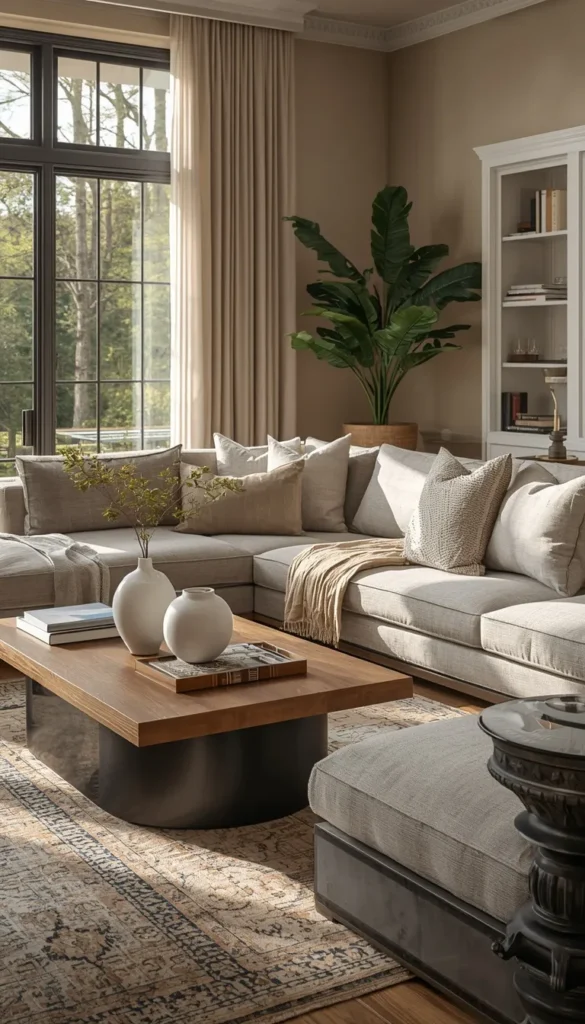
Transitional style, somewhere between traditional and contemporary, is the safest and most requested category I work with. A neutral sectional in gray, beige, or greige fits nearly any room and doesn’t date quickly. Safe isn’t always smart, though. An entirely neutral sectional with no texture or contrast can end up looking like a hotel lobby, so I always push clients to layer in:
- A patterned or textured rug underneath
- At least two pillow textures, not just colors
- Mixed materials on the side tables, like wood next to metal
For resale value, neutral is genuinely the smarter long term bet, since buyers touring a home respond better to it than a bold color that might not match their taste.
8. Bold Color and Pattern Sectional
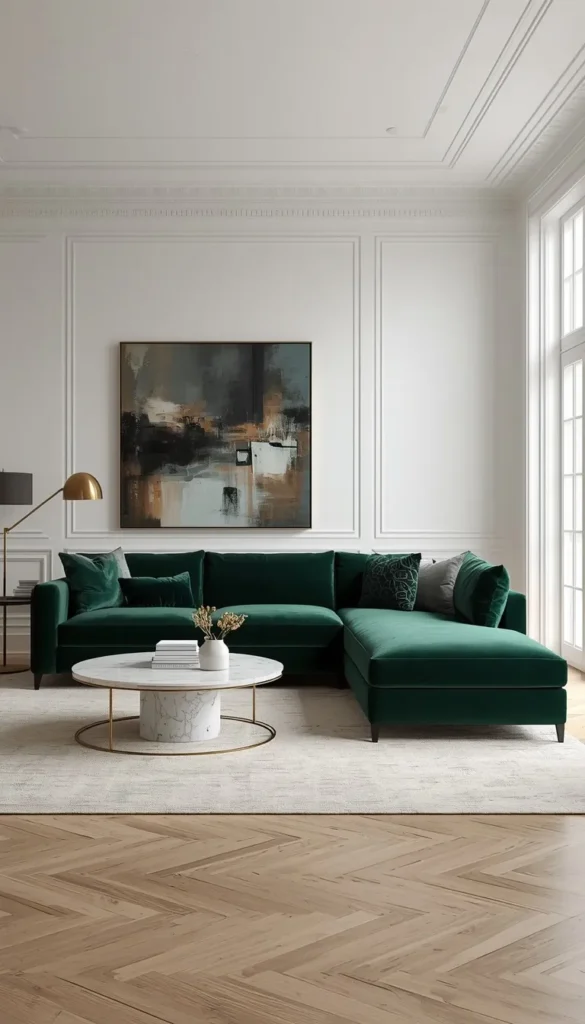
Occasionally a client wants to go bold, and when the rest of the room is calm, it works beautifully. A deep green velvet or navy sectional against white walls becomes the focal point instantly, no art required. The tradeoff is real, though. A colorful sectional is a much bigger commitment than a colorful throw pillow, and if your taste shifts in five years, you’re stuck with it, or reselling a piece that’s harder to move than a neutral one. My advice is to be bold in a fabric that ages well, like a performance velvet, and keep every other big piece in the room neutral so the sectional has room to actually be the star.
Does your current sofa actually fit the way your family really uses the room, or is it more about how it looked in the store?
9. Chaise Left or Right? How to Actually Decide
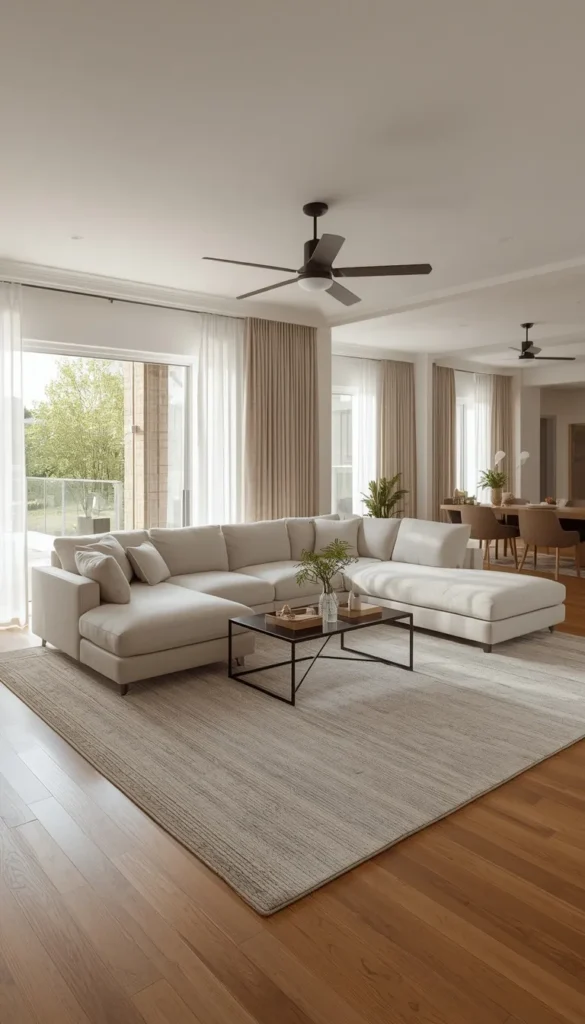
This trips up more people than any other decision on this list, and most articles skip it entirely. Stand where your TV or fireplace is and picture yourself sitting on the chaise, then ask which arm is closest to the room’s main walkway. You want the chaise on the side farthest from foot traffic, so nobody’s stepping around outstretched legs just to cross the room. I also ask clients where the natural light comes in, since a chaise positioned to catch morning sun by a window gets used far more than one tucked into a dark corner. If you’re torn between a fixed configuration and a modular one, modular costs more upfront but lets you correct this decision later without buying new furniture, which is worth it if you’re even slightly unsure.
10. Divide an Open Concept Space
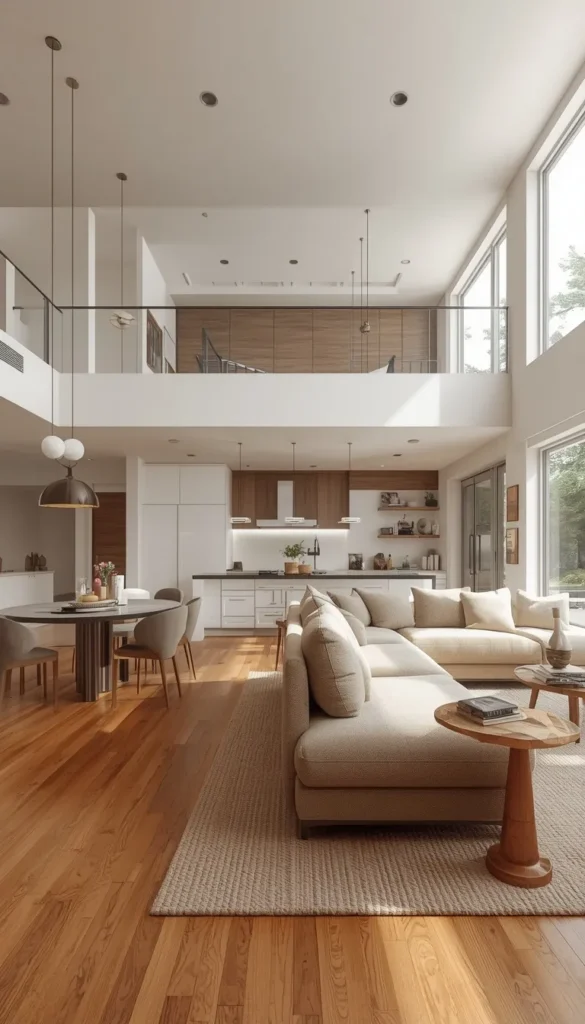
In open concept homes, a sectional can do the job walls used to do. Position the back of the piece to face the kitchen or dining area, and it creates a soft boundary without blocking sightlines or light.
This works especially well with an L shape, where the short leg angles toward the living space while the long run acts as the divider.
The one thing to watch is scale. In a big open space, a small sectional looks lost and fails to divide anything, which is one of the few situations where I actually tell clients to size up rather than down.
11. Real Talk on Sectionals With Pets and Kids
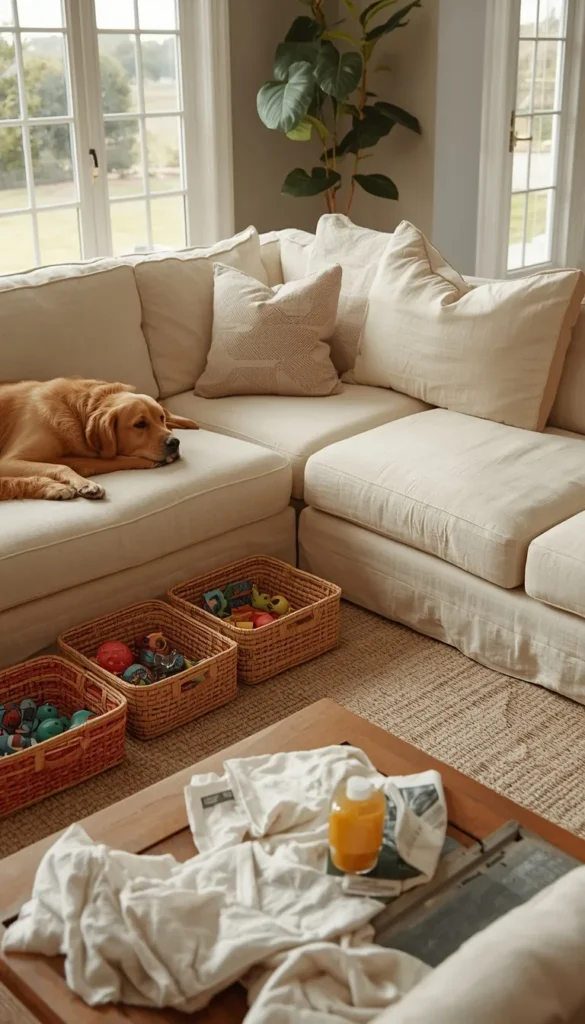
I had a client in Nashville with a young family and a golden retriever who fell for a linen blend sectional online. It looked soft, natural, and expensive, exactly what she wanted. Within a month, that same dog had a full glass of red wine spilled on the arm during a football watch party, and the natural linen soaked it up like a sponge. We ended up replacing that piece with a performance fabric sectional in a similar tone, and she told me later it was the best furniture decision she’d made in years. If you have pets or young kids, here’s what I’d actually look for:
- Performance fabrics, usually polyester or olefin blends, engineered to resist stains and wipe clean
- High density foam cushions, which hold their shape under daily jumping far better than a soft down fill
- Steering clear of real linen, silk blends, and light colored suede unless you’re prepared to babysit them
12. What You Actually Get at Each Budget Tier
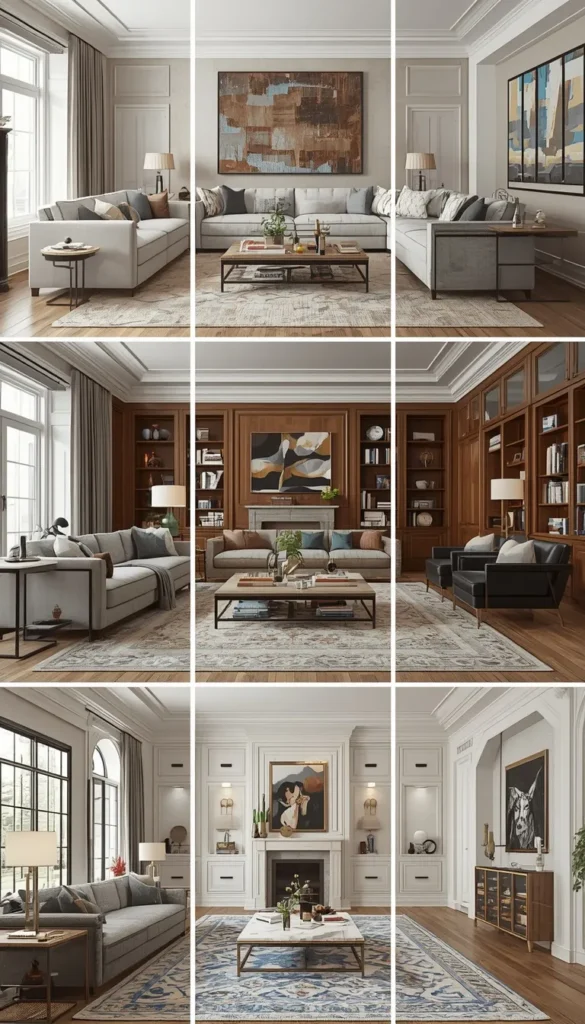
Under 1,500 dollars, you’re typically looking at particleboard frames, lower density foam, and polyester blend fabric. It’s a reasonable choice for a first apartment, but don’t expect it to hold up past five or six years of daily use. Between 1,500 and 4,000 dollars is where most of my clients land, and it’s genuinely the sweet spot, with kiln dried hardwood frames, higher density foam, and real performance weaves that should last a decade with normal wear. Above 4,000 dollars, you’re often in fully customizable territory, choosing your own fabric, cushion fill, and configuration, which is worth it if you want a piece built around your exact space rather than picking from what’s in stock.
Team floating your sectional away from the wall, or team push it flush against the corner?
13. Measure Before You Fall in Love
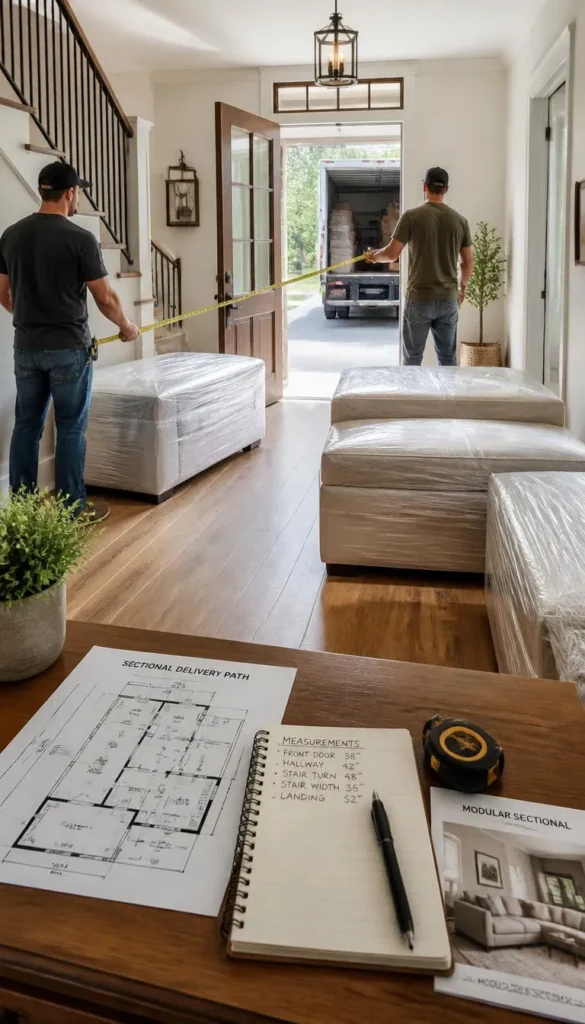
That same Nashville client actually had a second lesson in this project. Before the pet incident, her first sectional choice, a U shaped piece for a bonus room upstairs, never even made it into the house. It wouldn’t clear the turn in her staircase, and she had to return it entirely and go with a modular design instead. This is the step almost every article skips, and it’s the one that genuinely saves people money and heartache. Before you order anything, measure:
- Your front door and any hallway turns
- Stairwells, including the tightest point in the turn
- The room itself, using overall depth rather than just cushion depth
If your access is tight, look specifically for modular sectionals that separate into individual sections. It costs a little more than a fixed one piece frame, but it solves a problem that otherwise has no solution once the delivery truck is already outside.
14. Styling It With Pillows and Throws
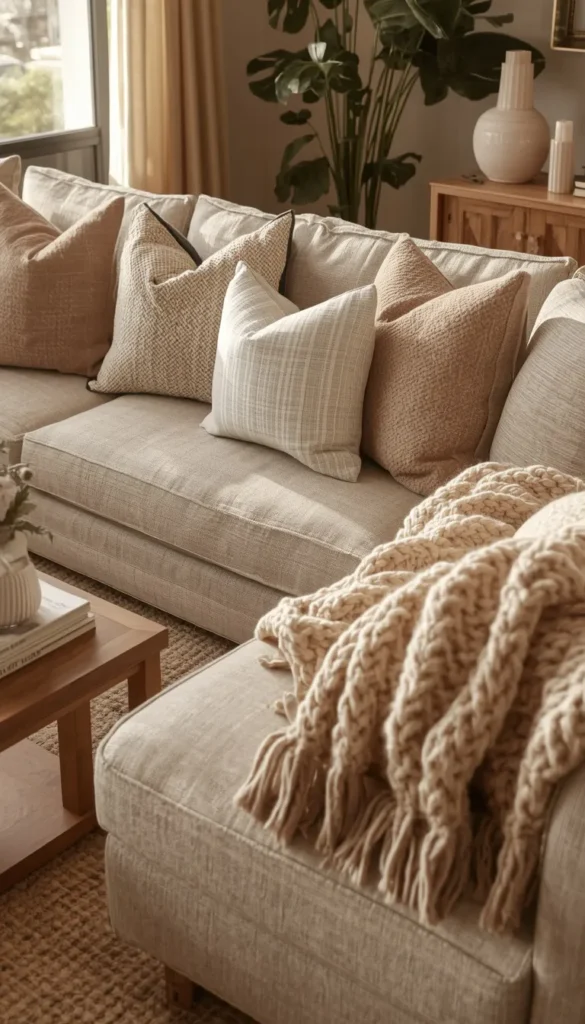
The sectional itself is maybe eighty percent of the room. The last twenty percent, the part that actually makes it look designed instead of delivered, comes down to styling. I mix at least two pillow sizes and two textures on every sectional I style, usually a solid linen paired with something textured like boucle or a subtle stripe, and I’d rather see three well chosen pillows than eight matching ones straight out of a box set. A single oversized throw draped over the chaise, not folded flat, adds warmth and gives the eye somewhere to land. Rotate these pieces seasonally if you want an easy refresh without buying new furniture, since it’s the cheapest styling trick I know and it works every time.
15. Outdoor Sectionals for Patios
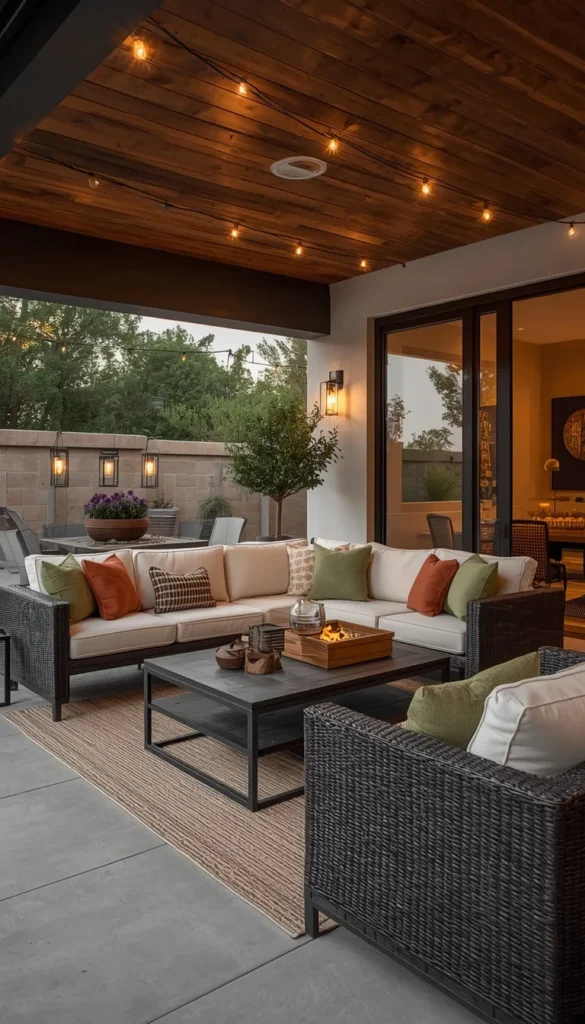
An outdoor sectional follows a lot of the same rules as an indoor one, with one major difference. The frame matters more than anything else, so look for aluminum or teak rather than untreated wood, since those hold up to weather without warping or rotting. Cushions should be foam specifically rated for outdoor use, with fabric that resists mold and fading rather than water resistant fabric layered over regular indoor foam.
A quick trick I’ve learned is to bring cushions in during heavy rain even with the right materials, since prolonged soaking shortens their lifespan regardless of what the tag promises.
Style wise, a neutral or woven frame with a few bold outdoor pillows gives you the same layered look as an indoor sectional. It’s genuinely one of the easiest upgrades for making a patio feel like an extension of the house rather than an afterthought.
Which Sectional Path Is Yours?
By Budget
- Starter Pick: L shaped sectional in a neutral fabric, budget friendly and easy to resell later
- Investment Pick: Fully customizable sectional built to your space, higher upfront cost, decade long lifespan
By Lifestyle
- Busy Families: Performance fabric, high density foam, modular pieces that can be rearranged as kids grow
- Minimalists: Mid century modern silhouette, low profile, clean neutral tone
- Small Spaces: Compact L shape or a piece tucked into a corner, sized down from what feels “safe”
- Open Layouts: U shape or a room dividing sectional, sized up to actually anchor the space
Frequently Asked Questions
How much does a sectional sofa cost?
Most homeowners spend between $800 and $4,000, depending on frame quality and fabric. Budget pieces start lower, but custom builds can run well past $5,000.
What is the standard size of a sectional sofa?
A standard L shaped sectional runs about 84 to 110 inches on the long side. Compact versions built for apartments often start closer to 78 inches.
Is a sectional better than a sofa and loveseat combo?
It depends on your room’s shape and how you use it. A sectional maximizes seating in less floor space, while separate pieces offer more flexibility for rearranging.
How do I arrange a sectional in a small living room?
Float it slightly off the wall or tuck it into a corner to keep walkways clear. Aim for at least 30 inches of clearance on any side people need to pass through.
Can a sectional fit through a standard doorway?
Most fixed sectionals need roughly 30 to 36 inches of clear doorway width to pass through comfortably. If your entry is tighter, a modular sectional that separates into pieces is the safer bet.
Conclusion
Your living room is where your actual life happens, the Tuesday nights, the football watch parties, the kid piling on with a bowl of cereal, and it deserves furniture that keeps up with that. You don’t need to buy anything today. Pull a fabric swatch, measure your doorway, or just move your current sofa three feet off the wall and see how the room feels. Small moves like that tell you more than any showroom trip will. What’s the one thing about your current living room setup that’s been bugging you for months now?
