
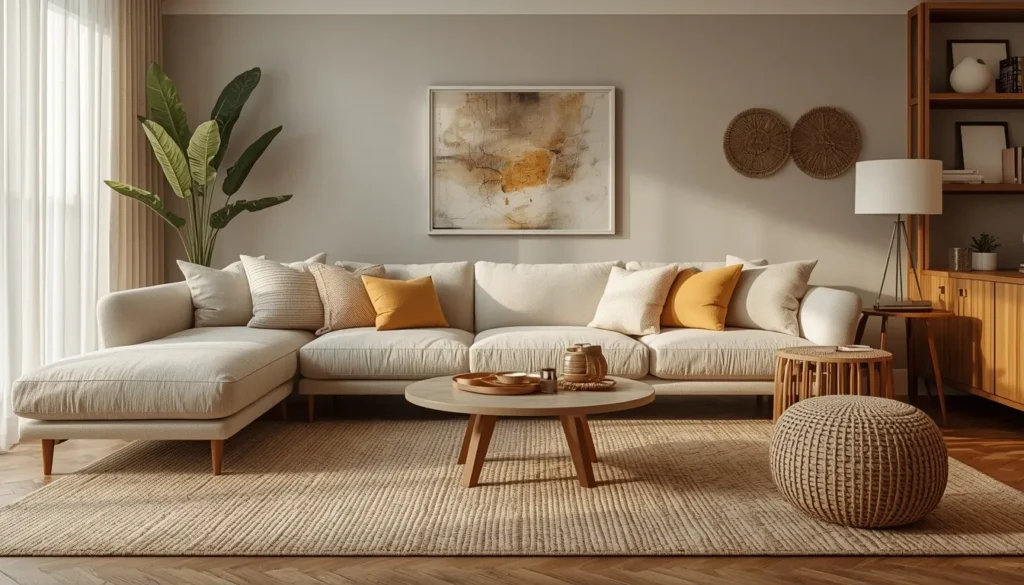
Your sofa is not just furniture. It is the piece that decides whether your living room feels like a showroom or an actual home. I have watched clients agonize over paint colors for months, then grab the first sofa they see on sale, and it almost always backfires. So before you swipe your card on the next tempting sale, let’s talk about the 11 sofa ideas that actually earn their spot in your living room, and the honest tradeoffs nobody tells you about.
My Design Notes
A few years back, I worked on a living room for a young family just outside Austin, two kids under seven and a golden retriever who basically ran the household. My client had her heart set on a white boucle sectional she’d seen all over Pinterest, and I understood why. It looked soft, expensive, and effortlessly chic in every photo.
I didn’t talk her out of it. I just told her what “yes” would actually mean for her Tuesday afternoons. Boucle traps hair and mud in its texture in a way that’s nearly impossible to fully clean, and with a dog that size, she’d be steam cleaning that sofa every few weeks.
So we found a performance fabric in a nearly identical bouclé weave, same dreamy texture, but built to shrug off spills and pet hair. She still gets compliments on it three years later, and she’s never once had to worry about ruining it.
11 Elevated Sofa Styling Secrets to Transform Your Living Room
1. Start With the Two Thirds Rule
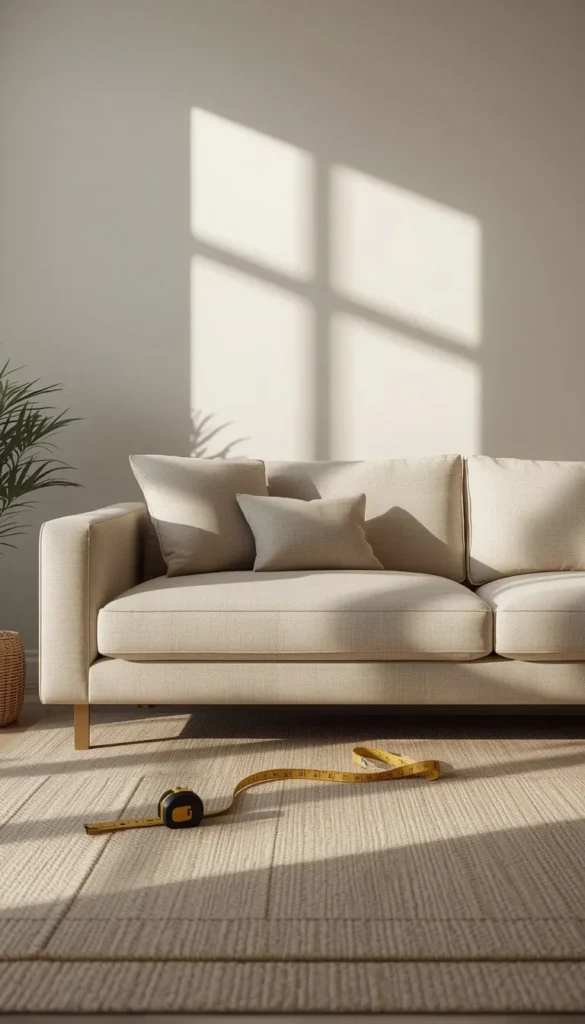
Before you fall in love with any sofa, get a tape measure and figure out how much wall space you’re actually working with. The rule I give every client is simple: your sofa should take up about two thirds of the wall it sits against. Go much bigger and the room feels crowded the second you walk in. Go much smaller and the whole space feels unfinished, like it’s waiting for furniture that never showed up.
A trick I’ve learned over the years is to lay painter’s tape on the floor in the exact footprint of the sofa you’re considering, then live with it for a day or two. You’ll be surprised how often a size that looked perfect online feels totally wrong once it’s mapped out in your actual room.
One more thing people forget completely: measure your doorways, hallways, and stairwells before you buy, not after. I’ve had clients fall in love with a sofa that simply could not make the turn into their apartment stairwell, and returning a piece like that is a headache nobody needs.
2. Set Your Budget Tiers First
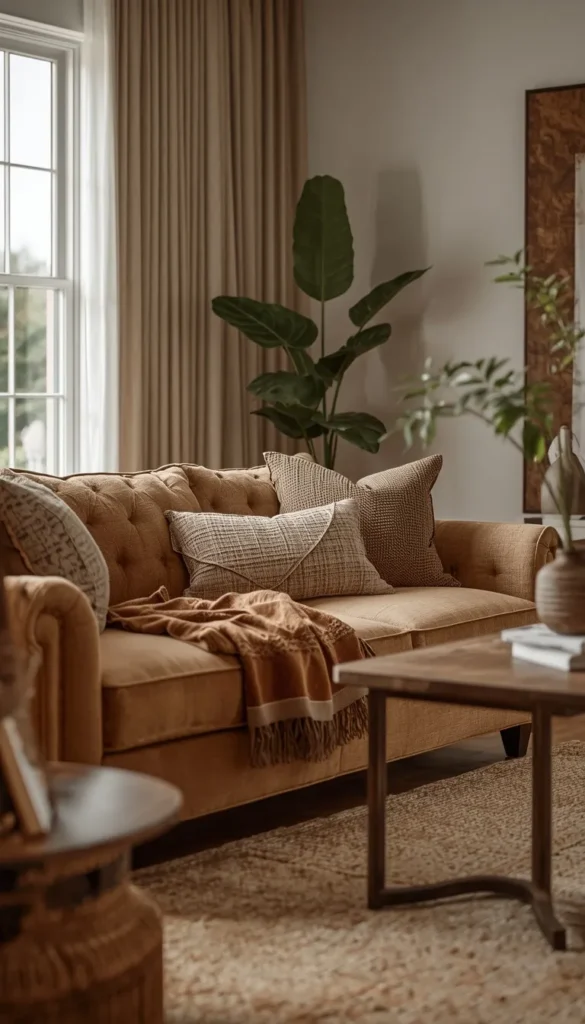
Sofas are one of those purchases where the price range is genuinely enormous, and knowing where you land before you start shopping saves you a lot of heartache. Here’s roughly what you’re working with at each level.
- Around 800 to 1500 dollars gets you a solid, well made basic sofa, usually with a simpler frame and foam cushions.
- Somewhere in the 2000 to 3500 range is where quality construction, better fabric options, and down blend cushions start showing up.
- Above 5000 dollars, you’re paying for hardwood frames, premium upholstery, and often a much longer warranty on the frame itself.
None of these tiers are wrong. I’ve furnished beautiful living rooms at every single price point above. What matters is knowing your number walking in, because showroom sales staff are very good at nudging you upward one step at a time.
When you do get to a showroom, actually sit down and stay there for a few minutes. Lean back, cross your legs, do whatever you’d normally do on a Sunday afternoon. A sofa that feels fine for thirty seconds can feel completely different after ten minutes, and that’s exactly how long you’ll be judging it once it’s in your home.
3. Modern Farmhouse Slipcovered Sofas
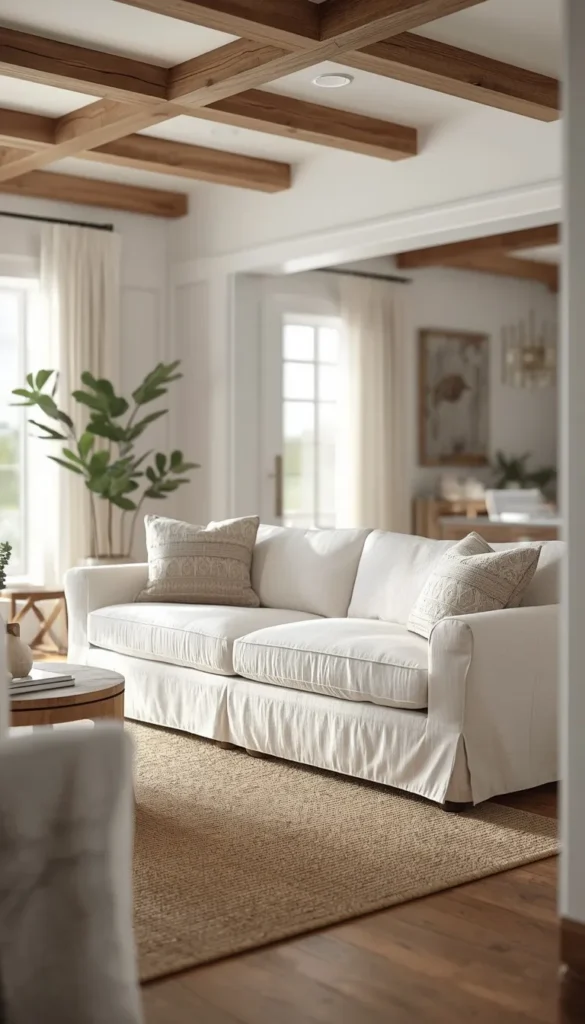
There’s a reason the slipcovered farmhouse sofa has stuck around for well over a decade now. It’s relaxed, it’s forgiving, and it photographs beautifully in that soft, sun washed way so many people want for their living rooms. Linen or a linen blend slipcover softens the whole room instantly, and it pairs naturally with the shiplap, exposed beam, and reclaimed wood details so common in this style.
What nobody tells you is how much upkeep a true slipcover actually takes. Removable covers are washable, which is genuinely wonderful if you have kids or pets, but they also wrinkle, shift, and need the occasional re-tuck to keep their crisp shape. If that sounds like too much fuss for your lifestyle, look for a slipcover style with a fitted, tailored cut rather than the loose, cottage look. You get the same aesthetic with far less maintenance.
4. Mid Century Tapered Leg Sofas
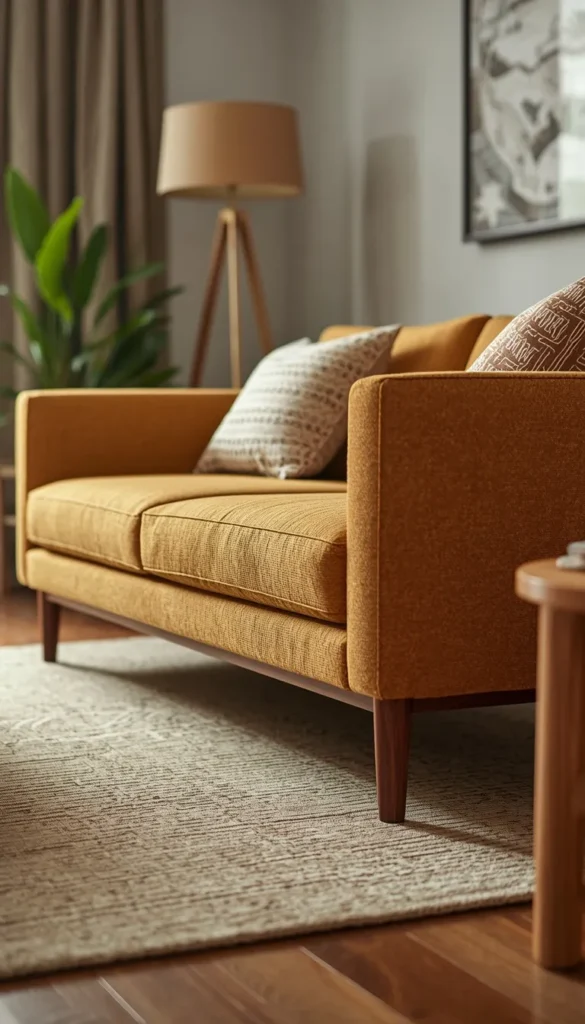
Mid century sofas earn their place on this list simply because they never really go out of style. The tapered wood legs, the low profile, the clean tailored lines, all of it reads as effortlessly put together no matter what year it is. I tell clients this is the safest big investment they can make if they’re worried about their taste changing in five years.
What I love most about this style is how well it works in smaller rooms. The raised legs let light travel underneath the sofa, which makes the whole space feel airier and larger than it actually is, something a heavier, skirted sofa simply cannot do.
Be honest, is your current sofa picked for how it looks, or for how it actually holds up to your daily life?
5. Curved Sofas and When They Actually Work
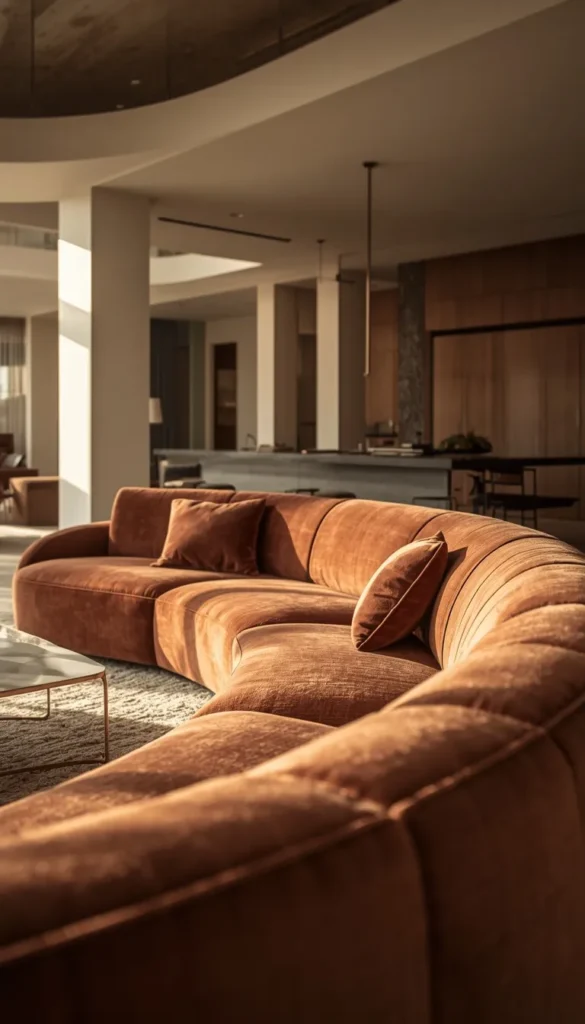
Curved sofas have had a real moment over the past few years, and honestly, I understand the appeal. There’s something about that soft, sculptural shape that makes a room feel instantly more interesting, almost like the sofa itself is a piece of art rather than just a place to sit.
That said, I don’t recommend them for every space. Curves need room to breathe, and they genuinely shine in larger, open living rooms where they can become the focal point without fighting other furniture for attention. Squeeze one into a small, boxy room and it can actually eat up more usable space than a straight backed sofa would, simply because of how the shape sits in a corner.
My honest take is this: if you have the square footage and you love the look, go for it. If you’re working with a smaller or more awkwardly shaped room, a sofa with subtly curved arms gives you a hint of that same softness without the commitment.
6. Sectionals for Open Concept Living
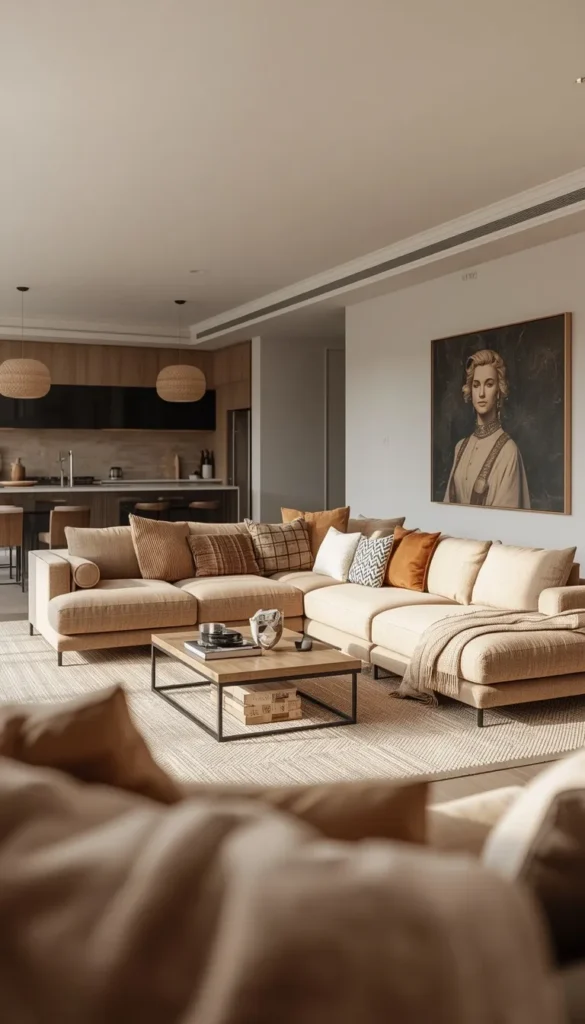
Open concept floor plans are everywhere in newer American homes, and a sectional is often the smartest tool for making that kind of space feel intentional rather than sprawling. An L shaped or U shaped sectional naturally draws a line between your living area and your kitchen or dining space, without needing a wall to do it.
A quick trick I’ve learned when working with open layouts is to angle the sectional slightly away from the main walkway. It creates a cozier, more enclosed feeling for the seating area itself, even though the room technically stays wide open.
One thing worth planning ahead for is delivery. Large sectionals often arrive in multiple pieces, but even individual sections can be surprisingly bulky, and if you live in a walk up or a building with a tight elevator, it’s worth measuring that path before your sectional gets stuck in the lobby.
Top 6 Living Room Sofa Ideas
| Idea | Estimated Price | Maintenance |
|---|---|---|
| Modern Farmhouse Slipcovered Sofa | $900 to $2,200 | Medium |
| Mid Century Tapered Leg Sofa | $1,200 to $3,000 | Low |
| Curved Sofa | $1,800 to $4,500 | Medium |
| Sectional for Open Concept Living | $1,500 to $5,000 | Medium |
| Two Facing Sofas Set | $2,400 to $6,000 (pair) | Low |
| Petite Sofa or Loveseat | $600 to $1,800 | Low |
7. Two Facing Sofas for a Formal Layout
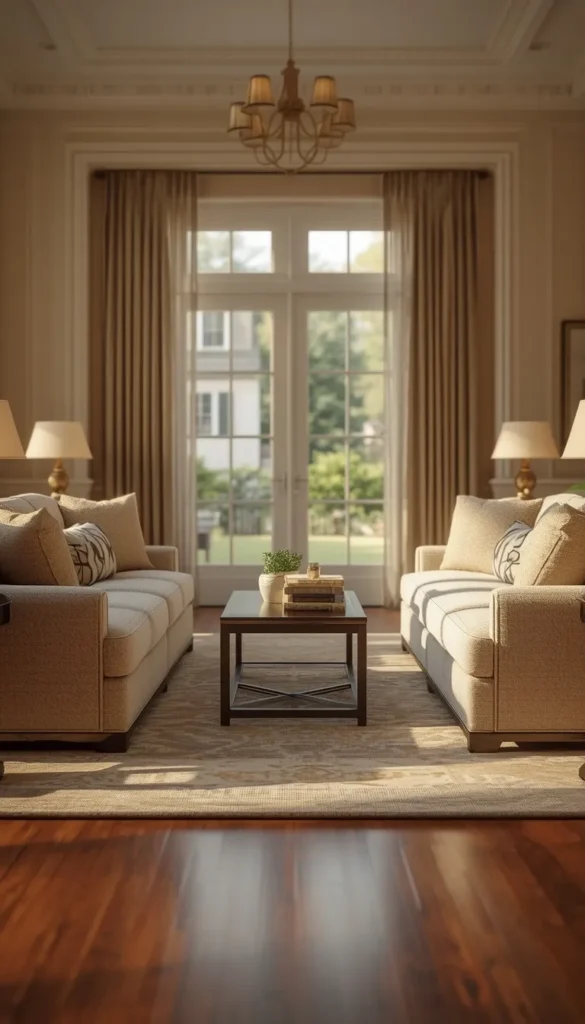
There’s an elegance to walking into a living room with two matching sofas facing each other. It’s a layout you see constantly in more formal or traditional American homes, and it immediately signals a room built for real conversation, not just staring at a television.
- Keep the sofas identical or very close in fabric and color so the symmetry actually reads as intentional
- Leave enough space between them, generally four to five feet, so the layout feels open rather than cramped
- Add a coffee table or a low ottoman between them to anchor the whole arrangement
This setup does ask more of your square footage than a single large sofa would, so it tends to work best in living rooms that aren’t also trying to double as your main TV watching space.
8. Petite Sofas and Loveseats for Small Spaces
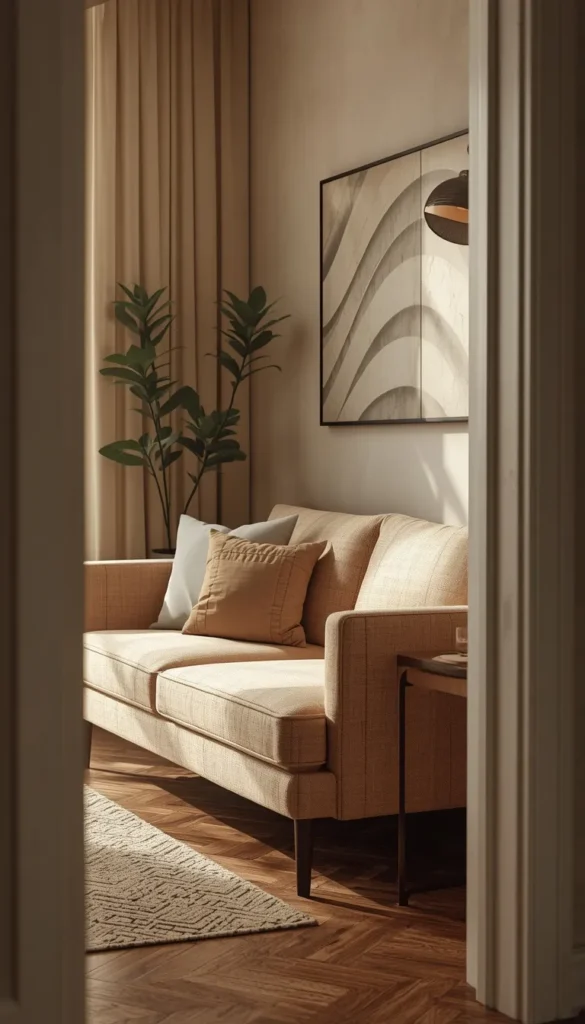
Not every living room has room for a full length sofa, and that’s completely fine. A well chosen loveseat can feel just as intentional and stylish as its larger counterpart, especially in apartments or smaller city homes where every square foot counts.
The mistake I see most often is people trying to force a standard sofa into a room it was never meant for, and then wondering why the space feels tight and awkward. Sizing down isn’t a compromise. It’s simply designing for the room you actually have, rather than the room you wish you had.
If you had to redo your living room tomorrow, would you keep your current sofa or finally swap it out?
9. Choosing Fabric You Can Actually Live With
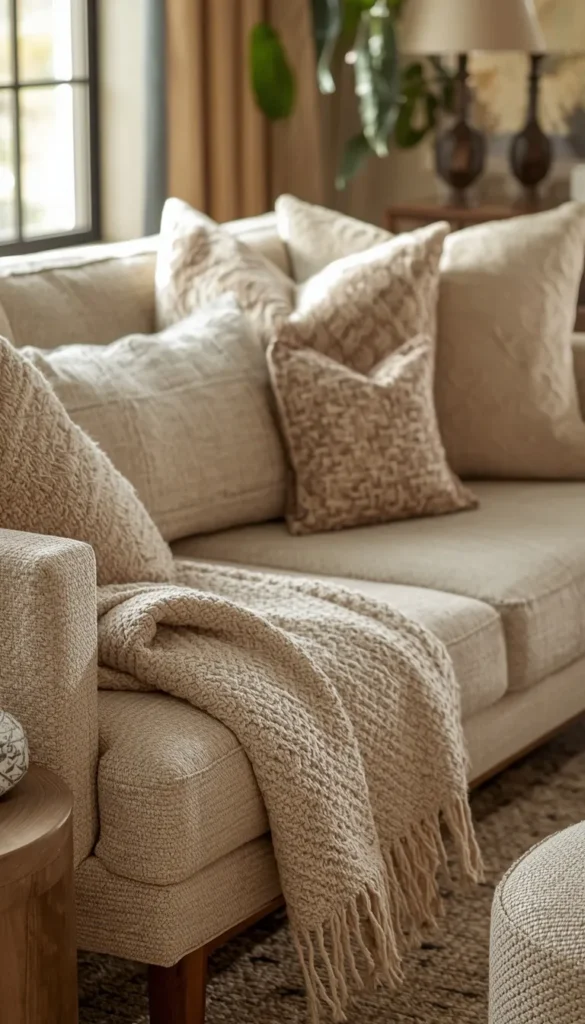
Fabric is where most sofa decisions quietly go wrong, because everyone shops with their eyes first and their daily life second. Boucle is a perfect example. It’s soft, textured, and incredibly on trend right now, but that same nubby texture is what makes it grab onto pet hair and crumbs in a way that’s genuinely hard to fully clean.
Leather tells a different story depending on where you live. In a dry climate like Arizona or Colorado, leather can crack and dry out faster than you’d expect, so conditioning it regularly actually matters. In humid regions like the Gulf Coast or the Southeast, leather tends to stay more supple, but it can feel sticky or cool to the touch during peak summer months.
If any of that sounds like more maintenance than you want, ask about performance fabric. It’s come a long way in the last several years, and today’s versions genuinely look and feel like the real thing while standing up to spills, sunlight, and general wear far better than traditional upholstery.
10. Sofas That Survive Pets and Kids

If there’s a dog, a toddler, or both in your household, your sofa fabric needs to work as hard as you do. Manufacturers actually label their fabrics with cleaning codes, and knowing them saves you a lot of trial and error.
- W means it’s safe to clean with a water based cleaner, which is the most forgiving option for families
- S means solvent based cleaners only, so keep this one off your list if you’ve got young kids
- WS gives you flexibility with either method, and X means vacuum only, no liquid cleaning at all
Beyond fabric, think honestly about whether you need a sofa bed. They’re wonderful if you regularly host overnight guests and don’t have a spare room, but I’ll be straight with you, the mattress inside is rarely as comfortable as your regular bed, and the mechanism does add bulk to the frame. If guests are rare, a good sleeper chair or an actual guest room upgrade is usually the better long term investment.
11. Styling and Finishing Your Sofa
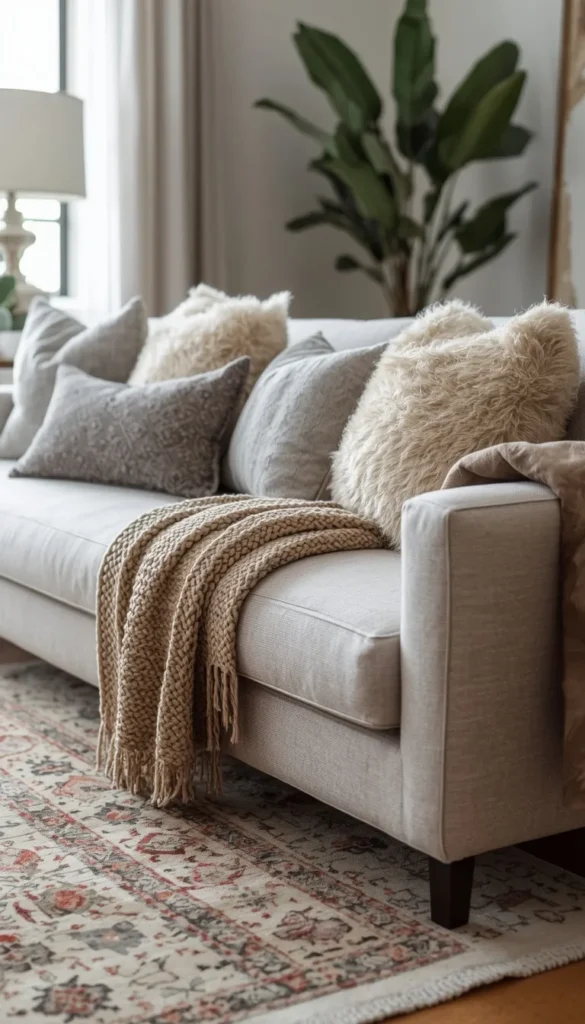
Once you’ve chosen the right sofa, the way you dress it up is what makes it feel finished rather than just functional. I always tell clients to think in odd numbers with pillows, three or five rather than an even, overly matched set, and to mix at least two textures so the arrangement feels collected rather than staged.
A rug underneath ties the whole seating area together, and here’s a simple rule that solves most rug headaches: at minimum, the front legs of your sofa should sit on the rug, even if the back legs don’t. It grounds the whole space instantly.
If I had to leave you with one final piece of advice, it’s this. Buy the sofa that fits how you actually live, not the one that looks best in a photo. The most beautiful sofa in the world means nothing if you’re afraid to sit on it, and the best living rooms I’ve ever designed are the ones where the family actually uses every single cushion.
Here’s the decision guide section, ready to slot in near the end of the article, right before the closing cheat sheet and FAQ:
Which Sofa Path Is Yours?
By Budget
- Starter Pick: Petite sofa or loveseat, gets you a stylish, well built piece without stretching your wallet
- Mid Range Sweet Spot: Mid century tapered leg sofa, timeless design that holds its value for years
- Investment Piece: Curved sofa or a large sectional, worth the splurge if it’s becoming the centerpiece of your room
By Lifestyle
- Busy Families with Pets or Kids: Performance fabric sectional, built to survive daily chaos without babying it
- Small Space or Apartment Living: Petite sofa or loveseat, scaled to fit without crowding the room
- Open Concept Homes: Sectional or U shaped layout, naturally zones your space without adding walls
- Entertainers Who Host Often: Two facing sofas, sets up your room for real conversation
By Style Goal
- Want It to Feel Collected and Casual: Modern farmhouse slipcovered sofa
- Want It to Feel Timeless: Mid century tapered leg design
- Want It to Feel Like a Statement: Curved sofa in a bold or richly saturated color
Frequently Asked Questions
How much should I actually spend on a living room sofa?
The average American homeowner spends somewhere between 1,500 and 3,000 dollars on a good quality sofa. You can go lower for a starter piece, but anything under 800 dollars usually means a shorter lifespan.
What is the most durable sofa fabric for pets?
Performance fabric is your best bet, hands down. It resists stains, sheds hair less, and holds up to scratching far better than boucle or traditional linen.
How long should a good sofa actually last?
Ideally, a well built sofa should last 10 to 15 years before you need to replace it. Frame quality matters more here than fabric, so always check the warranty length before buying.
Is it better to buy a sofa online or in a showroom?
In person is safer if it’s your first time buying that particular size or style. Sit on it for several minutes, not seconds, before trusting how it’ll feel at home.
What sofa color hides stains the best?
Medium toned neutrals like greige, warm taupe, or a soft charcoal hide the most. Pure white and jet black actually show dust, lint, and marks faster than you’d expect.
Conclusion
Your living room is where real life actually happens, the lazy Sunday mornings, the movie nights, the quiet cup of coffee before everyone else wakes up. The right sofa doesn’t just fill a corner, it changes how the whole room feels to come home to. You don’t need to overhaul everything this weekend. Just measure your space, pick one style from this list that’s been sitting in the back of your mind, and take that first small step toward a room that finally feels like you.
