
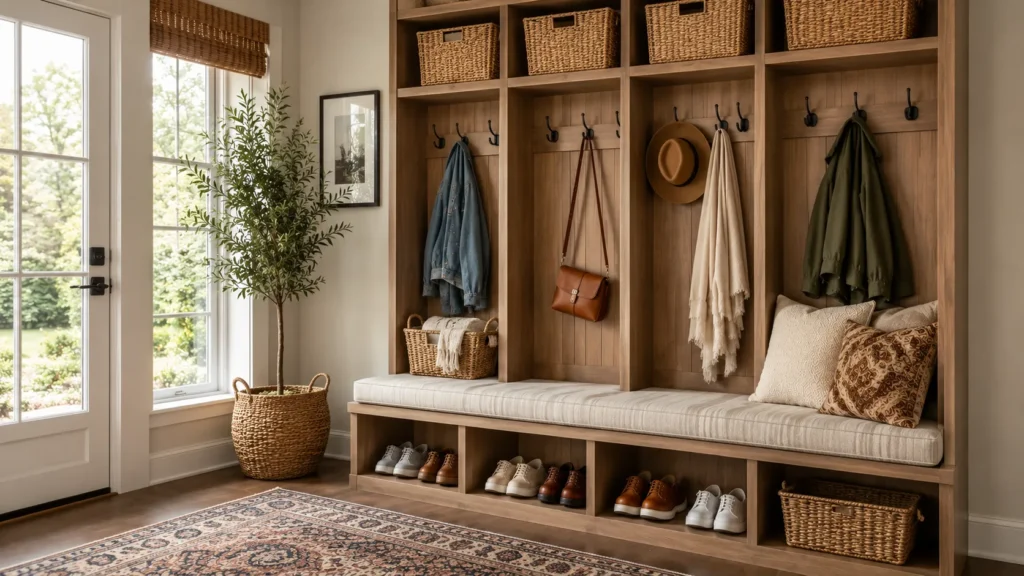
Your entryway is lying to you. It looks fine in the morning, then by 4pm it’s a graveyard of muddy sneakers, backpacks, and a single glove nobody claims. I’ve walked into more client homes than I can count where the “mudroom” is really just a hallway that lost a fight with real life. The good news is you don’t need a renovation budget to fix it. With the right IKEA pieces and a little planning, you can turn that chaos zone into a space that actually works for your family, and looks good doing it.
My Design Notes
I worked on a mudroom like this for a family outside Columbus, Ohio, three kids, one very muddy golden retriever, and a straight shot from the garage into the kitchen. Every afternoon at 3:15pm, the floor disappeared under backpacks and shoes.
We ended up pairing a PAX wardrobe with a run of BESTA cabinets along one wall. The mom originally wanted crisp white fronts on everything. I talked her out of it. I’d made that mistake once before on a job with two dogs, and the fronts looked filthy within a month.
We went with a warmer wood tone instead, added a step in mat before the hardwood started, not after, and gave each kid their own labeled cubby. Six months later, she sent me a photo of the bench still looking exactly like it did on install day. That’s the win I actually care about.
18 Mastering Stunning Mudroom Organization with IKEA
1. Double PAX Wardrobe Built In
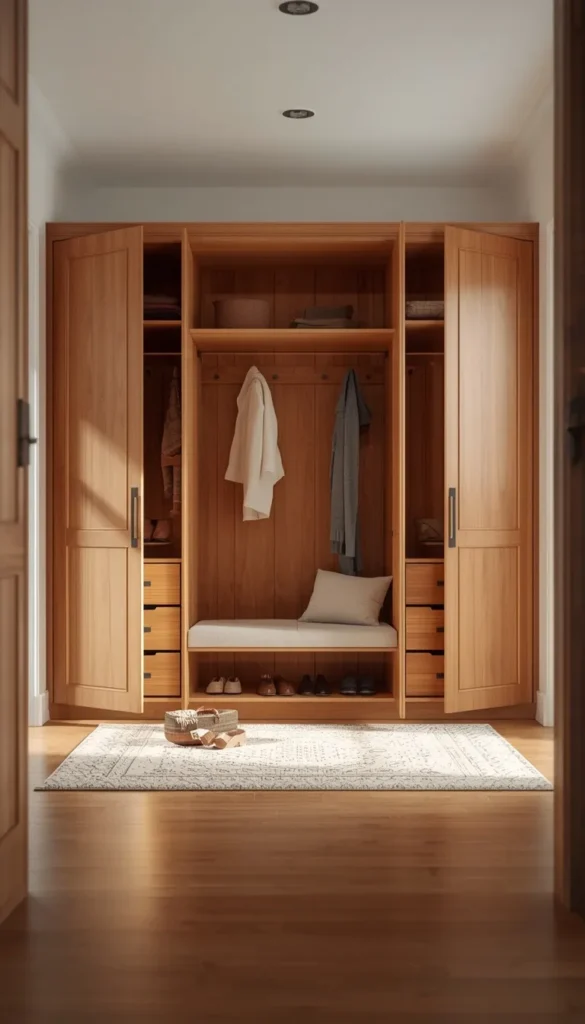
If you have a full wall and a real budget, this is the one I steer clients toward first. Two PAX wardrobes flanking a bench in the middle reads like a custom built in, even though every piece came flat packed. Add open cubbies on one side for daily coats and closed doors on the other for stuff you don’t want guests to see, like the broken umbrella you keep meaning to toss.
The real cost here isn’t the wardrobes themselves, it’s the accessories. Drawer fronts, soft close hinges, and interior lighting all add up fast, so budget an extra 20 to 30 percent on top of the base units if you want it to look finished rather than half done.
One thing to watch out for is depth. PAX runs deep, and in a narrow entry it can eat more floor space than people expect. Measure your walkway before you fall in love with the layout.
2. STÄLL Shoe Cabinet And Hook Rail
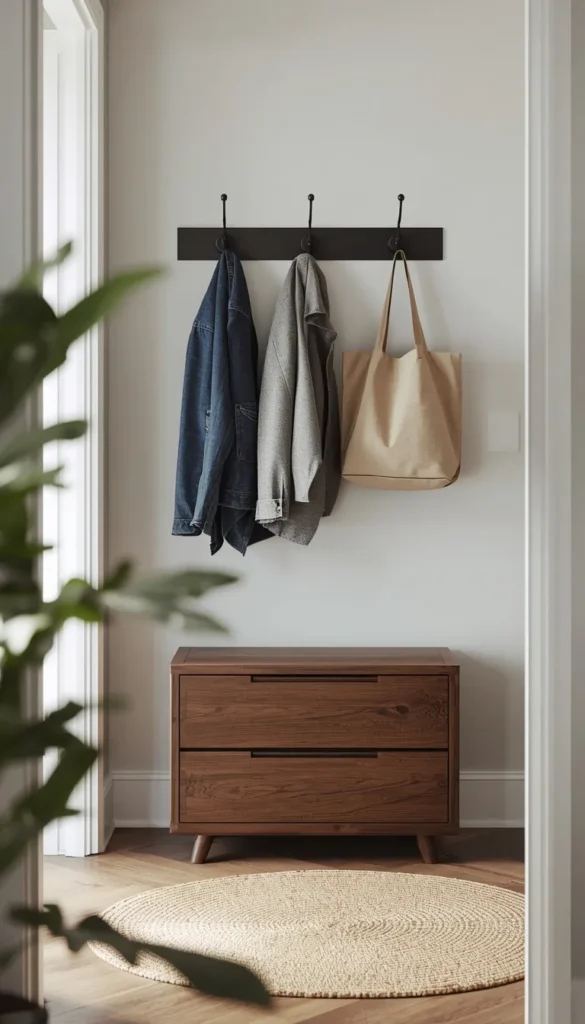
This is my go to answer when someone tells me their entryway is basically a closet door and a prayer. The STÄLL cabinet is slim enough to fit almost anywhere, and it holds more shoes than its size suggests. Mount a row of hooks above it and you’ve solved 80 percent of the daily chaos for under 150 dollars.
- Great for apartments and rentals
- Doors keep the mess hidden without needing a full room
- Pairs well with a slim mat underneath for wet shoes
A quick trick I’ve learned is to hang the hooks a little lower than feels natural, especially if kids are using them. Adults will still reach them fine, and kids actually use hooks that are within their own reach instead of dropping coats on the floor next to them.
3. IVAR Stained Locker System
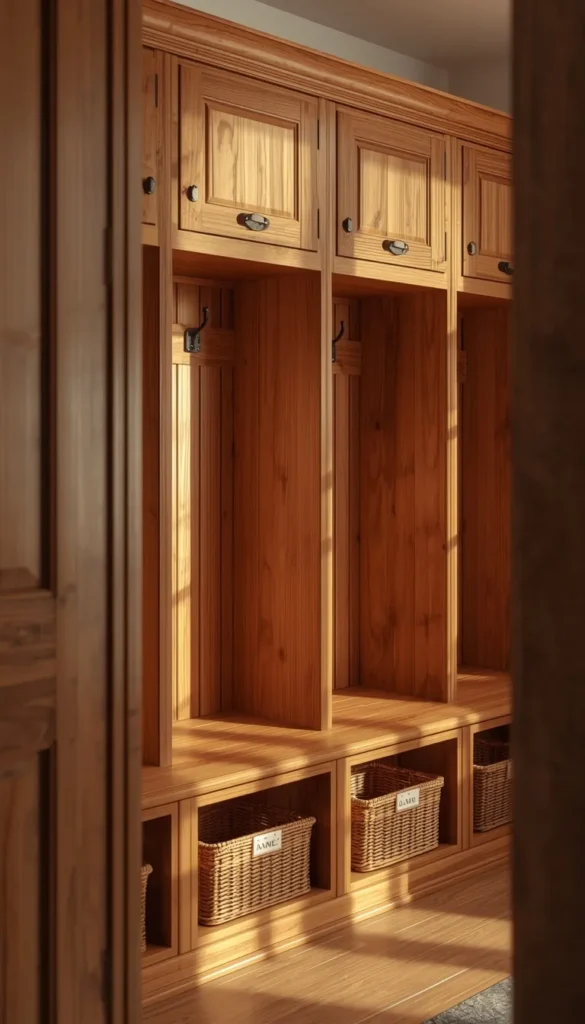
The IVAR system is unfinished pine, which means you get to make it your own. I’ve stained it in everything from a warm honey tone for a farmhouse feel to a deep charcoal for something more moody and modern. Either way, it reads as far more expensive than it actually costs.
Building it out as individual lockers works especially well for families with more than one kid, since everyone gets their own zone and nobody can claim they didn’t know whose bag that was. We usually add a hook, a shelf, and a small labeled basket to each section.
My honest take is that raw pine needs sealing, not just staining, if it’s going near an entry door. Untreated wood in a high traffic, high moisture spot will show wear within a season, and resealing it later is a bigger job than doing it right the first time.
4. BESTA Bench With Hidden Shoe Storage
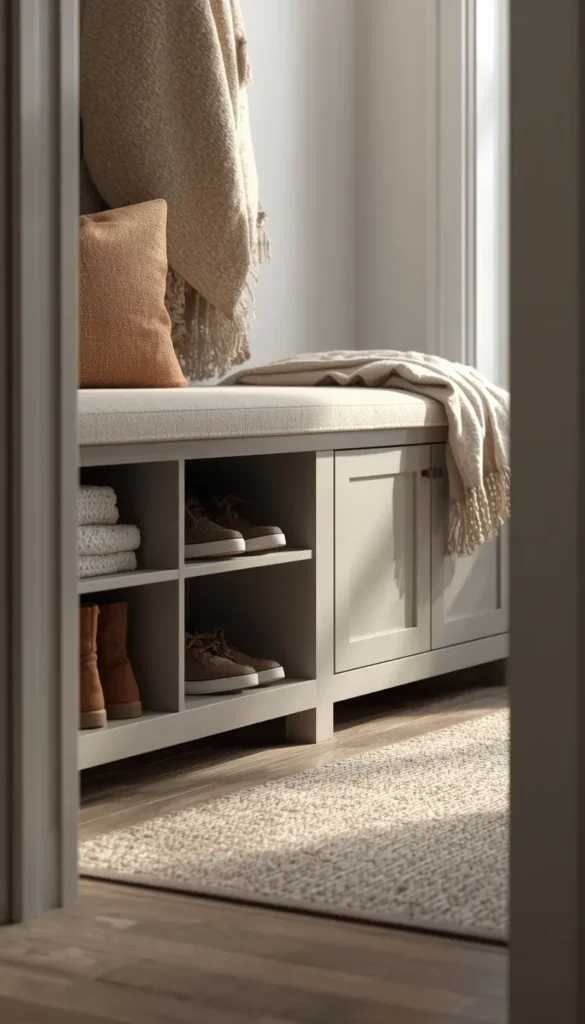
There’s something satisfying about a bench that doesn’t announce itself as storage. Two BESTA units stacked horizontally, topped with a cushion, gives you somewhere to sit while you deal with your shoes, and everything disappears behind a clean front the second you close it.
I like push to open doors on this one specifically, since handles tend to snag scarves and bag straps on the way out the door in the morning. It’s a small detail, but it’s the kind of thing that actually changes how much you enjoy using the space day to day.
If you’ve got pets or muddy kids, skip the light colored fronts here. I learned that one the hard way on an early project, a beautiful white bench that looked incredible in photos and needed wiping down every single day within a month.
Which of these 18 ideas would actually fit your entryway right now?
5. TRONES Slim Shoe Wall
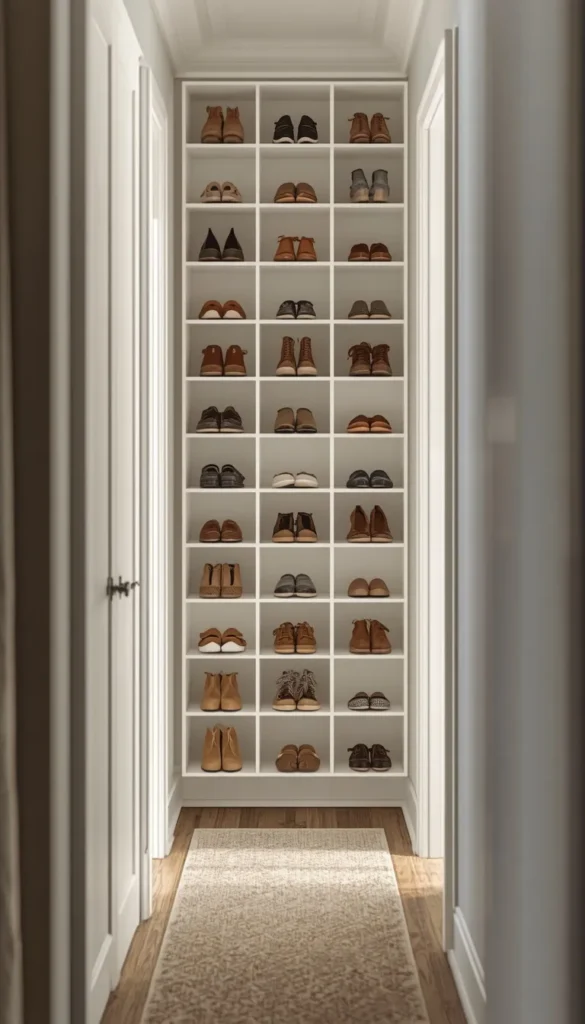
Narrow hallways are one of the trickiest layouts I deal with, and TRONES cabinets are usually my first suggestion. They’re barely deeper than a shoe itself, which means you can mount a whole grid of them without losing walking space.
Stack four or five in a column and you’ve got storage for a dozen pairs of shoes in a footprint most people were writing off as unusable. I’ve done this in a townhouse hallway that was maybe 30 inches wide, and it completely changed how the family used the space.
- Mount at a height kids can reach for their own shoes
- Alternate open and closed doors if you want quick grab pairs visible
- Add a slim runner rug in front to catch drips
6. KALLAX Cubby Bench With Curtains
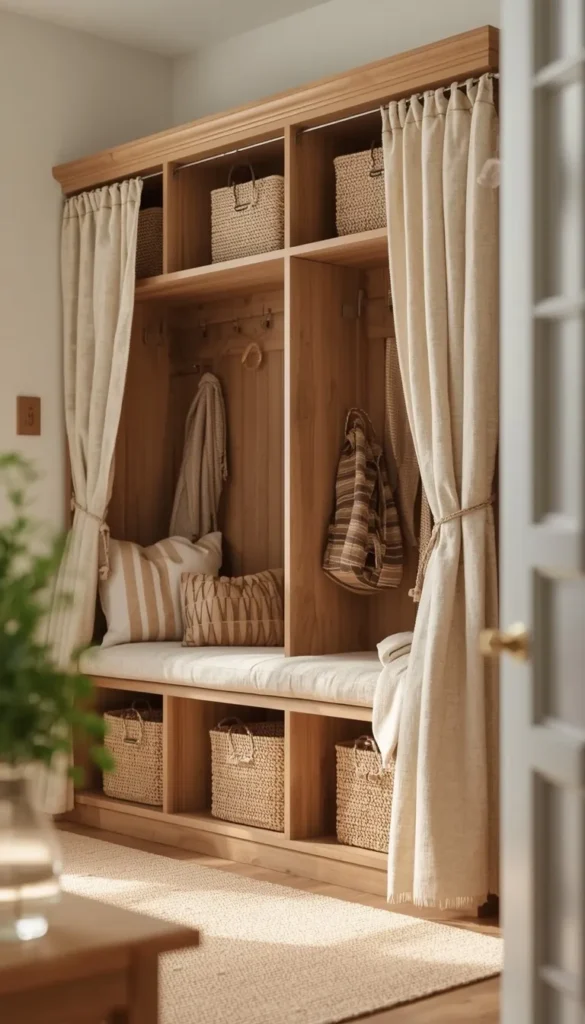
I love this one for families who rent, because it requires zero drilling if you don’t want it to. Lay a KALLAX unit on its side, add a cushion on top, and hang linen curtains on tension rods instead of doors. It’s soft, it’s forgiving, and it takes about twenty minutes to set up.
Assign a cube per kid and let them decorate their own curtain if you want to make it a weekend project with them.
The one thing I’ll be honest about is that curtains show wear faster than doors do. Expect to wash them every few months if they’re catching muddy hands and wet umbrellas on a regular basis, and go with a darker linen if that maintenance sounds like a dealbreaker.
Top 6 ikea mudroom ideas
| Idea | Estimated Price | Maintenance |
|---|---|---|
| Double PAX Wardrobe Built In | $600 – $1,200 | Medium |
| STÄLL Shoe Cabinet And Hook Rail | $80 – $150 | Low |
| BESTA Bench With Hidden Shoe Storage | $250 – $450 | Medium |
| TRONES Slim Shoe Wall | $100 – $200 | Low |
| KALLAX Cubby Bench With Curtains | $150 – $300 | High |
| High End Look On An IKEA Budget | $200 – $350 | Medium |
7. HEMNES Bench And Mirror Mini Station
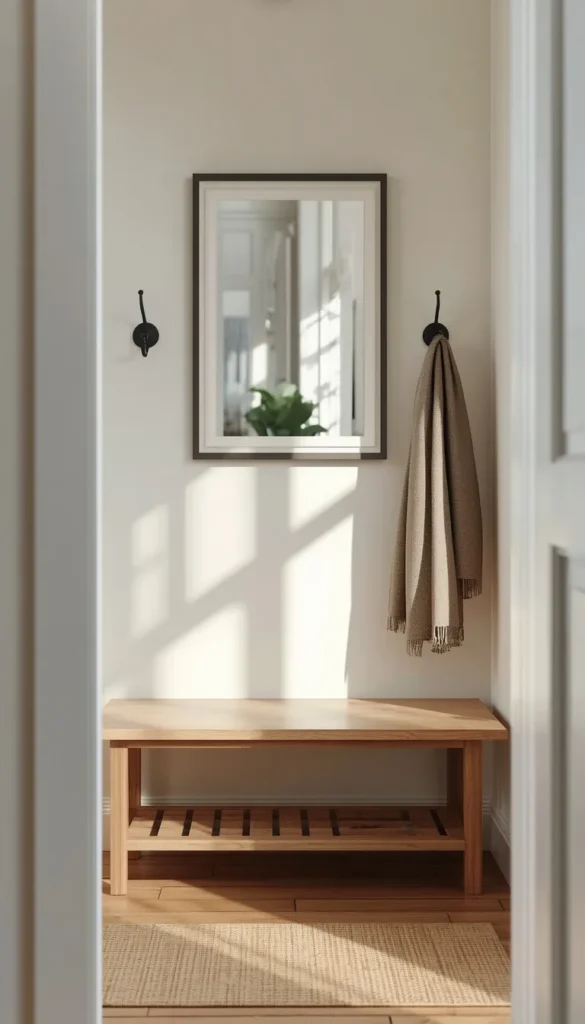
Sometimes there’s no mudroom to speak of, just a front door and a few feet of wall. A HEMNES bench with a mirror hung above it and two or three hooks on either side can genuinely function as a mini mudroom in a space that barely qualifies as an entry at all.
I did this for a client in a Chicago apartment building with literally 18 inches of wall to work with, and the mirror did double duty as a last look before leaving and a way to make the hallway feel less like a hallway.
A small detail that matters more than people think is finish. Match the wood tone to your existing trim or flooring so it looks intentional rather than like a piece that wandered in from another room.
8. SKADIS Pegboard Command Center
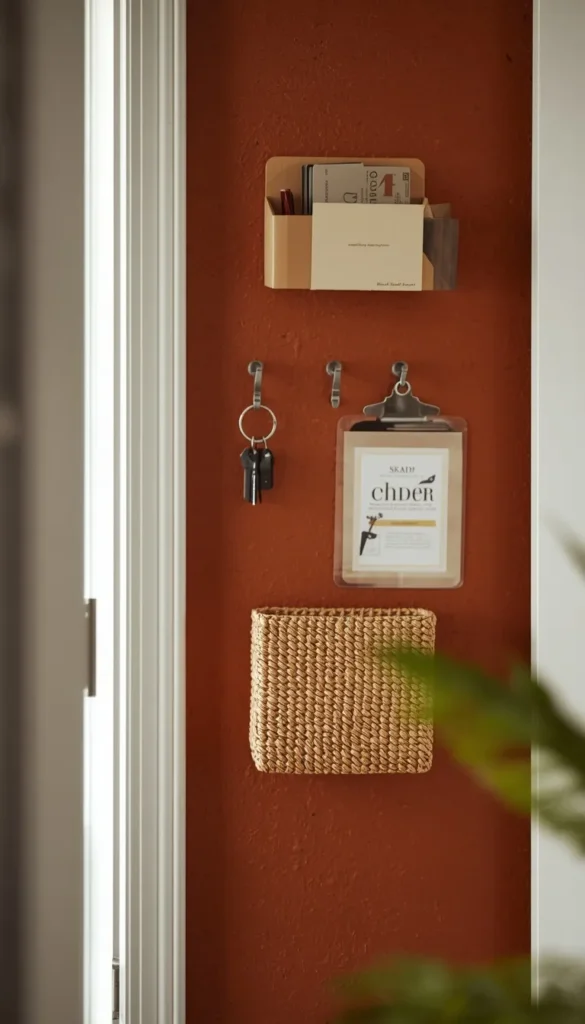
This is the point where function meets a little bit of fun. A SKADIS pegboard mounted near your door can hold keys, mail, sunglasses, dog leashes, basically anything that usually ends up scattered across a kitchen counter instead.
Paint the board itself in a color that matches your entry, add a mix of hooks, small shelves, and containers, and you’ve got a system that’s endlessly reconfigurable as your needs change. That flexibility is honestly the whole appeal.
- Great for small items that don’t have a home anywhere else
- Rearranges without tools or new holes
- Works in tiny entries where a full bench setup won’t fit
One thing I’ll flag is that pegboards need a bit of upkeep to stay looking organized rather than cluttered. It’s a system that rewards a five minute reset every week or two.
Is your mudroom situation a full redo, or just missing one good bench?
9. Corner BILLY Bookcase Setup
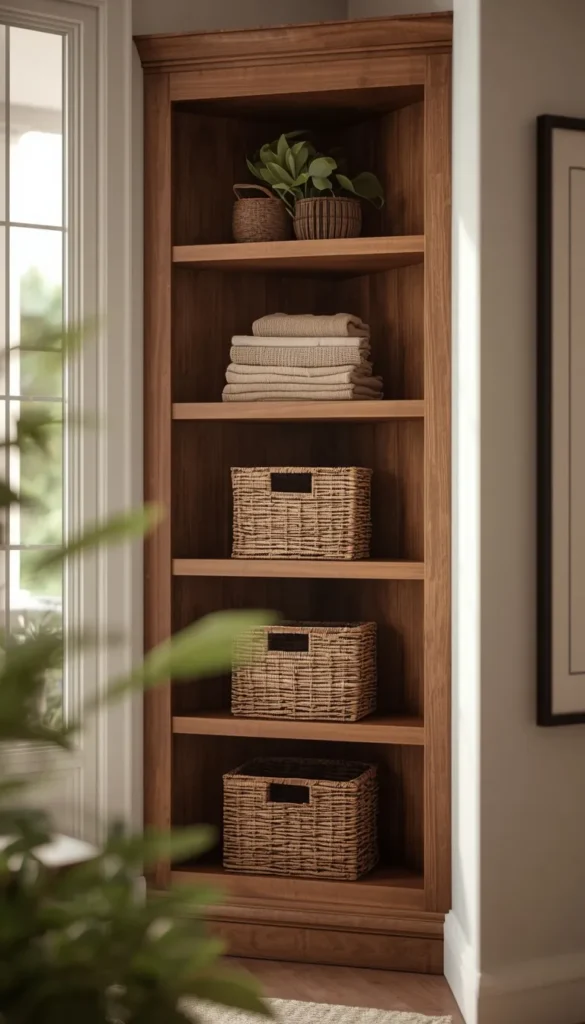
Corners get ignored constantly, and it drives me a little crazy, because they’re often the most usable space in an entry once you commit to filling them properly. A BILLY bookcase angled into a corner, paired with a second unit on the adjacent wall, creates an actual storage wall out of space that was previously just dead air.
I like adding baskets to the lower shelves for shoes and keeping the upper shelves open for things you actually want to see, like a stack of folded throws or a favorite plant.
Corners can feel awkward to shop for since most furniture assumes a flat wall. Measure the depth from the corner point itself, not just the wall length, or you’ll end up with a gap that never quite works right.
10. Under Stairs BESTA Conversion
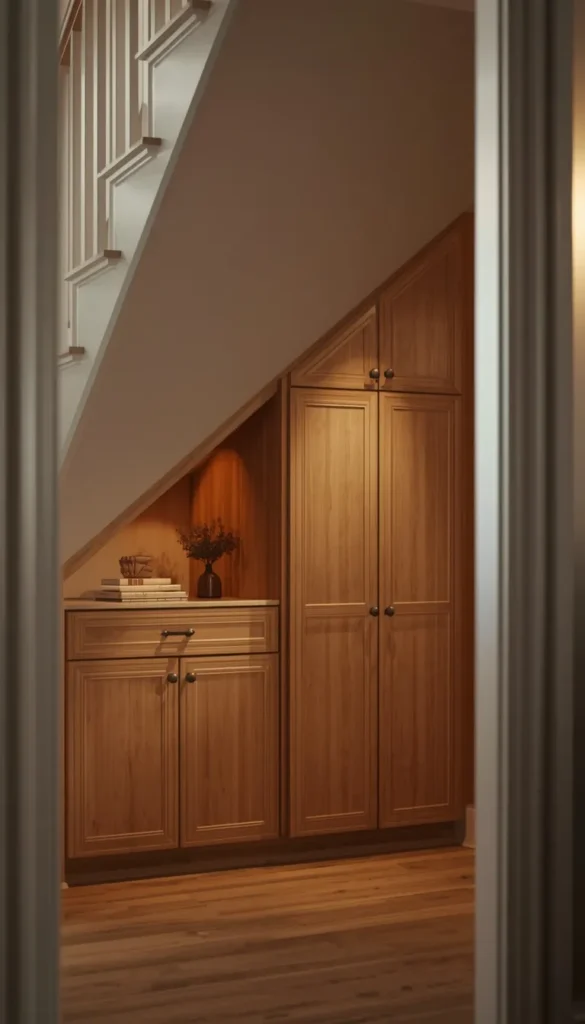
If your home has stairs near the entry, there’s a good chance you’re sitting on unused storage right now. BESTA units modified to fit the slope of a staircase can turn that awkward triangle of space into genuinely useful cabinetry.
This one takes more planning than most on this list. You’re often cutting units down or building a simple frame to support them properly, so it’s less of a weekend project and more of a small renovation.
- Custom cut BESTA fronts to follow the stair angle
- Add interior lighting since these spots tend to be dark
- Use the tallest section for bulky items like vacuum cleaners or seasonal gear
The payoff is real though. I’ve turned dead under stair space into a family’s entire coat and shoe system, and it’s one of the more satisfying transformations I’ve done precisely because nobody expects that space to hold anything at all.
11. ALGOT Adjustable Wall System
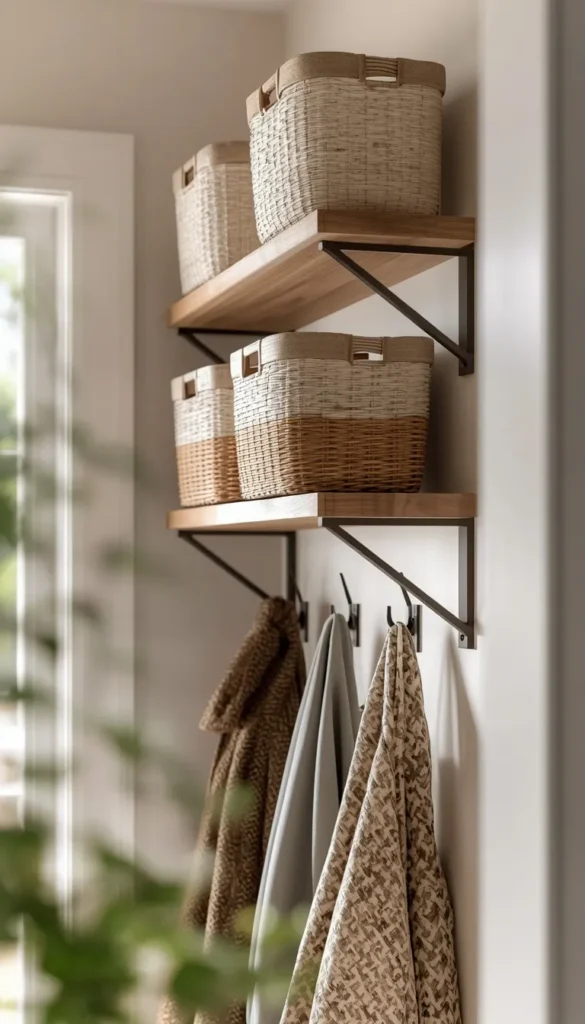
For renters who want something more substantial than a curtain trick but still need it removable, ALGOT is the answer I reach for. The wall mounted brackets hold shelves, baskets, and rails, and the whole system adjusts as your needs change without needing to buy new furniture.
We used this in a rental in Austin where the lease specifically prohibited built ins. The client got a fully organized wall of storage, and when she moved out two years later, she took every piece of it with her.
A quick trick I’ve learned is to leave a little extra room between shelf brackets when you’re first installing, since it’s much easier to add a shelf later than to move brackets you’ve already anchored.
12. RASKOG Cart As Mobile Mudroom Station
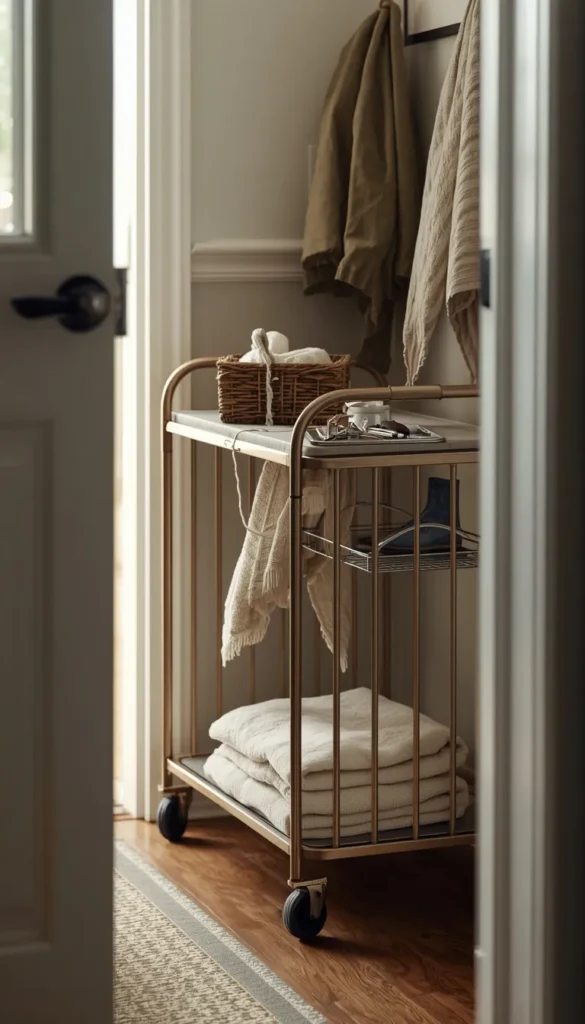
Not every home has room for a fixed setup, and that’s fine. A RASKOG cart tucked near the door can hold shoes, a basket of hats and gloves, and even a small tray for keys, and it rolls out of the way completely when you need the floor space back.
This is my favorite suggestion for studio apartments or entries that double as another room entirely.
Spray paint it in a metallic finish if the utilitarian look feels too industrial for your space. It’s a five dollar can of paint that completely changes how the piece reads in a room.
Team labeled cubbies or team open hooks for your household?
13. Family Locker System With Labeled Zones
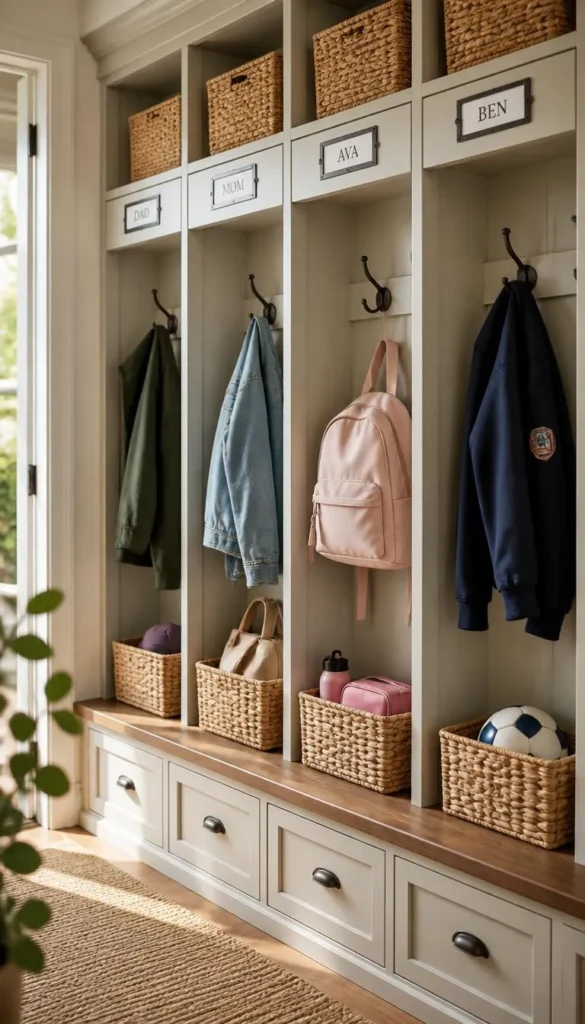
Once you’ve got more than two kids sharing an entryway, generic storage stops working and zoned storage becomes essential. This is less about a specific IKEA product and more about a principle I apply across PAX, IVAR, or KALLAX setups. Every family member gets their own column, their own hooks, and their own labeled basket, so there’s no ambiguity about whose backpack is whose.
I worked with a family of five who kept losing entire mornings to arguments over missing shoes and mismatched gloves. Labeling each zone with the kids’ names, at their eye level, solved most of the friction within a week.
- Use removable labels so zones can shift as kids grow
- Keep younger kids’ hooks lower than older siblings’
- Add a shared “misc” basket for the things that don’t have an obvious home
14. Modern Farmhouse Mudroom Look
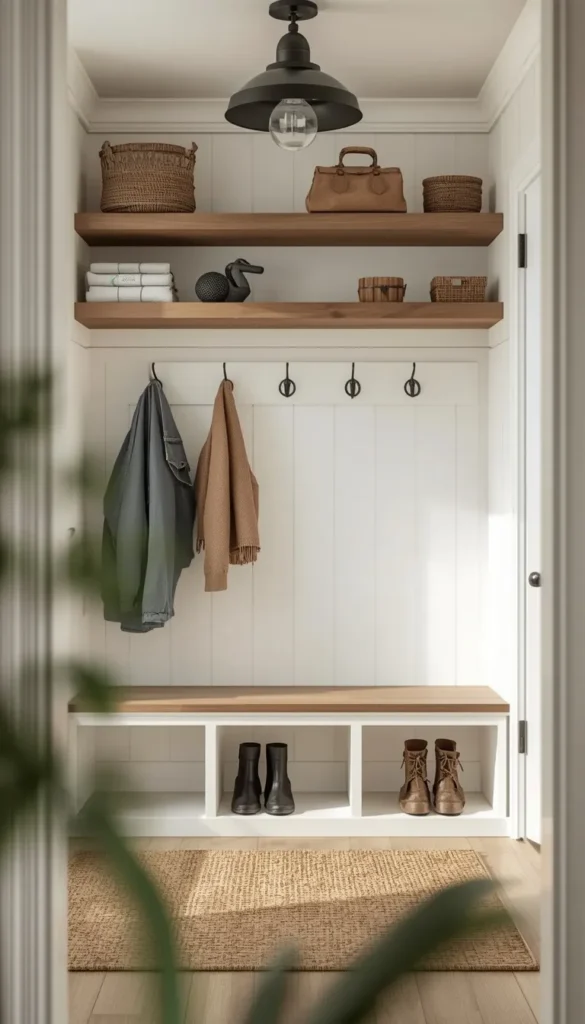
This is probably the style I get asked for most in the Midwest and it holds up because it’s genuinely practical, not just pretty. Warm wood tones, black metal hooks, and a mix of open shelving with a few closed cabinets gives you that lived in, welcoming feel without sacrificing function.
Shiplap backing behind open shelves is an easy add if you want to lean further into the look, and it hides wall imperfections better than plain drywall does anyway.
I’ll be honest that this style photographs beautifully but needs a little more dusting than sleeker looks, since open shelving means everything is visible, dust included.
15. Scandinavian Minimalist Mudroom Look
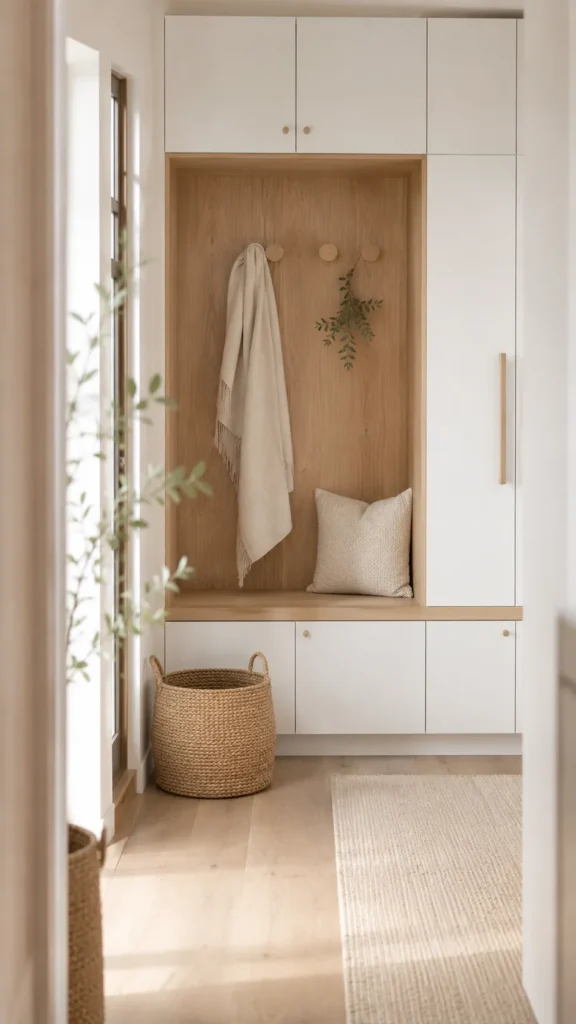
Light woods, white cabinet fronts, and natural fiber baskets create a calm, airy feel that a lot of clients gravitate toward once they’ve lived with clutter for too long. The trick to making this style actually work in a mudroom, rather than just a showroom photo, is hiding almost everything behind closed doors.
Baskets should be functional, not decorative filler. If a basket doesn’t have an assigned job, it becomes a catch all, and catch alls are exactly what this style is trying to avoid.
The honest tradeoff here is maintenance. Light surfaces show scuffs and mud faster than darker tones, so this look works best paired with a durable mat and a habit of wiping down fronts every few days.
16. Industrial Edge Mudroom Look
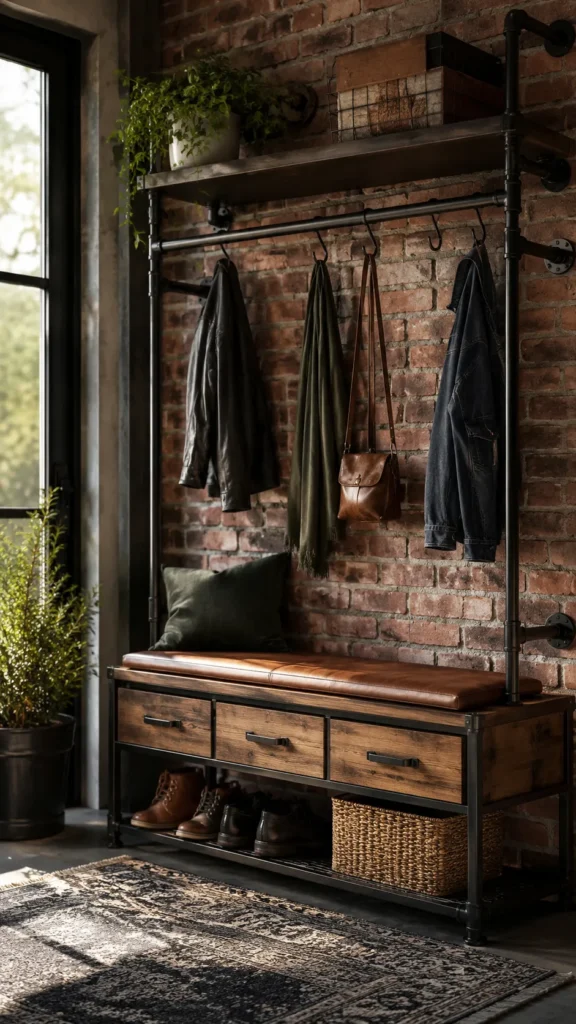
Pairing standard IKEA cabinets with black metal pipe shelving or exposed hardware gives a mudroom a bit of edge without needing custom fabrication. It’s a style that reads well in older homes with exposed brick or concrete floors, but it works in newer builds too if you commit to the details.
Swapping stock handles for matte black bar pulls is one of the easiest upgrades on this entire list, and it changes the character of a basic cabinet almost instantly.
One thing I’d flag is that black hardware shows fingerprints and water spots more visibly than you’d expect, especially near an entry where hands are often wet or dirty. A quick wipe down routine keeps it looking sharp instead of smudged.
What’s the one item currently living on your entryway floor that shouldn’t be there?
17. Seasonal Gear Rotation System
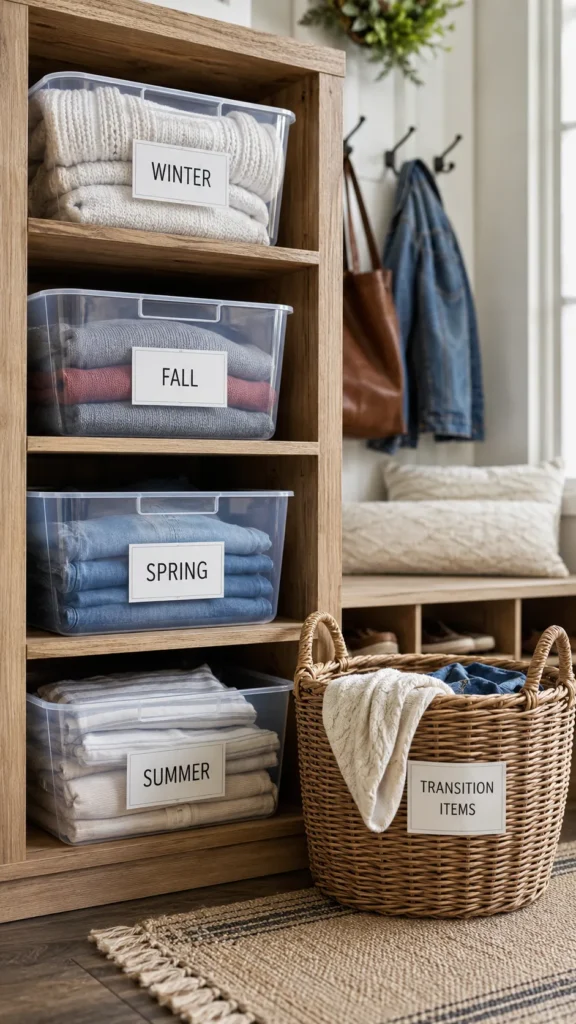
Most mudrooms fail not because they lack storage, but because they’re trying to hold every season’s gear at once. I always tell clients to think of their mudroom storage in two layers, what’s needed this month and what’s needed eventually. Bulky winter boots and beach towels don’t need to occupy prime real estate year round.
Clear labeled bins on a higher shelf or in a closed cabinet work well for the off season stuff, while the accessible hooks and cubbies stay reserved for whatever the current weather actually demands.
- Rotate bins each season change, not just once a year
- Keep one “transition” basket for gear that’s needed on shoulder season days
- Vacuum sealed bags save real space for bulky items like coats and snow pants
A quick trick I’ve learned is doing the rotation swap on the same weekend every season, like the first weekend of daylight saving time changes. It turns an easy to forget chore into a habit.
18. High End Look On An IKEA Budget
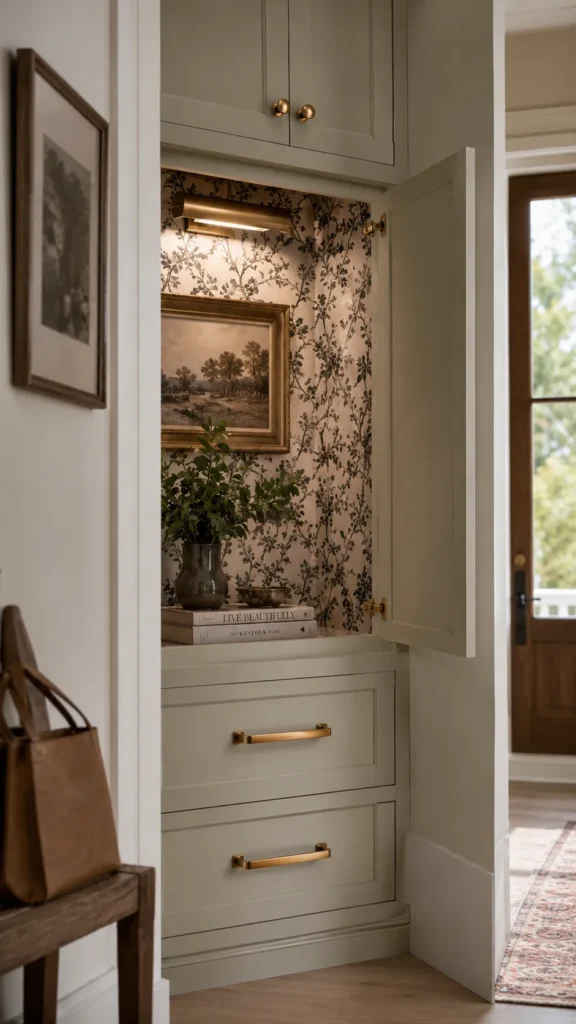
This is the point where I get to have the most fun, honestly. You don’t need custom cabinetry to get a high end look, you need a few strategic upgrades layered onto basic units. Swap stock hardware for brass or matte black pulls, add wallpaper or beadboard to the interior of open cubbies, and invest in real lighting rather than relying on an overhead fixture that’s ten feet away.
I did this for a client who had a plain BESTA and TRONES combo that looked exactly like what it was, flat pack furniture. We added picture light style sconces above the bench, lined the back panels with a small scale wallpaper, and swapped every handle for an unlacquered brass pull. The total upgrade cost less than 300 dollars and the client’s own words were that it looked like she’d hired someone.
The lesson here is that the base units rarely matter as much as people think. It’s the details layered on top, hardware, lighting, and a little bit of texture, that make a space feel designed rather than assembled.
Which Path Is Yours?
By Budget
Starter setup:
- STÄLL Shoe Cabinet And Hook Rail
- RASKOG Cart As Mobile Mudroom Station
- SKADIS Pegboard Command Center
Investment setup:
- Double PAX Wardrobe Built In
- Family Locker System With Labeled Zones
- Under Stairs BESTA Conversion
By Lifestyle
Busy families:
- Family Locker System With Labeled Zones
- TRONES Slim Shoe Wall
- Seasonal Gear Rotation System
Renters and small spaces:
- ALGOT Adjustable Wall System
- KALLAX Cubby Bench With Curtains
- HEMNES Bench And Mirror Mini Station
Style first minimalists:
- Scandinavian Minimalist Mudroom Look
- High End Look On An IKEA Budget
- BESTA Bench With Hidden Shoe Storage
Frequently Asked Questions
How much does an IKEA mudroom cost on average?
Most homeowners land somewhere between 200 and 800 dollars depending on the system. A basic hook and cabinet setup stays near the low end, while a full PAX build with accessories pushes toward the higher range.
What is the best IKEA product for a small entryway?
STÄLL is usually my first pick for tight spaces. It’s slim, holds more shoes than it looks like it should, and pairs well with a few hooks above it.
Can I install an IKEA mudroom system in a rental?
Yes, but stick to freestanding or tension mounted pieces. ALGOT, RASKOG, and curtain rod setups all work without drilling into walls your landlord cares about.
How do I keep a mudroom bench from getting damaged by kids and pets?
Skip light colored fronts and fabrics near the entry door. Darker tones and washable cushion covers hold up far better against mud, paws, and daily wear.
What size should a mudroom bench be for a family of four?
Aim for at least 48 inches of seating length so two people can sit at once. Anything under 36 inches tends to feel cramped once shoes and bags are involved.
Conclusion
Your entry doesn’t need a full renovation to feel like it belongs to you. Sometimes it just needs one bench, one row of hooks, or a single Saturday afternoon to turn the chaos into something calm. Pick one idea from this list, even the smallest one, and start there this week. Your future self, walking in with an armful of groceries and a kid tugging at your sleeve, will thank you.
