
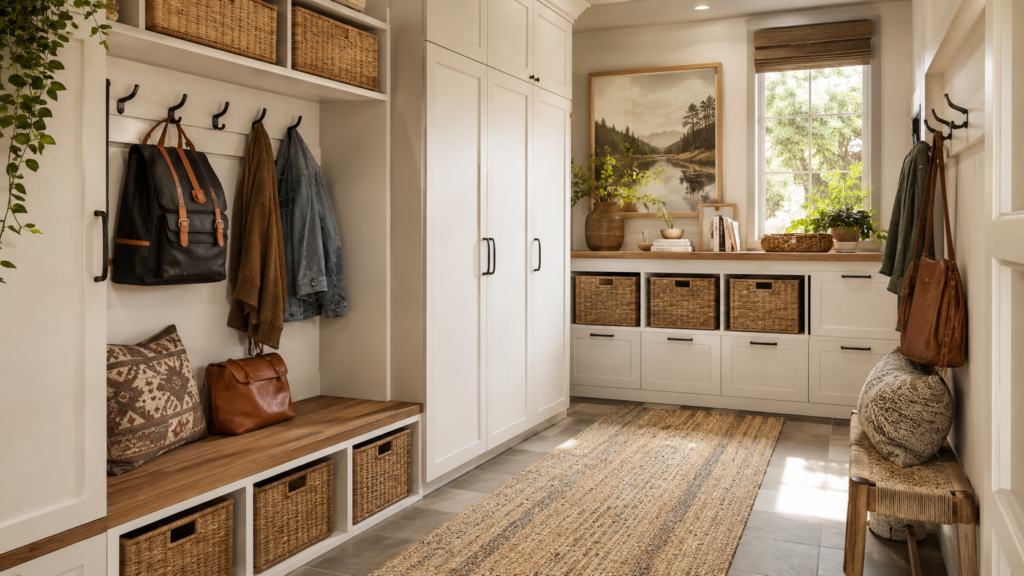
One overworked hook holding four backpacks tells you everything you need to know about why a mudroom matters. I’ve designed enough of these spaces to know IKEA can solve the chaos without wrecking a budget, using SEKTION, PAX, BESTA, and KALLAX in ways most roundups never mention. This list comes with the budgets, the maintenance realities, and the honest cons I wish someone had told me before my first build. Eighteen ideas, no fluff. Let’s get into it.
My Design Notes
When I was working on a project in coastal Massachusetts, a Colonial style home with two young kids and a golden retriever, I specced white AXSTAD shaker fronts on the lower mudroom cabinets. They photographed beautifully during the install.Within two months, the lower run and the bench seat were scuffed and gray from muddy boots and dog paws. I remember walking through with my client and both of us just staring at it, a little deflated.That project taught me a rule I now use on every mudroom I design. Light colors above eye level, forgiving colors below the knee. We swapped the plan for future builds and never looked back.It’s a small lesson, but it saved my clients a lot of regret two months into using their new space
18 Mastering Your Mudroom: Stunning IKEA Storage Solutions for Every Budget
1.What Actually Makes a Mudroom Work
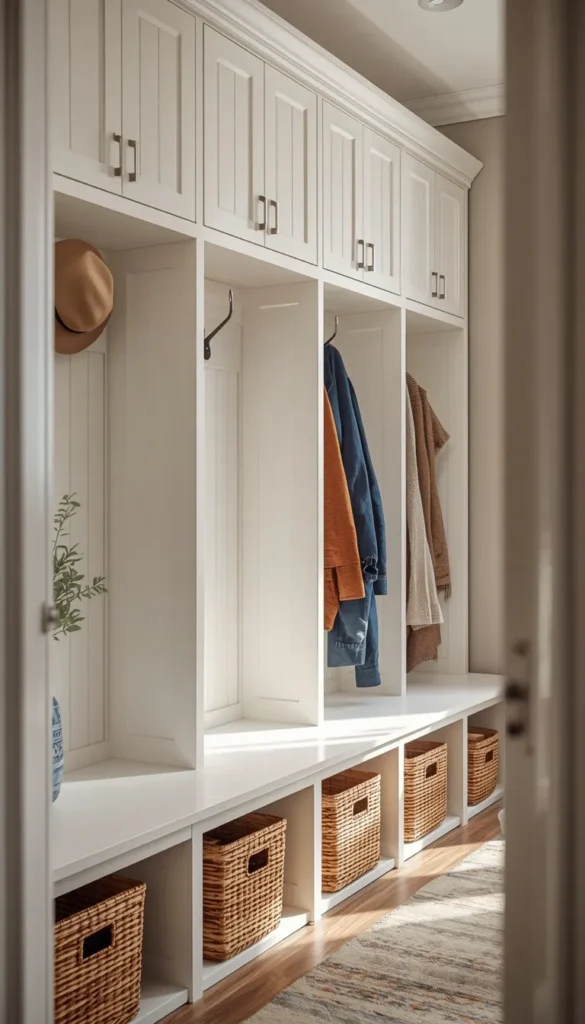
Before I touch a single cabinet, I ask a client 3 questions. Who uses this space, how many people are we talking about, and what are they dragging in with them every day. A family with 2 kids and a dog needs something completely different from a couple who just wants a home for coats and keys.
A few things I consider non negotiable in any layout I design:
- A landing spot for keys, mail, and whatever’s in your pockets
- A bench, even a small one, for pulling boots on and off
- A mix of closed storage for the stuff you don’t want on display and open storage for daily grabs
Skip any one of these and the room stops working within a month, no matter how good the cabinets look on install day.
2.A PAX Locker Mudroom That Feels Custom
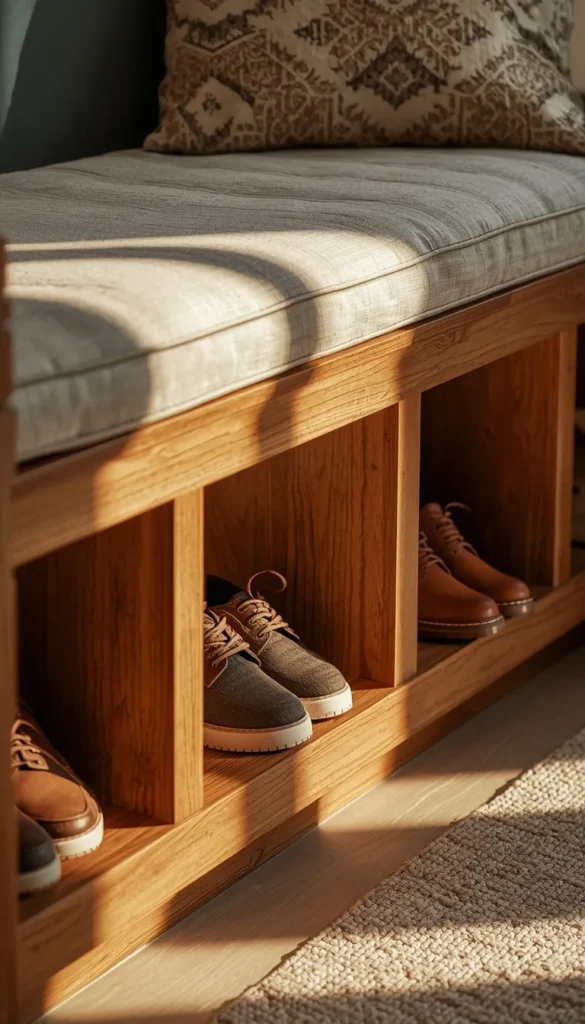
If I had to pick one IKEA system that reads far more expensive than it actually is, it’s PAX. Building individual locker style compartments, 1 per family member, gives you that built in cabinetry look that would normally cost thousands more coming from a carpenter, and honestly, most guests can’t tell the difference once the trim goes on.
I like pairing PAX frames with simple shaker fronts and running a bench straight across the base for a clean, unbroken line. A quick trick I’ve learned over the years is to plan the bench height around actual boot removal, not just a standard seat height, since a few inches makes a real difference when kids are involved. The catch with PAX is depth. These units run deep, so this idea works best in a mudroom with genuine square footage rather than a tight closet conversion. Budget wise, expect this to land on the higher end of DIY IKEA mudroom projects, typically $2,000 to $4,000 depending on finishes and hardware.
3.SEKTION Bench and Cubbies for a Built In Look
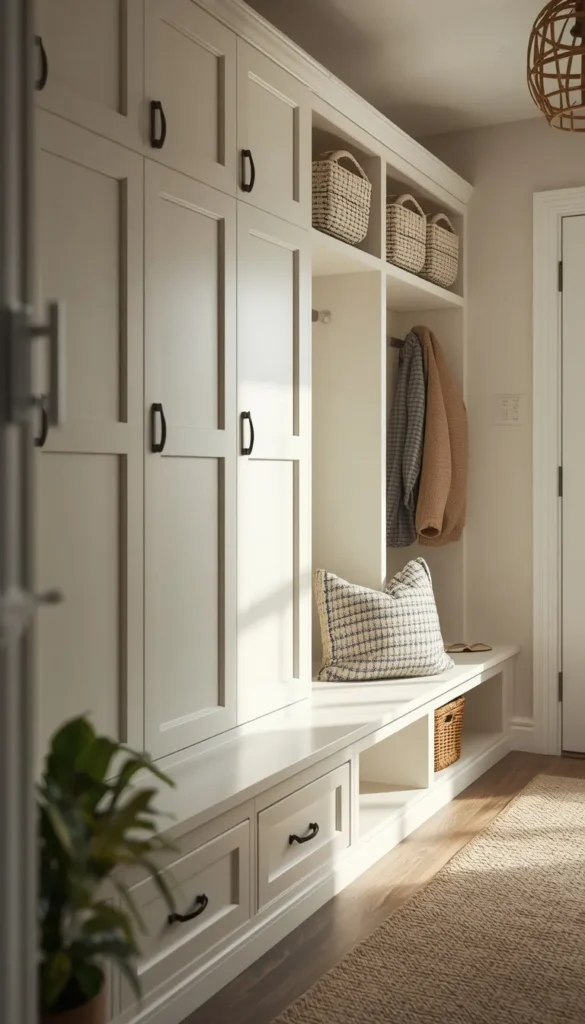
SEKTION is the workhorse here, and for good reason. It’s the same system IKEA uses in its kitchens, which means you get endless configuration options and a huge range of door styles, whether you’re after modern farmhouse or something cleaner and more transitional.
A bench with open cubbies underneath is one of the layouts I get asked for most. One thing to watch out for is how fast open cubbies show mess. If tidiness matters to your household, I’d pair this with a simple house rule, 1 pair of shoes per cubby, or it turns into a pile within a week.
4.A BESTA Bench and Cabinet Combo
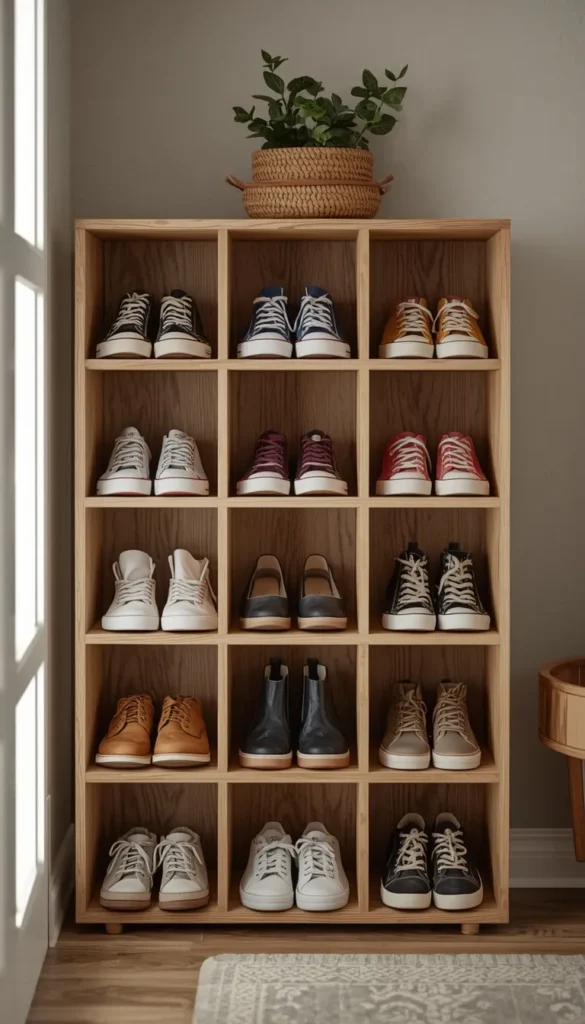
BESTA doesn’t get nearly enough credit in mudroom conversations. It runs shallower than SEKTION, which makes it a smart choice for narrower spaces, and the door finishes tend to feel a bit more polished and furniture like than a typical kitchen cabinet look.
I’ve used BESTA frames to build a low profile bench with drawer storage underneath, topped with a simple cushion, and it reads more like a piece of furniture than a built in system. That’s a genuine plus if you’d rather your mudroom blend into a hallway than announce itself as its own room.
Which of these setups would actually survive your household, the KALLAX shoe wall or the full PAX locker system?
5. A KALLAX Shoe Cubby Wall
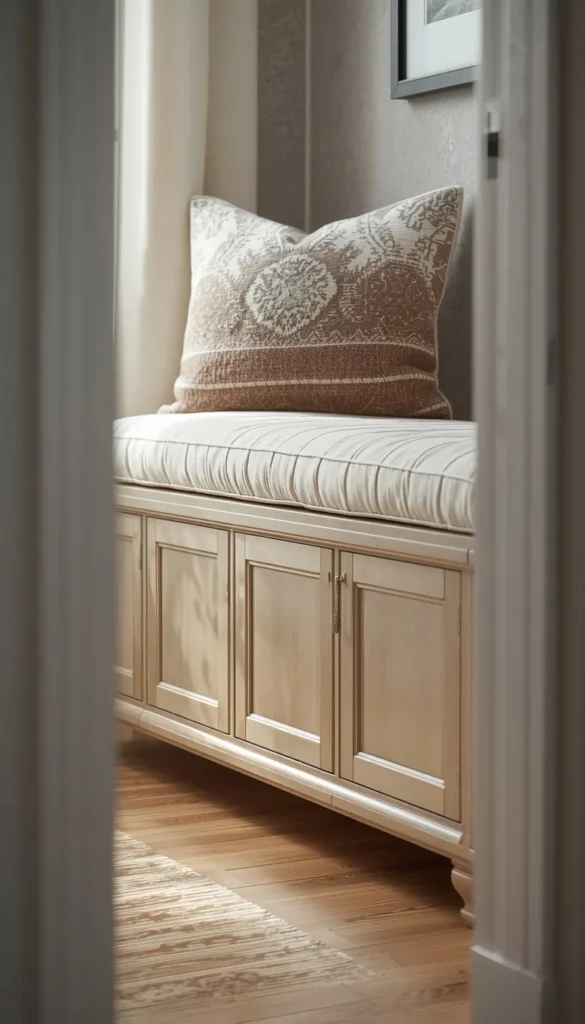
KALLAX is the piece everyone already owns in some form, but most people don’t think to use it in a mudroom. Turned on its side, the classic 4×4 or 2×4 grid becomes instant shoe cubbies, one square per pair, and it keeps chaos contained without a single closed door.
I like running a low KALLAX unit along a wall opposite the bench so shoes never end up in the walking path. The catch is depth again, standard KALLAX squares are shallow enough for sneakers and flats but boots will stick out past the frame, so I usually pair it with a boot tray in front rather than trying to force them inside. Budget here is the lowest on this list, often $150 to $400 depending on the size of the unit.
6. KALLAX with Fabric Bins for Kid Chaos
For households with younger kids, I swap half the open cubbies for fabric bins. Gloves, hats, dog leashes, sunscreen, whatever tends to migrate to the counter gets a bin instead of a shelf, and it’s far easier for a 5 year old to toss something into a bin than to stack it neatly.
One thing I always mention to clients: label the bins, even if it feels excessive. Without labels, every bin becomes a junk drawer within a season, and the whole point of the system falls apart.
Top 6 ikea mudroom ideas
| Idea | Estimated Price | Maintenance |
|---|---|---|
| PAX Locker Mudroom | $2,000 – $4,000 | Medium |
| SEKTION Bench and Cubbies | $800 – $2,000 | Medium |
| BESTA Bench and Cabinet Combo | $600 – $1,500 | Low |
| KALLAX Shoe Cubby Wall | $150 – $400 | Low |
| Full Height PAX + KALLAX Combo Wall | $2,500 – $5,000 | High |
| SEKTION Bootbox with Vented Base | $850 – $2,100 | Medium |
7. A PAX Wardrobe Without Doors
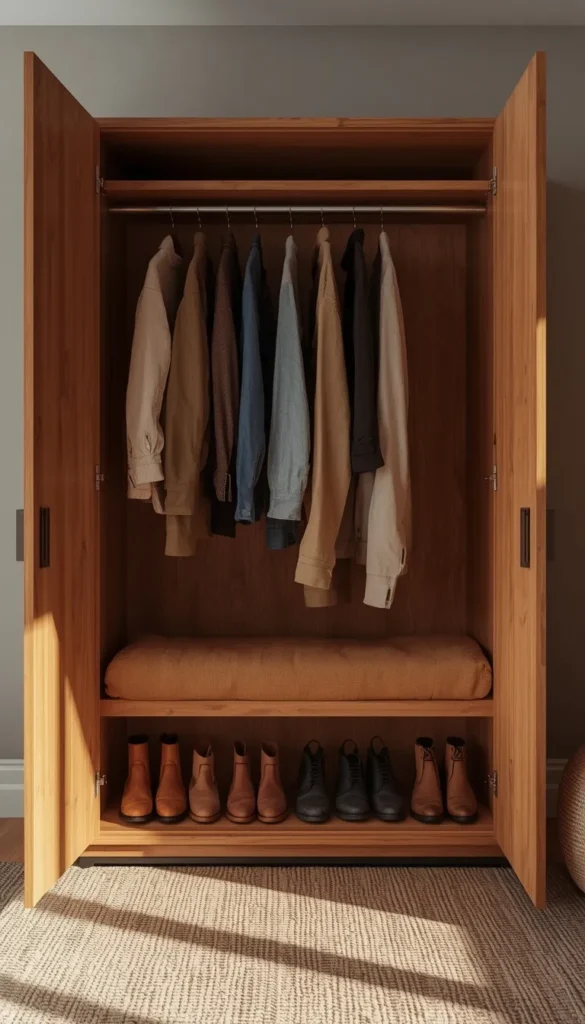
This one surprises people, but pulling the doors off a PAX frame and using it as an open wardrobe works beautifully in a mudroom, especially for households that hang jackets more than they fold them. Open frames also solve a problem I run into constantly with families who have a hard time closing cabinet doors consistently, if there’s nothing to close, there’s nothing left ajar.
The tradeoff is visual. An open PAX frame shows everything, so this only works if you’re comfortable with a lived in look rather than a fully concealed one. I generally recommend this for entryways that are somewhat tucked away rather than the first thing guests see from the front door.
8. Full Height PAX and KALLAX Combination Wall
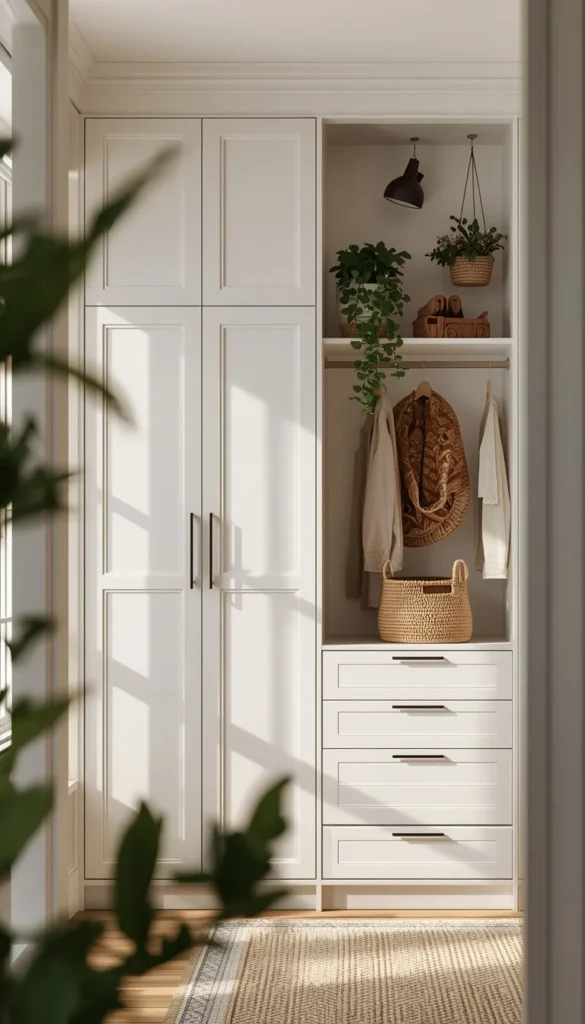
For larger mudrooms, I’ll sometimes run a full wall combining a tall PAX section on one end for coats and bulky items, with a lower KALLAX run on the other end for shoes and bins. It reads as one continuous built in even though it’s two different systems, as long as the trim and paneling tie them together.
This is the most ambitious build on the list and it shows in the price, typically $2,500 to $5,000 once you factor in both systems plus trim work. It’s worth it for larger families, but I wouldn’t recommend it for a mudroom under 60 square feet, the scale just overwhelms a smaller room.
Be honest, is your entryway closer to “Starter/Budget” or are you ready to go all in on the “Luxury/Investment” side?
9. A SEKTION Drop Zone with Charging Station
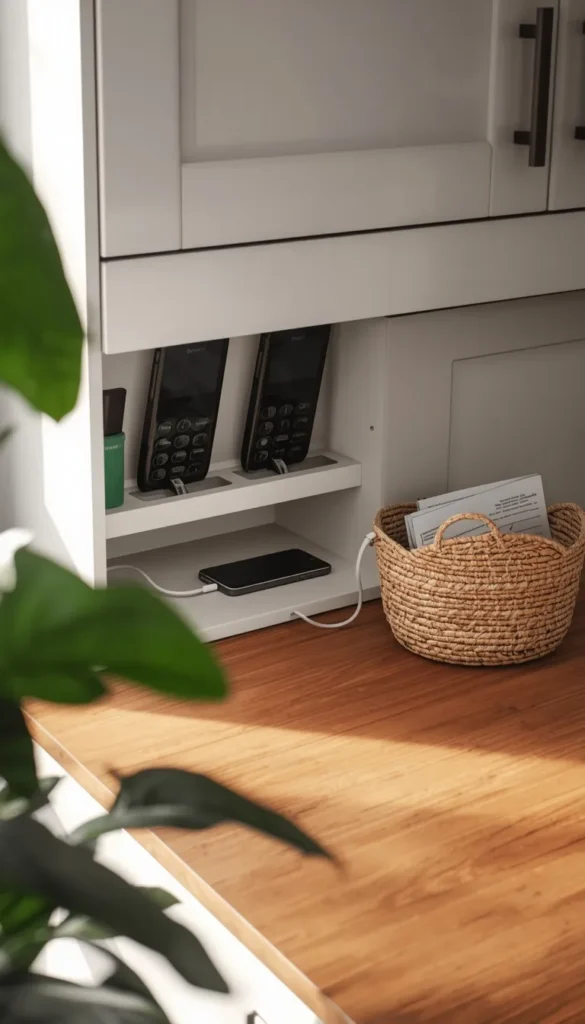
This is the layout I pitch to any client who’s tired of phones dying on the kitchen counter. I’ll build a shallow SEKTION run with a cut out for a power strip, letting the family park phones, tablets, and even a laptop the second they walk in instead of trailing cords across the kitchen island.
The trick is routing the outlet before the cabinets go in, not after. I’ve had clients try to retrofit this with a surface mounted power strip and it never looks intentional. If you’re not ready to open a wall, a UTRUSTA cabinet light with a built in outlet can get you most of the way there without an electrician.
10. BESTA Cubbies with Woven Baskets for a Softer Look
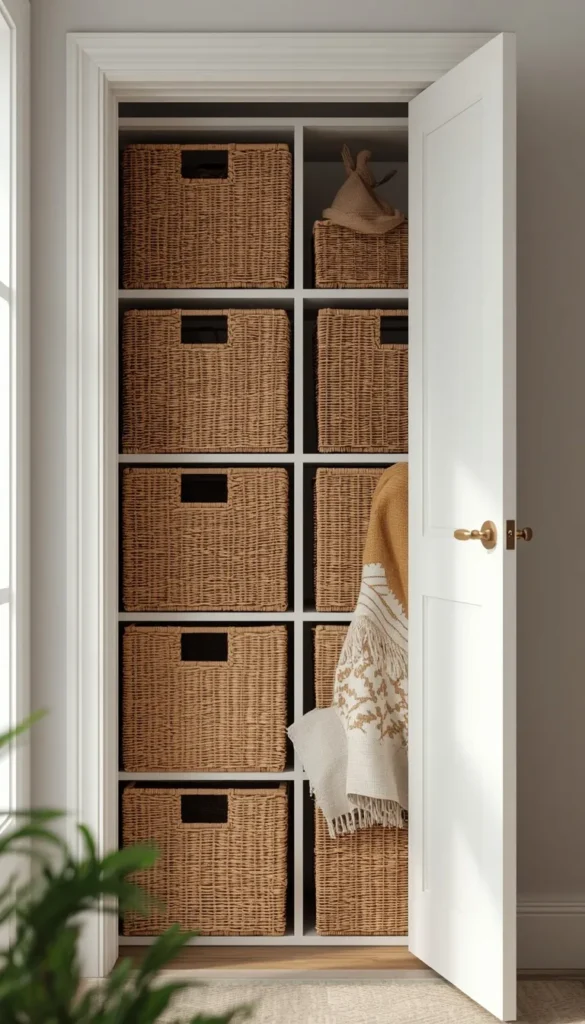
Not every household wants the clean lines of laminate fronts. For clients chasing a more organic, textured look, I’ll pull the doors off a BESTA frame entirely and slot in woven baskets instead, sized to fit the cubby openings almost exactly.
It softens the whole wall visually and hides the clutter just as well as a door would, minus the swinging hardware that inevitably gets knocked loose by backpacks. The downside is dust. Open baskets collect it faster than a closed cabinet, so this works best for households who don’t mind a quick wipe down every couple of weeks.
11. A Narrow KALLAX Insert for Tight Entryways
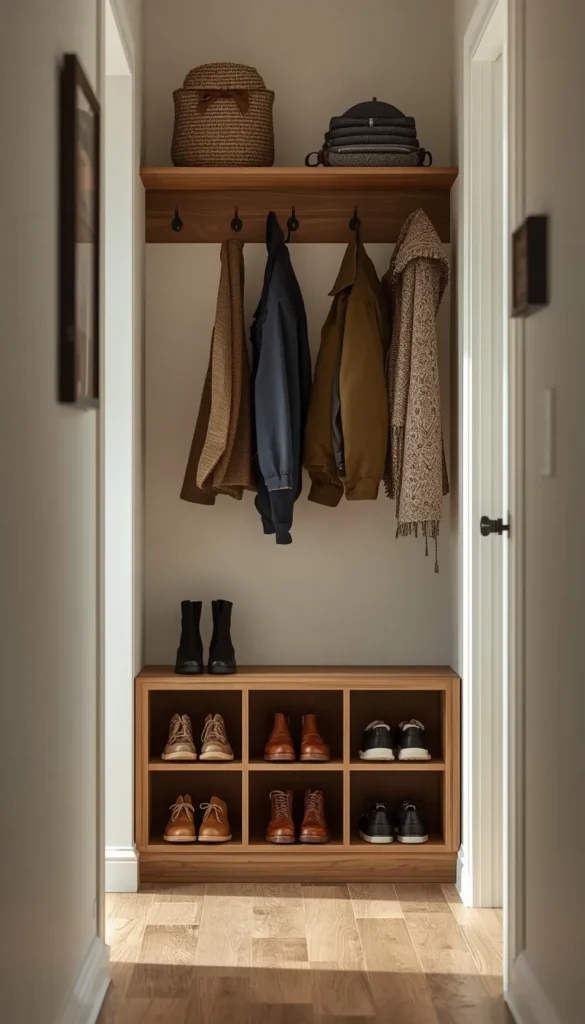
Not every mudroom gets 60 square feet to work with. For the narrow hallway entries I get called into more often than not, I’ll use a single row KALLAX, either 1×4 or 2×2, tucked against one wall with nothing opposite it but a hook rail.
This is the layout I recommend when a client tells me they just need “somewhere for shoes to stop being a tripping hazard.” It’s not glamorous, but it solves the actual problem. Budget stays low here too, usually under $300, since you’re working with one small unit rather than a full wall system.
12. PAX with a Mirror Insert for Small Entryways
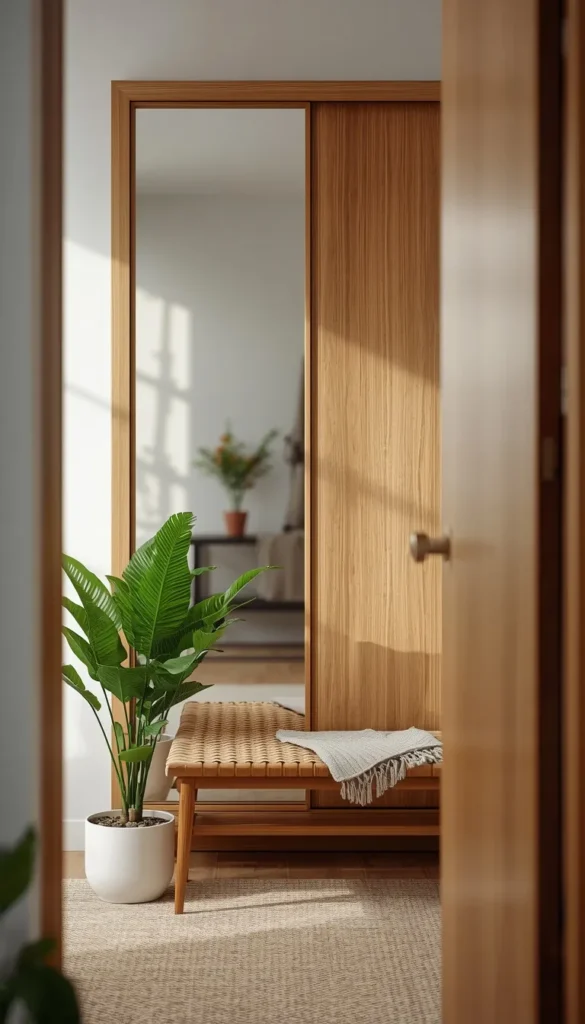
A trick I picked up a few projects in: swapping one PAX door for a mirrored panel. In a tight entryway, it does double duty, giving you a last look before heading out the door while also making the whole space feel less closed in.
Clients are always surprised by how much bigger the room feels with even a single mirrored panel. The one caution I give people is placement. A mirror facing the front door can bounce light in a way that feels harsh at certain times of day, so I usually angle it toward a side wall instead of straight on.
If you had to pick just one idea from this list to tackle this weekend, which one’s calling your name?
13. A SEKTION Bootbox with a Vented Base
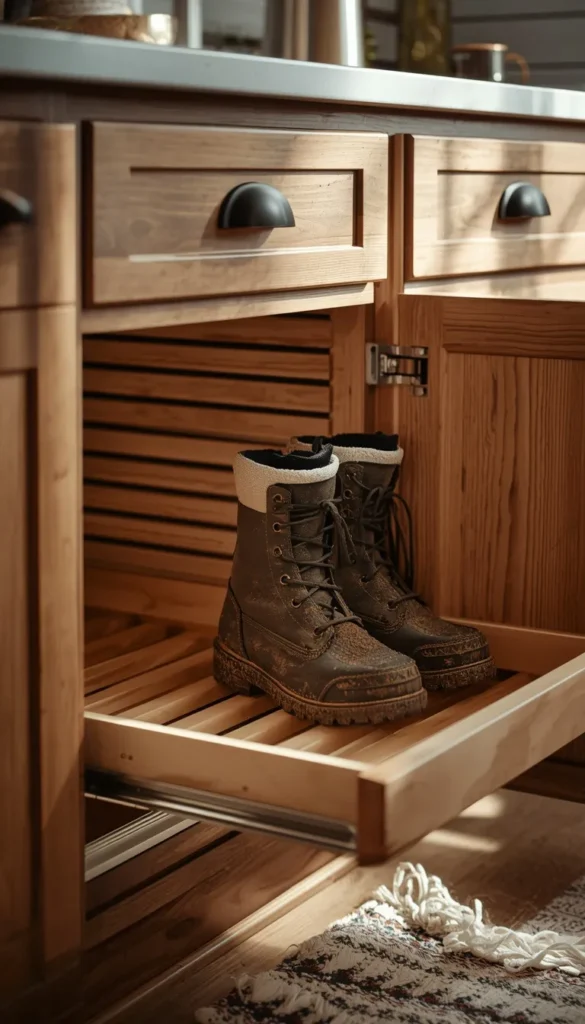
Boots are the one item that wrecks every mudroom plan I’ve ever drawn up, so I started building a dedicated bootbox into SEKTION lower cabinets. A slatted or vented base panel lets air move through instead of trapping moisture against the cabinet floor, which is what actually causes that damp, musty smell clients complain about a year in.
I usually pair this with a pull out tray rather than a fixed shelf, so it can be dragged out and hosed off or wiped down without crawling into the cabinet. It’s a small addition cost wise, maybe $50 to $100 in extra hardware, but it’s the detail that keeps the whole unit smelling decent through a wet winter.
14. A KALLAX Bench Seat with Built In Storage
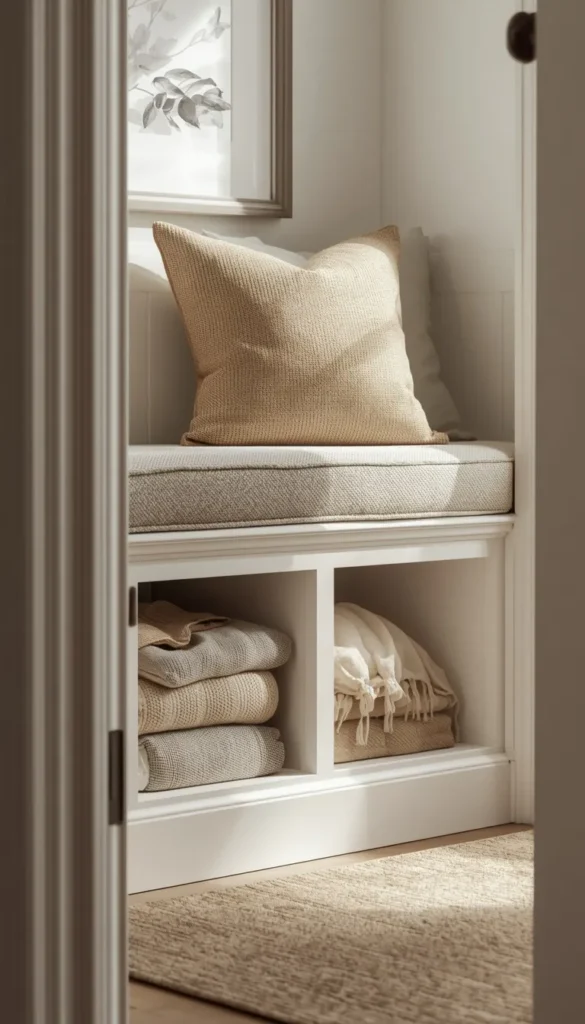
Instead of building a separate bench frame, I’ll sometimes lay a KALLAX unit on its back and top it with a cushioned seat, turning the cubby openings into storage that’s accessible from the front while someone’s sitting on top. It’s a cheaper alternative to a custom bench build and it still reads as intentional once the cushion’s on.
The one thing I tell clients upfront: measure seat height before committing. A standard KALLAX on its back sits lower than a typical bench, which is comfortable for kids but can feel low for taller adults. Adding a plinth or small feet underneath usually solves it.
15. A PAX Coat Closet with Pull Out Drying Rack
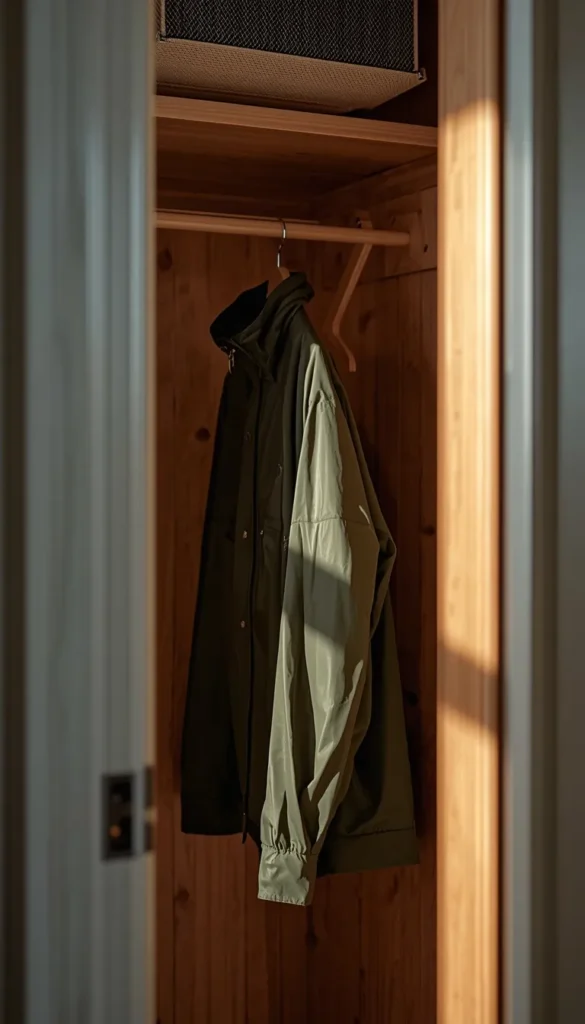
For households in wetter climates, I’ve started specifying a pull out drying rack inside a PAX frame, usually on the end closest to the door. It gives you somewhere to hang a dripping rain jacket or a dog towel without it soaking everything else in the closet.
This is a small hardware add, usually a telescoping rod or an accessory rack meant for laundry rooms, repurposed here. It’s not something IKEA markets for mudrooms specifically, but it’s one of the more functional swaps I make on rainy coast projects.
16. A Mixed Open and Closed BESTA Wall
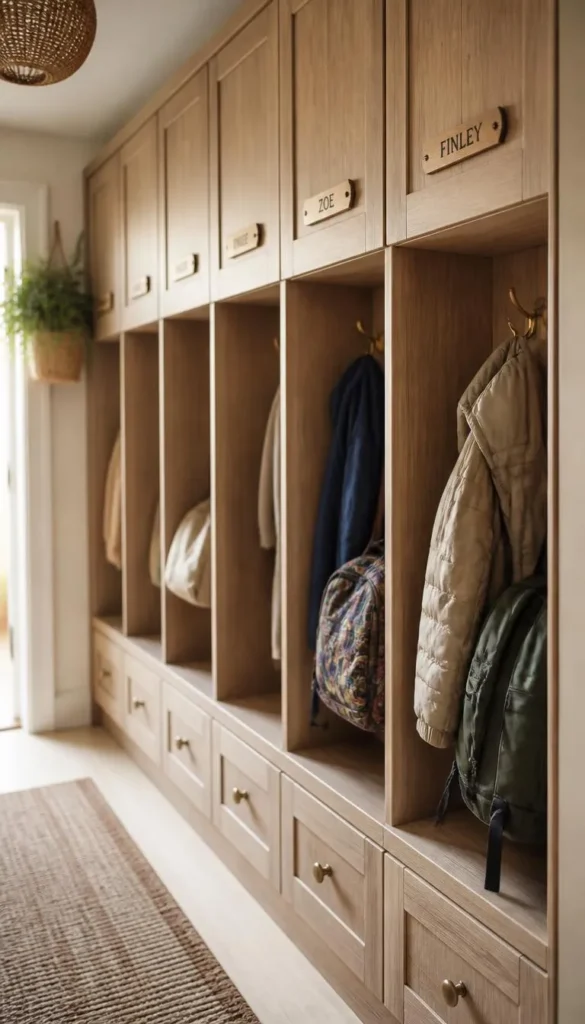
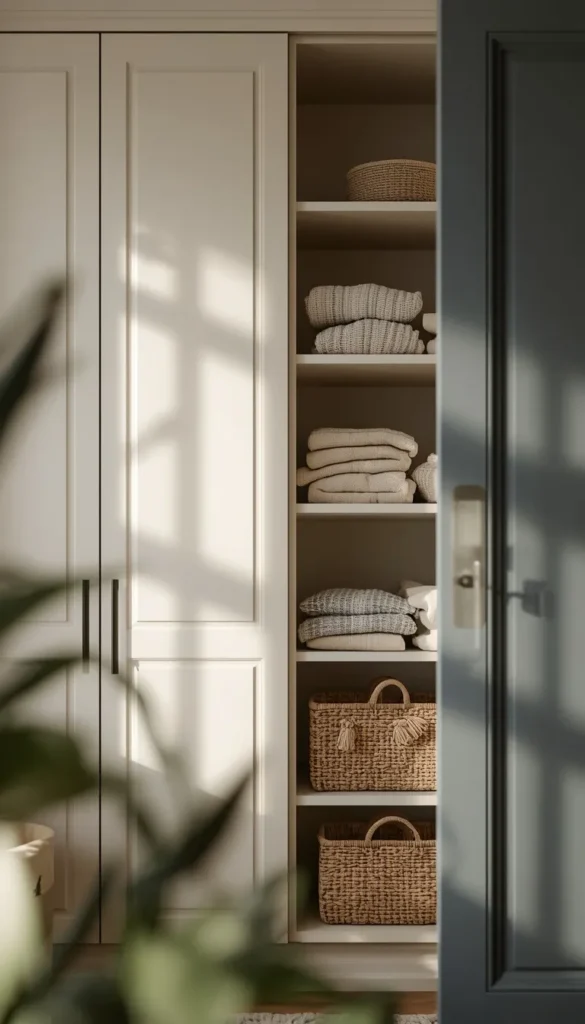
Rather than going fully open or fully closed, I’ll split a BESTA run down the middle, doors on one half for out of season gear nobody needs daily, open shelving on the other for whatever’s in weekly rotation. It’s a layout that ages well because it doesn’t force a household to be tidier than they actually are.
The households that do best with this are the ones who are honest with themselves about which half they’ll actually use. I always ask directly: what do you grab every single day versus once a season, and build the split around that answer rather than guessing.
Does your family need the busy-family setup with individual lockers, or is the minimalist route more your speed?
17. A SEKTION and PAX Family Locker Wall with Name Tags
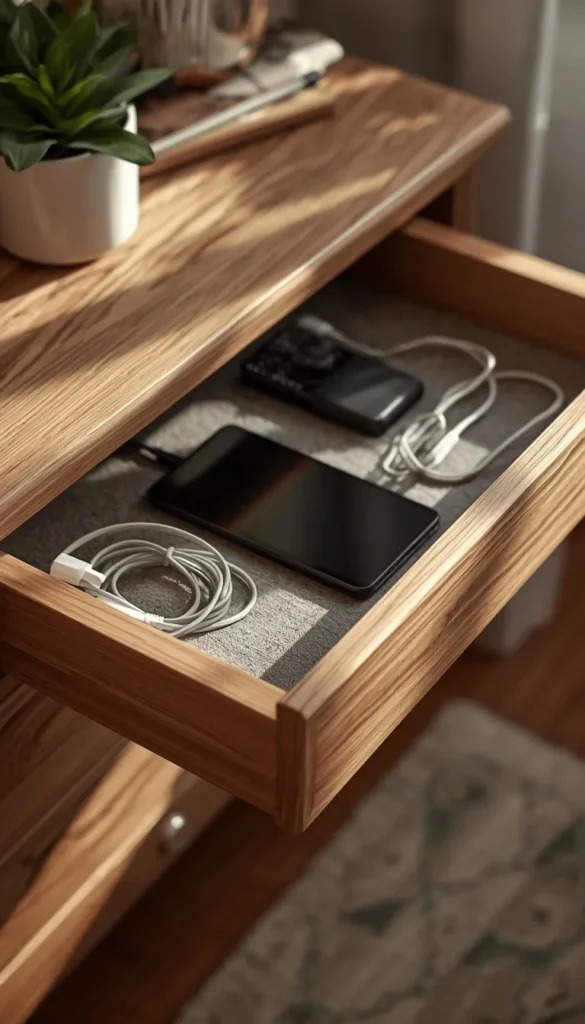
For bigger families, I’ll sometimes combine SEKTION lower cubbies with PAX upper sections, then assign one full column per family member, top to bottom. Adding a name tag or a small label to each column turns it into a real system instead of a free for all, and it cuts down on the daily “whose jacket is this” argument.
This works best with kids old enough to actually maintain their own column, I wouldn’t push it much below age 5 or 6. For younger kids, a shared open bin tends to hold up better than trying to enforce individual zones nobody’s ready to manage yet.
18. A BESTA Charging Drawer for Hidden Tech Storage
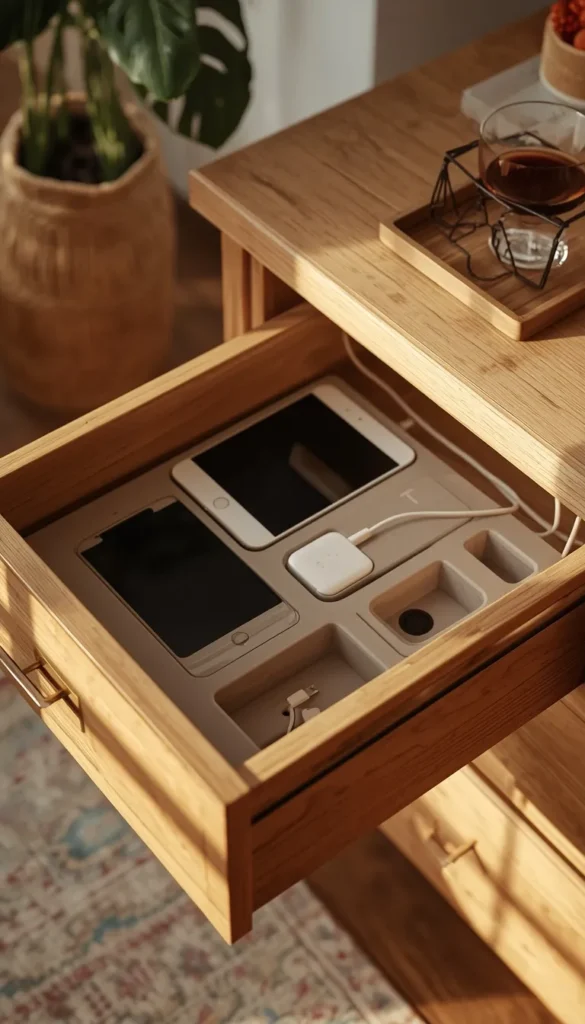
The last idea I’ll leave you with is a closed alternative to the SEKTION charging station from earlier. Instead of an open cubby, I’ll route a power strip into a BESTA drawer with a small cutout at the back for cords, so phones and tablets charge completely out of sight rather than sitting on display.
It’s a cleaner look for households who don’t want cords or devices visible the second they walk in, though it does mean opening a drawer instead of just glancing at a shelf. I’d only recommend this if charging happens once or twice a day rather than constantly, since the extra step of opening and closing gets old fast with heavy daily use.
Which Path is Yours?
By Budget:
Starter
- KALLAX Shoe Cubby Wall
- Narrow KALLAX Insert for Tight Entryways
- BESTA Bench and Cabinet Combo
Luxury
- Full Height PAX and KALLAX Combination Wall
- PAX Locker Mudroom
- SEKTION and PAX Family Locker Wall
By Lifestyle:
Busy Families
- KALLAX with Fabric Bins for Kid Chaos
- SEKTION and PAX Family Locker Wall with Name Tags
- SEKTION Bootbox with a Vented Base
Small Spaces
- Narrow KALLAX Insert for Tight Entryways
- BESTA Bench and Cabinet Combo
- PAX with a Mirror Insert for Small Entryways
Minimalists
- PAX Wardrobe Without Doors
- BESTA Charging Drawer for Hidden Tech Storage
- Mixed Open and Closed BESTA Wall
FAQ
How much does an IKEA mudroom cost on average?
Most full builds land between $800 and $4,000 depending on the system you choose. A single KALLAX wall can stay under $400, while a PAX and SEKTION combo pushes past $3,000. Budget for trim and hardware separately, they add up fast.
Is IKEA furniture sturdy enough for a mudroom?
Yes, if you pick the right system for the job. SEKTION and PAX are built for daily wear and heavy loads. Skip lightweight units like a basic BESTA frame for anything taking direct boot traffic.
Can you use KALLAX as a mudroom bench?
Yes, laid on its back with a cushion on top. Measure the seat height first since it sits lower than a standard bench. Add a plinth underneath if adults will be using it daily.
How do I stop my mudroom from smelling musty?
Ventilation at the boot level is the fix. A slatted or vented base panel keeps air moving instead of trapping moisture against the cabinet floor. Pull out trays help too, since you can hose them off directly.
What’s the cheapest way to organize a small entryway?
A single row KALLAX, 1×4 or 2×2, paired with a hook rail. It stays under $300 and solves the tripping hazard problem without a full wall build. Skip doors and bench seating if space is tight.
Conclusion
Your entryway sets the tone for every single day you walk through that door, tired kids, muddy paws, dropped keys and all. You don’t need the full $5,000 wall to feel that shift, sometimes clearing one shelf or grabbing a single KALLAX unit this weekend is enough to change how your mornings actually feel. Start small, start honest about what your family really needs, and let the rest come together over time.
