
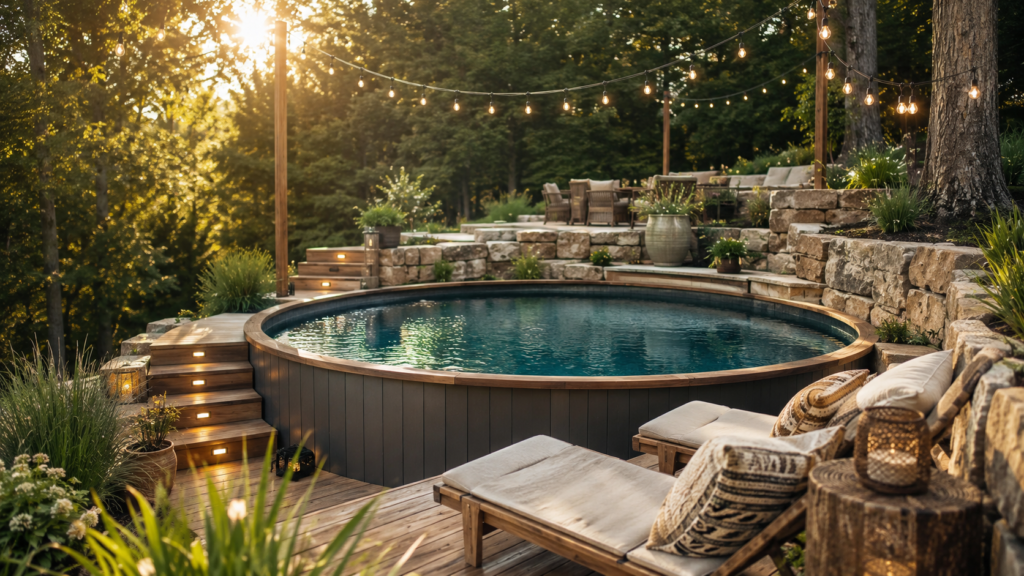
My neighbor spent eleven grand on an inground pool last summer, and honestly, her backyard doesn’t look any better than the sunken above ground pool I helped a client build for a third of that price. That’s the secret nobody tells you when you’re pricing out pools in the US right now. A well planned sunken above ground pool gives you almost the same look, the same lounging vibe, the same “wow” when guests walk into your backyard, without the excavation nightmare or the six figure price creep. I’ve put together nine ideas that actually work in real American backyards, from tight city lots to sloped Carolina hillsides, along with the honest stuff about cost, safety, and maintenance that most articles skip entirely.
My Design Notes
When I was working on a project just outside Charlotte, a client asked me to help her bury a $400 steel stock tank pool three feet into a sloped section of her yard. She wanted the full inground look on a backyard budget, and I loved the ambition.
We got about halfway through planning before I realized the tank walls simply weren’t built to hold back that much soil pressure at that depth. I’ve seen what happens when a wall like that buckles, and it’s not a mistake you get to make twice.
So we pulled back to an eighteen inch partial sink instead, and let a proper retaining wall do the heavy lifting rather than the pool itself. We wrapped the transition in cedar decking, and in photos, you genuinely cannot tell it isn’t a real inground pool.
The lesson I carried into every project after that one is simple. The retaining wall is what protects your yard, not the pool wall. Get that part right and everything else about sinking a pool gets a lot less scary.
9 Proven Strategies for an Unforgettable Sunken Above Ground Pool Design
1. Full Sink with a Wood Deck Surround
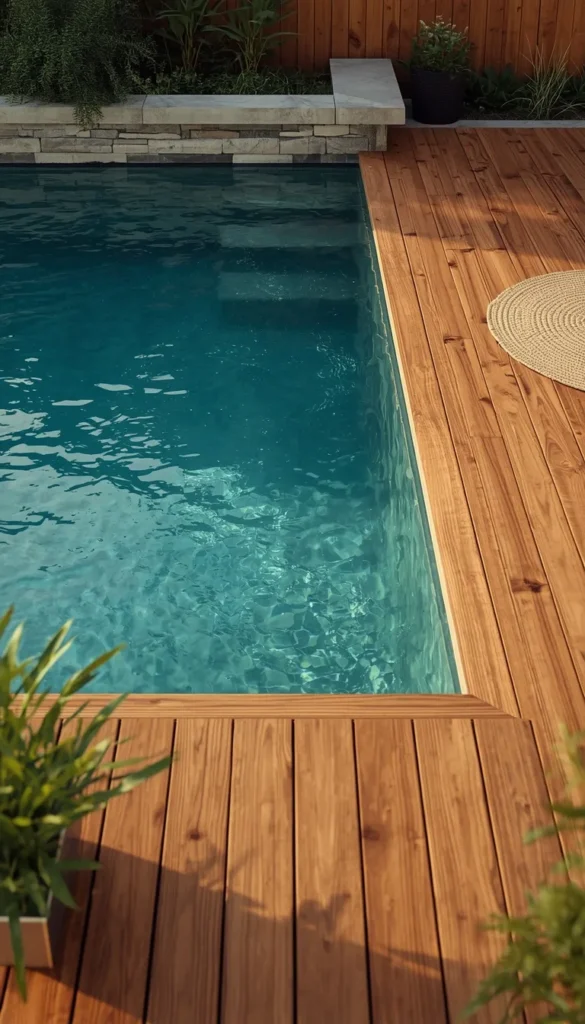
This is the classic move, and it’s classic for a reason. You lower the entire pool into a dug out space in your yard, build a proper retaining wall around it to handle the soil pressure, then frame the whole thing with a wood deck that sits flush with the water line. The wood softens the transition and gives you that natural, built in look people usually associate with much pricier inground pools. Cedar and pressure treated pine both hold up well here, though cedar costs more upfront and rewards you later with less warping.
One thing to watch out for is drainage. If water can’t move away from that buried pool wall, you’re looking at rot, rust, or a soggy yard within a couple of seasons.
2. Partial Sink with a Stone Retaining Wall
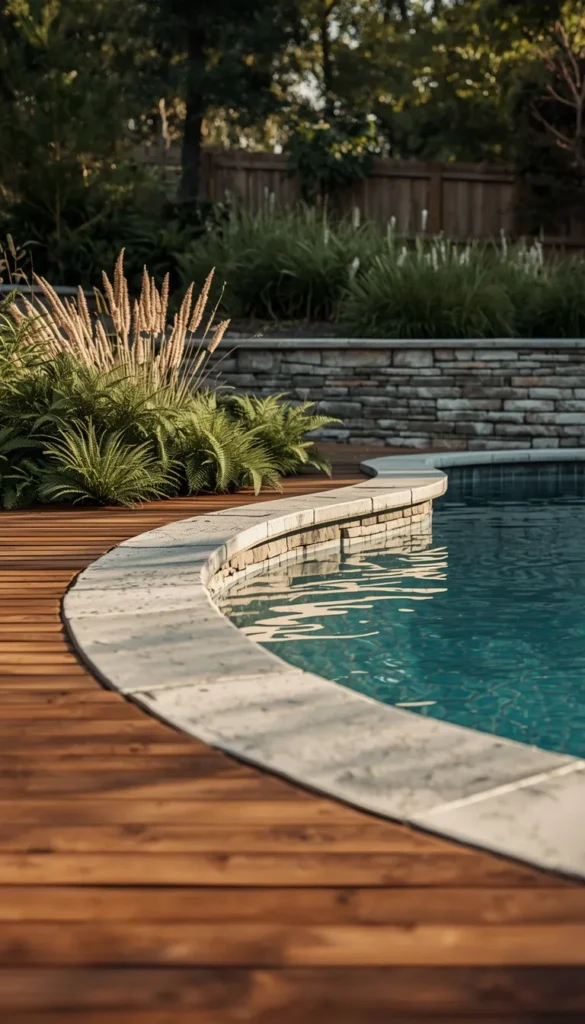
Sometimes going all the way down isn’t necessary, or even smart, depending on your pool’s structural rating. A partial sink, somewhere around twelve to twenty four inches, gives you most of the visual payoff with a lot less engineering risk. Stacked stone or flagstone retaining walls do the real work of holding back the earth, which takes the pressure entirely off the pool’s own walls.
This is the setup I used with my client outside Charlotte, and it’s become one of my go to recommendations for anyone nervous about a full burial. A few things make this version work well:
- Choose a stone that echoes something already in your home’s exterior, like your foundation or chimney
- Keep the exposed pool wall height under two feet so the illusion holds
- Slope the surrounding grade slightly away from the wall to help with runoff
3. Composite Decking Wraparound for a Modern Look
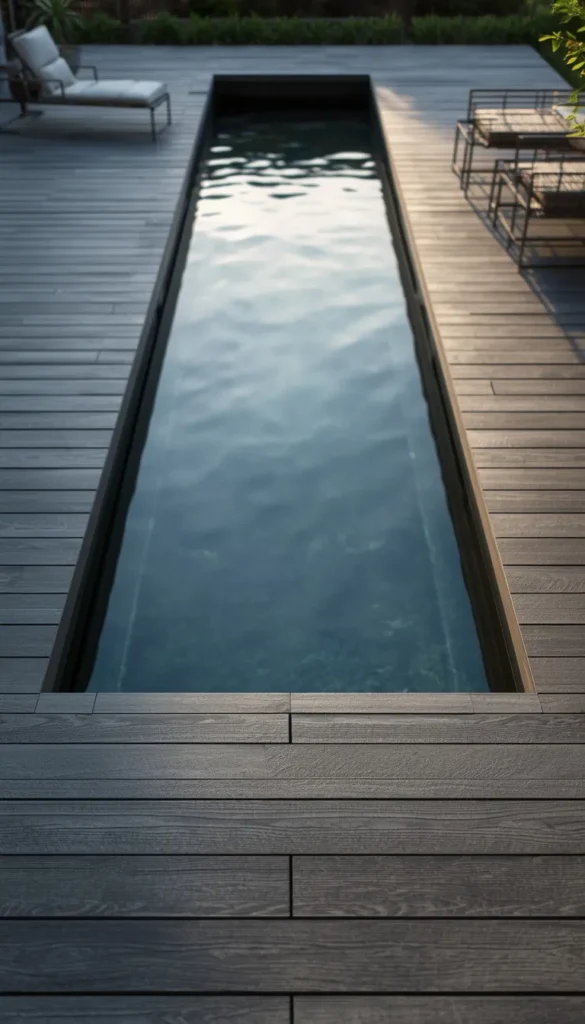
If your style leans clean and contemporary rather than rustic, composite decking is worth a serious look. It gives you crisp, straight lines, comes in tones like graphite or driftwood gray, and skips the staining and sealing that wood decks demand every year or two. Wrap it fully around a sunken pool and you get a sleek, almost hotel like finish that photographs beautifully.
The tradeoff is cost. Composite runs higher per square foot than basic pressure treated wood, though most homeowners recoup that difference in maintenance savings within a few years.
4. Sunken Pool with a Paver Patio Surround
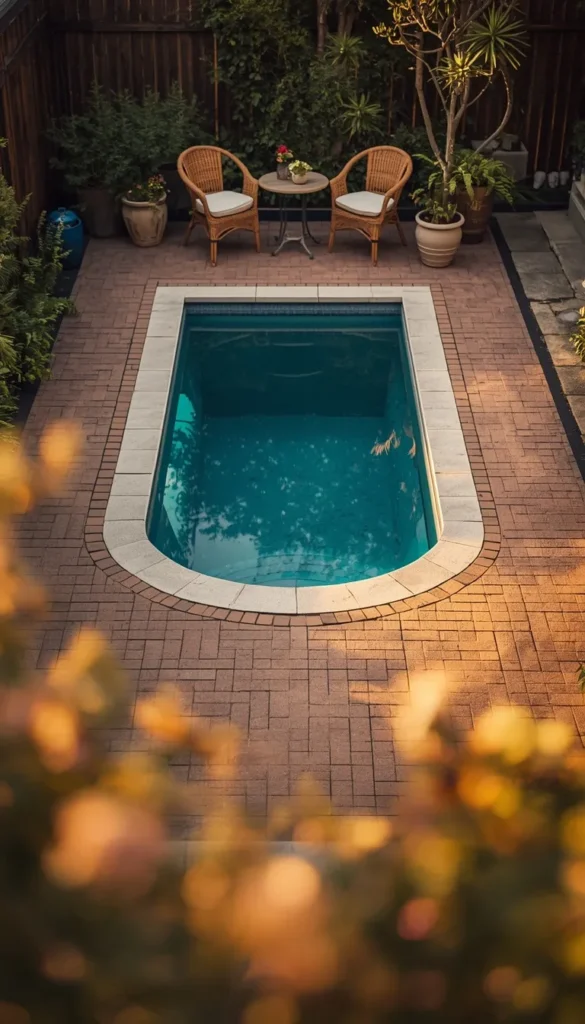
Pavers are probably the most budget friendly way to surround a sunken pool without it looking budget friendly, which is exactly why I recommend them so often. Concrete or clay pavers can be laid in patterns that mimic much pricier stone, and if one ever cracks or stains, you just pop it out and swap it rather than redoing an entire section like you would with poured concrete.
A trick I’ve picked up over the years is running the paver pattern in a slightly different direction near the pool’s edge. It’s a small detail, but it draws the eye and makes the whole space feel intentional rather than like an afterthought around a metal tank.
If you had to start digging this weekend, which of these nine would actually fit your backyard?
5. Sloped Yard Semi Inground with Tiered Landscaping
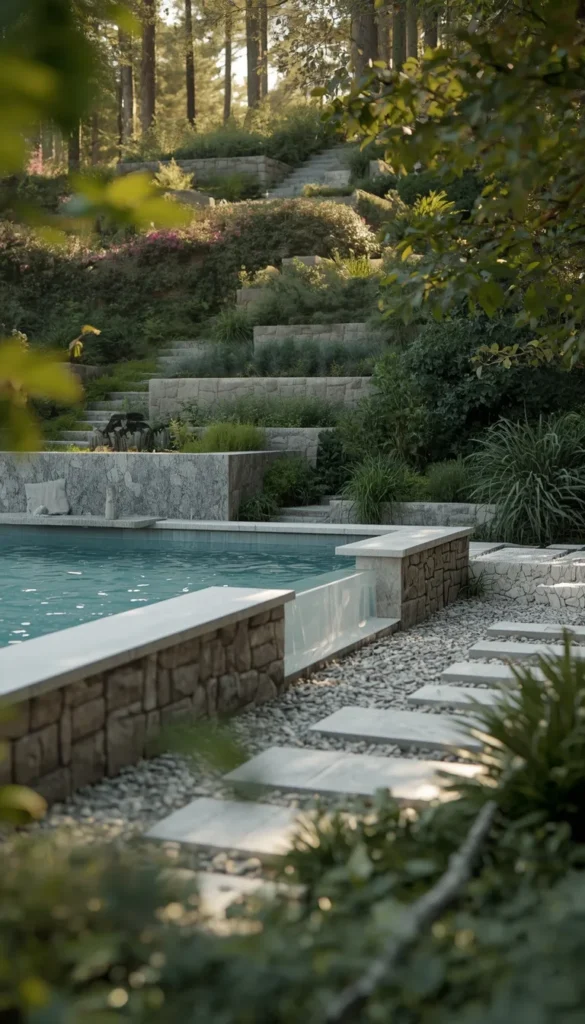
A sloped backyard actually works in your favor here, which surprises a lot of homeowners who assume flat ground is a requirement. You cut into the higher side of the slope so the pool sits partially buried on one end and fully exposed on the lower end, then use that natural grade change to build tiered planting beds or a small terraced patio around it. It reads as intentional, high end landscaping rather than a workaround.
My advice is to work with the slope instead of fighting it. Trying to force a perfectly level dig on a hillside usually costs more in excavation than just designing around the grade you already have.
6. Small Backyard Sunken Pool
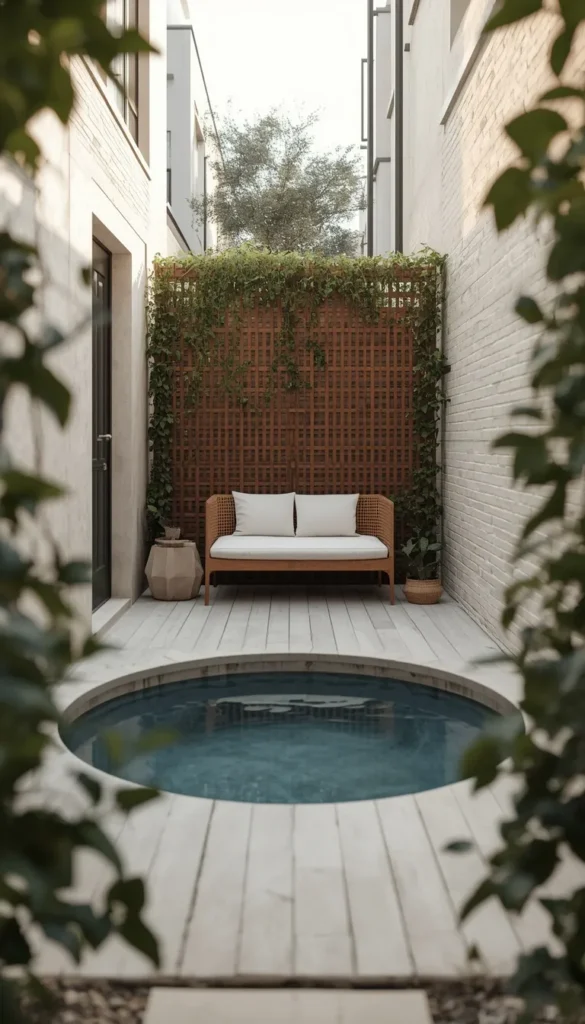
Tight lots need a different approach than sprawling suburban yards, and I think this is where a lot of pool content falls short because it assumes everyone has space to spare. For a small backyard, keep the sunken pool close to one property line, use a single narrow bench of decking rather than a full wraparound, and let vertical elements like a privacy trellis do the work that extra square footage would otherwise handle.
- Round or oval pools tend to feel less cramped in tight spaces than rectangular ones
- Light colored decking visually expands a small yard better than dark stains
- Skip the full fence and use strategic planting instead to save space
Top 6 sunken above ground pool ideas
| Idea | Estimated Price | Maintenance |
|---|---|---|
| Full Sink with Wood Deck | $3,500 to $8,000 | Medium |
| Partial Sink with Stone Retaining Wall | $4,000 to $9,500 | Medium |
| Composite Decking Wraparound | $6,000 to $12,000 | Low |
| Paver Patio Surround | $2,500 to $6,000 | Low |
| Small Backyard Sunken Pool | $2,000 to $5,000 | Low |
| Luxe Modern Sunken Pool | $10,000 to $25,000+ | High |
7. The DIY Budget Version
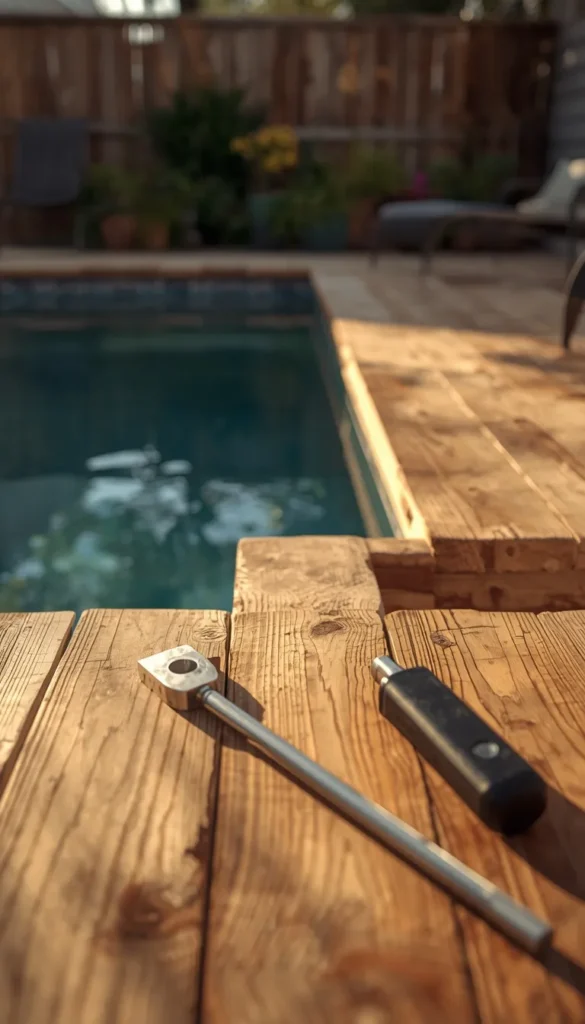
Let’s be honest about what you can and can’t do yourself here. Digging the hole, building a basic wood deck, and handling the landscaping are all reasonable DIY projects for a handy homeowner with a weekend or two to spare. What I don’t recommend DIYing is the retaining wall engineering, especially if you’re sinking the pool more than a foot or so. That’s the piece where a mistake doesn’t just look bad, it can actually fail.
A realistic budget version usually means partnering with a local contractor just for the wall and drainage plan, then doing the deck and finishing touches yourself. It’s a nice middle ground between full DIY and a full professional install, and it keeps more money in your pocket without gambling on the part that actually holds your yard together.
8. Privacy Focused Sunken Pool
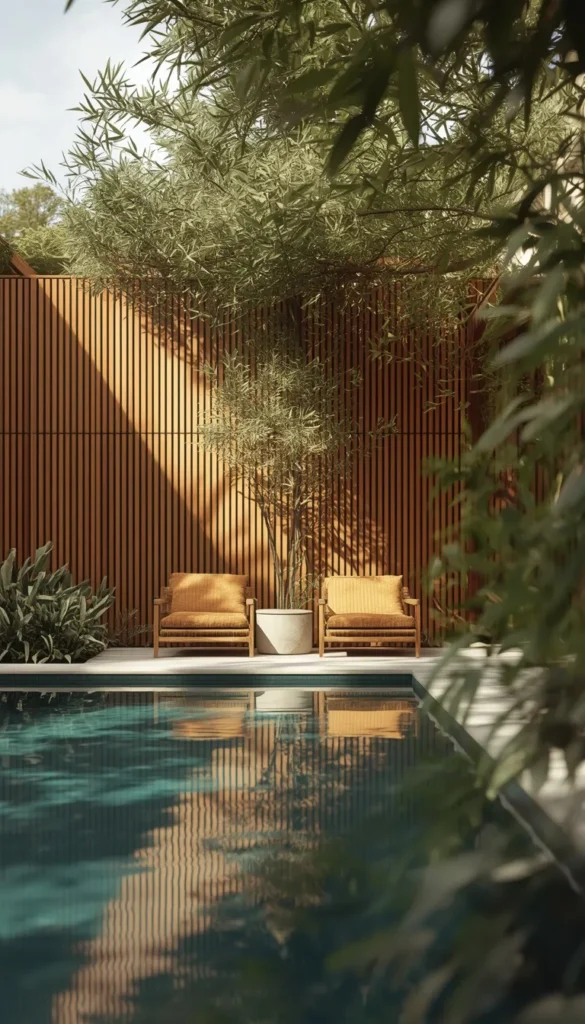
There’s something about a sunken pool that already feels more private than a standing above ground one, since you lose that exposed tank look right from the start. You can lean into that further with tall grasses, a slatted wood privacy screen, or even a simple pergola positioned to block sightlines from neighboring windows. I’ve found that layering two or three elements, like a low fence plus some strategic planting, tends to look far more polished than relying on one tall solid wall to do all the work.
Bamboo and arborvitae are both popular choices for fast growing, low maintenance privacy screening in most US climates, though bamboo does need a root barrier if you don’t want it spreading where it shouldn’t.
Is your yard more of a sloped, work with what you’ve got situation, or a blank flat canvas?
9. The Luxe Modern Sunken Pool
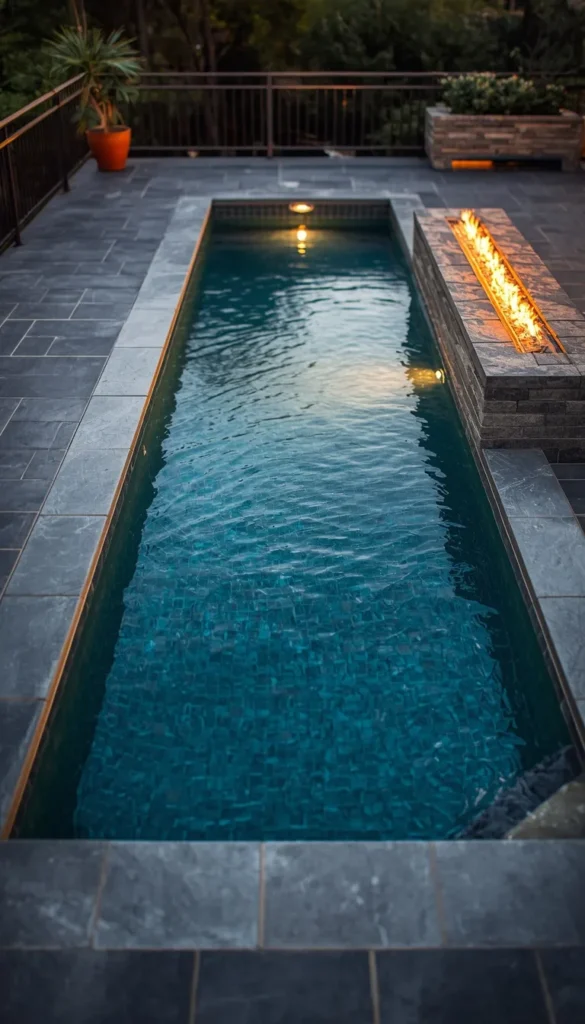
This is the splurge version, the one you build when budget takes a back seat to atmosphere. Think full stone or tile wrapped edges, integrated LED lighting along the waterline, a linear fire feature nearby, and decking material that matches or complements your home’s exterior finishes exactly. The goal is for the pool to feel like it was part of the original architecture rather than something added on later.
What separates a genuinely luxe result from one that just looks expensive is consistency. I always tell clients to pick one or two premium materials and repeat them throughout the space rather than mixing five different finishes trying to impress. A stone that echoes your home’s facade, paired with a single accent metal used in the railing and light fixtures, does more for the finished look than any single splashy feature on its own.
Which Path Is Yours?
By Budget
- Starter Budget: Paver Patio Surround, Small Backyard Sunken Pool
- Mid Range: Full Sink with Wood Deck, Partial Sink with Stone Retaining Wall
- Investment Level: Composite Decking Wraparound, Luxe Modern Sunken Pool
By Yard Type
- Sloped Backyards: Sloped Yard Semi Inground with Tiered Landscaping
- Tight City Lots: Small Backyard Sunken Pool, Privacy Focused Sunken Pool
- Wide Open Suburban Yards: Full Sink with Wood Deck, Luxe Modern Sunken Pool
By Lifestyle
- Hands On Homeowners: The DIY Budget Version, Paver Patio Surround
- Busy Families Who Want It Done Once: Composite Decking Wraparound, Luxe Modern Sunken Pool
- Privacy Seekers: Privacy Focused Sunken Pool, Sloped Yard Semi Inground with Tiered Landscaping
Frequently Asked Questions
Can you sink an above ground pool?
Yes, but only if the pool wall is rated for it or you build a proper retaining wall to take the pressure off the pool itself. Most standard steel or resin pools aren’t designed to hold back soil on their own.
How much does it cost to sink an above ground pool?
The average cost runs anywhere from $2,000 for a small partial sink to $25,000 or more for a fully sunken, luxury style setup with premium decking and lighting.
Is a semi inground pool worth it?
For most homeowners, yes. You get close to eighty percent of the inground look and feel for roughly a third of the cost, and the resale bump on your home is often better than expected.
How deep can you bury an above ground pool?
Ideally, you should stay under two feet unless an engineer has confirmed your specific pool and retaining wall can handle more. Going deeper without that check is where most failures happen.
Are partially buried above ground pools safe?
Generally yes, as long as drainage is planned properly and the retaining wall, not the pool wall, is doing the structural work. Skip either of those and safety becomes a real concern fast.
Conclusion
Your backyard doesn’t need a five figure renovation to feel like the retreat you’ve been picturing. Sometimes it just takes one weekend, a good retaining wall, and a little courage to dig in. I’ve watched a $400 stock tank pool turn into the spot where an entire family spends every summer evening, and that kind of magic happens more often than people think. Pick one idea from this list that fits your yard and your budget, and start sketching this week while the season is still ahead of you.
