
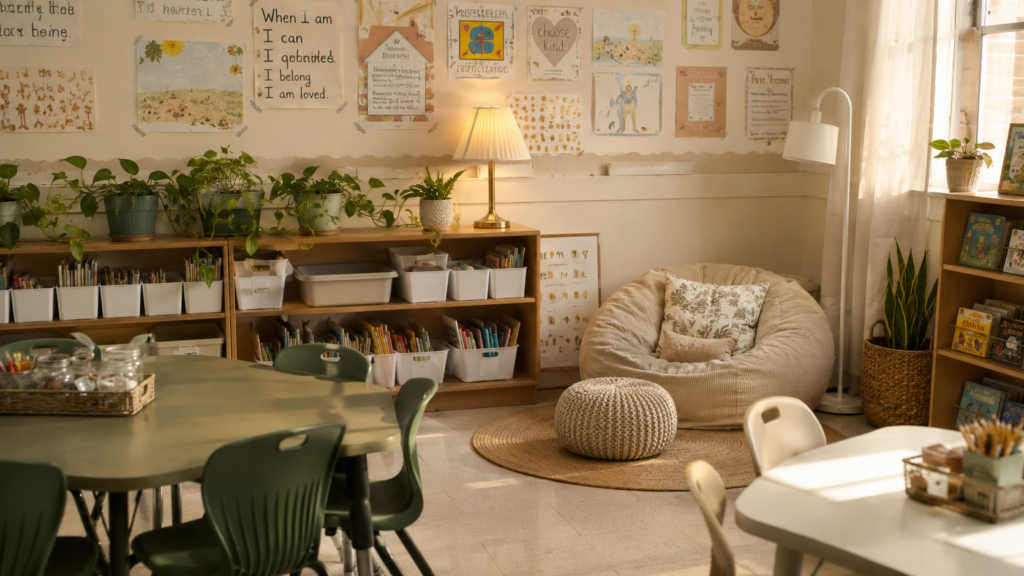
Before you speak a single word to your students, your classroom has already said something. It either says “you belong here” or it says “this is just another room.” The way you decorate your space shapes how kids feel the moment they walk through that door, and honestly, it shapes how you feel too. I’ve seen teachers spend thousands and still end up with cluttered, overwhelming rooms, and I’ve seen others spend under $200 and create something truly magical. The difference is never the budget. It’s always the intention.
My Design Notes
A few summers ago, I got hit with every teacher’s worst nightmare a last-minute room reassignment, three days before Open House. The new room had cinder block walls, zero shelving, and one flickering fluorescent light that honestly belonged in a haunted house, not a classroom. My budget was exactly $200, and I remember standing in that doorway thinking there was absolutely no way I could pull this off. But I refused to let my students walk into a space that felt cold and forgotten. I grabbed my notepad, made a priority list, and got to work. I hit the Dollar Tree, raided my own storage bins, printed free resources online, and leaned hard into what I already had. By the night before Open House, parents were stopping in the hallway to take photos and asking me how long I’d been setting it up. The truth? Two and a half days. That experience taught me that great classroom decor has nothing to do with how much you spend. It has everything to do with how intentionally you use what you’ve got.
12 Mastering Creative Classroom Decor Ideas That Inspire Learning All Year Long
1. Build a Wonder Wall Instead of a Boring Bulletin Board
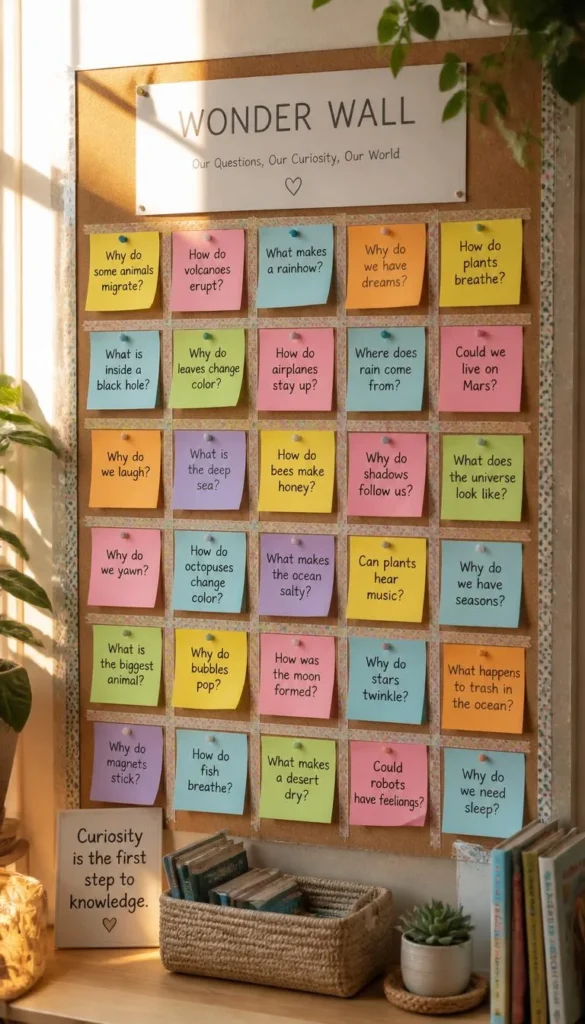
Let’s be honest the standard bulletin board with scalloped borders and printed headers has been done to death. I’m not saying it’s wrong, I’m just saying your students have seen it a thousand times and it registers as background noise by Week 2. A Wonder Wall is different. It’s a living, breathing display that changes with your students’ curiosity, and it immediately signals to kids that their questions matter in this space.
Here’s how I set one up without spending much at all. Start with a large corkboard or even a painted section of wall. Use washi tape to create a simple grid pattern it looks intentional and clean without costing more than $3. Then add a header that says something like “What Are We Wondering?” and seed it with a few of your own questions to get kids going.
What makes this work long-term:
- Rotate questions weekly so the wall never goes stale
- Let students add sticky notes with their own wonders it builds ownership fast
- Use one consistent font for printed headers so the wall looks cohesive, not chaotic
The whole setup can cost you under $15 if you use a Dollar Tree corkboard, a pack of washi tape, and free printable fonts from Canva. One thing to watch out for is overloading the wall too fast. Keep it intentionally spacious at first. A crowded Wonder Wall loses its magic pretty quickly.
2. Color Zone Your Classroom the Smart Way
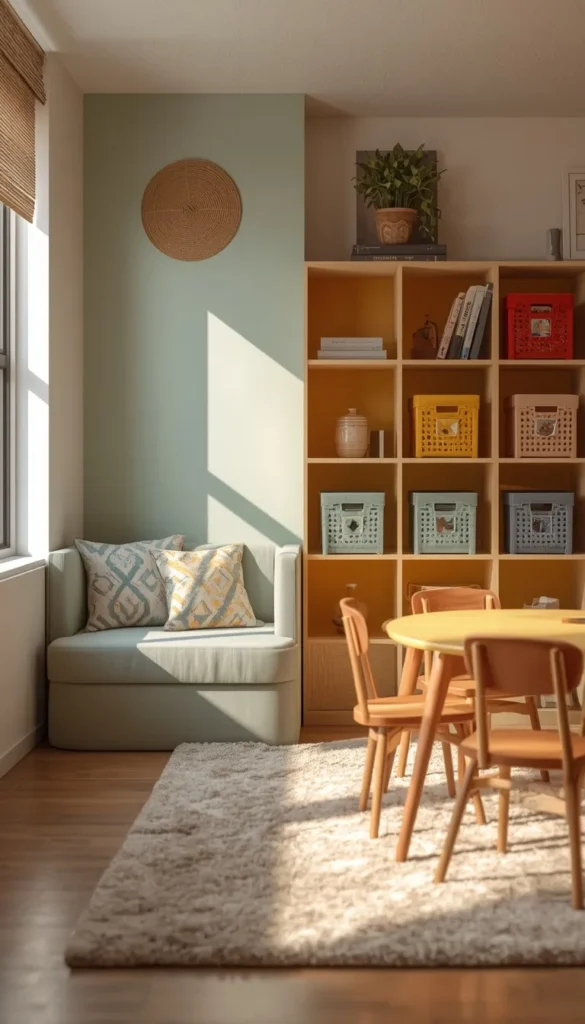
Color is doing more work in your classroom than you probably realize. It’s not just decoration it’s directly affecting how your students focus, how calm they feel, and how energized they get during different parts of the day. I’ve walked into classrooms painted entirely in primary red and yellow, and I could feel the overstimulation before I even sat down.
The smarter approach is color zoning. Assign a quiet, cool color palette to your reading and independent work areas soft blues, sage greens, and warm whites work beautifully here. Save your bolder, energizing tones for collaborative spaces and group tables where you actually want kids buzzing with energy.
A quick trick I’ve learned is to use colored bins, rugs, and table accessories to create these zones rather than repainting walls. It’s cheaper, it’s flexible, and you can shift things around mid-year without starting over. Kindergarten and preschool classrooms can handle a bit more color saturation than upper elementary rooms, where a cleaner, more neutral palette actually helps older kids stay focused during longer independent tasks.
3. The Cinder Block Wall Fix That Actually Works
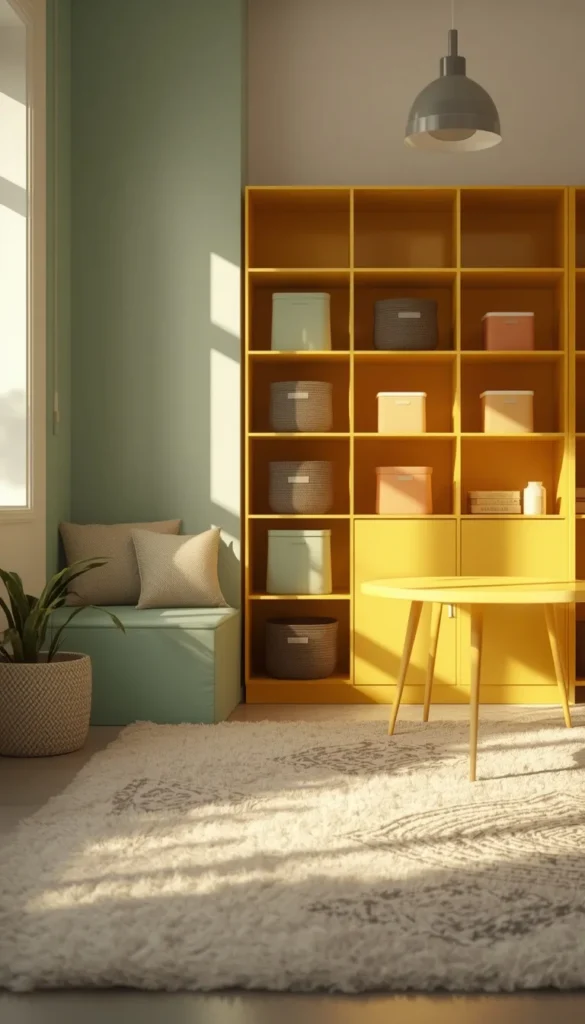
If your classroom has cinder block walls, you already know the struggle. Nothing sticks. Tape peels. Thumbtacks don’t grip. And by October, half your decor is on the floor. I’ve been there, and I’ve tested more adhesive solutions than I care to admit.
Here’s the honest breakdown of what actually holds:
- Command strips (large, clear) Clean the wall with rubbing alcohol first. This step is non-negotiable. Skip it and they’ll fall within a week.
- Mounting putty Great for lightweight paper decor and letters, but don’t trust it with anything heavier than a poster.
- Landscape block adhesive Only use this for permanent decor you’re not planning to move. It holds like a dream but it’s not renter-friendly.
Peel-and-stick wallpaper is another option I see recommended everywhere, and honestly, it works but only on smooth, painted surfaces. On raw cinder block, it bubbles and peels within weeks. Save it for your door or a small accent cabinet instead. The real secret with cinder block rooms is to work with vertical space creatively. Hang a tension rod across a window or use an over-door organizer on your classroom door to add display space without touching those stubborn walls at all.
4. Create a Student Built “Our Classroom” Gallery
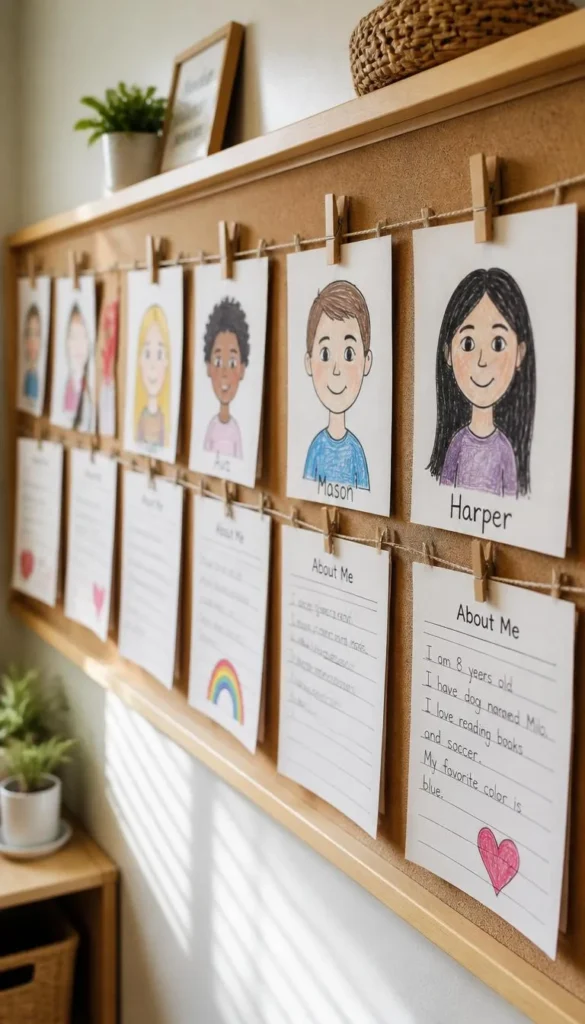
This is one of my absolute favorite ideas because it saves you hours of decorating time while simultaneously making your students feel deeply connected to the space. The concept is simple instead of you decorating every inch of the classroom before the kids arrive, you leave intentional blank spaces for them to fill in together during the first week of school.
Set up a dedicated gallery wall using a corkboard strip or a simple clothesline with wooden clips. On Day 1, give each student a small card or paper square and ask them to draw something that represents who they are. By Friday of Week 1, your gallery wall is full, personal, and genuinely meaningful. Parents love it during Open House because they can spot their child’s contribution immediately.
What makes this especially powerful is the maintenance factor. When kids build something, they protect it. I’ve noticed that classrooms with student-built displays have far fewer issues with decor being pulled off walls or tampered with throughout the year. It’s their space, and they treat it that way.
Would you start with a Wonder Wall or jump straight into color zoning your space?
5. Design a Sensory-Smart Learning Corner
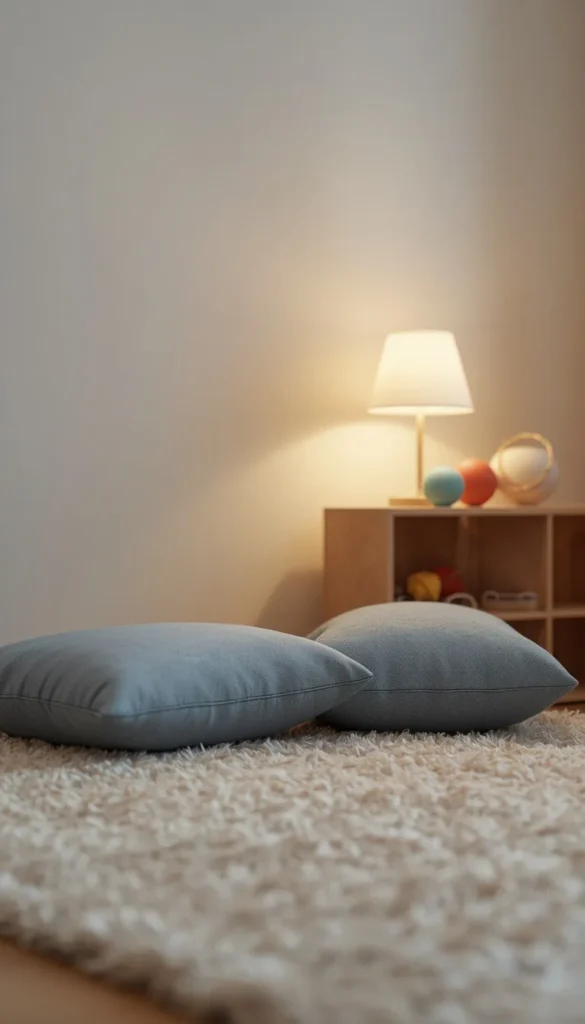
This is something I wish more teachers knew about before they started decorating. A sensory-smart corner isn’t just for special education classrooms every single student benefits from having a designated space that feels calm, contained, and intentionally low-stimulation. And the good news is you don’t need a big room or a big budget to pull it off.
The key is to think about what you’re removing as much as what you’re adding. Strip that corner of busy wall art and bold colors. Bring in a small soft rug, a bean bag or two floor cushions, and a simple shelf with a few calm-down tools like stress balls or fidget strips. Keep the color palette in that zone strictly neutral think oatmeal, dusty blue, or soft sage.
A few things that make a real difference here:
- Face the corner away from high-traffic areas so kids feel tucked away, not on display
- Add a small set of headphones for students who need to block out noise during independent work
- Use a small tabletop lamp instead of relying on harsh overhead fluorescents in that zone
One thing to watch out for is turning this corner into a “timeout spot.” The moment kids associate it with punishment, it loses all its value. Frame it from Day 1 as a place everyone uses, including you.
6. Your Classroom Door Is Prime Real Estate Use It
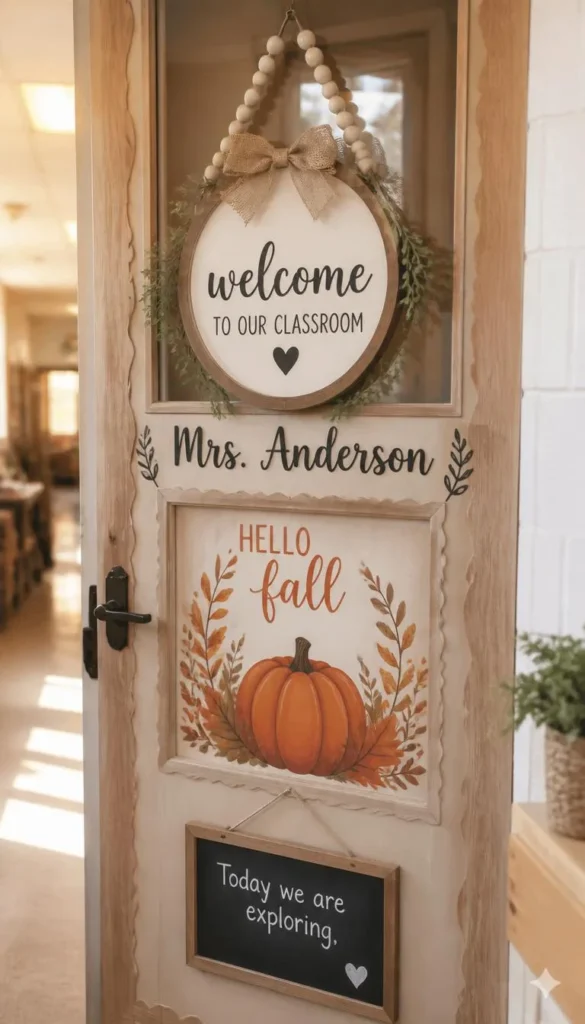
Most teachers treat their classroom door like an afterthought. A quick seasonal cutout, maybe a punny welcome sign, and that’s it. But your door is the very first thing your students see every single morning, and that first impression sets the emotional tone for the next seven hours. It deserves more than a last-minute staple job.
I love the idea of a swap system for classroom doors. Create a simple base design that stays up all year a neutral frame, your name, your room number and then make interchangeable seasonal inserts that drop right in. You build it once in August and swap out one piece every six to eight weeks. The whole update takes under twenty minutes and your door always looks intentional and fresh.
For preschool and kindergarten teachers especially, the door is also a fantastic place to display the “secret” of what’s happening inside. A small chalkboard sign that says “Today we are exploring…” gives parents a peek into your day and builds genuine excitement for kids as they arrive.
Top 6 Teaching Classroom Decor Ideas
| Idea | Estimated Price | Maintenance |
|---|---|---|
| Wonder Wall | $10 – $15 | Low |
| Color Zoning | $20 – $60 | Low |
| Cinder Block Wall Fix | $5 – $25 | Medium |
| Student-Built Gallery | $5 – $10 | Low |
| Sensory-Smart Corner | $30 – $80 | Medium |
| Lighting Makeover | $15 – $50 | Low |
7. Build a Word Wall That’s Actually Beautiful
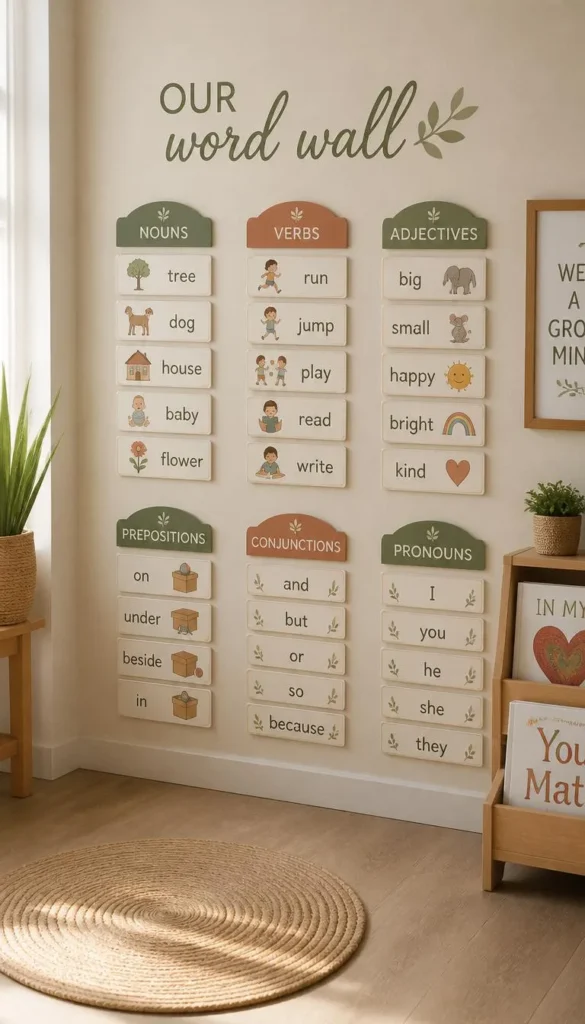
Word walls have a bad reputation for looking chaotic, and honestly, most of them do. Mismatched fonts, random colors, letters falling off by November I’ve seen it in nearly every school I’ve ever visited. But a well-designed word wall is genuinely one of the most powerful learning tools in your classroom, and it doesn’t have to look like a ransom note.
The secret is treating it like a design project from the start. Pick two fonts maximum one for headers and one for the words themselves. Choose a three-color palette and stick to it religiously. Laminate everything before it goes up, because paper word walls look tired and sad by February without it.
Here’s what works best by grade level:
- Preschool and Kindergarten Keep it low on the wall so kids can physically touch and interact with the words. Velcro backing works great here.
- Grades 1 through 3 Color code by word family or phonics pattern. It makes the wall a functional reference tool, not just decoration.
- Grades 4 and 5 Shift toward subject-specific vocabulary walls. One section for math terms, one for science, one for ELA. Clean, organized, and actually useful.
8. Bring Nature In Without Killing Everything by October
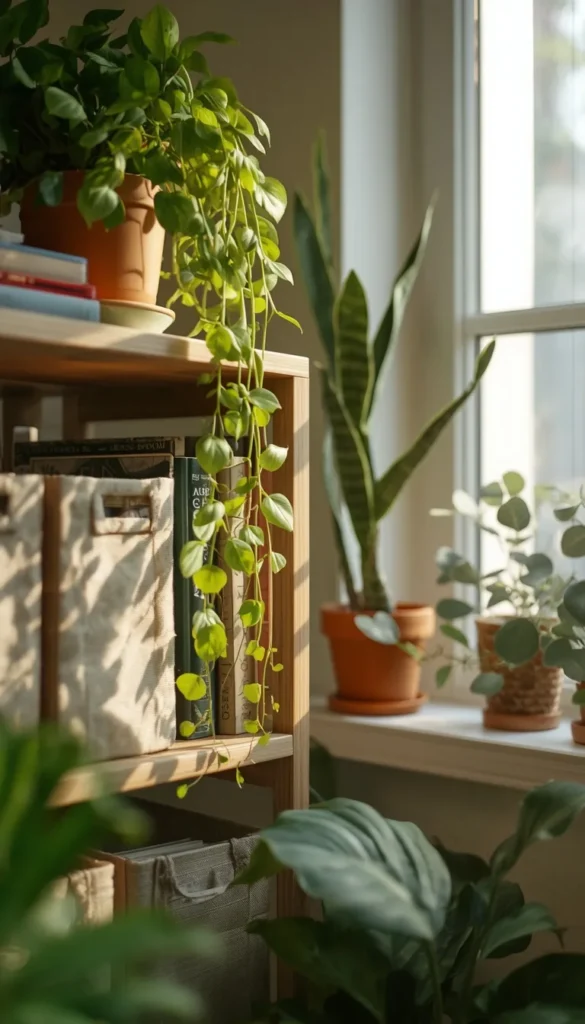
Every fall, teachers across America buy beautiful little succulents and ferns for their classrooms, and by Halloween, half of them are dead. I say this with love because I have absolutely been that teacher. Classroom environments are tough on plants inconsistent watering, low natural light, dry air from heating systems, and the occasional curious student who can’t resist touching the soil.
So here’s my honest plant guide. Snake plants are genuinely the most forgiving classroom plant I’ve ever worked with. They survive low light, irregular watering, and temperature swings without complaint. Pothos are a close second they trail beautifully along a shelf and look lush even when you’ve forgotten about them for two weeks. Spider plants are wonderful too, especially because they’re non-toxic, which matters when you’re working with young children.
If real plants feel like too much responsibility on top of everything else you’re managing, high-quality faux greenery has come a long way. A realistic faux vine draped along your top shelf or a silk eucalyptus arrangement in a simple terracotta pot adds warmth and life to a space without a single watering can in sight. Nobody in your classroom is going to know the difference, and more importantly, nobody is going to care.
Is your biggest challenge the walls, the lighting, or just figuring out where to even begin?
9. Lighting Makeover on a Teacher’s Budget
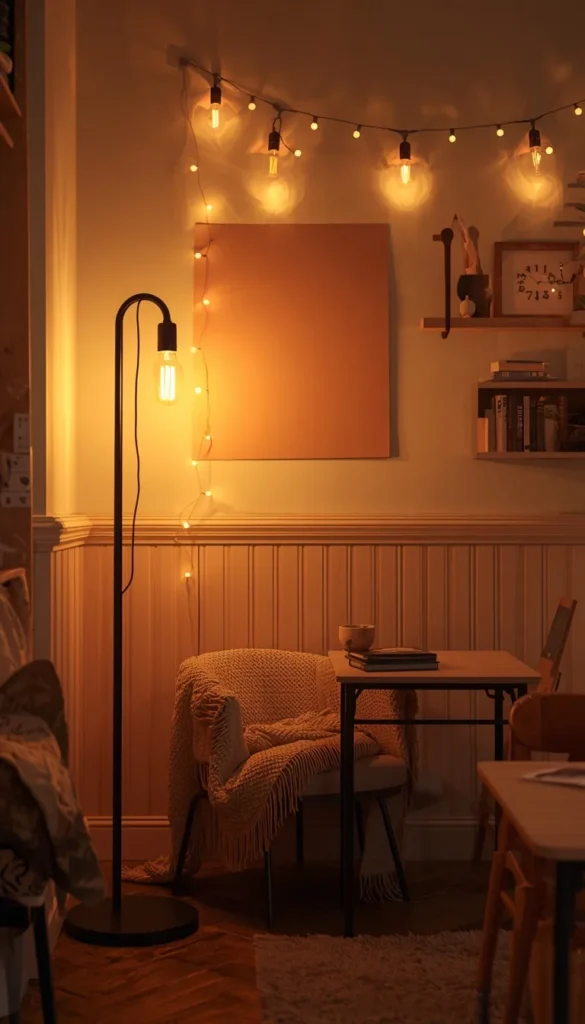
Harsh fluorescent lighting is the number one thing that makes a classroom feel institutional instead of inviting, and it’s also one of the easiest things to fix without spending a lot of money or violating school policy. I’ve walked into classrooms where the teacher had simply added one warm-toned floor lamp in the reading corner, and the entire room felt different. Softer. Calmer. More like a place where learning actually happens.
The simplest hack I’ve found is colored paper. Seriously. Cut strips of amber, soft yellow, or warm peach paper and tape them loosely over your fluorescent covers. It filters the light just enough to knock out that cold, sterile glare without dimming the room too much. It costs almost nothing and takes about ten minutes. A quick thing to check first though confirm with your school’s facilities team that your fluorescent covers are the type that allow this, because some older fixtures run hot.
Beyond that, a few targeted additions make a big difference:
- A small floor lamp with a warm Edison bulb in your reading nook instantly changes the mood of that corner
- Battery-operated LED string lights along a shelf or window ledge add warmth without needing an outlet
- A plug-in pendant lamp over your kidney table or teacher station looks intentional and polished for under $25 on Amazon
One thing to watch out for is extension cords. Most schools have strict fire safety rules about them, and permanent extension cord use is usually a violation. Plan your lamp placement around existing outlets from the start so you’re never in a situation where the fire marshal is asking questions during a walkthrough.
10. Themed Classroom Setups by Grade Level
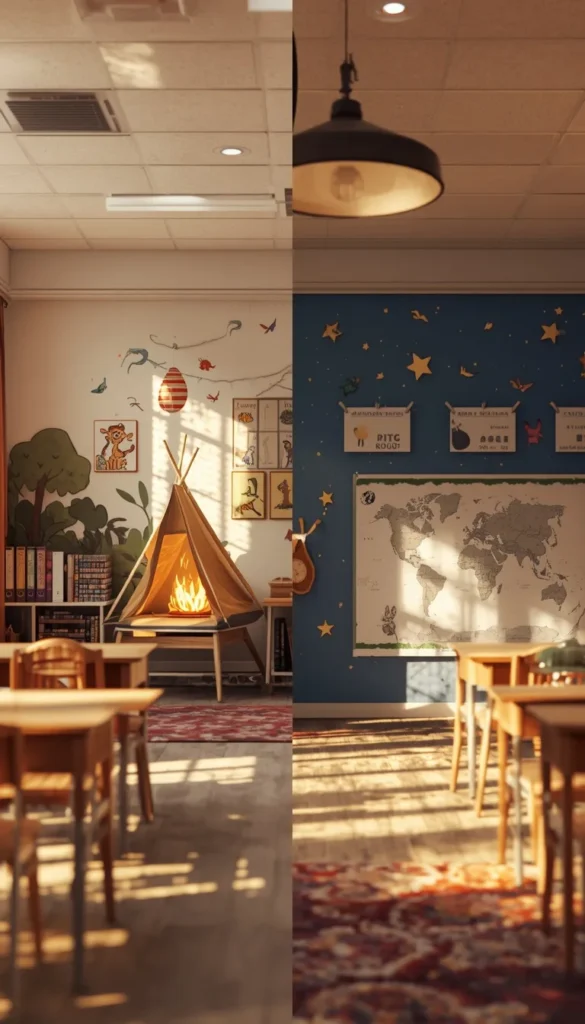
Picking a classroom theme sounds fun until you’re standing in the Target dollar section in July, grabbing anything that looks cute, and ending up with a room that feels like three different themes had a collision. I’ve seen it happen, and I’ve done it myself. The key is choosing a theme that actually fits your grade level, your teaching style, and your students’ developmental needs not just whatever is trending on teacher Instagram that summer.
Here’s a breakdown that I genuinely stand behind:
Preschool and Pre-K Jungle, Farm, and Under the Sea themes work beautifully here because they’re rich in vocabulary, color, and sensory interest. Young children connect deeply with animals and nature, so the theme becomes part of the learning itself rather than just background decoration.
Kindergarten Rainbow, Garden, and Space themes hit perfectly at this age. Kindergartners are developing their sense of wonder, and a well-executed Space theme with glow-in-the-dark stars on the ceiling and planet labels around the room turns every single lesson into an adventure.
Grades 1 through 3 Camping Classroom, Superhero, and Boho Neutral are all strong choices. The Boho Neutral trend has staying power because it photographs beautifully, feels calm for students, and works with literally any color scheme you already own.
Grades 4 and 5 This is where I’d push you toward Modern Minimal, Travel and Maps, or a STEM Lab aesthetic. Older students respond better to environments that feel mature and purposeful rather than overly cute. A Travel theme with vintage maps, world flags, and a “Where in the World?” display board bridges decor and curriculum in a way that genuinely enriches learning.
11. The Real Classroom Decor Shopping Guide
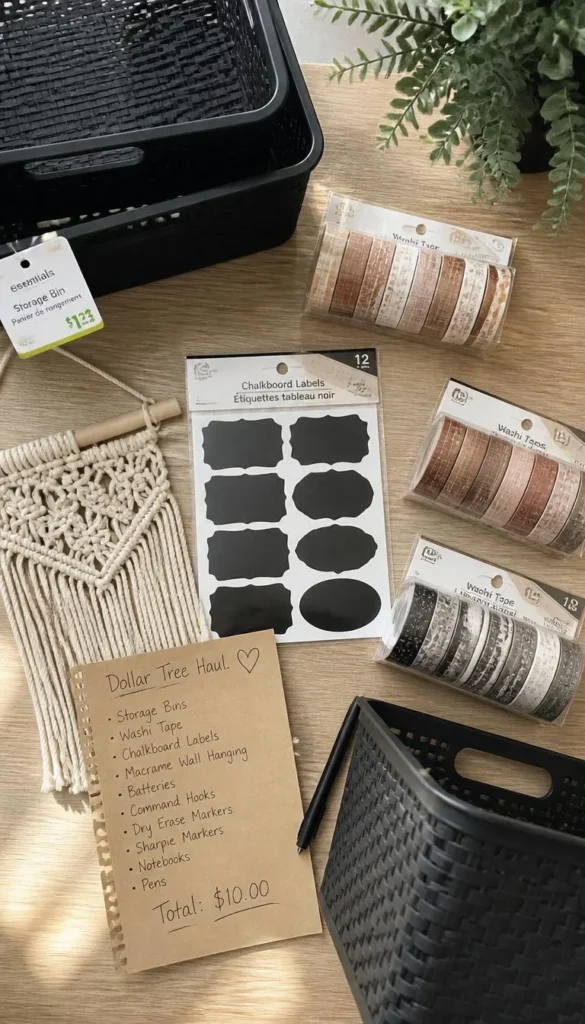
Let me save you from the Pinterest rabbit hole that ends with a $400 Target receipt and a cart full of things you absolutely did not need. I’ve been there. Most teachers have. The truth is that the best classroom decor finds are rarely in the places Instagram suggests, and the most expensive options are almost never the best ones.
Start with Dollar Tree every single time. Their seasonal sections are genuinely underrated you’ll find baskets, bins, frames, artificial greenery, and organizational supplies that look far more expensive than they are. A set of matching black bins from Dollar Tree plus a label maker creates a storage system that looks straight out of a classroom organization blog.
Moving on to Amazon, the sweet spot for classroom decor is anything under $15. Search specifically for:
- Washi tape sets in neutral or coordinating colors around $8 for a multipack
- Peel and stick chalkboard labels for bins and shelves under $10 for 100 pieces
- Macrame wall hangings for a boho corner accent $12 to $15 and they look stunning
Facebook Marketplace is genuinely one of the most underused teacher resources in existence. I’ve found bookshelves, rugs, lamps, and storage carts for next to nothing from teachers who were moving classrooms or retiring. Set up a saved search for “classroom” and “teacher supplies” in your area and check it weekly starting in May.
Are you decorating on a tight budget this year or finally ready to invest in a few quality pieces?
12. The Mid-Year Refresh Strategy
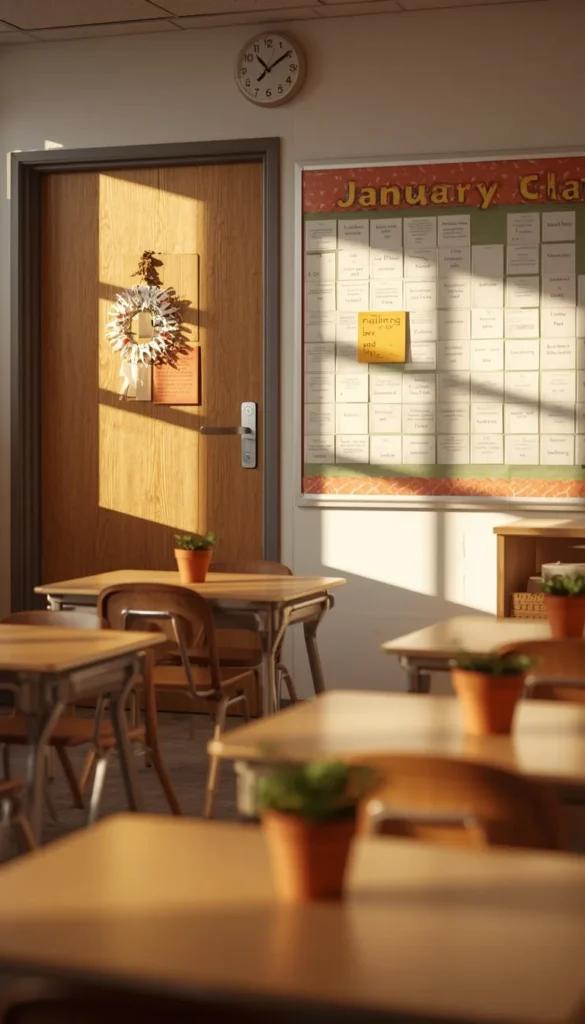
By January, most classrooms are looking a little tired. The decor that felt fresh and exciting in August has become invisible wallpaper to your students, and honestly, to you too. But a full classroom overhaul in the middle of a school year is not realistic you have lesson plans, grading, and approximately seventeen other things demanding your attention. That’s where the three-piece swap method comes in.
The idea is simple. You change exactly three things: your classroom door display, one bulletin board, and your table or desk centerpieces. That’s it. Those three elements are the highest-visibility spots in any classroom, and refreshing just those three makes the entire room feel new without requiring a weekend of work.
For the door, pull your fall or winter display and replace it with something tied to what you’re currently teaching. A reading unit on adventure? Make the door a passport to new worlds. A science unit on ecosystems? Turn the door into a habitat. Tie your decor to your curriculum and it stops being just decoration it becomes an extension of learning.
A quick trick I rely on every January is a student-driven bulletin board refresh. Give each student one index card and ask them to write or draw their biggest goal for the second half of the year. Pin them all up under a simple header. Fresh, meaningful, zero prep, and your students feel seen going into the new semester. That’s the kind of decor that actually does something.
Your 2 Minute Classroom Decor Decision Map
By Budget
Starter Budget ($10 – $30)
- Go with a Wonder Wall using Dollar Tree corkboard and washi tape
- Student-built gallery wall costs almost nothing and fills space fast
- Colored bins and a label maker handle zoning without touching the walls
- Printable word wall cards from Canva are free and look polished when laminated
Investment Level ($50 – $150+)
- Sensory corner with a soft rug, bean bags, and a tabletop lamp
- Lighting upgrade with a floor lamp and LED string lights
- Full themed classroom kit matched to your grade level
- High-quality faux greenery that looks real and lasts for years
By Teaching Style
The Hands-On, Student-Centered Teacher
- Prioritize the student-built gallery and Wonder Wall
- Leave blank wall space intentionally let kids fill it in Week 1
- Rotating bulletin boards keep energy high all year long
The Calm, Minimalist Educator
- Stick to a neutral three-color palette across every zone
- One statement plant or faux vine, clean bins, no clutter
- Boho neutral or modern minimal theme timeless and low maintenance
Frequently Asked Questions
How much should I realistically spend on classroom decor?
The average teacher spends $200 – $400 out of pocket. Start with Dollar Tree and free Canva printables you can build a beautiful room for under $150 if you shop smart.
Can I use peel-and-stick wallpaper in my classroom?
Yes, but only on smooth painted walls. On cinder block, it bubbles and peels within weeks. Test a small corner first before committing to a full wall.
What’s the best classroom theme for kindergarten?
Rainbow, Garden, and Space themes work best. They’re rich in color and wonder — exactly what five-year-olds respond to. Avoid overly complex themes that compete with your actual lessons.
How do I decorate without damaging school walls?
Command strips are your best friend — but always clean the wall with rubbing alcohol first. Mounting putty works for lightweight paper decor and costs almost nothing.
How early should I start setting up my classroom?
Ideally two to three weeks before the first day. This gives you time to problem-solve wall issues, rearrange furniture, and add student-built elements during Week 1 without rushing.
Conclusion
Your classroom doesn’t need to be perfect it needs to be yours. The teachers whose rooms I remember most weren’t the ones with the biggest budgets or the most Pinterest-worthy setups. They were the ones whose spaces felt alive, intentional, and warm the moment you walked in. That’s completely within your reach, whether you’re starting with $20 and a Dollar Tree run or finally investing in that sensory corner you’ve been planning since last spring.
