
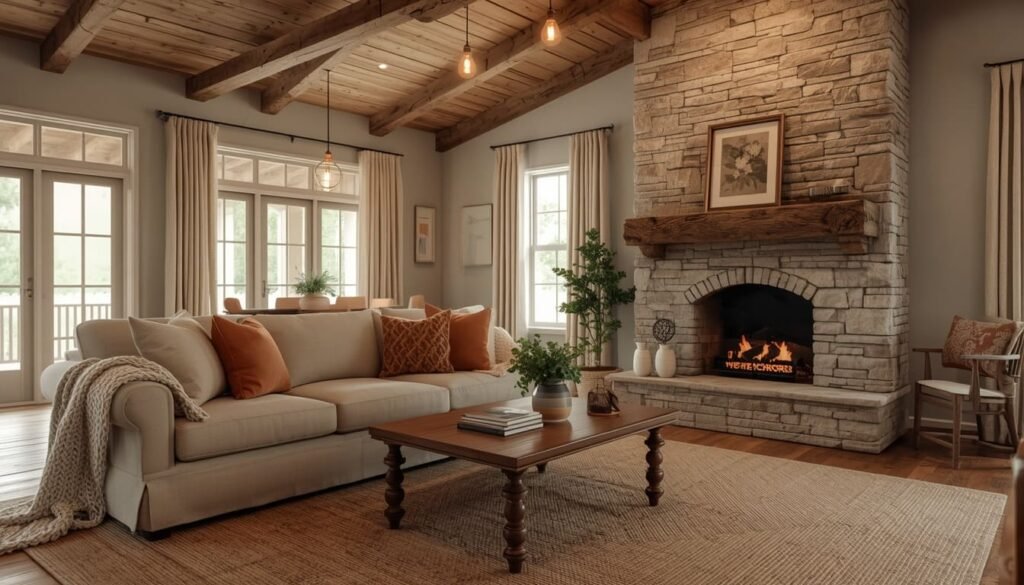
Something about the layered textures, soft neutrals, and worn wood just tells your body you’re home now. I’ve designed dozens of these spaces across the country, and the ones that truly work aren’t the most expensive. They’re the most intentional. In this guide, I’m sharing 13 of my favorite warm farmhouse living room ideas that bring real coziness into real homes whether you’re starting from scratch or just tired of a space that never quite feels right.
My Design Notes
A few years back, I was working with a young family in Franklin, Tennessee two kids, a golden retriever named Biscuit, and a brand-new builder-grade living room that felt about as warm as a waiting room. Everything was beige, flat, and forgettable. They had a $4,000 budget and a big dream.
My first move was a reclaimed wood beam installed across their plain white ceiling. That one change shifted the entire energy of the room. Then we layered a jute rug over a larger wool one, brought in a slipcovered linen sofa in warm oatmeal, and hung a vintage-style Edison chandelier that cast the most gorgeous amber glow at night.
Six weeks later, that room felt like it had been lived in and loved for a hundred years. The family cried. I almost did too.
That project confirmed what I always tell my clients farmhouse warmth is never about how much you spend. It’s about how thoughtfully you layer. Keep that in mind as we walk through every idea below.
Mastering the Art of Cozy Farmhouse Living Rooms That Feel Stunning and Timeless
1. Layer Warm Neutral Textiles the Right Way for That Cozy Farmhouse Feel
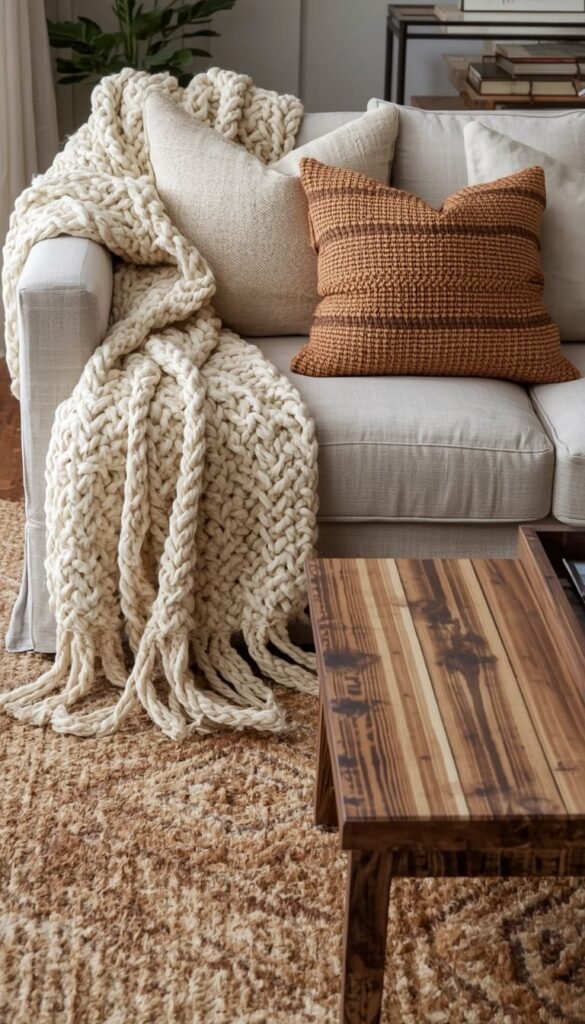
Textiles are the fastest way to add warmth to a farmhouse living room and the most misunderstood. I’ve seen people throw a chunky knit blanket on a sofa and call it done. That’s not layering. That’s decorating on autopilot.
Real layering works in three levels. Start with your foundation a large jute or sisal rug that grounds the entire seating area. Then build upward with your upholstery fabrics, choosing linen, cotton canvas, or soft boucle in warm oatmeal, cream, or toasty tan tones. Finally, add your top layer the throws, the pillows, the texture-on-texture moments that make someone want to sink in and stay.
One thing to watch out for is going too matchy. If your rug, sofa, and pillows are all the exact same shade of beige, the room reads flat instead of cozy. Pull in one warm contrast a rust-colored throw, a faded terracotta pillow, or even a single dark wood tray on the coffee table and suddenly everything clicks.
A quick trick I’ve learned over the years: mix at least three different textures in your textile choices. Think woven, knitted, and smooth all living together in the same seating area. That contrast is what gives a farmhouse living room its layered, collected-over-time feeling.
2. A Stone or Brick Fireplace Is Still the Heart of Every Warm Farmhouse Living Room
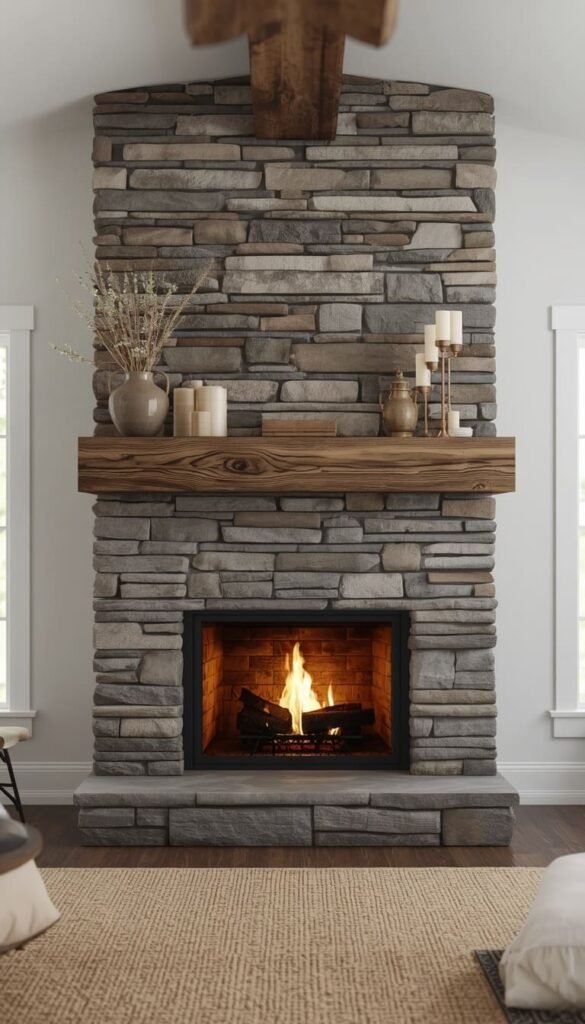
Nothing anchors a farmhouse living room quite like a fireplace. It’s not just a design feature it’s the emotional center of the entire space. Every sofa, chair, and rug should feel like it’s orienting itself toward that hearth.
If you already have a fireplace, the most impactful upgrade you can make is to the surround. Stacked fieldstone gives you that rugged, old-farmhouse energy. Whitewashed brick softens the look for a more modern farmhouse feel. A simple wood beam mantel above a plain painted fireplace can completely transform a builder-grade box into something that looks genuinely custom and considered.
Don’t have a fireplace? An electric insert set inside a shiplap-clad built-in surround gives you 80% of the visual impact at a fraction of the cost. I’ve used this approach in apartments and new builds alike — and honestly, in photos you cannot tell the difference.
3. Reclaimed Wood Beams That Add Instant Rustic Warmth Without a Full Renovation
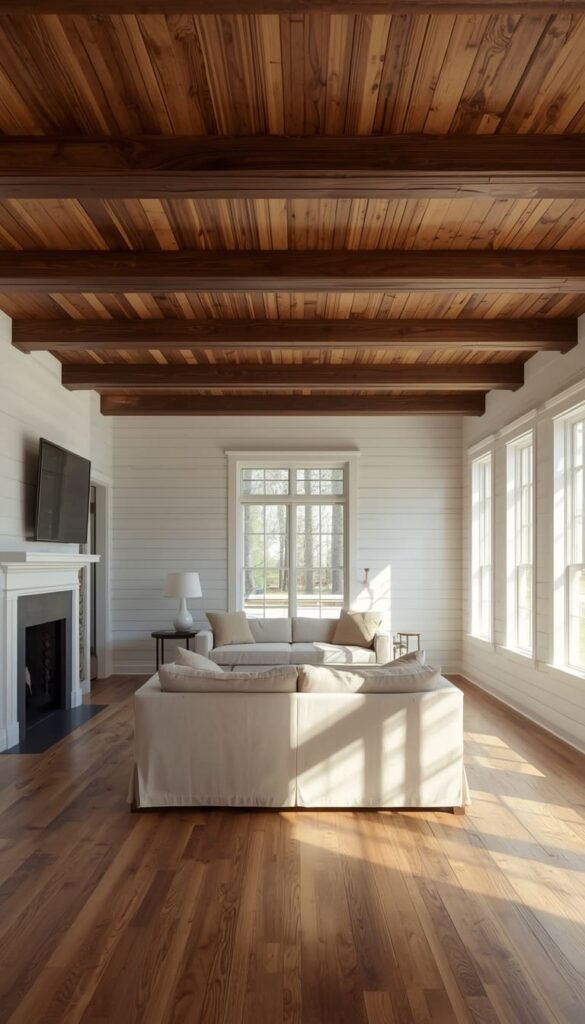
Reclaimed wood beams are probably the single most effective architectural move in farmhouse interior design. They pull your eye upward, add visual weight to the ceiling, and bring that unmistakable sense of age and history that no paint color can replicate on its own.
The good news is you don’t need to gut your ceiling to get this look. Faux wood beams the high-quality polyurethane kind have come a long way. When stained in a warm walnut or weathered gray tone, they are nearly indistinguishable from the real thing at normal ceiling height. I’ve installed both in client homes, and the faux versions have saved thousands of dollars without sacrificing a single ounce of character.
Here’s what makes beams work beautifully in a warm farmhouse living room:
- Keep beam spacing proportional to your ceiling height closer together in lower ceilings, wider apart in vaulted spaces
- Stain them two to three shades darker than your floors so they read as intentional, not accidental
- Let them run the full length of the room rather than stopping mid-ceiling for a cleaner, more architectural finish
4. How to Style a Farmhouse Mantel That Feels Collected Not Staged
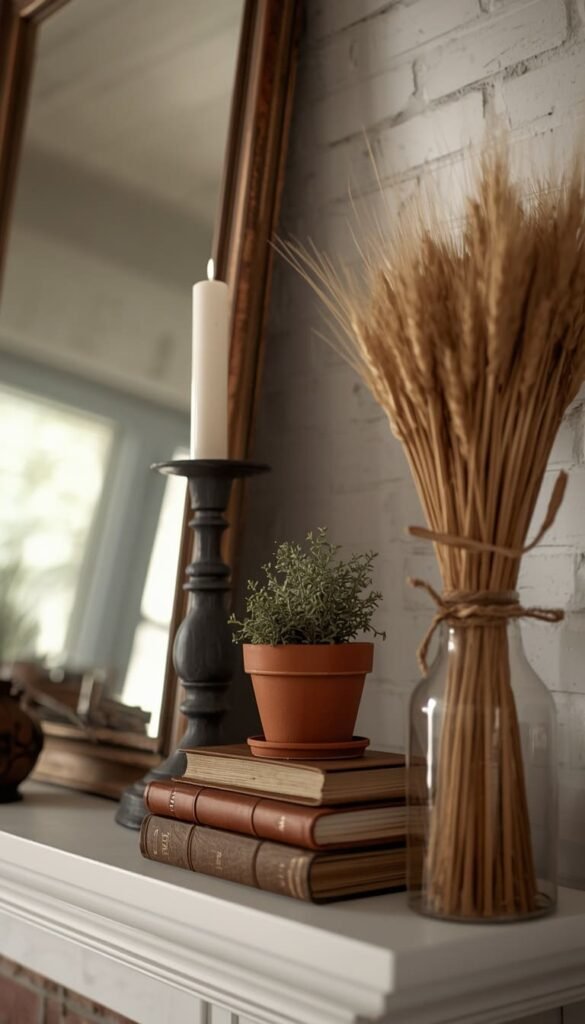
A farmhouse mantel should look like it gathered itself over years of living not like you styled it in an afternoon for a photo shoot. The difference between the two is subtle but immediately felt the moment you walk into the room.
Start with one anchor piece. A large vintage mirror, an oversized clock, or a simple plank of reclaimed wood leaned casually against the wall does the job beautifully. From there, build out in odd numbers three items, five items, never four. Mix heights aggressively. A tall candlestick next to a short stack of books next to a medium-height ceramic vase creates natural visual rhythm that feels genuinely lived-in.
Greenery always helps. A small potted herb, a sprig of dried eucalyptus, or even a bundle of wheat tied with twine brings organic life to the mantel without screaming “I tried too hard.” That one natural element is often the difference between a mantel that looks styled and one that looks real.
Top 6 warm farmhouse living room ideas:
| Idea | Estimated Price | Maintenance |
|---|---|---|
| Layer Warm Neutral Textiles | $150 to $400 | Low |
| Stone or Brick Fireplace Surround | $800 to $3,500 | Low |
| Reclaimed Wood Beams (Faux) | $300 to $900 | Low |
| Farmhouse Coffee Table | $200 to $800 | Medium |
| Warm Layered Lighting | $150 to $600 | Low |
| Neutral Slipcovered Sofa | $600 to $2,000 | Medium |
5. The Right Farmhouse Coffee Table Can Anchor Your Entire Cozy Living Room
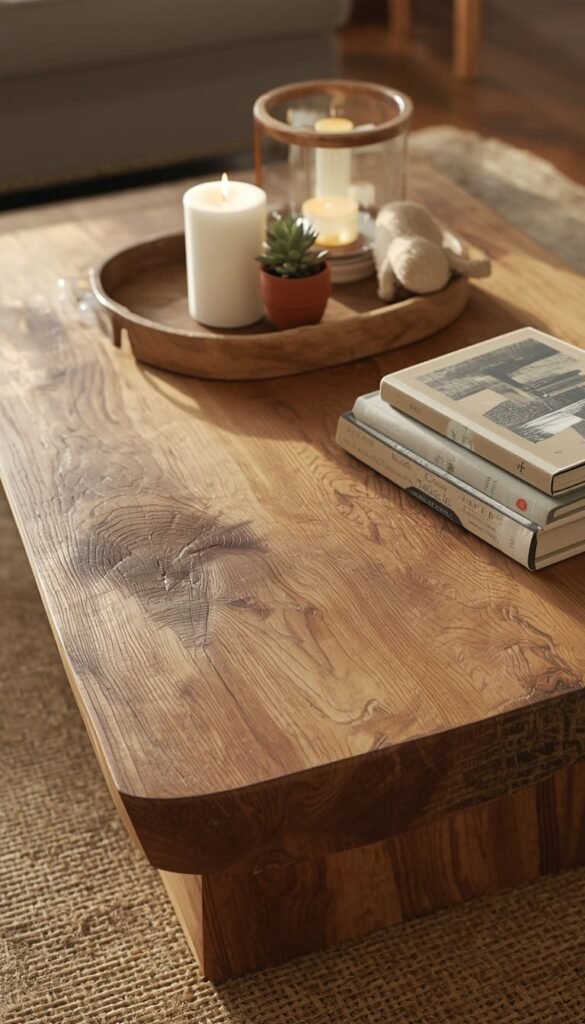
The coffee table is one of those pieces that either pulls a farmhouse living room together or quietly works against everything else you’ve done. I always tell clients don’t rush this choice. Get it wrong and even a beautifully styled room feels off-balance.
For a warm farmhouse living room, your best options are a chunky solid wood table with visible grain, a vintage trunk with worn leather hardware, or a simple iron-and-reclaimed-wood combination. Each one brings something different. The trunk adds storage and history. The solid wood slab feels grounded and natural. The iron-and-wood combo bridges rustic and modern farmhouse beautifully.
A quick trick I rely on constantly: style your coffee table in three zones. One larger anchor item like a wooden tray or a stack of oversized books. One organic element like a small succulent or a bowl of pinecones. And one personal item a candle you actually burn, a coaster set you actually use. That lived-in quality is exactly what separates a farmhouse room from a furniture showroom.
One thing to watch out for is going too large. A coffee table that crowds your seating area makes the whole room feel smaller and harder to move through, which kills that easy, relaxed farmhouse vibe entirely.
6. Warm Lighting Tricks That Make Any Farmhouse Living Room Feel Instantly Inviting
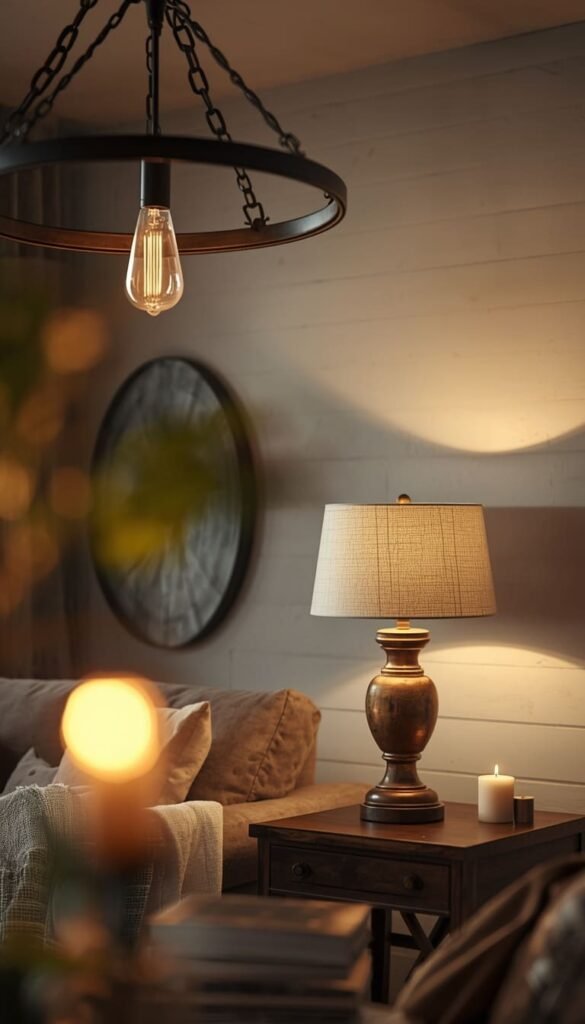
Lighting might be the most underestimated tool in farmhouse interior design. I’ve walked into rooms with perfect furniture, beautiful rugs, and stunning wood beams that still felt cold and unwelcoming. Nine times out of ten, the culprit is overhead lighting that’s too bright, too blue, or too harsh.
Warm farmhouse living rooms run on layered light. You need at least three sources working together:
- A central fixture a wagon wheel chandelier, an iron lantern pendant, or a vintage-style drum shade that sets the room’s personality
- Table lamps with warm-toned bulbs (look for 2700K on the packaging) placed at seated eye level on side tables or consoles
- Accent lighting like wall sconces, candles, or Edison string lights that add that golden ambient glow in the evening hours
The fixture itself matters too. Wrought iron, aged brass, and distressed bronze all read as authentically farmhouse. Avoid anything chrome or overly polished those finishes fight against the warm, organic materials that make this style work.
Which farmhouse element are you adding to your living room first cozy textiles or a statement light fixture?
7. Shiplap Wainscoting or Board and Batten — Which Wall Finish Suits Your Farmhouse Family Room
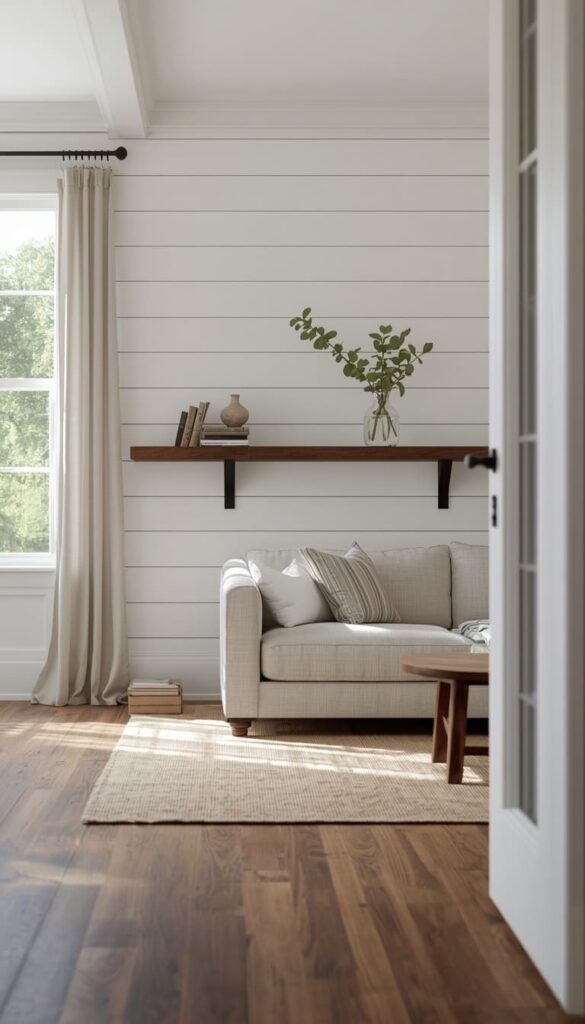
Wall treatments are where farmhouse living rooms really earn their character. And the three most common options shiplap, wainscoting, and board and batten each create a distinctly different feeling in the room, so the choice actually matters.
Shiplap is the most casual of the three. It reads immediately as farmhouse and works beautifully behind a sofa wall, around a fireplace, or as a full accent wall. Paint it white for modern farmhouse, leave it natural for rustic farmhouse, or go dark navy or forest green for a moody cottage farmhouse vibe that feels incredibly current right now.
Wainscoting leans more traditional and refined. It suits older homes with original architectural details and works especially well in formal farmhouse family rooms where you want warmth without sacrificing a sense of polish.
Board and batten sits right in the middle. It’s cleaner than shiplap, more casual than wainscoting, and works across nearly every farmhouse substyle. For most of my clients who are unsure which direction to go, board and batten is almost always my recommendation. It’s forgiving, versatile, and genuinely timeless.
8. Neutral Farmhouse Sofas and Slipcovers That Balance Style With Real Life Mess
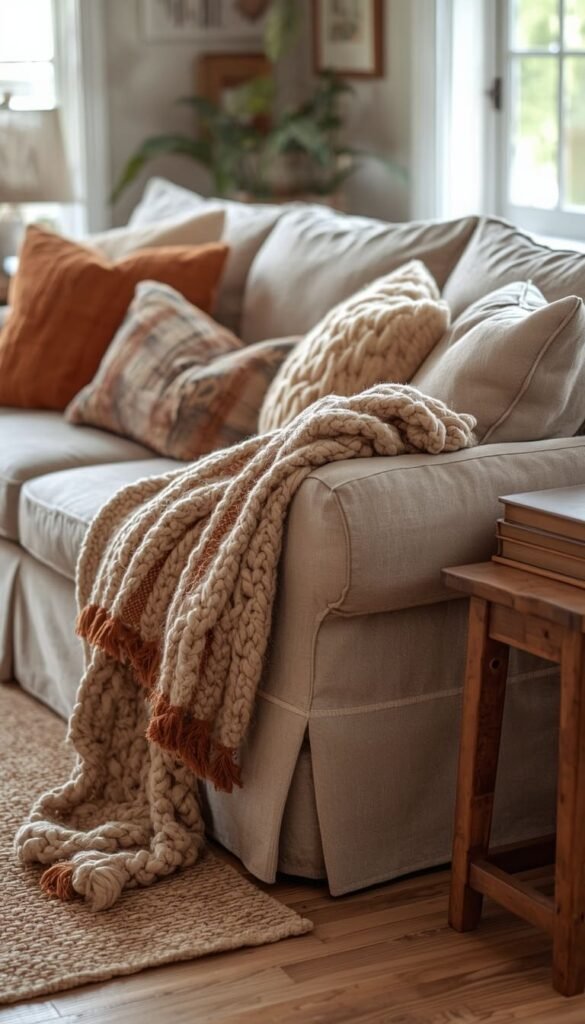
Let’s be honest about something. A white linen slipcovered sofa looks absolutely stunning in every farmhouse living room photo you’ve ever saved. It also shows every crumb, every paw print, and every coffee ring with brutal clarity.
That doesn’t mean you can’t have it. It means you need to go in with your eyes open.
The beauty of a slipcovered sofa is exactly that the slipcover comes off and goes in the wash. For families with kids or pets, this is genuinely one of the most practical investments in the room. I specify them constantly for clients who want the look without the anxiety. Choose a pre-washed linen or a cotton-canvas blend, and the fabric will actually get softer and better looking with every wash cycle.
If fully white feels too risky, warm oatmeal and natural linen tones give you the same soft farmhouse aesthetic with significantly more forgiveness. Layer a chunky knit throw across one arm and a few textured pillows on the seat cushions, and that sofa becomes the coziest piece in the entire room.
9. Vintage and Antique Accents That Give Your Country Living Room Real Character
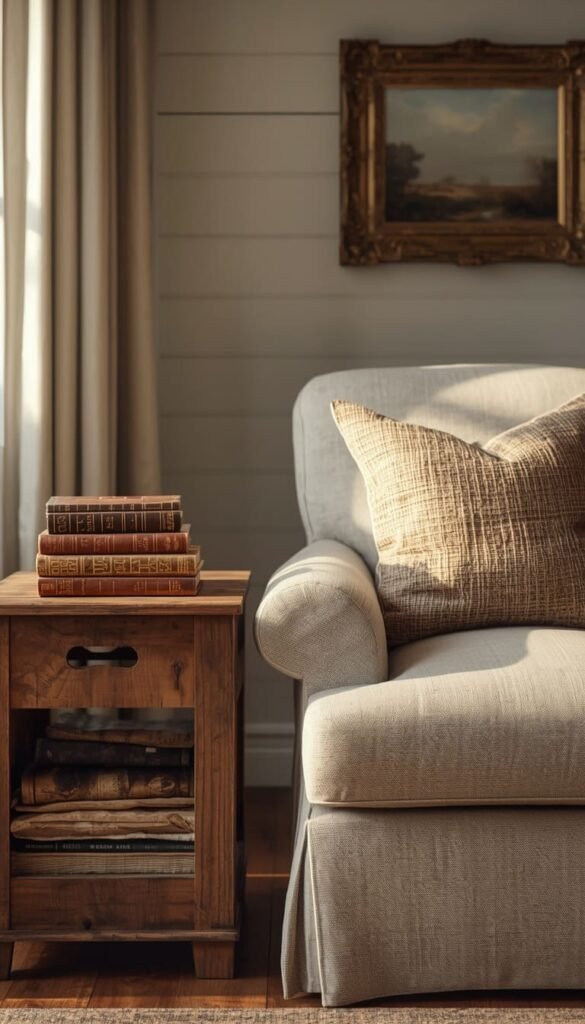
There is a specific quality that only vintage and antique pieces bring to a room and no amount of new furniture can replicate it. It’s that sense of history. Of things that have lived a life before landing in your home. That feeling is the entire soul of country living room decor.
You don’t need to spend a fortune at high-end antique dealers either. Some of my most beloved client finds came from estate sales, Facebook Marketplace, and small-town flea markets in places like Lewisburg, Tennessee and Brenham, Texas. A worn wooden crate used as a side table. A stack of vintage leather-bound books on the coffee table. An old grain sack pillow cover that costs twelve dollars and looks like a million.
The key is intentional placement. Vintage pieces work best when they’re mixed with newer items rather than grouped together. One antique in a modern setting becomes a focal point. Ten antiques grouped together becomes a thrift store. Spread them out, let them breathe, and each one gets the attention it deserves.
A quick rule I follow: every room needs at least one piece with a story. Something you can point to and actually explain where it came from. That personal history is what transforms a decorated room into a home.
10. Small Farmhouse Living Room Ideas That Feel Big Warm and Never Cluttered
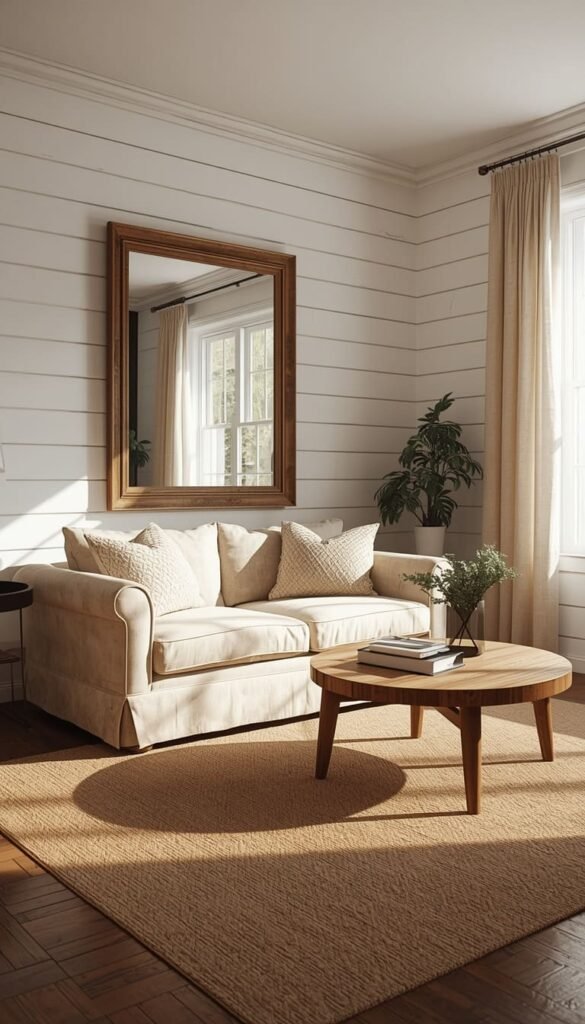
Small farmhouse living rooms are genuinely some of my favorite spaces to design. The constraints force creativity, and when you get it right, a compact room can feel more cozy and intentional than a sprawling open-plan space ever could.
Scale is everything here. Oversized furniture is the fastest way to make a small room feel suffocating. Instead, choose a loveseat or a apartment-sized sofa over a full sectional. A round coffee table instead of a large rectangular one. Armchairs with exposed legs rather than fully upholstered club chairs that sit heavy on the floor. These swaps alone can make a room feel noticeably more open.
Here’s what actually works in small farmhouse living rooms:
- Use a large area rug that extends under all the furniture legs this visually expands the floor plan and makes the room feel more deliberate
- Mount your curtain rods high and wide, close to the ceiling and well beyond the window frame, to draw the eye upward and make walls feel taller
- Choose a light warm neutral on the walls something like Sherwin-Williams Accessible Beige or Benjamin Moore White Dove rather than stark white, which can feel cold in a small space
Mirrors are your best friend in a compact farmhouse room. A large vintage-framed mirror above the sofa or leaned against the wall reflects light, adds depth, and brings that antique character the style is known for all at the same time.
11. How to Build a Cozy Modern Farmhouse Living Room on a Realistic Budget
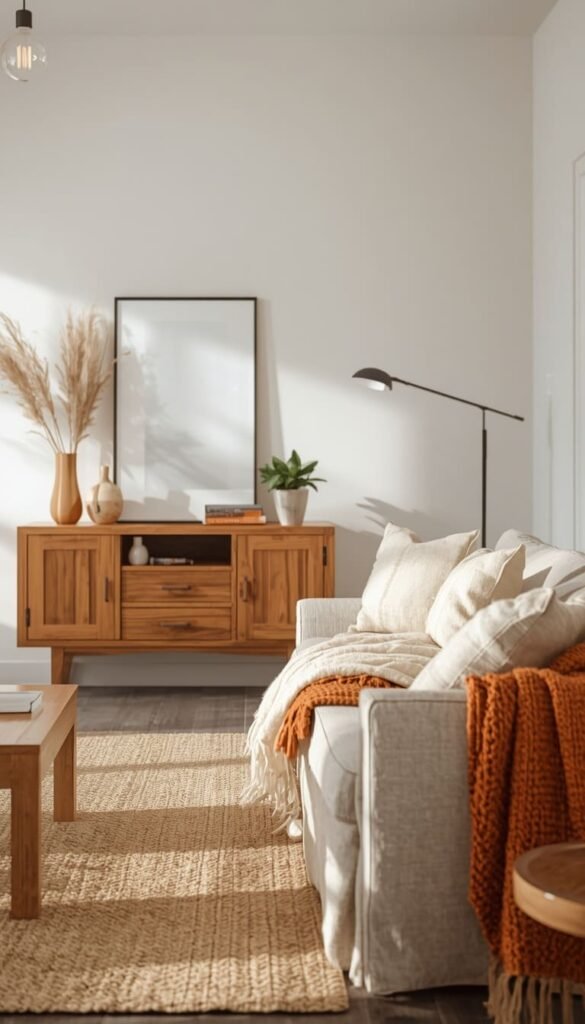
One of the biggest myths in farmhouse interior design is that getting the look right requires a serious budget. I’ve designed farmhouse living rooms for $2,500 and for $25,000. The bones of what makes them work are almost identical it’s just the price tags on individual pieces that differ.
The smartest budget approach I know starts with one splurge and everything else on a strict spend. Pick the single item that will have the most visual impact usually the sofa, the light fixture, or the area rug and put real money there. Then build the rest of the room around it using a mix of affordable finds and secondhand scores.
Some of my favorite budget-friendly farmhouse sources right now:
- IKEA’s HEMNES and KALLAX lines style beautifully with farmhouse accessories and cost a fraction of comparable pieces elsewhere
- Amazon’s stone-look electric fireplace inserts start around $150 and are genuinely convincing inside a simple shiplap surround
- Target’s Threshold and Studio McGee collections hit that modern farmhouse sweet spot consistently and go on sale several times a year
The one area I’d never cut corners is the rug. A thin, cheap rug makes every piece of furniture sitting on it look cheaper by association. Save up for a quality jute, wool, or vintage-style rug and let it carry the room. Everything else can be budget-friendly when the foundation is solid.
12. The Cottage Farmhouse Living Room Look — Soft Romantic and Surprisingly Easy to Pull Off
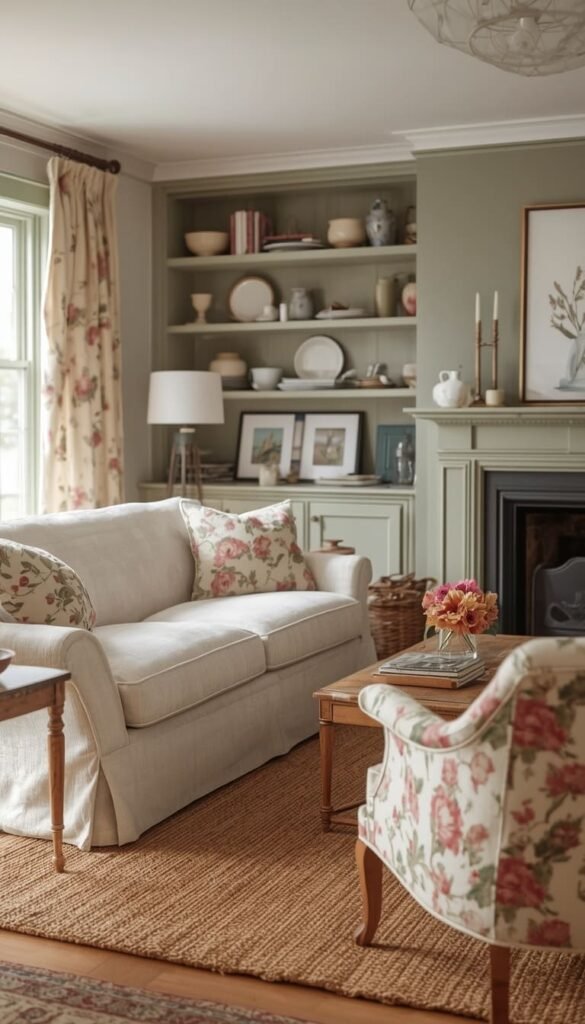
The cottage farmhouse style is having a serious moment right now and honestly, it deserves every bit of the attention. It takes the warmth and rusticity of traditional farmhouse and softens it with floral patterns, painted furniture, and a slightly romantic, storybook quality that feels incredibly personal and lived-in.
Think printed linen curtains with small florals. A slipcovered sofa in washed white paired with mismatched vintage armchairs. Open shelving styled with collected china, old books, and small botanical prints. A fireplace painted in a soft sage green or dusty rose rather than the expected white or black.
What I love most about this substyle is how forgiving it is. Cottage farmhouse rooms are supposed to look a little imperfect. That slightly mismatched quality a chair that doesn’t quite go, a rug that’s a shade off actually adds to the charm rather than working against it. It’s the most relaxed version of farmhouse decorating there is.
One thing to watch out for is tipping too far into fussy territory. The moment a cottage farmhouse room starts to feel precious or overly curated, it loses its magic. Keep at least one rough, unfinished element in the mix a weathered wood piece, a natural fiber rug, an undressed window — to keep things grounded and genuinely warm.
Is your living room style leaning more rustic farmhouse or modern farmhouse right now?
13. Barn Doors Sliding Hardware and Statement Entries That Complete Your Rustic Farmhouse Decor
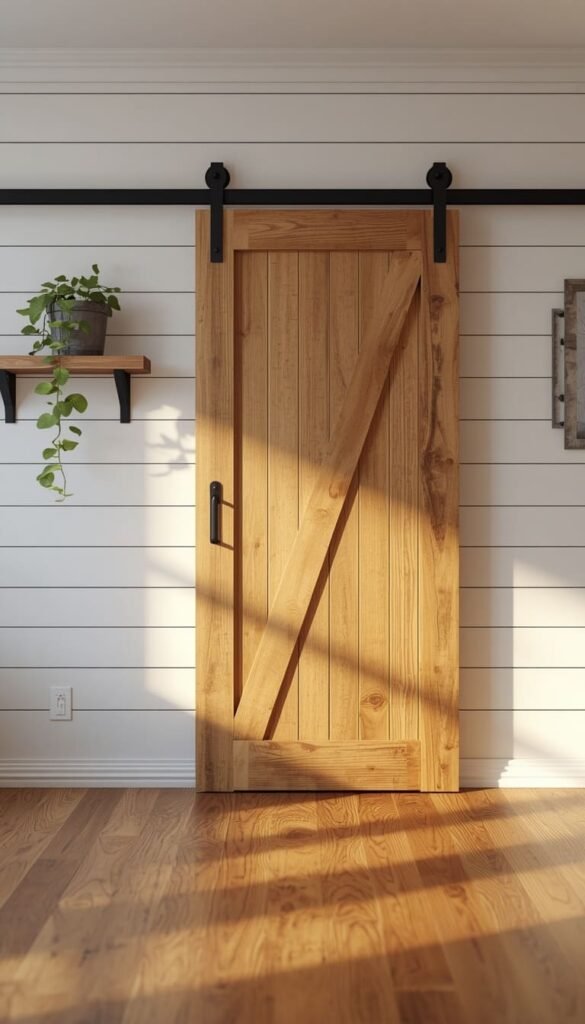
Barn doors are one of those design elements that started as a trend and quietly became a farmhouse staple because they genuinely work. They add texture, visual weight, and that unmistakable rustic character to a living room without requiring any structural changes to your home. For small farmhouse living rooms especially, they’re a space-saving dream since they slide rather than swing open.
The hardware matters just as much as the door itself. Matte black is the most popular finish right now and pairs beautifully with white shiplap walls and warm wood floors. Aged bronze reads a little softer and suits cottage farmhouse and vintage farmhouse styles particularly well. Whatever you choose, make sure the hardware scale matches your door size undersized hardware on a wide barn door looks unfinished and slightly off.
Here’s something most people don’t consider when planning a barn door installation:
- The wall space beside your door opening needs to be at least as wide as the door itself, since the door slides along that wall when open
- For living rooms that flow into a hallway or home office, a double barn door creates a dramatic statement entry that photographs beautifully and functions even better
- Solid wood doors with natural grain visible through a light stain bring the most warmth — painted doors look clean but lose some of that raw, tactile farmhouse quality that makes the style so appealing
A quick trick I’ve used in several projects: hang a single oversized barn door as a purely decorative element on a blank wall, styled with a small wall-mounted shelf and a few hanging plants beside it. No opening behind it, no functional purpose just pure farmhouse character that anchors the entire room. Clients are always surprised by how much personality one door can add to a space that had nothing going for it before.
Your 30-Second Farmhouse Living Room Decision Map
By Budget
Starter Budget ($500 to $2,000)
- Begin with textiles — rugs, throws, and pillow covers give the biggest visual return for the least spend
- Add a faux wood beam or two before investing in real architectural work
- Shop Target Studio McGee, IKEA, and Facebook Marketplace for furniture bones
- One quality jute rug anchors everything — prioritize this above all else
Investment Budget ($2,000 to $10,000+)
- Start with a real stone or brick fireplace surround — it sets the entire room’s tone
- Invest in a quality slipcovered sofa in natural linen or cotton canvas
- Add custom board and batten or shiplap on your primary accent wall
- Splurge on a genuine antique or vintage statement piece with real history
By Lifestyle
Busy Families and Pet Owners
- Washable slipcovers are non-negotiable — skip any fabric you cannot launder
- Choose darker wood tones on coffee tables to hide scratches and everyday wear
- Stick to medium-toned rugs in warm beige or tan — they hide dirt between cleanings
- Electric fireplace inserts over real wood-burning for safety and easy maintenance
Empty Nesters and Style-First Decorators
- Lean into vintage and antique accents without worrying about durability
- White linen sofas and light natural rugs are finally realistic choices
- Layer delicate textures like mohair, velvet, and fine wool without hesitation
- Invest in real reclaimed wood beams and authentic stone surrounds for lasting value
Frequently Asked Questions
What makes a farmhouse living room feel warm instead of just rustic?
Warmth comes from layering textiles, lighting, and wood tones working together. Rustic is a look. Warm is a feeling you build deliberately.
How much does it cost to decorate a farmhouse living room from scratch?
The average cost runs between $2,500 and $8,000 for a full room. A budget refresh focusing on textiles, lighting, and one accent wall can come in well under $1,500.
Is modern farmhouse style still popular in 2025?
Yes, absolutely but it has evolved. Homeowners are now mixing farmhouse with cottage, coastal, and even minimal styles to keep it feeling fresh rather than formulaic.
What colors work best for a warm farmhouse living room?
Warm whites, oatmeal, soft beige, and muted sage are the strongest choices. Avoid cool grays they fight against the natural wood tones that make farmhouse style work.
Can I get the farmhouse look in a small living room?
Yes, but scale matters. Choose apartment-sized furniture, mount curtains high, use a large area rug, and add one vintage mirror to open the space visually.
Conclusion
Your warm farmhouse living room is closer than you think. You don’t need a full renovation, a big budget, or a designer on speed dial you just need one good starting point. Pull out that throw blanket you’ve been storing, swap one harsh overhead bulb for something warmer, or finally hang that vintage mirror you bought six months ago. Small moves in the right direction compound faster than you’d expect, and before long your living room starts feeling like the space you always pictured when you imagined coming home.
So tell me what’s the one change you’re making first? Drop it in the comments below, I’d genuinely love to know where you’re starting
