
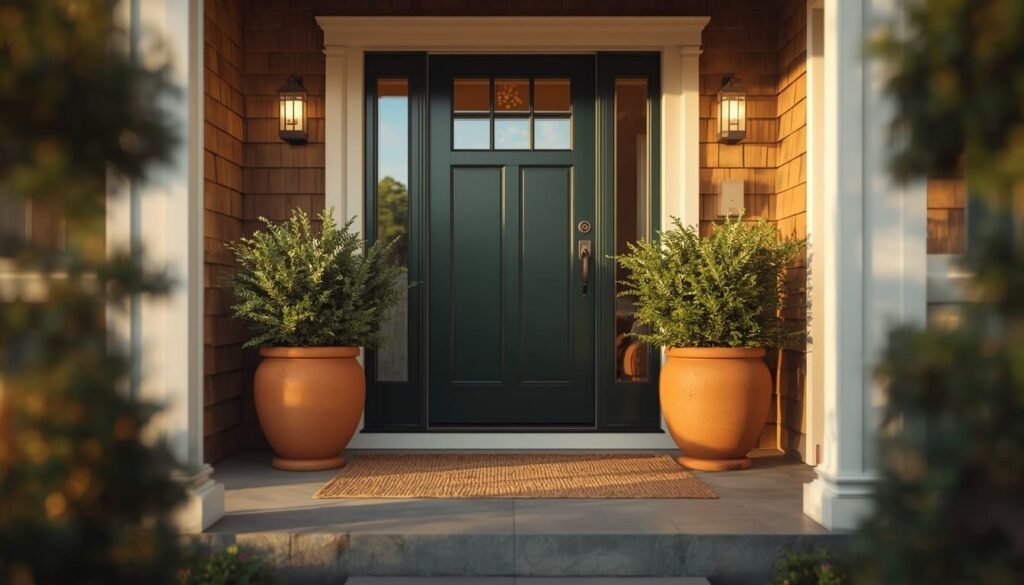
Your front entry is the first thing every guest, every neighbor, and every passerby sees and it takes less than seven seconds for them to form an opinion. I’ve worked on hundreds of homes across the US, and I can tell you with complete confidence that a neglected entryway will undercut even the most beautifully decorated interior. The good news? You don’t need a major renovation or a designer budget to make a real impact. Whether you’re working with a grand covered porch or a tiny brick stoop, the right outdoor entryway decor ideas can completely change how your home feels from the street. These 12 ideas are practical, stylish, and most importantly actually doable.
My Design Notes
A few years ago, I was called in to help a client in Nashville’s 12 South neighborhood a woman who absolutely loved her 1940s brick bungalow but was genuinely embarrassed by her front entry. Her stoop was barely six feet wide, and every time her neighbors gathered on their sprawling porches, she felt like her home was sending the wrong message. When I walked up to assess the space, I immediately saw the problem. It wasn’t the size. It was the clutter of mismatched, small-scale pieces that made everything feel chaotic and cheap. We cleared it all out and started fresh with just four intentional choices one oversized terracotta planter, a new wall sconce, a jute rug, and a simple eucalyptus wreath on the door. Total spend was $287. Two weeks later, she texted me saying a neighbor had knocked on her door to ask who decorated it. That project taught me something I now share with every client: a small entry doesn’t need more stuff. It needs the right stuff, placed with purpose.
Stunning Front Entrance Design Secrets Every American Homeowner Should Know
1. Paint Your Front Door a Color That Means Something
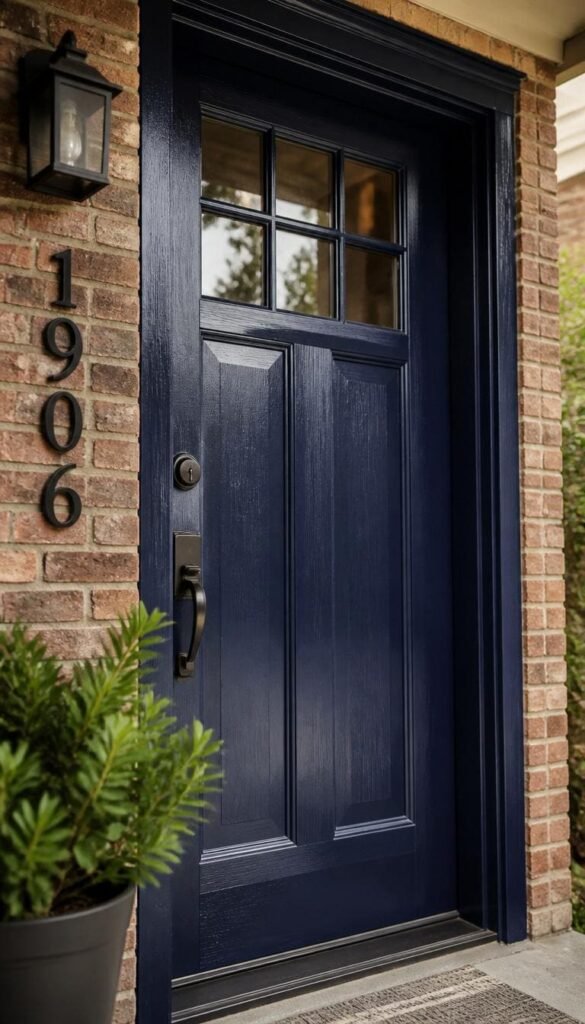
Your front door is basically the face of your home and a fresh coat of paint is the single highest-return investment you can make in outdoor entryway decor. I always tell my clients: don’t pick a color because it’s trending. Pick one because it fits your home’s bones.
A Craftsman bungalow loves deep, earthy tones think forest green, navy, or a warm burgundy. A modern home? Matte black or a bold terracotta will stop people in their tracks. Colonial-style homes carry classic reds and glossy black beautifully. The architecture tells you what it wants; you just have to listen.
One thing to watch out for is choosing a color that clashes with your brick or stone facade. I’ve seen gorgeous doors completely fight with a warm-toned brick exterior because someone fell in love with a cool-gray color online. Always test a sample in natural light before committing.
Budget note: a quart of exterior paint runs $25 to $45 and covers most standard doors with two coats. Brands I reach for again and again are Sherwin-Williams Emerald Exterior and Benjamin Moore Aura both hold up beautifully through harsh winters and humid Southern summers.
2. Layer Your Outdoor Rug Like a Pro
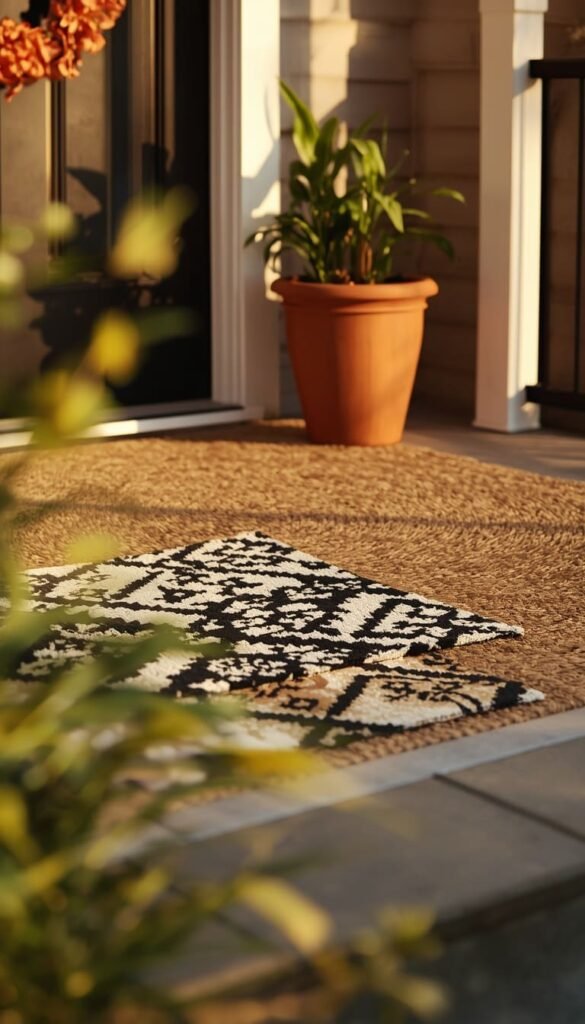
Most people drop a basic coir doormat in front of their door and call it a day. I get it it’s functional. But if you want your entry to feel intentional and styled, layering two rugs is the move that changes everything.
Start with a larger flat-weave base rug in a neutral jute, sisal, or a simple geometric print works perfectly. Then layer a smaller, bolder patterned mat on top at an angle. The contrast in texture and scale creates that “did they hire a designer?” effect without actually hiring one.
A quick trick I’ve learned from years of porch projects: always size up on the base rug. Most homeowners go too small. Your rug should feel generous, not like it’s apologizing for being there.
One honest reality check here light-colored outdoor rugs photograph beautifully but collect dirt, pollen, and rain stains faster than you’d think. If you’re in a high-traffic area or have kids and pets, go for a darker base or a pattern that hides grime between cleanings. You’ll thank yourself by October.
3. Go Big With Planters — Scale Is Everything
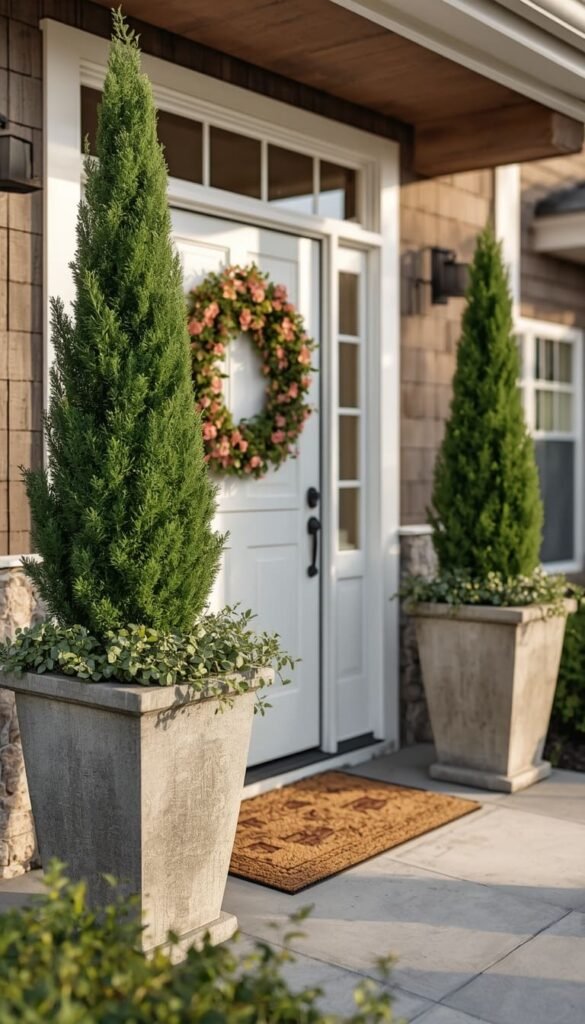
Here is something I wish more people understood before they go shopping: two small planters flanking a front door almost always look underwhelming. The space swallows them. One or two large, confident planters will do more for your curb appeal than five little ones scattered around.
Scale is the secret. A door that’s 8 feet tall needs planters that are at least 18 to 24 inches in height. Anything shorter and the proportions just feel off, even if you can’t quite put your finger on why.
For budget options, consider:
- Concrete or faux-concrete planters from HomeGoods or TJ Maxx ($30 to $60)
- Terracotta pots from a local nursery, which age beautifully over time ($25 to $50)
- Fiberglass planters that mimic stone or ceramic at a fraction of the weight and cost ($50 to $120)
If you want the Pottery Barn look without the Pottery Barn price, fiberglass is genuinely your best friend. They’re lightweight, frost-resistant, and virtually indistinguishable from the real thing once planted up.
4. Build a Lighting Plan, Not Just a Fixture
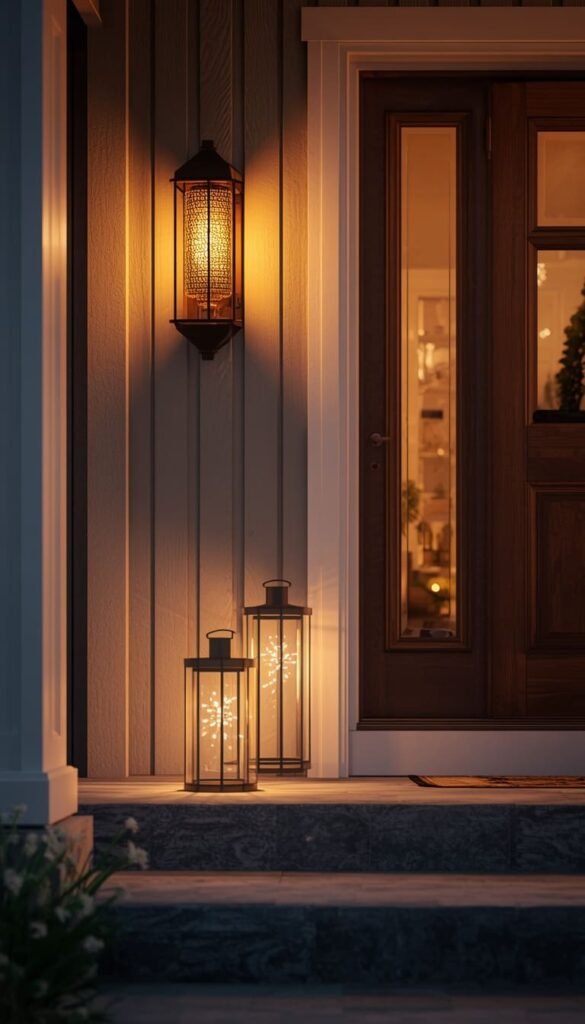
Swapping out a builder-grade light fixture is one of the most underrated upgrades in front porch decorating. But what separates a good entry from a truly welcoming one is thinking about lighting in layers, not just installing one wall sconce and moving on.
The way I approach it with clients is simple. You need three things working together:
- Ambient light — your primary fixture, either a pendant or wall-mounted sconce flanking the door
- Accent light — path lights, uplighting on a statement plant, or a lit house number that glows at night
- Warm glow — lanterns with flameless candles on steps or beside a bench, purely for atmosphere
That third layer is what most people skip. And it’s the one that makes guests feel genuinely welcomed when they pull up after dark. A pair of aged-brass lanterns with flickering LED candles costs about $40 total and adds a warmth that no overhead fixture can replicate on its own.
One thing to watch out for: cool white bulbs in outdoor fixtures. They make even the most beautiful entry feel cold and clinical at night. Always go for warm white LEDs 2700K is the sweet spot and your entry will feel like a hug from the street.
Quick Reference Summary Table:
| Idea | Estimated Price | Maintenance |
|---|---|---|
| Paint Your Front Door | $25 to $45 per quart | Low |
| Oversized Planters | $30 to $120 per planter | Medium |
| Layered Outdoor Rug | $40 to $120 for both rugs | Low |
| Build a Lighting Plan | $40 to $150 total setup | Low |
| Statement Seating Piece | $145 to $400 per piece | Medium |
| Budget Refresh Formula | $75 to $115 total spend | Low |
5. Use a Seasonal Wreath System, Not a One-Off
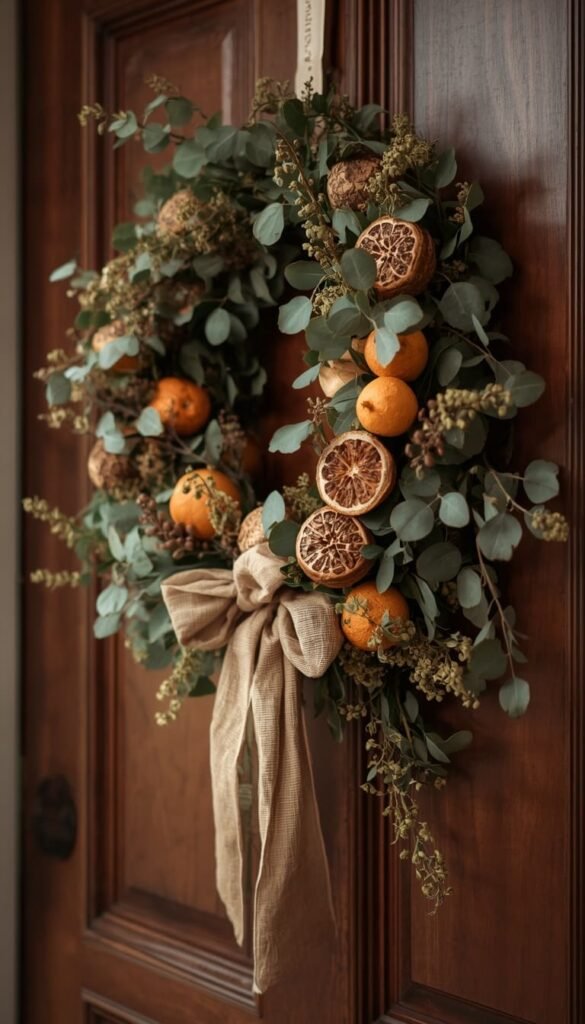
Most homeowners buy a wreath for Christmas and leave it up until it starts shedding. I’ve seen it on nearly every block in every city I’ve worked in. The fix is simple build a small wreath rotation that works with what you already own rather than buying something new every season.
My system is this: invest in one high-quality faux greenery base wreath in eucalyptus or boxwood something neutral and full. Then swap out just the accent pieces by season. A few dried citrus slices and cinnamon sticks for fall. Tiny ornaments and a velvet ribbon for winter. Fresh tulips or a simple linen bow for spring. You’re spending $15 to $20 per season on accents instead of $60 to $100 on a whole new wreath each time.
A quick trick here use a wreath hanger that hooks over the top of your door rather than a nail. It takes thirty seconds to swap and leaves zero damage to your door. Worth every penny.
6. Match Your Seating to Your Actual Porch Size
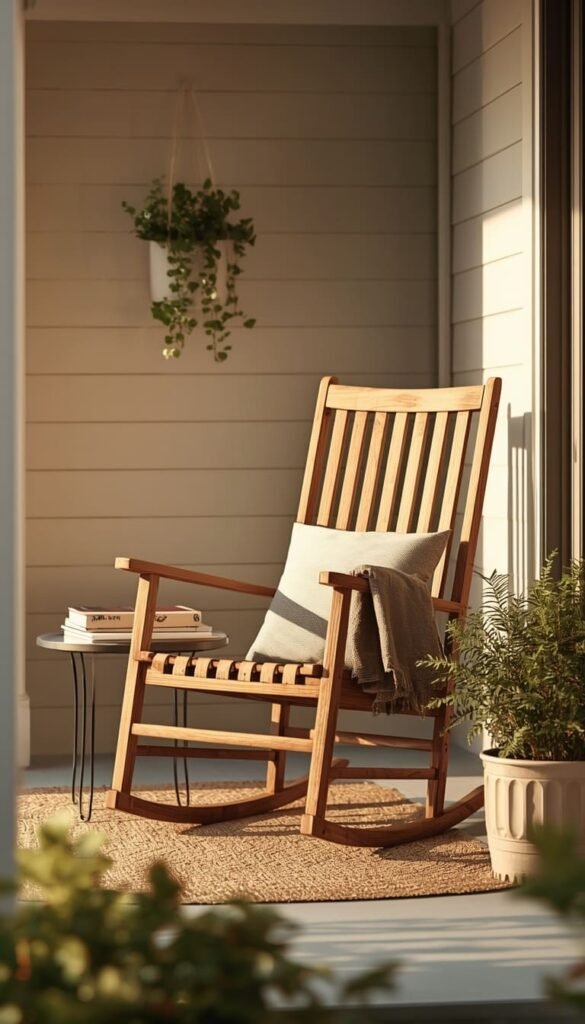
Nothing makes a front porch feel more off than furniture that doesn’t fit the space. I’ve walked up to entries where a full three-seater sofa was crammed onto a four-foot-wide porch, leaving barely enough room to open the screen door. The intention was warmth and welcome the result was chaos.
Here’s how I size it out for clients:
- Stoops under 5 feet wide — skip seating entirely and focus on vertical decor: tall planters, a wreath, layered lighting
- Porches 6 to 8 feet wide — one pair of slim-profile chairs with a small side table, or a single bench against the wall
- Porches 9 feet and wider — you have real flexibility; a swing, a rocker set, or even a small bistro arrangement works beautifully
Proportions matter more than personal preference when it comes to seating. A single beautiful rocking chair in the right scale will always look more intentional than two oversized pieces fighting for space.
What is the one thing about your front entry that bothers you every single time you pull into the driveway?
7. Turn Your House Numbers Into a Decor Moment
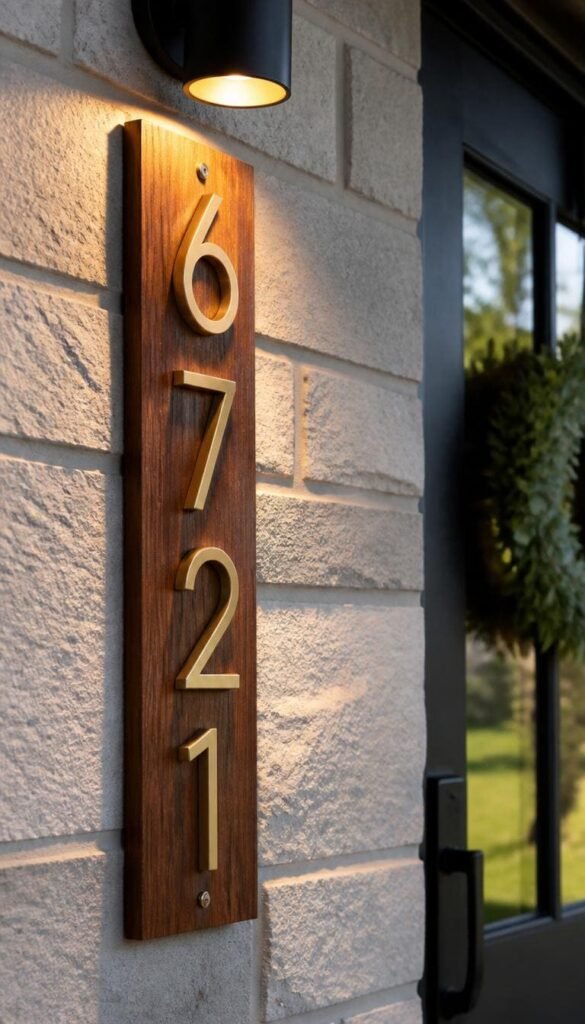
This is one of my favorite low-cost, high-impact upgrades and honestly one of the most overlooked elements in front entryway design. Most homes are still rocking the brass stick-on numbers that came with the house in 1987. Swapping them out takes about twenty minutes and makes an immediate difference.
The key is matching the finish to your overall exterior style. Matte black numbers feel sharp and modern. Brushed brass or unlacquered bronze works beautifully on traditional and transitional homes. Natural wood or concrete-look numbers suit a Craftsman or farmhouse aesthetic perfectly.
You can find well-designed house numbers on Etsy, Amazon, or at your local Ace Hardware for anywhere between $15 and $60 for a full set. For a real statement, consider mounting them on a small piece of cedar or a painted board that acts as a backdrop it frames the numbers and gives your entry a custom, intentional look that people genuinely notice.
One thing to watch out for: legibility at night. Always make sure your numbers are readable from the street after dark, both for guests and for emergency services. Backlit numbers or numbers positioned near your entry light are the smartest choice.
8. Use Vertical Space When Floor Space Is Tight
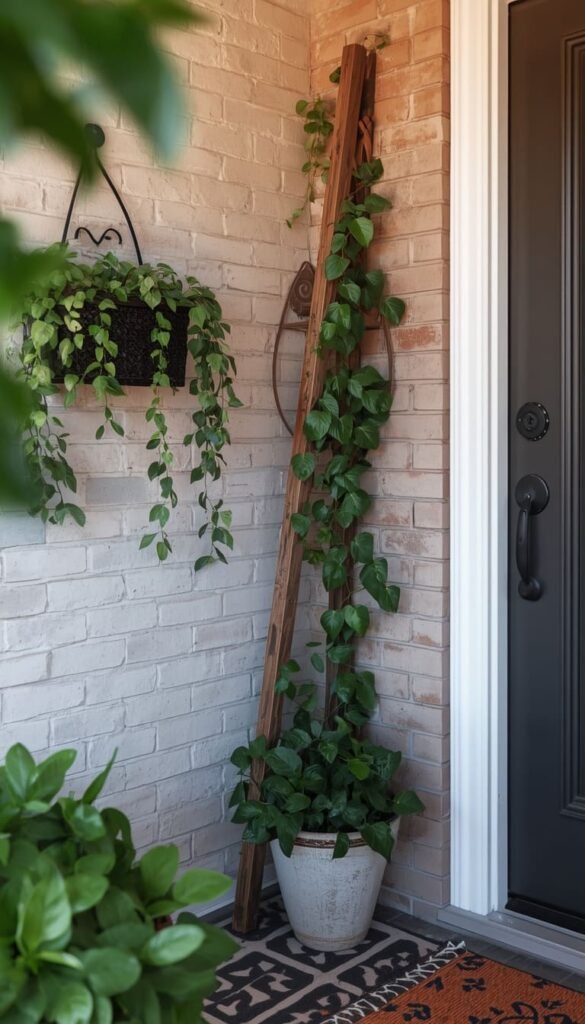
Small front porch ideas almost always focus on the floor a rug here, a planter there. But the real opportunity on a compact entry is everything above eye level. Vertical space is free real estate that most homeowners completely ignore.
A wall-mounted planter with trailing greenery like pothos or string of pearls adds life and movement without taking up a single square inch of floor space. A simple wooden trellis leaned against the wall with a climbing vine growing up it creates height, texture, and a cottage-like charm that feels genuinely designed. Even a stylish wall-mounted mailbox in a matte finish can replace a utilitarian post-mounted one and suddenly become a cohesive part of your overall entry look.
What I love most about this approach is that it draws the eye upward, which makes the entire entry feel taller and more expansive than it actually is. That’s a classic interior design trick and it works just as powerfully outdoors.
9. Add a Privacy Element That Doubles as Decor
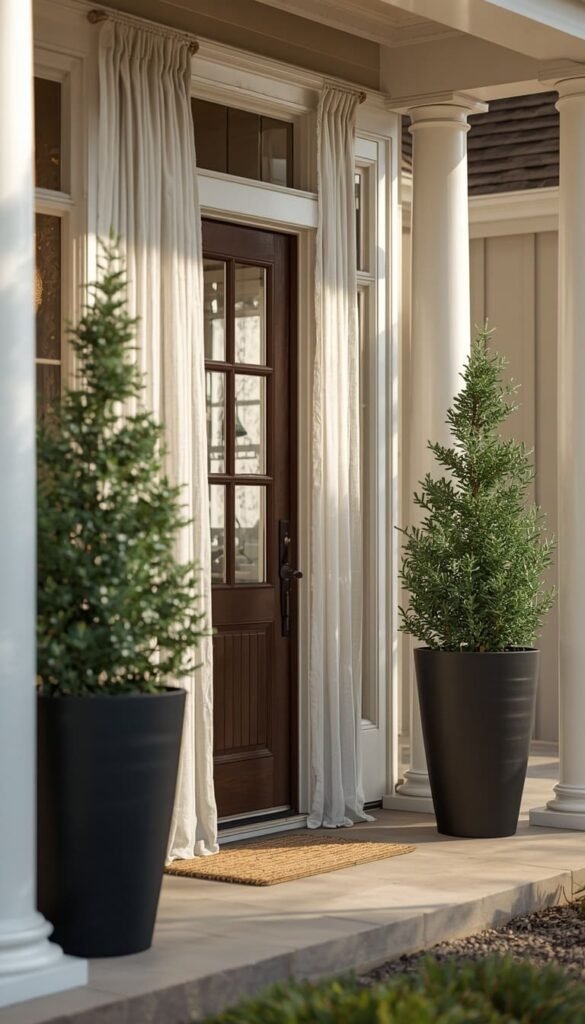
Privacy on a front porch is something clients bring up more than almost anything else especially in urban neighborhoods and newer developments where homes sit close together. The good news is that the most effective privacy solutions also happen to be the most beautiful ones.
Tall potted trees are my first recommendation every single time. A pair of columnar evergreens like Sky Pencil Holly or Italian Cypress in large planters flanking your entry creates an instant sense of enclosure without feeling closed off. They look polished year-round, require minimal maintenance, and work with virtually every architectural style.
If you want something softer and more budget-friendly, consider:
- A simple wooden trellis panel with climbing jasmine or clematis — fragrant, beautiful, and grows thicker every season
- Outdoor curtain panels on a tension rod between two porch columns — breezy, romantic, and surprisingly weather-resistant in a covered entry
- A row of tall bamboo in sleek black planters for a clean, modern screen effect
One honest reality here outdoor curtains collect mildew in humid climates faster than you’d expect. If you’re in the South or Pacific Northwest, look specifically for curtains labeled solution-dyed acrylic or Sunbrella fabric. They cost more upfront but won’t turn gray and sad by August.
10. Invest in One Statement Seating Piece
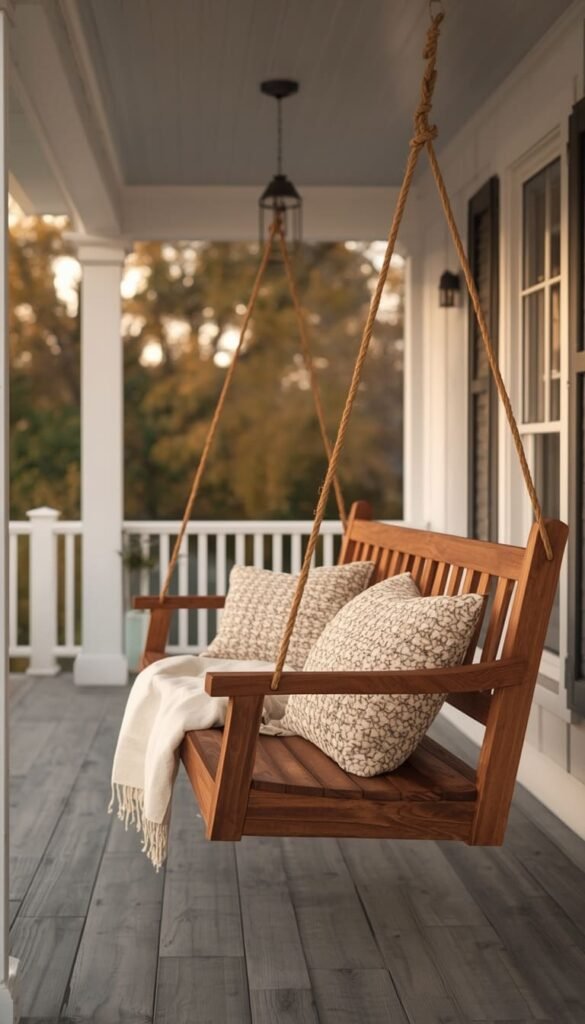
If your porch has room for seating, I always encourage clients to put their budget into one genuinely great piece rather than spreading the money thin across a full set of mediocre furniture. One beautiful piece anchors the entire space and gives it personality.
The three pieces I recommend most often for front porches are a classic wooden rocker, a modern porch swing, and a hanging egg chair and each sends a completely different design message.
A wooden rocking chair says timeless, Southern, welcoming. It’s the piece that makes guests slow down. A porch swing says “stay a while” in the most generous way possible it’s social, relaxed, and works beautifully on a Craftsman or farmhouse-style home. A hanging egg chair is the bold, contemporary choice. It photographs incredibly well and immediately signals a more design-forward sensibility.
What I tell every client: buy the best version of whichever one you choose. A $90 resin rocker from a big box store looks exactly like a $90 resin rocker. A solid teak or mahogany rocker at $300 to $400 looks like something you inherited from a well-traveled aunt and it’ll last fifteen years with minimal care.
11. Landscape the Entry, Not Just the Yard
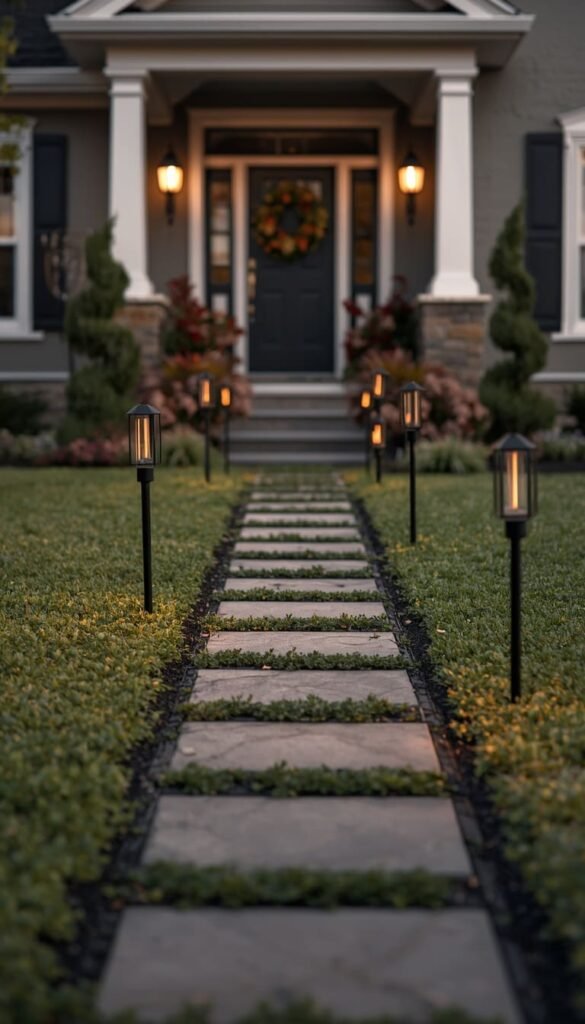
Most homeowners put real thought into their front yard landscaping and then completely forget that the path leading to the door is part of the first impression too. A beautifully manicured lawn with a cracked concrete walkway and dead flower beds right at the door sends a mixed message.
The entry landscape zone roughly the six to ten feet immediately surrounding your front door and steps deserves its own attention. Low-maintenance ground covers like creeping thyme or mondo grass soften the edges of walkways beautifully and require almost no upkeep once established. Edging your path with dark steel or stone gives the whole front approach a neat, intentional look that reads as high-end even on a modest budget.
A quick trick I’ve used on dozens of projects: line your front path with solar-powered stake lights. They cost about $20 to $35 for a set of eight, require zero wiring, and create a warm, welcoming glow every single evening automatically. It’s one of those details that guests might not consciously notice but they always feel it the moment they walk up.
If you could change just one element of your outdoor entryway this weekend, what would it be the door color, the lighting, or the greenery?
12. Refresh on a Budget Without Starting Over
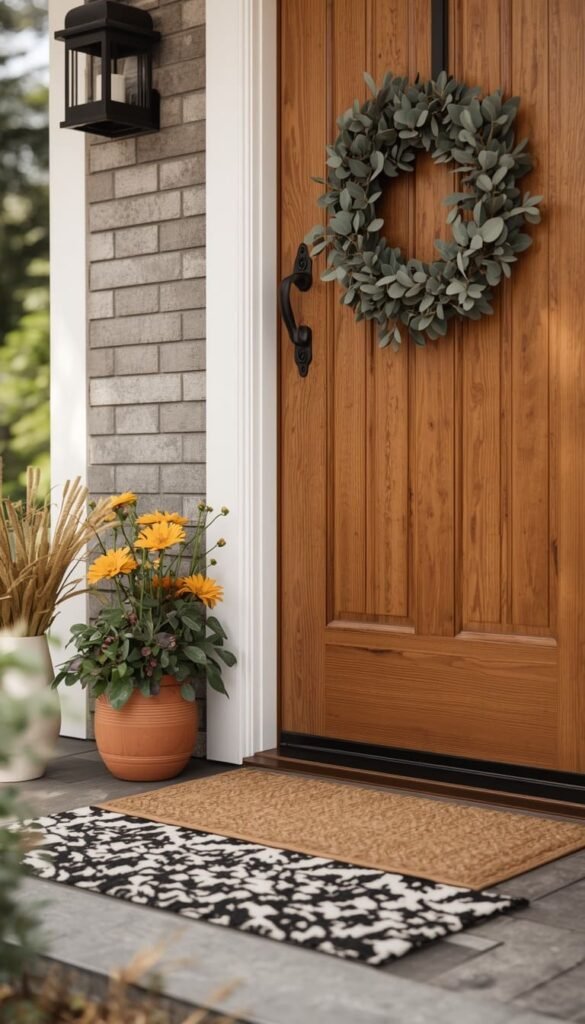
This last idea might be the most practical thing I put in this entire article. When a client tells me their entry feels tired and dated, my first question is always: what can we swap, not what can we replace? Nine times out of ten, a full refresh is possible for under $100 if you approach it strategically.
Start by removing everything from the entry completely. A blank slate lets you see the actual bones of the space without distraction. Then reassess with fresh eyes what’s structurally fine but just needs a coat of spray paint? What needs to be repositioned rather than replaced? A planter that felt invisible beside the door might become a focal point moved to the top step.
The $100 refresh formula I use with clients breaks down like this:
- A new doormat with a bold pattern or phrase: $25 to $35
- One fresh potted seasonal plant from a local nursery: $15 to $25
- A new wreath or door arrangement: $20 to $30
- One small accent piece — a lantern, a house number, or a door knocker: $15 to $25
That’s it. Four targeted swaps and your entry looks like it had a professional touch it without anyone spending a fortune. The goal is never to buy more it’s to choose better.
Your 30-Second Entryway Styling Map
By Budget
Curb Appeal on a Budget ($25 to $115)
- Start with a fresh door paint color — biggest impact, lowest spend
- Swap your doormat for a bold patterned outdoor rug
- Add a seasonal wreath using the rotation system
- Run the $100 refresh formula before buying anything new
Intentional Investment ($150 to $400+)
- Choose one statement seating piece in solid teak or mahogany
- Install a layered three-tier lighting plan with warm white bulbs
- Go oversized on planters — fiberglass or concrete, properly scaled
- Add columnar evergreen trees for privacy that looks effortlessly designed
By Lifestyle
Busy Families and Pet Owners
- Skip light-colored rugs — go dark base or bold pattern
- Choose fiberglass planters — lightweight, unbreakable, frost-safe
- Solar path lights only — no cords, no maintenance, no fuss
- Stick to faux wreath bases — real greenery won’t survive the chaos
Design-Forward and Detail-Obsessed
- Layer rugs, mix textures, and angle the top mat for that styled look
- Treat house numbers as jewelry — brushed brass or matte black only
- Use vertical space with wall planters and a trellis for depth
- Invest in one hanging egg chair and let it be the whole statement
Frequently Asked Questions
What is the easiest outdoor entryway decor idea for beginners?
Start with a new doormat and a wreath those two swaps alone create an immediate difference. No tools, no skills, no stress.
How much should I budget for a front porch makeover?
The average cost runs $75 to $300 depending on how many elements you replace. A focused four-swap refresh can land well under $115.
Can I decorate a small front stoop with no porch?
Yes, and vertical space is your best friend. Wall-mounted planters, a bold wreath, and a slim sconce do the heavy lifting without touching your floor space.
What outdoor plants look best near a front door year-round?
Sky Pencil Holly, boxwood topiaries, and columnar evergreens stay polished in every season. Pair them with a rotating seasonal annual in a smaller accent pot for color.
How do I make my front entry look more expensive without a big budget?
Swap your house numbers, upgrade your door hardware, and add warm-white bulb lighting. Three changes, under $80 total, and the entry reads completely different.
Conclusion
Your front entry sets the tone for everything how guests feel when they arrive, how you feel when you come home after a long day, and how your home presents itself to the world without saying a word. You don’t need a full renovation or a designer on speed dial to make it work harder for you. Pick one idea from this list, just one, and do it this weekend. Buy that paint sample. Order that doormat. Move that planter six inches to the left. Small moves made with intention always beat big plans that never get started.
So tell me which idea are you tackling first, and what does your front entry look like right now? Drop it in the comments below.
