
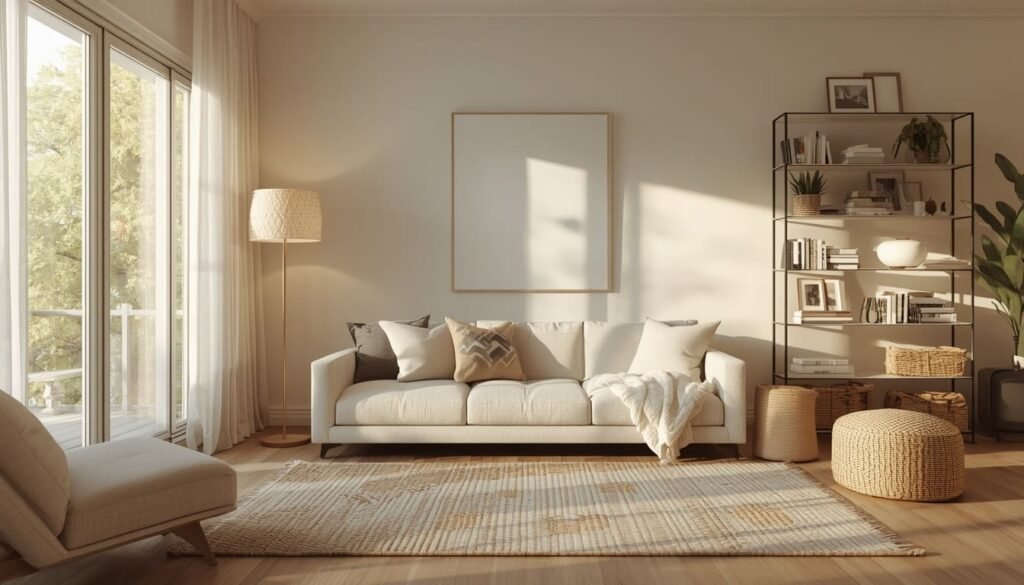
You don’t need a six-figure renovation budget to make your home look like it belongs in a magazine spread. I’ve worked with homeowners across the US who spent less than $1,500 and completely transformed the way their spaces felt not by buying more, but by choosing smarter. The truth is, expensive-looking rooms aren’t about price tags. They’re about intention, proportion, and knowing exactly which details actually move the needle. In this guide, I’m sharing 12 real, practical home decor inspo ideas that work whether you’re styling a 600-square-foot apartment in Chicago or a suburban home in Dallas no fluff, no filler, just what actually works in 2026.
My Design Notes
Last spring, I took on a project with a young couple in Austin, Texas. Two bedrooms, roughly 900 square feet, and a total budget of $1,200. They had been saving Pinterest boards full of stunning luxury interiors for months and honestly felt defeated every time they walked into their own beige rental. I remember standing in their living room thinking this space doesn’t need money, it needs direction. We didn’t knock down walls or splurge on custom furniture. My team and I swapped out the harsh overhead lighting, layered two textured throws over their existing IKEA sofa, dropped a $180 jute rug under the coffee table, and hung three oversized art prints in clean black frames. Three weekends of intentional work. That was it. When their friends came over for the first time after the refresh, two of them genuinely asked which designer they had hired. That moment right there is exactly why I believe that great home decor inspo isn’t about what you spend it’s about how deliberately you see your space.
Mastering the Art of Elevated Home Styling for Every Room and Every Budget
1. The Neutral Base Rule — Why Your Walls Are Working Against You
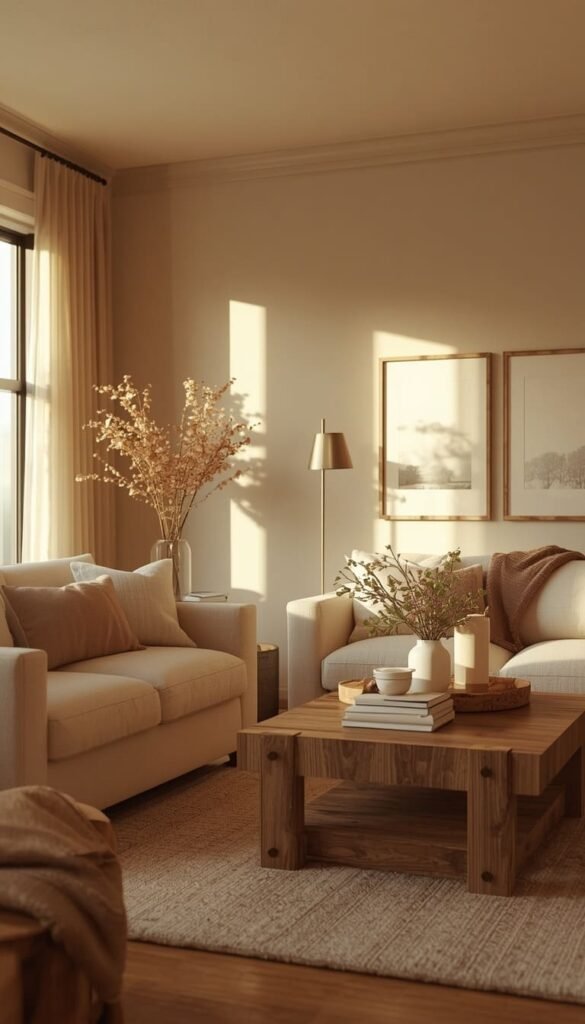
Most homeowners I meet have painted their walls either stark white or a cool gray and then wonder why the room feels cold and unwelcoming. Here’s what I tell every single client before we touch anything else your neutral base sets the emotional temperature of the entire space. Get it wrong and nothing else you add will feel quite right.
Warm neutrals are having a serious moment in 2026, and honestly, they never really left. Shades like Sherwin-Williams’ “Accessible Beige” or Benjamin Moore’s “Pale Oak” bring that rich, lived-in quality that makes a room feel curated rather than cookie-cutter. A quick trick I’ve learned over the years is to always test your paint sample against both natural daylight and your evening lamp light — the same color can look completely different at 7pm, and that’s the version your guests actually see most often.
The best part? This is a $40 to $80 fix depending on room size. One gallon, one weekend, one decision that changes everything.
2. Layered Lighting — The Number One Secret Designers Never Advertise
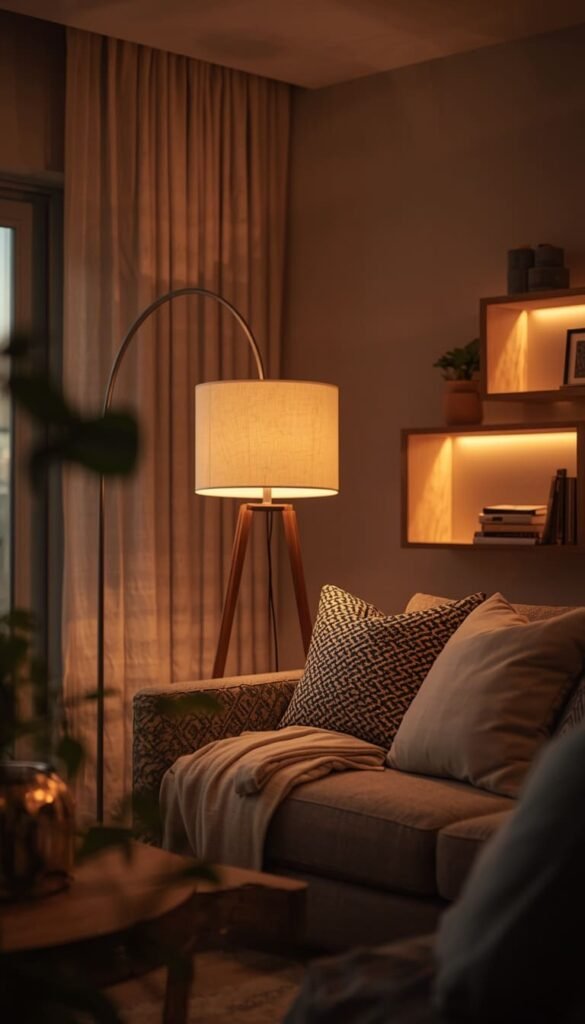
If I had to pick just one change that makes the biggest visual impact in any room, it would be lighting. Every single time. Overhead lighting especially that builder-grade flush mount ceiling light is quietly making your space look flat, harsh, and honestly a little sad. I’ve walked into rooms with beautiful furniture and stunning rugs that still felt off, and nine times out of ten, one switched-on overhead light was the culprit.
The formula I use on every project is simple:
- Ambient light — your soft, general glow (floor lamps, table lamps)
- Task light — functional and focused (reading lamps, under-cabinet strips)
- Accent light — the magic layer (LED strips behind shelves, a candle grouping, a backlit art piece)
You don’t need all three to be expensive. A $45 arc floor lamp from Target and a $12 dimmer switch installed on your existing overhead can genuinely transform a living room in one afternoon. One thing to watch out for is going too warm with your bulb temperature anything below 2700K starts to feel yellow and dingy rather than cozy and golden.
3. The Rule of Three in Styling Shelves and Surfaces
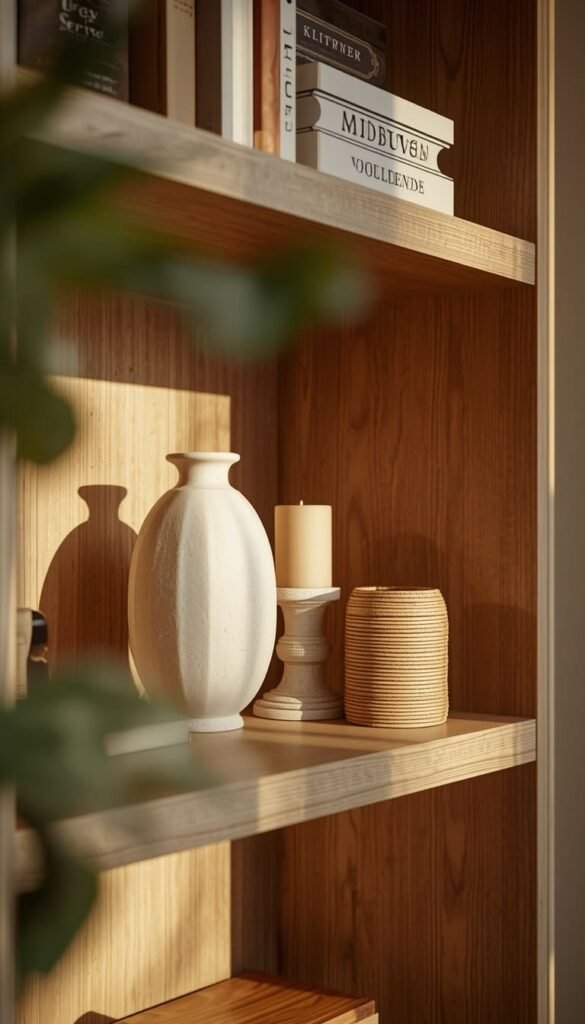
Walk up to any shelf in your home right now and count how many objects are on it. If it’s an even number, that’s likely part of why it feels visually restless. Designers have used the rule of three for decades because odd numbers create natural movement for the eye your gaze travels from object to object without feeling stuck or symmetrically “matched.”
What I love most about this idea is that it costs nothing. It’s purely about editing and rearranging what you already own. Group a tall vase, a medium candle, and a small decorative object together. Vary the heights deliberately. Leave breathing room between groupings.
Equally important and this is something most styling guides skip entirely is knowing what to remove. A shelf with twelve small trinkets will always look cluttered no matter how pretty each piece is individually. Pull everything off, then only put back what genuinely earns its place.
4. Texture Over Color — The Cozy Home Aesthetic Formula
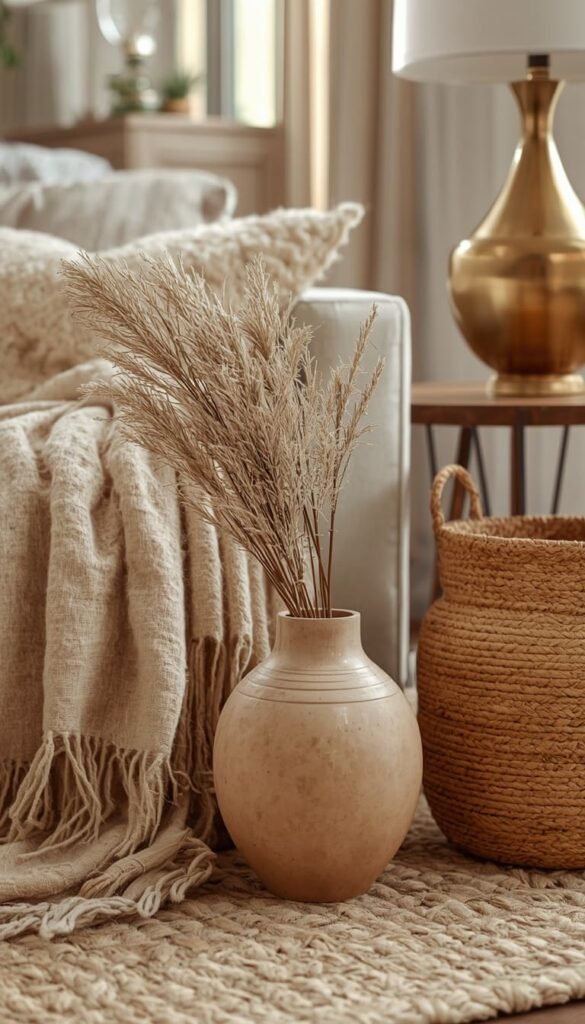
Color gets all the attention in home decor conversations, but texture is what actually makes a room feel luxurious and layered. I’ve styled rooms in near-identical neutral palettes where one felt like a boutique hotel and the other felt like a rental the only real difference was how many textures were working together in the space.
My go-to rule is the five texture approach:
- Something soft (linen throw, velvet pillow)
- Something rough (jute rug, raw wood tray)
- Something smooth (ceramic vase, glass object)
- Something woven (rattan basket, cane chair detail)
- Something metallic (brass lamp, brushed nickel hardware)
You don’t need to hit all five in every corner of the room. Spread them throughout the space so the eye keeps discovering something interesting. The one thing to watch out for is going overboard with chunky knit one oversized knit throw is cozy and intentional, three of them in the same room starts to feel like a craft fair display. Restraint is what separates styled from stuffed.
Top 6 ideas:
| Ideas | Estimated Price | Maintenance |
|---|---|---|
| Neutral Wall Paint Refresh | $40 to $80 per room | Low |
| Layered Lighting Setup | $50 to $150 total | Low |
| Statement Area Rug | $120 to $300 | Medium |
| Texture Layering (Throws, Pillows, Accents) | $60 to $180 | Low |
| Indoor Plants and Greenery | $15 to $80 per plant | Medium |
| Final Styling Layer (Trays, Books, Candles) | $30 to $100 | Low |
5. Statement Rugs — The Fastest Room Upgrade for Under $300
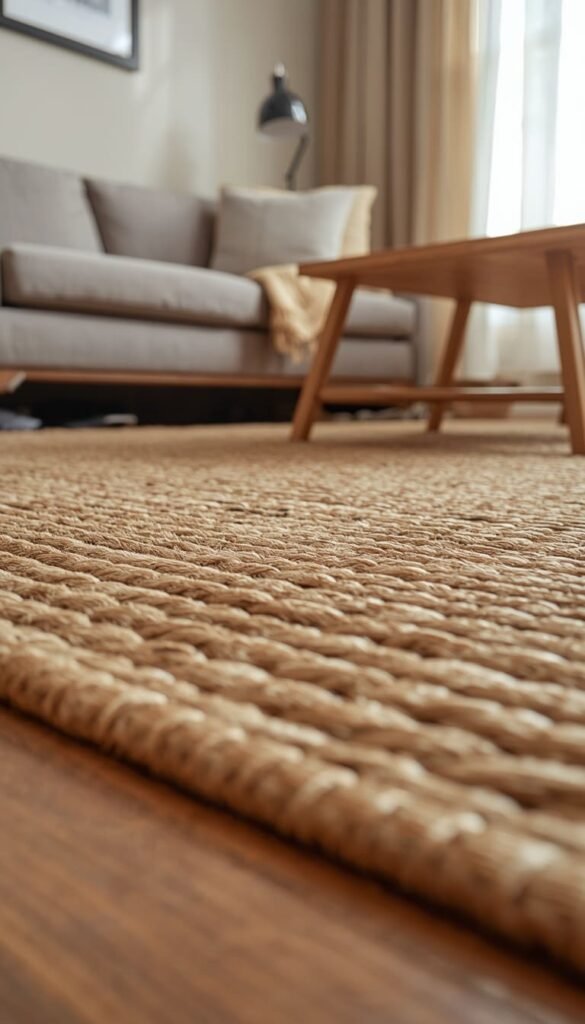
A rug is the single most underestimated piece of furniture in any room. I say furniture because that’s exactly what it is it anchors your entire seating arrangement and sets the tone for everything above it. And yet it’s the one thing I see homeowners consistently get wrong, not in style, but in size.
Here’s the rule I give every client without exception your rug should be large enough that at least the front legs of every major seating piece sit on it. A rug floating in the middle of a room with furniture pushed against the walls is the number one thing that makes a space feel unfinished and small. Size up almost every time.
A few things worth knowing before you shop:
- High traffic areas (living room, entryway) need flatweave or low-pile rugs — they clean easily and hold up beautifully
- Bedroom and reading nooks are where you can go plush and cozy without worrying about wear
- Natural fiber rugs like jute and sisal photograph beautifully but can feel scratchy underfoot — great for layering, less great as a solo rug in a cozy bedroom
And yes, white and cream rugs look absolutely stunning in photos. But if you have pets, kids, or simply live in your home like a normal human being, just know what you’re signing up for. A warm oatmeal or greige tone gives you that same soft, luxurious look with a fraction of the maintenance anxiety.
6. Earthy Home Decor Done Right — Not Dated
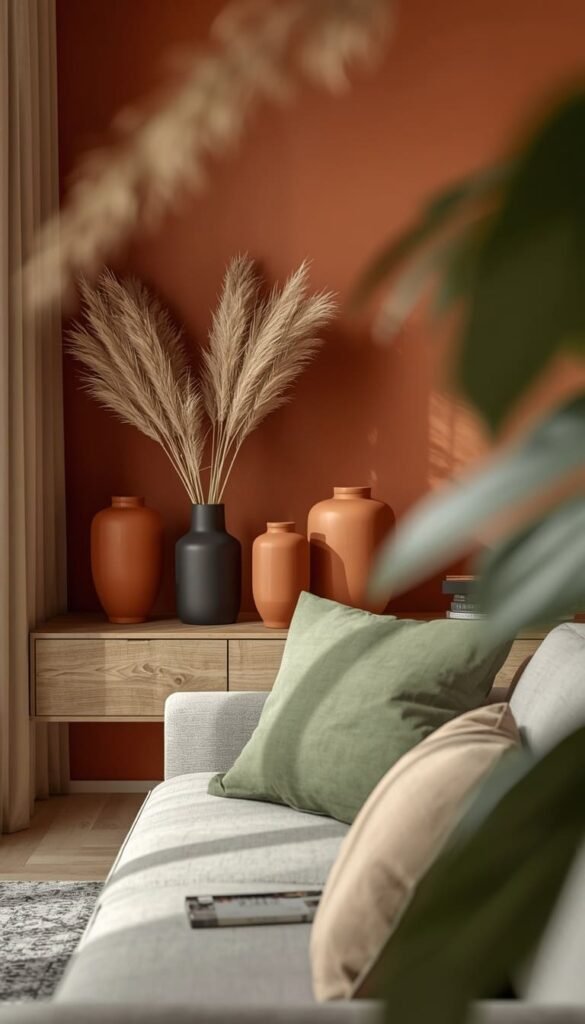
Earthy tones have been creeping back into American interiors for a few years now and in 2026 they are fully, confidently here. Terracotta, warm clay, sage green, deep mushroom brown these colors bring a grounded, organic quality to a space that no cool gray or stark white can replicate. The problem is that when earthy decor is done without intention, it slides very quickly from “warm and sophisticated” into “1970s time capsule.”
The difference comes down to how you pair and proportion these tones. Terracotta walls paired with natural linen, light oak wood, and one or two matte black accents feel current and elevated. That same terracotta paired with macramé, dried pampas grass, and a wicker everything situation starts to feel like a different decade entirely.
I always tell clients let one earthy tone lead and keep the rest of the palette clean and neutral around it. One warm statement, supported by calm.
Which room in your home feels the most “unfinished” to you right now and what do you think it’s actually missing?
7. Minimalist Home Ideas That Still Feel Warm and Not Cold
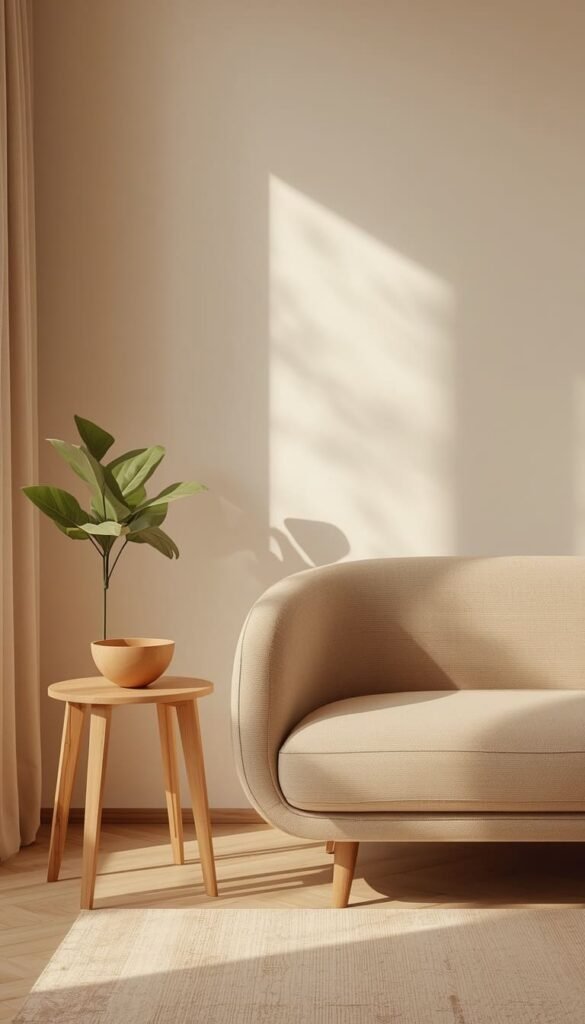
True minimalism is one of the most misunderstood aesthetics in American home decor. People see a clean, sparse room online and think the goal is to own less and show less. But the rooms that actually feel incredible to sit in the ones that feel peaceful rather than punishing are never truly empty. They are just incredibly intentional.
The shift I ask clients to make is from “minimalist” to “curated.” Every object in the room should feel chosen, not just kept. A single beautiful ceramic bowl on a kitchen counter reads as intentional. A collection of random mail, three lip balms, and a charger cord next to it reads as chaos, even in an otherwise minimal space.
Warming up a minimalist room is simpler than most people think. Natural wood tones, a softly textured throw in a warm neutral, and one living plant do more for a cold minimal space than any amount of additional décor. One thing to watch out for here minimalism is not actually a budget style. Fewer pieces means each piece carries more visual weight, so quality matters more, not less. The workaround is to be deeply selective about what you keep visible and store everything else out of sight.
8: The Power of Greenery — Plants That Do Not Die on Busy People
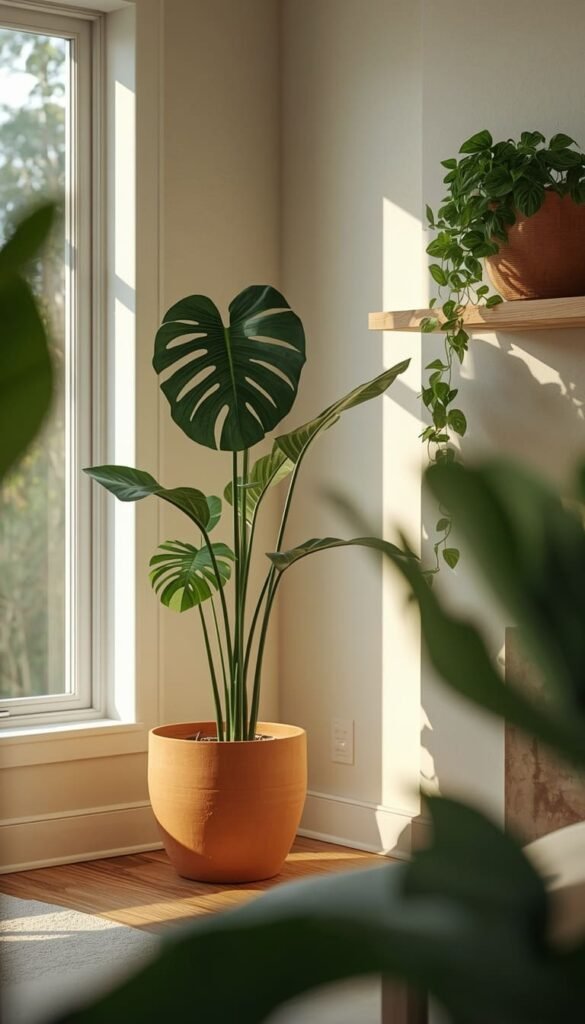
Nothing makes a room feel more alive than an actual living thing in it. I know that sounds obvious but it genuinely surprises me how many beautiful, thoughtfully decorated homes I walk into that have zero plants. Greenery adds color, organic shape, and a sense of freshness that no decorative object can fully replicate and in 2026 it is still one of the highest-return additions you can make to any space.
Now, I am not going to tell you to buy a fiddle leaf fig if you travel for work and forget to water things. That’s a recipe for a dead tree and a guilt spiral. Here’s what I actually recommend by room:
- Living room — Pothos or Snake Plant. Both tolerate low light and irregular watering beautifully
- Bathroom — Peace Lily or ZZ Plant. They genuinely thrive on humidity and neglect
- Bedroom — A small Monstera or trailing Pothos on a high shelf adds drama without demanding much
On the faux plant debate I used to be firmly against them. My position has softened considerably. A high-quality faux olive tree or eucalyptus stem in the right spot looks genuinely beautiful and no one will question it. Just avoid the obviously plastic, shiny-leafed varieties that scream fake from across the room. Your home should feel lived-in and real, and the right faux plant absolutely supports that.
9. Modern Farmhouse Decor in 2026 — Still Relevant or Played Out
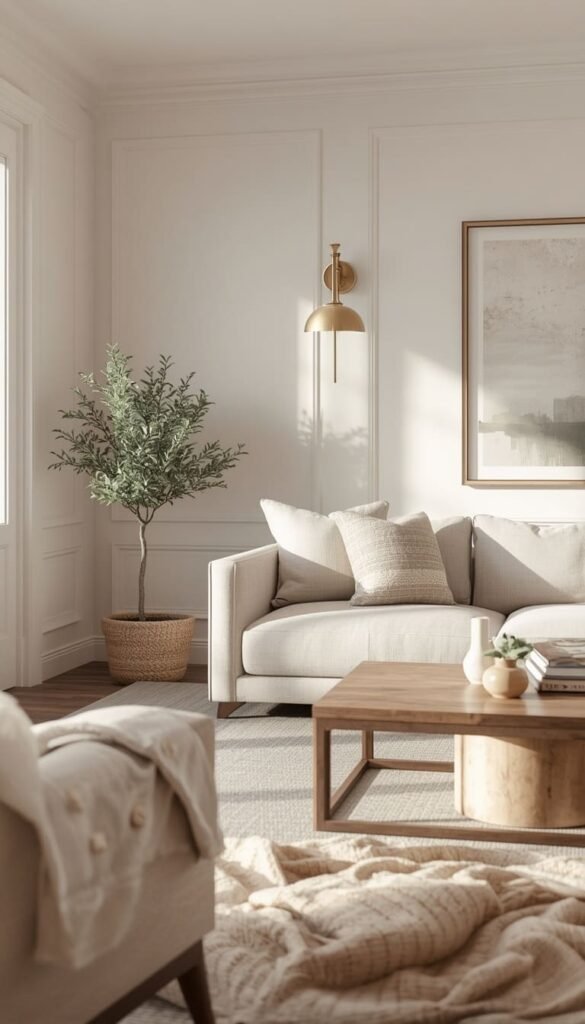
Let me be honest with you here because I think the internet owes everyone a straight answer on this one. The shiplap-everywhere, buffalo-check-everything, “gather” sign on the wall version of Modern Farmhouse? That chapter is closing. But the soul of the style warm, unpretentious, layered with natural materials and a sense of ease is absolutely still relevant and actually more beautiful than ever in its evolved 2026 form.
What’s changed is the refinement. The new Modern Farmhouse is less rustic and more considered. Think warm white walls instead of stark white, aged brass hardware instead of matte black, linen instead of cotton canvas, and antique or vintage-feel wood pieces instead of the matching “farmhouse set” from a big box store. It feels collected rather than themed.
A few swaps that update the look instantly:
- Replace word-art signs with a single large vintage-style print or abstract canvas
- Swap matching furniture sets for pieces in the same wood tone but different silhouettes
- Bring in one unexpected modern element — a sleek floor lamp or a geometric mirror — to keep it from feeling costume-y
The homeowners I see doing this style best in 2026 are the ones who treat it as a starting point rather than a checklist.
10. Small Space Decor Hacks That Interior Designers Actually Use
Designing small spaces is genuinely one of my favorite challenges because the constraints force creativity in the best possible way. And I’ll tell you right now the solutions that actually work are not the ones you see on every “small space” list online. Floating shelves and multi-functional ottomans are fine, but they barely scratch the surface of what’s possible.
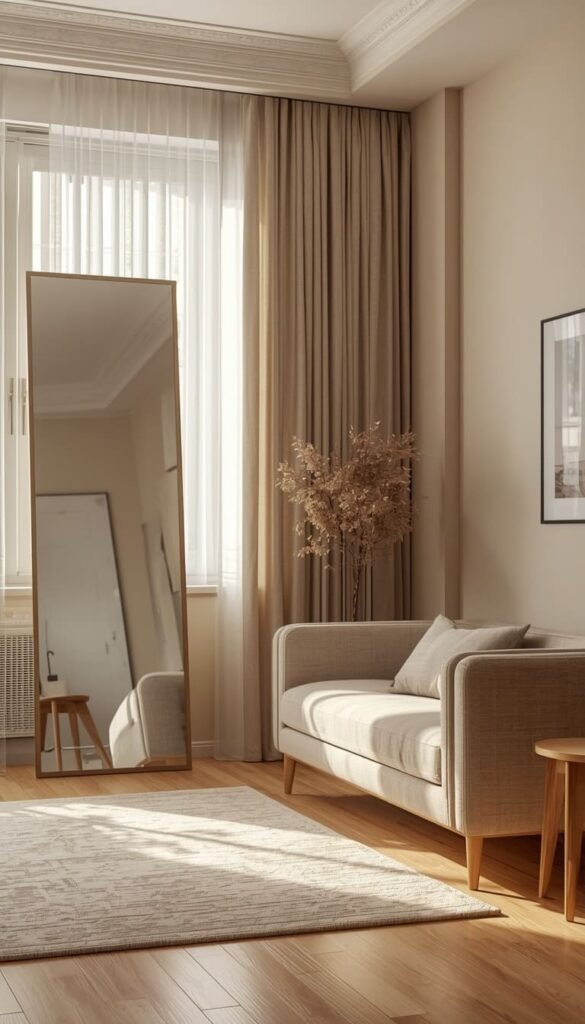
The trio that opens up any room, no matter the size, is mirrors, vertical lines, and furniture with visible legs. A large mirror on a main wall doubles the perceived depth of a room in a way that feels almost architectural. Tall curtains hung close to the ceiling and dropping all the way to the floor draw the eye upward and make ceilings feel higher. And furniture with exposed legs a sofa on legs, a bed frame with clearance, a side table with slim tapered legs lets light pass underneath and keeps the floor plane visible, which makes the entire room breathe.
The furniture mistake I see most often in apartments is choosing pieces that are too small thinking it will save space. A tiny sofa and a tiny coffee table in a small living room actually makes the room feel more cluttered and confused. One properly sized sofa, sized correctly for the wall it sits against, will always look more intentional than three small mismatched pieces trying to fill the same area.
And for renters specifically none of this requires a single nail hole. Command strips, removable wallpaper, floor-standing mirrors, and freestanding shelving units are your best friends in a lease-protected apartment.
11. Curated Home Interiors — How to Shop Like a Stylist and Not a Hoarder
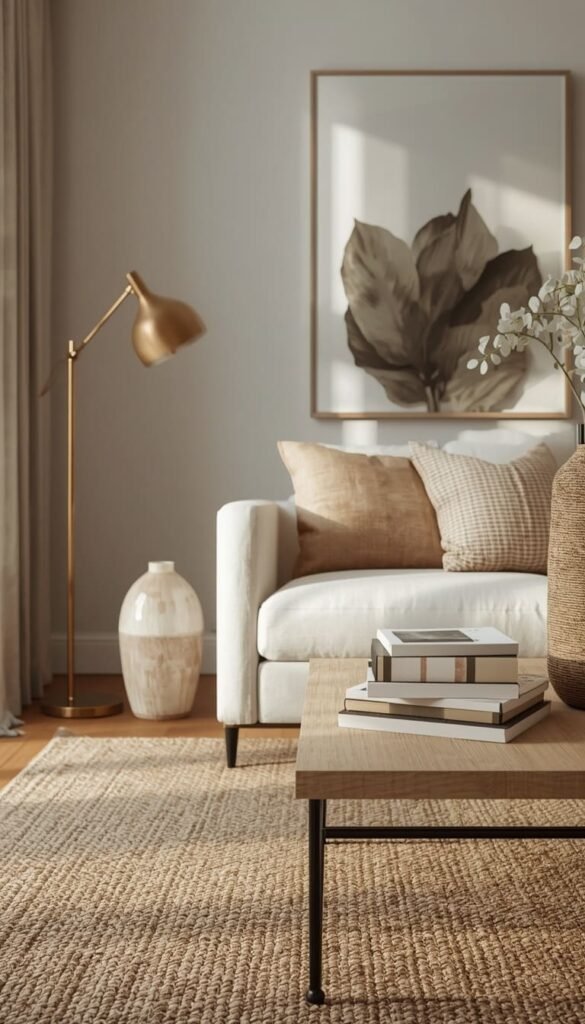
Here is something I wish someone had told me earlier in my career the difference between a styled home and an overcrowded one is almost never about taste. It is about restraint and sequencing. The most beautifully curated homes I have ever walked into were not filled with expensive things. They were filled with fewer, more deliberate things, and the space between objects was treated as intentionally as the objects themselves.
The rule I give every client before they open a single shopping app is this edit first, buy second. Walk through your space and remove anything that does not make you feel something. Not just things you dislike, but things you feel neutral about. Neutral is the enemy of a curated space.
When you are ready to add, here is where I actually shop for clients across different budget levels:
- Under $50 statement pieces — Target Studio McGee line, Amazon’s stone and ceramic decor, HomeGoods on a good day
- $50 to $200 range — McGee & Co., H&M Home, Article, and World Market for textiles and accents
- Investment pieces worth stretching for — a quality rug, one real piece of art, a solid wood side table that will outlast every trend
Mixing price points is not just acceptable it is the actual secret to a home that looks curated rather than catalog-copied. The $18 ceramic vase next to the $180 lamp creates more visual interest than two expensive pieces of the same weight ever would.
Which of these 12 ideas surprised you the most, and is it something you’d actually try this weekend?
12. The Final 10% Rule — Styling Touches That Tie Everything Together
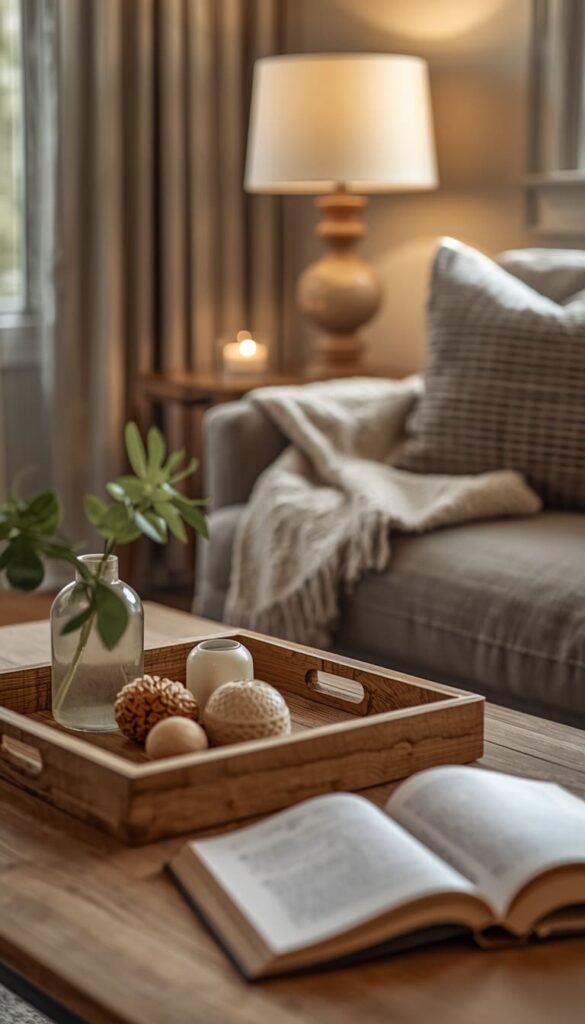
Every room I have ever designed has a moment about 90% through the process where it looks good but not quite right. The furniture is placed, the rug is down, the lighting is layered and still something feels unfinished. That last 10% is where a room goes from looking decorated to looking genuinely lived-in and styled, and it is almost always the most enjoyable part of the entire process.
This is the layer of books stacked horizontally on a coffee table with a small object resting on top. A linen throw casually draped over the arm of a sofa rather than folded perfectly. A wooden tray on the kitchen island corralling three small objects so they read as a vignette instead of random clutter. A single candle on a bathroom shelf. These details cost very little and communicate an enormous amount about the intentionality of a space.
The one trap I always warn people about in this final layer is the “model home” effect when styling becomes so perfect and symmetrical that the room stops feeling like anyone actually lives there. Real homes have a slightly imperfect quality to them that is deeply appealing. One book left open. A throw that is not quite centered. A plant that leans slightly toward the window. That is not messiness that is personality, and personality is exactly what separates a beautiful room from a truly memorable one.
My personal go-to finishing checklist before I call any room complete something soft, something that catches light, something living, something that tells a story. Four things. That is genuinely all it takes.
Your 2026 Styling Snapshot
By Budget
Starter Decorator ($0 to $150)
- Start with a warm neutral paint biggest ROI for the least spend
- Rearrange and edit what you own before buying anything new
- Add one textured throw and two pillow covers to your existing sofa
- Swap bulbs to warm-toned LEDs and add a single floor lamp
- Style surfaces using the rule of three with objects you already have
Investment Stylist ($150 to $500+)
- Prioritize a correctly sized area rug it anchors everything else
- Upgrade to layered lighting with a statement floor lamp and dimmer
- Invest in one quality piece of art or a solid wood accent table
- Mix in genuine texture linen, rattan, aged brass not just color
- Add real greenery with low-maintenance plants for organic warmth
By Lifestyle
Busy Households (Families, Pets, Kids)
- Choose flatweave or low-pile rugs in warm greige tones not white
- Stick to washable pillow covers and performance fabric throws
- Keep surfaces minimal fewer objects means less daily clutter reset
- Go faux with plants a quality faux olive tree requires zero effort
Calm and Curated Living (Minimalists, Empty Nesters, Renters)
- Edit ruthlessly before adding a single new piece
- Let one earthy tone lead terracotta, sage, or warm clay
- Treat negative space as intentional not every shelf needs filling
- Final 10% styling is your superpower trays, candles, one good book
Frequently Asked Questions
What is the easiest way to make a room look more expensive on a budget?
Start with lighting it’s the fastest, cheapest fix with the biggest visual payoff. Swap harsh overhead bulbs for warm-toned LEDs and add one floor lamp. That single change makes most rooms feel immediately more intentional and polished.
How do I pick the right neutral paint color for my living room?
Warm neutrals almost always outperform cool grays in American homes. Test Sherwin-Williams Accessible Beige or Benjamin Moore Pale Oak against your actual lighting before committing.
What size rug should I get for my living room?
Ideally, front legs of all major seating pieces should sit on the rug. Most homeowners size down too small when in doubt, go one size larger than you think you need.
How can I decorate a small apartment without making it feel cluttered?
Choose furniture with visible legs, hang curtains ceiling-high, and use one large mirror instead of multiple small ones. These three moves create space without spending much.
Is modern farmhouse decor still popular in 2026?
Yes, but the look has evolved. Shiplap and matching sets are out warm whites, aged brass, and collected vintage-feel pieces are what make it feel current and elevated right now.
Conclusion
Your home is the one space in the world that should feel entirely like you and it does not need a massive budget or a full renovation to get there. Pick one idea from this list today. Just one. Paint a sample on your wall, pull everything off a shelf and restyle it with three objects, or move a lamp to a different corner of the room. Small moves made with intention add up faster than you think, and a week from now your space can feel genuinely different. The best version of your home is not waiting on more money or more time it is waiting on a decision.
So tell me which one of these 12 ideas are you trying first, and what room are you starting with? Drop it in the comments below, I read every single one.
