
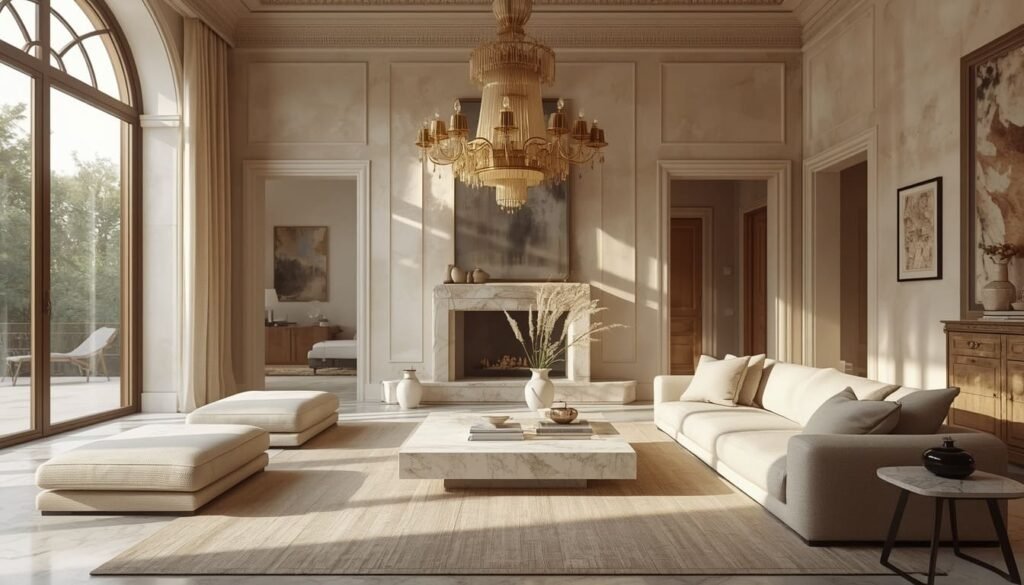
There is something about an Italian living room that stops you mid step and makes you never want to leave. It is not just the furniture or the finishes it is the feeling. That rare balance of elegance and ease that American homes often chase but rarely land. I have spent years helping clients across the US recreate exactly that feeling, and the good news is you do not need to import an entire villa to get there. These 14 ideas will show you how to bring real Italian warmth and luxury into your living room, whether you are starting from scratch or just ready for a refresh.
My Design Notes
A few years ago, I was working with a retired couple in Scottsdale, Arizona who had just come back from two weeks in Tuscany. They sat across from me at our first meeting and said, “We want our living room to feel like that farmhouse outside Siena.” Their home was a 2,400 square foot new build with 11-foot ceilings, zero Italian bones, and a very American open floor plan. My first instinct was to anchor the whole space with travertine floors and warm plaster walls in Benjamin Moore’s White Dove. We brought in a custom linen sectional, layered it with aged leather cushions, and hunted down a genuine Murano glass chandelier through an importer in New Jersey. Here is the part I love telling people only four pieces in that entire room were actually Italian. Everything else was sourced right here in the US, styled with intention and a clear design language. When their neighbors kept asking which Italian designer had flown in, my clients just smiled. That project taught me that Italian style is less about where your furniture is made and more about how you put it all together.
Mastering the Art of Elegant Italian Living Room Design
1. The Neutral Foundation Warm Whites, Greiges, and Stone Tones
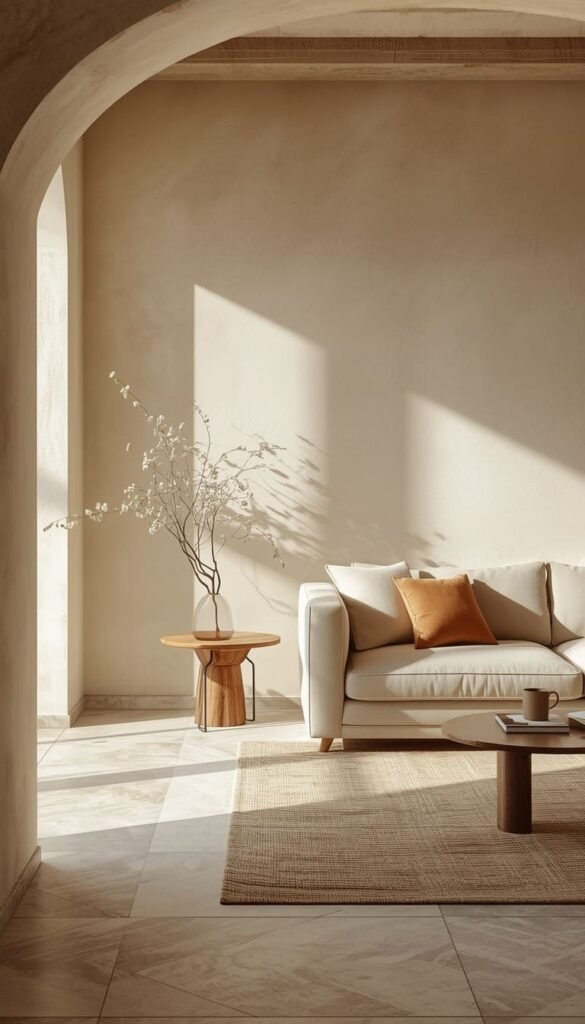
If there is one thing I always tell my clients first, it is this: Italian rooms do not start with furniture. They start with the wall. The most authentic Italian living rooms I have ever stepped into share one common thread a warm, breathable neutral palette that feels like it was pulled straight from the Italian countryside. We are talking soft whites, creamy greiges, and pale stone tones that make the entire room exhale.
What makes this work so beautifully is the warmth built into the neutrals. This is not your cold, sterile Scandinavian white. Think Benjamin Moore’s “White Dove,” Sherwin-Williams “Accessible Beige,” or even a limewash plaster effect that adds depth without any color at all. These tones do something magical they make natural light look golden, even in a room with average windows.
One thing to watch out for here is going too cool. A lot of homeowners pick a white or greige and then accidentally pair it with cool-toned furniture, cool metals, and cool-toned flooring. The whole Italian warmth disappears instantly. Stay in the warm undertone family throughout your palette, and the room will feel cohesive without you having to try too hard.
2. The Statement Sofa Done Right (Italian Style)
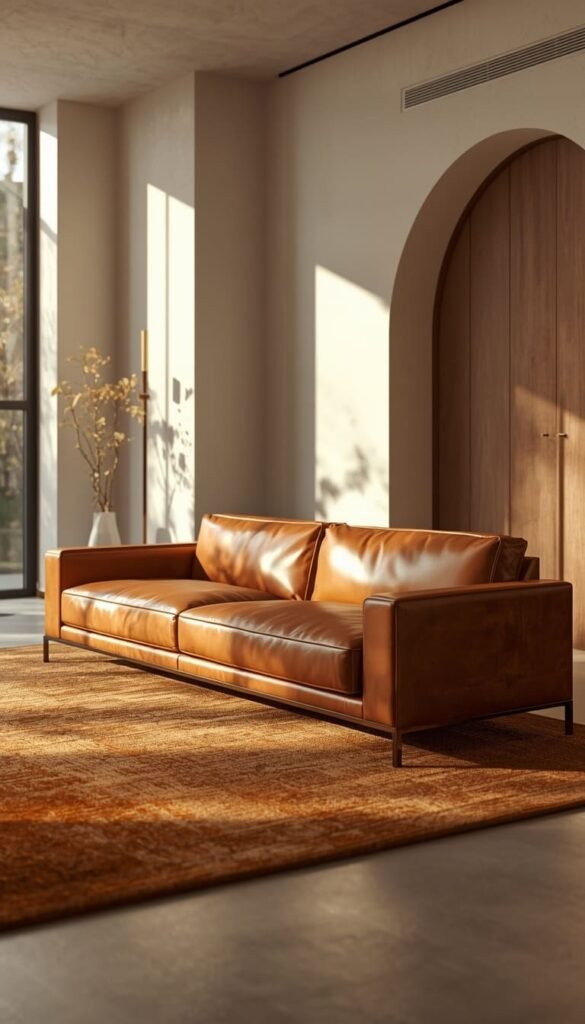
The sofa is the soul of an Italian living room. Full stop. I have seen people spend beautifully on everything else the rug, the art, the lighting and then drop the ball completely on the sofa, and it shows. In an Italian-style space, your sofa is not just seating. It is the first thing the room says about you.
Italian-style sofas lean into clean lines, low profiles, and generous proportions. You want something that looks like it belongs in a Milan showroom but feels like you could actually fall asleep on it on a Sunday afternoon. The best materials to look for:
- Full-grain leather in cognac, camel, or ivory for that timeless, aged luxury feel
- Bouclé or textured linen in warm oatmeal or natural tones for a softer, contemporary Italian look
- Velvet in deep jewel tones like forest green or dusty plum if you want one bold, intentional move
A quick trick I have learned is to always size up. Most American buyers choose sofas that are too small for their rooms. Italian interiors favor generously sized seating that fills the space with confidence and purpose.
3. Marble Moments Where to Use It and Where to Stop
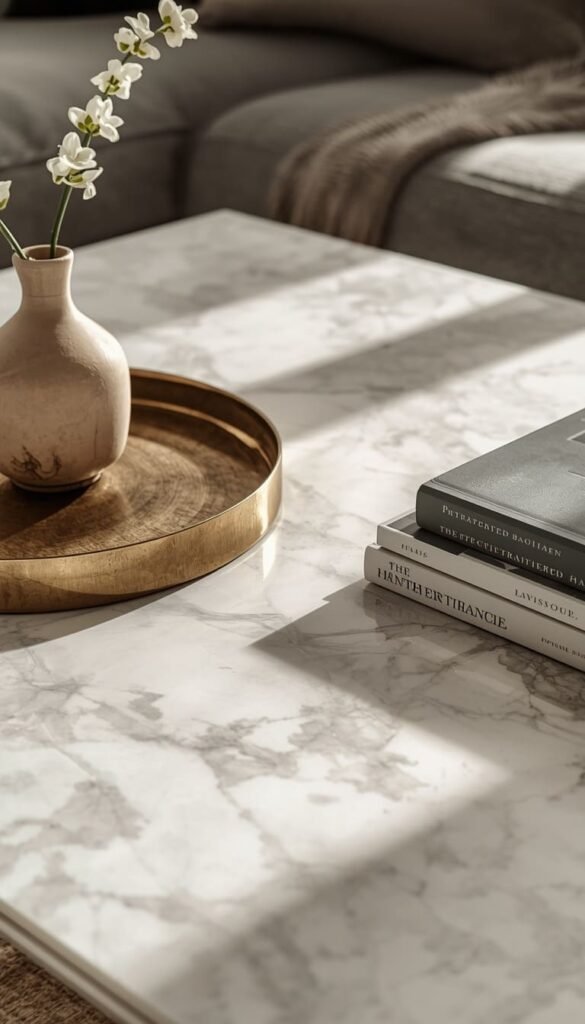
Marble and Italian interiors go together like pasta and Sunday. But here is the honest conversation I have with every single client who falls in love with a full marble floor: it is gorgeous, it is cold underfoot, and it will show every water ring, every dropped glass, and every scuff if you are not sealing and maintaining it properly. That reality does not mean you skip marble. It means you use it strategically.
The best places to bring marble into your living room are the coffee table, a fireplace surround, and window sills or accent shelving. These give you that rich, authentic Italian visual without the maintenance nightmare of a full marble floor. If you love the marble floor look, consider large-format porcelain tiles with a marble finish. Today’s options are genuinely stunning and about 80% easier to live with.
4. The “Old Money” Italian Shelf Curated, Never Cluttered
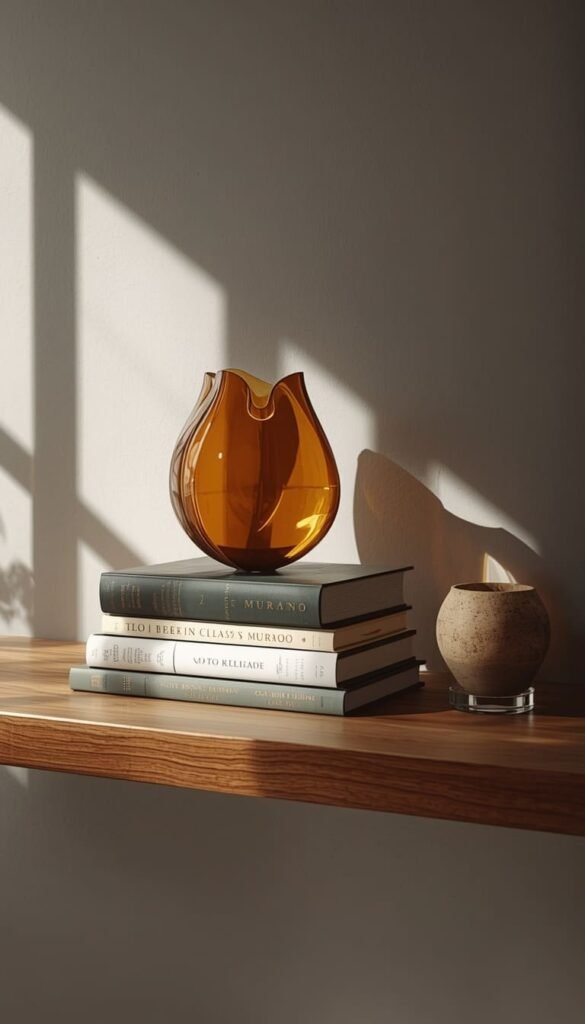
There is a specific kind of shelf styling that screams old Italian money, and it has nothing to do with how expensive the objects are. It is about restraint. I walked into a client’s home in Connecticut last year and their bookshelves looked like they had been styled by someone who had never heard the word “no.” Every surface was full. Every inch was occupied. It felt exhausting just looking at it.
The Italian approach to shelving and display is completely different. You choose three to five meaningful objects per shelf. A piece of Murano glass. A stack of oversized art books. A small ceramic vessel in an earthy tone. Maybe a single framed black and white photograph. Then you stop. The empty space around those objects is not wasted space it is breathing room, and it is what makes each piece feel significant and intentional rather than like part of a pile.
A quick trick I always use is the rule of odd numbers. Group objects in threes, and vary the heights within that group. One tall, one medium, one low. It creates visual rhythm without looking staged or forced.
Top 6 Italian Living Room Ideas:
| Idea | Estimated Price | Maintenance |
|---|---|---|
| Neutral Foundation (Paint + Plaster Finish) | $300 – $1,200 | Low |
| Statement Italian Sofa | $1,500 – $6,000 | Medium |
| Marble Coffee Table or Accent | $400 – $2,500 | Medium |
| Murano Glass or Artisan Pendant Light | $800 – $4,000 | Low |
| Velvet Accent Armchairs (Pair) | $600 – $2,800 | Medium |
| Tuscan Textile Layer (Linen, Throws, Cushions) | $150 – $700 | Low |
5. Velvet Armchairs as Jewel Toned Accents
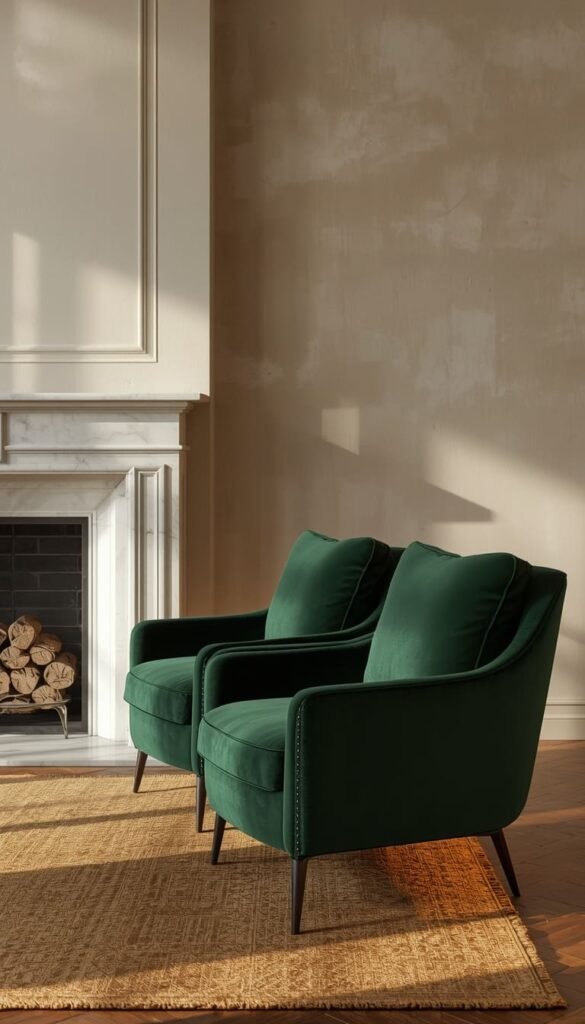
If your entire Italian living room is built on a neutral foundation and it should be then a pair of velvet armchairs is your permission slip to add personality. This is one of my favorite moves because it works in almost every room size, every budget, and every style variation of Italian design. The key is committing to the color.
Dusty plum, deep forest green, aged terracotta, and midnight navy are the tones I reach for most often. These are not bright, saturated colors. They are complex, slightly muted, and they photograph beautifully. Place them across from your sofa, flanking a fireplace or a console, and they instantly anchor the seating arrangement with intention.
The velvet fabric itself does a lot of the work here it catches light differently throughout the day, which gives the room that living, breathing quality that flat fabrics simply cannot replicate. One thing to keep in mind is that velvet does attract pet hair and lint, so if you have animals at home, look for a performance velvet or a brushed velvet with a tight weave. You get the same visual richness with a lot less maintenance stress.
6. Tuscan Warmth Exposed Beams, Terracotta and Raw Linen
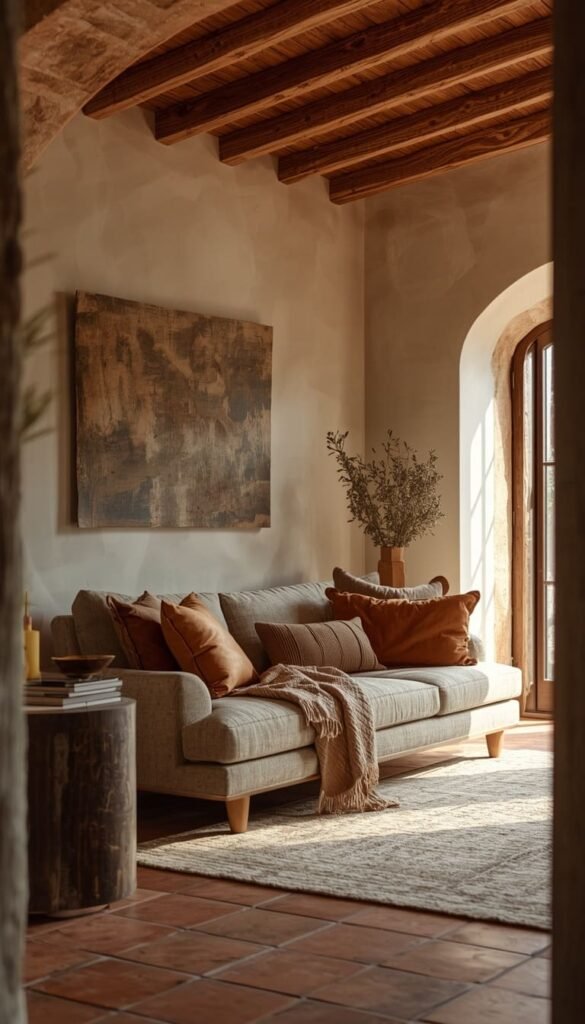
This is the idea that makes people close their eyes and picture a countryside farmhouse outside Florence. The Tuscan look is arguably the most beloved interpretation of Italian style in the US, and I think it is because it feels both luxurious and deeply livable at the same time. It does not ask you to keep everything perfect.
The three materials that define this aesthetic are:
- Exposed wooden beams — either original or faux box beams installed on the ceiling. Stained in a warm walnut or weathered oak tone, not painted white
- Terracotta — used on the floor, as a pot, as a decorative tile inset, or even as a wall accent. The color family ranges from deep rust to a softer, sandier clay
- Raw linen — on your curtains, your throw pillows, and your upholstery. Linen is the fabric of Tuscany. It wrinkles, it breathes, and it looks better the more lived-in it gets
The honest reality of terracotta floors specifically they are porous, they need sealing, and unsealed terracotta will stain permanently with red wine or olive oil. Seal them annually and you will have floors that genuinely improve with age.
7. The Italian Apartment Look Small Space, Big Sophistication
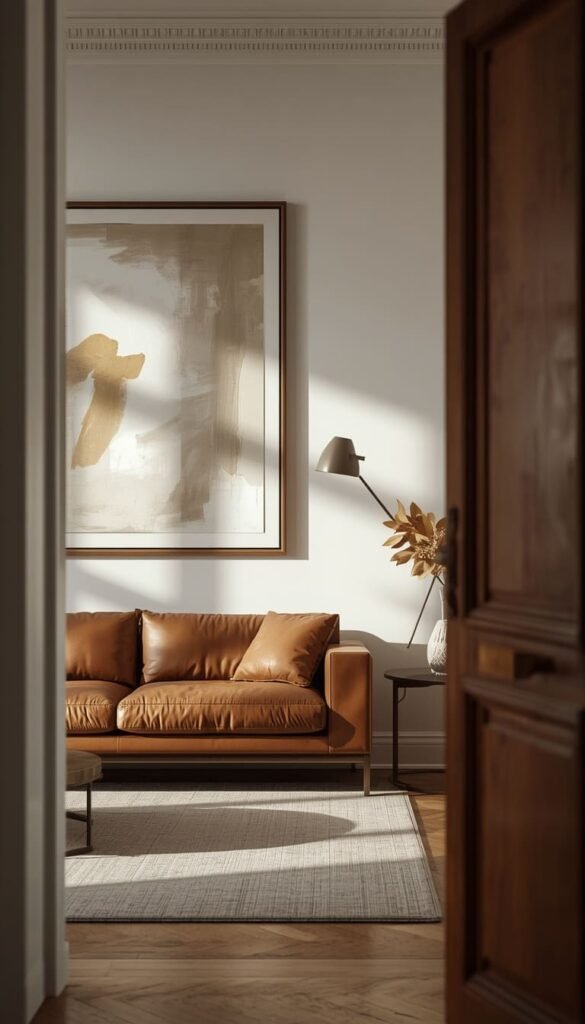
Not everyone is working with a Florentine villa’s square footage, and that is completely fine. Some of the most elegant Italian interiors I have ever seen were compact Milan apartments where every single inch was deliberate. The Italian apartment aesthetic is actually one of the easier looks to pull off in American homes because it relies on editing, not square footage.
The approach I always take with smaller spaces is this: choose one anchor piece that is genuinely beautiful and let everything else support it quietly. That anchor might be a low-profile Italian leather sofa, an oversized art piece, or a dramatic pendant light. Everything else the side tables, the rug, the accent pieces stays understated and lets that one hero element breathe.
A few practical moves that work beautifully in compact Italian-style rooms:
- Mirrors with simple, architectural frames — they add light and depth without visual noise
- Furniture with visible legs — pieces that float off the floor make a small room feel significantly larger
- A single large rug instead of multiple small ones — this is one of the most common mistakes I see in small spaces, and it makes every room feel chopped up and cramped
Which of these 14 ideas feels most like your living room right now and which one are you most tempted to try first?
8. Murano Glass and Artisan Lighting That Commands Attention
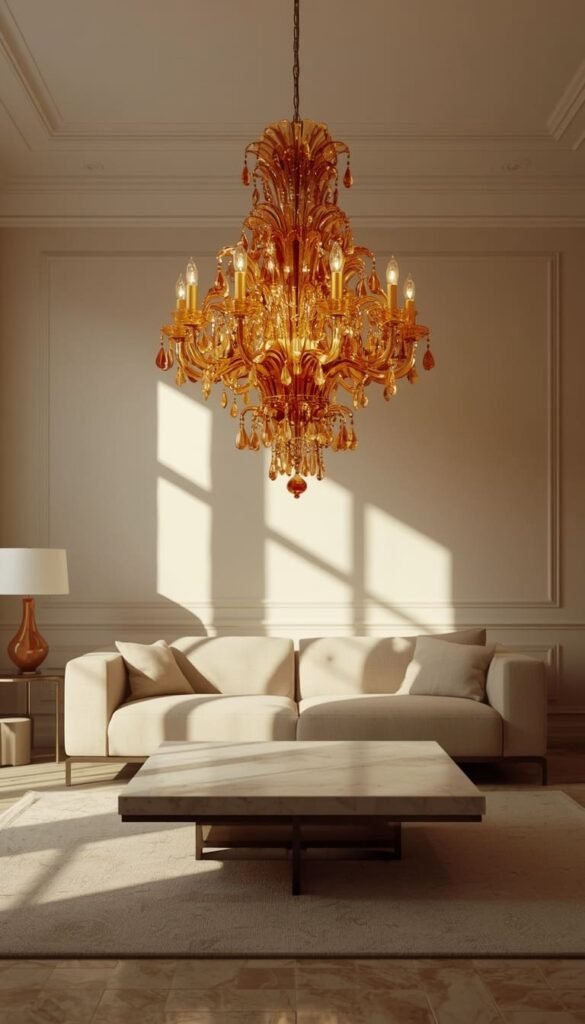
Lighting in an Italian living room is never an afterthought. It is a design element that gets as much thought as the sofa or the flooring, and Murano glass chandeliers are the crown jewel of that philosophy. I have sourced Murano pieces for clients in Texas, Arizona, and New York, and without exception, the chandelier becomes the first thing every single guest comments on.
Authentic Murano glass comes from the island of Murano in Venice, and the craftsmanship is genuinely unlike anything mass-produced. The way the glass catches and scatters light is something you have to see in person to fully appreciate. If an authentic piece is outside your budget right now and they can range from $800 to well over $15,000 there are excellent Murano-inspired options from brands like Arteriors and Visual Comfort that capture the spirit beautifully.
Beyond the chandelier, layering your lighting is what separates a room that looks designed from one that just looks furnished. I always work in three layers: ambient (overhead), accent (wall sconces or picture lights), and task (a reading lamp beside the sofa or armchair). In an Italian-style room, every light source should feel warm aim for bulbs in the 2700K to 3000K range, and you will always have that golden-hour glow that makes the room feel like it belongs somewhere along the Amalfi Coast.
9. The Minimalist Italian Living Room Less Is More, Done Luxuriously
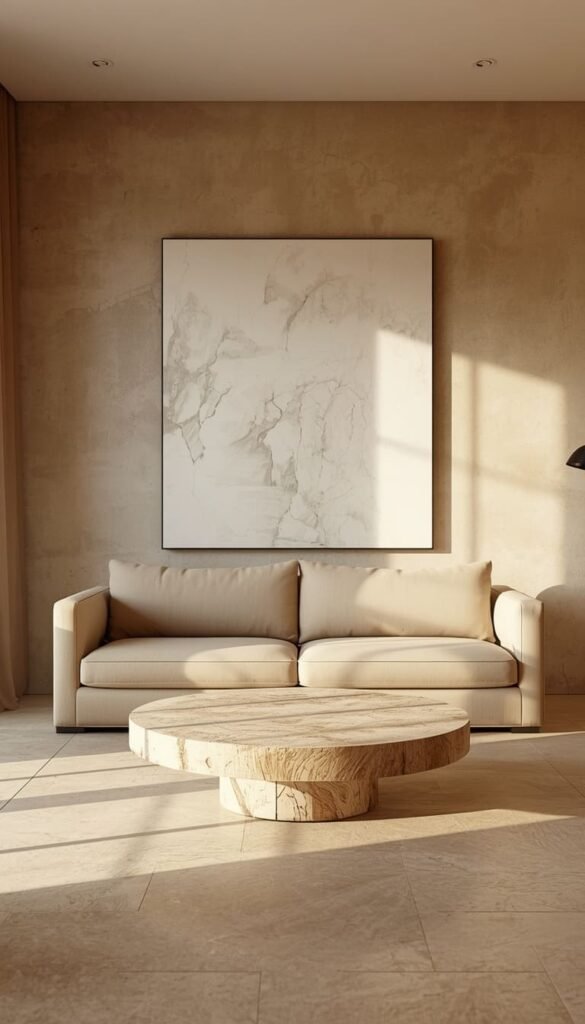
There is a version of Italian design that has nothing to do with ornate details or grand gestures. It is quiet, precise, and honestly one of the hardest looks to pull off well because there is nowhere to hide. The minimalist Italian aesthetic think contemporary Milan, not Tuscan countryside is built entirely on the quality of individual pieces and the discipline to stop adding things before you go too far.
What separates Italian minimalism from cold, clinical minimalism is materiality. The warmth comes from the surfaces themselves. A travertine floor. A linen sofa in a natural oatmeal tone. A single slab marble coffee table. A raw plaster wall. These materials have texture and depth built into them, so the room never feels empty even when it is intentionally spare.
The hardest part of this look for most of my clients is resisting the urge to fill. We are conditioned to think that empty surfaces need objects and that bare walls need art. In a minimalist Italian room, a beautifully textured plaster wall with nothing on it is a design choice, not an oversight. Give yourself permission to stop one step earlier than feels comfortable, and the room will almost always be better for it.
10. Mediterranean Outdoor to Indoor Flow Arched Doorways and Travertine Floors
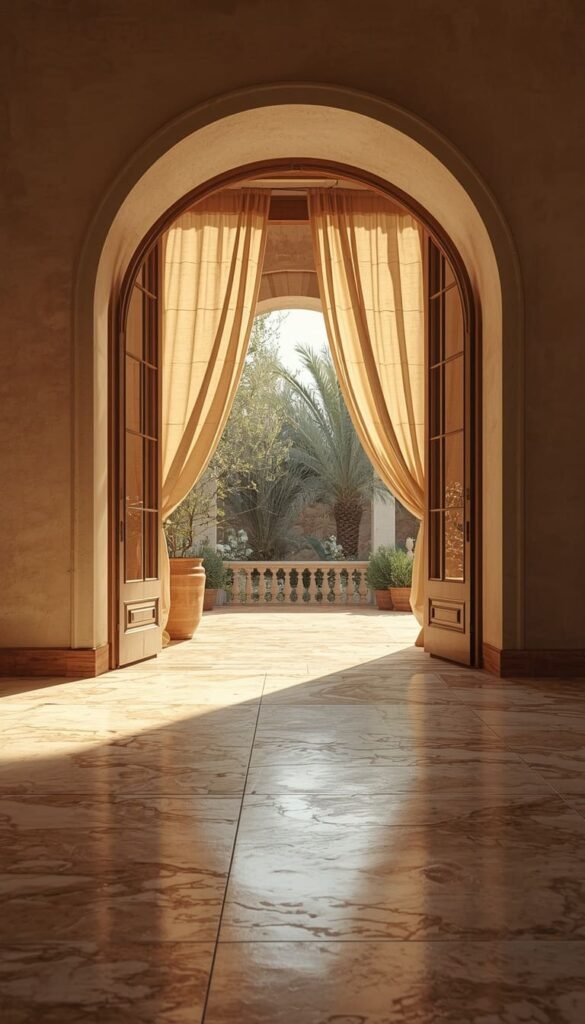
This idea is about dissolving the boundary between inside and outside, which is something Italian and Mediterranean architecture has always done instinctively. The climate, the culture, and the building traditions all push toward spaces that flow from a sun-drenched terrace into a cool, shaded living room without the transition feeling jarring or abrupt.
In American homes, you can create this feeling even without a full renovation. The two biggest impact moves are arched doorways and continuous flooring. If you have a living room that opens onto a patio or a sunroom, using the same travertine or large-format stone tile on both sides of that threshold does something remarkable to how the space reads. It visually expands the room and creates that effortless indoor-outdoor quality that feels inherently Mediterranean.
Arched doorways deserve a special mention here because they are one of those architectural details that changes a room’s entire personality. If a structural arch is not in your budget, even a simple arched mirror, an arched cabinet, or repeated arched frames on a gallery wall echo that vocabulary quietly and effectively. The shape alone carries the feeling.
One thing to watch for with travertine specifically it is a naturally porous stone, and outdoor travertine needs to be a slip-resistant, sealed variety. The indoor version and the outdoor version are not always interchangeable, so make sure you are specifying the right finish for each application when you shop.
11. Italian Villa Drama High Ceilings, Statement Focal Points and Grand Scale
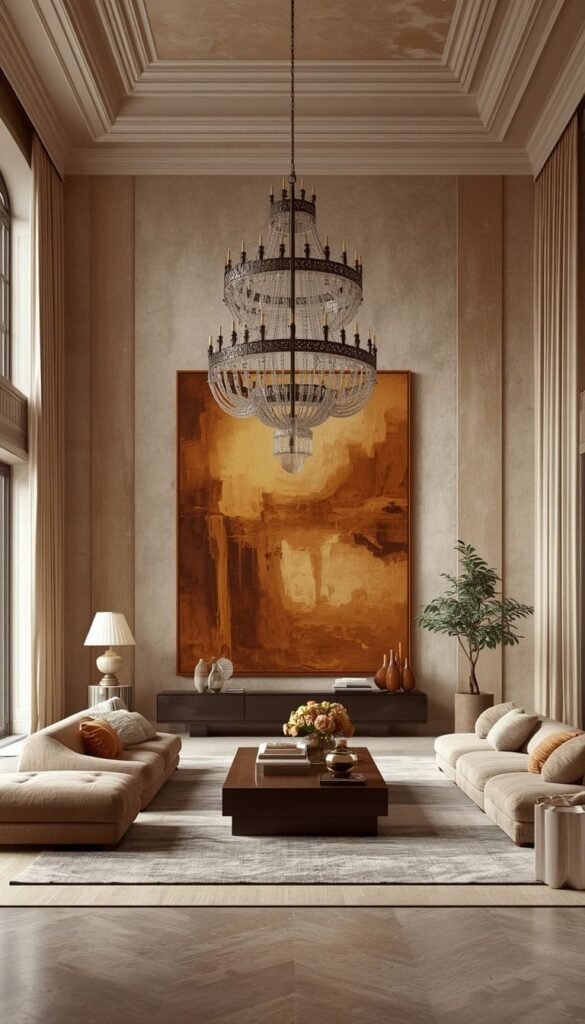
Some rooms are just built for drama, and if you are lucky enough to have high ceilings, an original fireplace, or any architectural bones worth working with, this is the idea that will make your living room genuinely unforgettable. The Italian villa aesthetic is unapologetically grand, and the secret to pulling it off without it feeling like a movie set is grounding the drama in warmth.
The focal point is everything here. In a traditional Italian villa interior, there is always one element that commands the room a monumental fireplace, a ceiling fresco, a floor-to-ceiling bookcase, or a single oversized artwork. Everything else in the room is arranged in conversation with that focal point, not competing with it. I worked on a project in Nashville where the client had a 14-foot ceiling and absolutely no idea what to do with it. We commissioned a large-scale abstract painting in warm ochres and sienna tones, hung it low enough to feel intimate, and built the entire room outward from that one piece. It changed everything.
A few specific moves that work brilliantly in high-ceiling Italian-style rooms:
- Oversized pendant or chandelier hung lower than feels instinctive — this pulls the ceiling’s height down into the human experience of the room and creates intimacy
- Floor-to-ceiling curtains in a heavy linen or velvet — even in rooms where the windows do not reach the ceiling, mounting curtain rods at ceiling height makes the windows feel grander and the ceilings feel purposeful
- A large-scale area rug that actually fits the seating arrangement — in villa-scale rooms, undersized rugs are the fastest way to make the space feel unresolved and awkward
12. The Coffee Table Moment Marble, Glass and Brass Combinations
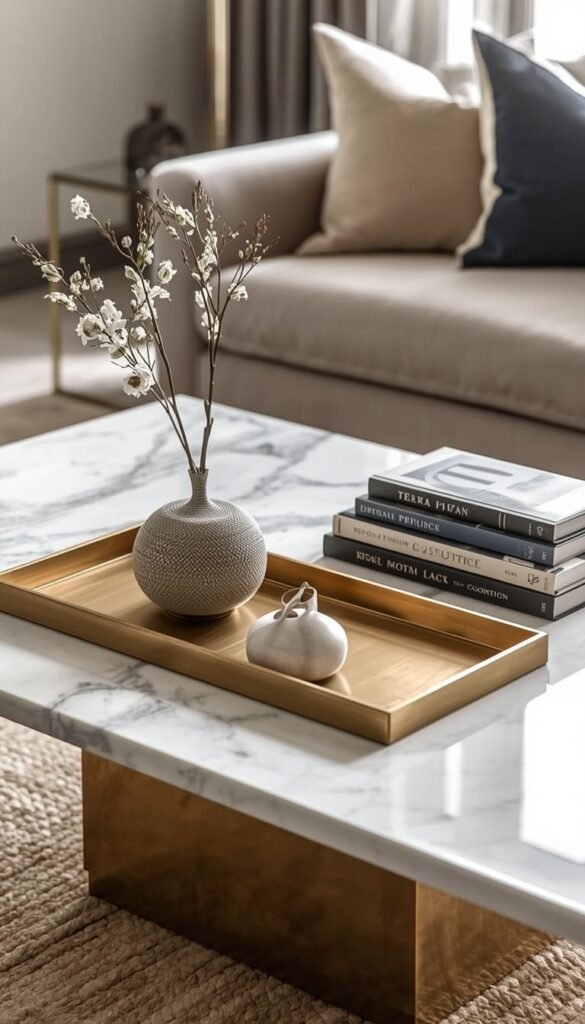
I genuinely believe the coffee table is one of the most underestimated pieces in any living room, and in an Italian-style space it carries significant visual weight. It sits at the center of everything literally and it is the one piece that every guest walks past, reaches across, and looks at from every angle. Getting it right matters more than people realize.
The material combinations that feel most authentically Italian are marble tops with brass or blackened steel bases, smoked glass with aged brass frames, and travertine with matte black metal. These pairings hit the right balance between warm and cool, organic and industrial, which is exactly the tension that makes Italian design feel sophisticated rather than safe.
Styling the surface of the coffee table is where a lot of people either nail it or completely lose the plot. My approach is always the same: one tray to organize, one stack of oversized books, one organic element like a small branch, a sculptural object, or a single fresh stem in a simple vessel. That is it. The tray is important because it visually contains smaller objects and prevents the table from looking scattered, even when there are several items on it.
One practical note if you have young children or entertain frequently, a full marble coffee table top is beautiful but genuinely unforgiving. A marble-look porcelain top or a glass top with a marble-finished shelf below gives you the aesthetic with significantly more durability for real everyday life.
13. Mixing Italian Pieces With Your Existing American Furniture
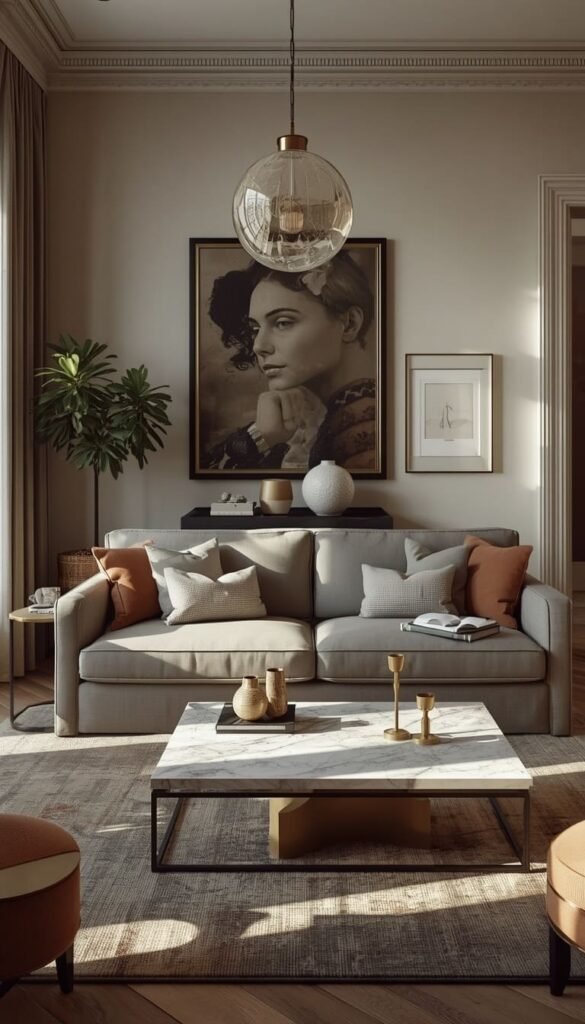
This is the conversation nobody in the Italian design space seems to want to have, and honestly it is the most useful one. The reality for most American homeowners is that you are not starting from an empty room. You have a sofa you love, a bookcase that works perfectly, a rug your grandmother gave you. The question is not how to replace everything it is how to introduce Italian elements without the room looking like it is having an identity crisis.
The approach I use with almost every client in this situation is what I call the anchor and echo method. You choose one or two pieces that are unmistakably Italian in character a marble side table, a Murano glass pendant, a velvet armchair in a rich earthy tone and then you pull colors and textures from those pieces into the existing furniture through smaller additions. A linen throw in the same warm neutral as your new Italian lamp base. Brass hardware on a bookcase that was previously overlooked. A travertine tray on top of a perfectly good American-made coffee table.
What makes this work is that Italian style is fundamentally about mood and material, not about logos or provenance. Your existing dark wood bookcase absolutely belongs in an Italian-inspired room if you style it with restraint and intention. Your classic American roll-arm sofa can live beautifully alongside an Italian marble coffee table if the color palette is cohesive. The pieces do not all need to speak the same language they just need to be having the same conversation.
A few combinations I have seen work beautifully in real homes:
- An American sectional in a warm grey with Italian-style brass and glass accent tables — the sectional reads as a generous, comfortable anchor and the Italian accents elevate it without overwhelming it
- A traditional American fireplace mantel styled with travertine objects, Murano glass, and a single oversized Italian art book — the mantel does not change, but the styling shifts the entire mood
- Existing light wood American furniture paired with a new Italian-inspired rug in warm terracotta and ivory tones — the rug does more heavy lifting than almost any other single purchase in a room
The budget reality here is genuinely encouraging. You do not need to spend $50,000 to make a room feel Italian. In my experience, three to four well-chosen Italian-inspired anchor pieces, thoughtfully integrated with what you already own, will get you 80% of the way there for a fraction of the cost of starting over.
If you could change just one thing about your living room today, what would it be?
14. The Cozy Italian Evening Setup Layered Textiles, Warm Lighting and Scent
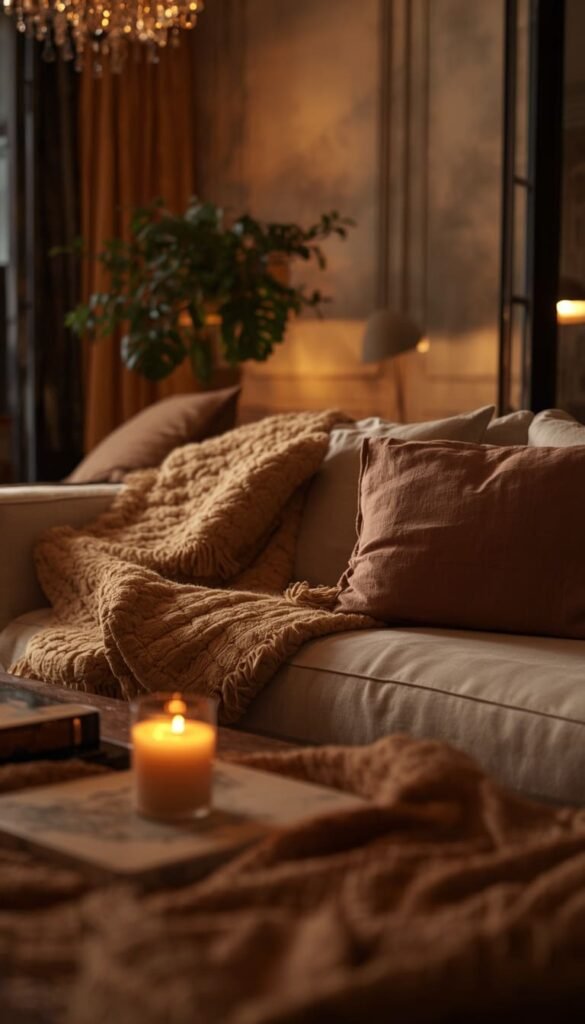
This is my favorite idea in the entire list, and I saved it for last on purpose. Because all the marble, all the velvet, all the travertine in the world means nothing if your living room does not feel genuinely good to be in when the sun goes down and you want to settle in for the evening. Italian homes have always understood something that a lot of American interiors miss entirely the room needs to feel different at night than it does during the day, and that shift should happen naturally through layers.
Textiles are where you start. A linen sofa is beautiful, but add a chunky wool throw in a warm camel tone, two or three cushions in varying textures a velvet, a boucle, a linen embroidered with a subtle pattern and suddenly the sofa transforms from a furniture piece into an invitation. The layering does not need to be complicated or color-coordinated to the millimeter. It needs to feel generous and considered at the same time.
Lighting is the next layer, and this is where a dimmer switch is one of the best investments you will ever make in your home. Italian evenings call for low, warm, multi-source light the chandelier dimmed down, a floor lamp glowing beside the reading chair, a single candle on the coffee table tray. The goal is to make the room feel like it has a heartbeat. Overhead-only lighting at full brightness is the fastest way to kill that feeling.
And then there is scent, which almost nobody talks about in interior design articles but which every Italian home I have ever walked into has understood intuitively. A diffuser or a high-quality candle in warm notes fig, amber, aged wood, warm leather, or a Mediterranean herb blend completes the sensory experience of the room in a way that no amount of beautiful furniture can replicate on its own. It sounds small. It is not small. It is the difference between a room that looks Italian and a room that genuinely feels Italian.
Your Italian Style Selection Map
By Budget
Starting Out ($150 – $1,500)
- Begin with paint limewash or warm white transforms a room before you spend a dollar on furniture
- Add a linen throw and two textured cushions to any existing sofa immediately
- Swap one overhead light for a Murano-inspired pendant in the $400 to $800 range
- A travertine tray and a stack of oversized art books on your coffee table costs under $100 and looks like a designer did it
- One velvet accent cushion in forest green or dusty plum against a neutral sofa is all the color you need
Investment Level ($2,000 – $15,000+)
- Lead with the sofa full-grain leather or high-quality bouclé, generously sized
- Invest in a genuine marble or travertine coffee table as your room’s centerpiece
- Source an authentic Murano glass chandelier through a verified US importer
- Consider arched doorway installation or exposed faux beam ceiling detail for architectural impact
- Commission custom linen curtains hung at ceiling height for a true villa finish
By Lifestyle
Busy Families and Pet Owners
- Choose performance velvet over standard velvet same look, dramatically easier to clean
- Go porcelain marble-finish over real marble on high-traffic surfaces
- Warm greige walls hide daily scuffs far better than pure white
- Skip white upholstery entirely opt for oatmeal, camel, or warm taupe instead
- Use a tray system on your coffee table to contain clutter without constant restyling
Minimalists and Empty Nesters
- Invest in one genuinely exceptional anchor piece and let everything else stay quiet
- Real marble, real Murano glass, real linen fewer pieces, better quality
- Leave surfaces intentionally empty breathing room is a design choice, not neglect
- A single oversized artwork does more work than a gallery wall in an Italian-style room
- Dimmer switches on every light source the room should feel completely different after 7pm
Frequently Asked Questions
What makes an Italian living room different from other European styles?
Italian rooms lead with warmth and material quality above everything else. Where French style leans ornate and Scandinavian goes cold and spare, Italian interiors sit right in the middle luxurious but livable, elegant but never stiff.
How do I make my living room look Italian on a budget?
Start with warm white or limewash paint, then add linen textiles and one brass or marble accent piece. Those three moves alone shift a room’s entire mood without touching your furniture.
What colors are most common in Italian living room design?
Warm whites, creamy greiges, terracotta, and soft stone tones dominate authentic Italian interiors. You will rarely see cool greys or stark whites everything leans toward the warmth of sun, earth, and aged natural materials.
Is marble flooring practical for an American home?
Yes, but only if you seal it every 12 to 18 months and treat spills immediately. For busy households, large-format marble-finish porcelain gives you 90% of the look with a fraction of the upkeep.
Which Italian furniture brands are available in the USA?
Natuzzi, Poliform, and Cassina ship to the US and carry authorized dealers in major cities. For mid-range options, Arhaus and RH both offer Italian-inspired pieces that hold up well in real homes.
Conclusion
Your Italian living room does not require a renovation budget or a flight to Milan it just requires a decision to start. Pick one idea from this list that genuinely excited you and act on it this week, even if that means ordering a paint sample or clearing off your coffee table and restyling it with three intentional objects. Small moves made with clarity and intention will always outperform big budgets spent without direction.
Your home is where your actual life happens, and you deserve to feel something when you walk into it. That shift starts with one choice, not fourteen.
So tell me which of these ideas are you starting with, and what does your living room look like right now? Drop it in the comments below and I will give you my honest first recommendation.
