13 Unfinished Basement Ideas on a Budget That Look Expensive
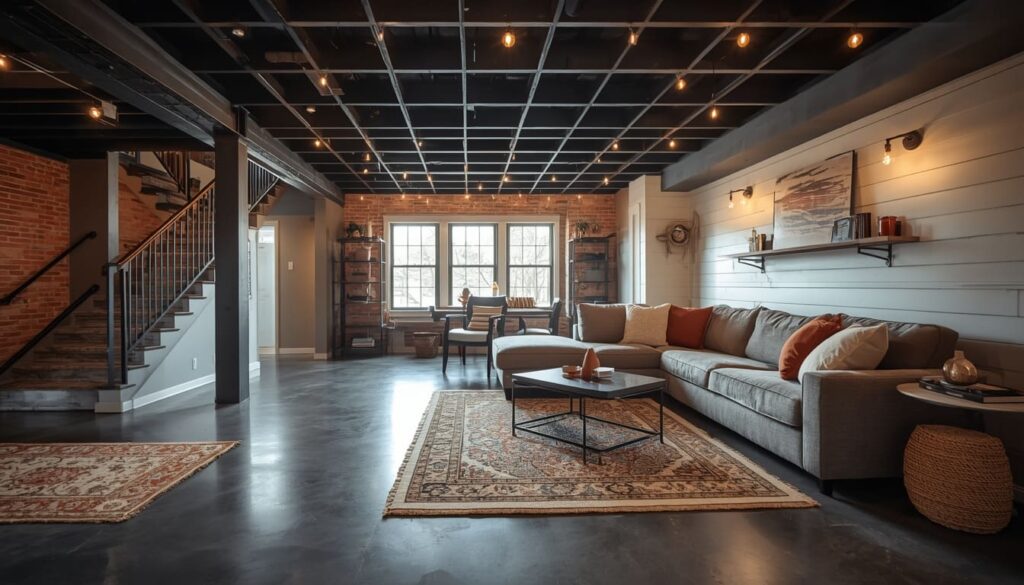
My clients in Columbus, Ohio spent $387 on their basement and their neighbors genuinely thought they hired a contractor.
That’s the thing about unfinished basements. Most homeowners either ignore them completely or convince themselves a real transformation requires $15,000 and a permit. Neither is true. With the right moves, a raw concrete space with exposed joists and cinder block walls can look intentional, cozy, and honestly expensive. These 13 unfinished basement ideas on a budget prove that smart styling beats big spending every single time.
My Design Notes
When I was working on a project in Columbus, Ohio, my clients a young family with two kids and a dog handed me a $400 budget and a 900 sq ft unfinished basement they were embarrassed to show anyone. The concrete floor had old paint splatters. The utility area was fully exposed. The ceiling joists were bare and the whole space felt cold and forgotten.
We painted the floor charcoal gray, hung linen curtain panels from ceiling-mounted tracks to hide the mechanicals, and layered two thrifted area rugs to carve out a proper family TV zone. A grid of warm string lights overhead did more for the mood than any overhead fixture ever could. My total spend landed at $387.
Two weeks later, their neighbor walked in and her first question was “Which contractor did you use?” That reaction never gets old. It’s exactly why I believe budget-smart basement design is one of the most underrated skills in this industry.
Stunning Budget Basement Makeover Ideas That Look Like a Million Dollars
1. Paint the Concrete Floor a Moody Saturated Color
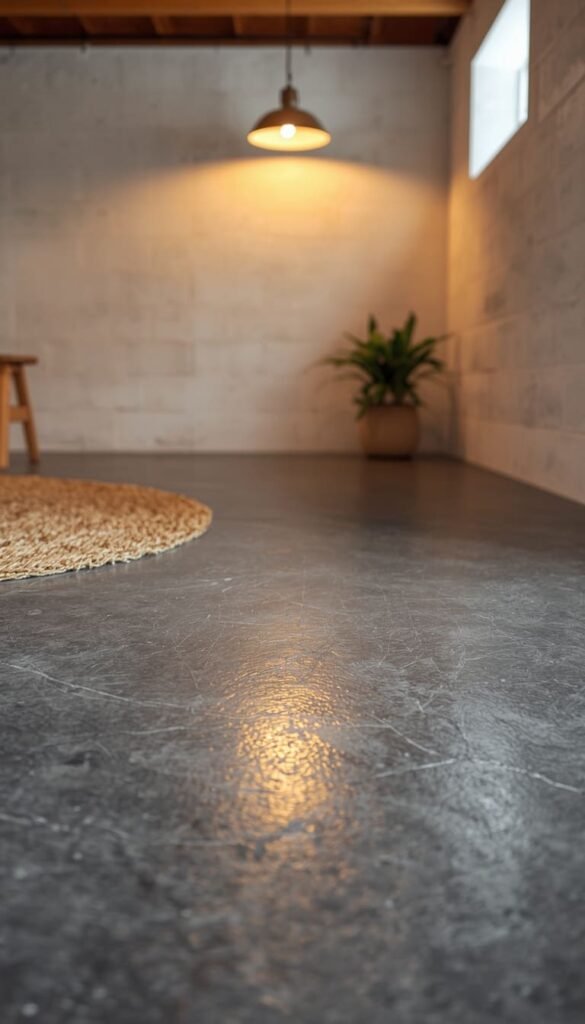
Most people slap a coat of beige on their concrete floor and call it a day. I get it it feels safe. But here’s what I’ve learned after years of basement projects: a moody, saturated floor color is what actually makes a space look designed rather than patched up.
Charcoal gray is my personal go-to. It hides imperfections beautifully, grounds the entire room, and pairs with literally every style from modern industrial to cozy farmhouse. Deep navy and warm greige are close seconds, especially in basements that get any natural light from egress windows.
One thing to watch out for is skipping the sealant. Paint without a concrete sealer will chip within months especially in a basement where moisture is always a factor. Use an epoxy-based floor paint or follow up any latex paint with a clear polyurethane sealer. That extra step is what separates a floor that looks great for two years from one that looks great for ten.
Budget reality: A full gallon of quality concrete floor paint runs $35 to $60. For most standard basements, you’re looking at a total project cost under $100.
2. Install Peel and Stick Vinyl Plank Flooring Over Concrete
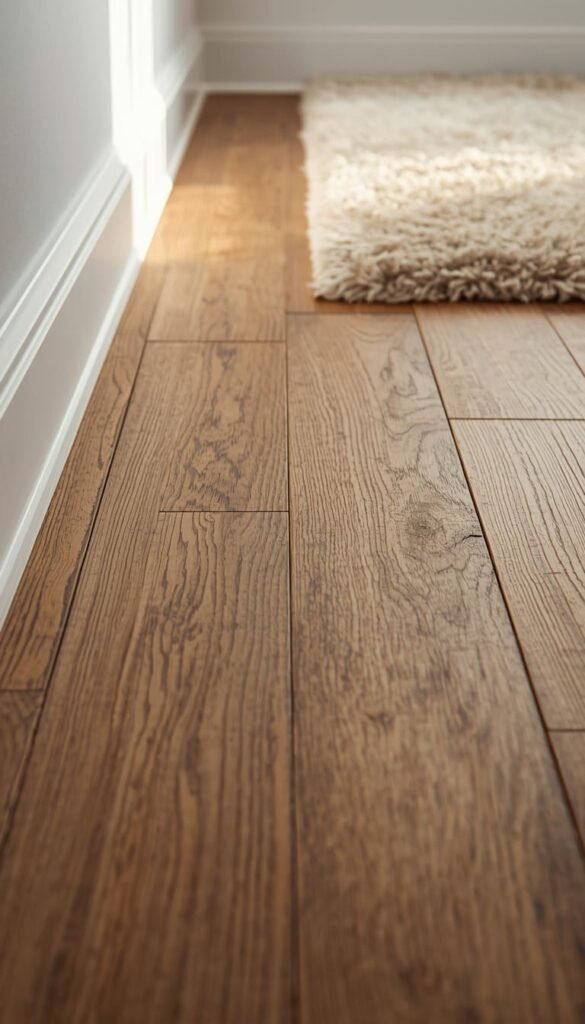
This is the single most asked-about upgrade I recommend to clients who want their basement to look finished without spending thousands. Peel and stick vinyl plank has come a long way. The newer options have realistic wood grain textures that genuinely fool people and I say that as someone who has watched guests crouch down to knock on the floor and check.
The install is beginner friendly. Clean the concrete, let it dry completely, and start laying planks from the center of the room outward. No glue guns, no nail guns, no contractor required.
A few things I always tell clients before they order:
- Measure generously and add 10 percent for cuts and waste
- Choose a plank that’s at least 4mm thick for better comfort underfoot
- Stick with neutral wood tones like medium oak or warm walnut they photograph well and never feel dated
At $1 to $2 per square foot, a 400 sq ft basement floor runs $400 to $800 total. That’s a fraction of what hardwood or tile would cost, and the result honestly looks like a finished room.
3. Paint the Exposed Ceiling Joists Matte Black
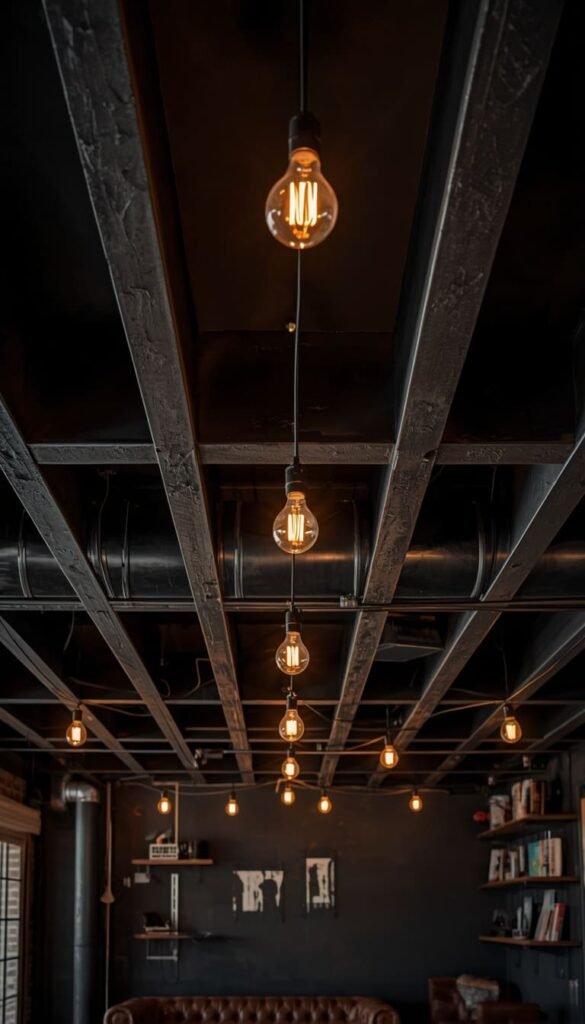
I’ve said it to dozens of clients and I’ll say it here stop fighting your unfinished ceiling. Embrace it. Painting the exposed joists, pipes, and ductwork matte black is one of the smartest moves you can make in an unfinished basement, and it costs almost nothing.
The reason it works so well is psychology. Dark colors visually recede. When everything on that ceiling is the same deep matte black, your eye stops registering the chaos of pipes and wires and starts reading it as a cohesive, intentional industrial detail. Suddenly your basement looks like a trendy downtown loft instead of a construction site.
Use a paint sprayer if you can rent one it makes the job dramatically faster and gets into all the tight spaces around pipes. A quick trick I’ve learned is to wrap anything you don’t want painted (electrical boxes, HVAC access panels) in painter’s tape first. Takes 20 minutes of prep and saves hours of touch-up work.
Matte black ceiling paint runs about $30 to $45 for a gallon. The transformation it delivers is genuinely disproportionate to the cost.
4. Hang Budget String Lights in a Grid Pattern Not Just Strands
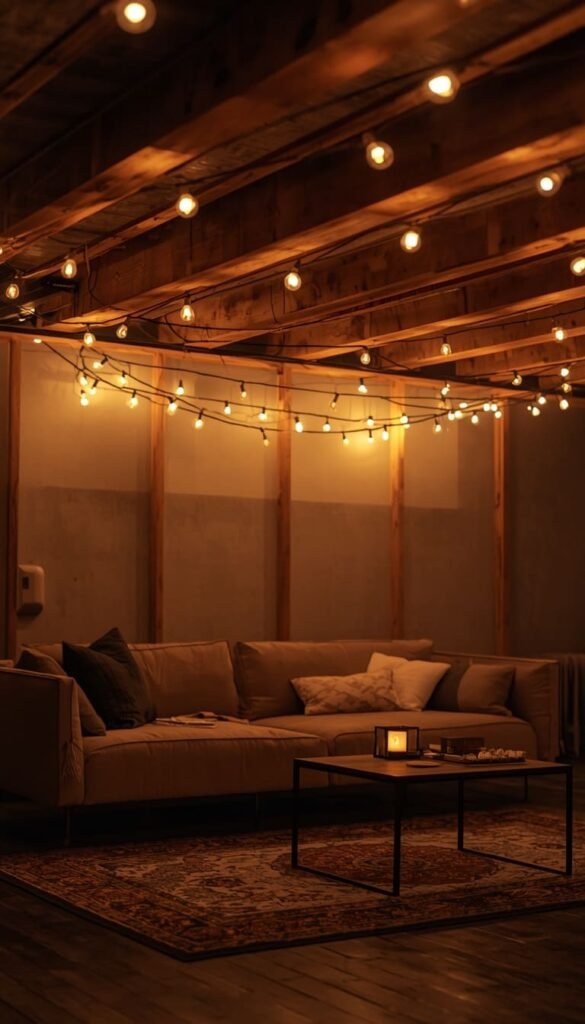
String lights are everywhere in basement inspiration photos, but most people hang them wrong. Single strands draped from one wall look like a college dorm. A structured grid pattern looks like a restaurant designer got involved.
Here’s how I set it up for clients: run parallel strands across the ceiling joists spaced about 12 to 18 inches apart, then weave perpendicular strands across them to create an overhead canopy of warm light. The effect is layered, intentional, and genuinely beautiful especially in the evening.
Warm white bulbs only. Cool white or daylight bulbs will make your basement feel clinical. Stick with 2700K to 3000K for that golden, cozy glow that makes everyone look good and the space feel inviting.
The entire grid setup for a standard basement runs $40 to $80 depending on size. Plug-in options keep this a completely permit-free project, which matters when you’re working on a budget.
Top 6 Budget Basement Ideas:
| Idea | Estimated Price | Maintenance |
|---|---|---|
| Paint Concrete Floor | $35 – $100 | Low |
| Peel and Stick Vinyl Plank Flooring | $400 – $800 for 400 sq ft | Low |
| Matte Black Ceiling Joists | $30 – $45 per gallon | Low |
| Faux Shiplap Accent Wall | $40 – $80 | Medium |
| Floor to Ceiling Curtain Zones | $80 – $150 | Low |
| Open Shelving Storage Wall | $100 – $250 | Low |
5. Build a Faux Shiplap Accent Wall With Plywood Strips
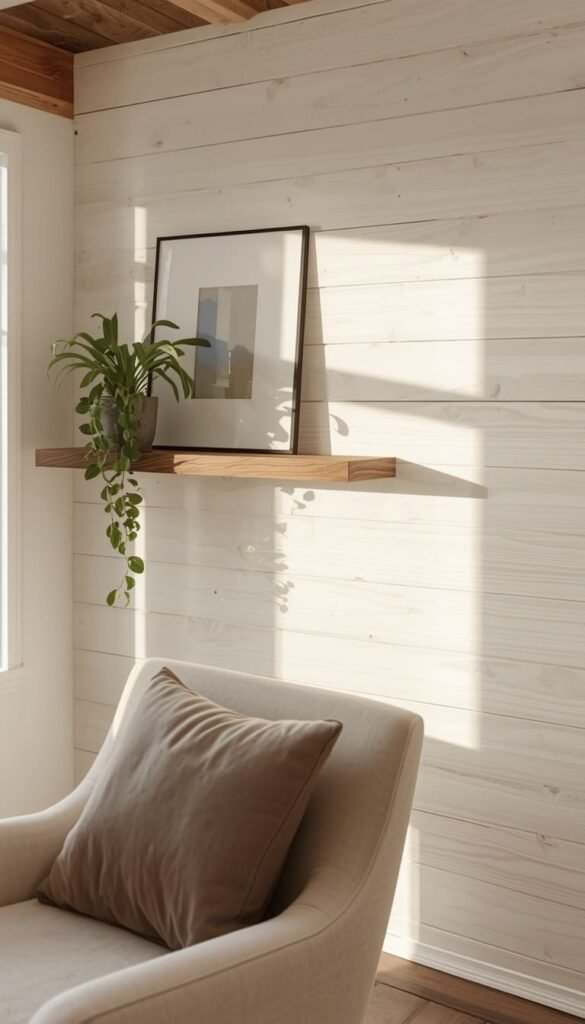
If there is one project that consistently makes my clients gasp at the before and after photos, it is this one. A faux shiplap wall built from thin plywood strips costs $40 to $80 in materials and photographs like a $2,000 renovation. Every single time.
The process is straightforward. Rip a sheet of 1/4 inch plywood into 6 inch wide strips using a table saw or have your local hardware store cut them for you. Attach them horizontally across your concrete or cinder block wall using construction adhesive and finish nails into any wood framing present. Leave a small consistent gap between each strip about a nickel’s width to get that authentic shiplap look.
Paint it out in a crisp white or soft warm cream and suddenly that cold gray wall becomes the focal point of the entire room. A few things worth knowing before you start:
- Make sure the wall is completely dry before attaching anything moisture behind plywood leads to warping and mold
- Prime the plywood before your topcoat to prevent the grain from bleeding through
- This works best on one accent wall rather than all four one statement wall is all you need
The finished result looks intentional, architectural, and genuinely expensive. Nobody walking into that basement will guess the whole wall cost less than a dinner out.
6. Use Floor to Ceiling Curtains to Hide Utilities and Create Zones
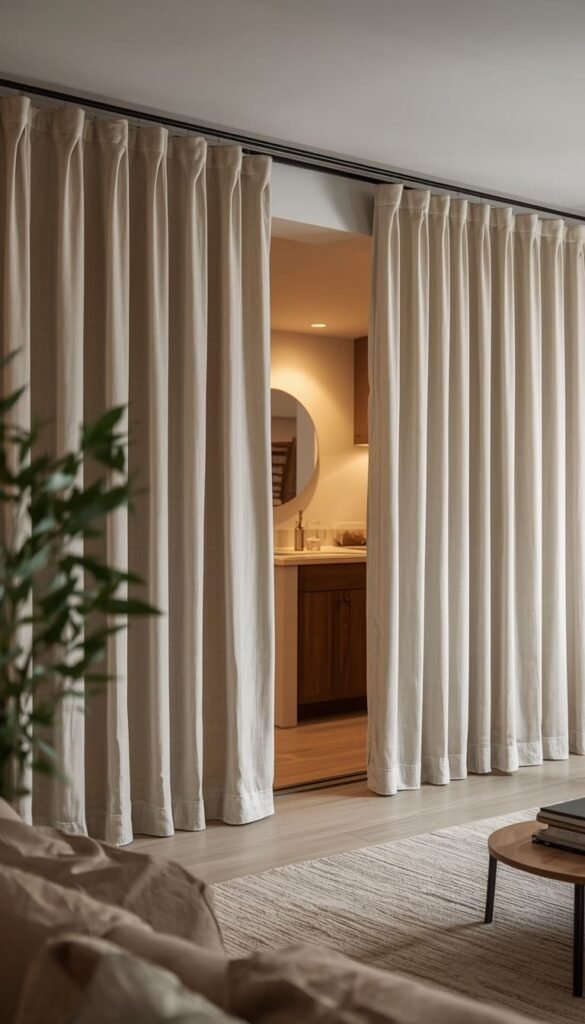
This is the most versatile trick in my entire budget basement toolkit. Floor to ceiling curtains do three things at once they hide ugly utility areas, they create defined zones within an open basement, and they add softness and warmth to a space that desperately needs both.
The installation is simpler than most people think. Mount a ceiling track directly into the floor joists above no drywall anchors needed in a basement since the joists are exposed. Run the track wherever you need a visual partition and hang your curtain panels from it. I always sew small metal washers into the bottom hem of each panel. That tiny trick keeps the fabric hanging straight and prevents it from billowing every time the HVAC kicks on.
For fabric, linen and linen-blend panels are my first choice. They drape beautifully, feel elevated, and come in budget-friendly options at IKEA and Amazon starting around $20 per panel. Avoid anything too sheer you want actual visual coverage, not just the suggestion of it.
One space where this makes an enormous difference is the laundry area. Tucking the washer and dryer behind a full-length curtain instantly makes the rest of the basement feel like a real living space rather than a utility room with furniture in it.
Is your unfinished basement currently being used or is it just a storage dump you avoid? Tell me what it looks like right now!
7. Create a Cozy Unfinished Basement Family Room With a Rug Layering Trick
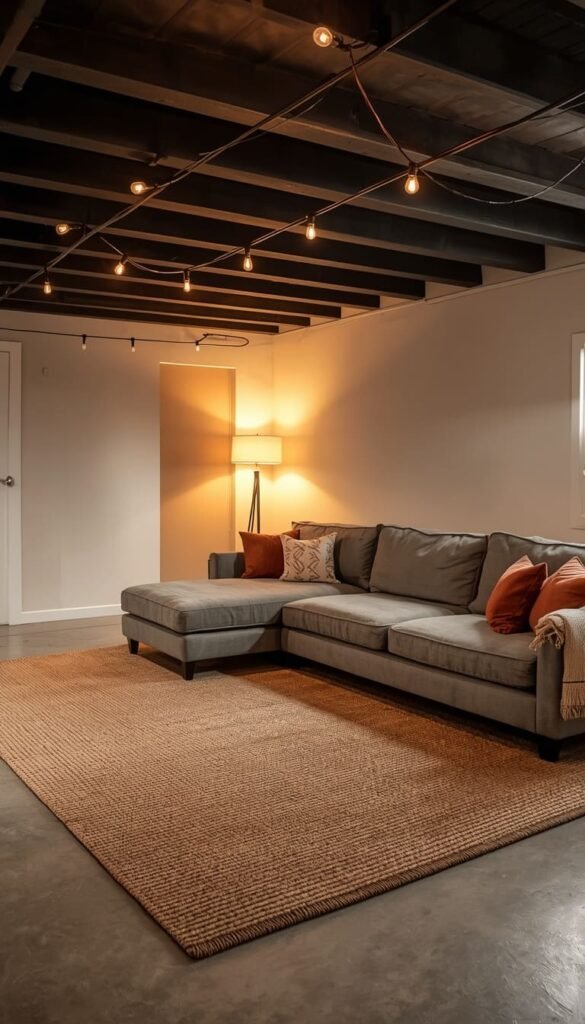
An unfinished basement family room lives or dies by how grounded and warm the seating area feels. Concrete floors and exposed walls work against you here, so the furniture arrangement and rug situation have to work twice as hard.
The rug layering trick is exactly what it sounds like. Start with a large, low-cost jute or sisal rug as your base layer something in the 8×10 or 9×12 range that anchors the whole seating zone. Then layer a smaller, softer rug on top, slightly offset, in a pattern or texture that adds personality. The combination reads as collected and intentional rather than budget-conscious, and it adds real cushion over that cold concrete.
For the seating itself, a large sectional is ideal for basement family rooms because it fills the space confidently and signals that this is a real room. Thrift stores and Facebook Marketplace are genuinely your best friends here. I’ve found beautiful sectionals for $150 to $300 that cleaned up perfectly.
Lighting zones are what finish the look. Don’t rely solely on overhead lighting add a floor lamp in one corner and a table lamp on whatever surface sits beside the sofa. That combination of light sources at different heights is exactly what makes a room feel designed rather than assembled.
8. Set Up a Budget Game Room Corner That Feels Intentional
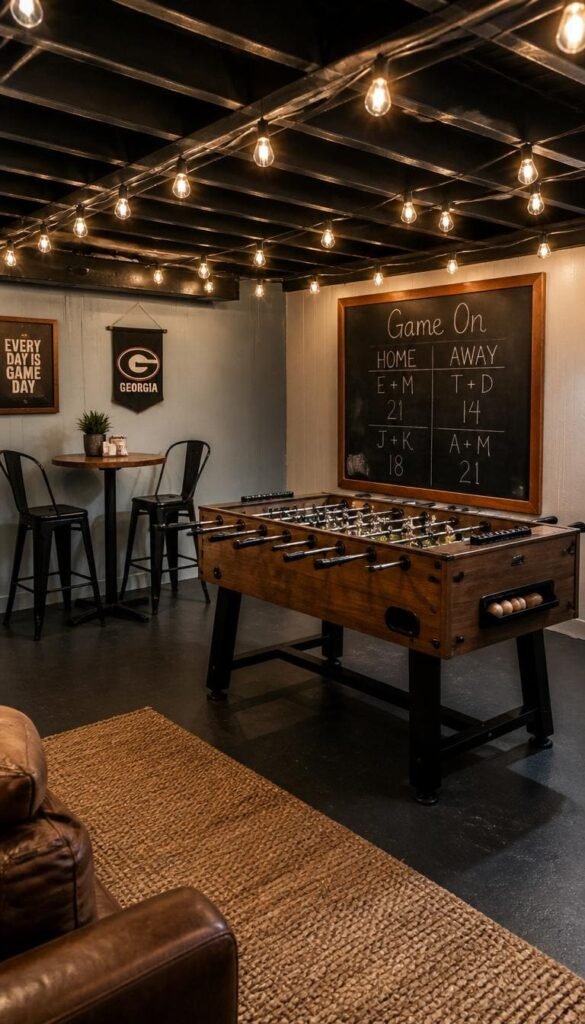
A game room corner in an unfinished basement does not need to be elaborate to feel exciting. What it needs is definition a clear sense that this specific area was set up on purpose, not just pushed into a corner because there was nowhere else to put it.
Start with the anchor activity. A foosball table, a ping pong table, or even a dart board wall can serve as the centerpiece. Position it so there is adequate clearance on all sides nothing kills a game room faster than bumping into a support column mid-game.
Then build the atmosphere around it:
- Hang a chalkboard or dry erase board on the wall for keeping score it adds function and a surprisingly fun visual element
- Add a small bistro table and two stools nearby for drinks and spectators
- String a dedicated set of warm Edison bulb lights specifically over the game area to make it feel like its own destination within the larger basement
The whole corner can come together for under $200 if you source the game table secondhand. What makes it look expensive is not the price tag on the equipment it is the cohesion of the lighting, the seating, and the intentional layout around it.
9. Build an Open Shelving Storage Wall That Looks Like Retail Display
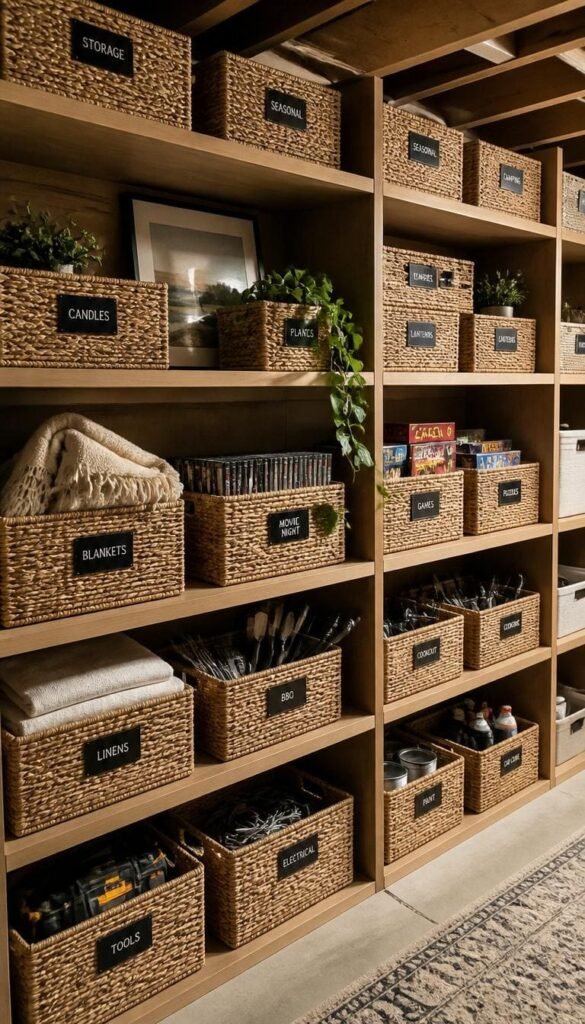
Most basement storage walls look like a garage random bins stacked in no particular order, mismatched containers, items shoved wherever they fit. The good news is that transforming that chaos into something that looks curated and intentional takes more editing than it does money.
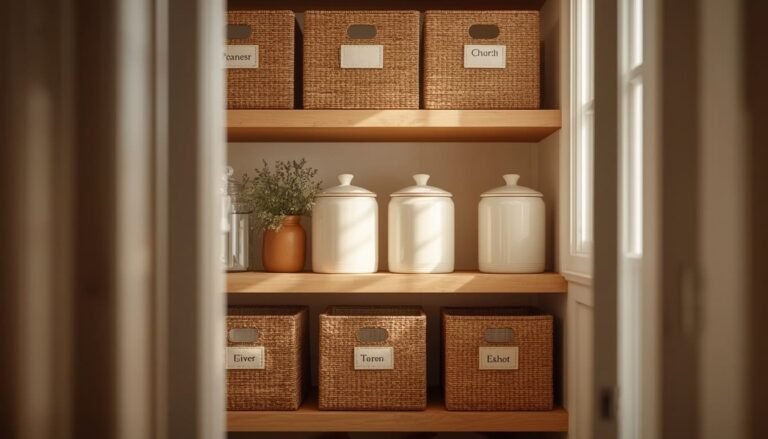
Start with a consistent shelving system. Floor to ceiling open shelving using simple bracket shelves or a freestanding unit from IKEA creates the bones. What makes it look retail-quality rather than storage-unit-quality is what happens next the styling layer.
Group like items together by category and contain them in matching bins or baskets. Label everything with simple black and white labels. Vary the heights of what sits on each shelf so the eye travels up and down rather than across in a flat line. Leave intentional empty space on a few shelves that breathing room is what separates a styled wall from an overstuffed one.
A quick trick I always use is to bring in one or two non-storage items a small plant, a framed print, or a decorative basket and tuck them into the shelving. It signals that this wall was designed, not just loaded up. The whole system can be built and styled for $100 to $250 depending on how much shelving you need.
10. Paint Cinder Block Walls With a Two Tone Color Strategy
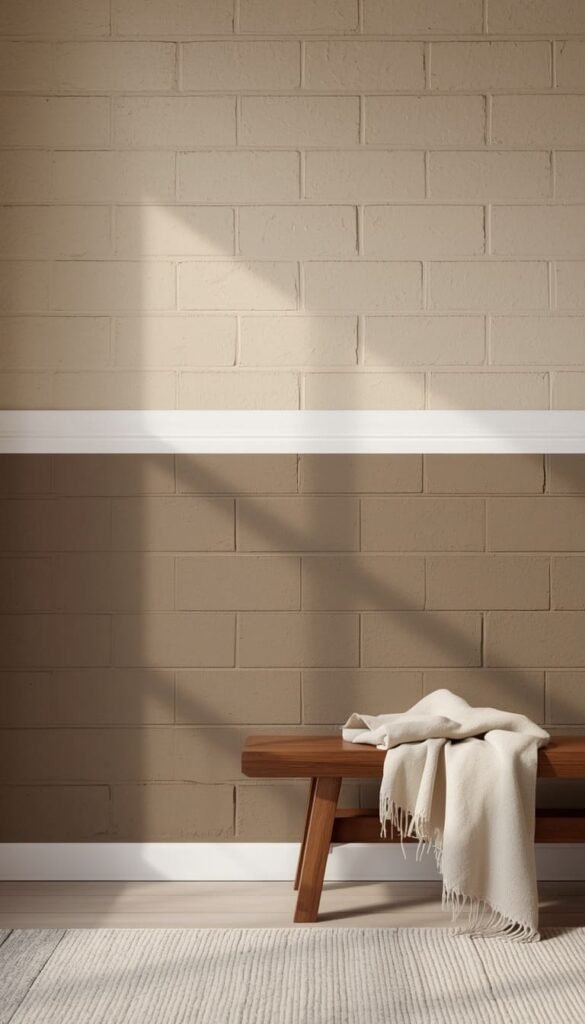
Painting cinder block walls is one of the most common budget basement moves out there. But here is the version that actually looks expensive versus the version that just looks painted.
The two tone strategy divides the wall horizontally. Paint the lower third of the wall in a slightly deeper, richer version of your main color think warm greige on top with a deeper taupe below, or soft white above with a pale sage below. This technique visually anchors the room, makes ceilings feel taller, and gives the space a finished architectural quality that a single coat of paint simply cannot achieve.
Use masonry waterproofing paint as your base this is non-negotiable in any basement with even minimal moisture exposure. Regular wall paint applied to cinder block without a proper masonry primer will start peeling within a year and create a moisture management nightmare down the road.
The color divide typically sits about 36 inches from the floor, which aligns naturally with where most furniture hits. It feels intentional rather than arbitrary, and it draws the eye upward in a way that makes even a low-ceiling basement feel more open and breathable.
11. Create a Budget Laundry Room Nook With a Curtain and Floating Shelf
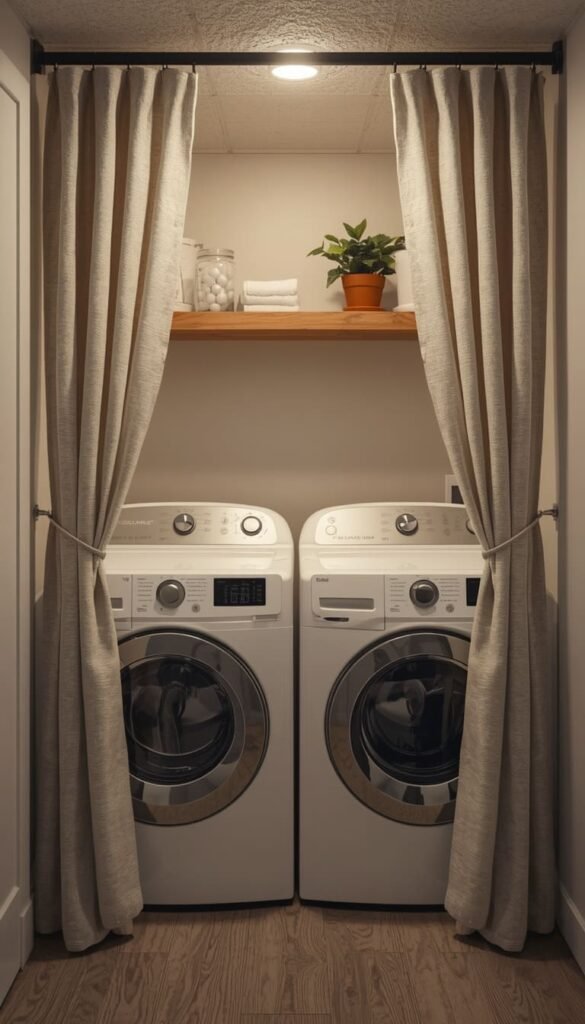
The laundry area is the most neglected corner of almost every unfinished basement I walk into. It gets a pass because it’s “just the laundry room.” But here is the thing when the laundry area looks like an afterthought, it drags the energy of the entire basement down with it.
A curtain enclosure paired with a single floating shelf is the $100 fix that changes everything. Mount your ceiling track curtain rod across the front of the laundry zone, hang full-length panels, and suddenly the washer and dryer disappear entirely when not in use. The basement immediately feels more like a living space.
The floating shelf goes directly above the machines typically mounted at about 74 to 78 inches from the floor to clear the lid or door swing. This becomes your folding surface, your supply storage, and with a small plant or a glass jar of detergent pods, it becomes the detail that makes guests do a double take.
A few additions that make this nook feel complete:
- A small wall-mounted drying rack that folds flat when not in use
- A slim rolling cart tucked between the machines for dryer sheets and supplies
- One small framed print or hand-lettered sign on the wall above the shelf
The whole transformation lands well under $150 if you already have a curtain track installed from another zone in the basement.
12. Add a DIY Pipe Shelf to Lean Into the Industrial Look
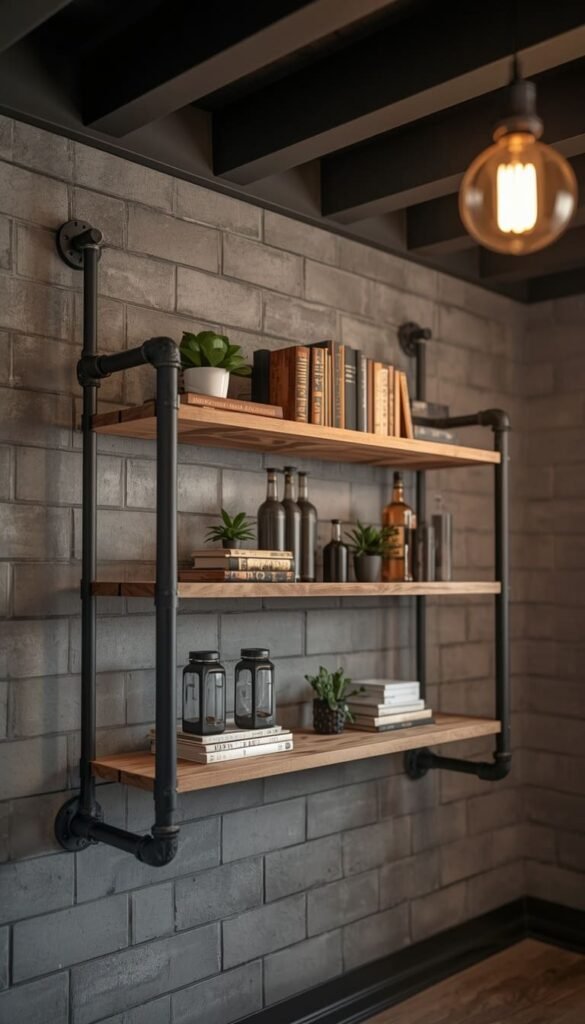
This is the idea that turns the most skeptical clients into believers. Exposed pipes in an unfinished basement feel like a problem until you make them the design feature. Once you commit to that mindset, everything shifts.
Industrial pipe shelving is one of the biggest trends in home design right now, and the DIY version costs a fraction of what the retail versions sell for. The concept is simple: mount black iron pipe flanges directly into the wall studs or into a plywood backing board, thread lengths of black iron pipe through them horizontally, and lay reclaimed wood planks or stained pine boards across the pipes as shelves.
The result is rugged, architectural, and genuinely cool. It looks like something you would find in a high-end loft apartment or a boutique coffee shop. I’ve built versions of this shelf for clients at price points ranging from $60 to $150 depending on the length and number of tiers.
What makes it work even harder in an unfinished basement is context. When the ceiling joists are painted matte black above and the pipe shelving echoes that same dark metal tone on the wall, the space starts to feel like a cohesive industrial design scheme rather than an unfinished room with stuff in it. That visual continuity is exactly what elevates a budget space into something people actually want to spend time in.
Which of these 13 ideas surprised you the most and which one are you actually going to try first?
13. Stage the Space Like a Room Not a Basement
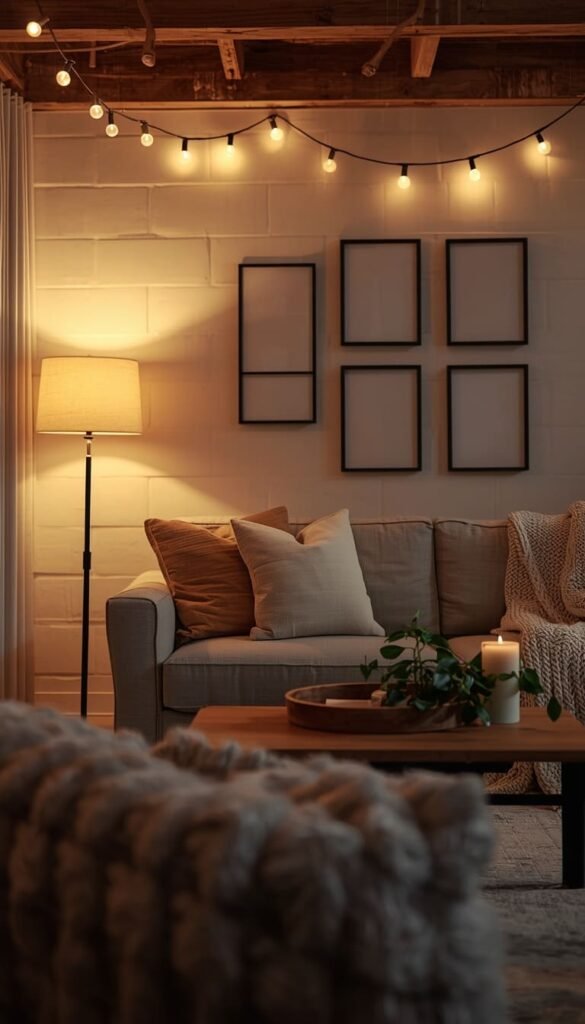
This is the idea that ties everything else together, and it is the one both competitors missed entirely. You can paint the floors, hang the curtains, and build the shelving but if the space is not staged like a real room, it will still feel like a basement with nice finishes.
Staging is about signaling intention. It tells anyone who walks in that this space was designed to be lived in, not just tolerated.
Start with what I call the one good lamp rule. Every well-designed room has at least one lamp that is not ceiling-mounted. A single floor lamp with a warm bulb placed in the corner of your seating area does more for the atmosphere than any overhead fixture. It creates a pocket of light that feels intimate and residential rather than utilitarian.
From there, layer in the details that rooms upstairs take for granted:
- A throw blanket folded over the arm of the sofa
- Two or three throw pillows that share a color story
- A small tray on the coffee table with a candle and a small plant
- A gallery wall of three to five frames hung on the cinder block using heavy-duty command strips
The plant deserves its own mention. A single potted plant even a low-light tolerant pothos or snake plant introduces life into a space that otherwise has none. It is the detail that makes a room feel inhabited rather than staged for a listing photo.
One thing to watch out for is overdoing it. A basement styled with too many accessories starts to feel cluttered rather than curated. Edit ruthlessly. The goal is a space that feels collected and lived-in not a showroom floor and not a storage unit. That balance is where the “looks expensive” magic actually lives.
Your 30-Second Basement Decision Map
By Budget
Under $100 — The Quick Win Starter
- Paint the concrete floor a moody saturated color
- Hang a string light grid overhead for instant ambiance
- Stage the space with a lamp, throw, and one good plant
- Add command-strip gallery wall frames to bare cinder block
$100 – $500 — The Real Room Upgrade
- Install peel and stick vinyl plank flooring throughout
- Build a faux shiplap accent wall on your main focal wall
- Set up a full open shelving storage wall with styled bins
- Create a curtain zone system to hide utilities and define spaces
By Lifestyle
Busy Families with Kids
- Prioritize the cozy family room rug layering setup
- Add a defined game room corner with score-keeping wall
- Use curtains to separate the laundry nook from living space
- Choose vinyl plank flooring — it survives spills and chaos
Style-First Minimalists
- Go matte black ceiling with pipe shelving for industrial cohesion
- Stick to a two tone cinder block wall in muted neutrals
- Edit accessories ruthlessly — less is everything down here
- One statement rug, one good lamp, done
Frequently Asked Questions
Can you really make an unfinished basement look nice on a budget?
Yes, absolutely. The biggest wins painted floors, matte black ceilings, curtain zones cost under $100 each. Smart styling beats big spending every time.
What is the cheapest way to finish a basement floor?
Concrete floor paint is your lowest-cost move, running $35 to $100 total. If you want a finished wood look, peel and stick vinyl plank starts at $1 per square foot.
How do I make my unfinished basement feel cozy?
Layer two rugs over concrete, add a floor lamp, and hang warm string lights in a grid pattern. Those three changes alone shift the entire mood.
Is it worth decorating an unfinished basement?
Yes. A styled unfinished basement adds usable square footage without permits or contractors. Most families recoup the investment immediately in daily livability.
What paint color is best for unfinished basement walls?
Charcoal gray or warm greige. Always use masonry waterproofing paint regular wall paint on cinder block peels fast and worsens moisture issues over time.
Conclusion
Your basement does not need a contractor, a permit, or a five-figure budget to feel like a real part of your home. It needs a plan, a few smart moves, and the confidence to start. Pick one idea from this list just one and take that first step today. Buy the floor paint sample. Order the curtain panels. Clear the shelving wall. Momentum builds fast once you see that first corner transform.
Your home is your sanctuary, and that includes every single square foot of it even the ones below grade.
So tell me which idea are you tackling first? Drop it in the comments, I read every single one.