
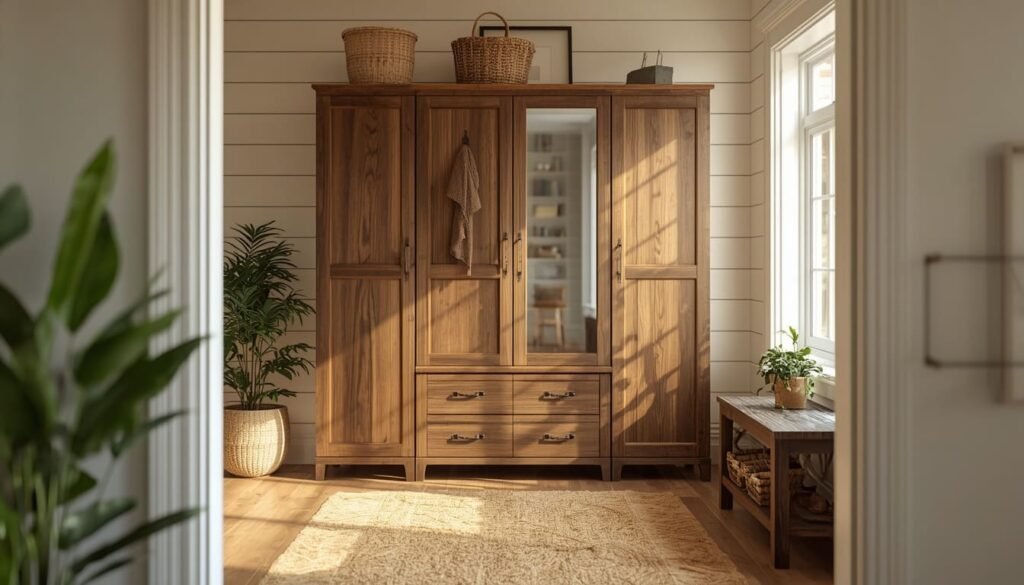
Your entryway tells people everything about how you live and a pile of shoes by the front door is never the story you want to tell. After years of helping American homeowners redesign their entryways, I can say with full confidence that the right shoe storage cabinet changes everything. It’s not just about hiding clutter. It’s about creating a space that actually functions for your family, morning after morning, without the chaos. The 11 cabinet ideas I’m sharing here range from slim and minimalist to bold statement pieces and every single one is something I’d personally recommend to a client.
My Design Notes
A few years back, I was working with a family of five in Naperville, Illinois lovely people, absolute shoe chaos. Three kids in sports meant cleats, sneakers, and muddy boots were piled three-deep by the front door every single evening. The entryway wasn’t small, but it felt suffocating. We went with a tall armoire-style cabinet in a warm walnut finish, paired with a low bench that gave the kids a spot to sit and pull their shoes off. I added labeled open cubbies for the three kids and flip-door sections for the parents. Clean. Organized. Actually functional. Six months after the project wrapped, their mom sent me a photo with zero caption needed not a single shoe on the floor. That project reminded me why I believe so strongly in investing in the right cabinet, not just any cabinet. A good shoe storage cabinet doesn’t just tidy your entryway. It genuinely changes how your mornings feel.
11 Stunning Entryway Shoe Cabinet Ideas : That Deliver Style and Order to Every Home
1. The Classic Slim Flip Door Shoe Cabinet
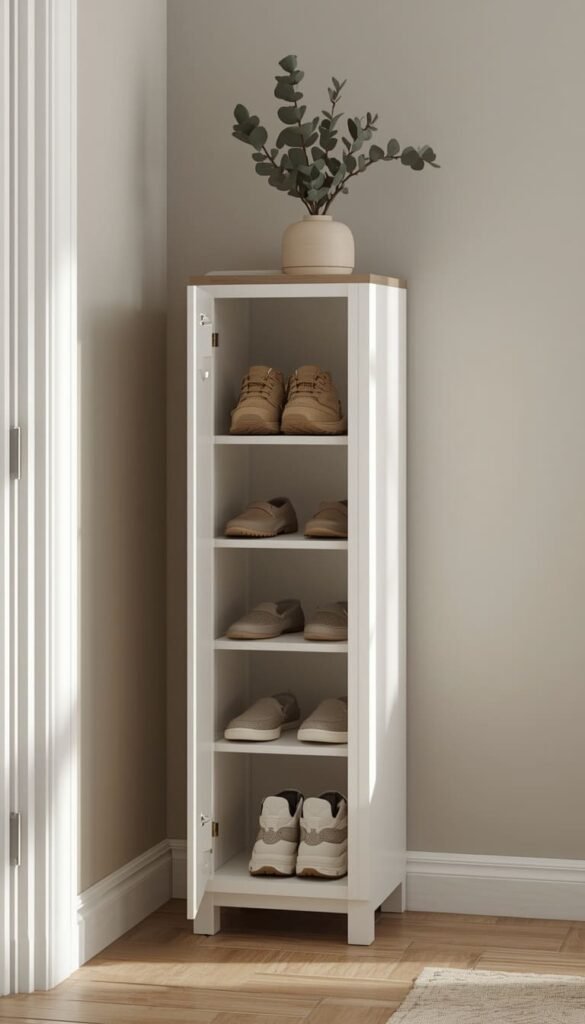
If I had to pick one cabinet style that works in almost every American entryway, this would be it. The slim flip-door shoe cabinet is the unsung hero of entryway organization narrow enough to fit in tight foyers, yet surprisingly capable of holding anywhere from 9 to 18 pairs depending on the model. The doors fold down and out, revealing angled shoe slots that keep everything visible and easy to grab on your way out the door.
What I love most about this style is how it disappears into a space. It looks like a regular console or accent cabinet until you open it. For clients who want a clutter-free entryway without sacrificing style, this is always my first recommendation. A quick trick I’ve learned over the years look for models with adjustable interior shelves, because boot season is real and flat-bottom storage makes a huge difference when ankle boots enter the picture.
One thing to watch out for is depth. Some slim cabinets are so shallow that men’s size 12 sneakers simply won’t fit without the door straining. Always check the interior shelf depth before buying anything under 11 inches can be a problem for larger households.
2. The Tall Freestanding Armoire Style Cabinet
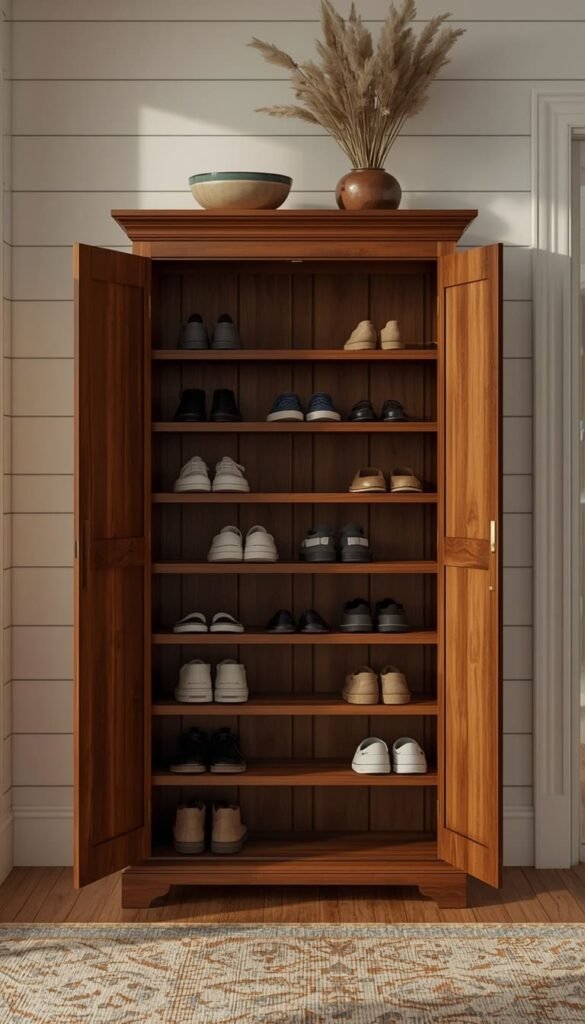
This is the statement piece of shoe storage. A tall freestanding armoire-style cabinet commands attention the moment you walk through the front door, and when it’s done right, it looks like intentional furniture not a storage solution. These cabinets typically hold 20 to 30 pairs, making them the go-to choice for larger families or anyone with a serious shoe collection.
I’ve specified this style in entryways from Charlotte to Denver, usually in warm walnut finishes or painted whites for more traditional homes. The visual weight is significant, so placement matters.
- Position it against the longest wall in your entryway to avoid blocking natural light
- Choose a finish that echoes at least one other wood tone already in the space
- Add a small tray or bowl on top to create a landing zone for keys and mail
The one honest downside? Assembly. Many freestanding armoire cabinets arrive in flat-pack form and can take two to three hours to build. Budget for that time or a helpful neighbor.
3. The Floating Wall Mounted Shoe Cabinet
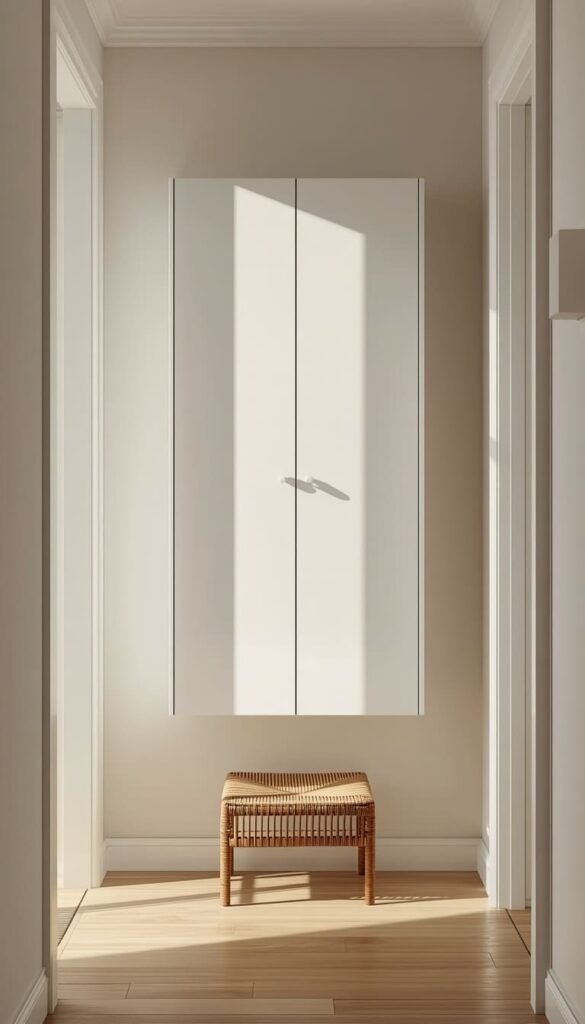
There is something deeply satisfying about a floating cabinet. The floor stays completely clear, the entryway feels larger, and the whole setup looks almost architectural. Wall-mounted shoe cabinets are especially brilliant in narrow hallways where every inch of floor space counts. I’ve installed these in Philadelphia row homes and Austin condos alike, and the reaction is always the same pure relief.
Most floating shoe cabinets mount at bench height, so you can sit on a small stool beneath them while putting shoes on, which is a practical bonus most people don’t think about until they’re hopping on one foot at 7am. Installation does require wall studs and a few basic tools, so if DIY isn’t your thing, factor in a handyman fee. It’s worth it. The finished look is genuinely stunning and adds a custom, built-in feel without the built-in price tag.
4. The Built In Bench Shoe Cabinet Combo
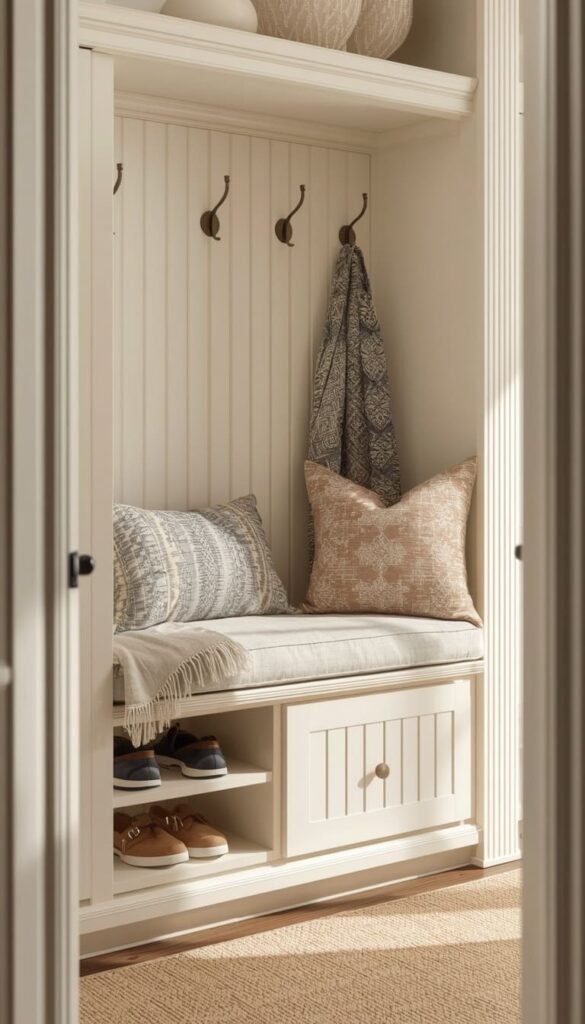
This is the farmhouse entryway dream, and honestly, it works far beyond farmhouse style. A bench and shoe cabinet combo solves two problems at once you get a place to sit while pulling shoes on and off, plus concealed storage underneath or within the cabinet portion. Families with young kids especially love this setup because little ones can sit down independently instead of grabbing onto door frames for balance.
The built-in version requires carpentry work and a slightly bigger budget, but the payoff in both function and home value is real. I worked on a project in Franklin, Tennessee where we built a full bench and cabinet wall along an 8-foot entryway. The homeowners said it was the single upgrade that made the most difference in their daily routine more than the kitchen backsplash, more than the new light fixtures.
If a full built-in isn’t in the budget right now, freestanding bench cabinet combos from brands like Pottery Barn and IKEA can mimic the look beautifully for a fraction of the cost. The key is choosing a piece with a solid seat nothing ruins the vibe faster than a bench that wobbles
“Are you team built-in bench or freestanding cabinet for your front door area?”
5. The Modern White Gloss Cabinet
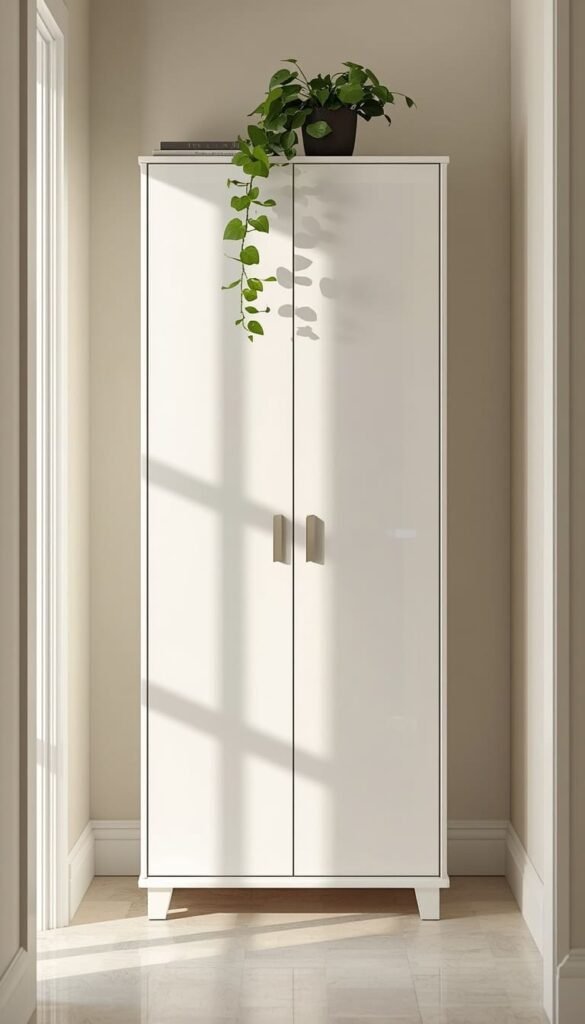
White gloss shoe cabinets have had a moment in American entryways for a while now, and I completely understand why. They’re crisp, they’re clean, and in a smaller entryway, that reflective surface actually bounces light around in a way that makes the space feel bigger. Paired with simple brass or matte black hardware, a white gloss cabinet looks genuinely high-end even when the price tag is nowhere near it.
Here’s something most people don’t expect white gloss hides scuff marks better than matte white finishes. The smooth surface wipes clean with a damp cloth in seconds, which is a genuine advantage in a high-traffic area like an entryway. I always recommend this style to clients who want a contemporary or transitional look without spending a fortune on custom cabinetry.
One thing to watch out for is fingerprints. Gloss surfaces show them immediately, especially near the handles. A quick fix is choosing a push-to-open model with no visible hardware at all sleek, fingerprint-free, and very on-trend right now.
6. The Solid Wood Rustic Cabinet
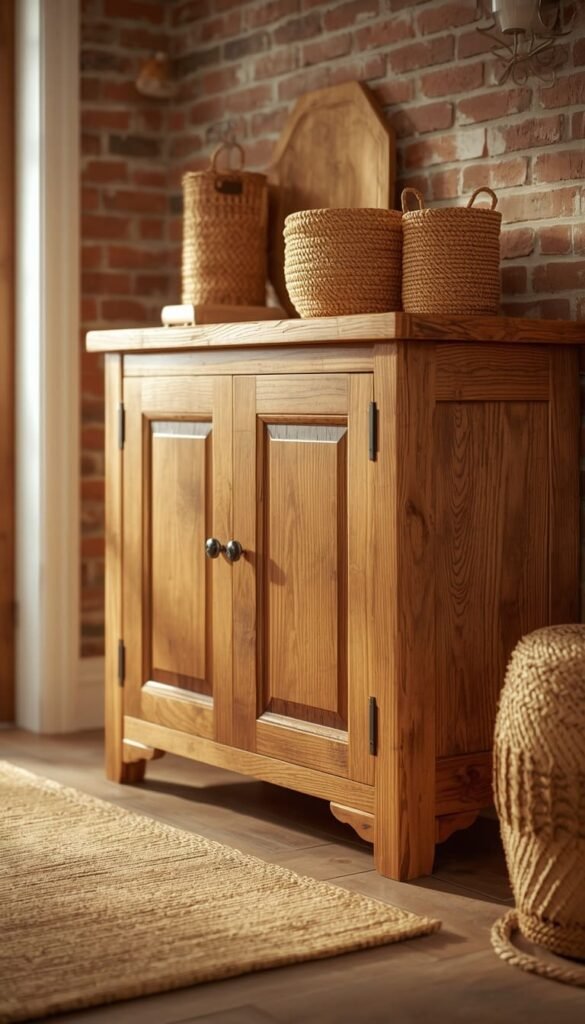
If longevity is your priority, solid wood wins every single time. A rustic solid wood shoe cabinet brings warmth, texture, and a sense of permanence to your entryway that no MDF or laminate piece can replicate. These cabinets age beautifully small nicks and scratches only add to the character over time, which is the complete opposite of what happens to cheaper finishes.
I’ve recommended solid wood cabinets to clients across New England and the Pacific Northwest where entryways take a real beating from wet boots and heavy winter gear. The weight of solid wood also means these pieces don’t shift or tip easily, which matters more than people realize in busy households.
- Look for cabinets in oak, pine, or acacia for the best combination of durability and price
- A natural oil finish is easier to touch up than lacquer if the surface gets scratched
- Pair with woven baskets on top for extra storage that keeps the rustic aesthetic cohesive
The honest tradeoff is cost. A genuinely solid wood cabinet runs higher than particleboard options. But when I tell clients to think of it as a ten-year investment rather than a furniture purchase, the math starts to make a lot more sense.
7. The Mirrored Shoe Cabinet
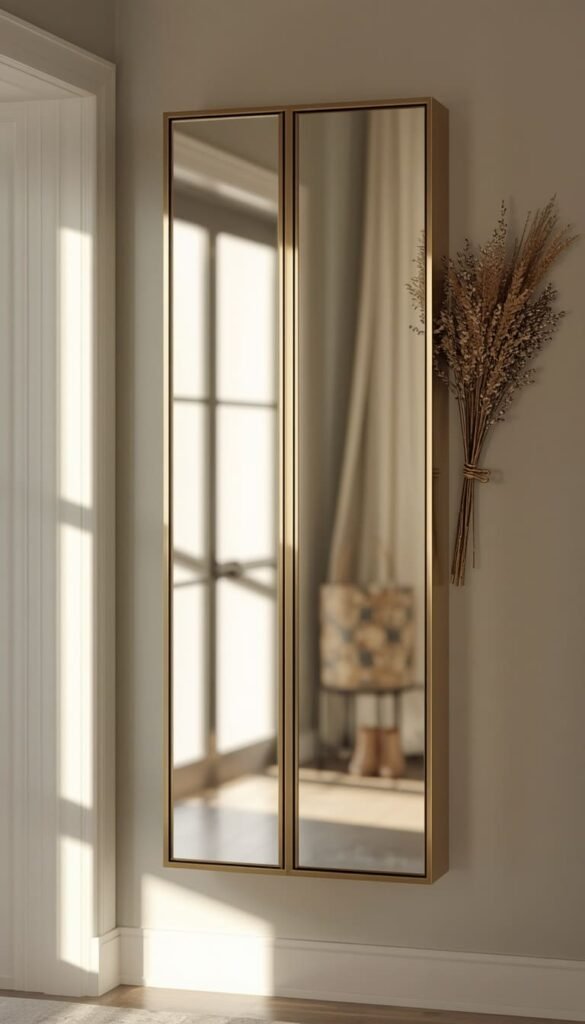
This one surprises people every time, and I love that reaction. A mirrored shoe cabinet is one of the smartest dual-purpose pieces you can put in an entryway. On the outside, it functions as a full-length mirror perfect for that last-minute outfit check before heading out. Open it up, and you’ve got neatly organized shoe storage hidden completely from view. It’s a genuinely elegant solution that punches well above its price point.
In smaller entryways especially, the mirror component does real work. It creates the illusion of depth, reflects natural light, and makes a narrow hallway feel significantly less cramped. I’ve used this style in New York City apartments where the entryway was barely six feet wide, and it transformed the space completely.
The cabinet itself is usually wall-mounted and comes in slim profiles that work even in tight spots. Just make sure the mounting hardware is rated for the full weight mirrors add substantial load, and you do not want this piece coming off the wall. Most quality versions come with proper anchoring systems, but always double-check before installation.
11 Shoe Storage Cabinet Entryway Ideas
| Idea | Estimated Price | Maintenance |
|---|---|---|
| Slim Flip Door Shoe Cabinet | $80 to $250 | Low |
| Tall Freestanding Armoire Cabinet | $200 to $600 | Low |
| Floating Wall Mounted Cabinet | $150 to $400 | Low |
| Built In Bench Cabinet Combo | $300 to $1,200 | Medium |
| Mirrored Shoe Cabinet | $120 to $350 | Medium |
| Hall Tree with Built In Cabinet | $250 to $800 | Low |
8. The Corner Shoe Cabinet
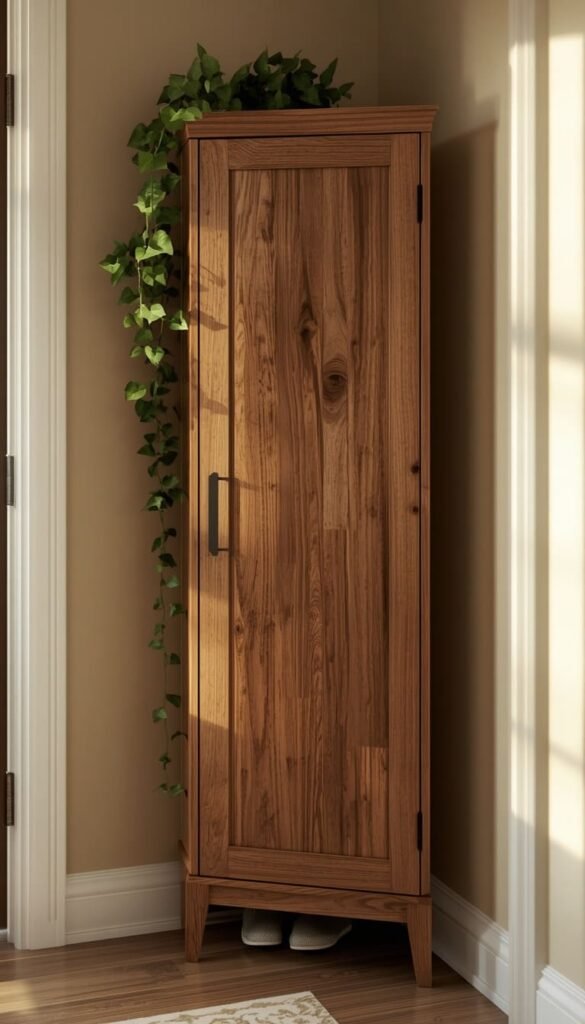
Here’s a cabinet type that almost nobody thinks about until I point it out and then they wonder how they ever missed it. The corner shoe cabinet slots directly into a 90-degree corner, turning completely dead space into functional storage. It’s especially valuable in entryways with awkward layouts where a standard rectangular cabinet would block a door swing or crowd a walkway.
Corner cabinets come in two main configurations. Some are designed as tall towers with angled fronts that face diagonally into the room. Others are lower, bench-height pieces that tuck neatly into the corner without drawing too much visual attention.
I used a corner tower cabinet in a townhouse project in Arlington, Virginia where the entryway had an unusual angled wall that made traditional furniture placement nearly impossible. The corner cabinet fit perfectly, held 14 pairs of shoes, and actually became a focal point rather than an afterthought. Sometimes the odd corners are the best design opportunities you have.
One practical note corner cabinets can be trickier to find in stores, so online shopping gives you far more options here. Measure your corner carefully before ordering, and account for any baseboards that might affect how flush the piece sits against the wall.
9. The Open Cubby Hybrid Cabinet
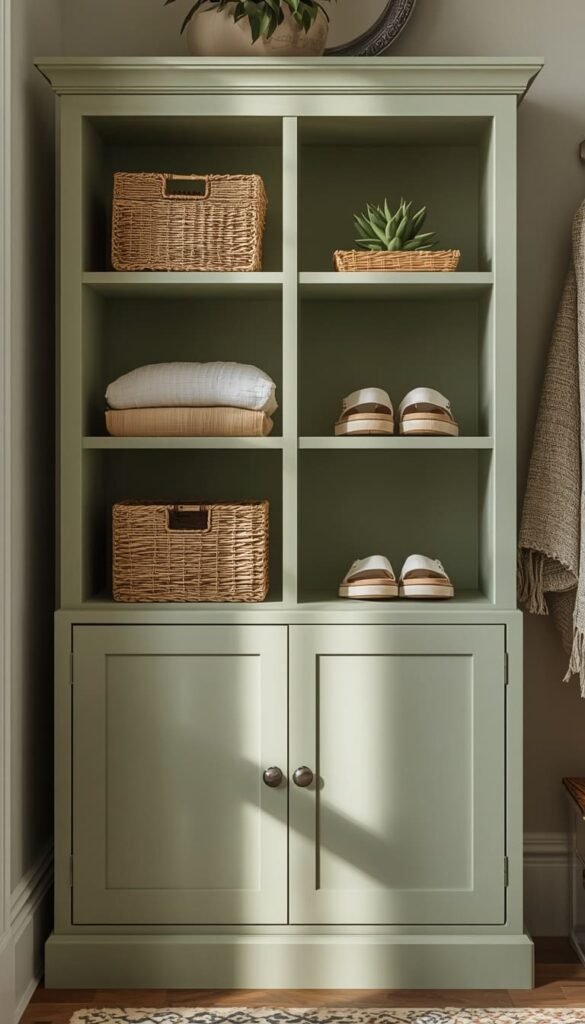
The open cubby hybrid is for the homeowner who wants the best of both worlds and honestly, that’s most of my clients once I show them this option. These cabinets combine closed cabinet doors on one section with open display cubbies on another, giving you the flexibility to hide everyday sneakers behind doors while showcasing nicer pairs or decorative baskets in the open sections. It’s a beautifully balanced look that never feels too utilitarian or too precious.
What makes this style particularly smart for families is the natural division it creates. Parents get the closed section for their work shoes and dress boots. Kids get labeled open cubbies where they can grab and return shoes independently without wrestling with cabinet doors. That small functional detail saves more morning arguments than you’d imagine.
- Choose a hybrid cabinet where the closed section has soft-close hinges they hold up far better with daily use
- Style the open cubbies intentionally with a small plant, a woven basket, or a candle to keep it looking curated rather than cluttered
- Stick to a two-pair maximum per open cubby to avoid the display section becoming its own chaos zone
This style works beautifully in transitional and modern farmhouse entryways, and the mixed visual texture of open and closed sections adds genuine design interest to the space.
“Which cabinet style fits your entryway best right now hidden storage or open display?”
10. The Rolling Modular Shoe Cabinet
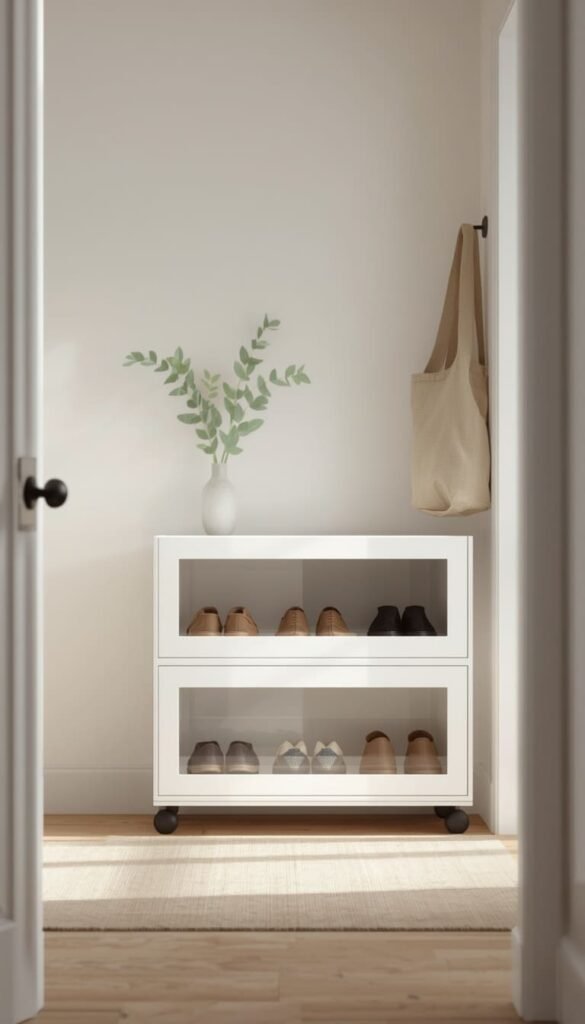
Renters, this one is specifically for you though homeowners who love flexibility will appreciate it just as much. A rolling or modular shoe cabinet requires zero wall installation, zero commitment, and zero damage to your security deposit. These pieces sit on smooth-rolling casters that let you wheel the entire unit out of the way when you need the floor space, or reconfigure the layout entirely when your storage needs change.
I recommended a modular rolling cabinet to a client in a Chicago apartment who moved every two years for work. She needed storage that could adapt to whatever entryway layout she landed in next. The rolling cabinet she chose had stackable modules she used three stacked sections in Chicago, then separated them into two standalone units when she moved to a larger place in Nashville. That kind of flexibility is genuinely rare in furniture.
The one limitation worth mentioning is stability. Rolling cabinets without a locking wheel mechanism can shift around in busy entryways, which gets annoying fast. Always look for models with individual wheel locks on at least two of the four casters. It’s a small detail that makes a significant difference in everyday usability.
11. The Hall Tree with Built In Shoe Cabinet
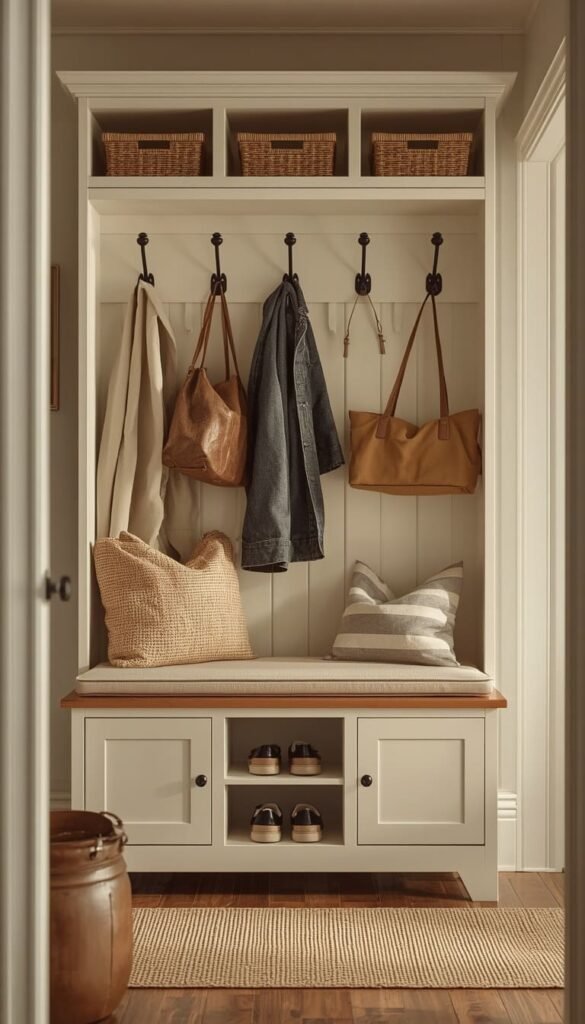
If there is one single piece of entryway furniture I would put in every American home if I could, it would be this. A hall tree with a built-in shoe cabinet is the closest thing to a mudroom that most homes without a mudroom will ever get. In one streamlined unit you get coat hooks, upper storage for hats and bags, a bench seat, and concealed shoe storage everything your entryway needs to function like a genuinely organized space rather than a dumping ground.
The style range here is wider than most people realize. There are sleek modern hall trees in matte black metal with minimalist lines. There are painted shaker-style versions that look absolutely gorgeous in farmhouse and cottage entryways. There are even substantial wood pieces with mirror panels that bring a traditional elegance to more formal entry halls.
Sizing is the most important consideration when shopping for this style. Measure your entryway wall width carefully before ordering because hall trees with full bench and cabinet configurations can run anywhere from 36 inches to over 60 inches wide. A piece that’s too large will overwhelm the space completely and actually make your entryway feel more cramped than it did with the shoe pile on the floor. Get the measurements right first, and then let yourself fall in love with the finish and style. The right hall tree doesn’t just organize your entryway it gives your whole home a more intentional, welcoming first impression from the moment you walk through the door.
Your 30 Second Entryway Cabinet Finder
By Budget
Smart Starter ($80 to $300)
- Slim flip door cabinet for tight foyers
- Rolling modular unit if you rent or move often
- Wall mounted floating cabinet for a high-end look at a low price
- IKEA hack options that punch way above their cost
Investment Piece ($300 to $1,200+)
- Full hall tree with bench and built in shoe storage
- Solid wood rustic cabinet built to last a decade
- Custom or semi-custom built in bench cabinet combo
- Mirrored cabinet with premium mounting hardware
By Lifestyle
Busy Families
- Hall tree with hooks, bench, and hidden shoe storage
- Open cubby hybrid so kids can grab shoes independently
- Built in bench combo for a true mudroom feel
- Tall armoire style for maximum capacity
Small Space Dwellers and Renters
- Slim flip door cabinet under 12 inches deep
- Floating wall mounted cabinet to keep floors clear
- Rolling modular unit that moves with you
- Corner cabinet to use every inch of dead space
Minimalists and Style Focused Buyers
- White gloss push to open cabinet with zero hardware
- Mirrored cabinet that doubles as a full length mirror
- Floating wall mounted cabinet for a clean architectural look
Frequently Asked Questions
What is the best shoe storage cabinet for a small entryway?
A slim flip-door cabinet is your best bet. Most run under 12 inches deep and hold 9 to 12 pairs without eating into your walkway space.
How many pairs of shoes can a standard entryway cabinet hold?
It depends on the style. Slim cabinets hold 9 to 15 pairs, tall armoire styles can reach 24 to 30, and hall tree combos typically land around 12 to 18.
Are shoe storage cabinets worth it?
Yes, absolutely. A decent cabinet keeps your entryway functional, cuts morning stress, and adds real polish to the first space guests see when they walk in.
What should I look for when buying a hallway shoe cabinet?
Check interior shelf depth first anything under 11 inches struggles with men’s larger sizes. Then look at finish durability and whether the hinges are soft-close.
Can a shoe cabinet work as entryway furniture too?
It can and it should. Hall trees, mirrored cabinets, and bench combos all double as proper entryway furniture while keeping shoes completely out of sight.
Conclusion
Your entryway deserves better than a shoe pile, and honestly, so do you. The right cabinet does not have to be expensive or complicated it just has to fit your space, your family, and the way you actually live. Pick one idea from this list that made you stop and think “that could work for me” and start there. Even ordering that one piece this week puts you closer to the calm, organized entry you have been wanting for months.
