
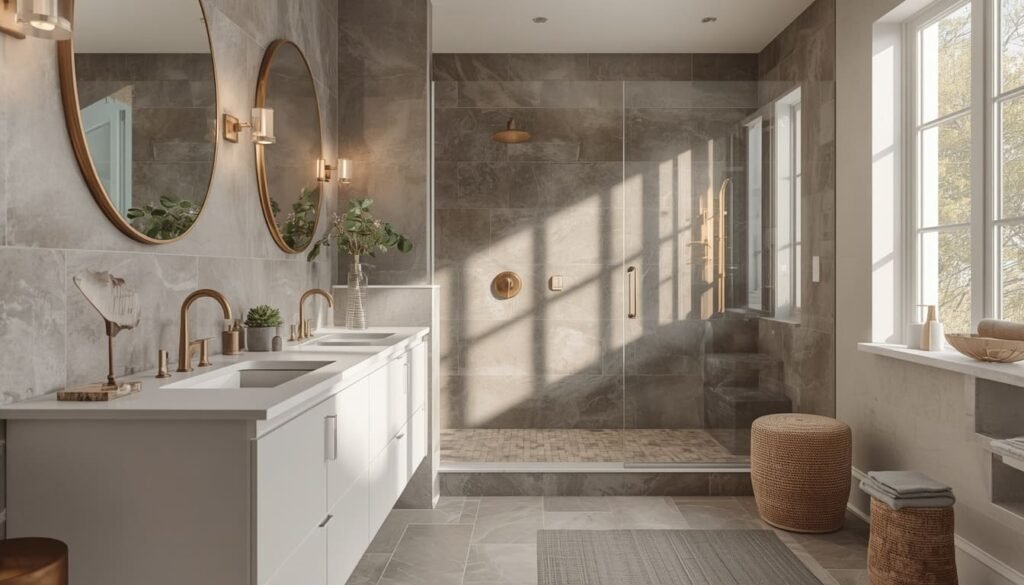
Your bathroom is the one room in your house that can genuinely feel like a luxury hotel or a forgotten afterthought, depending on the choices made during its last remodel. I’ve walked through hundreds of American homes over the years, and the bathrooms that stop people in their tracks all share one thing: intentional design decisions, not expensive ones. The good news? The biggest bathroom remodeling trends ideas of 2026 are surprisingly accessible, whether you’re working with a generous budget or carefully stretching every dollar. In this guide, I’m breaking down 13 of the most impactful bathroom renovation trends I’m seeing right now the ones that actually make a home look and feel luxurious, not just Instagram-worthy for a weekend.
My Design Notes
When I took on a master bathroom remodel for a couple in Austin, Texas, I honestly thought the biggest fight would be over tile. It wasn’t. It was the tub. She loved it. He hadn’t used it in three years. We pulled it out. In its place, we built a frameless walk-in shower clad in warm slate tile with a built-in niche, and suddenly that cramped 65 square foot space breathed like a completely different room. The floating double vanity we chose in matte white added storage without eating into the floor plan, and the brushed brass fixtures we sourced from a local Austin salvage shop gave the whole space that curated, collected feel you simply cannot buy off a big box store shelf. Total spend came in just under $18,000. The wife cried when she saw the finished result. That moment is exactly why I do this work and it’s the energy behind every single idea I’m sharing with you in this article.
Mastering Stunning Bathroom Renovations: Elevated Ideas Every Homeowner Should Know
1. The Spa Wet Room: Bringing Five Star Hotel Energy Home
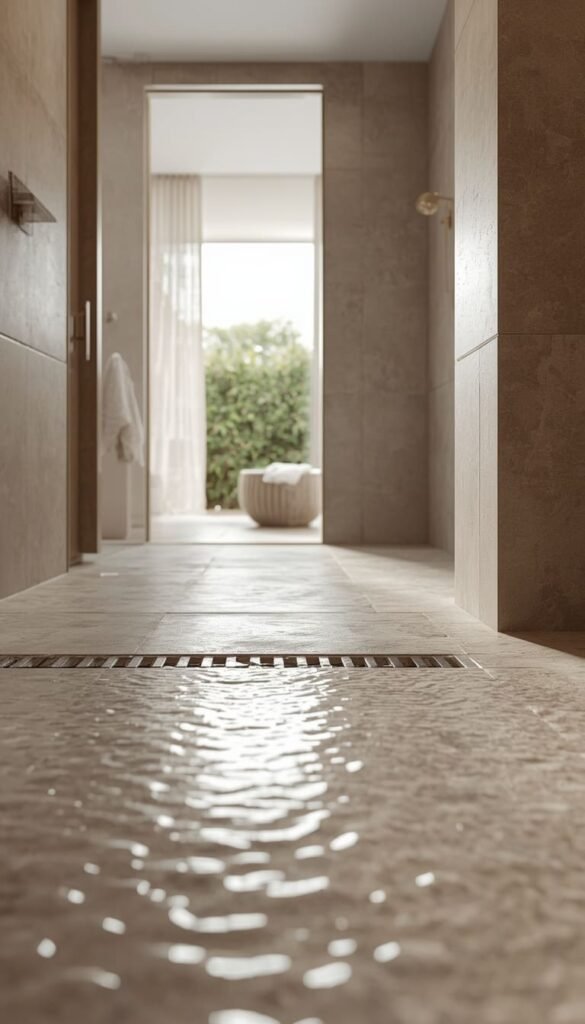
If there’s one bathroom remodeling trend I get asked about more than any other right now, it’s the wet room. And honestly? I completely understand why. A wet room eliminates the visual clutter of a shower enclosure, opens up the floor plan, and gives even a modest-sized bathroom that seamless, high-end feel you associate with boutique hotels in places like Napa or Scottsdale. The entire floor and walls are waterproofed, the shower flows freely into the space, and the result is both stunning and surprisingly practical.
What I love most about this approach is how flexible it is across budgets. A full wet room renovation with linear drains and floor-to-ceiling tile typically runs between $8,000 and $15,000 depending on your market, but a simplified version using a curbless shower entry and large-format porcelain tile can achieve a similar visual effect for considerably less. One thing to watch out for is ventilation wet rooms need a properly sized exhaust fan, ideally one rated for continuous use, or moisture will become a real problem within a couple of years.
The materials you choose here matter enormously:
- Large-format tiles (24×48 inches or bigger) minimize grout lines and read as far more luxurious
- Linear drains along one wall look far sleeker than center drains and are easier to clean
- Matte or honed finishes hide water spots better than polished surfaces in a wet room setting
2. Statement Tile Walls: The Single Upgrade That Changes Everything
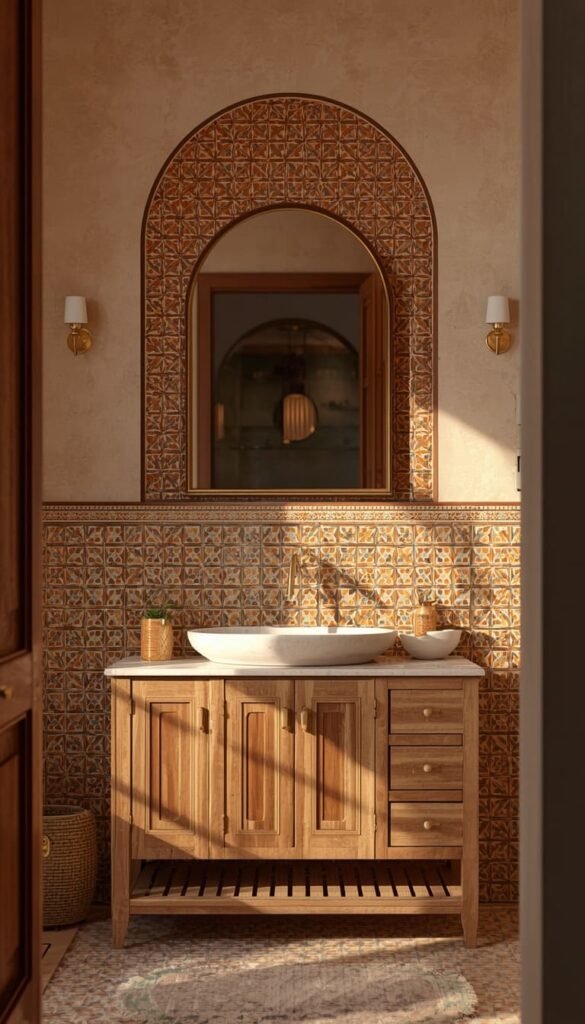
I’ve remodeled bathrooms at every price point imaginable, and if I had to name the one upgrade with the highest visual return on investment, statement tile wins every single time. We’re not talking about a full tile job here. We’re talking about one intentional wall behind the vanity, at the back of the shower, or spanning the length of the tub that becomes the undeniable focal point of the entire room.
The bathroom remodeling trends I’m seeing in 2026 are leaning heavily into zellige tile (that handmade Moroccan clay tile with the beautifully imperfect glaze), large-scale fluted ceramic, and bold graphic patterns inspired by Portuguese and Italian design traditions. What makes these work isn’t the tile itself it’s the restraint everywhere else. Keep your vanity simple, your fixtures clean, and let that one wall carry the room.
A quick trick I’ve learned from years of client projects: if you’re nervous about committing to a bold tile on an entire wall, do a tile inset or niche within a more neutral field. You get the visual interest without the long-term commitment, and it tends to photograph beautifully too.
3. Floating Vanities and the Illusion of More Space
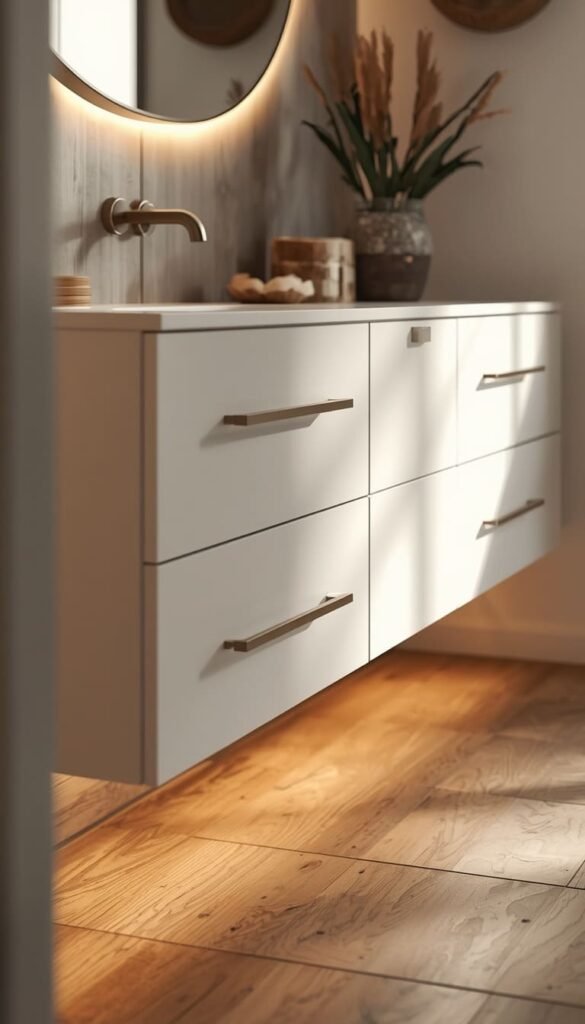
The floating vanity might be the most quietly powerful tool in modern bathroom remodeling. By lifting the vanity off the floor and exposing several inches of tile beneath it, you create a visual line that draws the eye horizontally across the room. The effect is immediate the bathroom reads as wider and more open, even when the square footage hasn’t changed at all.
From a practical standpoint, floating vanities also make cleaning significantly easier. No more crouching down to scrub around cabinet feet. The exposed floor beneath catches light differently throughout the day, and if you add a small LED strip underneath the vanity, the nighttime ambiance becomes genuinely special without any major electrical work.
What I always tell clients is this: the depth of your floating vanity matters as much as the style. In smaller bathrooms, a 16 to 18 inch depth gives you meaningful counter space without crowding the room. Go deeper than 21 inches in a tight layout and the whole space starts to feel compressed, no matter how beautiful the finish.
4. Freestanding Soaking Tubs: Worth the Investment or Just Pretty?
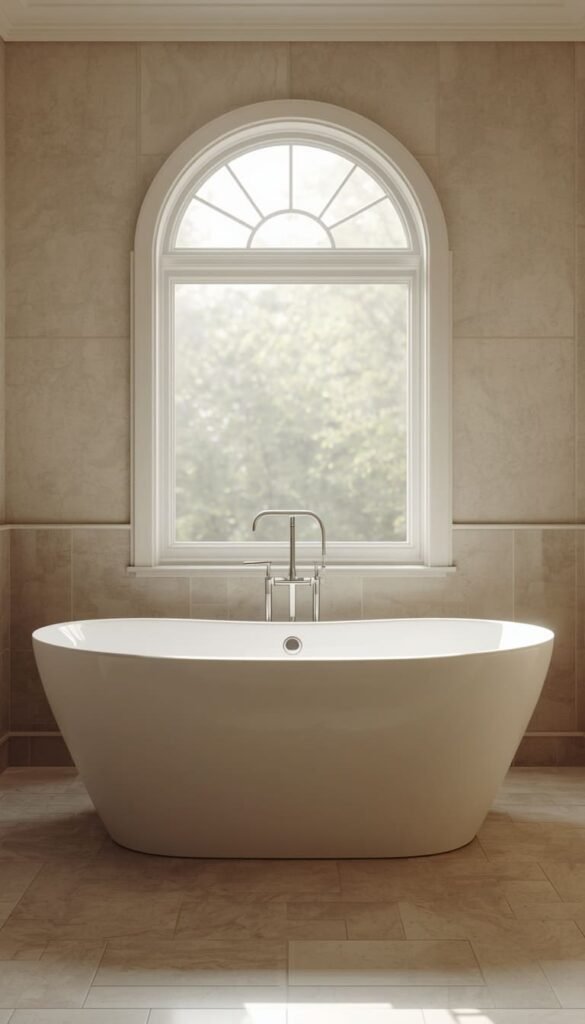
Let me be honest with you about freestanding tubs, because most articles won’t be. They are breathtakingly beautiful. They are also the most frequently under-used fixture in the American home. Before you allocate $2,000 to $6,000 of your bathroom renovation budget to one, ask yourself genuinely when did you last take a bath? If the answer is “my last vacation,” a freestanding tub might be more of a lifestyle aspiration than a practical remodel decision.
That said, if you are a bath person, or if you’re remodeling a primary bathroom in a home you plan to sell within five years, a freestanding tub is absolutely worth it. Buyers respond to them emotionally in a way that almost no other fixture can match. In higher-end markets think suburban Atlanta, the Denver suburbs, coastal Southern California a well-placed soaking tub can meaningfully support your asking price.
The placement is everything. A freestanding tub centered under a window with natural light pouring in is one of the most beautiful things you can put in a home. Tucked into a dark corner with a builder-grade window above it? It just looks sad. If the light placement doesn’t work in your bathroom, reconsider whether the tub is the right move at all.
If you had to fix just one thing in your bathroom this month, what would it be?
5. Moody Saturated Color Palettes Taking Over in 2026
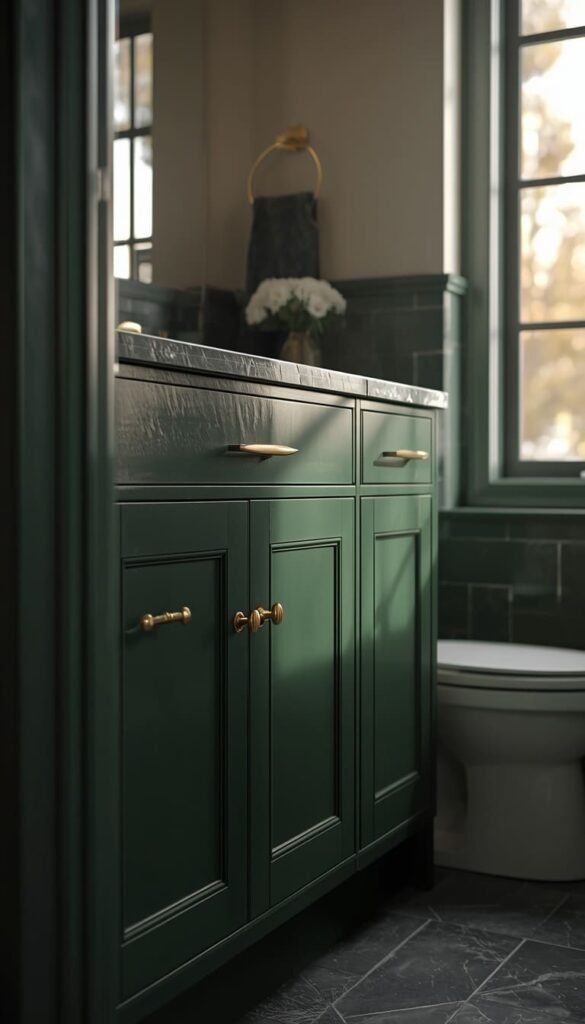
The all-white bathroom had a good run. A long one, actually. But what I’m seeing in projects across the country right now is a clear and confident shift toward color deep, saturated, unapologetic color. Hunter green, inky navy, warm terracotta, charcoal slate. These shades are showing up on vanity cabinets, accent walls, and even ceilings, and the results are genuinely stunning when executed with the right balance of light and contrast.
What makes a moody bathroom work versus feel oppressive comes down to three things: natural light, the finish on your surfaces, and your hardware choices. A deep forest green vanity in a bathroom with a south-facing window and satin brass pulls looks like something out of a high-end design magazine. That same green in a windowless powder room with overhead fluorescent lighting looks like a mistake. I always assess the light situation before committing any client to a saturated palette.
One approach I’ve been loving lately is painting just the vanity in a bold color while keeping the walls neutral. You get all the drama and personality of a colorful bathroom without the visual risk of going all-in on four dark walls. It’s also a much easier change to reverse if your taste evolves.
6. Walk In Shower Remodels That Replace the Tub and Why That Works
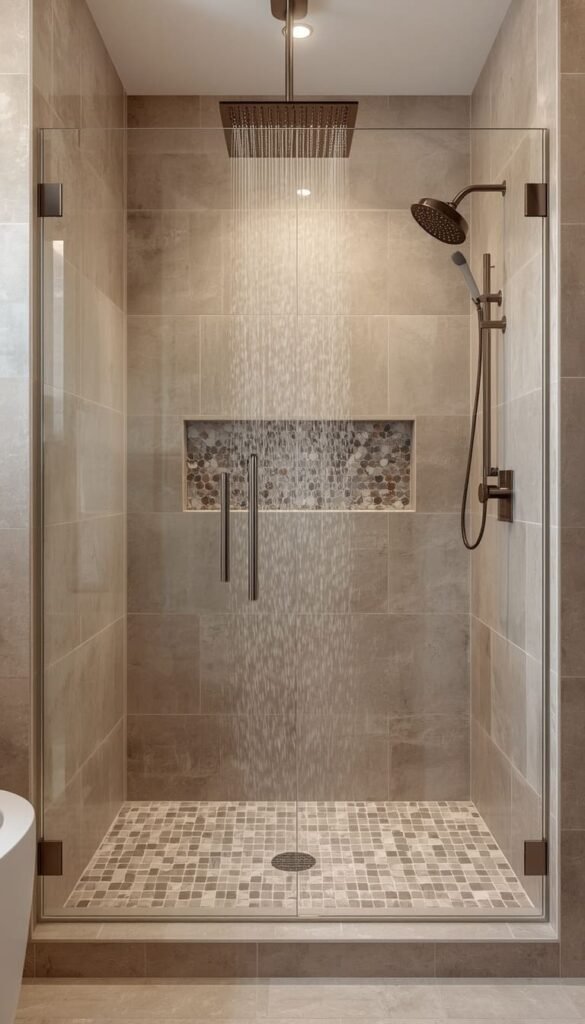
This is one of the most popular bathroom remodel before and after transformations I get hired to do, and the reason is simple most American homeowners have a tub they never use taking up 15 to 20 square feet of their most valuable bathroom real estate. Converting that footprint into a generous walk-in shower doesn’t just look better. It genuinely improves how the room functions every single day.
The key to making this conversion feel luxurious rather than just practical is scale and finish:
- Go as large as the footprint allows. A walk-in shower that’s at least 36×48 inches reads as generous; anything under that starts to feel like a closet with a drain.
- Ditch the door if you can. A doorless walk-in shower with a properly angled floor and a good linear drain stays dry and looks dramatically more open.
- Layer your shower heads. A rain head overhead combined with a handheld on a slide bar covers every daily scenario and adds that spa bathroom feel without a huge cost jump.
One thing to watch out for with tub-to-shower conversions is resale in certain markets. If your home has only one bathtub and you’re in a neighborhood with lots of young families, removing it entirely could work against you with buyers. In that case, keep the tub in a secondary bathroom and do the conversion in the primary. Best of both worlds.
Top 6 bathroom remodeling trends ideas:
| Idea | Estimated Price | Maintenance |
|---|---|---|
| Spa Wet Room | $8,000 – $15,000 (full); less for simplified curbless version | Medium |
| Statement Tile Wall | $800 – $2,500 (single accent wall/niche) | Low |
| Floating Vanity | $800 – $1,400 | Low |
| Freestanding Soaking Tub | $2,000 – $6,000 | Medium |
| Arched Doorway/Entry | $800 – $2,500 | Low |
| Small Bathroom Refresh (full $5K plan) | $5,000/full budget | Low |
7. Warm Metals and Mixed Hardware: The New Bathroom Luxury Code
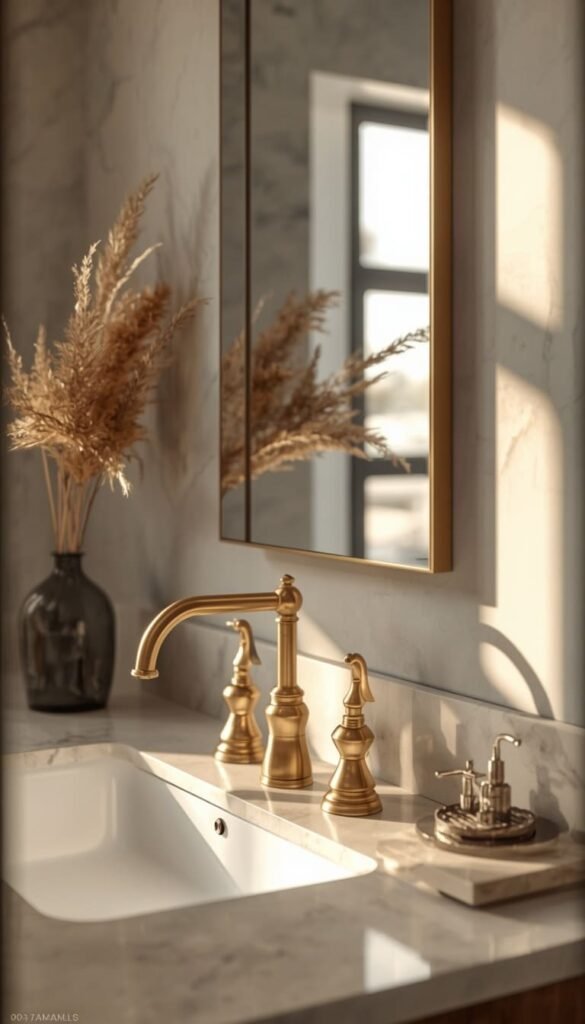
For years, the rule was simple pick one metal finish and repeat it everywhere. Chrome or brushed nickel, consistent throughout, no exceptions. That rule is officially retired. The bathroom design trends defining 2026 are all about mixing metals with intention, and the results feel collected, layered, and genuinely custom.
The combination I’m reaching for most often right now is brushed brass paired with matte black. The warmth of the brass on faucets and cabinet pulls plays beautifully against the graphic weight of matte black towel bars and shower fixtures. It’s a pairing that works across styles equally at home in a modern farmhouse bathroom in Nashville as it is in a contemporary urban bathroom in Chicago.
What separates a well-mixed metal bathroom from one that just looks confused is repetition and proportion. Each finish should appear at least twice in the room so it reads as intentional rather than accidental. Your brass shouldn’t show up only on the faucet it should echo in your mirror frame, your light fixture, or your cabinet hardware. That repetition is what creates visual harmony across the space.
A quick trick I use with clients who are nervous about mixing metals: start with your light fixture. It’s the element people notice first when they walk into a bathroom, and it sets the tonal direction for everything else you layer in beneath it.
8. Terrazzo and Natural Stone Surfaces: Stunning but Here Is the Truth
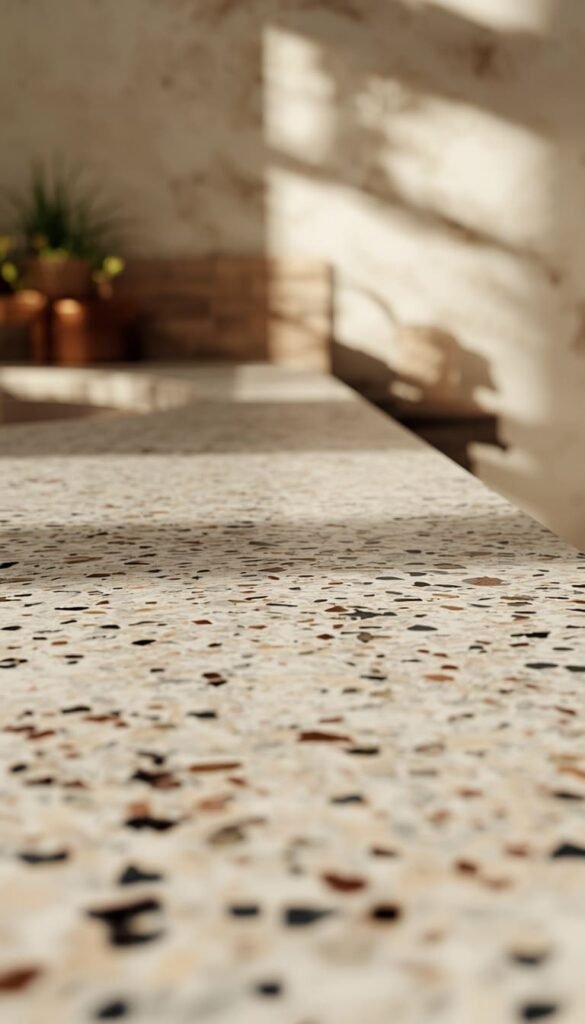
Terrazzo is having a full-blown cultural moment right now, and I am here for it with some honest caveats. This speckled composite of marble chips, glass, and cement has been around since the 15th century, and its revival in contemporary bathroom design makes complete sense. It’s durable, endlessly customizable in terms of color and aggregate size, and it photographs like a dream. What the Pinterest boards don’t show you is the maintenance reality.
Natural terrazzo the poured-in-place kind needs to be sealed on installation and resealed every one to three years depending on how heavily the bathroom is used. Skip that step and moisture penetrates the surface, leading to staining that is genuinely difficult to reverse. Prefabricated terrazzo tiles are a more forgiving option for homeowners who want the look without the upkeep commitment, and they’ve gotten remarkably good in terms of visual quality.
Natural stone surfaces like marble and travertine carry similar considerations:
- Marble is stunning and adds real perceived value to a home, but it etches from acidic products like some hand soaps and facial cleansers. In a primary bath used daily, honed marble hides etching better than polished.
- Travertine has a naturally porous surface that needs sealing but offers a warmth and texture that no manufactured tile can fully replicate.
- Quartzite is the option I recommend most often for clients who want the marble look with significantly better durability and stain resistance.
The bottom line is this: natural materials reward homeowners who are willing to care for them properly. If low maintenance is your priority, a high-quality porcelain that mimics stone will serve you just as beautifully with a fraction of the upkeep.
Are you more of a “soak in the tub” person or a “quick shower and go” person?
9. Smart Storage That Disappears Into the Design
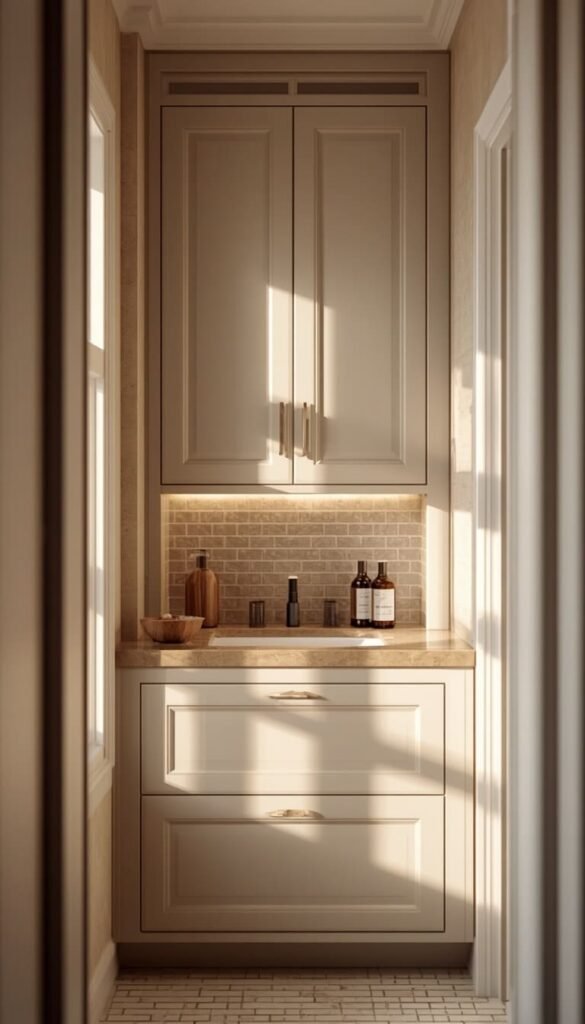
Storage is the unglamorous backbone of every bathroom that actually functions well in real life. I’ve seen gorgeous renovation projects completely undermined by a lack of thoughtful storage beautiful tile, stunning vanity, and then a cluttered countertop covered in skincare bottles and a hair dryer with nowhere to live. The bathroom remodeling trends moving into 2026 are solving this problem elegantly by making storage essentially invisible.
Recessed medicine cabinets are back in a serious way, and the new generation of them bears no resemblance to the builder-grade mirrored boxes of the 1990s. Today’s versions come in custom sizes, integrated lighting, and finishes that align seamlessly with your vanity hardware. They pull double duty as mirrors while hiding an enormous amount of everyday clutter behind them.
Built-in shower niches deserve more credit than they get. A properly sized niche at least 12 inches wide and positioned at shoulder height eliminates the need for a shower caddy entirely. And shower caddies, in my professional opinion, are one of the fastest ways to make an otherwise beautiful shower look cheap and unfinished.
For vanity storage specifically, think about these approaches:
- Drawer inserts and dividers keep daily-use items organized and off the countertop entirely
- Toe-kick drawers at the base of your vanity cabinet use space that’s almost always wasted
- Tall linen towers flanking a double vanity add significant storage without consuming floor space
10. Arched Doorways and Architectural Details for Instant Character
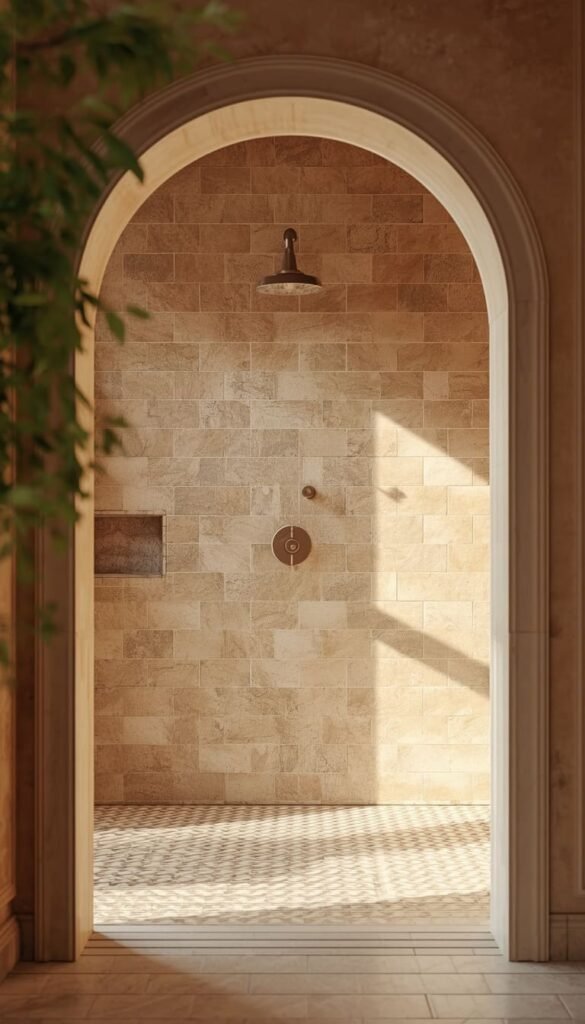
If you want your bathroom to feel custom-built rather than contractor-standard, architectural details are where the magic happens and arched doorways are leading that conversation right now. An arched entry into a shower, a curved mirror above the vanity, or even a simple arched window above a freestanding tub adds a layer of craftsmanship and intention that flat, square geometry simply cannot achieve.
The reason arches work so well in bathrooms specifically is contrast. Bathrooms are filled with hard, rectilinear elements rectangular tiles, square vanities, straight-edged mirrors. A single arch interrupts that rigidity in the most pleasing way. It softens the space without making it feel less polished, and it photographs with a warmth that straight lines rarely achieve.
From a budget perspective, adding an arched entry to an existing shower opening is more accessible than most homeowners expect. Depending on your market and contractor, a decorative arch framed in tile can be added during a shower renovation for between $800 and $2,500. That is an extraordinary return for the visual impact it delivers. I’ve seen this single detail elevate an otherwise straightforward bathroom remodel into something that genuinely looks editorial.
Beadboard wainscoting, shiplap below the chair rail, and decorative ceiling molding are additional architectural moves worth considering, particularly in older American homes where those details exist throughout the rest of the house but somehow got stripped out of the bathrooms during a previous renovation.
11. Small Bathroom Remodeling Ideas That Actually Work Under $5,000
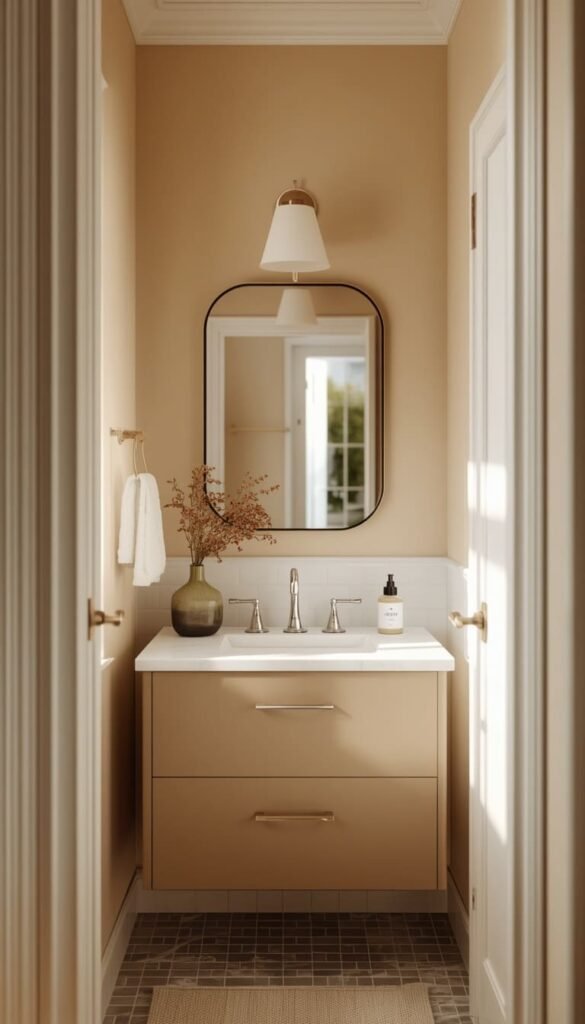
Small bathroom remodeling gets talked about constantly but rarely with the specificity that actually helps someone make decisions. So let me be direct. Working with a tight layout anything under 50 square feet is not about tricks or illusions. It’s about making every single decision count and refusing to waste money on things that don’t move the needle visually or functionally.
The single highest-impact change you can make in a small bathroom under $5,000 is replacing your vanity and light fixture simultaneously. These two elements sit in your sightline the moment you walk through the door, and upgrading both at once creates a cohesion that reads as a full renovation even when the tile and tub haven’t been touched. A floating vanity in the 16 to 18 inch depth range paired with a well-scaled light fixture in a warm metal finish will genuinely transform how the room feels.
Here’s how I’d realistically allocate a $5,000 small bathroom remodeling budget:
- New floating vanity with sink and faucet: $800 to $1,400
- Updated light fixture and mirror: $300 to $600
- Fresh paint in a strategic color (deep or light, never muddy middle tones): $150 to $300
- New toilet if the existing one is dated: $400 to $700
- Tile accent wall or shower refresh: $1,200 to $2,000
That leaves breathing room for hardware swaps, new towel bars, and accessories that pull everything together. What I tell every client working in this budget range is this edit ruthlessly. A small bathroom with five well-chosen elements looks far more intentional than one with fifteen mediocre ones.
12. Biophilic Touches: Wood, Plants, and Natural Light Done Right
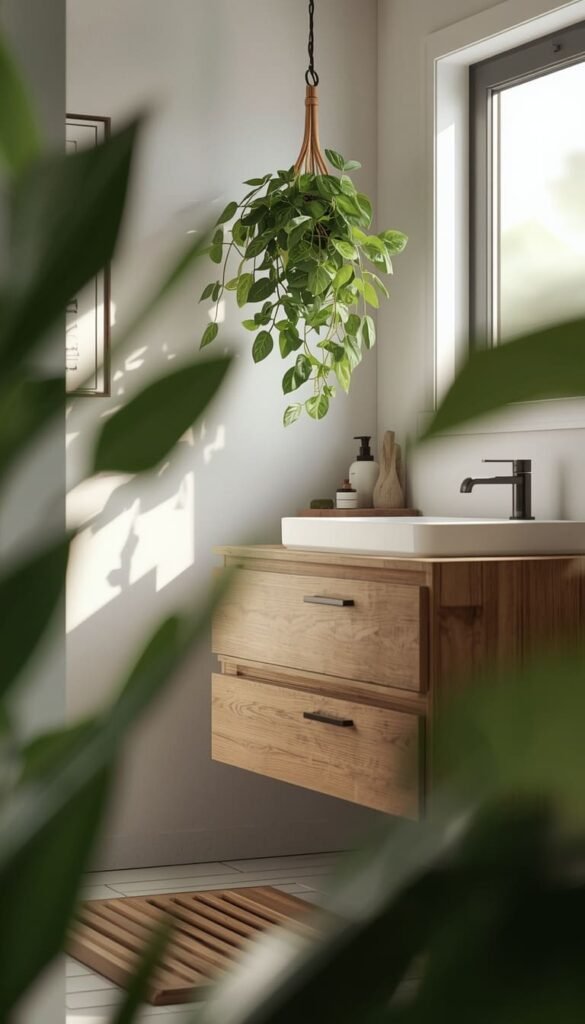
Biophilic design the practice of connecting interior spaces to the natural world has moved well beyond a design buzzword into something that genuinely affects how we feel in a room. In bathrooms specifically, where the goal is so often relaxation and restoration, bringing in natural materials and living elements creates a sensory shift that no amount of expensive tile can replicate on its own.
Teak and white oak are the woods I reach for most often in bathroom applications. Both handle humidity reasonably well when properly sealed, and they bring a warmth to the space that immediately softens the hard edges of stone and ceramic. A teak bath mat instead of a fabric one, a white oak floating vanity, or a wood-slat accent wall behind the tub any one of these additions shifts the entire atmosphere of the room toward something that feels genuinely restorative.
Plants in bathrooms are having a serious moment, and the practical case for them is as strong as the aesthetic one. Most bathrooms offer the humidity that tropical plants love, meaning species like pothos, peace lilies, and certain ferns actually thrive in bathroom conditions with minimal care. A single well-chosen plant in a ceramic pot on the vanity counter or a hanging specimen near the window costs almost nothing and adds a layer of life to the space that no accessory can match.
Natural light is the element I fight hardest for in every bathroom renovation. If your layout allows for a skylight addition, a larger window, or even a solar tube, the investment pays back in quality of life every single morning. And if privacy is the concern with windows café curtains at the lower sash give you light at the top and privacy at eye level. Simple, affordable, and genuinely charming.
Does your current bathroom feel more cramped or more cluttered to you?
13. The Minimalist Remodel: Less Really Is More If You Do It This Way
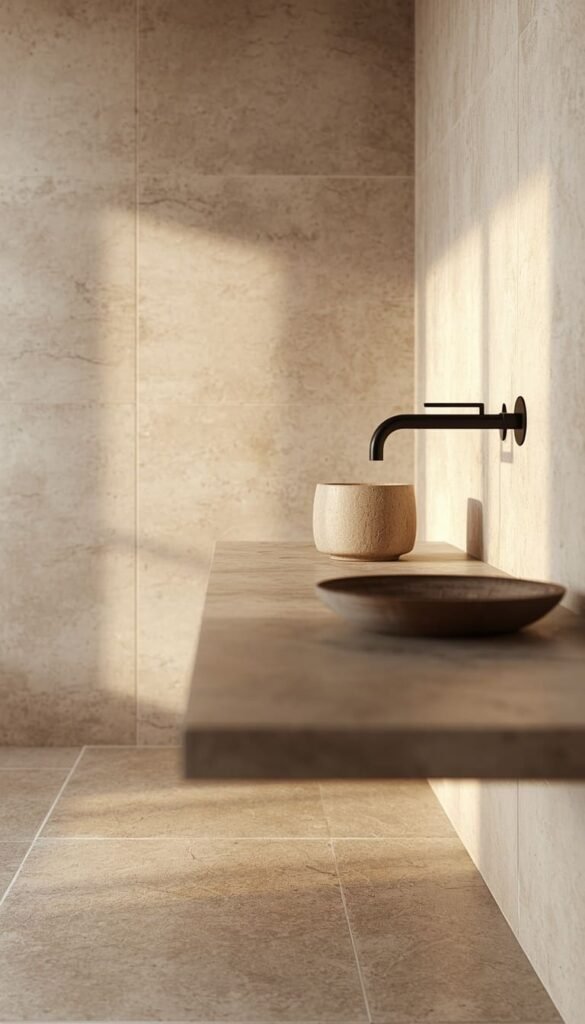
Minimalism in bathroom design gets misunderstood constantly. It’s not about spending less or doing less. It’s about making fewer, more deliberate choices and committing to them fully. The most quietly luxurious bathrooms I’ve ever designed were also the simplest a single beautiful material, one or two perfectly proportioned fixtures, and an almost ruthless editing of anything decorative that didn’t earn its place in the room.
The foundation of a successful minimalist bathroom remodel is material quality. When you strip away the visual noise of pattern, contrast, and layered accessories, the quality of what remains becomes impossible to hide. A minimalist bathroom with low-quality tile and a builder-grade faucet looks unfinished. The same layout with large-format natural stone and a beautifully weighted faucet in a matte finish looks like a luxury spa. The budget, in both cases, can be comparable it’s allocation, not total spend, that determines the outcome.
Color in a minimalist bathroom should feel like a conscious exhale. Warm whites, soft greiges, pale sage, and barely-there taupe all work beautifully because they recede visually and let the architecture and materiality speak. What I caution against is defaulting to stark, cold white without any undertone it reads as clinical rather than calm, and the effect is a bathroom that feels sanitized rather than serene.
Three principles I apply to every minimalist bathroom remodel I take on:
- One material, used generously. Running the same large-format tile from floor to wall creates a continuity that reads as intentional and expensive.
- Hardware as jewelry. In a minimal space, your faucet and cabinet pulls are the statement pieces. Spend appropriately here.
- Negative space is not empty space. A countertop with only one or two objects on it is not bare it’s edited. That distinction is everything in minimalist design.
Which Path is Yours?
By Budget
- Starter/Budget: Floating vanity + light fixture swap, statement tile niche, arched tile entry, fresh paint
- Luxury/Investment: Full spa wet room, freestanding soaking tub, natural stone/terrazzo surfaces, custom recessed storage
By Lifestyle
- Small Spaces: Floating vanity, doorless walk-in shower, recessed medicine cabinet, light strategic color
- Open Layouts: Wet room, statement tile wall, mixed metal hardware, freestanding tub under a window
- Busy Families: Walk-in shower (skip removing the only tub), toe-kick drawers, low-maintenance porcelain over natural stone
- Minimalists: One generous material floor-to-wall, hardware as the only “jewelry,” edited countertops with negative space
FAQ
How much does a bathroom remodel cost in 2026?
Most full remodels land between $8,000 and $25,000 depending on scope. Small refreshes can be done well under $5,000 if you edit ruthlessly. Labor and tile are usually the biggest swing factors.
Should I remove my bathtub for a walk-in shower?
Yes, if it’s your primary bath and you rarely use the tub. Keep at least one tub in the house if you’re in a family-heavy neighborhood. Resale buyers still expect one somewhere.
Are wet rooms worth it for a small bathroom?
Absolutely, they make tight spaces feel far larger. Just budget for proper ventilation. Skipping the exhaust fan upgrade is the #1 mistake homeowners make.
What’s the most cost-effective bathroom upgrade?
Swapping the vanity and light fixture together. They’re the first things you see walking in. Under $2,000, it transforms the whole room’s feel.
Is terrazzo or natural stone hard to maintain?
Honestly, yes, more than people expect. Natural stone needs resealing every 1–3 years. If low upkeep matters most, go with a porcelain that mimics the look instead.
Conclusion
Here’s the thing you don’t need to do all 13 of these at once, and honestly, you shouldn’t. Pick the one that’s been bugging you every single morning, whether that’s a cluttered counter or a tub you haven’t touched in years, and start there. Your bathroom is the first room you walk into and the last one you leave each day, so it deserves a little intention, not perfection. Grab a tile sample this weekend, clear off one shelf tonight, just take one real step.
So tell me which one of these is calling your name first, and what’s stopping you from doing it this week?
